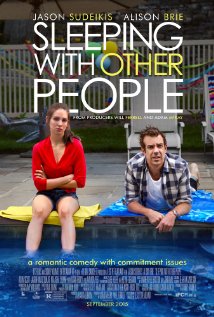

Writer/Director Leslye Headland talks about her latest film “Sleeping With Other People”

Writer/director Leslye Headland is best known for her work on the television series “Terriers” and her directorial debut, the film “Bachelorette.” She also adapted this past spring’s film, “About Last Night” from the original Tim Kazurinsky and Denise DeClue script. Her latest film, “Sleeping with Other People,” has earned nothing but great reviews since it played at the Sundance and Tribeca Film Festival. With the film getting ready to open nationally, Ms. Headland took the time to speak with me about it and what she has planned for the future.

Mike Smith: Where did you come up with the story for “Sleeping with Other People?” Is it based on somebody you knew?
Leslye Headland: Usually when I write I’m writing about a combination of things that are going on in my life. Usually it starts with a question I ask myself. My first film, “Bachelorette,” asked if women are still trying to get married. Is that still a goal we worry about? And is it a worthy goal? Is that something that we actually want or is it just something we’ve been pursuing for so long and so often that we’ve been told it’s something we deserve. But to take it to the ridiculous. On this film the question I was asking myself was, “Is it really possible to fall in love? To REALLY fall in love?” The way we long for. John Cassavetes said that we need love like we need food, water and air. We just don’t know how to get it. That’s really where it sprang from. Can we make a romance that’s very real and funny and touching and scary and stupid? All of the things that romantic relationships are.

MS: For lack of a better word, I found the film to be very “adult,” in the vein of “Bridesmaids” and “Trainwreck.” Yet, like those two films, though it’s “adult” it’s also very realistic. Is that something you strove to show? The “honesty” in how some relationships are?
LH: I guess so. What I really wanted to do was make sex less of a reward or a bodily function. It’s usually shown as one or the other. I wanted to portray sex accurately. It’s very weird. There’s always something going on between you and the person you’re having sex with. I wanted sex to actually be another character in the movie, not just a thing they were doing. I wanted to showcase the sex almost as set pieces. We choreographed and story-boarded those scenes almost as if they were dance numbers. There was a lot of thought put into how to represent sex within the movie. I think that was really the goal.

MS: You’ve put together a great cast. I’m just outside Kansas City and we see Jason Sudeikis’ mom at screenings often. I was really impressed with Adam Scott. This is really a change-of-pace role for him. Did you have him in mind when you were writing? Do you write your characters with certain actors in mind?
LH: I don’t write the part FOR the actors, but I do have ideas on who and how I’d like the role played. I wrote the part of Jake for Jason. I do write them with the hope that a specific actor will do them. I ask them if they would be interested. I mentioned the film to Jason before I started writing and he said that it sounded interesting. We hung out some and talked about romance. We talked about our own personal feelings. He’s obviously found love. He fell in love with Olivia and they have a child now. (NOTE: Jason Sudeikis and Olivia Wilde are the proud parents of a little boy named Otis). I’ve settled down now with my partner. So we pretty much just sat down and talked about our dating years. Getting back to your first question, it never even occurred to me to cast Adam Scott. I mean I love him and he’s one of my favorite actors but it just never occurred to me. I mean, the character is just so evil, and Adam is just so nice. But I also think it takes an actor that good to BE that bad. He and Allie (Alison Brie) had worked together on something and he saw the script. He asked me if I had cast the role and I told him I hadn’t. “Would you like to play it? I’d love you to play it.” He said he really wanted to play a bad guy. And that’s why we had him grow the mustache. We really wanted him to be unrecognizable.

MS: The film has already won raves and awards, including from both the Sundance and Tribeca Film Festivals. Does that help you in preparing for your next film?
LH: Oh yeah! It’s funny, I’m just finishing up my next script now and we’re going to be going out with it soon. I hope it does. My next script is in a totally different genre’. It’s a thriller. I appreciate the accolades but I wonder if it will make the next film hard to sell just because it’s NOT a comedy (laughs). It will be interesting to see what happens. I hope it goes smoothly. I’ll keep you updated!


Related Content

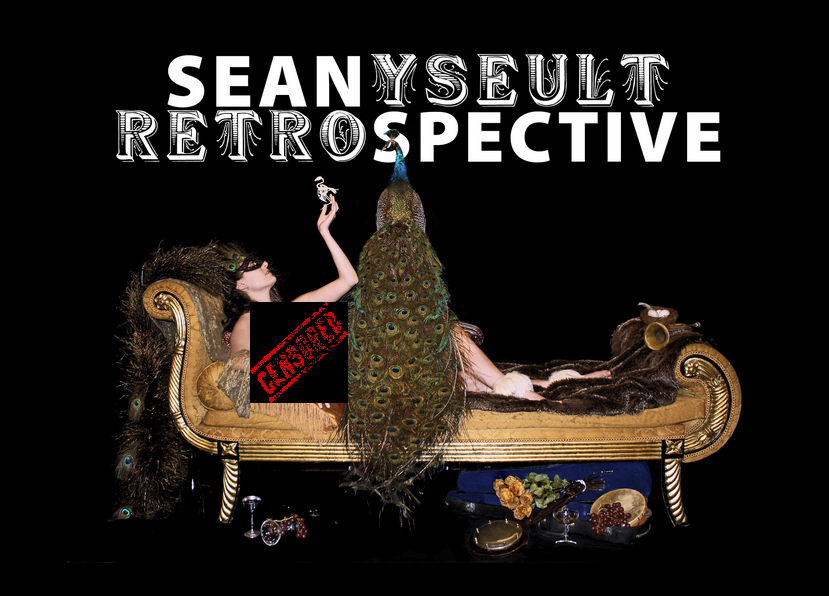
White Zombie’s Sean Yseult talks about her exhibit at Sacred Gallery in NYC, “Retrospective”

Sean Yseult is probably most recognized as the co-founder/bassist for the heavy metal band White Zombie, a group which dominated MTV with its hit song/video “Thunder kiss 65” in the early 90’s. Since the groups disbanding in 1998 Sean went on to play with several other acts such as The Famous Monsters and Rock City Morgue. In November of this year, Sean will showcase a different part of her artistic abilities in “Retrospective”- a love letter to her long-time muse, New Orleans which will be on display at Sacred Gallery in NYC through December 31st. Media Mikes had the chance to speak with Sean recently about the exhibits creation and her return to New York City.

 Adam Lawton: What can you tell us about your upcoming exhibit “Retrospective” which opens in November?
Sean Yseult: The exhibit is going to have a little bit of everything. There are pieces from shows I did in New Orleans 10 years ago. Mostly I am going to be showing my large 4ft by 6ft pieces I did recently for a show in New Orleans titled “SQIREE D’EVOLUTION”. It’s kind of a tongue and cheek yet morbid setting of a party in New Orleans set in the 1870’s. It’s based around a secret societies party that has gone wrong. It’s a really fun show. The exhibit will also have some pieces from my “MISSISSIPPI MERMAIDS” show where I figured out how to put girls inside of bottles on the ocean which is a little different. (Laughs) I also have some pieces from way back that are old black and white Polaroid’s done in the style of Joel-Peter Witkin and Bellocq. There is a lot to look at as they gave me a tone of space so I am going to fill it out. (Laughs)

AL: Where did your influences come from for “SQIREE D’EVOLUTION” and “MISSISSIPPI MERMAIDS”?
SY: I really don’t know where I got the idea for “MISSISSIPPI MERMAIDS” and having girls in bottles. Maybe I watched too much “I Dream of Jeanie” when I was growing up. (Laughs) For “SQIREE D’EVOLUTION” I was hugely influenced by the Dutch Masters. I made an enormous black back drop and the photos have a serious light/darkness to them with an intensity of color. A lot of people walk up to them thinking they are paintings. I am very happy with how those turned out. I definitely draw from a few different areas.

AL: With the pieces that are coming from different exhibits how did you go about choosing those selections?
SY: I looked at everything I had done and it all has this sort of timeless quality to it. You can’t really tell which era the pieces are actually from. Even my new pieces which are in full color and set in the 1800’s have those elements. It’s very hard to tell the time as they are a bit ghostly and a lot of them are portraits of women in various states of dress or undress. It all sort of fits together somehow. (Laughs)

AL: What is it that draws you to this type of subject matter?
SY: I moved to New Orleans and became entranced with the people and the beauty of the city. The city is in this sort of state of decay and things are falling apart. In the summer especially girls are running around in slips and things so it’s hard to tell really what period you are in. It’s pretty amazing. To me it’s just so beautiful and there are so many lovely people. I just enjoy photographing it all.

AL: Coming back to New York for your first solo show is sort of a home coming for you. What do you think the experience is going to be like?
SY: I am really excited! I originally moved to the city to attend Parsons School of Design for photography. Its finally coming full circle that I get to come back there with my photo’s after all these years. Parsons is where I met Rob and we started White Zombie which sort of derailed my photography for awhile but after the band broke up I moved to New Orleans and started back up with my photography. I have shown off and on at different galleries but it’s going to be so great to show at Sacred Studios. I have been making visits up there ever since I was offered the show.

AL: How did the opportunity to show at Sacred Studio actually come about?
SY: I was at an opening last spring at a private gallery at the Chelsea Hotel for Dee Dee Ramone. My old A&R guy from Geffen Records was there and he pointed out this artist that he loved named Vincent Castiglia. We started talking and he had shown at Sacred Gallery and thought they might like my work. He put me in touch with them and I talked with Kevin Wilson the gallery director and from there things moved pretty quickly.

AL: With being so involved with your photography as of late do you feel your music has sort of taken a back seat?
SY: Not always. I sort of flip flop back and forth depending on my schedule. For the last year though I would have to say yes. I spent 2 years putting together “SQIREE D’EVOLUTION” which was a lot of very intense work. Now I am more curating and gathering things to put a show like this together. I do have a new band called Star and Dagger which will be recording with the amazing Chris Goss later this year. We have a lot of songs written but just haven’t had time to get everyone together.

Drummer Anton Fig talks about re-release of solo album “Figments”

Drummer Anton Fig has been performing both live and in the studio since the mid 1970’s.  He has worked with artists such as Bob Dylan, Madonna and most notably as the drummer for David Letterman’s house band the CBS Orchestra. Anton released his first solo album “Figments” in 2002 and recently re-released it in 2015. Media Mikes had the chance to talk with Anton recently about the albums re-release and its creation and also about his impressive session work.

Adam Lawton: “Figments” was originally released in 2002. Can you tell us about the decision to re-release the album?
Anton Fig: When the album was initially released there were a few people who heard it however at that time the transition from retail to online sales was just starting to take place. Stores were closing up and the stuff on the web was still just starting to happen. Things weren’t the way they are now with social media and everything so it was hard for people to access the album. I felt the album still sounded fresh and vibrant and with there being a number of ways to get the word out about it re-releasing the album seemed like a good thing to do.

AL: Thinking back to when you first started working on the album what do you feel was the driving element in releasing your first solo album after being in the music business for quite some time prior?
AF: I always had said to myself that once it became easier to record and digital recording was more available that I would put out a record. Going into a traditional studio is quite expensive so being able to record from your home and not have to travel and all that made things much easier. I did travel a little bit to work with some of the people on the album and I did my drums in a studio but all the mixing and overdubs I did at home which was relatively inexpensive. In 2002 home recording was still new. Nowadays everyone has the ability to record digitally from just about where ever. By doing things the way I did back in 2002 it was more affordable at the time. All the songs that make up the album were ones that I had sort of saved up over time. From there I went about putting the right people to each of the songs.

AL: How far back in your career did you actually start writing some of this material?
AF: I was in a band in the 80’s called Spider. We were managed by Bill Aucoin who had managed Kiss and we were always encouraged to write in that group. After that group ended I just kept writing. Over the years I had built up a group of songs that I wanted to get out there. I picked the songs I liked the best and just went from there with finding the right combination of players for each one.

AL: Do you find it hard for people to really take notice of an album like this being you are mostly know for your drum work?
AF: I think what surprised people most was the fact that “Figments” isn’t really a drum record. This is a song record along the lines of a Phil Collins album or something like that. There aren’t drum pyrotechnics or anything like that as it more about song production. That’s the record I wanted to make. I feel it adds something because it has a bit of a surprise element to it based just on that score.

AL: Did you creative process differ any on this album as opposed to some of the others you have appeared on?
AF: When I am working on someone else’s project generally my main concern is the drums. They are the ones in charge of the overview of things and how they want the song to sound. I am there to try and help them realize that vision as quickly as possible. When you are doing your own record you have to have that overview. Once I had the drum sounds down I sort of forgot about them and had the big picture more on my mind. It actually helped my drumming a lot as I was forced to look at the big picture as opposed to only the drumming.

AL: When you are approached with session work opportunities what is it that you look for in a project prior to agreeing to work on it?
AF: I think mostly it’s if I am the right person for the session. I look at if it’s something that I can be mostly myself in. If they are asking me to do something that I am not really suited to do you almost want to tell them to get so and so to do it but, I generally try to do all of the projects I am asked to do. Nowadays I have a set up where I can do drums remotely as I have my own studio. In a situation like that you are not in a room with a producer or artist so you have to decide what the best way to approach things are and how much of yourself you can put into that session. It can be a bit harder working that way at times.

AL: One of the groups you have been involved with over the years was with Kiss and later on Ace Frehley. How did that relationship come about?
AF: At the time I think Peter Criss had broken his arm or something like that and wasn’t going to be able to drum on the upcoming album “Dynasty”. I worked on that album and from there I got asked to do another album with them titled “Unmasked”. With Ace I was playing in my band Spider at the time and we were auditioning bass players. One of the guys who came in was friends with Ace and mentioned he was looking for a drummer for his solo project. He got me an audition with Ace and from there I ended up doing the record and becoming friends with Ace. Right after that is when I got the gig with the Late Night Show so that’s where things ended with the band. I have played on a good majority of Ace’s stuff most recently “Anomaly”.

AL: Up until recently your work with Kiss was done as a ghost writer. Is it hard going into projects like that where you know you will not to be credited?
AF: With Kiss I knew upfront that I wasn’t going to be credited. They told me I would be paid well however I could not talk about it. That was always my understanding with them so I never talked about it. Gene Simmons mentioned it in a book of his recently and my name was also added to the liner notes of the re-issued “Dynasty” album. Once they started talking about I also started talking about it. It was over 20 years or something like that where I didn’t say anything about my involvement. I knew we had an agreement and I stuck to it. Today it’s hard to do something like that as there are no secrets.


AL: Are there plans to tour behind “Figments”?

AF: I would like to but with every song having a different line it would be quite difficult. The album is almost like a playlist that you would put together. It would be hard to fully recreate the albums line up. I suppose I could put together a band and do some of the songs. I think if a song off the record gets a lot of attention and people are asking for it then I will think more about taking it out on the road. For now though I am out with Joe Bonamassa and have be selling the album at the shows so I am out there with it.


Related Content

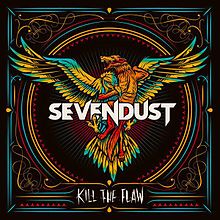
Sevendust’s Lajon Witherspoon talks about new album “Kill the Flaw”

Heavy Metal group Sevendust is back with a brand new album titled “Kill the Flaw”. The album which is being released on October 2nd will be the bands 11th studio album and their third since joining Asylum/7Bros. Records. Media Mikes had the chance recently to discuss the new release with the groups lead vocalist Lajon Witherspoon who detailed the bands solid work ethic and its upcoming plans in support of the album.

Adam Lawton: With “Kill the Flaw” being the bands third album in three years do you ever find it hard to keep up with the one album a year pace or is that something that the band has come a custom to over time?
Lajon Witherspoon: For us this is what we were born to do. We were blessed with the energy and the passion to make music so once we all get in a room together things just start to happen. The days of putting out an album and going on to tour in support of that album for a year or two is gone. To remain relevant you have to keep putting out new material in order to keep things fresh. Even if you had an album that had a bunch of hit singles if you are not out there with something new it’s easy to be forget these days.

AL: Like with previous release from the band you guys handled not only the music side of things but also the albums production. Do you find it hard balancing both of those roles in the studio?
LW: With all of us being in this band since day one we look at one another as artists, producers, singers and writers. Because of that it’s easy to have that respect for one another in the studio. It’s never been a big deal for us to work like that. We all know this band like a book and have been together for so long that there are no egos when it comes to this type thing.

AL: What do you find to be the benefits of keeping things internal as opposed to bringing in someone from outside the group and, is this way of working something that has evolved over time for the band?
LW: Sometimes we do feel like we need to bring in someone from the outside to sort of police what is going on but more so lately we like to just be able to go in and see what we can come up with as a band. It’s a friendly affair when we work like this and we are a band throughout the whole process which is something we really enjoy. I think it is something that has evolved over time. You work on different albums in different ways and over time you find you niche in what works and what doesn’t. Me personally I think we work best when we go into a room with no plan and maybe Morgan starts by laying a drum beat down or Clint starts with something on guitar and we just go from there. That’s where the magic starts.

AL: What led you guys to choose the song “Thank You” as the albums lead single?
LW: That was a song that I didn’t really see as the first single but afterwards I am glad it was. When you put out an album you want all the songs to get their due but “Thank You” is an incredible, inspiring song that turned out great. I am super proud to have it as our first single but again I really feel that this album has 9 other singles people need to hear along with this one. These songs are our babies and we want people to hear them all.

AL: The album can be preordered at www.sevendust.com with a couple different bonuses. Can you tell us about some of the things your guys are offering to the fans who pre-order the album?
LW: We try to do different things which we hope will make people feel more a part of what we have going on. We have packages where you can get limited edition t-shirts, signed copies of the album to actually getting to listen to album in the studio with the band.  We try and make things more personal and take away some of the machine like elements.

AL: What type of tour plans do you guys have in place to support the release?
LW: We start rehearsals in about 2 weeks and after that we will be hitting the road with Godsmack. That’s going to be a great time as we haven’t toured with those guys in quite some time. It also has been awhile since we haven’t done a tour where we headlined. It’s going to be great to just go out there each night and rock a 45-50 minute set. When that run wraps up we have another list of shows in the works prior to my new baby being born in December and then after a little break we will be back out there. We are just really excited with everything we have going on and can’t wait for people to hear this new album.

Testament’s Alex Skolnick talks about new band Metal Allegiance and their debut album

Alex Skolnick is probably best known as the guitarist for the legendary thrash metal band Testament. When not performing with the group Alex keeps busy with numerous side projects such as The Alex Skolnick Trio and, his latest endeavor Metal Allegiance, The group which features a laundry list of some of today’s top heavy metal performers is set to release their debut self titled album on September 18th and Media Mikes had the chance to speak with Alex recently about the album and the group’s formation.

Adam Lawton: How did you first get involved with the Metal Allegiance project?
Alex Skolnick: It all happened pretty fast. I was on the “MotorBoat Cruise” playing with Testament and that’s where the very first performance under that name happened there. There were a bunch of us guys hanging out during dinner one night and some of the guys were talking about set lists. They wanted to add in some classic Van Halen and I was the guy who was pretty up on that stuff. I wasn’t really planning on playing and Mike Portnoy sort of threw it out there as a joke and I went along with it and everyone went nuts. We ended up having this great jam and afterwards we were talking about more shows in the future and I said I would be for it any time. I get a call one day asking if I would be interested in doing an album. I had never worked with any of these guys before but I was willing to give it a shot. I went in thinking it was going to be mostly an album of covers with possibly two or three original songs. Up until this point all we had played together was covers. When we got together the writing process just took off. We started off with just a couple songs we felt great about and it just sky rocket from that point on.

AL: Being that you all had never worked together before what was the creative process like for the group?
AS: We all are fans of this music and we wanted to make an album that we would be excited about putting out. We all had ideas as to what makes great album and we wanted to make sure that we captured the performance of each player involved with the record. There’s a lot of great stuff being recorded these days digitally but we wanted to take a more analog approach and incorporate elements from areas that inspired us to become musicians.

AL: Was a majority of this album created separately and sent back and forth via email or was there a point where everyone got together and recorded as a group?
AS: We worked in a couple different phases. The first phase involved the three core guys of the project. Myself, Dave Ellefson and Mike Portnoy were brought together by our mutual friend Mark Menghi. The four of us got together during the holidays and did our first session. A few weeks later we got together again for a second session. Those sessions were all done in a traditional band type recording session. In February we went out and did the “ShipRocked” Cruise and after getting back we began the next phase of work which we did in Long Island at Mike Portnoy’s home studio. There was some stuff that got sent back and forth via email but a majority of the album was done the classic way with everyone being present in the same recording space.

AL: When it came time to bring in the various guests who appear on the album who was the person making those decisions?
AS: The four of us myself, Dave, Mike and Mark made all of those decisions together. We call ourselves “The Core Four”. There was a constant stream of text messaging that we all would reply to where we all made suggestions related to the music. We decided that we would all have to agree as to who was going to be asked to be a part of the project. There were some ideas that didn’t end up happening as ultimately we felt they just wouldn’t fit and some of those may have helped sell more records but this wasn’t about that. Everything was about the feel of the track and how each piece fit and worked together.

AL: With the project taking on almost a life of its own is this something you guys hope to continue to expand on or, is this album the closing piece for the group?
AS: I believe we would like to keep this going indefinitely. There is no reason not to. We don’t want to be limited to just performing on cruise ships or at large events. We do have plans to do those types of events but we also want to do more. We have the album release show in New York at the Best Buy Theater which is going to feature most of the personnel from the album. That’s something that is going to be hard to duplicate on a tour but we are figuring things out as we go. We just announced our first international show in Mexico City which will feature the core group along with Mark Osegueda from Death Angel on vocals. There are a number of different levels that this project can work on which I think is going to be really great.

AL: Outside of the Metal Allegiance project what else are you currently working on?
AS: I have a lot of stuff going on. I have my first acoustic album out which is called “Planetary Coalition”. This is a world album and is something that I always wanted to make. I have a bunch of great artists featured on there including Rodrigo y Gabriela. Last year the trio recorded a live concert and it came out really well. We also recently wrote a few new songs and I think we are going to release that as a live album. I’m going to be a part of the “Axes and Anchors” cruise which is a cruise for guitar enthusiasts. Zakk Wylde is going to be there along with Yngwie Malmsteen, Michael Schenker and a bunch of other great players as well. Testament has mostly one off shows booked as of right now and in between those we are writing new material with hopes of having a new album out next year.

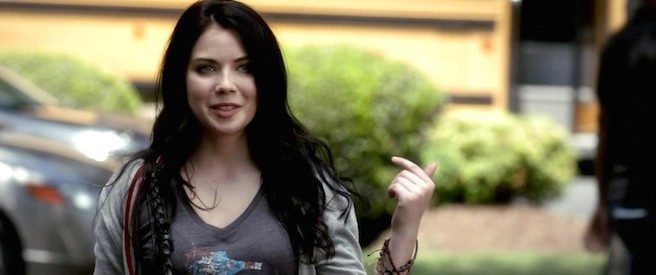
Grace Phipps talks about her new film, “Some Kind of Hate” and TV’s “Scream Queens”

Texas-born Grace Phipps is best known for her work on the ABC Family show “The Nine Lives of Chloe King” and as April Young on “The Vampire Diaries.”

This month she can be seen on both the big and small screen. Her new film, “Some Kind of Hate,” opened this week in theatres while her latest television project, “Scream Queens,” debuts on September 22. Grace took time out from her schedule to talk about her new projects.

Mike Smith: Give us a quick introduction to Kaitlin, your character in “Some Kind of Hate.”
Grace Phipps: Kaitlin is the typical American cheerleader turned sour. She was very fun to play. It’s not often that you get to play a complicated, and occasionally unlikable, character.

MS: Is that something that drew you to the role?
GP: Yes. It was a good script. When you get a good script that’s something remarkable.

MS: You seem to be drawn to these types of roles. You’ve done “Vampire Diaries” and now you’re about to appear in “Scream Queens.” Intentional?
GP: I don’t think I really do that. But I do like working with a lot of different circumstances. You don’t normally wake up to terrible things, so it’s much more fun to do that then be the girl working at the bank or opening and closing her locker. But a good script…a different script…helps spark a conversation.

MS: You’re appearing in the upcoming series “Scream Queens.” Is that going to be a recurring role? And, if so, can you talk about it?
GP: I don’t think I’m allowed to say. I don’t even get the complete script. I can tell you that, with what I’ve read and seen, the show is going to be absolutely brilliant. A lot of the crew are the same I worked with when I was doing “The Nine Lives of Chloe King.” It looks really, really good.

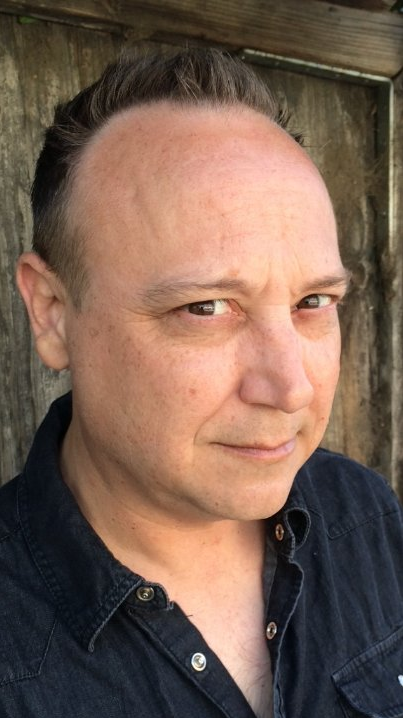
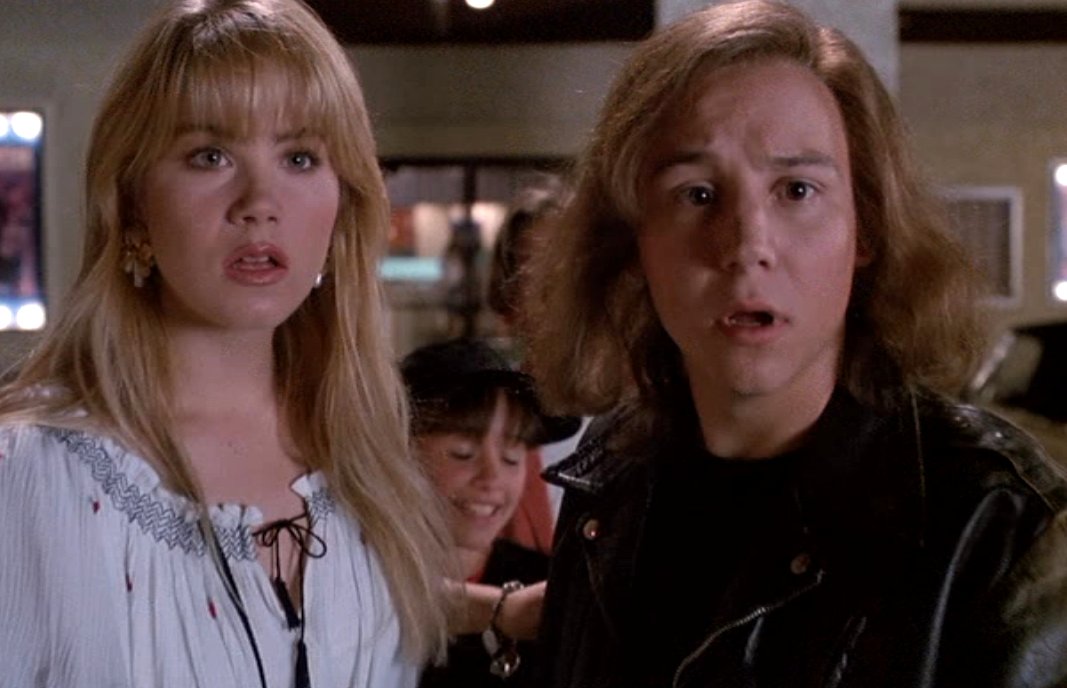
Keith Coogan reflects on his film “Adventures in Babysitting”

You may recognize Keith Coogan from his work in such popular films as “Adventures in Babysitting,” “Don’t Tell Mom the Babysitter’s Dead” and “Toy Soldiers.” Or you may remember him from his recurring role on “The Waltons,” where he was billed as Keith Mitchell. Coogan used his mother’s maiden name until the passing of his grandfather, Jackie Coogan. Jackie Coogan was the screen’s first child star, appearing opposite Charlie Chaplin in “The Kid” and then finding fame as an adult with his role as Uncle Fester in the classic television series, “The Addams Family.” His grandfather was a trailblazer for young actors and both Coogan’s Law, which mandates how children actors can work, and Coogan’s Account, which is where 15% of a young actor’s income goes to be saved until they are an adult, are both named for him.

This coming Monday, September 14, Keith Coogan will be appearing in person at the Kansas City Alamo Drafthouse Theatre for a screening of “Adventures in Babysitting.” In between flights on his way to KC, he took time off to talk about his career.

Mike Smith: You’re going to be in Kansas City on Monday, attending a screening of “Adventures in Babysitting” and the Alamo Drafthouse. When fans approach you on the street, is that the film they most want to talk about?
Keith Coogan: It’s really neck and neck with “Don’t Tell Mom the Babysitter’s Dead.” Of course I also have a lot of people that love to talk about “Toy Soldiers” as well. I think “Adventures in Babysitting” is the one that reached the most audiences. The other night I was doing an appearance at the Alamo Draft House in Lubbock and I kept wondering if the people were thinking to themselves, “Who is this old man sitting behind Keith Coogan’s table?” (laughs) It’s been 28 years since “Adventures in Babysitting” came out and it still plays great to the house. It still gets all the laughs. It really does hold up.

MS: It’s ironic that you star in the two greatest movies ever made about babysitting. I have to ask…was that planned?
KC: No. Not planned. In fact, it was sprung on me mid-production on the second one. It was originally supposed to be called “The Real World,” because it focused on the girl (Christina Applegate) and her career goals. MTV was a producer on the film and they noted that they had a reality television show coming out with that title. They said they polled a bunch of 13-year old boys and the new name of the movie is, “Don’t Tell Mom the Babysitter’s Dead.” I asked them, “you know I was in another babysitting movie, right?”

MS: You work consistently in both film and television. Do you have a preference?
KC: Not at all. Wherever the good material is. I just finished a play about a month ago…I even tried stand-up for the first time. I really think television has come around. You see more and more featured actors making their way to television. The stigma of, “Oh, it’s television,” is gone. They can do so much more in thirteen hours with “Daredevil” then they could have in a two-hour movie. There would have been so many things they would have had to lose. Television…cable…the Internet…NetFlix. It’s all happening.

MS: This year marks the 101st birthday of your grandfather. As the first real child star, did he ever offer you any advice when you were starting out in your career?
KC: Yes. Watch your money and be careful of mothers! (laughs) He never really would offer any tips on acting. He always said it was my own thing. I remember once I was going up to play Tom Sawyer. My grandfather had appeared in the first talkie version of “Tom Sawyer” but he wouldn’t give me any advice. He told me I had to make it my own. He would only give me professional advice. Things like being on time, be prepared, know your stuff. Don’t be a brat on the set. And, of course, to keep an eye on your money!

MS: Do you feel an obligation to carry on his legacy?
KC: He was the world’s first child star. Which means he was the world’s first former child star. He had a lot of insight into the cyclical nature of the industry. Enjoy it when it’s up…keep control when it’s not. He enjoyed working up until the last few years of his life, which is something I want to do. I want to keep doing this forever. It’s a legacy I want to continue. It’s a legacy my wife and I are constantly working on (in the background Mr. Coogan’s wife laughs and says, “Wow!”)

MS: What do you have coming up next?
KC: I am actually going to dive in and make a short film. I’ve written it and I’ve got another draft to go. It’s kind of ambitious. A great concept. It will be a nice little test run. Because what I really want to do is direct! (laughs) That’s a T-shirt you can get from the Screen Actors Guild because all actors really want to direct. I think I’m ready!

Audiotopsy’s Greg Tribbett talks about debut album “Natural Causes”

Greg Tribbett is probably best known for his guitar work with Mudvayne and Hellyeah which featured former Mudvayne vocalist Chad Grey and former Pantera/Damage Plan drummer Vinnie Paul. Greg’s newest project Audiotopsy is set to release their debut album titled “Natural Causes” at the end of the summer and Media Mikes had the chance to speak with Greg recently about the album, the group’s formation and the upcoming tour plans for this fall.

Adam Lawton: Can you tell us about how you guys came together to for Audiotopsy?
Greg Tribbett: Around July of 2014 I called up Matt McDonough and we got talking about putting something together as we both had nothing going on at the time. I ended up flying up to Matt’s house for a weekend and we wrote about seven songs in two days. We hadn’t played together for about 5 years by this point but things went really well. We decided we needed to get a singer and a bass player so we called Billy Keeton who we knew from the band Skrape. He had already been jamming with Perry Stern so those two sort of came as a package deal. We were really stoked at this point as we didn’t need to look for a bass player. We ended up going down to Florida to record those seven songs and we all gelled together great. It was a great time and things just came together really quickly.

AL: Was there ever any thoughts in your mind when you put the group together about how to distance it from your guys previous works with other bands?
GT: That was definitely on my mind. I didn’t want to sound like Mudvayne or Hellyeah as I have done all that. When I was writing I really tried to concentrate on originality and create things that were both new and fresh. I think we certainly accomplished that.

AL: Was the ability to come up with new material quickly something you have always been able to do or was this something new for you?
GT: It comes pretty easy for me. Usually I will just sit down and start thinking up riffs in my head and play them out on guitar. From there I will start working on the actual song. Within about 20 or 30 minutes I will have a song laid out. When Matt and I got together he was familiar with my work style from all the time we had spent with each other over the years. When I got to his house I came with most of the songs structures already laid out. There may have been one or two songs that we worked on together but for the most part things were pretty much done. I just let Matt do his thing over the riffs that I brought. We did the albums first 7 songs that weekend at Matt’s. A short while later I ended up writing another three songs that we also did at Matt’s. We originally were just going to release an EP but ended up doing a full length release instead.

AL: What type of single release plans do you have for the album thus far?
GT: We have the song “Headshot” out right now but I don’t really consider that to be our single or anything like that. The actual single will be coming to radio soon and that is called “The Calling”. We actually have plans within the next few weeks to do videos for both of those songs.

AL: What types of tour plans are in place to support the album?
GT: Right now we are looking at late fall or early winter to get out on the road. We have a lot of feelers out right now as there are a bunch of tours going out at this time. We are looking at all those and we plan to go with the best offer that suits us. From there we will make all the plans and whatnot that goes along with booking a tour. We will definitely be out there through 2016 promoting the band and the record. We want to go worldwide with this.


Related Content

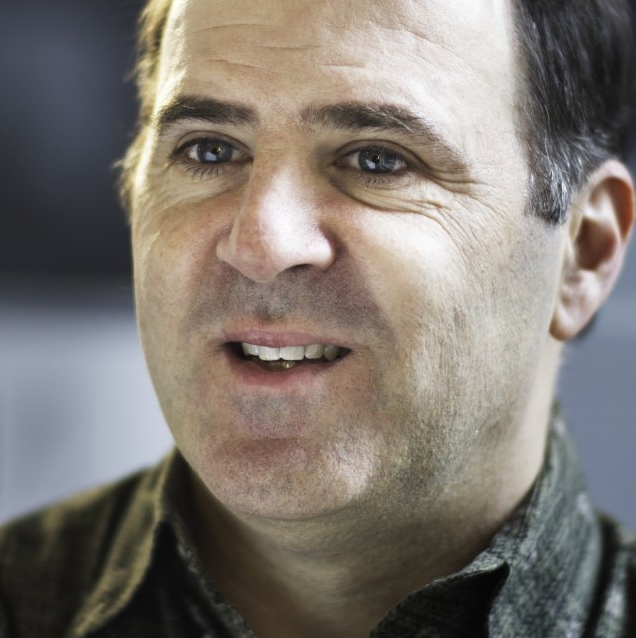
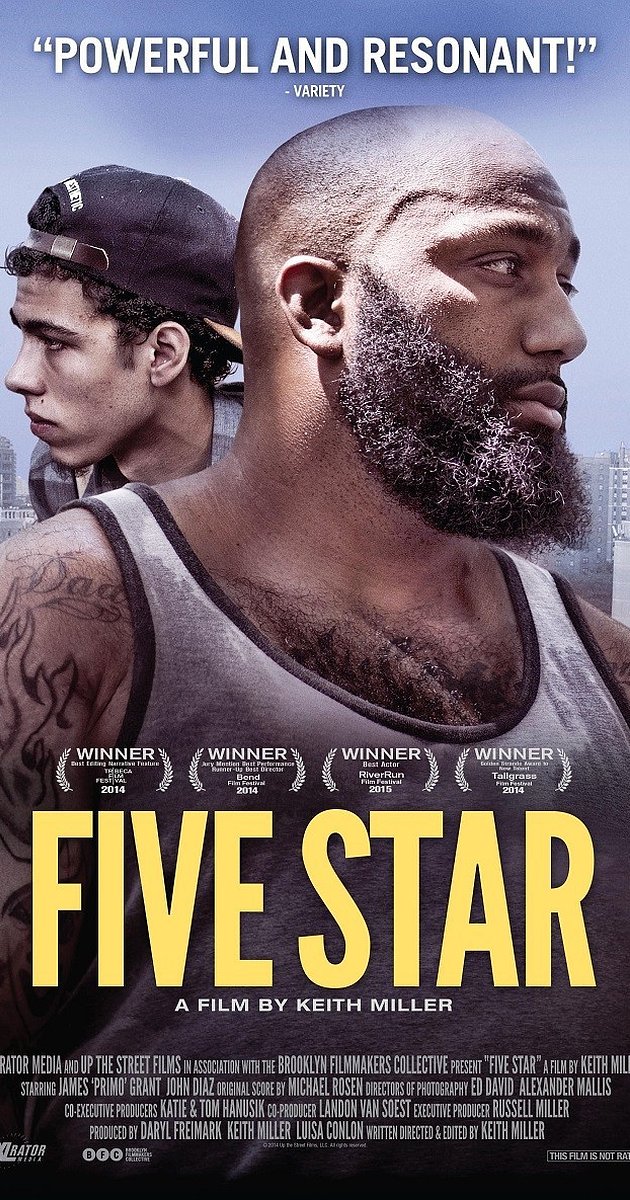
Keith Miller talks about new film “Five Star”

After almost a decade as a short-film maker, director Keith Miller hit pay dirt in 2012 when his first feature film, “Welcome to Pine Hill,” was either chosen, or nominated, as Best Narrative Feature at film festivals from Atlanta to Tribeca. With that history behind him, fans were ready for his next film, the gang drama “Five Star,” which again earned Miller acclaim both behind the camera and for his editing. Not to be outdone, he also wrote the screenplay!

Currently playing in New York City, the film opens today (July 31st) in Los Angeles and will be available on VOD and iTunes beginning August 4th. While promoting the upcoming release, Mr. Miller took time out to talk about “Five Star.”

Mike Smith: How did you conceive the story of “Five Star?”
Keith Miller: I wanted to tell a story about manhood, and what it means to be a man. I met Primo (Primo Grant, the star of “Five Star,” is a former member of the Bloods street gang) and we did a one-hour, on-camera conversation. We hung out a bunch of times and got close so I decided to tell a story and use a lot of the details from his stories. So that was the origination of setting the story in that locale and with those specific figures.

MS: A majority of the cast, Primo among them, are not professional actors. Was that something you looked for when casting…trying to gain more realism?
KM: Yes, definitely. There are a couple people in the film who are actors but the goal of the movie, and an important part of the decisions I make to heighten the realism, is my shooting style. The lighting…the choice of locations…and definitely casting. I want it to feel like the audience is actually visiting the places I’ve imagined and are being introduced to them and the people there.

MS: Because of Primo’s past was there ever a time he felt he needed to correct something in the script…maybe disagree with a line or a situation?
KM: Rarely. There was one point where we talked about him getting mad and mentioning his work with his family around and he said he wouldn’t do that. He wouldn’t talk about work at all in front of his kids. There were also small things in other scenes that, to him, didn’t feel right, but it was really no different than working with any other actor.

MS: You mentioned trying to achieve realism. The film almost has a documentary feel to it. Was that an intentional decision on your part?
KM: Yes. The inspiration for the movie is a lot of what I would consider “realist” movies from the past five years or so and also a lot of observational documentaries. Movies that really made you feel like you were experiencing something from the inside. I wanted the camera and the look of the movie to feel as non-judgmental and intimate as possible. I thought that if it were locked down on sticks…on a tripod…it might be more cinematically recognizable but also that it would feel more staged. And I didn’t want that. Also, two of the four camera operators I used shoot mostly documentaries and I really wanted to work with them.

MS: What else do you have coming up?
KM: I’m working on a comic web-series that was written by a friend of mine, Chris Poindexter. And I’m working on the script of my next feature, which is still in the early stages. I’ve got a long way to go!


Related Content

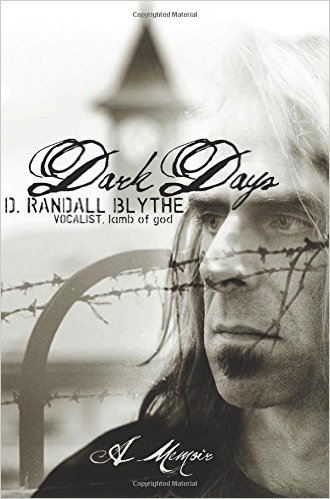
Lamb of God’s Randy Blythe talks about new album “Resolution” and his memoir “Dark Days”

Randall Blythe is probably best known for his work as lead singer of the band Lamb of God. In 2012 while on tour in support of their latest album “Resolution” Blythe was arrested upon entry into the Czech Republic as part of an investigation related to the death a fan at one of the bands shows 2 years prior. “Dark Days: A Memoir” is the first book release by Randy which details this ordeal from the days leading up to the arrest and the roller coaster ride which ensued during the preceding months. Media Mikes had the pleasure of talking with Randy recently about the book, what it was like reliving those experiences and also about the bands upcoming album and summer tour run.

Adam Lawton: What was it like going back through your journals and reliving those experiences during the writing of the book?

Randy Blythe: I think people were looking for me to have some sort of cathartic experience during the writing of this book and it just wasn’t. For the most part it was an unpleasant experience. It wasn’t fun while I was going through it and it wasn’t fun writing it. I think the story has value and there are some things in there that might help some people actually. I think this story needed to be told before my memories faded too much. I was thankful for the journals I had. It was weird to look back at them and read about this low point in my life. This wasn’t the first time I had looked back at journals where things weren’t going well but when I looked back at this specific journal and the fact that I was writing it while in a Czech prison was really heavy. There are some funny parts in the book but for the most part it was not a lot of fun going back. I learned a lot about the writing process through this whole thing but again it wasn’t very enjoyable.

AL: Did you have to do a lot of self editing when you were making your way through the chapters?

RB: I all heard was that we have to amputate things. (Laughs) That was more at the very end. Prior to that I was able to just write and write. When I write I am very clean and careful so there is not a lot of re-writing that has to be done. Aside from some grammatical era’s which the copy editors handled there wasn’t a lot of restructuring. When I first started I had this sort of romantic view of a writer/editor relationship as I had read stories about writers that I liked that had these intense relationships with their editors where they fought back and forth about what was going in the book. That’s what I was expecting but instead I got a lot of encouragement which is what I needed. I guess I wanted my hand held a little bit through the process but, I didn’t get that. (Laughs)

AL: Was there ever any worry about bringing further attention to these events and their relationship to the band?

RB: I had to examine that and certainly think about it for awhile. I don’t think there can be much more attention drawn to the situation that what has already happened. Anytime an article or something comes out whether its something it’s something as simple as going to Disney Land the events from the Czech Republic are going to be mentioned. No matter if it’s applicable or not it gets mentioned. There’s just so much misinformation out there about this that I figured if it’s going to be talked about I might as well set the record straight. If this brings the story to new people then at least they will know the real story. It won’t be something they found on the internet which needed to be put through Google translator or something like that. They get the straight dope from me. I wrote the book in a way that people from outside the metal scene will understand. I wanted people not from that world to read this as well. There is enough universal treatment and value related to personal accountability that no matter where you are in life you can relate to a degree.

AL: When this is all done do you feel you will be able to close the book on maybe just a small piece of that experience?

RB: Yes. I know I am going to be still continually asked about this but once press and everything is done for the book and it gets brought up later on I can just refer people to the 500 page book I wrote about it. That’s it. Just a very short answer as the book has everything people need to know about what happened.

AL: The first two songs from the band’s new album “512” and “Overlord” are quite different from one another can you tell us about that and if there was anything different in the creative process this time around for you guys?

RB: “Overlord” is actually the first song the guys have done where I can sing over the top of it. It isn’t a bid deal or something that was done consciously. One day Willie was playing some blues licks and I started humming along and that’s really all that happened. It just was very natural and organic. As far as how things were done with this album it was all the same. We have been doing this for 21 years now so we aren’t reinventing the wheel or anything like that. We have been doing this a long time and it is what it is. We just try and grow as musicians with each new album.

AL: The band kicks off a summer tour run in a few weeks can you tell us about that and any other plans you guys might have for 2015?

RB: We will be out on the road with Slipknot for 8 weeks. After that we have about a month off before heading over to South America for 3 shows. After that we head to Europe for about 5 weeks with Children of Bodom and then we will be in the UK with Megadeth.

AL: After what happened in the Czech Republic does traveling to these other countries every worry you at all?

RB: No. From time to time when I’m walking down the jet way I do get a little nervous. (Laughs) I have been around the world twice and it wasn’t ever like I was in hiding for two years or something like that. I was right back on the road immediately after everything was over.

Be sure to check out our review of “Dark Days: A Memoir” in the review section of the site.


Related Content

Howie Fields and “Big” John Wallace discuss music and Harry Chapin

As much as I admire many of the actors, musicians, ball players and others that I’ve grown up watching, I’ve only cried at the death of four of them:  John Lennon, because it was so senseless; Roy Scheider, because he was my friend; Ron Santo, because he was my first “idol” and Harry Chapin… just because.

When I was 13, Chapin’s song Cats in the Cradle came out.  It struck a chord in me that I never forgot.  It was almost like Harry was singing about my father and me.  My son is going to be 31 later this month, and that song still rings true.  Where I was once the little boy that wanted to spend more time with his dad, now I’m the father who has to accept that my son now has a family of his own.  As I got older I became a fan of Harry Chapin’s music and I was crushed when he was killed 34 years ago today, July 16, 1981.

Today, Harry’s music is still being played, the torch being carried by his brothers Tom and Steve and the members of Harry’s band.  I recently asked drummer Howie Fields and bass player “Big” John Wallace a few questions about Harry Chapin and his music.

Mike Smith:  What were your musical backgrounds before joining up with Harry?
Howie Fields: Drum lessons at age 15 followed by a parade of teenage basement and garage bands playing Beatles, Stones. Rascals, Dylan, Kinks, Hollies, Who, etc. Better bands WITH PAY in my college years leading up to my entry into Harry’s band in 1975.
John Wallace:  I started out as a vocalist in the Grace Church Choir in Brooklyn, New York, where I met Harry and the other Chapin brothers.  I dabbled with the bass guitar in my teen years and my first public appearance on bass was in my teens when Harry asked me to perform his songs with him in people’s homes in Brooklyn. Fast forward approximately 10 years when he asked me to join his band.

MS:  When did you join the band?
HF: 1975
JW: I was a founding member, 1972.

MS: How was Harry to work with – was he open to collaboration when working out his songs with the group?
HF:  That ran the gamut. Sometimes Harry would run down a new song or two and ask us to come up with some ideas during concert sound checks (which he rarely attended) and at other times he would come in with a song and have very precise ideas. The rest of the time it would be pretty equitable collaboration in the recording studio.

MS:  Is there a favorite song you enjoyed playing live?
HF:   “Mercenaries,” “Odd Job Man,” “The Mayor Of Candor Lied”
JW:  Too many to choose from.

MS:  Do you have a favorite memory you’d like to share?
HF:   Quite notably for me, within the run of the show (NOTE – in early 1975 Harry and the band performed on Broadway in a show titled “The Night That Made America Famous” with words and music by Harry.  The show went on to earn two Tony Award nominations), was the night of March 1, 1975. Both Saturday performances were completed and Harry entered the band dressing room and asked Big John if he would come with him to attend the Grammy Awards ceremony at The Uris Theater for which he had one extra ticket and for which he had been nominated as Best Male Vocalist for “Cat’s In The Cradle”. He was also performing the song that night but John politely declined. Harry then put the ticket up for grabs and only after it appeared no one else was taking, I found myself in a cab with Harry, his wife Sandy, and his dad Jim, rushing over to the Grammy’s which had already begun. We entered the building and as we approached the doors leading from the lobby into the actual theater, a young usher (about 20) noted that Harry was overburdened with a guitar (not in its case), a leather bag, and one or two other items. He offered to take the guitar which Harry gladly gave up and then, somehow, as the usher was holding the guitar and at the same time attempting to open the door to the theater for us, he simultaneously dropped the instrument and tripped in such a way that one of his feet came down right on the guitar. So…there the guitar lay…smashed on the ground. It happened in a nano-second and it wasn’t pretty. All I remember at that point was Harry putting his arms around this devastated and horrified kid, saying “Don’t worry about it bro”. He could be like that.

MS:  Harry was killed on his way to perform at a benefit concert.  Did that show ever go on?
HF:  No, that show did not occur but one year later the band plus Tom Chapin did a memorial show on the same stage in Eisenhower Park in Long Island.

MS: Are you amazed that, three decades after he passed away, Harry’s music continues to gain new fans?
HF:   I am, as it’s pleasantly remarkable to me that Harry’s music has endured AND in many circles/families has been passed down to younger generations. The variety of age groups are evident at many of our concerts.

Rock and roll fans take notice:  I first “met” Howie when I was working on a screenplay about Harry’s life.  I contacted Howie and asked him if he had any idea what the set list was at Harry’s last show.  He sent me a copy of it.  Not a list of the songs, but a copy of the actual set list.  Howie runs a web site called “Rock Paper” and I’ll let him tell you about it:

HF:   Rock Paper is a business I have had going for over 20 yrs. It’s an archives of rock music and its two main entities are a complete archives of Rolling Stone magazine, whereby ANY article, record review, concert review, advertisement EVER published in the magazine can be located. Rock Paper has over 10,000 back issues o the magazine going back to the issue #1 (1967). There are also thousands of other back issues available of other classic rock magazines….Crawdaddy, Circus, Creem, etc, etc, etc,

It also has an archive of concert ads cut from newspapers from NYC & the UK.

You can search for whatever you’re looking for at www.RockPaper.net.

All photos copyright www.harrychapin.com


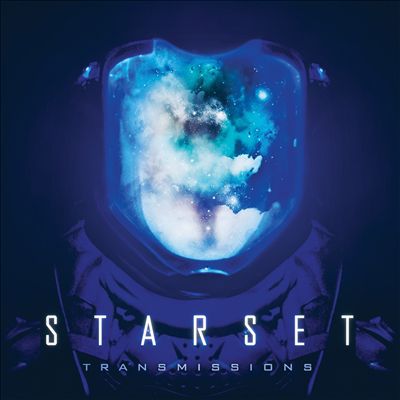
Starset’s Dustin Bates talks about debut album “Transmissions”

Dustin Bates is the singer for the Columbus, Ohio based rock band Starset a band whose debut album “Transmissions” spawned the break out hit “My Demons” long before there was ever actually a real band. Media Mikes spoke with Dustin recently about the creation of the album, the formation of the band and the group’s current tour with the recently reformed Breaking Benjamin.

Adam Lawton: Can you give us some background on the band and “The Starset Society”
Dustin Bates: I actually created the “Transmissions” album before there was even a band. We had the song “My Demons” out on the radio before we ever had out first rehearsal. We did that because the record was done based upon the philosophy and the narrative of “The Starset Society”. I sort of incorporated their outlook into the record almost as a marketing device for their society. We are not the only tool being used to promote the society as they are using a variety of other media such as graphic novels and video. It’s cool to be a part of that and to be able to incorporate that into our record.

AL: Was then always the idea to adopt Starset as the band’s name?
DB: Exactly! The actually name itself sort of harkens back to the narrative. Starset is a non-rotating planet that is involved in all of this. The planet does rotate around the sun making a portion of the planet inhabital called the Starset region because there is always an eternal sunset there. The way that this plays into the narrative will be told in the first graphic novel.

AL: Does the band have any hand in writing the graphic novel?
DB: That is something separate. We mention the novel and the other forms of media being used so that people can dig more into what we as a band are a part of. We realize this can all be a bit confusing so we try to inform everyone of how things all go together.

AL: Can you tell us a little more about the album done prior to there actually being a band?
DB: I did the music based on the inspiration of the narrative. There is also another story line that is more of a love story so I tried to give the music a human element that people could relate to as there is a lot of science, technology and future type elements. I was very careful to not go too far. Once I had that done I reached out to various friends to help me record this. I was able to bring on Rob Graves to produce and he really helped me obtain the cinematic level of sound that I wanted to create. I knew early on that Starset needed to have a soundtrack to a sci-fi movie which was created by a rock band. Rob was the perfect guy for that. We sent the song “My Demons” to radio and it started to get really positive reactions. I knew very quickly that I needed a band and a record label. Since getting both of those things we have practically been on the road non-stop ever since. That was about a year and a half ago now.

AL: The album has quite a number of musical layers. Where did you start when you were writing the record?
DB: It was different for each song. Some started out more traditional with the melody and lyrics while some started with the music and after I had the lyrics I threw all the music away and rebuilt it so it had a cinematic vibe. I usually do write the melody of a song before the lyrics. I generally have ideas already for the other layers such as the strings and what not but until we get the actual players in there that’s when things come to life. We had an actual quartet come in and play all the orchestral parts on this record.

AL: Can you tell us about your current tour with Breaking Benjamin and what the band has planned for the rest of the year?
DB: It has been pretty busy for us with touring. We just recently got off of tour with Halestorm and the Pretty Reckless and now we are out with Breaking Benjamin through August. They are one of my favorite bands from when I was younger so it’s really great to be able to be out here with them. After this run wraps up there’s a possibility of going overseas and being out on the road for the rest of the year. Between all of that the Starset novel will be coming out this winter.

Ryan Reynolds talks about his latest film “Self/Less”

3

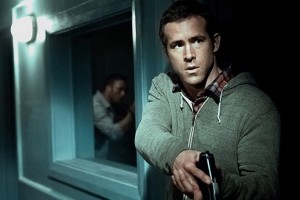
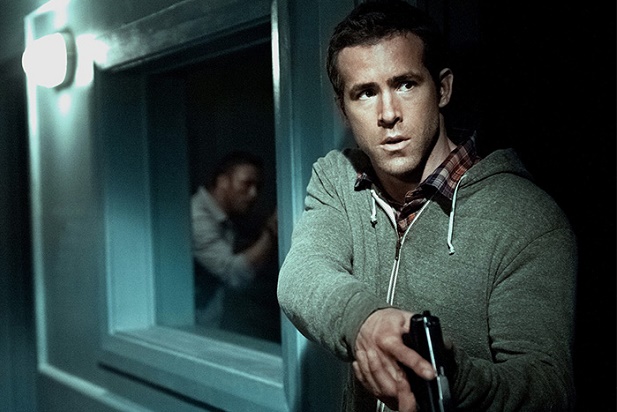
3Ryan Reynolds stars this week in Gramercy Pictures’ new sci-fi thriller Self/Less from director Tarsem Singh (The Cell). Self/Less revolves around a dying billionaire named Damian who’s initially played by Sir Ben Kingsley before he undergoes a groundbreaking procedure to place his mind inside a younger, healthier body. Ryan Reynolds’s body to be precise. Secretive underground sci-fi operations generally not being on the up and up, Damian finds himself fighting to find out the origins of this new body while on the run from people behind the shady organization. Assuring us that he was himself and not Sir Ben, the future Deadpool star sat down in New York to discuss the film as well as some other acting aspirations (hint: let’s let the man be evil for a change!)

What attracted you to this film?
Ryan Reynolds:
As I’ve gotten older–and I guess I can say that now–I kind of, it’s about working with people you want to work with. And Ben Kingsley had signed on before I was involved. And Tarsem, I remember being so taken with Tarsem’s The Cell. A film which I thought was incredible and of course, Sir Ben and basically everything he’s ever done so…I was just kind of excited to get in the sandbox with those guys.

How familiar are you with the actual research that people are doing regarding this concept?
Reynolds:
A little bit, I read some stuff on it–there’s actually some compelling science that would suggest that this is something that we could actually achieve…I find it disturbing, actually. I find the whole concept of it disturbing to so abuse this first life and privilege that we have that we would be as arrogant to ask for a second one. It raises all kinds of questions. For some people it raises a theological argument, for some people it’s just a moral issue, for some people it just sounds awesome. So you know, it just depends. I remember when we were scouting for locations for the movie, we met a couple of billionaires here in New York because we were interested in borrowing their penthouse for Ben Kingsley’s character you know, because he’s a billionaire. And every one of them said “is that possible?” [laughs] You know and you just think ‘wow, you really, you would do that, wouldn’t you?’

Did you meet with Ben Kingsley, since you’re playing the young version of the same character even though you don’t share scenes together?
Reynolds:
Yeah I met him. Yeah. I actually spent a lot of time with him. It wasn’t so much that we were shooting together, we had one scene together, but he was around quite a bit. And you know, I would just hang out with him, we had lunch a couple of times. He’s amazing. He’s just an amazing person. I really think he’s kind of like a skin covered nuclear reactor. I mean I’ve never seen a guy with that kind of intensity. He’s got something blowing through him that’s otherworldly.

Lauren Damon: How was it playing against Matthew Goode who’s really playing one of those Archetypal British Villains?
Reynolds:
Well, he British. It helps. [laughter] But yeah the Brits are to me, you know, they embody great dry comedy. But certainly there’s a perception that villainous behavior goes in tandem with being British…Yeah, he brought a great screen villain into the mix for us…He is really remarkable. It’s also great because he’s kind of a leading man type of guy and you know, that’s important. I always think–my dream role is to play a villain. I still, to this day, I haven’t had the chance to play like a proper you know, on screen villain. The Voices [2014] I play sort of a nefarious bad guy, but he doesn’t believe he’s a bad guy so I can’t wait to do that some day. Because that’s just, I love villains because villains never ever ever ever feel like villains to me. I would love to do a villain role because I would play every line like he’s the hero. Because in real life that’s what villains are. Villains are just people with opposing convictions, not necessarily people that wake up in the morning and go ‘I need to kill someone.’

Why do you think you’ve not been asked to play a villain?
Reynolds:
I don’t know. That’s a good question. I don’t know. I also just think that Hollywood tends to cast villains–they tend to cast people that seem like villains…And I don’t know why they do that. I think like–I would prefer that they take somebody who doesn’t necessarily strike you as a villain and make them the greatest onscreen villain to ever happen. So I don’t know. I would love that opportunity though. I mean I look for them, I always look for them. But typically it’s in the writing–you read them and you’re like ‘oh well he’s written like a villain’ that’s why I don’t want to do it…You know, he’s talking like a ‘bad guy.’ I don’t think villains are like that. I think that villains talk like they’re the hero. You know, if you look back throughout history and you think of some of the greatest, you know, most awful human beings and the people that truly did the most damage, they believed in what they were doing. And that’s why they did the most damage. So like that to me is interesting.

LD: Shooting this and then also being Deadpool, a basically unkillable character, did you find yourself giving more thought to the concept of immortality, whether you saw it as a good or bad thing?
Ryan Reynolds:
I don’t know who would want to–to live forever, I feel like that’d just be a sentence. It would be kind of awful. I would not want to, I wouldn’t want to do that. But yeah, as a theme, it’s kind of been around lately for me…I think for a lot of people that’s wish fulfillment and in this film, I think Self/less they kind of tackle it in an interesting way. There’s a real moral argument there. There’s something, it’s a lot to with a class system. There’s a guy who uses his influence, power and money to acquire something that no other human being could really acquire. And to use it in such a way that is not necessarily altruistic but kind of disgusting, that’s the moral journey that he’s on and I think that that is what also derails him. And I found that to be kind of interesting.

LD: Are you going with Deadpool to Comic Con? And do you think you would brave the show floor whether in disguise or not?
Reynolds:
Oh yeah, we will have a presence at Comic Con for sure. Yeah, I’d love to go on the floor…

LD: Deadpool’s really covered, you could do it.
Reynolds:
Yeah I could! But if I wear the actual Deadpool suit from ten miles away, you’ll know it’s me. Because it’s the actual Deadpool suit, which I think is a feat of engineering. No cosplay looks that good. So I don’t know, maybe I’ll go in a Hulk mask or something.

Self/Less opens Friday July 10th
Deadpool is scheduled for release February 16th 2016

David Keith talks about his latest film “Awaken”

There are some actors who, when you first see them, they stick with you. The first time I saw David Keith on screen was when he played the young Army PFC that spends some time with Bette Midler in “The Rose.” Next for me was his role as Robert Redford’s fellow prisoner (and eventual right hand man) in “Brubaker.” But it was his role as Naval Pilot Candidate Sid Worley in “An Officer and a Gentleman” that made not only earned him two Golden Globe nominations but stardom.

Since then he has had high profile roles in both film (“Firestarter,” “Heartbreak Hotel,” “Major League II”) and television (“Flesh and Blood,” “High Incident,” “The Class”). I had the great opportunity to meet Mr. Keith in 1993 on the set of “Major League II” in Baltimore and a nicer, more down to earth person I’ve never met. Especially at 11:00 at night on a cold October evening at Camden Yards.

This week, Mr. Keith’s film, “Awaken, co-starring Daryl Hannah and Jason London, arrives on DVD. Mr. Keith recently spoke with me, with that soft Tennessee twang, about his latest role, his work preferences and feeling much better, thank you.

Mike Smith: Give us a brief introduction to “Walsh,” your character in “Awaken”
David Keith: He is a black market organ harvesting surgeon on an island where some bad people are kidnapping people, making them live in the jungle so they can clean out their systems and then harvest their organs for wealthy people who have loved ones who need an organ transplant but don’t want to wait in line for them.

MS: What, if anything, attracted you to the project?
DK: The producer and co-writer (Natalie Burns) is a friend of mine. She asked if I would come do a role for her. I said “yes” before I read the script.

MS: You seem to work equally between film and television. Do you have a preference?
DK: If I could be stuck in one job for the next ten years it would be in a situation-comedy. That is the best medium because it combines the best of theater and the best of film. When you do a play on Broadway you have to sign a two-year contract, but you get sick of it after about three months when you’re doing eight shows a week. When you do a movie, you never shoot anything in order. There’s no audience. There’s no real feeling of the project as one piece like there is in theater. In a sit-com it’s like doing a different play every week. You’re the same character but you’ve got new lines – new scenes – new things to do each week. And the hours are tremendous work – about four to six hours a day – five days a week, instead of fifteen hours a day, six days a week on a film. So sit-coms are my favorite medium. And “The Class” is my favorite sit-com that I’ve ever been on.

MS: You’ve directed in the past. Any intention of getting back behind the camera again?
DK: Yes, but only under my terms. Those were not great directing experiences – I didn’t have the control I needed. I did the best I could with what I had to work with. I have a script I hope to make. I had the money all in place years ago but then the guy who had signed the contract reneged on the contract. That script is still sitting in my drawer waiting for someone to come along and say, “let’s make this movie.” (laughs)

MS: What do you have coming up next?
DK: I don’t actually know what my next job is going to be. I had some medical issues – nothing serious, nothing to worry about – that kept me out of work for the last year. I haven’t worked in a year for the first time in my career.

MS: Everything is good now?
DK: Everything is good, yes. I’m healthy and ready to go. Now it’s up to my agents. I don’t live in L.A., I live in Tennessee. I don’t go to auditions. Somebody has to remember me and want me. (laughs)

Terry Dale Parks talks about roles in “Terminator Genisys” and “Maze Runner: The Scorch”

Terry Dale Parks has appeared in numerous television series and films. Some of his work includes appearances on “Homeland” and “Prison Break” to “Thor” and “Olympus Has Fallen”. Terry recently just finished work on “Terminator Genisys” and “Maze Runner: The Scorch”. Media Mikes had the chance to speak with Terry recently about his work on the two films as well as some of his other upcoming work.

Adam Lawton: What can you tell us about your work on “Terminator Genisys”?
Terry Dale Parks: That started off kind of funny. I had started out thinking I was going to New Orleans to work as that’s where a lot of the film was shot however at the last minute I ended up going to San Francisco. I do some stunts in the film as well as playing a character. The role I play is actually that of a guy who is in charge of one of the cybernetic research facilities. This was such a great film to work on. The thing Director Alan Taylor wanted to do was to make this film feel like the original James Cameron “Terminator” films. The film is sort of picking up where the originals left off. Having Arnold back in the film and getting to work around him was really a treat for me.

AL: What was your take on the “Terminator” series prior to working on it and how do you feel it fits in with the previous films?
TDP: I grew up with “Terminator” and the first 3 movies are really what I consider to be it for me in the series. Growing up in the 80’s and with that classic “I’ll Be Back” phrase that’s really where I see this new film fitting in. It really goes back to the originals. There’s a lot of heart in this film and it’s not just constant CGI effects. That’s the thing I loved about the original films was that all the characters had these dynamic relationships. Genisys has some great surprises and I think people are really going to like the film.

AL: You also are going to be appearing in “Maze Runner: The Scorch”. What can you tell us about that project?
TDP: I had never really heard about the first film. I ended up going to see the film one day not knowing what to expect and ultimately I found the film to be really interesting. What I loved about it is was how the relationship between the kids in the film developed. As the film went on it felt like they were this little family. So literally the next day after seeing the first film I got a call from my agent asking if I would be interested in reading for the film. I actually read for several different roles when I went in. I ended up landing a role where I am in charge of a facility where the kids are taken. I can’t really say much more than that. “The Scorch” literally picks up where the first film ended and it’s almost like watching your favorite Sci-Fi series and this is the next episode. What I found with working on this project is that the kids in the film have such a great relationship off screen that it seems to carry over to on screen. They are all great kids and it was a real pleasure working with everyone.

AL: You have a pretty extensive television resume as well. Do you find it difficult to transition between television and film roles?
TDP: There are long hours and hard work that go into both.  Sometimes when you are working on a television show you might be working on 4 different scripts which are being shot on a couple different sets all in one day. With a film you’re working on one thing so you are only focusing on certain scenes each day. With the television stuff I have to spend a little bit more time making sure I have everything set and am on the right page so to speak for each shot as like I said before a lot of times were working on multiple episodes at one time.

AL: Since were on the topic of television can you tell us about working on “Astronaut Wives Club”?
TDP: That was such a great and fun cast to be around. The show is going to be a 10 part mini-series on ABC. I think people are going to find this show very appealing as I think it has something that appeals to all demographics. For the guys the astronaut angle I think will be very interesting. At times the show also has a “Desperate Housewives” feel to it as it showcases a lot of the drama that these guys went through. When the ten episodes are up I wouldn’t be surprised if they don’t order more. It’s based off of a series of books so there are more options if they choose to continue on with it.

AL: Are there any other projects you have in the works that you would like to mention?
TDP: I did a project with Kyra Sedgwick titled “Big Sky”. That’s should be an interesting film that I think people will like. It’s definitely a thriller and also stars Bella Thorne and Frank Grillo. I am very excited for that to come out.

Copyright: MediaMikes.com © 2015 · Powered by: nGeneYes, Inc. · Login

All logos and images used on this website are registered trademarks of their respective companies. All Rights Reserved. Some of the content presented on our sites has been provided by contributors, other unofficial websites or online news sources, and is the sole responsibility of the source from which it was obtained. MediaMikes.com is not liable for inaccuracies, errors, or omissions found herein. For removal of copyrighted images, trademarks, or other issues, Contact Us.