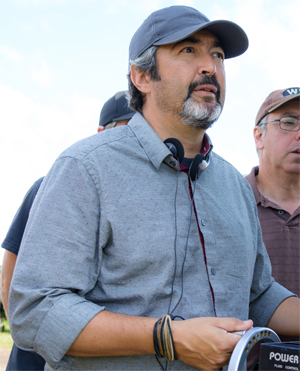
Director Jon Cassar Talks About His New Film, “Forsaken” and the Possible Return of “24”

You may know the name Jon Cassar from his Emmy Award winning association with the popular television series, “24.” But when he’s not putting Jack Bauer through his paces, he’s taking the reigns of one of the best Westerns of the past decade.

“Forsaken,” which Mr. Cassar directed, boasts a strong script and an even stronger cast, including Donald and Keifer Sutherland, who star as father and son. Mr. Cassar took some time out to talk to me about “Forsaken,” the return of the Kennedys and what may be next for “24.”

MIKE SMITH: What attracted you to “Forsaken?”
JON CASSAR: Actually I was there when the project was born. A few of us were sitting around on the set of “24” talking, waiting to set up a shot when we started asking each other, ‘what would be a great thing to do once “24” ends?’ Eventually we all decided, ‘let’s do a Western together.’ So that’s really where it started. Once we decided on that Keifer came along. He wanted to do a film with his father so everything just worked. I’m happy to say that I was there at the inception. We got a brilliant writer (Brad Mirman) who not only wrote us a classic Western but also a touching father/son story. So by then I had Keifer, I had a great script and THEN I get Donald Sutherland? There’s no way I wasn’t going to be involved!

MS: Any trepidations about taking on a Western? They seem to be so hit and miss these days.
JC: Yeah, of course. I mean you do worry about it. I mean at one point it was the most popular film genre’. The most popular television genre’ also. I mean, it’s amazing how many popular television shows were Westerns. But it did, of course, begin to fall out of favor, all though it is making a little bitty comeback over the past few months. But you’re right. But I knew I had a great Western story. And I knew I had a great father/son story that people could connect with. I knew that relationship was really the heart of it and if we did it right I knew if would connect. And it’s fun doing something that isn’t a true CGI film. It’s fun doing something where the effects are more simple.

MS: What was it like as an observer to watch Keifer and his father work together?
JC: It was great. I’m very fortunate to have had a front row seat to watch Keifer and Donald working together. From the first time it was fantastic. They are both veteran actors and, in my opinion, two of the best actors of our time. To watch them work together was a pleasure. As it was watching all of the actors. Demi Moore. Brian Cox. Michael Wincott. They are all so experienced. I was very lucky to have a front row seat and watch them work.

MS: Keifer. Michael Wincott. Greg Ellis. You used quite a few of your “24” company in the film. Was that because you already had a good familiarity with them and their work?
JC: Absolutely. First of all, you have to know that all of the actors in the film were basically my friends. I didn’t have a studio dictating who was going to play what part. We actually got to pick who we liked. A lot of them were Keifer’s friends. And of course, by having done “24,” they knew me so it made the connection easier for sure.

MS; The recent return of “24” was very successful. I’ve heard rumors that Fox is considering re-booting the show. Is that something you plan to be involved with?
JC: Nothing is official yet. I am involved and we have talked. I can say that if it goes forward I won’t be involved in the pilot but I do hope to be involved in the series. However, at this point I’m not.

MS: What else are you working on now?
JC: A few years ago I did a mini-series called “The Kennedys,” which was an eight-part mini-series that starred Greg Kinnear as JFK and Katie Holmes as Jackie. We’re doing a sequel to that, called “After Camelot,” based on a book. It will deal with what happened to the Kennedys after John and Robert died. It’s mostly the Jackie story and it follow her during her marriage to Onassis as well as John Jr. and Ted Kennedy. It will encompass all of that history. We shoot that soon in Toronto. It will run on the Reelz Channel. It’s actually a fun project for me to do because we’re re-creating all of the history that we all grew up with.

Chantel Riley Talks About Broadway’s “The Lion King” and Her Role in the New Film “Race”

Born in Toronto, Chantel Riley’s path to stardom began when she realized she wasn’t doing what she truly wanted in her life. She is now. Since 2012 she has starred as Nala in the Broadway musical “The Lion King” and last year was able to take time off from the show to begin her movie career with a pivotal role in the new Jesse Owens bio-film RACE.

During a break in her busy schedule, Ms. Riley took the time to speak with me about the physicality of “The Lion King,” her role in RACE and why one day she hopes to be able to “ease on down the road!”

MIKE SMITH: Tell us a little bit about your background? How did you end up on Broadway?
CHANTEL RILEY: I’m originally from Toronto and I went to University in Toronto. After school I pretty much got a 9-5 job but after about a year and a half I realized it definitely wasn’t my thing. (laughs) Because I was a performer. I had taken dance lessons and I had grown up singing in my church. I just had an idea that something else was out there for me. I had no idea what it was but I knew I needed a change. A friend of mine told me about an open casting call they were having in Toronto for “The Lion King.” I had never auditioned for anything before in my life. This was my first time doing anything like this. So I went to the audition and got a few callbacks, which was very exciting. I had a couple well extended lunch breaks…I kept having to go downtown for these callbacks. A couple months later I got a call from my agent and they wanted me to audition to be part of the cast of “The Lion King” in Germany. So I flew to Germany, did the audition and booked the job on the spot. I did the show there for about a year and then I auditioned again for Julie Taymor, who directed “The Lion King” on Broadway, and was offered the role of Nala in New York on the Broadway stage. And here I am!

MS: So basically you’re just like Shirley Jones…you just show up and you’re on Broadway!
CR: (laughing) Exactly!

MS: You’ve portrayed Nala for quite a while now. Do you have to prepare anything special for yourself to keep the performance fresh? I can imagine doing the same thing 8 shows a week for a couple of years might get boring after awhile.
CR: Yes I do. I keep occupied by taking classes and making short films. These things keep me thinking outside the box. I also use what I learn from the classes and the films and bring it with me on the stage. It gives me a new sense at how I look at each performance every night. And this also gives me the chance to try something new. Every night we have a new audience. So it’s a great way for me to try new techniques and to find different ways of performing.

MS: I’ve never seen the show on Broadway but I’ve seen photos and the occasional video clip. It’s a lot more than just standing on a stage and singing. Is the show more difficult physically as opposed to musically?
CR: The show is very physical. We’re constantly on stage and we play lions and zebras and other animals. My role has me constantly running around. If Nala isn’t jumping on-stage she’s jumping off-stage. There’s a lot of activity. AND singing. I sing two songs in the show. We sing live and the dancers are moving non-stop. So it is a very physical show.

MS: You have an important role in the upcoming film RACE. What is your character’s relationship to Jesse Owens in the film?
CR: Quincella Nickerson was someone who was very close to Jesse Owens. She was not only his friend but a huge fan of his. She was a socialite whose father owned a huge insurance company in California. At that time that was pretty huge…that an African-American could be that affluent. She spent a lot of time with Jesse…attending parties and things. There were rumors going around that she and Jesse were engaged to be married. They spent a lot of time together. So we see a lot of that in the film…a lot of her in the film.

MS: If you could play one role on Broadway, either current or a show from the past, what would it be?
CR: Definitely Dorothy from “The Wiz.” I think that would be such a fun role. It would be so exciting. And it’s such fun music. That would be so much fun!

MS: What do you have coming up next?
CR: I’m working on a new short film with James Brown-Orleans, a fellow cast member from “The Lion King.” We’ve done a lot of short films together. Our most recent film, “Teacher’s Nightmare,” just won the Wendy’s International Short Film Award for Best Drama. That’s pretty cool.

Anvil’s Steve “Lips” Kudlow talks about the album “Anvil is Anvil”

Steve “Lips” Kudlow is the lead singer and guitar player for the band Anvil. After a period of mainstream obscurity the band was thrust back into the spotlight due to the award winning documentary “Anvil! The Story of Anvil”. The group’s 16th and latest studio album “Anvil is Anvil” comes out at the end of February and Media Mikes had the chance to speak with Lips recently about the album’s release.

Adam Lawton: Tell us about the new albums opening track “Daggers and Rum”

Steve Kudlow: I got a call from this guy to be a pirate in a play he was putting together. I thought it sounded like fun so I said sure. He cast me in the role of Captain Snarls and also asked if I could write a song to go along with the play. I ended up becoming super inspired and started writing. I had the music already and was trying to come up with a title. At first I was thinking “Swords and Tequila” (laughs). I knew that wasn’t going to work so I started to think about what I associated with pirates. The first thing I thought was rum, and then I thought about what they used as weapons. That’s sort of how the title came about. I did some more research on pirate music and what are called “shanties” which originated from musical plays. It was sort of mind blowing that I was being asked to make up my own shanty for this play. It was all pretty cool. The song really sounds like it came from a musical play.

AL: Was this one of the first songs you ended up writing for the album?

SK: Yes it actually was. It was the first song I had lyrics for. I had probably written a couple others at the same time and musically this was I think number 3 or 4. In the studio we called all the songs by their numbers and this one was done really early. Despite it being 3rd musically it was the first completed. Interesting enough song 2 as it was known as was actually one of the last ones to be finished.

AL: The album has 12 tracks listed but a 13th track is included as a bonus on some versions. Can you tell us about that?

SK: Truth be told there is no such thing as bonus tracks. We recorded 13 tracks and all 13 tracks are going to be released eventually. Considering 99% of people listen to music free on the internet these days there is really no such thing as bonus tracks because no matter what version of an album you may get it ends up out on the web for everyone. The “bonus” tracks were just additional tracks that needed to be separated for distribution purposes. We did one version of the album for people who pledged money towards its being made which of course is different from the one found in stores. By doing that we also were able to give the fans in Japan that additional pledge track. The Japan version of the album ended up being the pledge version and easily the most obscure.

AL: Do you guys have any special packaging or limited edition versions of the album planned for release?

SK: Most everything is going to be done in digi-packs. We also are going to be releasing the album in a clear double vinyl format which is going to be really cool. What’s great about the vinyl is it will also come with a digital version of the album so fans can put the vinyl away as a collector’s piece.

AL: Being 16 albums in your career as a band how do you go about keeping things fresh and new from album to album?

SK: I don’t think that is something you consciously do. I don’t really think about it in those types of terms. For me it not about wondering how am I going to come up with something but more so how am I NOT going to come up with something. (Laughs) Every time I get to express myself it’s exciting. It’s a hell of a lot of fun to make new songs. You have to make it that way because if it’s not then the end result isn’t probably going to turn out very well. Just have to have fun with and not waste time. Working with Rob (Reiner) he always wants the next part and to be able to keep going so that’s what I mean by not wasting time.

AL: Do you and Rob have the same relationship now as you did when you first started the group in the late 70’s?

SK: Absolutely! Our relationship is actually the most magical aspect of all this. You end up meeting someone and you find out they think the same way as you. I compare it to when people finish each other’s sentences. With Rob and I we finish each other’s riffs. We grew up together and have listened to the same music our entire lives so we have the same mind set on things. We are very in-tune with one another.

AL: How has the addition of Chris Robertson on bass helped the bands dynamics?

SK: Chris has been with band for about 2 years now however this is his first time actually recording with us. We are really blessed to have Chris and things just fell into place with him. At the time when we needed a new bass player we weren’t really out there searching for someone. We had a tour coming up in 3 weeks and we needed someone pretty quick. We had our friend Sal Italiano come on board for the tour and after worked with him and Jon another friend of ours through the “Hope in Hell” album. When it came time to find someone again I asked my friend Jon if he knew any one. He suggested this guy Chris as he was the guy who taught Jon how to play all of our songs. Chris came in and just blew us away. Sal did another tour with us and we had Chris along as part of the road crew. When the tour ended we had a one off show in Germany that we still had to do so I called Sal to confirm everything. While we were talking Sal stated he wasn’t going to be going. There wasn’t much I could say other than ok. Chris joined the band and here we are. Chris has a great sound and style and along with being a killer bass player he is a great back up vocalist. Chris is really great to work with and is honored to be part of Anvil.

AL: What type of tour plans are in place and has there been any more discussions about another Anvil film?

SK: We are currently out on the road in Europe with Udo Dirkschneider. We will be overseas until early April supporting Udo and then after that we will be starting a headlining tour in the U.S. in mid April. That tour is set to run through mid June. As for another film we have about 40 minutes or so of usable footage and it’s something we continue to work on as the band continues to progress.

A Conversation with Deadpool’s Greg LaSalle

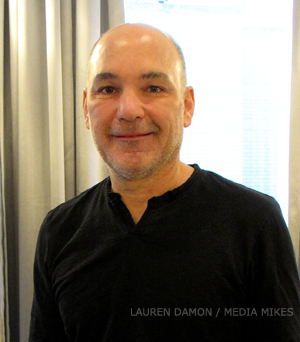
If you’ve made the right decision this Valentine’s Day weekend and have checked out Deadpool then you may not have heard Greg LaSalle but you definitely saw him. Sort of. LaSalle is one of the tech wizards behind the Academy Award winning MOVA Facial Performance Capture system used in bringing Deadpool’s X-men reinforcement, Colossus, to the screen. While Colossus’s body and voice were provided by actor Stefan Kapicic, LaSalle stepped in front of the MOVA cameras to give the metallic facial performance.

The morning after Deadpool made its New York debut amidst a Deadpool fan costume contest, I sat down with LaSalle for a conversation on Deadpool, other Marvel films and this amazing process used to bring characters such as the Incredible Hulk and Thanos to life.

Lauren Damon: Did you go to the fan premiere last night?
Greg LaSalle: Oh yeah, that was a lot of fun.

How many Deadpools showed up?
LaSalle: Oh you mean the people who dressed up? Oh I don’t know, I think there were quite a bit. I think they chose like seven of them or something, it was pretty funny. One in a tutu, I mean…it was hysterical.

Are you someone who goes to conventions in general seeing that?
LaSalle: No–
“Avoid them like the plague!”
LaSalle: [laughing] No, it’s not that, you know it’s just I have so many things to do. I don’t get a chance to do that very often.

Can you talk about what MOVA Facial Performance Capture is?
LaSalle: I’ll start by telling you first a little bit about what motion capture actually is–which is where you would wear the reflective markers. And that system, those systems were actually developed to deduce where a skeleton is moving. So as those cameras became higher resolution, people started shrinking the dots and gluing them to people’s faces. The data set you get from that is only like 200, 250 points. So a friend of mine in the bay area decided that he would fund the development of research to find out how to actually capture the entire surface of the skin deformity and that’s where MOVA comes from. That development.

So it’s super high resolution, it captures about 7000 data points, all the wrinkles, all the subtlety of the performance is captured. So it’s basically like capturing a scan per frame of the film of the actor. And then about two years ago Digital Domain developed a technique to take those and apply them mathematically to a computer generated character. So the entire performance gets carried over so it really looks, you know, all the performance is captured.

I heard that it’s captured through paint instead of dots?
LaSalle: We apply, it’s invisible makeup in white light that just is applied as a random pattern and then the system has strobing black lights and white lights. So certain cameras take a picture when the black lights are on and all they see is this random pattern makeup. And that’s what’s used to create the scans and track the points across the face.

Seeing as you worked on both Avengers and Age of Ultron and a couple years had passed between them, did the process for capturing the Hulk change? If you worked on the Hulk?
LaSalle: I did, in the first Avengers that’s what it started out as actually, it was before filming was working with Industrial Light and Magic to capture Mark [Ruffalo] to see how he would move as the Hulk. On set they used a bit of different technology so this new technology that we used for Colossus is actually the first time it’s been used. This mathematic transferring of the performance. Things like in the past, like in Avengers, we surveyed the actor. We’d get all the information about how the actor’s face would move and then companies would build a rig which is just a way of animating and when you run a slider, the lip goes up and it goes up as if it was the actor. But it doesn’t have all the subtlety and nuance of the variation in a performance. The new technology the does.

Did you have any hand in that Hulk-smashing-Loki scene?
LaSalle: Well we only specialize in the facial stuff, so only the expressions part of–but that was my favorite part of the first Avengers movie. That ‘boom boom boom!’ [LaSalle does some pretty accurate Hulk smashing motions] It’s a shame though to see Tom Hiddleston beat up like that because he’s such a nice guy.

You captured his face for that? Wasn’t it just grunting?
LaSalle: Yeah yeah…It’s so many years ago now and we’ve done so many things that I can’t remember exactly what we did. If I remember correctly, they put a pipe with some foam on the end and they kept [jabbing motions, laughing] like they’re pushing the back of [Tom’s] head so that he’d [jerks his head]…It was very strange!

What did you work on for Age of Ultron?
LaSalle: Actually I only did the–Thanos. Working with Josh Brolin.

Also on Guardians of the Galaxy too?
LaSalle: Mhmm.

I don’t know if Marvel would let me ask you but when is he coming back?!
LaSalle: That’s really funny because I was convinced while we were filming Age of Ultron that they’re gonna–I just have this feeling that something will happen. I mean he’s like the baddest dude in the whole universe and they have to do something–

Yeah coming up of course we have [Captain America] Civil War, that’s Earth-bound but [Thor] Ragnarok is coming and that’s out there! He’s waiting in the wings…
LaSalle: I mean I wish I could say. I’m not privy to those kinds of things to begin with. But it would be really cool to see a bad ass movie with Thanos. I mean they have so many characters and so many things to do. Kevin Feige–he’s the president of Marvel–knows this universe probably better than Stan Lee and he has this all mapped out in his head. He knows exactly what he’s doing.

Do you keep up with the other projects in between what you’re working on?
LaSalle: I don’t actually like actively keep up. I look for within the industry, what we could work on and how we could pull things off.

So working as Colossus, you’re performing his scenes and they just transfer your face into his?
LaSalle: Yes, in simple terms, yes. It creates a scan first and then this fancy math transfers that by figuring out where–you teach it ‘Okay, this is where the center of my cheek is and this is the center of where Colossus’s left cheek is’ and it mathematically calculates what else is going on in that area. It transfers it.

How did it come to be this split performance where you’re on the face and Stefan Kapicic provides the body and voice?
LaSalle: Tim Miller understands this technology really well, so he figured he could take the best of what different people had to offer and Frankenstein all that together. And he was adamant about having an authentic Russian voice. I believe he even recorded another and he just didn’t like it and then he found Stefan. And I think it works extremely well. It’s a pretty cool way of using the technology.

What was the most fun about being Colossus?
LaSalle: Well I’ve known Tim for a long time and I just like working with him. He’s fun, he’s actually a lot like Deadpool in his comedy and the way he’s sarcastically funny. So I enjoy working with him on that. But I also did the tests which we did like six years ago so it’s been really awesome to see it finally get made. So just the general overall feeling of being happy about that.

Was Tim involved at all in how Deadpool was treated in [2009’s] Wolverine?
LaSalle: No

Was there discussion about just getting away from that entirely?
LaSalle: Tim is a huge comic book fan. He reads a ton, he likes graphic novels. He knew that he wanted to take what’s on the page and have that be what’s in the film. He wasn’t going to mess with it, he wanted to–as a fan he knew that that’s what everybody wanted to see. That’s what he wanted to do.

How instrumental was Ryan Reynolds also in getting this?
LaSalle: I think it was a collaborative effort because they all have their understanding of the character so they–and Tim is great that way. I know he had people that they discussed it: ‘This is what I’d like to see, this is what you’d like to see’ and then they figured out a way to get that all to happen.

This is your second time in front of the camera [after an appearance Night at the Museum: Secret of the Tomb] is this what you’d like to do more of?
LaSalle: Well I think it’s fun, I’ve been acting for a while and that’s why Tim gave me the part. But I like to do both. I think it’s fun to play the computer generated characters because you get to do really wacky stuff. And then but I also like really small, intimate type live action things. So I’ve been shooting a few short things.

What’re some of your favorite films this past year?
LaSalle: Oh, I liked the Big Short, I liked Trumbo if you’ve seen that. I thought Trumbo was really good.

Yeah, it was weird to watch that in the context of “Award season” since there’s so much of Oscar in the storyline…
LaSalle: I know! You gotta block all that stuff out. Well it’s so interesting too. I mean it’s doubly cool that it’s true.

Do you have more acting roles coming up?
LaSalle: I just finished filming, ironically with Blake Lively [married to Reynolds]. A movie with her called All I See is You which there’s what we call invisible effects. It’s a live action movie but they wanted to use this new technology to drive her newborn baby being born and a character that she sees in her head. So I played both of those parts.

Playing a fetus?!
LaSalle: Not the fetus! As soon as it’s born I had to do the scenes of taking the first breath of screaming and crying and opening the eyes and looking around. They wanted all this subtlety. They figured a live performance would do that more than trying to animate all that subtlety into it.

[This next question features discussion of a specific Deadpool moment, so for the SPOILER-shy, skip down past this one!]

Does that mean you had anything to do with Deadpool regrowing a baby hand? [A brilliant moment after Deadpool cuts his off to escape Colossus’s handcuffs]
LaSalle: (Laughs) No! No. It’s so funny because I’d known that he cuts his hand off for a very long time but I never go to see anything–I only knew because Colossus ends up with his hand. And I never knew what happened. So when he cut his hand off, the first time he saw the movie it was like ‘OK now how does it grow back? How does it grow back?’ And then they even made that funny, it was awesome. I didn’t know what to expect because I don’t like to see the movie until they’re completely done because there’s just so many things that pull you out of it, you know? So I wanted to wait til it was done and I think that all this talk–the blood and the guts and the R-rating, it’s perfect. I don’t care!

It would be weird if you had this much violence and then just no blood, it’s annoying when PG-13 movies do that–
LaSalle: Plus it’s there because it needs to be, a couple of short seconds and it’s not gross. It’s just real.

[Spoiler over!]

Back to Deadpool , considering there are so many films now in the ‘Marvel Universe’, what do you think is most appealing about this character, what does he bring?
LaSalle: Well I think his authenticity to the original character. And the comedy. I mean I think there’s a lot of funny stuff in the Avengers movies and some of the other stuff, but that’s what Deadpool’s character is built around. And I think that that just makes it’s different and stand out.

If Deadpool had to be pitted against any of the Avengers, who do you think would win out?
LaSalle: Oh…This might sound bad but I think Deadpool is way smarter than those other characters. So I think he’d win a lot of stuff. Because he thinks differently than they do.

Tommy Wiseau talks about “The Room” Rifftrax Live, James Franco in “The Disaster Artist” and his Hulu series “The Neighbors”

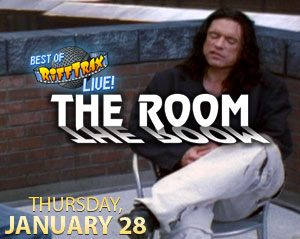
Tommy Wiseau is the director, producer, writer and star of the cult classic film “The Room”. Since the film was released back in 2003 it has achieved “Rocky Horror” like fame playing to midnight screenings non-stop to a huge fan base. Some called the film one of the worst ever made but true fans see “The Room” for what it really it, which is fun! The film was parodied live by the Rifftrax gang last year and is heading back to theaters again on January 28th, 2016. Media Mikes had a chance to catch up with Tommy again to discuss “The Room”, James Franco playing him in “The Disaster Artist” film adaptation and what else he is currently working on.

Mike Gencarelli: Tell us how you feel about “The Room” being parodied by Rifftrax Live?
Tommy Wiseau: Yeah they reached out to me about a year ago about doing it. I liked what they did, I mean, I don’t support parts of it 100%, but it does show how fun “The Room” is. People take things too serious and the film isn’t made to be serious, it is made to be fun. If you haven’t seen the Rifftrax Live version of “The Room” in theaters, I would recommend it highly when it comes around again January 28th, 2016. And bring a big group of friends with you as well.

Mike Gencarelli: The film has been out for 13 years now, are you ever taken back by the continued interested in it year after year?
Tommy Wiseau: Yes, I am still surprised. I am happy that people are still talking about it and still seeing it in theaters. I also have been working a few new projects as well that I am excited for fans of “The Room” to see as well. I love touring with the film across the country. I usually show “The Room” and an episode of “The Neighbors” as a double header. It is a lot of fun to do and also getting to interact with the fans.

Mike Gencarelli: Last time we spoke back in 2011, you mentioned you were planning a 3D release for “The Room”; can we expect that soon?
Tommy Wiseau: Yeah that is something that I have wanted to do for a while. Making a film into 3D is definitely not an easy process. So yes, I still want to release “The Room” in 3D, but right now I am not sure if I want to reshoot the entire film in 3D or just convert it. But I am definitely still planning and exploring my options. Right now James Franco is making his film of “The Disaster Artist”, so I will let him have that and then I will focus more on the 3D after it is released.

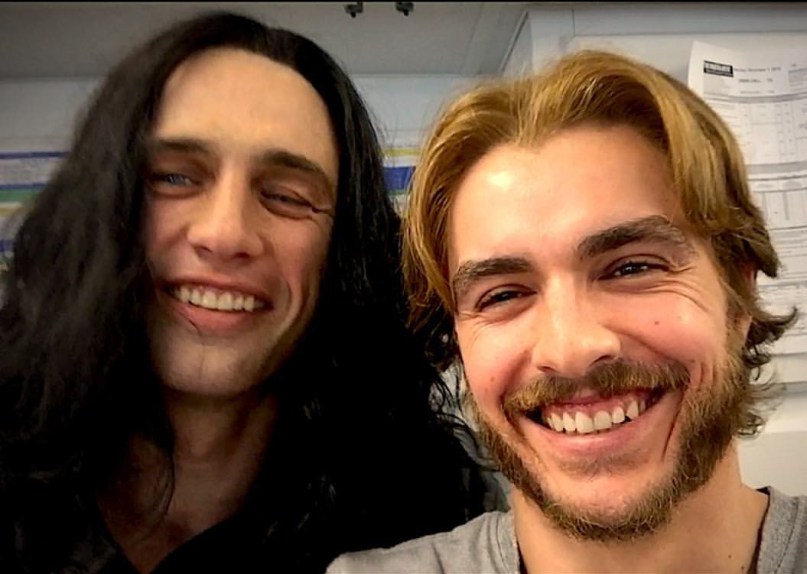
Mike Gencarelli: Speaking of that, tell us about your feelings on James Franco playing you in the film adaption of Greg Sestero and Tom Bissell’s book “The Disaster Artist”?
Tommy Wiseau: I think James is one best actors in the business. I feel good that someone like him is playing me. Of course, I also feel a little like they are taking something away from me since it is based around my life and my movie. I hope that this is a big success for James since then in return I think it will also then bring more people to “The Room” and that’s good.

Mike Gencarelli: Exactly, I think that this will put your film back in the spotlight and also introduce it to a new audience…
Tommy Wiseau: Yes, exactly. I am hoping about that. James and his brothers are doing a very good job so far and I am excited to see it when it comes out later this year.

Mike Gencarelli: Do you have any involvement or input on the upcoming film?
Yeah James did speak with me about the role and I gave him some tips. My life is very complex but I believe he will do a good job. I also have a small part in the film as well, which is cool.

Mike Gencarelli: Did you enjoy playing the villain Linton Kitano in newly released “Samurai Cop 2: Deadly Vengeance”?
Tommy Wiseau: It is always great to play a villain, I loved it. This film was a very fun experience for me I can tell you that.

Mike Gencarelli: Your TV series “The Neighbors” has aired 6 episodes on Hulu; any plans for more episodes on that format?
Tommy Wiseau: Yes! Currently 6 episodes have aired on Hulu and the fans really have been excited about what we have so far. I am currently working on another 6 episodes for Hulu. We have been also exploring releasing the episodes in animated format as well. So that is something that we were trying and it also getting a good response. I hope to have the next 6 episodes on Hulu by the end of 2016.

Mike Gencarelli: You did a Reddit AMA last year where you mentioned a new project called “The Foreclosure”, what can you tell us?
Tommy Wiseau: Yeah that is a project that I am currently working on as well as “The Neighbors”. “The Foreclosure” focuses on the housing market right now and looks into the current situation that we are facing today with people not being able to pay for their houses and being forced to foreclose. It is a current topic. There is also another project that I have that is currently untitled but that I cannot talk about right now…maybe in about 3-4 months, I can. But a lot of very excited stuff coming up for my fans!

Black Sails’s Ray Stevenson on Playing Blackbeard

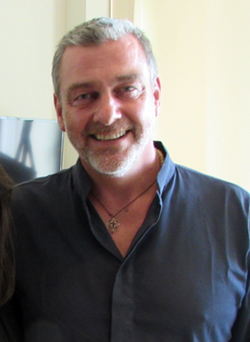
When Starz’s Emmy-winning series “Black Sails” returns for its third season, the usual inhabitants of Nassau are set to be joined by the iconic pirate Black Beard. Black Beard (real name Edward Teach) cut an striking figure on the seas of the 17th and 18th century, often relying on theatrically in his attacks to further intimidate his enemies. Many of his flourishes were the basis for the way piracy was portrayed in pop culture thereafter. At 6’4″, Irish actor Ray Stevenson (HBO’s “Rome”, Punisher: War Zone, the Thor films) can certainly fill the shoes of that scary scallywag on screen while being completely affable and a joy to chat with when he sat down with me at this year’s New York Comic Con.

Lauren Damon: I’m a huge Marvel nerd, so of course I’ve seen you as Volstagg [In the Thor movies]–
Ray Stevenson:You saw a lot of me! [laughs]
So I was wondering going from that to Black Beard, have you nailed down the ‘beard acting’ between these characters?

Stevenson: Well you know it’s more about beard preparation. That you just sort of you know like abandon hope as you go into the makeup room. Just like say ‘alright…‘ Yeah ’cause it was about the same time. Cause again, that magnificent Volstagg beard was like this one, was individual pieces. And it’s almost like strand by strand it’s laid on. But the horrible thing is that you’re up at four in the morning, and you get in there about half past four or something and it’s still dark. And it’s just your body’s screaming that nobody should be up at this time. You should be going home. And you lie down and the first thing they do–you’re obviously clean-shaved–so you’re shaved. And then they slap glue on your face. They basically paint your whole face with tacky tacky glue and it just…never feels good. You never get used to that. And then it’s this sticky sticky stabby process.

But I am–I wasn’t freaked out by it. I was kind of used to it. Yeah so as far as ‘beard acting’ is concerned, yeah. The only thing I did this time was that it was my mustache. Which was fine when you’re shooting and then when you’re not shooting, walking around with this massive sort of handlebar mustache which I’ll never do again [laughs] because it was neither one nor the other. It wasn’t me, it wasn’t the character. So it was fine when we were shooting. So this time they’ll have to provide that as well. I tried it.

Playing one of the most notorious pirates of all time, what steps did you take to make it unique and what steps did you take to research so you’re true to the character?

Stevenson: There’s a lot of research available, a lot of material on the character itself. Which is a double-edged sword as well because like all these things, history is a thing that is written by the victors…It’s like the American cowboys, that whole civilization of ‘the Wild West’ and all this that was sent back east to titillate over and get excited about and stuff like this. So there’s a lot of that going on at that period. They were writing about you know, “Ye Olde Pirates” and cutthroats and all this. So in amongst that, there’s a thread that you can glean.

And obviously there was some serious historians trying to put this stuff together. There comes a point where, with everything, you have to push all that sort of general knowledge aside sort of thing and concentrate on the script. Because ultimately you’re playing the script. And what you could bring to it was there was–and what’s beautifully portrayed I think in the series–is it’s much more about the man. The myth and the legend has already been established. So he’s coming in as ‘Blackbeard’…This is not about him establishing his legend.

He’s…it’s like if you have Keith Richards walk in a bar, and there’s guys there and they go like ‘He used to play the guitar…’ You know what I mean? It’s like he walks in and there’s guy in the tavern going [hushed voice] ‘He used to be a pirate, you know what I mean?‘ It’s just, he has that effect. He has that charisma. You wouldn’t actually lock eyes with him. He just carries that with him. And carries from, not out of bluster I think, because that’s it. He’s earned it.

And so you’ve got a guy who’s–you’re trying to play somebody who has got that presence and that charisma. It’s like unleashing a kraken, he just turns up. If he looks at you, you sort of…it puts you straight on edge. You go ‘well, why is he lookin’ at me? Am I glad he’s looking at me? Or am I not?’ I mean…so a lot of it is done in subtleties and in the writing. And then when he engages with the likes of Rackham and Vane and what have you, he knows what he’s bringing with him as well. And also he’s got quite a bit to say.

So the research and all this is great to a point, but obviously you have to avoid the fact that he was from Bristol. And so that heavy Bristolian accent unfortunately is the big cod accent that most people they think about when they think ‘pirates’. That sort of you know ‘ARRR‘ and all this sort of stuff. Whereas the Bristolian accent is wonderful and rich, BUT it would lend itself towards you know perhaps that sort of assumption of you know, getting a little too cod piratey. But that’s not what it was about. But it was the essence of the man from Bristol, who was actually a tremendous strategist and seaman and captain. And knew all about the power of display. And that’s why he would dress the way he did. He was 6’3″-6’4″. In the 1720s, that man was a colossus, he was a giant. So he basically knew about the theatre of putting that effect on so that the other ships they were after would just hopefully capitulate. Because there was no loss of life and they’d get all the booty and everybody’s happy, there’s no bloodshed, he didn’t lose any crew members living off the legend. And maintaining his prowess. It’s a strange thing to try to make that balance but ultimately you’re playing you know, you’re serving the piece. You’re playing the drama itself.

Between this and “Rome”, Thor and other roles, you have all this weapons training. At this point do you have a preference? Do you feel more comfortable with one or…

Stevenson: [Laughs] The one’s that win! No, because they all–it’s amazing working with the weapons guys. Like on Punisher[:War zone] we worked with the Marines and also with some Force Recon guys and they were just…I mean I wanted to make sure we didn’t have those, you know the old Hollywood guns that never ran out of bullets. So I mean–and GI Joe as well–there were mag reloads and all sorts of stuff. You want to do it enough times so that it becomes automatic. Because sometimes, like with Punisher especially, a lot of the people that watch it, maybe they’re going to be the army guys. Who are training and training and training and they’re going to see something like, even your hand position on your weapon, the use of the weapons, the reload, and they’re gonna say ‘Do you know what, that’s we’ve been doing…‘…So they’re not thinking like ‘Ehh he knows nothing.‘ That sort of authenticity.

The weapons training obviously with things like [The Three] Musketeers, thigh-killing training. Because it’s a certain type of sword fighting. Which anybody who goes to the gym I think they dread, ‘And now, lunges!’ Well that’s what it all is. But it’s lunges with intent. I think when you’re working with weaponry, I work harder than when I ever work at a gym. Because it’s fun. And you’re basically working on a choreographed dance as well. So you’re doing all this extra work. At the end of the day, you’re just shaking like jelly. I never– I’m never at the gym like that. But because you’re rendering your hand and you’re learning these set pieces and moves…I mean ultimately the person is the weapon. That’s what you learn throughout all the weapons training, no matter what period it is, the real weapon is the person behind it. And you know, if you get that right, then how you handle the weapons is just second-nature.

How is the dynamic between Blackbeard and the other alpha male characters–Vane and Flint–but also if you go deeper than that with some of the other characters?

Stevenson: Well he does because coming back to Nassau, after such a protracted period away, he’s got his own reasons for coming back in. I think it’s a lot to do with the lack of a son and an heir apparent. Even after eight marriages, eight wives, there’s no son. And the closest thing he has to any of that would be this pirate captain who he mentored, which is Charles Vane. And to see if there is–is there anything left? Is there any relationship? Because in this period in history–because there were nothing like the numbers of people we have on the planet now and a man’s standing and his status and his legend that he leaves behind was the most important thing. If you lost status in life, pffft! That was it. You may as well throw yourself off the top of your rock. So to see if there was any spark of something that you know, could be reignited.

But what happens when he arrives back in Nassau, he sees that–and this is what he says to Rackham and Vane–he looks around and he says ‘I see what you’ve done, you’ve basically done the worst thing ever, you’ve made it prosperous You’ve turned them soft, there’s no pirates around’ Because they’ve all got their money…He basically comes back and holds them right up and says ‘What?!’ And of course, because it’s him, this sets in motion a sort of–it’s a real dressing down. And we’ll see the dynamic as to whether or not–because this is very much a kind of father-son relationship, or you know heir apparent with Vane, and how that plays out. And that’s what I love about…couched in all this world of ships and the huge set pieces and the galleys and a the fights and the battles, and all this sort of stuff, there is this real human condition of father-son, mentor, founding member, one of the original drafters of the pirate charter and walking living sort of legend. That people sort of stop their breath, the last thing they expect to see is this guy walking into a tavern or walking down one of the streets. He has that effect which he’ll use to great effect. And if challenged, he’ll meet it out swiftly…

And then the relationship with Flint is dealt with very well. Like they’re kept at a kind of distance initially because we’re establishing other things and Flint’s away…And then there is a coming together, ultimately, of course, right? And that’s all I can tell you about that. We’ll see!

How about some of the female characters?
Stevenson: How about some of the females? Aren’t they great! How about those girls? [laughing]
I mean, you know, look, he’s from a different era and he has his own, he has a long standing sort of thing with one woman who you get to meet. And where he’s off the island of Nassau and he’s actually on some spit of land or some island somewhere…it’s probably only on his maps where he goes with his crew. Where he–he basically sees these islands as launchpads not as new states or new societies. Next thing you know, he says these pirates will be farming, they’ll be setting up law-courts, they’ll be setting up judicial…and then where are you? He basically lives by example and shames people around him and with the Guthries, he’s got no love lost with the Guthries.

Black Sails season three premieres on Starz Saturday January 23rd at 9pm.

A “Hateful” Conference with Quentin Tarantino, Kurt Russell, Jennifer Jason Leigh and More

Quentin Tarantino’s eighth film, the aptly titled Hateful Eight, is now open in its limited release ‘Roadshow’ engagement for the next two weeks across the US and Canada. For film lovers, Tarantino is harkening back to a style of movie presentation in ultra wide 70 millimeter film that comes complete with a musical overture and intermission. It’s a must for Tarantino fans and I can’t wait to revisit this shocking murder mystery in the old west very soon.

Hateful Eight centers around ‘Hangman’ John Ruth (Kurt Russell), a bounty hunter chained to his bounty, the devious Daisy Domergue (played with absolute venom by Jennifer Jason Leigh). The angry pair’s stagecoach is stranded in a blizzard in the mountains of Wyoming en route to Domergue’s date with the gallows. They take shelter at the only inn midway to their destination where they are locked in with a host of other shady stragglers bearing their own secrets. Tarantino ratchets up the claustrophobia and tension from an extremely strong screenplay in the hands of a brilliant cast.

Seven of the Eight joined director Tarantino and moderator Josh Horowitz (MTV) prior to the film’s release at their New York press conference where the enthusiastic director discussed his thoughts behind the roadshow format and basically received high praise from his all-star cast including Russell, Leigh, Bruce Dern, Tim Roth, Michael Madsen, Demian Bichir and Walton Goggins.

Tarantino, an emphatic supporter of film over digital described how he and The Weinstein Company set up the Roadshow:

QUENTIN TARANTINO: The Weinstein Company has done an amazing thing–Just to put it in perspective, Warner Brothers put their entire weight behind Christopher Nolan when he did Interstellar. Never the less, they only played in about 11 venues in the course of his 70mm run, we are playing in 44 markets in 100 theatres with our roadshow. And not only that, they literally are some of the biggest and funnest big movie palaces still left. Like you know, The Music Box in Chicago, The Hollywood Theatre in Portland…I think it’s the Fox Theatre in Detroit, Cinerama Dome for 2 weeks in Los Angeles…It’s just really wonderful. And the places that didn’t–all the places that have 70mm capabilities we utilized them, but then other places we just moved the screens in. And moved them in and created it and I remember even talking about it when we first had a discussion. It was like ‘We should be like Neil Diamond coming into town…we should be like Book of Mormon coming into town!’ We go into big venues and maybe they don’t even show movies anymore but we’ll set up our big screen and we’ll set up our projectors and we’ll let ‘er rip! And I mean it has been a herculean effort but they pulled it off. We are screening in 100 theatres between US and Canada. I’m very very proud…

We’re trying to do this like the old school roadshows where…the normal version of the movie that plays, the normal release version–which, by the way when you think of movies like Laurence of Arabia or Ryan’s Daughter or anything, we’ve all probably seen the regular release version–but the roadshows had an overture, they had an intermission and they were a little longer. Ours is about 7 mins longer just for the roadshow version. But you also get…really cool programmes. And they all come with their own pin up ready for your locker of different Hateful Eight people.

Past Oscar nominees Bruce Dern and Demian Bichir were thrilled to be working with Tarantino for the first time and spoke about the opportunity to do so:

DEMIAN BICHIR: I think you know, the first that you’re curious about [is] how everything is gonna work out. Not only because you have this huge director’s name in front of you but with this amazing cast of actors. I remember the first time we had this table reading, you always want to one day say a Tarantino line on film, so I was already very happy and excited about it. But then to listen to every single line in the mouths and bodies of all this group of fantastic actors, that was beautiful. And not only that, I remember at the first reading that we had at this hotel back in Los Angeles, going back home and telling my girl everyone is so damn fucking nice! Because you know, a small fish can be lost in a big ocean unless they embrace you, unless they treat you well. And the first thing that made me very happy when I actually met Quentin was to find a warm man, a very generous loving man, and then you know, the whole thing was a confirmation of whatever I’d thought always. You know, the biggest artists are the nicest.

BRUCE DERN: I’ve been very lucky in my career but this guy, he does a couple things the others of the people I’ve worked with didn’t do: He has the greatest attention to detail I’ve ever seen…The other thing he does is he gives you an opportunity as an actor and everybody behind the camera as well a chance to get better. A chance–his material is so good, so original, so unique if you will, that the big part of it is you’re so excited that he chose you and NOT Ned Beatty or Jimmy Caan [laughs] So that you’re excited to go to work every day. And like with Mr Hitchcock for a few days, I had this every day with Quentin. You’re excited to go to work every day because he just might do something that’s never been done.

Later DERN added: I think that if there’s one thing I might say, the man obviously has a magnet. And what the magnet does to actors is you’re so drawn to him. And we haven’t brought up my main reason why is his reverence for what went before. His respect for the industry…is just mind boggling. And he means it. And if you dared question him, he will put you in your place and tell you facts about stuff that you never even knew was made. And that was the delight for me. And there’s that kind of thing you don’t get very often.

Joining Tarantino again were former Reservoir Dogs Tim Roth (also of Pulp Fiction) and Michael Madsen (featured in both Kill Bills). These ‘vets’ talked about re-teaming with him.

TIM ROTH: Well, I mean the man is the same. But yeah, I was around sort of at the very beginning and then I have this huge break from working with him. So I did get to see in a highly impactful way how his world has changed. How his, the set has changed…and the kind of circus atmosphere that kind of exists on his set. The crew has so much more knowledge of cinema and how to tell his stories. So I saw that big leap. And that was very exciting. It’s different, when we made Reservoir Dogs, I think we made it in about five weeks or so.

TARANTINO: In particular the case of Reservoir Dogs, I was probably the–along with the PAs–I was the least experienced person on the set. Tim and Michael both made a lot of movies by that time. I was just getting through the process.

ROTH: Well you did pretty good!

MICHAEL: Thanks Quentin, I wouldn’t even have a career if it wasn’t for you.

MADSEN elaborated on how he viewed his role as the shady ‘cow puncher’ Joe Gage: I read a biography of James Cagney and he said that if you play somebody who’s very noble, you should probably try to find a mean streak in that person. Or something dark that they’re carrying around. And if you play somebody who’s very evil you should probably find something good in that person. So there’s always a duality of what you do. And the best thing about making a picture for Quentin is that he let’s your character have a duality. If you’re capable of doing it.

Death Proof‘s KURT RUSSELL spends much of Eight chained to Tarantino newcomer JENNIFER JASON LEIGH, Russell explained working within this dynamic.

KURT RUSSELL: Well, first when Jennifer and I started to rehearse, we didn’t really think there would be much of a problem with the chain. We didn’t think it would represent anything much either and nothing could have turned out to be further from the truth. Everything that we did was informed by how that chain was dealt with. And so we had to learn to sort of get the Fred and Ginger of it all together. And that informed their relationship. So for me there was John Ruth and for Jennifer there was Domergue and together we were gonna be this team. Which we felt there was, like anything else, if you’ve been chained together for a week-week-and-a-half, 24/7, you’re gonna know about that person. And the Stockholm syndrome’s gonna set up pretty fast. And it did. In fact over a five month period of time, the Stockholm Syndrome between Jennifer and I set up. It informed everything that we did…
I just want to say one other thing and we haven’t said this but, it was an unspoken thing, this will be the first time she’s heard me say this: Because of who John Ruth was, everything when that clapper goes bang, shouts ‘Action’, that chain is MINE. I own it. Because of that, I felt that as soon as ‘Cut!’ that chain was HERS. We had to have a balance. And boy, I’ll tell you something, I really appreciated what she was going through. You turn that chain over to the other person, it wasn’t easy.

JENNIFER JASON LEIGH: I’m not as good a dance partner!

THE HATEFUL EIGHT

LEIGH elaborated on delving into the character of Daisy:
So much of it obviously is on the page because you’re dealing with such a great script and such a great character. With Daisy there’s a lot that’s mercurial and we had to find. And we wanted to find it together. And so much of Daisy is informed by John Ruth because she is always reacting with him because of what he’s done–The chain, the hits–what might she get from that. Where, you know…she thinks she’s a lot smarter than John Ruth, and actually she is. [Laughter] But there was–she kind of feels like she’s playing him a lot of the movie but there’s this one moment in the movie– and this is what’s so great about doing a Tarantino movie and what’s so great for all of us actors is that we’re always being surprised by everything–There’s a moment where it all shifts. Where John Ruth isn’t just a putz. You know, like a fool that she is just so much smarter than. He’s suddenly very smart and very dark. When he goes and gathers all the guns from everyone. And then she has to rejudge him, just like everyone else in the movie. Everyone in the movie is terrible and hateful. Everyone in the movie you also care for, they have their…maybe their weakness is the good part of them in a certain way…And I just remember the day we shot that scene ’cause Daisy is having a blast. I mean, yeah, she’s going to the gallows but she knows she’s not going to the gallows. She’s got it figured out. But in that moment, it’s not so clear anymore. And that was so exciting as an actress, to not know that was coming. To read it on the page and yet when I felt it happen in the room, I swear my blood went cold. And it was just like phenomenal.

WALTON GOGGINS, who plays Chris Mannix, the new Sheriff of the town (and in my opinion the MVP of the Eight if we had to choose one) also praised Tarantino’s scripts when asked if there was ever any improv of alternate line suggestions:
GOGGINS: There’s no improv in this press conference. He wrote everything. [Laughter] No, no, why would you mess with perfection? You know, we say that because it is. You know it’s every actor’s dream to get an opportunity to say a Quentin Tarantino monologue. Or a line of dialogue. But there is no need to change it. Even to add a ‘the’ or an ‘and’ or a comma, it really is perfect the way that it comes out of his imagination.

Eight actually went through a few drafts, especially after a live read was held in 2014 featuring much of the cast. I asked Tarantino how that live read affected how the film ultimately turned out:
TARANTINO: Well we altered a lot because it was only the first draft. And one of the things about the movie is I wanted to actually do three different drafts of the film. And so this live read was just from the first draft. Which is different than I normally do. Normally I write these big, long unwieldy novels and there’s the beginning and here’s the middle… And the middle’s always great because now you’ve committed to writing so much now you know more about the characters than you ever could before you start writing. And then there’s the end and kind of, by that point the characters have just taken it. So they always dictate the ending to me.
I mean, I’m doing genre movies, so I have an idea where I’m going at the end. I mean at the end of Kill Bill, I thought it was very possible she would kill Bill, alright? [Laughter] But how? Why, exactly? How you feel about it, that was very open to question. But that’s the good thing–one of the reason’s I like genre is because I can explore a lot of different things, but I still kind of have a road that I’m traveling to some degree or another. But this one I wanted to do differently. I wanted to spend time with the material. More time than I normally spend ie through the beginning, middle and end. So I wanted to you know, even go through the process of telling the story three different times.
And I can just give you an example: In the first draft, the Lincoln letter, which is a motif that plays out through the film, it was only dealt with once. And it was in the stage coach. Now, I knew I wanted to do more with it but I wasn’t ready. And I didn’t have any obligation to have to do it in the first draft. I could kind of find it on my own. And then in the second draft, it appeared at the dinner table scene. And in the third draft, it appears later the way you see it in the movie.
But just to give you another example, Daisy’s end in the third draft–which is what is in the movie–was where I thought I wanted to go in the first draft. But something stopped me from going there with her in that first draft. I almost felt I didn’t have the right to do that to her yet. Because I didn’t know her well enough. Not by just the first draft. So the second draft, and not in a tricky way almost just in an emotional way just as far as I was concerned, I wrote the whole second draft from Daisy’s perspective. Alright, just emotionally. Not in a tricky prose way, but just an emotional way. So I could really get to know her. I wanted to be on Daisy’s side for an entire draft of the story so I could really feel I knew her. And then after I feel I knew her, I could do what I needed to do to her.

To find out just what Tarantino did to Miss Daisy Domergue, go catch the roadshow while you can. It’s a thrilling movie mystery experience and one of my favorite films of 2015. Tickets and more information are available at: Tickets.TheHatefulEight.com/
Meanwhile, the regular release goes wide on December 31st.


Related Content

Wizards of Winter’s Fred Gorhau talks about album “The Magic of Winter”


Fred Gorhau is the guitarist for the NY, NJ, and PA metro area band The Wizards of Winter. The group which formed in 2010 has strong classical and progressive rock influences features several former Trans Siberian Orchestra members. The group recently released their second full length album titled “The Magic of Winter” which is a continuation of the groups 2014 self titled release. Media Mikes had the chance to speak with Frank recently about the new album, the group’s ties to the Trans Siberian Orchestra and the bands upcoming holiday tour.

Adam Lawton: Can you tell us about the group’s initial formation?
Frank Gorhau: We all come from different backgrounds. Me personally I come from a rock and heavy metal background. The group was put together by our keyboardist Scott Kelly, his wife Sharon and Steve Ratchen the bass player. The whole concept behind the group was there was a food pantry in the area that needed help. Scott and company wanted to do something so they decided to put a band together. The first year they were performing they did strictly Trans Siberian Orchestra (TSO) music. I joined the group in the second year when things really started picking up. People were asking where they could get our music and there really wasn’t a place. We decided we better do a CD so we did and now we are just releasing our second album. We have some former members of TSO appearing on the album and have had the chance to tour with 5 former members thus far. It’s great to be able to get together and do something that has grown exponentially. The group has gone from being a TSO tribute act to performing 20 of our own original songs with just a couple TSO classics thrown in for the member of that group who our now playing with us. We are doing a holiday rock concert of our own so it’s fitting to throw in some of those great TSO pieces.

AL: You recently started working with Jonny Z and Chuck Billy how did that partnership come about?
FG: I think Jon had seen some things from us and he reached out to me while we were on the road last year. He asked me for my info which I jumped at right away because Jon’s pedigree speaks for himself. We spoke and he asked if we had any video of a full show. Sadly I did not have any pro-shot material at the time. He really wanted to see our full show and as luck would have it he happened to be in Philadelphia when we were playing in nearby Easton, PA. The show was sold out and from there one thing just led to another. He started Breaking Bands with Chuck Billy and Maria Ferrero and they have been making things happen for us quite a bit this year. We are super excited and can’t wait to get out there.

AL: What can you tell us about the new album which came out earlier this month?
FG: I think “The Magic of Winter” is sort of a continuation of our first album. I am really happy with my playing on this record and our producer Eric Rachel did a fantastic job on things. It’s a really great sounding record. Tony Gaynor who was the original announcer for TSO does a great job not only announcing the song but tying the story in with everything. The story acts as this metaphorical train which takes the listeners from one place to another as it looks into various people lives during the holiday season. At first I wasn’t too sure of the story line and how it would all work but after seeing how it affects our fans and having some of those fans come up to me crying after the show really meant a lot. The album was a lot of fun and with it being the holiday season people can get emotionally involved with this release. We try to address all aspects of the holidays both happy and sad with our songs. We know that sometimes the holidays can be difficult for people and we do try to address that. I think people appreciate at that as it shows that they might not be the only ones with those feelings at this time of year.

AL: Were you more involved with the creation of the new album as compared to the previous when you were still relatively new to the group?
FG: I did play on the whole first album but only really had my hands in a couple of the songs. Most of the stuff was already there and I just put my spin on things. With “The Magic of Winter” I was intimately involved with the writing and arranging. We started putting all this stuff together in March or April so to have it all done for a November release is pretty good. There was a lot of good feedback that happened during the creation of this project and I am just super happy and proud of what we came up with in such a short time.

AL: How does the writing process work for the group being that there are quite a few members in the group?
FG: If there is one person more than any that brings in material I would have to say it is Scott. He comes up with a lot of ideas just sort playing around. Scott and I work well together whether we are retooling a traditional Christmas song or working on a new piece of material. Everyone brings something to the table. All twelve of us don’t normally get together to write but there is a core four or five that do work together and throw ideas back and forth. From there we bring the more solid ideas to the rest of the group and share with them what we think would benefit the track. It’s just been a really great experience.

AL: Having a history that is really entrenched with pieces of the Trans Siberian Orchestra be it through starting as a TSO tribute band to recruiting former TSO members, how do you go about differentiating those similarities from your own material?
FG: We are definitely similar and that’s not something I am going to pretend we are not. We started as a TSO tribute, our name comes from a TSO song. I wear that on my sleeve as sort of a badge of honor. I am a fan and to get to know these guys as friends now is something very special to me. We do have some differences in that we don’t take as much of the traditional Christmas music and rework it with a modern spin. TSO has done quite of bit of that. I think a larger portion of our material has vocals too it where TSO is mostly instrumental. We try to have about a 60/40 split between songs with vocals and straight instrumentals. We try to keep things interesting for the listener without going too far outside of the normal song structure.

AL: What can you tell us about the bands current holiday tour run?
FG: We are bringing out a few new effects with us this tour to help enhance the stage show. We have changed up the storyline a little bit as we don’t want to keep doing the same thing year after year. We won’t be doing all of the new record but we will be doing somewhere between 5 and 6 songs from that. The idea of the show is that it all takes place within a snow globe and as the globe is shaken the scenes change. The new material is sounding really great live and I think people are going to really enjoy what we have in store for everyone this year.

Creator & Stars of Adult Swim’s “Neon Joe: Werewolf Hunter” Speak at NYCC

Written & photographed by Elizabeth Phillips

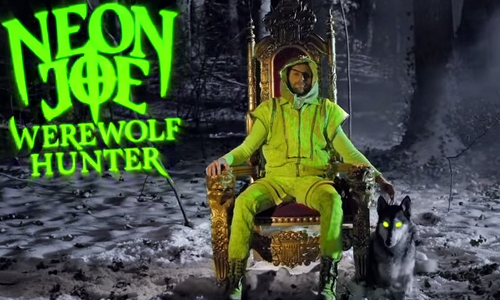
On Monday, December 7th, Adult Swim will premiere a new live-action mini-series called Neon Joe: Werewolf Hunter. The show will air for five consecutive nights, ending Friday, December 11th. The story follows Neon Joe, a mysterious man with a talent for hunting werewolves. Set in the pretend town of Garrity, Vermont, the town finds itself in trouble after a round of werewolf attacks and calls on Neon Joe for help.

At the 2015 New York City Comic Con, Media Mikes was able to sit down with lead actor and creator, Jon Glaser (Girls, Parks and Recreation), as well as several other cast members from the show, including Scott Adsit (30 Rock, Big Hero Six), Stephanie March (Law and Order: Special Victims Unit), Steve Little (Eastbound & Down), and Steve Cirbus (Delocated), to discuss the upcoming series.

Elizabeth Phillips: How did the idea for this show come about?

GLASER:
I was a guest on Jimmy Fallon to talk about my previous show, Delocated. I took some clothes that I owned- I did a neon yellow hoodie, a knit hat from american apparel, and these Coors Light sweatpants, and I paired them arbitrarily and just went on the show, and I said “I’m really sad that Delocated is done, but I’m excited about my next project. It’s called Neon Joe, Werewolf Hunter, and I’m dressed as the character right now. That’s really all we have at the moment, but we’re excited to figure it out.” It was one hundred percent a joke. It was not real. I mean, I treated it like it was a real thing, but I thought it was obvious it was a joke. There was no ideas. It wasn’t a passion project- it was just coming from this arbitrary joke, and Adult Swim said, “Why don’t you write a pilot of it?” I love that that’s where this show came from. It’s one of the things that I’m most excited about. There was no attempt to do anything but make a dumb joke on a talk show, and now it’s turned into this, which i think is super cool.”

EP: Is there anything else like this on television?

CIRBUS: I don’t think there’s anything else like it on TV. Neon Joe is a werewolf hunter that wears neon, so that werewolves know where he is. He’s not afraid of the werewolves. He comes into a situation- in this world, nobody believes in werewolves. It’s not like we have werewolves running around. He shows up, and he says, “Hey, guess what, small-town USA? You have a werewolf, and I get rid of them.”

ADSIT: I trusted all the creative minds behind it, and I also love Adult Swim. The people in charge there really see the people who create shows as artists and let them do their art. They think of these creators as auteurs who are allowed to express themselves. That’s unique.

EP: What is the balance between the wackiness and seriousness in the show?

MARCH: I feel our characters take themselves very seriously. I don’t think anybody was winking to camera or goofing off. We were all playing different people, and we were really committed to being those people. I haven’t often had an opportunity to work on something that is so wacky and so fun and so loose- almost never actually, so I couldn’t not do it. It was too good an opportunity. I certainly had a good time doing it!

CIRBUS: I think what makes the humor in John’s work and the collaboration of Glaser with PFFR is that it’s always rooted in some sort of truth. The humor is born out of fairly non-sensical human situations moving to a very terrifying situation, or conversely a very human situation that just goes sour for whatever reason, and that strikes a chord, a funny chord.

LITTLE: I feel like it’s played real, just, you know, there’s werewolves. I mean I’m sure there’s a guy that wears neon somewhere in some bad neighborhood because he’s not scared, and that’s Neon Joe- just not in the world of werewolves or bed and breakfasts.”

Neon Joe, Werewolf Hunter will air Monday, December 7th through Friday, December 11th on Adult Swim.

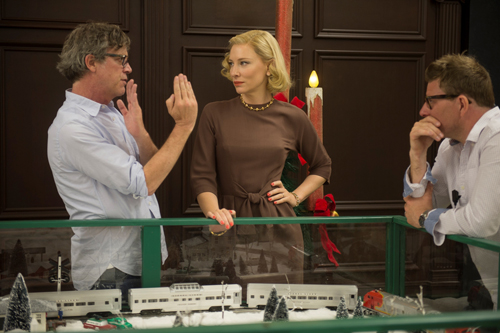
Director Todd Haynes and Stars Cate Blanchett and Rooney Mara Speak about ‘Carol’

CAROL

The works of author Patricia Highsmith have been crafted into some truly great films including Alfred Hitchcock’s Strangers on a Train and Anthony Minghella’s The Talented Mr. Ripley. This weekend, Todd Haynes’s latest film Carol from Highsmith’s The Price of Salt adds to these successes with brilliant work from a cast lead by two-time Oscar-winner Cate Blanchett and Oscar-nominee Rooney Mara. Blanchett plays the Carol Aird, a wealthy soon-to-be-divorced socialite in 1950s New York who begins a complex relationship with Mara’s younger shop girl Therese. The two navigate their feelings for one another while being challenged by the social norms of that time period. I attended Carol’s New York press conference this week where they, along with screenwriter Phyllis Nagy and fellow castmates Kyle Chandler and Jake Lacy joined moderator and WOR Radio film critic, Joe Neumier to discuss the film.

Director Haynes began the conference by discussing his approach to Highsmith’s work and this powerful romance at the center of the film:

Todd Haynes: I really was taking it on, as if for the first time, looking at the love story. Something that I felt I hadn’t really ever accomplished directly in my other films. And that really began with reading The Price of Salt, Patricia Highsmith’s beautiful novel, and the gorgeous adaptation of Phyllis’s script that first came to me with Cate attached. So it was quite a bundle of incentives when it first landed with me in 2013. But love stories are, you know unlike I guess war which is about conquerring the object, love stories are about conquerring the subject. And so it’s always the subject who is in a state of vulnerability and peril at some level. And through much of Carol that is the character of Therese who occupies a much less powerful position in the world in Carol…is younger, is more open, is sort of experiencing this woman with a freshness that is different from Carol’s life and experience. But what I loved about this story was how what happens between the two women really moves them through a series of events which change them both. And ultimately by the end of the film, it’s shifted sides. Carol is the one who comes to Therese with her heart on her sleeve at the end of film. So all of that made a lot of the smaller elements of looking and who’s being looked at and who is doing the looking and all of those questions, something that was very conducive to the cinematic language.

I asked Cate Blanchett, who had a supporting role in The Talented Mr Ripley in 1999 if she had studied Highsmith’s work in preparation for that film and how her perception of Carol changed upon revisiting it for this role:

(L-R) KYLE CHANDLER and CATE BLANCHETT star in CAROL

Cate Blanchett: Yeah it’s one thing entirely reading a novel and quite another when you’re then reading it again when you’re going to play a character in the book. I mean I read everything of hers I could at the time we were making Ripley. It was actually, much to shame, the first time I’d ever encountered her work. But I also was very interested in you know all of the sort of filmic incarnations of her work as well…And there’s some wonderful observations and parts of internal monologue–well more internal monologue that Therese has–but observations of Carol that’re in the novel that were really really useful to read. I just read at the time, the first time I read the book as a reader but to then to try and make that stuff manifest was really exciting.

Screenwriter Phyllis Nagy actually got to speak extensively with Highsmith before she passed away in 1995. Moderator Neumier followed up with Nagy as to whether Highsmith was nervous about this novel becoming a screenplay for film:

Phyllis Nagy: Well she was dead by the time this came to me. So we didn’t have that conversation…[laughs] I’ll have it with her later tonight. She didn’t like many of the film adaptations of her work.
Cate Blanchett: Didn’t she?!
Phyllis Nagy: Oh no, she couldn’t stand them. Especially Strangers on a Train.
Cate Blanchett: Oh what does she know!?
Phyllis Nagy: You know from her perspective–the guys trade murders in that book and in the film of course they don’t and it was one of the first arguments we had when I said ‘Oh, I love Strangers on a Train!’ she said [frowning] ‘Hmmm’ really with disgust. But she liked aspects of the films, Robert Walker she loved and she thought Alain Delon was extremely attractive, of course. So I hope that she would find this entire enterprise extremely attractive. I think she would. I think we are all of us not betraying the intent and the tone of the work. Which, really I think is the only thing you can do to be reverent to a source material. Everything else is up for grabs.

ROONEY MARA stars in CAROL.

Rooney Mara praised Haynes’s film for portraying Carol and Therese’s romantic relationship honestly without preaching:

Rooney Mara: I think one of great things about the film is that it’s not a political film, it’s not a film with an agenda, it’s not preaching to the audience. So people are allowed to just watch it for what it is which is a love story between two humans.

Later, she addressed whether or not Therese having an older female lover lessened the chances audiences would see the age gap as something Carol was exploiting.

Rooney Mara: …Would it ever feel predatory? It’s not like I’m 17 years old. You know, Therese is younger than Carol and she certainly is–they’re at different stages in their lives but I don’t think that she’s so young that it would be…it never felt predatory to me and I don’t think it ever really would have, male or female.

Rooney’s character at the start of Carol is already in a relationship with an over-eager boyfriend Richard, played by Jake Lacy who spoke about Richard:

Jake Lacy: Todd spoke a little when we first met about the idea that, for Richard the world is there to take, you know. He’s young, he’s in New York, he’s first generation American. He’s smart, he’s handsome, he has a job and a girl. You know, the world is his for the taking and yet it slips away from him. And sort of without knowing it, thank god that it does because otherwise…he’s fifteen years or ten years earlier than Carol and Harge and that world if he and Therese stayed together and created a life like them. It wasn’t a life anymore, you know?…To me, for Richard the idea of a dream that then falls apart, or that someone is not willing to be a part of that dream and trying to wrangle them into it…

Kyle Chandler plays Harge, Carol’s husband who is grappling with losing his perfect family in his divorce from Carol. Chandler spoke about the importance of playing his character without making him stereotypical:

Kyle Chandler: …It allowed me, I think at some point I realized that it could be a stereotypical character very easily. And [to] portray what you would imagine Guy from the Fifties under these circumstances…but what happened was at some point, the worst possible moment in a man’s life or a woman, when they’re in love, and they realize they’re not in love anymore. And this character never realized he wasn’t in love anymore. He was always in love and he was intensely in love. And he also had this little child. Not just his wife, not just his child, but his family unit. So important to him, and so important to say nothing of his social status and what he was. But he refused to give that up. So that…allowed me I think, to stay within that and never lose love or respect; But still be very confused on what is going on. Which goes back to that one direction that [Haynes] gave me when [Sarah Paulson’s character, Carol’s ex-lover Abby] is walking in the room and I look across and I go, ‘Who ARE you?’ basically.

SARAH PAULSON stars in CAROL

Paulson as Abby, Carol’s ex-lover, is one of Carol’s strongest bonds in the film, who she actually calls upon to pick up Therese when they hit some obstacles. Paulson spoke about her character being in this tricky situation.

Sarah Paulson:
…I do think, I wonder what I personally would do if someone I loved and still had feelings for, if I was called upon to come in and rescue the person that she currently loves…I don’t know, I don’t know. It was to me a very big testament to her friendship and her love and I think the desire to be around Carol and in Carol’s orbit no matter what. I think that Abby’s sense of society–and I don’t mean literal society but her community, her friendships, you know they were probably quite narrow at that time. So to lose something like that would be…the consequences of that would be too enormous. I just started thinking about things like that…

Haynes also commented on how a modern audience views all of Carol’s female relationships versus how people within that time period in the film would have seen it:

Todd Haynes: There are also things that a modern audience has to keep reminding ourselves we’re quite different at this time, counterintuitively. Where an older woman could invite a younger woman to lunch and it was absolutely totally appropriate. Where she would have never invited the head of the ski department to lunch. Or they could check into a motel together as two women but if they were a heterosexual unmarried couple, checking into a hotel at this time would have been a scandal. So there’s ways in which the morays and the codes of the time are also things that we’re learning and reading against their actions and gestures.

Carol is now in theaters, you can read my 5-star review here.

Paul Bettany discusses “Shelter” with stars Jennifer Connelly and Anthony Mackie

Paul Bettany may be known as one of our finest English actors, with roles in such major films as A Beautiful Mind, Master and Commander, The Da Vinci Code and of course, Marvel’s Avengers franchise. What he also is however is now a fifteen year resident of New York City with Oscar-winning wife (and Beautiful Mind co-star) Jennifer Connelly. The city, which Bettany loves, is currently facing a homeless crisis which sees 60,000 people seeking public shelters nightly. The majority of them families.

The actor had been developing a story about judgment and redemption for his feature directorial debut, but it wasn’t until Hurricane Sandy hit his home city that Bettany honed in on filtering his story through the lens of the homeless experience. The result was Shelter, which Bettany describes as a “moving optimistic story,” and stars Connelly as Hannah and Anthony Mackie (Captain America: Civil War) as Tahir, a pair of homeless people from completely different worlds now residing in New York City. They come together to help each other face their pasts and the everyday trials of living on the streets. An impassioned, opinionated Bettany joined Connelly and Mackie this week at the New York press conference for the film.

One particular homeless couple focused Bettany on where his story would go:

Paul Bettany: “I live in a really nice apartment I moan about because I’m now a New Yorker…outside this apartment was this homeless couple. A black man and a white woman, she was blonde. And I would see them, we would see them, we would pass them on the school run. My children would say hello to them, they’d say hello to us, and that was kind of the extent of it. And I have to, I’m ashamed to say, that day by day, their poverty became more and more acceptable to me and they became invisible. Before they actually disappeared. And then Hurricane Sandy hit and we never saw them again. There was a mandatory evacuation of our area of Tribeca and they used to live in a tiny little piece of like a ‘park’–it’s laughable, it’s smaller than this room–on the corner of Canal Street and the West Side Highway. And they used to live under a plastic tarpaulin and I noticed that they seemed to complain a lot less about their circumstances than I did and I admired that. And then I really couldn’t see them anymore and I felt the instinct to write about them. But I didn’t know who they were. And then I thought, well wait a second, maybe that would be a really good way to discuss judgment because I find our response to homelessness really puzzling. It’s a peculiar response that people have.”

This “peculiar response” was loudly voiced this week by New York’s own Police Commissioner Bill Bratton who had advised city dwellers to ignore panhandlers and not spare them any change in order to get them off the streets. At the press conference Bettany, who spent three years developing the script for Shelter and by extension working with and researching organizations that support the homeless, was asked to address this idea, firing back:

Bettany: “I’m not one to say anything rude about anyone else but, that’s a fucking stupid idea. To ignore a homeless…The homeless. Especially when there’s 60,000 of them on the streets—staying in shelters—in a city that’s home to more billionaires than any city on Earth, you know…I can’t believe that someone would say ‘ignore homeless people.’ And frankly, it’s absolutely the reason I feel it’s urgent. Obviously I spent three years bleeding it into a movie that’s trying to talk about exactly that. So forgive me if I get a little bit heated about it. Because that sort of mentality just drives me up the wall.

They’ve been ignored for too long. I’ll just tell you this, if you are a family on the brink of eviction, you’re 80% less likely to be evicted If you have legal counsel. But there is no right to legal counsel in a housing court. It would cost the city $12,500 to grant that family legal counsel. The average stay in a shelter for a homeless family once they have been evicted costs the city $45,000. So not only does it seem to be morally the right thing to do, it also just seems fiscally a smart thing to do, right? You’re thinking outside the box…

All of these figures that I have my head you know because I’ve been really thinking about this for a long while, I say them in front of audiences and I can just—I know that they’re mind blowing and then kind of numbing and that’s the interesting thing about narrative. Narrative can breath life into those figures that can be baffling. And peculiarly they become more meaningful the smaller they get. Which is why Shelter is just about two people. And two people who need forgiveness and who are deserving of forgiveness. Cause you know what? It’s not just those 24,000 children [staying in shelters] because when I say it, I always I feel the audience go ‘[gasps] Not children!‘ but actually we’re all innocents. We’re all worthy of forgiveness. And we’re all fundamentally deserving of a home”

For Connelly and Mackie, working on Shelter refocused their perspectives on the struggles people face.

Jennifer Connelly: “There’s no group of people that isn’t entitled to the same basic human rights as the rest of us…It reminded me how much I need to strive to remain aware and to keep seeing those people. And to keep seeing what’s happening around the world. And to keep you know, to be conscious of how blessed we are to worry about the silly things that we worry about most of the time. When people are worrying about where they’re going to sleep and how they’re going to feed their kids and will they make it through the day. Important to think about.”

Anthony Mackie: “The level of judgment and the lack of humanity I saw in myself was disgusting. Every time I would walk past a homeless person I’d be like ‘Get up, get a job! Get off drugs!’ I never took into account what that person had been through or what happened to get that person to that place. And it just really blew my mind, you know, learning what I learned about homeless shelters and just the idea of finding a warm place to sleep at night, it reminded me of the prison system. And the idea or the lack thereof of rehabilitation in the prison system. You know just trying to get a good night sleep within incarceration… And it was just troubling and eye opening. And I never really took into account the number of families.

You know when I was a kid we used to do this feeding the hungry at my church every other Saturday and it blew my mind one day when I was you know, like scooping out food and this kid from my school was there. I was like ‘Holy sh—shibbity jibbit! That dude we go to school together!’ And somewhere between that moment of realization and appreciation for what my dad sacrificed for us to have and me becoming ‘Anthony Mackie’ I lost it. And this movie really made me realize. And it was very humbling and very sickening to see that within yourself. And so now I make my kids go and scoop chicken on the weekends. And if they don’t do the right thing, I take their shit from them and give it to other kids. [laughs]”

Connelly immersed herself in organizations that reached out to those struggling:

Connelly: “Coalition for the Homeless, that group of people were really helpful to me. I spent time with them, talking to them and visiting shelters and going out on their food runs. Which, every night they deliver meals and stop at set points around the city and people rely on those meals so you can meet people coming in. And I heard a lot–I met and watched and learned from a lot of people. There’s a place called the Lower East Side Harm Reduction Center, which started out just as a needle exchange program, and it still is and also has health support services and outreach programs, and overdose prevention and a number of other programs. I spent a lot time there at their location, and going on their walkabout talking to people. Yeah, people were very generous with their stories and with their time. So I was really listening to people, watching people and hearing their stories.”

As for the actual making of the film, Bettany made the considerable leap from acting to directing. I asked him if he’d turned to any of the impressive directors he’s worked with in the past (a list including Joss Whedon, Ron Howard and Peter Weir) for advice when he began this project.

Bettany: “No. No I didn’t but they were the biggest resource for me in showing them early cuts of the movie. Ron Howard, Darren Aronofsky, lots of people that I know–David Koepp, and not just directors, Joss Whedon, Johnny Depp…Just loads of people that I’ve worked with and trust and really whose–who I really admire. But I did that afterward.

You know, I really kept my eyes open as an actor, I’m really interested. You know I see it, you see it when you meet a young actor first day on set, you can see whether they’re gonna be the sort of actor who’s gonna bullshit that they know what they’re doing [laughs] or asked loads of questions. And I was really inquisitive and I wanted to know ‘hey, what’s that do?‘…I was that sort of an actor when I was them at that age. And so I’ve been watching and one of the things that I’ve really noticed with the great directors and actually I first saw this, recognized in Peter Weir, is he knows who’s telling the story. Whether it is the actors holding the responsibility or whether it’s the camera crew holding the responsibility. And if it’s the actor holding the responsibility, every take is the actor’s. And by that I mean there is no complicated techni-crane move that’s going to move in on you during your speech and come in and catch a tear rolling down your cheek and eight out of ten of them are out of focus. ‘Cause all of those takes are for the crew, because there’s this complicated camera. Every scene that is held by the actors is just simple simple camera work. Nothing can be out of focus, every take can be going to you the actor. Just generous, every take. Every take. And then when it’s the camera crew, you better be on your fucking mark. Because they’re the ones telling the story, right, they’re the ones responsible for it. So I thought about that a lot and tried to figure out who was the most important. (It was me. [laughs])”

Connelly was asked if she’d like to turn the tables and direct Bettany eventually, but it seems unlikely:

Bettany: “Do you want to direct me? I can’t imagine anything worse, I’m very difficult.”

Connelly: “I have no eminent plans to direct anything although I’d imagine it’d be something that I’d find–it intrigues me but I’m not nearly ready to, I don’t think–”

Bettany: “I’d be terrified!”

Shelter opens in limited release and on VOD November 13th

Cory Stolberg discussing saving My Happy Place Comic Book Store

Cory Stolberg and Bill Hoeks are dreamers. As the managers of the My Happy Place Comic Book Store in Crystal Lake, Illinois, they’ve set out to give customers the same great experience they had when they were younger. In store giveaways, special guest appearances and the thrill that comes when you first open a new comic.

They recently started a Go Fund Me Page in hopes of raising enough money to turn My Happy Place into one of the premiere comic book stores in the Midwest. I recently chatted with Cory about his younger years, his passion and the dream he and Bill hope will come true.

Mike Smith: Can you give us some background on the store?
Cory Stolberg: We opened the store in January of this year and it is my first time running a comic book store. The current owner opened the store as a tribute to her youngest son, who was only 19 when he passed away three years ago from an unknown heart condition. He was a huge “Captain America” fan and had always told his mom, who had previously owned a used book store, that one day he was going to take it over and turn it into a comic book store. Bill and I have been helping and assisting since day one of this project. We’re involved in everything from planning and remodeling the location to moving inventory around. We also handle setting up the current floor plan and the ordering of merchandise. We try to host an event a month by having artists, writers and publishers in the store for free meet and greets. We hosted Free Comic Book Day back in May and just had another one on Halloween.

MS: Is it hard work?
CS: We have worked hard every single step of the way We have laid the ground work for where we want to see this store go and the owner has pretty much given us free range to do it and we have made it a success thus far. But the time frame to purchase the store was moved up, which is why we set up the Go Fund Me page. The people that have donated thus far are regulars at the store and they understand and see the big picture of what we want to accomplish. It is their passion and commitment to us that keeps our heads up.

MS: Give a little information about your Go Fund Me efforts.
CS: I started the Go Fund Me Page in late August and it has had a slow start. Since then, we have fielded quite a few questions. Everything from is the store closing to “what about my orders!” Our store is different from every other I have ever been in. Now granted I don’t get to travel the country and visit other stores, but compared to the many I have been to in Illinois, none of them have the energy we have, none of them greet the customers walking in the door by name, few are willing to go above and beyond to locate books for customers if they are not found in the store or on the Diamond Distributors page. We receive so many compliments from customers who quickly become friends. Because of our efforts they often become loyal to our shop with just one visit.

Our goal is $75,000, of which part will be used for updating and remodeling as discussed on the Go Fund Me Page. More inventory, some gaming, some updating, new racks and displays and a nest egg to help us for a bit. Any and all funds raised will go directly into the store. If we do not hit our goal, then ever dollar is returned to the donors. However, we believe that we can and will make this work, it is just a matter of keeping our heads up and staying the course.

MS: Why do you want to run a comic book store?
CS: For us this is dream. I have been reading and collecting comics on and off for almost 40 years. I dropped out in the 90’s, like many others, after the whole “Death of Superman” experience and the introduction of Spawn and Image Comics to the world. Over the years the writing has gotten better, the artwork is incredible and many of the story lines are just amazing. I personally prefer to read the independent books or smaller publishers, as I have outgrown the whole Super Hero thing. Plus, its near on impossible to go back and try to collect the back issues if you aren’t wealthy. For Bill and I this has been the most fun we have had working, ever. The customers are awesome, most of them are now friends and we get new ones weekly. Even though we know we will never get rich at this, this has been the most satisfying experience thus far in our lives. We are continuing to make friends with people in the industry who truly understand our dream and are helping where they can. We had artists at the New York Comic Con this weekend helping to promote our fundraising page and spreading the word about our dream. Everyone has to start somewhere. It took us many years to get our dream going but there is no letting up on it now.

MS: What is the big difference between your store and others?
CS: Bill and I have both been in positions over our work histories where we ended up working for some terrible employers and bosses. And we remember this every day as a way not to treat others. Customer service is a huge part of this business. You get one chance to make a first impression and you better make the most of it, because the customer can make you or break you in an instant. If you are having a bad day, the customer had better never know it. If the customer is having a bad day, you better do everything in your power to make it better for them. My Grandmother helped raise me and she instilled in me at a very young age that every single person you meet and have contact with each and every day, make them smile, no matter what, you have no idea what is going on in their lives at that moment and that one simple gesture, like a simple smile, could change their lives. Does that make us qualified to own a store? Who knows? But the customers love it and if they are happy, we are happy. As we say “Come find your Happy Place at My Happy Place Comics!”

To make a donation or to find out more information about the Go Fund Me campaign, click here https://www.gofundme.com/myhappyplace

The Cast of “Blindspot” Speaks at NYCC

One of the new tv hits of the season is NBC’s “Blindspot”. The mystery show created by Martin Gero focuses on a Jane Doe (Thor’s Jaimie Alexander) recovered from a duffel bag in Times Square. Jane didn’t know who she was or how she got there, but she was found covered head to toe in new tattoos that seem to offer some clues. The most obvious of all is the name ‘Kurt Weller’ on her back, a specific FBI agent. Kurt (played by Sullivan Stapleton) and his team are now working with Jane–whose knack for fighting skills and foreign languages is intact despite her identity crisis–to crack the codes all over her body. In recent episodes it’s becoming clearer that Jane may be more connected to Weller than originally thought. Fortunately for the creators and audiences, the show was just picked up by the network for a full season so there’s hope for solving Jane’s past after all.
Gero, along with series stars Stapleton, Audrey Esparza, Rob Browne, Mariana Jean-Baptiste and Ashley Johnson joined me in the press room of this year’s New York Comic Con. Though they were mum on spilling any spoilers, they were more than enthusiastic to talk about their characters and the making of the show.

Lauren Damon: How much research did you do into actual memory loss when creating Jane’s character?
Series Creator, Martin Gero I’ve been obsessed with this drug that this is kind of based on that’s being designed for you know people that have traumatic experiences which will basically gently erase memory. So if you’re–like let’s say you’re in the army and your car gets blown up, and you see your friends die, it’s literally this thing that you would administer immediately and you would–it would make it difficult for that memory [to be retained]. So you wouldn’t be traumatized by it. And then there’s another version where as you–memory is really interesting in how it gets unpacked and packed, and so there’s a lot of people working to erase trauma. Again, to ease kind of like traumatic memories. It’s to like kind of delude them. It’s hard to talk about in like sound bite sort of way…I’ve talked to a lot of neurologists and I mean, like listen that’s the kind of science fiction-y part about the show is the drug, but it is based on some very real research that is going on.

LD: The character of Patterson often has to deal with a ton of techno-jargon, do you ever look at your script and just go ‘Wow…’?
Ashley  Johnson (plays Forensic Scientist “Patterson”): Every time. [laughs] Every time whenever we you know, we get the scripts maybe a week in advance? I don’t know maybe sometimes a little bit more and every time I sort of read through it–it’s just panic sets in. Every time. And the episode that we’re doing now…just everytime I see the new stuff I just, I panic a little. But then, you know, we don’t have a choice. We have to do it. And it’s fun.

LD: Do you go out and research the same as Patterson does?
Johnson: Yeah. A lot of the time…with a character like this you have to do a lot of research, but it’s fun because I’ve learned so much. Just with all of the stuff I’ve had to talk about…I have to do a lot of research [laughs] it’s like I’m in school.

LD: When you have a major mystery at the center of the show and then you’ve wound up being picked up for additional episodes, are you constantly fighting bringing closure to that mystery too soon?
Gero: No, because I was a little arrogant and I designed the show to go a while…So like if we had only done 13, it would have been really not that exciting for fans to be honest, because there would have been no resolution…No but like I know what all the ‘tent pole’ episodes are for the first couple seasons and so like I know what [episode] twenty-two is already…And episode ten which is the last episode of the first half of the season, so it’s the mid season finale, like is a huge twist on the show that propels kind of like a new energy into the back half of the season.

For the actors, are you the type of people that prefers to know the secrets that are going to be revealed on the show to help with how you act or not? Do you ask Martin about it? 
Marianne Jean-Baptiste (plays FBI assistant director, “Mayfair”): In certain instances, there are certain things that will impact a character that I think you need to know. And you need to be alright with. And there are other things that–it’s like you’re picking up the script and you’re just really excited because you want to know what’s going on…Because you’re not going to play it regardless of whether you know about it or not. You’ve then gotta sort of act as if you don’t know it. So it really depends on what it is. For me anyway. It really depends on what the thing is.
Johnson: Right. I would agree. I think that there’s a lot of things that you need to know for the character’s sake–because your character would know–but I think for me, like I’ve had the option to sort of know sort of what the end goal is. Sort of who she really is, I don’t want to know. I want to sort of find out when everybody else finds out or as the show goes along. And I want to discover along with Paterson and it keeps it fun that way, yeah.
Audrey Esparza (Plays FBI Agent “Zapata”): I have a little ‘Martin chat’ before every episode and ask him dumb questions. So I do. But I actually don’t ask too far ahead unless I feel like it’s a question that needs to be answered for me in that episode. I kind of like working from scene to scene, moment to moment. So if it doesn’t affect that particular episode, I try not to grab to much. I think you can only play with the moment.
Rob Brown (Plays FBI Agent “Reade”): Same. We trust Martin. He gives us what we need to know to execute. As a fan of the show that I’m on though, every now and then I’ll kind of tug at him, ‘hey hey hey…’ and he’ll oblige, usually. And you know, sometimes we can snag a little more out of him…

Were there any training courses for you when you got the part?
Esparza: Oh my god we’ve been doing so–we did, we did, after. It was so much fun. First of all we have some incredible FBI and DEA men on the set helping us. And Sullivan Stapleton is an incredible asset. if I’m holding a gun wrong, he’ll definitely let me know. We went to the shooting range, we learned tactical skills. The boys came in knowing a little bit more than me, I’m getting better every day. It’s really important for me, from my dance background, to understand the physical vocabulary of somebody who’s trained that way and yeah, every episode try and get better.
Brown: Everybody in the cast is a really really good athlete, so we just pick shit up as we go along. Anything physical after this, we’ll probably be fine.
Esparza: And we’ll probably absolutely do it ourselves.

LD: Sullivan, do you have more gun experience?
Sullivan Stapleton (Plays FBI Agent “Kurt Weller”): [Laughs] Yeah. You’re in big trouble, Esparza! Yeah it’s just I think I’ve had years of working with weapons. So it is like funny seeing–sometimes they’ll tell people if you’re firing an M4, some people said to portray some of the kick-back of those weapons…they don’t do that. Unless you’re not holding it! [laughs]

LD: Jaimie and Sullivan get into a whole lot of action, do you guys ever get to do stunts?
Baptiste: Yes, stuff is coming up where you know, people who don’t necessarily go out of the office go out of the office and are involved in field stuff.
Johnson: Yeah we may go out into the field a little bit every once and a while. I know for me, I’ve found that I’m very bad at walking and talking and doing other activities [laughs] So you know, I’ll have the dialogue and then they’re like ‘Ok! So you’re gonna walk over here and then you’re gonna type some stuff on the computer and then you’re gonna point up to the screen!’ and I’m like ‘Okay, woah woah woah, I don’t know if I can do all of this at once!’ Which sounds ridiculous but I think with the dialogue that I have it can be a little rough. So those are my stunts. Basically just walking and talking [laughs] is a stunt for me!
Esparza: Yeah.
Brown: We can do more. I’m happy to run around with a gun, we’ve had plenty of that.
Esparza: Lots of running, lots of guns and helicopters.
Brown: There’s action and blowing stuff up, New York.
Esparza: I’ve got a fun fight thing that happens in [episode] 8.
Brown: You’re really showing off
Esparza: I am. I’m just gonna show off all day…
Brown: It’s been very fun. 

LD: When it comes to shooting, do you find you go in with any different mentality on the days you’re shooting the action sequences versus the dramatic days?
Stapleton: No. No, just going in there to do the action and the stunts, I’ve got to wipe the smile off my face and you know, pretend like that’s what we do every day being agents. Yeah, there’s no challenge, it’s just fun.

LD: Jaimie comes from a lot of action roles and how much of that helped like just with her walking onto set and having to function as this amazing fighter?
Gero: Oh yeah…I mean you couldn’t have done it with somebody that had no fighting experience before and Jaimie has an amazing stunt double, Ky Furneaux, who’s just like literally one of the best in the world–recognize game, internationally. So she brings so much to the show and we just take it really seriously. You know what’s exhausting I think for Jaimie and Sullivan is even though they’re done filming some days, they have to go immediately into fight rehearsal. Because these fights are like incredibly complicated and hard to do on television shows. Which is why most television shows don’t have a giant fight sequence every episode. They’re smart, they figured it out, it’s a lot of work. But it’s important to us…So her being able to do action was incredibly important.

Did you know from the beginning that you wanted Jaimie for the role?
Gero: I didn’t know from the beginning, but the second I met her like there could never be any other Jane. It was her or I was just gonna be terribly disappointed. And she kind of felt the same way. So it was like one of those really exciting meetings when we met. We were like ‘Okay this is gonna be great.’.

Being at Comic Con, do you guys have any favorite superheroes? Ashley are you partial to Captain America? [Johnson plays a waitress Cap rescued in the 2012’s Avengers]
Stapleton:Han Solo.
Johnson: [laughs] Um, oh man.
Baptiste: Oh my gosh, that’s a tough one man! I love Batman.
Johnson: Yeah you love Batman
Baptiste: I love Batman.
LD: Which Batman?
Baptiste: I like the Dark Knight stuff. That’s the stuff I love.
Johnson: Daredevil is awesome, I think
Baptiste: What’s his power?
Johnson: Have you never seen it?
Baptiste: I’m not sure. Red. Red outfit?
Johnson: Oh, Marianne…
Baptiste: Is it good? I’m gonna–you’ve got me watching X-Files again, so…
Johnson: I am also such a Deadpool fan. I wanted to see the Jessica Jones stuff because I love–I mean that is exciting. Oh god there’s just so many. I do love Captain America, he’s a little bit too straight laced for me. But he’s great…There’s just so many.
Baptiste: Batman.

Blindspot airs Monday nights at 10pm on NBC.

Nick Robinson talks about “Jurassic World”

Nick Robinson made the leap from the critically acclaimed indie Kings of Summer (2013) to starring in the number one movie of this past summer, Jurassic World. The smash hit features Robinson playing teenager Zach, one of the nephews of park operations manager Claire (Bryce Dallas Howard). Zach, along with his brother Gray (Ty Simpkins), are left to fend for themselves when Jurassic World is overrun by the escaped Indominus Rex. After a quick visit with promotional raptor “Zulu” on the show floor, Zach sat down with me at this year’s New York Comic Con to discuss making the blockbuster.

Lauren Damon: What were your favorite scenes to film?
Nick Robinson: I think my favorite scene to film–one of my favorite scenes to film just on like a practical side was the moment when we open the doors to the old visitors center. Just because that was so cool to see what they were able to think up…Like all the set decoration was like so specific and it was cool to see 22 years later what kind of damage had ensued in this place. And then also the scene where Gray and I are in the back of the veterinary unit and we have to fight off the raptors. That was really fun to shoot just because I felt like an action hero. The whole thing was shaking and we had to like roll a barrel off and stab ’em.

LD: The movie is twenty-two years old and you’re only twenty can you remember the first time you encountered the original? 
Robinson: I don’t know if I remember the exact first time that I encountered it but pretty young. I’d probably say–I remember like at least by like seven or eight having seen it a few times and it’s just a great film. Like all of Spielberg’s stuff, Amblin films, it’s just got real timeless qualities and you know as soon you’re getting into it you’re just going to see something good. You know, John Williams knows how to throw some notes together…it’s just a great movie-going experience.

LD: Did you spend a lot of Ty Simpkins when you guys were cast as these brothers?
Robinson: Yes we did. I think it was by design…From the first day we got to set to when the first day we actually shot it was like about a month and so Ty and I got to just hang out just without any pressures of a camera rolling, and we just got to know each other so that helped a lot.

If you could make a hybrid dinosaur, what kinds of animals would you throw in there?
Robinson: That’s a good question. Maybe a pterodactyl and a raptor with some like falcon and tiger thrown in there for good measure. Just make like the deadliest thing of all time.

When the sequel eventually gets made, how do you see your character fitting in?
Robinson: Maybe Zach goes into train under Owen [Chris Pratt’s character] to be a Navy SEAL and then you know he gets trapped in a love triangle [laughs] between someone and someone so we’ll see what happens. Just an idea…it’s brainstorming.

Working with Chris Pratt was there a lot of jokes being pulled?Robinson: Yes. Yes. That man is like a–he’s a machine, he’s got like an improv brain like nobody I’ve ever met before and he’s…It’s just you never know what is gonna happen. And every day it’s just really fun because he makes it that way. He kind of leads by example and so it was yeah, pretty fun.
Any examples you can share?
Robinson: Um…an appropriate example, I mean, he ate a bug one time. For twenty bucks he ate a bug. Yeah.
Who’s twenty bucks?
Robinson: Who’s twenty bucks? Uh, not mine!

Being we’re at Comic Con, are there any superheroes you’d ever like to play?
Robinson:  Maybe Iron-Man just because he’s got a bad ass suit and that would be fun…
Not Star Lord?
Robinson: Well okay I don’t wanna take that–That’s…that’s Chris. But yeah I’d probably say Iron-Man. This is my first time at Comic Con and I’ve seen a lot of the films killing it right now.

Jurassic World is available to own on blu-ray on October 20th.

NYCC: Doug Jones on Crimson Peak and Hocus Pocus

Doug Jones is one of the busiest performers in Hollywood, but he’s often hard to spot under creature makeup. In the Hellboy series he played Abe Sapien, while in Pan’s Labyrinth he played the alluring Faun and completely terrifying Pale Man (You remember the one…big bloody hands, eyeballs in the middle of them? Yeah. He’s actually a super nice guy!) Both these projects saw Jones collaborating with director Guillermo Del Toro, a successful pairing that will be returning to movie screens this Friday in the gothic horror romance, Crimson Peak. Jones will once again be deep under cover as two of Peak‘s resident haunts. The film is holding its NYC premiere today and I caught up with Doug this past weekend at New York Comic Con to discuss his ongoing collaboration with Del Toro and, seeing as it’s the Halloween season, the enduring appeal of the Disney classic Hocus Pocus in which Jones was the benevolent zombie, Billy Butcherson.

Lauren Damon: How many films have you done with Guillermo Del Toro?

Doug Jones: This is my fifth feature film with Guillermo Del Toro, Crimson Peak is, but I also am a recurring ancient vampire on his TV show, “The Strain”. Then there’s more in the works for other projects coming down next year too.

LD: What was your first project together?

DJ: Mimic. I worked a couple days doing reshoots as their long john bug creatures that took over the New York subway system. You know, as they do! [laughs] A big cockroach will do that. And then that was five years before–that was 1997–and then in 2002ish is when I got a call about Hellboy one. And that’s when our relationship was really cinched in. From working on that. And then he came back around to get me for Pan’s Labyrinth and then after that Hellboy 2, and then after that we had plans for me to be in The Hobbit when he was directing that but then he had to pull out. So I was gone too. Had plans for me in…that HP Lovecraft story, At The Mountain’s of Madness, then that ended up not happening either. So we had a couple near-misses, and then Crimson Peak came along and he threw me in there as couple of his ghost ladies. I’ll be the first ghost–I’m the mother ghost and the bathtub ghost. It’ll all make sense if you’ve seen it.

LD: Now when you see the part are called “Mother ghost” and “Bathtub ghost”, are you just like “What??”

DJ: It’ll make sense, I promise! [laughs] 

LD: Do either of these ghost have particular quirks that you can talk about?

DJ: Well first of all playing ladies was interesting. And the other lady ghosts are played by Javier Botet–another tall skinny guy from Spain. He was the mother–or Mama ghost– in Mama. And so between he and I, Guillermo likes tall skinny guys playing women, apparently! So we’re gonna do that.

LD: Now are these characters actually on set or added in post-production?

DJ: No I was on set, filmed it on set. They probably had CG people –like the visual effects people were on set to supervise a couple of moments because, as you saw in the trailers, the ghosts are kind of see-throughish. So we’re kind of like made out of vapor yet we were filmed practically on set.

LD: Speaking of tall skinny guys in the film, how was working with Tom Hiddleston?

DJ: Taller than I expected! Yeah when I met him, I was like “Oh my gosh!” But oh yeah, delightful. Now we only brushed by each other briefly in one scene, had a near-miss. But Mia Wasikowska was my main focus. Both my characters interacted with her almost exclusively. But someone asked me recently–because Tom Hiddleston has quite a following as you know…so you might appreciate this question–Someone asked me recently in an interview ‘What does Tom Hiddleston smell like?’ Isn’t that precious? And you wanna know! Cause when I met him, I hugged him hello, he’s a very sweet guy, he’s very very accommodating and very sweet. Now mind you, when I met him I was dressed and made up in a five hour makeup job as the Bathtub ghost, my face is covered with latex foam rubber so unfortunately he smelled like latex foam rubber…because everybody did that day to me.

LD: Now, have you seen the completed film?

DJ: I have not yet. I am gonna see it when you do. I was going to be coming back here to New York for the premiere [today] but…I’m filming Quiji part 2 out in LA so I have to be back for filming. So I’m like, ‘ahh! curses!’ Yeah.

LD: Now moving on, last month I was in Walt Disney World where their Halloween party is Hocus Pocus themed…

DJ: Isn’t that wonderful? I know, I saw a clip of that! Yes!

LD: Why do you think that film has caught on and has such life now?

DJ: I don’t know the whys, I’m just very happy that it does. That it has any life. I think…it’s family-friendly, that always sells, it’s Disney, that always sells, it’s Bette Midler, she always sells, right? And it’s—the witches are not glorified, it’s a good winning over evil story told with lots of humor, lots of visuals and it’s timeless. The styling of the film even, it still holds up today…so it can go on and on. I think it’s only grown in popularity over the years instead of fading like most movies do. So I’m very tickled pink about the home video market. I’m tickled pink about the ABC Family Channel running it multiple times every October and its become like the Wizard of Oz. It’s a sit down event film that the family gathers for so now our original fans are all grown up and have kids of their own. so the audience is only getting broader and broader every year. So I’m very happy. I did not expect that.

Crimson Peak opens this Friday, October 16thYou can read my review here.
Thanks to Doug for taking the time at NYCC to speak with me! 

Copyright: MediaMikes.com © 2015 · Powered by: nGeneYes, Inc. · Login

All logos and images used on this website are registered trademarks of their respective companies. All Rights Reserved. Some of the content presented on our sites has been provided by contributors, other unofficial websites or online news sources, and is the sole responsibility of the source from which it was obtained. MediaMikes.com is not liable for inaccuracies, errors, or omissions found herein. For removal of copyrighted images, trademarks, or other issues, Contact Us.