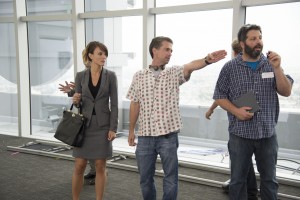
Malek Akkad talks about about his directorial debut “Free Fall” and the “Halloween” franchise

Photo Credit: 2014 Stuck Film Group, LLC.

Malek Akkad is the son of Moustapha Akkad, who is know for producing all eight “Halloween” films in the original series up until his death in 2005. Malek took over the reign with the recent reboot of “Halloween” with Rob Zombie and is continuing his father’s legacy. Malek is making his directorial debut with the suspense thriller “Free Fall”, which stars Sarah Butler (“I Spit on Your Grave”) and Malcolm McDowell (“Rob Zombie’s Halloween”). Media Mikes had a chance to chat about the film with him, along with the recently released “Halloween: The Complete Collection” Blu-ray box set and the future of the franchise.

Mike Gencarelli: Tell us about what made you take the jump from producer to director with “Free Fall”?
Malek Akkad: My intended focus when I came out of film school was to do direct. I was doing a lot of music videos, commercials and trying to get up and running in that career. I was a production manager on a couple of shows. My path just took me more on the side of producing and then I started working with my father. In this business, you have to take it where it comes from. So I did spend a few years working in the producing gig, which I do love. My passion is just being in production in general. But I did want to get back into directing, so this was a good opportunity and we had some time between other projects. We came across this script and it felt like it would be a run ride to take.

MG: What made you decide to tackle a suspense thriller instead of horror?
MA: For one thing, I thought the horror genre would be the obvious route to go and I wanted to tackle something that would be outside of the realm that I was comfortable in. Plus I didn’t want to get pigeonholed as “the horror guy”. I found this script and thought the writer was able to really flip the head on a few genre key elements, which I liked. It was also a script that I was able to use some themes that I wanted to address. So it worked on a lot of levels.

MG: You know you seriously just took elevators to a whole new level here, right?
MA: Oh great, awesome! I am great to hear that. Every time I get into an elevator now, I am thinking that karma is going to get me [laughs].

MG: Was it always planned to reunite with “Halloween” star Malcolm McDowell?
MA: He was just perfect for this role. We had worked together twice before and he is just a joy to work with. He also fit the character perfectly actually, so it was an honor that he agreed to do this with me. It is also great to be able to work with actors that you are comfortable with. It was great to work with him once again.

MG: Let’s talks about the “Halloween: The Complete Collection”; how involved were you with this release?
MA: It was a hurdle of getting all the involved parties together. In this franchise, there has been so many different distribution companies and production entities. The first thing to tackle was getting everyone on the same page. Between Shout! Factory and Anchor Bay, they really did a great job in doing that. With the behind-the-scenes material, I think that Shout! Factory really did a great job in putting together a lot of new material. Then we had to go to Miramax and dig up the old elements for “Halloween: The Curse of Michael Myers”. So I definitely had an involvement but most of the credit needs to go to Shout! Factory for putting together a great package that the fans have really been responding to.

MG: Why do you think the idea of Michael Myers is still so effective after all these years?
MA: There are so many answers to that. With horror genre, going back to the great Universal Monsters, is filled with just such hardcore fans. People just love to go in and have that controlled sense of fear. There is enough fear in the world that people can’t control. So if you can spend two hours and you know you are somewhat safe, I think that is something cathartic in that. I think all that feeds into what this franchise has become. Of course, it all goes back to the amazing classic from John Carpenter.

MG: Any progress updates for the next “Halloween” film in the franchise?
MA: Yeah, we are working on one right now. We are due a new draft any day now. We are working really hard to take it to the next level and keep the fans as happy as we can. I think we have a really fun pick and getting everyone involved and on the same page and behind one storyline takes longer than you would think. I think we have finally cracked something that we really liked and we are going to have some announcements very soon!

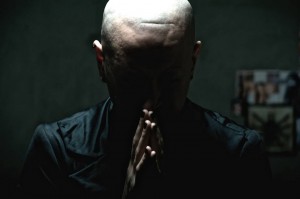
Joseph Bishara talks about his role and his score in the film “Annabelle”

Photo by Dean Karr

Joseph Bishara is the amazing composer for horror films like “Insidious”, “The Conjuring” and most recently “Annabelle”. He is also probably the cause of a few of your nightmares since he played great characters like Lipstick-Face Demon in “Insidious” and Bathsheba in “The Conjuring”. Joseph took out some time to chat with Media Mikes again about his new film “Annabelle” and what we can expect.

Mike Gencarelli: From your role of Lipstick-Face Demon in “Insidious” to Bathsheba in “The Conjuring” to your latest role in “Annabelle”; what do you enjoy most about getting to play these roles?
Joseph Bishara: I like being able to look through the eyes of these characters, and getting to have a different perspective and take on the film. It’s seeing the scenes unfold from the inside. They were all very interesting characters to explore.

MG: We got to learn about your character in “Insidious” and “The Conjuring” but not much in “Annabelle”, give us some background on your role?
JB: It’s the demon that’s attached to the doll. When discussing the character with James (Wan), his take described it more specifically, as Lorraine Warren would explain as a “latching demonic”.

MG: Which of the three was the most challenging for you?
JB: I would have to say “The Conjuring” because it was the most time I was on set and also the longest to get into the makeup. “Insidious” was challenging also but it was different because it was more guerrilla filmmaking, where we had to make do with what we had to work with.

MG: How does it feel like to give a grown man nightmares with these roles?
JB: [laughs] That’s a good thing. I won’t apologize for anyone losing sleep, everyone needs to have nightmares.

MG: You not only have roles in the above-mentioned films but you also are the composer delivering spin-tingling scores; what do you enjoy most about working in this genre?
JB: It’s the genre that I feel most comfortable in, and with the directors that I have worked with I have been given a lot of freedom to take the scores in the directions I wanted. Horror is always a favorite of mine and I just really enjoy creating in that space.

MG: “Insidious” is easily one of the best horror scores in recent years; how do you approach a score when you are working with the film?
JB: When I start on a score, I just start hearing it in my head often from the moment it starts being discussed. I can’t really explain it but if the project is right, ideas will just come. It’s finding what the language is and isn’t, and then speaking it.

MG: What can we expect from you in terms of role and composer in “Insidious: Chapter 3″?
JB: I can’t say much just yet, but Leigh did an excellent job with it and brings a bit of a different flavor. Hopefully you’ll lose more sleep.

For more info, check out his official sites: www.jbishara.com and www.voidrecordings.com

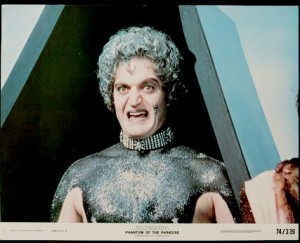
Gerrit Graham talks about roles in “Phantom of the Paradise” and “Used Cars”

New York born, Gerrit Graham grew up in the Midwest and began his acting career at the age of eight in a stage production of “Winnie the Pooh.” He was the manager of the Columbia Players at Columbia University and it was while he attended school that he began his association with filmmaker Brian De Palma.

Among his best known roles are Beef in “Phantom of the Paradise” (recently released on Blu-ray), the overly superstitious Jeff in the classic comedy “Used Cars” and Franklin on the animated hit “The Critic.”

As he prepared for his recent appearance at this years Chiller Theater Expo Mr. Graham took some time out to answer some questions about his long and continuing career.

Mike Smith: You began your film career by appearing in three early Brian De Palma films. How did that relationship come about?
Gerrit Graham: I was a sophomore at Columbia University in NY, and was the head of the Columbia players, the college theatre company. One day I got a phone call from a guy who said that he had been the former head when he was there, and he was trying to make a film and he was hoping that the players could give him some help for rehearsal space, wardrobe, etc. He also mentioned that he was looking for two or three experienced actors, preferably in comedy. He had hoped to find someone in the Fine Arts Department. He gave me an address and said to send any interested actors to see him. I asked his name and he said “Mr. Brian De Palma”. Instead of sharing the address, I went down myself to see him. I spent the next three or four afternoons in the producer’s apartment, his name was Chuck Hirsch. I met with a variety of actors and eventually got the role, which was for the film “Greetings,” De Palma’s first feature film. It got a real release and ended up being a hit. A year later I got a call from Brian saying that he was making a sequel to “Greetings,” which was “Home Movies.” He offered me a role, which I of course accepted. We continued working together for many years because we trusted each other.

MS: How did you come to be cast as Beef in “Phantom of the Paradise?” My understanding is that you were originally slated to play Winslow?
GG: No, I was originally hired to play Swan. Then Paul Williams, who would become an Oscar winner and at the time was a very popular songwriter in LA had a agreed to play the Phantom in exchange for doing the music score. Paul then decided that he didn’t want to play the Phantom and instead wanted to play the villain. This meant that William Finley, a good friend of Brian De Palma’s, could play the Phantom, which was written by Brian for Finley. This meant I couldn’t play Swan anymore and Brian said he had another role; a character called “Capt. Beef”. I asked Brian what this character was like, and he said “a rock and roll star”. So that sounded like a lot of fun to me. A Sha-Na-Na type character was something that sounded like fun to me. It turned out that was not what he wanted. He flew me out from NY to meet with Paul Williams and the two of them kept making this Beef character seem more like Little Richard. “What do you want,” I said? They said “flamboyant”, which at the time in Hollywood meant “gay”. So I did a few lines in the Beef accent and lisp, and they loved it, burst into laughter and said, “that’s it!” That’s how the character was born.

MS: Are you as superstitious as Jeff, your character in “Used Cars?”
GG: No. I have a few superstitions that I do, like not walking under ladders, but that’s just common sense because you don’t want anything to fall on your head from the ladder.

MS: I’ve read that you actually did shoot the cars during the television commercial. Is that true? What kind of precautions did you have to take? (NOTE: In the film, Mr. Graham’s character films a car dealer commercial in which he takes a shotgun to the high prices posted on the windshields. The scene ends when he exclaims “Is this a 1974 Mercedes 450SL for $24,000? That’s too fucking high!” He then pushes a plunger and blows the car to pieces.)
GG: I did the shooting with blanks in the shot gun, then they brought in a stunt double who was a trained guns man. He did the scene shooting real shells at the car. I was standing there watching him, and all the other scenes were me.

MS: When’s the last time you were in a red car?
GG: I actually had a red car when I was about 22 years old. I had a red Saab Station Wagon. It was a good car! Since then I may have rented a red car or two, but nothing bad has ever happened.

MS: You’ve done both comedy and drama. Do you have a preference?
GG: No, not really. They are two different arrows in my quiver. Each are enjoyable in their own ways and have their own rewards. It just happens that I’ve done more comedy, but that wasn’t by choice. It just happened!

MS: Same question, film versus television. Preference?
GG: TV is just another arrow in my quiver as well. It depends on what kind of TV show it is. A half hour comedy or an hour long drama are a bit different. An hour long TV show is more like a film, because you shoot out of sequence. A half hour TV show is nice because you shoot in sequence from beginning to end. Other than the fact that they spend a lot more money making a film than a TV show, the work is pretty much the same. The end result is just a question of how good it turned out.

MS: You have a couple of Disney writing credits. How did that come about?
GG: I had a writing partner, and we just decided to try to write stuff to see if we could sell anything. I had made films with a producer named Phil DeGuere. He had done a number of shows, including the new “Twilight Zone” series. My partner and I pitched Phil stuff that we wrote, and we ended up writing three episodes of “The Twilight Zone.” At that point, my brother had joined as a third writer, and we continued to write. I honestly can’t remember how we got connected to Disney. We contributed extra material to “The Little Mermaid” and some other Disney films. We also wrote “Prince and the Pauper,” which was Mickey Mouse’s first feature in a great number of years.

MS: You’ve done a lot of animated voice work. Is that type of performing easier or harder than actually being on screen?
GG: It’s easier, because you don’t have to shave! There’s no make up, and you can do endless takes if necessary, without cutting, stopping, or changing scenery or wardrobe. My best known animated work is played Franklin on “The Critic.” That was a lot of fun! I got to work with a lot of really funny people and some microphones. We struggled with trying to keep each other from cracking up during recordings.

MS: What are you working on next?
GG: I’m working on finding work! Preferably, voice over work.

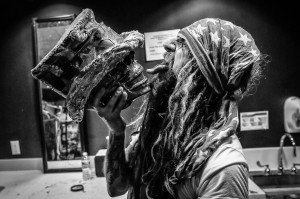
Rob Zombie talks about his Crowd-Funded Clown Horror Film “31”

Photo Credit: Rob Fenn

Grammy nominated musician, Rob Zombie has written and directed films like “House of 1000 Corpses”, “The Devil Rejects”, “Halloween (2007)”, “Halloween II (2009)” and “The Lords of Salem”. He is currently working on his next film “31”, which is a crown-funded project. The campaign currently ends on Halloween, so if you want to see Rob Zombie’s most brutal film get made head over to RZ-31.com and back it. Media Mikes had a chance to chat again with Rob to discuss the project, fear of clowns and what we can expect.

Mike Gencarelli: Last year, when we spoke you mentioned that “The Broad Street Bullies” would be your next film; what happened?
Rob Zombie: It just kept getting bogged down. “The Broad Street Bullies” is a true story, so unfortunately when you try and branch out and do something like that it is hard. I didn’t own the rights to it and I was working with other people. It is hard enough getting these movies made when you are in total control but when you get other people involved it just sort of drags on. So I worked on it for about two years and I felt like I could spend the next five years working on it and it still might not happen. I like making movies. I don’t like just having meetings and telephone calls. I may go back to it later but I might not since sometimes things just drag on forever. I don’t have forever, you know? I like to work and make movies.

MG: How was the idea for “31” born?
RZ: It came about in a very funny way. Last Halloween, I was in Pomona, CA working on this haunted house attraction I did called, “Great American Nightmare”. I was watching people running around being scared by people dressed as clowns with fake chainsaws and stuff. I saw the true terror on some people’s faces…even though they know it is fake, obviously since it is an amusement park. People just can’t stand clowns. So that was stuck in head. Then I was researching something online and I found out that Halloween was the number one day of the year when people go missing, according to the Missing Persons Bureau. I thought “Hmmmm…missing on Halloween?” Then I thought about the clowns and I ended up concocting this crazy idea about people being kidnapped and forced to battle murderous clowns, sort of like “The Most Dangerous Game” but with disgusting clowns. At the time, I was still working on “Broad Street Bullies” and getting bogged down, so I said to my manager that I was getting frustrated with this movie but I have this other ridiculous idea. I told him the idea and he said “I think I can sell that”. So it’s funny you work on something for years and then come up with this crazy idea off the top of your head and suddenly everyone is excited. That is literally how it happened.

MG: I grew up (and still am) scared of Pennywise from Stephen King’s “IT” but what do you think it about clowns that always scares people?
RZ: Clown makeup is weird and doesn’t hide everything. If you have a gross disgusting face, it almost extenuates it. It does hide your features though. If you just take white clown make up and smear it on your face, it really does make it hard to identify somebody. Think about Cesar Romero as the Joker, he was still so Cesar Romero but at the same time totally not. There is something so subtly disturbing about it. If they have a mask or a hood, they are totally covered but there is something so perverted about grease paint on someone’s face. The funny thing is that as children we are supposed to find these disgusting characters in grease paint adorable? Sorry but they are terrifying.

MG: With sites like Kickstarter and Indiegogo, what made you take your crowd-funding campaign to FanBacked?
RZ: Originally it wasn’t my idea to crowd-fund, my manager came to me with it. We had a few offers from Kickstarter and the others but FanBacked was brand new and they seemed the most enthusiastic. I liked the vibe of how they worked. It was also focused on entertainment and not all over the board. So we thought, let’s give them a shot and it has worked out great.

MG: What can we expect from this game in the film?
RZ: It is going to keep changing since we haven’t shot the movie yet. We start shooting in February. I love claustrophobic self-contained movies. I never make movies like that. I love films like “Dawn of the Dead”, even though in scope it is a big movie but I always loved when they get stuck in the mall. To me it was always so intense. I just love that idea. All my movies haven’t been self-contained but I have always wished that they were. So what can be more terrifying that being locked in this place and people just keep releasing a homicidal maniac to chase you constantly? There is nowhere to go. If you end up killing one of the guys, your only reward is that they release another one. It is like the coliseum, there is no way out. You literally have to kill every lion to survive. What can be worse than that? That was basically the idea. No rest for the wicked.

MG: Any cast in place yet for the film?
RZ: I have lots of people in mind but I haven’t cast anyone yet or spoken to anyone.

MG: You have said that this will be your most brutal film; any fears of it being censored for its theatrical release?
RZ: Sometimes you have different goals with movies. The goals for “The Lords of Salem” was not to be violent, gory and brutal. The goal of it was to make a slow paced, psychedelic head trip. With “31”, I just wanted to make something that is just so dirty and nasty…that is the goal. Then after you worry about the ratings board, because you can’t predict that they are going to do. If you try and censor yourself in advance, they will find something else. I am just going to make it as fucked up as possible and we’ll figure out a way to get it passed the MPAA. The unrated version then will live on forever, so that is all that matters.

MG: We have three days to go before Halloween and the end of the campaign; what can you tell fans who are looking to back this project?
RZ: We can really use everyone’s help. Even if you can’t donate money, just getting word out is very helpful. Anything helps. People twittering about it on their own is just as helpful as somebody backing it with money. That was always the goal from the get-go. Horror movies have always been a very fan driven industry. When the corporate world gets involved, they always ruin it. I wanted this to be fan involved. So if you want to back this go to RZ-31.com and keep spread the word!

Author Naomi Novik Talks “Temeraire” at NYCC

Naomi Novik has in the past several years taken her readers literally across the globe in her best-selling Temeraire novels. Beginning with the first, His Majesty’s Dragon, the fantasy series is set during the Napoleonic Wars in an alternate history where talking dragons comprise a valuable aerial force for their respective nations. More specifically they follow the adventures of William Laurence, a British naval captain whose capture of an enemy ship bearing a rare dragon’s egg leads him to a new life as an aviator with this hatchling he names Temeraire. Novik’s dragon is intelligent, witty, intensely loyal to his human captain and often defiant of the society of his time. And he is just one of many in a hugely diverse cast of humans and dragons. Such vivid characters thrown into Novik’s rich reworking of actual history really make this a standout story.

The books are scheduled to wrap up with its ninth installment,  League of Dragons, hopefully sometime next year while director Peter Jackson currently holds the screen rights to the series (More on that below). With all of the above going for it, and the fact that it’s a personal favorite book series of mine, I was so excited to get to speak with Naomi at New York Comic Con while she signed books for her fans.

Lauren Damon: When planning the novels, because they’re centered around the Napoleonic Wars, do you have an outline of what history is going on or do you start with your plot?

Naomi Novik: Oh I definitely check the history first and sort of look into the details. I have a general sense of where the plot is going because I know where the Napoleonic Wars go and I know how I modify the Napoleonic Wars so in that sense I know before I go in. But in terms of figuring out how the details of my plot are going to dovetail the details of history, it’s sort of like a back and forth. I generally get the broad strokes of the historical events first, make sure my plot works with that and then as I write, I generally check on the more specific details to make sure that I’m not contradicting something.


LD: Have you ever hit a snag because history went a different way than your plot?

Novik: You know I’m sure that happens on a routine basis and I just don’t remember all of them…I can’t think of a specific historical event example, but what I can remember is one time I was writing a scene set in Istanbul describing a place and it turned out that that place just didn’t kind of exist. But while reading about that I discovered about a location called the cistern—which was sort of this underwater cistern of the Byzantine era that used to store water for the city and then later on was abandoned and people would still be able to reach it through the basements of their homes. And would occasionally throw things down there. Sometimes bodies disappeared down there and I thought, that’s fantastic! So I put it in. So it actually worked out for the best.


LD: When it comes to the battles sequences, which read as hugely cinematic, how do you plan out just the logistics of those?

Novik: The battles are almost always heavily influenced by actual Napoleonic battles. I mean it depends. The actual battles that take place in the course of a military campaign, then the individual scenes that are about sort of—you know there’s the battles in a war and there are fights that are sort of an adventure sequence, right? And those are more just out of my imagination and the battle scenes are—I have a wonderful book called The Military Atlas of the Napoleonic Wars which basically shows…you can watch the movement of all the companies. It breaks up battles over several days. So you see here’s how they were, sort of setting themselves up, here’s where they were this day, here’s the terrain they were moving on, here are the ways that this person didn’t know what this person was doing and they misunderstood one another. And they got bad information from their spies. And all sorts of details like that which I tend to use as kind of, not exact—because of course my battles are quite different—

LD: They add the aerial level.

Novik: Yes, exactly, because there’s a third dimension going on which changes the tactics and  also just the historical locations but yeah, I mean I try to keep that same scope. That scale.


LD: When it comes to certain characters, fans love to pick up on certain expressions or character tropes that repeatedly pop up in your stories—Like Laurence’s concern for his neckcloth or Iskierka [a truly fiery fire-breathing dragon] saying “See if I don’t!”—When you become aware of fans grabbing onto these things, or sort of catchphrases, do you get self conscious about it?

Novik: No, not really. You know, I feel like that’s part of theIn a way I feel like finding those things is part of the pleasure as a fan. I like it myself as a reader. I like recognizing a character’s vocal tics, the character’s all definitely have their own, quite distinct voice in my pen. And I feel like if I tried to…if I became self-conscious and tried to muck with that in a way, I’d probably lose my own internal sense.


LD: Are there certain characters that you really enjoy writing their voice, their dialogue?

Novik: Yeah, I mean Temeraire, obviously. Temeraire is just always fun. Iskierka is always fun. I love writing the dragons voices. I feel like the dragons voices are always really cool. And there’s that pleasure of writing a voice that’s not quite human so I really like to do that.


LD: I love how you even include sexuality into the discussions that the dragons and the humans have because I feel like you don’t often see that associated with the fantasy genre:

Novik: I do feel you know it’s an interesting thing, that in that period there was simultaneously more prudery in a certain sense. Like you didn’t talk about certain things. But at the same time you lived with it a lot more. You lived with death a lot more. And in a way, living with death, I mean you lived in much closer quarters—especially on ships and you sort of had to pretend it wasn’t there. But it really was. And I mean, with dragons especially, I feel like dragons don’t have shame in the same was that human beings have shame. You know, they don’t cover themselves for warmth, so they don’t have any of that body stuff going on. So Temeraire just kind of doesn’t get what’s going on a lot of the time. So his perception is very fun. But I feel like it’s very much that that’s a thing that happens that’s part of life and I don’t know…I feel like I don’t want to pretend that’s not there.


LD: Iskierka in particular in regards to her Captain, Granby’s homosexuality is just kind of  like ‘Yeah, of course that’s how he is!’

Novik: I mean to a dragon it’s like what’s the difference between these two—it’s like two action figures, you know?

LD: Or dress up dolls? [Note: The dragon’s frequently make fashion decisions for their humans.]

Novik: Yes, exactly, that’s from Iskierka’s point of view absolutely!

LD: Peter Jackson holds the filming rights to these books—what’s happening there?!

Novik: Basically what happened was you know, after Guillermo Del Toro dropped out of The Hobbit and [Jackson] took over, that essentially put a stop to all his other projects. He’s finishing up the last Hobbit now, and I know he’s going to take a well deserved break and then we’ll see, you know?

LD: Did you see the giant Smaug up on the floor and think eventually?
Novik:
I hope so. I hope so. I mean it’s amazing.


LD: Now you wrote the first one in 2006?

Novik: I wrote the first one in 2004 and then they didn’t publish it until 2006 because they asked me to write two more so they could bring them all out one month after another. So I wrote the first three in like 2004-2005, so it’s been about ten years writing it.


LD: So back when you were writing it, or at any point since,  have you ever head-cast actors you’d like to see in any of the parts?

Novik: No, no…I don’t. Although I will say I thought at one point—I actually think Tom Hiddleston could make a great Laurence.

[Note: At which point I showed Naomi my Loki iPhone case as a sign of support.]

Excellent! I mean I say that like I’m a huge Tom Hiddleston fan, I mean I love Loki he’s such a fantastic character, I love him…But there are many actors of whom I’m a huge fan who I would say would not make a good Laurence. But I think he actually would.


Famously fan-friendly, Naomi is a co-founder of the Organization for Transformative Works, “a nonprofit dedicated to protecting the fair-use rights of fan creators” and has written her own fan fiction.

LD: Being here at NYCC and just kind of in general are you happy to see that fan fiction is something you hear more about in public discussion, do you think it’s coming sort of out of just something you see online?


Novik: I hope so. You know, in fact we had this panel about fairy tales and of course 95% of fairy tales and fairy tale retellings are fan fiction. It’s the same impulse as fan fiction. It’s using characters that other people recognize to tell your own stories in a way that allows you to communicate and form a community around fiction. So there’s nothing actually new about the fan fiction impulse, it’s just that we’re doing it about media of a different form, right? Which is quite interesting.

LD: Speaking of fan communities–you just opened your own fan forum, is that a convenient way to consolidate your fans?

Novik: It’s not even that, it’s more that you know there are a lot of fans who don’t feel like they know where to find the place to talk. And I love giving them a place to talk now. And a lot of people said that they wanted one, so we went ahead and put it together. But I love–one of the things that I love about the fannish community in general is that it’s so widespread. There’s so many different places and proliferating conversations and I love that. It’s not like, I would never want everybody to come to feel like that they had to come to my site. It’s more like here’s another place to talk if you want to hang out and talk about Temeraire.


LD: Do you have a memorable first fan encounter, or when you became aware or your series having fans?

Novik: I fortunately, the year the Temeraire books came out, I went to like seven conventions that year. And I went to a lot of smaller science fiction conventions first which was a good kind of ramp up. And I mean it’s just really wonderful you know. For me it’s a completely positive experience. I mean I get tired and sometimes I lose my voice. There’s just something wonderful about coming out here and feeling this kind of fannish energy all around you. And it’s not a sort of, I don’t know, it’s such a thing that I myself would do. I feel like I’m just meeting my people from the other side!

The 9th and final Temeraire novel, League of Dragons, is aiming for a release sometime next year while Novik will also be releasing an entirely new fantasy novel, Uprooted, on June 30th 2015.


Related Content
Spero’s Jesse Hofstee talks about new EP “Pride”

Jesse Hofstee is the guitarist and vocalist for the band Spero. Based out of San Diego, CA Spero plays a blend of rock, folk and blues and have been compared to the Black Keys and Jack White. The groups newest EP titled “Pride” is set for a mid November release and Media Mikes had the chance to speak with Jesse recently about the group and their new release.

Adam Lawton: Can you tell us a little bit about the formation of the band?
Jesse Hofstee: I think everything started in or around 2011. I had known Hillary Laughery the keyboard player from high school and had just gotten out of another band I was in while in college. I wasn’t really playing at the time but would jam and work on some songs. Hillary and I got together to play some songs and we connected almost instantly. We spent the whole summer just playing and writing songs. We would play for 8 hours at a time. Things just went together really easy. After that we decided we were going to try and make it and set out to put a band together. I got Nick Hankins to come play bass and then Ryan Malette to play drums. I had actually played in a heavy metal band with both of them in high school.

AL: How would you describe the band’s sound as it is quite unique?
JH: We have elements of blues, rock and roll and at time indie rock. It’s really just a mix of blues and rock. Some of our songs have more blues elements while others are more rock. We sort of cross a number genres but I think if I had to pick one to put us in it would be more of the blues/rock genre.

AL: Can you tell us about the bands new EP?
JH: For most of the songs it’s either I or Hillary writing the foundation or structure of the songs. We then work on them as a band and change things around as we want everyone input and style to be a part of the process. One of the first songs we did for this EP was the title track “Pride”. I think that song was sort of a theme over the others that were written. It’s about taking pride in your work and who you are while not giving up. That’s really the overlying theme on the EP. I wrote 4 of the songs and Hillary wrote 2. We really were refining our sound as we went along and were happy with how things went. The release has a lot of variety and doesn’t really stick us into a specific genre.

AL: How would you describe the progression from your previous release to where you are now?
JH: With the last album we were still sort of figuring out what we wanted to do. We sort of just went straight through with things on that record. With the new EP we were able to expand more and spend more time on each of the tracks. Some of the songs came quickly while other took a little longer. We did some demoing and then sent them over to a producer. We wanted a more complete release and push things a bit further this time.

AL: What was it about doing an EP that was more appealing rather than doing another full length album?
JH: Where we are at right now we are still just trying to get our sound out to new people. I felt we had a handful of songs that went together well and followed the same theme. I wanted to get new music out there and wasn’t really concerned with doing a full length. We are still trying to attract new people and I think giving people a full album can be a bit overwhelming. With an EP it’s a little easier to digest and it’s a less expensive process.

AL: What are the bands current tour plans?
JH: We are hoping to do another coastal tour once the EP is out. We did a run of shows up the west coast a little bit ago and that went really well so we definitely want to do something like that again. We are looking to find a team to help get us out to more people as its hard to focus on both that and the writing aspect of things.
 

Related Content

Eduardo Sánchez talks about his kick-ass Bigfoot film “Exists”

Eduardo Sánchez is best known for co-directing and writing the found footage horror flick “The Blair Witch Project”. Since then he has given the horror genre some great films like “Altered” and “Lovely Molly” and even crossed over into TV with the BBC America series “Intruders”. His latest film is a real labor of love and easily his best film to date called “Exists”. It is a Bigfoot creature feature like no other. Eduardo took out some time to chat with Media Mikes again about his kick-ass Bigfoot film and what we can expect.

Mike Gencarelli: What made you want to do a film about Bigfoot?
Eduardo Sánchez: I grew up in the 70’s and Bigfoot was my “Avengers”. It was my monster growing up. It scared the crap out of me but at the same time it also fascinated me. I mean, this creature lives in the woods? Daniel (Myrick) and I were inspired by the Patterson–Gimlin film, “The Legend of Boggy Creek” and the TV series “In Search Of” and without those there wouldn’t have been “The Blair Witch Project”. I have wanted to make a Bigfoot movie for a long time. The movie “Harry and the Henderson” made Bigfoot a punchline, even though I laughed myself. There is still this part of me that wants to show this kick-ass Bigfoot that is scary and fucks shit up and not in a cartoon way. It doesn’t have super human strength, it is just a strong big ass animal. This is the like the third Bigfoot project that we have tried to get off the ground and we finally got it financed. I have been looking for THIS version of Bigfoot since I was a kid. It is a guy in the suit but he is cool, fast, strong and smart. It is my sort of my love letter to Sasquatch. I owe that whole culture so much and I really wanted to do right by it.

MG: I love that you kick off the action and suspense right from the start of the film with no bullshit!
ES: Thanks dude! I mean, we all know who the main character of the movie is. You can’t delay man. You can’t. That is how I felt. I wanted to see it just as bad as the audience did. I wanted to get to the creature fast and get right into the good stuff.

MG: Tell us about how you created your Bigfoot, which looks fantastic?
ES: I had an idea that I could bring a really cool Bigfoot to life. Most importantly, I thought I could do it without the use of CGI. Not that I am against CGI but Bigfoot needs to real man. I basically just went balls to the wall to try and create something that has never been seen before or at least in a long time. I knew we would need to have a kick-ass creature. We first got WETA, the guys who did “The Lord of the Rings”. We had a connection to them through our producer, Mark Ordesky. They came in and did some design work for us. When it came time to build the suit, we called our friends at Spectral Motion. They have done a bunch of films with us and we are like family. They finished up the design and built this crazy suit. Let me tell you man, at the end of the movie we get close to this character and it really holds up. So we were all excited.

MG: Brian Steele is a man who knows how to become a monster; how did he get involved?
ES: Spectral Motion are the ones that pitched me on having the right person in the suit. They brought up Brian Steele. It’s funny because Brian actually played the role of Harry in the “Harry and the Hendersons” TV series. So he was just perfect man and it really worked out. When the suit was done, we went to LA and were going to see it on Brian for the first time. So we shot this little test movie and once we saw it man…it just blew us away man. A couple of times during shooting, we would all look at easy other and just say that we couldn’t believe that we were making a Bigfoot film. We had to pinch ourselves to make sure it was real.

MG: Tell us about the use of GoPro cameras in the film?
ES: You can’t really do a found footage film these days without the use of GoPros since they are so ubiquitous. Everyone has got them today. If they are out in the woods and shooting them these guys doing all this crazy shit then we figured we would have to use GoPros. We haven’t worked with them before this and it was before the new ones came out, so we were using the Hero2 model. It definitely had some limitations but we are very happy with the way it turned out. There is a lot times where it is supposed to be a GoPro also and we are shooting with a 5D or something like that. I just love that you can run and hide and that camera is just shooting non-stop. I love that.

MG: How did you shoot the house tumble scene?
ES: I can’t really discuss the budget, but we didn’t really have a lot of money. Obviously the Bigfoot suit was where most of our money went. But our effects guys were just great. They shot all the outside stuff and it going over the cliff. Then the inside stuff, we literally took the same trailer and put it on a gimbal, between two stands, put some silly stunt people in there [laughs] and just shook it up man, like a clothes dryer! You are always nervous asking stuntmen to do certain things but they really had a lot of fun with this and nobody got hurt, which is good. While they were spinning, we just put a bunch of cameras in there and then we just cut it together with a bunch of different angles. I think it came out really well.

MG: What was your biggest challenge on this film?
ES: It really was figuring out the creature like where the creature looked good and where it didn’t work out and then just trying to keep that sensibility throughout and not letting it get out of control. A lot of times you get a really good effect and the movie just shows it to death. But if you are going to do a Bigfoot movie man…you got to show the fucking monster. You can’t cheat the audience. This was one of my main goals…to show this creature. But we focuses on how to do this right and not let the audience get tired of seeing this creature. I never forgot that this was a guy in a suit and we shoot it with that in mind. People were just having so much fun though and we really have a great team. This film was a labor of love for a lot of people.

MG: What do you have in the cards next?
ES: Absolutely man! I have been getting into some TV recently. I just did the show on BBC America called “Intruders”. I directed the first four episodes of that and I loved it. It was such a great experience. Gregg (Hale) and I are actually trying to get a TV show of our own going. We are close. I think we have the right idea from the reactions we have been getting. It is just a matter of getting everything pitched to the right people. Then we also have like five features right now that are currently in various stage of development. We are about to get a green light on one of them very shortly. So 2015 seems like it is shaping up to be a very busy year, which is great.


Related Content

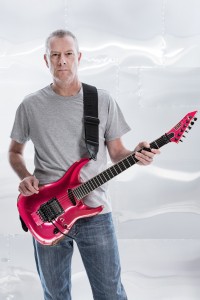
Helmet’s Page Hamilton talks about the 20th anniversary of “Betty” and scoring films

Page Hamilton Music (www.pagehamiltonmusic.com)

Page Hamilton is the lead singer and guitarist for the band Helmet. The band is currently celebrating their 20th anniversary of hit album “Betty”. Page has also collaborated on numerous film scores like “Heat” and also recently created an original score for the film “Sons of Liberty”. Media Mikes had a chance to chat with Page about music, movies and Helmet’s anniversary tour.

Mike Gencarelli: How is it going from playing with Helmet to collaborating on film scores like “Heat” and “Titus” with Elliot Goldenthall?
Page Hamilton: Playing our music live is physically demanding, there’s no coasting with backing tracks or candlelit, acoustic-sit-down sections in the set, and with a 70+ song repertoire remembering lyrics and certain guitar parts can be challenging. Working with Elliott is a whole different kind of challenge. Sometimes he has concrete ideas and colors he describes or sings to me, sometimes there are written parts and other times he wants me to ad-lib. Elliott works with very talented people, there is a lot of trust in the room; it feels like a brilliant family that adopted me to come in and mess up Elliott’s beautiful music. Teese, Joel, Rick, Lawrence etc. are all amazing people to work with. Also Julie Taymor (Elliott’s wife and director extraordinaire) has been there for the movies of hers I’ve worked on: “Titus”, “The Tempest” and “Across the Universe”. I love working with them.

MG: Tell us about what we can expect from your upcoming compilation album of your own film scores?
PH: I chose to do new mixes of about 40 cues from the 1st 3 movies I scored for Mudbrick media in Mobile, Alabama. When we’re doing music for a scene obviously the director has ideas regarding what works and what doesn’t for each scene but he gives me a lot of freedom to experiment. We disagree from time to time so I wanted mixes for my compilation that I dug compositionally, i.e. remove the visual imagery & dialog and make sure the music is still interesting. In many cases I put back parts I had removed for him and even added a few things. I wrote, recorded, programmed & mixed everything so it’s pretty, low-tech and raw with a fair amount of my guitar mess spilling over the rim.

MG: How do did you approach your original score for the film “Sons of Liberty” and how did it compare to your other scores?
PH: I’ve been fortunate to collaborate with Patrick Kirst for several years, we wrote the “Sons of Liberty” score together, though it was mostly a dropbox collaboration between Hollywood (my place) & Venice (his place). He brings a lot of film scoring experience so I bounce music bits off his stubborn German brain & classical music ears and then create sounds that annoy him, sonically, melodically and harmonically. That’s what they get for hiring a noise-metal guitarist.

MG: This year is the 20th anniversary of “Betty”, which was (and still is) a sick album; how can you reflect on this album?
PH: We’re 20 shows into our European “Betty” tour, it’s not an easy album to pull off live but it’s been really fun to perform. I had to work on a variety of guitar and vocal sounds to get the vibe we had on the recording. I remember everyone having an idea about what we should do after the success of “Meantime”, they wanted “Meantime” part ll but it’s not in my nature to rewrite songs. Fortunately my bandmates were on board and contributed in a big way. Either that or they were just humoring me.

MG: Looking back on 1994 in general, why do you think it was such an epic and important year for music?
PH: I’m not sure though part of it has to do with the strong indie rock scene from the previous 10 + years. Labels like Am Rep, Discord, SST, Blast First and Touch & Go had a lot of good bands that could develop without industry interference. When the demand grew, major labels saw money to be made so a bunch of us signed deals to get paid & quit our bartending jobs. We didn’t know any better so we (more or less) continued as if we were still on Am Rep. Maybe this was the case with other indie bands as well? Melvins and The Pixies come to mind.

MG: How did you get involved working with Linkin Park on their new song “All for Nothing”, from their latest album The Hunting Party?
PH: They contacted my manager in NY and asked if I’d do some guest vocal & guitar bits on their new album. I met with the guys and liked them a lot. They played me a bunch of new songs including “All for Nothing”; I couldn’t get that chorus out of my head. I really enjoyed their recording process and had a great time.

MG: You are currently on tour with Helmet across Europe; tell us what we can expect from the tour and any plans for US dates?
PH: We’re playing the “Betty” album beginning to end followed by a second set of material including songs from “Strap it On”, “Meantime”, “Aftertaste”, “Size Matters”, “Monochrome” and “Seeing Eye Dog”. I’ve always wanted to tour without any opening bands so this is it; 30-35 songs a night. We have some east coast US “Betty” dates booked for December.

MG: What else do you have planned for the rest of the year and in store for 2015?
PH: I’ll be in the south of France producing a French band between the Europe & US “Betty” dates. We have a movie lined up for early next year and I plan to finish writing and recording a new Helmet album. I’ll continue to flounder around with my Jazz Wannabes group back east and my good NYC pals M’Lumbo have asked me to sit in for some recording and a few live gigs.

Butcher Babies’ Carla Harvey talks about new EP “Uncovered”

Carla Harvey is the lead singer of the heavy metal band, Butcher Babies. The band recently released a new EP called “Uncovered” and is planning the upcoming “No One Can Hear You Scream” Tour across North America. Media Mikes had a chance to chat with Carla about the EP and what we can expect from the tour.

Adam Lawton: Can you give us a little background on the new EP?
Carla Harvey: Well, “Goliath”, our debut album came out in July of 2013 and our new album doesn’t come out until early summer 2015 so we wanted to give our fans a little appetizer in between.  Not to mention we wanted to play some new songs to spice things up for ourselves! Believe it or not we get tired of playing the same set over and over again.  Making this EP of cover songs seemed like the perfect solution. Growing up I was a huge fan of my favorite bands like Guns N Roses and Metallica doing albums of covers…they introduced me to songs I might never have heard if they hadn’t been reinvented on the “Spaghetti Incident” or “Garage Days”.

AL: What was the process like for choosing the songs and were there any others chosen which didn’t make the EP?
CH: For the EP we didn’t want to go with obvious song choices.  People expected a Plasmatics cover or a Pantera cover and what ended up with on our album was very different. In the end we chose the Osmonds, Napolean 14, Suicidal Tendencies, SOD and ZZ TOP. Some of the songs we considered that didn’t end up making the cut were songs by Fishbone, Living Colour, 45 Grave and Agent Orange.

AL: The songs you guys chose are quite different. Was that something that happened naturally or was it the plan to choose songs that hadn’t been done before?
CH: We wanted each song to have a special meaning for us. We each made a short list of songs that had struck a chord with us when we were young and narrowed it down from there.  For instance, they’re coming to take me away was my pick because I have a vivid memory of my stepdad playing it over and over again in the car. My stepdad was a bit off his rocker and the song is about being taken away to a mental institution so I always found it ironic that he loved that song so much.  Heidi chose “Crazy Horses” because it was the heaviest song she heard as a kid and she was really drawn to it.

AL: Can you tell us about the upcoming tour run the band has planned?
CH: We just started our first headlining tour, the No One Can Hear You Scream Tour across North America. We have been extremely lucky to garner a huge fan base the last couple of years by hitting the road with likes of Marilyn Manson, Danzig, Black Label Society and of course the Mayhem Festival, so the time was right for us to see what we can do on our own.  We are only on show three but the response has been incredible. After this tour, we hit the road with BLS and Hatebreed for a winter tour.

AL: What are the band’s plans so far for the next full length release?
CH: We are working on our second album right now. We finish recording when we get home from our headlining tour and the album will be released early summer 2015. We are pumped for it and hope that you all are as well!

The Soska Sisters talk about their films “See No Evil 2” & “ABCs of Death 2”

The Soska Sisters cconsisting of Jen & Sylvia Soska are film directors are literally taking over the horror genre. After their short film “Dead Hooker in a Trunk”, they made the fantastic and original horror film called “American Mary” then quickly following that they were brought us to work with WWE on the horror sequel “See No Evil 2”. They also have a segment in the upcoming “ABCs of Death 2”. Media Mikes had a chance to chat with the “Twisted Twins” to chat about “See No Evil 2” and their upcoming projects.

Mike Gencarelli: I just want to start that I loved “American Mary”; it was original, very smart, ballsy and really fucking gory. I honestly reminded me why I love horror movies. Going from that film to “See No Evil 2” with WWE’s Kane; what was that like?
Sylvia Soska: That is a hell of a compliment. Thank you for saying that. That project is very much a part of who Jen and I are. After that film, we took many studio meetings to get the next film made, but all anyone wanted to see was Katharine Isabelle with us as a sexy doctor or surgeon or torturer and it was really depressing. When WWE and Lionsgate approached us to make the film, we read the script and got super excited, but didn’t think there was a chance in hell that we would get hired. It was so much of a dream project, but it happened. Then we started to collaborate on the story, hire the cast, and it just kept getting better. We only make films that we, as fans, would want to see; See No Evil 2 is that kind of film.
Jen Soska: We are the fan directors. We love horror movies so much and I do hope you can tell on every frame of our movies. We want to make a horror film in each sub genre of horror. To have the opportunity to create our own masked man horror icon was incredible. I feel the first film was more of a prequel and this is Jacob’s true first film. The first film had Jacob under the command of his fanatic religious mother. In this film we recreate Jacob’s look, theme music, and array of weapons. It’s a tremendous honor and I still can’t believe we got such an incredible opportunity that so few directors ever have.

MG: What was your biggest challenging tackling that film?
SS: It should have been much more difficult but we were spoiled by our cast and crew. Let me tell you a little thing about the crew you can get in Vancouver – seasoned professionals that work year around on everything from major blockbuster productions, to some of the best genre televisions series we have ever seen, and the darling independent gems. You get this crew and you get peace of mind because they are so good. Almost the entire cast were child actors, so not only was the level of talent very high in our performers, but we had a team that could pull off this very ambitious film very masterfully.
JS: For me, the biggest challenge was making something that was true to the original and respected the fans who loved that film while building on that film’s missed opportunities. It’s hard to come
into an existing franchise and make changes. Every franchise has key parts to it. You don’t want to come into something like, Hellraiser, and take out the lament configuration. Just like with Jacob.
There were untouchable elements, but we had a lot of room to play around with the character and story and kills and almost everything.

MG: Tell us about what it was like working on “ABCs of Death 2” and your segment “T is for Torture Porn”?
SS: It was something we’ve been wanting to make since the open entry contest on the first one. I watch a lot of porn, I love it. I think in horror there are interesting issues you can tackle because it’s not like you’re just preaching at people – you have one foot in reality and one in the fantastical. T is for Torture Porn is a commentary on unwanted sexual violence and degradation with a very angry reaction to that with how the short ends. But there’s still a laugh to it all, wait til the after credits scene – it’s the end of our segment.
JS: A tremendous honor! I loved the first ABCs of Death. I really wanted to be in it, but we saw T is for Toilet (the entry for the 26th slot open to all directors) and it was perfection. We wanted to make Torture Porn all the way back then but we put it on the back burner. We didn’t even expect them to do a sequel. I’m so happy they did and absolutely honored that Ant invited us on.

MG: Are you ever afraid of taking it too far or offending the audience?
SS: Ha ha, from some of the not happy with it reviews, maybe I should have? Naw, art is to make people feel things. It’s to spurn a reaction. Anything that one person loves, another person will hate it.
JS: In the immortal words of one of my favorite comedians ever, John Cleese, “some people deserve to be offended.” It’s just art and art should make you question things and leave an impression on you. It should get you thinking. I’m not a fan of senseless violence or cruelty to animals, but I think that violence and the obscene have a place in art for sure. Though somewhat controversial, MARTYRS and A SERBIAN FILM are superb films. They use their violence, gore, and more upsetting parts as a commentary.

MG: What do you love most about the horror genre?
SS: Everything. Being scared gets me excited, it makes me feel alive. It’s a thrill.
JS: What’s not to love? I feel horror chose us from a very young age. I can’t remember a time I didn’t love it. It’s exciting and fun. You ever go to a Horror Convention? If you haven’t, treat yourself. They are the happiest places on Earth filled with the sweetest people. Horror brings out the best in people.

MG: We ever going to see you both directing a romantic comedy?
SS: I thought American Mary was a romantic comedy. Jen and I are in love with this script written by Josh Murray, this extremely crass female-centric Christmas comedy. I bet you didn’t see that coming, eh? But that’s how we pick our projects – if we would want to see this movie, we would make that movie.
JS: Dammit, I thought SEE NO EVIL 2 was a romance movie! Well, to me, it totally is. I’d love to tackle any genre. I’m not into labels. Some people seem happy to categorize us as “female twin horror directors”, but I just see us as directors. I love film. I love all genres of film. There is no genre we wouldn’t tackle and put a Soska spin on.

MG: You also worked with WWE Studios for “Vendetta”, which is an action films; what can you tell us about that experience?
SS: Vendetta stars Dean Cain, Paul ‘Big Show’ White, and Michael Eklund and it is the most badass film we have ever made. The pure physicality to it, the amazing stunt fights from our Stunt Coordinator, Kimani Smith, and Fight Coordinator, Dan Rizzuto, pushed everything and everyone to the max. You have never seen the cast like this before. It is such a fuck yeah movie. We got our See No Evil 2 team back to pull it off and we really kicked the shit out of ourselves making this gritty crime revenge flick.
JS: It was incredible! It was so nice to have Michael Luisi of WWE Studios be the first to give us an opportunity to do a genre that wasn’t strictly horror. We have stunts and action in all of our films. It was really fun to have so much more of it. Dean Cain is outstanding, a true Hollywood icon. You’ve never seen him like this before, either. I love Dean good, but he’s SO much better bad. And he’s a total badass in Vendetta. Paul “Big Show” Wight is so evil. He plays a lot of comedic roles and the humor here comes from just how bad he is. And he loves it. Eklund is the Canadian Daniel Day Lewis. I just love him. There isn’t anything he can’t do. You hand me a script and I look for the top three roles I can see him in. He’s so capable and versatile. The film is so sexy, and dark. It’s almost a boy version of American Mary.

MG: How is your adaption of “Painkiller Jane” coming along? Is this your next project?
SS: Painkiller Jane is coming along very well. We are on the epic task of finding Jane. She needs to be tough as nails, completely shredded, with a great emotional capacity, and pitch perfect comedic ability. Easy, right? There are a few projects we have in development that are racing to the finish line right now, so I can say 100% sure on anything, but we have a huge focus on making Bob, our monster movie right now. It’s time, we haven’t stop work on it in all this time.
JS: We are filmmaking sharks. If we stop making films, we die. We have several original scripts that we’re pushing forward and have several more films in all stages of development. We’re planning some TV work along with a couple graphic novels, as well, so we honestly never stop. We’re so creative. I love story telling. I’m so blessed to be able to do what we do. With any luck, BOB will be our next one. It’s so very special to us.

MG: Lastly, I just have to ask how does it feel to literally be taking over the horror genre? Very soon, you will be so big that I won’t be able to speak with you again!
SS: Nothing feels like real life to me right now. I am getting to make films I love with my best friend and it’s been years of struggling to get to a point where we feel secure in getting to keep doing this! Thank you for supporting us – otherwise we would be waiting tables still.
JS: Ha ha, OMG, you will ALWAYS be able to talk to us! We still can’t believe people like our stuff. It’s like some sort of weird karma from being so damn unpopular growing up. It’s a profound honor to have people respond to us and our work the way they have. I grew up dressing like movie characters I love. Seeing people cosplay ours or get them tattooed on them is so unreal. Like a dream come true. And all the letters we get mean the world to us. We try to be the role models we would have liked growing up. We’ll always stay the same. Grounded and uber grateful for the influence we have. And we’re only just getting started.


Related Content

Dave Lombardo talks about new album with Philm called “Fire From the Evening Sun”

Former Slayer drummer Dave Lombardo is back with a brand new release from his band Philm. Titled “Fire from the Evening Sun” the album is a blending of music styles ranging from full on thrash to progressive rock and everything in between. Media Mikes had the chance to speak with Dave recently about the bands sophomore release and their plans to take their unique sound on the road.

Adam Lawton: Can you give us some background on how this album came together?
Dave Lombardo: We are a very productive group. We tend to do a lot of improvisations when we are together and we record those. From there we do what I call “trim the fat”. We take out all the pieces that don’t really work and only focus on the high points. From there we create the traditional elements of the song such as the verses and choruses. When we are done we like to the songs sit for a bit before Jerry goes in and works on the vocals. The material on the new album is songs that we have been working on since we recorded our first album “Harmonic”. A lot of these songs were written during the mix down of the first. How we go about our song writing is pretty interesting. There is not just one person who brings in material and they dictate how the song is to go. We are very collective.

AL: Can you tell us about the different style you guys took on “Fire from the Evening Sun” as compared to “Harmonic”?
DL: There are some production differences between the two. I also feel this album has a more straight forward and in your face approach related to the sound. With “Harmonic” that was a more laid back and experimental album. On the first record I let guys come in and play whatever that wanted. With the new record I feel like I had a little more say in making sure the songs were concise and aggressive. There are a lot of different approaches you can take when making an album. The next album we might decide to throw everyone a curve ball and do something completely different from the previous two albums.

AL: Do you prefer creating music out of improvisation as compared to more traditional approaches?
DL: It’s more fulfilling. When you do things this way it’s more organic and less thought. When you improvise you are creating on the fly. You have to come up with something really quick as there is really no time to think. You play what you feel. That’s how all of this music was created. These songs came from three people improvising with one another. I think doing things this way gives the songs a certain level of excitement.

AL: Being involved as an artist and a producer on both of the bands release do you ever find it hard balancing the two roles?
DL: It’s not difficult but I will take that producer hat off within the process but at the same time I have to be able to make decisions on issues as they come up. Having worked with so many amazing producers and song writers I am able to do what I do by consciously and subconsciously using their approach. The guys in the band know how I work and I will tell them before we start what I am feeling. Most of the time we are all on the same page and do what is best for the material.

AL: You brought in outside help to mix the album this time. Can you tell us about that decision?
DL: When you are a producer you have to step out and let others take control for a second to ensure things are not one sided. I brought in Robert Carranza to mix this album because I felt that the mix wasn’t where it should be. Robert did a great job and shortly after Tyler Bates offered to master it. It was actually Tyler’s idea to bring in Robert to do the mixing. I appreciated his input and was thankful for the advice.

AL: Tell us a little bit about the two singles the band has released thus far?
DL: We have released “Fire from the Evening Son” and “Train”. “Fire from the Evening Son” is a song we chose because it has a very thrash metal feel. I believe that’s what fans want from me. They want something aggressive in my drumming and my band. I think that’s what this song is about. The song has a great drive and shows our versatility. Both songs I think have that signature sound I am known for.

AL: When you take this material out on the road will there be elements of improvisation or will you be sticking to what is heard on the album?
DL: We are going to be doing what is heard on the album. We can certainly get up on stage and show people how improvisation is done but I don’t think they are ready for that yet. All the songs we are playing live are complete songs from the albums. We have 6 songs done for the next album. They don’t have words just yet so sometimes we will go out and do some of the new material for an encore. We play around on those and try some different things.

AL: Can you tell us what the tour plans are for you guys?
DL: I would like to start performing here in the States as soon we can. I would love to tour the world with this we just have to find a booking agent who is this with us whole heartedly. We have done four shows in Europe as well as some shows in Colombia and Ecuador. We also have some things planned for November as well.


Related Content

New York Film Fest “Birdman” Press Conference

Alejandro Gonzalez Inarritu’s reality-bending Birdman (or The Unexpected Virtue of Ignorance) closed the 52nd New York Film Fest this past Sunday. The film which opens on October 17th stars Michael Keaton as Riggan Thompson an actor trying to distance himself from an iconic superhero film franchise by starring and directing his own broadway production. Keaton’s huge cast of co-stars includes Edward Norton, Zach Galifianakis, Emma Stone, Naomi Watts, Amy Ryan, and Andrea Riseborough, all of whom joined the director at a press conference after the film at AMC Lincoln Center.

Much of the film revolves around Riggan’s struggle with his own identity versus his public image. Specifically he’s faced with a particularly vicious theatre critic whose sole objective is  to destroy Riggan’s show with her pen. Michael Keaton however maintained that he keeps himself in the dark when it comes to critics now. “This is where I’m really a dope” laughed Keaton who looked at reviews in his early days but not so much recently.  “I thought originally…you should be courageous and read everything and I did that a couple of times and I thought ‘well I’m not doing that anymore!’  Although he did add “Admittedly if someone says ‘hey you had a got nice review’ I’ll read it. I’m open to making myself feel better!” Addressing an entire auditorium of NYC critics he concluded “I think I’ve been treated basically fairly, I know I’m the wrong person to ask…There’s probably a lot of you out there going “Oh no you haven’t!”

           
British theatre actress Andrea Riseborough, who plays Riggan’s co-star also avoids critical reviews “because [she finds] them debilitating, not because [she doesn’t] respect them” Riseborough added that there’s a certain element of fear when it comes to actors encountering critics, rather than hostility, especially in the world of theatre. “You know, they saw Gambon doing his bit back in the day and now they’re going to come and see me. It makes me just want to shit myself!”
 Zach Galifianakis confidently chimed in “I’ve never had a bad review, so I’m not quite sure what you’re talking about. It sounds familiar. I’ve heard people talk about it. But I’ve never had one” cracking up his cast and the audience.

Naomi Watts compared some of her theatre experience to the unorthodox way Birdman was shot: “I can say, I haven’t done a huge amount of theatre, but just from back in the days when I was studying and you know, doing plays then, a lot of my nightmares revolve around being on the stage; And forgetting my lines, or having the wrong clothes on or no clothes at all. So it is that classic recurring nightmare. A lot in the way this film was shot, with this speed and the high stakes and the technicalities and the dependency on each other and the, also the effects, you know the props and things, the cameras, the lighting and the removing of tables and putting them back, you know all those things sort of created this high level intensity and pressure that felt sort of emblematic sort of how it feels on the stage.”

Soon to be joining Watts in stage experience is Emma Stone, who in November will replace Michelle Williams in the current broadway revival of Cabaret. I asked her how she felt between making this film about a movie star entering Broadway and now actually facing that in reality.
“Well, you know, I did write the character of Sally Bowles and I’m directing the production”  the Amazing Spider-man star laughed, then added  “No, I you know, of course this movie brings up a lot of horrible fears of coming into the broadway community and having a Tabitha [the film’s villainous critic]…it feels very different. But I will say that making this  movie and kind of what we had to contend with, as actors, in making something like this, all of the pieces that Naomi was talking about had to–you know, having the table moving out and needing to rely on each other  the way the company does, I think is incredibly helpful now going into theatre in that way and realizing that you’re you know you operate very much as a unit. We all operate as a unit. And in a lot of films it’s not that way at all. It’s a very separate experience. So yeah, I’m nervous as hell. I’m shitting myself!”

Director Alejandro Gonzalez Inarritu elaborated on the challenge he and DP Emmanuel Lubezki faced in shooting Birdman in mainly long contiunous shots. “Basically all the camerawork, all the blocking and all the lighting was pre-assigned in advance, months in advance. So there was no improvisation everything was precise, meticulously…Without the editing everything has to happen in the flow and then so you have to really get everything together…So the difficulty was the point of view–where this camera would be located to tell the story right. Who has to be in frame or not. Who has to be the listener…The challenge of that was that there was no lights, shooting film lights. Everything was practical lights and sometimes it was 360 degrees in tiny cooridors with guys with microphones. So all that thing that they’re talking about–the things moving and the ‘you have to be behind him’ and then you go under the legs of somebody and then crawl over the other side. It was kind of the kids playing a theatre play and the camera going around with this 17mm lens which is a wideshot. So every bit, every line, every open door has to be performed exactly the same…it has to be right.”

Actress Amy Ryan described this process as causing a “happy accident” whereby Keaton’s character had to be laying on a dressing room counter top in order to accommodate the camera manuevers “That was the only place really that worked best for every moving part in the scene, boom operator and [Lubezki], myself, Michael. And now I can’t think of a better choice for that, that’s exactly where he should be in that moment.”

Of course with a past Hulk, a Gwen Stacy and an iconic Batman in the room, the idea of the Superhero Film had to be raised with the cast and although the film is definitely not that, it doesn’t entirely shy away from some CGI effects. Keaton was pleased with this “When the special effects come in, I mean it’s just outta nowehere! And I totally dig it. I go yeah, there’s a little treat…A little megaplex action superhero movie dose for you right there…”
He and Edward Norton previewed some footage at New York Comic Con the evening before.  “Michael and I went over to New York Comic Con last night to do a little panel there,” said Norton, “and in the dark right before we went on I looked at Michael and said ‘do think this is the ultimate bait and switch?’ Can you imagine if you go to this actually thinking it’s a superhero movie?”

Birdman is now in limited theatrical release.


Related Content

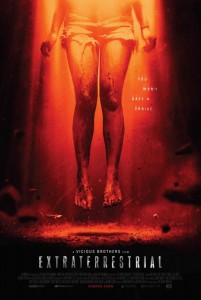
The Vicious Brothers and Brittany Allen discuss their new film “Extraterrestrial”

Colin Minihan and Stuart Ortiz make up the duo known as the The Vicious Brothers. They are the dudes behind the found footage cult film “Grave Encounters” and its sequel “Grave Encounters 2”. In there latest film, “Extraterrestrial”, they are taking on aliens this time instead of ghosts. The film stars Daytime Emmy winning actress, Brittany Allen as well as Michael Ironside (“Scanners”, “Starship Troopers”). Media Mikes had a chance to chat again with The Vicious Brothers and the film’s star Brittany Allen to discuss the film and what we can expect.

Mike Gencarelli: You guys tackled ghosts with the “Grave Encounters” films, why aliens next?
Colin Minihan: “Extraterrestrial” was actually the first thing that we have ever written even before “Grave Encounters”. We have always loved anything to do with UFO, aliens and abductions We have thought that no film recently has done justice to the sort of alien abduction concept, so we wanted to take it on.
Stuart Ortiz: I think there has been a lot of B-movies in the last early 2000’s with alien scenarios and they are always really low production value. Why hasn’t anyone ever tried to make a “Cabin in the Woods” movie with younger 20’s and instead of it being a slasher make the slasher an alien. When Stu and I write, we usually lock ourselves up on the remote northern tip of Vancouver Island, which is surrounded by woods. You kind of always wonder when you are in the place like that what else is there. You can feel the fear of what is out there in the sky when you are looking up at the stars. I can’t imagine that aliens don’t exist, so I think since we think it could be real it makes it as scary as ghosts, which I also think exist.

MG: Brittany, how did you come on board this project?
Brittany Allen: I got the script through my agent. As soon as I finished the script, I contacted my reps and said that “This is something different and special”. I felt that they took the genre and did something new with it. It was very refreshing to read a strong female character that had very human emotions that she was working through in the contexts of a horror/sci-fi film. I related instantly to everything about her from her pessimism on love and the journey that she takes throughout the film. I had a really strong feeling about it, so I pushed for it and ended up meeting with the guys over Skype and then I got the part.

MG: You guys have much more visual effects here than your previous films; tell us about how you accomplished such amazing effects in the film?
CM: The visual effects undertaking on the film was massive for the budget we had. Stu and I wanted to make a blockbuster and we only had a million dollars to do it with. So we pushed our visual effects company to the point that every artists probably lost some hair to make the film look as good as it does. It is one of those things that when you work on a low-budget film that doesn’t have a major studio behind it, I think people feel more involved with it since there isn’t a thousand person team working on it. It is more responsibility for less people and having them step up into those roles. There is a ton of CGI in the film. The UFO is completely computer generated. The alien in the film is also completely computer generated. I feel like the level of detail in the alien is really quite something because people are thinking that it is a model or even a practical effect. When Stu and I were making the film, we were torn in wanted to do it practical or not. We are fans of the genre dating back to “John Carpenter’s The Thing” where practical effects were at their height. To do that now, it just wasn’t realistic within our shooting schedule. But I believe it was a great choice and I am very happy with it.

MG: Brittany, you’ve done some sci-fi including “Defiance”; what do you enjoy most about this genre?
BA: I like putting myself in another world. I have a pretty wild imagination and being able to use that to get into these characters. There is a freedom that comes with this and it is a real playfulness in it. It was just a rush too. I remember one night we had like an hour left to shoot and it was like 3am in the morning and we would do this crazy scene running in the woods. We would finish and would be screaming with our adrenaline pumping. So it was a lot of fun.
SO: I want to be in the front of the camera, that sounds like fun [laughs]

MG: Your role was quite demanding, especially in the third act; was it a big challenge for you?
BA: I would say the biggest challenge in those scenes was using this stuff called Ultra Slime. It was lathered all over my body. That was probably the biggest challenge. It is exactly like you would imagine it to be, it was the slimiest, grossest feeling ever. It was a challenge that I really embraced though.
SO: You were covering in that slime for like a whole day
BA: Yeah, there was one day that I was covered in the slime all day and I started to feel cold and uncomfortable.
CM: I remember I got a piece of it on my finger and I was like “Eww, get this off me [laughs].
BA: Afterwards, it felt like it was all over me when it wasn’t anymore. Overall, emotionally those scenes were some of the most fun to shoot.

MG: How was it working with Michael Ironside? And I love the aspect of the aliens being able to controls your minds… Were you tempted to blow up his head like in “Scanners” [laughs]?
SO: Yeah, I think we had that discussion every single day.
CM: Or we could have torn his arms off (ala “Total Recall”) or his legs bitten off (ala “Starship Troopers”). Is there a scene montage of Ironside getting limbs ripped off in his film? I just want to shoot a movie so that we can add just one part to that if so [laughs].
SO: Working with Michael was just great. He is super intense and even though he has been making films for 30 years and been in a ton of movies, he is still super passionate and excited about the work. You never know what to expect when you bring an actor in for a few days of work. We are huge fan boys of Ironside and it was great getting to work with him.
CM: He also had a lot of great ideas for his character that he brought to the table right away. In the film, he is wearing these ridiculous shirts and that was all his idea. So he was just so cool.

MG: This is your third film together; how do you feel that you have matured as directors?
SO: It is funny because “Grave Encounters” is such a completely different film from “Extraterrestrial” in every way. “Grave Encounters” is obviously a found footage movie and meant to focus around amateur footage versus “Extraterrestrial” in which we are trying to achieve a huge epic sci-fi extravaganza influenced by Steven Spielberg. I don’t know if we could have made this film first…maybe. I think that we learned a lot on “Grave Encounters”.
CM: We are both self taught filmmakers. Stu and I have been shooting films since he was was 5 and I was 8, so we have grown up with it. So with “Grave Encounters”, it is a found footage movie, you have to abandon the language of cinema that we potentially thought ourselves and throw the concept of elaborately staging a scene out the window because it would feel fake within the context of a found footage film. So I think with “Extraterrestrial”, it shows more of that classic influence like Stu said Spielberg…Zemeckis, these guys that put the focus on the staging of talent and telling the story with a camera. I am grateful that we got the opportunity to showcase our ability to direct outside of the found footage world. I prefer this type of filmmaking much more.

Jai Courtney and Joel Edgerton talk about their new film “Felony”

Jai Courtney and Joel Edgerton are the stars of the new film “Felony”, which also co-stars Tom Wilkinson. Edgerton also wrote and produced the film. Jai is growing to be quite the superstar with films under his belt like “The Divergent Series” and the upcoming reboot “Terminator: Genisys”. Joel has been in great films like “The Hurt Locker” and can be seen next in “Exodus: Gods and Kings” alongside Christian Bale. Media Mikes had a chance to chat with Jai and Joel about their new film “Felony” and their experience on it.

Mike Gencarelli: Joel, you not only star but also wrote and produced “Felony”; tell us about how you became involved with this film?
Joel Edgerton: I started writing this film back in 2007 or 2008. It was based on a short story that I did about this character knocks this kid off his bike while driving drunk and then lies about it. Very quickly I became fascinated with not just him as a character but the characters that Jai (Courtney) and Tom (Wilkinson) ended up playing in the movie. It became about this event and how it would end up effecting a various people’s lives and also how everybody involved in the story has very different opinions about the cleanup, aftermath and punishment needed for the crime. The movie is a thriller that also look into ethics at the same time, so hopefully it is very entertaining. I have written a lot of stuff and when I write something that I really know in my bones is good I become very passionate about it and I will try everything to try and make it work. Next was gathering a really great team. We got Matthew Saville, who is a really great director, his movie “Noise” is one that I really love. Then together him and I found the right producing partner Rose (Blight), who then became the real engine that pushed us into getting this made. Then it became it about finding the right leads to be in the movie and we were blessed in the fact that we got Jai, who is perfect for the character and really blessed that Tom came to play with us as well.

MG: Jai, how did you come on board and what drew you to the project?
Jai Courtney: Really it was just the script. I have been an admirer of Joel’s for some time. We didn’t know each out prior to this film. When I read the script, I did notice his name on the front page and it did definitely intrigue me but I think if that script was written by anyone else, I would have been equally as hungry to do it. It is very well done. Joel reaches out and engages the audience and asks them what they would do in terms of what is going on in the film. My character sees things very clear, defined and very black and white. He believes in that if you mess up then you should suffer the consequences. I am a lot more unsure in person and I thought it was really new territory for me. You couple that with getting the ability to go home (to Australia) to make a movie there. But it is really a universally themed narrative, so it was just a bonus for me and just felt like such a good fit. So I went ahead and auditioned for it and before we knew it we were crackalacking [laughs].

MG: What was it like to work side by side with the great Tom Wilkinson?
JC: I had the pleasure of playing his partner. He is a funny old guy and has been doing this forever. I have an enormous amount of respect for what he is capable of as an actor. Look, it was just a buzz for me. It was great to be able to work with someone that experienced yet he was still so hard working. I would ask Tom what he would be up to on the weekend and he would look at me confused and he would say “Well, I will be working on my lines. I’ve got all these lines to say”. I was just like “Wow”, it has never changed for him. He still works so hard and does an amazing job.
JE: I was amazed firstly that he just jumped on board. To have the person you wanted to play the character say “Yes” was great. I wrote him literally these speeches that would go on for pages. I had this long scene with him on the dock and he turned up fully prepared to shoot the scene. He could have even probably shot during the rehearsal. He doesn’t play the card of learning the lines on the set, like a lot of actors do. Even I was terrified writing it, to be honest, but he just came super prepared and super thoughtful of what his character what doing and it made the film so much more interesting. His character is spewing some of the most difficult points of view on justice and he has such conviction as an actor that you kind of fall into his point of view. You want to believe him.

MG: Joel, how did you prepare for such an emotional role being a family man at home, take a bullet and yet living with this lie?
JE: The tricky thing was that I realized very early on that my character is one of the most inactive characters in the film. We did work hard that he wasn’t just a series of long faces but to show that there is a lot of turmoil going on. Jai’s character is working towards something and trying to fix this problem and Tom’s character is working to fix it in terms of covering it up. I think the biggest challenge for me is that I am not only speaking lines that I have been writing for years and trying to sell them like I would in any other movie but I wanted to make sure that there enough complexity to the guilt. You are asking an audience to empathize with someone that has done a terrible thing and still go on that journey with him. Matthew, the director, and I were having a moment by moment discussion of how we can keep the audience with my character yet still allow them to also not be on his side.

MG: Jai, how did you perfect that “I know you did it” stare that you gave to Joel throughout the film?
JC: I worked on that stare for months [laughs]. I used to joke with Matthew because it did feel like that was all I did just starring at Joel with that “I know you did it” face.

MG: Jai, going from films like “Divergent” to this; was a good chance of pace?
JC: Definitely man. It was wonderful being able to shake things up with a film like this. He is a quiet character but internalizes more than some of the other roles that I have had the fortune of playing. It is fun to get to do the big blockbuster films as well but as an audience member, I respond to this kind of cinema a little more. It is more in line with the kind of film that intrigues me and gets me putting my feet up. It was very refreshing. I was just very lucky to be a part of it. To be honest, it was probably one of the most fulfilling personal experiences that I have had. No frills but no bullshit either. It shows you don’t always need a big budget to have a lot of fun.

MG: Joel, next up you got “Exodus: Gods and Kings”; which is quite a different type film than this one.
JE: A little bit [laughs]. Yeah, that was an incredible experience. That is the beauty of the jobs that I get, one minute you are back doing telly in Australia and writing and then next I was in some building in Spain wearing a gold skirt. So you get to have like 3-4 month excursions into different worlds with a bunch of great professional people. It is a real blessing. I wouldn’t want to do just the one thing. It is nice to be able to jump around in the different worlds. The big budget films are exciting but there is really something that gets your adrenaline going with these smaller movies as well.

MG: Jai, what can you spill for us about “Terminator: Genisys”?
JC: They are very tight lipped about it, so I can reveal much but I am really excited about it. I am really happy that I got to have the experience. I am a fan of the franchise also, so it was really cool to get to play that role. I am really excited with the direction that we are taking the franchise as well.

Oscar Winning Composer, Steven Price talks about his new score for “Fury”

Steven Price is the very talented composer behind the film “Gravity”, which ended up winning him last year’s Oscar for Best Score (along with numerous other awards). Steven has also worked on film like “The World’s End” with Edgar Wright and TV series like “Believe” with “Gravity” director Alfonso Cuarón. Media Mikes had a chance to follow-up with Steven to discuss his new score for “Fury” and what we can expect.

Mike Gencarelli: You worked on the score for “Gravity” for about two years; at what point in the production did you come on board “Fury”?
Steven Price: I started on “Fury” about a year ago. I got the scripts and read through them. Usually, I am pretty useless at judging scripts. I tend to do better off waiting until I can see a little bit of what they have shot. But with this film, the script was really gripping. (Director) David Ayer has this ridiculous ability when writing characters that you feel like you totally know them in only a couple of pages, you care about them and you want to know what is going to happen to them. I loved the script. So I made a couple of calls and it turns out they were shooting it about 40 minutes from where I live. So I asked if I could visit and I actually ended up going a couple of times while they were shooting. I got to watch it being shot but also I got to spend a bit of time talking with David discussing what he was doing and what he hoped the music would be. It was an amazing opportunity to get to work with another director that really values what music can do for a film. It was important for him to have the music to carry emotion and be a part of the experience. So I was very keen to be involved.

MG: “Gravity” was set in the vast unknowns of space; tell us about how you approached “Fury”, which is set in the hell of World War II?
SP: I think “hell” was the key to it actually. We talked about what the characters had already been through by the time that we meet up with them in the first reel of the film. They have been in the war for 3-4 years by that point and have seen and done unimaginable things. They are exhausted and terrified but they have to keep going forward. So it was a matter of capturing that sense of exhaustion and of being in hell with this constant motion and this grinding forward. I wanted to capture that quality in the music whilst putting you there with the men and their emotions throughout the film. So that’s the conversation we had at the start and then had to work out how that would actually sound.

MG: I was going to ask if you looked for influence from other World War II films but this has such a unique sound for the genre and even sort of crosses over the line of horror with the use of the overlying chanting throughout.
SP: With where they are within the timeline of WW2, the film being set just 3 weeks before the Nazi surrender, I think it is easy to imagine that things were less intense at that point, but in actual fact the crews were in the middle of Nazi Germany… they were surrounded, and things were unimaginably bleak and threatening. I did a lot of work with a choir that is constantly chanting and whispering around you. It is an eerie sound in lots of ways. You never feel, like they never felt, safe for a moment. There is something that could happen that would be life ending, you never know. It was a real turning point for me, while writing, when I got the idea to use the choir in that way. I recorded them in all sorts of different ways. Sometimes it was as a choir but often times I would give them all their own individual microphones and get them saying different things. We could make it sound like individuals at times or make them sound like this group marching forward. They are only really used as a traditional choir in terms of singing at the very end of the film. So until then, they are this voice of constant persistent danger.

MG: Were you able to able anything you learned from “Gravity” on this project?
SP: I think the great thing I learned from “Gravity” experience was to just keep trying and keep experimenting with new things. That was a process for me that was really useful on this. The film was evolving as I was working on it and there was always a chance to look at something from a different angle.

MG: What were some of your biggest challenges that you faced here?
SP: The biggest challenge on this film was just getting the journeys right. Take the character, Norman (played by Logan Lerman), when we first meet him in the film and he goes from being terrified to suddenly plunged into a tank battle. So trying to figure out musically, how was his journey through the film and his growing and understanding of what it means to be in this was a challenge. Also Brad Pitt’s character, Wardaddy, was challenging since his enigma itself almost could be played musically and how much we should learn about him and his team through the music. So a lot of it were character challenges and trying to support them and their stories. That was the stuff that got me scratching my head at night and trying different things.

MG: I love that the score is so epic and yet you still have some beautiful piano work in tracks like “I’m Scared Too”.
SP: I did an early demo with piano and David sort of immediately attached to it. It is very simple piano work and all quite blunt actually in terms of the musical construction of it. They characters aren’t verbose sort of characters. They speak clearly and what they say is clear. Musically, I wanted it to be like that too. I wanted it to be very concise. The piano writing was very simple and also it needed to be played with great emotion. One of my oldest friends, who is not a full time professional musician but is a great player, ended up playing it for me. He came in and just completely understood what I wanted to do with it. His touch on the piano really made the whole thing work. We spend a long time getting the right sound for it as well. We ended up going about it in a peculiar way using two very old 1940’s microphones underneath the piano. It is not the sound that you would ordinarily do for a big posh film piano sound but it just felt right. You hear the mechanics of the piano, the pedal sounds, the contacts between the hammers and the strings and that seemed like it was suitable for this film.

MG: Since you are no longer working on “Ant-Man”; what is your next project?
SP: There is stuff knocking around a bit but not allowed to say much about anything at the moment though. But at the moment, I am in the bit where I should have been doing “Ant-Man”. Having spent a lot of time with Edgar Wright and considering him a good friend, it was never going to be an option for me to do that film. We spent so long talking about musical ideas for the film and it would have been so wrong taking it with someone else’s vision really. Hopefully I will have the opportunity to work with him again soon. But we will see what is around the corner next, yeah!

Copyright: MediaMikes.com © 2014 · Powered by: nGeneYes, Inc. · Login

All logos and images used on this website are registered trademarks of their respective companies. All Rights Reserved. Some of the content presented on our sites has been provided by contributors, other unofficial websites or online news sources, and is the sole responsibility of the source from which it was obtained. MediaMikes.com is not liable for inaccuracies, errors, or omissions found herein. For removal of copyrighted images, trademarks, or other issues, Contact Us.