
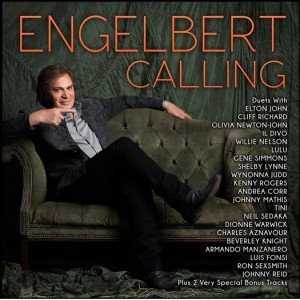
Engelbert Humperdinck talks about his new duets album “Engelbert Calling”

Engelbert Humperdinck is an international bestselling artist. He has numerous hits including “Release Me”. His latest venture is a duet album, called “Engelbert Calling”, singing classics along with Elton John, Olivia Newton-John, Il Divo, Willie Nelson, Gene Simmons, Wyonna Judd, Kenny Rogers, Johnny Mathis, and Neil Sedaka to name a few. Media Mikes had a chance to chat again with the legendary singer to discuss the new album and how it all came about.

Mike Gencarelli: We first spoke back in July of 2011 and you mentioned you were working on the album; how does it feel to final have this album available to fans?
Engelbert Humperdinck: Good to speak with you again Mike. Yeah, can you believe it has taken that long? It has taken just over three years to complete this particular album. Thank God for internet for being able to send these tracks across the world to each of the artists involved with this album. It was a lot of work and I am glad that it is finally available to my fans to enjoy!

MG: Pretty ambitious having a 2 CD, 23 track debuts CD; how did they idea come about to do a debut album?
EH: You know, Elton John was responsible for starting this off. I was listening to one of his live albums and on one song he says something like “This song I wrote many years ago as a struggling artist, living in a flat in London and was waiting for an Engelbert Humperdinck to call and take it off my hands and make it a hit”. So I finally called and told him I was listening to this album and it gave me a great idea. I asked him to sing a debut on my next album and he said “Yes”. So, once you get someone like Elton John, he is the honeycomb, everyone else is just drawn to it.

MG: With “Spinning Wheel”, it seems like you and Gene Simmons had a lot of fun with this song; how was it in the studio with him?
EH: Gene was great in the studio. He really brought a lot of pizazz into the studio. He was very loose and very charismatic. They took a photo of half of each of our faces and we really do look alike [laughs]. Overall, it was great fun working with him.

MG: So besides Gene, who else did you record with in the studio?
EH: Elton John was the other. Those were the only two and the rest were done via the airways. Technology has made it possible to do things that are impossible in real life. This album was done in England, London, Los Angeles, New York, Nashville, South America and Europe. At least, I was in the studio with a couple of them. Sinatra wasn’t in the studio with any of his artists for his “Duets” album [laughs].

MG: Tell us about the title “Engelbert Calling”? I picture you going through your contact list and calling out all your friends.
EH: Yeah, the biggest challenge was putting it all together and making my wish list of people I wanted to work with. Johnny Mattis is one of my favorite singers of all time. I love his work. Kenny Rogers was great getting to work with. I mentioned Gene Simmons already, which was a highlight. When I called Willie Nelson, he recorded his part in Nashville, I told him that I was so thrilled to have him on the album, especially singing a Bob Dylan song. Along with signing, I also asked him to play guitar since he has such a great unique style. He was so accommodating and after he recorded it called and made sure it was ok. So that was really great.

MG: Your debut with Elton John for “Something About the Way You Look Tonight” is an amazing way to kick off the album?
EH: With total respect for Elton and since he was the first, I had to put him right at the top of the list. He is the person that started the whole ball rolling.

MG: How was it singing with your kids, Louise and Bradley on this album?
EH: Yep, that is my son and daughter at the end of each disc as a bonus track. I was thrilled to have them there. I wanted to show the world, since this is a world release record, that my children can sing and also pay tribute on my album.

MG: “I Need You Know” with Lulu is one of the newest songs that you covered; what made you choose this song?
EH: I had to have Lulu on this album. Many years ago, when my single for “Release Me” came out, she was on a show in England called “Jukebox Jury”. There were four people on the panel and Lulu was the only one who voted my song a hit. She did a super job on this song. It is a great duet song, so it was easy picking. Plus it suited her voice very well.

MG: After such an amazing album like this; how do you plan to top this?
EH: For the people that didn’t make it onto this album, we will make sure that they make it onto the next one called “Engelbert Redialed”. But that is down the road and preparation is the hardest work.

MG: In your current touring, do you plan on covering any of these duets?
EH: Oh, it is already in the show. I do a virtual debut with Elton John. It is going over absolutely fantastic and people are loving the idea of it.
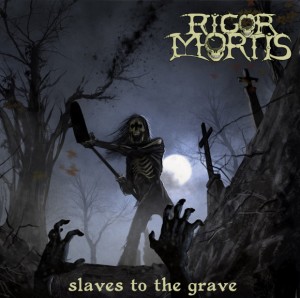
Casey Orr talks about Rigor Mortis’ new album “Slaves to the Grave”

Casey Orr is the bassist for the band Warbeast. He has also been a member of such bands as GWAR, Ministry, Ex-Cops and thrash/metal legends Rigor Mortis. Media Mikes spoke with Casey recently about Rigor Mortis’ new album (their first in 23 years) titled “Slaves to the Grave”. We also spoke about the hardships which occurred during its creation and the whether or not the band plans to continue despite the death of guitarist/founding member Mike Scaccia in 2012.

Adam Lawton: Tell us about the new album and the struggles you encountered during the recording process?
Casey Orr: It’s been a pretty fucked up turn of events. We lost our guitarist Mike Saccia in December of 2012. He had actually been in the studio 3 days before he died and signed off on all of his parts for the album. He had finished everything he had to do and was happy with his work. Even still it was hard to really say that the album was done. We spent a lot of time listening to it and tweaking things and we got it to where we think it’s perfect but Mike’s not here to enjoy it with us. That really sucks because after all the years and ups and downs we were excited to hit the road and work on more new material. It’s bitter sweet. We are glad the record is coming out but it’s the end of an era.

AL: From start to finish how long did the writing/recording process take?
CO: It was relatively short. We had a couple songs we were working on for about a year before they were recorded. The majority of the record was written about 3 months prior to it being recorded. We did do some last minute arrangement stuff. We wanted that type of element to the album. We didn’t want it to be like we spent months and months on the album. That just wasn’t the vibe we were going for. We had a window of studio time become available and we just went in and did it. We did a lot of work and the crew we worked with was really great.

AL: How long after Mike’s passing did you wait to start working again on the record?
CO: We went back in after about two weeks to listen to what we had. We didn’t really do any work that first time back and from there it was kind of a slow process. It was hard to listen to Mike’s playing. There’s some real heartfelt playing on there. Mike could transition from style to style and just sound great. That was really his strong suit. We knew Mike would have wanted us to finish these tracks and that was our drive to get things done.

AL: Tell us about the decision to use IndieGogo to help with the release of the album?
CO: Rigor Mortis never had a business plan or a bank account. At the end of the night we split the money and went to the bar. Things were just so loose and punk rock. It was so wrong. (Laughs) We were going to shop the record to a label and start talking to people however a lot of the interest we had thought was going to be there just wasn’t. We weren’t asking for a lot of money or anything we just wanted to get this record out. Even before Mike died the interest was just sort of gone. We got a lot of positive feedback but because there wasn’t going to be a tour or anything behind it places didn’t want to take the risk. We said “fuck it” and we did it ourselves. We rolled the dice and went for it. We reached our goal and we were able to do things just right. Now I have to fill all the requests for paintings from the campaign as that was one of the things people could choose. I have to do 10 original paintings! It’s going to be fun.

AL: Can you tell us about the bonus DVD which will be included?
CO: There’s a short 30 minute DVD that comes with the record. There’s some behind the scenes stuff from the studio. There’s some other really cool stuff on along with a live song performance. It’s not a full length by any means but we are working on something bigger for the future.

AL: Has the band thought further about performing any of this material live?
CO: After Mike died it wasn’t even a thought. We just weren’t going to perform as Rigor Mortis again because without Mike it isn’t the same. We did a benefit as a one off thing calling ourselves “The Scotchinators”. Doyle our second singer came out as did Mikes guitar tech who really captured Mike’s style and sound. The show resulted in getting offers to do more shows. It’s fine line because we don’t want to come off as a tribute band of ourselves but we don’t want to let the music die either. My thoughts are if we are going to continue on then we start a new band and create new material to go along with the other stuff. Nothing is really long term at this point but the thought is there.

AL: Can you give us a quick update about your other projects?
CO: My band Warbeast will be performing at the House Core Festival this year. We are also slowly in the process of writing a new record. I haven’t been able to be much help as the Rigor Mortis stuff has kept me pretty busy. Shelby our guitarist who’s a brilliant writer has been working hard on that. I also will be reuniting with my punk band The Hellions for a show in December with D.R.I. We might be starting a new version of The Hellions as some of the original lineups aren’t able to continue. Guys will be moving around and we also are changing the name. Things are really busy right now.

Markéta Irglová talks about her latest solo album “Muna”

Photo by Hordur Sveinsson

Markéta Irglová is known best for her work with the band, The Swell Season with Glen Hansard. The two also starred in the film “Once”, which these also took home the Oscar for Best Song from the film. Markéta released her first solo album “Anar” in 2011. Her latest solo album “Muna” is a continuation of that album. Media Mikes had a chance to chat with Markéta about the album and her music.

Mike Gencarelli: Tell us about where you pulled your inspiration for your latest solo album “Muna”?
Markéta Irglová: I usually draw inspiration for my work based on experience and what is going on in my life in terms of what resonates. I find that I am not able to write about something that I can’t connect with from an emotional place. So it ends up being things that I am drawn to at that time. It could be things that I am reading or stories that I heard. At the time for “Muna”, I was having an introspective journey and asking myself a lot of questions about life in general. In the past, I would have written songs about relationships because that was how I was learning to relate to the world. This album was a lot about widening my relationship with the world and looking for my own sense of spirituality and outlook on life. In that searching, I came across a lot of material that actually helped me in my own life as well.

MG: How did you come up with the title “Muna”? (Icelandic for “remember”)
MI: For me this is part two of a trilogy of records, which “Anar” was the first. When I finished making “Anar”, I knew that it had to be the first of these three records. It would be connected to the others and be a continuation and extension of each other. I wanted there to be a synchronicity between these three records. I wanted each record to also have a title of one word and consisting of four letters. When I was recording “Muna” in Iceland, I was wondering what it would be called and I was looking for a word. I was thinking that remembering is sort of a theme for this record. The idea of remembering something that you forgot a long time ago and trying to chase that memory again. So I asked my engineer/producer, “How do you say remember in Icelandic?” He said “Muna” and I said “Perfect, that is the title”.

MG: Can you compare your recording experiences of “Anar” and “Muna”?
MI: I recorded “Anar” in Chicago and I didn’t have a huge budget for it. I liked the idea though of keeping it simple anyway. I wanted to go in for a couple of weeks and have the recording sessions with local musicians and my friend Aida (Shahghasemi), who I have been playing with at the time. I originally went in to record an EP and ended up having way more material than I needed for an EP, so it turned into a whole record. When I was making “Muna”, I wanted to build on the experience of “Anar” and wanted to have a more lush sound with string arrangements. At the time when I was looking for a studio, I was recommend to a recording studio in Iceland. I knew it was a long way to travel but we decided to do it. Again a lot of local musicians got involved and it developed a more structured lush sound for this album.

MG: The album has religion overtones throughout, especially including part of “The Lord’s Prayer” in the track “Without a Map”; tell us about spiritual influence for this album?
MI: Yeah, I was reading a trilogy of books called “Conversations with God” by Neale Donald Walsch. It happened by accident really, I was visiting a friend of mine and while she was making me some tea, I was going through her books and I just came across these books. I didn’t understand how someone could be having a conversation with God. Was he actually having talks with God or did he make it all up? I didn’t know the answer but I liked what I was reading and ended up getting stuck into these books. At the same time, I was allowing myself to ask all these questions as well. So that was one of the main influences for me. There is also a musical called “Jesus Christ Superstar” by Andrew Lloyd Webber and Tim Rice, which is something that I saw when I was four years old. It really inspired my entire musical journey through my life and even now it still resonates with me with the songs and performances. It is a musical, so the story is told with song and there is this sort of call and answer between them. I think my approach to song writing is very similar. I have these conversations within these songs, I ask questions and answer them through the music. I ended up reaching through myself and finding out answers to questions that I realized that I already knew the answers to.

MG: “The Leading Bird” is easily one of my favorite tracks on the album; can you talk a little bit about how it was born?
MI: “The Leading Bird”, I actually co-wrote with my friend Aida. She is a friend of mine that I met when I moved to New York. She is a daf percussionist, which is like a Persian drum. She is also a vocalist. She first wrote a poem and then was writing music to it and she told me she was having an issue finishing it. She asked if she could play it for me and maybe I could help her. She played me this idea which was the verse and the bridge of what became “The Leading Bird”. She didn’t know where to take it. We forgot about it for some time and was both working on other things. I was writing this piece a while later on the piano, which I was really liking. It would become the cord progression of the chorus for “The Leading Bird”. When working on it, it occurred to me that it was perfect for Aida’s song. I thought if we joined these two songs together it would be perfect. When I saw her again, we joined the melodies together and put her lyrics over my parts and it was like it was always meant to be. It was a really incredible experience and I have never written a song like that before in my life. It was very inspiring to have this song born in this way.

Photo by Hordur Sveinsson

MG: My other favorite is “This Right Here”; any story behind this one?
MI: “This Right Here” is a very traditional love song with piano and vocal. It was actually written, the entire thing, music and lyrics within one afternoon. I had just sat at the piano and the song just appeared to me. That doesn’t happen very often. Usually an idea will appear and then I put a lot of effort in in order to crystalize the lyrics and music. But this song just kind of appeared, finished in a way. I don’t know how but it did [laughs].

MG: Was there any plan to the order of the songs on the album?
MI: Yeah, I spent a lot of time trying to figure out how to approach the track list. Mio (Thorisson), my partner, and I had been doing a lot of the post production on the album ourselves. We would burn CDs and listen to them in the car when we went on drives. We would then go back and fix different parts. We also burned them with the tracks in different order. Over the course of listening to these songs together and in different environments, it started to become really clear as how they should be arranged to showcase the gradual growth of the record over the 50 minutes.

MG: Tell us about your upcoming North America and Europe tour?
MI: It is going to be five of us on stage. Aida, who plays the daf and sings with me. Rob Bochnik and Joe Doyle are the bass player and guitar player, who were also part of The Swell Season and also in The Frames. The four of us have done some shows together before when we went to Asia last summer and it worked out really well. I am really excited that they are in for this tour. Also Rosi Golan, a Brooklyn-based singer/songwriter is joining us as a support act and also will be on stage for our set as a vocalist as well. So it is going to be a lot of fun.

Steven Blum talks about voice work and his role of Zeb in “Star Wars Rebels”

Steven Blum is one of the best in the voice acting business. He has such amazing range working on shows such as “Cowboy Bebop” voicing Spike Spiegel to “Doc McStuffins” voicing Commander Crush to “Avengers: Earth’s Mightiest Heroes” voicing both Red Skull and Wolverine. Recently he is taking on the role of Zeb in “Star Wars Rebels”. Media Mikes had a chance to chat about “Star Wars Rebels” with Steven and his a few of his other voice roles.

Mike Gencarelli: Tell us about how you got the role of Zeb in “Star Wars Rebels”?
Steven Blum: Well, I auditioned for it like everyone else in town. I didn’t even know what it was for when I showed up. They called it a completely different name and edited out any of the information that would have made us know it was “Star Wars”. I didn’t actually know it was what it was until I booked the role. I was in England at the time at a “Transformers” convention when I got the email that I landed the job and I needed to record it there. So I had to find a studio in the middle of the countryside at this guy’s house and started recorded. About 10 minutes into the session, I am looking at the script and I see Stormtroopers in the copy and I said “What a second…this is Star Wars…THIS IS STAR WARS!!” It was a huge surprise. I just didn’t know the scope of this show. I have done “Star Wars” projects before but it was only in the video game context, so to get to work on the franchise on something this big is just an incredible thing. I got to introduce not only a new character but also a new species into the “Star Wars” universe. It was incredible.

MG: Where did the find the voice for him?
SB: We played with it a little bit. (Speaking in character) “It started out in the lower range” and we ended up tried a bunch of different accents. We did Eastern European, Australian and all sorts of different things. We landed on something that is sort of English with other ascents peppered in. It is sort of like a bad English accent [laughs]. I am apologizing to the entire UK for my bad accent [laughs].

MG: You also voice Shoe and Sparky in “The Boxtrolls”, out now.
SB: I am very excited about “The Boxtrolls”. It is an amazing piece and I have been a fan of LAIKA’s work for a long time. I even got to go to the studio and play with the puppets and see how these amazing people have put this film together. Every single bit of this film is hand made. It is phenomenal. They made like 3,000 different faces for this film with magnets on the back so that they can swap them out for each shot. It is uncanny.

MG: Since you have voices hundreds of characters like Spike Spiegel in “Cowboy Bebop” and Wolverine in various projects; if someone asked you to do a voice what is one of the first that comes to your mind?
SB: It depends on what I am working on that day. I always have a million voices going on it my head [laughs]. I need to do this job so I can let them out and not explode. So, it depends on the day. People can usually just point at a character and I can remember their voice and speak it.

MG: You have done a wide mix of villains and heroes; do you have a favorite type of character to voice?
SB: [laughs] It also depends on the day. If I am really pissed off and sitting in traffic, I will let a lot of that energy out. I do love playing the heroes too though. I love working on kid’s shows also now like Disney Junior’s “Doc McStuffins voicing Commander Crush and the two Karate Kangaroos. It has been really fun to work on something that is so child friendly.


Related Content

Troy Baker talks about video games, voice acting and “Mythos” concert

Troy Baker is one of most well known voice actors in the business. He is known for his roles as Booker DeWitt in “BioShock Infinite”, Joel in “The Last of Us”, Kanji Tatsumi in “Persona 4”, Pain in “Naruto Shippuden”, Hawkeye & Loki in “Avengers Assemble” and The Joker in “Batman: Arkham Origins” and “Batman: Assault on Arkham”. In conjunction with New York Comic Con 2014 and the first annual New York Super Week Festival, Tina Guo will be performing as a guest artist in MYTHOS! A thrilling and unique concert experience, MYTHOS, showcases great music from across the spectrum of modern orchestral genres – inclusive of music from the concert stage, television and film, and video games – featuring the all-star orchestra The Third Estate, conducted by Grammy Award nominee, Austin Wintory, composer of Journey, as well as vocalists from Choral Chameleon.

Mike Gencarelli: Tell us about your involvement with “Mythos” video game concert?
Troy Baker: This counts as a win in my book for social media and for the community of gamers. I was a fan of Journey and especially the music. I reached out to Austin Wintory to compliment him not only on his amazing score but also his subsequent success. That began a long Twitter conversation back and forth about games and how we should collaborate on something musically. Also, competitive cat pictures might have been involved. This happened over at least a year and has culminated into this amazing event.

MG: What do you think that video game music is so important to its fans?
TB: The entire soundscape of a game plays such an integral part in the overall interactive experience. The same is true with movies. Dramatic moments are supported by a musical movement. Games are no different. Everyone can hum the underground tune from Mario Bros, some of us can hum selected themes from Final Fantasy of Metal Gear. What we’ve seen recently is how these thematic musical elements play such a crucial element, almost a character in these games. The main theme and even all the music from The Last of Us is a perfect example of this. Look how much of a role the music in Bioshock Infinite played in the overall experience!

MG: You have voiced many great video games including “Persona 4”, “Diablo III” and upcoming “Batman: Arkham Knight”; what do you enjoy most about video games?
TB: First and foremost I love being a part of making something that I’m going to geek out over later. As a gamer, I get to experience these games on two completely different levels and both are equally magical, first as an actor, then as a player. There’s not too many jobs that can boast that kind of benefit. I love that in the gamespace some no name kid from Texas can be a “leading man” in a huge franchise and maintain some anonymity that allows me to hide behind the character. I always want the role I am playing to take center stage, not me.

MG: Ranging from anime to video games; which is more challenging to work in?
TB: Both have their intrinsic challenges and each job requires a certain skill set. I view myself as a carpenter. I come into every job with my toolbox and I pull out the necessary tool for the job. At it’s root, however, everything I do has a foundation in just being an actor. Sometimes you’ll only use your voice and allow the animators to interpret your performance, others the onus is on you to present that character soup to nuts in your performance.

MG: How was it taking on the role of such an iconic character as The Joker in “Batman: Assault on Arkham”?
TB: In a single word: “humbling”. I grew up on Batman. It was my first comic I ever purchased. I’ve seen everyone from Caesar Romero, Jack Nicholson, Heath Ledger and, of course, Mark Hamill portray that role. To in any way be counted among those people, to have stepped into those shoes in any way, is an honor. I would rush home from school to make sure I caught Batman: The Animated Series on TV. Which to me, changed mover animation and how we tell a story in that medium. That show is unparalleled. To be directed by Andrea Romano was nothing short of a dream come true.

MG: What was the best part of getting to voice both Hawkeye and Loki in “Avengers Assemble”?
TB: The fact that they let me! I was cast as Loki first and really thought I would be recast as soon as I was cast in Avengers Assemble as Hawkeye. I’ve always loved Hawkeye, especially after The Ultimates series, because you got to see him as just a guy. Not a superhero with crazy powers, but just someone who is really REALLY good at what they do and can fight shoulder to shoulder along side a god, a gamma freak and a billionaire in an iron suit.

MG: Tell us about your first solo album “Sitting in the Fire”?
TB: It’s been such a labor of love. Some of these songs have been gestating for almost 10 years, waiting for the right time, right place. We finally found both. Our producer, Johnny What, our engineer and mixer Rob King and I, along with our musicians went up into the mountains of Big Bear, California with almost a half a million dollars in gear and tracked this record in an amazing cabin. It was a truly remarkable experience. Death bed moment for me. I’m proud and excited that the album is finally coming out. It’ll be available on iTunes, Amazon, Google Play and all digital retailers as well as an actual “digital LP” physical copy in select stores October 14th.

Academy Award-winner, Nicolas Cage talks about his role in “Left Behind”

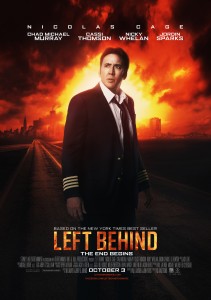
Academy Award-winner Nicolas Cage is a man that does not need any introduction. He is well-known worldwide for being one of the most versatile actors of all time, equally known for his poignant portrayals in both drama and comedy. Some of his more notable films include “The Rock,” “Con Air,” “Gone in 60 Seconds” and “National Treasure”. Coming up next, Cage stars in “Left Behind,” a Christian-themed apocalyptic action film based on the best-selling book series by Tim LaHaye and Jerry B. Jenkins. Additionally, Cage recently completed filming Paul Schrader’s “The Dying of the Light” with Anton Yelchin and is currently in production on “The Runner,” which also stars Sarah Paulson, Peter Fonda and Connie Nielsen. Media Mikes had a chance to attend a teleconference with the actor to chat about his role in “Left Behind” and what we can expect the film.

Can you give us a little background on your character Rayford Steele and his importance in the film?
Nicolas Cage: Well I mean Ray Steele is a captain of a jumbo jet, a transatlantic jumbo jet going to London, England. And he’s an important guy on that airplane and he has a flirtation and there’s a chemistry that’s happening with the flight attendant, so marvelously played by Nicky Whelan. He loses track of what’s really valuable to him in terms of his treasures within which is his love for his family. He’s kind of, not that he’s a bad guy but he’s making a mistake that many people make that are in powerful positions lose track of the importance of family. They’re drawn away, or they’re seduced from their true inner-values by something attractive, or something flirtatious, or something that has the call of the wild. Ray Steele gets back to his true need for family through this experience and through this extraordinary experience and understands the value of family and just wants to get back to that no matter what happens. Just to be able to get back on the phone with his daughter and say I’m sorry and “I love you”. And I think that’s as simple as that. I think that is heart-wrenching. And if you have a heart I don’t think it’s possible to see the movie and not get a little verklempt. I mean it, there’s some very poignant, emotional moments.

What was it about this script or what regarding the movie in general that drew you in?
NC: I really said “Yes” on the merits of the screenplay. And also to work with, to work with Vic again, the director. I think all artists, if you’re tapped in, if you’re tuned in, to the zeitgeist and they’re open to that then they’re going to pick up on that. I felt that the script was a challenge and it gave me a chance to really try to make the extraordinary, believable and to do something authentic within performance so that everything around me was going into chaos. People were just appearing on the airplane and how did I make that organic? And again, all the actors, Chad Michael Murray, Cassi Thomson, Nicky Whelan, they were all on-point. And I find that exciting. To me, it was, it was an exercise and I’m very happy with the results.

How familiar were you with the “Left Behind” series before getting on board?
NC: I was not familiar with the “Left Behind” series. I’m familiar with the rapture of course. My brother, Mark, is a Christian pastor, and he was very excited about this. And he said, “Nicky, you’ve really got to to do this”. I’d already wanted to make the movie because I thought it was such a great script and an opportunity again to do something challenging. But when I saw how passionate he was, I thought, “Well, yeah I want to make this movie for my brother too”.

What was it like working with director Vic Armstrong?
NC: Well actually I’m very comfortable working with Vic. I got to spend quite a bit of time with him on another movie that we made, called “Season of the Witch”. And it was a good experience and I thought that he directed me to a good performance and something that I was very proud of and wanted to work with him again. I knew that I would be able to relax with him and that I would be able to go within and just sort of exhale and be in the moment and be in the scene. That he would allow his actors to breathe and to be relaxed and to find the truth of their performances. And it really shows in the movie. I mean, across the board, of Chad Michael Murray, and Nicky and Cassi again just powerfully real performances. And I knew that that would happen working again with Vic.

Weston Cage talks about music and solo album “Wes Cage”

Weston Cage is no stranger to the entertainment business. The son of Hollywood heavy weight Nicholas Cage, Weston has dabbled in everything from acting and soundtrack scoring to fronting his own underground metal band “Eyes of Noctum”. Weston’s newest project is his first solo music effort simply titled “Wes Cage”. Media Mikes had the chance to speak with Weston recently about the project which he describes simply as “Ghost Metal”.

Adam Lawton: What can you tell us about your new single?
Weston Cage: “Tell Me Why” is one of those songs that is very different from the rest of the tracks on the album. The record was written with a specific formula in order to have traditional ghost metal sound. It is true to the essence of what I was going for. “Tell Me Why” has a lot of classic roots as it’s a little thrashy while the chorus sticks out. We used a detuned piano in the background along with a lot of industrial elements. My wife wrote the lyrics which are sort about this tortured individual. What’s amazing about the interpretation of the song is that the lyrics can be taken in any way that the listener wants.

AL: What was it like working with your wife on the song lyrics?
WC: It was very refreshing. It was easier for me as the lyrics I write tend to be a bit wordy. Sometimes we have to go in and sort of Frankenstein up my lyrics to make them a little more workable. Having Danielle come in for this track was really great.

AL: Can you tell us about the decision to shift from being in a band to being a solo artist?
WC: I definitely wanted to cater to a larger audience. I also wanted to experiment with some things that are disliked in the black metal genre. I wanted to add more industrial elements and draw on some of my world influence. I wanted to be able to just explore a little more. The other tracks on this new album have more of a symphonic/industrial element to them. Again I just really wanted to be free to explore my influences.

AL: What type of process do you take creatively when working on new material?
WC: It’s a pretty interesting process actually.  I am very unorthodox. I meditate and, during meditation I go so deep that I start to hear things which stem from the unknown. I might hear a melody or something and then elaborate from there. Before I know it I have two or three riffs and the rest of the song starts to come together. I use a variety of instrumentation while creating.

AL: Coming from a family mostly known for film what do you think it was that sparked your interest in music?
WC: Music has been a passion of mine from very early on. When I heard some of my great grandfather and great uncles music I got inspired. Some of that music from “The Godfather” really sparked my interest. As a kid there was always music playing in the background. Everything from Enya to Nine Inch Nails along with other music that had these vast array of sounds. Those definitely planted the seeds in my blood.

AL: Can you tell us about some of the other projects you have in the works?
WC: I have quite a few films lined up right now. I have one that will be shooting Portland that is sort of like a grittier version of “Harold and Kumar”. There are a few others that will be quite interesting as well. One film is dealing with Babylonian/Sumerian history. Musically has been pretty focused on this new solo stuff. On average I have been writing about 15 songs per month. Right now I think I have enough material for 4 more albums.  It will be the gnarly reduction process that I have to get myself through to get rid of the songs that maybe aren’t the best.


Related Content

Aliya Hashemi talks about Zeta Wave’s debut EP “Over”

Zeta Wave is the musical alias of Aliya Hashemi an up and coming singer-songwriter from Seattle, WA. Her unique sound draws influences from a variety of genres ranging from A Tribe Called Quest to The Beatles and Fiona Apple. Zeta Wave’s debut EP “Over” was released in mid October of this year and Media Mikes had the pleasure of speaking with Aliya recently about the new EP, her first exposure to music and the benefits of being an independent artist.

Adam Lawton: How did you get started in music?
Aliya Hashemi: That is something that goes way, way back. I had gotten a little red piano for Christmas when I was about 4 and from there I just loved anything that made noise. I learned piano when I was 8 and then moved on to flute when I was 12. I wrote my first song around that same time. It was actually an answering machine recording sung to the tune of the “Addams Family” theme song. (Laughs) Also during this time I began to be really drawn to the electric guitar. I don’t know why but it was something I had to do. From there I just started writing more and more songs.

AL: Tell me how you came up with name Zeta Wave?
AH: I have always had some reservations about going by just my name. I think sometimes when that is the case you can easily get billed as a singer/songwriter. I never really wanted to go the Folk route as I feel I have a little more of an edge. I was talking with a friend one night and we threw out the name “Zeta Wave”. I thought it was kind of interesting and spacey. Space is something I have always been interested in so I think it works.

AL: What can you tell us about the new EP?
AH: I have wanted to record now for some time. As I mentioned before I have been writing songs for quite some time. It really a big endeavor when you are putting everything together on your own. It’s pretty amazing now that it’s all done. I am excited to finally have an EP that’s done to the quality and standard that I want. There’s a song on the EP titled “Waltz” that is very dear to me. I lived in Seattle for a long time and the weather especially the winters are very depressing. This song is about being a part of something bigger than you despite what might be going on at a specific moment. It’s basically a love song.

AL: Can you tell us about the first single “Strange Heart Beat”?
AH: That song was one of a bunch that was written during a breakup I was going through. This was one of my favorite from those songs. It has a really catchy chorus and goes over well live. It actually features Zach Nicita from MSMR on drums.

AL: Can you tell how you ended up working with Zach?
AH: Well that song wasn’t originally going to be on the EP but we had some extra time so we added it to the release. A friend of mine turned me on to Zach’s YouTube videos and I thought he was just amazing. I sent him a message through Facebook asking if he would play on the track and he actually responded. It took a little while to get the track done as he was on tour with MSMR but I was patient and that track turned out really great. Zach is a guy who you can tell really loves music so getting to work with him was great.

AL: What is your creative process like?
AH: It has changed over the years. It seems as times goes on I tend to start with the melody. It might be just something I hear in my head and then leave myself a voice memo on my phone. Other times I might be playing guitar and I work out a phrasing and build a melody off of that.

AL: What do you enjoy most about being an independent artist?
AH: Being an independent artist gives you a lot of freedom. You are able to do want you want without any added pressure. There are certainly benefits to being on a major label as they are able to do a lot more but they also have a lot more control over the artists.

AL: Do you have any live shows coming up in the near future and, what do you enjoy most about performing for a live audience?
AH: I hope to do a little more recording, possibly shoot some videos and then start touring in the spring. I did a solo tour a couple winters ago as I figured it would fairly easy to put together since it was just going to be me and my guitar. One of the shows I did was in Washington near my home town and the weather wasn’t the greatest out so I figured the show probably wasn’t going to be overly crowded. There happened to be some older men there that stayed for show and listened to me sing all these songs about break ups and whatever else. They were probably the most intent listeners. It felt like I was singing to my grandfather which was just so great. I love the direct and honest connection you have with the audiences.

Tina Guo talks about music, video games and concert “Mythos”

Tina Guo has developed an international multi-faceted performance and recording career as a classical cellist and heavy metal electric cellist, erhuist, and composer known for her distinctive sound and improvisatory style in major motion picture, television, and game scores. Tina toured with Japanese superstar Yoshiki of X Japan on his Classical World Tour, and recently appeared with the Tenerife Symphony and Choir in the Canary Islands performing “Batman: The Dark Knight” Suite at the 2014 Tenerife International Film Festival, featured on Electric Cello. In conjunction with New York Comic Con 2014 and the first annual New York Super Week Festival, Tina Guo will be performing as a guest artist in MYTHOS! A thrilling and unique concert experience, MYTHOS, showcases great music from across the spectrum of modern orchestral genres – inclusive of music from the concert stage, television and film, and video games – featuring the all-star orchestra The Third Estate, conducted by Grammy Award nominee, Austin Wintory, composer of Journey, as well as vocalists from Choral Chameleon.

Mike Gencarelli: Tell us about your involvement with “Mythos” video game concert?
Tina Guo: I’ve known Austin (Wintory) since University at USC and have enjoyed working with him over the years on all kinds of musical projects! In the Mythos concert, I will be playing cello on 3 different tracks that are based around the music from his Grammy-nominated score for the PS3 game, Journey, on which I did the original solos as well. I’m super excited and can’t wait to perform these completely new arrangements with a fantastic group of musicians in NYC!

MG: How much of a difference is there between the worlds of a classical cellist and heavy metal electric cellist?
TG: All music is music… for me there’s no difference between genres or even in different kinds of art, whether it be playing the cello, singing, dancing, painting… any kind of expression is expression, and some genres or ways of expression may be more suited to expressing different feelings or energies than others, but in the end, everything is simply a reflection of ourselves. I love dichotomy and extremes, and although there are some extremes between classical music and industrial metal, there are also heavy similarities. For me, the passion, depth, and fury expressed in these two genres make them siblings rather than opposite polarities.

MG: You have worked on various video games including “Diablo III” and “Call of Duty: Black Ops II”, what do you enjoy most about the genre?
TG: I love to work on all kinds of recording projects- on the Video Game Scores, working with the composers to create a feeling and bringing their notes and their ideas with what the cello and electric cello can bring mood-wise to the score is super fun! Video Games are an important and popular form of entertainment, and the music is such an integral part of it.

MG: Tell us about your one night only solo show “A Journey Through Music”?
TG: That’s my solo show at the Center for the Arts in Escondido, CA which is a gorgeous 1500 seat theatre in the San Diego area. I’ll be playing everything from classical works by Bach and Vivaldi to my Industrial Metal “Queen Bee” to covers of Beatles and Game of Thrones music. (I love Game of Thrones!!) I’ll be joined by a chamber ensemble of amazing musician friends from Los Angeles, my dad will be making a guest appearance to play the Vivaldi Double Cello Concerto, wonderfully talented Uyanga who is an ethnic Mongolian singer will be performing a few pieces with me, and my husband who composed the final two pieces in the show will be joining us onstage as well on keyboard/samples/electronics for those Trailer Music “Epic Music” songs. The show is sponsored by the Asian Heritage Awards, which is the evening before my show in which I will be receiving the 2014 Award in Innovation. I feel very honored and a little intimidated to be among the award recipients, who include molecular biologists, the scientist who discovered the greenhouse effect of halocarbons and led the first NASA assessment on the climate effects of non-CO2 greenhouse gasses, a California Assembly Speaker, the founder of the UCSD Skaggs School of Pharmacy and scientist responsible for uncovering the structure of neuroligin, the founders of the Global Institute of Stem Cello Therapy and Research… etc… and then… there’s me… Tina, the girl who saws wood. *hand to forehead* I’m very grateful for the Asian Heritage Society for sponsoring my solo show however, and I hope that I can express through the multimedia performance my version of Innovation through music and art. You can find more info here: http://artcenter.org/event/tina-guo/

MG: Tell us about your upcoming albums?
TG: I just released an album on Oct 1, 2014 called “Tina Guo & Composers for Charity” which is available on iTunes, Loudr.fm, Google Play, and other digital retailers. 100% of the album proceeds are going directly to The Mr. Holland’s Opus Foundation to support music education in our underfunded music programs here in America. 13 amazing Film, TV, and Video Game Composers (including Austin Wintory) contributed original pieces that feature the cello for the CD.  In February 2015, I will be releasing a Heavy Metal EP of Metal Classics played on Electric Cello with a full band- Raining Blood, Sanitarium, The Trooper, Iron Man, and Cowboys from Hell. The EP features guest guitarists on a few tracks, including my friends Al Di Meola, Wes Borland of Limp Bizkit, and Nita Strauss.

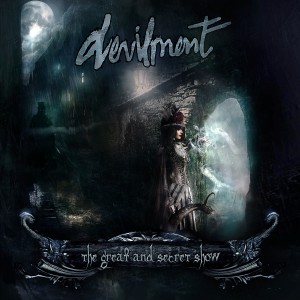
Cradle of Filth’s Dani Filth talks about debut album “The Great and Secret Show” with Devilment

Dani Filth is best known as the founder and lead vocalist of the metal band Cradle of Filth. Filth’s newest musical endeavor goes by the name Devilment whose debut album title “The Great and Secret Show” will be released on October, 31st via Nuclear Blast Records. Media Mikes spoke recently with Dani about the new release, working with Bam Margera and the group’s upcoming tour with Motionless in White.

Adam Lawton: Can you give us some background on the formation of “Devilment”?
Dani Filth: A couple of years ago I met up with Daniel Finch and he asked me if I would be interested in working on a project with him. Over the course of those years the project has sort of grown and grown and flourished into a full blown band. All the members of the band live in pretty close proximity of one another and we are now set to release our first album. Scott Atkins who worked on the last Cradle of Filth album jumped on board helping with the recording process and we have been picked up by Nuclear Blast Records. Paul Ryan who was the original guitarist for Cradle of Filth is our manager/booking agent. He also is booking for Cradle of Filth now as well. We are keeping a lot of things in house with this project.

AL: What is it that you want to accomplish with this new album/band?
DF: It’s vastly different than Cradle of Filth. It’s a totally different entity in that’s its completely original. Each of the band members has their own unique perspective on metal and music in general. Our keyboardist Lauren doesn’t come from a metal background at all though she has come to appreciate it. Six of us have come together to create this unique thing. It is more riff driven and somewhat in the vein of Rammstein or White Zombie. The songs have more of a heavy groove to them. Lauren has brought this John Carpenter type vibe to the whole thing which is really great. The music is definitely in the realm of horror.

AL: With the music being different from your work with Cradle of Filth did you take a different creative path during the writing/recording process?
DF: Not overly. Cradle does a lot of stuff via the internet and then we all get together when needed for touring and such. With Devilment everyone lives locally unlike Cradle where members are literally spread across the world. Having everyone so close has made the experience different, as has writing in a lower key. Though I still write the same way as I always have I do approach the Devilment material a bit differently. I am a little more contemporary with the choruses and such. I don’t like to say it but the material has almost a pop sensibility.

AL: For the digi-pack release of the album you recorded a cover of Midnight Oil’s “Beds are Burning” can you tell us about that and, how Bam Margera ended up also on the track?
DF: That song comes wasn’t meant to be included on the 10 track version of the album. This song will be included on the special version along with two other songs. It sounds a little odd just because of the nature of the song. The original is a fucking awesome song and just very catchy. We have made it a bit heavier and added some keys to it as well. It has this “Exorcist”/”Tubular Bells” vibe to it. I chose Bam to sing on it because he actually owed me a favor. I sang at his wedding in Iceland last year so I thought I would return the favor. He went in to the studio with a producer in Philadelphia and his parts sound really great. The song has these kind of call and response portions to it. Bam sounds a lot like Pete Steele. It’s a very interesting and powerful track.

AL: Can you tell us about the upcoming video for the song “Even Your Blood Group Rejects Me”?
DF: The video is black and white with a splash of red every now and then. We worked with a photographer/video director named Scott Hunter. The video has a very cool fashion shoot vibe to it. It looks very contemporary and fresh. There is a lot of performance based elements that look really great. The way everything came together makes it one of those videos you have to watch a couple times just to be able to see everything.

AL: What type of tour plans do you have in place thus far?
DF: Cradle of Filth is heading out on the road prior to heading in to the studio in December. We will be in Russia for about a month then I have a few days off before hitting the road with Devilment. We will be out supporting Motionless in White and Lacuna Coil. That’s going to be a fresh experience for me being that we are not the headlining act. It’s going to be a big tour. This is Motionless in Whites first time in Europe.

AL: You just did a track with Motionless in White for their new album correct?
DF: Yes. That was actually unrelated and happened prior to the tour being announced. I suppose it garnered some favor. The song is called “Puppets 3” and it’s quite brutal. I was quite surprised because I knew of Motionless however I hadn’t really heard them. When I heard the track I thought it was a cross between early Cradle and At the Gates.

AL: Do you find it hard balancing your two groups due to them being quite different from one another?
DF: At the moment yes. The time factor has made things a bit tricky as we will be heading to Russia with Cradle, then I go out with Devilment and then come back to work with Cradle in the studio. There’s a lot of hard work ahead. Nuclear Blast has done a great job keeping me busy with press for Devilment it’s really great. It’s a bit hectic but it’s better than sitting around being bored.

Extreme’s Gary Cherone talks about new album “Retrogrenade” with Hurtsmile

Gary Cherone is best known as the lead singer for the group Extreme who dominated the airwaves in the early 1990’s with their song “More Than Words”. Cherone later went one to front Van Halen for a period of time. In 2007 Gary formed the band Hurtsmile with his brother Markus and the group has just released a new album titled “Retrogrenade”. Media Mikes had the chance to speak with Gary recently about the new album along with Extreme’s plans for 2014/15.

Adam Lawton: What can you tell us about the new album “Retrogrenade”?
Gary Cherone: This will be the group’s second release. My brother Mark plays guitar in the group. This album started much like the first one as it was interrupted my tour schedule with Extreme. The first album came out in 2011 and the new one will be out Oct. 6th. I was writing for both projects and also touring with Extreme so because of having to juggle between the various projects this album much like the previous took a bit of time to get done.

AL: Can you tell us about the title and if there is any significance to it?
GC: Naming a record or a band is one of the most difficult things to do. I had a bunch of different titles in mind but this one came in the 11th hour. The album is more in line with the classic rock that I and the other guys in the band grew up with. My manager was on me about naming the record as there were deadlines approaching. I had heard the word retrograde and knew that it had some negative connotations but how I looked at it was I saw the word grenade in it. It ended up being a combination of words as that’s something that I like to do. “Pornograffitti” for example. I emailed the title to the band and it was the first one that everyone liked. That’s what we went with and I think it fits the theme of this record really well.

AL: Did you notice any differences going into the studio this time around as compared to when you recorded the first album?
GC: At this point we are quite comfortable. We did a fair amount of pre-production at mine and Joey’s house. The process was pretty much the same as was the song writing. Mark will bring in a riff and I will scat over it. Joey was a big part of the writing this time around. Everyone really helped with all of the tracks.

AL: Can you describe yours and your brother Marks working relationship?
GC: We don’t throw fists anymore. (Laughs) I probably couldn’t be in a band with all of my brothers but with Mark I could be. When I started my first band he was the little kid in the corner that was always there. He picked up the guitar and went on to become a great player. I think with all these guys we speak the same language. With me and my brother its second nature. We know each other so well.

AL: What sparked your interest in deciding to crowd fund this album?
GC: At first I was a little reluctant. Pat from Extreme was working on a solo project and he was using the site “Pledge”. That was really the first I had heard of this type of thing. Pat was having great success with the program and helped him out by doing a couple videos to promote the project. The last thing I wanted to do however was to dig through my closet for old Van Halen stuff. After talking with my manager we decided to give it a try and it was a lot of fun. I got a lot of cool request to write some handwritten lyrics that weren’t just from songs like “Whole Hearted” or “More Than Words”. We were able to raise enough cash to do the record and a video. I was really happy with the process.

AL: Do you guys have any plans to tour behind the release?
GC: We release this album in October and do some region shows here in the states but then I have to take off for Los Angeles to some things with Extreme. At the top of the year we will be back doing Hurtsmile. We hope to hit some major markets with Pat’s band. I’m really looking forward to getting out there with this group at the earlier part of 2015.

AL: Can you give us an update on Extremes plans for 2014/15?
GC: We are gearing up to head out to Los Angeles to record an album at Nuno’s place. This summer over in Europe we performed “Pornograffitti” in its entirety. There has been a lot of demand for us to do that here in the states so we are working on doing that in early spring which will coincide with the release of the new album. We had a lot of fun playing those songs overseas so we are looking forward to doing the same thing here in the states.

AL: Do you ever find it difficult working with multiple groups?

GC: Extreme is the mother ship. Not to diminish Hurtsmile or anyone else’s projects but Extreme casts the widest net. That band makes it possible for us to do these other projects that we all have. Last year we worked around Nuno’s schedule with Rihanna. We all want to keep busy and everyone supports one another and a number of our projects involve more than one member of Extreme so we all work together.

Mike O’Meara & Robb Spewak talk about their podcast “The Mike O’Meara Show”

“The Mike O’Meara Show” is a daily podcast available through their website or iTunes. The show is hosted by Mike O’Meara and includes Robb Spewak and Oscar Santana. The show is also streamed via video through their website or Ustream. Media Mikes had a chance to chat with Mike O’Meara and Robb Spewak to chat about the podcast.

Craig Kish: Throughout your careers in broadcasting you were just a W-2 employee of a major corporation, and now you guys are co-owners of your own small business. How has that transition been, going from just worrying about your day to day duties as compared to being concerned with about all aspects of the show?
Mike O’Meara: I can’t speak for Rob, but I had an experience on my own for a very brief period of time back in the 1980’s when I left a small radio station company to run my own production company. I did contract production actually before I started working with Don. So I had a taste of it and I liked it. I liked the fact that I was independent of a corporation, but unfortunately that did not allow me to continue because the money just wasn’t there. So I ended up getting back into radio on the talent side; I had it on the management side. So, I had a taste of it – but this is much different because we are able to do it on our own but still as a collaborative effort. We have such a great group of guys and we kind of narrowed it down in the last year. We have more of a little circle but we all know what are jobs are and our responsibilities are and it’s just a lot of fun. Watching it grow is even more fun because we know that the circle is small – that if the show does well that we are all going to do well. So it’s a tremendous thrill for me.
Robb Spewak: And to add to that. It’s always been an exciting job for me; I love what I do. I think Mike will agree with me that in the past four years it’s probably been even more exciting because we are working so directly with our partners. It’s not diluted by the fact that before we make a decision we no longer have to go through three levels of management in New York City. It’s three guys making a decision and is much more immediacy, much more excitement, and it’s been a lot more fun than the last year we had on the terrestrial side.

CK: How has the change from being just co-workers previously to now being co-owners and running the show yourselves changed your relationship between each other?
Mike: Well, Rob talked about the fact that we don’t run things up the flag pole with management and all the different layers, but at the same time the three of us – Mike, Rob and Oscar – when we come in every morning anybody that had anything that’s great material that they think – not that I think but they think – is great material, it gets on the show and if It doesn’t it’s an oversight on my part because I just forgot it. But there is total creative flexibility with these guys as well as myself. We bring whatever we want into the show on a daily basis and if it’s good material we try to get to it. Sometimes I am guilty of not getting to everything in the 79 minutes or so we do the show. I really love it when one of the other two guys comes in with something special and we can go in a totally different direction. But as far as the content for the bulk of the show, now it really is a collaborative effort as well.
Rob: Having worked with mike the past 20 years I’ve gotten to know him better the past 4 years because of the freedom we have in the show. Sometimes we can really spin out and really be ourselves and show different sides of us that you never saw before.
Mike: It’s not like on the old radio show we didn’t have to pre-approve content. But after the fact you would never know where the fallout was going to be and if you said something. Especially after the whole Janet Jackson incident we were so scrutinized and we had meetings about standards in what we could say and what we couldn’t say and once your trained that way you never forget it and our shows are inherently broadcast friendly. But with just a little more freeform that allows you to relax. We relax; we work hard and always thinking about creating good content. It’s a relaxed atmosphere and we have confidence that the material we are providing is being well received by our audience and that is the most important thing to us.
Rob: It’s almost impossible to be spontaneous and funny when you have to second guess yourself before you say something. That was the environment we left when we left terrestrial. We probably didn’t have to be that way but it was so drummed into us like Mike said and now we are a little more relaxed with our presentation because we are just being ourselves more the less. I think the show is funnier because of it.

CK: We talked about how you guys go through the show day to day and how it’s been a change versus terrestrial radio. I know your broadcast on 1630 (A.M.) in Iowa, and you had another station you were broadcast on and the station just recently dropped off, right?
Mike: That was WTNT here in Washington D.C. The show is formatted for radio so if there is a fit out there that wants us and we felt it would be good for us we would do it. So we tried an experiment with WTNT that was not a fit basically because of the absolutely abysmal signal at WTNT. They had a format change coming up at the same time and they had overtures to go bring us to this other signal they had. I think we are done with that experiment. If we are going to be on in a market I’d rather be on in a market that has better coverage. We tried it with WTNT and do we regret it? No, but I also thought when they said that they wanted to make a change as far as moving us to another signal, I said, “Yea I think that experience is over now.” We always keep the door open to get this particular incarnation of the show on radio. I like radio, but the show from this point forward will pretty much be “they will take what we give them and if they don’t want it, oh well.” There are not a lot of program directors out there that like to do that. They want to do their own thing, and it’s tough to find a fit in this day of right wing talk and sports talk, too. It’s very tough to find the right station, but I am always curious about it and I will always entertain it. We will never shut the door on that at all, but at the same time our primary audience is our online audience and that is the foundation of the show and the way it works now.

CK: So you don’t actively shop the show to terrestrial companies?
Mike: I don’t actively shop the show, but at the same time I am connected, Rob has connections in the business, and you never know – but I can see the show sometimes being on some radio station. If someone got creative again then it becomes a possibility, but as far as actively pursuing – no. The active thing we are focused on is our online following and catering to the online following. That’s why we developed a new website in November and we restructured how we deliver our premium content as well. And, we focused on our business operation – making that better and more customer friendly and improving our customer support. The online community is we really were making most of our efforts.
Rob: To take a step back, I think for myself I was pleasantly surprised after launching the show. My thought was after launching the podcast the next natural step would be to be picked up on radio station. After we stayed at it for a couple of years we realized how much passion and support we received from the online community. The radio tie-in seemed to me anyway less important because the passion that existed for the show was more that I could have imagined. Something that I really come to love and enjoy about doing the show is that being online allows a, for lack of a better word, more “intimate” relationship with the listener we never had a chance to have before. Like Mike had said before, we will never shut the door to radio – but I am much more enthusiastic about our internet presence than I was when we launched the show. I just didn’t realize the passion was there.
Mike: Going forwards in a perfect world I would love to gather more listeners on a daily basis. We are always looking for new and innovative ways to do that. As we move forward we are continuing to focus on doing that. We know we have a great product and we want to expose the product online to as many people as we possibly can and set the hook in as many mouths as we can too. We know we have a fun thing and if we can hook you on it we can make you part of the family. That is really the way we see our listeners – as one big extended family. People communicate with us like we are relatives, not like we are doing a radio show – so that’s what we want to do. We want to try and get the word out, if we can get more and more people to get involved we can keep this thing successful for a long time and keep doing it for a long time.

CK: Where do you see the show going in the future? Are there any projects you are working on, or anything you haven’t implemented in the show yet?
Mike: The future of the show is going to involve some technological changes. It is going to involve a lot more travel. It’s going to involve a lot more location broadcasts, starting with the Consumer Electronic Show (UPDATE: this was in January, and the broadcasting was fantastic!). We are going to be having the equipment installed in everybody’s domiciles. It’s not going to be concentrated in the living room studio and we are very excited about the fact that we don’t really lock in where we are going to travel to. You know where the show is going to be broadcast from but you are going to see a lot more different locations from different guys. We had a lot of fun with Oscar in China, all of us in Maine and me alone in Maine last year. You are going to get a lot more of that. I think that is going to bring a lot more excitement and diversity to the show. We are really looking forward to that!


Related Content

Snap Creative’s Bill Howard chats about “Transformers: Age of Extinction”

Bill Howard, CEO of Snap Creative, whose company has been creating “talk of the town” products for over 20 years, discusses how Snap has created innovative packaging concepts for all of the Transformers films, including the $1 billion global smash Transformers: Age of Extinction, which arrives on Blu-ray and DVD September 30, 2014.

Media Mikes: You have been creating collectible Transformers home entertainment packaging since the release of the first DVD. How did you get involved with the Transformers business
Bill Howard: Paramount challenged our team at Snap Creative to create a DVD package for the first Transformers film that could turn into OPTIMUS PRIME, but it had to be the height and width of a standard DVD to fit on a store shelf and it had to be no more than double the depth. Our solution required a design that had hidden parts that could reveal for conversion, and we used bas relief sculpture on the front so that we could have layered parts but stay within the depth. All the sculpt detail and deco was on the front side which let us maximize it. That DVD was a huge hit and we’ve continued designing for the Transformers releases ever since.

MM: How do you keep the designs fresh for each release?
BH: On each subsequent movie we have upped the ante creating 2.0, 3.0 and now 4.0 for the new Transformers: Age of Extinction Blu-ray and DVD slated for release in September 2014. They have all been awesome, but I am confident that this OPTIMUS PRIME is our best one yet. It has new features that make it cooler for sure, and we worked with Hasbro and digital assets directly from the movie that provided great sculptural marrow. I am already thinking about how we take it further for 5.0, and am glad the film is a few years off to give us enough time to really get creative.

MM: What makes your packaging designs so desirable to collectors?
BH: Our Transformers designs historically have been hugely successful because the fans appreciate our level of extreme detail and authenticity. We often design multiple packages that are available at different retailers, and real fans go out of their way to get them all because they each have something unique and collectible about them.

MM: You also did theater promotions for Transformers: Age of Extinction this year to coincide with the theatrical release. Tell us more about those.
BH: Our movie theater popcorn collectible packs are really brilliant— they have one piece of board cut once and glued in one place which provides a package that holds cup, popcorn and candy. It can be carried with one hand and the operations folks at cinemas love it because it goes from flat to built in just a few seconds.

Each year we run about 15 promotions in theater with these packs. We have partnered with many of the top Hollywood studios to do licensed versions for some of the biggest movies including Transformers: Age of Extinction. These packs (some geared towards kids, some toward adults), are usually paired with a small collectible toy which is a fun way for property owners to extend their brands to families in theaters and at home. The Transformers: Age of Extinction pack featured a transforming keychain and collectible cup. Exhibitors love it because they generally see about a 20% lift in sales with these branded collectible packs and we’ve grown the program from around 2 million pieces to 6 million pieces just in the last two years. We are also continuing to grow internationally with programs in Thailand, China, Vietnam, Turkey, Russia, Canada and more.

MM: You seem to have quite the collector following for your products. Many times it seems like your products double in value or more on the after-market. Why?
BH: One word: authentic. We work on every detail to get it right not just for Transformers, but for everything we do. Enthusiasts appreciate that we “get” them because we ourselves are collectors, so we understand just what they are looking for in a product. For powerhouse franchises like Transformers, we make a point of honoring the legacy of the franchise while also moving it forward in new and different ways.


Related Content

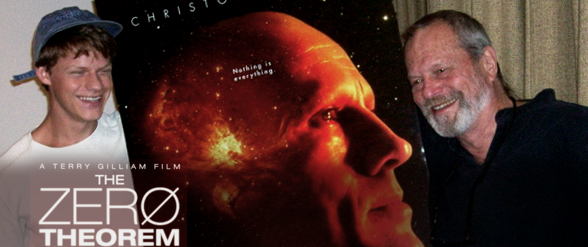
Terry Gilliam and Lucas Hedges Work Out “The Zero Theorem”

Now available on VOD and in limited  theatrical release, Terry Gilliam returns to his Brazil-dystopic roots with Zero Theorem. The highly energetic director and member of Monty Python gleefully joined young actor Lucas Hedges to discuss the film at length in New York.

Zero Theorem finds Qohen Leth (Christoph Waltz) in a neon-lit Orwellian nightmare. He is a cog in a massive corporate machine, Mancom, who is desperately awaiting a phone call that will reveal the meaning of his life. Counterproductively his menacing boss, referred to simply as Management (Matt Damon) charges Qohen with proving the Zero Theorem which states that the entire universe will eventually collapse in on itself rendering all existence meaningless.

While Zero Theorem arguably completes a trio of dystopian films after Gilliam’s own Brazil and 12 Monkeys, it now joins a host of modern future-set films that are increasingly Orwellian or apocalyptic rather than hopeful, I asked Gilliam what he thought of this trend of humanity not exactly looking towards The Future as idealized. The director cheerfully threw his arms open and “defended” Zero Theorem’s busy, candy-colored vision of the future:

Terry Gilliam: “This is not a dystopia! It’s Utopia. It’s a wonderful world! C’mon! Everybody’s out there, they’re dressed smartly, they got a lotta color. They’re bouncing around the place, cars are zipping back and forth–Shopping is 24 hours a day, 7 days a week–what more do you want?! I mean, the workplace, Mancom is FUN. Roller blades, scooters, zippy clothes, lots of primary colors. It’s a fantastic place. There’s only ONE guy who’s the dystopic element [laughs], miserable guy, called Qohen. And he needs a kick in the ass. And [Lucas] is one of the kicks!”

Lucas Hedges: “Yes.”

Gilliam: “It’s really that. I mean everyone keeps referring to it as dystopia. If you think the world we’re living in now is a dystopia, then you may be right! But we’ve been looking forward to this time for so many years! We got all the goodies.”

Hedges: It’s a matter of what perspective we see it from. And we see it from Qohen’s perspective and he has a–I guess his perspective is very much nihilistic and dystopic and sad.

Gilliam: “That’s really it. He’s the odd man out.”

Hedges: “I’m sure there’s a way of looking at the world we’re living in now from a certain perspective that makes our world look dystopic. I mean, maybe it is or maybe it isn’t but it depends on whose eyes you see it from.”

Gilliam: “I mean my tendency in films is to see the less good things in society. And the world we’re living in. Because at least those are the things you can criticize and possibly comment on and possibly it might change something in some small ways. Not likely [laughs] but we can pretend we have some potency in our ability to help change the world. [Lucas has] got to believe things like this . He’s got a whole life ahead of him, I’m old, I know the truth! [Laughs]”

Gilliam later elaborated on the world as it is today, where the amount of clutter is not exactly far off from his designs in Theorem.

Gilliam: “My complaint, it seems we’re becoming more and more infantile in the fact that ‘Oh! there’s something interesting! I’ve got to put that in my mouth!’ We don’t, but it’s effectively that ‘I WANT IT NOW’ not, I’m not going to work towards it, I’m not gonna wait. I need it now. And that’s in fact infantile. But that’s what we’ve become. I mean a lot of the film is a resistance to that, to escape it. I mean for me, coming to New York, it’s like Qohen going out his front door. I mean it’s just like WHAT?! In London we’re overwhelmed with stuff but it’s provincial and pissy-small compared to walking into Times Square.

And you think, ‘what is this about?’ and where do we fit in to it. I mean are we just these little dots that connect around the way? Are we just becoming social insects like worker bees? You  know our job is to keep tweeting and connecting, spreading those pheromones, they sort of go through the ether as opposed to antenna going [wiggles fingers at Lucas]…So nobody really has to have an individual opinion, people are sort of constantly communicating ‘Should I say that? Is that right? Have I gone too far? Have I offended? Am I rude?’ All these words keep coming up and mine are just FUCK THIS! People have got to start being individual and offensive.

I’m obsessed about offending people [laughs] Because it’s when you get a discussion going now, maybe. You might start talking about things rather than ducking and diving. I’ve watched my daughter say ‘oh that was very rude’ AND? [laughs] What do you think about that thought? You wanna talk about it?”

Hedges plays Bob, Management’s teenage son who is there to speed along Quohen’s progress. From this press conference, it was obvious that teenage Hedges and Gilliam were so pleased to be working with each other, and they elaborated on how he was cast in the film:

Lucas Hedges:  “I sent in a tape to Terry as an audition and then a week later I got cast. Which is very strange. Especially for a role of this proportion…that doesn’t happen. And we arranged to talk on the phone and [Terry] called me up…we spoke and it was–his energy was absolutely incredible. It was absolutely incredible! And he was insane! Absolutely insane and he was going on about what was going on in [Bucharest, Romania, where the film was shot] and about Vlad Tempish and about Dracula and it was lovely. And it was clear right off the bat that this is a man who doesn’t exist anywhere else in the world. Really. And he’s an individual artist and I guess that’s my origin with Terry…Meeting Terry–I mean hearing [him] for the first time was something I’ll never forget.”

Terry Gilliam: “When I saw him in Moonrise Kingdom, there was one guy that kinda popped off the screen for me. And it turned out to be this one. I’d never seen him before or anything and then [he] sent that tape in. I had only taped one kid in London. There was one kid who was kind of interesting, he was the only person I started putting on tape. And Lucas’s tape came in and I said that’s it! Done. Magic. It was simple as that. I didn’t have a single doubt. He just cracked it, boom. That’s the character. Then I called him and I tried to frighten him off and I failed. [Laughs] And it was wonderful I mean [he] was really thrown in the deep end with someone like Christoph.”

Hedges: “Yeah and it was a scary transition both from Brooklyn to Romania to working with Christoph and in a world that was very foreign. Both from a filmmaking standpoint and a social standpoint. But it really became a home and it really worked out.”

Up next for Hedges is playing Jeremy Renner’s son in Kill the Messenger.
Meanwhile, the internet has recently stirred up a renewed interest in Gilliam’s long-gestating Don Quixote project which was last addressed in the 2002 doc, Lost in La Mancha. Unfortunately, this conference took place just a couple days too late for hopeful news:

Gilliam: “Today, I don’t know. I knew two days ago. Today I don’t know anymore. I got an e-mail the other night. So I’m not gonna say anything. Things are [Gilliam wavers his hands in the air]…gone liquid again. We shall see. It’s something for me to think about when I don’t have a job. That’s the important thing. A man’s gotta keep the mind occupied. And pretending is the best way there is to go through life.”

Austin Wintory talks about scoring video games like “Journey” and the concert “Mythos”

Austin Wintory is a composer known best for his scores to the acclaimed video game titles “flOw” and “Journey”. His score for “Journey” was the first video game to ever be nominated for a Grammy Award for Best Score Soundtrack for Visual Media. Austin is currently taking the role of conductor for the upcoming concert called “Mythos”, which is a 70 minute continuous musical presentation played by a 15 piece classical ensemble performing live the music of composers for Film, TV and Video Games. Media Mikes had a chance to chat with Austin about the concert and what can we expect next.

Mike Gencarelli: How did you get involved with conducting the concert “Mythos”?
Austin Wintory: “Mythos” is a concept I first had in 2011, which I conducted as part of a fundraiser for my non-profit Education Through Music – Los Angeles. The idea behind it was to mix together some of the most interesting, engaging music in today’s scene, totally regardless of the media from which it came. I was approached by Peter Sachon about performing video game music during New York Comic Con, and pitched back the idea of reprising “Mythos.” And here we are!

MG: Having done scores for video games like “flOw” and “Journey”; was this a natural transition for you?
AW: Yes I’m fortunate to have lots of conducting opportunities, which I love taking advantage of in the midst of composing commissions. I grew up conducting in concert, but eventually my primary outlet for it was in the recording studio for films or games, so the onslaught of concerts lately has been a joyous return!

MG: When you did the score to “Journey”, did you ever think that this would become a Grammy-nominated score and the only video game every to be nominated in the “Best Score Soundtrack For Visual Media” category?
AW: Needless to say, not in the slightest. And now, almost two years later, it’s not really sunken in. It’s no less surreal than it was that day.

MG: What is the video game(s) that influenced you to do what you do?
AW: The infectious and witty nature of Tim Schafer’s games was a big part of my early gaming, and the music Peter McConnell wrote for them was basically the first game music I truly loved. It all culminated in Grim Fandango, which I think is one of the greatest games ever made, and with a score to match. It’s such soulful, passionate music and all around brilliant game.

MG: Why do you think that 8-bit music has stood the test of time and still resonates with fans?
AW: Chiptunes, those authentic early 8-bit hardware-based scores, were a huge musical contribution. There was nothing really like it before then. Electronic music was, before then, an extension of either the classical or rock scenes, using analog synths and tape manipulation and such. This, in games, was something now totally different. I think a big part of why it still resonates today is that the music was forced to distill a lot of dramatic intention into a very narrow bandwidth. But also a lot of game developers AND gamers alike are nostalgic to the games – and game scores – of their childhoods. So it’s gotten a revival as children of the 80s now enter the mainstream of professional game development.

MG: Can you tell us about little bit about what we can expect from upcoming game “ABZÛ”?
AW: Only that it’s still very early, and a massive delight to be re-teaming with Journey’s art director Matt Nava. I’m very very excited about this one!

MG: What can you tell us about your project “Our Curiosity”?
AW: This was a really special and wonderful experience. I’m a die-hard about NASA and scientific literacy in the general public, and this opportunity emerged to pay tribute to the Curiosity Mars Rover. An old friend, astrobiologist Jeff Marlow, had been working directly with the Curiosity team and so were able to get green lit to produce the tribute. We co-wrote the script, and then recorded our two narrators, actress Felicia Day, and acclaimed science educator Neil deGrasse Tyson. After that I wrote the score around the VO performances, and recorded it with a fantastic orchestra in Nashville. We co-directed the film and tossed it back to NASA who put it on YouTube. I like to think of it as an officially-sanctioned fan love letter.

MG: What else do you have in the works for the rest of the year and 2015?
AW: Lots and lots! But I will say, *hopefully* more Mythos performances!

Copyright: MediaMikes.com © 2014 · Powered by: nGeneYes, Inc. · Login

All logos and images used on this website are registered trademarks of their respective companies. All Rights Reserved. Some of the content presented on our sites has been provided by contributors, other unofficial websites or online news sources, and is the sole responsibility of the source from which it was obtained. MediaMikes.com is not liable for inaccuracies, errors, or omissions found herein. For removal of copyrighted images, trademarks, or other issues, Contact Us.