Parker Sawyers talks about role in “Monsters: Dark Continent”

Parker Sawyers is co-starring in the upcoming film “Monsters: Dark Continent”, which is a follow-up to the 2010 film “Monsters”. Parker also appeared this year in the film “Jack Ryan: Shadow Recruit”. Media Mikes had a chance to chat about “Monsters: Dark Continent” with him and what we can expect.

Mike Gencarelli: How did you get involved with “Monsters: Dark Continent”?
Parker Sawyers: I’ve been acting for nearly three years now and try to hit every meeting I am lucky enough to get. I see it as practice. So, “Monsters: Dark Continent” was another meeting to me. Interestingly, I had a short film to shoot 15 minutes after my meeting time and I was so worried about missing the call time, I don’t really remember what I said or did in the room. Whatever it was worked, thankfully.

MG: Were you familiar with the original film prior?
PS: In preparation for the meeting for Monsters: Dark Continent, I watched the original film, Gareth Edwards’ “Monsters”. I was pleasantly surprised as I watched the two central characters develop a relationship amidst such dire conditions. To me, the original film was about humanity and how even in the face of extreme adversity or in their case an alien invasion we would still find love, fight for one another, and even bicker. Perhaps we’re not much more than that.

MG: Give us some background on your character Shaun Williams?
PS: Shaun is a kid from Detroit. I see him as a multi-talented, cool kid who never got “that break”. He is a sportsman, clever and chilled. Though I now live in London, I’m originally from Indianapolis, Indiana, just a few hours away from Detroit. To play a guy from the Midwest with heaps of heart and a laid back attitude was exciting and refreshing. I think the Midwesterners who watch the film will relate to Shaun and his friends; the hustle, the hunger, the decency, the loyalty.

MG: Tell us about where the film was shot and what was the most challenging aspect?
PS: We shot the film in Amman, Jordan and Detroit, Michigan. The people in Amman are some of the most hospitable and warmest people I’ve ever met. It was my second time being there, the first time was to film “Zero Dark Thirty”. I’m itching to return for a vacation. As for a challenge, I’d say the amount of work that needed to be completed by the end of each day, to stay on schedule. But, we worked hard and Tom Green, the director, never made any of us feel rushed. But, of course, we can read a call sheet and we knew we had a limited amount of time. Ultimately, we made it work. Detroit was cool. Talk about smiling through adversity, the people were wonderfully American and hardworking.

MG: How was it going from low-budget indie to big budget action, “Jack Ryan: Shadow Recruit”?
PS: All jobs are the same to me. Whether it’s working with an Oscar winning director or an up and coming talent like Tom Green, I put forth the same amount of effort. I must say though, the Monsters cast was and still is like a family. We stay in touch, attend each other’s birthdays, and cheerlead whenever possible. I’d never had that experience before.

MG: What else do you have on the cards for 2014?
PS: I’m off to Bulgaria in March to film James McTiegue’s spy thriller, “Survivor”. It’s an amazing script and I’m fortunate to be part of the project. Other than that, it’s pilot season, so non-stop meetings as far as the eye can see!

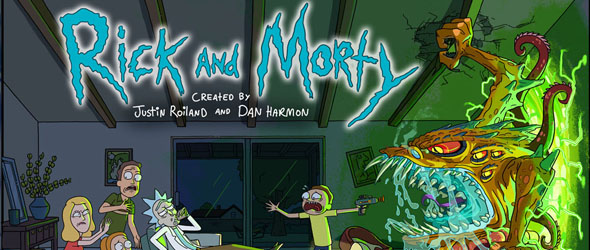
Creators Dan Harmon & Justin Roiland join actors Chris Parnell & Sarah Chalke to discuss “Rick and Morty” at NYCC

Rick & Morty, Adult Swim’s hilarious sci-fi animated comedy from Justin Roiland & Dan Harmon (“Community”) released its first season on Blu-ray and DVD last month. To celebrate this release, the creators joined actors Chris Parnell (“Saturday Night Live”) and Sarah Chalke (“Scrubs”) at New York Comic Con where they sat down with the press just prior to taking the stage for their panel.

Rick & Morty follows Rick (Roiland), a belching, misanthropic mad scientist who’s moved into his daughter Beth’s (Chalke) family home, much to the dismay of her husband Jerry (Parnell). Rick drags his poor grandson Morty (also Roiland) off on outrageous science adventures that include other planets, other dimensions and on occasion inside a human body.

What about the show do you think speaks to the audience?

Justin Roiland: I think it’s a bunch of things. It’s the sum of all these parts, like Harmon’s ability to tap into a sort of the more emotional core component. Making characters really relatable and real. And then me, my sort of crazy, insane retro scripting and I don’t know. It’s very strange. It’s a weird sort of perfect storm of creative, I don’t know—

Dan Harmon: The carefree vibe. Like you…it’s nice to feel like you’re watching something that kind of doesn’t care if you’re watching.

Roiland: Yeah, yeah.

Harmon: So it’s kind of that energy that a new project has an opportunity to have that’s just like ‘alright let’s just—’

Roiland: And maintaining that is tricky. You know we’re trying to continue to maintain that. I mean I love stuff where at the end of the episode, Rick’s like [dropping into the scientist’s voice] ‘Member back in the first act of the episode when you did this?!’ It’s like you know, fuck it. It’s a TV show. We all know what we’re watching. We’re watching a TV show. I just love that kind of stuff. Just not giving a shit. The end of MeeSeeks is a great example you know where he’s just like…’Hey!’—he’s waving at the camera— ‘Alright! See you guys next week! Fuck!’ You know, whatever, like ‘I don’t give a fuck is my new catchphrase!’ All that shit. I don’t know I think that just lends a very loose kind of…it just let’s everyone who’s watching go like—Well then there’s the people who go ‘Does Rick know he’s on a TV show? Is this like some sort of master plan?’ But no, it’s just us having fun and being loose and allowing ourselves to do that kind of stuff. And who knows, I don’t know if that’s the secret ingredient. I think there’s a lot of things that added together make the show really connect with people.


One standout character of the first season was Mr. Meeseeks, a loud blue guy that exists solely to complete one task set by the human who summons him into creation. He spends most of the episode trying to teach Jerry a better golf game. The cast even brought a lifesize Meeseeks along with them to NYCC!


What was the origin of Mr. Meeseeks? 

Roiland: Uh, we were breaking a story, Harmon was on tour for Harmontown, he was out of the room and I remember like we had some story…I don’t remember what the fuck the story was, but I was just like this fuckin’ sucks and I was like ‘We gotta have fun with this! And [dropping a Mr MeeSeeks-like squawk] I’M MR. MEESEEKS! I’M MR. MEESEEKS!’ and I just started doing that. [Series writer Ryan] Ridley got all mad at me and I was like ‘I’M MR MEESEEKS LOOK AT ME!’ And then I don’t know if it was until [Harmon] came back—I think we came up with like the conceit of the Meeseeks but then Harmon came back and really helped us fine tune the story with Jerry and the golfing and all that stuff kind of was after [Dan] got back because I remember [him] being in the room and the whole like wiggle at the end. When [Jerry] finally lands the putt and they all disappear. But it was really just like out of my frustration of us really banging our heads against the wall of the other story that was just lame and we couldn’t get it…And Ridley was all pissed. But then he kind of came around. But then there’s a lot of stuff in that episode…that’s verbatim, like ‘I’m Mr Boobybuyer—I’ll buy your boobies!’ that’s all Ridley kind of angrily pitching ‘OH WHY DON’T WE JUST, I’M MR BOOBYBUYER!?…I’M THIRSTY SLIPPERY STAIR, BLAHBLAH’ And I’m just like ‘That’s perfect! Type it up!’…Now I’ve found that when Ridley gets upset and angrily pitches things spitefully, I’m like ‘Pay attention, guys…this could be good to put in the show.”


What would you make your own personal Meeseeks do for you?

Sarah Chalke: Your own wish granting Meeseeks…

Chris Parnell: Wow. I guess to make me a lot of money, maybe you know?

Chalke: Yeah

Parnell: Just a lot of money.

Chalke: Then you don’t work and the Meeseeks goes out to work for you

Parnell: Well I still probably want to work because it comes with a certain sense of self-worth…you know…but yeah to have a lot of money. I’d buy a nicer house and put my kid through college. What would your Meeseeks do?

Chalke: Probably a lot of neck massages. They’d take over the barista duties of the household. Which are about 13 to 14 a day, so it’s a heavy job. So, barista Meeseeks.


My personal favorite episode, Rixty Minutes, had Rick showing the family a remote control that not only flipped channels, but show programming from entirely alternate universes, many of which were ab-libbed voice work by Roiland.

Lauren Damon: Were there any additional alternate universe scenes in Rixty Minutes that were cut?

Roiland: The production plan for that episode is so different from the normal production pipeline because we’ll write and the break the—I guess you could call it the B-Story, the A-Story, whatever the narrative is—and then we try to keep that relatively tight and small. A third of the overall episode run length and then all the sketches are just experimental. It’s just like, I’ll go in the booth and just riff and improv shit. Harmon will be on the other side…But yeah, it’s weird, it’s a huge strain on the team, you know.

Harmon: Was there ones that we cut?

Roiland: We cut a Seinfeld one. It was just like Seinfeld—Unrelated Seinfeld and he’s like [twisted Jerry Seinfeld whine] ‘What’s the deaaaaaaaal with Chinese BONES….Whhhhhhy do they taste so goooooood?’

Harmon: Yeah, it was a universe where all of Seinfeld observations were just totally unrelatable.

Roiland: Like ‘What’s the deal with HUGE cocks? WHY do they taste so good in my mouth?!’ And then Rick’s like ‘Jeez, uhhh, Seinfeld’s really—’

Harmon: ‘This universe’s Seinfeld, his observations aren’t really resonant…’

Roiland: But then the audience is just exploding in laughter [Morty’s voice] ‘Oh, boy they really like it though!’ But that got cut…we might have put that on the DVD as a cut, deleted scene. That pitch was probably better than what—if it’s on the DVD you’ll be like okay, I see why they cut this. A lot more got cut for this new one, I really cast a wide net. And our poor storyboard guys boarded way more than they needed to board. But anyways…


If you could travel to any of the Rick & Morty worlds, where would you go?

Chalke: Uhhh, planet Squanch

Parnell: That’s a good answer. Pluto. I wouldn’t mind going to Pluto. That’s one that comes up this season. Jerry goes to Pluto.


Do you ever have to ask the writers what the hell is going on when the shows really offbeat?

Chalke: I mean every time you read the script, it’s one of the funnest jobs for that reason. Like you get the script and you’re so psyched to see where it goes and I laugh out loud when I’m reading it so the jokes are crazy. That’s the fun part of it, you get to see all these different ways a character can go. Like we go to a different dimension in the second season. They have us go to other planets as well, so that was cool and different and I got to be…like our characters but in a different dimension. I don’t know if I’m allowed to say what so for that you got to try totally different voices. I was like a Warrior who talked like this [Deep roaring] ‘JERRY!’


How much is ad-libbed for you guys?

Chalke: Most is the scripts. I mean the scripts are genius, mostly it’s the script. But if something happens or comes up and I ad libbed that Beth was a burper like her father, so we throw some burps in there. One of my few talents is burping on cue.


Are you ever surprised by how much vitriol Justin can get in just saying “Jerry”?

Parnell: [laughs] Uh, no. But it’s fun, it’s fun to hear it. I mean—I don’t know if he does Rick and Morty at the same time, I kind of think he does, I mean I’ve seen him do it. In person. But it’s just, you know, it’s amazing to watch. And then also they get so many great guest voices, you know? Sometimes you can kind of pick out who it is…


Season one set up so many crazy things, are we going to follow up with them in season 2? Like the League of Ricks? And that evil morty? Does the continuity exist?

Roiland: It’s sprinkled throughout the season.

Harmon: A little goes a long way. I mean it’s like I have a lot—I come to the table with a lot of gun-shyness from Community because I feel like Community’s fanbase became so rewardable and was so thankful for continuity in the show and I never like to do inside stuff. Meaning that you would have to have seen something previous in order to get it, I always try to painstakingly avoid doing that but I felt like over five years, Community—because of the intense relationship the fans had with the show—it actually got branded as being more ‘inside’ than I ever strove for it to be. And so now I’m in the writer’s room in this new show and  we got Mr. Meeseeks, we got the Council of Ricks, we got a billion things that we just shot out you know and so the question ultimately becomes do we revisit that stuff? I tend to be the guy that says no, not yet. Just let’s show some restraint and then we’ll be rewarded for it later. And not that Justin’s like ‘NO let’s do everything again’ but he’s a little less convinced that it would destroy the show than I am. Somewhere in between there what happens is little sprinkles here and there.

Roiland: Yeah, we don’t want to jump the shark, so to speak, too quickly in the show in terms of giving away too much of Rick’s backstory and going back to all the things we’ve kind of established in season one—

Harmon: I will say we spent a great deal of time in the writer’s room this year revisiting a major thing from season one and ultimately it was all wasted time. I mean it might be spoilers for season three for me to talk about what we were doing…but I will say it was like four or five weeks of us talking about ‘Okay, the finale’s gonna be when we do this…’ and we ended up going this isn’t working. It’s sort of like the second Dungeons of Dragons episode of Community was cursed from the beginning because it’s like to decide that you’re just going to do something again, you better really have your shit together…Ultimately stories tell themselves. It’s already hard to do that. But if they’re fighting you because you decided that you know what a story is better than the story knows, than you’re really screwing yourself.


Did any of you have an older relative like Rick making a bad influence on your lives?

Roiland: Not a huge bad influence. Maybe a little bit. I think I’m a lot like him and I’m gonna die at a young age like he did…

Harmon: I had a great grandpa who died a hermit. He lost all his money in the stock market and then he made it all back but he never trusted banks after that. So he lived in a corrugated tin hut out in some land in Wisconsin. He was rich again but it was all cash under his mattress! And he was a theology major and like he was the only other Harmon who went to college I think.

Roiland: [Rick voice] ‘DAN! DAN! C’mere I got cash under my mattress!!’

Harmon: But I never got to meet him, he was my great grandpa. The first time I saw him was in a coffin. I think Rick is just a symbol of all our mental illnesses.

Roiland: Rick’s a weird combination of me and Dan. Depending on what episode you’re watching, it’s more Dan or more me.


Rick & Morty is out on Blu-ray & DVD and you can check out their full NYCC panel at Adult Swim’s YouTube page.

Nick Pittom talks about developing for Oculus Rift and his Studio Ghibli’s Demos

Nick Pittom worked freelance in Video Editing, Motion Graphics and Visual Effects. He wrote, directed and edited a short film called ‘PROTO’, which appeared at the London Short Film Festival and Sci-Fi London Film Festival. He is currently creating Virtual Reality experiences, with two small demos currently released for the Oculus Rift, based on Studio Ghibli films “My Neighbor Totoro”‘ and “Spirted Away”. He is also working on a full VR game called ‘Crystal Rift’, with Jon Hibbins, which is expected to be released some time early next year. Media Mikes had a chance to chat with Nick about developing for Oculus Rift and his Studio Ghibli demos.

Mike Gencarelli: Tell us about your work with Oculus Rift VR gaming?
Nick Pittom: I’d started playing around with the idea of making games with Unity3D, a game engine, and working up some prototypes, but it was after seeing the Rift and people’s reaction to it that I ordered one. After getting to try out the demos that had been made that I decided this was the direction to go on. I’d been trying to get into making films for a while and I suddenly realized that perhaps VR could be an exciting new way to tell stories and build experiences in a way that I could carve out my own path, and it’s going quite so far. I started out making some demos, and after getting some attention from them I’ve moved over into making full games and more substantial experiences. The final consumer version of the kit is some time next year so I hope to have a couple of things ready to go by then.

MG: You have made demos from Studio Ghibli’s “Spirited Away” and My Neighbor Tortoro”; what made you want to recreate these classic scenes?
NP: Starting out working up VR demos I wanted to create something that would grab people right away. I had a big enough challenge creating something that worked in VR, so choosing something that already had great art direction seemed a good way of avoiding some big problems. From there I needed something that was not realistic, as my own level of experience and the technical restrictions of VR would make that problematic, so it felt natural to take something like a cartoon and make it 3D, which would be quite an original take for those films and also for VR. Studio Ghibli has such an awesome style it felt like a natural fit and with Spirited Away being my first film of theirs I decided to go with that. I needed a scene that was enclosed, to keep things contained and manageable, but also recognizable and the Boiler Room was perfect. I first hoped to just make the location, but as I created it I realized it was painfully empty without the other characters, so added in the soot sprites and then quickly Kamaji. The latest version of the Boiler Room also has Chihiro, which was good fun to make! I quickly moved on and realized Totoro would be the most obvious choice to go next, as it’s effectively the mascot for Ghibli. The bus stop scene itself is iconic and had to be the scene to make, including both Totoro and Catbus, both iconic in their own rights. The Boiler Room is not interactive in any way so I felt I had to include something for the player to do and so of course handing over the umbrella became the obvious choice. Really most of the choices with both the demos wrote themselves!

MG: How much time went into each of these demos?
NP: The Boiler Room I got through pretty quickly, getting it out in 6 weeks in all, Kamaji himself I managed to pull together in three or four days. But Totoro was much harder. Being exterior the trees and landscape are not as simple in Unity3D and it has it’s own system that can be tricky at times, certainly less flexible than plain geometry of walls and floors. The animation however was where things got tricky. I modeled and textured the characters, but for that demo I managed to get an awesome animator called Keith Sizemore to help out. He did a great job, as you can see in the demos, but we had some real challenges getting the animations to go over to Unity3D from Maya where they were animated. There’s some tricky technical elements involved in how characters are rigged and set up, and many ways the software can choose to mess that up. But I think perhaps two and half months start to finish for that. All of this was done in my spare time outside of work.

MG: Do you have plans to expand on these at any time?
NP: I actually added Chihiro to the latest version of the Boiler Room demo, which was fun, but I am considering animating the entire scene start to finish. I guess I need to find the time! Otherwise I have other projects that need my attention.

MG: Why do you think these films are so beloved with fans?
NP: The art style is a big part of it of course. There’s such wonderful artistry and talent and craft put into every part of Ghibli’s films, they really are masters of the hand drawn animation. But it’s story, character and design, all working together that really shine through their works. I am sure books can, and indeed have been written about every aspect of what makes this true, but one aspect that stands out in Miyazaki’s work particularly are his strong female characters, all of whom ring true and genuine. I think perhaps in Miyazaki we have an artist perfectly fitted to his art form and every part of his films works so well. On a personal note, I think Princess Mononoke is the strongest film, at least from a storytelling standpoint, but equally it has strong, morally complicated people in a dangerous exciting setting. Good times.

MG: I hear you have one more demo in the cards; can you spill some details?
NP: Originally I had hoped to make a Howl’s Moving Castle demo after the original demo, but someone else got in contact to request I should not, as they had already started on their own. I was happy to oblige, as I was interested in seeing what they made. I’ve not seen it yet, and perhaps it will never be completed, which is a shame. I then decided to work on Cowboy Bebop, but by then I had been in contact with a few interesting people, circumstances changed and I decided to move onto original projects. I’m still considering working something new up as I have Howl’s Castle complete already.

MG: What can we except from your first full VR game “Crystal Rift”?
NP: So, I’m working on three projects actively at the moment. The first is a game called Crystal Rift, which is a VR dungeon-crawler in the form of old-style games like Eye of the Beholder. Jon Hibbins, the creator, demoed it to me at a meetup at Bossa Studios (who make Surgeon Simulator) and asked me to join his project in a creative role. I’ve never worked on a game before so it seemed like a good opportunity to be a part of one and to put my own mark on it. We actually have a Kickstarter up currently for this!. The second project is actually my own Kickstarter that I created to fund a trip to Oculus Connect, a conference in Hollywood. Being from the UK this was quite a distance to travel and expensive, so I made a Kickstarter, the goal of which would give me the money to travel, but would also result in a game I would create that backers could give me ideas to put in. That’s in early stages of design and production, but coming together nicely and should be quite interesting. I’m working with a talented coder and we’ve got some great stuff working out. Nothing to report yet, but hopefully soon!

MG: Do you think that VR gaming will be the future of gaming?
NP: It’s certainly ‘A’ future. I doubt it will replace all gaming, just as consoles have not stopped people playing cards or board games, and just as mobile gaming has not yet wiped out 3DS-style handhelds. But it’s here, it’s amazing and it’s not going anywhere. Anyone who has doubts or believes it is a fad or destined to fail as in the past has certainly not tried the latest prototype (Crescent Bay), which convinced me that the hardware itself is there. It’s ready. It’s the software and experiences that are important to get right now.

MG: What is the biggest challenge you’ve faced developing for this format?
NP: Optimization. Performance. Games struggle to reach 60fps at 1080p HD on consoles, and indeed most run 30fps. We need to be hitting 75fps in 1080p in stereo just for the DK2, and the consumer kit is likely to be 90fps and 1440p. That’s a BIG ask, and means that graphics must adapt to fit that. Looking at something like GearVR, the headset from Samsung that works with the Note 4, that’s an even bigger ask as we have to get 60fps 1440p out of a mobile GPU! Other issues are around usability and experience. What works in games and film or indeed any medium will not work directly in VR. You have to craft experiences and games for VR especially if you want them to work, or at least not cause motion sickness! But I’ve seem some amazing demos and games in VR and in the coming months and years there are going to be a lot of people blown away and very surprised by what VR has to offer.

Cavalera Conspiracy’s Iggor Cavalera talks about latest album “Pandemonium”

“Pandemonium” is the latest release from the heavy metal band Cavalera Conspiracy.  Since the album’s release in October it has been garnering rave review amongst the music community. Media Mikes caught up with Iggor Cavalera recently to briefly discuss the albums creation, his working relationship with brother Max and the bands plans for 2015.

Adam Lawton: Can you give us some background on the group’s new album “Pandemonium”?
Iggor Cavalera: “Pandemonium” is a very raw record. I feel the new album really showcases Cavalera Conspiracy as a band and how we way are playing aggressive music these days. When it came to my drumming for the album I tried to keep things as minimal as possible. I sort of took the less is more approach.

AL: Can you tell us a little bit about yours and yours brother’s musical partnership and, With a two year gap in releases from the band do you think it will be hard to recapture fans attention due to the constant onslaught on new media?
IC: My brother Max and I have an incredible yet simple way of writing and performing music.It goes back to my previous comment about having that “less is more approach” to things. As far as regaining attention from our fans I don’t feel that is really a problem we have to worry about because our fans are very loyal. I don’t think they suceptable to being brainwashed by all the other types of media that our out there.

AL: Can you tell us what the bands immediate tour plans our as well as the bands plans going forward into the new year?
IC: Right now the plans are for us to start touring in the States sometime at the beginning of the year. Probably sometime in January or February. After that we will most likely be heading over to Europe for a number of the festival shows that take place there.

Steven Quale talks about directing tornado action film “Into the Storm”

Steven Quale is best known for directing “Final Destination 5”. He was also second unit director with James Cameron on “Avatar” and “Titanic”. His latest film is the tornado action film “Into the Storm”. Steven Quale took out some time to chat about the film and the challenges he faced.

What interested you in this story and joining as Director?
Steven Quale: What attracted me to “Into the Storm” is being able to take the audience right into the center of a tornado. To experience what it is like to see and hear the unimaginable power that a tornado can unleash. I also wanted to explore how different people react to such an extreme event.

What is it like directing actors with the added distraction of extreme weather elements?
SQ: It was a real challenge to get a performance with all the distracting noises of the wind machines and rain towers. The loud noise of the equipment made communication very difficult and I had to rely on hand signals. One advantage to all the wind and rain is that it gave the actors something real to play against when shooting with green screens.

How is “Into the Storm” different from previous tornado movies?
SQ: “Into the Storm” benefits from the advances in visual effects over the years so the tornados look much more realistic. It also differs from other tornado movies in that we are not just following storm-chasers – we have a diverse group of unrelated people who are thrust together during the adversity of the storm and we get to experience how each of the different people react under the pressure of the storm.

You have an extensive background in visual effects. Tell us about what went into making this film look and feel real.
SQ: The most important thing to make this film look real was weeks and weeks of extensive research. I studied every single video of any severe weather and tornado footage I could find. Every major type of tornado was based on actual footage of real tornados. In addition to the visuals I insisted on having the sound feel as real as possible and that is where academy award winning sound supervisor Par Hallberg shined with his amazing soundscape. You really feel like you are in a tornado with the rumbling sound.

Did the film require practical effects in addition to visual effects?
SQ: The films visual effects work so effective because they are a mix of practical physical effects such as wind machines and rain towers combined with the digital tornados and debris. For the last half of the film, almost every shot required rain and wind machines. We dropped a real truck in close proximity with Richard Armitage.

What special features can we expect to see on the Blu-ray / DVD?
SQ: The Blu-ray/DVD for “Into the Storm” will have several behind the scenes features showing how we were able to realistically recreate the weather conditions of a tornado. It also has a segment where world famous storm chaser Reed Timmer explains all of the types of tornados in or film and how they compare to the real ones that he has chased.


Related Content

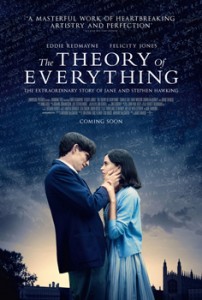
Eddie Redmayne, Felicity Jones and filmmakers discuss “The Theory Of Everything”

In The Theory of Everything, filmmakers were faced with the daunting task of bringing to the screen the true story of iconic astrophysicist Stephen Hawking. Rather than focusing upon his much documented scientific accomplishments however, James Marsh’s film took the unique route of delving into his personal story, specifically into the relationship with Hawking’s first wife, Jane. I was able to sit down with the people behind this touching film during a recent New York press day including actors Eddie Redmayne (who plays Hawking), Felicity Jones (Jane), director James Marsh and writer, Anthony McCarten.

The first step in bringing The Hawking’s story to the screen was taken by writer Anthony McCarten, who like many people first encountered Stephen’s work in 1988 with his book, A Brief History of Time. “I think maybe ten million people bought the book and we all realized this was an extraordinary person” McCarten said, “Not only for the profundity of his ideas but just the nature of the man. This person with this compromised body, almost unable to use a single voluntary muscle. Able only to speak with a computer and yet telling us how the universe began, the nature of time itself…I thought somebody’s going to do an extraordinary movie about this guy at some point, never thinking I’d have any role in it.”

In 2004 however, McCarten came upon Jane Wilde Hawking’s autobiography, Traveling to Infinity—My Life with Stephen, and was inspired by a new perspective on Stephen Hawking’s life. “I don’t know what page it was I reached” he said of Jane’s work, “but it was something to do with the unorthodox love story that was unfolding in this book and I thought if you matched that to an already extraordinary story of Stephen, oh my god, you could do something quite unprecedented here.” McCarten took this inspiration all the way to Jane’s doorstep in Cambridge to offer his services in adapting her story to the screen.  It began the years of work McCarten was to undertake on this screenplay. On working with Jane, McCarten added: “I will always be grateful for the fact that she didn’t turn this nutcase away and she let me come in, made a sandwich for me. We had a little glass of sherry and I presented this triple helix of a movie which is a love story but it’s also a horror story—of the physical decline of Stephen—and finally, it’s a story of physics. And she went as far as to say ‘look, I’ll let you write the script, but no promises’. And so I wrote the script and she liked it, she was reassured, she thought I might have the requisite sensitivity to deal with a delicate story like this. And so she let out a little bit more rope. Never giving me the option to her work, but ‘you can go a little further, let’s see what you do with the next step’. And that went on for eight years. Little more rope, going back to her. We became friends. Her book went out of print and I got it republished so I supported her too.”

Felicity Jones described her research into playing Jane as a “ a full frontal attack on understanding who this woman was” and also took the time to meet with her. “As soon as I met [Jane],” the actress said, “my job became so much easier. She is such an extraordinary woman. And there was something about her instantly that I loved, that she had this combination of something very ladylike—very sort of fifties ideal of what a woman is, she has this way of presenting herself that’s almost quite queenly. The way she moves, the voice she uses. So I worked with a dialect coach, a music and a movement coach to get the physical properties, so to speak, of who this woman was. But at the same time there’s a really core strength to her. There’s a formidable determination to her. And I loved this contrast between this very ladylike exterior but with this toughness underneath.”

Jane also helped Jones with very tangible research for her time with Stephen, Jones remembered “after talking with each other and she showed me photographs of her and Stephen when they first met, she really was very just open, and brought down clothes that she’d loved wearing when they were meeting. And I remember I’d been just talking to Jane for a few hours and then Eddie [Redmayne] came around and I answered the door in Jane’s coat. Already there was an empathy between us. So I think what was important to Jane was to show the less glamorous sides of Stephen Hawking’s life. That their fame is one thing, but there was a whole support structure that was very intricate and complicated. And I was always just a champion of that story for her.”

Beyond the emotional drama of the Hawking’s life, Eddie Redmayne was tasked with the difficult challenge of portraying Stephen’s physical decline after being diagnosed with motor-neuron disease at a very young age. On researching the role, Redmayne said “I went to an ALS clinic in London called The Queens Square Neurology Clinic for every week or two for four months. And with the specialists there… was introduced to people and families suffering from ALS and was invited to some of their homes. So trying to get a real sense of what the disease was but also the emotional ramifications of it on families. Also specifically taking photos of Stephen when he was younger. Because there’s no documentary material really before the eighties. It was trying to work what his specific physical decline had been. So by showing the specialist, she would see photos of…Stephen holding Jane’s hand and go ‘Ok, so by the way he’s holding the hand, you can see his hands have gone by this year…’ So then trying, then with the choreographer, trying to find a way of putting that into my body.”

I asked Eddie what specific changes he made in his performance of the young Hawking pre- and post-diagnosis. “What was interesting was where the disease starts,” Here, the actor got up to offer a physical demonstration, “Like the problem with ALS is often people are diagnosed because you fall. Like and because you’ve got foot drop which often is the first thing to go and your knee compensates by [Redmayne moves his knee forward without his foot landing] you don’t even realize your foot’s gone—so if your foot’s stopped working, your knee will just walk a bit higher and you won’t even realize your foot’s gone. And it’s only when you’re running one day that you’ll catch it and fall. But then you’ll go to ER and most doctor’s will go ‘Oh, you’ve bruised you up…off you go again!’ It takes a really astute doctor to know wait, let me just check you know what’s going on. And so the problem with it, one of the problems with ALS, is no one knows when it starts. So it was a choice I had to make in the film which was I think he has it at the beginning of the film. Like it’s already manifest in him. So things like, I don’t know if you saw, when I was dancing with Jane, that’s the hands had gone. The feet you know, are slightly…so those I tried to introduce that beforehand so there’s a slight feeling in his head throughout those early part that something is slightly awry. But it manifests itself also in a kind of you know that…scientist sort of not uber-dextrous thing. But I wanted to make it sort of more specific to that. But after the diagnosis, he did go into a kind of melancholia, and listen to a lot of Wagner…but I was trying for him even then to be finding the positive. Attempting to anyway. Until Jane comes in and really bolsters him.”

In the advanced stages of Hawking’s disease, and therefore further into the film, only the facial muscles remain for voluntary motion, which required even more concentration from the actor. He discussed his preparation as “A lot of sitting in front of the mirror with an iPad with Stephen on documentaries trying to recreate basically…But the reality is, what I find the sort of irony, all the complication is that everything about film acting is you know, the camera’s here [Eddie frames his face], and you kind of do less…And what’s weird is the bit where he moves the least, is that it was the most physically exhausting and energized. Because it’s not just that you’re sitting there doing nothing. Actually these muscles [again framing his face]…you know you’re [monitoring] your breath, the pace at which you blink happens, how quickly your eyes…so actually it was at the end of those scenes that you come out exhausted. And the interesting thing was trying to take all of the energy of all the usual palette of colors—as human beings—and trying to channel those into those few muscles that you can use. Because when you meet Stephen, even though he can move very little, he has the most expressive and charismatic face I’ve ever met. And that was something that was important to attempt.”

Director James Marsh spoke about how he came to cast Redmayne in the Hawking role: “Eddie was the first person I met. Eddie had just a given physical resemblance to Stephen, he’s the same kind of body shape when Stephen was a young man, same kind of coloring. And that’s not why I cast him, but it was helpful to say well, that’s one thing. Eddie’s a brilliant actor and I think the film proves that. And as a film actor, this is the first time I think he’s really been able to soar and be given the material that can show what he can do. So I met him. He was the first actor and only actor I met, actually. I didn’t meet any other actors. I’d talked with other actors. Once I met Eddie, I knew I wanted him to do it. So it proved…you know I think it was a great choice.” He further praised the young actor for the dedication he showed in portraying Hawking’s physical hardships, adding “Eddie had done so much preparation, it was so internalized, these different stages of disability that he’d mastered by the time that we got to film that I never ever had to wait or give him more time. That was extraordinary that he could do that and that didn’t slow us down. It was just amazing that he just had this available. And he would switch from one to the other and there it was. Incredible, really.”

Of course, bringing the true story of two living people to the screen, we all wondered whether the Hawkings had in fact screened the film or participated at all in the production. As it turns out, Marsh said “on the second day Stephen Hawking and Jane came to set which raises the stakes…even further.” Redmayne recalled the dramatic entrance Hawking made on his visit: “when he came on set which was on about day two, it was a big fireworks part, a big May Ball. And there was this moment—the producers…could afford like three gos at the fireworks so everyone was a bit tense like oh, we gotta get it right. Then on cue, he arrived, his sort of famous silohuette with his nurses. And then uplit by his computer screen. So literally he has this sort of spotlight and on cue the fireworks went off and it was like the greatest entrance!”

While Redmayne only saw Stephen on his way into a screening of the finished project, writer McCarten got the full range of the real people’s reactions: “[Jane] said she was floating on air. Stephen, when the lights came up and nurse wiped a tear from his cheek, and he said ‘Broadly true.’ And Lucy, the daughter when she saw it—and she had like fifty kleenexes lying beside her—said ‘That was my life.’ So I’m confident that it was emotionally authentic. It’s not exactly the way they lived it but we captured…something of how it felt to live that life.”

The Theory of Everything is currently in limited release.

Season After’s James Beattie talks about new album “Calamity Scars & Memoirs”

James Beattie is the guitarist for the hard rock/heavy metal band Season After. The group recently released their second full length album titled “Calamity Scars & Memoirs” and will be out touring in support of the release through December. Media Mikes spoke with James recently about the new album, the bands current tour and what they have planned for the coming year.

Adam Lawton: Can you give us a rundown of the band’s new album?
James Beattie: For the most part the album is about the struggles we were having in the bands down time. We weren’t sure if the band was going to keep going and there were several times where we felt like we were just being held down. The album is about not letting someone tell you what you can or can’t do or who you can or can’t be. It’s about pushing through all that stuff and making the best with what you have.

AL: Can you tell us about some of the setbacks the band experienced prior to the release of the new album?
JB: Our front man Chris left the band in 2010 leading us to pick up our current singer Tony Housh which has been fantastic. He is just really great to work with. We also lost our bassist and we picked up Jessie Saint which has also been really great. Not to take anything away from the former members but the process thus far has been pretty easy. The transition went a smoothly as we could have hoped for. At first we were a little unsure of how Tony was going to be received due to people perception on when a band changes it front man. We feel Tony has fit in well if not better for us as a band. We are very happy with the changes which have allowed us to move forward.

AL: Was there a conscious effort made to diversify this album from the previous due to the change in front men?
JB: I don’t think we concentrated on that very hard. It was more a matter of us all evolving from the time the first album was put out to the recording of the new one. The music might not be as heavy on this new album as compared to the first but that has nothing to do with the lineup change. That has more to do with the change in us as people. We didn’t really think about how we related to Tony or Chris as song writers but instead we focused on just always wanting to write good material. We had faith in what Tony brought to the table with each of the tracks whether it was more screaming type vocals or more melodic type vocals.

AL: What was it like for you balancing both your roles as band member and producer during the making of the album?
JB: That was something Dawson and I decided to do. It really wasn’t too crazy or hard. We were both obsessed with every little detail related to each song. Everyone in the band was that way. We knew from a production stand point what we wanted and where things needed to go. Everything just sort of fell in to place and it was a very natural transition for both Dawson and I.

AL: With all the changes the band has undergone over the past three years do you feel those things will impact the reception of the new album in any way?
JB: I think that hiatus was the difference for us. I feel that if we would have had all these changes happen with the lineup and then immediately tried to go in to the studio and blast out an album we may not have been received as well. There is always that stigma when a band changes singers. We certainly read quite a few things online wondering what happened to Chris and why did we make the change. We knew people don’t always understand the inner workings of things so we had time to address a lot of things while working on the new material and growing as a band.

AL: Can you tell us about the bands upcoming tour run and what other plans you guys might have going into the New Year?
JB: We have a run of show through December which was initially lined up prior to the album’s release. We wanted to get out there as soon as we could and get our feet wet again. We also want to make sure we get the word out about the new album and hopefully create a buzz around it. As far as plans for the New Year we are hoping to get our stuff to radio during the first couple months of the year from there the plan is to go as nonstop as we are able to.

The Blind Boys of Alabama’s Jimmy Carter talks about new album “Talkin’ Christmas!” and the band’s 70th Anniversary

Jimmy Carter is one of The Blind Boys of Alabama, the five-time Grammy Award winning gospel group. This year marks the band’s 70th Anniversary together and Jimmy is a founding member and has been there since the beginning. The band has collaborated with musicians like Ben Harper, Tom Waits and has performed for numerous Presidents over the year. Jimmy took out some time to chat wiht Media Mikes about their new album “Talkin’ Christmas!” and about the band’s 70th anniversary.

Mike Gencarelli: “Talkin’ Christmas!” is your second Christmas album after 2003’s “Go Tell it On the Mountain”; how did this come about and teaming up with Taj Mahal?
Jimmy Carter: Taj Mahal has been fans of The Blind Boys for a long time and we have been a fan of his as well. When we approached him, he was ready and eager to do it! Then we all got together went into the studio and did our thing [laughs].

MG: I listen to a lot of Christmas albums and if you are lucky an artist includes one new song in their album. You guys have given us seven brand-new holiday songs – six of which you written yourselves with this new album; what made you decide to that this route?
JC: That’s right. It is mostly all original stuff on this album. We all got together and wrote some great songs. I think that is what makes it a good album. The first Christmas that we did was mostly traditional songs but this one we wanted the material to be new. I hope it goes over good. We are trying to remind people what Christmas really is about. Christmas had gotten very commercial, so we are trying to put Christ back into Christmas.

MG: Since this is a holiday themed album, I am curious when was it recorded?
JC: We recorded this one in March, if I remember correctly. With the songs that we had it put us in the Christmas mood. So it wasn’t hard at all to record after the holidays and ended up being quite fun.

MG: 2014 is your 70th anniversary of The Blind Boys of Alabama, what is it like to be performing together all these years?
JC: It still feels good. Every year you get a little older but when you still enjoy and love what you do it keeps you going. Everyone is still in pretty good shape, so I foresee us being around for at least a little bit longer [laughs].

MG: If you were asked to pick the first highlight that comes to your head over the many years together, what would that be?
JC: A few come up actually. We had the privilege to singing to three Presidents. Even got to meet former President Jimmy Carter twice [laughs]. That was really cool. Then we got our first Grammy in 2002 and that was an amazing moment. Those are the two that come up the top of my head right now.

MG: You have teamed up with songwriters such as Ben Harper, Eric Clapton and Prince in the past; any more team ups planned next?
JC: I especially enjoyed working with Ben Harper. He is a great writer, a great singer and a great musician. He brought a lot to the table man. I really enjoyed working with him. I think Ben wants to do something else with us. We have to sit down and talk about it but I think he is ready…so we will see.

MG: Any tour dates planned for this album this Fall?
JC: Yes! We are going to start our Christmas tour on November 28th. We are starting that Friday night in Fredrick, MD and we will end up December 23rd in San Diego, CA.

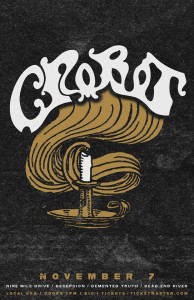
Crobot discusses touring and their latest album “Something Supernatural”

I first learned about Crobot in September through my wife, who is attending this year’s ShipRocked Cruise, where Crobot is one of the performing bands. She very excitedly forwarded me the link to the band’s video for “No Where to Hide” and informed me that this was the band to watch for. I clicked the link and as the music proceeded, I glanced at my wife and just mouthed out “Wow!”. Mixing in powerful vocals and groove-centric rhythm, “No Where to Hide” immediately grabbed my attention and had me seeking out more songs. It wasn’t long after that night we heard the same tune being belted out on Sirius/XM’s Octane channel. Again, I turned to my wife and just mouthed out “Wow!”.

Oddly enough, the exclamation of “Wow!” has been reiterated on more than one occasion as we spoke with friends that have either seen Crobot live or sampled some of their music. I don’t think that the short reply was one of surprise, rather, an immediate reaction to how the band’s music made them feel. “Wow!” – like watching the Macy’s 4th of July Fireworks display for the first time, or seeing a fighter land a crushing knockout blow. The music is impact, full of soul and jolts your insides with electricity. Crobot’s “No Where to Hide” is not a one-hit wonder or $15 song, though. Seemingly every track on the quartet’s first release “Something Supernatural” resonates with energy and heart. Power titles like “Skull of Geronimo” mix an in your face metal chorus with extreme funk during the verses. While more subtle, infectious tunes like “La Mano de Lucifer” drag your mind into stoner rock territory, until Brandon Yeagley unleashes a skull splitting vocal assault in the chorus.

On November 7th, Crobot made their way to the Local 662 in St. Petersburg, FL, and I was fortunate to grab some of their time before their performance. I initially didn’t know what to expect, as I first ran into Brandon and Jake Figueroa outside of the venue’s entrance. A little bit of small talk at first, the typical hokey “welcome to Florida” speak. But as we were joined by Chris Bishop and Paul Figueroa, the conversation transitioned very rapidly. I remember the first question Paul asked me was “Have you ever played Dungeons and Dragons?”. A short discussion on role playing games quickly dissolved into laughter, and with that, familiarity was set and the interview began.

Eric Schmitt: How did everything come together for the release of “Something Supernatural” and the tour announcement with Volbeat and Anthrax?
Brandon Yeagley: Well, we recorded in November to December of 2013. Feels really good to have it all out there, walk into a record store and see your record on the shelf. It’s pretty awesome. The Anthrax and Volbeat thing we’ve sort of been hearing about for a little while, and that finally solidified too. It’s going to be a great tour for us.
Chris Bishop: It all just sort of happened by chance, too. Announcing the Volbeat tour and our album release. We didn’t plan that – it just turned out that both were on the same day.

ES: A lot of people are currently looking for the lyrics to the songs on “Something Supernatural.” Listening to them (the songs), you can hear that a lot of them seem to tell their own story. Where did the inspiration come from?
BY: In general, it’s a lot of Sci-Fi and Horror flicks growing up as a kid. Listening to Ozzy and Rainbow, Dio, we were fans that grabbed on to that “mystique”. I’m a product of my environment when it comes to that. I look to guys like Neil Fallon of Clutch, probably the best storyteller of our time, I think, as a lyricist. I really take from what he does and put my own spin on that.

ES: So what’s your favorite horror flick?
BY: Army of Darkness. That was always my favorite.
Jake Figueroa: Attack of the Killer Tomatoes.
ES: Ooh! Going old school, there!
CB: I’d say the Notebook. (Laughter)
Paul Figueroa: I’ve gotta go with Aliens. I was really little when I saw it – I saw it before I saw the original Alien. And I saw it on laserdisc, actually. That’s how long ago I saw Aliens. That scared the crap out of me!

ES: Describe the process the band went through when putting together a song like “La Mano de Lucifer”. That’s pretty intricate both lyrically and musically.
CB: There was a lot of different riffs going into that (song). It started with the verse/groove riff going on and we were sitting in Brandon’s kitchen playing acoustics and we came up with the turn-arounds and transitions. Jumping from 3 to 4, our sort of “War Pigs” intro and bridge we wanted to throw in there. We started jamming it and it went from there.
JF: I think it was originally an 8 or 9 minute song. It had 2 bridges, 2 choruses –
CB: If you think that (the song on the album) was progressive, you should have heard the version before!
JF: It was all over the place, like Mars Volta shit.
PF: With crappier drumming. (Laughter)

ES: What do you guys consider the best part and worst part of touring?
JF: Probably waking up after getting drunk.
BY: That’s the worst, no matter what.
JF: For me, that’s the best and the worst! (Laughter) Some mornings it’s the best.
CB: We just keep the party going.
JF: Others it just sucks.
CB: The shitters sometimes suck.
ES: Is that from a shit or piss perspective?
CB: Shit – I can piss anywhere. Well, I can actually shit anywhere now. I’ve shit in some of the sketchiest places known to man cuz I can shit fast. That’s the talent I’ve got.
PF: You do have a talent for that!
ES: So it’s like a Shit n’ Run?
CB: I build it up to where it’s explosive, then I’m out! (Laughter)
PF: In fact, when anybody shits within 5 minutes, it’s called a “Bishop”.
CB: Yep, I’ve got my own shit.
JF: It’s like Superman goes into a phone booth, drops a hot deuce, then comes right out. He walks in there as Superman, shits, and Clark Kent comes walking out. (Laughter)
PF: The worst part for me is when the tour ends. It’s just like “boo!”. At least that’s how I feel. The best part of the tour? I guess when it starts then. I love it!
BY: The best part is definitely sweating and shaking our dicks every night. Worst part, definitely running out of weed.

ES: If Crobot were given a live action TV show, similar to the Scooby Doo cartoon premise, who would you want to play you and why?
CB: Phil Anselmo would play me. Just because we look alike when I shave my head.
JF: I was thinking about this the other day, something similar. I would go with John Leguizamo.
BY: I’m gonna say Rick James. Maybe the dead version. Zombie Rick James. Yeah! Imagine what he’d have to say? AAAAAHHHHH! (Laughter)
JF: (to Paul) You should totally have Daphne from Scooby Doo play you!
PF: Was she the lesbian chick with the glasses?
ES: I think that was Velma.
JF: That’s who I meant! Velma!
PF: Yeah, we’ll go with that. Cartoon Velma in human form.

ES: What are you guys looking forward to with upcoming shows like Kink Festival in Orlando and ShipRocked?
JF: Things like Kink Fest I always look forward to because there’s always a little tent where you can get some free booze and everyone pretty much runs around like a madman.
CB: Meaning Jake usually runs around like a madman. (Laughter)
JF: That’s an odd setting where nobody really complains about it, so I like that.
CB: Definitely ShipRocked is going to be awesome. We have a bunch of other stuff coming up that we can’t announce yet, but ShipRocked is definitely going to be awesome. I went to the Bahamas once when I was like 10 years old, that was the last time I was there. I got all my money stolen on the fucking ship. Well, here’s the story – I went with my friend and his grandmother and she had all the cash together. When she was in the casino, she apparently left her purse and when she came back all of her money was stolen. Maybe she gambled it away, I don’t know.
PF: I’m definitely looking forward to that Volbeat/ Anthrax tour. Those will be the biggest venues we’ve ever played at. I don’t think there’s anything I’m not looking forward to. We just have lots of awesomeness going on.
BY: Yeah, what he said. Tomorrow is going to be awesome!
PF: Actually, tomorrow is going to be awesome. The day after, not so much – we have to drive home.

There is a stark contrast between the personalities of Crobot when they hit the stage from when we were conducting the interview. The shit talk (literally) is gone; replaced by four musicians who love to perform. The set list for the performance mirrors the tracks on “Something Supernatural” and the opener, “Legend of the Space Born Killer” immediately injected a tremendous amount of energy to the crowd of the Local 662. Many of these patrons had not heard or seen Crobot perform live before, but were on their feet grooving along. The front of the stage was inhabited by fans of the band who were not averse to reciting the lyrics and getting down with the constant movement of Chris, Brandon and Jake.

By the time the band had reached their radio hit “No Where to Hide,” the crowd was frenzied by the performance. Musically, vocally and physically, you can’t helped but get caught up in the performance. Crobot seemingly telepathically transmits their passion for the music to its audience, and I have to say, it’s easy to start shouting lyrics, stomping feet and throwing your hands in the air during a chorus. It’s as if we were attending a roadside tent revival, and for that night our God was a dirty funk quartet delivering one of the sickest musical performances ever witnessed. Song after song, beat after beat, lyric after lyric, the crowd remained energized and wanting more.

After their performance, the band exited the stage and headed directly towards their merchandise table. They greeted fans both old an new with the same playfulness exhibited during the performance, taking time to speak and take pictures with everyone. It’s very easy to fall in love with the music and the personalities of the bands’ members, two characteristics that will undoubtedly push Crobot quickly towards success. I honestly left the Local 662 that night feeling like I had just spoke to and witnessed greatness in the making. I can only imagine that this was the feeling people got after interviewing the likes of Black Sabbath and Led Zeppelin early in their careers.

Andy Wood talks about new album “Caught Between the Truth and a Lie”

Andy Wood has been performing music since a very young age starting out with his grandfather and cousin. Wood spent most of this past year touring with Scott Stapp serving as the bands musical director during the Creed front mans successful solo run. Wood has also appeared on variety of album as a session player and recently released his second solo album titled “Caught Between the Truth and a Lie”. Media Mikes had the pleasure of speaking with Andy recently about the new double album release and his first memories of music.

Adam Lawton: Can you give us some background on how you got your start in music?
Andy Wood: I grew up playing bluegrass with my grandfather and cousin. We started right around the time I was about 5 years old. I was playing mandolin and my cousin was playing fiddle. As I got older I kept playing music and started getting hired to perform and different places. Once I discovered electric guitar it was all downhill. (Laughs) I started session playing and really working doing various hired gun gigs. I did work with people like Sebastian Bach and list of others. If there was an opening I would jump in there and help out. On the side I was still doing my own music which helped me stay sane. After you work on other people’s material you need an outlet for your own creativity.

AL: You recently worked with Creed front man Scott Stapp can you tell us how that came about?
AW: I was hired while Scott’s solo album was in the mixing process. Tim Pierce played on the album but I was brought on to be the bands musical leader. It’s been a great time being out on the road. I am kind of the go to guy when it comes to the musical arrangement and such. I have to sort of manhandle the decisions when it comes to recreating the album live. If Scott wants to rework a song or something like that I put it all together and bring it to the band. I also will fill in on keyboards or other instruments if needed.

AL: Can you tell us about your new double disc solo album?
AW: The album came from self reflection. I am not just a guitar player or just a mandolin player. I wanted to put together an album that still featured those things but not be jarring to the listener. I put together songs like “The White Tree” which is on the acoustic half of the release and songs like “The Four Horseman” which is on the electric side. The release runs the gambit of Celtic/bluegrass to full on heavy metal. When you look at those two genres there’s not a lot of cohesiveness so I wanted the songs to have a nice transition. The first disc starts out with acoustic tracks and leads in to some more rock type tracks. The second disc starts out with more ballad type rock songs before it really takes off with the heaviest parts of the album. It does slow back down a little with some country type songs which help transition back to the first disc. I wanted the release to make sense no matter which disc the listener started with.

AL: So the idea of doing a double album was something you had always wanted to do?
AW: Absolutely! I wanted to tell the world I more than just what I am normally associated with. I am not just an electric guy or a bluegrass guy. There is a side of me that writes music which is very relaxed and low key. I needed an outlet to where it was ok to show who I am and all the different sides of my musical personality while not alienating my fan base.

AL: With your wide variety of styles was it hard to narrow it down to which ones you wanted to showcase on the new records?
AW: There were some difficult parts but, I went in to the sessions with about 50 fresh ideas. I went in really overloaded with material. To help narrow things down a bit I put a checklist together which the songs would have to match the specific criteria I laid out. There had to be a lot of melodic content because that it’s self is huge. The songs needed that memorable melody rather than something that was just full of guitars licks and flash.

AL: Being a multi-instrumentalist which do you find more comfortable to write on?
AW: I think where ever I am at be it guitar, mandolin, sousaphone or whatever the instrument acts as the translator. I try to be a musician first over anything else and I want to make sure that the melody I come up with will work well no matter what it’s played on. When I am writing the instrument is just an outlet.

AL: Have you thought about putting together a tour to support the release?
AW: With it being towards the end of the year not a whole lot of touring happens throughout the holidays. Once the New Year kicks off in January I will be appearing at Winter NAMM in Anaheim, CA. In February I will be out on the Ship Rocked Cruise which is always a lot of fun. I think we have done four of those so far. The fans that go on those cruises are just so excited for every show. It’s a really great time.

AL: What other plans do you have for the coming year?
AW: I think those phone calls will start to come as the year roles on. A lot of times everyone is so tired from the previous year that they take a few months off to relax and then start back up working again.

All Time Low’s Zack Merrick talks about clothing line “Amerrickan”

Zack Merrick is best known as the bassist for the pop/punk band All Time Low. However in his down time away from the band he designs limited addition clothing for his company Amerrickan. Zack took time out of his busy schedule recently to discuss the clothing line his partnership with Killbrand and gave us an update on All Time Low’s upcoming album.

Adam Lawton: What can you tell us about the new run from Amerrickan?
Zack Merrick: Right now we have pulled everything off of our website because we are trying to push the designs that are on hottopic.com. So anyone wanting to pick up some of our designs can get them directly through Hot Topic.

AL: What was that initially interested you in doing a clothing line?
ZM: It was a great way to keep myself creative while I wasn’t playing music. I started taking photos and Jonny from Killbrand really liked them. We saw that there was a great response so we teamed up together and started Americkan.

AL: Can you tell us a little more about your partnership with Jonny and Kill Brand?
ZM: We have a lot of “joint meetings” and “joint files”. (Laughs) Jonny is like my big brother. He takes care of me and is always looking out for me and worrying about me. He is just as worried about me as my mom is sometimes. Jonny is super easy to work with and it’s really a lot of fun. When I head to California to work on designs with him I usually end up staying on his couch

AL: Most of the line is done as limited edition runs. Can you tell us a little bit about that decision?
ZM: It’s easier for me to make designs and think of things in a limited run. It’s also a unique way of doing things so that only 50-100 fans can get a shirt instead of everyone having the same shirt. This way you don’t over saturate the market.

AL: Can you give us an update on All Time Low and what the band has planned for the coming year?
ZM: I just finished recording my bass tracks the other day. Alex is in the studio currently working on vocals and guitar tracks. As a whole we are all gearing up to start press for the new album along with some doing some new photo shoots. We start touring in February over in UK with You and Me at Six and then we bounce around the planet to Australia then back to the States and so forth. With the new record coming out in 2015 it should be a good year and a long touring run.


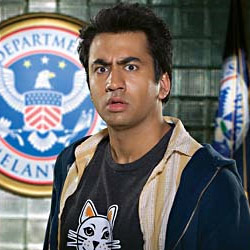
Kal Penn talks about his latest film “Bhopal: A Prayer for Rain”

Kal Penn is known best for his roles in the “Harold and Kumar” film series and TV with “How I Met Your Mother” and “House”. He recently took a break from acting to take a job as the Associate Director in the White House Office of Public Engagement working with President Obama. His latest film “Bhopal: A Prayer for Rain”, which is a fictional adaptation of the Union Carbide chemical spill disaster of 1984 was made back in 2009 and finally getting a release on November 7th. Kal recently took some time to chat with Media Mikes to discuss his film and what we can expect.

Mike Gencarelli: What was it about “Bhopal: A Prayer for Rain” that made you returning to acting?
Kal Penn: I had a hard time trying to describe the film, while I was shooting it. Friends of mine asked me why I wanted to do this movie and I said that I felt that the script was very powerful. I knew that when I read the script it really appealed to me and it was like nothing I had worked on before. It was a fictional adaptation of something that had actually happened. I sat down with the director and asked him why he wanted to make it? He grew up not too far from where the disaster actually took place. There have been some documentaries about it and some articles and books but no one has ever done a feature length fictional adaption about it. At the time we made it, it was 25 years after the disaster. Plus the fact that Martin Sheen was doing it. So selfishly as an actor I couldn’t say no.

MG: With your position at the White House, when did you do this film?
KP: I took a sabbatical from acting from 2009 to 2011 and had the chance to work in the White House. I knew that I was going to leave during that second year to come back to acting. This movie actually split that time. It was shot in 2009 and it was the last thing I worked on before I went off to the White House. After I came back to acting, I did the last season of “How I Met Your Mother” and I got a call about “Bhopal” and was told that that it was still wrapping up post production. They said that there was a lot of special effects in the last 15 minutes of the film and that I was going to be needed to come in and do some ADR, as they worked on their final edits. As of about six months ago, we knew that there was going to be a release date and they secured distribution.

MG: Tell us about your character Motwani and how you prepared?
KP: I did a bunch of research and read up a lot on the disaster. I spoke with the writer to find out what percentage of the character was fictionalized and adapted and what was real. My character as it turned out was one of the aspects that was largely fictionalized. The way that Ravi (Kumar) wrote the character was a lot broader. So my first question to him was that should I call the journalist that my character was loosely based on and try and talk to him. He told me “No, I want your character to be much broader from the start of the film”. He is this sort of larger than life gossip columnist that no one in town trusts because he keeps writing nonsense because it will sell newspapers. But over the course of the film, he is trying to warn the town of an impending gas leak in this factory and of course, nobody believes him. I thought it was a really layered role and a very well-developed character. So I mostly relied on the writer a lot instead of the historical context.

MG: What was it like shooting on location in India?
KP: It was awesome. I had only shot in India once before and that was for “The Namesake”. This movie we shot in Hyderabad and Mumbai. It is very different to shoot there. Kind of the biggest shocker for me was that actors would work on a couple of movies at the same time. They are shooting Monday and Tuesday on one movie and a second one on Thursday. It is a bit chaotic but in a really cool different way. It was a good learning experience. It also makes it a more dynamic environment when shooting on location.

MG: Do you think/hope that the film will bring more awareness to the event?
KP: My biggest hope going into the movie, even before we shot it, was that we do justice to the events that happened. It is an incredibly complex series of events and there are still people alive today that are living with the effects of what happened. Neither Union Carbide nor Dow Chemical ever actually apologized for what happened. It is also still not cleaned up in fact and the factory is still lying there empty. So if a fictional adaptation can get the conversation started and maybe even helps these people, then yeah I think that is great. But even beyond that, we did a screening in New York and it was interesting to hear people leave the screening that didn’t know that this was based on a true story. It really sparked some great conversations.

MG: You have done a mix of film and TV within genres of comedy and drama; do you have a personal preference?
KP: I love doing both. I hope that I am lucky enough to continue doing both. My fans have been really kind to me and I love them for it. To be able to go and do a stoner movie and then turn around and play a doctor is awesome. That is what I love about being an actor, I really enjoy playing all different kinds of characters. If I can continue to do that then I will be one happy person.

MG: Do you think we will ever see the return of Harold and Kumar?
KP: I would be happy to do as many as they will let me do. I would do “Harold and Kumar 58” when I am 102 years old [laughs]. Kumar is so much cooler than I will ever be in real life.

Tippi Hedren reflects on “Alfred Hitchcock’s The Birds” and her foundation

It’s the classic story of being in the right place at the right time. Newly moved to California in 1961, Tippi Hedren appeared in a television commercial that caught the eye of one of the most acclaimed filmmakers in history: Alfred Hitchcock. “Hitch” tracked Ms. Hedren down and cast her as Melanie Daniels in his classic film “The Birds.” She worked with him again alongside Sean Connery in “Marnie.” More than five decades later she continues to work, both on screen and in her continuing fight to stop the breeding of big cats through her THE ROAR FOUNDATION. And talent runs in the family. Her daughter, Melanie Griffith, is an Oscar-nominated actress and her granddaughter, Dakota Johnson, will star in the highly anticipated film version of “50 Shades of Grey.”

As she prepared for her upcoming appearance in Omaha this week at a charity screening of “The Birds” Ms. Hedren took some time to speak with me about the event and her foundation.

Mike Smith: You’re originally from Minnesota. Will this be your first visit to Nebraska?
Tippi Hedren: Not at all. I’ve been there before and I’m looking forward to returning and taking part in the festivities.

MS: How did you get the name “Tippi?”
TH: My father gave it to me. My baptismal name is Nathalie Kay Hedren and that was quite much for a little tiny girl. My father, who was of Swedish descent, started calling me “Touksa,” which is a Swedish term of endearment apparently. It went from Touksa to Tippi. And that’s the story!

MS: What do you think it is about “The Birds” that makes it a “must see” film more than 50 years after it was released?
TH: That movie has a life of its own! But when you do a Hitchcock film you know it’s going to be good but this has just been outrageous. One decade after the other. People like to be afraid and when you can be made afraid of something that you see every day that makes it even better.

MS: As with a lot of the screenings in Omaha, the artist Nicolosi has designed a special United States Post Office envelope to commemorate the event. Have you seen it yet?
TH: No, I haven’t.
MS: It’s a beautiful piece of work. I know you’re going to like it.
TH: I can’t wait to see it.

MS: Your daughter, Melanie, is a movie star in her own right and your granddaughter is about to star in what will surely be one of the most popular films of 2015. Have you ever felt the need, or have they ever asked you, for any advice on how to deal with Hollywood?
TH: Not really. I’ve never felt the need to talk with them. As a family we certainly respect each other’s talent but we’ve never given each other advice.

MS: “The Birds” was your film debut. Do you approach a film role the same today as you did back then?
TH: No. You have to understand that “The Birds” was a unique experience. For someone who had always wanted to be an actress, this was like Cinderella. I was chosen for the part because of a commercial I had done. I had been a model for the Ford Agency in New York City in the 1950s but the 1960s brought along the television and, of course, the television commercial. Commercials were financially lucrative, so much so that I was able to take three months off and travel around the world. Apparently Mr. Hitchcock became interested in me after seeing me in a commercial for a product called Sego, which was a diet drink. It was a commercial with a story line, not just a product plug. He asked Universal to find the girl in the commercial. Lo and behold, I had just moved back to California with Melanie and…
MS: Wow! Perfect timing.
TH: Perfect.

MS: Tell a little about your work with big cats.
TH: I’ve been rescuing big cats…lions and tigers…since 1972. This has become a major, major part of my life. I feel very strongly that these animals should not be bred and born in the United States to be sold as a pet or for financial gain. I’m very busy trying to get my second federal bill passed to stop the breeding. It’s titled the “Big Cats and Public Safety Protection Act” and I hope your readers will look it up and write to their senators and congressmen to stop the breeding.

For more information on how to support Miss Hedren’s bill, go to https://www.congress.gov/bill/113th-congress/house-bill/1998

Kevin Greutert talks about directing and editing horror film “Jessabelle”

Kevin Greutert is the director of the films “Saw VI”, Saw 3D: The Final Chapter” as well on editor on the entire “Saw” franchise. His latest film is called “Jessabelle” and is a ghost story set in Louisiana. Media Mikes had a chance to chat with Kevin about the film and what we can expect.

Mike Gencarelli: How was it going from directing “Saw 3D” to a film like “Jessabelle”?
Kevin Greutert: I was very eager to step away from the “Saw” franchise. I loved doing those movies but I wanted to get on with something different and really work with characters that are more developed and have more dramatic texture going on. When this script crossed my desk, I was super excited. It felt like a real breath of fresh air. We made it for a lot less money and a lot less time than most of the “Saw” movies. So in that regard, there was some different challenges as well. There are times when you what to put a camera or lights somewhere but it just isn’t possible. But It was absolutely worth it since the story is so good and the actors and crew were such a pleasure to work with. They made it so easy.

MG: Did you enjoy working in a more slow burn type of horror?
KG: The “Saw” movies were so energy fueled. I love making movies that are as physically engaging as possible. You say slow burn but I hope it isn’t too slow [laughs]. I have been told that this movie has a really amazing pace to it. It is not a movie that is throwing stuff at the screen the entire time. I think the most fun scenes in the film are the really quiet scenes that rely on the tiniest sound to trigger a scare or you see a shadow move in the background. To get to play with that kind of aspect instead of arms getting chopped off felt great and it felt really great on the set. There were no sets for this film, it was all shot in an isolated plantation. You can hear the night birds and there were alligators everywhere. So it was great to do a quiet ghost story.

MG: Like with the “Saw” franchise, you also edited “Jessabelle”; tell us about that aspect?
KG: It is interesting, I enjoy editing a lot but there are challenges to doing both. Directing a film is like climbing Mount Everest. It is really hard and takes all of your resources. By the time you finish, you really just want to go to the Caribbean and spent a month decompressing. By editing the film myself as well, I am climbing Everest and once I reach base camp, I have to turn around and do it again. It is that hard. There is no time to waste and you need to get right back into it. If there is any problem with the footage, it is on you. If I am editing someone else’s film and if something didn’t come out right or they failed to shoot a scene or get a shot, I can say “Man, those guys screwed up” [laughs]. That being said, I still felt pretty good when we got this film in the can. There were no reshoots needed or anything. So the hardest part of editing this film was actually all the stuff that I had to leave on the cutting room floor. Sarah Snook does every take different and they were all great. I am only person in the world who will see how these scenes could have been. These are tough decisions to see something so good and not be able to use it because something else was slightly more appropriate. That is a challenge but it is still very exciting as a filmmaker.

MG: That tub scene is quite effective; tell us about shooting that?
KG: Yeah, the bathtub scene was a tough one. Basically, we had to figure out how to create the sensation that the tub was filling up with swampy, oily, disgusting water. We had to find a place to shoot it. We were in this abandoned three story mansion. The only room we could do it was on the second floor, so in the dining room underneath, we had to build a giant 4×4 super structure to keep the tub from failing through the floor. It was probably our biggest shoot day. We had to have condor cranes at the windows with different lights and rain effects. We had a hot filled with water ready to make sure the girls didn’t freeze to death. Then on the very last day of shooting I had wanted to get a few more shots in the bath tub, so we had to set it all back up again. I thank the crew because it was a tough thing to do.

MG: Did you ever feel limited by the PG-13 rating?
KG: I always wanted this movie to actually be PG-13. When you put an R rating on a horror movie, people have expectations that this movie is going to deliver gore and blood etc. This is a very scary movie but not scary because of violence. It is scary due to its psychological situations. With that said, when we did submit the film to the MPAA, we did get back an R rating several times and we had to make a few adjustments. But for most people, if you would see both versions side by you probably wouldn’t be able to notice anything major missing.

MG: I liked the locations which created a lot of atmosphere in the film; tell us about where it was shot?
KG: From the day that I first read the script to the day that we started shooting, it was not a long time. First order of business was to cast it and simultaneously with that was to find a place to shoot it. Originally we drove all over Louisiana trying to find the right place. We would up in North Carolina and thought it looked more like Louisiana than Louisiana [laughs]. We originally found a great house and shortly after we were told that this guy James Wan was using it for a film called “The Conjuring” [laughs]. James is good friend of mine though and we found another place and ended up working in the same town at the same time as them. In the plantation we found, no one has ever made a movie there before and no one had lived there for decades. The last inhabitant was an old schizophrenic man. The walls were completely covered with strange drawings. It felt like a true haunted house. When you see the film it looks like a very derelict building but we cleaned it up a lot [laughs]. It was really a great place. When they go through the swamps, it was all the real thing. We had alligators following us around. It was wonderful.

MG: What can you tell us about your next film, “Visions”?
KG: That film is also produced by Jason Blum. I am currently editing it. It is a wife that buys a winery to overcome a tragedy. Her husband is also trying to sustain an agricultural business during a drought and the wife is pregnant. She starts to experience some very mysterious hauntings in the house. I don’t want to say too much but it has one of the best third acts that I have ever seen. I read the script for the first time back in 2008 and called everyone to get this film made. It took a while but it is great and I can’t wait for it to be released.


Related Content

Austrian crossover band Kontrust talks about new album “Explositive”

As I imagine many of us do, I dabble in late night encounters with the YouTube wormhole. I start by looking up some silly video of a cat riding a Roomba, or pull up a music video for one of my favorite bands. On September 28th, I was watching a DevilDriver video on the Napalm Records YouTube channel and an image on the side bar caught my eye; some oddly costumed farmer looking fellow screaming into the camera and the band name “Kontrust” with a song titled “Hey DJ!”.

Throwing caution to the wind, I clicked the link and the video started. The aforementioned farmer pulled out a vinyl and spun it on an antique phonograph. A female voice screamed “Don’t play me a punk song!” and a barrage of metal power chords followed. I’ll admit, I’m very selective about female lead singers in metal music, but once Agata Jarosz’ powerful voice hit on the first line of the verse, I was hooked. What followed was a seamless, intricate blend of funk, metal, and industrial music. I was sold. Kontrust had just made its way onto my play list and I hadn’t even made it through the entire song.

The follow up video to my Kontrust introduction was a song called “Sock N Doll.” Extremely unique, the video features a venue filled with sock puppets, and the band represented in the same fashion, but dressed in traditional Austrian garb. A quick yodeling lead in by Agata and then the vocals of Stefan Lichtenberger took over. Mixing elements of Korn, Pink and Buju Banton, this was one of the most beautifully diverse and energizing songs I had ever heard! I couldn’t get enough – so I took my crusade to eBay and secured a copy of Kontrust’s “Secondhand Wonderland.”

Song after song, my interest for this band and its musical prowess grew. I had Secondhand Wonderland playing non-stop in the Camaro, at work and at home. It was an obsession because the music made me feel good. It was the ultimate “Party Metal” album, without the after effects of a hangover. Much to my delight, I found out that there was going to be a follow up to this masterpiece – and extremely soon! “Explositive” is due to be released by Napalm Records on November 7th, 2014. I wanted desperately to get a hold of the band to talk about the successes of “Secondhand Wonderland” and what fans (and new listeners) could expect from the new album. I was fortunate enough to be granted a live Skype session (from Austria!) with three of the band’s members: Agata (vocals), Mike (guitar) and Gregor (bass and synth).

Eric Schmitt: So how was Kontrust formed? As far as where did the members come from and how did you decide on the direction to go in?
Gregor Kutschera: In the beginnings it was a band from the countryside in upper Austria – you may know it from “The Sound of Music” musical. We three, are actually from Vienna. The other guys, they are from Up-Austria. They formed the band, like 10 years, 12 years ago or something. We joined in 2005, mixed Up-Austria with Vienna, the big city, you know? They moved to Vienna to work and to study. They played mostly in a hardcore band, you know, before Agata joined with her clean vocals.
Agata Jarosz: It was really bad (bad-ass) and really {growls}. Then Agata came and said, “I’m sorry, that’s not my way. You have to come with me and go my way.” {laughs}So Kontrust started!.
Mike Wolff: It all started around 2001, then in 2005 the major change was applied. Agata joined and the whole band structure changed – it’s gotta have a little more “pop” factor in there.
GK: Or melody.
MW: Yes, melodies, to go a little bit in the pop music direction. Well, 9 years later, we’re still here and the last 3 albums, Time to Tango, Secondhand Wonderland and Explositive channel what we’ve been doing for those 9 years. Explositive is definitely something to more of the essence to what we are doing; reduced to the maximum if you want.

ES: The mix of musical genres is really successful with the albums, it works. The way you go from pop to metal to reggae. So I wanted to get an idea of what kind of musical influences brought everything together. In particular, personal influences that drove you to mix the genres together.
AJ: There is one band that every one of us was hearing when we were younger – it was Rage; Rage Against the Machine.
GK: Yeah, that’s the band we can all agree on. It’s the only act we can all agree on. {laughs}
AJ: I think the 90’s – we are all kids of the 90’s, so this is our music.
MW: Well, Rage Against the Machine was the only band that we agreed upon, that each of us likes. I mean there is so much other stuff in there that adds to it. From Skunk Anansie to even Iron Maiden. {Laughter} I have to say that! I’m the biggest Iron Maiden fan.
GK: Run to the…… {Laughter}
MW: We’ve got to leave that in the interview! Anyways, I guess it’s just – I don’t know – It’s kinda hard to say. I think of Kontrust basically being something where all of the musical influences we have where we can agree on those things.
GK: Some of us like some songs more than others.
MW: It’s diverse, but I guess that’s what drives us. There’s always so much tension when we’re writing the songs, it doesn’t just happen. You have to convince the others in the band-
GK: It’s fighting, it’s struggling, it’s pain….. And it’s awesome!

ES: As far as the new album, Explositive goes, what were the driving forces behind the tracks that you decided on?  What factored in to actually choosing the tracks to go on the new album?
AJ: Good question.
GK: We did lose some of our best parts (of tracks) along the way because they didn’t fit into songs. In the end, we all took the best the songs that worked. Every part fits perfectly well. It’s hard to say, I just have the feeling we lost some good parts and heavy parts along the way, but that doesn’t matter. The song was the focus.
MW: We write like 120 ideas and lose so much along the way. It’s just because we find something to start the song, then everything else has to fit. In the end we find it doesn’t fit Kontrust, so that song is going to get thrown out. Then we go back into the archive and digging for material, then start putting that (material) together. So basically, it’s all about an idea – is this Kontrust? Or could we sell this, say to Megadeth? {Laughter} When you work together as a band, with us being six people, there’s so much input you have to filter. Then it ends up with ideas that everyone is happy with.

ES: What are the tour plans once the new album is released?
AJ: The dates are in progress. We are planning a tour next year in the Netherlands, Germany and in Europe. This autumn, we will only play in Austria, in every major city. Next summer is festival season, and that’s the most important part (of the year) for us.
GK: So we take a slow start in the winter, then start out in spring and summer for festivals. There are a lot of big festivals in Europe, so we’re looking forward to that.
MW: We’re thinking about coming over the pond (to America), it all depends on how the album is perceived in the States.

ES: Are there any differences (from Secondhand Wonderland) in the new album that you would like to elaborate on?
Mike: Everyone is looking at me! {Laughter}
GK: We will give this to Mike, because he is our Minister of Propaganda. {Laughter}
MW: First of all, this album has been the easiest for us.
AJ: I think that we all like this album more than Secondhand Wonderland. It’s more “back to the roots,” that’s a very big reason why I like the album. Secondhand Wonderland was very over-produced. We wanted to over-produce the album, it was something special and different. (But) it was too much “pling pling”. Explositive is more “in your face”.
MW: It’s more in your face, it’s kind of reduced. All the stuff you hear, there’s almost no added artificial samples or anything, (as) compared to Secondhand Wonderland. It’s us playing, a little bit of synth, which Gregor plays,  and everything else, all the effects, are all natural. The reverb you hear is real. It’s basically this room here.
AJ: We recorded the album in this room (a slow turn of the phone shows me Kontrust’s spacious studio).
MW: The album, we think, is straight forward, in your face, has the party mood and has the feel of “bang your head on something hard and see what happens.” I guess when people who already like Kontrust will like this album a lot because it’s more of essentially what Kontrust is. Less of  the added stuff. And people who don’t know us yet will probably have an easier time to get into us just because the album, at least we think, is really “simple”.

If Explositive is Kontrust’s idea of “simple,” I would be intrigued to hear what “complex” would sound like to them. Napalm Records posted a preview of all of the songs on the new album, which can be heard by clicking HERE, or see above, as well as the first release on the album “Just Propaganda.” The new album sounds just as diverse and intricate as Secondhand Wonderland, but offers more of a raw appeal. Explositive can be pre-ordered through the Napalm Records Webstore as well as Secondhand Wonderland, which this author HIGHLY recommends! I am personally looking forward to November 7th and the release of Explositive, and have high hopes that 2015 will bring this extremely talented, energetic and most of all, friendly band stateside, so that Americans can see what we’ve been missing out on all these years!

Copyright: MediaMikes.com © 2014 · Powered by: nGeneYes, Inc. · Login

All logos and images used on this website are registered trademarks of their respective companies. All Rights Reserved. Some of the content presented on our sites has been provided by contributors, other unofficial websites or online news sources, and is the sole responsibility of the source from which it was obtained. MediaMikes.com is not liable for inaccuracies, errors, or omissions found herein. For removal of copyrighted images, trademarks, or other issues, Contact Us.