

Papa Roach’s Jerry Horton talks their tour “Carnival of Madness”

Jerry Horton is the guitarist for the multi-platinum rock group Papa Roach. The group’s latest release “The Connection” has been tearing up the rock charts and Media Mikes caught up with Jerry recently to discuss the bands career at the Big Flats, NY stop of the Carnival of Madness tour which along with Papa Roach features Skillet and Shinedown.

Adam Lawton: Can you tell us about the bands decision to tour as a package as opposed to a solo headlining run?
Jerry Horton: I think a lot of it had to do with the fact that last year we were supposed to be part of a package tour however due to Jacoby’s vocal problem we had to cancel those shows. We were trying to figure out what to do this year tour wise and the guys from Shinedown hit us up. We have toured with them before and it’s always been a great time so that’s what we decided to do.

AL: Having not toured immediately upon the latest albums release how has the reception been towards the new material on this tour run?
JH: It’s been really good. We have had quite a few people up front just singing along to the new stuff. That’s not something we expect especially from say a Shinedown crowd. Not to say there isn’t cross pollination of our fans and Shinedown fans happening but with them being the headliner you don’t expect to see people singing along to some of our heaviest songs. Things have been great on the tour and each night we flip flop sets with Skillet so some nights we play earlier and other nights we have the later slot. The challenge of getting everyone up out of their seats is one we enjoy and we have had a lot of people up and dancing this time out.

AL: Having a career that is going on 20 years now what do you feel has been the
bands biggest progression over the course of that time?
JH: I would have to say that probably our biggest change happened just recently. We introduced some more electronic elements to our sound. We had a little bit here and there in the past like on “Getting Away with Murder” but it was never really as much in the forefront as it is on this record. We wanted to do that in a way that wouldn’t take away from the rock element of the band. When we write and record we will do the main guitar part and then layer over the top of that. With the electronic sounds we want those to help people differentiate between the various parts of the songs. There are a lot more textures going on in the newer material however I wanted the beats to resemble those from our earlier records.

AL: From a tonal stand point do you feel the band’s sound has changed at all?
JH: I wouldn’t say it has changed so much. We have used different amps from time to time but for our main sound whether I am using a Marshall, a Bogner or a Boogie I have a certain frequency range that I like my sound to sit in. Whatever amp I am using will generally fit in there. You can kind of hear some differences if you go back to the “Infest” album and compare it to “The Connection”. There is a little difference but I generally don’t get down to the freakishly specific settings. I go a lot by ear and how it meshes with the bass. Tobin acts like a second guitar player with his playing style so at times the tones have to be similar and distinct even while we are playing lines that may be similar.

AL: Over time has your live tone and recording tone started to mimic one another or have they stayed pretty separate?
JH: On the last record we used Bogner amps but live I am currently using the Axe Effects unit. I have a similar tone but it’s not exactly a Bogner amp. There are some concessions I am willing to make when it comes to touring and playing live. It’s not only a space issue but there are things like weight and shipping that we have to take in to consideration. The Axe unit comes within I would say between 90-95% of my studio sound. A tone purist would take a look at my whole rig and probably just shake his head in disappointment.

AL: Have there been any talks yet of starting work on a new album?
JH: We have started thinking about it. Ideas have started floating around but we don’t have specific songs finished just yet. I know Jacoby has lyric ideas and we have an idea as to how we want the album to sound. There are a lot of cool things that we are tossing around. I know Tobin has two or three songs in the works and we are really stoked about those. We are still just in the beginning stages. We will probably be in the studio around March.

AL: What other tour plans are in place for the remainder of this year?
JH: We finish the Carnival of Madness tour on September 15th. In October we are starting in the Pacific North West and going through Canada and down the east coast making our way to Florida. In November and December we head over to Europe for some shows and we finish there at the Brixton Academy in London. We have a few shows after that but we have most of the holiday season off.
Lightnin Malcolm talks about new solo album “Rough Out There”

Lightnin Malcolm is a Mississippi based blues musician who has performed with everyone from Big Jack Johnson, T Model Ford and Sam Carr to name just a few. Lightnin’s newest solo album “Rough Out There” which features the grandson of T Model Ford on drums was released recently and has been garnering a lot of attention from the blues world.  Media Mikes spoke with Lightnin recently about his writing style and what he likes most about the new album.

Adam Lawton: Can you give us some info on your latest album “Rough Out There”?
Lightnin Malcolm: The album features 14 new songs and is a little over an hour’s worth of music. The record  is primarily duo music with guitar and drums. It’s what we like to call stompin’ music and it’s for people who want to just get up and have a good time. The words are kind of serious so the music is a combination of things. There are parts that will make you think and parts that will take your mind off things and let you just enjoy and have a good time.

AL: How does this album differ from your previous work?
LM: I love all of my albums as they are like children to me so it’s hard to compare them or pick one over the other. I think this latest one has shown my growth as a musician especially my work as a song writer. I have T Model Ford’s grandson Stud playing drums on this album and he is just dynamite. There are horns on a few of the tracks as well as slide guitar which were done by Luther Dickinson. Luther is probably one of the best slide guitar players in the world. Even though we are normally just a two piece we have been adding a lot of things lately. The cores of our songs are based on the rhythm of the guitar and the drums. I think with each album I am getting better at getting my message across through my songs.

AL: What type of writing process do you use?
LM: It all really depends as I have written a lot of songs. A lot of times is just comes out of nowhere. There have been times where I have been out somewhere and had to ask to barrow some ones phone so that I could call my phone just to sing a line or hum a melody in to my voice mail. I don’t want to forget it because I may come up with 3 songs that I think are the best thing I have ever written. Then I come with 3 more songs. I am always out on the road as I get to live a unique life and see a lot of things. I think that plays a big part in how and what I write songs about.

AL: Were all the songs on the new album ones that were recently written or are they older songs that have been around for some time?
LM: Some of them are brand new and some of them have been kicking around for 10 or 15 years in my head. It’s real easy for me to write songs but when it comes down to picking what will be on the album is when it becomes difficult. There are just so many directions in which you can go. I have a new group of songs I have been working on recently that are very serious but I am not sure I want to put all of those on the same album because I don’t want it to be a downer or anything. I want every record to be a party record. No matter how serious a record might be I want the end result to be uplifting.

AL: How did you go about connecting with the players you have on the album?
LM: I have known these guys for a long time now. I play with The North Mississippi All-Stars and have met and become friends with guys through that. Stud our drummer I have known since he’s was 1 when I used to drum for his grandfather T model Ford. He was practically sitting in my lap while I was up there playing by the time he was 3 or 4. He knows what kind of sound I like and the drive I am looking for. Along with what I like he has created his own sound which is really great. Most of the people on this album are guys I go way back with and we are like family.

AL: Are there any songs off the new record that you really enjoy playing live?
LM: Man I like them all! “Reality Check” is a nice two piece song that is challenging to do live as it is just guitar and drums. There is nothing else going on in that song. That really shows off our two piece style. Over the years I have played some big shows just as a two piece so I learned how to pull off songs as a two piece even though they weren’t written that way and never thought they would be performed that way. Now I am not afraid to try anything as I have continued to develop my sound. “Reality Check” is a challenging one that people love and “My Life’s a Wreck” is one of my favorites as well. I love playing all of my material.

AL: Can you tell us about your current tour?
LM: We are currently in the middle of a 40 date tour. We have been down through Texas up to Colorado and over to Arkansas. Stud and I are always out on the road. When these dates wrap up I will be back out on the road doing double duty with the North Memphis All Stars. I will be opening those shows along with performing with the All-Stars. After that I have a few days off and then head overseas for about 4 weeks of shows there. I am constantly on tour through November.

Christian Pitre talks about new film “Bounty Killer”

Christian Pitre plays the role of Mary Death in the upcoming action film “Bounty Killer”. The film written by Jason Dobson tells the tale of Mary Death a bounty killer living in a world of chaos and greed who will stop at nothing to get her man. Media Mikes had the chance to talk with Christian recently about the film and what it was preparing for such a physical role.

Adam Lawton: Can you tell us a little bit about the film?
Christian Pitre: “Bounty Killer” is post apocalyptic like a lot of things these days but this film takes place 20 years after these things called “The Corporate Wars” take place. Once the stock market crashed all of the major corporations start fighting for control of the earth. The earth ends up destroyed and a special council is put in place to serve death warrants on the remaining corporation leaders. The bounty killers are the people who go out and hunt these people down.

AL: What was it that interested you in the role of Mary Death?
CP: I read the sides for this character and instantly fell in love with her. I loved her strength, confidence and sexiness. At the time I didn’t know the vulnerability she had as I was just reading the sides but you could just see the depth that the character had. The creators of the film have been working on it for so long that when you are around them you know there’s a lot you have to catch up on. There is year’s worth of back story there. This role was definitely a challenge I had never done anything like this before.

AL: What was your audition process like?
CP: I wasn’t represented at the time so I was just doing what every actor does when they are not represented in that you submit yourself for roles. I was doing that every day and I got a call to come in for “Bounty Killer”. That was the one audition I got called for so I figured I better book it. (Laughs) Also it was a really great project. My husband helped me prepare for everything. We practiced with a real knife and that was something I brought to the audition. At one point I whipped out this real knife and they loved it! I also told them I was Mary Death and not just reading for the character.

AL: Being that the role was very physical what type of preparation did you do?
CP: I did a lot. My co-star Mathew Marsden is a black belt in Tai Kwan Do. I on the other hand am a nothing belt. (Laughs) I knew I had a lot of preparation to do. I found a guy here in Los Angeles and we trained quite a bit. I then worked with the stunt coordinator as fighting for real and fighting on film are very different. Everyone around me had a lot of patience.

AL: How much of your stunt work were you allowed to do on your own?
CP: I was able to do almost all of it. I fought pretty hard to make that happen. They wanted to make everything safe and look good so we had to be careful. A lot of times I would show up to do a scene and my stunt double would be there. I would then ask why I couldn’t do the scene. There were only just a couple scenes where it wasn’t me. I figured out that I have a horrible fear of heights. (Laughs)

AL: Was there any footage that was shot but didn’t end up being used for one reason or another?
CP: Not a lot. We had 18 days to shoot the movie and we just worked like mad to get everything done. There was a scene that involved my character that was shot but it didn’t end up being used as it was thought to be a little confusing to the viewers. The film is really fast paced as it is so they didn’t want to add any more possible confusion so it was decided to leave that part out.

AL: Have there been any talks of doing a sequel?
CP: We have all been talking about doing a sequel since even before the first film was done shooting. None of us wanted to stop shooting. It was so much fun and the characters are so colorful. I know things were written with sequels in mind as there is so much more background and stories to be told. The guys had been working on this project for 10 years prior to it even being shot. I hope that we get to tell the rest of these stories someday.

AL: Do you have any other projects in the works that you can tell us about?
CP: Right now all of my time is devoted to promoting “Bounty Killer”. I have had some other scripts come and I am currently looking at those.

Richard Raaphorst talks about directing “Frankenstein’s Army”

Photo Credit: Lukas Zentel

Richard Raaphorst is the director for the crazy new film “Frankenstein’s Army”, which is also his directorial debut. The film takes place during WWII and we find out that a member of the Frankenstein bloodline is turning dead soldiers in zombots, half-human/half-creatures. The film uses all practical effects and is a must for horror fans. Media Mikes had a chance to chat with Richard about the film and about working in the horror genre.

Mike Gencarelli: Tell us about the origin story behind “Frankenstein’s Army”?
Richard Raaphorst: I had several different ideas that inspired me swirling around in my head, like stories about Russian armies and scenes about biomechanical drones. I had just bought an illustrated version of Mary Shelley’s ‘Frankenstein accompanied with gorgeous pictures by Berni Wrighton. I was driving in my car listening to movie soundtracks and realized that I could mix all those elements together. When that happened, I felt like I was struck by lighting and the concept was born. Inspiration took over and turned into passion and I couldn’t escape from it until my ideas were realized.

MG: What do you enjoy most about working in the horror genre?
RR: I like the idea of escaping from the ‘conventional’ worlds and going complete out of the box. There are no limits in horror, so I can be extremely inventive. I create totally unique and weird visuals, scenes or characters that would never fit in a romantic comedy or straight action movie. It allows me to bring visual concepts to life that I have developed since my childhood.

MG: “Frankenstein’s Army” is your first feature film directing, what was your biggest challenging?
RR: I wanted to make the movie as authentic as possible so that can make viewers very scared and vulnerable. My biggest challenge was to holding on tightly to my vision. At a certain point, I realized that everything

happening on set was a direct result of my plan, and is therefore, my responsibility. However, a lot of people involved in projects like this have other ideas and sometimes try to influence the director’s decisions, especially when the director is trying to do something new or original. They will say things like, “Why don’t you do it like that other movie?” or “That doesn’t work because I’ve never seen it like that before.” Then, you have to keep faith in your original idea and become stronger in your resolve, but understand how to navigate around these people. The good thing is that the people who DO believe in what you’re doing will be your strongest allies.

MG: How these the idea of flesh-and-metal “zombots” come about?
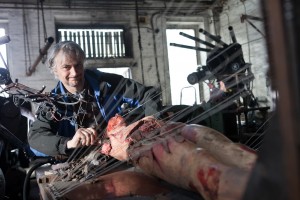
RR: I always had a deep fascination with industrial stuff. My father worked at a nuclear power station and as a mechanic in the petrol chemical industry for a while. He once took me to work with him in Saudi Arabia and showed me the machine room of a HUUUUUUGGGGGEEE oil tanker. I was blown away by its gigantic proportions and by the industrial beauty. It was the same feeling that other people would have in a beautiful Medieval cathedral. I wanted to create creatures that would inhabit such an environment. I started experimenting with dressing myself up as industrial monster. I named them Transers at the time. I dug up some very old pictures of this for this interview. The quality of the pictures isn’t good because I developed them myself, but it’s possible to see some elements of the zombot designs. In retrospect, I can say that the seeds for the zombots were already growing in my head when I was a teenager.

MG: Tell us about the practical effects in the film and why you chose that route?
RR: It is not that I’m against the use of CGI, but I do have something against to misuse it. In Frankenstein’s Army, I wanted to stay as authentic as possible to that time period. We only used CGI to add some sparks and flashes here and there, but anything more and the atmosphere would not feel realistic anymore. It would feel like a cheat. With CGI everything is possible, but it often looks too perfect, and with that, you lose charisma. In my opinion, CGI lacks charisma, so I use it as a kind of “background music.” WW2 CGI monsters would be a real nightmare to watch and would have destroy all the fun.

MG:  What is the status right now with “Paris I’ll Kill You”? Is that going to be next for you?
RR: I changed the title into FEAR PARIS because it doesn’t relate to Paris, I Love You. It’s a world all its own and needs a unique title. We are now doing a online campaign to complete the budget and get ready to shoot (fearparis.com). So far, I spent a year designing the whole city, including all kinds of weird and strange character and monsters. This new apocalyptic Paris is a fantastic joy to create. I love it.

Jeffrey Hornaday talks about directing Disney Channel’s “Teen Beach Movie”

Jeffrey Hornaday has work choreography with tons of great talent including Madonna and Michael Jackson, as well as tons of films including “Dick Tracy”, “Flashdance”, “A Chorus Line”. His latest film is  the Disney Channel film “Teen Beach Movie”, which he is toke on the role of both director and choreographer.  Media Mikes had a chance to chat with Jeffrey about “Teen Beach Movie” and its impact on pop culture this summer.

Mike Gencarelli: Tell us about how you became attached to the Disney Channel film “Teen Beach Movie”?
Jeffrey Hornaday: I had worked with Disney Channel before on a film called “Geek Charming”. It wasn’t a musical but it was a romantic comedy. It got really good ratings and I got nominated for a Director’s Guild Award. So we all came away very happy with how it went. So when this came up given Disney’s background and mine also with musicals, it was a natural fit.

MG: Tell us about your approach to making this a true summer film?
JH: When you look back at the old beach party movies from the 60’s, you think about those and get this sort of nostalgia and warmth. If you go back and look at them now, they are kind of flat [laughs]. The choreography is kids basically dancing a little at the beach. They are not full blown production numbers. We decided instead of trying to clone what those used to be, let’s do something that makes you feel like when you think about that nostalgia feeling. We sort of took the gloves off and gave ourself the right to go past what the original genre was. We really tried to tap into what it is feels like to think about those movies.

MG: Tell us about your approach to the music in the film?
JH: The music department was really great and wanted to approach it like a Broadway show. Rather than giving them a laundry list of catalog songs, we got together with the composers on number and really talked about it and work-shopped the ideas. It was really like we were putting on a Broadway show and that was really fun.

MG:  How was it taking on the role of both director and choreographer on this project?
JH: Because my background is in choreography in Los Angeles not Broadway, I learned about design choreography for camera, which is a very different world. I was lucky that I got to work with really good directors in the past. So it is kind of coming full circle and having more control it actually made the process easier to translate to someone who doesn’t have the choreography experience. I also had help with the choreography from a brilliant young guy, Christopher Scott, he was just incredible to work with. It was a great collaboration and we had this unspoken connection. He came into the project with a lot of ideas. That made it really fun and easier to share the load.

MG: What was your most challenging song to film?
JH: The physical aspect of just shooting on the beach was first a big challenge. Working with sand is not easy. It is hard enough to walk or even run on the beach yet alone dance. There is a number called “Crusin’ for a Brusin'”, which was challenging but in a fun way. There is a song from “West Side Story” called “Cool” and I had that as a prototype in my mind. You could really feel the cinematographer’s hand in the song and it was an homage to that. It was very carefully designed and quite the challenge.

MG: Let’s talk about the success of the film since it has aired on Disney Channel?
JH: It is hard to predict that type of success, especially in pop culture. I remember when I choreographed “Flashdance” at the time and we just thought we were doing this little movie but had no idea that it was going to touch a nerve on pop culture. The thing that was interesting to me was the connection of the old school American musical. You wonder about if the younger audience was going to be able to connect to this, especially since this film deals with aspects from the 60’s. But they have been really able to connect to it.

MG: Any plans to for a follow up to “Teen Beach Movie”?
JH: There has been no confirmation yet. I know that they are certainly thinking about it and their story department has it in development. It would be a no-brainer for me. So I am on-board. I am also currently writing a screenplay for Disney right now. It will have music but is also a contemporary piece. So I am hard at work right now.

Tommy Reid talks about his new documentary film “Superthief” and “I Know that Voice”

In 1972, Cleveland-based burglar and bank robber Phil Christopher helped pull off the biggest bank robbery in US history when the stole an estimated $30 million from the United California Bank.  Director Tommy Reid has turned the heist into the new documentary film, “Superthief,” which is now out on DVD.

Born in New Jersey, Tommy Reid directed his first film, “7-10 Split,” while attending Ohio State University.  His next film was the brilliant documentary about another Cleveland mobster, “Danny Greene:  The Rise and Fall of the Irishman.”  So interesting was the subject that Reid helped produce a feature film about Greene entitled “Kill the Irishman.”  His next project is the behind the scenes look at voice over actors called “I Know that Voice.”

Earlier this week Reid took time out to talk about his career.  Before the interview we talked some football – he seemed to think my Kansas City Chiefs would do well this year with new Coach Andy Reid (no relation) at the helm.  On the record we talked gangsters, making movies and the possibility of directing his sister, Tara, again (“Sharknado II” anyone?)

Mike Smith:  What drew you to highlight the United California Bank Robbery in “Superthief?”
Tommy Reid:  I went to THE Ohio State University Undergrad and a lot of my buddies in my fraternity were from the Cleveland area.  I’d go up there with them a bunch, usually over holiday weekends and summers.  I really like the Cleveland area.  And I had some buddies that were really into the mafia and they would tell me stories.  I ended up making a movie called “Kill the Irishman,” which was about the Cleveland mafia.  It’s a great movie with Val Kilmer, Christopher Walken, Paul Sorvino, Vincent D’Onofrio…the list goes on and on.  If you haven’t see it please go see it.  (NOTE:  I’d already seen it and like Mr. Reid says, it’s a great movie).  It turns out that the author of the book I optioned to make “Kill the Irishman” was also writing a book about Phil Christopher and the biggest bank robbery in US history.  The story intrigued me and I knew that was a movie right there.   The book was ok but I thought there was a lot of subject matter that needed to be expanded so I wanted to do a documentary on the subject of Phil Christopher alone…to tap into his mind how this all went down.  How did he get his training…how did he get into a career of crime?  And that’s what intrigued me.  It became a passion project.  Phil Christopher agreed to an exclusive interview and he did so with a compliment, as he really loved what I’d done with “Kill the Irishman.”  He felt why not give it a try.

MS:  That kind of answers a little bit of my second question as to why both of your documentaries deal with Cleveland crime figures.  As a filmmaker was that something you enjoyed investigating…true crime?
TR:  Yes I do.  It’s like a “whodunit” type of situation.  You always try to put the pieces together.  For me as a filmmaker I always like to see where the path went wrong…where was the fork in the road where they chose between right and wrong?  Which path did they go down?  And I think I identified that in “Superthief.”  That was the fun part for me.  To go back and look at a crime that had almost become an urban legend and to really tackle the fundamentals on how it all went down.

MS:  You’ve directed both fictional features and documentaries.  Do you have a preference?
TR:  Actually I just finished another documentary.  Documentaries are really fun.  Very fun to make.  Very fun to produce.  But there’s also something that’s really fun with working with actors.  Making a fictional feature film is very fun but very exhausting.  Working with actors is sometimes a little overwhelming.  Not only do they want to look good but they want “their” take.  The get upset at the director if they don’t use “their” take.  Which is why you never let them in the edit bay (laughs).  For the most part they’re both fun but they’re different beasts.   Of course you have a better chance of making a profit for your investors on a fictional feature film then a documentary, unless you’re doing a documentary on Justin Bieber or One Direction or something like that.  (NOTE:  Mr. Reid knows of what he speaks – this past weekend the new documentary concert film featuring One Direction brought in $17 million).  For the most part documentaries don’t really have a big impact on the market place.  They get popular from word of mouth.  From people asking “have you seen this movie” and then telling their friends to go rent it.

MS:  You turned Danny Greene’s story into a fictional feature.  Do you have any plans to do the same with Phil Christophers?
TR:  Absolutely.  We already have a script written and it’s phenomenal.  It was adapted by the writers who have a new show coming up this season on NBC.  It’s called “The Blacklist” with James Spader.  It’s a very well written and thrilling script that we have that we’re trying to raise money for to make into a feature film.

MS:  And you will be directing the film?
TR:  I will.

MS:  You’ve directed your sister, Tara, in the past.  Any plans to work together again?  And how is the relationship on set?
TR:  Tara is very professional on set so it’s always a director/actor relationship.  She took direction well and was very easy to work with, so we didn’t have that brother/sister thing on set.  Thank God.  Right now there’s no plans to work with her in the future but it’s always a possibility.  (NOTE:  Keep those fingers crossed, “Sharknado” fans!)

MS:  Final question – what are you working on next?
TR:  I just finished a movie called “I Know That Voice,” which is all about the biggest voice actors in the industry.  It covers the history of the voice actor, from Mel Blanc, who was “the man of 1,000 voices,” to the biggest stars today.  We also talk to “Simpsons” and “Futurama” creator Matt Groenig,  “Phineas and Ferb” creators Dan and “Swampy” (NOTE:  Dan Povenmire and Jeff “Swampy” Marsh) as well as vocal stars like Hank Azaria, John Di Maggio, Billy West.  Jim Cummings, who’s Winnie the Pooh.  June Foray, who’s 95.  She was the voice of Rocky the Squirrel and is still working today.  We cover everyone.  It’s an amazing movie.  It’s coming out VOD (Video on Demand) in December.  We’re planning on a one-week theatrical debut in Columbus, Ohio in November and hopefully we’ll have the DVD on the market in October.

Hank 3 talks about his two new albums “Brothers of the 4×4” and “Fiendish Threat”

Hank 3 the son of legendary country singer Hank Williams Jr. and of course the grandson of country music pioneer Hank Williams is back with not one but, two new albums. “Brothers of the 4×4” is a two disc release featuring Hank 3’s signature country sound while “Fiendish Threat” is a single disc release of punk rock material which is very reminiscent of early Misfits material. Both albums are being released on Oct. 1st and Media Mikes had the chance to talk with Hank 3 recently about the albums and his signature sounds.

Adam Lawton: Can you tell us about the two new albums you have coming out?
Hank 3: Most of the time I write longs songs and make long records. The first album is more of a country album titled “Brothers of the 4×4”. It’s a double disc album and there are a few slow and sad songs mixed with the more happy go lucky type songs. There are also a few songs on there that I wouldn’t necessarily consider country. They have more of a Pink Floyd, spaghetti western type sound going on. There are a lot of different sounds on this record. The second release I have coming out on the same day is more of a punk rock record titled “Fiendish Threat”. That album was all done with acoustic instruments which have all sorts of fuzz and distortion placed over the top of it. The two albums are like night and day. The sounds and attitudes are quite different.

AL: This is the second time you have released multiple albums on the same day. Do you have a specific reason for doing so or do things just happen more naturally?
Hank 3: Most standard songs are two minutes and thirty seconds. That’s if you are looking to write a hit song and get it on the radio. It’s a standard format. People have told me that when they listen to my songs they get to a point where they are waiting for it to end however it doesn’t. Things just keep going but that’s how it is on some of my material. On songs like “Loners for Life” or “Deep Scars” the steel guitar just sort of caries things through and that how it is. As far as releasing multiple albums goes I have always been known for performing multiple sounds during my live shows. I usually do almost four different sounds during a single show. That’s why I like to release multiple releases all at the same time. When I tour fans get to see all those different sides of me. One other reason is I do things this way is that I feel like I have been held back in a way in relation to my career. Frank Zappa put out over 90 releases and my father has released over 120. Where I am at in my career I don’t feel I have that much on the plate so I am trying to make up for lost time in my eyes.

AL: When you’re creating multiple albums at the same time do you find that they will often play off of each other or blend together in certain areas?
Hank 3: It’s kind of different. Once I start recording I may have a feeling where I want to do just drums one day or just guitar stuff. I may warm up by playing some country and then end the day with some harder sounding material.  It’s very similar to how I perform live. Everything is one performance to me. Yes the songs change but I am still trying to give it my all throughout the whole performance or record. When I am writing the songs things do vary. If I am working on a country song I will sing things off the top of my head and then record it. Once that’s done I then go back with a pen and paper to write down what I think is a little more important. I try and make things more of a story. If I am working on rock or metal material I always do the guitar riff first and then the drums and vocal. They are both opposite with one being music oriented while the other is not.

AL: Being that you, your father and your grandfather all have unique styles do you ever try and incorporate any of their sounds into your own when working on an album or song?
Hank 3: If you were to really look at my records you will notice that each one has a specific sound or style to it. I am the guy who is doing all the recording, mixing and mastering. Things might not sound the best or the worse but it’s going to sound different. It’s all self done which that alone makes it stand on its own two feet. When I write a song it just depends on what I am going for. I am lucky enough to have created my own niche and found my own sound within going against my father and grandfather in the country music world. That in itself is hard enough. Things have happened and I have been able to create a very loyal fan base that has been with us for many years. Some people may say I sound like one or the other on any given day but I don’t think any of my material is orientated to that of my other family members.

AL: What was the lineup of musicians who played on the new albums?
Hank 3: On the country record I had Johnny Hiland do all the chicken pickin’ stuff while Zach Shedd , David McElfresh and Billy Contreras make up the rest of the guys who are on there. Zach is one of the guys who plays on both of the records. Billy played a few interesting fiddle parts on the punk/rock record while other guys like Andy Gibson played steel guitar on the country album and Leroy Troy played banjo on a track called “Possum in a Tree”. I also made my first attempt and playing some lap steel on the record as well.

AL: Do you have all the parts pre-arranged when the different guys come in or do they just come in and add their own parts?
Hank 3: It varies. I might have parts in my head that I will hum or sing to whoever is playing or when it comes to guys like Johnny Hiland he has me play him what I have and then he will do a couple passes and let me take what I like. The guys I have worked with for some time we do a little bit of everything and just go back and forth with ideas.

AL: Will these guys be the same group that will go out on the road with you?
Hank 3: Some of the guys who played on the record I don’t always get to use that much on the road. I use my band as much as possible but guys like Johnny Hiland and Billy Contreras aren’t always available but they know my door is always open. I think when you are used to playing with people like George Jones and then you come down to the level that I am at there can be a pretty dynamic difference when it comes to money sometimes. Some guys dig the environment and don’t mind making less. I try to pay everyone in the band as much as I can while still keeping the ticket prices low for the fans.

AL: When putting together a set list how do you choose which songs you are going to play being that you have quite a diverse catalog to choose from?
Hank 3: I don’t hit the stage with a set list. We have a few standards that we will always play and in between I mix in a few newer songs. With the rock record we might be a little more uniformed however I have so many country songs that I can fill up a two hour slot pretty quick. Not having the same set list every night keeps my guys fresh and on their toes. Everything is a little different each night.

AL: Do you have any other projects that you are currently working on, Possibly a DVD or book?
Hank 3: I have always been pro bootlegger with a lot of my fans in that I allow them to come out and record the shows. I have been letting fans do that for many years now. I recorded a song with David Allen Coe not too long ago called “The Outlaw Ways” which was released on limited vinyl. Sirius radio picked that up and was playing it which has been great. As far as books and other things I don’t feel I have hit that part of my career just yet. I am very busy being on the road and making records.


Related Content

Phil Hall talks about his latest book “The Greatest Bad Movies of All Time”

If you’re a fan of movies you’re probably already familiar with the work of Phil Hall. A contributing editor to the on-line magazine, “Film Threat,” Hall is also a well respected author of such film books as “The Encyclopedia of Underground Movies: Films From the Fringes of Cinema” and “The History of Independent Cinema.” His latest book, recently released, is entitled “The Greatest Bad Movies of All Time.” Mr. Hall recently took the time to answer some questions for Media Mikes:

Mike Smith: What makes a movie “Bad?”
Phil Hall: We need to clarify what “bad” means. I am not writing about the mediocrities that you forget about after the closing credits have rolled. My book celebrates what I call the “anti-classics.” These are the films that inspire wonder – they are so profoundly misguided and egregiously off-target that you have to wonder how they ever got made. These bad films are the cinematic equivalent of narcotics – you get hooked by their toxicity and you become a happy prisoner to their crashing awfulness. It is a wonderful addiction, for sure.

MS: What inspired you to write the book?
PH: A few years ago, I was an actor in a film called “Rudyard Kipling’s Mark of the Beast,” and while on the set a number of people were talking endlessly and enthusiastically about the Tommy Wiseau film “The Room.” I recognized that people tend to become animated and involved when talking about the so-bad-they’re-good films, going to the point of quoting the screenplays verbatim, and I thought that I would bring together my choices for 100 of the best of these anti-classics.

MS: You have some critically popular films, “Mystic River” among them, on your list. Any reservations on labeling films like this “bad” when they were well received?
PH: My book is not a be-all/end-all text book. My book is an expression of my opinion as a film critic and film scholar. Remember, the appreciation of films (or any art form) is strictly subjective. I know people who loathe “Citizen Kane” and “Gone with the Wind” – that is their opinion. And remember, opinions are like a certain lower body cavity – everyone has one and most of them stink! Whether you agree or disagree with me is strictly your call. This book is my vehicle to share my opinions.

MS: Have you received any feedback from any of the filmmakers?
PH: The book covers the full spectrum of the cinematic experience, from the silent era to the present day. Thus, many of the filmmakers cited in the book are no longer with us. As for those that are still active, I don’t know if they are aware of their inclusion in the book.

MS: Do you have a favorite “bad” movie?
PH: That’s sort of like asking if you have a favorite child, isn’t it? Some of the films cited in the book — the musical version of “Lost Horizon,” “Chariots of the Gods,” “Airport 1975” – have a special emotional tug because I saw them in the theater when I was a little kid. Others hold a special meaning because I shared the viewing experience with friends and/or family. And I am always discovering new films, so today’s favorite could easily become yesterday’s corny memory.

MS: Are you planning another book?
PH: This is my sixth book that has been published since 2004. I think I am overdue a long rest!


Related Content

Joachim Rønning & Espen Sandberg talk about directing of “Kon-Tiki” and plans for “Pirates of the Caribbean 5”

In 1951 the film “Kon-Tiki,” a film detailing the voyage of famed Norwegian explorer Thor Heyerdahl, won the Academy Award as the year’s best documentary feature.

Six decades later a pair of Norwegian filmmakers decided to tell the story of Heyerdahl’s incredible 4,300 mile journey across the ocean on a balsa wood raft. The film became the first in the country’s history to receive both an Academy Award and a Golden Globe nomination as the year’s Best Foreign Film.

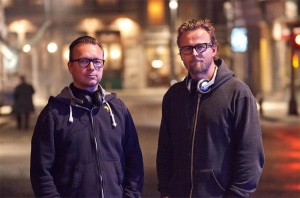
To celebrate the Blu-Ray release of “Kon-Tiki,” I sat down with directors Joachim Rønning and Espen Sandberg. I mention that it’s been Scandinavian Directors week for me, having just spoken to Renny Harlin a few days earlier. Hearing this they question me on Harlin and what he’s working on. Finally the interview begins and the pair talk about honoring Thor Heyerdahl, their national pride and how things are going on their next project, “Pirates of the Caribbean: Dead Men Tell No Tales”

Mike Smith: This has been my week for Scandinavian filmmakers. I just spoke with Renny Harlin the other day.
Joachim Rønning/Espen Sandberg: (both laugh).
JR: How did that go?
MS: Very well. He’s really high on the “Hercules” movie he’s finishing up.
ES: Right, right.

MS: “Kon-Tiki” received an Academy Award nomination as Best Foreign Film. Obviously that’s a great honor personally but did it have extra meaning to you because it was a representative of your country?
JR: it was (pauses)…one of the best moments in our lives. (they both laugh). That’s all we can say. That morning, when we got the announcement. Because it is, in so many ways, the biggest reward you can get as a filmmaker. To be recognized in the US…to be recognized in the world…that meant so much for the film. For “Kon-Tiki” to have that when it goes traveling around the world, it really means everything for the film. And for us as filmmakers. We wouldn’t be sitting here in our production offices speaking with you if it wasn’t for that. Everything comes together.
ES: As for representing the country, absolutely. But that’s not really the first thing you think about (laughs) when you get that news. It was the first Norwegian film to be nominated both by the Oscars and the Golden Globes and that is a huge deal for our country.

MS: How did you get involved with “Kon-Tiki?”
JR: It was a story we’d grown up with. Espen and I began making films together when we were about 10 years old. We grew up in a small town. Thor Heyerdahl grew up in a neighboring town so he always had a presence in our lives. And he is the only Norwegian to win an Academy Award so as a filmmaker he was a huge inspiration.
ES: We always wanted to bring that story…the story of Kon-Tiki…to the big screen. But of course, it was such a huge endeavor. It took four years to finance. It was the biggest film production ever in Scandinavia.

MS: Thor Heyerdahl is probably your country’s best known figure internationally. Did you have any reservations in taking on his story?
ES: We always wanted to tell his story. It was just very hard to finance it. That was the big hurdle. We always wanted to do it.

MS: You’ve worked together for over two decades…(they both laugh)…do you split up the duties of directing? Do you direct together or do you each handle certain scenes?
ES: We basically do everything together, especially in pre-production and post production.
JR: It’s a very collaborative process and it’s the only way we know how to make movies. On the set it is divided somewhat. Espen concentrates more with the actors and I work more with the visuals. And that’s basically not to confuse the actors too much. We try to have one voice in accordance with them. It’s a very collaborative process and it’s how we’ve always done it.

MS: Have you ever had an instance where maybe one of you has yelled “cut” and the other one looks over and shakes his head? (they both laugh)
ES: No! You’d be surprised. Of course we both have different tastes but I think at the end of the day we both find common ground…what’s best for the scene and for the film.
JR: I think it’s actually an advantage to have two heads working. It’s a big deal for us to be unanimous. In front of everybody at least (laughs)

MS: You both are slated to direct the next “Pirates of the Caribbean” film. Can you give an update as to where that project is?
JR: Yeah! We’re in pre-production. We’ve been in pre-production for a couple of months and it’s inching along every day. It’s a dream come true, really, to be able to work with Jerry Bruckheimer and the Disney camp…with these actors and the rest of the crew. They’re the best in the world. It’s coming together. We have a fantastic script by Jeff Nathonson (“Catch Me If You Can,” “Rush Hour 2 and 3”). It’s really funny. And touching. It’s a true adventure movie and, in that sense, it reminds us of the kinds of movies we grew up with…the Indiana Jones films and stuff like that. Those films made us want to become filmmakers.

MS: That’s so cool. That’s almost exactly the same answer that Renny gave me when we talked about “Hercules.” He had grown up enjoying these films so much and finally getting the chance to make one is the ultimate honor. (they both laugh)
ES: That’s it exactly. We really feel great!

Charles Baker talks about playing Skinny Pete in AMC’s “Breaking Bad”

Charles Baker plays the role of Skinny Pete in the popular AMC series “Breaking Bad”. The show is now in its 5th and final season and Charles took time out of his busy schedule to talk with Media Mikes about his experiences working on the show and how he turned a background character in to a recurring role on one of televisions hottest shows.

Adam Lawton: What was it that first drew you to the role of “Skinny Pete”?
Charles Baker: “Skinny Pete” wasn’t even a role when I first started on the show. He was originally just called “Skinny Stoner” and I was hired for only one episode during season 1. It was supposed to be just a day player role and what drew me to it was I was going to get to work on television. (Laughs) It was a job and people really didn’t know a lot about the show or anything like that. I had heard some things about the show but didn’t know how phenomenal it was going to be or that I was going to be a part of it.

AL: Being the role was written originally for a one time appearance were you allowed to provide any creative input or direction?
CB: Because of how things happened so consciously in season 1 they just told me they were going to bring me back for another episode and would see how things went. My first scene was very small so I came in with how I thought the role should be played and the director who worked on that episode had his own ideas about the role so what we created for that bit part kind of dictated my role for the rest of the series. A lot of times before each scene I would have to repeat one of my lines from that first episode as a way to get myself back into character. I would always have to repeat “Yo my pops is a contractor” in order for me to fall back into that speech pattern. Each time I was on the show I was working with a different director who would have their own idea for what they thought Skinny Pete was. A couple directors thought of him as a hardcore, mean, scary guy while a few others saw him has this lovable, goofy guy. However they saw the character was how they directed us. We would have to find a balance in their in order to keep consistency while still getting what they were asking for. That is how the many layers of Skinny Pete happened.

AL: Was it hard working with different directors all of the time?
CB: It was a challenge but I think it was a great learning experience. I love things like that where I have to find it in myself to make things like that work. It was better for me in the long run I think because I didn’t get stuck in a rut. I was able to give Skinny Pete more levels and layers to play with. For me it was a lot of fun and similar to an improve exercise.

AL: What do you think has been the roles biggest progression?
CB: He has kind of grown a little bit. Pete has started to follow in Jesse’s footsteps without having to learn all the harsh lessons Jesse had to learn. I think he has seen Jesse become more responsible up until the point where we see him start to be affected by the actions of his crew. You see Jesse start to become more of a business man than a thug. At the start of season 5 you see Pete acting similar in a scene between him and Badger at a music store. That’s a new step for Skinny Pete I think. He is actually taking something serious instead of just playing around.

AL: What do you think is in store for Skinny Pete as the show concludes?
CB: I wish I could tell you. I don’t even know what’s going on. That’s all part of the brilliance in how the show is shot and how tight security is. In the past If I had a scene where I don’t speak and I am just in the background I got to see that script so I knew what’s going on. With this last season they have been using a stand-in for scenes that I may or may not be in. They just didn’t tell me anything. (Laughs) If I had dialogue then it was just me. I am not even sure of what scenes I am in or not. I am ok with that because I am a huge fan of the show and I want to be surprised just like everyone else. I know Vince and the people who work on that show will never let me down. They don’t have to tell me what I am doing. They can put a blind fold on me, tell me what lines to say and I know it will be brilliant. I will trust them on that.

AL: What was it like for you working with Brian Cranston both as an actor and director?
CB: Brian is a wonderful person. Since the beginning he has been the leader and father figure of the show. Vince keeps a very tight hand on everything that happens but he is not always around during filming so Brian is the foundation and keeps everyone together. Having him direct was very natural since he has been such a guide through everything.

AL: What do you think you will miss most about playing the character?
CB: I am going to miss a lot of things. Every episode was a new adventure for me. They opened up a lot of things for Skinny Pete and gave him a lot of responsibility. To be able to sink your teeth in to a character for as long as all of have on “Breaking Bad” is great. This was a first for me as I had never played a recurring role on a series before. It was like creating an alter ego who becomes like a friend. I will certainly miss that and having a job. (Laughs)

AL: Can you tell us about some of your other upcoming/current projects?
CB: I currently have a small recurring role on the show “The Black List” with James Spader. I play a character by the name of “Grey”. He was originally called “The man in the grey flannel suit”. Luckily they shortened that down. I like to compare the role to if James Spader was Batman I would be his Alfred. I am his go to guy. It’s definitely a switch from that of Skinny Pete. Grey combs his hair and wears a suit. (Laughs) They say he drives a Bentley but I haven’t been able to do that yet. I also shot a pilot for NBC called “Murder in the First”. We are just waiting to hear if that’s going to go through. I really think it will because it’s a great show and cast. I worked on an independent film in Texas titled “Flutter” that I just saw a rough cut of the other day. It stars Lindsay Pulsipher from “Hatfields and McCoys”. From what I have seen of the film it is beautiful. I don’t know when it is coming out but I hope it is soon as I think people will really enjoy it. Lastly “Ain’t Them Bodies Saints” which stars Casey Affleck and Rooney Mara is out now and I have a role in that as well.

Dream Theater’s James LaBrie talks about solo project with Matt Guillory titled “Impermanent Resonance”

James LaBrie is probably best known for his work as the vocalist for the progressive rock band Dream Theater. Outside of his work with Dream Theater, James is also a successful solo artist. Together with keyboardist Matt Guillory, James has released a new solo album titled “Impermanent Resonance” and Media Mikes had the chance to recently to speak with both of the guys about what it was like working on the album.

Adam Lawton: What can you tell us about the new album “Impermanent Resonance”?
Matt Guillory: The album is a continuation of what we establish with the “Elements of Persuasion” album and more so with the “Static Impulse” album. With the new album we tried to make everything more heavy and melodic. We really wanted to push the melodic side of things by strengthening the hooks and melodies. I also believe that “Impermanent Resonance” is a much more dynamic and diverse.

AL: At what point of the writing/recording process James do you bring in your lyrics?
James LaBrie: There are two ways that we go about things. Matt will often approach things by writing lyrics or subject matter ahead of time prior to the music being written. He also works the more traditional way as well in that you craft the lyrics to fit the melody. That is the way in which I will usually write. I like everything to be established. It’s much easier for me to wrap things around a preconceived melody. The process can sometimes take 3 different stages in that I may present an idea to Matt and he takes what he wants from there. Matt is the main composer so he is the one creating where the song is going to go. The 3rd stage is one where we bring in other writers to collaborate with. On the new album we brought in Peter Wichers to help with a few songs. We have a few different ways in which we write.

AL: Is this also the way that your work when writing material for Dream Theater?
JL: Yes. We use three different stages when it comes to the Dream Theater material. Things may come out of jams we do during sound checks. Other times we all just sit down in the studio and start showing each other ideas we have stored on our iphones. A lot of the material really is created through our interactions with one another and bouncing those ideas back and forth.

AL: Matt for you what was it like bringing in outside writers?
MG: It was really seamless. We have done this before in the past but things went really great this time around. Bringing in Peter Wichers was great. His contribution with riff writing and ideas for verses was a very nice collaboration.

AL: Do each of you try to bring in a finished product before presenting to the other guys or is it more of a collaborative effort during the creating process?
MG: Before I present something to anyone else I try and get it pretty well developed. Most of my ideas start as vocal melodies that I then build everything else around. I try to have things pretty solid before sending the song out. From there it becomes more about tweaking the song.
JL: When Matt and I decide that it’s the right time to start putting together ideas for another album we do like to feel like we are starting fresh. We want to basically have a new canvas to paint on. I think it is always important for Matt and me to feel that we are representing ourselves musically with what we are creating. It’s definitely a combination of things.

AL: Did having the same line up for this album and the last album makes things easier from a writing/recording standpoint?
MG: Absolutely. It was really cool to do another record with the same line up. I love consistency. I think it’s cool how everyone has their own unique identity as a player that they bring to the table. It makes things really special. Everyone is such a high caliber musician that it made things super easy. I feel very fortunate to be working with such a great group of people.

AL: Are there plans to tour in support of the album?
JL: I think ultimately we want to do a tour that would be considered extensive. I think the immediate situation is that I have an obligation to Dream Theater and we start a world tour come January. This band that Matt and I have is one that has to be a little more patient. Everyone is behind wanting to tour the album but that won’t probably start to become a reality until the Dream Theater to conclude. We are definitely going to do a tour and try to get into as many areas as possible.

AL: With both of you having other priorities is it hard to put something like this on the back burner because of those commitments?
MG: It is for me. When I poor my heart and soul into something that is what I want to do. I have to try and stay focused. Working that way is better for me even though at times I feel like I have bitten off more than I can chew. This is so important to me and I want to make it the best it can be.
JL: The same stands for me. Dream Theater is my main gig but this thing Matt and I have is something that has developed over 14 years. We are both very much committed to it. I think every time there is a release it shows that it is in fact a priority for us. This is something we are both dedicated to as we realize that you are only as good as your last outing. It is something that fortunately we are able to let things develop. We feel this release is complete and probably our best album to date.

Sam J. Jones reflects on “Flash Gordon”, “Ted” and plans for “Ted 2”

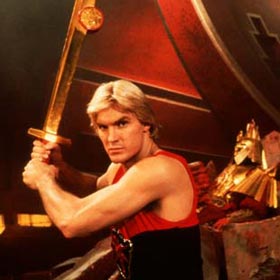
Sam J. Jones is best known for the lead role in the 1980 cult classic “Flash Gordon”. Sam recently appeared in the the Seth MacFarlane directed live-action film “Ted”, as himself and stole the show. Sam took out some time to chat with Media Mikes about his work on “Flash Gordon”, “Ted”, plans for “Ted 2 and his work in the security business.

Mike Gencarelli: Can you reflect on the fandom that surrounds “Flash Gordon” over 30 years since its release?
Sam J. Jones: It has been wonderful and is such a blessing. We filmed it in 1979, so that is 34 years ago and was released in Christmas of 1980. We are talking about three different generations here. It is amazing. It has had a good run and it has opened a lot of doors for me. I have traveled all over the world. It has even continued in the film “Ted”.

MG: Queen’s score in the film is so iconic, how do you feel that it works in the film?
SJ: It really complemented the film well. Queen was huge, obviously but it also opened up doors for them as well at the time. Combine their amazing soundtrack with the great visuals and you have a winner. All that creativity came together and produced this unforgettable visual experience.

MG: How often are you approached with people screaming “FLASH!! AAA-AAAHHH!!” and how do you respond?
SJ: Well, I get real close to them…then I head butt them [laughs]. No, it is fun it really is. Sometimes people walk by me on the street and don’t even say anything just scream and continue walking. They don’t even wait for a reaction. That sort of thing happens a lot.

MG: I wanted to ask about about you being originally signed up for seven “Gordon” sequels. Is that true?
SJ: I think it was a couple sequels at the time, yeah! Like anything else they decided not to pursue it. It has been optioned a couple of different times over the years with various development deals for a sequel, so hopefully that will happen soon. I would love to be apart of it again.

MG: Also can you talk about how your voice being dubbed over in the film?
SJ: We filmed the entire project in London, England and one week in Scotland. After filming you always have to go back and do ADR to fix the vocals. So I didn’t head back, I was working on other projects at the time. So they went ahead and got another actor to try and match my voice. It is what it is. I am sure next time I would rather find a way to get back there and do it myself.

MG: Tell us about how your role in “Ted” came about?
SJ: It is pretty simple, Seth MacFarlane called me and said that when he was eight years old he saw “Flash Gordon” and it changed his life. He knew then that he wanted to be a creative guy in the business and that was his inspiration. So he called and said he had this script called “Ted” and if I would be interested and I said “Of course”. At first, he wanted me to play myself but it turned out to be a parody of myself.

MG: What was it like getting back into those tights again after all those years?
SJ: It was fun. It was great working with the cast with Mark Walhberg, Mila Kunis and Patrick Warburton. Actually Patrick and I used to be in acting classes together, so it was good to see him again. It was Seth’s first time directing live-action and he did a fantastic job. He was always very prepared each day.

MG: Going from film business to security business, tell us about your current work?
SJ: It has been natural transition for me. I was a marine before I was an actor, so the background was there before I was in the movie business. So I got married and started having our five children and things slowed down a bit since there is a lot of downtime in the film business. So I wanted to fill that void, so I talked to my wife and decided to do that I was already trained in. I went and took some additional specialized training, actually the same as the Secret Service and the State Department. I started working the Los Angeles area, then I worked in Katrina and excelled in security operations. From there I got an invitation to move to San Diego to help run the Cross-Border Security Operations into Mexico. So that is what I have been doing for the past eight years now. I love it because when a film project comes up, I am able to drop everything and do the film. So it works out.

MG: “Ted 2” is planned for release Passover 2015, any word of a return for you?
SJ: Yeah, of course. Seth already asked me to do it. He mentioned that they will be filming in the Spring of 2014. So I can’t wait for that!

Gene Hoglan talks about his “The Gene Hoglan Experience” shows

Gene Hoglan has been a drummer in the music business since the early 80’s performing with groups such as Dark Angel, Death and more recently Testament and the Brendon Small helmed Dethklok. When not performing with one of his my projects Gene partakes in drum clinics around the world. He newest run of performances are being billed under the name “The Gene Hoglan Experience” which combines clinic style demonstrations and impromptu question and answer sessions. Media Mikes spoke with Gene recently about the shows and all of the other cool projects he has going on.

Adam Lawton: What led to the idea of doing “The Gene Hoglan Experience” shows?
Gene Hoglan: Whenever I go out and do clinics they always end up being at drum stores and a majority of the people who attend those are drummers however, I have had people come up to me afterwards and tell me they aren’t a drummer but love my work and find me interesting. I started to think about ways to reach a larger audience and make it less drummer exclusive. I also was thinking of it as a way to revolutionize the clinic industry by taking these types of performances to larger/different venues. I wanted this to be something more than just drums or drumming. I have a lot more than drums in me so I am always open to talking about whatever and answering all the questions people may have. I tested this idea out in Canada and it went really well. From there I decided that once I had some time in my schedule I would try and do more of these. This is a way for me to get out there without having to hit up my drum companies up for crap loads of money. I’m getting to do this kind of independently which is pretty cool. I get to interact with the fans and give them a chance to have a one on one moment with me. I like to talk and play drums so this is really great.

AL: What type of feedback did you get from that first show?
GH: People were coming up to me telling me that they had never seen anything like this before. Musicians were saying this is much more different than your typical clinic. Things have been super positive. I know I am not perfect but I think I have a good enough grasp on this type of thing to make it fun an enjoyable for those who attend. Things have sort of evolved over time. I did one show where I was asked if I could play a Strapping Young Lad song however I didn’t have any of that material with me. Someone from the crowd said they had the CD in their car and could go get it. They brought it in and we did it! Things have just evolved in to this really cool interactive and engaging thing. I love people having their faces rocked off followed by smiles.

AL: Being that the show is live and unscripted is there ever any nervousness on your part?
GH: It’s a very unprepared type of scenario. There are a few prepared elements like what songs I may be performing that night but even that can change. I don’t get nervous. My fiancé was with me while I was prepping for a clinic in Vancouver and she told me that she couldn’t believe how little I prepare. She’s is a musician herself and said she would need flash cards and things like that. I just have my own thing going on and she couldn’t believe how well it ended up going. I usually have a couple points in my head that I try to get to but if it doesn’t happen I try to make sure my content is so strong that it makes up for it. I want to make sure that I and everyone else have a great time.

AL: Have there been any talks about filming these upcoming run of dates?
GH: We haven’t really talked about that part of things yet. The main reason I will be out doing these shows is that I have a new DVD coming out. I’m not sure as to which show I would actually choose to film though because each night is going to be different. I don’t think I’m really up for filming all of the shows and then putting them together into one. Mainly I don’t want to wear the same shirt every night. (Laughs)

AL: In the past few years you have begun working with Brendon Small of “Metalocalypse” and Dethklok. How did that partnership come about?
GH: Brendon is one of the best guys I have ever worked with. I mean that and am not just trying to put my lips to his butt. I will tell him that to his face. From the start Brendon has always been a really easy going and fun guy. I think that also comes across in his work ethic. Brendon is a guy that always has my back. Having never dealt with a network before he has always been there backing me. The support has just been great. How things started was one day I got a call out of the blue from Brendon asking if I would be interested in recording a soundtrack album for season one of the show. I had seen the show before but wasn’t really aware of what it was. The show has killer music and it was something I was definitely interested in. We were a two man project for quite awhile until we started touring and added Brian Beller on bass and Mike Keneally on guitar. Things have just gotten cooler with each album we work on together. I love Brendon to death.

AL: Being a guy who often has multiple projects going on at once. How do you adjust your playing/mindset to fit all the things you are working on?
GH: I suppose it has to do with the fact that I am always willing to forego the “Gene Hoglan’s Style” for what is best for the band. If I am playing with someone like Death which calls for a pretty technical, busy style while the stuff I did with Strapping Young Lad wasn’t as busy but needed to be very powerful. I am very willing to suppress my own style in an effort to do what’s best for the band. I filled in on drums with Otep for a few shows and they were already mid-tour. They were used to how there drummer did things so I had to try and fit to what was already being done. When I filled in with Anthrax I sat behind Charlie for a few shows with a video camera so I could make sure I learned exactly what he was doing. Charlie doesn’t play some of the material the way it was recorded 25 years the same now. I wanted to make sure that I was able to capture that and not just learn the album versions of the songs. I was blessed with sort of a steel trap mind when it comes to learning material and I think that has been somewhat beneficial as well.

AL: What other projects do you currently have in the works?
GH: Well the new DVD I have coming out is titled “The Atomic Clock: The Clock Strikes Two”. That is going to feature a lot of the stuff I have been doing at my clinics. For this release I was able to get the licenses for the songs I am playing. Everything from Death, Testament and Meldrum are going to be on there. The new DVD has a lot of depth to it and I have tried to improve on everything included. Testament has a show coming up in August with Iron Maiden and a bunch of other great acts. After that Testament will be out with Lamb of God and Killswitch Engage and from there have already started making tour plans for 2014. Then recently I received a text from Brendon stating he has completed the next Dethklok album so I am sure we will be getting involved with that real soon. I am hoping to do some Death To All shows which is a tribute to Death performances as well. Lastly I have been recording a ton of new stuff with my guitarist Laura Christine who is just amazing. Hopefully we will have material out this coming year. I am really stoked about all of this stuff. It’s going to be great and is something I wished for. I wanted to play drums for a living and I am getting to do that.

Nekrogoblikon’s Alex Alereza talks about new EP “Power”

Alex “Goldberg” Alereza is the guitarist for the extreme metal band Nekrogoblikon. The band which also consists of Nicholas Von Doom – Vocals, Keyboards Tim Lyakhovetskiy – Guitars, Brandon “Fingers” Frenzel- Bass, Eddie “Drifty” Trager- Drums and Aaron “Raptor” Minich- Keyboards hails from Santa Barbara, California and performs a unique blend of goblin theme heavy metal unlike anything you have ever heard before. The group has just released a new 5 song EP titled “Power” and Media Mikes had the chance to talk with Alex about the release and the formation of the band.

Adam Lawton: Can you give us some background on the formation of the band?
Alex Alereza: Yes. It all started at a Chuck-E-Cheese’s in Northern California. None of us knew one another at the time, but as the only grown men at the establishment, we soon became friends. At the exact moment in time that this friendship was fully conceived, a horde of goblins captured us all in one giant net and dragged us into the trunk of their Dodge Sprinter Van. They drove for hours until they reached a strange wasteland that they referred to as “Los Angeles”. Upon arrival, they threw us out of the van and held us at gunpoint. They screamed in unison, “you will create a metal band honoring us or we will shoot you….to death.” Not wanting to die, we quickly nodded and agreed to write these metal songs. A couple months later we released an album called “Goblin Island” under the name Nekrogoblikon and instantly became billionaires who were sought after by women young and old. The rest is history.

AL: How did you first meet John Goblikon and what’s his role in the band?
AA: John Goblikon was one of the goblins that were supposed to aid in the kidnapping, but his anxiety got in the way and he was unable to carry out his duties (he soiled himself instead). The other goblins mocked him and eventually they just stopped associating with him entirely. Having just lost his job in addition to this, he had hit rock bottom and thus decided to start hanging out with us and joining us on stage. His role in the band is bringing a great energy to our live performances, but the main reason we allow him to do it is to boost his self-esteem. So far it hasn’t worked, but we keep trying anyways.

AL: Can you tell us why you feel Goblins are better than Trolls?
AA: Goblins are overall better at most things including casting nets, driving vans, making threats, and solving crossword puzzles. The only thing trolls are better at is sitting under bridges in Scandinavia while listening to black metal.

AL: What can we expect from the bands upcoming release “power” and is the band planning to shoot any videos for any of the songs from the EP?
AA: The “Power” EP contains five songs that sound like a mixture between crutch step, vomit rock, and laugh core. As far as filming video go we have already completed one and have plans to film another later this year.

AL: Will the band be out on tour in support of the release?
AA: Yes. The plan for us is to tour the greater Los Angeles area for about two months first. After that we plan to be out on the road hitting everywhere else.

Wayne Kramer talks about directing “Pawn Shop Chronicles”

Wayne Kramer is the director of the “Pawn Shop Chronicles”, which has an epic cast including Paul Walker, Kevin Rankin, Elijah Wood, Brendan Fraser, Vincent D’Onofrio, Thomas Jane, Matt Dillon and Lukas Haas. Wayne has directed other recent films as well including “The Cooler”, “Running Scared” (also with Paul Walker) and “Crossing Over”. Media Mikes had a chance to chat with Wayne about this crazy fun film and how he achieve the feeling of watching a graphic novel coming to life.

Mike Gencarelli: How did you become attached to direct “Pawn Shop Chronicles”?
Wayne Kramer: I was originally talking to Paul Walker about directing him in a script that I had written, but it was having some difficulty getting set-up. Paul was already attached to “Pawn Shop” and when the original director fell out, he called me up and asked if I would be interested in coming on board because it was already financed and ready to go. I was initially reluctant because the budget was quite low and I was only looking to direct my own projects, but I read the script (by Adam Minarovich) out of a courtesy to Paul. I was immediately taken with it. I appealed to my sick sense of humor and I also enjoyed the more surreal aspects of the world Adam created. I also felt that the material would allow me to bring a certain fun filmmaking style to the piece, if we could figure out how to get there on such a low budget.

MG: From the moment the movie starts its feels like you are watching a graphic novel come to life, tell us about how you achieved that aspect?
WK: Upon first reading the script, I felt it required a very stylized, almost Tex Avery-ish approach. Despite the lazy critical assessment that we ripped-off Tarantino (I get this on every film – and it pisses me off to no end because I’ve never been influenced by Quentin’s films, but it’s clear that we share many of the same influences: De Palma, Peckinpah, Aldrich, Hill, etc.), my initial feeling was that PAWN SHOP belonged in a universe that felt like a cross between early Coen Brothers (“Raising Arizona”, “Big Lebowski”, “O Brother…”) and 70’s revenge/exploitation themed films like “White Lightning” and “Prime Cut”. The more I played around with it in pre-production, I started to pick up on a “Creepshow” meets “Crumb” kinda vibe as well – in that the actual storylines felt like something from old EERIE COMICS with a Redneck flavor to them. It’s a whole stew of whacky influences hopefully stirred into its own original thing. I just have to say, it’s near impossible for any filmmaker to escape the shadow of “Pulp Fiction” when telling an anthology crime story and it infuriates me in that’s the first thing film illiterate critics glom onto. Aside from one wink at “Pulp Fiction” about Alton’s brother being killed in a pawn shop on the west coast(which was always in Adam’s script and in hindsight, I probably should have cut), PULP was the furthest thing from our minds.

MG: How was it reuniting with Paul Walker and putting him in such a unique role?
WK: It was a blast working with Paul again. He’s the most game actor I’ve ever worked with and gives nothing less than 100 percent each time. We share the same sensibility when it comes to dark, kick-ass material, so it’s never a battle of wills when we get on the set. He’s also the kind of actor that always has the
director’s back and as a filmmaker you couldn’t ask for anything more. Paul is also a producer on PAWN SHOP, so he had a little more invested than just turning up and focusing on his own character.

MG:  Let’s talk about the rest of the cast, how did you gather all this great talent together?
WK: Well, once a film gets greenlit, you just start moving ahead and word gets out that the film is happening and agents start doing their thing, which is to get work for their clients and somehow it all just falls into place. I was super thrilled when Matt Dillon agreed to play Richard because Matt’s an actor I’ve always loved and thankfully he also turned out to be a joy to work with. I honestly think Matt had the most difficult role to pull off in the film because the leap his character makes tonally in just a few hours is insane and I don’t think many actors without Matt’s subtle comedic chops could have pulled it off. It felt to me like he was channeling Bruce Campbell circa EVIL DEAD towards the end there with his manic hysteria. I had met with Vincent D’Onofrio a few months earlier and he had a great take on Alton and thankfully it worked out and he ended up in the film. Vincent was another amazing actor to work with. I’d love to do anything with him in the future. Brendan Fraser really came and invested himself in the character and it was hysterical to watch him disappear into Ricky every day. He had the most difficult schedule on the film, having to fly in and out of Louisiana several times to accommodate his character turning up all over the schedule. We were also lucky to fit Elijah Wood into a very tight window as well and he was a total soldier for his few days on the film since he had to wear a very uncomfortable and complicated make-up rig, which he never ever complained about. Super cool guy and a total fan of the genre. I think one of the most exciting additions to our cast was Kevin Rankin as Randy, Raw Dog’s partner in crime. Kevin is the consummate actor and just disappears inside every character he plays. I didn’t even realize until we were a few days into shooting that he played the character of Devil on “Justified,” a show I’m a huge fan of. I also have to commend Pell James for having the courage to take on the role of Cyndi. She’s virtually unrecognizable in the part and we only see her clothed one time in a quick flashback moment – so she has my undying respect. She also happens to be an incredibly talented actor who should be doing way more movies. I’ve been friends with Thomas Jane for quite some time and he was kind enough to agree to play The Man for me, which I think is a fun little cameo. Another actor that should be working more often – and on bigger films. Same goes for Lukas Haas who was another joy to work with. We got very, very lucky with the cast and I hope to work with all of them again at some point.

MG:  Tell us about your decisions to switch aspect ratios between each segment?
WK:  I was just having some fun with some of the faux Sergio Leone type moments in each chronicle. The arrival of The Man felt like it wanted to be in widescreen, almost like those old Marlboro ads that played in movie theaters (it was probably more an international cinema thing because I saw them in South Africa when I was a kid and we saw a lot of commercials before the main feature started). When Matt Dillon faces off against Michael Cudlitz, it felt like it warranted a similar aspect ratio gag – and when Brendan Fraser’s Elvis impersonator arrives in front of the barber shops, again, I felt like it was almost a classical western motif of the stranger come to town. Having an aspect ratio gag in each chronicle also created a visual commonality between all three stories and for me is a reminder of the tongue in cheek approach to the film.

MG:  What was the biggest challenge of entwining these three segments together?
WK: I think the biggest challenge was taking three tonally very different stories and trying to make them fit within the same narrative. We jump from a Tex Averystyle, madcap Hillbilly episode to a darkly humorous Southern Gothic revenge story, to a more comedic take on the musician meeting the Devil at mythical crossroads in the deep South. But if someone looks a little deeper at the film, they will see a fun subtext about the town of Erwin, Georgia being purgatory and all the (morally dubious) characters coming through the portal of the pawn shop being challenged to make choices that decide their very fates. We buried lots of Satanic imagery throughout the film, some more obvious than others. There are pentagrams carved into the tables of the barbecue joint, which is also called “Lou’s Fire Pit” as in Lucifer, which features a very hellish red color motif. JJ gets his face burned into the seal of the smoker which reads, “Holy Smokes.” The meth lab goes up in hell fire… Satan makes a deal for Ricky’s soul by transforming him into Elvis for four minutes on stage… The liquor store with the blues player out front is called Cross Roads Liquor and the address is 666 Charon Street… The liquor store also has a painted clock sign with no hands suggesting time has stopped in this town. We have creepy, featureless masks on some of the carnival extras – if you look carefully, you’ll see them at times. Some of the girls at the carnival are also holding little devil dolls. Many other references as well…

MG: What do you have planned next?
WK: I’ve got a bunch of irons in the fire. It’s hard to talk about them until they actually get greenlit. I may be doing another film with Alec Baldwin (and Patrick Wilson) next year, so I’m really looking forward to that.


Related Content

Copyright: MediaMikes.com © 2013 · Powered by: nGeneYes, Inc. · Login

All logos and images used on this website are registered trademarks of their respective companies. All Rights Reserved. Some of the content presented on our sites has been provided by contributors, other unofficial websites or online news sources, and is the sole responsibility of the source from which it was obtained. MediaMikes.com is not liable for inaccuracies, errors, or omissions found herein. For removal of copyrighted images, trademarks, or other issues, Contact Us.