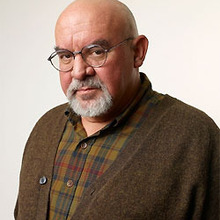
Stuart Gordon talks about turning hit play “Nevermore” into a film with Jeffrey Combs

Stuart Gordon has directed and be behind some of my favorite horror films to date including “Re-Animator”. He teamed up with “Re-Animator” star Jeffrey Combs in 2009 for a stage play called “Nevermore”, which focused on a night with Edgar Allen Poe. The show was only suppose to run for a month but ended up become a huge hit and held over many times and even toured. Gordon and Combs are now trying to get the play turned into a feature film…with the help of YOU! They have started a Kickstarter campaign, which will end on November 1st, 2013. Media Mikes had a chance to chat with Stuart about this campaign and about what we can expect.

Click here to support and back this campaign and tell them that Media Mikes sent you!

Mike Gencarelli: “Nevermore” opened for a one month run in California in 2009, which ended up being extended four times. What made you decide now to make a feature film version of this stage play?
Stuart Gordon: Jeffrey Combs’ performance as Poe has been called “A landmark performance” by the LA Times, and we have toured the show to great acclaim throughout the US bringing it to audiences from Los Angeles to Poe’s gravesite in Baltimore to New York’s Lincoln Center. Filming it will allow it to reach an even larger audience.

MG: Tell us your decision to turn to crowd funding with Kickstarter for this project?
SG: Kickstarter seems the ideal way to fund this project as historical films can be a hard sell at the studios. Even Spielberg had a difficult time finding financing for LINCOLN.

MG: The stage play worked so well since it was Combs captivating the audience solo; how do you plan to expand the scope of the play?
SG: We will be able to show the characters that are referred to in the play beginning with Poe’s shocked fiance’ Sarah Helen Whitman, as well as his doomed young first wife and actress mother. We will also be able to dramatize THE TELL-TALE HEART, THE RAVEN and many of his other poems.

MG: What fascinates you most about Edgar Allan Poe that you want to tell this story?
SG: Poe’s life is even more tragic and disturbing than his macabre stories. NEVERMORE gives us the opportunity to bring this troubled genius to life, warts and all.

MG: As hard as it is to say, in the case you don’t meet your pledge of $375,000 is there a plan B?
SG: There really is no plan B, which is why it is so important that we reach our goal. And with the help of our friends, old and new, we will.

MG: Besides as an incentive on the Kickstarter, do you play to do a wide release of the stage play on DVD?
SG: We have no plans to release the stage play on DVD.

MG: After the film is funded, what is the timeline to get the film to the fans?
SG: We plan on shooting the film next summer with a release in early 2015.

MG: Speaking of the fans, at the time of this question there are over 400 backers; why do you think the horror fans are so loyal to the genre?
SG: There are no fans more loyal than horror fans. God bless them! The more you scare them, the more they love you.

Country singer Hudson Moore talks about new movie “Sweetwater”

If Hudson Moore had his way he’d be making movies. After three years as a film major at the University of Texas he put his love for films on hold to follow another passion: music. The 22-year old native Texan has since opened for such major acts as ZZ Top, Trace Adkins, Alan Jackson and Rascal Flatts. This week he takes another step in his career with the release this week of the new film “Sweetwater,” starring Ed Harris and January Jones. Moore was given the chance to write an original song for the film and jumped at it. While on tour (his next stop is in Lubbock, Texas – the birthplace of Buddy Holly – on October 18), Hudson took some time to talk with Media Mikes about music, hard work and the opportunities of sitting off stage.

Mike Smith: What is it inside that made you want to pursue music as more than a hobby? Where did the passion come from to decide to make it a career?
Hudson Moore: First you definitely have to have the passion for it, obviously. You have to love it. Second you have to have the determination to work hard…to make it work. There are so many talented people out there. It often comes down to your work effort, your grit and your perseverance. Anybody who has done this knows it’s not an easy road. It’s a hard road…it’s a long road. But it can be very rewarding. I’m a firm believer in that if you work hard enough at something you’ll eventually succeed at it. That’s my view. It can take some time. Some people blow up right away. Some can take thirty years to get recognition. It’s a gamble.

MS: Can you remember when you wrote your first song?
HM: I do. I wrote my first song when I was sixteen years old. My first full song.

MS: Early this year the Country Music Academy named you one of the artists who is “New To Watch” in country music. As a musician at the beginning of his career does that put a little pressure on you when you perform?
HM: You can’t really put too much stock in those things. I’m always flattered whenever anyone says kind things about me. But honestly, I just keep on moving down the road. But as an artist I think I do perform better under pressure. It can be good for you. You have to raise the bar and be your best. So honestly, I enjoy being in the spotlight and having that pressure to perform.

MS: You’ve opened for some major acts – from ZZ Top to Rascal Flatts. When you’re done with your set do you stand backstage and watch them as a fan or do you study them as a fellow performer?
HM: I watch them as a fan! Some of the bands I’ve opened up for I’ve really admired. ZZ Top…Alan Jackson…Rascal Flatts. Then there are the Texas guys, like the Eli Young Band. For me I enjoy the show and I get great exposure. And I do sit back and watch and try to learn all I can about being an entertainer and how I can become a better performer. It’s almost like a master class. I get to sit beside the stage and watch these great bands do their thing. It’s a real blessing.

MS: You contributed an original song (“The Cold, Gray Light of Dawn”) to the new film “Sweetwater.” How does that process work? Do they give you a script…show you the movie…?
HM: My brother, Tucker, is a producer on the film and he called me and asked me if I would write an original song for the film and I said, “sure.” That’s something I’d always wanted to do. He gave me a rough cut of the film on DVD and I watched it with my friend Wally Wilson, who helped me write the song. We watched it in a motel room in Austin, Texas while we were out of town. We had a week to write the song, record it, master it and get it to the director so it was really a time crunch. We watched the film and, honestly, within an hour and a half, we had our song. It was one of those days were everything was kind of lining up. We were so inspired by the film that the song kind of wrote itself.

MS: What are you working on next?
HM: I have a new album coming out next month called “True Love.” It’s something I’ve been working on for a while now when I haven’t been touring and I’m excited to get it out. I’m also writing songs in Nashville and at home in Texas for my third album. So I’m putting an album out, working on the next one and touring. It’s busy but that’s the way I like it.

To hear Hudson Moore’s music or to see him on tour, go to http://hudsonmoore.net/home/

Sarah Miles talks about her first full-length album “One”

Sarah Miles is a singer/songwriter who has just released her first full-length album via Rock Ridge Music titled “One”. Media Mikes had the pleasure of talking with Sarah recently about the new album and what first drew her to music.

Adam Lawton: Can you tell us what first interested you in music?
Sarah Miles: I grew up in a pretty musical family. It was something I was always surrounded by starting at a very young age. I sang in choirs and a cappella groups all through high school and college. In high school was when I got my first guitar and around that same time is when I started writing music as well. I also started doing some performing on my own. The more I started doing that the more I started to realize that music was something that I wanted to do full time. I went to college while still doing music on the side and after I finished college I moved to New York and have been doing music ever since.

AL: What was it like working on your first full length album?

SM: It was an awesome experience. I had released two EP’s prior to this on my own which was a lot more difficult as I didn’t have a fan base yet so the music was just kind of there. With this new album I have been around now for awhile doing shows and I got myself a manger to help with things as well. I released the album through Rock Ridge Music so I had a lot more support and backing with this release which was very exciting. The actual recording process for the album was really cool as I worked with a great producer by the name of Dave Pittenger. The recording took almost a year and I had been writing for about two years. It was a very long process but totally worth it because I was able to pick out my favorite songs. Everything was really cool and I got to meet a ton of great musicians along the way.

AL: Having taken so long during the writing process was it hard to pick out or reconnect with some of the songs during the recording process?
SM: It was definitely tough. Even while I was recording the album I was still writing. You are always changing as is your music so it was certainly a challenge. I tried to pick out songs that all worked together and which had similar themes which made things a little bit easier. Things were certainly tough but I am happy with the choices I made.

AL: What is your standard approach for writing a song?
SM: Usually I start on the guitar. I will pick out some chords I really like and just play them over and over again. From there I may come up with a melody and then the lyrics come second. There are times when that can be different though. If I am writing about a specific thing that happened to me or was something I saw things may be reversed. Typically I start with the melody and go from there.

AL: You have a quite a few YouTube video. Do you plan to make any for songs off of “One”?
SM: I am going to be doing a video for the song “Standup” which I am super excited about. I am shooting it this month along with a video for a cover song as well. There is certainly going to be things to check out in the near future.

AL: Can you tell us about some of the live shows you have coming up?
SM: I have a few shows booked right now and I am hoping to book some more in the New York area soon. I live in New York so I do have a couple NY and Philadelphia shows already booked. I will also be doing some college shows throughout the east coast which will be a lot of fun. I am also looking in to doing web shows. This is something I am really excited about doing. I just did my first one a few weeks ago and I the idea of my fans being able to watch me from wherever they are is really cool.

Dani de Waal talks about touring with Broadway hit play “Once”

Dani de Waal is an English actress, who recently joined the touring cast of the Broadway hit “Once”, playing the role of ‘Girl’. Her previous achievements on stage include “Picnic” on Broadway and “Mamma Mia!” for the role of Sophie Sheridan on West End. Media Mikes got a chance to chat with Dani about “Once” and her role as she was kicking off the 29 city tour which runs until October 2014.

Mike Gencarelli: Tell us what made you want to be a part of “Once: A New Musical” for its North American tour?
Dani de Waal: I saw the movie years ago when it came out, I was England at the time then. I loved it and the music and thought it was a beautiful story. I ended up seeing the show on Broadway also when I came to New York on a holiday. I remember saying to myself and secreting it to the universe that I would love to be in this show [laughs]. As it turns out, I ended up moving to New York the following year. I got an audition and it sort of happened from there. It really has been a dream come true. It is one of those shows that I wouldn’t [laughing] mind being in it for free every night. It is so incredible and doesn’t feel like a job at all.

MG: What made you connect with the character, ‘Girl’?
DDW: She is very interesting. She has this sort of cold exterior, I guess you can say. She’s hard to read. She has these walls up to protect herself. She also has a very warm and inquisitive side about the world and about people. She really believes that music can save us and change us. I share that as well in fact. Music is a universal language that can touch anyone no matter what we speak. I love how she expresses herself through the music and playing the piano. I have played piano most of my life but never have done it in a job. So that was an amazing thing for me to explore. Also singing with everyone on the stage as a band, I have never done that before either. It all has this kind of magical quality to it in playing her for this show.

MG: What is your most challenging aspect of the role?
DDW: When I first came to the part it was the piano. It was getting over the nerves of playing in front of people. So that was it initially, but now being that we are on stage pretty much the whole show once you are in it you are in it. I quite enjoy that. Stamina wise that was quite a challenge to get going but now it is something that I really love about it. You step up on stage in the beginning and sort of don’t breathe until curtain call. In a way it is a challenge but it is a great thing as well.

MG: The music is so amazing, which song is your favorite to hear and/or sing?
DDW: I have to say my favorite is “Falling Slowly” but the reprise version, which is at the very end. The song is beautiful anyway but the reprise in particular has everyone joining in and singing. It has that swell moment that is just incredible. So that one to listen to and also play, it is just such a highlight for me. Also since it comes at the end of the show, there is this great build up and then you have that moment.

MG: How you had a chance to meet Glen Hansard and Markéta Irglová?
DDW: No, we haven’t met that yet. I know they were very involved with the show’s process when it first started. I am pretty sure at some point within the show’s run we are going to get to meet them. But we only recently just started touring, so hopefully soon.

MG: Is there a city that you are looking forward to visit most on the tour?
DDW: I haven’t been around America at all, so I just very excited to see all of it really. I have never been to the West Coast and we hit there next summer, so I am really looking forward that. We are currently in Chicago and it has been amazing so far, so I can’t wait to see what comes next.

Here is the rest of the tour schedule! Check it out when it comes to a city near you!

Chicago, IL (Oriental Theatre)
Oct. 9 – 27, 2013

Philadelphia, PA (Academy of Music)
Oct. 29 – Nov. 10, 2013

Cleveland, OH (Playhouse Square)
Nov. 12 – 24, 2013

Toronto, ON (Royal Alexandra Theatre)
Nov. 26, 2013 – Jan. 5, 2014

Boston, MA (Boston Opera House)
Jan. 7 – 19, 2014

Durham, NC (Durham Performing Arts Center)
Jan. 21 – 26, 2014

Orlando, FL (Bob Carr Performing Arts Centre)
Jan. 28 – Feb. 2, 2014

Miami, FL (The Adrienne Arsht Center)
Feb. 4 – 9, 2014

Tampa, FL (Straz Center)
Feb. 11 – 16, 201

Fort Myers, FL (Barbara B. Mann Performing Arts Hall)
Feb. 18 – 23, 2014

New Haven, CT (Shubert Theater)
Feb. 26 – March 2, 2014

Atlanta, GA (Fox Theatre)
March 4 – 9, 2014

Pittsburgh, PA (Benedum Center)
March 11 – 16, 2014

Rochester, NY (Auditorium Theatre)
March 18 – 23, 2014

Buffalo, NY (Shea’s Performing Arts Center)
March 25 – 30, 2014

Minneapolis, MN (Orpheum Theatre)
April 1 – 6, 2014

St. Louis, MO (The Fox Theatre)
April 8 – 20, 2014

Des Moines, IA (Civic Center of Greater Des Moines)
April 22 – 27, 2014

Tempe, AZ (ASU Gammage)
April 29 – May 4, 2014

Denver, CO (Buell Theatre)
May 6 – 18, 2014

Las Vegas, NV (Smith Center for the Performing Arts)
May 20 – 25, 2014

Seattle, WA (The Paramount Theatre)
May 27 – June 8, 2014

Portland, OR (Keller Auditorium)
June 10 – 15, 2014

San Francisco, CA (Curran Theatre)
June 17 – July 13, 2014

Los Angeles, CA (Pantages Theatre)
July 15 – Aug. 10, 2014

San Diego, CA (Civic Center)
Aug. 12 – 17, 2014

Costa Mesa, CA (Segerstrom Hall)
Aug. 19 – 31, 2014

Charlotte, NC (Blumenthal Performing Arts Center)
Sept. 30 – Oct. 5, 2014

“12 Years A Slave” Premieres at NYFF

12 Years a Slave, an intense new drama from director Steve McQueen, made its New York premiere on Tuesday October 8th as part of the 51st Annual New York Film Fest at Lincoln Center. The film follows the true life story of Solomon Northup (played by Chiwetel Ejiofor), a free black man in New York, who in 1841 was deceived and sent southward to be sold as a slave. I spoke with two of the actors behind the most sinister figures in this harrowing story. They discussed the sources of their characters’ malevolence.

Paul Dano plays unstable slave driver John Tibeats who abuses his power over Solomon.

Lauren Damon: Tibeats is so spiteful in his actions, did you work out what makes him like this?
Paul Dano: Well you know that’s kind of one of the big things you do to prepare for something is you know, create a personal history for the character. So…I think he was probably somebody who was treated poorly or was made to feel like he had no authority. I don’t think he had a great life and so the only place he could take out his feelings about himself were slaves.

LD: What was the most challenging scene for you?
Dano: I have to do a song in it. That was…that was interesting.

LD: Having to cultivate all this anger for your scenes, did you do anything to come down from that after shooting?
Dano: You know it was pretty hot in those period clothes, in July, in Louisiana so a shower and a cocktail.

Michael Fassbender plays monstrous planter Edwin Epps. Fassbender has previously worked with director McQueen on critical hits Hunger and Shame.

Lauren Damon: Since this is your third film with Steve, do you think you trust him more than any other director now?
Michael Fassbender: Pretty much!

LD: You’ve been to some very dark places in his films.
Fassbender: Yeah, I think–you know, human places. Human stories.

In the film Edwin Epps’s infatuation with his own slave Patsey (played by Lupita Nyong’o) drives him to extreme violence.

LD: Where do you think all that rage that Edwin has comes from?
Fassbender: I think out of confusion. He takes it out mainly on the person that he loves because he can’t process that information. He doesn’t have the intellect to do it. Or the substance as a human being. So he thinks by destroying it, he’ll destroy his emotion towards her and of course that doesn’t work.

NYFF continues through October 13th while 12 Years a Slave opens in theaters on the 18th.

Jonny Kaplan talks about new album “Sparkle and Shine” with the Lazy Stars

Jonny Kaplan is a singer/songwriter who together with his band the Lazy Stars have released a brand new full length album titled “Sparkle and Shine”. The group which has had their music featured on television series such as “House M.D.” and “Grimm” are releasing a new video in the coming weeks and Media Mikes had the chance to talk with Jonny recently about his work on the video and his long time collaboration with Wallflower/Foo Fighter keyboardist Rami Jaffie

Adam Lawton: What was it that made you decide to start performing music?
Jonny Kaplan: I was a huge rock and roll fan when I was growing up so it was something was my fantasy. I grew up in Philadelphia listen to FM rock radio. I was all about bands like Kiss, Aerosmith and the Rolling Stones. My first concert ever was the Rolling Stones on the “Tattoo You” tour.

AL: What can you tell us about your new album “Sparkle and Shine”?
JK: This is my forth album and there has been a lot of time between this record and the last because everything has been pretty much independently. For this new one there was definitely some divine inspiration as a lot of things have happened the last few years. I was in a motorcycle accident along with a bunch of other stuff. Fortunately or unfortunately it’s sort of the bain of existence for songs writers as shitty things make great songs. When I was writing this batch of songs there was a certain amount of vindication as they are pretty deep. After putting out three records prior to this one and touring Europe for the last 7 or 8 years as there were opportunities to play there I decided to shift my focus back to home and get this album out properly an set the playing field for myself here in the States.

AL: How much of an effect did your motorcycle accident have on the creation of this record?
JK: As far as the songwriting goes I was pretty much hold up in a hospital bed for two weeks with 20 broken bones. I have healed up remarkably but at the time I was a mess. I had a lot of time to sit around and I was in a bit of a dark place because I couldn’t do anything. That sort of forced me to write these songs. I think because of the shock of what was happening and not knowing what the future would hold that sort of opened up the flood gates. When it comes to songwriting you can sit down and try and write a song but the good songs sort of write themselves.

AL: Where do you generally start when writing a song, Lyrics or music first?
JK: It all depends. Sometimes there might be a guitar riff that I have been playing with for awhile that turns in to something but for the most part it’s almost like you hear something in your head and that eventually spills out. Some of songs are written in three minutes. Those tend to be the best ones and are always my favorites. You just hear something in your head, you grab a guitar and figure out the chords and there it is. It’s something that I never force.

AL: How do you first get connected with Rami Jaffie?
JK: Years ago I had a country rock band called Hummingbird. We used to play with the Wallflowers all the time so he and I became friends. He and I are like brothers. Rami has played on all of my records and was someone that was very instrumental in getting me to start this new record. He gave me the shove I needed to get going again. Even though he is always busy with the Wallflowers and the Foo Fighters we are roommates so we still have a lot of time to work on songs.

AL: Can you tell us about the video you shot for “When You’re Down” and what made you choose that song?
JK: At the time we were working on a video for Darryl Hannah. A lot of people don’t recognize her as a singer because of her career in acting. While we were getting ready to start work on her video for she had listened to some of the new material I had been working on. The night before we were set to shoot Daryl’s video she called me and said that she wanted to shoot a video for me as well. We ended up out on this crazy horse with our faces painted and we made this video which will be out in the next month or so. The video is low budget and indie to the core but it really turned out great. As for how this song was chosen Daryl actually picked it. It was by accident that this all happened. She really liked that song and I think it is definitely one of the strongest off the album. The vibe was great and things just worked well.

AL: Are there any plans in the works for a tour to support the release?
JK: Well as we speak Rami Jaffie has just informed me that we will be playing South By South West this year. That is amazing! Essentially there has been just so much going on with getting the album released that we haven’t been able to focus on getting a tour rolling just yet. We do have some shows booked like we will be in New York for the CBGB Festival and from there I will be heading to Buenos Aries with Brad Smith from Blind Melon to play for the first time. Things will be starting to unfold here very soon. Myself and the band are chomping at the bit to be out there playing as that is something we want to be doing every night.

Dir En Grey’s Kaoru talks about US tour and new DVD “Tour 12-13 In Situ Tabula Rasa”

Kaoru is the guitarist for the Japanese rock band Dir En Grey. The group has a new DVD out titled “Tour 12-13 In Situ Tabula Rasa” and in November will be touring the United States for the first time in two years. With the help of Kaoru’s translator Media Mikes was able to talk with him about the bands new DVD, the upcoming tour and the groups plans for a new album.

Adam Lawton: What can you tell us about the bands new concert DVD?
Kaoru: The DVD is really a documentary about the band returning from a hiatus we took due to our singer having some vocal issues. The film covers everything from then up until the last date of our most recent European tour which concluded this past summer.

AL: Having filmed a few other DVD’s how does the new one differ from previous ones the band has been involved in.
Kaoru: We have in the past released a number of live concert DVD’s. The main focus of this one was to show the process of what the band had to go through and what we had to do to overcome our singers vocal problems. There was a period for the band after returning that everything was going well but then our singer was hit with more health problems. We didn’t know what to do as a band and this DVD shows all of that.

AL: What does the band enjoy most about releasing DVD’s as they do require quite a bit of work?
Kaoru: Every show that we do as a band is different. Even though the songs may be the same we still might do something different from night to night. Some of our previous releases are from one night of a tour while others are made up multiple shows edited together. We like to release a lot of different things which is something we as a band just realized.

AL: Can you tell us about the bands upcoming tour?
Kaoru: We are staring of with some shows in Japan and in November we will be touring the United States. This will be our first time there in quite some time. Having been two years since our last trip to the United States I am sure our fans there are waiting for us and we are all looking forward to meeting everyone again. This band is now at the point where we want to see just how far we take this so now is the time for us to do that. We are currently working on our stage set for the show and we are hoping that we can bring some of what we do at our shows in Japan over to the States. We will definitely be bringing something different for everyone to see.

AL: What do you feel is the biggest challenge when touring outside of your country?
Kaoru: Definitely the language barrier. Not so much when it comes to performing our songs but when it comes to interacting with people on a daily basis. If we all just spoke the same language things would be so much easier. (Laughs) You can actually one instance where we are on stage at a festival in Europe and some trouble occurs and because we don’t speak English this turned into a bigger trouble. We have the textbook knowledge of a lot of different places but we are missing some things due to the language barrier.

AL: Has the band begun talking about starting work on any new material?
Kaoru: We have been talking about starting work on some new songs. Nothing is concrete yet but after this tour concludes we will be starting work on a new album.

Mountain’s Leslie West talks about new solo album “Still Climbing”

Leslie West the legendary front man for the band Mountain is back with a brand new solo album titled “Still Climbing”. The album features 11 tracks and is classic West through and through. The album also boasts an amazing line up of guest musicians ranging from Johnny Winter to Creed/Alter Bridge guitarist Mark Tremonti. Media Mikes had the pleasure of speaking with Leslie recently about his work on the album and his career in the music business.

Adam Lawton: Can you give us some background on the new album?
Leslie West: I started on the album about a year ago in June. I took my time deciding which songs I wanted to do and who I wanted to play with me on them. I was able to just take my time which kept things from getting jumbled up and eliminated the idea of having a deadline. Things really worked out well.

AL: What was the band line up for this record?
LW: My bass player is Rev Jones; on drums we had my engineer/co-producer Mike Goldberg. Once the album was all recorded we sent it to Mike Frazier in Canada for the mixing. Mike has worked with everyone from AC/DC to Metallica. It was good sending the album to someone we knew could do a really good job mixing it. Mike was able to come in with a fresh set of ears as he wasn’t there during the initial recording process. There were also a bunch of guest musicians like Mark Tremonti, Jonny Lang and Dee Snider who came in and played on some tracks.

AL: When the guest musicians would come in did you have an idea what it was you wanted them to do or did you let them play what they wanted?
LW: With Jonny Lang I knew what I wanted and had the song down. Jonny was doing a show in New Jersey so we picked him up at the airport and brought him over to the studio. Johnny Winter who also is on the album was the same way. My co-producer recorded Johnny in Connecticut but when the track was all finished it sounded like we were right next to each other. Dee Snider came down to do his part for the song “Feeling Good” and we had a really great time.

AL: Are the songs that make up the album ones that you and your band worked on collectively?
LW: No. I wrote the original songs and the others I did all the arrangements. I ended up writing some song with the help of my wife despite my reluctance to have her involved. I would start writing songs on my iPad and then via iCloud things would be popping up that she had added. I asked her if I could use some of that stuff as I had some songs that didn’t have words and some words that didn’t have music. That’s basically how it went. I would go in the studio and we would just build the songs. I used my guitar layout and played to a click track. That could be why it took so long. The song “Fade In to You” is one I originally heard on the television show “Nashville”.  I really liked the song so we reworked it and gave it my sound. I think it turned out great.

AL: Having been in the music business since the 1960’s what do you feel has been the biggest change personally from when you started in the business to where you are now?
LW: I had two legs when I started. (Laughs) Digital was something that really changed things. When I started you had to make edits with a razor blade and some tape. Things would take forever but now you can just move things around very quickly. I think it’s just amazing. When we were recording to analog if you didn’t like an edit you would have to redo it by un-taping it and then re-taping it. You had to find a spot where there was no noise in order to make that edit.

AL: Some artists are very opposed to the idea of digital but you seem quite open to it. Is this true?
LW: I have been very accepting both with this new album and the previous one as well. With digital you have a lot more time to create the music. You can make changes very easily. As far as sounds go I use what comes directly out of the amps. We may have added a little reverb or whatever but for the most part what you hear is what you get. Mike did a great job of capturing the actual sounds coming from my amp.

AL: Has there been any talks of touring in support of the release?
LW: There are a few scheduled for November that we are currently working on. It will most likely be a run of select shows. The biggest thing is I haven’t been able to find a tour bus that is built to handle a wheel chair. It’s hard to believe but there really isn’t anything out there that will allow me to tour like I used to. For now we hit select venues. I can’t quite get used to prosthetics yet as I have been working with them at rehab. They strap the guitar on me and then have me stand to see how long I can balance. The most I have been able to stand for is 40 seconds. I don’t want to have to worry about falling down on stage so I sit now. That’s just the way it is. I am still able to play without that worry of falling.

AL: Other than the standing aspect has the loss of your leg changed the way in which you perform?
LW: Yes. I am no longer able to walk around obviously so when I find a spot that works for me on stage that’s where I stay for the rest of the performance. Having just the one foot also makes it a little more difficult to hit my floor pedals so we have some on a small table next to me and one or two on the floor. I don’t really use a lot live now as I have started using Blackstar amps which have a great tone straight out of the head.

AL: Can you tell us about your new website?
LW: We have the Mountain website still but they are currently working on one for my solo stuff. It will be located at www.Lesliewestofficial.com so people will want to be watching for that.


Related Content

David Schwartz talks about scoring “Arrested Development”

David Schwartz is known best for scoring the TV series “Arrested Development”. He was nominated in the 2013 Emmy for the Outstanding Music Composition for A Series for Original Dramatic Score for the show’s revival on Netflix. Media Mikes had a chance to chat with David about his work on the show.

Mike Gencarelli: Were you shocked when you found out that you were nominated for an 2013 Emmy for the Outstanding Music Composition for A Series (Original Dramatic Score) category?
David Schwartz: More surprised than shocked. It was particular great to be nominated for Arrested Development. Comedies are rarely nominated in the Original Dramatic Score category. I think the category represents a lot of great music this year, so I’m proud to be a part of it.

MG: Working on “Arrested Development”, how does it compare to be working on the first run of the show and now the Netflix series?
DS: It’s been a little different in some ways we were doing all 15 shows at once. In the first three seasons, we’d usually have about a week to turn around a show, finish it, and then immediately start on the next one. During season 4, we were often dealing with multiple shows at the same time. The episodes being longer also allowed me to further develop some musical ideas which wasn’t possible in the shorter format.

MG: What was the most challenge aspect of working on season four?
DS: After six years it was a challenge to get back into that musical head space. Once I had rough cuts and was writing it for real, it all came back to me.

MG: Going from a TV series like “Arrested Development” to a documentary like “Gonzo: The Life and Times of Hunter S. Thompson”, how does it compare?
DS: The Gonzo documentary was a really fun project. Alex Gibney, the director, really encouraged me to write bold and wild music in the spirit of of Hunter Thompson himself. Often documentary music is subtle and plays in the background. Alex inspired me to write bolder and more challenging music for this film.

MG: Tell us about your work with Lucy Schwartz on her upcoming full length record?
DS: I’m very proud of the work Lucy and I did together on her new Timekeeper record. I think these are her best songs yet and we had a great time producing this record together.

MG: Of all the great scores of 2013 so far, what has been some of your favorites?
DS: I’m still catching up on this year’s scores. I was a big fan of Michael Dynna’s “Life of Pi” score and Thomas Newmann’s score for “Skyfall”

MG: What else do you have in the cards for this year and on wards?
DS: I’m working on the soundtrack album for Arrested Development. It’s going to have some extended versions of the more popular songs from Arrested. There are some scoring projects in the works, but I won’t talk about it and risk jinxing it until it’s final.

Choo Choo Soul’s Genevieve Goings talks about her work with Fisher-Price’s Little People

Genevieve Goings is known best for her role in the children’s music group Choo Choo Soul. They can be seen daily on Disney Junior with their catchy and fun yet educational kids songs. Choo Choo Soul released a CD of classic “Disney Favorites” earlier this year as well. She also started working with Fisher-Price and creating new music for their Little People brand. Genevieve took out some time to chat with Media Mikes again about her new gig at Fisher Price and her love for creating music.

FL Resident? Click here to enter to win tickets to an upcoming show for Choo Choo Soul in Miami, FL!

Mike Gencarelli: Tell us some background on how you got involved with Fisher-Price to write and produce brand new music for their Little People brand?
Genevieve Goings:  I was actually brought in by the incredibly smart and talented guy, Kevin Mowrer, who was consulting with Fisher Price on the re-branding of the iconic Fisher Price “Little People”. The Little People Brand has been around for 50 years, and is very well known, so they wanted to build on that by creating new characters with distinct personality traits. They put in a ton of work and are excited to introduce – Eddie, Tessa, Mia, Sofia and Koby! These wonderful characters are celebrated in their own ways, and all of us are sure to find a bit of ourselves in one, if not all of them! Fisher-Price really wanted music to be a big part of the re-branding, and that is where I came in. My first order of business was a to write a theme song for the overall brand. So we started from there and it sort of expanded into more work as we kept brainstorming and having a blast..

MG: Tell us a little bit about the characters?
GG: We decided to give each character their own song that explained their personality. Eddie want to run and jump and zoom everywhere. Tessa is the twirling ballerina, the girlie girl. Sofie loves art. Koby is super silly. Mia is shy and quite and likes to collect things. All these characters are really cool and have their own distinct personalities. I think that kids playing with them will find one that they relate to as well. They are on YouTube right now for everyone to enjoy and you can also visit Fisher Price’s website to learn more.

MG: What do you have planned next with Fisher Price?
GG: I am so excited to announce that The Fisher-Price “Little People” have their very own animated web-series on YouTube! I scored the episode as well as writing the original songs within the show. I am also the voice of the teacher, Miss Hugg! Miss Hugg is sweet and very fun. She is a super cool teacher and is in charge, but is so nice and has a little bit of magic to her. While the children go out on their discovery adventures, she is there to keep an eye on them. She is musical and definitely sings while creating some magic around their discoveries. I am working on other interactive media for them as well, more coming soon!

MG: You wrote, recorded and produced these new songs, what was your most challenging aspect?
GG:  We say if it is not broken, don’t fix it right? So with Little People they are already so iconic and Fisher Price is the epitome of children’s toys. So I just wanted to make sure that it was really something great. So I tried to think outside of the box but also remain true to the brand and the company’s values. There was a little pressure in finding that perfect blend. They have been so awesome to work with since they do want to push the envelope a little bit outside of what is “traditional” music. But as you know, that is kind of what I do, which is create contemporary kids music that is kid cool and parent approved [laughs].

MG: Do you tap into your inner child to create these songs?
GG: Oh yeah! Absolutely. My song writing process is hysterical. I have my two dogs with me that total about 30 pounds together. So I will start like I am just singing to them. Then I am dancing around and I have to think about if this would be fun to perform. I think if it is fun to listen to and also sing along to. When I write a song, I try and think about a child singing it. That is my goal to have that resonate with them and have them wanting to sing them after hearing it.

MG: I know you are touring with some shows this Fall, do you get to play your new Disney Favorite as well as your classic tracks from Choo Choo Soul?
GG: Yes, we do a mix of both. We do our Choo Choo tracks and also the Disney classics, since we don’t want to move too far from our train theme. We just did this great gig in Boston and we had backup dancers and we had these amazing big dance numbers to “Be Our Guest” and Under the Sea” and it was really fun! So keep an eye out on our “Events” tab on Facebook as we may be coming to a town by you.

MG: Tell us something cool about yourself that your fans may not know?
GG: Cool question! I actually write for Disney English, which is a school in China that teaches English as a second language. I have been writing for them for over four years and have done over 100 songs for them. This is like a whole other realm that I have been working on. It is so much easier to learn to speak another language if you can sing it. So that is something that has been a really amazing growing opportunity for me. It is such an interesting way to right songs. I am given a vocabulary and the words that I need to incorporate into the songs. I am also told that I am only able to use those words since its the only ones they know in English…and to make it song like a song from “Aladdin” [laughs]. So I get amazing assignments like that. I also wrote an entire phonics program for them to learn through sounds. I know they started airing these on Disney Junior France. So I am happy for others to get a chance to see these finally.

MG: Any more music projects in the works?
GG: I have thinking about doing my own project for a while. I have been doing this for other company, which has been absolutely amazing. I have covered tons of great topics ranging from vegetables to jumping to counting with Choo Choo Soul. We have the emotional expression songs about twirling, loving art and not being afraid to be shy with Little People. So there are a few other topics available [laughs]. I am going to be working on some songs and releasing them individually. I reached out a while ago on various social media sites and asked parents what were some of song topics that they wished we available and some great responses. That is the beauty of today’s media is that you can do stuff like this now without a big record label. So that will be coming up soon and I will definitely keep you posted Mike to share with your readers.

MG: I just wanted to close with saying “Thank You” because my daughter loves your music so much!
GG: Oh thank you, that’s so sweet. It’s amazing to just think how long it has gone. I do not think that Disney had in mind that it was going to last this long. Somehow though, with that combination of trains, the awesome animation and the music is really working out. We have such a blast performing and hope to continue for many more years to come.


Related Content

Matt Thompson talks about writing, directing and starring in “Bloodline”

It worked for Sylvester Stallone. It worked for Matt Damon and Ben Affleck. And, if things go well, it’s going to work for Matt Thompson. An actor who does so much more, Thompson found himself in a quandary. You can’t get noticed in Hollywood unless you’re in something but unless you’re in something you can’t get noticed. So he took it upon himself to write and direct the new film, “Bloodline,” which opens today (9/27). He then cast himself in the lead. Take that, Hollywood! While taking time off from his next project Thompson took time out to talk with Media Mikes about his current one.

Mike Smith: Can you give us a quick introduction to “Bloodline?:
Matt Thompson: “Bloodline” is about a seminary student named Brett Ethos, who I play. He falls away from the church only to find out that his bloodline has been cursed, ironically, a couple of hundred years earlier.

MS: What inspired you to write the script?
MT: It was about 10 years ago when I was just starting out. I had talked to a producer and had told him how frustrating it was sometimes. How you have to have something to be in something yet you have to be in something to have something in this industry. It’s truly a Catch 22. I was taking an acting class at the time. He told me that I should write myself into something so I did exactly that. I looked at the horror/thriller genre’ and found it to be incredibly fascinating. It’s one of my favorite genres…it can grip you like no other can. Being from Northern California I had a great interest in Native American legends…I mean you can literally walk out into your back yard and find a grinding stone. It was really a natural fit, to piece together the Native Americans and the settlers and piece together the “Bloodline” idea…to tie in with the Native American legends.

MS: Did you write the film with the intention of both appearing in it and directing as well?
MT: Exactly! You have to have something to be in something. The whole idea was to basically create a vehicle that I could put myself in. In the interim I had written a short film called “Fallen Soldier,” which I also directed. When it was completed friends would encourage me to direct and explore that side of my creativity more.

MS: Is it hard wearing two hats on the set? To concentrate on your performance as an actor while concentrating on everything else as a director?
MT: Oh my God, it’s an incredible task! You kind of have to be schizophrenic in a sense, jumping in and out of, a., being an actor and, b., being a director. In one frame you have to be completely emotionally invested with your co-stars while in another you’re out of the shot and worrying if the lighting is right…if the camera is in the right place. Are the actors delivering? And on top of all that you have to deal with all of these people. You’re not only their co-star and friend but you’re also their boss. There are a hundred different facets in acting and directing at the same time.

MS: You recently completed a run on stage as Stanley Kowalski in “A Streetcar Named Desire,” a role considered one of the most iconic ever on the American stage. Is there pressure as an actor to take on a role that well known and so well associated with another actor? And do you take a look at the way other actors have done the role in previous performances?
MT: I knew how big the role was but I didn’t watch the movie. In fact, I didn’t watch the movie until I finished my last performance because I wanted to give Stanley my own spin. He was much more devious…more of a maniacal character. I actually prefer that version at the end of the day, more so then the movie. I mean, of course, hats off. In the movie Brando gives one of the best performances on film of all time, in my opinion. And I did the part because I really wanted to put myself out of my comfort zone and do something that was just really, really hard before going into production on “Bloodline.” I have so much respect for stage actors. Once you’re in that role…in that character….you’re there for two straight hours. There are no cuts…no one is laughing with you at the outtakes. You’re invested. And that’s the kind of discipline I wanted to have when I went after that role.

MS: Great answer. I played Moss in “Glengarry Glen Ross” several years ago..
MT: Nice!
MS:..and I purposely didn’t watch the film until the run was over. And when I watched it there was so much stuff I wish I had done…I could have stole that bit, I could have done that…but then I realized that if I had I would have just been doing an imitation of Ed Harris instead of making the role my own.
MT: (laughs) Exactly!

MS: What are you currently working on?
MT: I’m working on a few things. I have a couple of pilots right now that I’m getting ready to shoot. The biggest project I’m working on now is a crime drama that fits in the realm of “Blow,” “The Departed,” “The Town” and some other movies. It’s about a sheriff’s deputy that goes undercover in a multi-million dollar drug ring, becoming the right hand man to the guy that’s importing all of the cocaine from South America to California. He basically starts out as the shiny penny hero and becomes corrupt in the process. There’s instance after instance and decision after decision where you think “I’ll follow this guy all the way to the dark side.” I’m a big “Breaking Bad” fan and the film is akin to it, I think.

MS: Is this something you would also direct or do you just plan to appear in it?
MT: Right now I’m just concentrating on getting it green lit. I’m not opposed to having someone else direct it as long as they have great credits and a really great vision for the film. This is a project where I’d really like to concentrate on the acting portion so I probably won’t end up directing it. But there’s always the chance.


Related Content

Glenn Howerton on the Ninth Season of “It’s Always Sunny in Philadelphia”

It’s Always Sunny in Philadelphia began it’s ninth season this month on new network FXX.  Four episodes in and it’s clear that the gang from Paddy’s Pub is just as dysfunctional as fans have come to expect. Executive producer and writer, Glenn Howerton, who plays Dennis Reynolds, held a phone conference to talk about the show’s new season.

Seeing as last season’s opener played up a significant prop from Charlie and Frank’s apartment (a dog painted by Hitler), I wondered about something viewers can spot in Dennis and Mac’s home:

Lauren Damon: I love the fact that there’s a prominent Hulk hand on the TV in Dennis and Mac’s apartment. Is that Dennis’s, Mac’s, or is it just because everyone has anger management problems? 
Glenn Howerton: “I don’t know whose that is.  I mean, that’s one of those things where early on in the series we had a set decorator, they decorated the apartment to have all this stuff in it, and we just never changed it.  So, really, a lot of those things weren’t deliberate decisions at all.  The only deliberate decisions we’ve made, in terms of our apartment, were probably when you go into Mac’s room and you see that it’s pretty sparse, and there’s just this crucifix on the wall, and like a picture of his dad.  But, all that stuff, it’s just ridiculous because now, us being in like our mid-thirties, it looks like the apartment that, you know, two 19-year-olds would share together, which I actually think is kind of funny.”

Accidental Hulk hands aside, Howerton did reveal in a recent Reddit AMA that he would be interested in playing The Riddler from Batman if given the opportunity.

Have you ever pursued or been pursued, for any of those big budget superhero films?
Howerton: “Not really… Let’s see, I think ten years ago, I auditioned for the Superman reboot, and that was about like two years before that actually came out, the one with Brandon Routh.  But, that was before Sunny.  And then, I did audition recently for the Guardians of the Galaxy, to play the role that Chris Pratt is playing.  I know that the director of that movie, supposedly, is a big Sunny fan, which is cool.  But, usually, they’re already looking for some giant movie star to play those roles.

I certainly don’t have anything against doing something like that.  I have to admit, I really do enjoy playing bad guys, and extremely evil people, which is why it’s a lot of fun for me to play Dennis, or at least the challenge is making Dennis, you know, likable even though he’s such a despicable person.  I think playing something like The Riddler would definitely feel like it was in my wheelhouse.”

LD: One of my favorite things about Dennis, is that he such an incredible sociopath kind-of character, and I was wondering if you could talk about what do you think are some of the creepiest things he’s done in the series, and is there anything we can look forward to him getting up to in the rest of this season?
Howerton: “You know, it’s a funny question for me to try and answer because we do work very, very hard to—I guess you could argue that things like having the conversation about ‘the implication’ is pretty dark [from the season 6 episode “The Gang Buys a Boat”].  But, it’s weird, I get a little bit defensive about that, because in a way, for as dark as it is, I think the character does make it very, very clear that he wouldn’t ever actually hurt these women.  He just wants them to think that the possibility of them getting hurt is there, so he can get his way.  It’s still dark, but I’d say that’s one of the darker things.

Last season, in order to stay in character as playing this Ryan LeFevre personality that Dennis was playing, I almost—well, not me, but my character almost had sex with, like, a small Asian caddy, just to see how far he would be willing to take this whole thing.  So, yes, he’s definitely come very close to crossing some lines that you don’t really recover from, but, yes, there’s definitely going to be some more of that this year.  It’s sort of the nature of the character at this point.”

Howerton’s discussion came not only the morning after the primetime Emmy Awards, for which Sunny continued to be inexplicably unrecognized, but also on the heels of the season’s third episode “The Gang Tries Desperately to Win an Award” which saw the gang attempt to conform to ‘normal’ restaurant standards to impress the TV-Academy-like Philadelphia restaurant association. Watching Paddy’s Pub trying its hardest to conform to standard sitcom hangout tropes (Bright lights! Sassy quips!) was painfully hilarious and begged the question, what did Howerton think of actual “Best Comedy” winner, Modern Family?

Howerton: “Well, to be honest, I haven’t seen a ton of episodes of Modern Family.  But, the episodes I have seen, I think are great.  Because I work in comedy, I actually don’t enjoy watching most comedies just because it’s hard for me not to just sort of analyze it, break it down structurally, and be overly critical of it, you know what I mean?  Not for any other reason other than it’s what I do for a living.  I just don’t watch a lot of stuff.

But, the episodes I have seen of Modern Family, I’ve really enjoyed.  I think it’s a great show and I think it’s very, very difficult to consistently make a funny show on a network, A, because you have more restrictions, and, B, because you have to do more episodes per year.  I’m always very impressed by the fact that I’ve never watched an episode of that show where I wasn’t laughing consistently from start to finish, and I think that’s a hell of an achievement…There are other shows that have won multiple Emmys, and I won’t name any names, where I simply don’t understand why, and I would not put Modern Family in that category at all.  I think that’s a very funny, smart show.”

Why don’t you guys get Emmy love?
Howerton: “I’m the wrong person to ask.  I don’t know.  I mean, I don’t know if you saw the last week’s episode, but we did an entire episode, essentially, about that.  I’m not really entirely certain, all I’ve got are theories, and I’d be happy to spout them for you, but I don’t really know.  I mean, I think first impressions are huge in this business.  I think we started as a very, very small show, and I think we looked so low-budget and FX wasn’t known for comedies, and I don’t think people really paid any attention to us.  We didn’t have Danny [DeVito] on the show, and I think because it took so many years for it to grow its audience, it just, I don’t know.

I think that first impression of a low-budget, we-don’t-need-to-pay-attention-to-this-small- cable-comedy thing kind of stuck.  It seems like, though, the Emmys, in general, they really love cable dramas.  But, they don’t really seem to love cable comedies.  I could be wrong; I don’t pay that close attention to it.”

Probably some of the biggest news for this season actually involves huge cable drama Game of Thrones. Thrones writers David Benioff and D.B. Weiss came on board this year to do one episode titled “Flowers For Charlie” Howerton elaborated on how that came about:

Howerton: “They are actually massive, massive fans, and I think they just floated the idea that they had an idea for an episode, and they really wanted to write one, and we just thought let’s just see if that could work.  It’s really the only time where somebody from outside of our ‘organization’ has successfully written an episode, I’ll put it that way.  We took them through the process, and gave them the best shot.  We actually brought them into the room and broke the episode with them, and sent them off to write a draft, sort of incredibly shocked that they would even have the time or the energy to do it.  They came back with a great episode.  We, of course, did what we always do, and we had to do some re-writes, but really not that many.  It was pretty solid.”

Can you share with us any upcoming  guest stars?
Howerton
: We’ve actually got Seann William Scott; he’s going to be in an episode.  Dude is super fun, super funny.  We’ve also got Josh Groban doing an episode; I think the week after that.  We’ve got a lot of fun people.  Then, of course, we have a lot of our recurring cast, the McPoyles, and Artemis, the Waitress.  We’ve also got Mary Lynn Rajskub from 24, she is going to be back of the show this year [as fan favorite ‘Gail the Snail’], too.

Finally, of course the big question is how much more Always Sunny can viewers expect?
Howerton: “We are definitely going to do one more after this, which I’m sure you know, and then it’s being tossed around the idea of doing more.  It is a question mark, but we’ll see.  We’re still having fun, I can tell you that.”

It’s Always Sunny in Philadelphia airs every Wednesday at 10pm on FXX.

FXX launched on September 2nd and specific cable listings for the new network can be found on GetFXX.com

World Air Guitar Champion Eric Melin talks about his title and the competition

We’ve all done it. I certainly know I have. I’ve done it in the shower. I’ve done it in the car. And more than once I’ve done it in front of 20,000 people at a concert. And so have you. The IT I’m referring to is playing air guitar. Guilty as charged, aren’t you. Well hang your heads, dear readers, because one person in the world does it better than anyone: World Air Guitar Champion Eric Melin.

I’ve been lucky enough to have been able to call Eric a friend and a colleague for over a decade. Like me, he’s a film critic for several outlets, including his own very popular site: www.scene-stealers.com.

I have to admit that it’s much easier for me to interview an Oscar winning filmmaker then it is a friend. Question four, below, came out of my mouth so mangled that we both laughed when I told him “that was a horrible question…I’m sorry. It will look better in print.”

Just back from Finland, “Mean” Melin took some time to speak with me about his title and the future of the competition.

Mike Smith: How long have you been playing air guitar competitively?
Eric Melin: Competitively? Five years. Ironically my work as a film critic led me to it. I saw the film “Air Guitar Nation,” which was a documentary that came out in 2006. I didn’t see it until 2009 when I caught it on Netflix. When I saw the movie I thought, “Oh, shit! I’ve been doing this pretty much all my life anyway. I should try to do it on stage in front of people.”

MS: I was going to say…everyone has at one time or another played air guitar but it’s really a lot more than just miming the pick moves, etc. What all goes into a performance?
EM: There are three things that are judged in air guitar, both in the US and the World Championships. There’s technical ability, which is what you just talked about. It’s not the most important thing but, believe it or not, you want to make it look like you’re actually somewhat playing a real guitar. The second thing is stage presence, which is what I call the “Wow” factor. You really have to come out in character…you have to get the people excited that you’re there. And the third thing they judge you on is air-ness.

MS: When and where did this…I hate to use the word craze…gain notoriety? Where did competitive air guitar start?
EM: The World Championships started in 1996. The event that I just won was the 18th Annual Air Guitar World Championships. It’s been going on for a very long time. As documented in the movie “Air Guitar Nation,” it really got started in America in 2003. What happened was two guys from America – Kriston Rucker and Cedrick Devitt, who are now the co-commissioners of US Air Guitar – found out that there was such a thing as a World Championship in Finland and they went there. They realized there was no U.S. representation! How could the country that invented rock and roll not have a representative at the World Air Guitar Championships? They set up a couple of shows in New York and Los Angeles that year to remedy that and find a champion. By the time I found out about it and signed up in 2009 there were already (28) cities sponsoring events. It expanded from two to twenty-eight cities in five years.

MS: In going through the list of this year’s finalists…they came from all over the world. Finland, of course. Germany, Belgium, France, England. Are the performances influenced by their home countries? You’re very dramatic on stage…a lot of big moves. A lot of Pete Townsend and heavy metal head banging. We’re all of the performances similar?
EM: This was my first year at the World Championships after five years of competing in the U.S. Air Guitar Championships. I learned a lot more about the international style this year.

MS: I know when we spoke earlier you had mentioned that you had planned on retiring from the competitive circuit, win or lose, after the World Championships. Is that still the plan?
EM: I did decide that this would be my last year. But, after winning, I changed my mind so I could fly back to Oulu again next year because I had so much fun! So I will actually compete to defend my title next year!

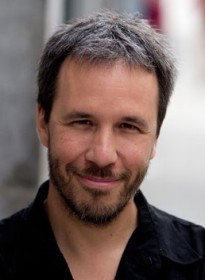
Denis Villenueve talks about directing “Prisoners”

If you’re familiar with director Denis Villenueve’s name it’s probably for his Academy Award and BAFTA nominated film, “Incendies.” The film also earned him two Genie Awards (the Canadian equivalent of the Oscars) for best screenplay and director as well as taking home the award as the Best Picture of 2011. I mention this because, trust me, once his new film, “Prisoners,” opens EVERYONE is going to know his name.
On Friday, September 20, the Canadian-born filmmaker unveils his first Hollywood film, the crime-thriller “Prisoners,” starring Hugh Jackman and Jake Gyllenhaal. To call it the best film of its kind in a decade is…well, it’s pretty damn accurate. While promoting his new film Mr. Villenueve took the time to talk to Media Mikes about his new film, the power of Jake Gyllenhaal and his upcoming plans to relax.

Mike Smith: What attracted you to “Prisoners?”
Denis Villenueve: I think if you asked all the actors and producers the same question they would give you my answer. It was an incredibly strong screenplay. It has a strong, dramatic structure that was really compelling and entertaining from a thriller point of view. It said so many sad, yet accurate, things about our society and I felt those topics…the violence…the torture…I was inspired by them. It told about things that I felt were meaningful. I hope that as a director I was able to bring about a film to be inspired by.

MS: Both Hugh Jackman and Jake Gyllenhaal reveal a dark side that we, as an audience, have never really seen them expose before. Hugh’s been “Wolverine-angry” but NEVER like this. How were you able to get them to dig so deep for these performances?
DV: First of all, it all starts with the actors. I think Hugh agreed to do the part because ….sometimes artists find that they are confined to a bubble. Everyone either thinks you’re a nice guy or the Wolverine! (laughs) He was confined to this bubble but I felt he was a very powerful actor. An actor that is often underused…that doesn’t get to reach his full potential. And I felt that he was ready to get out of that bubble. He really wanted to explore the really dark spectrum of his art. And he was willing to go there. I didn’t have to push him there. He was very committed. He read the screenplay and knew where he needed to go. He trusted me to take him there. Hugh was very easy to direct. I felt he needed a friend to work with him in that darkness and that’s how I felt.

MS: You earned an Oscar and a BAFTA nomination for your film “Incendies.” I’m sure it was a proud moment for you, personally but was it made even better because your film had been the one chosen to represent your country?
DV: I really tried to not let that effect me. What I try to keep in mind is my relationship to the cinema. As a filmmaker I try to concentrate on what I learned on my last project and what I will learn on my next project. I took the Academy Awards as a very nice compliment. It was a very nice experience but I knew that the next day I had to return to my humility and return both feet to the ground.

MS: You first worked with Jake Gyllenhaal on the film “Enemy,” which will open later this year. Was the rapport you built with him on this film one of the reasons you cast him in “Prisoners?”
DV: “Enemy” was an art-house experiment that allowed me to spend a lot of time with an actor. I wanted to build a relationship with an actor. I had built creative relationships with cinematographers…with production designers and screenwriters…but I had never felt like I was sharing cinema with an actor. The actors I had worked with before were like comets. They were like shooting stars that came in front of the camera and then went away just as quickly. I never really had the chance to explore…to spend time with an actor. I felt that the story of “Enemy”…about a man seeing himself…was perfect. I wanted to explore some things about reality. It was the perfect opportunity to have this experience with an actor. Jake agreed to come on board for that experience and we spent months working together…sharing cinema together. We became very close friends. As I was doing “Enemy” I was casting “Prisoners” and I told Jake that I would like to work with him again and I thought he would be perfect for the cop. He knew about the script and immediately said yes. That’s the one thing I love about cinema…the relationships. The creative relationships that you can build over time. It’s a big privilege for me to have built that relationship with Jake.

MS: It’s obvious that he trusts you as a director. I’m an admirer of his but I NEVER expected a performance like this out of Jake Gyllenhaal.
DV: Jake is a strong actor. He was born in cinema. He began as a kid…then a teenager and now he’s a man. And I think as a man…as an adult…he is going to surprise us in the upcoming years. I think his best performances are in front of him. I was deeply inspired by Jake.

MS: Are you working on anything new?
DV: (laughs) I made two movies in a row. I have not been home in eighteen months. I need to go back to Montreal…I need to be with my family for a few weeks. I have two movies on the table right now and I have to choose which one I want to do first. But first I need to sleep for a week! (laughs)

Leland Orser talks about his feature film writing and directing debut “Morning”

Like any great character actor, you know you KNOW Leland Orser. From early television work in shows like “The Golden Girls,” “Cheers,” “L.A. Law” and “The X-Files” to roles in films like “Se7en,” “Saving Private Ryan” and “Pearl Harbor,” Orser has carved out an impressive notch in the Hollywood tree. Now he’s taking his considerable talents to the other side of the camera with his feature film writing and directing debut, “Morning.” Based on a short film he made in 2007, “Morning” stars Jeanne Tripplehorn (Orser’s real life wife) and Academy Award nominees Laura Linney and Elliot Gould and is scheduled to open in selected theatres on September 27.

To help spread the word about his new film, Mr. Orser took the time to talk with me about his new career move, the power of Steven Soderbergh and how dinner with Blake Edwards changed his life.

Mike Smith: “Morning” began as a short film which you’ve now expanded into a feature. Was that always your intention?
Leland Orser: It was never my intention. Even making the short was never an intention. It was just something that kind of happened. I went to the Sundance Institute a couple summers back. I went there as an actor and was very, very inspired by the experience. As I was flying back on Southwest this story just popped into my head and began telling itself to me. I asked the stewardess if she had anything to write on and she brought me a pile of airline cocktail napkins and I basically wrote out the (14) page treatment for the short film. When I got back to L.A. I showed it to some friends and they all said “let’s do this.” I shot the film in my own home and banged it out over a weekend. I came back from dropping all of the equipment off on a Monday – I had sent my wife and son to a hotel for two nights – I came back to a big, old empty house with everybody gone and realized I had no idea what to do next. All I had was a pile of Mini-DV tapes on the table in front of me. I had just finished working with Steven Soderbergh (NOTE: Mr. Orser appears in Soderbergh’s 2006 film “The Good German”)and I thought “well, he’ll know what to do.” (laughs) I picked up the phone and called his office. He had come in early and actually answered the phone himself and I said, “I just shot a short film and I don’t know what to do next.” He told me to keep the tapes away from anything warm and that I needed an editor. I told him I didn’t know any editors. He asked me where I was and I told him at home. He told me not to go anywhere. Fifteen minutes later my phone rang and it was one of his assistant editors. He said, “Steven told me to call you,” and I said, “Oh, cool. I just did this film.” He told me that he had a couple of weeks off between working on Steven’s films and came over. He ended up editing the short in the room above my garage. We took it out on the film festival circuit and had a very lovely time. It was very successful and we had a great run with it. When we returned I went and spoke with Michelle Satter, who runs the Sundance Institute for Robert Redford. She asked me what was next and I asked her what did she mean what next? What were my options? She said I could continue to tour the festival circuit and hang out with..discuss, socialize and collaborate with…other short film makers or you can use this as a calling card if you have any interest in continuing your career as a director. Or, she suggested, maybe this is a smaller part of a larger story that you want to tell. Boom! There it was. I told her that it was and she told me to go write it. And I did. Even when you’re telling a small story you need to know the big story around it. You need to know what happened before, during and after in the world you’re telling about. And you have all of those details in your mind as you’re writing the specifics of the tale you’re telling. So there it is. That’s what happened.

MS: You’ve been able to work with some great filmmakers – Steven Soderbergh, Steven Spielberg, David Fincher…did you have the opportunity to observe them at work once you realized you wanted to direct?
LO: I was doing the first part of that but not for the second part of that. I never really had aspirations or ever thought that I would want to or could do that. But I’ve always been fascinated with filmmaking and filmmakers. I’ve been so lucky to have worked with the ones I’ve worked with. I’m a question asker and an observer. You can learn a lot just by being on set as an actor. You can go back to your trailer and get on line or on the phone or you can stick around and watch…see what everybody else is doing. That’s always been my way.
MS: You’ve worked pretty steadily in both television and film. Do you have a preference as an actor?
LO: I really think the lines are blurring between the two. I think the great renaissance – the Golden Age of Film right now – is taking place on television. Filmmakers, film actors…everybody is doing something on the medium of television. And that medium is not necessarily TELEVISION anymore. It’s really the world of computers and iPads and Apple TV. I don’t have a preference. I go now where I’m wanted, for one. Where I’m asked to be. And I go where the good work is and the good people are. Sometimes you go to make money and sometimes you go to make art. There are now so many outlets and choices. There is so much happening.

MS: You not only wrote and directed “Morning,” but you also co-star. Is it hard pulling double-duty…having to concentrate on your performance as an actor and then everything else as a director?
LO: I think it’s impossible….I think it’s impossible! I did the very best that I could but I probably could have been better doing either of those two things if that was all that I was doing. I worked at length on my acting role in the film. I spent a great deal of time and I worked with people to put it into place mentally and on paper for any given day and any give scene. I could open up my acting script, which was separate from my director script, and say to myself, “I know on this day and in this scene I have been through THESE events…I’m this far into the progression of the story. I’ve ingested THIS alcohol and THIS pharmaceutical or I’ve had THIS amount of sleep. I was very, very, very specific with the goals I needed to achieve as an actor. I left some things open for those happy accidents and improvisation in the moment but I was regimented and disciplined about what I needed to bring to the day as an actor. One of my best friends was by my side basically the entire time I was making the film and he was my double as well. When I was directing a scene he would go in and stand in for me and do all of my actions so I could see where the scene worked or where it didn’t work. I could direct him and then I’d know physically what I had to do to accomplish the scene. It’s very hard to be objective and subjective at the same time.

MS: You’re leading lady in the film (Jeanne Tripplehorn) is also your leading lady in life. How was your relationship on set? Actor/director? Husband and wife?
LO: (laughs) We made rules for ourselves. Number one was that any discussions of the work would never enter the house. We have a guest room above our garage and when we began production I went up to that room and I lived there. My hours were very different from hers. We also both thought it would be a very good way of dividing the world. We would have meals together at the house when I was able to get home. We actually had a lot of discussion between us as to whether we should even do this together or not. She said that I could get any actress in Hollywood…that any actress would be crazy not to want to do this part. So I asked her if this was something she wanted to do…something she should do and something we should do together. Jeanne had traveled to New York to do some press for “Big Love” (NOTE: Ms. Tripplehorn starred for six years on the popular HBO series) and she had taken the day off to go to the Whitney Biennial Art Exhibit. She finds it very inspiring to be surrounded by new and young artists and their works. Afterwards she called me. She was very moved…very emotional…and she told me she was surrounded by art. She wondered what we were questioning because what are we if we’re not artist? It’s what we are and what we do. How can we not recognize that this film is something we are meant to do and what we should do together? That was a major turning point and we never looked back. It was a dangerous choice because the subject matter is so, so heavy. But we’ve always managed to keep our work separate from each other…to help each other and support each other through thick and through thin. To work together, in hindsight, was a very risky choice. But I know her as an actor. And what I experienced and what I witnessed on set, as you now know, took my breath away and I realized that not only is she a great actor she’s one of THE great actors. Better than most actors out there. She has such access to range and emotional depth that she can draw on and she’s so directable. She’s a director’s dream. She gets it. She understands it. And she submits herself to the process. She trusted me. She was the very first person to trust me in this role and I was very thankful that I was able to return that trust in kind.

MS: Besides Jeanne you’ve assembled an incredible cast, including a couple of Oscar nominees. Was it daunting to cast such prominent actors in your first feature?
LO: Maybe I was an idiot but I never questioned any of it when I asked. To me Laura was the doctor and I had to find her and ask her and surely she’ll understand how important she is. And it was the same thing with Elliot Gould and Jason Ritter and Kyle Chandler…those were the faces and personalities that I saw in the film and I was just so freakishly lucky that they all agreed to come aboard. But so many people did. We got help from so many different places. Kodak and Panavision and Technicolor. Steven Soderbergh introduced me to yet another film editor who agreed to come and work at a fraction of his rate. We were so very lucky. Tom Hanks and Gary Goetzman at Playtone gave us their editing suites for the entire time we were editing. They didn’t allow anyone else to use the editing bays in the Playtone Offices. They gave them to us. They told us to go edit your film, make it great and then show it to us.

MS: What do you have coming up next?
LO: Once I finished the final mix on “Morning” and once we got back from all the festivals I retreated to the guest house where I had written “Morning” and sat down and had a little discussion with myself. I knew that when this movie comes out people are going to ask me what I’m doing next (laughs) so I knew I had to be ready to do something next. A story I like to tell is that many years ago Jeanne had just gotten back from doing a film with Julie Andrews (“Relative Values”)on the Isle of Man. We got a call from Julie’s assistant saying Julie would like to have you to a dinner…can we come to the beach house at 5:30 in Santa Monica and then we’ll go to the restaurant. We fully expected it to be something for the cast but when we walked into the restaurant it was empty. We were escorted to a booth in the back in which sat Julie Andrews and Blake Edwards (NOTE: Blake Edwards, whose career included such classic films as “Days of Wine and Roses,” “Breakfast at Tiffany’s,” “Victor/Victoria” and the “Pink Panther” series passed away in December 2010. He and Julie Andrews were married for over four decades). And it wasn’t a big booth. Jeanne scooted in opposite Julie and the two of them set off together on catching up and giggling and telling stories and I was left sitting opposite Blake Edwards. My mouth went dry, my heart rate went up and I thought “are you f***ing kidding me?” How was I going to manage to get through even two minutes of the evening. He immediately put me at ease. We found out we had things in common. He had been born in Tulsa, where Jeanne is from. He had grown up in Laguna Beach, where my father is from. He had been an abalone fisherman like my father had been. He was just a normal, regular Joe and so easy to talk to. And at one point of the conversation he asked me, “do you write? Are you a writer?” I told him I wasn’t. I write in a journal, that’s it. He told me that I spoke like a writer. I hear like a writer. “You should try it some time.” I told him that I wouldn’t have the slightest idea where to start. And he said, “that’s exactly all you have to do. You just need to start.” I asked him how he wrote…if he had a process. He said he did. He said he would go off to a quiet place that was clear of all clutter. He would sit down and get very quiet. He would have his writing implements with him…I don’t know if it was a typewriter or if it was yellow pads and pencils. He said he just gets very, very quiet. He waits. And he waits. And he listens. And he said that at some point the story will begin to tell itself to him. And it was after that dinner that I had gone to Sundance to the Institute and it was on that flight back, when I was super quiet because I was probably tired and hung over, when the story of “Morning” told itself to me. So I went up to the guest house after I finished “Morning” and I said, “ok…let’s see if it happens again.” I told my very, very intense family drama…I’ve told that story. I don’t want to tell it again and that’s not the type of story I want to tell again. So I had in my mind the type of idea of the story I wanted to tell, it was just a question of is it going to come. And boom, there it was. It’s a thriller. It’s a witness to a murder and it’s a mystery which gets solved in the last couple of pages. And it really told itself to me in a pure way. I’ve worked with a couple friends of mine in the business who have helped me nip it and tuck it and deal with the industry expectations of a script of its type. It’s clean. It’s tight. It’s crackerjack…it’s ready to go. Jeanne was one of the first people I showed it to and she loved it. She’s a good judge so keep your fingers crossed!


Related Content

Copyright: MediaMikes.com © 2013 · Powered by: nGeneYes, Inc. · Login

All logos and images used on this website are registered trademarks of their respective companies. All Rights Reserved. Some of the content presented on our sites has been provided by contributors, other unofficial websites or online news sources, and is the sole responsibility of the source from which it was obtained. MediaMikes.com is not liable for inaccuracies, errors, or omissions found herein. For removal of copyrighted images, trademarks, or other issues, Contact Us.