

Simon Pegg, Nick Frost and Edgar Wright talk about “The World’s End”

This Friday sees the US release of The World’s End, the final installment of Edgar Wright’s “Cornetto” trilogy. It’s the third comedy following 2004’s Shaun of the Dead and 2007’s Hot Fuzz, to star Simon Pegg (also co-writer of all three) and Nick Frost. While the films are standalone stories across wildly different genres, they’ve been consistently hilarious variations on common themes. Hence, more comparable to Cornetto flavors—a British ice cream that found its way into all three movies—than narrative installments. The trio of Pegg, Wright and Frost sat down in New York to discuss the completion of the trilogy with this apocalyptic pub crawl.

The movie centers on Gary King (Pegg) who is dead-set on reuniting his old schoolmates, now grown men, in an attempt at completing an epic pub crawl they left unfinished as youths in 1990. He faces the most opposition from his onetime best friend, Andy, played by Frost.

How would you each describe the other’s characters?
Nick Frost: I would say Gary King is a forty-one year old man stuck sadly in…1990, it never got better for him than that night. I like to think about Gary in the space between then and when we meet him. What he got up to. And what I think is getting pissed on a kibbutz a lot, being like a rep in Portugal in like a resort, maybe traveling to Australia, doing the same thing there. You know, I think he did a lot of drinking and a lot of fornicating and then he reaches a point where he, he was just sadly empty. And I think where we meet him…that gear that he wears in the film, I don’t think he wears it all the time. He’s like a general who’s going to commit suicide on telly and he puts all his gear on. He puts his gloves on and his medals. That’s his last hoorah and I think he has a suspicion that he knows he’s not coming back.
Simon Pegg: As an addendum to that I think there’s a lot of parallels between World’s End and Scent of a Woman. Gary is like Colonel Frank Slade.
Andy is you know this guy who was, who had his heart broken by his best friend when he was very young and has never been able to let go of that anger about that. And he’s moved away from it. He’s excelled in his job, he’s married and had children, he’s created a life for himself. He’s a success in many ways, maybe not emotionally to a degree. We find out things later on. But he’s a guy who has been let down by someone he loves and hasn’t addressed that yet. So when we meet Andy he kind of seemingly Gary’s enemy, they’re not friends anymore but really what underpins that enmity is a deep affection which we eventually learn the truth about.

Lauren Damon: In both Shaun and Hot Fuzz Simon was the more straight-laced character at the start of the film, was that reversal of roles fun?
Pegg:
It was yeah.
Frost: Yeah I mean those other roles, the central character is not always the craziest or the funniest even though Simon is incredibly funny, but this time it was. And it was always going to be Simon and I never look at it and think ‘oh why am I this again?’ It never feels like that. Its for the good of the film, but this was you know—Simon’s gonna laugh when I say this because I said it lots of but—[Pegg joins in in unison] We are actors!

The chance to play any different person or different character is what you want to do as an actor. And I’d kind of argue that Danny and Ed are very different characters. Ed is quite cynical and lazy and Danny is just a big, lovely labrador, you know? And so the chance to be a kind of hard knot and to be the kind of moral voice of the audience essentially at certain points in this film is a great challenge. And also I get to kick arse.

LD: And rip your shirt off.
Frost: That was the only thing I put my foot down. Edgar wanted me to rip my whole shirt off so essentially I would be topless for the second half of the film and I had to say no.
Pegg: Which was a relief because it was winter.
Frost: Well I’ve got quite a lot of tattoos so the coverage of tattoos would have been an issue. And also, it don’t look s’good!
Pegg: I beg to differ!
Frost: But it got cold it got up to minus ten at night when we were shooting.

All three men elaborated on the amazing stunt work in the film, choreographed by frequent Jackie Chan collaborator, Bradley James Allan:
Pegg: The important thing for us was that we, in all the fight sequences in the movie, we retained the characters. Often in films when you cut to action sequences, stunt performers have to take over and as such, the characters that the actors have created vanish slightly in favor of the action. What we really wanted to do was make sure that the characters were maintained throughout the action and that meant us doing it…And we always wanted it to be the case where it’s like we’re—particularly for Nick’s character—all this simmering rage that he has, all this resentment towards Gary, all this kind of dissatisfaction that he has with his own life it just bursts out of him like—we used to call him the Pink Hulk because he had a pink shirt on underneath—and Andy turns into the pink Hulk. And each of them have a different—like Gary fights one handed because he’s trying to protect his pint. Andy, you know, fights like a berserker. Paddy [Considine], because he’s a boxing fan, uses all these great big haymakers like a brawler. Martin [Freeman]’s always wriggling out of stuff—
Frost: Like a hobbit!
Pegg: Which he picked up from somewhere, I don’t know. So yeah, it was all very much there in the script.
Frost: Eddie [Marsan]’s the coward.
Pegg: Eddie hides under tables. Which is funny because Eddie’s pretty handy. Eddie’s got some good punches.
Frost: Yeah he is, he trains a lot to be a fighter.
Pegg: He’s a little East End boxer.
Frost: He does “Ray Donovan” so he spends a lot of time in the boxing ring
Edgar Wright: What we tried to do is not actually use like…If you have a scene in an action film and you have like there’s a waiter who looks particularly tall and muscly, you know that he’s going to go through a window at some point. So like you can kind of pick out, that’s a stunt man, that’s a stunt man, that’s a stunt woman. What we tried to do with this was have people you wouldn’t—when you see those five kids, you don’t expect it. They’re kids. And the lead guy is fifteen years old. So you don’t expect him to be in a fight. And then they do all of their own stunts… And that was something I said to Brad Allan, our choreographer. I did a scene in Hot Fuzz, I ended up cutting out of the movie because it didn’t really work, it was a scene where Simon arrested some kids and so I said ‘I really wanna do this fight scene, but do you think we could get teenage stunt men?’ He goes ‘Absolutely, we got circus schools, tumblers, gymnasts, martial artists…’ and so the kids in that sequence are from the ages of fifteen to twenty. And they’re amazing.

LD: Going way back to Lee Ingleby’s crew in “Spaced” [Wright’s 1999-2001 sitcom starring Pegg and Frost], through the hoodies in Hot Fuzz, do you just have a distrust of youths gathering anywhere together?
Wright:  think a central theme is no matter how young you think you are, there’s always someone younger. That fear of being usurped by the people like are sort of like ‘Oh my god, that fifteen year old is gonna kick my ass!’ The emasculation of being beaten up by somebody younger than you, I think it’s that kind of fear. I think once actually Nick in London got mugged by a bunch of teenagers which is like an extremely distressing thing because hey, you know, you might be twenty-eight but these fifteen year olds…they’re are gonna kick your ass! And it’s just a horrible horrible thing. I think it’s just a part of the nightmare of emasculation of being beaten up by teenagers, people fifteen years younger than you.

At what point in working with Edgar did the word trilogy come up?
Simon Pegg: I think probably on the Hot Fuzz press tour when we realized we had been able to make two films and those films were in essence connected. You know, sort of tonal sequels in a way, in that they were not directly sequels—not the same character stories obviously—but they were definitely variations on a theme. And we figured if we could possibly be able to do it again, we could wrap it up as a sort of nice Hegelian whole. As a threesome as it were. And do it again. So we refined the ideas we had started on. It wasn’t like we set out to make the trilogy. We would never be so arrogant as to assume we would be able to make three films.
Nick Frost: I think one was enough.
Pegg: Yeah.
Frost: I think we thought, being British filmmakers we were lucky to make one, you know. [laughter] It’s true!
Pegg: We didn’t think it would come out there, let alone here.
Frost: We thought, if we could sell it to Lufthansa and they show it on the flight, we’ll be lucky. And you know, we get a chance to make Hot Fuzz and then that seemed the logical thing to do really.
Wright added:  …The fact that Hot Fuzz was shot in my hometown so I’d had that experience of being back in my hometown very vividly. So it was very much preying on my mind and that’s where it starts to factor into this of the idea of the homecoming…But then we decided we would go off our separate ways and do separate projects and in a way I think we wouldn’t have written the same script six years ago. Because the nice thing is actually, not to get older, but to actually deal with that in movie. Shaun of the Dead, which we shot ten years ago is a film about he’s a twenty-nine year old about to turn thirty. And then in this film, they’re forty…I feel like when I watch a lot of the American “man child” comedies, sometimes I always think it’s kind of forced because there are people who–there’s that thing of being a big kid forever is always glorified– but never really scratches below the surface. In reality a lot of those actors are married and have kids and so I think it’s a good thing to do these movies and actually acknowledge that the characters are older. So I think in that way, me and Simon, it was great going away—it’s not like we didn’t see each other in six years, we’re like best friends– but it was the first time we’d written together in like five years.

Was it different coming back to write together after so long?
Wright: No if anything, I think it was easier in a way. I think out of the three, Hot Fuzz was the most difficult one to write. Because I think we realized that Agatha Christie is a genius and that murder mystery is really hard! We would have kind of the constant headache of trying to figure out the mystery plot…But the nice thing about this is we had the story, we had the plot and then like it was just like a huge outpouring of personal experience. Of like everything from our upbringing. Once you’ve got the story, I think the first thing that we did when we started talking about it was just start talking about personal experience. All of that stuff goes straight into the movie. So it is like, Shaun of the Dead too, but this one is definitely the most personal because so many themes of it are just straight from our experience. Everything from the sister [Sam, played by Rosamund Pike] is based on a real person…the bully is based on a really person. The experience of—I went back to my home town and a number of times after I’d left to live in London and I remember vividly one of the things that sparked the whole thing was going back to my hometown, going to a pub, and seeing your school bully, who didn’t recognize me. And I wasn’t sure whether he didn’t know who I was anymore or didn’t care. But the fact that he didn’t acknowledge me at all made me so mad. I didn’t want him to acknowledge me! And I certainly didn’t want to get into anything. But I was so mad because I was thinking ‘does he not recognize me, this guy?’ So things had just stuck. That’s something that happened like fifteen years ago, but it stuck with me. And so that’s what’s great about doing these films is that things you’ve been thinking about for a long time then just come flooding in. Then it just becomes like a whole like ‘this is the plot of the movie.’

Is this the end of the trio?
Wright: I think this, we thought would be nice to be a piece. It’s not like a trilogy in terms of they’re three of the same movie, it’s more like a triptych of three separate films that can be viewed separately or together. You know, separately they can be Kelly, Michelle and Beyonce, but together they’re Destiny’s Child.

LD: Who’s Beyonce?!
Wright: I don’t know! I don’t want to pick any favorites!

It might be a few years until we do another one. But this is not the end of us working together. Because we love working together so we’d like to do other stuff. But it might be something radically different next time.

The World’s End releases in the US on August 23rd, you can read our review of it here.
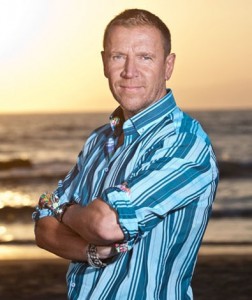
Renny Harlin talks about directing “Devil’s Pass” and Hercules 3D”

Renny Harlin holds the distinction of being the most successful filmmaker to ever come out of Finland. Surprisingly (not because they weren’t famous but because I didn’t know they were from Finland), right behind him in popularity are two actors: 50’s horror film hostess and star of “Plan 9 from Outer Space,” Vampira and George Gaynes, probably best known as Commandant Lassard from the “Police Academy” films and the adoptive guardian of TV’s “Punky Brewster.”

Harlin rocketed to fame when he went behind the camera on “A Nightmare on Elmstreet 4: The Dream Master.” Impressed by the word of mouth on the picture, producer Joel Silver hired him to direct “Die Hard 2.” He followed these films up with such popular films as “The Adventures of Ford Fairlaine,” “Cutthroat Island,” “The Long Kiss Goodnight,” Cliffhanger” and “Deep Blue Sea.”

In preparation for the release of his latest project, “Devil’s Pass,” which follows the journey of five filmmakers investigating the real life mysterious deaths of nine skiers in the late 1950s, Harlin took time out to talk about his new film, his upcoming “Hercules” project and the incredible fact that Andrew Dice Clay could be an Oscar nominee this year!

Mike Smith: Before we begin I have to tell you that I think “Ford Fairlaine” is one of the most underrated comedies ever made.
Renny Harlin: Awesome! When I go to a bar in New York, or even in the middle of the country, if people somehow find out I directed “Ford Fairlaine” it’s always free drinks for the whole night.

MS: Nice. Now they’re talking about “Dice” Clay being an Oscar nominee for “Blue Jasmine.”
RH: That would be the most awesome thing ever!

MS: How did you come to direct and produce “Devil’s Pass?”
RH: It was an incident that I had been interested in for many years. I had read about it and had seen a couple of documentaries about it. And I thought to myself, “wow…what a weird mystery to occur in our lifetime.” Because still today nobody knows what really happened. With all of the evidence…I’ve been through the archives and have seen the photographs. With everything they have nobody still knows what happened. I always thought that it would make an interesting movie. And I found that by doing it as a “found footage” film I could find an angle where the movie takes place in today’s world while referencing what really happened.

MS: How much research were you able to do on the actual incident?
RS: I went through the archives. I spoke to people that had either been part of the rescue team or had had a connection to the people that disappeared. Everything I could find to read and watch I did. I feel like I was able to learn a lot and put a lot of that research into the film.

MS: What was it like to return two decades later to the same mountains where you had filmed “Cliffhanger?”
RH: It was like going home. I really love the challenge of filming in a natural environment. It’s great to shoot on a soundstage. It’s very controlled. But there’s nothing like putting the cast and crew in an extreme situation. And in this case it was in the darkest and deepest part of Russia in a tiny town called Kirov. There claim to fame is in the mining industry and that they have the northern-most prison in Russia. The people that live there are either miners or relatives of prisoners. So you know it’s not exactly the most uplifting place! (laughs) Then you figure in that it’s above the Arctic Circle…that’s it’s dark most of the year…that nine months of the year there is snow on the ground. When we were there it was constant sub-zero temperatures and 20 feet of snow. Many of the locations were only accessible by snow mobiles. It adds to the authenticity of the film and it adds to the experience of the crew and cast. Just like the characters in the story, every day is about survival. And I love that. I love being in those conditions and making a movie.

MS: Being, as you were, at the mercy of Mother Nature, how difficult was it to film the avalanche scene?
RH: That was one of the hardest sequences. We were filming in an area that was really “avalanche prone.” We were told by our mountain guides that every year several people perish in avalanches. We were told to be careful. Everything filmed on the mountains was filmed at night and it took a while to get the filming done. The mountain was the star as we only had a couple of hours to film each day. But we did it together.

MS: Was that the biggest challenge of filming?
RH: I would say that, in terms of preparation, that was certainly the biggest. There were certainly many other challenges. And if someone complained I’d say to them, “Hey…when was the last time you were able to hang around in a place like this?” People would pay a lot of money to be able to see what we see. This is something really unique.

MS: Finally, can you give a quick update on “Hercules 3D?”
RH: I’d be very happy to give an update! I’m sitting right now in the editing bay. We finished shooting about a month ago and I’m about six weeks away from delivering my director’s cut. It’s looking fantastic. This is really my dream project come true…it’s like a childhood dream. When I was growing up I would watch movies like “Ben Hur” and “Spartacus.” I grew up with an amazing love and knowledge of Greek mythology. To be able to do an epic movie like this…Hercules is really the father of the comic book movie. It’s really my return to those kind of movies.

“Devil’s Pass” is in select theaters on August 23rd and same day also available on Cable VOD, digital platforms (including SundanceNow and iTunes).

Ken “The Bug Guy” MacNeil talks about collaborating on the film “Epic”

Ken MacNeil, also know as “The Bug Guy” is the owner of the largest retail pet shop in the country that is devoted to insects and other arthropods. Ken was recently contacted to work on the film “Epic” as the bug expert. Media Mikes had a chance to chat with Ken about his love for bugs and his work on the film.

Mike Gencarelli: I think the first obvious question has to be how have you developed this love for bugs?
Ken MacNeil: I have been into bugs my entire life. Going back, I had started with having some hissing roaches and mantises. I ended up breeding my mantises and got an egg sack. I was a programmer at the time, so I sold those to a local pet shop and made some money. I new a local buy guy at the time that was going out of business, so my wife and I drove out and ended up coming home with 130 tarantulas. We thought we were crazy but at the time we didn’t realize that that number was nothing (laughs). We ended up selling them over a month or so. So then I got a call from the same guy hearing that I sold the first 130 so fast and he asked me if I wanted to buy the other 2,000 tarantulas he had (laughs). Well once again I asked my wife and she told me to go for it, since I liked it so much. We thought we were really crazy when we drove home with a truck full of tarantulas (laughs).

MG: So you have no fear to those kind of bugs?
KM: No, not at all. At the very beginning when I was packing a tarantula that wasn’t docile, I was a little nervous. My wife was less nervous since she grew up having tarantulas. My mom was arachnophobic, so I didn’t have any type of spiders growing up but I have always been fascinated by them.

MG: How did you end up getting contacted to work on “Epic” as the bug expert?
KM: Truthfully, I am not 100% sure how they found me. Because I am an ex-programmer, I was able to get my name and website into the front of the search engines. So if you do a general search for a pet bug, I come up first. So I bet they just did a search and came across me.

MG: Tell us about “Bugs of Camouflage” available on the special features on the home release?
KM: They came into the shop and wanted to see a bunch of different bugs. They wanted to see a bunch of different things that could fit the movie. We tried to pull up some that the movie had, the same kind of ability or the actual bug itself. I got a hold of some walking sticks for them to film since there is an actual walking stick in the movie. They have a great demonstration of camouflage and how these insects use their defense in the wild.

MG: What other films or TV shows have you been asked to consult on?
KM: I have done a few different things over the years. We also had a TV show on the Science Channel called “Bugging Out”. I have also done a bunch of articles of newspapers and also NPR did some pieces on us as well.

MG: Tell us about your retail pet shop in Tucson, AZ that is the only one in the country devoted to insects and other arthropods?
KM: We are the largest bug business in the U.S. by a lot. The next guy down probably has about 1/10th of what we got. It is what we specialize in and the tarantula hobby is the biggest part of the business. So we have more tarantulas that anything but we also carry scorpions, centipedes, millipedes, roaches and many others. On top of that I have opened an exotic pet shop that carries others pets like reptiles etc. But it seems more like an after thought when you have 10,000 bugs to 40 animals (laughs).

Ryuhei Kitamura chats about directing “No One Lives” and hints at “Versus 2”

Photo by Munetoshi Mukai

Ryuhei Kitamura has directed some of my favorite recent films like “Versus”, “The Midnight Meat Train”, “Godzilla: Final Wars” and most importantly his latest “No One Lives”. This film packs a great cast and is a hell of a fun ride. Media Mikes had a chance to ask Ryuhei a few questions about “No One Live” and also got some news about his planned sequel to the cult classic “Versus”.

Mike Gencarelli: How did you end up directing “No One Lives”?
Ryuhei Kitamura: I loved the script and this is not just about blood and guts, it’s a twisted and dark love story. I loved the main character DRIVER who does it all for love killing machine. I thought I could I create new iconic anti-hero. Also I liked the good old days 80’s Slasher movies.

MG: “No One Lives” is your second U.S. film after “Midnight Meat Train”; what was your biggest challenge on this project? How did the two productions differ for you?
RK: It’s always the same. Movie making is challenging no matter what size or where you do. You have to fight against time, money and ego. We had so many challenges, but I had strong support from my crew and cast, and my producer Harry Knapp and Elton Brand. They made me survive.

MG: What do you enjoy most about working in the horror genre?
RK: I enjoy killing tons of people in brutal ways because I can’t do that in real life even though there are tons of f*ckers I want to terminate (laughs).

MG: You are no stranger to gore; are you ever concerned about going too far?
RK: I was hired to do movies like “Midnight Meat Train” and “No One Lives”. What’s wrong with go too far? That’s what the fans want I believe. Of course I wouldn’t do the same when I do PG-13 horror movie.

MG: Being a huge Godzilla fan yourself, what was it like writing/directing the last film “Godzilla: Final Wars”?
RK: It was pure honor and fun to be the part of one of the greatest franchise of all time. Can’t wait to watch new Hollywood Godzilla.

MG: I’ve heard talk about a “Versus” sequel in the cards; what can you tell us?
RK: I can’t talk much, but I guarantee it will have same spirits, same craziness, much bigger scale and next level of action. I already have a great script and am going to make this happen in the next few years.

MG: What do you have planned next?
RK: I’m in pre-production of my new action movie to be shot in Asia. I have some projects lined up but it’s the movie business and never know what I’ll be doing in six months.


Related Content

David Lowery talks about directing “Ain’t Them Bodies Saints”

With a solid background of pretty much every behind the scenes job in Hollywood, it was obvious it would’nt be long before David Lowery began directing. With an impressive resume’ of short films and features under his belt he has now delivered “Ain’t Them Bodies Saints,” a classic film in the tradition of “Bonnie and Clyde” and “Badlands.” The film opened in limited release today (August 16) and to celebrate that opening I spoke with Mr. Lowery about his inspirations, misquoted songs and the proper use of the word “Malickian!”

Mike Smith: What was your inspiration…where did you come up with the story…for “Ain’t Them Bodies Saints?”
David Lowery: It really came from a lot of different places but one of the main inspirations were the old movies about lovers on the run. I love the idea of outlaws…the idea of a young outlaw couple on the run from the law. Those movies have always appealed to me…been inspirational to me as a story teller. I love the mythology of the outlaw. I love how America has been built on outlaw mythology. I wanted to make a film that would participate in that tradition. So the inspiration was very simple when I decided what I wanted to do. I wasn’t looking to reinvent the wheel. I just took the basic concept, the basic archetypes of a guy, a girl, a policeman and a couple of guns and tried to find a new way to present them.

MS: For a young director you got pretty lucky in nabbing two Oscar nominated actors for your two leads. Were Casey and Rooney your original choices and how were you able to cast them?
DL: I wrote the script with no actors in mind. I wrote it in a vacuum, not knowing who was going to be in it. But when we finally had the opportunity to select a cast Casey Affleck was the first person I wanted to meet. I sat down with him and we talked for about an hour or so. We got along really, really well and the next day he wrote me and said he wanted to do it. It was so wonderful to have my first choice not only able but so willing to do it. And we had gotten along so well in our talk that I felt like I had known him for years. For the character of Ruth I wasn’t sure if I wanted an established actress or not. Maybe I could go to west Texas and find someone who had never acted before…who really was a woman who lived in a small town. I wanted to find someone who was really a natural. While I was thinking that, Rooney Mara’s agent wrote me and asked if I could send the script to her. This was about a week before “The Girl with the Dragon Tattoo” came out and I never believed in a million years that she would be willing to go from this huge, David Fincher film to doing a tiny independent film in Texas. But he assured me that she would be interested in it. She read it and wanted to meet with me. I sat down with her, we talked and then she said yes. It was really a great and unique situation where both of the people that I wanted the most and who were the first people I met were the ones who wound up in the movie.

MS: I’m sure you’ve seen that you’re getting a lot of comparisons to Terrence Malick with your visual style. As a director was it important to be able to tell the story “visually,” in addition to presenting the action that was going on on screen?
DL: Absolutely. I love dialogue and I love listening to people talk when the dialogue is good. But more than that I love visuals. And I love to let the visuals do the heavy lifting in a movie. This film was very carefully designed to look a certain way and to feel a certain way. There’s no denying that if you go outside at a certain time in Texas and put a 25mm lens on a camera it’s going to look like a lot of other movies. Texas has a very specific look that a lot of filmmakers have used in the past. It’s very suggestive so you use that kind of imagery when you want to suggest something. If you want to suggest a timelessness…If you want to suggest an epic-ness. And Terrence Malick is someone who has used that kind of imagery quite a bit. I’ve certainly loved his movies. I’ve loved all his movies. But at the same time I never really thought about it while we were making the film. I knew that we were using “Badlands” as a jumping off point as far as the story goes but when it comes to visuals we really went in a different direction. Even though there are some things that are, to use a word, “Malickian”….there are some things that are similar to what he’s done about 10 minutes into the movie we go into a completely different direction. So it’s kind of a nice surprise to be compared with him because I do love his work and I’m flattered to be compared to him. But we were going for something completely with our visuals.

MS: The film has a very unusual title. Casey Affleck recently told Jay Leno that it came from a misquoted song. Is this true and, if so, what was the song?
DL: I don’t know what the song was because it was on a CD that a friend had given me with a lot of old folk and country music. And none of the songs were listed…it was just track one, track two, track three…there were no titles or artists. I don’t know what it was but I need to find out (laughs). I heard it years ago, long before I made this film. And I got that phrase stuck in my head. Misheard lyrics stuck in my head with the idea that they would make a great movie title. A strange movie title but a great movie title! And when I started writing this movie I wanted it to feel like an old folk song. And I thought there would be no better way to set the stage for this movie than to have the title sound like the lyrics of an old folk song. That was really all there was to it.

MS: What are you working on next? Do you have anything in the pipeline?
DL: Yes. I’m writing a lot of different scripts right now and I hope to be making another movie soon. One of the movies that I’m working on is an adaptation of an article in “The New Yorker” that Robert Redford is going to produce and star in and that I’m going to direct. I’m working on that scripts very quickly right now because I’d like to turn in a draft soon and see what he thinks.

Faran Tahir talks about roles in “Elysium” and “Escape Plan”

When both you’re mother and father are well known in the theater it’s almost guaranteed that you will follow in their footsteps. Faran Tahir was born in Los Angeles while both of his parents studied acting and directing at UCLA. After completing their studies the family returned to their native Pakistan where they both established prominent careers. His father, Naeem, currently serves as the Director General of the Pakistan National Council of the Arts. Returning the America at age 17, Tahir attended the University of California at Berkley, where he graduated with a BA in Theater. He later earned his Graduate Degree at Harvard.

He made his feature film debut in Disney’s live action telling of “The Jungle Book” and is best known for his roles in “Iron Man” and J.J. Abrams re-boot of “Star Trek.” He also has a recurring role on TNT’s new incarnation of the popular television drama “Dallas.” Later this year he will be seen opposite Sylvester Stallone and Arnold Schwarzenegger film “Escape Plan.” This week he stars as the President alongside Matt Damon and Jodie Foster in Neill Blomkamp’s “Elysium.” I recently spoke with Mr. Tahir, touching on his new films, his love of science-fiction and working with his parents.

Mike Smith: You’ve done a lot of sci-fi/fantasy genre’ projects: “Lost,” “Star Trek,” “Warehouse 13” and now “Elysium.” Is that something you enjoy? Do you intentionally seek out those projects?
Faran Tahir: I do enjoy it. It’s a lot of fun. I think it’s thought provoking. I think it tickles the imagination. And I like the fact that those kind of stories have very high stakes. Part of it is because I come from a theater background. If you’ve done any theater…any Shakespeare or Greek tragedy…the stakes are as high. I like the theatricality of science fiction. Do I seek it out? Yes, I do seek it out but not at the expense of other genre’s or other kinds of stories. I try not to get too complacent. If I do too many bad guys I try to play a good guy. If I do too much science fiction I try to do something else. I try to keep as much of a balance as I possibly can. I have “Elysium,” which is science fiction. I have “Escape Plan,” which is an action movie. I have two independent features coming out. One is an emotional drama about two families losing their children in a mall explosion (“Torn”). I play the father of one of the families. The other is a supernatural thriller (“Sara’s Cell”). So yes, I do like science fiction but I also need to make sure that I don’t get pigeon holed in just that genre.

MS: Can you talk a little bit about your role in “Elysium?”
FT: Sure! Elysium is a space station. A Utopian space station where all good things happen. Cancer is cured. The temperature never goes above 75. All of that good stuff. All of the grunt work to support Elysium happens on Earth. So the people on Earth desire to get up to Elysium while the people on Elysium don’t want the people from Earth coming over. I play the newly elected President of Elysium. My character is a politician. He’s nuanced. He’s very careful about how he deals with issues. He doesn’t want to hurt his base supporters both on Elysium and on Earth. The counter to him is the secretary of defense, played by Jodie Foster. She has a totally different idea on how to deal with these issues. There’s a nice, dynamic tension between these two characters of how they’re going to deal with the issue of the Earth people trying to come in and what are the resolutions to the situation.

MS: Where you a fan of Neill Blomkamp’s previous film, “District 9?”
FT: I’m actually a fan of Neill! You can sense that he’s a very bright guy. What I love about his work, and it’s true for both “District 9” and “Elysium,” is that he takes a hot-button issue and then he just slightly bases it in the fictional zone. But not so far in the fictional zone where you lose connection to it. “District 9” was a statement on apartheid. “Elysium” deals with other hot-button issues, like elitism and immigration. You can swap the words “Elysium” and “Earth” for “Developed Country” and “Under-developed Country.” You can say “the US” and “Mexico” and have the same dynamics. He works with some really great premises and presents them in a really fun way. I feel blessed that I got to work with him because he is really and truly a genius. He doesn’t push…you know exactly what he wants…but he never pushes his vision. He lets the actors get there organically. He trusts that you will get there with his guidance.

MS: A real change of pace role is Frank Ashkani on “Dallas.” Any chance of you coming back next season?
FT: (laughs) Here’s what I have to say about that. The story goes that anything is possible in science-fiction and on soap operas. So we’ll see what happens. (laughs) I could come back as the twin brother of the character…we’ll see. I really don’t know yet.

MS: Both of your parents are well regarded actors and directors in the theater. Have you ever performed with them?
FT: I have, actually. Back home the first television show I did was with my mom, which was kind of interesting. I’ve been directed by my father. And what I loved about it was that, although they were my parents, they were also consummate professionals. They would completely turn that side off and deal with me just as an actor when you were in a scene with them or being directed by them. All of the domestic issues could just wait. And it was a great thing to learn how to leave all of that behind when you’re working on something.

MS: You mentioned “Escape Plan.” Can you give us a quick preview?
FT: “Escape Plan” comes out in October. It’s a prison escape picture. The three of us…Stallone, Schwarzenegger and I…break out of a prison together. It was a lot of fun.

MS: Anything after that and the two independent projects?
FT: No. Right now I’m concentrating on those projects. After that we’ll see.

Michael Welch talks about new film “The Demented”

Michael Welch is probably best known for his role as Mike Newton in the super successful “Twilight” saga. Michael has also appeared in a number of other films and television series such as “Bones”, “Criminal Minds” and “CSI: NY”. Michael’s latest film “the Demented” was recently released on Blu-ray and Media Mikes had the chance to talk with him about his role in the film and what he likes most about working in the horror genre.

Adam Lawton: Can you tell us about your new film “The Demented”?
Michael Welch: The film has a pretty basic concept. A group of college friends take off on break to hang out at this really nice house. As the story progresses things start to happen and the house begins to be attacked by zombies.

AL: Can you tell us about your role in the film?
MW: My character is the exact character that I would want to play in a film like this. I play the rich kid whose house everyone goes to before the zombies start attacking. My character is just looking to have a good time. He is very charismatic in his own way but doesn’t appear to be a particularly good guy. He’s basically looking at getting laid and getting paid. (Laughs)

AL: What was it that interested you in the film?
MW: I had never played a character like this before and I also like new and different challenges. I think characters like this are a lot of fun to do as they are shameless. You get to explore the darker side of a personality. I found it to be a fun and different challenge that I was happy to be a part of.

AL: Were you allowed any creative freedoms with the role?
MW: I pretty much did what I wanted to do. That’s really how I approached this role. From the very first audition I knew how I wanted to play this role. I figured a character like this was going to have a lot of confidence that verged on cockiness. I went in to those auditions with my version of the character and lucky for me they liked it. As far as the dialogue went I think there were a few spots of improve that happened.

AL: What do you think was the most difficult part of the shoot?
MW: We shot the film in the middle of summer in the swamps of Louisiana. It was super muggy and the heat was just debilitating. To keep your energy and spirits up in that type of climate was very difficult.

AL: Having done a few other horror themed films. Are you a fan of the genre?
MW: I am a huge fan of film in general. I like good story telling. I love horror films! I don’t know why I like being scared but I just do. (Laughs) I also enjoy Sci-Fi which has gotten really good in recent years. Story telling is exploring about what is interesting about life. To be able to go to the extreme and see what’s really possible is something I like doing.

AL: Having appeared in both television and film features is there one direction that you see yourself leaning more towards recently?
MW: In the past things were pretty clear on how everything played out. You would start in television and hopefully if you were lucky you would make it to films. That’s not the case anymore. I think for the most part the best onscreen story telling that’s happening now is being done through television. There are a number of incredible shows out there right now. Ultimately it doesn’t matter to me. Be it film or television as I just want to contribute in my own unique way to the stories that people have to tell and to be able to make a living doing so.

AL: Can you tell us about some of your other upcoming projects?
MW: Earlier this year I appeared in a film titled “Hansel and Gretel get Baked” which has done very well for the most part via digital distribution and Redbox. The film has turned into somewhat of an underground hit so I am really happy about that. I also have two films coming out later this year. The first one is titled “Grace Unplugged” and the other is titled “All the Boys Love Mandy Lane” which is a slasher film I did about 6 or 7 years ago. I am very happy that the film is finally going to see the light of day. Things are going really well and I am trying to work as much as I can.


Related Content

Kevin Sean Michaels talks about indie film “Supernaturalz: Weird, Creepy & Random”

Imagine an indie horror movie with a big Bollywood ending.  I thought I’d seen it all until I watched, Supernaturalz: Weird, Creepy & Random on Amazon Streaming, a web hit. The movie goes where few movies have gone before. It is no surprise, then, that it comes from the mind of a former Troma Studios alumni, director Kevin Sean Michaels, who worked with Troma President Lloyd Kaufman on Poultrygeist: Night of the Chicken Dead.  He also directed two documentaries, Vampira: The Movie and The Wild World of Ted V. Mikels, which in fact was narrated by none other than John Waters himself. I caught up with the director to ask him why he made Supernaturalz: Weird, Creepy & Random.

Mike Gencarelli: What inspired Supernaturalz: Weird, Creepy & Random? Seems pretty bizarre!
Kevin Sean Michaels: It is! I grew up watching a lot of sitcoms, where for no reason there would be a serious episode.  Then back to comedy. The worst was Family Ties, where Alex Keaton (Michael J. Fox) actually lost his virginity at 17 and has to talk to his Dad about it.  Anyway, I thought it would be entertaining to mix horror and comedy like that.  But we decided not to put a laugh track.  As a result, no one is cued to laugh, they just do.

MG: What has been the reception?
KSM: Very intense because the movie plays like a practical joke, similar to the movie, “The Room” by Tommy Wiseau.  It’s like—how can this be a real movie? Are they serious? But the movie is like one of Ed Wood’s—it reads like a stage play gone wrong, but in this case the train-wreck is part of its charm. And totally planned out.  People seem to really connect with it on its level. And on its terms.

MG: I know you directed “Vampira: The Movie”.  Are you a fan of Ed Wood?
KSM: Of course! When I did Vampira: The Movie I was able to talk to some of the original actors like Conrad Brooks. He said Ed really put heart and soul into his films and that they were supposed to be funny.  Like the imperfections was the perfection. That’s why I look up to Ed Wood, too.  I read recently that Bobcat Goldthwait got a tattoo from Kat Von D, stating just that—Ed Wood was inspiration to filmmaking independence.

MG: What was the inspiration for the characters in Supernaturalz: Weird, Creepy & Random?
KSM: The Garter Snakes gang was funny.  I love the idea of a gang of girls, like in the biker movies.  Basically, for them to act like old Bowery Boys, Three Stooges with a dash of Happy Days.  There is love in the group, even if they all insult each other.  If Fonzie tells Potsie to “sit on it” he doesn’t mean “fuck you. “  And when the characters start dying in Supernaturalz: Weird, Creepy & Random, it comes down to how the gang reacts.  But it is goofy cartoon fun in the end.

MG: Some pretty harsh things happen to the gang…
KSM: (laughs) That’s the point.  It’s got an unreality to it.  It’s like the Nightmare on Elm Street movies.  Freddy can laugh at all of it and the audience is with him somehow.  Our villain is also our main character.  She goes through changes, but it’s the force of evil that is the real villain.  I’ve seen a few audience members jump out of their seats at some parts of the movie.

MG: Any advice for filmmakers doing their own special effects on a budget?
KSM: Yes, never put soap in your mixture for fake blood.  People slip on it.  That’s why I have never done it.

MG: What about the nudity in Supernaturalz: Weird, Creepy & Random? Especially the snake scene…
KSM: Yes, the snake scene is a stand-out.  I was always amazed by reading about the stir caused by the snake scene in The Devil in Miss Jones.  They cut the scene out so many times that it’s now legend.  Our scene is a homage to that.  The other thing is to play with nudity where it’s sexy but yet scary or weird at the same time.

MG: And the Paris Hilton scene?
KSM: Well, it’s not really Paris Hilton (laughs).  I like the idea that someone would be cruel enough to steal someone’s clothes as well as their car just to humiliate them, but also to follow their sexual fantasy.  In this case, Patti’s fantasy.  To strip the rich is sexy.  Our gang member Patti is a shoplifter and can’t seem to stop herself from going too far.  So our Paris Hilton-character is stranded like in Castaway, talking to her fuzzy handbag instead of a little dog.  People seem to really like the scene.

MG: Why the strong emphasis on Indian mythology and Bollywood dancers?
KSM: Something I haven’t seen in a movie like this and people don’t expect it. It really challenged us, too.  It’s very panoramic on the screen.  Indian mythology is very interesting and there is so much to it.   Even our character, The Mighty Sardar, isn’t mighty enough to handle it all.  He has to rely on his assistant.  The phallic symbols are a part of Hindu temples, so we have that as well. When you see the movie, we really made it twisted, so I hope there is no bad mojo because of it (laughs).

MG: Is horror and comedy a trend?
KSM: It’s always been there.  Comedy is always part of horror.  You can’t have dark without light.  I’d rather be in the light.

Like the movie on Facebook: https://www.facebook.com/supernaturalzthemovie

Website: http://www.supernaturalzthemovie.com/

Check it out on Amazon Streaming or DVD: http://tinyurl.com/mtwsagv


Related Content

David Mickey Evans reflects on the 20th Anniversary of “The Sandlot”

Even if I had never seen 1993’s “The Sandlot” I could have quoted it line by line for you. I coached youth baseball for 15 years and it was, by far, the most quoted baseball film on the field. “You’re killing me, Smalls!” “You’re an L7 weenie.” And, of course, “you play ball like a girl!” Nothing like enjoying the good sportsmanship of 13 and 14 year olds. But if you’re going to be a ballplayer you need to talk like a ballplayer. And at one time, writer/director David Mickey Evans was a ballplayer.

Now touring the country in conjunction with the 20th Anniversary of “The Sandlot,” Mr. Evans has behind him an impressive resume of filmmaking. I first discovered his work when I took in 1992’s “Radio Flyer.” Inspired by his own turbulent childhood, the film was a moving look at the bond between two brothers dealing with a brutal step-father. (NOTE: I met Adam Baldwin, who played the step-father in the film, this past summer and I told him the same thing I told Mary Tyler Moore when I met her after seeing “Ordinary People” – – -“I HATED you in this film.” He thanked me.) The next year saw the release of his most popular film, “The Sandlot.” Since then he has written and/or directed popular sequels to both “The Sandlot” as well as in the “Beethoven” series. During our pre-interview conversation I discover we both not only played baseball as kids but were huge fans of the popular sports books of the 1960s and 70s written by Matt Christopher. We also talked about the game of baseball and our love for it. That’s where the interview begins.

Mike Smith: I know you’re a big baseball fan. Did you play when you were younger?
David Mickey Evans: Oh yeah. We occasionally played organized Little League but you had to pay money and we were really poor. So most of the time we’d play in park leagues. You’d have the dude that owned the local bar getting you T-shirts…kind of like “The Bad News Bears.” I was really good. I played in quite a few local leagues near Pacoima (California) in the San Fernando Valley. I was on the Cardinals…the Giants…I was on the Indians, which was a big team, when I was about eleven. If memory serves…I wonder if you can find this on the Internet…I think I hit .560.

MS: Was “The Sandlot” inspired by any of your childhood baseball memories?
DME: Here’s the thing. The “A-Ha” moment for me was an incident I remembered from when I was a kid. The kids on the block didn’t like my friends and I. They would beat the crap out of us all the time. There were playing baseball one day and they hit their ball over the fence. They told my little brother to go get it. They said if he did then we could play with them. Of course, they had no intention of that. They just wanted their ball back. And there was a big dog on the other side of the fence named Hercules that went after my brother and bit him…ripped his leg to shreds. It was a bad memory. But one day I was in my car and I thought, “wait a minute…what if these guys were all buddies? What if that ball was worth $3 million?” I’ve got a movie. None of the kids in the film are any kid I knew. All of the kids are an amalgam of EVERY kid I knew. But what I like to say most about the film is this. When Walt Disney finished Disneyland in a year and a day and he’s walking down Main Street U.S.A…and still, today, of all the parks Disneyland is still the best…and he has some dignitaries with him. Now Main Street U.S.A. is modeled after the way Walt Disney remembered growing up in Marceline, Missouri. It wasn’t actually his boyhood home but it was the one he identified with. The dignitaries say to him “Walt, you did it. This is exactly the way it was back then.” Disney tells them that it’s not. It’s the way it should have been. “The Sandlot” is the way I wanted my childhood to have been. That’s not how it was. Luckily God has given writers a time machine…a pencil on paper. (My work phone rings) Is that a flip phone?
MS: Yeah, it’s my work phone.
DME: Where did you get that? (laughs) I didn’t know they still exist!

MS: One of the questions my son asked me to ask you was if any of the boys you played with went on to play professional baseball. Was there a real life Benny “the Jet” Rodriguez?
DME: You know there’s always that kid. I remember one or two kids from grade school…when you get to about third or fourth grade you start recognizing them…they’re just BETTER athletes. Or students. You just start noticing them and you want to be like them. You wish you could kick that kickball as far as they can. And that kind of kid is specifically on whom I built Benny “the Jet.” And here’s something else. The “Jet” nickname didn’t just come because he was fast. When I was a kid I took karate lessons for a little while and I studied with the Urquidez brothers. The most famous of them is Benny. They called him “the Jet” because his hands and feet were so fast. I saw him a few years ago. He’s got to be 60 and he could still clear a bar! He’s an incredibly fit and ridiculously athletic man. (NOTE: Now age 61, Benny “the Jet” Urquidez amassed an incredible professional fighting record of 49-1. He trained Patrick Swayze for his role in “Roadhouse” and can be seen in the film in the scene where the monster truck gets driven through the auto dealership). I always admired him when I was a kid. He was like a super hero to me. That’s why Benny got “the Jet” in the middle of his name.

MS: Are you surprised at the response “The Sandlot” still gets 20 years later? How many memories it triggers in a person. I mean, 20 years before it came out I was the kid riding with my friends over to the next town to play baseball all day. In the neighborhood we’d play all day until our moms called us in for dinner. In 1993 it was my son doing the same thing. And I’m sure 20 years from now my grandson will be doing it.
DME: I don’t know if I’m surprised. Obviously you can’t predict that kind of reaction. You just have to go for it as a filmmaker and if it stands the test of time….what else is there? It still stands the test of time and I’m incredibly grateful for that. That means I did my job. And I’m satisfied that I did my job right. This is also the only one of my films where the studio left me alone…they let me do it the way I wanted to do it. It wasn’t committee filmmaking, it was me. My crew. My cast. But you can never predict that. I wish I could. I would bottle it, I would sell it and you would never see me again (laughs). I had a guy come up to me in Springdale, Arkansas and he had (12) copies of “The Sandlot” on DVD and he asked me to sign them. While I was signing them he’d say, “this one is for me, this one is for my wife, this one is for my kids, this is for my grandkids and this is for my great-grandkids.” Four generations right there. I gave that guy the biggest hug. That was better to me than winning an Oscar. I was in Utah earlier this year at the location where we shot the film. The Utah Film Commission had re-built the backstop, cleaned up the field and made it look exactly like it did on the original field. They could only seat 1300 people for the event and they sold out in 11 minutes! They dedicated a historical marker to me and the film. I’m serious, they can keep the Oscar!

Norton Herrick talks about producing his latest film “2 Guns”

Since forming The Herrick Company, Norton Herrick has created a real estate and building empire currently valued at over $4 billion. This has allowed him to invest in his passions. As a part of Team Valor his horse, Animal Kingdom, won the 2011 Kentucky Derby as well as the Dubai Cup this past March. As a producer on Broadway he helped bring “Spider-man: Turn Off the Dark” to the stage and, along with co-producers Barry and Fran Weissler, took home the Tony Award for Best Revival of a Musical this past June for “Pippin.” He currently has produced three films awaiting release. “Very Good Girls,” starring Elizabeth Olsen and Dakota Fanning, played at this year’s Sundance Film Festival. In late December he will present “Lone Survivor,” starring Mark Wahlberg and Eric Bana. And this week sees the release of the highly anticipated “2 Guns,” which stars Wahlberg and Denzel Washington. Earlier this month I spoke to Mr. Herrick about his many projects.

Mike Smith: So, how is your year going?
Norton Herrick: (laughing) It’s going great. All is good. In all aspects. I’m involved in several industries and I’ve been pretty lucky so far.

MS: In the past two years you’ve had a horse win the Kentucky Derby and the Dubai Cup, won a Tony Award for “Pippin” and you have one of the most anticipated films of the summer coming up with “2 Guns.” When do you rest?
NH: (laughing) I don’t. I don’t know how. I’ve been going 24/7 my entire life. If I’m not doing something I’m bored.

MS: Both “2 Guns” and next year’s “Lone Survivor” are action films while “Very Good Girls” is an intimate drama. Do you have a preferred genre’ when you’re looking for a project to produce?
NH: Not really. Of course action films are fun. But I also have a horror film called “Nightlight” in post-production. Action. Coming of Age. Horror. A little bit of everything. And I’m excited because Universal is moving “Lone Survivor” up to December to qualify for the Oscars.

MS: You’ve also had great success reviving popular Broadway musicals like “Promises, Promises,” “Hair” and “Pippin,” which won the Tony this year. As a producer is it easier to go with a known property or to take a chance on something new?
NH: I like doing both. “Pippin” hadn’t been on stage since the 1970s so it was almost like bringing something new to the stage….to a generation that hadn’t had the chance to see it. The show always had a great score and a nice story line back when Ben Vereen performed it. But now it’s the 2000’s and we’ve added a new dimension to it. It’s amazing what we did to it. So yes, it is exciting to take something old and making it new. But it’s also exciting to try something new and daring like “Spider-man.”

MS: Do you have your next Broadway project lined up?
NH: Yes. Fran, Barry and I are going to produce a musical version of “Waitress.” It’s a great story and I hope we can add something to it.

MS: And, finally, do you have any future film productions coming up?
NH: Nothing I can really talk about right now. There are always a half-dozen scripts we analyze and do research on but right now there’s nothing we’re ready to pull the trigger on.

Crispin Nathaniel Haskins talks about his book “The JAWSFest Murders”

When first time author Crispin Nathaniel Haskins took pen to paper he combined two of his greatest passions: mysteries and the film “Jaws.” The finished product is the recently released “The JAWSFest Murders.” Haskins took time out while promoting his novel to sit down with Media Mikes.

Mike Smith: When did you come up with the idea for the book?
Crispin Haskins: I have always wanted to be a writer. As far back as I can remember I thought it would be cool. Last August, just before I went to Martha’s Vineyard for JAWSfest, I had a job interview for a sales position at work. I didn’t really want the job but I thought that I needed a change. I decided that if I didn’t get the job, I would use the time that I would have spent in the sales job finally writing my book. I thought of Paul McPhee (Artist), Jim Beller (Author) and Erik Hollander (Filmmaker), friends of mine using “Jaws” as a vehicle for their creative output. It’s the best thing to do. When people are frustrated about their life I have always said, “Follow your heart and the money will follow.” So, I did. Two of my favorite things are “Jaws” and mysteries. That’s how “The JAWSfest Murders” came to be.

MS: The book is very in-depth as to where things are on the Vineyard. Did you have to appeal to any of the islanders to use their places of business in the book?
CH: I didn’t. In fact, I didn’t even tell anyone that I was writing a book until I was about sixty pages into it. It was a very personal thing for me. It still is. As for the in-depth Vineyard descriptions, I am really happy with people saying that they really felt like they were on the island. I am really touched by that. People also say that they can tell that I really love Martha’s Vineyard and that’s true. I guess the two are part and parcel. I had just returned from JAWSfest so it was still fresh in my mind. Any gaps I had, I called friends on the island or used Google Maps. That street view feature was awesome for answering questions in my head like, “What the heck was across the street from the Edgartown bus stop??” I love the Internet. I used the Internet for a lot of my research into the history of the island too.

MS: The book has a lot of inside references to the “Jaws” film series that fans will spot. Was that an intentional tip of the hat to the readers?
CH: Absolutely!! Do you think you got them all Mike? (NOTE: I thought I did but the challenging way he asked me tells me I’m do for a second reading) Some were more obvious than others. When I was writing I thought that I may as well have some fun with it. My immediate audience would be “Jaws” fans so “Jaws” references would be a must. My main character is a fan of the film so he would obviously be thinking about “Jaws” locations as he walked or drove past them but I thought why not take it one step further? Why not put a few in there that ONLY hard core “Jaws” fans would get. Like a secret language… That was fun.

MS: As a fellow member of the “Jaws” fan community, I found that several of the characters seemed very familiar. Were any of them based possibly on someone you might know with an entertainment web site?
CH: (laughing loudly) Did you see yourself in a character or two? Well, I haven’t divulged all of the character’s identities exactly. Some are a little more obvious than others and some are amalgamations. Some are completely fictitious of course. It is a novel after all! The villainous characters are completely fictitious and one character is named after a friend who asked me to name a character after them.

MS: How has the book been received by readers?
CH: I can’t get over the positive response and reviews on Amazon! The book is selling well and the reviews have been overwhelmingly great. It really means a lot. It’s one thing to write a book but then to put it out there to be pecked by birds is quite another. It was nerve wracking. My worry seems to be for naught though. I’m very thankful for that.

MS: Is there a new book in the works?
CH: There is. Or rather, there are! I am working on two books right now. One is a follow up to “The JAWSfest Murders.” Charles is back on Martha’s Vineyard to visit Chief Laurie Knickles and it’s not long before there is blood in the water again! I’m really enjoying writing this series. The second book is a collection of horror short stories. I love reading short stories so I’m slowly working on putting a collection together. I have no idea how many stories there will be. I’m playing that one by ear. You’ll get the first copy Mike!

Check out our review of “The JAWSFest Murders”, here

To order your copy of “The JAWSFEST Murders” please visit www.marthasvineyardmysteries.com


Related Content

Ian Doescher talks about his book “William Shakespeare’s Star Wars”

Ian Doescher has loved Shakespeare since eighth grade and was born 45 days after “Star Wars: Episode IV A New Hope” was released. “William Shakespeare’s Star Wars” is Ian’s first book and it is such a blast blend the two very different worlds together. Media Mikes had a chance to chat with Ian about the book and his love for “Star Wars”.

Mike Gencarelli: So why did you choose “William Shakespeare’s Star Wars” as your first book?
Ian Doescher: That’s funny, I feel like I didn’t really choose it — it chose me! The idea came to me after three things converged: I watched the Star Wars trilogy with some good friends from high school, I read Pride and Prejudice and Zombies, and I attended the Oregon Shakespeare Festival with my family. That was all within about two months. So I had Star Wars, Shakespeare and mash-ups on my mind, and the idea was formed out of that combination. Happily, this book mixes two of my passions, so it was really a joy to write.

MG: What was the biggest challenge to blend the Shakespearean aspect into the world of “Star Wars”?
ID:  The biggest challenge is how to make it somewhat believable that the action and futuristic technology of Star Wars could somehow exist on an Elizabethan stage. I handled the action by using a Chorus to explain what’s going on, as Shakespeare does in Henry V, but we still have this Shakespearean language mixed with things like blasters, lightsabers and the Death Star. You probably have to set aside any realistic expectations of a Shakespearean play when you read the book.

MG: How did the whole process take you from inception to release?
ID:  I was extremely lucky in this process, and I don’t take that for granted. After I had the idea, I looked up Quirk Books online (knowing they had published Pride and Prejudice and Zombies and other mash-ups) and found the email address for my editor. I emailed him out of the blue with my idea, and he said he would take a look at the manuscript if I actually wrote something. That was enough to prompt me to write the first act, which I sent to him, he enjoyed, and off we went. Quirk handled the contract with Lucasfilm, and the book was published just under a year after I had the initial idea. This is not the way publishing is supposed to happen — normally it takes much longer for a book to go from inception to release, formal proposals and agents are involved, and so on. Again, I recognize how lucky I am!

MG:  What is your favorite piece from the “Star Wars” universe that you were able to put into the book?
ID:  Han Solo has always been my favorite character, so probably putting his dialogue into iambic pentameter and writing some soliloquies for him was the most fun part of the book. He’s just such a stud — hopefully I made him a Shakespearean stud.

MG: Why is Han Solo your favorite “Star Wars” character?
ID: He was so full of swagger, and for a kind of dorky kid like me it was inspiring to watch someone that cool on the screen. It’s no wonder that Han Solo was the role that made Harrison Ford’s career.

MG:  Do you know if this has yet to make it into the hands of George Lucas?
ID: No, I haven’t heard. I’d like to believe he has read it!

MG:  Since the book is called “Verily, A New Hope”, can we expect a few sequels in cards?
ID:  It would be really fun to see the sequels happen, but at this point nothing is certain. There’s still so much richness to be explored in the trilogy — I have fun imagining what it would be like when Luke finds out Darth Vader is his father, or what Lando might soliloquize about. Maybe the biggest question: how would Yoda speak in a Shakespearean context? It would be fun to play around with (and ultimately answer) those questions.

MG:  What else do you have planned next?
ID:  I’m developing a children’s book with a friend of mine who is an illustrator, and I think there’s another Shakespearean adaptation in me (whether it’s the Star Wars sequels or something else).


Related Content

Wes Bentley talks about his new film “The Time Being”

Wes Bentley has been a star since, at the age of 21, he played the anguished Ricky Fitts, next door neighbor to Kevin Spacey and family in the Oscar-winning “American Beauty.” His performance earned him a BAFTA nomination for Best Supporting Actor as well as several critic group awards. He followed up with roles in films like “The Four Feathers,” The White River Kid” and “Ghost Rider.” Most recently he’s been in such big budget films like “Jonah Hex” and “The Hunger Games” as well as indie projects like “Weirdsville.” He can currently be seen starring alongside Frank Langella in “The Time Being,” and will soon be seen as Larry Marciano, Linda Lovelace’s second husband, in the bio-pic “Lovelace” as well as Christopher Nolan’s “Interstellar” which he was just announced to have joined for release next year.

Mike Smith: Can you give us a brief introduction to Daniel, your character in “The Time Being?”
Wes Bentley: Daniel is a painter…an artist. He’s pretty ambitious. He has a family, a wife and son. He’s had a moderate bit of success in the past. He’s looking to put on a show and display his paintings to help support the family. Unfortunately he feels the pressure and it doesn’t go so well, which leads to a great deal of frustration.

MS: What attracted you to the project?
WB: Quite a few things. I saw a lot of things in there that I could relate to. We all strive to be able to provide for our families. We try to have integrity in our hearts but that’s not always possible. It can create a dilemma in your heart. I was also attracted to the visual concept of the film…where almost every frame is filled with a piece of art. And when I heard Frank Langella was going to be in it…it all came together.

MS: In the film Daniel is an artist. Besides acting, did you have any kind of artistic background?
WB: (laughs) I’m absolutely the worse drawer, but I did enjoy the painting aspect of the film. I think that may be something I try to do later in life. But that was another thing that interested me in the film…it was a new experience.

MS: You have that rare film career where you’re successful in both big budget films and independent projects. Do you have a preference?
WB: I like elements of both. I like the guerilla warfare aspect of shooting a film that has a budget of under a million dollars. You don’t have a trailer, you have a chair to sit on outside with all of the filmmakers. On those films you learn a lot about filmmaking and the camera. On the bigger budget films you really get to concentrate on what YOU’RE doing. You can take more time to devote to your character. You don’t have to rush through a few scenes in a day, which is often the case on smaller budget films. And sometimes it doesn’t work out because you’d like to have that extra time to work out your character. But I don’t really have a preference…I’m happy with each.

MS: Besides “Lovelace” what do you have coming up?
WB: I have a film called “Pioneer,” which is a Norwegian film. It’s a very stylish film about how Norway discovered oil in the late 60s and early 70s. I also have a film called “Chavez,” which is about Cesar Chavez, the immigration activist. I play his lawyer. I also have a couple more films that are still in post production so I’m not sure when they’ll be released.

Richie Kotzen talks about new band The Winery Dogs and debut album

Richie Kotzen is a singer/guitarist who along with an impressive solo career has played with bands such as Poison and Mr. Big. Kotzens newest endeavor is the trio known as The Winery Dogs which along with Kotzen consists of Billy Sheehan on bass and former Dream Theater drummer Mike Portnoy. Together the trio is set to release their debut album titled “The Winery Dogs” and Media Mikes had the chance recently to talk with Richie about the album and the group’s formation.

Adam Lawton: Can you tell us about the formation of the Winery Dogs?
Richie Kotzen: I had gotten a phone call from Eddie Trunk who I have been friends with for a few years now. He called to tell me that Mike Portnoy and Billy Sheehan were looking to start a power trio and that he mentioned my name. The guys were in to it so we got together and did some jamming. From jamming together we came up with ideas that would turn into songs that appear on the record.

AL: What was that first jam session like for everyone?
RK: I have known Billy for 20 years now so it was familiar territory with him. Mike and I hit it off right away when we met and we just started jamming in my studio. We started playing and creating these ideas that I recorded. From there we went our separate ways for awhile. I went back and listened to what we had done and sang on a couple and added a few other things. I sent them off to the guys to listen to and they liked them so we decided to see things through. We did this a few times and that developed into an album.

AL: What is your take on the power trio?
RK: This has been the standard for me since I started making solo records. For the most part I have always played in that type of format and I am very comfortable playing in that type of scenario.

AL: From a tonal stand point did you try anything different with this recording?
RK: I don’t think so. What your hearing on the record is the collaboration of what we sound like when we are together writing. No one’s identity got lost on this record which is something that I think is really cool. When you listen to it you know who’s who and it’s really great. Yes the record is a collaboration but it still sounds like us as individuals.

AL: The songs on the album are very accessible. Was this done on purpose or did it happen naturally?
RK: That’s kind of my nature being a singer/guitarist. Everything I am involved in revolves around the vocals. When you add the fact I am playing guitar while I’m singing I probably won’t be shredding at the same time. That’s not to say the record doesn’t have shredding elements to it. The crazier lines that you do hear came out of improvisation. A lot of times Billy and Mike would start improvising parts and I would go back and listen to the recordings and either double what Billy was doing or something along those lines. When it was all done we had this track that sounded like we spent a lot of time orchestrating it. Things were very much improvised and I like the spirit of that.

AL: Being both a singer and guitarist do you find your approach to songwriting favoring one or the other?
RK: The song always comes down to the vocals. It’s the lyric and the melody. Everything is built from that at least in the style of music I perform. When you strip everything down the melody is the song. Anything else you put in a song can be altered or changed be it by using different chords against the melody or what have you. In the end that melody is what it is.

AL: What are the group’s tour plans for the release?
RK: We are doing our first show in Osaka, Japan. Then we have two shows in Tokyo before heading to South America. After we play Brazil and Chile we will be playing in New York and a few other places on the east coast. After a little break we head over to Europe for about 3 weeks and then were back in the states to hit the west coast.

Pantera’s Phil Anselmo talks about solo album and “Housecore Horror Film and Metal Fest”

Phil Anselmo is no stranger to the music scene after sky rocketing to fame in the mid 90’s with the multi-platinum selling heavy metal group Pantera. Though the group disbanded in 2003 Phil has kept himself busy with several other bands such Super Joint Ritual and Down which also featured former Pantera bassist Rex Brown. Phil’s newest endeavor is a solo album titled “Walk Through the Exits” and is being released under the name Philip H. Anselmo and The Illegal’s. Media Mikes caught up with Phil recently to discuss the band, its new album and the inaugural “Housecore Horror Film and Metal Fest”?

Adam Lawton: Was there any particular reason you chose now to be the time to release a solo album and do you feel there’s more pressure on this release compared to ones you have done with Pantera and Down?
Phil Anselmo: Why not? I had the urge and felt I needed to scratch that particular itch. I base a lot of what I am going to do off the mood I am in at that particular time. As far as more pressure or whatnot I don’t think there is any more than what may normally be there. It’s doesn’t matter who I am up on that stage with because no one is doing the singing for me. I’ve got to get up there and do things regardless so I don’t really feel any more pressure.

AL: How did go about assembling your backing band “The Illegal’s”?
PA: I always knew that Marzi Montazeri was my guy for guitar. This has been a long time coming type of project and I always knew I didn’t want to start a “super group” or anything like that. I could have asked a lot of different people to be involved with this but I wanted to get cats that were under the radar. Marzi was one of those guys. From there I struggled in finding a drummer who could learn all these different time signatures and not rely on speed for the sake of playing fast. The singer from Warbeast offered me their drummer Jose Manuel Gonzales. I asked him if he was up for it and he said “sure”. When we started actually recording the record and it was time for bass we used this guy from New Orleans named Bennett Bartley. He is a really talented guy that plays with a lot of different bands and also holds down a day job. I knew there was always going to be a question of his availability for touring so for that side of things we are going with a guy by the name of Steve Taylor. He has been working with Marzi for a very long time so that made perfect sense.

AL: What was the writing and recording sessions like for the record?
PA: I wrote things the good old fashioned way. When I was inspired I busted out the axe and practice amp and just started writing riffs. I just kept putting everything together and when I finally found I had the basic structure of a song that’s when I would bring the band in. After doing that there is always a lot of trial and practice to see what you have. You can sometimes write a riff that just doesn’t translate to a full blown band type setting. I was pretty lucky this time around and very focused. At the same time I was working on my record I was also producing for others and recording the Down EP. Work on my solo album was sort of a start and stop type situation. We would record or practice for a bit then I would have to take time off from that work on Down or whatever. That happened four or five times.

AL: Do you have a specific preference as to what comes first (music/lyrics) when writing?
PA: I don’t really have a preference especially now. A song can come out of nowhere. For this particular record it seemed as though there would be a cadence that I would catch and then I was able to feel or hear the rhythm. I would then write the lyrics around that section. That opened up a whole new world for me as I normally sing against a riff rather than on top of it. With this album it felt different so there are certain parts where I am singing right on top of a riff and I felt that was the correct thing to do. In the past and normally even if I have written the entire song its riff first then vocals. That sentence structure or cadence was something that was always rearing its head and had a lot to do with how things were done on this record.

AL: Can you tell us your thoughts on releasing the album via your independent label as opposed to going with a major label release?
PA: I don’t really see any worth in major labels anymore. There are just straight up too many rules. That was the reason I started my own label to begin with. I wanted the freedom to be able to do what I wanted, when I wanted to do it. I didn’t want to have to ask for permission or have to pay anyone. These days you don’t have to sign to a major label. You can just do things yourself and be done with it.

AL: What are the bands tour plans in support of the release?
PA: We start things off in Oklahoma and will be traveling through the mid-west as we make our way to the east coast. Possibly in the fall we are looking to do a west-coast run. We will have the bad ass thrashers Warbeast out with us along with Author & Punisher. He is a one man act that makes his own instruments. He is very interesting and makes this sound that is just a wall of sonic poison. I love it!

AL: Can you tell us about the upcoming “House Core Horror Film and Metal Fest”?
PA: Obviously we are going to have films ranging from older black and white films up through the 70’s and early 80’s. There are going to be a lot of cool bands and guest directors coming out as well. One of the more interesting things for me to come out of this opportunity is to review a lot of submission films. Everything from short and mid length films to full feature length films have been coming in from unknown directors. I have no aspirations to become an actor or director but these guys are really pushing the envelope in an effort to make horror less of a paint by numbers thing. It’s going to be a huge kick to be able to turn the audiences on to these new guys. That’s really exciting to me. With this being the first year of the event a lot of it is going to be trial by fire as there are lots of logistics and things to make sure everything runs smooth. I want make sure I don’t use the term “annual” until I get this year’s event under the old gut.

AL: What is it that has made you a horror fan for so long now?
PA: The only answer I can possibly come with for that is that it was born in me. I can remember being just this squirt of a kid who was glued to television set watching everything from “Godzilla” to “The Twilight Zone”. I caught on to things at a very early age and things just stuck. It’s still a mystery to me to a certain degree. I really guess it just caught me young enough and just held.

AL: Has there been a horror film in the past 5/10 years that can compete with the likes of classic horror films?
PA: I don’t know. There have been some movies that I thought were pretty good but as far as a classic I don’t know about that. I thought “In Absentia” was pretty good. “The Bleeding House” was ok. There have been films like “Insidious” and “The Blair Witch Project” that have been so hyped up only to fall flat for me. I have no problem saying “The Blair Witch Project” was a steaming pile of dog shit. I hated that movie. There is just so much that goes in to a classic from the direction and characters to more importantly the story. How it wraps up and how it is shot always is important. These days I think there is a real problem with character development as people just don’t have a care for what they are seeing. People like Steven Spielberg and Toby Hooper know how to build characters that people connect with and care about what happens to them in a story. Things these days seem to be very Hollywood and not very believable. My heart lies with the likes of Boris Karloff and Mario Bava of “Black Sabbath” fame.

AL: Do you have any other projects in the works that you can tell us about?
PA: I have been in the studio with IHATEGOD who are wrapping up a really great studio album but I’m not sure who they are going to release it with. I have been working with their vocalist Mike Williams very tightly. I love those boys and this record is a really tight record. Anyone who is a fan of IHATEGOD is going to be just blown away. Besides that I have just been working hard on the solo project and getting ready to play all sorts of venues and have a good time.

Copyright: MediaMikes.com © 2013 · Powered by: nGeneYes, Inc. · Login

All logos and images used on this website are registered trademarks of their respective companies. All Rights Reserved. Some of the content presented on our sites has been provided by contributors, other unofficial websites or online news sources, and is the sole responsibility of the source from which it was obtained. MediaMikes.com is not liable for inaccuracies, errors, or omissions found herein. For removal of copyrighted images, trademarks, or other issues, Contact Us.