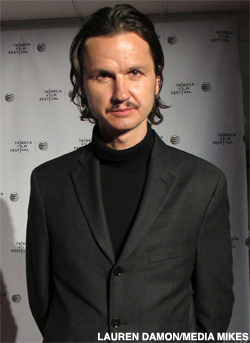

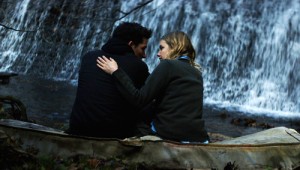
Director Jeppe Rønde and star Hannah Murray talk about “Bridgend” at Tribeca Film Festival

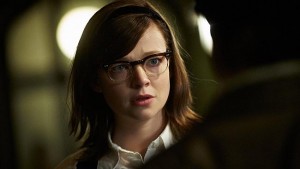
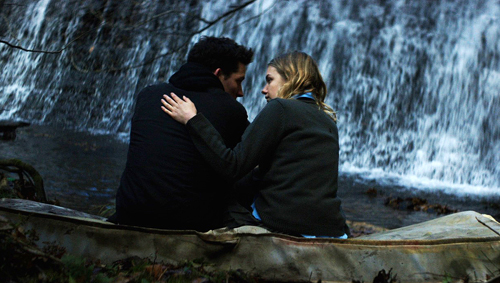
Jeppe Rønde’s harrowing new drama Bridgend made its debut during the Tribeca Film Festival this past week with both the director and star Hannah Murray (“Game of Thrones”) in attendance. Bridgend is based on the true story of a massive series of teen suicides that occurred in a small town in Wales. The suicides received media coverage at a point where seventy-nine young people had taken their lives between 2007 and 2012. In the film, teenager Sarah (Murray) moves to Brigend with her police officer father and quickly finds herself running with the pack of local teens who’ve recently lost some of their peers to suicide. They are a wild bunch who borderline worship the deceased and memorialize them in an anonymous online chat. All the while Sarah’s father, like the rest of the community, seeks to find what is causing this horrible phenomenon.

This mystery intrigued director Rønde who spent time in the actual community and eventually shot the film there on location. Rønde and Murray both spoke to me on the red carpet about how important it was to dramatize the town’s story in a respectful manner.

Lauren Damon: You spent time in the actual community of Bridgend, what was that like and did you go there with the goal of developing a film about it?
Jeppe Rønde
: I went there with the–a goal is a strong word–but I went there to try and find out what is this about? And why is this tragedy happening? Which is of course may be a mystery, because it doesn’t make sense. Why do so many youngsters kill themselves? So I was trying to figure out how can this happen? And how can it keep on going?

LD: Was Hannah’s character influenced by a particular story that you found there?
JR: Not particular, but I wrote the whole script through all the characters that I met there. Many of them. And I mixed them into, you know, one character. So you couldn’t do like a one-to-one, ‘oh this is that character’, because I would never be able to do that. Because that would be morally incorrect. So I built it on the reality I met but also making it a fiction which was important to me. Because it cannot be too close to the real people living there…

LD: How did you find filming in the actual location?
JR: Actually to film on the location was very important to me. Because you feel the presence of what is there. The geography is specific. There’s a fog coming, you know every day it rains a lot. And it can feel depressing. And at the same time it is extremely beautiful. And it was easy for me to get the actors into this state of mind that I wanted them to be in.

LD: How much preparation went into your work with the DP to get this very ominous atmosphere?
JR:
Of course we wanted to push forward a feeling of something that would be this collective subconsciousness. Something that’s within us that’s a darkness. So we wanted to put that also into the shot.

LD: What would you want audiences to take away from the ending of the film?
JR: I hope that they will take away from the ending that this is something that is beyond understanding of who we are as human beings. That there’s something in us that we don’t know what it is…that if we do look into it carefully, then we can maybe choose one or the other. Because it is an open ending.

LD: Is this still going on? All the suicide statistics associated with the town seem to come from 2007 and 2012.
JR: Because that’s the only figures that you can find officially. But unfortunately yes, it is still happening. From what I heard and no one really knows, but the media was shut down in 2010. So it’s difficult to say, but you would have to ask the authorities there.


Hannah Murray, who currently plays Gilly on “Game of Thrones” had a breakout role in the UK teen TV drama “Skins” but saw the role of Sarah as a wholly different teen.

LD: What was your initial reaction to the script?
Hannah Murray: I’d never done something that was based on you know, based loosely on true events. I felt a huge sense of responsibility and I didn’t really want to get involved unless I thought things were going to be done sensitivly and respectfully. And when I had been offered the part I had a meeting with Jeppe to ask him why he wanted to make this film because I was worried about someone, I don’t know, wanting to do it in a kind of half-hearted way or taking advantage. So when I understood how long he’d taken to research it and how dedicated he was to the subject matter, and how involved he’d become with the community, I thought ‘Oh, you’re going to do this right and you’re going to do this honestly and bravely and compassionately.’ So that made me decide that it was something that it was worth jumping into.

LD: How was it shooting in that location?
HM: I don’t think we could have made the movie anywhere else. When you go there, you feel something very unique about that place and it’s beautiful. It’s incredibly beautiful but in a very bleak way. And there’s something kind of almost mystical and strange about it. I loved being there but it was, yeah you do feel a sort of sense of darkness in the air. Maybe that was because of the story we were telling though, I’m sure.

LD: You have this background coming from “Skins” of acting in the midst of a bunch of wild teens, did you feel a little like you were tapping into that again?
HM: I mean I feel like they’re incredibly different projects in sort of every way. Skins shows a dark side of teenage life but it also shows an incredibly fun and comedic side of teenage life. And in this, I mean, one of my friends saw this movie and described it as a gangster movie. Which I think is a really really interesting way of looking at it. And I think there’s a kind of, there’s a level of tribalism in this world that is so much more severe than anything that related to my teen experience. Whereas “Skins” I could kind of go like ‘Oh yeah, it was fun, we went to parties.” It was very different.

LD: How was it different on set with between the days you had you just acting with the pack of young actors versus the more intimate, intense scenes of just your character and her father?
HM: I mean that was one of the most amazing things about the project was all the different people I was working with were so different in terms of experience they’d had and the types of things they’d brought to these characters. So yeah, I remember every day we had the gang there it was just like this injection of energy and they were so exciting and would throw all these amazing lines that they’d improvised…And they would talk a thousand words a minute. And when I was working with Steve [Waddington] I felt like a child and when I was working with the kids I felt more like an adult because I felt sort of more responsible for them. And then I also had the love story with Josh O’Connor, which was a whole other element to play out…but I love everyone who worked on the film. It was such an amazing group of people.

LD: Finally, congratulations of continuing with Game of Thrones–especially this season’s opener being their highest rated–
HM: Oh was it?
LD: Apparently
HM: Oh that’s great!

LD: Why do you think the audience just keeps growing for it?
HM: I think it’s a REALLY good TV show. I think people put an incredible amount of hard work into it. The production values are really high and I just think David [Benioff] and Dan [Weiss] and George [RR Martin] are geniuses. I just think they’re so smart…And George created this amazing world in the books and these incredible characters and then the way David and Dan have adapted it is beyond. I think they’re so so smart.

LD: And how many times a day does Kit Harrington have to hear he knows nothing?
HM: He gets told quite a few times. Not by our crew, but I’ve seen people come up to him in the street and that’s allllways the thing they want to say to him.

LD: How about you, do you get fan recognition out and about?
HM: Um, a bit. Less so than I think some of the others. I think because I’m–well, now I have red hair, but I’m normally blond in real life whereas I have dark hair in the show so I can kind of be a little bit more under the radar. But I still, I’m surprised how many people still spot me. I think because there are so many fans of the show.
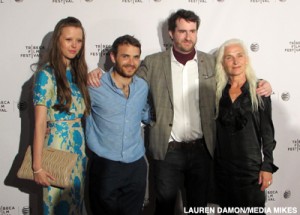
Martin McCann, Olwen Fouere and Mia Goth talk about “The Survivalist” at Tribeca Film Festival

Stephen Fingleton’s post apocalypse drama, The Survivalist held its NY premiere at the Tribeca Film Fest on Thursday April 16th with the stars and director in attendance. Martin McCann takes center stage in the film as the survivalist who has a small farm in the woods and a strict solitary routine to keep himself alive.

Lauren Damon: Was it daunting for you to receive a script where your character spends so much time in silence?
Martin McCann: No no, I just think when you’ve got a silent script, you’ve got more of an opportunity to appear a better than you actually are. Because most actors mess things up when they’ve got lines! [laughs]

The Survivalist’s routine is broken by the appearance of mother-daughter travellers, Milja and Kathryn, played by Olwen Fouere and Mia Goth.

LD: Did you two have a backstory worked out for this pair of characters?
Mia Goth: Well you know, you never actually find that out in the movie either so you sort of, you know–which was a lot of fun–you get to create your own idea of what that character was and who she was as we lead up to where we meet her in our story. And I think I kind of just got the sense that she was just a normal girl, an ordinary girl, thrown into like extraordinary circumstances. And she, I don’t know, just shows great bravery and resiiliance and that was one of the things that I found most compelling and [made] me wanting to be involved in this. I thought it was very empowering.   
Olwen Fouere: We sort of did, yeah. We sort of did together and seperately. You know, I think what I thought was important was that we would each have a very strong internal life. So we would have individually worked towards that…And I think that it was also important that there was sort of a distance between the two of them as well, you know, because one of the points of the film is how it overthrows societal norms and the whole idea of family values, which of course is a whole idea that’s falling apart now anyway.

LD: The Survivalist adds to a long string of recent bleak post-apocalyptic views of the future on film, what do you think the appeal of that genre is?
McCann: Sometimes the truth hurts. And even though it’s a science fiction idea, you know post-apocalyptic and in the future, the inevitability of the life we’re living is that resources will run out. So I think there’s a weird sort of effect that that has.
Fouere: Well I think perhaps the world is starting to question the fact that with the explosive of our population, of the human race, and that the human race is becoming the greatest virus on the face of the Earth. So I think maybe people are beginning to realize that and you know, I think that’s what happens at a critical time is people start to envision what might happen. What the future might hold and how you might address things.

You can read my review of The Survivalist here.

RiffTrax Live! discuss “The Room” on the Tribeca Red Carpet

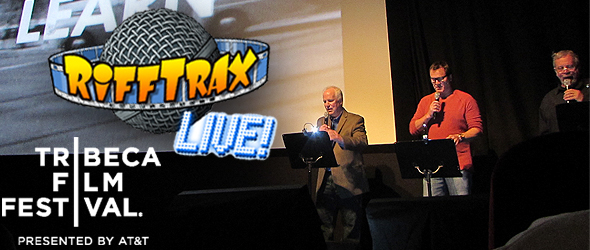
RiffTrax Live! took the stage at the Tribeca Film Festival for their first ever New York show on April 17th. The crew consisted of the talent behind classic TV show Mystery Science Theater 3000, Mike J. Nelson, Kevin Murphy and Bill Corbett. Although MST3K went off the air officially in 1999, their particular brand of humor, consisting of running commentary on classic terrible B-movies got a new life in the form of RiffTrax. With RiffTrax, the guys have shed their MST3K alter-egos (Bill as Crow T Robot, Kevin as Tom Servo and Mike as…Mike) and have broadened their scope to include live shows and downloadable tracks riffing on mainstream studio films. For their Tribeca audience, the guys presented Tommy Wiseau’s 2003 “disasterpiece” The Room. I caught up with the trio on their red carpet. In true RiffTrax fashion while Mike posed in front of photographers, Kevin and Bill stalled off ­to the side to riff on his technique before all heading over for a hilarious chat about what they do:

Lauren Damon: So…why The Room?

Mike Lawrence: Have you seen it?
LD: Yep
Mike: Yeah. I mean it’s the weirdest movie ever, it has to be done.
Bill Corbett: It is the Citizen Kane of bad movies.


LD: Have you guys ever met Tommy Wiseau, does he know what you’re up to?
Mike: Oh yes.
Bill: Yeah, he has to agree to this, believe it or not.


LD: Does he think the movie is good?
Kevin Murphy: I think he was confused at first. He didn’t know exactly—He thought we were stealing his film at first—
Bill: He thought we were stealing his soul!
Kevin: But then he realized we were just having fun with it and he already knows people have fun with the film.
Bill: Yeah
Kevin: He’s accepted it and he’s embraced it so—
Bill: He decided to call it a comedy.
Mike: He’s a good sport about it.
Kevin: He’s a very good sport about it.


LD: And you’ll be doing this again live?
Kevin: We’re doing it live, May 6th, Rifftrax.com for all the information
Bill: Across the land!


LD: And you’ll have new material on this same film every time?
Bill: Yeah, this will probably change, yeah. This is very different from the one we recorded before, yeah, it’ll change a lot.


LD: Can you also talk about how with Rifftrax you switched from Mystery Science 3000 riffing on B-movies to now these downloadable tracks for mainstream movies?
Mike: Well we’ve never had a chance to do them, since we can’t get the rights to them, and the technology allowed it was just like there’s a whole bunch of movies out there that are opened up by doing it that way.
Kevin: It helped us to get some of these big, more recent films for our live shows. Like we’re doing Sharknado 2 in July. Yeah and then what’s that big blockbuster? Santa and The Ice Cream Bunny. [laughing]
Bill: George Lucas’s, I believe?
Kevin: [laughing] I think so, yes, in December.


LD: I enjoy downloading your tracks on my favorite movies. I have all your Marvel universe ones, because I’ve seen them a ton of times and I like to get a ‘new take’ on them.
Kevin: Yeah [all laughing] I’m glad we can provide that for you!
Bill: If we can do NOTHING else, it’s talk about the Hulk’s schlong.


LD: Do you miss your Mystery Science Theatre 3000 alter-egos, your robots?
Bill: I miss being Mike. I played Mike, you realize that don’t you?
Kevin: It’s amazing.
Mike: Make up. Hours in the chair.
Kevin: And Mike was Crow but he wasn’t a puppet, it was make up. It was just all make up. No, I had the opportunity to bring one of the show puppets home after the show was over and I said I don’t want that thing around my house. It would be like Anthony Hopkins in Magic [in presumably a demon puppet voice] “Chop your head off Kevin, CHOP YOUR HEAD OFF!”
Bill: KEVIN! KEEEEEVIN!


When you started MST3K almost 30 years ago did you ever think you’d be doing anything similar all this time later?
Kevin: No
Bill: I thought I’d work as like a bus boy or a porter or be, I don’t know on the Bowery.
Mike: I was sure I’d be back at TGIFridays. I still remember all the codes for extra broccoli.
Bill: Something to fall back on.
Kevin: We kinda were in job transitions and it seemed like fun so we did it and boom, we’re still here.
Bill: Well At this point we have no other discernible skill set. So we kind of have to do it.
Kevin: Yeah we kind of boned ourselves here!


LD: Do you go to see ‘real movies’? Are you in MS3TK mode, how  are you about people talking during films?
All: Oh yeah.
Bill: By all means, oh yeah. I hate people who talk in the movie theater! I’m really a prig and a tight-ass when it comes to that.
Kevin: “SHUSH!!” It’s true.


LD: Do you think, with rights issues, there will ever be a return to the MS3TK characters or that format?
Kevin: Really not up to us because we’re not really controlling—or owners of the company in any way. So…
Bill: I think they will be resurrected on the last days of EARTH. Like…the living and the dead…
Kevin: All the immortal souls.
Bill: Definitely that!


LD: Because it continues to have such life with dvds…
Kevin: Well, wait for the rapture, we’ll see what happens!
Bill: And this movie [The Room] will be the thing that kicks off the rapture.
Mike: Luckily you don’t have to wait very long at all.

Fortunately, the presentation at Tribeca did not bring about the rapture–although I can’t make any promises for the May 6th nationwide broadcast–but it was a hell of a good time. Not only were audiences treated to The Room, but the gang pre-gamed with a black and white children’s safety film, “Live and Learn” that featured more lessons than you can shake a dangerous pointed stick at. My face hurt from laughing and the crowd gave the trio a standing O.


Tickets for the May 6th broadcast of Rifftrax Live: The Room are available via Fathom Events

Jamie Bamber talks about new role in “John Doe: Vigilante”

Most audiences are familiar with actor Jamie Bamber from his role as Apollo on the acclaimed television series “Battlestar Galactica” and its accompanying films. I was a huge admirer of his work on the UK version of “Law and Order.” This week Mr. Bamber appears as a man on trial for 33 serial killings in the new film, “John Doe: Vigilante.” While taking a break at home (with his dog) we spoke about the film and the change of pace casting.

Mike Smith: Hello and a belated Happy Birthday (Mr. Bamber recently turned 42 on April 3rd)
Jamie Bamber: That’s very kind, thank you.

MS: “John Doe: Vigilante” is such a change of pace role for you. What drew you to the project?
JB: Definitely it was the script. I just thought it was such an unusual script. It definitely addresses the view of the audience…without hitting them over the head and railroading them into having an outraged, bloodthirsty, justice-seeking mob opinion. I found the subject to be very threatening to society and civilization and goodness and everything like that. But then it shifts on you. Just as you’re being pulled into this mob response and losing your faith in justice, it changes your view on what that view is. It makes you feel reprehensible for going there. And I think it really does do that. When you watch the film… (Mr. Bamber’s dog starts barking) Sorry (more barking and whispering). Sorry. It was that very unusual script that drew me to the story.

MS: You’ve played quite a few likable characters in the past. Was the kind of character John Doe is part of your decision in taking the role?
JB: Definitely. You’re quite right. I’m often offered roles that are the decent guy in an extraordinary position. Actually, when I looked at this, I thought “this is an opportunity to do something very different.” And I thought that the guy was fundamentally a decent guy who ended up going on a very unusual journey. Some awful things have happened to him in circumstance and he has lost his moral anchor. But the places he goes to – the dark places – the extreme isolation he experiences behind the mask and when he’s in prison – those are the opportunities to play things I hadn’t played before. And I greatly enjoyed the challenge.

MS: You’ve done quite a bit of both film and television work, do you have a preference? Do you prepare differently as an actor for a film role as opposed to a television role?
JB: They’re both so wonderfully different and yet so wonderfully the same. They both use cameras and the cameras help tell the stories but there’s something about television where you get to watch the stories unravel and go on and become more and more complex. And that also applies to the people you’re working with, too. You become a family. I mean I consider “Battlestar Galactica” one of the greatest experiences of my life. So that side of television is certainly a wonderful thing. The longevity and the continuation. And yet there’s also something amazing about telling a story from beginning to end, from A to Z, in two hours of screen time. I mean you go into the project knowing how it ends. So it may be a bit more demanding in the acting choices you make. You have to be able to tell a story in ninety minutes.

MS: You’ve also voiced a few video games. Is that another “type” of acting as well?
JB: I love doing voice work. I love doing that, it’s great. I love trying to communicate the scene only through the spoken voice. I’d like to do more. I’d like to do a motion capture game, I think that would be interesting.

MS: What do you have coming up?
JB: I just finished a film in Canada called “Numb.” It’s a film I’m very proud of and I can’t wait to see. I also just finished “The Better Half,” which is a romantic comedy which should be out later this year or early next year. I’m keeping busy with different things. No long-running TV show at the moment but I’m keeping busy.

Bob Gale reflects on working with Robert Zemeckis on the “Back to the Future” series

I’ve been a huge fan of Bob Gale since the year I graduated high school. That year (1978), he and his writing partner, Robert Zemeckis (who also directed), came out with a small film called “I Want to Hold Your Hand,” a movie which detailed a group of youngsters plotting how to meet the Beatles during their first visit to New York City. Next up for the duo was the Steven Spielberg-directed comedy “1941,” an all-star epic featuring an amazing cast including Dan Aykroyd, John Belushi, Nancy Allen, Tim Matheson and Treat Willliams.

In 1980 the two wrote (and Zemeckis again directed) the outrageous comedy “Used Cars,” a film still on my top ten list of funniest films ever. Things changed for the duo in 1985 when Universal released “Back to the Future,” a film that spawned two successful sequels, earned Gale and Zemeckis their first Academy Award nominations and made Michael J. Fox a star. While Zemeckis continued on his path to Oscar-winning director, Gale continued to write and produce, eventually moving behind the camera himself.

In the mid 90’s, Gale partnered with Sony Pictures to produce an interactive theatre experience called “Mr. Payback.” I was very fortunate to work for Loews Theatres (owned by Sony) at the time and my theatre was one of the trial theatres for the film. Mr. Payback was a cyborg who punished the bad guys when they needed it. As the story progresses, the audience decides the punishments Mr. Payback dishes out to those who deserve them.

This Saturday evening, April 18, Mr. Gale will be appearing at the Kansas City Film Fest, where he will present a 30th Anniversary screening of “Back to the Future.” As his appearance grew near, we spoke about his early films, the resurrection of “Mr. Payback” and if he has any money on the Cubs winning it all this year.

Mike Smith: Hello.
Bob Gale: You called right on time. You score points for punctuality!

MS: 30 years ago your life was about to change. Did you have any idea that “Back to the Future” was going to be so well received?
BG: (laughing) Hell no! We had a hard enough time getting the movie made when we did. It took us almost three and a half years from when we did the first draft to get the movie into production. People kept telling us that it was a time travel movie and that time travel movies never make any money.
MS: Surprise.
BG: (laughing) Yeah.

MS: Your earlier films, among them “1941” and “Used Cars,” are now considered classic comedies with a great fan base. I actually saw “Used Cars” here in Kansas City when it screened at Showarama.
BG: Oh yeah, we did come out to Showarama to talk “Used Cars.”

MS: Can you explain why some films, especially comedies, sometimes take time to be recognized?
BG: Sometimes it has to do with the marketing. People need a reason to go to a movie. If they could figure out a way to do it right every time more movies would be more successful. I mean, the problem with “Used Cars” is that we opened in half of the country the weekend after the movie “Airplane!” opened. And “Airplane!” got all of the attention. And it should have, it was a very funny picture. Also, in hindsight, “Used Cars” was probably not the best title. You mention “used cars” to people and they have a bad connotation with the concept. Maybe if we’d called the movie “Trust Me” (the campaign slogan of Kurt Russell’s Rudy Russo) it would have done better. And Kurt Russell was not as well-known back then as he is now. And of course, older movies are now more easily accessible, with cable television and all the streaming home video. Now it’s not that hard to search out a movie that somebody has talked about to them.
MS: I would proudly put a RUDY RUSSO bumper sticker on my car!
BG: (laughs heartily)

MS: Tom Wilson (Biff in the “Back to the Future” films) famously sings during his stand-up act that “Back to the Future 4” ain’t happening. Any chance he’s wrong?
BG: No, he’s not wrong. Who would want to see a “Back to the Future” movie without Michael J. Fox in it?
MS: (feeling like an ass because I tried to be cute and instead sounded like an idiot) Wow. I didn’t even think about that.
BG: There you go. Besides, what did you think about “Indiana Jones 4?”
MS: Gotcha.
BG: Sometimes it’s best to just quit while you’re ahead, right?

MS: Any chance they’re ever release the Eric Stoltz footage? (NOTE: for those readers who don’t know, when Michael J. Fox was originally unable to star in “BTTF,” the role of Marty McFly went to Eric Stoltz. Apparently the filmmakers were not happy with Stoltz’s performance and made a deal with the producers of Fox’s television show, “Family Ties,” that allowed Fox to do both the series and the film).
BG: We’re not in a big hurry to do that because it would make Eric look bad. We’re not interested in shining a light on the guy and saying, “Jesus, see how (bad) he was?” We never destroyed the footage. Maybe it will be released after Zemeckis and I are dead. We felt it was of enough historic value that we wouldn’t authorize its destruction.

MS: Last “Back to the Future” question – if you had a chance to get into the DeLorean, where would you go?
BG: (laughs) What day is it? Every day you read about something and you wonder, “Gee, I wonder what really happened back then?” I have to say, I would really love to watch my parents on their first date. There is just something so sadistically voyeuristic about that. I would also like to go back in time to attend a lecture by Mark Twain…I’d like to go to some of the great, old World’s Fairs, to see what they were really like. I’d like to be a time traveling tourist.

MS: I worked for Loews Theatres back east and we were one of the theatres that had “Mr. Payback.”
BG: Wow!
MS: In this day and age, with everything being so interactive, is there any thought of bringing that process back?
BG: I’ve got a DVD where I recorded a couple plays of the show and I periodically take it around and show it to people and say, “Hey, we can do this. We can do this now.” But people still don’t get it. Eventually I think that they will. I do hope so. We were definitely ahead of our time with that thing.

MS: You’ve written for comics. Is it easier as an artist because you don’t have any time constraints? Where normally you’d have a 5-hour movie, now you can just stretch it out over enough issues?
BG: Every medium that you work in has its own rules and restrictions and conventions that you need to be aware of. So is it easier to write for comics then for movies? Not necessarily. There are certainly a lot fewer people that you have to deal with to get to the point where somebody pushes the button and says “let’s go” but you also have the matter of them saying, “OK, we want this series to be finished in four issues” when you thought you were going to have five or six to do it in. Again, you still have marketing to deal with and all kinds of crazy stuff because what it looks like from the outside is never the same as when you get in there.

MS: Finally, what are you working on next?
BG: I’ve got a television pilot I’ve been trying to get off the ground. This year has been so…everyone has been so crazed about “Back to the Future” and its 30th Anniversary…it seems like I can’t get two uninterrupted hours to work on something where I’m not interrupted by a phone call or email or an interview regarding some of the events were putting together for the rest of the year. There’s a fabulous book coming out, on or about October 21st, that is pretty much the definitive “making of” about the trilogy. You’ll see plenty of photos of Eric Stoltz in that. So for everybody that wanted to know what it looked like with him in it, they’ll get a taste of it.

MS: Quick follow-up that just hit me…do you have any money on the Cubs winning the World Series this year? (NOTE: In “BTTF II,” Marty travels to the year 2015 and is surprised to learn that the Chicago Cubs won the World Series that year, beating Miami).
BG: (laughs for a while) No, but interestingly enough, the Miami Marlins…the guys in their promotion department are big “Back to the Future” fans…they’re planning most of their season off of “Back to the Future II,” saying they’re going to rewrite history and win the World Series, not the Cubs. They’re going to do a big promotion at Marlins Park on September 25th (sadly, the Marlins play the Braves that night, not the Cubs). We’re going to go there and throw out the first pitch and they’re even going to make their uniforms look like the way we depicted them in the movie. Now when we made Part II, there was no baseball franchise in Florida, so when we created them we thought they would be the Miami Gators. The plan that I heard was that they were going to make Miami Gators uniforms for that night. But would I ever bet on the Cubs? Not a chance! I’m from St. Louis.
MS: Cardinal fan.
BG: That’s right.
MS: Wow, it must have hurt for you just to write that the Cubs won the World Series.
BG: Not at all. It’s a great joke! But look, here’s the deal. If the Cubs actually get into the World Series, Bob Zemeckis and I will be hailed as visionaries! But if they choke, the joke will remain funny for many more years to come.

MS: Thank you so much for your time. It’s been a real pleasure to speak with you.
BG: Thank you, Mike. It’s always a pleasure to speak with a “Used Cars” fan.
MS: I work for the local electric company and I deal with customers every day and I often find myself quoting Jack Warden to myself.
BG: (in a gruff Jack Warden voice) You don’t know dick!
MS: Exactly. That and “what are you, a f***ing parrot?!”
BG: (laughs)
MS: Have a great day and thanks again.
BG: You too, Mike. Bye. (continues to laugh as he hangs up the phone – I must say it feels so great to hear someone who makes you laugh think you’re funny).

The “Back to the Future” event with the Miami Marlins on September will raise money for Parkinson’s research. Media Mikes would like to ask its readers to please take the time to learn about the disease by visiting the Michael J. Fox Foundation at www.michaeljfox.org Thank you!

Luke Hemsworth discusses new film “Kill Me Three Times”

Now available on Video On Demand and opening Friday April 10th in New York City, “Kill Me Three Times” is an Australian dark comedy thriller from director Kriv Stenders. The film centers around sniper Charlie Wolfe (an amusingly malicious Simon Pegg) who’s being paid to execute a hit on Alice (Alice Braga), the cheating wife of Jack (Callan Mulvey). Little does Wolfe know that Jack is not the only person out for his target and bloody mayhem and blackmail ensues.

Luke Hemsworth takes on the role of Dylan the tough mechanic with whom Alice is carrying on her affair. I got a chance to speak with Luke on a phone call from LA about the film, working in Australia and his recent stint on Saturday Night Live with younger brothers, Chris and Liam.

Lauren Damon: The film is kind of crazy, who first introduced you to the project?
Luke Hemsworth: That’s a good question, I think someone sent the script and said ‘have a read of this, if you like it, let’s talk more about it’. And of course I read it you know in one go—which  is always a good sign—and then I jumped on Skype with Kriv and you know, we were all on the same page and then from that point we went on and did a chemistry reading with Alice Braga and that obviously went pretty well and here we are!

LD: Was Alice already signed on at that point when you did the chemistry read?
LH: She was signed on. She had been signed on for like five years or ten years or something, she was signed on since she was a little kid I think! [Laughs]

LD: How would you describe your character Dylan?
LH: I would describe him as a loyal, humane puppy dog who is forced to deal with revenge and deals with it pretty well!

LD: Was it more appealing for you that Dylan is one of the characters that is decent and can have a happy ending versus everyone else?
LH: Yeah, it’s an added bonus I think. I haven’t even looked at it from that point of view—the journey is you know, that’s the fun part.

LD: Your journey mostly includes scenes with gunfights and you get a car chase. Did you have  fun making that? Had you experienced that before?
LH: Soooo much fun! I’ve experienced a little bit of that, but yeah…it was a complete blast. I got to do some really good, heisty you know, funny stuff. There wasn’t a day on set I didn’t enjoy and think ‘gee I really wanna be here.”

LD: Particularly was it fun having a big standoff with Simon Pegg’s character?
LH: Yeah, I mean it was great. It was really at the start of what we were doing. I think it was one of my first days was the stand off with Simon Pegg. And we kinda hung out and got to know each other, so yeah, it’s just such an interesting dynamic when that happens. And fortunately Simon is like the coolest guy in the world so we got on really well and we had an awesome time.

LD: Contrary to the bloody fights, you’re really in the most beautiful settings, how was it to shoot on these locations and was that an intentional juxtaposition?
LH: Oh for sure, yeah. The locations became a character in a way, so it was very intentional. For me, it was a huge added bonus to work not only as an actor, but also a human being I got to spend time surfing and you know, playing in an area of my native country, which is exceptionally rugged and beautiful with amazingly grounded people.

LD: Are you still based in Australia generally or have you also moved to Hollywood?
LH: I’ve been here for two years now, yeah, I’d moved before this all happened. And of course you when you make the move, then something’s happening back in Australia or somewhere else. So I spent a little bit of time back in Australia.

LD: So you were in LA when you got this part in Australia?
LH:
I was yeah I got taken back two or three times, I did another project called Infini with Shane Abbess, who directed Gabriel, which also drops very soon—comes out in May I think—which is amazing, another amazing Australian kind of phenomenon which I’m sure we’ll be talking about soon.

LD: I noticed up until recently, you have a lot of television credits, does that affect at all how you approach a project? Do you prefer one or the other?
LH: No, I definitely don’t have—I don’t care one or the other, you kind of approach them both the same. Yeah, definitely approach them both the same. There’s a level of you know, pre-production work and research which goes into each character which goes into each and every day. I think that kind of falls away and hopefully you’re left with something which looks presentable [laughs].

LD: Do you foresee pursing more films going forward?
LH: Umm, yes and no, you know I don’t rule out one or the other. I’m about to start shooting West World for HBO so you know that’s TV but it’s…kind of—

LD: Their slogan is ‘it’s not TV, it’s HBO!’
LH: Yeah! It’s the pinnacle of TV. You know it’s Jonathan Nolan, Lisa Joy, Bad Robot are producing so you know it’s a huge project.

LD: If you’re allowed to talk about about that at all, what’s your Westworld role like?
LH: I’m like the head of tech security for the army and it’s the robot part. The human technological side. I can’t give much too away other than that I think.

LD: Thanks! Of course the last time I saw you on US TV, you were on SNL a last month with your brothers, what was that like?
LH: [Laughs] It was great! I mean hilarious. You know a huge kind of notch on the belt for me, definitely. For all of us. Chris did such a wonderful job, incredibly honored to be a part of that process. It was fun.

LD: Is SNL as iconic to Australian viewers as it is here?
LH:  To certain Australians, definitely. Maybe not as much as Americans, but you know I know of it, I definitely hear of  a lot about SNL. Maybe not the same kind of love and mystery that it does here, but definitely a huge honor, absolutely.

Once again, Kill Me Three Times premieres this week at NYC’s Landmark Sunshine Cinema and is still available on VOD. Meanwhile, as Luke said, you can next look for him in Infini, opening on May 8th.

Linkin Park’s Joe Hahn talks about directing the film “Mall”

Joe Hahn is probably best known as member of the multi-platinum selling rock group Linkin Park. However Joe is an accomplished music video director who recently made the jump to feature film directing. Hahn’s first full length film titled “Mall” is an adaption of the Eric Bogosian book of the same name. The film stars Vincent D’Onofrio, Gina Gershon and Cameron Monaghan and is currently available via Netflix. Media Mikes had the chance to speak with Joe recently about the film and his move to directing full lengths.

Adam Lawton: Can you give us some background on how you got involved with this project?
Joe Hahn: I had come across the script through a mutual friend who was a producer on the film. They worked with Vincent who was working on this project with Eric Bogosian who wrote the book the film is based on. He also was the writer on one of Oliver Stone’s early films titled “Talk Radio” and a bunch of other great things. I think Eric has a very punk rock perspective of Americana. When I read the script I loved it and really thought it was great. I then went and read the book and loved that as well. I liked how the screenplay made since of what was going on in the book without being a carbon copy. I couldn’t put it down and I had all these ideas running through my head. I called my friend up and told him this was perfect and that I knew how to do the film and that it would be very easy for me to do.

AL: Were you able to be free with your direction or did you stay more to the original script?
JH: I definitely stuck to the essence of the script. I think the visual interpretation was my thing. Every person you meet and work with on a film project acts as collaboration. Everyone who touches it is part of the process. There is always added development that each person brings to the table. We all worked together from day one. The templates were all there in screenplay. We did however have to make some tweaks along the way just to have things make a little more sense. It’s all about fine tuning the process.

AL: What do you feel is the defining characteristic of this film that showcases you as the director?
JH: Film is a great way to get someone’s attention for 90 minutes or so. With a full length film you can really get into the details of the story and its characters. With a lot of the music videos and short form things I have done you have to get in and get out as quickly as possible. There is something that is exciting about full length film experience where people can unwind and enjoy themselves. I am a fan of films and the experience so that’s something I want to try and carry over with these long form projects.

AL: Did you notice any major differences when you first started working on this film having come from working mostly on shorts?
JH: I think on the creative side a full length is just a longer version of everything that goes in to a short or music video. With a full length you often have multiple story lines happening and a variety character dynamics. You have to figure out how to make all of that fit in with how the film is written. I think when something is really well written you can use that as your master template and then the details come along to help make sense of everything. The biggest difficult I think in all of this is the logistics portion of things. The creative stuff is the fun part and something that comes naturally for me. The business side of things is where it becomes difficult for me. There’s just so much going on and so many different people involved on that front that it can be hard at times.

AL: When it came time to edit the film how did that process work for you?
JH: We did do some rearranging during the editing process. We also did a bit of voice over work as well. We actually came back later and did a majority of that after shooting was completed. After seeing the first cut of the film I felt that the films main character was Jeff played by Cameron Monaghan. We see his experiences as the film progresses and you start to wonder if what’s happening could or could not be in Jeff’s imagination. As you watch this character you sort of see how he reacts in certain situations and it makes you wonder.

AL: Looking back on the finished product. What are your feelings towards it and is directing something you would do again?
JH: There are certain moments where things feel perfect. Being creative through music, art and film has a very Zen like feeling for me. I can totally dive into projects and enjoy myself while working with people I can challenge. The whole process is very enjoyable. I am fortunate enough to where I can do different things and I hope to be able to keep doing the things I love as time goes on.


Related Content

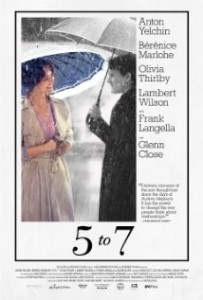
A Conversation with the Creator and Stars of New Film “5 to 7”

Victor Levin is a four time Emmy nominee whose work includes writing for such shows as “The Larry Sanders Show” and writing and producing the very popular “Mad About You” and “Mad Men.” This week his latest project, the romantic comedy “5-7,” which he both wrote and directed, opens. He was joined in our conversation with the two stars of the film, Anton Yelchin (“Star Trek”) and French actress Berenice Marlohe (“Skyfall”). They made a pretty formidable trio!

Mike Smith: Victor, what was your inspiration, if any, to write the film?
Victor Levin: I love to write about love, Michael. I think it’s the most interesting subject and one of the best things we have going as human beings. I can’t imagine life without it and I think it’s most inspiring wherever it goes. In this particular case, I was traveling in Paris in the late 1980s with my girlfriend at the time. We stayed at the home of some friends of hers who were older and married and they lived…they had…this kind of marriage. We went to a party and I saw the husband, I saw the wife. And I saw the girlfriend and I saw the boyfriend. I didn’t know what to do. I didn’t know who to talk to. My girlfriend to just keep my mouth shut and my eyes open and I might learn something new. And she was right. It was all very elegantly done. It was all very elegantly choreographed. Like the film says, there are rules and obligations. No one is ever embarrassed. And it was the way these people chose to solve what was, to them, the problem of monogamy. And I had to accept the fact, as a middle-American suburban kid, that there were other philosophy’s of life in the world. There were many, many ways to look at how we go about arranging our lives. It may not be for me, except for as a story, but it was a fascinating obstacle. It was a fascinating starting-off point for the story. And a real eye opener for me personally.

MS: You have quite a few writing credits but haven’t been behind the camera that much. Was this project something you felt you HAD to direct to preserve your vision?
VL: Yes. The film is, as you know, a little bit of romance and a little bit of comedy mixed together. And that is a very fragile mixture…it’s something that has to be done just so. The movie has to make you laugh but it also has to make you cry. You have to balance it just right. If it makes you laugh TOO much, it will not make you cry. There has to be a balance in very scene, with every joke. I knew what I wanted and I was not going to give it away to anybody else to direct. This was something that was either not going to be made or it was going to be made by me.

MS: Thank you. Anton, first off, a belated happy birthday (the actor turned 26 on March 11).
ANTON YELCHIN: Thank you.

MS: What attracted you to the project?
AY: The screenplay. I read it and thought it was really, really…wonderful. It was funny and also very moving. When you read a script and walk away from it having really enjoyed it and been moved by it…that’s the reason I did the film.

MS: Brian is a very change-of-pace role. Was that something you were trying branch into?
AY: I’m not consciously trying to branch out into any certain role. I just really loved this character a lot. His journey was entirely relatable. I think one of the things that all human beings have to learn is how to deal with things that end. What, if anything, do we try to hold on to? And how that decision constructs meaning in our lives. I found it both very moving and very relatable.

MS: Thank you. Ms. Marlohe, same question.
BERENICE MARLOHE: I loved the script. I loved the dialogue. I loved that the script was about relationships…about real human beings. I love that it was a love story. About relationships. And I loved that it made you question things in general. Here, the plot of “5-7” may seem unconventional but I think it shows relationships in another point of view. It deals with love and, as Victor said, there are many different ways of loving. Love can last. Even if it doesn’t LAST, it can be eternal. It’s an emotion that is pure and beautiful.

MS: Victor mentioned that he had come across this type of relationship while in France. Do you know anyone that has this type of relationship?
BM: (laughing) Everyone thinks this only happens in France. I’m sure it happens all around the world!

MS: What are you each working on next?
VL: I’ve written another romance that I hope will also have some good laughs in it. I’m also working on the STARZ comedy “Survivor’s Remorse,” which is a half-hour comedy on the STARZ network, loosely inspired by the life of Lebron James. He’s an executive producer on the show. It’s the only time that my office will be next to Lebron James’ office (laughs). I plan to enjoy that as much as possible. I’ll do some writing and directing for them, as well as producing.
AY: I have a couple films coming out. “Broken Horses” actually comes out the week after “5-7.” And I’m going to start “Star Trek 3” soon…ish. I also have a couple other films I just finished.

VL: He’s very busy, Michael. He’s actually shooting a film now, during this interview! (laughs)
BM: I just finished a comedy produced by Will Ferrell, starring Will Ferrell and Kristen Wiig. And then I have a sci-fi movie coming out called “Revolt.” And I also have the next Terrence Malick film (“Weightless”) with Michael Fassbender and Christian Bale.

MS: Final question. Anton, I’m sure you’ve been sworn to secrecy so Victor, if you or Ms. Marlohe have any clues about what “Star Trek 3” is going to be about I’d love to hear them.
VL: (laughing) All I can tell you, Michael, is that I’ll be the first one in line.
MS: I’ll be standing right next to you!

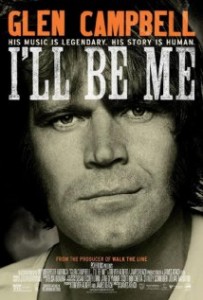
James Keach talks about directing “Glen Campbell: I’ll Be Me”

It would be fair to say that the Smith family has a great admiration for the Keach family.  As a child, I enjoyed the many roles that Stacy Keach, Sr. played in most of the classic television westerns.  Then, in 1980, Mr. Keach’s children, James and Stacy, co-wrote and co-starred in the movie The Long Riders.  What makes that film so popular in our house is that James Keach played Jesse James.  My son, Phillip, is related to Jesse James on his mother’s side of the family, though thankfully he has never robbed a bank.

James Keach is probably best known on-screen as the motorcycle cop who pulls Chevy Chase over after the family dog is unwittingly tied to the back of the car in “National Lampoon’s Vacation.”  He has also appeared in such films as “The Razor’s Edge,” “Wildcats” and “The Experts,” a film that deserved a much better marketing effort (shame on you Paramount).  He also played the role of the Warden in the Johnny Cash bio-pic “Walk the Line,” which he also helped produce.  Cash was the godfather of Mr. Keach’s son, John.

Turning his attention behind the camera, Mr. Keach is the director of the recent documentary “Glen Campbell:  I’ll Be Me,” which recently earned an Academy Award nomination for Original Song.  Mr. Keach and I spoke about the film and its impact before the nominations were announced.

Mike Smith:  How did you get involved in the project?
James Keach:  Julian Raymond, who had produced Glen’s last two projects, “Meet Glen Campbell” and “Ghost on the Canvas,” was producing my 18 year old son Johnny’s band.  He would come over to our editing room, which is also a rehearsal area, and would ask if I wanted to work on a project on Glen because he knew I had worked on “Walk the Line” several years ago.  We were very reluctant at first but we gave in to him.  He wanted us to make a documentary rather than a narrative film.  When we found out that Glen had Alzheimer’s it made me and Trevor (co-producer Trevor Albert) even more reluctant.  We thought, “oh my gosh, how can we make a movie that’s uplifting about THIS?”  And then we met Glen.  Once we met Glen and his family we realized that this man really wanted to make a difference in the world.

MS:  Is it difficult as a filmmaker, especially considering Glen Campbell’s situation, to not let your emotions dictate your approach to the material?
JK:  The big thing was…everything we had ever seen about Alzheimer’s, both in the documentary format and the narrative format, was very, very dark.  So the emotional resistance occurred prior to making the film.  Once we got to know Glen and we got to see his willingness to reveal the truth about what he was going through, it was like we were on the journey with him.  We were suffering it with him.  Emotionally we felt more for the family then we did for Glen because, when you’re going through it, you don’t realize what it’s doing to your family all the time.  Glen was very cognizant of what was happening and you see in the film that there is some remorse.  He knew things were getting weird and messed up but he really didn’t understand it, especially towards the end.  The real emotional impact came from watching his kids and his wife…the people that had known him for thirty or forty years…watch him going through the downward spiral.  And as an objective filmmaker you kind of had to stand back and observe everything and not become…you really just had to stand back.  And to reflect Glen’s personality, which has a lot of humor in it, and love, we could have easily gone on one track in the film and just shown one side of it.  But that wouldn’t have been Glen.  We also thought it was going to be a short journey.  We thought we’d be with him for five and a half weeks and we ended up spending two and a half years.  We kind of went down the rabbit hole with him.  Slowly but surely.  And even now, looking back at the film, it’s so courageous what he did and it’s a legacy for me as a filmmaker that I feel so proud that I was able to be a part of it.  To be at the helm, with my partner, Trevor, and to share this story.

MS:  Have you kept in touch with Glen?  How is he doing?
JK:  Yeah.  I saw Glen six weeks ago and the family sends pictures of him.  And I talk to Kim (Campbell’s wife).  He’s in good physical health.  He’s in good spiritual health.  He’s happy where he is.  He still has Alzheimer’s…it’s not going away.  But he’s not suffering.  He’s being well taken care of.  And I think that’s the most you can ask.  He has a lot of love around him.  He’s still full of love and full of laughter and full of faith.  Every once in a while he’ll lift his hands up and say “thank you, Lord.”  It’s kind of amazing.  I heard the other day…Kim said he played a little bit.

MS:  You’ve spent most of the past two decades behind the camera instead of in front of it.  Is that something you want to concentrate on?  Are you still open to acting jobs?
JK:  Have you got a job?  (laughs)
MS:  While I was curious if maybe they’ve talked to you about doing a cameo in the “Vacation” reboot.  Maybe you could be the cop that pulls Rusty over.
JK:  (laughing) That would be really funny.  Man, I had such a good time doing that.  That’s where my partner Trevor and I met.  He was Harold Ramis’ producer.

MS:  What do you have coming up next?
JK:  We have a lot of different films that are in various stages of development.  What we’re really trying to do is to make sure this film finishes correctly.  To make sure it gets in the right place in the digital realm because I think that is where most people are going to see it.  We’re chugging along and getting a lot of requests for screenings.  The most important thing is to school as many people as possible to see the film.  I think it will help change the conversation about Alzheimer’s.  It will certainly help leave a great legacy for Glen.  I think Glen’s intentions were to try and make a difference in the world…to create an awareness of how dire the situation is.  We did a screening for about 4,000 people in Nashville.  I went up on the stage…the Band Perry was there and we had a concert and a screening.  And during the concert, while they were setting up for their next song, I asked how many people in the audience had been affected by Alzheimer’s.  About 3,800 people stood up.  I think that there is a connection there with everybody.  People have to become more aware of this and do something about it before it really takes its toll on our country and each one of our families.

Tanner Beard talking about working on Terrence Malick’s “Knight of Cups”

With James Brown gone, Tanner Beard may easily be the new “hardest working man” in Hollywood. A recent acting job turned into a gig where he not only continued to star in the film but also co-write, co-direct, help produce, supervise the music AND do his own stunts! He is also executive producing the next two films by creative (and reclusive) filmmaker Terrence Malick. While preparing to head to Germany for the upcoming Berlin Film Festival where one of the Malick films, “Knight of Cups,” is representing the United States in competition, Mr. Beard took time out to talk to me about sixties-style movie making, who Martin Weiss is to him and whether or not there really IS a Terrence Malick.

Mike Smith: Hello fellow Virgo!
Tanner Beard: Virgo is the best you can be! Do we share the exact same birthday?
MS: Not the year, but the date.
TB: (laughing) My man!

MS: Give us a little introduction to “6 Bullets to Hell.”
TB: “6 Bullets to Hell” is a throwback to the classic Sergio Leone’ films back in the day. Kind of like Clint Eastwood – “A Fistful of Dollars” – or the original “Django” kind of style.

MS: You wear at least four different hats on the project. Was that something that was important to you to ensure a certain vision?
TB: You know, I haven’t told a lot of people this but I actually went out there as an actor and a little less than halfway through shooting they called a big meeting and we were told that the funds were about to run out. But because what we had shot so far looked so good my production company decided to come in and finish it. So we spent every night re-writing the script and making it the best we could with the time allotted that we had to shoot. It’s really an interesting story of how it got made that we haven’t shared with anyone yet.

MS: (slyly) Do you want to share it now?
TB: (laughing) Yeah. We kept sending the dailies back to the states and I kept saying it’s so great because we’re doing it like they did in the sixties. There was no sound. We decided to ADR everything after we were finished like they did in the sixties. We were shooting on the same set that literally made Clint Eastwood famous. Half of our crew was from all over the world. There were six or seven different languages spoken on set daily. We were literally making a “spaghetti” Western just like they did back in the sixties. And I said to my production company “what do you think about us coming in and taking it over?” To make it more for an American audience, as opposed to its original European market. And we ended up making a classic, late night, drive-in movie style film. It was so much fun. I learned how to ride a horse on that movie that’s for sure.

MS: What, if anything, can you share on “Knight of Cups?”
TB: “Knight of Cups” is a film with an unbelievable cast and an unbelievable director. I still pinch myself when I see my name near any of those people. People who I grew up studying and learning. I used to study Terrence Malick in film school. So now, later on, to even have my name anywhere next to his is unbelievable. It’s still settling in. Christian Bale is one of my favorite actors so to be up there with him is pretty surreal. I actually haven’t seen the full film yet…just bits and pieces. So I’m probably more excited about seeing it in Berlin then others since I haven’t seen the completed film yet.

MS: This questions is tongue in cheek but, I mean, the man is so reclusive. Have you ever actually SEEN Terrence Malick?
TB: (laughs loudly) I have! Though I’ve never seen him in America. My offices are very close to his so you would have thought I’d have run into him sometime…maybe seen him at the grocery store. But he is so dedicated to his work…he’s not out and about too often. There have been a couple times that we were supposed to go to dinner but some schedule conflictions came up. When I was in Cannes last year I got to meet him very briefly. It was a very cool moment for me because some people don’t even know what he looks like because he is SO dedicated to his craft. He’s not out on the red carpets. I am looking forward to spending more time with him in Berlin, which makes the trip so much more exciting and important to me.

MS: I had to ask. I saw a note on another untitled Malick project you are working on that stated on September 16, of last year, it was reported that a photo of Malick was taken on the set.
TB: Was that in Austin? The Ryan Gossling film?
MS: Yes.
TB: I’m surprised more pictures weren’t taken, since that’s a great day to take them on! (laughs)

MS: I couldn’t help noticing a big coincidence in your acting credits – who is Martin Weiss and why do you play him so often?
TB: (laughs) Oh my God! That’s a funny story. Probably six or seven years ago…maybe longer…I was beginning to find my way as an actor out here. Back when you used to answer actor ads on Craigslist. A really kind gentleman named Roger Lim actually was making a film and I thought it was just….that I was just making a baseball movie. But it turned out to be four movies. So it keeps showing up. He shot enough footage to make four films so my character keeps going. I actually haven’t seen them but I guess I shot more than a trilogy in two weeks!

MS: After fourteen years you’re releasing “The Beaver Trilogy, Part IV.” Is this a continuation? Is Bill Hader taking over from Crispin Glover?
TB: No, Bill Hader is actually narrating the documentary piece. “The Beaver Trilogy” has been a very interesting cult film for a long time. Jack Black was very aware and interested in it. The director has just done so much with it. It’s based on a real encounter that was videotaped and then it was re-created with various actors. Crispin Glover did a version of it very, very early on. Sean Penn did a version of it way before “Fast Times at Ridgemont High.” So there were three different versions of it. It was the filmmaker’s thesis project. He created this really weird chance encounter. And now part IV is the documentary that ties all three of them together and lets the story in on where these interesting pieces came from. It’s a very cool and quirky documentary. I think people are going to like it. And it drew the attention of Sundance early on. So it’s very odd that a chance encounter from 1979 is still being talked about today.

MS: What else do you have in the pipeline?
TB: There is an animated feature that we’re working on now. We’re very early in the pre-production stages. It’s called “Fridgeport.” And we’re working on a Christmas movie called “Just Claus,” which we just started casting to being shooting in February that hopefully will be out by Christmas.

Al Sapienza talks about roles in “Taken 3” and “Godzilla”

You may not know Al Sapienza by name but you surely know his face. Probably best known as Mikey Palmice on “The Sopranos,” Sapienza has appeared in over 200 films and television programs. On the big screen he’s been seen in films like “Pretty Woman,” “Free Willy 2” and “Lethal Weapon 4” while on television he’s co-starred on such programs as “Law and Order,” “NYPD Blue” and “Blue Bloods.” He has also appeared in both the 1998 and 2014 versions of “Godzilla” This week Mr. Sapienza can be seen alongside Liam Neeson in “Taken 3.” To help promote this appearance Mr. Sapienza took time out to talk to me about what he does and why he does it.

Al Sapienza: Where are you calling from?
Mike Smith: Kansas City.
AS: Kansas City? I love Kansas City. I played the Uptown Theater there. I had some great times in Kansas City.

MS: You wouldn’t want to be here today…it’s three below zero! So what attracted you to do “Taken 3?”
AS: I’m one of those actors who loves to work. I love to work. And I don’t look at work as “work.” I honestly don’t. When I’m working I’m not working. I’m working when I’m not working! It’s fun being creative…being around creative people. Even though I’ve been an actor for 30 years I’m also a fan. I love it. I love movies…I love TV…I love the theater. Before I went on the audition I watched the original “Taken.” To be honest I hadn’t seen it but since I had the audition for “Taken 3” I watched it and I really liked it. Then I watched “Taken 2.” I’m a tremendous fan of Liam Neeson. I think he’s incredible in everything he does. He throws himself into every part he does. And now I finally have the chance to work with him. And it turns out that he’s just a real regular and good guy. Plus it’s a big movie…it’s a big franchise with a big following.

MS: You’ve appeared in other sequels. Is it difficult going into a project like that…one that might have an already established cast and crew?
AS: It’s funny. It’s all the same. If you’re acting correctly…if your just totally in the moment…if you’ve created this fake reality in your imagination and in your mind and just be real yourself…on the acting standpoint it doesn’t matter if it’s a sequel or a one shot deal. You shoot to do a great job all the time. And to me, that’s what is cool about acting!

MS: You’ve done a lot of both film and television. Do you have a preference?
AS: Good question. The only difference to me is that it’s a longer process on a film. You have more time to be creative…they have more time to shoot. Sometimes for a movie that’s an hour and a half you shoot for seven weeks where on a television show that’s an hour long you shoot for eight days. TV really gets your adrenaline going…it really makes you feel good about yourself. When you get to the set and six in the morning you better know your lines…and everybody else’s lines. TV is really more demanding, because you have to be ready to just knock it out where on a film you have more time. What I’m really excited about is cable television. I think that the movies are moving towards being corporate franchises…Batman, Spider-man, Transformers. They keep trying to do this multi-million dollar franchises with all of the marketing and promotions. I think cable television is going to continue to be cutting edge.

MS: Speaking of multi-million dollar movies, you have the rare distinction of having appeared in both 1998’s “Godzilla” as well as this past year’s version. Do you have a favorite?
AS: That’s a tough one. The director of this past “Godzilla” (Gareth Edwards) had done a great film called “Monsters.” He did it on an incredibly small budget, doing all of the special effects himself on his laptop. I really enjoyed working with him, he was such a special guy. I also enjoyed the earlier one, working with Roland Emerich and Dean Devlin. But I think I enjoy Gareth’s film better because I think he tried to be more like the old, classic films…more about science and science fiction.

MS: Normally I’d ask what your next project would be, but if the Internet Movie Data Base is to be believed you have no less than 22 projects between now and next year. So I guess I’ll ask what you do in your spare time?
AS: (laughs) Spare time? I’m an actor, I don’t need spare time. I like to play football on Saturday mornings. There is a long running game played in New York that has been going on since 1964. They play every week, be it snow or rain. As for what is next, I’m very excited about a mini-series running now called “Ascension,” which will be shown on the SyFy Channel. It’s a very, very interesting show with a very, very interesting concept. That’s what I’m really excited about at the moment.

Peter and Michael Spierig talk about directing “Predestination”

Peter and Michael Spierig, also know as The Spierig Brothers, are known for directing horror/sci-fi genre films like “Undead” and “Daybreakers”. Their most recent film, “Predestination”, based on the science fiction short story “—All You Zombies—” by Robert A. Heinlein stars Ethan Hawke and Sarah Snook (also interviewed here). Media Mikes had a chance to chat with the directing duo about their latest film and what we can expect.

Eric Schmitt: What was it you felt about the Robert A. Heinlein story “-All You Zombies-” would translate well into a film?
Peter Spierig: I’ve read the short story several times, read it first many years ago, and it stuck with me. I’ve never read a time travel story quite like that. You have to remember that it was written in 1958, so it’s still very original and different. Michael read it too and he had the same reaction.
Michael Spierig: My first reaction was “I don’t get it.” I read it again, still didn’t get it. Then I read it again and said “there it is, I get it!” [Laughter] What we loved about it is that it’s a completely original and new spin on the time travel story. It’s old and in the grand scheme of things it would make for a really good mind bender with heart and soul in it. We liked the idea of doing a genre that’s been done before and putting a different spin on it.

ES: With Daybreakers, you took the vampire genre and made it grandiose as far as how widespread it was. A very “maximum” take on vampirism. Then you go to Time Travel and it seems like a very minimalist approach to the subject. Was that by design?
MS: Yes! (Laughs) Peter and I wanted to test ourselves and see if we could do a more low tech approach to science fiction. The assumption today is that science fiction is all robots and space ships, and we kind of liked the idea of trying to tell a more intimate story of fate and identity without having to make it so grandiose. We really wanted to do an actor’s piece. We said when we first started that we wanted to dumb down the special effects where when people see it, they don’t even know there are special effects. A transgender character in a time travel movie seemed so out there, I think it’s so interesting, that it didn’t warrant massive battle sequences. It was a story about a person looking for their identity, and we just loved that. It was a bit of an experiment for us to do this, a more intimate film.

ES: Did you feel that there would be certain challenges in explaining the story’s revelations without the audience feeling rushed?
PS & MS: YES!!!
PS: It’s a very tricky thing; as a filmmaker, there’s no revelations for you when you’re cutting the film because you know it so intimately. So to place the beats in the film, it’s very tricky. So that’s where you rely on showing other people and testing. Do people get enough information at this point? Do we need to add more? What we discovered was that some people get it, some were ahead of the story, others don’t get it at all. I guess there’s a nice balance in the middle, but it’s very tricky to find that (middle). We hope that there are people who don’t get it, who are intrigued enough to go back and watch it again.
MS: I like how there will be people who are ahead of the game, ahead of the story. So we threw in a few jokes to kind of say “Okay, those of you who are ahead of us, here you go!” (This response had to be heavily edited to keep from spoiling some of the film’s reveals!)

ES: There’s definitely a point in the film having to do with the bar, where a light just goes on in your head and you have a complete “Oh shit!” moment. Even with Sarah, it took me a little while to realize that this man, well, it really isn’t a man. How did you go about casting Sarah for the role of John?
MS: We went back and forth on whether we should even attempt it – one actor playing both parts. We talked about casting two separate people, and got very serious about it. But then we thought “God, it would be so good if we could pull off an actor playing both of these roles. It would make the characters more interesting and I think you would care about the characters more.” We started auditioning people, and we saw every actress in Australia. People started touting this actress called Sarah Snook. She had done that Ryan Kwanten film “Not Suitable for Children,” so we had known of her. She came in and auditioned and really just blew us away. We did several auditions with her, actually; an initial audition, one in make-up, a test shot of her acting both female and male. This is also when we rely on our FX artist, Steven Boyle, who’s been with us since we did short films. I showed Steve Sarah’s audition videos and asked him “Can we really do this? Can we turn her into a man? Can we pull this off?” Steve looked at us and said “Yes I can do it. I promise we can do it.”
PS: With that being said, we wanted it to be a blend of male and female. We didn’t want it to be to masculine so you couldn’t see the feminine side. It’s a delicate balance, because if we put Sarah under a tremendous amount of make-up, it would have either looked silly or taken away from the performance.

ES: Did anyone mention on set that when she was made up as John that she looked like a young Leonardo DiCaprio?
MS & PS: Oh Yeah! Everyone!
PS: We all said it! It’s Leonardo DiCaprio and Jodie Foster’s love child. We also got a lot of Edward Furlong as well.

ES: Since you guys have worked with Ethan in the past, was he immediately at forefront of your minds when casting for Predestination?
PS: We didn’t really have an actor in mind until we finished the script. When we finished we said “You know who would like this material? Ethan.” It’s along the lines of what his genre tastes are, so we sent it to him. I think within one or two days, he said “Just tell me where and when – I’m in.”
MS: The thing he also asked us was what part he was playing. We told that we were still trying to figure that out and we’d get back to him.
PS: The amazing thing about Ethan is that he’s brave in a sense that he completely trusted us with the casting. He didn’t know who Sarah was initially, but he had faith that we were making the right decision. He’s fearless and he likes taking risks. We’ll forever be indebted to him for having the courage to say “Yes” to us.

ES: One of the things I noticed watching the film was that Ethan and Sarah had a very “organic” relationship in the bar scenes. From your perspectives, how did that develop over the course of filming?
MS: We had a lot of rehearsal time with them talking about the scenes. Our rehearsal time is not primarily about lines, it’s about why the scene has to exist in the movie. They spent a lot of time together working on their (respective) character’s mannerisms and that sort of thing. Sarah and Ethan are both incredibly intelligent, and I think they connected on that level. They’re both really smart actors and they ask the right questions. They wanted their collaboration to be very much intertwined.
PS: We spent a lot of time on the bar dialogue. There isn’t a single line that isn’t essential to the movie. Some of the lines have double meanings, even the joke that Ethan tells is critical to the film. We’re huge fans of the Science Fiction genre, so we really wanted to do this film with meaning.


Related Content

Sarah Snook talks about her new film “Predestination”

Australian actress Sarah Snook starred in the horror film “Jessabelle” last year and stole the attention of Hollywood due to her performance. Her latest film “Predestination”, co-starring Ethan Hawke, features her in a major breakout role. If you get a chance you must see this film, which hits theaters on January 9th. Media Mikes had a chance to chat with Sarah to discuss the film and her transformation

Eric Schmitt: What interested you in the role in Predestination to begin with?
Sarah Snook: The main thing was really the challenge of acting as such an amazing character. You don’t really ever get to act as a man, if you’re a woman.

ES: What preparation went into playing the role of John?
SS: In the physical, I did some training to bulk up my muscular frame. It helped to get into a very masculine feel, testosterone driven. Everyday I would go to one of those “Pumping Iron” gyms, so I’d be surrounded by those testy (testosterone filled) men, and I’d be like “Yeah, brother! We’re one in the same!” Otherwise, I did a lot of research into transgender and how people adapt to that sort of lifestyle change.

ES: What about your voice? You went from a southern belle in “Jessabelle” to almost a city guy in John, how did you train for the voice acting?
SS: The did help a little by distending my voice in editing. I kinda wanted to look at movies like “Barfly” to study those types of down and out characters, get a gravely tone. It definitely helped with the pitch bending, though. It gave my voice my color. The difference between those two characters (Jessabelle and John) is really the fun part for me.

ES: It honestly took me a few minutes to even realize that it was you playing John. When I saw it, I was like “Whoa!”. How long did the make up take to transform you?
SS: It was a 3 hour make up job. It was mostly very fine, thin pieces – three or four layers to define my chin, stubble, a broken nose and earlobes. The earlobes were strange at first, but it lengthened my face.

ES: Did anyone mention to you, when you did go through the transformation, that you resembled a young Leonardo DiCaprio?
SS: (Laughs) Yeah, they did! It was also a random group of characters. “Hey, you look like-”.

ES: Did they take you off set to see how you would blend in as a man?
SS: (Laughs) No. No, I was too shy. There was one instance that was great – I was walking with the make-up artist to the set and I was walking ahead of the artist by maybe a meter or so. This group of girls walk past us and they looked about 18 or 19, three girls. They walked past us and giggled at the make-up artist “Oh my god – he’s so hot!” Then one of the girls said “Wait, who’s that other hot guy?!” (Laughs)

ES: That must have been very flattering!
SS: (Laughs) I don’t know about hot! I didn’t think I was necessarily a hot guy!

ES: The bar scenes with you and Ethan seemed very “organic”. How did you and Ethan develop such a natural looking relationship in front of the camera?
SS: We did rehearsal all through production, the two of us with Peter and Michael (Spierig). And also we started working on the weekends, Sundays we would get in the same room and make sure we were on the same page with our characters. With the bar scene, we did that in the 2nd or 3rd week of shooting. So by then, we had developed a pretty good relationship. The best part about the bar scene is that they shot it in one big sequence, which allowed Peter and Michael to just cut it up in the editing room. The whole thing was one scene – the bar, the pool table and the booth.

ES: How do you think the story will translate to audiences? Do you feel that audiences will see Predestination as a “complete” movie, and that they’ll be able to digest the content?
SS: I think overall, the story for me is what was great. It’s a very compelling script and a very compelling idea. It’s something that people can have a debate or dialogue about. All the questions that would come up about the characters and the storyline – audiences can actually engage it.

Bobby Roe and Zack Andrews talk about “The Houses October Built”

For me, as well as many across the United States, October is a very special month. Traditionally, this is the time of year where the leaves on the trees die, landscapes become awash with gray and brown, and nature’s dying elements suddenly spring to life. It is also the time of year where millions upon millions flock to the haunted house attractions scattered across the country, seeking their fix for scares, creeps and downright nasty set-pieces. The film “The Houses October Built” chronicles one group’s journey across the United States in search of the greatest haunt in America, found footage style. Unfortunately, they find that not all participants are eager to be part of their documentary, and the trip of a lifetime turns into the stuff that nightmares are made of. I had the opportunity to speak with Writer/ Director/ Co-Star Bobby Roe and Writer/ Star Zack Andrews about the origins of the film and what they felt sets their found footage film apart from all the others.

Eric Schmitt: The Houses October Built is a Media Mikes favorite of 2014; brilliantly done and really innovative. What was the driving force behind making the film in the first place?
Zack Andrews: We wanted to do a found footage film about the haunts across America, but we were weary at first because the genre has become so watered down. We wanted to do it a different way – A first person view of haunted houses, which is something people hadn’t touched on yet.
Bobby Roe: We found that approximately 30 million people per year visit haunted houses in the United States and felt that if we could hit the right audience, especially in the Mid-West and South, where we all grew up, we could do something original. These are all real actors and real places in the haunts. It’s very organic.

ES: So all of the interviews and haunt scenes in the film were legit?
ZA: Yes, all interviews conducted and haunts were legit.
BR: We wanted to use real places and people, give credit to the craft. Think about it- we had every filmmaker’s dream; We got to shoot on million dollar sets for free! We used all of the real actors from the haunts, all of the real sets – it’s a realism that you can’t fake.

ES: What do you feel will attract people to your film, say over the next found footage film that they lay eyes on?
ZA: People are intrigued by the haunted house aspect and we really looked to appeal to the Halloween world. We’re hoping that audiences find it very intense, because it does take you on a ride. It’s a ride that’s a dream for a lot of people, to be able to road trip and visit all of these different haunts.
BR: And we tried to show different ways in how the haunts were done, like the Zombie Paintball. That was incredible!
ZA: That was a lot of fun! I’ve never seen anything like it before.
BR: Exactly! We’d never seen anything like it and to experience it, man it was great! After we ran the shoot with the regular actors, we had the entire crew go through it just so they could experience it.

ES: Did you receive any resistance from the haunts while you were shooting?
ZA: Not at all – the haunts were one big supportive family.
BR: And it was essentially a free commercial for them.

ES: So which one (of the haunts) was the most effective, in your opinion?
ZA: Each haunt really had something super effective, something that was its own specialty. Ever haunt we visited had something that would stick out. We’d visit a haunt and two weeks later still be talking about that one thing. Like there was one haunt that had a white-out room. We’ve all experienced a completely black room, but this room was completely white, filled with smoke and had one flood light. All of a sudden you would see this white mask appear from no where. It was intense.
BR: This one haunt had a kid, maybe 12-13 years old. He was the best scare actor we had ever seen. He never came out of character and it was amazing. We talked to the owner of the haunt and found out that when he had joined he was failing school, came from a really bad background. After a few weeks of working at the haunt, the kid had completely turned it around. The haunt, this family, gave him purpose. His teachers even called the owners of the haunt to tell them what a positive impact it obviously had on him. The haunt family created a sense of pride in him.

As a fan of the film, it was really great to hear the level of passion that Bobby and Zack had to express about the filmmaking process and the haunts themselves. For many of us, they most certainly lived the dream – traveling the country and visiting the best haunted houses around, all while filming a horror movie. Although the majority of people who read this article and/or see The Houses October Built will never be presented with the opportunity to make such a film, we can still engage these haunts across the U.S. and experience first hand what this group documented. We can see, hear and feel first hand what the masters of this craft have to offer, all the while knowing that the terror that grips our senses is authentic, much like the footage in The Houses October Built.


Related Content

Nicolette Pierini talks about her role in “Annie (2014)”

Photo Credit: Yolanda Perez

The youngest of four children in an acting family from Long Island, New York, nine-year old Nicolette Pierini was destined to follow in her elder siblings’ footsteps. She began her career as a performer in commercials and short films, including Fool’s Day, All That Remains, Keeper, Poetry Man, and Transitions. However, Pierini received her first big break when she booked the role of “Flora O’Neil” opposite veteran actors Morgan Freeman and Virginia Madsen in the Rob Reiner-directed drama THE MAGIC OF BELLE ISLE. Also, she most recently, appeared as “Lola” in the feature film TIO PAPI, directed by Fro Rojas.

This week she will appear as Mia opposite Quvenzhané Wallis in the new film adaptation of the popular Broadway musical, “Annie.” While taking a break from a busy day in New York, young Nicolette took time out to talk to me about the film.

Mike Smith: Can you tell us about Mia, your character in “Annie”?
Nicolette Pierini: She is the youngest of the foster children. She’s very young and she loves Annie. She has a very big heart.

MS: How did you get the role?
NP: I had to go to various auditions. One for acting. One for singing and acting. And then one for dancing and singing and acting.

MS: Had you had a lot of musical training before you auditioned?
NP: I went to dance lessons so I had a little bit of experience. I could tap and I could ballet, so I did have a little dance training. And I’d done a lot of singing. I love singing. It’s really fun.

MS: What kind of music do you like?
NP: Any kind really. I love the music…I love the emotions behind a song. I like how a song is put together. I’ve actually written some songs myself.

MS: Do you think as you get older you’ll try to pursue a musical career as well?
NP: (considering the question) Yeah…YEAH!

MS: What else are you working on?
NP: Right now I’m just going on auditions and I’ll see what comes. Hopefully something that’s right for me.

Nicolette loves to hear from her fans. You can drop her a note at the following social media sites:
Facebook: https://www.facebook.com/pages/Nicolette-Pierini-Fan-Page/225583847456286
Twitter: @Npierini0

Copyright: MediaMikes.com © 2014 · Powered by: nGeneYes, Inc. · Login

All logos and images used on this website are registered trademarks of their respective companies. All Rights Reserved. Some of the content presented on our sites has been provided by contributors, other unofficial websites or online news sources, and is the sole responsibility of the source from which it was obtained. MediaMikes.com is not liable for inaccuracies, errors, or omissions found herein. For removal of copyrighted images, trademarks, or other issues, Contact Us.