
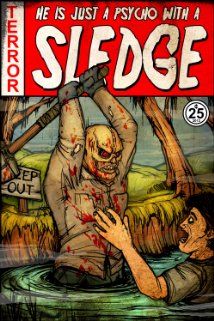
Kristian Hanson talks about his new film “Sledge”

In Sledge, Kristian Hanson plays a maniacal serial killer named Adam Lynch who, aside from believing he only exists in a movie or video game, truly believes he’s doing a good thing by slicing and dicing through teenagers. Hanson, who also wrote and directed the film, talked to MediaMikes.com about this fun horror-comedy.

Media Mikes: The film is only a couple of weeks away from release now, are you nervous? Excited? How much is riding on this for you?
Kristian Hanson: There is a part of me that is nervous because I have been promoting and talking about this film for two years now. The thing we said from day one with “Sledge” is that people will either love it or hate it due to the comedy aspect. Our little $800 film is finally going to be available to buy on DVD and rent on Netflix via DVD. As for how much is riding on “Sledge,” to be honest not that much. We say “Sledge” was our “film school” since John and I never went to school for this. “Sledge” was just a fun ride where we learned more then we could ever discuss.

MM: The film is getting good reviews online. Do you take much notice of reviews?
KH: I like to read every review when it pops up to be honest. I like to see what people like and don’t like about the movie. Some people love Adam Lynch (the slasher) and some say they wish he’d just shut up. Some love Alex (Dustin Bowman) and others cannot stand him. I am a movie fan first and everyone has their own opinion and I love to see what people loved or hated about the movie.

MM: How long did it take you to write the script – and when was that?

KH: It took me less than two days to write “Sledge” and it was back in June of 2012. We ended up filming “Sledge” at the end of August 2012 so it was a quick turnaround.

MM: Did you finance the film independently?
KH: Yes John (co-producer John B. Sovie II) and I financed it. Again it cost $800 so it wasn’t anything luxurious when it came to the filming process of trailers or anything. It was just a lot of fun with a whole lot of fake red sticky blood.

MM: The film is part horror, part comedy – did Wes Craven’s work inspire that tonal choice?
KH: Mr. Wes Craven will always be an inspiration with everything I do even if I don’t think about it consciously due to “Nightmare on Elm Street,” “Shocker” and so many other films. However, there are many influences in this regard and the biggest one influencing my sense of humor would actually be Kevin Smith from “Clerks” and now “Tusk” fame. I grew up watching his movies and he definitely helped shape what I find funny.

MM: The film is getting a lot of coverage online. Is the internet an important tool when marketing a smaller horror film like this?
KH: The internet is probably the best thing to have for a small film like this. After our first day of filming we made our first trailer and got it out online and people seemed to really enjoy it. The other side though is, everyone is marketing things constantly so people won’t necessarily look at your trailer or project anymore due to over saturation. That is why you have to be unique and that is what we tried to do with the talking wise ass slasher Adam Lynch.

MM: Sequel idea: “Sledge” goes to the swamp. You can call it “Sludge”!
KH: The sequel is already written and we intend to film it next August at the same time as we filmed the first movie and same location. Your title is funny but it will be called “SledgeD.” It is just another way to make fun of horror films who don’t come up with creative sequel names. We joke that if we made a third one it’ll be called “SledgeD-D!”

Kevin Kline and Israel Horovitz discuss new film “My Old Lady”

Israel Horovitz is a veteran playwright and stage director who at seventy-five years old is bringing one of his plays to screen for the first time with the film adaptation of My Old Lady.

My Old Lady stars Kevin Kline as Mathias a down on his luck author who is brought to France when his father dies leaving him a Parisian flat in his will. Mathias dreams of profiting off the sale of said-flat however are crushed when he finds the flat comes with a tenant (Dame Maggie Smith) to whom Mathias owes money to under a peculiar French real estate arrangement called a “viager.”

Horovitz and Kline were in great spirits when they sat down recently in New York to discuss adapting the play to film after its successful stage life.


How familiar were you with Israel’s play before you got involved with the film?         

Kevin Kline: I read it in French.

Israel Horovitz: Oh that’s right, I gave it to you in French or somebody–

Kline: Some crazy French producer who thought I could actually speak French well enough to play it when it was done in Paris.

Horovitz: You didn’t see it in New York though?

Kline: No.


In that version, was Mathias French?

Kline: No, he was American. That’s what was so–they wanted me to play this American but who spoke French. In the film version, the idea that he couldn’t speak French, this was something new.

Horovitz: The play was done in, I don’t know, fifteen or twenty languages around the world but it was most popular, or very popular in France. It was done in a 1200 seat theatre and played for a couple of years.


Mathias is a very sort of world-weary character, was it difficult to get into that mindset?

Kline: [In hilariously World-Weary tones…] I can’t believe you’re asking me this, same old, tired old question! World-weary? I do world-weary very readily. In fact I’m sick of that question! I’m weary of all this nonsense. [Losing the weariness]… World weary? Well he’s just a mess!…I never quite understood him. Nor did I wish to. I think it’s a good thing for an actor not to–I’m always wary of actors and directors who say ‘I’ve got an idea about Hamlet, here’s the deal, here’s what his problem is’ or ‘Here’s an idea I’ve got for Lear’ Or if an actor’s saying ‘You know what I’m playing? What my subtext is?’ I don’t wanna know! No. There’s a certain point to, a degree of ignorance which I’ve maintained precisely.


Horovitz also spoke at length about bringing together his main cast:

Horovitz: Kevin was the first–I didn’t want to do a movie that had, I don’t want to say unknown actors, but less-than-great-actors. Because some years ago the pope came to Paris and there was a big to-do with French writers saying you must know the division between church and state. They went out to the airport with signs protesting and the pope was this little old man about to die and the first thing he said, got off the plane and there were microphones, he said, “It’s a pleasure to arrive somewhere in this life as an unambitious guest.” And I directed this movie as an unambitious guest. Because I wasn’t trying to build a big film career…I just wanted to make a beautiful movie and I settled on that story because I thought the story could be funny and it could be serious at the same time. It could be possibly the kind of movie that I would love to see if I didn’t do the movie. And we’d shoot in Paris and like, what’s wrong with that? And my daughter would be the producer and what’s wrong with that?

…And I asked Kevin who was famously “Kevin Decline” and he said YES and then I roped him in. And he did the reading and we’re both theatre rats, so we did readings at my house and really, he really knew who he was playing and helped me you know, refine it. And then Maggie said yes and I flew to London and had a lunch with her and she said “I had twenty-five scripts offered to me and I’ve chosen yours, do you want to know why?” And I thought ‘Oh my god, do I really want to know? Okay, why?’ and she said “Because I don’t have to die at the end of your movie.”


What was it like to work with Maggie Smith?

Horovitz: Oh, she’s lovely. She’s Maggie Smith


Had you worked with her before?

Kline: No, no no no no. She’s probably the first dame. No I worked with Dame Joan– actually Lady, The Lady Olivier, Jane Plowright, who’s may be one of her best friends.

Horovitz: Judi Dench is Maggie Smith’s best friend. They’re both 79 turning 80 and they’re both terrified to turn 80. They talk to each other on the phone every day of their lives.

Kline: She was great she’s ..when I stopped finally boring her, pleading with her for more theater stories, you know I wanted to hear about all of her experiences in the theater. But, oh, consummate professional. Remember the day where she had to–she faints in the movie. Even if a thirty-year old faints, they say ‘okay, there’s a mat here and you’ll fall out of frame onto a nice, soft mattress.’ This was like the first take, um, she just fell on the floor!

Horovitz: She scared the hell out of–

Kline: All of us! Could have broken a hip, but no, was fine.

Horovitz: I did three takes and she would have gone on and I thought, ‘I can’t be the man who killed Maggie Smith.’ And I said “I’m very impressed, that you could do that Maggie” and she looked at me with this kind of sexy voice and said “You’d be amazed at what I can still do.”


When did you first encounter the concept of a “Viager”? And what was your reaction to it?

Horovitz: Well I had fifty something of my plays translated and performed in France. I spent tons and tons of my life there and I couldn’t believe it when I first heard about it. And then I started to research it and I saw these real estate agents that specialize only in viager apartments. It’s much more complicated than I made it in the movie. Because you can buy a viager apartment that has, they say “deux tete”, two heads. And you’re buying the husband and wife and you have to outlive both of them. So at first I thought, ‘man this is the most barbaric thing I’ve ever found!’ and then I realized, you know, it’s not so bad. If somebody’s old and they have no money–

Kline: Gives them a new annuity.
Horovitz: And they don’t have kids to leave their apartment to…If somebody gives them a bunch of money and pays them to stay in the apartment, pays them a little something and then they know they’ve got a roof over their heads for the rest of their lives, it’s fine. It’s not so much a gamble for that person, it’s a real security.


Related Content

Peter Sachon talks about concert with The Third Estate, “Mythos”

Photo Credit: Laura Marie Duncan

Peter Sachon is a classical cellist that is currently playing in the orchestra for Broadway shows like “Pippin”. He is becoming know as being one of the “go to” cellist for recording sessions in NY. He is also a producer of an upcoming concert called “Mythos”, which is a 70 minute continuous musical presentation played by a 15 piece classical ensemble performing live the music of composers for Film, TV and Video Games. Media Mikes had a chance to chat with Peter about the concert and what can we expect.

Mike Gencarelli: I am in love with the idea of “Mythos”, the 70 minute musical presentation featuring the all-star orchestra The Third Estate showcasing the music of composers for Film, TV and Video Games. Tell us how this came about?
Peter Sachon: Thank you! “Mythos” began as a blog about video game music. I imagined the New York Philharmonic seriously performing thoughtfully considered and adequately rehearsed video game music for all those people who love Comic Con here in New York City. It is easy to dream about what a great concert that would be, and the different sorts of people who might come — perhaps many for their first live orchestra concert. After all, millions of people love the music from games. However, the truth is orchestras like the New York Philharmonic won’t program video game music. The only music that passes artistic muster at major American orchestras is classical music — and those living composers approved by culturally conservative critics at The New York Times and The New Yorker Magazine. Unfortunately, video game music does not meet their conservative prerequisites. Contemporary composers are writing music that’s both good and popular, and that apparently breaks those critical rules. The fact is classical music these days exists in a kind of artistic terrarium. It continues to live, sort of, if you leave it alone. (And don’t you dare suggest it’s not alive!!). But if you let the air in…watch out! This is why it’s a terrific idea for MoMA to present Tim Burton. Seemingly no one there bats an eye at labeling Mr. Burton a serious artist who’s work is worthy of consideration. Yet, somehow Danny Elfman’s music has managed to get played everywhere in the world except at the New York Philharmonic. I realized that writing and proselytizing about orchestras wasn’t helping anyone, so I decided to take action.

MG: What was the process for which pieces of music were chosen for this concert?
PS: It’s still an ongoing process! At the very beginning, when Austin Wintory and I first started talking about putting a concert together, the conversation was shaped around the aspiration of presenting the spectrum of modern composers together, no matter their genre — something that no major orchestra is willing to do, so far. Austin has composed some of the music (after all, this all started with me wanting to hear Journey in NYC), and he has arranged and curated other music into a single-movement work. The programming is ongoing and collaborative. I would like “Mythos” to demonstrate to even the most conservative of musical minds that making a bigger tent for how orchestras program repertoire can both expand orchestras’ permanent audience base, and revitalize orchestral music.

MG: Tell us about your decision to not list which music will be presented?
PS: Well, Boulez and his ilk have done a lot of damage with decades of anti-audience music, and so much of the audience still reflexively braces itself whenever they see a new name in their program. After fifty years of being force fed really foul “modern” music, who can blame them? The new music scene has gotten so esoteric that often it is better categorized as performance art. But this bias goes the other way too — the audience has also been carefully taught that music with titles like “Final Fantasy”, or “Star Wars”, are not to be taken seriously. We don’t want to tell people what they should hate, or like, ahead of time. So we won’t distribute programs until the end of the concert.

MG: Tell us how you ended up working with conductor is Austin Wintory?
PS: I read about Austin shortly after his music to Journey was nominated for a Grammy award. The nomination was an especially big deal because this was the first time a video game score had had that distinction. I fell in love with his music. It is beautiful and evocative, and smart. It’s terrific modern orchestral music, and I couldn’t help noticing that video game music suffered from the same artistic discrimination as film music. I wrote to Austin, cold, and told him that I admired his music. We have a similar outlook about modern genres and also we got along, and he could not have been kinder. I asked him about doing a concert of music from Journey here in NYC. He said yes, and we began talking about how best to present game music as art. Our answer is “Mythos”. We still haven’t met!

MG: Will this be a one-time only performance or will their be additional dates planned?
PS: There are additional dates planned, but nothing I can share as of yet.

MG: If people are looking to get more information on this; where can they go?
PS: Of course! Go to the “Mythos” website, www.mythoslive.com

MG: How does it feel to be considered the “go to” cellist for recording sessions in NY?
PS: Well, first I am one among many great cellists in NYC. I’ve worked hard, and I’m grateful to get to make music for a living.

MG: You are currently playing in the orchestra of Broadway’s PIPPIN; tell us about that experience?
PS: I have been fortunate enough to work on Broadway for ten years, and I have been with a number of shows. Playing in the orchestra at Pippin is wonderful. I especially love Stephen Schwartz’s music, and he’s been kind enough to compose two pieces of chamber music for The Cello Project.

MG: What else do you have in the cards coming up next?
PS: I will continue to produce “Mythos”, and I hope to finish my album of new music by Broadway composers by the end of the year. I have also begun creating and producing several Broadway musicals.

Shamans Harvest’s Nathan Hunt talks about album “Smokin’ Hearts & Broken Guns”

Nathan Hunt is the lead vocalist for the rock band Shamans Harvest. The group hailing from Jefferson City, Missouri recently released their 5th studio album titled “Smokin’ Hearts & Broken Guns”. Media Mikes had the chance to speak with Nathan recently about the albums creation, health issues that occurred during the process and how those events shaped the material contained on the new album.

Adam Lawton: Can you give us an idea of where the band was at prior to starting work on the new record?
Nate Hunt: We had just finished up a tour run and everyone was pretty much dead. (Laughs) It took about 2 months for everyone to get back together and starting writing for the new record. We were sort of struggling through the process and before we knew it a few months had gone bye and we knew we had to get going. We jumped in the studio and just started writing as we were recording. Someone would bring in a riff here and there and then we would make a song out of it. Once things got going it was a pretty painless process.

AL: At what point in the creative process do you start working out lyrics/vocals?
NH: It tends to be different for every experience. Generally things happen as the song progresses. I look at the core of things to see where the lyrics need to go. A lot of times it’s the guitar riffs that inspire the lyrics but again it is different just about every time.

AL: You had some major health issues happen while you were recording. Can you tell us about that?
NH: That was a very intense process. I think me being diagnosed with throat cancer certainly it helped from an emotional aspect as I sort of followed the 7 stages of grief. I started pissed off and sort of freaked out before settling down and deciding I was going to beat it. A lot of the songs were written of the stages I went through during the time I was sick.

AL: Did you guys ever discuss putting the album on hold till you were feeling better?
NH: I think we all felt the sense of urgency even before I had gotten the diagnosis. We were coming off of a successful single and we knew we needed a follow up as soon as possible. When I got the diagnosis things took on a whole new meaning. There was a chance that this album was going to be our last so we wanted to make the process as enjoyable as we could. Thankfully everything worked out in the long run and we now get to enjoy the fruits of our enjoyment.

AL: Did you have to alter your signing style at all while you were going through treatment?
NH: Oh yeah. The radiation treatment I was receiving doesn’t allow you to create your own saliva. There were a lot of different techniques I had to do just to be able to sing a few lines. This happening has really made me a better singer in the long run as I never really paid much attention to technique before now. I started seeing a vocal coach who helped me through everything and she was really like my savior throughout this whole thing.

AL: The album features a bunch of different musical styles. Was this something that occurred naturally or was that a conscious decision you guys made as a group?
NH: Things happened pretty naturally. I think this was sort of a byproduct of us all not listening to the same type of music. Personally I don’t want to listen to or play the same thing every time. Things just get boring when you’re doing the same thing over and over. I like when you are able to listen to an album from front to back without its vibe every getting tiresome.

AL: What are the bands plans for a new single and video release?
NH: We just shot a video for the song “Dangerous” in St. Louis. There is another portion of the video being shot in Chicago but as far as I know our parts are done. That should be out very shortly. I think there are plans to do another video as well however I am not sure which song it will be for.

AL: What are the bands upcoming tour plans?
NH: We are working on putting together a tour as we speak. We are kind of late in the game with this release as tour season generally starts in the early spring. We will definitely be hitting as many markets as we can here in the states during this quarter. We hope to be out till about February and then go from there.

Seven Kingdoms’ Camden Cruz talks about the Deland Rock & Metal Festival

Camden Cruz is the guitarist for the power metal band Seven Kingdoms, based out of DeLand, Florida. Camden also runs the Deland Rock & Metal Festival. This Rock and Heavy Metal event will host it’s first multi-day, with camping event and will feature 50 bands. Media Mikes had a chance to chat about the festival with Camden, find out about the show and what’s next for Seven Kingdoms.

Mike Gencarelli: This November brings us the 5th Deland Rock & Metal Festival, how did this whole thing start?
Camden Cruz: Well, I was tired of not having a place to play in my home town of DeLand. So, when Seven Kingdoms was ready to release ‘The Fire Is Mine’ album, It was a perfect storm to try and host it right here in my hometown. We started talking to a few possible places, and realized very quickly that this was probably going to be an outdoors event. That right there made me think “Festival”. So after a long process of finding the Festival’s Home, we landed right outside the downtown at OB’s. It worked out very well and we have kept this thing running, and are always trying to improve over every year.

MG: What is the process for how you managed to find 50 bands for this amazing line-up?
CC: I still don’t have a ‘Set Protocol” for booking the bands, but usually we will go and book the headliners or biggest acts first. Once we have released that info, we set the date and put it online. I think people really dig being able to watch a festival develop, even if on an event page. We start to put it together right in front of everyone online. We have TONS of bands apply for the festival from the state, and it increases every year. We try to base our selections on if we have an established relationship with the band, talent and drawing capability. We like to book bands that can really get behind the event and push it.

MG: What else can fans expect from this 3-day festival?
CC: This is the first multi day year. We are offering camping for the first time as a package, so that will be very interesting to see how it changes from a one day deal, to a whole weekend. It’s only going to be better, as we have split the days up almost by genre, so its even better for the bands, and fans as far as who they want to see, and who they are paired up with. I think that having a three day deal, will start to get more people there all weekend, rather than just there for one day. There is a LOT of music, a lot of drinks and a lot of food here!

MG: What are you personally most excited about this year?
CC: The Camping feature really is a huge deal this year. Also the VIP packages are starting to really get solidified. We have a package this year that is a really good deal and it comes with a lot of free things and perks. I think people will be really happy at the end of the weekend. I am also very excited to see how it all turns out, as this is expected to be our biggest year by far. We also have a large promotional video package that we will be filming on site that day, to try and do a bunch of footage and promos to put online shortly after we shoot that weekend, almost in real time! Doing what we can so people at home can see what they’re missing!

MG: Besides running this show, you are also lead guitarist with Seven Kingdom; tell us you are juggling all these hats?
CC: Haha, this honestly is only my second item to juggle out of about 4 jobs that I have. I play and organize in Seven Kingdoms, I work full time custom painting at Chris Cruz Artistry, I launched CCE Presents this year in January, and we’re really starting to pick up the number of shows we put on in Florida. I also help manage bands and tours when the offers come in, but that’s more of a side thing. It’s pretty stressful sometimes, but I would not trade the mix I have for anything. I seem to have a really nice balance right now actually. I have been booking shows for years, but this is the first year that I really set out to make a big difference and make it something. I’ve already put on 20+ shows this year and two festivals. Along with day work, the band and these other things, I hope the only way to go is up!

MG: What was your first experience to metal that locked you in for life?
CC: I discovered heavy music around 2004, while I was in Highshool and racing Motocross. I raced all my life until that point, and pretty much discovered this side of music in the last years that I raced. It was a pretty tough time for me when I was 16-19 as my parents were going through a major divorce and it pretty much drove us to stop racing, along with injuries. Because of the seriousness of racing, I was very disconnected from people at the private school that I went to at the time, and didn’t have a lot of friends until I was at the track. When it all went down, I didn’t have a lot of local friends, and I didn’t want to be at home. I found a plethora of people in the scene that became my friends because of the love for music. I was able to ‘get away’ from all of that when I listened to this music, which turned into me in a band with a new set of friends. I was able to escape my life in away and go to this completely different and new thing. It really made that time, not so hard, because I was either discovering new music, playing in one of the first bands I was in, or just hanging out, not thinking of things at home. So, I suppose you can say that that’s what made me a lifer!

MG: You guys were born out of Florida but have a worldwide fan base including Europe in which you just completed your final tour to support the last album; how does touring abroad differ from here in the states?
CC: It is completely different, but not so different all at the same time. I believe that the fans in EU truly have a harder time trying to afford the shows. I believe that is why there seems to be more die hards over there, because people are literally budgeting money they probably shouldn’t spend on concerts for their favorite bands. There is also just not nearly the amount of opportunity for people in general over there as it is here in the USA, so we are very lucky for that. I think that fans are fans, anywhere you go. Just sometimes the farther away you are from home, sometimes it adds to the ‘stigma’ of a band playing in a certain area, and gets people more excited knowing you are from far away.

MG: Seven Kingdom’s last album was “The Fire is Mine” in 2012, is there a new album in the cards and what can we expect?
CC: There is a new album in the works as we speak. We will take all of 2015 to write and record the album. We have a lot of inner workings to figure out, on how the album will be released, and through who. We are really hoping for an early 2016 release, with a full and proper tour to be booked along side that shortly after, but we just need to see how it all works out. It’s still way to early to nail those official things. The music itself will sound much like a continuation of ‘The Fire Is Mine’ but with more experience and maturity. We all are always growing together as musicians so the music will always improve over time. With every album we do, we start to sound more like Seven Kingdoms, rather than a bunch of other bands mixed together. So, we are just focused on writing a very solid album that will top TFIM, make us happy and also make our fans happy!

Bill Smitrovich talks about “The November Man” & “Ted 2”

Bill Smitrovich is best known for his role as Drew Thacher opposite Patti Lapone, Kellie Martin and Chris Burke in the acclaimed television series “Life Goes On.” He also has one of the most recognizable faces on television or the big screen. Roles in “Miami Vice” and “Crime Story” led to work in such films as “Independence Day,” “Air Force One” and “13 Days.” Recently he’s appeared on “The Event,” “CSI: New York” and has just begun a recurring role on “The Last Ship.” He also co-starred in “Ted” and will begin shooting the sequel shortly.

His most recent film is “The November Man,” opposite Pierce Brosnan. We spoke on the phone in conjunction with the film and I found him to be a kind, soft-spoken subject. When we said our goodbyes he asked me to be sure I included his fellow co-stars when I mentioned “Life Goes On.” A true gentleman.

Mike Smith: Can you give us an introduction to your character in “The November Man?”
Bill Smitrovich: He’s a high-level CIA agent who once worked with Peter Devereaux (Brosnan). Devereaux is now in seclusion…in retirement, and I go in and pull him out to help us with an operation that his ex-wife is involved with. And the fun ensues (laughs). He needs to get a name from his ex-wife to complete his investigation but he runs into a lot of things in-between that cause problems.

MS: The film has a great cast and a first class director (Roger Donaldson). Was that what drew you to the project or was there something else?
BS: Absolutely! A lot of things drew me to the project. The role. The script. And particularly Roger, who I had done “13 Days” with. I was delighted to be able to work with him again. He’s such a great director. And the script, which kept getting better, especially afterRoger took a pass through it. And, of course, working with the great Pierce Brosnan. I loved it! We found out that we had so much in common and we’ve remained good friends. We even have our birthday in common (May 16th). Which was also the day I started filming, which is kind of strange. It’s almost divine because this particular filming experience was one of the best I’ve ever been involved with.

MS: Working with Brosnan, did you ever feel like you were double-oh eight (008)? I mean, you were trading shots with James Bond.
BS: I was shaken, but not stirred (laughs). You know, wherever you go with Pierce…all over the world…it’s the same reaction. People just love him. He’s a terrific guy to hang out with, and he’s a terrific actor. Besides Bond he’s done some terrific work on screen. And he’s also a wonderful painter, which I’ll bet you didn’t know.

MS: I was not aware of that! It’s been 20 years since “Life Goes On” left the air. Do you still hear from fans of the show?
BS: Oh yes, from time to time. Thanks to Facebook and social media, you really can’t get away from that. Not that I want to. I run into fans all of the time. Recently I was at Frank Lloyd Wright’s “Falling Water” in Pennsylvania. When we got done with the tour this really nice man came up to me. He was probably in his 50s and he was with his wife. He said, “I didn’t want to bother you during the tour but I just wanted to say that we’ve been fans of yours since “Life Goes On.” It really meant a lot to our family and I hope I’m not bothering you.” I always tell “Life Goes On” fans that they are among the very best fans. They are usually very humble. Very polite. Super compassionate and sincere people. I tell them that they are very nice people. And that they have very good taste! (laughs). “Life Goes On” was a very, very satisfying experience for me in many ways. I would get fan mail from siblings of children with Downs Syndrome. It was very special. The show was groundbreaking and I’m so proud to be a part of that. It’s something I’ll always cherish in my career.

MS: Since it’s been 20 years, do you know of any plans for a reunion film or special?
BS: I don’t think so. I don’t think that’s going to happen, unfortunately. It would have been nice. But with everything, there are often too many obstacles to put it all together. I would have loved to have done it. At one point I thought it would be fun to have a little movie with just Chris and I playing private detectives? We’re both out of work so we come upon the idea of becoming investigators undercover. It would have been funny. Because we would just hire people with handicaps. People that are blind have increased hearing. People in wheelchairs. They would blend in and no one would suspect them of being detectives.

“The November Man,” What else do you have coming up?
BS: I start filming “Ted 2” in September. I’m really excited about that. And “The Last Ship” on TNT. My character just appeared last Sunday and I hope to be on it next season when it gets picked up. The finale’ is coming up. It’s a great one. I’m liking it and people are liking it. I’m glad it’s finding an audience. We have things to do. We’re going to save the world.

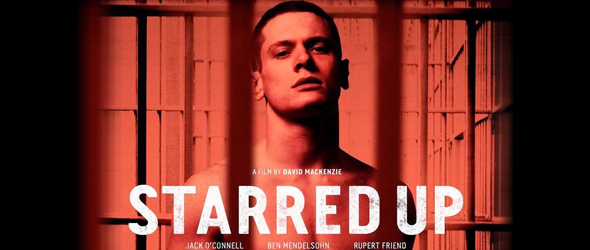
David Mackenzie, Jack O’Connell and Rupert Friend talk about “Starred Up”

David Mackenzie’s transfixing new UK prison drama, Starred Up, is now available on demand as well as in theatrical release in New York. The film made its initial NYC  premiere this past spring at the Tribeca Film Festival where I got a chance to speak with Mackenzie as well as the stars Jack O’Connell and Rupert Friend.

O’Connell stars as Eric Love, a 19 year-old inmate who has been deemed too dangerous to serve in a juvenile facility and has been “starred up” to the adult penitentiary. Friend plays a prison counselor who seeks to rehabilitate the inmates through non violent group therapy. The shooting of the film itself took place over four weeks in an actual prison which the filmmakers credited with helping to develop the film:

“You feel it,” said director David Mackenzie, “You feel the strength of those walls and the strength of the metal bars and the doors. It kind of pens you in a bit. It’s perfect for recreating the atmosphere you need for the movie. But you can definitely feel how oppressive that architecture is.”

Consequently, the actor’s substituted trailers for jail cells. “There was nothing else to be in” Rupert Friend described the setting, “and it’s freezing and the walls hadn’t been cleaned or painted since the last occupants so there’s kind of bodily secretions…don’t touch the walls. And the feeling of isolation and frankly, terror, was pretty powerful for everyone. And it does, it plays into the psychology of the thing. It really does.”

Jack O’Connell had a similar feeling “because we spent our downtime in cells too it meant I had the opportunity at any point to just imagine it. So our trailers were effectively cells. So if at any point I wanted to research or just be as Eric for a bit, I was in his setting.” Although he also went on to say the prison itself he didn’t find scary, “not when it’s not functioning. From what I can gather from the graffiti and the history of [the jail] itself, it’s had scarier days. Much scarier days than when we were there.”

The cast also had the fairly unique experience of shooting the film sequentially over the course of four weeks which encouraged an improvisational take on the story. O’Connell described this as “a total luxury. I mean I could turn up on set without knowing my lines and kind of just blag it, you know? Sort of story unfolding as we told it and if I ever get to repeat that same sort luxury I consider myself very privileged and I’m sure David Mackenzie, our director, shares those sentiments.” In fact Mackenzie shared on the red carpet that he hoped to repeat the experience on an AMC pilot he was readying to shoot at the time, “I’m asking them at the moment whether they’re prepared to let me do it in this method…we’ll see what happens. But actually because the pilot is set in a very limited number of locations so you don’t have to kind of do all the moving that would normally make it problematic. So if I’m lucky maybe I’ll get away with it.”

The improvisational atmosphere was most evident in the group therapy sessions overseen by Friend’s character Oliver, whom the writer Jonathan Asser based on his own experience with inmates. If there’s levity to be found in the film, it’s here and unsurprisingly Mackenzie described those shooting days as  “a joy” saying “because we shot the film sequentially–So you know, we’d have like four or five days and then we’d get a group scene and…there’s quite a big page count. So the schedule gave me like three hours rather than two hours, so it was like ‘Wow! A luxury here!’ and the way we shot it with those scenes was we had the text but we improvised at the head of the scene and we improvised at the tail of the scene. And we allowed the guys to kind of play with it. So we really felt like it wasn’t written. It had to feel like it was alive. And it was great what they did was you know a real joy.”

For Friend it got especially real in a fight scene, “We just kind of went for it. You know one of the scenes these guys, you know there’s a lot of fighting and we didn’t choreograph any of that…and I won’t say who it was, but I got punched so hard in the eye I wound up in the eye doctor.” Although for Friend, “the most interesting part” was remaining a nonviolent character amongst all the tension. “How is it that this one mild mannered, middle class guy was able to diffuse that tension and make it constructive? That’s what was fascinating” he said on the red carpet,  “Not just theoretically, but actually in the room when this lot are all going crazy.”

Director Mackenzie reinforced this sentiment on maintaining control in the violent group. “It was fascinating to watch how…you often see the escalation of things but the deescalation of things is never like a straight deflation. It’s like you know it’s jagged, jagged deescalation and that was really interesting. But it’s fun and also he’s building connections with these guys and I think that’s where the socialization I guess of Jack’s character is really at the fore.”

When specifically asked what O’Connell brought to the role of Eric, the director had nothing but praise for the up-and-coming actor. “What he really brought to it was a fearlessness and the kind of cojones to really go as far as he could with that character. Without holding anything back and that was what a director dreams of. And because we shot the film sequentially he only needed to worry about the scene he was in. He didn’t have to worry about where it fits in in the jigsaw puzzle…so he didn’t. He tried to kind of forget about the rest of the film apart from the scene he was in. And it was just about the immersion into that moment. And I think it’s great. I’m very happy with what he did.”

Jack himself credited his background for aiding him in bringing rougher characters like Eric to the screen, “I don’t want to offend people here, but I do find that you know your typical actor doesn’t necessarily have you know that sort of life experience, you know in scrapes and you know, I haven’t been in a drama school for a significant amount of my adult life. I was out and about trying to be an actor and also trying to survive I guess and have fun at the same time. So that kind of gave me a bit of a wealth of life experience and I think directors like David distinguish the difference between someone with experience in that field and an actor who’s trying to pretend. And so it certainly was to my advantage that the majority of actors you know aren’t working class individuals from Darby. I mean that meant approaching a role like this, I kind of know the difference between acting hard and perhaps being hard. You know, being intimidating. It’s a fine line but very decisive one way or the other.”

Despite it’s grim setting, when Mackenzie was asked what message he hoped the film conveyed, he responded “Somebody said something about a film that kind of suggests that everybody has a chance, a shot at redemption and the idea that you know, this character has obviously done very bad things but you know, he’s obviously come from circumstances…I think it’s about shining a little bit of humanity into the situation. There isn’t much.”

Starred Up is available on VOD and in limited NYC release. Jack O’Connell can next be seen starring in Angelina Jolie’s directorial debut “Unbroken”.

Kevin Riepl talks about scoring the film “Cabin Fever: Patient Zero”

Kevin Riepl is the composer of horror films like “Silent Night”, “Contracted” and a segment from “The ABC’s of Death”. His latest film is the horror/thriller “Cabin Fever: Patient Zero” directed by Kaare Andrews (Altitude and The ABCs of Death) and staring Sean Astin (The Lord of the Rings Trilogy), Currie Graham (Pompeii, “NYPD Blue”), Ryan Donowho (Soldiers of Fortune), Mitch Ryan (“One Tree Hill”) and Jillian Murray (Bad Ass). Media Mikes had a chance to chat with Kevin about the score and working in the horror genre.

Mike Gencarelli: How did you get involved to score the film “Cabin Fever: Patient Zero”?
Kevin Riepl: I met the director, Kaare Andrews, when we worked together on his contribution to THE ABCs OF DEATH, “V for Vagitus”. When I heard he was selected to helm CABIN FEVER: PATIENT ZERO I was eager to have a chance to work with him again. Likewise for Kaare, so we submitted my reel to the producers and once they were on board, we were all set to go.

MG: Did you look back at the previous two films for any ideas?
KR: I refreshed myself a little bit with the first film’s score. As much as we wanted to create something new, we also wanted to carry over some of the ‘rawness’ of Nathan Barr’s score and incorporate a lot of scratching and dissonance in the string instruments.

MG: What was your biggest challenge you faced with this film and was this score unique in any way from your previous scores?
KR: I think the main challenge on the film (even though it wasn’t really a big challenge) was coming up with and deciding on the palette for the score and what style would best support the story and its setting. I do believe this score is unique from any of my previous scores and that is because this film is different from previous films I’ve scored. Yes I’ve scored a decent amount of horror and thriller, but each of those has been artistically different from each other as well. A film’s story dictates the sound and style of the score. If you look back through my previous films many of the scores are quite different and unique to the film. That’s the ultimate goal – to give each film its own sound. Of course it is a collaborative effort with the director since it’s their vision, but I try to bring ideas to the table that will help their vision stand out and be that much more unique.

MG: You have worked in the horror genre before with projects like “The ABCs of Death” and “Silent Night”; what do you love about the genre itself?
KR: It’s usually dark, gritty and fantastical. Ever since I started music at a young age I’ve always wanted to explore the darker side of music, melody and sounds. As much as I love writing all styles of music, it seems that the horror genre lets me experiment a little more when writing scores. Being a creative person, how can I pass that up?

MG: “Contracted” was a sick film BTW; tell us about your process for this film?
KR: CONTRACTED, indeed, was sick and A LOT of fun to work on. Eric England is a young director and has so much to offer the film world. It was great to work with him on this film. At the very start, Eric knew he didn’t want traditional ‘horror’ music. So we approached the score with a synthetic, almost ethereal sound to help support the main character’s innocence and naiveté, until of course things start to go south. At that point I start to include more grit and experimental sounds and rhythms to help throw the viewer off balance so they can feel as much angst as the main character does as she goes through her changes.

MG: How is it going from scoring video games to TV or film? Which is more challenging?
KR: I don’t find it to be challenging. It’s all music. Yes, there are specifics and deadlines you need to be concerned about during the process of creating for each medium, but in the end it’s still about coming up with ideas and you’re still supporting story and visuals. The most important thing and it is sometimes a challenge, is scheduling…especially when you have a video game, a TV show AND a film on your plate.

MG: What else do you have in the cards coming up next?
KR: I just recently completed the action thriller THE NIGHT CREW directed by Christian Sesma. Hopefully I will have more news concerning the release of the film and an official soundtrack. Other than that, I am currently working on Ubisoft’s and Signal Studios’ TOY SOLDIERS: WAR CHEST video game as well as a small independent feature.

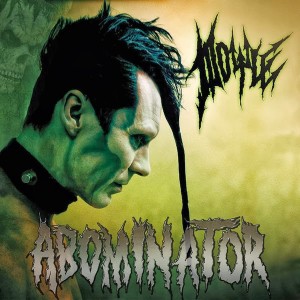
Doyle & Alex Story talk about their new album “Abominator”

Former Misfits guitarist Doyle Wolfgang Von Frankenstein is currently out on tour in support of the band’s debut release titled “Abominator”. The band which also features vocalist Alex Story, bassist Left Hand Graham and drummer Anthony “Tiny” Biuso will be out on the road through August and Media Mikes had a chance to speak with the band prior to the tours kick off in Rochester, NY where we talked about the recent departure of drummer Dr. Chud as well as what the band has planned for the rest of this year and beyond.

Adam Lawton: Can you tell us what happened with Dr. Chud deciding to leave the tour prior to its start and what your most looking forward to about getting out and playing the new material live?
Doyle: He just decided not to come out on the road with us. That’s pretty much all there is to it. We are looking forward to just ripping stuff up every night we play. Tiny our new drummer came in on short notice and just really energized all of us. Tiny is a guy I met at the NAMM show one year and we just hit it off and became friends from there. He was always asking me about who was drumming for me at the time and what not and now he is the guy.

AL: Can you tell us about the VIP packages that you are offering at each show?
Doyle: We are doing VIP meet and greets after every show on this tour. Along with getting to meet the band you get a free music download, a tour laminate and a signed photo. It’s a chance for fans to get a little more out of coming to us.

AL: You shot a DVD for your previous band Gorgeous Frankenstein. Will you be doing any shooting while out on this run?
Doyle: I think we have a guy coming out to film the New Jersey show and also to do some footage at the Connecticut and Los Angeles shows. Alex and I will also be doing a new photo shoot with Jeremy Saffer while we are out on the road which should be really cool.

AL: With “Abominator” being out for a couple months now what has been people’s reaction to it?
Doyle: I think everything has been really great. I really like the album and I think if people haven’t done so yet they need to go out and buy it! (Laughs)

AL: You have said before that during the writing process you wrote enough material for two more albums. Can you tell us the status of those?
Doyle: Everything has been recorded. All we have left to do is finish the drums and then mix them. From there we will get the artwork done up and proof all the words for the album notes. We are shooting for a spring 2015 release date.

AL: Alex, when you were putting this material together what type of process did you guys have for writing?
Alex Story: When we were first putting this all together Doyle gave me a list of things that he liked to hear songs about. There was a lot of stuff about strippers and Satan in there. (Laughs) I really challenged myself and tried to write a song about everything he mentioned in his list. That’s really where we went from. Doyle writes all the music and arrangements. He gives me full bass, drum and guitar tracks and I really don’t like to ask him to change things around for me so I just go with what I am given. I try to write vocals that accent his playing.
Doyle: Sometimes he writes songs in a day and sends them over to me which is just crazy. He sends me stuff that he has screamed in to his laptop.

AL: When Doyle is out on the road with Danzig what do you do to keep busy musically?
AS: I have another band that I have been doing for years called Cancerslug. I do that in my off time and when ever Doyle is ready I shift gears and we do this.
Doyle: It works the same way for me when I am working with Danzig. When he calls we go out and do it and then we go back working on this.

AL: What are your plans for the next Cancer Slug release? And how have things changed for the group since you first started?
AS: Cancerslug is sort of like my little pet project. Once things sort of slow down here were going to put out a new album. We have a really solid line up right now and our last tour was very successful so we are looking to do another run of shows as soon as we can. With Cancerslug I just sort of throw these ideas down when I have them and if people like it that’s cool if they don’t, they don’t. Once I get some down time from doing this I will start work on all of that. When I first started Cancerslug there was no internet or cell phones which made being independent very difficult. Nowadays it makes doing a project like Cancerslug a lot easier as there are just so many ways to get yourself out there which makes splitting my time between the two bands that much easier.

AL: Can you tell us about your upcoming appearance in Alan Roberts “Killogy” comic book?
Doyle: I toured with Alan years ago when we were out on the road with his band Life of Agony. He called us up one day and asked if I would be interested. I just got the draft of it the other day and it looks really great. I think the plan is to have it out around Halloween time.

AL: This first run of shows is just a month long. Are there any further plans to continue touring throughout the rest of the year? And is there any chance of seeing you do some shows with your girlfriends band Arch Enemy?
Doyle: We are working on a bunch more stuff here in the States for the coming months. As for shows with Arch Enemy we are trying really hard. It’s up to Angela. I am afraid of her! (Laughs)

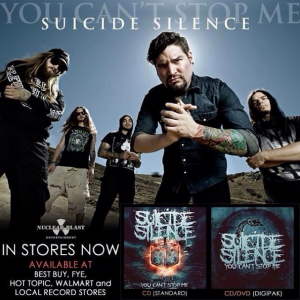
Suicide Silence’s Mark Heylmun talks about album “You Can’t Stop Me” and Rockstar Energy Drink Mayhem Festival


Mark Heylmun is the lead guitarist for the heavy metal band Suicide Silence. The band recently released their 4th studio album titled “You Can’t Stop Me” via Nuclear Blast Records and is featured on this year’s Rockstar Energy Drink Mayhem Festival. Media Mikes had the chance recently to speak with Mark about the new album, the bands new singer and how they overcame the loss of the bands original vocalist Mitch Lurker.

Adam Lawton: With the new album being out just over a month now what has the overall reception been like from the fans?
Mark Heylmun: It’s been really amazing. To be honest I am waiting for this whole thing to become difficult. This time last year I was looking into the future thinking that things were going to be very hard. I knew we were going to have to be comfortable with whatever happened and just ride it out. The record is out and people a really loving it. Were out on Mayhem right now and it feels like were just killing it every day.

AL: What was it like for the band working on both new material and with a new singer all at the same time?
MH: We had to build a working relationship with Eddie. We were of course friends beforehand but Eddie’s the type of guy who when you catch up to him you have to hear all of what he has going on. Building that new relationship was a lot of fun because he is our friend and now he is in our band. Surprisingly it was a very easy transition as he works in the same way Mitch worked. We would give him a song and he would either feel it or not. With Eddie being new to the band things were very fresh for him and us as well which made the experience very exciting. In a week we wrote 3 songs together. After those first three songs were written we knew things were going to be ok. This was the first time as a band that we all collaborated together on material. It was very much a group effort this time around.

AL: The album features two songs written by Mitch before he passed away. Can you tell us about those?
MH: One of those tracks is actually a really old song that appeared on our first EP in 2005. We wanted to redo it because we have had a lot of requests to hear those songs. We chose “Ending is Beginning” because it just made sense with what we are doing. A lot of friends wanted us to do one of these old songs as well to see if Eddie could really pull this off. He just slayed it! “You Can’t Stop Me” is the other track Mitch was working on and it’s one of the two last songs we worked on with him. “Blue Haze” was the other track which appeared on a B side. The music for both of those songs was done in the same writing session in 2012. Mitch had only written lyrics for one and we had to looks at those and figure out which song they were actually meant for. It ended up being very easy to figure out because of the structure in which the lyrics were written. The song had no title but the lyrics were “You can’t fucking stop me!” so we really took a lot from those words as it just all fit so well with what we were doing and what we were going to have to do in the future. That song really built us up. Even though Mitch wasn’t physically there he still had a lot to do with the latest record.

AL: What was it like on an emotional level revisiting these songs?
MH: The whole time we had it in our minds that we wanted this album to really mean a lot. We wanted this album to be all that it could be. We postponed jamming and getting together with Eddie until we could all be there at the same time. We got those lyrics sent to us and we all read them together. From there we just started jamming and playing music together. I remember that first session and we didn’t even really play Suicide Silence songs at first. We were playing songs by Pantera, Metallica, Sublime and Offspring. Eventually we started doing our songs but it was just an emotional time that felt new and very real.

AL: So far you have released 2 songs off the album as singles. Are there plans to release any others?
MH: We have had the discussion. We couldn’t really decide which songs we wanted to roll out first because we liked all of the songs. There is potential to release a video for every song off the album. We have a pretty good video team that is in our world and we facilitate all those things. We have a bunch of ideas right now on what to do.

AL: Have you found people are more focused on this being the band’s first album with a singer as opposed to it being your senior release?
MH: A lot of people ask if we feel like this is our first record. I don’t think it feels like that because we are building off of what we have learned from each other. “The Cleansing” was our first full length and that album was really done because of the response from our EP. We had a lot of offers come our way and we had to decide which would be best for us and then write a record. We wrote the record because we had gotten signed and that record was our reaction to those events. We learned that we had to put ourselves in a position to where we were motivated to write. We learned a lot over the course of three records and this new album is the culmination. I think after this we have really learned to write a piece of music and I am looking forward to continuing with what we are doing.

AL: With Mayhem Fest wrapping up in August does the band have any plans for the remainder of 2014?
MH: We will be a part of this year’s Knot Fest which is being held in San Bernardino, CA in the later part of October. That’s going to be just an insane time. We also will be heading over to Europe in November for a tour run over there as well.

Brian Kevin talks about his book “The Footloose American: Following the Hunter S. Thompson Trail Across South America”

Brian Kevin is a writer who contributes to magazines, websites travel guidebooks. He is also the associate editor at Down East magazine and the author of “The Footloose American: Following the Hunter S. Thompson Trail Across South America”. Media Mikes had the chance to chat with Brian about his journey through South America and how Hunter S. Thompson inspired it.

Mike Gencarelli: When did you first find the work of Hunter S. Thompson?
Brian Kevin: I came to Thompson via Terry Gilliam’s adaptation of Fear and Loathing in Las Vegas back in 1998, which I think is true of a lot of people my age (I’m 34). In the book, I describe the film as kind of a dorm room standard during the late ’90s, when I was a college student, and I’ve since praised it in other forums (http://goo.gl/kL3jl2) as really one of the more faithful literary adaptations in recent cinema. So that kind of piqued my interest in Thompson’s work — who the fuck is this guy? what could this possibly look like on the page? — and I spent the next couple years catching up on the Thompson canon.

MG: Tell us what made you decided to take this yearlong journey across South America?
BK: I’d read enough to know that Thompson had spent this year abroad in the early 1960s, reporting on Cold War issues from South America, and it occurred to me this must have been a pretty pivotal time in the life of a writer I admired. But for all the unauthorized biographies and oral histories and documentaries and other materials out there about Thompson’s life and work (particularly after his death in 2005), his year as a foreign correspondent hardly warranted a mention. I was curious enough to dig through a couple of microfiche archives and unearth the articles he wrote from South America, most of which hadn’t seen the light of day for fifty years. The more I looked into it, the more I admired Thompson’s gall for just up and hitting the road, trying to will himself a writing career. I had kind of gone a safer route — some entry-level magazine jobs, then grad school — and I was feeling like it hadn’t gotten me anywhere. Around the same time I was digging up Thompson’s forgotten South American reportage, I suddenly found myself divorced, functionally unemployed, and sitting on a mountain of student loan debt. So I did the only rational thing and traded in a bunch of frequent fliers miles for a ticket to Colombia to follow the Thompson Trail.

MG: What was it like to revisit the places where HST lived and worked?
BK: A lot of people see the title of the book and kind of assume I was carousing my way across the continent in some kind of wanna-be-gonzo fog, but I actually couldn’t be less interested in that. To me, it was all fieldwork — I wanted to revisit the topics that Thompson wrote about for the National Observer fifty years ago and, in the process, get some insight into what he learned in South America that shaped him as a writer and a human being. For all his later gonzo persona, Thompson at 24 was whip smart and super disciplined about understanding the forces shaping Latin America during the Cold War. So traveling in his footsteps meant giving myself a crash course in Latin American history, culture, politics, and ecology. And yeah, that fieldwork sometimes involved drinking heavily with miners, capsizing a boat in Colombia, and patronizing a Paraguayan brothel (sort of), but it really was all in the name of education.

MG: What did you find was the most interesting find of your exploration of twenty-first-century South American culture, politics, and ecology?
BK: Well, the surprising thing was the extent to which the issues that Thompson reported on fifty years ago are still very much shaping the continent. Thompson wrote about Peru’s struggles to overcome a powerful political oligarchy, for example, and that’s still very much the story of Peruvian politics today. He wrote about Brazil as this sleeping giant shackled by inflation, and fifty years later, that’s still arguably the biggest economic story playing out in South America. He more or less predicted the rise of the FARC in Colombia and the ascendancy of cambas in eastern Bolivia and a bunch of other story lines that are still unraveling in 2014. In a nutshell, the interesting thing in country after country was how present the ghosts of the Cold War still are — and that made Thompson’s ghost feel very present as well.

MG: Do you feel that you yourself have changed after this exploration?
BK: You know, I reflect on this a little in the book, and the answer is tricky. A lot of the book ends up being about travel itself — about the reasons people give themselves for picking up stakes and about their expectations of what they’ll come home with. Often, this includes some kind of transformation. People want to come home changed in some profound way, and I’m not convinced this isn’t kind of a bullshit goalpost. My time on the Thompson Trail gave me an education, which is really what we should be after anyway.

MG: What do you think it takes to be a “gonzo journalist” in today’s world?
BK: I think this is a term that starts and ends with Thompson. I don’t think “gonzo journalism” is a form or a genre that a writer can just opt into. It’s one specific writer’s style — Thompson’s — and while it can certainly be imitated, the results are almost uniformly shitty. But I do think that the best nonfiction writers working today approach their subjects with the same fearlessness and unorthodoxy and humor and personal investment that were all critical components of “gonzo.”

MG: Do you have a follow up planned for “The Footloose American”?
BK: Yeah, there are a couple of projects in the hopper. One is a deep profile of this globetrotting, nineteenth-century Forrest Gump-type character who destroyed everything he touched, and the other is a sort of a combination road trip tale and education expose. I realize both of these sound a bit weird and cryptic, but you’ll just have to take my word that they’re fun and interesting, and I’ll be all for saying more when they’re a little farther along.


Related Content

Texas Hippie Coalition talks about album “Ride On” and Rockstar Energy Drink Mayhem Festival

The southern heavy metal band Texas Hippie Coalition are set to release their fourth studio album titled “Ride On” in mid October of this year and are currently out on tour as part of this summer’s Rockstar Energy Drink Mayhem Festival. Media Mikes was able to catch up with the leather vested 4 piece backstage in Scranton, PA recently to discuss the bands upcoming album and the bands progression since their debut release in 2008

Shawn Meas: What can you tell us about the bands upcoming album?
Texas Hippie Coalition: It’s going to be bad ass! We went back to more of our roots on this album and it’s going to be really hard hitting. We went and worked with Skid Mills at the Sound Kitchen and it turned out really well. We are anxious to hear what everyone thinks. We definitely went back to the format of the first record while spending more money. (Laughs)

SM: What type of process do you guys take when starting to record a new album?
THC: We start off by drinking a little moonshine and smoking a little weed. Then we cuss a little bit and things start to work. (Laugh) Cord Pool and I (Big Dad Ritch) are the only guys in the band who can really do math so song structure is pretty easy to come out. (Laughs) I think if we really used any true written format that it was the same every time we wouldn’t have as good of a creative flow as we did. Things are never the just as long we are all in good spirits and have positive energy around us we can write good tunes together. This time we flipped things and worked on the album early in the morning as opposed to late at night because you could never get all of us in the same room at the same time when it comes to working at night. (Laughs)

SM: How do you feel the band’s sound has evolved from your debut album “Peacemaker” to your upcoming release “Ride On”?
THC: I think we have evolved as players. With the new record we certainly tapped into our roots but we are all better players these days. With this band you get what you came for. We try and keep things real and carry out that theme from album to album.

SM: The band has gone through a number of lineup changes to get to where it is now. What do you guys feel each of the new members bring to the band?
THC: This is actually Timmy Braun’s second album with us. He left for awhile to do some side projects that he has and now he back. We are happy to have him back 100% now. Cord has actually been with us since the release of “Peacemaker” however he joined just after we finished recording that album. We have a pretty good team of guys and we are all having a lot of fun. Cord does seem to be everyone’s favorite though and he has said that if he was ever fired he would still show up anyways. (Laughs) Getting out here is like a bull ride with the music business being the bull. It can take a lot out of you and all four of us can take it while some of our previous members couldn’t stay on for the full 8 seconds. This crew is going to be there at the end to get our buckle!

SM: What are the bands plans for the rest of 2014?
THC: The first single off the new album just got released and is titled “Monster and Me”. The full album titled “Ride On” comes out October 7th and we have a lot of stuff going on leading up to that release date. We are going to be making stops at Gas Monkey Garage in Texas and also playing at this year’s Ride for Dime. Once this album comes out we are going to be going through some tires! There are still a lot of people who aren’t familiar with us so we want to get out there and try to get in to as many homes as possible.

Virginia Madsen talks about her new film “Jake Squared”

Virginia Madsen is known for her Academy Award nominated role in the film “Sideways”. Sci-Fi/Horror fans will know her from her roles in “Candyman”, “The Prophecy” and “Dune”. Her latest film is called “Jake Squared” and co-stars Elias Koteas and Mike Vogel.  The film will be released on August 15th in theaters in the U.S. and will also be available on VOD (iTunes, Hulu, Amazon, etc.) Media Mikes had a chance to chat with Virginia about the film and what she has planned next.

Mike Gencarelli: How did it come about for you to get a role in “Jake Squared”?
Virginia Madsen: The director Howard and I have known each other since the 80’s. Our kids went to school together and they are in college [laughs]. So it was irresistible since we were finally able to all work together and it was great.

MG: What did you enjoy most about working on the film?
VM: I loved the story of our longtime friendship. Elias is one of the greatest actors in the world. We’ve worked together before – this was a chance for us to move our real life on screen. More difficult than doing it where your screaming and crying. We were longtime friends who always had a little vibe but we’ve never kissed before [laughs]. Elias is like my brother but he’s also really sexy and a great guy. So we asked Howard if we could not rehearse and we wanted the camera we had to catch that kiss, which would actually be our first kiss in all these years. I have to tell you it was really good [laughs]. I was very silly and giggly, it was very silly right before we went. We were going in for the kiss and it was really hard not to laugh. It was really weird “you’re my friend – but you’re also very hot” so you know and it was like I was kind of like we kissed for a lot longer than we needed to.

MG: I really enjoyed this film and I agree Elias was amazing.
VM: So glad you got to experience it. I think it can appeal to a wide audience but it is a wonderful indie film that has something for everyone. I also love that it’s going to be available everywhere. There was a time that if u did a indie film and you didn’t get that big release, your movie would disappear. It might show up in an old Blockbuster. Now it’s a whole different world for independent movies. Our film can now be seen worldwide in online.

MG: I also liked how the film switch from narrative to documentary style.
VM: Yes, I really liked that because we’re just telling a story. That’s what we do we are story tellers, it was interesting to be able to speak directly to the audience and fill them in on whats going on. Really interesting device that he used, worked really well in the film.

MG: You have worked in many genres including drama, horror, sci-fi; which do you enjoy the most out of all those?
VM: Depends on the material, I like working on good films. But I do love the fantasy/horror/sci-fi genre because that’s like make believe – like when you dress up for Halloween. You feel like a little kid when your making a horror film and it’s really fun. It’s my passion, I’m so blessed to be able to have employment when most actors are out of work. Internet has been very big for me recently as well. Hats off to Kevin Spacey and Dana Brunetti on “House of Cards” since that changed everything and has opened the door for so much work. I am always very grateful for them.

MG: Going forward, anything to talk about?
VM: Well I have a film called “The Wilderness of Jane” and another film called “Walter”. They are both wonderful indie film that have both been sold. Where, when…I don’t know yet. These independent movies explore relationships more than mainstream movies do and are highly creative. Not that I wouldn’t want to be in the studio rom-com machine, I mean I love to make that kind of money, I love to be in a position where if u put me in a film you can get financing. All those guys have stacks and stacks of scripts and there’s just a handful of them. Amazing when someone like Howard writes like this film and can go out and get the money and due to that we get to all play in the sandbox. I am trying to finance things and it’s really hard because of where the films can go.

DragonForce’s Sam Totman and Herman Li talk about latest album “Maximum Overload”

The power metal band DragonForce who burst on the music scene in 2003 with their debut album “Valley of the Damned” are back with a brand new studio album titled “Maximum Overload”. The album features 9 original tracks along with the bands unique take on the Johnny Cash classic “Ring of Fire”. Media Mikes recently spoke with the bands guitarists Sam Totman and Herman Li about the albums creative process, the albums guest vocalist and the bands upcoming tour plans.

Adam Lawton: Can you give us some background on the new album and the story behind its title?
Sam Totman: Whenever we start any album we just start by writing what we think sounds cool to us. Everything else like song titles, album title and cover art all come after that. This one wasn’t any different. We wrote the music first and then the lyrics and then came the title. We chose “Maximum Overload” because it describes the music much like our previous releases. At the same time we had the idea for the cover art which depicts a person being hit with information from every angle much like how we are bombarded with information from television, internet and phone on a daily basis. It’s hard to ignore even for someone like myself who doesn’t really use a lot of that stuff. The title kind of ended up having two meanings so it worked out well.

AL: With Sam and Frederic taking on the writing aspects of the album, at what stage of the process did you come in Herman?
Herman Li: Sam and Fred first started writing together in France. Sam actually worked out the music on his own and then when he had all the structures laid out we started work on the demos in London. Our producer for the album was Jens Bogren and he helped as well.
ST: It was a pretty cool experience because in the past this was something we had never really done before. I would just do demos on my own and then I wouldn’t want anyone to touch them or contribute. It was cool working with someone else. I would come in with a song and then give it to the guys to add their pieces to it whether it is keyboards or Herman’s crazy guitar noises and such. Previously we just always wrote songs individually. Working together certainly brought a different element to the new record. It’s still very much a DragonForce album but there is a lot of cool new things going on which I really like.

AL: Do you guys often do a lot of pre-production then prior to entering the studio?
HL: In the past we did very little pre-production. If you listen to some of those previous tracks the demo versions are quite a bit different. There might be just a drum machine with a chord and melody laid down. Some of the songs would be quite unrecognizable. On the new album we actually had vocals recorded and some demo solos as well. By working with Jens we couldn’t just send him a pile of ideas and expect him to make a song out those. We had to give him a clearer image so that he could help us make the tracks stronger.
ST: With my demos I know what’s going on with them but someone looking at them from the outside in isn’t really going to understand what I was thinking. I often would just throw out some chords and not really try to play all that well. Demoing the songs with proper vocals certainly helped us give Jens tracks that were a bit more complete.

AL: Can you tell us about Matt Heafy’s appearance on a couple of the albums tracks?
HL: We had been working on the songs and we got to a point where we thought they needed something more. We were thinking of wanting different backing vocals on a couple songs and Matt’s name just happened to come up. It’s wasn’t planned ahead or anything like. We sent the tracks to Matt and kind of explained what we needed. Matt went above and beyond for us and did a bunch of different styles for his parts. I was amazed when I heard all of what he did I have to thank Matt for his work.
ST: We knew what we wanted but we told Matt that he could add whatever else he wanted to add. Honestly I think we thought he was just going to do what we were looking for and be over and done with it. When we got the tracks back it was totally cool because he gave us so many different things to work with.

AL: Tell us about the decision to cover Johnny Cash’s “Ring of Fire”?
ST: It was just fate. We had said that covers were something we had never wanted to do. I have heard so many cover songs over the years that they tend to become quite boring. That’s not to say people shouldn’t do them but it’s not really my personal taste. 10 years now into our career we thought it would be fun to do a cover song as people had never heard us do one before. We wanted the song to be different and fun. It would be boring to just go and cover another metal song where it virtually sounds the same as the original. I heard “Ring of Fire” on the television one day and could envision the vocal line in our style. I thought the song could really work so we made a couple small changes and put our stamp on it. We want people to like it for being a good song and not as something that’s a gimmick.

AL: The band released a video for the song “The Game” back in June. Are there plans to release anymore in the coming months?
HL: We have plans for another video but I don’t think that is going to be done until the album has been out a little bit. We haven’t shot anything yet but possibly towards the end of the year is when we are thinking of doing another. It took a lot of arguing to figure out which song we were going to use for the first video so we have to plan for that as well. (Laughs)

AL: What are the bands current tour plans?
HL: We will be starting the tour on September 18 in the UK. That’s about a month after the albums official release. We wanted to start over in the UK this time around because the last two albums we our tours in the States. The UK fans were always asking why. This time we figured we better start in the UK so we don’t make anyone mad and we can keep getting free beer every now and then. (Laughs) US fans will want to keep their eyes open as we are working on putting together a run in the States.

Linkin Park’s Chester Bennington & Mike Shinoda talk about new album “The Hunting Party”

Linkin Park recently released their sixth studio album titled “The Hunting Party”. The album is a departure from the groups more recent electronic-rock style albums however it is still very much Linkin Park. Media Mikes spoke recently with the groups front men Mike Shinoda and Chester Bennington about the bands direction shift, the new albums unique sound and the bands upcoming tour.

Adam Lawton: Can you tell us a little bit about the shift in direction the band took with the new album and how it has been received by fans thus far seeing it was your first album not to go to number 1 here in the States?
Mike Shinoda: When we were making the album, I had a handful of demos that weren’t quite as heavy as this. They were a little more electronic-driven, and there was just a day that I was looking for something to listen to and I couldn’t find what it was that I wanted. I wanted something more aggressive and energetic and I just kept finding either stuff that was modern and progressive and the only stuff I was finding that was modern and progressive tended to be a little more mellow and if it was heavier, it tended to sound more progressive. I think we all found that there was just a style that was kind of being underserved that we wanted to hear and that’s what we decided to make. As far as the reception goes it debuted at #1 in 67 countries. Friends of mine here in the U.S. said, “Hey, I heard it. Sorry that you guys didn’t get to number one on the charts” I feel like the billboard chart is for one thing. It’s for the first week album sales, and this is not really a first week album sales kind of album. It’s a statement album. It’s a live album and an album that should be taken to the stage. That’s exactly what we’re planning to do right now with the Carnivores Tour.
Chester Bennington: It’s funny because I think probably more so than any other record, maybe other than possibly “A Thousand Sons” I feel like critically the record’s been overwhelmingly positive. I have yet to read anything negative about the record on a critical level that has been written, which is pretty amazing, and so for that we’re very grateful. But at the same time, almost on a daily basis I run into Linkin Park fans and I’ll take pictures or say, “Hi,” whatever, and every single person that I’ve met since we released this record has told me that they love the record. They are super happy that it’s out like it is. I’ve heard some other guys in the band say that they feel like it is a record that really the genre needed and that they also appreciate the record that we’ve made, that it is progressive and it is something that they want to listen to. I feel like we have accomplished our goal on this album. I think not only creatively, but personally for the band, but also for a lot of our fans.

AL: Was there initially a lot of reluctance or resistance to make a harder record? Or do you feel like the rest of the band bought in pretty quickly?
MS: For me, it was a bit of a process. I felt like Chester was on board from the beginning but it was still, like, figuring out at that point what we were. Conversations were happening mid-tour last album like, what does a louder record mean? What is bringing energy to the album and what does that mean? How do we do that without it sounding throwback or derivative of heavier stuff that we grew up with. At first it fell on me to kind of find the right tone, so that I could take that to, in particular Brad and Rob, and say, “You guys, like, I know this is something that you don’t naturally gravitate towards at this point in your life, but check out these reference points.”

AL: This was your first self produced album which you chose to recorded via analog tape. Is this something that you see the band doing again?
MS: Yes. I think it’s something that we’ve been curious about for awhile but it had to be the right moment to really dive into it. I’ve had a little bit of experience with tape on previous projects, but not really cutting such large chunks of the song and large performances to tape. It’s was so nice because it forces you to slow down and really consider each performance and each recording of whoever’s playing at the time. It’s definitely something we have experience with now and we could potentially go back and use it again, if the song asks for it.
CB: I’ve been recording the drums in this way. It’s really great in that it does give the feel of the song. It’s a more live feel. For us, I think one of the things that’s always been surprising to a lot of people when they come to see us for the first time, especially my musicians’ friends. There’s raw kind of more prompt and in your face attitude about the band when you see us live. Like, even like our mellower songs; there’s an edge to them that you get in a live performance that kind of gets lost in the studio. I think that with this record we’ve captured a lot more of what we’re like live in the sound of the record and I think that’s very exciting.

AL: With there being a two year gap between your previous albums was there ever a time in the recording process that you guys were worried maybe you went too far with the new sound and that it might alienate some fans?
MS: I think since “Minutes to Midnight” we’ve kind of had this conversation. We knew that when we went into “Minutes to Midnight” that it was going to be different. We wanted it to be extremely different. We knew that it was going to be a risk to take and we could potentially alienate our entire fan base.
CB: Our goal is to make good songs and some are great song. If we accomplish our goal, it will be almost impossible to alienate everybody. Luckily for us a lot of our fans have come along for the ride on the last two records and we really did go and stretch our wings to see how far we could take these. For us going through that process of trying things and making sure that we’re creatively excited and energized helps us create music that still sounds like Linkin Park regardless of what vibe the song is. I think for people to get hung up on us not speaking to a specific sound is kind of a silly idea anyway, considering that we’ve never really been a single genre type of band. I think that going through that process is really a lot of being able to be creative on a heavy record like this. I don’t think we could have been as creative with the guitar or the drums 12 years ago because we’ve kind of gone around and tried new things and kind of alienated ourselves and some of our band.

AL: Were the guest performers on the album brought in to counter balance the bands new sound in anyway?
 MS: The addition of those guys was, in most cases, pretty late in the game. I mean, if you’re just talking about from a fan recognition standpoint, then, sure, if somebody sees the guests names on there, they kind of know what they’re getting
CB: I don’t think those who appeared on the record would have been into working with us if that was the goal. though. If we were coming at this from the idea of “Hey, let’s go work with these people and then that’ll make the record even more cool.” But that’s a weird way of looking at what we do anyway and it’s kind of the opposite of what our intention would ever be. When we do collaborations it’s coming from a holistic place. It’s got to come from a very open, spontaneous kind of grassroots way. It can’t be forced or thought of in a boardroom and written down on a piece of paper. That’s just not the way that anything creative usually gets done.

AL: $1 for every ticket sold is going to benefit your organization; Music for Relief. What can you tell me about the organization and why are you guys passionate about it?
MS: Music for Relief started in the mid-2000’s as a response to the Indian Ocean tsunami. We had just been out touring in Asia. When we got home we were watching the news and the whole place had been destroyed. We just felt like we needed to do something. Music for Relief had been around for a year and we realized that we were actively involved in cleaning up messes, but not so much involved in anything preventative. So, we added an environmental component to Music for Relief, and all in all, I mean, we’ve done projects all over the world. We’ve worked with the UN. We’ve worked with Habitat for Humanity and Direct Relief and the Red Cross and put on concerts with No Doubt and Jay-Z. Most recently we did an awesome show with Offspring and Bad Religion. Travis Barker came out with us and it was just so much fun. This is an ongoing effort that we hope to involve more musicians with. Music for Relief isn’t about Linkin Park. Unfortunately there are always disasters to go get involved after and there are also environmental causes that we can get involved in to help prevent the natural disasters or at least keep our oceans and our land and air clean. The bottom line is Music for Relief is being built up as something that creates trust with the fans. We create trust with the musicians and the industry and let people know that this is a group that does work hard to make sure all the I’s are dotted, or the T’s are crossed.

Copyright: MediaMikes.com © 2014 · Powered by: nGeneYes, Inc. · Login

All logos and images used on this website are registered trademarks of their respective companies. All Rights Reserved. Some of the content presented on our sites has been provided by contributors, other unofficial websites or online news sources, and is the sole responsibility of the source from which it was obtained. MediaMikes.com is not liable for inaccuracies, errors, or omissions found herein. For removal of copyrighted images, trademarks, or other issues, Contact Us.