Binary Code’s Jesse Zuretti discusses the bands latest release “Moonsblood”

Jesse Zuretti is the founding member of the New Jersey based progressive metal band Binary Code. The group recently released their four full-length album titled “Moonsblood” in May of this year and are set to begin touring in support of the release in July. Media Mikes had the chance to speak with Jesse recently about the new album, his new found writing freedom and about the groups upcoming summer tour.

Ryan Albro: It seems a lot has changed in the band over the last 7 years since your first album was released, most notably, line-up changes. How much would you say the band has changed over that period of time?

Jesse Zuretti: That time period was mostly due to the writing process. This is the first release we have done where I was in control of writing the entire thing. I would say that because it was put into a position of songs get written when they get written instead of forcing them out it took a little bit of time. The end result was songs truer to the mindset that I was in each time they were written. Since nothing was forced it kind of allowed the songs to come at a natural pace, which is for me, in hindsight, a better way for the music to come about in the natural process. My drummer and I at the time used to jam a lot and write songs very quickly because we both had one another to hash things out with. This new stuff comes from me sitting down and very methodically coming up with the songs and being able to emphasize more of a song structure behind it. In my opinion as much as I like the contribution from the whole band it was definitely easier for me to come up with the songs in those moments. In the future there’s going to be a lot more involvement from the guys that are in the band right now. It will be more of a fusion. I think it’s for the best.

RA: What was the recording and writing process like this time around versus your previous releases?

JZ: The last two releases that we did were a combination of DYI mixed with help from a friend of ours who was manning the studio. It was very hands on for me in the recording process the last time. This time it was 100% we had a producer there. He would very uniformly tell me when things were right and wrong. The input from having an outside prospective on the music really helped with getting the best out of the music. It’s always really good to have a second set of ears on something. Having Eyal Levi involved with his music background thrown into the mix with guys who aren’t super musically schooled really made me a better musician at the end because the amount of preparation that goes into recording with Eyal is unbelievable. You go into it and you come out a better musician. In the past we would write a song and then show up to the studio. This time I would write the song and have it pre-produced. That would give me the option of look back at the songs and adding or changing things that I wish I could have done before. I just really got to have my influences shine through a little bit more because it was kind of like a representation of the song writing that I do.

RA: That album art is killer, what can you tell us about that?

JZ: The artist who did it, his name is Acid Toad, he’s an artist from Bangalore. I was blown away when I first saw his artwork. He does everything with paper and ink. I just feel like the market in the progressive metal scene right now in terms of art is very homogenous. There’s a constant flow of similarities between the bands, like everyone is drawing influence from another band. This guy’s artwork is so otherworldly that I thought he would be the guy. We had a lot of amazing guys do art for us and we noticed a lot of it was similar to the style of other bands and we didn’t want to do that. He was awesome, he’s going to do stuff for us in the future without a doubt. I really want to have a relationship with an artist. The influence behind that was the relationship H.R. Giger had with the band Triptykon and their history together. I really wanted to do the same thing with this guy.

RA: What made you to decide to release the album yourselves?

JZ: It came down to whether or not we wanted to continue waiting for a business opportunity to come along to help with the release. We had just been waiting so long. We all decided it was time we did this on our own and it ended up being really exciting for us. I expected to be devastated be the idea of doing this on our own after all this time and it actually was a very exciting thing for us. We’re really happy to be doing it this way. There’s definitely a possibility of it in the future, just at this point we had to make a move.

RA: What are your plans to tour the highly anticipated new material?

JZ: We have a tour that’s being worked out for the end of July into August. We decided instead of wearing ourselves thin with a one month long tour we’re going to have a little space in-between and change it up with different bands. That will be hitting most of the U.S. After that we have something we’re working on with a band from Norway. We’re not really at a point where we can really say who it is, but they’re a band that we’ve played with before. We’re hoping that works out and the line-up for that tour’s killer and if that goes through that will be September. We’re definitely going to be a very busy band over the summer. We put so much work into the music and we waited so long and have been so patient, so the best thing for us is to go out and work as hard as we can.

Twisted Sister’s Dee Snider talks about the Rock and Roll Hall of Fames latest exhibit “Louder Than Words: Rock, Power and Politics”

Dee Snider is the out spoken, wild hair front man of the heavy metal band Twisted Sister. Dee is currently one of the subjects in a recent exhibit at the Rock and Roll Hall of Fame titled “Louder Than Words: Rock, Power and Politics”. The exhibit showcases some of the most important debates of our country through the lens of rock music. Media Mikes had the chance to talk with Dee recently about the exhibit, his thoughts on the country’s current political climate and the Twisted Sisters farewell shows scheduled for this fall.

Adam Lawton: How did you become involved with the current Rock and Roll Hall of Fame exhibit “Louder Than Words”?

Dee Snider: As it turned out my involvement during the 1980’s in Washington was a significant rock and politics moment. They reached out to me to do an interview and afterwards asked if I had any items I could loan them for a display. I ended up donating some of the things I wore the day I testified before congress. After talking with them more I was invited to the opening of the event which evolved into me singing an acoustic version of “Were Not Gonna Take It”. We did that with just piano and vocals and it went real well. This song is so much more important and says so much. It’s a lot more than just a great party song.

AL: Prior to your appearance before congress were politics something you had always been interested in?

DS: I had no interest in politics at that time. I was a young man in rock and roll and you just don’t think about those things. The song was written about my/our oppressors and I was sharing it with our audience who were equally frustrated. Now were older and there are greater concerns. The political climate right now is just awful! The fact that we have probably the most despised person in the history of presidential elections running against the second most despised person. The elections are going to come down to voting for one of those two people. That’s not the way it’s supposed to be so that’s why now more than ever I want “Were Not Gonna Take It” to inspire people. I want people to listen to that song and have it inspire them to try and make a change to get things back to the way our fore fathers intended it to be. People have to vote based on if they like the other guy or girl candidate instead of what issues they stand for. People are viewing this election like a reality television show. We all know reality television is not real but this is! When it comes down to this election we are just boned. I am actually in the process of shooting a new video for “Were Not Gonna Take It” with the guy who shot the original. This time around the video is not going to be funny. It’s going to be a fucking statement! The thing is its too late now but it’s not too late for the future to make something happen.

AL: Initially “Were Not Gonna Take It” was attached to Donald Trump’s campaign. How did that come and about and how did things work when you asked them to stop using it?

DS: I want to make something very clear. Donald Trump is a friend, a great guy and a class act. Unlike most politicians he called me and asked if he could start using the song. Him being my friend I told him he certainly could use it. Now when you are friends with people there is a rule. You don’t talk about three things sports, religion or politics. We never talked about the things he was standing for so when I started to see and read this stuff I thought “Holy Shit!” I called him up and told him I couldn’t stand behind the things he was saying. He said ok and that was it. Donald is a class act because he asked me first to use the song and then stopped using it when I asked him. I still like him as a person but we definitely don’t see eye to eye politically.

AL: Having seen where “Were Not Gonna Take It” has gone what do you think the young Dee Snider would think of all this?

DS: Young Dee Snider would be stunned. That song was written to rile up the masses and scare parents and it did that. Then it leads to me being the poster boy for all things bad about rock music and having to defend my songs and speaking out about censorship. Cut to now and it’s a rock and jock anthem, It’s on kids shows and commercials for women’s pre-menopausal medications. The ultimate irony of all happened a couple of years ago when the “Rock of Ages” film came out. Catherine Zeta-Jones plays a typical esc character fronting a PMRC esc organization who is trying to stop rock and roll. What song do they end up singing? “Were Not Gonna Take It”. You had to be fucking kidding me! That was the ultimate definition of irony. If you told young Dee Snider that thirty or forty years ago he probably would have punched you in the face! (Laughs)

AL: Twisted Sister was recently the topic of a documentary titled “Twisted F****** Sister” which showcased the bands early career. Are there plans to release a second part to that showing the success of the band?

DS: We sort of covered that with the “Behind the Music” special that aired on VH1. That’s the story most people tend to already know. We supported the making of that documentary but it was not something that was instigated by us. There was a documentarian who was intrigued by our story having learned that we were a band for ten years prior to making it big. This was something he was taken with and we welcomed his interest as too many people think that we jumped on the bandwagon of hair metal. We didn’t jump on it we built it! There were no bands like Motley Crue or Poison when we started. I give credit to Hanoi Rocks and Quiet Riot as well for also contributing but there was certainly no wagon to be jumped on. We were carrying the torch for something that record companies were rejecting. This film shows how hard we fought to get noticed and to where we are.

AL: It was recently announced that the band will be playing a handful of farewell shows this year. Can you tell us about those plans and what prompted this decision?

DS: I think this is long overdue. I don’t want anyone to take that the wrong way but I never intended to reunite Twisted Sister and then be together longer than we were when we first got together. I wanted to fix the broken relationships we had with one another and then end on a higher note than the one we ended on when we quietly disbanded in 1987. After a few years of reunion shows we had accomplished what I had wanted. We played the Wacken Festival to seventy five thousand people and it was a perfect show played to a perfect crowd on a perfect night. It also was captured by a dozen or so HD cameras and is available on DVD. That’s how I wanted to end things and I asked the guys if we could stop however the guys voted to keep going. With AJ passing away the sense of who Twisted Sister is and how we wanted to be remembered has become very strong. We know guys have members die and they keep going but we don’t want to be that band. After AJ died it seemed like a logical stopping point for us but with one caveat. AJ was the nice guy in the band however he didn’t have any sort of estate planning set up in the event something happened to him. These shows are going to allow us to say our goodbyes to the fans but also help raise some money for AJ’s estate. Along with our love for AJ and with the help of Mike Portnoy who is one hell of a drummer we did a run of shows last year and will be doing some this year as it will be our 40th anniversary. After these show’s that will be it for us. I don’t think anyone would fault us if we wanted to continue on indefinitely however there are other things we have to take in to account besides the loss of AJ. We perform with a very high energy rate and aggressiveness which has become expected of us. I don’t want to let our fans down. With a lot of work at the age of 61 I am still in great shape but no one beats gravity. I don’t want to go down on stage with a broken hip or something. If I did I don’t think the guys would even know something happened because they have seen my roll around on the floor before. (Laughs) Those guys wouldn’t think anything was really wrong until the EMT’s showed up as they probably would just assume I was milking it.

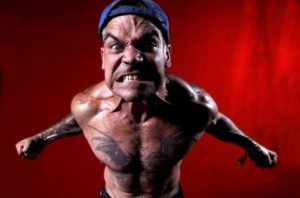
Hardcore legend Harley Flanagan talks about his debut solo album “Cro-Mags”

Punk mainstay Harley Flanagan is often recognized as one of the most influential members of the NY hardcore/punk scene of the early 1980’s. His band the Cro-Mags set the early standard for hardcore which is still followed and recognized to this day. Harley recently released his first solo album titled “Cro-Mags” and Media Mikes had the chance to speak with him recently about the album, his trials and tribulations with his former band and also about his upcoming book.

Ryan Albro: At what moment did you decided it was time to release your first solo album?

Harley Flanagan: I had some ideas in my head that I had been working on and at one point I was fortunate enough to have some studio time made available to me so I decided that I was going to use that time to start laying down some demos. From there one thing led to another and it wound up turning into this album.

RA: What was the writing process like working on a solo album versus previous albums?

HF: It was really the same process as I am the guy who came up with riffs. Back in the old days, I would have be recording them on a cassette player or when I was living with Squatch I used to call up Parris’s house and tell him not to pick up the phone so I could hum riffs on his answering machine. He’d learn the riffs and then we’d meet up later and we’d play them together. Now I sit around the house and record them on my phone. Whenever a riff comes I put it down and I work with it. I had a ton of riffs on my phone and when the studio time became available I went in and just waded through everything and picked out a bunch that I thought had an old school type of feel. I wanted to write a bunch of short songs that just come in, punch you in the face and walk right over you. I actually wrote everything believe it or not on an acoustic. I am actually thinking about releasing an acoustic version online just for fun because that’s how this whole album was originally recorded

RA: What made you decide to name the album Cro-Mags, considering the issues you have with the band?

HF: I basically felt like it was time for me to reclaim something that is rightfully mine. All bullshit aside, my hand has always been extended to those guys and even after all the shit went down at Webster Hall and along with everything else, my hand is still extended. The fact of the matter is that so called band is just John and occasionally Matthew. There’s nobody playing in that so-called band that has ever written a Cro-mags song and the Cro-mags have not written a song since I haven’t been involved. They are like a tribute band doing songs and other covers. This new record sounds more like Cro-Mags than anything anybody’s done since. I’m taking back the name. That magic is never going to be recaptured without everyone being involved. I believe that and I know that and that’s why I’m the sentimental fool that’s always fucking extending my hand to these guys, but obviously it doesn’t mean as much to those guys as it does to me. The good that game out of it far outweighs the bad, but unfortunately there has been a lot of bad. For me that whole interruption in 2012 and then putting out this album and really venting my feelings about that moment has been a real positive thing for me because it has helped me exorcise a lot of those demons.

RA: You also have a book coming out can you tell us about that?

HF: As far back as I can remember people have been telling me I should write a book, at least going back to like the 80’s but, I never really wanted to. Despite being told I have some really great stories it’s just never been something I had the desire to do. When I was going through some particularly tough times in my life I started thinking that in case anything happens I do want my side of the story to get out. I already knew that hardcore had made enough of an impact culturally where there would inevitably be books written and bullshit said and bullshit told. I was like I’m going to get my side of this out and I’m going to tell my story, the actual story. If I don’t I’m going to wind up with some asshole telling my life story the way they perceived it or the way they want it told to serve their purpose. I started writing everything down that I could remember going back as far as I could to my early childhood. Over the years of working on it I kept going back and fact checking and, double checking and, confirming facts with my family members. My mom was helpful with that before she passed away. I did a lot or research on everything. I wrote this book with the intention of it being something that people would want to read and them to see what it was like living in that time period through the eyes of a child, through the eyes of someone that was there growing up in it. There has been a lot of books about punk rock but there haven’t been any written by someone who was 10 years old when this happened. It goes through my whole life. It starts off with the day that Webster Hall went down and then right when that started to erupt it goes back to my early childhood and it retraces everything through as much as I could. Obviously I had to cut a lot of shit out or it would have been like a 10,000 page book but I wound up getting an editor and after everything was written and really narrowed down to the most powerful stuff. People can get a taste of what will be in the book if they check out www.harleyflanagan.com

RA: Lastly, What are your plans for touring in support of the new album?

HF: I have looked into doing some shows and some touring but so far the right show hasn’t come up. I work 6 days a week, I love my job, I love the people I work with and I love being home with my wife and spending as much time with my kids as I can. For me to get out there and tour it has to be the right shows. When the book comes out I will definitely be doing a book tour and, the idea is I would like to try and book shows that coincide with that so I can perhaps do a book thing during the day and maybe a show that same evening in the same city. That way you can kill two birds with one stone while having fun.

Guitarist Phil Sgrosso talks about his new band Poison Headache

You may recognize Phil Sgrosso as the guitarist for bands such as As I Lay Dying and Wovenwar However, not one to sit idle for any length of time Phil is back with yet another new band, Poison Headache. The 3 piece power trio is set to release their self-titled debut album in June via Metal Blade Records and Media Mikes had the pleasure of speaking with Phil recently about the group’s formation, the albums creation and the status of his other projects.

Adam Lawton: Can you give us some background on the band how everything came together?

Phil Sgrosso: Andy Kukta the bands other guitarist/co-vocalist and Kyle Rosa our drummer had been friends for quite some time and this sort of started up when I was with As I Lay Dying. Andy is a fellow riff writer who was looking to put a band together after his previous one broke up. He reached out to Kyle and I and we would jam off and on when I wasn’t out with my current band. Nothing serious really came of it until we had enough songs to make up an album. We decided that’s what we were going to do and got Metal Blade Records on board and they were super supportive of the whole thing which was great. Things were a bit slow starting out but we are now ready to kick things into the next gear and get going.

AL: Where did Poison Headache fit in during that period of time where As I Lay Dying was ending and Wovenwar was beginning?

PS: It was something we wanted to do and during that time I actually had the time to do it. We were just waiting for that window to open. Now that we are making a go of this we have to make the most out of it. I don’t for see Wovenwar being as busy as it was when we first started. It will still be an active band but I want to be doing as many musical projects as I can be. I don’t want to put all of my eggs in one basket because if I have another band that I really love doing that’s something I want to be able to go out and do. So far this year I have the Poison Headache album coming, we are finalizing the second Wovenwar record and I also have been out on tour with the band Saosin as well as one called Nails who I also have been touring with. I try to fill my schedule with as many musical things as I can to keep me busy and going.

AL: What type of adjustment period did you have to allow yourself for going from playing/writing in 5 piece bands to now doing the same for a 3 piece band?

PS: It is a very different animal. With all the bands I have done I tend to like being the overseer of things. When I have someone like Andy writing a lot of stuff and I can play the producer role on the songs he has written which allows me to hone in on his vision within that role. In a way its easier being in a three piece but there is still a lot of work. You have to take on more roles that may be delegated to another member in a bigger band. Knowing that I have that type of control over things I can process things the way I do. There is a little bit of a different mentality especially with gear and such. We both want to play guitar live so we have to be creative with our tones and things like that. Once we start moving into the live stage of things we will have all that stuff figured out. Vocally it takes a lot of practice to build up your stamina to be able to do a whole song and not just backup vocals and then to take it further being able to perform an entire set.

AL: How do you separate your roles as Producer and Performer?

PS: You have to really rely on your band to produce you when you are in that type of situation. What’s nice about a three piece is you ask the other two guys what they think and their cool with it that’s really it. I really trust Andy and Kyle’s opinions so I think that’s what keeps me in check when I am trying to oversee the big picture of things. I feel trust and respect is the foundation of any relationship so the fact that we have that together along with being on the same creative page has made things very easy.

AL: Is a majority of what makes up the album material Andy had written or is there new material you all contributed to on here as well?

PS: I would say probably a third of the album is stuff Andy had written with another third of it being stuff I had written. The other third was probably pieced together from things the three of us had written together. Andy and I are both capable of writing a complete song and seeing its vision so we bounce a lot of ideas off of one another. I can say that Andy’s approach and style has been the inspiration behind the sound of the band.

AL: The album has a very hardcore meets thrash sound to it. Was this sound something that evolved over time or was it present from the very beginning?

PS: I think having that hardcore type feel or groove is something completely Andy. When I hear the album and a part like that comes on, I can say that’s totally Andy. Kyle is a very dynamic drummer that is able to adapt to that which is certainly a strength. That’s the type of music that we like and want to play so when we can include those elements we enjoy that. There is one track on the record called “Be Numbed” which is an instrumental track that I wrote to break things up a little. That track has more of a shoe-gazing, post metal vibe. We just sort of threw in things here or there which we may have not done yet. I don’t think there was ever an instance where we said “no we can’t do that”. If a song called for something we went for it. This really helped push our creativity.

AL: What types of touring plans are in place for you guys at this point?

PS: It’s tough for any new band to get out there on the road. We could do that but being older now we have more responsibilities. We just can’t go jump in the van for a tour and come home with no money and be ok with that like we did when we were teenagers. We all want to have jobs and security for our families so with Poison Headache we plan to build gradually within out scene in Southern California. I also co-own a venue with two of the other guys in Wovenwar with my wife acting as the promoter so we know a lot of bands and we feel that’s a smart way for us to start. From there we will see what opportunities come our way.

AL: Where are things at with the upcoming Wovenwar album?

PS: Things were a bit different when we shifted from As I Lay Dying to Wovenwar. We had become this machine and had gotten used to a certain way of doing things that when we had the rug sort of pulled out from under us we tried using that same design with Wovenwar. We had to step back and realize that we were still a new band despite our previous work together. The business side of things is a bit different and where we are at with life now is all different. We have to be smart about what we do. We are all at different stages in our lives with having kids and being married and what not so we all had to look at what we wanted to do and how we could make the band work. We did all of the production ourselves and it is currently being mixed by Nolly from Periphery. Everything is just now entering the final stages.


Related Content

Corey Beaulieu of Trivium talks new album and Summer Festivals

Heavy Metal band Trivium released their 7th full length studio album titled “Silence in the Snow” in October of 2015. Since that time the band has been performing at a relentless pace playing to thousands and thousands of fans all across the world. As the summer tour months get closer and closer the band is showing no signs of slowing down. Media Mikes caught up with the bands co-guitarist Cory Beaulieu recently to discuss the latest album, the bands upcoming performance at the inaugural “Rock N’ Derby” event and his thoughts on the changing tour landscape here in the United States.

Adam Lawton: Now that “Silence in the Snow” has been for a few month how do you feel the reception has been not only from a sales stand point but also from live performance reception?

Corey Beaulieu: Every record we put out there is always this quick knee jerk reaction from various places that either love it or think it sucks. A lot of time people build up these expectations in their head of what a record is going to be and if it ends up being something different than they expected there tends to be a negative reaction. There are also people who take their time with a record and really digest it and take it for what it’s worth. A lot of people have come up to us and said they weren’t sure about the album at first but after giving it some time they really like it. The album has been doing great and gotten on radio in a big way. Because of that we have been able to reach new fans that didn’t know who we were. We also have been able to change radio’s perception of who they thought Trivium was. I think there were some out there that thought we were a death metal band from Sweden and weren’t too sure about playing our albums. After meeting us and hearing the new material they have jumped on board and this new exposure here in the States has been really great.

AL: From a player/band stand point is there anything you would want to go back and change about the album?

CB: We spent a lot of time honing in the songs for this album. We knew exactly what type of record we wanted to make and what songs we needed to write. We spent a lot of time jamming and feeling the songs out. We wanted everything to feel very smooth and natural. If something didn’t feel natural we would re-write it. We didn’t stop till every key point we wanted to achieve with the record was done. I don’t think there is anything we would want to change however when you reflect back on a record you look at it and pick out things that you may or may not want to do with the next record. This record is definitely a great step for us and how we plan to do the next one.

AL: How much of the new album has made its way into your live set thus far?

CB: We have been doing a lot of headlining on this album which has allowed us to have longer set times which has been great. So far in the set we have four or five new songs that we have played. We try and balance things out between the newer and older material. Our new drummer has been learning a lot of the older stuff that we haven’t performed in years so to add in some of that stuff along with the new material has been a lot of fun. Each show we have been changing the set list so it’s a little different each night. By doing this we have been able to play a lot more material and we keep working on other songs to add in to the set on different nights and for future tours. I think it would be a lot of fun to be able to play “Breath in the Flames” and “Rise Above the Tides” which are both off the new record so hopefully for the next U.S. run of shows we will be able to debut some of these.

AL: With each album release do you find it harder to fit new material into your sets due to fans wanting to hear a lot of your back catalog?

CB: It seems like every song we rotate in and out fits pretty well. We aren’t switching a real popular one with a more obscure one or anything like that. All of the swaps are pretty equal. I think each of the sets that we play is equally strong regardless. With the internet it seems after you do your first show fans can check out the set list and know what you are playing ahead of time. It’s cool being able to swap sets because people come in not knowing what we are going to be playing that night. That brings back the excitement of not knowing what’s going to be played and makes for a cool surprise. Also with our new drummer learning more and more of our back catalog and by us adding in stuff here and there people will see that we are trying to cover all of our history and by doing that we hope more people will come out to the shows and see what we bring. Every show is different and the excitement that fans want is there each night.

AL: What are your thoughts on the recent climate shift in touring here in the States where we are seeing less multi-city traveling festivals and more single city weekend festivals similar to what have been done in Europe for quite a long time now?

CB: There is definitely more of a Euro style going on as of late. Weekend destination festivals are a model that has worked in Europe for twenty plus years. Traveling festivals like Mayhem and Ozz-fest were great in that they helped break a lot of bands but a lot of those shows took place during the week when a lot of fans were working an unable to attend. With shows shifting to a more weekend based time frame more fans are able to attend. People fly in from all over for these types of shows. Festivals like “Rock on the Range”, “Knot-Fest” and “Rock N Derby” show that this type of model is working here and are very popular.

AL: Outside of the bands appearances at various festivals this summer what other plans does the band have?

CB: “Rock N’ Derby” is actually our last show on this run of shows. After that we have a little time off then we head over to Germany to start a Euro festival run that is four weeks of shows over there. After that we are taking some time off from touring but will be working on other band related work. After that we are looking to finalize a fall headlining tour that will start in September and run through October. There is also potential for us to hit some new territories in the winter months and then wrapping up the album cycle early next year with another possible European run. You never know what else may pop up in between now and then though.

Director Matt Brown on “The Man Who Knew Infinity”

In 1914 a self-taught math genius named Srinivasa Ramanujan left behind everything he knew when he boarded a ship that would take him from his life in Madras, India to Cambridge University in England. He was drawn to the prestigious school via a correspondence with English mathematician G. H. Hardy who recognized Ramanujan’s enormous potential not just for discovering known theorems without any formal education, but for seemingly cracking brand new ones.
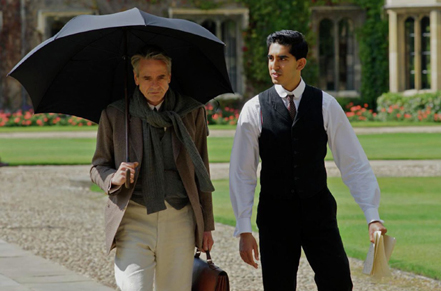
Their collaboration is charted in director Matt Brown’s new feature The Man Who Knew Infinity starring Dev Patel and Jeremy Irons as Ramanujan and Hardy. Despite the left brained subject at hand, Brown’s film delves further into the very human story of a man faced with living in an entirely new world. Patel and Irons make for a compelling duo experiencing a huge, but ultimately fruitful, culture clash. The pair are supported by a roster of talented actors including Stephen Fry, Toby Jones and Kevin McNally. The road from Robert Kanigel’s book of the same name to its film adaptation was one that took over twelve years to travel and Brown spoke with me on the phone about how it all came together (Spoiler: It didn’t involve shoehorning in an unnecessary romantic subplot!)

Lauren Damon: First off, speaking as someone who knows nothing about math, you made a very touching film!

Matt Brown: [Laughs] Thanks, I don’t know much about it myself so thank you.

LD: Since this is your second feature since 2000, how long ago did you come across Ramanujan’s story and what made you decide to make it?

MB: Well…my aunt was a member of a book club and about twelve years ago I was visiting her and she introduced me to Robert Kanigel biography. I had done a small film right out of school that I never really got to finish and so this was my first sort of opportunity to do a little bit of a bigger film–or we were hoping it would be–but it was a long road. I mean it was twelve years trying to get this film made so I sometimes joke that I think I was nervous to go through the process of having to make another film and I picked maybe the hardest film in the history of the world to try to get made. [laughs]

LD: I read that you had had an interest in World War One, which this story takes place during but it’s not really the focus…

MB: No it doesn’t, it’s just with–You know I’d read Birdsong by Sebastian Faulks and I was really fascinated by the period, as anyone that has read that incredible book might be afterwards, and this was set against the great war and that just sort of got my attention for a second look at it. Once I’d read it, I really fell in love with the human story and the relationships. You know, as a writer, you’re always looking for conflict and drama and it just had two characters that couldn’t have been any more different. So it drew me in. I was drawn into the isolation that Ramanujan was going through…This illness and everything he went through was something I could really relate to because I was helping caretake actually for my brother at the time. I was helping with his wife because he had cancer. He subsequently got better and wrote all the music for the movie, so it was a happy ending.

LD: That’s amazing.

MB: It was pretty amazing.

LD: There are many biopics that handle these mathematical geniuses–like Theory of Everything or A Beautiful Mind–did you look to any of those?

MB: Sure I guess like over the years, I couldn’t not have. You know it was over such a long period of time, and I’m a movie lover so I’ve them all at this point, I think! [laughs] And it’s funny because we all have perceptions of films and they’re not always totally accurate what our perception is of what the film was. I remember watching Beautiful Mind one time to try to see how they portrayed the mathematics visually in it. And it was shockingly small, the amount actually. It was like the one moment where he adjusts the tie, and he makes the pattern of the tie work. And it was like small and subtle. I don’t even know if there was another moment in the movie that did it besides doing lots of math on the chalkboards. People writing furiously. You know and I didn’t want to do that. I wanted to do a film that was organic. Anything we tried to do we wanted to do it in the camera. And it was really important to me to just portray the mathematicians as multidimensional human beings that weren’t crazy and weren’t like frenetically insane and were actually, you know, complex flawed characters. So I didn’t need to make it into something it wasn’t already. I think just trying to be authentic to what the story as more than enough. I mean this had so much drama: Man breaks caste, leaves his country and his home, gets trapped by the war, goes all the way to England only to find that the one person that brings him there is emotionally completely unavailable…And how these two had to come together.

LD: Throughout the film, so many of the actors have to speak so passionately about what their characters are working on. Did any of them delve into studying what they were talking about?

MB: Yeah they both spent some time trying to–Well, first of all I just would say it was really important to Robert Kanigel who wrote the book that I philosophically understood some of what was going on with the mathematics. And certainly I came to respect them as artists, pure mathematicians. It was really important to Jeremy and to Dev. Jeremy, I know read A Mathematician’s Apology, they both read the biography and I think that they both wanted to do right by this story. So they, they did a lot of research on their own and they worked with [mathematician] Ken Ono who came to set and worked with me while we were shooting which gave the actors a lot of confidence that the script was right. That when they would point at a formula or when they would look at the notebooks, everything was exactly right. And you know it’s one of those things that afterwards you know people always say that ‘well, the math people of the world will love your movie’ but I’m like ‘well, actually you don’t take that for granted.’ It’s really been humbling that I can have Freeman Dyson or Steven Strogatz be like ‘You got us. You did it.’ You know and that really means a lot to me. And so that aside, I want the movie to touch people that are not mathematicians. It’s very important that–that’s who I made for was for people like me or you or anyone that doesn’t know math and maybe we could just respect it as an art form and come to see their passion with it. Really the movie is about acceptance and the human story.

Jeremy Irons with director Matt Brown

LD: Meanwhile, I feel like Dev Patel probably wasn’t so much a household name until after Slumdog Millionaire in 2008, but you had the rights to the story for so long, how did that casting come together?

MB: I mean it’s been, it’s just been a process. I think when we started Dev was  you know just had  done [Slumdog Millionaire]. It was so long ago. You know, we went through different actors at different points over twelve years trying to get a movie made. But you know I think it was sort of–I have to think that there’s a plan for these things in some sense. And I knew that I wasn’t gonna compromise on the film in terms of the overall authenticity of it. I mean I’ve mentioned to the press at different times that [producer] Ed Pressman really stood by me when we had been offered opportunities to make the film if we would have Ramanujan fall in love with a white nurse to get it financed. And we didn’t do that. So I think there’s just a bigger plan at work and it happened the way it happened. Dev was ready to go at the right time and committed to it and felt like this was a character–he saw the nobility of the character and it was really important for him to play this role. And it’s a different kind of role for him than we’ve seen him in before and he does it brilliantly.  And for Jeremy, I think it was an opportunity to revisit something in a different way as an actor for him. And he, his performance is just so pure and beautiful.  I’m just humbled to be part of it.

LD: You also have an amazing supporting cast with Stephen Fry, Toby Jones…

MB: Yeah and Jeremy Northam, all those guys. You know, Stephen Fry is amazing–they’re all amazing–but Stephen you know he had his own project, for ten years trying to get it made,  and when we found out that we were gonna be making the film I reached out to him and I said do you wanna maybe join our team for this? And he did! And he flew all the way to Chennai for a weekend. Just took two days to shoot, to play Sir Francis Spring in it. And it was such a big thing for the movie to have the first time you see British actor to have that kind of gravitas that Stephen Fry could bring to it. That authenticity was a really great gift that he gave the film. But they were all wonderful.

Dev Patel and Stephen Fry

LD: How long were you filming in India?

MB: Not long, about nine days. Which was really…it was hard because it was an independent film and you obviously get compared to I don’t know, movies like–I mean, I’m really flattered anytime anybody ever mentions like the John Nash film for instance that was about fifteen times our budget [laughs] you know? So if it’s even in the conversation. But you know, we had a very short shoot compared to those kind of movies and we did twenty two days in England and then we had to say goodbye to our crew after we’re in a great rhythm. And then we switch to India, to Chennai, which is nothing like Madras in 1914. It was a real challenge and a brand new crew all of the sudden which is Indian and goes to a totally different rhythm. It was a tribute to my team–my production designer Luciana Arrighi, the cinematographer [Larry Smith], my costume designer [Ann Maskrey]– that they all came out alive and in one piece. [laughs]

LD: I’ve read now that you’ve also adapted an Ian Fleming biography, are you actively working with that?

MB: No that’s something I had written a while back. That’s, I’m not really sure what the state of that. I think that they said that that was going into production this year though so that was exciting. I have another movie called London Town that I think is in the Los Angeles film festival right now and then doing, I think it’s having a premiere maybe in Cannes. And that’s about falling in love with a band for the first time. A young man coming of age story with the band The Clash and Joe Strummer. Jonathan Rhys Meyers stars in that.

LD: That’s quite a change from Mathematics and World War One!

MB: Right? But you know what, it’s not though. That’s the funny thing, I thought the same thing then I was thinking about it more and more…It’s socially conscious kind of and it’s about artists, you know, so in a weird way it isn’t so different. But yeah, it is different because it’s a little easier on the face of it to rock out to Joe Strummer.

I screened The Man Who Knew Infinity as part of the 2016 Tribeca Film Festival. It is currently in limited theatrical release with national expansion in the coming weeks.

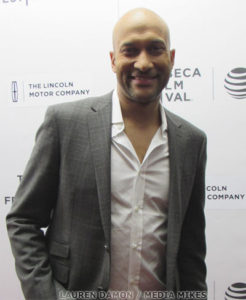
TFF: Keegan-Michael Key on “Keanu” and the Upcoming “Don’t Think Twice”

Keegan Michael Key rose to fame on Comedy Central with Jordan Peele on their hit sketch show “Key & Peele”. The television duo rode off into the sunset of that series this past September but they’ve already reteamed on the big screen in the action comedy Keanu which opens today. The film finds the pair fighting drug gangs to recover Peele’s character’s stolen kitten. Keegan was in attendance at this year’s Tribeca Film Festival to premiere Mike Birbiglia’s Don’t Think Twice which he stars in alongside Birbiglia, Gillian Jacobs and Chris Gethard. On the red carpet, the hilarious Key was glad to joke about working with the many felines of Keanu as well as his role in the touching improv-centric Don’t Think Twice.

Lauren Damon: So how was it working with that cat?

Keegan-Michael Key: The cat was super difficult. The cat—lemme explain to you—this cat, you wouldn’t believe how fast this thing became a prima donna like ‘Nah, I’m not gonna eat cat food anymore. I’m only going to eat caviar. The salmon has to be from Alaska.’ I mean, it’s like what are we doing?? It took like—I can’t believe we got the movie finished to be quite honest with you. [laughing] In real life, it was seven cats. So the thing is it was each cat was given the job of doing a particular thing. So some cats run from point A to point B. Some cats really relax and chill out in your arms and some cats put their paws up and go ‘meeeeow!’ All this kind of stuff. So they were actually not as hard as you would think. Especially for kittens. Like they’re trained. They always say it’s hard enough to ‘herd cats’ well, imagine herding kittens! But we had amazing trainers. Really amazing trainers. And a lot of kibble. [Laughs] Like a lot of cat food and catnip to keep ‘em in line. 

LD: Was it a relief for you coming off “Key & Peele” to get to work with Jordon so soon again?

KMK: Oh yeah! And also it’s easier even though a movie’s longer, it’s easier to play one character. You know, it’s easier because there’d be times you’d be in wardrobe and looking in a mirror but learning lines for a different sketch as you’re like ‘I’m dressed like an Egyptian pharaoh but these are the lines for the gangster!’ You know, and so just to play one character and have there be an arc was really helpful.

In Don’t Think Twice, Key plays a member of an improv troupe who snags a job on an SNL-like comedy show, seriously affecting the dynamic of the whole group.

LD: Did the theme of Mike’s film–that idea of “going above” your peers [in having your own comedy show]–resonate with you? Had you experienced it from either side?

KMK: Yeah, it resonates with me. I think that because you have to remember at the end of the day, do everything in your power to just to make it be about the work. Because the success will trip you up. If you start thinking things like you’re better than somebody it’s of no use to anyone. It’s not helpful, it’s not kind. And so I think that what I’ve been trying to discover or negotiate is just working. Work as hard as you can. If somebody else is at the same level or different level works—does work that inspires you, let that continue to inspire you, even if you’re ‘higher than’…you know? That doesn’t mean anything. That’s not real. Those are just labels. Good art is good art no matter what level it’s being made at.

The cast of Don’t Think Twice

Keanu opens in theaters April 29th (read our review here). The fantastic Don’t Think Twice is scheduled for release this July.

Greg Bell talks about working with Sirius/XM on Radio Classics

It was called “the theater of the mind.” Back before television families would huddle around their radio and listen to such popular shows as “Gunsmoke” or “Burns and Allen.” I still have fond memories as a young boy going to bed on Sunday nights and listening to the CBS Radio Mystery Theater, drifting off to sleep while picturing the program’s action in my head.

I bought a Sirius/XM radio for my car because I love to listen to the music of the 1970s. But more often than not you’ll find me tooling down the road listening to a great old radio drama on Channel 148, hosted by Greg Bell. I recently had the opportunity to ask Greg some questions about his interest in Classic Radio and why it’s still so popular 50 years after the last program aired.

Mike Smith: Where did you develop your interest in the radio programs of the past?
Greg Bell: As I was born in the 1960s, I was too young to have listened to these shows when they originally played. What is often called “The Golden Age Of Radio” wrapped up in 1962, when CBS, the last network still playing weekly radio theater, ended that with the final episodes of “Suspense” and “Yours Truly, Johnny Dollar.” Personally I was always a fan of classic media, old films, TV shows and radio. I grew up listening to the revival radio shows including Himan Brown’s “CBS Radio Mystery Theater” in the 1970s and The Elliott Lewis led “Sears Radio Theater” in the late 70s and early 80s. And later I listened to “When Radio Was” during the Art Fleming and Stan Freberg era. The entire reason the XM (now Sirius XM) RadioClassics channel was created was to introduce all these wonderful shows to a whole new audience, who like myself, were not around when they originally aired. Great storytelling is truly timeless, and these shows prove that.

MS: How did the gig at Sirius come about?
GB: In December of 2001, I was hired at XM Satellite Radio in DC for the now-defunct USA Today channel (basically a radio version of the newspaper.) In the summer of 2002, they launched two new spoken word channels, Sonic Theater and RadioClassics. I was hired to run the classic radio channel, and was able to draw on my knowledge of classic films and television to also host the channel. XM merged with Sirius in 2008, and I was retained as the host of RadioClassics. And then following the retirement of Stan Freberg in 2006, I took over as the host of the syndicated series “When Radio Was” airing on approximately 200 radio stations across North America.

MS: You’ve hosted several radio themed cruises. What all do they entail?
GB: What a blast! We are currently preparing for the Fourth Annual Radio Spirits sponsored sea cruise: www.cruisingwithgregbell.com The first three were tremendous successes. While at sea we re-create both classic and original radio plays live on stage with the fans as the actors as well as handling the sound effects also created live. We also have old time radio trivia, show discussions, listening parties, gift bags, and perhaps most importantly it’s a place where I lot of folks, from all over the nation, who love the same stuff (classic radio theater) can meet.

MS: What are some of your favorite radio programs?
GB: Only way to answer that is to break it down by genre:

Comedies: Jack Benny is the king, but for great chemistry and timeless humor; my favorite is “The Phil Harris & Alice Faye Program.” Harris and Elliott Lewis as his pal, Frankie Remley were Cramden and Norton before the “Honeymooners” came along.

The top thriller and mystery series: For me they are “Suspense” and “The Whistler.” Both had tremendous storytelling and featured different themes each week, so it might be a murder mystery one week, science fiction the next and so on.

Police dramas: “Dragnet” was a radio show first and is very well done, but I also recommend “Broadway Is My Beat” (follows NYPD detective Danny Clover) and “The Lineup.”

The Westerns; sure everyone remembers “The Lone Ranger,” “Hopalong Cassidy” and “Red Ryder,” and they are entertaining but were targeted for younger listeners. So my favorites are “The Six-Shooter” (with Jimmy Stewart), “Fort Laramie” (featuring future “Perry Mason” star Raymond Burr) and “Gunsmoke.” Radio’s “Gunsmoke” which debuted three years before the TV version, is easily the best of the bunch. With a whole different cast (William Conrad was the voice of Marshall Dillon) “Gunsmoke” was much more than a western. The writers tackled issues of the 1950s like racism, xenophobia, domestic abuse, etc while setting the stories in the late 19th Century American West.

MS: Why do you think the medium is still popular?
GB: As I said earlier, great storytelling is truly timeless!

MS: With the popularity of satellite radio growing, do you think that radio dramas/comedies could return? Maybe “Screen Directors Playhouse presents ‘Jaws’?”
GB: It’s already here; there are tons of modern radio theater groups all over the country performing both classic and original scripts, so it’s truly alive and well.

MS: Do you have any new programs coming to the channel this year?
GB: There will always be series that our exclusive content provider, Radio Spirits, is able to get legal broadcasting rights to air and/or have digitally restored and prepped for satellite radio, plus they periodically supply us with more “new to the channel” episodes from series we currently feature.

For a list of the weekly shows, click here http://www.siriusxm.com/radioclassics/weeklyschedule

Owain Yeoman on the New Season of “Turn: Washington’s Spies”

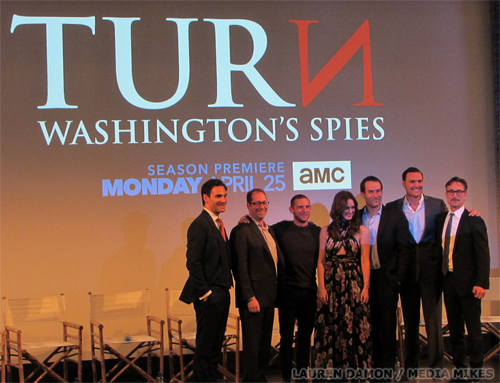
4/20/2016 The cast and creators of “Turn” at the New York Historical Society

Haven’t you heard? American history is so hot right now, you guys. Between Hamilton dominating Broadway and our electoral cycle being, for better or worse, completely unprecedented, now’s as good a time as any to look back to where it all began. “Turn: Washington’s Spies” returns Mondays on AMC for its third season so you may do exactly that. “Turn,” based on a book by Alexander Rose, follows the Culper Ring, an unlikely batch of spies from Long Island who helped George Washington turn the tide of the American Revolution. After two strong seasons—which, for you binge-watchers out there, are both currently streaming on Netflix!—the third looks to be the most exciting yet. There will be the addition of their own Hamilton and more importantly, the infamous defection of Benedict Arnold.

Owain Yeoman

Originally an American war hero for his decisive actions at the Battle of Saratoga, an injured Arnold was passed over for promotions he believed were his due and eventually his bitterness swayed him into the service of the British. On the show, Arnold is played with humanity by Welsh actor Owain Yeoman as part of a love triangle that involves romantic rival, and British spymaster, John Andre (JJ Feild) and beautiful loyalist Peggy Shippen (Ksenia Solo). Yeoman was part of a premiere screening panel last week at the New York Historical Society where I talked to him about today’s politics and the exciting times to come for his role on the show.

Lauren Damon: When you’re working on a show like this and at the same time watching this year’s election, does it have a greater impact on you?

Owain Yeoman: It’s very interesting I think, the parallels between—and I think it’s something that the show is consciously trying to market this year, is the, you know the parallels between the Red states and the Blue states and how things, depressingly, probably haven’t changed for a few hundred years. You know, we’ve still got the same old gripes and the same old battles. I think it’s very smart of AMC also to kind of market a you know, “WWGWD?”—What Would George Washington Do?—type campaign… And it’s true, he’s the father of our nation, of this nation, not necessarily my nation! [laughs] But you know the nation that I’ve come to call home. And I think it’s incredible how the show really does speak to the current political climate. And we couldn’t be more in the sort of fervor of it all with [the New York primary vote] going on here last night. So I think that’s our hope, that people really see that though hundreds of years have gone by, the themes and relationships and political climate is definitely still the same.

LD: This season is really your season, getting into Benedict’s treachery, is that exciting for you?

OY: Very exciting! Yeah, I mean like I’m finally becoming the traitor I always hoped I’d be! [laughs] It’s kind of a dubious prospect. He’s one of the those characters who when you tell people who you’re playing, they’re like ‘Oh you’re playing That Guy, I’m sorry’ but it’s a great challenge. I love discovering a more human side to him because I think you know he’s known very one-sidedly as America’s biggest traitor and there’s so much more to him. He was a great hero, the hero of Saratoga, and he was a real person. And I think if you approach something in that black and white area and don’t have the gray area that is real life, it doesn’t do someone justice. So that’s what we’re concerned about, showing the journey that gets him to be that guy.

LD: Yes in grade school history he was definitely The Bad Guy.

Peggy Shippen and Benedict Arnold on “Turn: Washington’s Spies”

OY: Yeah, it’s like ‘Ooooh it’s Benedict Arnold!’ Yeah and I think you know that it’s important to understand that he was one of America’s greatest generals before he became the famous traitor. And I think you only get a sense of the drama and the tragedy of that turn if you establish him as the general that he was before that fall. So you know hopefully people can get invested in that, and people can be you know, sort of see a different side to the character than maybe grade school taught us about, you know?

LD: As on the show, is there on-set any rivalry between you and JJ Feild?

OY: Oh always! [laughs] Yeah, I mean we’ve got a fierce love triangle that really comes to a head—no pun intended you know ’cause someone loses theirs at some point [laughs], history’s the ultimate spoiler for this show so I don’t feel bad about saying that. But yeah, it’s one of those things where you know, the stakes are high. In love, in the political climate, international climate. And this show—this season is the season [creator Craig Silverstein] said he always wanted to make. So all the big stuff’s happening this year, it is the Don’t-Miss Season.

Ian Kahn (“George Washington”) and Owain Yeoman (“Benedict Arnold”) at the New York Historical Society

This Don’t-miss season of Turn: Washington’s Spies starts Monday April 25th at 10pm on AMC.

Tom Hiddleston and Susanne Bier Premiere AMC’S The Night Manager

Tom Hiddleston and Olivia Colman in “The Night Manager”

“The Night Manager” recently completed its first series run in the UK to much critical acclaim and strong ratings throughout. Fortunately for American viewers, the series gets its stateside premiere tonight on AMC. Based on John Le Carré’s 1993 novel of the same name, “The Night Manager” follows Jonathan Pine (Tom Hiddleston) an ex-soldier-turned-titular-customer-serviceman in a posh Egyptian hotel. He’s presented with the opportunity to help British Intelligence agent Angela Burr (Broadchurch’s Olivia Colman) take down jet-setty guest and illegal arms dealer Richard Roper (a superbly sinister Hugh Laurie) from the inside of his operation out. Outraged by Roper’s behavior, and with some very personal motivations as well, Pine swiftly accepts. What follows is a taut spy thriller that features an amazing cast that also includes Elizabeth Debicki and Tom Hollander.

The series premiere screened this weekend as part of the Tribeca Tune In series celebrating television. I caught up with Hiddleston and director of the series, Susanne Bier, for a quick chat on their red carpet.

Susanne Bier is an Oscar winning director (2011’s Best Foreign Language film, In a Better World) who was eager to take on this project in any capacity. “Well I mean, this project I would have done had it been a puppet show!” Bier enthused, “Because I love John Le Carre and I love the novel. But I was also very tempted to do TV. I mean the format of doing six hours as opposed to two hours was just really tempting and really interesting and compelling.”

With the show having already gone over so well in England, Bier was looking forward to opening it up to a new audience and maybe a new perspective on it:  “I think there’s always different perspectives. I mean American audiences are responding just as [excitedly] about it up til now, so I hope so!”

One of the chief changes made from the novel to the series was the switching of British Intelligence agent Burr from a male to a female character. For Bier “Part of it was updating it. Part of it was the fact that by updating it we could take it out of the sort of public school white heterosexual world and maybe actually have a bit of the diversity which is where the world is actually at.” And of the brilliant Olivia Colman, the director added: “And she was absolutely the right choice for it!”

Tom Hiddleston

With Tom Hiddleston‘s Pine reporting to Olivia Colman’s Burr, I wondered if the actor saw a pattern of his recent projects whereby his characters’ fate was in the hands of his strong female leads (Such as Jessica Chastain in Crimson Peak or Tilda Swinton in Only Lovers Left Alive) . Hiddleston—who, it must be said gave thoughtful answers to the entirety of this NYC press line— took some time to reflect on those roles before answering  “I haven’t thought about it consciously in the work. I mean…it seems very true to life, doesn’t it? For men to be in relationship to women? [laughs]” He paused again, “I don’t know that they are, how was it you phrased it? Their ‘fates were in the hands of women’–it’s an interesting interpretation!…It rings true to me that each character would have specific relationships to women, but I would never—I would have to think about it longer to think of it whether his fate were in their hands…It is a new interpretation and I’m not disagreeing with you. My point is I think everyone is responsible for their own actions and that responsibility in each of those characters is shared out. I think Pine’s responsible for what he does and he would never discredit Burr by saying that [the mission] was her idea. He does things on his own volition that he’s responsible for and Pine’s fate is in Pine’s hands.”

As for looking back on his recent characters, he did stipulate: “The only instance who I would say that you brought up is [Crimson Peak’s] Thomas Sharpe who is governed by a very toxic relationship with his sister and out of the sense of duty and codependency he feels trapped. But again, his fates not in her hands, I just would question…I suppose I’m being pedantic about phrasing. But I think everyone’s fate is in their own hands.”

Hiddleston not only stars in “The Night Manager” but he took on the more demanding role of executive producing as well which he “loved,” adding “It recomitted my engagement with the material in a very serious way. I loved the extra responsibility. Responsible for the story, for the script, for the thing running on time and it just gives you greater–to me–the extra responsibility made me give even more commitment. So yeah, hoping there will be more of that.”

The Night Manager premieres tonight at 10pm on AMC.


Comedian Margaret Cho discusses her new album “American Myth”

Actress/Musician/Comedian Margaret Cho is set to release her second music album titled “American Myth” on April 29th. The album is the follow up to her 2010 debut release “Cho Dependent” which help add musician to the artists already impressive skill set. Media Mikes had the chance to speak with Margaret recently about the new album, her current project with Amazon.com and about just what happened at The Stress Factory on March 26th.

Adam Lawton: Can you give us some background on your new music album “American Myth”

Margaret Cho: I always write music as it’s something I enjoy and is a part of my life. I worked on a majority of the album with Garrison Starr who is a really great artist and someone I have worked with before. She came down to right with me while I was living in Atlanta and I also had a few sketches of songs that I had done on my own. This is the first record where I actually did all the melodies and composed the pieces. I had never done that in the past which made things really exciting. I think the album is really beautiful.

AL: A lot of the song lyrics seem to be very personal. Can you tell us about writing from that perspective?

MC: A lot of the songs on the album deal with loss and compassion. They deal with a lot of human emotions. The songs are very anthemic as I appreciate a good rock anthem. I also did a memorial song on this album titled “Anna Nicole” which is about Anna Nicole Smith. We recently shot a video for this song as well which feature a variety of Anna Nicole impersonators running around a castle. This will be the third video for a song off the new album as I also did videos for “Come With Me” and “Kill My Rapist”. It was a lot of fun running around a castle filled with hundreds of Anna Nicole impersonators.

AL: What was it about releasing a music album that was more appealing than say a new comedy album from your recently aired comedy special?

MC: The stand show album will be coming out as part of the DVD release of the special. That’s something that will generally always come out. The music album is a very different undertaking. It is something that is very personal to me. Stand Up comedy is also very personal but music is a different part of my work.

AL: Over the past few years you have become very involved with bringing attention to homelessness in various cities here in the U.S. Can you tell us how you got involved in that?

MC: The “Be Robin” events are kind of a way for me to honor the life of Robin Williams and to be an advocate for the homeless population. We have events going on all the time in lots of different cities. I can’t always be at the events because of my schedule but we try to have them whenever I have the chance. They end up just being these big, crazy, fun events. There is actually a documentary about this as well which has been sort of a way for us to bring closure to the grief caused from his passing.

AL: What other projects are you currently working on?

MC: I am working on a pilot for Amazon right now called “Highlands”. The show is a comedy/drama about an Asian-American family involved in the marijuana business. I am working with Liz Sarnoff who has worked on “Lost” and “Deadwood”. She is a real genius. We just finished the script and start shooting soon. Everyone at Amazon has been really wonderful as they let the artist be themselves. They have really given a lot of creative freedom to the project which I feel has been priceless.

AL: You have quite a few live dates lined up can you tell us about those and also give us an update on the recent incident that occurred during your show at

MC: I will be in Detroit during the middle of April and then in Nashville at the beginning of May. As for what happened recently at the Stress Factory Comedy Club I speak about a lot of personal things in my shows. I talk about rape and sexual abuse because I feel it’s important to discuss those things. We are living in an age where as a survivor you don’t have to stay silent. That sometimes can be very confrontational to people and an audience. It can be very upsetting. Some jokes are meant to make you laugh while others are to make you think. As comedians we try to wake people up so there is this weird thing when people get angry but that’s part of the great arc of comedy. I am going to be going back to the Stress Factory for a makeup show with those who were there. I want to do a reenactment of what happened and talk to the audience members about why they got upset. (Laughs) It would be fun to bring in Dr. Phil to moderate. I love comedy so much and don’t want to hurt it or the Stress Factory as it is a really important venue in that it’s an independent club owned by comedians. The place is like a dojo and holy to me so I want to invite everyone back and to work this out. We will buy them dinner and drinks and allow them to have a conversation with one another. I think it could be very funny.

Bella D. talks about her new album titled “The Crystal Ceiling”

Bella D. pushes the boundaries of artistic hard rock with a unique signature blend of operatic vocals and intricate steampunk themed storytelling. This blend of interesting styles can be heard on Bella D’s new album titled “The Crystal Ceiling” which will be released on May 13th. Media Mikes had the pleasure of speaking with Bella D. recently about the albums creation, her partnership with drummer Charlie Zeleny and her plans for upcoming live performances.

Ryan Albro: How did you and Charlie Zeleny come together to work on this project?

Bella D.: Charlie went to high School together but we didn’t really know each other. We just saw each other in the hallway kind of thing. We actually met in college as we had a class together and that’s where our friendship started. I did a lot of theater at the time and I got him a lot of jobs as a theater music and stuff. He and I worked in together a lot and then we parted ways for a little while his career went 1 way and my career went another way. When I got the wild hair to finally do this album I knew I really needed a partner to help me with it. It was one of these things where the album became so big that there was no way I was going to be able to do this by myself. After talking with Charlie he asked me to do a video with him which got us back in touch with each other. I told him the idea about the album and he said he might be interested, Charlie wanted to see if we could write a song together before we invested a lot of time in the project so that’s what we did first. We sat down and wrote one song which went very quickly. From there we tried another and so on. All of a sudden things just exploded and the album literally started to take on a life of its own.

RA: Where did the idea for the dystopian, steampunk theme come from?

BD: It came from me. Charlie’s alter ego is very cyberpunk but I have always been very theatrical and I have always been in love with the Victorian age. I wound up discovering steampunk and fell in love with the idea of a very modern world, with modern objects that are all run by clockwork, steam power. There is something very romantic and badass about it at the same time. Steampunk started off as kind of very small niche and now you are starting to see it a lot more.

RA: The majority of great song lyrics generally can be traced back to writers telling very personal stories in the form of song. What was it like for you to tell not only your own incredible story, but to shape it into a hard rock, steampunk fueled album?

BD: Charlie and I worked very closely together on this album. The album is made up of a lot of my experiences which at times was very emotional for me. We all go through these moments where we feel like we’re beaten up, either by life or just by every day conflict. We are all beaten up and we are all fighting against something and the album sort of reflects that battle. It is one of these things that you have to go into full force and swing that sword, shoot the gun, whatever genre you’re fighting whether its fantasy or steampunk or modern cyberpunk. That is the general feel of it. I have gone through a couple really rough patches in life and I really drew from that. That’s where the story came from.

RA: How did you going about selecting the musicians who appeared on the album?

BD: That all comes down to Charlie. I always joke that he has got this little black book, not of women, but of every musician he has ever worked with. I think it rivals the New York City phonebook. He has had a fantastic career and is really amazing at what he does so because of that he has been able to build up some great connections with all of these artists. Charlie reached out to everyone with the idea of what we were doing and they were like that’s insane, I want in. That’s basically all that happened and the even crazier thing is that none of these artists were in the same room with each other at any time. This was all done digitally. Charlie would plug the performances into pro-tools and tweak little things here and there to make everything sound fantastic.

RA: What can you share about the comic book series that’s coming out with the album?

BD: Basically the music and the story coincide with one other. When we wrote the concept album I wrote the lyrics with a story in mind but not in such a way that you’re going to sit down a listen to a recording of a musical. This is a concept album and each song stands on its own 100% but, if somebody really wanted to sit down and listen and actually enjoy the whole concept of it they could. I really wanted to be able to tell my vision with this album. Being a huge comic book fan and knowing how popular comics are right now it made perfect sense to make this something that if people want to know what was going on story wise in the music they could follow along in the book. I worked with a really great artist who I think captured the first portion of the story quite well.

RA: What do you want listeners to take away from the album and your story?

BD: I think the biggest lesson I’d love people to take away from this is an understanding that we all have been there, we all have been that person who’s been struggling and feeling like the world is literally falling apart around them. The biggest message is that you can make it through, but you have to work at it, you have to pick yourself up, you have to have those moments of “yeah this stuff is horrible” but I’m still going, I’m still alive, I’m still breathing and today I’m going to kick its ass.

RA: What are some of the plans you have for live performances of the material?

BD: We are doing a release party at Carroll Place in New York City on May 19th. As far as live performances past that we don’t have anything locked in yet. I am working on getting into Comic Con as I would love to perform there, especially since I am releasing a comic along with the album. We also have two lyrics videos being released online soon and also a full production video of another song. That’s all in the can ready to go, it looks fantastic, we’re just waiting for the release date.

Sitting down with “Everybody Wants Some!!” stars J. Quinton Johnson, Glen Powell and Wyatt Russell


Described by its writer/director, Richard Linklater, as a “spiritual sequel” to his popular 1970’s set film Dazed and Confused, Everybody Wants Some!! follows the fun times being had by a small college baseball team in 1980. To promote the film, co-stars J. Quinton Johnson, Glen Powell and Wyatt Russell sat down with me at the Alamo Drafthouse Theatre in Kansas City. Johnson enters the room in full voice, performing a song he literally just wrote. Powell, the most outgoing of the group, sits between the other two, eager to chat. Russell, a former hockey player and the son of Kurt Russell and Goldie Hawn (he has his dad’s eyes) busies himself with his phone. And so we begin:

Mike Smith: What was it like going back in time to 1980?

Glen Powell: It was a transitional time and everything. Clothing. Presidents. Everything was kind of shifting and changing. Our relationship with the world was changing and I think this movies about guys who were shifting from either college to the real world or high school to college. And that shift not only in their world but in the world at large is what the film is about.

Wyatt Russell: So it’s AWESOME! [everyone laughs]. I mean we talked about the clothes and the hair and the music. I think everything was much sexier then I just love that era.

GP: Nowadays we have social media…smart phones… so when you go to parties today everyone has their phone out to show how good time they’re having. But in that era it’s like having a good time with these people right here.

WR: I’m at the Bieber concert!

J. Quinton Johnson

J. QUINTON JOHNSON: I’M AT THE BIEBER CONCERT!!!

[Note: Justin Bieber was in Kansas City the same week as the guys]

GP: And when we’re having a good time, we’re also athletes on the dance floor. Rick [director Richard Linklater] told us that back then athletes were peacockers, in every sense of the word. When I was an athlete, we were almost wallflowers. You go to practice and then you go home and do your thing. I mean these guys are drinking beer. Today it’s much more competitive.

JQJ: You’re not going to be out at the club.

WR: I played hockey. When I played in Europe it wasn’t a problem going out for a few drinks. But when I played in the states it was pretty rigid. Back then it wasn’t for a career you were going to make a lot of money and become a brand and sell a lot of clothes.

GP: Rick also talked about the body type of an athlete back then. Today everyone takes supplements…they’re all almost like Adonis, they’re all shredded. Back then Rick said we would’ve been in what you would call pretty good shape. I mean you are athletes but you just don’t look like one. It’s a different body type now.

MS: Was it easy to film the baseball scenes? I mean you all had participated in athletics before, right? Wyatt, you played hockey…

JQJ: I played basketball.

Glen Powell

GP: I played football. On the set we would have baseball practice every morning. We had a couple guys who had played professional ball. One had played for the A’s, and a couple of played in college. So those guys helped out the guys who might not have had that much baseball experience. We also had to do a skills video as part of our audition. I think Quinton had the most entertaining non-baseball video.

JQJ: I mean I was an athlete. I could catch a ball. I could throw a ball. But I wasn’t a baseball player and Rick knew that instantly. So what I did is I added more flair as an artist. Again I played basketball so I threw a dunk in there. And I kept trying to throw in more as a person. I was juggling. I had a shot of a dog running through the park, set to the tune of Thin Lizzy’s “The Boys are Back in Town.”

GP: I was filming Ride Along 2 so I went to a batting cage and filmed mine. And then I just laid a bunch of 80s music on top of it. Mine wasn’t nearly as fun as yours.

Wyatt Russell

WR: I had like five minutes to do mine because I had a go somewhere. The casting director called me on Friday and said you have to have it in… By 5 o’clock… On Friday. It was a big festival going on and all my friends were out of town. I didn’t even have a baseball glove. So I ended up going to my brother’s house and had him film me using my seven-year-old nephew’s glove.

MS: The film is full of great 80’s music. Did you listen to any particular songs to get into the feel of the era?

GP: Yes. Rick gave each of us and iPod nano with 100 songs from 1979 and 1980 on it. And so were ever we went… whatever we did… we listened to the music. And if we are in his game room playing ping-pong we listened to the music. It was a big part of getting us in tune with the times.

Everybody Wants Some!! is now playing in select cities. For tickets, visit everybodywantssomemovie.com

Fat Mike of NOFX talks about the bands new book “The Hepatitis Bathtub and Other Stories”.

Mike Burkett better know to the world as Fat Mike is the bassist/lead vocalists for California punk rock band NOFX and owner of Fat Wreck Chords. Together with first time writer Jeff Alulis and his band mates Eric Melvin, Aaron “El Hefe” Abeyta and Erik “Smelly” Sandin the guys have just released their first tell autobiography aptly titled “The Hepatitis Bathtub and Other Stories”. The book which is being released via Da Capo Press is a down and dirty tale of punk rock debauchery told candidly by those who lived it. Media Mikes had the chance to speak with Fat Mike recently about the book and also about the bands upcoming album and tour.

Adam Lawton: Where did the idea for you guys to do a book come from?

Fat Mike: It was something that we had been talking doing now for awhile. It wasn’t until I read “The Dirt” by Motley Crue that I started to take doing our own book seriously. Once I read that book it got me thinking that NOFX could do a really good book because I think our stories our better. Our stories are a little less rock and roll. I had also read the book “Please Kill Me” which really changed me as I thought the book was just so good. Our story is right up there but totally different so we said “let’s do a book”.

AL: Did the other members of the band have any reservations about doing this type of book being that it was going to go pretty deep?

FM: There were things that I knew the guys were going to be a little uneasy to talk about. Eric Melvin had never talked about being molested before and Smelly never wanted to talk about his times with Courtney Love. Those guys went in and gave it all up for the book. Smelly really told everything which makes the book his in a lot of ways. We had to wait this long to do this because 10 years ago guys wouldn’t have wanted to tell these stories. You have to get to a point in your life where you are comfortable to talk about these things. For me the chapter which talks about cross dressing was something we added at the last minute because as of 2 years ago I wasn’t ready to talk about that publicly.

AL: Was it difficult revisiting some of those darker memories that make it into the book?

FM: The chapter where I talk about killing my mom was from a very hard part of my life but at the same time I think it was one of the best things I have ever done. My mom brought me into this world and raised me and I was able to give her the greatest gift I could ever give by helping her when she needed it. I wanted to put this in the book because it’s a heroic thing to be able to do that when someone needs your help in that way. Just letting the doctors take care of it is bullshit. That’s what a coward would do. My lawyer didn’t want me to put that stuff in the book so there’s a line stating that it’s the only part of the book that’s not true. (Laughs)

AL: What was it like going back and reading some of the chapters written by former band members?

FM: The chapter with Dave Casillas was really funny because he denied a lot of the stuff at first but then by the end of his interview he said “I guess it could have all happened”.  During the older days of the band when everyone was doing a lot of drugs I only drank beer so my memory from those years is really good. I remember stuff no one else does. It’s the past 15 years that I have a problem remembering. (Laugh)  I just remember those early days so well. Nowadays we will do a House of Blues tour or something like that where everyday kind of blends into the next however, when we first started we would stay at some ones house and sleep on their floor for 3 days, get crabs and then get told not come back. (Laughs) Those are the things you remember.

AL: Were there pieces of the book done separately or were there portions that everyone worked on together?

FM: Everything was done separately. That was something that Jeff Alulis wanted so that we would be able to open up more. What I love about the book is that after reading it we all learned things about one another that we had never known. There was one part of the book I had to call Eric Melvin about just to give him a warning about what he was going to read because it’s a pretty hard thing to read.

AL: What was it like working with Jeff in this capacity as compared to the group’s previous video work with him on “Backstage Passport”?

FM: It was difficult and very trying at times. He didn’t change any of our stories but he did change some of the wording to make himself look like a better writer. (Laughs) He used words that I would have never said. It was still the same thing but he just cleaned it up a bit and made it readable. We went with someone who had never written a book before because we didn’t want someone with a lot of experience who would take our experiences and change them. Jeff felt his way through the book and the early reviews have been great so I think we made the right decision. I am really proud how it turned out.

AL: Did you notice any similarities between writing a book and writing an album?

FM: Our new album is I think our most personable album yet. For me it was like peeling off my skin. The new album which will come out in June is the first album that I wrote and recorded a lot of while I was using drugs. In the past I have always gone into the studio and recorded sober. What I found while working on this album was that I cared more. After I would do a line I became extremely focused on making whatever song I was working on the best it could be. A lot of this came from not only writing the book but also from when I was working on the “Home Street Home” musical. With a musical you can’t put in one word that’s not needed as you have 2 hours to tell an entire story. You can’t waste a word. You will definitely be able to tell the influences of the book and the musical on this new album.

AL: With a book and album coming out this year what are the bands tour plans?

FM: When we make a record we tend to not tour like a lot of other bands do. Our schedule generally doesn’t change in that we will do a two week tour, have six weeks off and then we will do another two week run of shows. With having a book out we really want it make the New York Times Best Seller list so we are going to be doing a bunch of signings and stuff like that to help promote the book. The book was already in its fifth run of printing prior to the release on April 12th so we are really excited for everything.

Be sure to check out our review of NOFX’s “The Hepatitis Bathtub and Other Stories” in the book review section of the site.


Related Content

Guitarist Paul Gilbert talks about Great Guitar Escape 3.0

Paul Gilbert is probably best known as the guitarist/co-founder of the rock group Mr. Big a band who dominated the airwaves in 1991 with their acoustic ballad “To Be With You”. After the group broke up in 1996 Gilbert embarked on a solo career while also performing in numerous other side projects and groups. Paul recently announced the 3rd installment of his “Great Guitar Escape” which is set for late July. Media Mikes had the chance to speak with Paul recently about the upcoming event and what those who attend can expect.

Adam Lawton: What can you tell us about the recently announced Great Guitar Escape 3.0?

Paul Gilbert: It’s the most fantastic, inspirational and unforgettable guitar event of all time! There will be concerts every night, Seminars every day and lots of opportunities to jam. It’s just going to be great mix of good food, the California coast, and great times with people who love the guitar.

AL: With this being the camps 3rd yr are there things you have planned which weren’t possible during the camps previous 2 sessions?

PG: The first two Great Guitar Escapes were both really great, so I don’t want to make any drastic changes. The biggest difference would be the location. The Cambria Pines Lodge is about halfway between L.A. and San Francisco, so it’s an easy drive for people who live in California. But for the last two camps, I had people fly in from South America and Russia, so I know that nothing will hold back guitar players who really want to rock.

AL: Can you tell us a little bit about this year’s guest counselors and how you went

PG: Andy Timmons and Bruce Bouillet are both incredible guitarists that I’ve spent a lot of time with. Bruce and I played together in the band, Racer X, and Bruce toured in my band when I did Joe Satriani’s G3 tour. He’s a monster player, and a great teacher. Andy is an Ibanez endorser like me, so we’ve played together at a lot of Ibanez events, and of course, Andy was at my last Great Guitar Escape camp. He’s one of my favorite guys in the world to jam with. He’s somehow intimidating and generous at the same time. I’ve met Kiko Loureiro several times over the years, and he’s always been super cool. He can play a lot of different styles, but I’m happy that he’s getting a taste of big gigs with Megadeth. Dave Ellefson, who plays bass with Megadeth, is from my generation of musicians, so he’ll have a head start on the songs that I’ll be playing in the jams. And Bumblefoot has a reputation for being creative and surprising… and still rocking hard, so I’m excited to finally get to jam with him.

AL: Is this camp designed for all level of players or is it geared more towards advanced players?

PG: The GGE is good for anyone who wants to get motivated. You can sit back and enjoy the concerts and seminars, or you can plug in and join the jams. We’re all there, in person, so I like to be flexible enough to work with anything that people are interested in. Also, my idea of “advanced” has really changed over the years. To me, an advanced musician is not necessarily somebody who can play fast or complicated, but just a person who can sound really good. I could talk about this sort of thing for the next 10 hours, so I’d better save it for the camp!

AL: As we start to see more and more interactive camps taking place how do you go about keeping things fresh and making your camp stand out above others?

PG: There are some musicians who are best known for what they do visually. They’ve got the best leather jacket, the most explosions in their stage production, or just an astounding number of consecutive good-hair days. I’ve got legendary musicians at my camp, but they are legendary for the way that they play. And they’re good people. No bodyguards or attitudes. Just a great time being immersed in music, and the guitar.

AL: What other projects are you currently working on outside of Guitar Escape 3.0?

PG: I’ve got a new solo album coming out soon called, “I Can Destroy.” Kevin Shirley produced it, and it turned out great. The opening track is called, “Everybody Use Your Goddamn Turn Signal,” and I think I might actually save a few lives, if people heed the message of this song. I’m also nearing my fourth year with my online rock guitar school for Artistworks. I’ve recorded nearly 4000 Video Exchange lessons, and I’m still having a great time, so I’m going to keep going. And later this year, I’ll be going on tour with my solo band to play my new songs, and my favorite songs from my previous albums. Life continues to rock!

For more info on Paul’s Great Guitar Escape 3.0 you can visit http://greatguitarescape.com


Related Content

Copyright: MediaMikes.com © 2016 · Powered by: nGeneYes, Inc. · Login

All logos and images used on this website are registered trademarks of their respective companies. All Rights Reserved. Some of the content presented on our sites has been provided by contributors, other unofficial websites or online news sources, and is the sole responsibility of the source from which it was obtained. MediaMikes.com is not liable for inaccuracies, errors, or omissions found herein. For removal of copyrighted images, trademarks, or other issues, Contact Us.