
David Lloyd reflects on his work illustrating “V for Vendetta” graphic novel

David Lloyd is known best for his work illustrating “V for Vendetta” graphic novel and working with Alan Moore.  David recently attending the 2012 New York Comic Con to promote this latest project called “Aces Weekly”, which is an exclusively weekly comic art magazine.  Media Mikes had a chance to chat with David about his work on “V for Vendetta”, how it is still relevant today and his inspiration.

Mike Gencarelli: Where did you pull the inspiration for your illustrations on the “V for Vendetta”?
David Lloyd: If you mean the look of the character – the idea of making him a kind of resurrection of Guy Fawkes — it’s because it fit into what we needed for the character beyond his basic form as an urban guerrilla fighting a fascist tyranny. We needed a colorful eccentric look because that’s what makes attractive and fascinating characters in most mainstream comics. And he was a character branded a villain by history who was, however, a hero to his cause as many branded as villains by history were. A good man and a bad man at once. If you mean the style of the art – it was a simple choice because of the subject – it was about a stark, bleak future, so I chose a stark, bleak style of art. But it was influenced by seeing Jim Steranko’s Chandler and the work of someone who was a great inspiration to me and a friend who actually helped me on some of V – Tony Weare – a master of light and shade.

MG: You worked with Alan Moore on “Doctor Who” prior to this, how was the collaboration in comparison on “V for Vendetta”?
DL: Well, the difference was that we had full control and we could do what we liked on Vendetta, whereas the Doc Who mag stuff was work for hire. But our working relationship was as good. We were on the same wavelength creatively – influenced by many of the same books, tv, movies. And V was also produced at a very slow pace in the early days – 6-8 pages a month = allowing us time to experiment, think, talk, plan and have creative accidents that made it a very organic object, not planned out from the beginning but made up as we went along – like good jazz : )

MG: V is such an iconic character; if there is ever a comic convention he is always present. Why do you think he resonates so much with the fans?
DL: A colorful and admirable fighter for freedom against the tyranny of cultural and political oppression and repression who also happens to be a mad genius. It’s not rocket science… : ) Alan produced something very profound as well as a great adventure. It’s a classic of great storytelling with an important message for everyone – hang onto your individuality at all costs.

MG: How do you feel that the story was translated into the 2007 film?
DL: I see it as another version. In an ideal world it would have been nice for it to be exactly as the original, but a Hollywood movie has so many needs to fulfill – I’m glad it was as good as it was. There are great performances in it and it’s a powerful movie, and the Washowski bros and James McTiegue did a great job that in other hands could have been disastrous. And most importantly the central message of the book is right in there and has been spread to a much wider audience than might ever have heard it via the graphic novel alone.

MG: How do you feel that the comic genre is changing with now digital being so popular?
DL: Depends what is done with it. It’ll change depending on what the audience for them decide they want out of the techniques being used on them. I don’t like motion comics as we understand the term but I’m sure something creative and aesthetically satisfying can be done with the medium and some kind of movement. The digital comics myself and Bambos Georgiou, my collaborator on the project, are presenting via Aces Weekly are not digital in any sense other than they’re just fantastic art and storytelling on screen instead of the page. And they look beautiful and jewel-like!

MG: Who are some of your mentors and favorite artists?
DL: I was given a little book called The Observers Book of Painting, which had reproductions of the great masters. One of them was Turner’s ‘ Ulysses Deriding Polyphemus ‘ , which I managed to get a print of, and which remained on my bedroom wall for years – even during the ‘ film poster wallpaper ‘ period of my teenage years. It was the atmosphere made from light, that impressed me most with Turner – and Rembrandt was on the same team. Then Millais for his extraordinary photo-realist work allied to amazing lighting effects, Geoff Campion – he drew ‘ Texas Jack’ in one the English weeklies, Steve Dowling, who created the newspaper strip ‘ Garth ‘ – the first British superhero ( not Marvelman ), Giles – an English political cartoonist, whose work was an extraordinary blend of the realistic and the cartoony, George Woodbridge and Jack Davis in Mad magazine – loved their work so much, of daffy dogs and gunfighters, that I did tracings of them and hung them on the wall ; little, b/w reprints of US comic book stories, packaged in the UK under the titles – ‘ Mystic’ and ‘ Spellbound ‘, Wally Wood, Orson Welles, H.G.Wells, Ray Harryhausen – ‘ The 7th Voyage of Sinbad ‘, Ron Embleton, Rod Serling, Ian Fleming, Mickey Spillane, Robert McGinnis, Josh Kirby – who painted covers for a series of sf paperbacks ( some time before he did Pratchett stuff ) including some for… Ray Bradbury ; then there was Richard Matheson, Robert Bloch, Robert Sheckley, H.P.Lovecraft, Don Medford, Don Siegel, Alfred Hitchcock, Boris Sagal, Terence Fisher, Ron Cobb – of Famous Monsters of Filmland, Frank Frazetta, John Burns, Steve Ditko, Jack Kirby, Frank Bellamy, Al Williamson, the EC crowd, Tony Weare, the early Warren crowd, Gray Morrow, Toth, Torres, Jim Steranko. Steve Ditko astounded me with his work on Amazing Adult Fantasy, which was the most consistently powerful, individualistic and atmospheric comic book work I’d seen to that date. I tried to draw like Ditko. I tried to draw folds in clothing like he did, but couldn’t because I knew practically nothing about the way people were put together at that time. At around the same period, I saw the work of the great English strip illustrator, Ron Embleton, on the first series of Wrath of the Gods – as I mentioned earlier – a centre spread in Boy’s World, in which the use of black shadow, expert pen work, and rich colors, collaborated with faultless draughtsmanship, to produce the single most impressive piece of work I have ever seen in this area of craft.  Amazing Spiderman appeared then. Then the Fantastic Four and Kirby/Lee – those fantastic, overblown, revolutionary, soap opera-style epics that had to be tracked down issue by issue through the various stores in my neighborhood  cos we had unreliable distribution of US comic books in England. Dr Strange. The EC guys came after that through the Ballantine books – you know the names – and not just the smooth guys. Al Feldstein’s work looked like he cut it out of pieces of wood – but it was extraordinary. Then I got the early Warrens. Even better. Bigger. More of it. FRAZETTA. UNBELIEVABLE COVERS. Blazing Combat. Gray Morrow on ‘ The Long View ‘. REED CRANDALL. ALEX TOTH. Too much. But not enough. Never enough. Then, when I was at the studio, I saw a newspaper strip called ‘ The Seekers ‘, which was drawn by a guy called John Burns. I thought he was American cos I didn’t think an English artist could draw in such a smooth, cool way – like Alex Raymond but with more realism. He took risks which worked – he drew water solid black, and minimalised it into a design element. He was totally in control. A master. Tony Weare was drawing another newspaper strip – a western called ‘ Matt Marriott ‘ – which was all done with one brush, it seemed, and looked lazy but wasn’t, and largely depended on shadow for delineation of figures and objects. All of all of that, and more I could list, helped me.

MG: Do you feel that your style has changed over the years?
DL: Well, other than from early days of learning, no. But then I don’t think I have a style that is a fixed thing to grow or not. I’ve chosen different ways of drawing using different tools on many subjects that demanded a variety of approaches. Sure there’s a core personality to it and to me as a creator – but a set ‘ style ‘ ? I don’t think so – though of course because I’m known principally for V many folks think of me in that context and no other.

MG: Tell us about your recent work with Aces Weekly?
DL: An EXCLUSIVELY digital weekly comic art magazine – not previewed for print – which I am publishing. You get this and only get this by subscribing and it’s delivered to you at the touch of a button every week to iPad, tablet and any computer anywhere as long as you’re connected to the net. It has up to 30 pages including extras of story and art every week featuring 6 continuing stories that run through 7 issues making a volume of up to 210 pages. And it’s a steal at just $9.99 for 7 weeks of some of the finest talent in comic art from me, Steve Bissette, John McCrea, Phil Hester, David Hitchcock, Mark Wheatley, Yishan Li, Bill Sienkiewicz, Colleen Doran, Herb Trimpe, Dylan Teague… and many more. We go straight from the creator to the buyer. No expenses on printing, distribution, warehousing, retail, and no barriers to sale. We have an international team of creators and we can sell internationally to anyone reading English. But we’re new and we need lots of subscriptions to thrive. So please help us spread the word : )

Michaelbrent Collings talks about writing WWE’s “Barricade”

Michaelbrent Collings is the writer of the latest film from WWE Studios, “Barricade”. The film was released on DVD on September 25th and I recommend it highly. Michaelbrent is also a black-belt martial artist and in his past life was an attorney. Currently, he is focusing on writing full-time not just screenplays but also novels. His latest novels are called “Apparition” and “Billy: Seeker of Powers”. Media Mikes had a chance to chat with Michaelbrent about his his work with WWE on “Barricade” and also what else he has planned next.

Mike Gencarelli: How did you go from black-belt martial artist to attorney to writer?
Michaelbrent Collings: Geez, there’s a question whose answer could go on FOREVER. Short answers: I’ve been involved in martial arts for much of my life, dating back to the day I realized that a teen who weighed all of one hundred pounds was going to have a full life working as a doormat for bigger kids. Also, I realized that girls did not, as a rule, dig guys that they could out-bench press. Martial arts seemed like a good way to both take better care of myself and build up some seriously lacking strength. Thus I became the towering colossus of manliness I am today. As for the attorney to writer thing, I always liked writing, but never liked the idea of being “that guy.” You know, the guy who’s 40 years old and still living in his parents’ basement while trying desperately to convince girls he’s “just waiting for his big break.” So I went to law school, the last refuge of the incompetent. And as soon I started making money as a writer, I was pretty much out of there (the law thing, that is). So now I’m no longer a lawyer, just a writer. And my wife and family both assure me I’m much happier because of it.

MG: How did you get involved writing the screenplay for WWE Studios’ “Barricade”?
MBC:It was actually an original script that I took to them. I had written this ghost script called BARRICADE, and a lot of people in Hollywood liked it. It ended up going to WWE Studios, where Richard Lowell and Sharyn Steele, two of the producers there, got their hands on it. They loved it, but it wasn’t right for the studio at the time. Sharyn (who is still a great friend of mine and a peach of a gal) ended up going her own way, but Richard stayed at WWE Studios. A couple years later there was a management change at WWE Studios. The new VP walked in and told Richard that they wanted to do a ghost movie. Richard, it turned out, had more or less kept BARRICADE on his desk for the intervening years, and handed it right to the VP (another really cool guy named Steve Barnett). Steve loved it, so Richard called me in to the production company’s offices and I met with him and Steve. I think they’d probably already decided that they wanted the script at that point, but wanted to make sure I was someone they could work with. Well I already liked Richard, and Steve and I hit it off really well, so the next day I got a call that they wanted to option the script. They did so, and then they purchased it a bit later, and voila!

MG:How does the film compare to the page?
MBC:It’s different in a lot of ways. I mean, for one thing it’s a surreal experience to go from a hundred or so printed pages to an hour and a half of film that cost millions to put together. Not only that, but everyone who works on it puts their imprint on it. So when WWE Studios purchased my original script, the first thing that happened was they hired me to do a rewrite to accommodate some of the producers’ “visions” of the piece. The ending was changed a lot, due to a belief on their part that the ending I had (which was quite dark) wouldn’t be something American audiences would like. Then they hired a director, and I understand he pushed the script more toward the psychological thriller aspect, when originally it had been a 50/50 blend of psychological thriller AND ghost story. And then there were changes to accommodate production scheduling, location issues, editing, etc. etc. etc. So in the end it was nearly as much of a surprise for me to watch the finished product as it would have been for anyone else in the world.

MG:Tell us about your next film “Darkroom”?
MBC:DARKROOM is a really cool script I did that deals with a girl getting out of prison. She’s young, went to jail on a manslaughter charge, and now she lives in a halfway house during parole. As part of her parole she has to get a job, and lands as a gofer at a real estate photography company. She shows up to work on day one (the company is shooting a gloomy mansion, of course), and is told that the model they were counting on didn’t show up so she’s got to fill in. The photo people give her a change of clothes, she changes in the bathroom… and when she comes out she’s been locked into the mansion. Turns out the photo company is owned and staffed by a group of crazy siblings who tortured and killed their own mother, and now intend to reenact the fun with her. So it’s basically one of those “feel good” movie for the whole family flicks you’ll probably see on the Disney channel at some point. Ha!

MG:You have written many novels, how does it compare to doing film?
MBC:It’s totally different. I love doing both, but the way I describe it is that they’re like two different languages. Screenwriting requires an extremely high level of precision and clarity because there are only a very few words to describe characters, location, action, and dialogue. But at the same time, books are tough because you have to keep an audience’s attention for many hours of reading, as opposed to just one or two for a script. Some stories lend themselves to one or the other. I like stories that work for both, because I love to write novels of scripts and vice-versa.

MG:Tell us about your latest and upcoming novels?
MBC: My latest novels are called APPARITION and BILLY: SEEKER OF POWERS. APPARITION is a crazy-scary book about a family where the mother tries to stabe her two kids to death. The dad saves them, and the mother then turns the knife on herself. A year later, Dad and the two kids are still putting their family back together… and he starts fantasizing about killing his children. Turns out there is an otherworldly entity at work, one that feeds on the blood and death of children, and one that possesses the kids’ own parents to do the dirty work. BILLY is the other end of the spectrum: it’s a young adult fantasy that’s the second book in my bestselling BILLY SAGA. It’s about a misfit kid who discovers that his favorite teacher is a wizard and that he (the kid) may be the key to a war between two factions of magic-users. The kid may also be a weapon that destroys the entire world, so it’s definitely a high-stakes book, but with lots of fun and humor as well. And upcoming… I have a novel called HOOKED that I’m working on and it should be out before too much longer. I can’t say too much about the plot because it’s THAT fun, but I will say I hope it will be kind of the anti-TWILIGHT: teen vampires done right. No sparkles.


Related Content

Craig Gerber talks about creating Disney Junior’s “Sofia the First: Once Upon a Princess”

Craig Gerber is the co-executive producer/writer of Disney Junior’s “Sofia the First: Once Upon a Princess”. Disney will introduce its first little girl princess with the debut of “Sofia the First: Once Upon A Princess,” an enchanting, music-filled animated Disney Junior television movie for the whole family, Sunday November 18 on Disney Channel and Thursday and November 22 on Disney Junior, the 24-hour channel. The primetime television movie special stars Ariel Winter (“Modern Family”) as the voice of Sofia, Sara Ramirez (“Grey’s Anatomy”) as her mother, Queen Miranda; Wayne Brady (“Let’s Make A Deal”) as Clover, a wise-talking Rabbit; and Tim Gunn (“Project Runway”) as Baileywick, the family’s Royal Steward. A television series of “Sofia the First”  will debut in early 2013 on Disney Junior, as well. Media Mikes had a chance to chat with Craig about how this show was created and what we can expect.

Mike Gencarelli: Tell us how “Sofia the First: Once Upon a Princess” was born?
Craig Gerber: A few years ago, I was approached by Nancy Kanter at Disney Junior because they were looking to create a TV show centered around a princess for 2-7 year old children. She asked me flat out if I had any ideas, so I said I would think about it. So I got in my car and was stuck in traffic, I guess that is where you do your best thinking in Los Angeles. I started thinking about my own childhood. I grew up in a blended family. My parents divorced. My dad remarried. I have a half-brother. It occurred to me that it would be great to create a fairy tale story that the modern family can relate to. For there, I thought it would also be wonderful to have a princess character that children could closely identify with. I just had my first child at the time and I was watching him experiencing new things and how to get along in the world. I saw him emulating fantasy characters. Fantasy has always been a great way to tell stories and to impart lessons. I thought wouldn’t it be great for kids to be able to use those fantasy stories to provide life lessons to them as they grow up. With all that in mind, I thought “What if, there was an ordinary girl that lived in an enchanted village and her mother fell in love and married the king overnight, which made this young little girl a princess overnight.” She has to learn how to be royal and get to know her step-family. The idea of this blended royal family in an enchanted world is the heart of the show.

MG: What is a princess movie without great songs…tell us about that aspect?
CG: It is funny because I never intended it to be a musical. I got to a part in the script for the TV movie, when Sofia gets the power to talk with animals due to this emulate and they have a chance to give her their piece of mind. Her rabbit friend Clover wants to tell her why woodland creatures have been helping princesses all these years. I thought wouldn’t it be great if they just broke out into song. Like this was the first time that anyone has ever thought about that [laughs]. So I wrote lyrics to the song that would become “A Little Bit of Food”. We find out these furry woodland creatures are helping out princesses since that is where all the great food is. For there the response from the network was so great that they asked me to write three or four more songs. So it became a musical just like that! And I got to tell you…it is one of the best parts.

MG: How was it incorporating classic characters like Flora, Fauna and Merryweather from “Sleeping Beauty” and Cinderella?
CG: It is daunting. It is wonderful. That has been the fun of the show is embracing the Disney legacy and the Disney fairy tale storyboard world. And taking the decades of films and characters and creating our own unique kingdom while still incorporating those characters and elements into our show. To be able to put Flora, Fauna and Merryweather in the show and make them the head mistresses of Royal Prep, the school where Sofia and all the princesses all over the world go, is just great fun. They are great characters and children know them from “Sleeping Beauty”. It is just a blast to be able to have them show up and be a part of our world. When you bring in a classic Disney princess like Cinderella, who makes a cameo appearance to give some princess advise to Sofia, which is really…just an honor.

MG: Tell us about the amazing voice cast including Ariel Winter, Wayne Brady and Tim Gunn?
CG: The voice cast is not only supremely talented but they are genuinely excited to be working on this show. It is partially because they love the characters, the world and the legacy of Disney storytelling. Ariel Winter is a wonderful young actress from “Modern Family” and she breathes life into Sofia. She captured the character immediately. Wayne Brady is hilarious. He has brought a lot of humor both written and unwritten [laughs] to the character of Clover the Rabbit. Tim Gunn, who I believe has had limited if any voice over experience, has really embodied the character of Baileywick, the kings right-hand man. We also have Sara Ramirez from “Grey’s Anatomy”, who is a talent actress and singer. Overall, we just have such a wonderful cast who have come in and brought so much creativity and enthusiasm to the show. It has really elevated everything we done.

MG: This TV movie is set as the pilot to the upcoming animated series, when/what can we expect?
CG: The TV movie follows Sofia’s first two days in the castle, her debut ball and also getting along we her new step-sister Amber. Then in the series, which will launch early next year, will follow her continued adventures being a princess in this royal world. The show at its essence is about Sofia learning that being truly royal is about how you behave and the person you are inside. A lot of the episodes show Sofia learning these lessons or showing others how to learn these as well, especially her step-sister Amber. There are also a bunch of fun adventures that Sofia goes on and a lot of new fun characters we meet. So there are a lot of great things in store for her.

COPYRIGHT ©2012 Disney Junior. All photography is copyrighted material and is for editorial use only. Images are not to be archived, altered, duplicated, resold, retransmitted or used for any other purposes without written permission of Disney. Images are distributed to the press in order to publicize current programming. Any other usage must be licensed.

Colin Wilson reflects on 25 years with the band “The Australian Pink Floyd Show”

Colin Wilson is the bassist for the cover band, “The Australian Pink Floyd Show”.  2012 marks the 25th anniversary with the band, who perform over 100 shows a year all over the world. The band has recently released their  Blu-ray/DVD of their current “Exposed in the Light” and are planning a big tour for  2013 called “Eclipsed By The Moon” to celebrate the 40th anniversary of “Dark Side of the Moon”.  Media Mikes had a chance to chat with Colin about 25 years with the band and the bands work of constantly trying to improve their skill in order to master the work of Pink Floyd.

Mike Gencarelli: This year marks 20 years with “The Australian Pink Floyd Show”; how do you feel the band has evolved in that time?
Colin Wilson: Wow, well it has evolved incredibly. We started off very small, literally getting together on weekends and trying to learn songs. We are just trying to learn how to do Pink Floyd well. We did some small shows around Australia, like pubs and clubs. As the years have gone on, we have constantly re-invested into it. Every time we could we would get two extra lights or a bigger projector screen, things like that. We just kept putting back into the band. Now, as you said 20+ years later, we tour worldwide and doing over 100 shows a year. It is a really big full-scale production and it is the same sort of production now that you would expect to see with a mainstream band.

MG: After all these years, do you still have to put work into mastering the songs?
CW: Some aspects of it come easier just because of how much we are doing it. We don’t have any real long periods off. The longest we have away is two months over Christmas and you don’t forget everything in those two months. As far as playing the music goes, it is definitely getting a bit easier since all the hard work is done. But we never sort of rest on that. We are always trying to fine-tune and improve ourselves. We still listen to the music today and hear little subtleties that we might have missed.

MG: How does it feel to be called “The Best Tribute Band in the World”?
CW: It is funny for us. We are one of the first tribute bands. When we started up in Australia, in the end of the 80’s and early 90’s there were a lot of tribute bands forming mainly because a lot of the mainstream bands weren’t making it out there to tour. So there was definitely a need for people to do this since the fans wanted to hear it and the real band weren’t coming out. So we were one of the first and then definitely one of the first to take it overseas from Australia. When we got to the UK in the early 90’s, there were maybe 2 or 3 other tribute bands around but not many. I would say within the first 2 or 3 years of us being in the UK, the whole scene suddenly blew up and there were tribute bands everywhere. I guess we have stood the test of time since most of those early bands are long-gone. I guess that is due to the fact that we keep trying to improve ourselves every year and why we’re referred to as the best one around. It is incredibly gratifying to us when we get reviews like that and hear things like that.

MG: What is your biggest challenging having to cover two very different styles of Roger Waters and Guy Pratt?
CW: Song by song is not very challenging. The biggest challenge really is doing a song by one of them and then the very next song doing the other. You have to treat each one in a song by song basis and getting into the feel and groove of that song in the blink of an eye between the songs. And because I have been doing it for so long it just sort of happens for me. Hopefully it is working and I am able to do that effectively.

MG: What do you do to keep it fresh when performing these songs live each tour?
CW: Well, there are 10 musicians in the band and every one of them are complete professionals and each one of them approaches this in that way. We also all get on great as well. We are like a team. If one person doesn’t do their job, it sort of lets us all down. In some ways, we try and impress each other every night. It is a challenge but we are the kind of people that like that challenge. We try to do it right every night and send the audience away with big smiles on their faces. That is the mindset that we have and how we keep it fresh. Most importantly, we still enjoy doing it after all these years.

MG: What songs really hits home with you when performing live?
CW: Me personally, I love the songs from the “Animals” album. That’s probably my favorite with “Dark Side of the Moon” in a close second. On “Animals”, the tracks are very deep with a lot of aspects that you have to remember. They are quite long songs with many different passages. You have to be completely absorbed to play them and do them justice. So I really enjoy those. Also it has to be any of the songs that get an amazing reaction from the audience. Like every night we play “Another Brick in the Wall”, we get this fantastic buzz because the audience gets on their feet with that song.

MG: Tell us about your encounters with the actual members of Pink Floyd?
CW: Going way back to 1994/1995, David Gilmour came to see us play and met with us after the show. We got to talk with him for a while and he was really into what we were doing. We had played some songs that he himself haven’t heard, let alone played, in a long time. He was really encouraging and positive about that. He has seen us a few times since then when we come along to London. We sort of got his unofficial endorsement. We played at his 50th birthday party in London, which was incredible. It was amazing for us as a band and gave us that extra bit of credibility that maybe we needed with some of the more skeptical Floyd fans. Also Nick Mason, in the recent years, has said a lot of nice things about us in the press. We have a nice unofficial connection with them. We know that they are sort of watching us through the one eye kind of aspect. It is a nice relationship. We are not out having BBQ’s each weekend but we do have a nice distant relationship with them.

MG: Tell us about the newly released Blu-ray/DVD, “Exposed in the Light”?
CW: This is something that when we started out we weren’t sure if people would be interested in recordings of us doing Floyd stuff. But evidentially they are. Fans were always telling us they want to take something home and watch it and share with friends that couldn’t make it to the shows. We did one last year that was a double DVD that was recorded in Hammersmith in London. The first disc was the show and the second was a documentary on the band, which was really great. This time we released a concert from this year’s tour “Exposed in the Light”. We actually filmed it all ourselves with HD cameras. What we did was set up the cameras in different positions every night, so we ended up with something like 20 different camera angles. Then that was all edited together to make what looks like a huge camera shoot. It has come out absolutely amazing. In between the songs, we have got some great behind-the-scenes footage. It is a nice little package and it has this really great HD quality concert footage with all the different angles. You get to see a lot of the show from various different positions. We are very excited about that.

MG: Tell what we can expect from the 2013 tour “Eclipsed By The Moon”?
CW: It is the 40th anniversary of “Dark Side of the Moon” in 2013, so it is very exciting. 10 years ago, we did the 30th anniversary which was incredibly successful. We are looking this time around to maybe do something different with it. We are not 100% certain just yet how we are going to approach it. Whether we do the whole thing in its entirety or if we mix it up a bit. We are also looking into different things to project on the screen during it and really make it and event. One thing that I can guarantee is that it will be a big celebration of “Dark Side of the Moon”. I think there are a lot of Pink Floyd fans out there that are really on the edge of their seat waiting for this tour. It starts February of next year in the UK. So it is going to be great.


Related Content

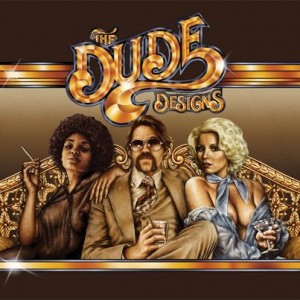
The Dude Designs’ Thomas Hodge talks creating art for the horror genre

Thomas Hodge is the man behind The Dude Designs (thedudedesigns.blogspot.com). He is a
freelance film poster art director, designer and illustrator for such films as “Hobo With a Shotgun”, “The Innkeepers”, “Fathers Day!”, Arrow Video Covers: “Savage Streets”, “Jaguar Lives” and many others. Media Mikes had a chance to chat with Thomas about his work and his love for the horror genre.

Mike Gencarelli: Tell us about your got started with The Dude Designs?
Thomas Hodge: It was creative frustration and a passion for film. I’ve been in the design industry for over twelve years now, going through all types of design from corporate business to in-store promo for toys & DVD’s, general design agencies and have spent quite a few years in and out the games industry, creating key art for packaging etc. Creatively I felt I was always held back from producing something which would standout. so I rediscovered my love of old video cover art and that sent the old cogs grinding and i started experimenting more with styles and design to tap into that classic vain, in a market i felt was running dry creatively.  I suppose the initial inspiration was for an intoxicated night at the midnight movies screening of the grindhouse film. I was over there with a bunch of mates and they had silly draw a grindhouse poster so I entered my drunken scrawl for a poster of DUDE! Which I then later worked up into one of my early video cover experiments:

MG: How did you get involved doing film posters and DVD/Blu-ray covers?
TH: Like I said I started experimenting creating flyers for midnight movies night. It’s easier to start the wheels in motion design wise (I find) if you have a purpose, so doing the flyers on the side gave me that initial push (i was still working full time creatively) but it made me experiment with my passion of film as the medium, if you will. Creating the blog then gave me a platform to get this work out there for people to see. So from there I then was starting an art project creating old video nasty covers really getting wrapped up in all the little design niches that I loved, I was still working more with photographic imagery so to really capture that inspiration essence which excited me about this type of art I needed to push it further, and I worked on a self project titled Cannon (a mock 70 crime action drama based on my love of “Death Wish” and 70s Italian crime cinema) then I tackled a competition for Empire Film Mag in the UK and the response was great, with that style and my other work at Sony I picked up the arrow covers. Still wanting to push it further I saw the release of “Hobo “loved it and contacted the guys about creating a poster, they said sure love to see what you can do, i worked my nuts off on that. they loved it so much they brought it and used it… the rest as they say is history, but I’m still trying to push my style and work further with each project, I’m aiming for world domination of bust!

MG: Your work is a breath of fresh air from all the lame (giant heads) Hollywood posters, tell us about your influence?
TH: EVERYTHING from my childhood to adolescence, video rental shop shelves. Artist wise Graham Humphrey’s work form films like “Evil Dead”, “Nightmare on Elm Street”, “The Return of The Lliving Dead”, “Spookies”, “The Stuff”… man the list goes on. Enzo Sciotti, who is an amazing Italian poster artist from the 70’s and 80’s. Frant Frazetta for his use of form and figures is just incredible!  Even the more minimal work of Stephen Frankfurt has influenced me. All the greats which seem to have been forgotten about and over looked, good design has been excluded from commercial (I’m not talking about ‘limited edition’ screen prints) film posters for far too long now. The responsibility of that doesn’t come down to the designers either it’s the distributors who feel dumb is best to sell. My work has been swapped out for some appalling designs on DVD releases; did you SEE what they did to the Innkeepers in the UK? I’m always searching out new inspiration trying to push the envelope.

MG: How much freedom do you have when working on a project?
TH: Again it depends on the client, I usually try to get a lot though, why higher me else? If you’re going to pay me I will promise to deliver the best god damn poster design I can to appropriately promote your film to an audience. A lot of the time they will request a montage style poster, so that will be the framework but I like to experiment and try to sell other styles in to. At the end of the day I’m trying to get people trusting in what I do creatively and I sell myself more as a creative director of these projects. Working with directors directly gives the most freedom I find, they trust you and it usually forms the best relationships. I don’t do design by committee been there done that.

MG: What do you enjoy most about working in the horror genre?
TH: The fantasy element, it gives you that fun visual hook to play with. You can let your imagination run wild; I wish people would make more rubber monster films again. I feel I make as many twisted action flick as horror though.

MG: What is your favorite 80’s horror films? Current horror film?
TH: Oh man, how longs a piece of string? Er…. I honestly can’t say. I love them all for their 80’s cheesy. More modern is easier as there’s a lot less on the list (excluding all the ones i worked on as I don’t want to be seen showing favoritism) “Wendigo”, “Last Winter”, “I Can See You”, “Session 9”, “Pontypool”, “28 Days later”, “Altered”, “The Objective”, “Let The Right One In (Swedish)” and “Insidious” (that’s quite a mainstream one for me) stood out for me.

MG: How do you approach a project like the design for “They Live” Blu-ray?
TH: Well I look at what the films message is, visually how its approach and style, setting are. Then work on a visual which reflects those messages to the viewer. it’s an 80s action extravaganza combined with social commentary, staring one of the greatest wrestlers ever. So that’s what I drew! I was so enamored in the film in my head I was trying to produce a piece which had almost religious iconography undertones and Piper with Keith where latter day saints standing against adversity! Crazy shit hey, at first you may see big guns but if you look deeper there are messages. It doesn’t need to be like a minimal to be clever!

MG: What other projects do you have planned upcoming?
TH: We two corking (actually four) posters yet to get released for “Almost Human”, “Wake Before I Die” (bit of a change of gear on that one so see how people react, that’s always fun!). Then I got another poster for “Would You Rather” (which has a classic flavor) and a big fun monster one for “Hypothermia”, if they release it.

Travis Pastrana talks about film “Nitro Circus 3D: The Movie”

Travis Pastrana is probably best known for his multiple X-Games Gold medals in motocross and as the face of “Nitro Circus”. Together with his fearless crew of daredevils they released their first full length feature titled “Nitro Circus 3D”. The film documents the crew’s adventure and antics as they make their way cross country to perform in the first ever “Nitro Circus Live” event. The film was recently released on Blu-Ray and DVD and Travis took time out of his busy schedule to talk with Media Mikes about the making of the film.

Adam Lawton: How did you first get involved with Gregg Godfrey and Jeremy Rawle?
Travis Pastrana: Gregg has been a motocross guy for a long time. He was actually working as a key grip on “Touched by an Angel” and in his off time he would work on motocross stuff. The first time I met Gregg was at a event in Las Vegas when I was 11. A few years later I met him again and he asked if I could choose to do any type of what would it be. I told him that I wanted to jump the Grand Canyon with a parachute on my back while doing a back flip on a dirt bike. The day before my eighteenth birthday I got a call out of the blue from Gregg asking if I wanted to still do that. He offered to pay for my sky diving lessons and to bring me out there. We shot that for “Global Addiction” and the following year we started “Nitro Circus”. He gave me a camera and we just started shooting and editing things. Gregg left being a true Hollywood guy and we traveled all over making motocross films. Jeremy Rawle came in two years later as we needed someone who knew about music rights and all that kind of stuff.  Gregg had gotten in to a bit of trouble for using some music he didn’t have the rights so that’s how Jeremy got involved. We had known him as he was a skier and motocross guy. We are kind of a hodgepodge crew but its fun.

AL: Whose idea was it to do a full feature length film?
TP: We had all wanted to do something like this for a long time. MTV came to us and asked initially if we wanted to do 20 episodes of the “Nitro Circus” television show. All of us with the exception of Street Bike Tommy who is still hanging sheet rock have just so much going on we didn’t have the time. A few of the Nitro guys worked on the “Jack Ass 3D” film and they came back and said that the 3D cameras were there and we had the chance to do something that had never been done before. The television stuff lost some of the bigness when it was transferred down so Gregg was like “Let’s do it”. He then went out to try and secure funding. No one wanted to take on the liability or pay the additional 5 million dollars in insurance. We ended up making the film on our own which allowed us to do whatever we wanted to do. If we thought something would work we tried. A lot of things didn’t work while a lot of stuff did. We just had so much fun traveling the world.

AL: How long did the open sequence of the film take to put together?
TP: The two things that cost the most and took the most time were the opening and closing scenes. They ended up changing what was originally supposed to be the closing scene to the opening scene. We learned quite a bit from making this film and we pretty much know what we are doing now. (Laughs) We had originally planned out the entire film however I ended up getting hurt before we shot the big finale. Everything had been geared towards this one stunt and in the bonus features you will get to see all this footage and things will make more sense. We had to change the whole movie around due to my shattered ankle but I think it actually works better. We were able to have all the guys from the “Nitro Circus Live” tour be in the film and that helped fill out the story.

AL: What was the most difficult part of making the film?
TP: To be honest the film was nothing but fun to make. We were able to come up with the funding by a lot of us putting up our own money to get this made. We were all ok with doing that. The distribution part of things I think was the hardest. The only people who seemed really excited about the project were those with kids. There was just no precedence and “Nitro Circus” isn’t like “Jack Ass”. We told them that we are not like “Jack Ass” as we are not hurting ourselves for amusement. We are a group of athletes that are doing some stupid stuff but it is different. We put in 6 million dollars to get the film made and then another 6 million to advertise the film. 3 million of that was just for the 3D cameras. The film essential cost 4 times what it should just because that’s how things work. Are goal was to make a really good film and I think we have done that.

AL: What do you think was the scariest part of shooting?
TP: There were quite a few. Most of them involved Aaron
“Wheels” Fotheringham. That guy is such an inspiration. He came to me at one point as he was pretty bummed that a lot of crashes and stuff didn’t make it in to the final cut of the film. I hate to break it down this way but Jolene crashed a lot and we couldn’t use all of them because she’s a pretty girl and it’s not funny to see a pretty girl crashing all the time. It’s also not funny when a guy in a wheelchair crashes. It makes you sad. During one stunt Wheels was partially knocked out and he started singing “My Little Butter Cup”. It was hilarious but we just couldn’t put it in. Those were some tough calls to make but it is what it is.

AL: What other things do you and the rest of the Nitro crew have in the works?
TP: Well Tommy is still hanging sheet rock. Jim had a real bad crash that has taken him out of active sports. He has a real good job and everything but he probably won’t be able to perform BMX anymore. Jolene has been doing stunts on movie after movie. She was one of the stunt drivers in the latest “Batman” film. She is doing a great job in that industry. Erik Roner has been skiing and picked up where he left off with that and his base jumping. For me NASCAR has been really big as well as Rally-Cross.

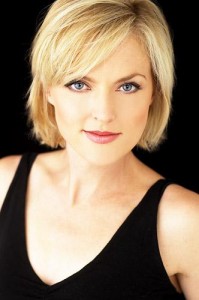
Elaine Hendrix talks about new web series “Fetching”

Elaine Hendrix plays the role of Sheila in the new web series “Fetching”. Media Mikes had a chance to talk with Elaine recently about working on the series and what other projects have been keeping her busy.

Adam Lawton: What can you tell us about your new show “Fetching”?
Elaine Hendrix: I love this role so much. It is a web series put out by Michael Eisner’s company. They teamed up with AOL and writer Amy Harris who wrote “Sex and the City”. The series is fun and really cute. There are animals in it and you can never go wrong there. I like to describe my character on the show as being fabulously, fabulous. She is the top client at Fetching and spoils her dog rotten. I had a ball doing this. It was very much like shooting for a television series other than we jammed the whole season in to a month’s worth of shooting. There have been talks already of doing a second run.

AL: What drew you to the project?
EH: First and for most it was set in a dog boutique. There was going to be a lot having to do with dogs. Being the animal activist that I am it was perfect. Also getting the chance to work with Amy Harris was something that I really wanted to do as I am a big fan of her work.

AL: What do you think was the biggest challenge working on a series like this?
EH: Surprisingly nothing. The only difference was that we had to move a little faster. In this day and age unless you are a 100 million dollar franchise everyone is trying to do things on a shoe string budget. Moving faster has sort of become the norm. I think the show looks beautiful and the writing and cast are top rate. I would do it again in a heartbeat.

AL: What did you enjoy most about your role?
EH: Sheila is kind of like the “Samantha” of the show minus the gratuitous sex. Sorry to disappoint all the readers. (Laughs) She lives in her own world and plays by her own rules. Sheila knows who she is and has no qualms being that.

AL: Can you tell us about a few of your other projects?
EH: I just finished work on “A Street Car Named Desire” and it’s looking like the production is going to be reprised in Los Angeles which would be great. I love Blanche Dubois. For women’s roles it doesn’t get much better than that. I did a Christmas film for the Ion Network that will be released around the holidays. I also did a film titled “General Education” which was just released. Then there are a few other projects that are in development as well.

Andre Braugher talks about his role in ABC’s “Last Resort”

I first noticed Andre Braugher when he played the role of Thomas, one of the soldiers assembled to form the first black regiment during the Civil War, in “Glory.” The dignity in his performance played perfectly off of the angry resentment of Denzel Washington’s contributing, I have no doubt, to Washington winning the Oscar for his performance.

Probably best known for his Emmy Award winning work on NBC’s “Homicide,” the Chicago born Braugher has also done fine work in such films as “Duets,” “Striking Distance” and “Salt” and has had recurring roles in such popular television shows as “House,” “Law and Order: SVU” and “Men of a Certain Age.” This season Braugher stars as Captain Marcus Chaplin in “Last Resort”, skipper of a U.S. Submarine whose crew is now being targeted by the government for not obeying what Chaplin deemed an illegal order to fire their weapons. While promoting the second half of the season Braugher spoke with Media Mikes about what brought him to the role and what to expect later this season.

Mike Smith: Thank you for taking the time to talk this afternoon. It’s taken me 23 years but finally I get to tell you how brilliantly moving your performance was in “Glory.”
Andre Braugher: Really? Wow, thank you.

MS: After everything that has happened so far, how tough is it do you think for Chaplin to enter into negotiations with the government?
AB: Well at this point I think it’s what Chaplin wants. I mean, I have – he has a crew of sailors, very few of which truly understand what happened on the con and what the ramifications of being considered treasonous or renegades or mutineers of some kind. And so he wants to give his crew as well as his officers an opportunity to surrender the ship and not be held accountable for what Marcus and Sam did, you know, back in the pilot in terms of firing a missile on the United States. So it’s quite important because at this point it seems as though this is a crew that’s held together by the belief we ought to stick together long enough so that we can make it back home and these negotiations really are a way to get back home. Because in essence we’re not equipped to be traitors. We’re patriots and it’s of the utmost importance that we defend ourselves.

MS: Was there one factor that drew you to the series, the writing or the story line, that made you want to do the show?
AB: No it really wasn’t one factor. I mean, this is a show with a very ambitious premise and it could easily evolve into something kind of silly, you know. But Shawn Ryan has a craft for making very interesting, provocative television and, you know, his abilities are apparent. So that’s one consideration and the script was another consideration. Melvin Campbell, and I’ve worked with him before and admire him a lot, was another consideration. So it was a confluence thing. No one would have made it possible but all three of them together made it a very attractive prospect to be a part of the show.

MS: How much more tense will the situation get between Chaplin and Prosser as the season goes on? (NOTE: Robert Patrick co-stars on “Last Resort” as Master Chief Joseph Prosser)
AB: Well this is – well, you know, Robert is a very intense guy so this is what happens I think when patriots clash. We’re both very passionate about what it is that we’re doing and we’re both supremely concerned about the health and welfare of our crew. I would have to say that Chaplin needs Prosser very much not only because he exercises discipline over the crew but it’s because he is a touchstone for the crew. If the chief of the boat thinks that it’s right then the guys have a tendency to fall in line. And so Prosser is very important to Chaplin and is very important that – for Chaplin – that Prosser understands that our whole goal here is to get back home and to get back home in safety. And after last week’s episode in which the Secretary of Defense basically said to blow the boat under water and to kill all of these sailors, I think we understand that going home in this state would be perilous and we’re looking for the opportunity to go home safely and stand trial. And this week’s episode, “Skeleton Crew,” is really about our opportunity to negotiate, an opportunity to go home and stand trial, more so for the officers than it is for the enlisted men because ultimately officers are the ones who are responsible for the conduct of the ship. Prosser and Imay disagree but I think we do understand that the whole point is to get back home.

MS: What is it about Chaplin that you relate to and like the most?
AB: What is it about Chaplin that I relate to and like the most? Well I like the fact that he’s thinking ahead, you know. It’s the strategic part of Chaplin that’s fascinating to me. The fact that the next step may seem the next right one but when you think several steps out further it turns out to be a misstep, you know. So the negotiations are important….an important piece of theater, and every weapon at our disposal is brought to bear to make these negotiations fruitful. The thing that’s fascinating is that when I go back to the pilot it’s something I read the very first time I read the script. So after they discover the bombers are coming to make a strike on their position and everyone is scrambling back to the boat. During that time when everyone is saying to themselves we’ve got to get the hell out of here, we’ve got to submerge the boat, we’ve got to run, it’s at that point that Chaplin was thinking, you know, in that ten minute scramble back to the boat where Chaplin was thinking we’ve got to fire, you know what I mean. We’ve got to play this enormous game of chicken, you know what I mean. And after they backed down from this enormous game of chicken we’ve got to go even further, you know what I mean. We’ve got to put the fear of God into them, you know what I mean, so they understand. Otherwise our position really isn’t tenable.

MS: Have you or the other cast members heard from military people about the characters you’re playing and more importantly the premise and how provocative it is?
AB: Well it’s provocative as well as being farfetched. And they comment on that as well. I think in all the comments that I’ve heard is that what they really like is the fact that we are getting inside the head of Navy men and women and exploring the issues that are important to them. The premise is ambitious to say the least and our job every week really is to fill in that ambitious premise with some very down to earth, honest, raw, detailed kind of acting and storytelling. And it’s one thing to have an ambitious premise, but it’s another thing to drift off into a kind of fantasy land behind that premise. And I think what we’re dedicated to is making sure that it’s honest and it’s raw, it’s down to earth, and it’s compelling. And so far that has worked and that’s our great goal. That and delivering the action every week. And basically giving the broadcast television audience a movie every week. And that’s a tall order but so far we’ve succeeded and we’re really looking forward to seeing how far we can go with this thing.

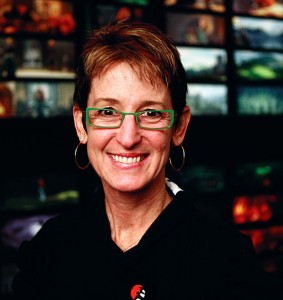
Pixar’s Tia Kratter talks about working on “Brave”

Tia Kratter joined Pixar Animation Studios in April 1993 as a digital painter during production of the studio’s first feature film, “Toy Story.” She has subsequently held the shading art director role on “A Bug’s Life,” “Monsters, Inc.” and “Cars,” where she was responsible for specifying the color and texture of every object modeled for a film. Kratter most recently completed work as the shading art director for Disney•Pixar’s feature film “Brave,” which opened in theaters in summer of 2012 and is set to release in North America on Blu-ray™ and DVD on November 13, 2012. Prior to Pixar, Kratter was a background painter at Disney Feature Animation from 1980 to 1985, where she worked on a variety of acclaimed animated films including “The Little Mermaid,” “Aladdin,” and “Beauty and the Beast.” Media Mikes had a chance to ask Tia a few questions about working with Pixar and on the film “Brave”.

Q: You’ve been at Pixar since the first Toy Story, working in the art department. How has your work evolved over the past few years?
A: You’ve done your homework! Back in 1993, when I began to work on “Toy Story,” the internet as we now know it didn’t exist. So all of our reference on that film was personally-found. In other words, when we had to figure out Sid’s hair, I went directly to my oldest son’s flattop haircut and used that as reference. Nowadays we back up real reference with information we find online. It helps streamline things. Still, and you’ll hear this a lot this morning, there’s nothing like touching and seeing the real thing. Also, on “Toy Story,” we really didn’t know what the heck we were doing. Now we’ve got all sorts of hoops to jump through. Making a computer animated film is not a quick process, and just because we’re using a computer it doesn’t really go any faster than classic hand-drawn animation.

Q: What is the coolest thing about working at Pixar?
A: 1. The cereal bar. We get a choice of about 18 different cereals in our brown bag kitchen to choose from every morning. Once a week I go for the Captain Crunch, which my mom never let me eat when I was a kid. 2. The people (actually that should be my number 1). You can’t believe how many thoughtful, kind and creative people work here. I’m in awe of the talent around me every single day. 3. The commitment to making great films. We try hard, really hard, to make our films something that we love. And, by feeling solid about them ourselves, we hope the audience does too.

Q: Which were the most difficult elements to translate to the movie?
A: Initially, Merida’s hair of course was a challenge. But we knew it was going to be from the very beginning. And when we can anticipate our challenges, we tend to do really well. It’s those little surprises that come up along the way that can really throw us for a loop. We had never done a horse, except for Bullseye in “Toy Story 2” and “Toy Story 3.” In “Brave,” we wanted to create a fairly realistic horse, one that didn’t talk or make funny faces. Although Angus was a challenge, he remains one of my favorite characters in the film because he is elegant, strong and visually beautiful.

Q: In Brave the landscapes, Merida’s hair and, in general, the care for details is really impressive. Can you tell us about the process/es required to bring these details to life?
A: Thanks for your nice note! What we discovered in both the landscapes and Merida’s hair was the beauty of chaos. The landscapes were a combination of grasses, mosses, ferns, rocks – different textures across any environment. Similarly, Merida’s hair was lots of different oranges and yellows, and every ringlet had its own personality. A lot of times you think characters and landscapes are quite different, but in this case they took on the same types of challenges. So, in order to make them look believable, we gathered a lot of research for both the hair and the landscapes and took that all the way through the process, even getting some help from the lighting team to bring it all together.

Q: How would you describe the ultimate goal of the shading art director?
A: My ultimate goal is to support the visual inspiration of the director and the production designer. I’m responsible for specifying the colors and textures for things that are modeled in the film. It’s one small part of a greater group of people who come together to make the visuals work as a whole. There’s really no part of the film that I can point to and say, “I did that.” Making a CG animation film is so collaborative, that if you’re looking for individual accolades, this probably isn’t the right medium for it.

Q: Did 3D ever come up as part of the design process?
A: That’s a great question. We never make creative decisions for our films based on the 3D, but we find that it’s another good mechanism for conveying our stories. I loved seeing “Finding Nemo” in 3D. That deep, atmospheric world lent itself so well to another dimension of viewing. As far as the art and design of “Brave,” we never stopped and rejiggered things specifically for 3D. We do our best to make a visually gratifying film for whatever medium it’s shown in.

Q: In special feature “Brave Old World”, we see how you were taking photos of landscapes and how you were drawing details with brush and watercolors. Was it difficult to move all those textures, spongy grass and hardness of the rocks, to the film?
A: From an artistic point of view, it’s not difficult at all. We take our drawings, photographs and real reference from our trip, show them to our technical team and describe how they inspired us. Now, if you ask the same question to our technical team, they would probably have a different answer. It’s one thing to be inspired by something; it’s another to actually bring it to the screen. We worked together, sometimes for months, to get the look and texture of something right. We’ll go back and forth between art and, in my case, shading or texturing, to come up with a solution that’s visually pleasing technically feasible.

Q: How long did it take you and your team to complete the movie?
A: I worked on “Brave” for 6 years, which is a little longer than normal. The typical production time on a Pixar film is 4-6 years, so we were on the longer end for “Brave.”

Q: Do you have any fun stats or numbers concerning the art design and renditions?
A: Here’s a number: A113 is seen in every one of our films. It’s the animation classroom at Cal Arts, one of the schools where quite a few of our artists studied. You can find that over the entry door in the Witches cottage. (but look carefully…it’s not easy to find). Merida has a total of 22 different costumes. Merida has more than 1500 individually sculpted “keyhairs” that once rendered in the computer generate about 111,700 hairs. Yikes!

Q: Are you already working on another project?
A: I’m not. Pixar is really thoughtful about giving us a break after we’ve worked for 6 years on a film. So for the past few months I’ve been working for Pixar University, the internal, educational branch of Pixar. It’s a great chance to recharge before moving on to another film.

Chloë Sevigny talks about co-starring in FX’s “American Horror Story: Asylum”

Chloë Sevigny is known best for her iconic roles in films like “Boys Don’t Cry” and TV show’s like “Big Love”. In FX’s “American Horror Story: Asylum” Chloë plays the role of “Shelley,” one of the inmates at Briarcliff Manor committed because of nymphomania. Media Mikes had a chance to chat with Chloë about the show and what we can expect this season.

Adam Lawton: What drew you to the project “American Horror Story: Asylum”?
Chloë Sevigny: I guess it was having watched the first season and just being a fan of the show. I just thought it was so rich, the production design and costumes and how much detail went into it and I just thought it was wildly entertaining. I was hoping the second season would be as much so. I didn’t get to read any scripts prior to signing on, so I was kind of going in on blind faith hoping that it would be what I wanted it to be and it’s proven so.

AL: Were you able to work with Ryan [Murphy] with your character and develop Shelley” along, or was everything kind of fed to you week by week?
CS: Yes, it was more week to week. I mean I think that’s mostly how television works. It’s a real writer’s medium and it’s not so much collaborative. It’s not like a film, so it’s pretty much all on the page. There were some bits where I asked Ryan for more lines, so that seemed to beef it up here and there and they tried to do that for me. That was probably the extent of it.

AL: What is it working with James Cromwell? I don’t know what he’s doing to you, but it’s really scary.
CS: Oh, it gets much scarier. He was good. I mean I was a huge fan of his. I actually saw him in a café right before we started shooting and I went up to him introduced myself and he just like, “I’m so looking forward to chopping off your legs.” Yes, he was great. I mean you know he was really into rehearsing the scenes before and really exploring it to its fullest, so that was kind of nice. Sometimes people just go in and just hit their marks and he really wanted to work everything out before. He was really … in that regard.

AL: Can give us some insight into preparation you do with James Cromwell, who’s “Dr. Arden,” and if you discuss the scene ahead of time. These are not just typical scenes. There’s a lot of almost physical abuse, and if you can give us some insight into your conversations with these actors to prepare?
CS: Well, yes, there’s always a stunt guy on set also, and you go through all the motions. You kind of block out the physical bits, the throwing and the pulling and tugging and if it gets too rough, because sometimes an actor can lose himself in a scene and so I always remind them I’m supposed to sell it. Whoever is getting the brunt of it is supposed to do all the acting, do all the selling of the violence and whatnot, so there’s a lot of—especially in the scene in the office with Tim and I, there was a lot of—I think we blocked that scene for like three hours, far longer than it took us to shoot it even just getting all the action down. I mean it’s quite scary because James was so big and he was wielding this big kind of paperweight at me. He was getting really close and it was pretty frightening actually doing that scene. I was really exhausted at the end of that day, and it was quite scary while we were in it. His arms are so long I was so afraid he was actually going to knock me out.

AL: Could just talk about the challenge of acting with no legs?
CS: Well, the prosthetic pieces that they put on made it impossible to straighten my legs, so I had to keep my legs bent all day and I had to be wheeled around in a wheelchair and I was feeling quite helpless. It was a strange feeling to have to need assistance to do lots of different things. And that was probably the most challenging part, feeling kind of helpless in that way.

AL: Can you give your take on Shelley’s character. She’s obviously billed as a nympho, but then there’s that question of whether she truly is addicted to it, or she just likes it more than other people. What’s your take on that?
CS: I don’t know if people truly are addicted to that. There’s so much talk about it as of late. I think that she was a little wild and her husband had it within his power to commit her and I think kind of once she’s in there, she kind of goes with it to come to who she is and how she identifies herself. So I think that she probably yes really likes sex. All the reaction, I don’t know if she’s quite a real nymphomaniac.

AL: You’re playing a very specific character here, an inmate in a sanitarium and then for your next role you’re playing a driven detective, and that seems like a more grounded part. I’m wondering how you shift as an actor from one role to another? Do you have to shake off Shelley before you play Catherine in “Those Who Kill”, or you find moving between roles to be an easy transition?
CS: I find it pretty easy. I’ve already wrapped “American Horror Story” a couple of months ago. I think they might have me come back for something else. I’m not sure, so I’ll have plenty of time and then of course delving into the scripts and research and … with playing “Catherine” they’ll probably be some training involved also, so just trying to immerse yourself in whatever you’re doing at the time. While we were shooting “American Horror Story”, I was also shooting “Portlandia”, so I was going from one set to the next, and I’d never really done that before. And “Portlandia” was so new for me because it’s all improvisation and trying to be funny and all that, so it was quite difficult when you’re shooting two at the same time. But I think having basically … is a better way to go.

IronE Singleton reflects on his role of T-Dog in AMC’s “The Walking Dead”

IronE Singleton is known best for his role of T-Dog in AMC’s “The Walking Dead”. His character has been a key aspect of the show for the last three seasons, until his recent demise in the fourth episode of the third season. Media Mikes had a chance to reflect with IronE about his role on the show and what we can expect next.

Mike Gencarelli: Tell us about how you prepared for shooting your death scene?
IronE Singleton: Mentally, I had a lot of time to prepare because I got word about a month in advance. So I was ready to do that. Plus, when I originally signed on it was only for two maybe three episodes and I ended up lasting three seasons. As far as the physicality was concerned, I had to wear a prosthetic. They put me this pasty stuff on me and let it dry on me for like an hour. Once it dried they cracked it off and that is what they used when the zombies were biting me and pulling out all the guts and veins etc. They were pulling from the prosthetic.

MG: I am a big horror fan and I cringed with your neck scene.
IS: Yeah, I hear that a lot. During one interview I had recently, one guy said he was eating his pizza and he had to stop eating since he almost hurled. People say they can’t eat when they watch this show. They love it but they can’t eat.

MG: What has been your highlight working on “The Walking Dead”?
IS: I have a two and a quarter season highlight reel. Every day was total bliss. Every day was something that I will relish for the rest of my life. I had great times throughout. I honestly did not have one bad day on set. It is hard for me to pin point because every day was like that. I would look forward to going in to work, getting the handshakes, the hugs and kisses. That is what I did everyday for two and a quarter seasons.

MG: Are you surprised with the fans reaction to your character T-Dog?
IS: It is a bit overwhelming. In a good way – in a great way! The amount of support and love that T-Dog is getting showered with is unbelievable. Let’s just say it has been a very emotional week for me since the episode has aired, to say the least. When I did “The Talking Dead” after my final episode, I had to choke back the tears. I am just taken back by all the love from fans, not just in the US but all over the world.

MG: What is it about “The Walking Dead” and it killing off key characters each season?
IS: It is so similar to real life though. When people die you don’t expect them to die unless they have a terminal illness. You just don’t see it coming. That is what happens on “The Walking Dead”. That is the stuff that grabs you the most.

MG: I was hoping for a T-Dog vs. Merle showdown this season.
IS: I think you and millions of others were waiting on that. Ever since the rooftop scene, where T-Dog dropped that key, people were talking about us meeting up again. It would have been great TV.

MG: What season was the most challenging for you?
IS: Season one…we are going to go with the rooftop scene. Oh my goodness, it was like 107 degrees but with humidity it was like 115-120 degrees. I almost fainted a few times and that is something that I don’t do. Having played football for 15 years, I have never come close. So there I was on this rooftop about to pass out, I was thinking “Man that is a big wuss move” [laughs]. Season 2 also was rough with the highway scene, where I cut myself and we had to do that twice. That was also a big one for me, as well as the well-walker scene.

MG: What do you got line-up next in the cards?
IS: I’ve got a project with Neve Campbell called “Sworn to Silence”. I play a small town cop, who was once a former army ranger. He moves to a small Amish community and him and Neve’s characters are out searching for a serial killer. This is based on a best-selling novel by Linda Castillo. I also have another movie “A Box for Rob” that is currently making its way around the festival circuit. I am also working on an autobiography, which I am currently searching for a title. It is related to my life coming from the projects and making it all the way to Hollywood. I am co-writing that Juliette Terzieff, she is the founder of The Zombie Survival Crew. We are halfway done with it and it is currently slated to be published in February 2013. Lastly, I have my song “We Are the Walking Dead”, which is available to purchase on my website: www.ironesingleton.com.

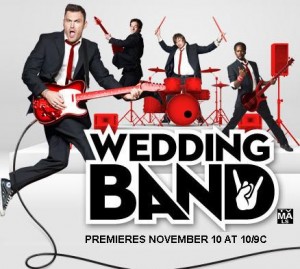
Brian Austin Green & Melora Hardin talk about new show TBS’ “Wedding Band”

Brian Austin Green and Melora Hardin are starring in TBS’ new comedy series “Wedding Band”, which debuts on Saturday, November 10 at 10:00 pm. “Brian plays Tommy, the life of the party and lead singer of the band who is also the star on the stage and the bedroom. Tommy’s a bad boy with a good heart. And Melora plays Roxie Rutherford who is the owner of Rutherford Events. She’s no- she’ll do nothing more for her clients, she’ll do anything from shipping sand in from Fiji for an island themed party. Roxy is the person behind the most important moments and the best nights in people’s lives.” Brian Austin Green is known best for his roles in “Beverly Hills, 90210” and “Terminator: The Sarah Connor Chronicles”. Melora is known best for her role on NBC’s “The Office”. Media Mikes had a chance to chat with Brian and Melora about this new show and what we can expect.

Mike Gencarelli: Brian, your the lead singer for “Wedding Band”, were these all songs that you knew ahead of time or did you have to learn some of them?
Brian Austin Green: Whew. For the most part I knew the melodies. But most of the songs, I got to be honest, when I got the lyric sheets my first thoughts were, oh, those are the words, (that’s not what) we’ve been singing. When you have REM’s “End of the World as We Know It” and you go what is he talking about? I think the only thing anybody ever knew was “it’s the end of the world as we know it”…and the rest of the words were completely unknown. I’ve always had a bad habit of that, just in I’m a huge music lover. I grew up listening to it, but I’m one of those just because I play, I play piano and drums, I connect way more with melodies usually than the lyrics. So the lyrics are usually the last thing that I learn, whereas a lot of other people I know really sit and study the lyrics first and the melody is kind of the last thing. So, I knew pretty much none of them.

MG: Before I watched the pilot, I was kind of expecting the band to be funny in itself, like the performing, but I was actually impressed and thought you guys were really a solid band. Can you reflect on that important element of the show is that we’re not actually laughing at your guys’ talent because there is talent there?
BAG: Well, I think the answer lends itself to what we were just talking about. We can play comedy songs, which only kind of last for so long, or we can stick with the element of what the show is, which is that our job is to make this believable, our job is to make this band honestly the most kick-ass wedding band anybody has ever seen. I’m just saying that alone there’s comedy in that. They’re a stadium style wedding band. You never hear or see anything like that, let alone sit at a wedding, hear these amazing grand songs, and have pyrotechnics and confetti cannons going off. And throwing guitar picks out to the crowd.
Melora Hardin: Right, and they’ve got my character Rutherford breathing down their neck that it better be damn good. And they are. That’s why she takes them on in the first place. They care so much about the event in a whole other way than Roxie cares about the event, but I’m glad you recognize that because they are awesome. It’s not like we’re breaking into song, you know, like Glee does, like musical style. But it’s just using music in the storyline in a truthful, honest way. So yes, anyway.
BAG: And on top of that, too, Adam Schlesinger who does our music is so gifted at what he does.
MH: Amazing. And Steven Gold.
BAG: Yes, and Steven Gold. They have an amazing ability to take something like a KISS song at Oktoberfest, so you’re singing these party anthems but with a kick drum and a trombone and an accordion, but still doing it in a serious enough way as a musician that aside from laughing because we’re wearing lederhosen and you’re still thinking this song is awesome. I kind of want to hear this version again. It’s really fun. And that’s what music does. The music carries so much emotion to it. And when it’s done by people that really enjoy doing it, I think it comes across just in watching and listening to it. And that’s what we strive for.
BAG: It’s scary when you pick up a script and you see something worded that way. Roxie Rutherford in a jazz club singing Get Ur Freak On. And then all of a sudden you get the CD from Adam and Steve and you hear it. And it was really a nice experience to put in a CD for every episode and hear what they had been working on because it really kept the excitement going.
MH: You just wait, we got so many more coming.
BAG: Oh, I think we have 29 or 30 songs.

MG: What songs should we be looking out for the most this season?
MH: Well, Brian has a lot more to choose from, but I think I mentioned earlier, but I did a version of Get Ur Freak On, which I think they are going to release on iTunes, which is a pretty phenomenal arrangement and pretty spectacular because it’s a Missy Elliot song which they made into a jazz trio. So that was pretty spectacular. But the band has some pretty spectacular ones too.
BAG:  Yes, I honestly don’t want to give any away. I think one that’s really fun and it kind of comes up early on, so I don’t feel so bad, is we do a very sort of Indian version of Party Rock, which is just really amazing  There’s an entire dance number, like Bollywood kind of dance number that goes along with it and it’s pretty genius.

MG: Melora, your character is really tough but also have a fun side; what would you say for you was the most challenging part of preparing for her?
MH: Brian Austin Green [laughs]. No, you know what, she’s so much fun. I mean, she’s – I don’t know if I would say that there was like a challenging part of the character. It’s always exciting, I would put it that way, to try to, you know, to try to kind of get all the different colors running through a character like her because she’s multidimensional and there’s a lot to bite into there. And she’s similar to Jan in that respect in that she’s rich.

MG: There is a little bit of tension between you guys in the first episode and I’m wondering if you think there’s any chance of any romance between Tommy and Rutherford.
BAG:  I think there’s a chance of anything between Tommy and Rutherford.
MH:  I do too.
BAG:  I wouldn’t take anything off the plate. I think anything is possible.
MH: They could kill each other, they could fall in love with each other.
BAG:  They could. Yes.
MH: No, there’s a lot there for sure. It’s an interesting little dynamic.
BAG:  Yes. I think it’s one of the things that makes the relationship fun. It’s kind of like, the Moonlighting aspect of the show. It’s the thing I always loved about that show is you can sort of have that underlying sexual tension, but never even have to go there and it plays really well. And then if we finally do, then it’s explosive and it’s sexy and it’s daring and, you know, we win Oscars. I want to be the first…
MH: We win Oscars even though we’re on TV. We win Oscars. Thank you.
Brian Austin Green: No, I want to be the first television star to win an Oscar.
MH: That’s a first.
BAG: That’s my goal. I want it to be that good and sexy.
MH: Let’s go for it. I like it.

MG: Brian, you starred in hour-long dramas and 30-minute comedies and of course. Melora, you were on “The Office”, which is another 30-minute comedy. The Wedding Band is different. It’s an hour long comedy. How is that different from anything you both have done before?
MH: Well, I’ll start. I think Brian and I both have done sort of sitcom stuff. “The Office” isn’t filmed like a sitcom, but I’ve done that traditional sitcom way of making a comedy. That’s sort of like the crème de la crème is in terms of lifestyle for an actor because, you do all these rehearsal days and then you have one long day. When you’re making a drama, an hour-long drama, you have very long days and but you also have to be funny. So I think to me, what’s nice about the show, and one of the really, really wonderful elements in it being an hour, is that you get the comedy, but you also get that fabulous arc of the dramatic arc. You have time to get into the characters, you have time to get into the storyline, and it doesn’t just have to be (joke, hit, joke, hit, joke, hit, joke, hit). So I really like that a lot and I enjoyed it. But you do have that drama schedule of having to be there for very long days.
BAG: Yes, the thing though that I really enjoy about our show especially is that coming from dramas first. I did do a sitcom and it’s a lot of fun and I really enjoy comedy. I’ve always loved watching even growing up, was I love comedy that are real, their real dramatic, you know, honest moments in funny situations. I like seeing people struggle through situations that are just absurd and laughing at them. I feel like our show is written in a very serious way. We’re honest about the things that we do and our lives are just crazy enough that it’s entertaining and it’s funny. But it’s never setup, punch line, which is hard to do.
MH: Yes, and it’s a whole different style of comedy.
BAG: It’s a hard thing to do for an hour especially.
MH: Yes. Exactly. No, it’s all based on truth.
BAG: And you guys were the best at it on The Office. That was like the absolute bar of delivering.
MH: Well, it was unique in that it really was the first one to kind of come along that was really, since like Cheers, that was sort of like really based in reality and sort of that mockumentary style. That really worked well for me, too. Brian and I have had similar backgrounds in that we both really believe that great comedy, just as great drama, definitely comes from the truth of the moment and it’s always funny, truth is always funnier than fiction and trying to get to that truth is always going to make the best joke.

MG: Tell us about how to was working with your wife, Megan Fox, on this show? How did that come about?
BAG: Honestly, she kind of stepped in and saved us at the last minute. There were a couple other people that they were discussing bringing into the episode at first and schedule wise and timing wise it didn’t work out and I had already spoken to my wife about the episode and kind of what was going on and she graciously said that, you know, if nothing else worked out that she would step in and kind of rescue us and she did. I thought she was great. I thought she kicked ass.
MH: Yes, she totally kicked ass.

Kathryn Fiore talks about new TV series TBS’ “The Wedding Band”

Kathryn Fiore is co-starring in TBS’ new comedy series “The Wedding Band”, playing Ingrid. Kathryn has also appeared in films like “Hatchet II” and the upcoming spoof “30 Nights of Paranormal Activity with the Devil Inside the Girl with the Dragon Tattoo”. Media Mikes had a chance to chat with Kathryn about the new show and her love for comedy.

Mike Gencarelli: What drew you to the role if Ingrid?
Kathryn Fiore: She is my favorite character out of the roles I have played. When I read the script she wasn’t the typical TV wife. She and her husband Eddy are really in love. There isn’t that typical wife nagging the husband. They are happy and she is his biggest fan. When she watches him playing on stage it takes her back to the first time they met. I think this will be great for TV. I love that they are so cute.

MG: What has been the highlight so far of working with such a great cast?
KF: Everything has been great! It sounds so ridiculous but we have a lot of fun on set. It’s like working with your best friends. We laugh and joke around all the time. It hardly seems like work. Of course there are some late nights where you’re shooting at 2am and you just start coming up with some crazy characters and such. There are just so many highlights.

MG: Will we see your character singing at all during the upcoming episodes?
KF: I haven’t in this season but I would love to. I think they should totally have an episode where that happens.

MG: What can we expect from season 1 of the show?
KF: Overall I think it’s about the band getting into as much trouble as humanly possible. They get in to a lot of crazy antics. At the end the guys have this great bond where they always come together at the end. There’s one episode where we lose our kids but it not really that big of deal. The show has a lot of great music as well as some great special guests.

MG: How was it working in the hour long comedy format?
KF: It’s great. That’s a format I think TBS is really trying to get behind. By doing that you are able to get the comedic elements but you also get the realness. There are a lot of genuine moments as well as laughable moments.

MG: What was it like going from a film like “Hatchet II” to a role like you play in “Wedding Band”?
KF: It was actually really fun. Working with Adam Green and the Hatchet Family was so awesome. I am such a huge horror fan that it was great to play a really scary character. Going from that to playing Ingred who is a very grounded/real type character was fun. Ingred is more like me.

MG: Can you tell us about “30 Nights of Paranormal Activity with the Devil Inside the Girl with the Dragon Tattoo”?
KF: That movie is going to be a really great spoof of a bunch of films. We are just making fun of the whole horror genre. It has a great cast and is a little sillier and raunchier than some other films. There are also some actual scary parts that have great special effects. I may or may not make out with a ghost. (Laughs)

MG: What do you enjoy most about the comedy genre?
KF: My parents are both actors who when they were younger had a comedy act. They were on the Johnny Carson show and a bunch of others. I grew up with a lot of joking around and silliness. Comedy has always been part of my actual life. What more could you ask for than to be able to go to work and laugh all day.

Tim Heidecker talks about his dramatic role in “The Comedy”

Tim Heidecker is half the comedy duo, along with Eric Eric Wareheim, that is Tim and Eric. They have worked together on numerous TV series on Adult Swim like “Tom Goes to Mayor” and “Tim and Eric’s Awesome Show, Great Job!” and films like “Tim and Eric’s Billion Dollar Movie”. Tim is starring in the film “The Comedy”, which is actually sits more in the dramatic genre. Media Mikes had a chance to chat with Tim about his dramatic turn in this film and also what we can expect next from him and Eric Wareheim.

Mike Gencarelli: What made you want to approach this dramatic role in “The Comedy”?
Tim Heidecker: Well, I liked the director Rick (Alverson) and I liked his work. We had a long conversation about the movie and what he wanted to do and I really liked his approach.  It just sounded like a cool and fun project to do.

MG: How did you get yourself into the character of Swanson?
TH: We worked developing the character starting from myself…and then worked from that. We sort of dressed me up like a hipster and turned off all the regulators my brain that keep me from saying nasty things. We treated it with a more classic Hollywood filmmaking sensibility. We wanted to focus more on the technical and no so dramatic, theatrical or method style of filmmaking.

MG: You are no stranger to offensive comedy, were you ever concerned about letting too much comedy through your performance?
TH: I think because the film itself is so severe, dramatic, quiet and serious. We all felt that any moments of humor will act as relief and create a nice balance. We wanted to tap into the natural sense of humor that I have and try and use that in a different kind of way.

MG: The film is still quite edgy; do you think that fans of Tim & Eric are going to dig this?
TH: I think our audience in general is a really smart, creative, artistic sensibility type of audience. The reaction from the the core audience so far has just been super positive and encouraging. They are grown-up and they can understand that we can work outside of a certain box. Frankly, it was interesting to see if we could challenge our audience to give them something different to watch.

MG: In this overall experience, what would you say was your most challenging aspect?
TH: It was a pretty pleasant experience, believe it or not. The crew made it very easy. The director and I got along very well. I think just relaxing…was my main challenge. With Tim and Eric and most of the other stuff I have done, there is a real sense of instinct to overdo things in a comedic way and be ironic on camera. The challenge was to play things in a more naturalistic and quiet way. I focused a lot on patience and keeping it small, which is something that I am not used to doing.

MG: Was all the dialogue in the film improv?
TH: Yeah, it was all improvised dialogue. There was a written conceptual aspect in the script. Like “This is where Swanson goes into a bar and becomes provocative”. What comes out of my mouth is all improvised for the most part. That is just is the way that I am comfortable working. When you are shooting quickly, using mostly master shots and with long takes, it makes for a more relaxed and comfortable environment to get natural performances.

MG: Do you see yourself pursuing more dramatic work over comedy?
TH: I am grateful for any opportunities that are presented to me. I don’t have a lot of control over that. If things are offered to me, I consider them based on quality and project that interest me. But like I said I usually don’t have a lot of control [laughs].

MG: You have worked for yourself mostly in the past, how was it taking direction from Rick Alverson?
TH: It was a relief actually for the most part. For me, I enjoyed not worrying about that end of it. I trusted Rick and the only way I thought it would work is if I let go and let him lead. After a few days, I think Rick and I were on the same page and enjoyed collaborating. I think it was helpful for him having a guy that used to come from behind the camera all the time, since I understand what he was going through. Overall, it was just a really pleasant collaboration.

MG: Tell us about you have planned next?
TH: Eric and I are currently sitting around writing a mini-series idea for Adult Swim. We are still working out the details for it. But we want to comeback and return to TV next year for sure. So far we have some great new material in the works.


Related Content

Rick Alverson talks about directing Tim Heidecker in “The Comedy”

Rick Alverson is the director of the film “The Comedy”.  The film stars Tim Heidecker, known best for “Tim and Eric’s Awesome Show, Great Job!” & “Tom Goes to Mayor”, taking on his first dramatic role. Rick took out some time to chat with Media Mikes about the film and its serious underlying themes.

Mike Gencarelli: Your new film is called “The Comedy” but tell us about the serious themes underlying in the film?
Rick Alverson: The initial plan was to make a film about desensitization. It was a movie about the desire for an idiosyncratic and creative interaction with language and people. An idea of flirtation with the world, antagonism, desire to both connect and potentially irate or change or alter the world or be altered by it. There is a lot of underlying interest in inertness and mortality. Yeah, it is all there [laughs].

MG: How did you end up working with Tim Heidecker with his first dramatic role?
RA: Tim has a very unique set of skills. He has this capacity for a very particular kind of social engagement that I knew would, and did, work very well for the role. He was kind enough to come in, since we did not know each other prior. He saw my previous film “New Jerusalem” and him and Eric were interested in my work after that. We managed to portray Swanson in a way that is very volatile and most importantly ambiguous. It lightly straddles the line between the passive and the antagonistic and between humor and pathos, I suppose.

MG: The film still has some unsettling moments, were you concerned about offending?
RA: Well, that was impulse of the project. It is about the desire of an individual to push envelopes and to activate, whether it is disgust, it is pity or anything. There is a perfect parallel between the way the movie should act on an audience and the way the character acts on the other characters in the film. There is a symbiotic nature between the form and the content that way. It is strange to me how some individuals have been repelled by the movie, which actually isn’t a bad response. I would think to be repulsed by something would mean that it is serving a kind of larger purpose. I think, as American mainstream film-goers  we are used to being playcated and self-affirmed by our entertainment. We would our entertainment to do a very specific thing. We have been conditioned for that. Literally when that entertainment fucks with us, we get angry. This is a very gulf between what some people describe as the institutions of fine art and the mass-marketable, consumable enterprise of commodity entertainment. People go into museums to be perplexed. People go to theaters to be massaged. I think that needs to be shaken up a bit.

MG: This film kind of sticks with you after viewing; was that your intention?
RA: That is what I got to see movies for. If I am going to spend my time and money in something it should change me. It is worth you money that way. It is funny how people go into movies that advertise recreational escape and expect to have a good time.

MG: Tell us about the production; what was your most challenging aspect?
RA: Well, working against New York City. I mean with trying to work with a landscape that is so emblazed and cauterized in our mind as this particular place. I had to figure out how to literally film in that place and do it justice and respect, while at the same time not to be redundant. That was quite a challenge. I think the other challenge – probably the biggest challenge was finding those particular notes and walking that tight rope between the engagement of the thing and the dystopian kind of awfulness of the things, like the antagonism, cruelty, disrespect and obscenity. How do you do two or three things at once while making it palatable to the characters and also palatable to the audiences if the film was couched as a comedy entirely. Also how to also show some real distance where we recognize that as uncomfortable facts. I don’t know but it is a real tight rope to walk. People love to go to movies and to hate the bad guys and love the good guys. I think that it doesn’t help anyone outside the theater and we should likely be the other way around sometimes.

MG: Tell us about what you have planned next after “The Comedy”?
RA: I am making a movie called “Clement” that takes place in 1868. It deals with the early clan and freedmen communities in rural Virginia. It is kind of an anti-epic cruelty tale. It is something that looks at the literal root causes of the dystopian world that we see in “The Comedy”.


Related Content

Copyright: MediaMikes.com © 2012 · Powered by: nGeneYes, Inc. · Login

All logos and images used on this website are registered trademarks of their respective companies. All Rights Reserved. Some of the content presented on our sites has been provided by contributors, other unofficial websites or online news sources, and is the sole responsibility of the source from which it was obtained. MediaMikes.com is not liable for inaccuracies, errors, or omissions found herein. For removal of copyrighted images, trademarks, or other issues, Contact Us.