Stuart Gordon talks about turning hit play “Nevermore” into a film with Jeffrey Combs

Stuart Gordon has directed and be behind some of my favorite horror films to date including “Re-Animator”. He teamed up with “Re-Animator” star Jeffrey Combs in 2009 for a stage play called “Nevermore”, which focused on a night with Edgar Allen Poe. The show was only suppose to run for a month but ended up become a huge hit and held over many times and even toured. Gordon and Combs are now trying to get the play turned into a feature film…with the help of YOU! They have started a Kickstarter campaign, which will end on November 1st, 2013. Media Mikes had a chance to chat with Stuart about this campaign and about what we can expect.

Click here to support and back this campaign and tell them that Media Mikes sent you!

Mike Gencarelli: “Nevermore” opened for a one month run in California in 2009, which ended up being extended four times. What made you decide now to make a feature film version of this stage play?
Stuart Gordon: Jeffrey Combs’ performance as Poe has been called “A landmark performance” by the LA Times, and we have toured the show to great acclaim throughout the US bringing it to audiences from Los Angeles to Poe’s gravesite in Baltimore to New York’s Lincoln Center. Filming it will allow it to reach an even larger audience.

MG: Tell us your decision to turn to crowd funding with Kickstarter for this project?
SG: Kickstarter seems the ideal way to fund this project as historical films can be a hard sell at the studios. Even Spielberg had a difficult time finding financing for LINCOLN.

MG: The stage play worked so well since it was Combs captivating the audience solo; how do you plan to expand the scope of the play?
SG: We will be able to show the characters that are referred to in the play beginning with Poe’s shocked fiance’ Sarah Helen Whitman, as well as his doomed young first wife and actress mother. We will also be able to dramatize THE TELL-TALE HEART, THE RAVEN and many of his other poems.

MG: What fascinates you most about Edgar Allan Poe that you want to tell this story?
SG: Poe’s life is even more tragic and disturbing than his macabre stories. NEVERMORE gives us the opportunity to bring this troubled genius to life, warts and all.

MG: As hard as it is to say, in the case you don’t meet your pledge of $375,000 is there a plan B?
SG: There really is no plan B, which is why it is so important that we reach our goal. And with the help of our friends, old and new, we will.

MG: Besides as an incentive on the Kickstarter, do you play to do a wide release of the stage play on DVD?
SG: We have no plans to release the stage play on DVD.

MG: After the film is funded, what is the timeline to get the film to the fans?
SG: We plan on shooting the film next summer with a release in early 2015.

MG: Speaking of the fans, at the time of this question there are over 400 backers; why do you think the horror fans are so loyal to the genre?
SG: There are no fans more loyal than horror fans. God bless them! The more you scare them, the more they love you.

Matt Thompson talks about writing, directing and starring in “Bloodline”

It worked for Sylvester Stallone. It worked for Matt Damon and Ben Affleck. And, if things go well, it’s going to work for Matt Thompson. An actor who does so much more, Thompson found himself in a quandary. You can’t get noticed in Hollywood unless you’re in something but unless you’re in something you can’t get noticed. So he took it upon himself to write and direct the new film, “Bloodline,” which opens today (9/27). He then cast himself in the lead. Take that, Hollywood! While taking time off from his next project Thompson took time out to talk with Media Mikes about his current one.

Mike Smith: Can you give us a quick introduction to “Bloodline?:
Matt Thompson: “Bloodline” is about a seminary student named Brett Ethos, who I play. He falls away from the church only to find out that his bloodline has been cursed, ironically, a couple of hundred years earlier.

MS: What inspired you to write the script?
MT: It was about 10 years ago when I was just starting out. I had talked to a producer and had told him how frustrating it was sometimes. How you have to have something to be in something yet you have to be in something to have something in this industry. It’s truly a Catch 22. I was taking an acting class at the time. He told me that I should write myself into something so I did exactly that. I looked at the horror/thriller genre’ and found it to be incredibly fascinating. It’s one of my favorite genres…it can grip you like no other can. Being from Northern California I had a great interest in Native American legends…I mean you can literally walk out into your back yard and find a grinding stone. It was really a natural fit, to piece together the Native Americans and the settlers and piece together the “Bloodline” idea…to tie in with the Native American legends.

MS: Did you write the film with the intention of both appearing in it and directing as well?
MT: Exactly! You have to have something to be in something. The whole idea was to basically create a vehicle that I could put myself in. In the interim I had written a short film called “Fallen Soldier,” which I also directed. When it was completed friends would encourage me to direct and explore that side of my creativity more.

MS: Is it hard wearing two hats on the set? To concentrate on your performance as an actor while concentrating on everything else as a director?
MT: Oh my God, it’s an incredible task! You kind of have to be schizophrenic in a sense, jumping in and out of, a., being an actor and, b., being a director. In one frame you have to be completely emotionally invested with your co-stars while in another you’re out of the shot and worrying if the lighting is right…if the camera is in the right place. Are the actors delivering? And on top of all that you have to deal with all of these people. You’re not only their co-star and friend but you’re also their boss. There are a hundred different facets in acting and directing at the same time.

MS: You recently completed a run on stage as Stanley Kowalski in “A Streetcar Named Desire,” a role considered one of the most iconic ever on the American stage. Is there pressure as an actor to take on a role that well known and so well associated with another actor? And do you take a look at the way other actors have done the role in previous performances?
MT: I knew how big the role was but I didn’t watch the movie. In fact, I didn’t watch the movie until I finished my last performance because I wanted to give Stanley my own spin. He was much more devious…more of a maniacal character. I actually prefer that version at the end of the day, more so then the movie. I mean, of course, hats off. In the movie Brando gives one of the best performances on film of all time, in my opinion. And I did the part because I really wanted to put myself out of my comfort zone and do something that was just really, really hard before going into production on “Bloodline.” I have so much respect for stage actors. Once you’re in that role…in that character….you’re there for two straight hours. There are no cuts…no one is laughing with you at the outtakes. You’re invested. And that’s the kind of discipline I wanted to have when I went after that role.

MS: Great answer. I played Moss in “Glengarry Glen Ross” several years ago..
MT: Nice!
MS:..and I purposely didn’t watch the film until the run was over. And when I watched it there was so much stuff I wish I had done…I could have stole that bit, I could have done that…but then I realized that if I had I would have just been doing an imitation of Ed Harris instead of making the role my own.
MT: (laughs) Exactly!

MS: What are you currently working on?
MT: I’m working on a few things. I have a couple of pilots right now that I’m getting ready to shoot. The biggest project I’m working on now is a crime drama that fits in the realm of “Blow,” “The Departed,” “The Town” and some other movies. It’s about a sheriff’s deputy that goes undercover in a multi-million dollar drug ring, becoming the right hand man to the guy that’s importing all of the cocaine from South America to California. He basically starts out as the shiny penny hero and becomes corrupt in the process. There’s instance after instance and decision after decision where you think “I’ll follow this guy all the way to the dark side.” I’m a big “Breaking Bad” fan and the film is akin to it, I think.

MS: Is this something you would also direct or do you just plan to appear in it?
MT: Right now I’m just concentrating on getting it green lit. I’m not opposed to having someone else direct it as long as they have great credits and a really great vision for the film. This is a project where I’d really like to concentrate on the acting portion so I probably won’t end up directing it. But there’s always the chance.


Related Content

Denis Villenueve talks about directing “Prisoners”

If you’re familiar with director Denis Villenueve’s name it’s probably for his Academy Award and BAFTA nominated film, “Incendies.” The film also earned him two Genie Awards (the Canadian equivalent of the Oscars) for best screenplay and director as well as taking home the award as the Best Picture of 2011. I mention this because, trust me, once his new film, “Prisoners,” opens EVERYONE is going to know his name.
On Friday, September 20, the Canadian-born filmmaker unveils his first Hollywood film, the crime-thriller “Prisoners,” starring Hugh Jackman and Jake Gyllenhaal. To call it the best film of its kind in a decade is…well, it’s pretty damn accurate. While promoting his new film Mr. Villenueve took the time to talk to Media Mikes about his new film, the power of Jake Gyllenhaal and his upcoming plans to relax.

Mike Smith: What attracted you to “Prisoners?”
Denis Villenueve: I think if you asked all the actors and producers the same question they would give you my answer. It was an incredibly strong screenplay. It has a strong, dramatic structure that was really compelling and entertaining from a thriller point of view. It said so many sad, yet accurate, things about our society and I felt those topics…the violence…the torture…I was inspired by them. It told about things that I felt were meaningful. I hope that as a director I was able to bring about a film to be inspired by.

MS: Both Hugh Jackman and Jake Gyllenhaal reveal a dark side that we, as an audience, have never really seen them expose before. Hugh’s been “Wolverine-angry” but NEVER like this. How were you able to get them to dig so deep for these performances?
DV: First of all, it all starts with the actors. I think Hugh agreed to do the part because ….sometimes artists find that they are confined to a bubble. Everyone either thinks you’re a nice guy or the Wolverine! (laughs) He was confined to this bubble but I felt he was a very powerful actor. An actor that is often underused…that doesn’t get to reach his full potential. And I felt that he was ready to get out of that bubble. He really wanted to explore the really dark spectrum of his art. And he was willing to go there. I didn’t have to push him there. He was very committed. He read the screenplay and knew where he needed to go. He trusted me to take him there. Hugh was very easy to direct. I felt he needed a friend to work with him in that darkness and that’s how I felt.

MS: You earned an Oscar and a BAFTA nomination for your film “Incendies.” I’m sure it was a proud moment for you, personally but was it made even better because your film had been the one chosen to represent your country?
DV: I really tried to not let that effect me. What I try to keep in mind is my relationship to the cinema. As a filmmaker I try to concentrate on what I learned on my last project and what I will learn on my next project. I took the Academy Awards as a very nice compliment. It was a very nice experience but I knew that the next day I had to return to my humility and return both feet to the ground.

MS: You first worked with Jake Gyllenhaal on the film “Enemy,” which will open later this year. Was the rapport you built with him on this film one of the reasons you cast him in “Prisoners?”
DV: “Enemy” was an art-house experiment that allowed me to spend a lot of time with an actor. I wanted to build a relationship with an actor. I had built creative relationships with cinematographers…with production designers and screenwriters…but I had never felt like I was sharing cinema with an actor. The actors I had worked with before were like comets. They were like shooting stars that came in front of the camera and then went away just as quickly. I never really had the chance to explore…to spend time with an actor. I felt that the story of “Enemy”…about a man seeing himself…was perfect. I wanted to explore some things about reality. It was the perfect opportunity to have this experience with an actor. Jake agreed to come on board for that experience and we spent months working together…sharing cinema together. We became very close friends. As I was doing “Enemy” I was casting “Prisoners” and I told Jake that I would like to work with him again and I thought he would be perfect for the cop. He knew about the script and immediately said yes. That’s the one thing I love about cinema…the relationships. The creative relationships that you can build over time. It’s a big privilege for me to have built that relationship with Jake.

MS: It’s obvious that he trusts you as a director. I’m an admirer of his but I NEVER expected a performance like this out of Jake Gyllenhaal.
DV: Jake is a strong actor. He was born in cinema. He began as a kid…then a teenager and now he’s a man. And I think as a man…as an adult…he is going to surprise us in the upcoming years. I think his best performances are in front of him. I was deeply inspired by Jake.

MS: Are you working on anything new?
DV: (laughs) I made two movies in a row. I have not been home in eighteen months. I need to go back to Montreal…I need to be with my family for a few weeks. I have two movies on the table right now and I have to choose which one I want to do first. But first I need to sleep for a week! (laughs)

Leland Orser talks about his feature film writing and directing debut “Morning”

Like any great character actor, you know you KNOW Leland Orser. From early television work in shows like “The Golden Girls,” “Cheers,” “L.A. Law” and “The X-Files” to roles in films like “Se7en,” “Saving Private Ryan” and “Pearl Harbor,” Orser has carved out an impressive notch in the Hollywood tree. Now he’s taking his considerable talents to the other side of the camera with his feature film writing and directing debut, “Morning.” Based on a short film he made in 2007, “Morning” stars Jeanne Tripplehorn (Orser’s real life wife) and Academy Award nominees Laura Linney and Elliot Gould and is scheduled to open in selected theatres on September 27.

To help spread the word about his new film, Mr. Orser took the time to talk with me about his new career move, the power of Steven Soderbergh and how dinner with Blake Edwards changed his life.

Mike Smith: “Morning” began as a short film which you’ve now expanded into a feature. Was that always your intention?
Leland Orser: It was never my intention. Even making the short was never an intention. It was just something that kind of happened. I went to the Sundance Institute a couple summers back. I went there as an actor and was very, very inspired by the experience. As I was flying back on Southwest this story just popped into my head and began telling itself to me. I asked the stewardess if she had anything to write on and she brought me a pile of airline cocktail napkins and I basically wrote out the (14) page treatment for the short film. When I got back to L.A. I showed it to some friends and they all said “let’s do this.” I shot the film in my own home and banged it out over a weekend. I came back from dropping all of the equipment off on a Monday – I had sent my wife and son to a hotel for two nights – I came back to a big, old empty house with everybody gone and realized I had no idea what to do next. All I had was a pile of Mini-DV tapes on the table in front of me. I had just finished working with Steven Soderbergh (NOTE: Mr. Orser appears in Soderbergh’s 2006 film “The Good German”)and I thought “well, he’ll know what to do.” (laughs) I picked up the phone and called his office. He had come in early and actually answered the phone himself and I said, “I just shot a short film and I don’t know what to do next.” He told me to keep the tapes away from anything warm and that I needed an editor. I told him I didn’t know any editors. He asked me where I was and I told him at home. He told me not to go anywhere. Fifteen minutes later my phone rang and it was one of his assistant editors. He said, “Steven told me to call you,” and I said, “Oh, cool. I just did this film.” He told me that he had a couple of weeks off between working on Steven’s films and came over. He ended up editing the short in the room above my garage. We took it out on the film festival circuit and had a very lovely time. It was very successful and we had a great run with it. When we returned I went and spoke with Michelle Satter, who runs the Sundance Institute for Robert Redford. She asked me what was next and I asked her what did she mean what next? What were my options? She said I could continue to tour the festival circuit and hang out with..discuss, socialize and collaborate with…other short film makers or you can use this as a calling card if you have any interest in continuing your career as a director. Or, she suggested, maybe this is a smaller part of a larger story that you want to tell. Boom! There it was. I told her that it was and she told me to go write it. And I did. Even when you’re telling a small story you need to know the big story around it. You need to know what happened before, during and after in the world you’re telling about. And you have all of those details in your mind as you’re writing the specifics of the tale you’re telling. So there it is. That’s what happened.

MS: You’ve been able to work with some great filmmakers – Steven Soderbergh, Steven Spielberg, David Fincher…did you have the opportunity to observe them at work once you realized you wanted to direct?
LO: I was doing the first part of that but not for the second part of that. I never really had aspirations or ever thought that I would want to or could do that. But I’ve always been fascinated with filmmaking and filmmakers. I’ve been so lucky to have worked with the ones I’ve worked with. I’m a question asker and an observer. You can learn a lot just by being on set as an actor. You can go back to your trailer and get on line or on the phone or you can stick around and watch…see what everybody else is doing. That’s always been my way.
MS: You’ve worked pretty steadily in both television and film. Do you have a preference as an actor?
LO: I really think the lines are blurring between the two. I think the great renaissance – the Golden Age of Film right now – is taking place on television. Filmmakers, film actors…everybody is doing something on the medium of television. And that medium is not necessarily TELEVISION anymore. It’s really the world of computers and iPads and Apple TV. I don’t have a preference. I go now where I’m wanted, for one. Where I’m asked to be. And I go where the good work is and the good people are. Sometimes you go to make money and sometimes you go to make art. There are now so many outlets and choices. There is so much happening.

MS: You not only wrote and directed “Morning,” but you also co-star. Is it hard pulling double-duty…having to concentrate on your performance as an actor and then everything else as a director?
LO: I think it’s impossible….I think it’s impossible! I did the very best that I could but I probably could have been better doing either of those two things if that was all that I was doing. I worked at length on my acting role in the film. I spent a great deal of time and I worked with people to put it into place mentally and on paper for any given day and any give scene. I could open up my acting script, which was separate from my director script, and say to myself, “I know on this day and in this scene I have been through THESE events…I’m this far into the progression of the story. I’ve ingested THIS alcohol and THIS pharmaceutical or I’ve had THIS amount of sleep. I was very, very, very specific with the goals I needed to achieve as an actor. I left some things open for those happy accidents and improvisation in the moment but I was regimented and disciplined about what I needed to bring to the day as an actor. One of my best friends was by my side basically the entire time I was making the film and he was my double as well. When I was directing a scene he would go in and stand in for me and do all of my actions so I could see where the scene worked or where it didn’t work. I could direct him and then I’d know physically what I had to do to accomplish the scene. It’s very hard to be objective and subjective at the same time.

MS: You’re leading lady in the film (Jeanne Tripplehorn) is also your leading lady in life. How was your relationship on set? Actor/director? Husband and wife?
LO: (laughs) We made rules for ourselves. Number one was that any discussions of the work would never enter the house. We have a guest room above our garage and when we began production I went up to that room and I lived there. My hours were very different from hers. We also both thought it would be a very good way of dividing the world. We would have meals together at the house when I was able to get home. We actually had a lot of discussion between us as to whether we should even do this together or not. She said that I could get any actress in Hollywood…that any actress would be crazy not to want to do this part. So I asked her if this was something she wanted to do…something she should do and something we should do together. Jeanne had traveled to New York to do some press for “Big Love” (NOTE: Ms. Tripplehorn starred for six years on the popular HBO series) and she had taken the day off to go to the Whitney Biennial Art Exhibit. She finds it very inspiring to be surrounded by new and young artists and their works. Afterwards she called me. She was very moved…very emotional…and she told me she was surrounded by art. She wondered what we were questioning because what are we if we’re not artist? It’s what we are and what we do. How can we not recognize that this film is something we are meant to do and what we should do together? That was a major turning point and we never looked back. It was a dangerous choice because the subject matter is so, so heavy. But we’ve always managed to keep our work separate from each other…to help each other and support each other through thick and through thin. To work together, in hindsight, was a very risky choice. But I know her as an actor. And what I experienced and what I witnessed on set, as you now know, took my breath away and I realized that not only is she a great actor she’s one of THE great actors. Better than most actors out there. She has such access to range and emotional depth that she can draw on and she’s so directable. She’s a director’s dream. She gets it. She understands it. And she submits herself to the process. She trusted me. She was the very first person to trust me in this role and I was very thankful that I was able to return that trust in kind.

MS: Besides Jeanne you’ve assembled an incredible cast, including a couple of Oscar nominees. Was it daunting to cast such prominent actors in your first feature?
LO: Maybe I was an idiot but I never questioned any of it when I asked. To me Laura was the doctor and I had to find her and ask her and surely she’ll understand how important she is. And it was the same thing with Elliot Gould and Jason Ritter and Kyle Chandler…those were the faces and personalities that I saw in the film and I was just so freakishly lucky that they all agreed to come aboard. But so many people did. We got help from so many different places. Kodak and Panavision and Technicolor. Steven Soderbergh introduced me to yet another film editor who agreed to come and work at a fraction of his rate. We were so very lucky. Tom Hanks and Gary Goetzman at Playtone gave us their editing suites for the entire time we were editing. They didn’t allow anyone else to use the editing bays in the Playtone Offices. They gave them to us. They told us to go edit your film, make it great and then show it to us.

MS: What do you have coming up next?
LO: Once I finished the final mix on “Morning” and once we got back from all the festivals I retreated to the guest house where I had written “Morning” and sat down and had a little discussion with myself. I knew that when this movie comes out people are going to ask me what I’m doing next (laughs) so I knew I had to be ready to do something next. A story I like to tell is that many years ago Jeanne had just gotten back from doing a film with Julie Andrews (“Relative Values”)on the Isle of Man. We got a call from Julie’s assistant saying Julie would like to have you to a dinner…can we come to the beach house at 5:30 in Santa Monica and then we’ll go to the restaurant. We fully expected it to be something for the cast but when we walked into the restaurant it was empty. We were escorted to a booth in the back in which sat Julie Andrews and Blake Edwards (NOTE: Blake Edwards, whose career included such classic films as “Days of Wine and Roses,” “Breakfast at Tiffany’s,” “Victor/Victoria” and the “Pink Panther” series passed away in December 2010. He and Julie Andrews were married for over four decades). And it wasn’t a big booth. Jeanne scooted in opposite Julie and the two of them set off together on catching up and giggling and telling stories and I was left sitting opposite Blake Edwards. My mouth went dry, my heart rate went up and I thought “are you f***ing kidding me?” How was I going to manage to get through even two minutes of the evening. He immediately put me at ease. We found out we had things in common. He had been born in Tulsa, where Jeanne is from. He had grown up in Laguna Beach, where my father is from. He had been an abalone fisherman like my father had been. He was just a normal, regular Joe and so easy to talk to. And at one point of the conversation he asked me, “do you write? Are you a writer?” I told him I wasn’t. I write in a journal, that’s it. He told me that I spoke like a writer. I hear like a writer. “You should try it some time.” I told him that I wouldn’t have the slightest idea where to start. And he said, “that’s exactly all you have to do. You just need to start.” I asked him how he wrote…if he had a process. He said he did. He said he would go off to a quiet place that was clear of all clutter. He would sit down and get very quiet. He would have his writing implements with him…I don’t know if it was a typewriter or if it was yellow pads and pencils. He said he just gets very, very quiet. He waits. And he waits. And he listens. And he said that at some point the story will begin to tell itself to him. And it was after that dinner that I had gone to Sundance to the Institute and it was on that flight back, when I was super quiet because I was probably tired and hung over, when the story of “Morning” told itself to me. So I went up to the guest house after I finished “Morning” and I said, “ok…let’s see if it happens again.” I told my very, very intense family drama…I’ve told that story. I don’t want to tell it again and that’s not the type of story I want to tell again. So I had in my mind the type of idea of the story I wanted to tell, it was just a question of is it going to come. And boom, there it was. It’s a thriller. It’s a witness to a murder and it’s a mystery which gets solved in the last couple of pages. And it really told itself to me in a pure way. I’ve worked with a couple friends of mine in the business who have helped me nip it and tuck it and deal with the industry expectations of a script of its type. It’s clean. It’s tight. It’s crackerjack…it’s ready to go. Jeanne was one of the first people I showed it to and she loved it. She’s a good judge so keep your fingers crossed!


Related Content

Christian Pitre talks about new film “Bounty Killer”

Christian Pitre plays the role of Mary Death in the upcoming action film “Bounty Killer”. The film written by Jason Dobson tells the tale of Mary Death a bounty killer living in a world of chaos and greed who will stop at nothing to get her man. Media Mikes had the chance to talk with Christian recently about the film and what it was preparing for such a physical role.

Adam Lawton: Can you tell us a little bit about the film?
Christian Pitre: “Bounty Killer” is post apocalyptic like a lot of things these days but this film takes place 20 years after these things called “The Corporate Wars” take place. Once the stock market crashed all of the major corporations start fighting for control of the earth. The earth ends up destroyed and a special council is put in place to serve death warrants on the remaining corporation leaders. The bounty killers are the people who go out and hunt these people down.

AL: What was it that interested you in the role of Mary Death?
CP: I read the sides for this character and instantly fell in love with her. I loved her strength, confidence and sexiness. At the time I didn’t know the vulnerability she had as I was just reading the sides but you could just see the depth that the character had. The creators of the film have been working on it for so long that when you are around them you know there’s a lot you have to catch up on. There is year’s worth of back story there. This role was definitely a challenge I had never done anything like this before.

AL: What was your audition process like?
CP: I wasn’t represented at the time so I was just doing what every actor does when they are not represented in that you submit yourself for roles. I was doing that every day and I got a call to come in for “Bounty Killer”. That was the one audition I got called for so I figured I better book it. (Laughs) Also it was a really great project. My husband helped me prepare for everything. We practiced with a real knife and that was something I brought to the audition. At one point I whipped out this real knife and they loved it! I also told them I was Mary Death and not just reading for the character.

AL: Being that the role was very physical what type of preparation did you do?
CP: I did a lot. My co-star Mathew Marsden is a black belt in Tai Kwan Do. I on the other hand am a nothing belt. (Laughs) I knew I had a lot of preparation to do. I found a guy here in Los Angeles and we trained quite a bit. I then worked with the stunt coordinator as fighting for real and fighting on film are very different. Everyone around me had a lot of patience.

AL: How much of your stunt work were you allowed to do on your own?
CP: I was able to do almost all of it. I fought pretty hard to make that happen. They wanted to make everything safe and look good so we had to be careful. A lot of times I would show up to do a scene and my stunt double would be there. I would then ask why I couldn’t do the scene. There were only just a couple scenes where it wasn’t me. I figured out that I have a horrible fear of heights. (Laughs)

AL: Was there any footage that was shot but didn’t end up being used for one reason or another?
CP: Not a lot. We had 18 days to shoot the movie and we just worked like mad to get everything done. There was a scene that involved my character that was shot but it didn’t end up being used as it was thought to be a little confusing to the viewers. The film is really fast paced as it is so they didn’t want to add any more possible confusion so it was decided to leave that part out.

AL: Have there been any talks of doing a sequel?
CP: We have all been talking about doing a sequel since even before the first film was done shooting. None of us wanted to stop shooting. It was so much fun and the characters are so colorful. I know things were written with sequels in mind as there is so much more background and stories to be told. The guys had been working on this project for 10 years prior to it even being shot. I hope that we get to tell the rest of these stories someday.

AL: Do you have any other projects in the works that you can tell us about?
CP: Right now all of my time is devoted to promoting “Bounty Killer”. I have had some other scripts come and I am currently looking at those.

Richard Raaphorst talks about directing “Frankenstein’s Army”

Photo Credit: Lukas Zentel

Richard Raaphorst is the director for the crazy new film “Frankenstein’s Army”, which is also his directorial debut. The film takes place during WWII and we find out that a member of the Frankenstein bloodline is turning dead soldiers in zombots, half-human/half-creatures. The film uses all practical effects and is a must for horror fans. Media Mikes had a chance to chat with Richard about the film and about working in the horror genre.

Mike Gencarelli: Tell us about the origin story behind “Frankenstein’s Army”?
Richard Raaphorst: I had several different ideas that inspired me swirling around in my head, like stories about Russian armies and scenes about biomechanical drones. I had just bought an illustrated version of Mary Shelley’s ‘Frankenstein accompanied with gorgeous pictures by Berni Wrighton. I was driving in my car listening to movie soundtracks and realized that I could mix all those elements together. When that happened, I felt like I was struck by lighting and the concept was born. Inspiration took over and turned into passion and I couldn’t escape from it until my ideas were realized.

MG: What do you enjoy most about working in the horror genre?
RR: I like the idea of escaping from the ‘conventional’ worlds and going complete out of the box. There are no limits in horror, so I can be extremely inventive. I create totally unique and weird visuals, scenes or characters that would never fit in a romantic comedy or straight action movie. It allows me to bring visual concepts to life that I have developed since my childhood.

MG: “Frankenstein’s Army” is your first feature film directing, what was your biggest challenging?
RR: I wanted to make the movie as authentic as possible so that can make viewers very scared and vulnerable. My biggest challenge was to holding on tightly to my vision. At a certain point, I realized that everything

happening on set was a direct result of my plan, and is therefore, my responsibility. However, a lot of people involved in projects like this have other ideas and sometimes try to influence the director’s decisions, especially when the director is trying to do something new or original. They will say things like, “Why don’t you do it like that other movie?” or “That doesn’t work because I’ve never seen it like that before.” Then, you have to keep faith in your original idea and become stronger in your resolve, but understand how to navigate around these people. The good thing is that the people who DO believe in what you’re doing will be your strongest allies.

MG: How these the idea of flesh-and-metal “zombots” come about?
RR: I always had a deep fascination with industrial stuff. My father worked at a nuclear power station and as a mechanic in the petrol chemical industry for a while. He once took me to work with him in Saudi Arabia and showed me the machine room of a HUUUUUUGGGGGEEE oil tanker. I was blown away by its gigantic proportions and by the industrial beauty. It was the same feeling that other people would have in a beautiful Medieval cathedral. I wanted to create creatures that would inhabit such an environment. I started experimenting with dressing myself up as industrial monster. I named them Transers at the time. I dug up some very old pictures of this for this interview. The quality of the pictures isn’t good because I developed them myself, but it’s possible to see some elements of the zombot designs. In retrospect, I can say that the seeds for the zombots were already growing in my head when I was a teenager.

MG: Tell us about the practical effects in the film and why you chose that route?
RR: It is not that I’m against the use of CGI, but I do have something against to misuse it. In Frankenstein’s Army, I wanted to stay as authentic as possible to that time period. We only used CGI to add some sparks and flashes here and there, but anything more and the atmosphere would not feel realistic anymore. It would feel like a cheat. With CGI everything is possible, but it often looks too perfect, and with that, you lose charisma. In my opinion, CGI lacks charisma, so I use it as a kind of “background music.” WW2 CGI monsters would be a real nightmare to watch and would have destroy all the fun.

MG:  What is the status right now with “Paris I’ll Kill You”? Is that going to be next for you?
RR: I changed the title into FEAR PARIS because it doesn’t relate to Paris, I Love You. It’s a world all its own and needs a unique title. We are now doing a online campaign to complete the budget and get ready to shoot (fearparis.com). So far, I spent a year designing the whole city, including all kinds of weird and strange character and monsters. This new apocalyptic Paris is a fantastic joy to create. I love it.

Tommy Reid talks about his new documentary film “Superthief” and “I Know that Voice”

In 1972, Cleveland-based burglar and bank robber Phil Christopher helped pull off the biggest bank robbery in US history when the stole an estimated $30 million from the United California Bank.  Director Tommy Reid has turned the heist into the new documentary film, “Superthief,” which is now out on DVD.

Born in New Jersey, Tommy Reid directed his first film, “7-10 Split,” while attending Ohio State University.  His next film was the brilliant documentary about another Cleveland mobster, “Danny Greene:  The Rise and Fall of the Irishman.”  So interesting was the subject that Reid helped produce a feature film about Greene entitled “Kill the Irishman.”  His next project is the behind the scenes look at voice over actors called “I Know that Voice.”

Earlier this week Reid took time out to talk about his career.  Before the interview we talked some football – he seemed to think my Kansas City Chiefs would do well this year with new Coach Andy Reid (no relation) at the helm.  On the record we talked gangsters, making movies and the possibility of directing his sister, Tara, again (“Sharknado II” anyone?)

Mike Smith:  What drew you to highlight the United California Bank Robbery in “Superthief?”
Tommy Reid:  I went to THE Ohio State University Undergrad and a lot of my buddies in my fraternity were from the Cleveland area.  I’d go up there with them a bunch, usually over holiday weekends and summers.  I really like the Cleveland area.  And I had some buddies that were really into the mafia and they would tell me stories.  I ended up making a movie called “Kill the Irishman,” which was about the Cleveland mafia.  It’s a great movie with Val Kilmer, Christopher Walken, Paul Sorvino, Vincent D’Onofrio…the list goes on and on.  If you haven’t see it please go see it.  (NOTE:  I’d already seen it and like Mr. Reid says, it’s a great movie).  It turns out that the author of the book I optioned to make “Kill the Irishman” was also writing a book about Phil Christopher and the biggest bank robbery in US history.  The story intrigued me and I knew that was a movie right there.   The book was ok but I thought there was a lot of subject matter that needed to be expanded so I wanted to do a documentary on the subject of Phil Christopher alone…to tap into his mind how this all went down.  How did he get his training…how did he get into a career of crime?  And that’s what intrigued me.  It became a passion project.  Phil Christopher agreed to an exclusive interview and he did so with a compliment, as he really loved what I’d done with “Kill the Irishman.”  He felt why not give it a try.

MS:  That kind of answers a little bit of my second question as to why both of your documentaries deal with Cleveland crime figures.  As a filmmaker was that something you enjoyed investigating…true crime?
TR:  Yes I do.  It’s like a “whodunit” type of situation.  You always try to put the pieces together.  For me as a filmmaker I always like to see where the path went wrong…where was the fork in the road where they chose between right and wrong?  Which path did they go down?  And I think I identified that in “Superthief.”  That was the fun part for me.  To go back and look at a crime that had almost become an urban legend and to really tackle the fundamentals on how it all went down.

MS:  You’ve directed both fictional features and documentaries.  Do you have a preference?
TR:  Actually I just finished another documentary.  Documentaries are really fun.  Very fun to make.  Very fun to produce.  But there’s also something that’s really fun with working with actors.  Making a fictional feature film is very fun but very exhausting.  Working with actors is sometimes a little overwhelming.  Not only do they want to look good but they want “their” take.  The get upset at the director if they don’t use “their” take.  Which is why you never let them in the edit bay (laughs).  For the most part they’re both fun but they’re different beasts.   Of course you have a better chance of making a profit for your investors on a fictional feature film then a documentary, unless you’re doing a documentary on Justin Bieber or One Direction or something like that.  (NOTE:  Mr. Reid knows of what he speaks – this past weekend the new documentary concert film featuring One Direction brought in $17 million).  For the most part documentaries don’t really have a big impact on the market place.  They get popular from word of mouth.  From people asking “have you seen this movie” and then telling their friends to go rent it.

MS:  You turned Danny Greene’s story into a fictional feature.  Do you have any plans to do the same with Phil Christophers?
TR:  Absolutely.  We already have a script written and it’s phenomenal.  It was adapted by the writers who have a new show coming up this season on NBC.  It’s called “The Blacklist” with James Spader.  It’s a very well written and thrilling script that we have that we’re trying to raise money for to make into a feature film.

MS:  And you will be directing the film?
TR:  I will.

MS:  You’ve directed your sister, Tara, in the past.  Any plans to work together again?  And how is the relationship on set?
TR:  Tara is very professional on set so it’s always a director/actor relationship.  She took direction well and was very easy to work with, so we didn’t have that brother/sister thing on set.  Thank God.  Right now there’s no plans to work with her in the future but it’s always a possibility.  (NOTE:  Keep those fingers crossed, “Sharknado” fans!)

MS:  Final question – what are you working on next?
TR:  I just finished a movie called “I Know That Voice,” which is all about the biggest voice actors in the industry.  It covers the history of the voice actor, from Mel Blanc, who was “the man of 1,000 voices,” to the biggest stars today.  We also talk to “Simpsons” and “Futurama” creator Matt Groenig,  “Phineas and Ferb” creators Dan and “Swampy” (NOTE:  Dan Povenmire and Jeff “Swampy” Marsh) as well as vocal stars like Hank Azaria, John Di Maggio, Billy West.  Jim Cummings, who’s Winnie the Pooh.  June Foray, who’s 95.  She was the voice of Rocky the Squirrel and is still working today.  We cover everyone.  It’s an amazing movie.  It’s coming out VOD (Video on Demand) in December.  We’re planning on a one-week theatrical debut in Columbus, Ohio in November and hopefully we’ll have the DVD on the market in October.

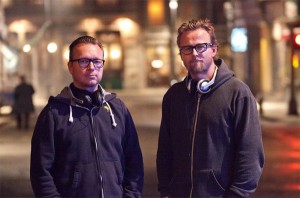
Joachim Rønning & Espen Sandberg talk about directing of “Kon-Tiki” and plans for “Pirates of the Caribbean 5”

In 1951 the film “Kon-Tiki,” a film detailing the voyage of famed Norwegian explorer Thor Heyerdahl, won the Academy Award as the year’s best documentary feature.

Six decades later a pair of Norwegian filmmakers decided to tell the story of Heyerdahl’s incredible 4,300 mile journey across the ocean on a balsa wood raft. The film became the first in the country’s history to receive both an Academy Award and a Golden Globe nomination as the year’s Best Foreign Film.

To celebrate the Blu-Ray release of “Kon-Tiki,” I sat down with directors Joachim Rønning and Espen Sandberg. I mention that it’s been Scandinavian Directors week for me, having just spoken to Renny Harlin a few days earlier. Hearing this they question me on Harlin and what he’s working on. Finally the interview begins and the pair talk about honoring Thor Heyerdahl, their national pride and how things are going on their next project, “Pirates of the Caribbean: Dead Men Tell No Tales”

Mike Smith: This has been my week for Scandinavian filmmakers. I just spoke with Renny Harlin the other day.
Joachim Rønning/Espen Sandberg: (both laugh).
JR: How did that go?
MS: Very well. He’s really high on the “Hercules” movie he’s finishing up.
ES: Right, right.

MS: “Kon-Tiki” received an Academy Award nomination as Best Foreign Film. Obviously that’s a great honor personally but did it have extra meaning to you because it was a representative of your country?
JR: it was (pauses)…one of the best moments in our lives. (they both laugh). That’s all we can say. That morning, when we got the announcement. Because it is, in so many ways, the biggest reward you can get as a filmmaker. To be recognized in the US…to be recognized in the world…that meant so much for the film. For “Kon-Tiki” to have that when it goes traveling around the world, it really means everything for the film. And for us as filmmakers. We wouldn’t be sitting here in our production offices speaking with you if it wasn’t for that. Everything comes together.
ES: As for representing the country, absolutely. But that’s not really the first thing you think about (laughs) when you get that news. It was the first Norwegian film to be nominated both by the Oscars and the Golden Globes and that is a huge deal for our country.

MS: How did you get involved with “Kon-Tiki?”
JR: It was a story we’d grown up with. Espen and I began making films together when we were about 10 years old. We grew up in a small town. Thor Heyerdahl grew up in a neighboring town so he always had a presence in our lives. And he is the only Norwegian to win an Academy Award so as a filmmaker he was a huge inspiration.
ES: We always wanted to bring that story…the story of Kon-Tiki…to the big screen. But of course, it was such a huge endeavor. It took four years to finance. It was the biggest film production ever in Scandinavia.

MS: Thor Heyerdahl is probably your country’s best known figure internationally. Did you have any reservations in taking on his story?
ES: We always wanted to tell his story. It was just very hard to finance it. That was the big hurdle. We always wanted to do it.

MS: You’ve worked together for over two decades…(they both laugh)…do you split up the duties of directing? Do you direct together or do you each handle certain scenes?
ES: We basically do everything together, especially in pre-production and post production.
JR: It’s a very collaborative process and it’s the only way we know how to make movies. On the set it is divided somewhat. Espen concentrates more with the actors and I work more with the visuals. And that’s basically not to confuse the actors too much. We try to have one voice in accordance with them. It’s a very collaborative process and it’s how we’ve always done it.

MS: Have you ever had an instance where maybe one of you has yelled “cut” and the other one looks over and shakes his head? (they both laugh)
ES: No! You’d be surprised. Of course we both have different tastes but I think at the end of the day we both find common ground…what’s best for the scene and for the film.
JR: I think it’s actually an advantage to have two heads working. It’s a big deal for us to be unanimous. In front of everybody at least (laughs)

MS: You both are slated to direct the next “Pirates of the Caribbean” film. Can you give an update as to where that project is?
JR: Yeah! We’re in pre-production. We’ve been in pre-production for a couple of months and it’s inching along every day. It’s a dream come true, really, to be able to work with Jerry Bruckheimer and the Disney camp…with these actors and the rest of the crew. They’re the best in the world. It’s coming together. We have a fantastic script by Jeff Nathonson (“Catch Me If You Can,” “Rush Hour 2 and 3”). It’s really funny. And touching. It’s a true adventure movie and, in that sense, it reminds us of the kinds of movies we grew up with…the Indiana Jones films and stuff like that. Those films made us want to become filmmakers.

MS: That’s so cool. That’s almost exactly the same answer that Renny gave me when we talked about “Hercules.” He had grown up enjoying these films so much and finally getting the chance to make one is the ultimate honor. (they both laugh)
ES: That’s it exactly. We really feel great!

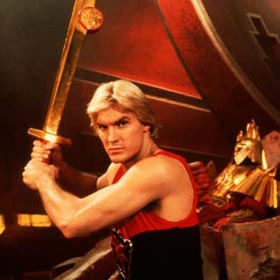
Sam J. Jones reflects on “Flash Gordon”, “Ted” and plans for “Ted 2”

Sam J. Jones is best known for the lead role in the 1980 cult classic “Flash Gordon”. Sam recently appeared in the the Seth MacFarlane directed live-action film “Ted”, as himself and stole the show. Sam took out some time to chat with Media Mikes about his work on “Flash Gordon”, “Ted”, plans for “Ted 2 and his work in the security business.

Mike Gencarelli: Can you reflect on the fandom that surrounds “Flash Gordon” over 30 years since its release?
Sam J. Jones: It has been wonderful and is such a blessing. We filmed it in 1979, so that is 34 years ago and was released in Christmas of 1980. We are talking about three different generations here. It is amazing. It has had a good run and it has opened a lot of doors for me. I have traveled all over the world. It has even continued in the film “Ted”.

MG: Queen’s score in the film is so iconic, how do you feel that it works in the film?
SJ: It really complemented the film well. Queen was huge, obviously but it also opened up doors for them as well at the time. Combine their amazing soundtrack with the great visuals and you have a winner. All that creativity came together and produced this unforgettable visual experience.

MG: How often are you approached with people screaming “FLASH!! AAA-AAAHHH!!” and how do you respond?
SJ: Well, I get real close to them…then I head butt them [laughs]. No, it is fun it really is. Sometimes people walk by me on the street and don’t even say anything just scream and continue walking. They don’t even wait for a reaction. That sort of thing happens a lot.

MG: I wanted to ask about about you being originally signed up for seven “Gordon” sequels. Is that true?
SJ: I think it was a couple sequels at the time, yeah! Like anything else they decided not to pursue it. It has been optioned a couple of different times over the years with various development deals for a sequel, so hopefully that will happen soon. I would love to be apart of it again.

MG: Also can you talk about how your voice being dubbed over in the film?
SJ: We filmed the entire project in London, England and one week in Scotland. After filming you always have to go back and do ADR to fix the vocals. So I didn’t head back, I was working on other projects at the time. So they went ahead and got another actor to try and match my voice. It is what it is. I am sure next time I would rather find a way to get back there and do it myself.

MG: Tell us about how your role in “Ted” came about?
SJ: It is pretty simple, Seth MacFarlane called me and said that when he was eight years old he saw “Flash Gordon” and it changed his life. He knew then that he wanted to be a creative guy in the business and that was his inspiration. So he called and said he had this script called “Ted” and if I would be interested and I said “Of course”. At first, he wanted me to play myself but it turned out to be a parody of myself.

MG: What was it like getting back into those tights again after all those years?
SJ: It was fun. It was great working with the cast with Mark Walhberg, Mila Kunis and Patrick Warburton. Actually Patrick and I used to be in acting classes together, so it was good to see him again. It was Seth’s first time directing live-action and he did a fantastic job. He was always very prepared each day.

MG: Going from film business to security business, tell us about your current work?
SJ: It has been natural transition for me. I was a marine before I was an actor, so the background was there before I was in the movie business. So I got married and started having our five children and things slowed down a bit since there is a lot of downtime in the film business. So I wanted to fill that void, so I talked to my wife and decided to do that I was already trained in. I went and took some additional specialized training, actually the same as the Secret Service and the State Department. I started working the Los Angeles area, then I worked in Katrina and excelled in security operations. From there I got an invitation to move to San Diego to help run the Cross-Border Security Operations into Mexico. So that is what I have been doing for the past eight years now. I love it because when a film project comes up, I am able to drop everything and do the film. So it works out.

MG: “Ted 2” is planned for release Passover 2015, any word of a return for you?
SJ: Yeah, of course. Seth already asked me to do it. He mentioned that they will be filming in the Spring of 2014. So I can’t wait for that!

Wayne Kramer talks about directing “Pawn Shop Chronicles”

Wayne Kramer is the director of the “Pawn Shop Chronicles”, which has an epic cast including Paul Walker, Kevin Rankin, Elijah Wood, Brendan Fraser, Vincent D’Onofrio, Thomas Jane, Matt Dillon and Lukas Haas. Wayne has directed other recent films as well including “The Cooler”, “Running Scared” (also with Paul Walker) and “Crossing Over”. Media Mikes had a chance to chat with Wayne about this crazy fun film and how he achieve the feeling of watching a graphic novel coming to life.

Mike Gencarelli: How did you become attached to direct “Pawn Shop Chronicles”?
Wayne Kramer: I was originally talking to Paul Walker about directing him in a script that I had written, but it was having some difficulty getting set-up. Paul was already attached to “Pawn Shop” and when the original director fell out, he called me up and asked if I would be interested in coming on board because it was already financed and ready to go. I was initially reluctant because the budget was quite low and I was only looking to direct my own projects, but I read the script (by Adam Minarovich) out of a courtesy to Paul. I was immediately taken with it. I appealed to my sick sense of humor and I also enjoyed the more surreal aspects of the world Adam created. I also felt that the material would allow me to bring a certain fun filmmaking style to the piece, if we could figure out how to get there on such a low budget.

MG: From the moment the movie starts its feels like you are watching a graphic novel come to life, tell us about how you achieved that aspect?
WK: Upon first reading the script, I felt it required a very stylized, almost Tex Avery-ish approach. Despite the lazy critical assessment that we ripped-off Tarantino (I get this on every film – and it pisses me off to no end because I’ve never been influenced by Quentin’s films, but it’s clear that we share many of the same influences: De Palma, Peckinpah, Aldrich, Hill, etc.), my initial feeling was that PAWN SHOP belonged in a universe that felt like a cross between early Coen Brothers (“Raising Arizona”, “Big Lebowski”, “O Brother…”) and 70’s revenge/exploitation themed films like “White Lightning” and “Prime Cut”. The more I played around with it in pre-production, I started to pick up on a “Creepshow” meets “Crumb” kinda vibe as well – in that the actual storylines felt like something from old EERIE COMICS with a Redneck flavor to them. It’s a whole stew of whacky influences hopefully stirred into its own original thing. I just have to say, it’s near impossible for any filmmaker to escape the shadow of “Pulp Fiction” when telling an anthology crime story and it infuriates me in that’s the first thing film illiterate critics glom onto. Aside from one wink at “Pulp Fiction” about Alton’s brother being killed in a pawn shop on the west coast(which was always in Adam’s script and in hindsight, I probably should have cut), PULP was the furthest thing from our minds.

MG: How was it reuniting with Paul Walker and putting him in such a unique role?
WK: It was a blast working with Paul again. He’s the most game actor I’ve ever worked with and gives nothing less than 100 percent each time. We share the same sensibility when it comes to dark, kick-ass material, so it’s never a battle of wills when we get on the set. He’s also the kind of actor that always has the
director’s back and as a filmmaker you couldn’t ask for anything more. Paul is also a producer on PAWN SHOP, so he had a little more invested than just turning up and focusing on his own character.

MG:  Let’s talk about the rest of the cast, how did you gather all this great talent together?
WK: Well, once a film gets greenlit, you just start moving ahead and word gets out that the film is happening and agents start doing their thing, which is to get work for their clients and somehow it all just falls into place. I was super thrilled when Matt Dillon agreed to play Richard because Matt’s an actor I’ve always loved and thankfully he also turned out to be a joy to work with. I honestly think Matt had the most difficult role to pull off in the film because the leap his character makes tonally in just a few hours is insane and I don’t think many actors without Matt’s subtle comedic chops could have pulled it off. It felt to me like he was channeling Bruce Campbell circa EVIL DEAD towards the end there with his manic hysteria. I had met with Vincent D’Onofrio a few months earlier and he had a great take on Alton and thankfully it worked out and he ended up in the film. Vincent was another amazing actor to work with. I’d love to do anything with him in the future. Brendan Fraser really came and invested himself in the character and it was hysterical to watch him disappear into Ricky every day. He had the most difficult schedule on the film, having to fly in and out of Louisiana several times to accommodate his character turning up all over the schedule. We were also lucky to fit Elijah Wood into a very tight window as well and he was a total soldier for his few days on the film since he had to wear a very uncomfortable and complicated make-up rig, which he never ever complained about. Super cool guy and a total fan of the genre. I think one of the most exciting additions to our cast was Kevin Rankin as Randy, Raw Dog’s partner in crime. Kevin is the consummate actor and just disappears inside every character he plays. I didn’t even realize until we were a few days into shooting that he played the character of Devil on “Justified,” a show I’m a huge fan of. I also have to commend Pell James for having the courage to take on the role of Cyndi. She’s virtually unrecognizable in the part and we only see her clothed one time in a quick flashback moment – so she has my undying respect. She also happens to be an incredibly talented actor who should be doing way more movies. I’ve been friends with Thomas Jane for quite some time and he was kind enough to agree to play The Man for me, which I think is a fun little cameo. Another actor that should be working more often – and on bigger films. Same goes for Lukas Haas who was another joy to work with. We got very, very lucky with the cast and I hope to work with all of them again at some point.

MG:  Tell us about your decisions to switch aspect ratios between each segment?
WK:  I was just having some fun with some of the faux Sergio Leone type moments in each chronicle. The arrival of The Man felt like it wanted to be in widescreen, almost like those old Marlboro ads that played in movie theaters (it was probably more an international cinema thing because I saw them in South Africa when I was a kid and we saw a lot of commercials before the main feature started). When Matt Dillon faces off against Michael Cudlitz, it felt like it warranted a similar aspect ratio gag – and when Brendan Fraser’s Elvis impersonator arrives in front of the barber shops, again, I felt like it was almost a classical western motif of the stranger come to town. Having an aspect ratio gag in each chronicle also created a visual commonality between all three stories and for me is a reminder of the tongue in cheek approach to the film.

MG:  What was the biggest challenge of entwining these three segments together?
WK: I think the biggest challenge was taking three tonally very different stories and trying to make them fit within the same narrative. We jump from a Tex Averystyle, madcap Hillbilly episode to a darkly humorous Southern Gothic revenge story, to a more comedic take on the musician meeting the Devil at mythical crossroads in the deep South. But if someone looks a little deeper at the film, they will see a fun subtext about the town of Erwin, Georgia being purgatory and all the (morally dubious) characters coming through the portal of the pawn shop being challenged to make choices that decide their very fates. We buried lots of Satanic imagery throughout the film, some more obvious than others. There are pentagrams carved into the tables of the barbecue joint, which is also called “Lou’s Fire Pit” as in Lucifer, which features a very hellish red color motif. JJ gets his face burned into the seal of the smoker which reads, “Holy Smokes.” The meth lab goes up in hell fire… Satan makes a deal for Ricky’s soul by transforming him into Elvis for four minutes on stage… The liquor store with the blues player out front is called Cross Roads Liquor and the address is 666 Charon Street… The liquor store also has a painted clock sign with no hands suggesting time has stopped in this town. We have creepy, featureless masks on some of the carnival extras – if you look carefully, you’ll see them at times. Some of the girls at the carnival are also holding little devil dolls. Many other references as well…

MG: What do you have planned next?
WK: I’ve got a bunch of irons in the fire. It’s hard to talk about them until they actually get greenlit. I may be doing another film with Alec Baldwin (and Patrick Wilson) next year, so I’m really looking forward to that.


Related Content

Simon Pegg, Nick Frost and Edgar Wright talk about “The World’s End”

This Friday sees the US release of The World’s End, the final installment of Edgar Wright’s “Cornetto” trilogy. It’s the third comedy following 2004’s Shaun of the Dead and 2007’s Hot Fuzz, to star Simon Pegg (also co-writer of all three) and Nick Frost. While the films are standalone stories across wildly different genres, they’ve been consistently hilarious variations on common themes. Hence, more comparable to Cornetto flavors—a British ice cream that found its way into all three movies—than narrative installments. The trio of Pegg, Wright and Frost sat down in New York to discuss the completion of the trilogy with this apocalyptic pub crawl.

The movie centers on Gary King (Pegg) who is dead-set on reuniting his old schoolmates, now grown men, in an attempt at completing an epic pub crawl they left unfinished as youths in 1990. He faces the most opposition from his onetime best friend, Andy, played by Frost.

How would you each describe the other’s characters?
Nick Frost: I would say Gary King is a forty-one year old man stuck sadly in…1990, it never got better for him than that night. I like to think about Gary in the space between then and when we meet him. What he got up to. And what I think is getting pissed on a kibbutz a lot, being like a rep in Portugal in like a resort, maybe traveling to Australia, doing the same thing there. You know, I think he did a lot of drinking and a lot of fornicating and then he reaches a point where he, he was just sadly empty. And I think where we meet him…that gear that he wears in the film, I don’t think he wears it all the time. He’s like a general who’s going to commit suicide on telly and he puts all his gear on. He puts his gloves on and his medals. That’s his last hoorah and I think he has a suspicion that he knows he’s not coming back.
Simon Pegg: As an addendum to that I think there’s a lot of parallels between World’s End and Scent of a Woman. Gary is like Colonel Frank Slade.
Andy is you know this guy who was, who had his heart broken by his best friend when he was very young and has never been able to let go of that anger about that. And he’s moved away from it. He’s excelled in his job, he’s married and had children, he’s created a life for himself. He’s a success in many ways, maybe not emotionally to a degree. We find out things later on. But he’s a guy who has been let down by someone he loves and hasn’t addressed that yet. So when we meet Andy he kind of seemingly Gary’s enemy, they’re not friends anymore but really what underpins that enmity is a deep affection which we eventually learn the truth about.

Lauren Damon: In both Shaun and Hot Fuzz Simon was the more straight-laced character at the start of the film, was that reversal of roles fun?
Pegg:
It was yeah.
Frost: Yeah I mean those other roles, the central character is not always the craziest or the funniest even though Simon is incredibly funny, but this time it was. And it was always going to be Simon and I never look at it and think ‘oh why am I this again?’ It never feels like that. Its for the good of the film, but this was you know—Simon’s gonna laugh when I say this because I said it lots of but—[Pegg joins in in unison] We are actors!

The chance to play any different person or different character is what you want to do as an actor. And I’d kind of argue that Danny and Ed are very different characters. Ed is quite cynical and lazy and Danny is just a big, lovely labrador, you know? And so the chance to be a kind of hard knot and to be the kind of moral voice of the audience essentially at certain points in this film is a great challenge. And also I get to kick arse.

LD: And rip your shirt off.
Frost: That was the only thing I put my foot down. Edgar wanted me to rip my whole shirt off so essentially I would be topless for the second half of the film and I had to say no.
Pegg: Which was a relief because it was winter.
Frost: Well I’ve got quite a lot of tattoos so the coverage of tattoos would have been an issue. And also, it don’t look s’good!
Pegg: I beg to differ!
Frost: But it got cold it got up to minus ten at night when we were shooting.

All three men elaborated on the amazing stunt work in the film, choreographed by frequent Jackie Chan collaborator, Bradley James Allan:
Pegg: The important thing for us was that we, in all the fight sequences in the movie, we retained the characters. Often in films when you cut to action sequences, stunt performers have to take over and as such, the characters that the actors have created vanish slightly in favor of the action. What we really wanted to do was make sure that the characters were maintained throughout the action and that meant us doing it…And we always wanted it to be the case where it’s like we’re—particularly for Nick’s character—all this simmering rage that he has, all this resentment towards Gary, all this kind of dissatisfaction that he has with his own life it just bursts out of him like—we used to call him the Pink Hulk because he had a pink shirt on underneath—and Andy turns into the pink Hulk. And each of them have a different—like Gary fights one handed because he’s trying to protect his pint. Andy, you know, fights like a berserker. Paddy [Considine], because he’s a boxing fan, uses all these great big haymakers like a brawler. Martin [Freeman]’s always wriggling out of stuff—
Frost: Like a hobbit!
Pegg: Which he picked up from somewhere, I don’t know. So yeah, it was all very much there in the script.
Frost: Eddie [Marsan]’s the coward.
Pegg: Eddie hides under tables. Which is funny because Eddie’s pretty handy. Eddie’s got some good punches.
Frost: Yeah he is, he trains a lot to be a fighter.
Pegg: He’s a little East End boxer.
Frost: He does “Ray Donovan” so he spends a lot of time in the boxing ring
Edgar Wright: What we tried to do is not actually use like…If you have a scene in an action film and you have like there’s a waiter who looks particularly tall and muscly, you know that he’s going to go through a window at some point. So like you can kind of pick out, that’s a stunt man, that’s a stunt man, that’s a stunt woman. What we tried to do with this was have people you wouldn’t—when you see those five kids, you don’t expect it. They’re kids. And the lead guy is fifteen years old. So you don’t expect him to be in a fight. And then they do all of their own stunts… And that was something I said to Brad Allan, our choreographer. I did a scene in Hot Fuzz, I ended up cutting out of the movie because it didn’t really work, it was a scene where Simon arrested some kids and so I said ‘I really wanna do this fight scene, but do you think we could get teenage stunt men?’ He goes ‘Absolutely, we got circus schools, tumblers, gymnasts, martial artists…’ and so the kids in that sequence are from the ages of fifteen to twenty. And they’re amazing.

LD: Going way back to Lee Ingleby’s crew in “Spaced” [Wright’s 1999-2001 sitcom starring Pegg and Frost], through the hoodies in Hot Fuzz, do you just have a distrust of youths gathering anywhere together?
Wright:  think a central theme is no matter how young you think you are, there’s always someone younger. That fear of being usurped by the people like are sort of like ‘Oh my god, that fifteen year old is gonna kick my ass!’ The emasculation of being beaten up by somebody younger than you, I think it’s that kind of fear. I think once actually Nick in London got mugged by a bunch of teenagers which is like an extremely distressing thing because hey, you know, you might be twenty-eight but these fifteen year olds…they’re are gonna kick your ass! And it’s just a horrible horrible thing. I think it’s just a part of the nightmare of emasculation of being beaten up by teenagers, people fifteen years younger than you.

At what point in working with Edgar did the word trilogy come up?
Simon Pegg: I think probably on the Hot Fuzz press tour when we realized we had been able to make two films and those films were in essence connected. You know, sort of tonal sequels in a way, in that they were not directly sequels—not the same character stories obviously—but they were definitely variations on a theme. And we figured if we could possibly be able to do it again, we could wrap it up as a sort of nice Hegelian whole. As a threesome as it were. And do it again. So we refined the ideas we had started on. It wasn’t like we set out to make the trilogy. We would never be so arrogant as to assume we would be able to make three films.
Nick Frost: I think one was enough.
Pegg: Yeah.
Frost: I think we thought, being British filmmakers we were lucky to make one, you know. [laughter] It’s true!
Pegg: We didn’t think it would come out there, let alone here.
Frost: We thought, if we could sell it to Lufthansa and they show it on the flight, we’ll be lucky. And you know, we get a chance to make Hot Fuzz and then that seemed the logical thing to do really.
Wright added:  …The fact that Hot Fuzz was shot in my hometown so I’d had that experience of being back in my hometown very vividly. So it was very much preying on my mind and that’s where it starts to factor into this of the idea of the homecoming…But then we decided we would go off our separate ways and do separate projects and in a way I think we wouldn’t have written the same script six years ago. Because the nice thing is actually, not to get older, but to actually deal with that in movie. Shaun of the Dead, which we shot ten years ago is a film about he’s a twenty-nine year old about to turn thirty. And then in this film, they’re forty…I feel like when I watch a lot of the American “man child” comedies, sometimes I always think it’s kind of forced because there are people who–there’s that thing of being a big kid forever is always glorified– but never really scratches below the surface. In reality a lot of those actors are married and have kids and so I think it’s a good thing to do these movies and actually acknowledge that the characters are older. So I think in that way, me and Simon, it was great going away—it’s not like we didn’t see each other in six years, we’re like best friends– but it was the first time we’d written together in like five years.

Was it different coming back to write together after so long?
Wright: No if anything, I think it was easier in a way. I think out of the three, Hot Fuzz was the most difficult one to write. Because I think we realized that Agatha Christie is a genius and that murder mystery is really hard! We would have kind of the constant headache of trying to figure out the mystery plot…But the nice thing about this is we had the story, we had the plot and then like it was just like a huge outpouring of personal experience. Of like everything from our upbringing. Once you’ve got the story, I think the first thing that we did when we started talking about it was just start talking about personal experience. All of that stuff goes straight into the movie. So it is like, Shaun of the Dead too, but this one is definitely the most personal because so many themes of it are just straight from our experience. Everything from the sister [Sam, played by Rosamund Pike] is based on a real person…the bully is based on a really person. The experience of—I went back to my home town and a number of times after I’d left to live in London and I remember vividly one of the things that sparked the whole thing was going back to my hometown, going to a pub, and seeing your school bully, who didn’t recognize me. And I wasn’t sure whether he didn’t know who I was anymore or didn’t care. But the fact that he didn’t acknowledge me at all made me so mad. I didn’t want him to acknowledge me! And I certainly didn’t want to get into anything. But I was so mad because I was thinking ‘does he not recognize me, this guy?’ So things had just stuck. That’s something that happened like fifteen years ago, but it stuck with me. And so that’s what’s great about doing these films is that things you’ve been thinking about for a long time then just come flooding in. Then it just becomes like a whole like ‘this is the plot of the movie.’

Is this the end of the trio?
Wright: I think this, we thought would be nice to be a piece. It’s not like a trilogy in terms of they’re three of the same movie, it’s more like a triptych of three separate films that can be viewed separately or together. You know, separately they can be Kelly, Michelle and Beyonce, but together they’re Destiny’s Child.

LD: Who’s Beyonce?!
Wright: I don’t know! I don’t want to pick any favorites!

It might be a few years until we do another one. But this is not the end of us working together. Because we love working together so we’d like to do other stuff. But it might be something radically different next time.

The World’s End releases in the US on August 23rd, you can read our review of it here.
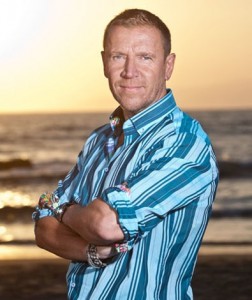
Renny Harlin talks about directing “Devil’s Pass” and Hercules 3D”

Renny Harlin holds the distinction of being the most successful filmmaker to ever come out of Finland. Surprisingly (not because they weren’t famous but because I didn’t know they were from Finland), right behind him in popularity are two actors: 50’s horror film hostess and star of “Plan 9 from Outer Space,” Vampira and George Gaynes, probably best known as Commandant Lassard from the “Police Academy” films and the adoptive guardian of TV’s “Punky Brewster.”

Harlin rocketed to fame when he went behind the camera on “A Nightmare on Elmstreet 4: The Dream Master.” Impressed by the word of mouth on the picture, producer Joel Silver hired him to direct “Die Hard 2.” He followed these films up with such popular films as “The Adventures of Ford Fairlaine,” “Cutthroat Island,” “The Long Kiss Goodnight,” Cliffhanger” and “Deep Blue Sea.”

In preparation for the release of his latest project, “Devil’s Pass,” which follows the journey of five filmmakers investigating the real life mysterious deaths of nine skiers in the late 1950s, Harlin took time out to talk about his new film, his upcoming “Hercules” project and the incredible fact that Andrew Dice Clay could be an Oscar nominee this year!

Mike Smith: Before we begin I have to tell you that I think “Ford Fairlaine” is one of the most underrated comedies ever made.
Renny Harlin: Awesome! When I go to a bar in New York, or even in the middle of the country, if people somehow find out I directed “Ford Fairlaine” it’s always free drinks for the whole night.

MS: Nice. Now they’re talking about “Dice” Clay being an Oscar nominee for “Blue Jasmine.”
RH: That would be the most awesome thing ever!

MS: How did you come to direct and produce “Devil’s Pass?”
RH: It was an incident that I had been interested in for many years. I had read about it and had seen a couple of documentaries about it. And I thought to myself, “wow…what a weird mystery to occur in our lifetime.” Because still today nobody knows what really happened. With all of the evidence…I’ve been through the archives and have seen the photographs. With everything they have nobody still knows what happened. I always thought that it would make an interesting movie. And I found that by doing it as a “found footage” film I could find an angle where the movie takes place in today’s world while referencing what really happened.

MS: How much research were you able to do on the actual incident?
RS: I went through the archives. I spoke to people that had either been part of the rescue team or had had a connection to the people that disappeared. Everything I could find to read and watch I did. I feel like I was able to learn a lot and put a lot of that research into the film.

MS: What was it like to return two decades later to the same mountains where you had filmed “Cliffhanger?”
RH: It was like going home. I really love the challenge of filming in a natural environment. It’s great to shoot on a soundstage. It’s very controlled. But there’s nothing like putting the cast and crew in an extreme situation. And in this case it was in the darkest and deepest part of Russia in a tiny town called Kirov. There claim to fame is in the mining industry and that they have the northern-most prison in Russia. The people that live there are either miners or relatives of prisoners. So you know it’s not exactly the most uplifting place! (laughs) Then you figure in that it’s above the Arctic Circle…that’s it’s dark most of the year…that nine months of the year there is snow on the ground. When we were there it was constant sub-zero temperatures and 20 feet of snow. Many of the locations were only accessible by snow mobiles. It adds to the authenticity of the film and it adds to the experience of the crew and cast. Just like the characters in the story, every day is about survival. And I love that. I love being in those conditions and making a movie.

MS: Being, as you were, at the mercy of Mother Nature, how difficult was it to film the avalanche scene?
RH: That was one of the hardest sequences. We were filming in an area that was really “avalanche prone.” We were told by our mountain guides that every year several people perish in avalanches. We were told to be careful. Everything filmed on the mountains was filmed at night and it took a while to get the filming done. The mountain was the star as we only had a couple of hours to film each day. But we did it together.

MS: Was that the biggest challenge of filming?
RH: I would say that, in terms of preparation, that was certainly the biggest. There were certainly many other challenges. And if someone complained I’d say to them, “Hey…when was the last time you were able to hang around in a place like this?” People would pay a lot of money to be able to see what we see. This is something really unique.

MS: Finally, can you give a quick update on “Hercules 3D?”
RH: I’d be very happy to give an update! I’m sitting right now in the editing bay. We finished shooting about a month ago and I’m about six weeks away from delivering my director’s cut. It’s looking fantastic. This is really my dream project come true…it’s like a childhood dream. When I was growing up I would watch movies like “Ben Hur” and “Spartacus.” I grew up with an amazing love and knowledge of Greek mythology. To be able to do an epic movie like this…Hercules is really the father of the comic book movie. It’s really my return to those kind of movies.

“Devil’s Pass” is in select theaters on August 23rd and same day also available on Cable VOD, digital platforms (including SundanceNow and iTunes).

Ken “The Bug Guy” MacNeil talks about collaborating on the film “Epic”

Ken MacNeil, also know as “The Bug Guy” is the owner of the largest retail pet shop in the country that is devoted to insects and other arthropods. Ken was recently contacted to work on the film “Epic” as the bug expert. Media Mikes had a chance to chat with Ken about his love for bugs and his work on the film.

Mike Gencarelli: I think the first obvious question has to be how have you developed this love for bugs?
Ken MacNeil: I have been into bugs my entire life. Going back, I had started with having some hissing roaches and mantises. I ended up breeding my mantises and got an egg sack. I was a programmer at the time, so I sold those to a local pet shop and made some money. I new a local buy guy at the time that was going out of business, so my wife and I drove out and ended up coming home with 130 tarantulas. We thought we were crazy but at the time we didn’t realize that that number was nothing (laughs). We ended up selling them over a month or so. So then I got a call from the same guy hearing that I sold the first 130 so fast and he asked me if I wanted to buy the other 2,000 tarantulas he had (laughs). Well once again I asked my wife and she told me to go for it, since I liked it so much. We thought we were really crazy when we drove home with a truck full of tarantulas (laughs).

MG: So you have no fear to those kind of bugs?
KM: No, not at all. At the very beginning when I was packing a tarantula that wasn’t docile, I was a little nervous. My wife was less nervous since she grew up having tarantulas. My mom was arachnophobic, so I didn’t have any type of spiders growing up but I have always been fascinated by them.

MG: How did you end up getting contacted to work on “Epic” as the bug expert?
KM: Truthfully, I am not 100% sure how they found me. Because I am an ex-programmer, I was able to get my name and website into the front of the search engines. So if you do a general search for a pet bug, I come up first. So I bet they just did a search and came across me.

MG: Tell us about “Bugs of Camouflage” available on the special features on the home release?
KM: They came into the shop and wanted to see a bunch of different bugs. They wanted to see a bunch of different things that could fit the movie. We tried to pull up some that the movie had, the same kind of ability or the actual bug itself. I got a hold of some walking sticks for them to film since there is an actual walking stick in the movie. They have a great demonstration of camouflage and how these insects use their defense in the wild.

MG: What other films or TV shows have you been asked to consult on?
KM: I have done a few different things over the years. We also had a TV show on the Science Channel called “Bugging Out”. I have also done a bunch of articles of newspapers and also NPR did some pieces on us as well.

MG: Tell us about your retail pet shop in Tucson, AZ that is the only one in the country devoted to insects and other arthropods?
KM: We are the largest bug business in the U.S. by a lot. The next guy down probably has about 1/10th of what we got. It is what we specialize in and the tarantula hobby is the biggest part of the business. So we have more tarantulas that anything but we also carry scorpions, centipedes, millipedes, roaches and many others. On top of that I have opened an exotic pet shop that carries others pets like reptiles etc. But it seems more like an after thought when you have 10,000 bugs to 40 animals (laughs).

Ryuhei Kitamura chats about directing “No One Lives” and hints at “Versus 2”

Photo by Munetoshi Mukai

Ryuhei Kitamura has directed some of my favorite recent films like “Versus”, “The Midnight Meat Train”, “Godzilla: Final Wars” and most importantly his latest “No One Lives”. This film packs a great cast and is a hell of a fun ride. Media Mikes had a chance to ask Ryuhei a few questions about “No One Live” and also got some news about his planned sequel to the cult classic “Versus”.

Mike Gencarelli: How did you end up directing “No One Lives”?
Ryuhei Kitamura: I loved the script and this is not just about blood and guts, it’s a twisted and dark love story. I loved the main character DRIVER who does it all for love killing machine. I thought I could I create new iconic anti-hero. Also I liked the good old days 80’s Slasher movies.

MG: “No One Lives” is your second U.S. film after “Midnight Meat Train”; what was your biggest challenge on this project? How did the two productions differ for you?
RK: It’s always the same. Movie making is challenging no matter what size or where you do. You have to fight against time, money and ego. We had so many challenges, but I had strong support from my crew and cast, and my producer Harry Knapp and Elton Brand. They made me survive.

MG: What do you enjoy most about working in the horror genre?
RK: I enjoy killing tons of people in brutal ways because I can’t do that in real life even though there are tons of f*ckers I want to terminate (laughs).

MG: You are no stranger to gore; are you ever concerned about going too far?
RK: I was hired to do movies like “Midnight Meat Train” and “No One Lives”. What’s wrong with go too far? That’s what the fans want I believe. Of course I wouldn’t do the same when I do PG-13 horror movie.

MG: Being a huge Godzilla fan yourself, what was it like writing/directing the last film “Godzilla: Final Wars”?
RK: It was pure honor and fun to be the part of one of the greatest franchise of all time. Can’t wait to watch new Hollywood Godzilla.

MG: I’ve heard talk about a “Versus” sequel in the cards; what can you tell us?
RK: I can’t talk much, but I guarantee it will have same spirits, same craziness, much bigger scale and next level of action. I already have a great script and am going to make this happen in the next few years.

MG: What do you have planned next?
RK: I’m in pre-production of my new action movie to be shot in Asia. I have some projects lined up but it’s the movie business and never know what I’ll be doing in six months.


Related Content

David Lowery talks about directing “Ain’t Them Bodies Saints”

With a solid background of pretty much every behind the scenes job in Hollywood, it was obvious it would’nt be long before David Lowery began directing. With an impressive resume’ of short films and features under his belt he has now delivered “Ain’t Them Bodies Saints,” a classic film in the tradition of “Bonnie and Clyde” and “Badlands.” The film opened in limited release today (August 16) and to celebrate that opening I spoke with Mr. Lowery about his inspirations, misquoted songs and the proper use of the word “Malickian!”

Mike Smith: What was your inspiration…where did you come up with the story…for “Ain’t Them Bodies Saints?”
David Lowery: It really came from a lot of different places but one of the main inspirations were the old movies about lovers on the run. I love the idea of outlaws…the idea of a young outlaw couple on the run from the law. Those movies have always appealed to me…been inspirational to me as a story teller. I love the mythology of the outlaw. I love how America has been built on outlaw mythology. I wanted to make a film that would participate in that tradition. So the inspiration was very simple when I decided what I wanted to do. I wasn’t looking to reinvent the wheel. I just took the basic concept, the basic archetypes of a guy, a girl, a policeman and a couple of guns and tried to find a new way to present them.

MS: For a young director you got pretty lucky in nabbing two Oscar nominated actors for your two leads. Were Casey and Rooney your original choices and how were you able to cast them?
DL: I wrote the script with no actors in mind. I wrote it in a vacuum, not knowing who was going to be in it. But when we finally had the opportunity to select a cast Casey Affleck was the first person I wanted to meet. I sat down with him and we talked for about an hour or so. We got along really, really well and the next day he wrote me and said he wanted to do it. It was so wonderful to have my first choice not only able but so willing to do it. And we had gotten along so well in our talk that I felt like I had known him for years. For the character of Ruth I wasn’t sure if I wanted an established actress or not. Maybe I could go to west Texas and find someone who had never acted before…who really was a woman who lived in a small town. I wanted to find someone who was really a natural. While I was thinking that, Rooney Mara’s agent wrote me and asked if I could send the script to her. This was about a week before “The Girl with the Dragon Tattoo” came out and I never believed in a million years that she would be willing to go from this huge, David Fincher film to doing a tiny independent film in Texas. But he assured me that she would be interested in it. She read it and wanted to meet with me. I sat down with her, we talked and then she said yes. It was really a great and unique situation where both of the people that I wanted the most and who were the first people I met were the ones who wound up in the movie.

MS: I’m sure you’ve seen that you’re getting a lot of comparisons to Terrence Malick with your visual style. As a director was it important to be able to tell the story “visually,” in addition to presenting the action that was going on on screen?
DL: Absolutely. I love dialogue and I love listening to people talk when the dialogue is good. But more than that I love visuals. And I love to let the visuals do the heavy lifting in a movie. This film was very carefully designed to look a certain way and to feel a certain way. There’s no denying that if you go outside at a certain time in Texas and put a 25mm lens on a camera it’s going to look like a lot of other movies. Texas has a very specific look that a lot of filmmakers have used in the past. It’s very suggestive so you use that kind of imagery when you want to suggest something. If you want to suggest a timelessness…If you want to suggest an epic-ness. And Terrence Malick is someone who has used that kind of imagery quite a bit. I’ve certainly loved his movies. I’ve loved all his movies. But at the same time I never really thought about it while we were making the film. I knew that we were using “Badlands” as a jumping off point as far as the story goes but when it comes to visuals we really went in a different direction. Even though there are some things that are, to use a word, “Malickian”….there are some things that are similar to what he’s done about 10 minutes into the movie we go into a completely different direction. So it’s kind of a nice surprise to be compared with him because I do love his work and I’m flattered to be compared to him. But we were going for something completely with our visuals.

MS: The film has a very unusual title. Casey Affleck recently told Jay Leno that it came from a misquoted song. Is this true and, if so, what was the song?
DL: I don’t know what the song was because it was on a CD that a friend had given me with a lot of old folk and country music. And none of the songs were listed…it was just track one, track two, track three…there were no titles or artists. I don’t know what it was but I need to find out (laughs). I heard it years ago, long before I made this film. And I got that phrase stuck in my head. Misheard lyrics stuck in my head with the idea that they would make a great movie title. A strange movie title but a great movie title! And when I started writing this movie I wanted it to feel like an old folk song. And I thought there would be no better way to set the stage for this movie than to have the title sound like the lyrics of an old folk song. That was really all there was to it.

MS: What are you working on next? Do you have anything in the pipeline?
DL: Yes. I’m writing a lot of different scripts right now and I hope to be making another movie soon. One of the movies that I’m working on is an adaptation of an article in “The New Yorker” that Robert Redford is going to produce and star in and that I’m going to direct. I’m working on that scripts very quickly right now because I’d like to turn in a draft soon and see what he thinks.

Copyright: MediaMikes.com © 2013 · Powered by: nGeneYes, Inc. · Login

All logos and images used on this website are registered trademarks of their respective companies. All Rights Reserved. Some of the content presented on our sites has been provided by contributors, other unofficial websites or online news sources, and is the sole responsibility of the source from which it was obtained. MediaMikes.com is not liable for inaccuracies, errors, or omissions found herein. For removal of copyrighted images, trademarks, or other issues, Contact Us.