

Film Review: “Midway”

Starring: Ed Skrein, Patrick Wilson and Luke Evans
Directed by: Roland Emmerich
Rated: PG-13
Running Time: 138 minutes
Lionsgate

I haven’t seen the 1976 war epic, “Midway,” but unfortunately I’ve seen the 2019 “Midway.” Even though I haven’t seen the 70’s dramatization, I’m sure it’s still better than Roland Emmerich’s bombastic vision. Whereas the Jack Smight film had star power like Charleton Heston and Henry Fonda, Emmerich decided to see which one of the Jonas Brothers was available, what unheard of actor Ed Skrein was up to, and if Woody Harrelson could do some work for pennies on the dollar.

“Midway” is about one of the most pivotal battles in the Pacific Theater during WWII. This update begins with the surprise attack on Pearl Harbor by the Japanese, before it slowly transitions to the formulation of the Battle of Midway. The nitty gritty of this film, the abundance of characters, is at the core. Going over all the characters in this movie would be pointless, since the majority, while being real-life heroes, are forgettable. That’s because their heroics are delivered by wooden actors or are shifted into place in front of the camera so they can deliver some cliché dialogue and unnecessary exposition. This is the kind of movie that’ll make you appreciate “Dunkirk” if you weren’t a fan of that movie.

The big question though, for people interested in watching this film, is whether or not it pays tribute to the brave men and women who fought in the Second World War. Kind of, minus the brave women part. The only time we see women, they’re bothering their brave significant others or saying “I’ll go powder my nose,” as a euphemism for crying over the potential loss of their husband. “Midway” is the kind of movie you could compare to Michael Bay’s “Pearl Harbor” because of the way they both handled their subject material. It reaches a few gimmicky crescendos, plucking at the American heart strings, but not enough to be sappy, but slightly enough to honor the real heroes during this battle, especially towards the end. Throughout we’re introduced to characters that don’t matter or whose deaths should mean something, but it’s handled so haphazardly that you’re more likely to question who died, rather than mourn their loss.

I think my biggest complaint with this movie is how pandering it is to Chinese audiences. There’s been a lot of talk in the mainstream lately about China’s influence in sports and pop culture. The biggest finger pointing has been towards the NBA and Disney, who can’t be blamed for obeying the almighty dollar, who has commanded them to submit to Xi Jinping. “Midway,” Emmerich, and Lionsgate seemed to have committed the ultimate sin in this regard. Their intent ultimately feels disingenuous because they’ve decided to tell a tale about American perseverance, while bending the knee to their Chinese financiers. I think theatergoers expecting nothing, or unaware of China’s influence on Hollywood, will be pleasantly surprised by “Midway,” and may even have a positive reaction. I feel like most people will have the same problems I had with it. “Midway” has so many ethical and moral problems, that ultimately, any good intentions are torpedoed.
Film Review: “Motherless Brooklyn”

MOTHERLESS BROOKLYN
Starring: Edward Norton, Alec Baldwin
Directed by: Edward NortonRated: Rated R
Running Time: 2 hrs 24 mins
Warner Bros. 

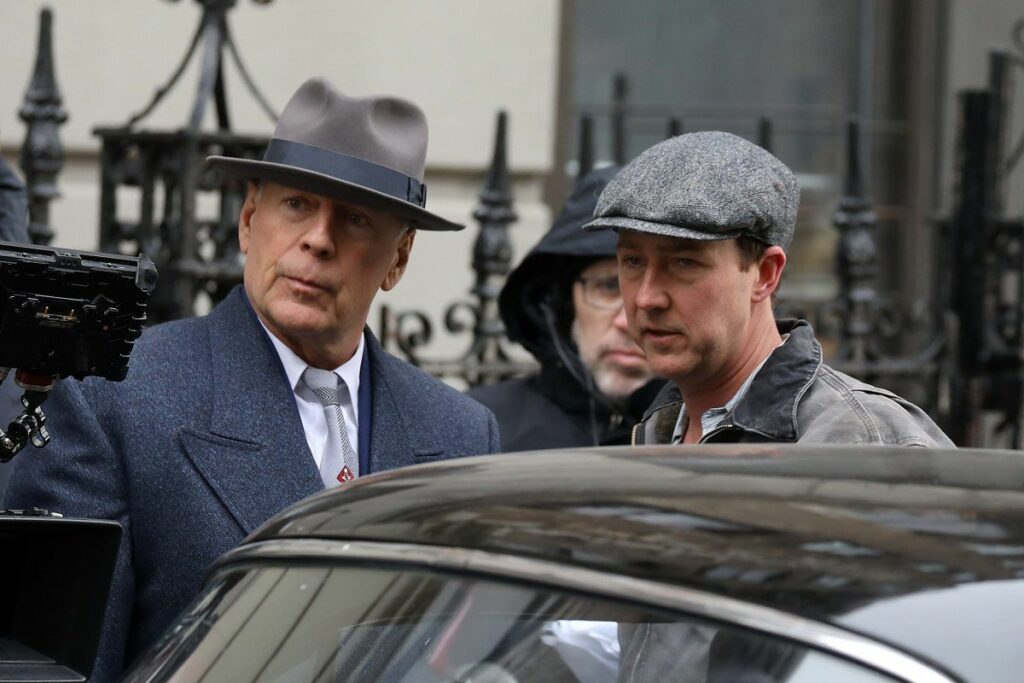
While “Joker” has strokes of genius, namely Joaquin Phoenix, the new crime drama “Motherless Brooklyn” is a triumph of cinematic art and deserves to be an Oscar contender in multiple categories. Adapted from the 1999, National Book Critics Circle Award-winning novel of the same name by American novelist Jonathan Lethem, “Motherless Brooklyn,” written and directed by Edward Norton, is a brilliant, throwback detective story with an all-star cast that delivers the goods. It mirrors early 1950s Brooklyn in such a palpable way that it makes you feel like you are there. Despite its arguably long, two-hour plus running time, the puzzle-like central story is so engrossing with its twists and turns that you can end up losing yourself in it. 

“Motherless Brooklyn” revolves around Lionel Essrog (Norton), a gumshoe with Tourette’s syndrome, which is a neurological disorder consisting of involuntary tics, utterances and sometimes profane outbursts. One of a few misfits under the employ of WWII vet and longtime private detective Frank Minna (Bruce Willis), it is Lionel’s photographic memory which proves useful in his line of work. On the day we meet him, Frank needs Lionel and another detective to provide backup during a secret meeting in case something goes wrong. Unfortunately for Frank, this is exactly what happens and despite Lionel’s best efforts, he is unable to save his boss who leaves him a solitary word as a clue as to who is responsible. 

Like a string he cannot stop pulling on, Lionel obsessively follows in Frank’s footsteps to find out not only who killed him but why. The trail leads him down a path that puts him in physical jeopardy on multiple occasions as well as a woman named Laura Rose (Gugu Mbatha-Raw, “Belle”), whom Frank had discovered was the key to unlocking a dark secret that certain powerful people want to keep buried. Eventually, Lionel must find all the puzzle pieces and put them together before a looming deadline arrives. 

“Motherless Brooklyn” may well be Norton’s greatest accomplishment of his career as he succeeds pulling off the rare feat of wearing all three hats (writer/director/lead actor). His adaptation, which has been 20 years in the making from the time he first read the novel, brilliantly captures the essence of Lethem’s work while his direction is even-handed throughout the film. The latter is reflected in its tension-filled pacing, camera work, and his cast’s general success with disappearing into their roles. This includes Alec Baldwin as a power-hungry politician, Willem Dafoe as an eccentric genius, and Rose who is more than just a damsel in distress.

 The icing on the cake for Norton’s detailed film is its terrific costume designs, vintage cars, music, and overall early 1950s vibe he creates. It all adds up to a work that gives you a lot to chew on and to pay attention to. Overall, “Motherless Brooklyn” is simply one of 2019’s best films thus far.

Film Review: “The Current War” – Director’s Cut

THE CURRENT WAR – Director’s Cut
Starring: Benedict Cumberbatch, Michael Shannon
Directed by: Alfonso Gomez-Rejon
Rated: PG-13
Running Time: 1 hr 42 mins
101 Studios 

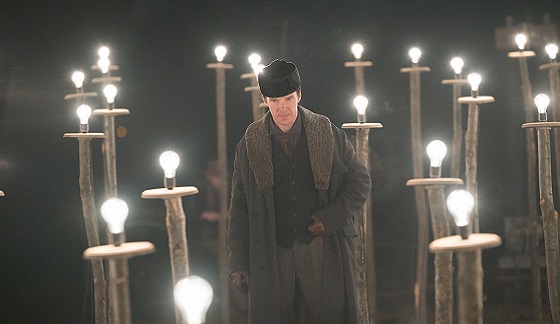
Electricity. We take it for granted much like air and water. It is almost hard to imagine how human civilization ever functioned, much less survived without it. In the totality of human history, it was just a blink of an eye ago, circa the beginning of the 1880s, when electricity was delivered unto the masses by two extraordinary men – Thomas Edison and George Westinghouse. The struggle between these two icons of invention over AC and DC current is dramatized in “The Current War,” a film that made its debut two years ago at the Toronto International Film Festival and languished in limbo until now. With engaging performances by Benedict Cumberbatch and Michael Shannon, and an interesting script, “The Current War” is a quick-paced historical work that is indubitably watchable. 

It all begins in 1882 when Edison (Cumberbatch) demonstrates the power of DC current by lighting up a small section of Manhattan, New York. After being snubbed by Edison, rich financier and inventor Westinghouse (Shannon) pursues the possibilities of AC current with equal passion. A war between the two gradually heats up with casualties along the way. 

Edison’s sometimes blind, cutthroat ambition, causes him to often make empty promises to his young children and losing out on time with his wife who dies tragically. He refuses to see any possibilities beyond DC current, which takes more power stations and heavier wire. Even a young and eccentric Nikola Tesla (Nicholas Hoult, “Dark Phoenix”) cannot convince him otherwise. 

Westinghouse tries to stick to his moral principles by avoiding the use of dirty propaganda that Edison often employs. However, he lets a little envy creep in over Edison’s abundant fame and so he pushes harder to win with the more dangerous AC current, which can run longer distances via thinner wire. A close associate pays a high price for it and Westinghouse, who is dubiously portrayed as being haunted by a harrowing Civil War experience, resorts to similar tactics as those of Edison while forming a partnership with the scorned Tesla, who’s relegated to more of a sideshow within the story. 

Directed by Alfonso Gomez-Rejon (“Me and Earl and the Dying Girl”) “The Current War” was originally under the Weinstein Company’s umbrella, but it’s release was sidetracked after Harvey Weinstein’s fall from power. Thankfully, Gomez-Rejon, with the help of executive producer Martin Scorsese, was able to get the film back and did some reshoots. His final product is a rapid-paced, enjoyable work with good cinematography and solid costume designs.

 “The Current War” provides a keen look into this likely forgotten period of American history that changed the world forever. Cumberbatch and Shannon dominate the screen with as-expected impressive performances the bring to life these two titans of electrical ingenuity.

Film Review: “The Lighthouse”

Starring: Willem Dafoe and Robert Pattinson
Directed by: Robert Eggers
Rated: R
Running Time: 109 minutes
A24

When “The Lighthouse” opens, we watch as two lighthouse keepers sourly look towards a tiny island dotting the vast ocean ahead. Towering above the horizon is the lighthouse that they’ll be in charge of for the next four weeks. We won’t learn who these lighthouse keepers are, much less their names, until much later in the movie. That’s because both don’t know each other or seem concerned about exchanging pleasantries. The younger lighthouse keepers, Ephraim Winslow (Pattinson), is given the more strenuous duties on the miniature island, while the older lighthouse keepers, Thomas Wake (Dafoe), mysteriously secludes himself in the lighthouse.

Taking place in the late 19th century, Wake, a curmudgeonly veteran of the lighthouse trade, holds on to several superstitions, which he rambles on about like its Sunday gospel. He warns his counterpart about bothering or harming the seagulls that permeate the island because the pesky seabirds house the souls of dead sailors. We also hear from him that the previous lighthouse keeper went mad, claiming to have been beckoned by the call of nearby sirens. Winslow, who’s initially suspicious of his superior and the tales he tells, finds a mermaid token stuffed into his mattress as he settles in. That seems to trigger an avalanche of bizarre happenings and sights on the miniscule space of land.

“The Lighthouse” finds a multitude of reasons for these lighthouse keepers to go inevitably go mad. Everything from cabin fever and mistrust, to the mass consumption of alcohol and the reality that their four weeks may become longer as a storm approaches. As the film progresses, it’s difficult to tell which lighthouse keeper is telling the truth, which one is hallucinating, and what exactly is happening, if anything, on the island. Dread drips throughout this film, thanks to a bombastic soundtrack and the movie being filmed in black and white. The terrors of the night and day are enhanced by the monochromatic landscape and sets.

On a technical level, this film is hauntingly gorgeous. When we see the lighthouse at night, we expect a monster to be perched on top, but instead it’s Wake, who appears to be bewitched by the light he claims to protect. When Winslow moves about the island with his work duties, whether it’s during blustery rain storms or in the dead of night, it feels lonely and isolated because all he has are his thoughts and visions. Neither have anything to attach themselves to, other than their work, especially since neither appears to have a busy work hobby, much less a book. Yet if something is on the island with them, we know that Winslow and Wake have no way to escape.

“The Lighthouse” manages to feel claustrophobic despite all the space given to these actors to play in. Despite their tiny lodging, they appear to have all the room in the world when they need to yell at or lung at one another. Dafoe, a natural in acting, seems to go through the motions at the beginning, as if he’s stretching the sea legs of his conniving character. He shines as bright as a lighthouse in the final act though, specifically in one scene I won’t reveal and another where his character delivers a chilling soliloquy. Equally impressive is Pattinson, who has the heaviest lifting throughout as his character descends into madness. The nightmarish visions and back-breaking work eventually tears down Winslow’s tough guy persona at the beginning. Pattinson channels fear and paranoia through his piercing eyes.

As evidenced by some of the more horrific or horror-centric films of 2019, “Midsommar” and “Climax” come to mind, “The Lighthouse” is a movie that you let digest. Having a gut reaction afterwards would do a disservice to the craft presented on-screen. As a reviewer, I’m in a pinch because a second viewing would solidify my overall attitude towards this film, but I do know that my initial experience was positive. Even though we’re trapped with these characters for nearly two hours, the film never feels long because it’s unnerving. Director Robert Eggers finds the right moments to be overtly creepy, violent and sexual, just like he did in his previous film, “The Witch.” There are also numerous light moments of humor that help undercut a lot of the palpable tension. “The Lighthouse” won’t make you jump or have you turning on a night light when you get home, but it may haunt your dreams like any good campfire tale of terror.

Film Review: “Lucy in the Sky”

LUCY IN THE SKY
Starring: Natalie Portman, Jon Hamm
Directed by: Noah HawleyRated:
Rated R
Running Time: 2 hrs 4 mins
Fox Searchlight

Like most North Korean missile tests, the disastrous melodrama “Lucy in the Sky” fails to achieve full lift-off and explodes into a million fiery pieces. Although we are told the story is inspired by real-life events, in truth it bears little resemblance to the bizarre 2007 actions of disgraced NASA astronaut Lisa Novak. Natalie Portman tackles her lead role with sheer abandon, but this turns into heavy-handed acting, resulting in an inability to take her seriously. First-time feature film director and co-writer Noah Hawley, whose previous directorial efforts have been limited to TV episodes of “Fargo” and “Legion,” has no sense of pacing as it veers aimlessly while making us feel like we just spent 40 days in the wilderness when it is over, which is the best part of the film. 

Pushed by an alcoholic mother (Ellen Burstyn) to be better than everyone else, astronaut Lucy Cola (Portman) achieves a career pinnacle by spending two weeks on the International Space Station. Like a wide-eyed Major Tom, Lucy loses herself as she gazes at Earth during a spacewalk outside the station’s confines. (Lucy should go blind during this opening sequence because she stares at the sun without having her gold, protective lens down, but who cares about science?)

 Upon her return to Earth, the childless Lucy immediately begins having problems readjusting to life with gravity. This includes her ever-increasing, distant relationship with her doting, religious husband, Drew Cola (Dan Stevens, TV series “Legion”), who seems to have been based upon Ned Flanders from “The Simpsons.” To her credit, Lucy does try to be a mentor to her teenage niece, Blue Iris (Pearl Amanda Dickson, TV series “Legion”), who looks up to her aunt as an inspiration. 

Routine family life doesn’t cut it for Lucy as she becomes determined to go back into space, and along the way she starts an affair with fellow astronaut Mark Goodwin (Hamm). She views him as one of only a select few who understands her, but Mark is a playboy. So, when Lucy runs off the rails, he steps away from her and turns his attention to up-and-coming astronaut Erin Eccles (Zazie Beetz, “Deadpool 2,” “Joker”). The idea of losing Mark to another woman, who is also her competition for a seat on the next mission, pushes Lucy over the edge. Naturally, she hatches a plot to do a dirty deed dirt cheap while enlisting her impressionable niece as her help.

 We are supposed to feel sympathy for Lucy as she struggles with her sanity, even after the story’s bizarre climax. However, this is a far-fetched idea by Hawley considering that if her plan succeeded someone would have probably died a violent death. As for the real facts, without spoiling too much and keeping it to a nutshell, Novak was married with three children during her approximately two-year affair with astronaut William Oefelein.

She was arrested in 2007 in Orlando for attempting to kidnap a U.S. Air Force Captain who had become romantically involved with Oefelien. Lastly, Hawley’s fumbling attempts at exploring existentialism throughout “Lucy in the Sky” are too muted to accrue any depth. He also under-utilizes Eccles and simply lets the film drag on far too long. 

Film Review: Jojo Rabbit

Starring: Roman Griffin Davis, Taika Waititi, Scarlett Johansson, Sam Rockwell
Directed by: Taika Waititi
Rated: PG 13 
Running Time: 108 minutes
Fox Searchlight Pictures

I don’t know how a movie featuring an imaginary Adolf Hitler managed to be one of the most heartwarming films of the year…but it’s 2019 and every day actual reality gets more ludicrous, so that sounds about right. Taika Waititi’s Jojo Rabbit is a masterful satire that nails its tone with a kind of supernatural precision that most filmmakers can only dream of and a story still more wouldn’t touch with a ten foot pole.

Jojo (Roman Griffin Davis) is a small boy who lives with his mother Rosie (Scarlett Johansson) in a village in WWII Germany. His only ambition is to fight for Hitler just like his absent father. Lacking any real warfront nearby and too young to be conscripted, Jojo instead joins up with the local division of the Hitler Youth headed by the one-eyed Captain Klenzendorf (Sam Rockwell). It’s a lot like boy scouts if all the participants were extremely racist and whose bonfires consisted of banned books. Jojo plays tough but gains his titular nickname when the older scouts test how murderous Jojo actually is and the kid fails to kill a bunny in front of the everyone.

Jojo is not only disappointed with himself but he’s royally failing Hitler! Specifically the imaginary Fuhrer, played by Waititi himself, who follows Jojo around and goads on Jojo’s tough guy persona. To be clear, Waititi isn’t actually playing Hitler (in fact when asked about ‘researching’ his portrayal, the director says he didn’t because that guy was “a fucking cunt.” Yep.) Instead, he is playing an icon to a child, which is an entirely different prospect. In Taika’s take just about the scariest thing about him is the unnatural blue contacts. He’s a playground bully who spouts back all the vile lies about Jewish people the boy’s troop leaders are trying to drill into him. Jojo’s whole bubble is popped when he finds an actual living Jewish girl named Elsa (Thomasin McKenzie) in his mother’s attic.

With McKenzie’s arrival, the film begins to become something much more than the riotous comedy that Waititi achieves in laying out Jojo’s life in the scouts. (Although if this film had only given me a burnt out Sam Rockwell demonstrating deadly weapons to a group of small children, I would have still considered it a cinematic gift, but I digress.) No, rather than being fearful, Elsa leans hard into the gross mythos the Nazis are spreading about her people in order to intimidate the young Jojo. It’s one thing to tell a ten year old that Elsa is a demon, entirely another to ask him not to then be terrified when faced with her one on one. Their bond is the heart of the film and McKenzie wields what small power she has over Jojo with ferocity while Jojo steadily moves from fear into fascination and maybe even friendship. Mckenzie’s is a stunning performance that has me more excited to see her in Edgar Wright’s next feature. As for Davis, putting the weight of this movie on the ten year old is thematically fitting but a huge risk. However just like Hunt for The Wilderpeople’s Julian Dennison, Waititi’s casting of Davis proves to be spot on. 

Meanwhile these kids are surrounded by the grown actors putting in some truly beautiful work. Sam Rockwell’s one eyed captain is physically out of commission but maybe that’s not the only reason he’s not on the field. Considering there’s nothing remotely straight about him and second-in-command Finkel (Alfie Allen). Scarlett Johansson is fearless as Rosie who lovingly calls Jojo “Shitler” and whose drinking, smiling facade belies her own defiance. After all, her sheltering Elsa is a huge breech of the law. Still Rosie dances, she bike rides and she declares her dinner table neutral Switzerland. Johansson brings genuine depth and warmth to Rosie in both her bonds with Jojo and Elsa.

Jojo meeting Elsa and beginning to encounter the larger world is where Waititi really hits home. Rosie allows Jojo into the Hitler Youth only insofar as she is a single mother and there’s really no alternative daycare. But when face to face with his supposed enemy, Jojo’s whole worldview is challenged.  Hate cannot flourish without ignorance and it’s the ordinary people in this film whose small acts make the larger world better for all. Taika’s crafted a film that’s not only timely but manages to earn tears both from laughter and sadness.

Film Review: “Joker”

Joker

Starring: Joaquin Phoenix, Robert DeNiro and Zazie Beetz
Directed by: Todd Phillips
Rated: R
Running Time: 122 minutes
Warner Bros. Pictures

Much like the Joker’s origin in “The Killing Joke,” Arthur Fleck (Phoenix) is an aspiring stand-up comedian. Before he can reach that pie in the sky dream, he makes ends meet as a clown-for-hire, takes care of his ailing mother in a rat-infested apartment, and attempts to deal with several mental illnesses. There’s actually nothing particularly extraordinary about Arthur, and that seems to be casually ingrained into him by his co-workers, passersby on the street and even his own mother. But if the title of the film wasn’t a big enough clue, there’s a lot in life that’s in store for Arthur.

It’d be disingenuous to try and rank all those who’ve portrayed the Joker (minus Jared Leto) because of the drastically different material they were given. However, “Joker” stands tall in its own category because it’s surrounded by subpar films. Villain origin stories aren’t great fodder, just look at “Venom” and “Hannibal.” But “Joker” isn’t just an origin story for the clown prince of crime, it’s a character study, something that’s never been done before on screen. Breaking down the Joker is a tricky task and there’s really no right way to do it, but there’s definitely a wrong way to do it. While Phoenix does it magically nuanced way, director/writer Todd Phillips handles it in ham-fisted fashion.

Phillips is more well-known for his “Hangover” trilogy or juvenile 2000 film, “Road Trip.” Behind the camera, Phillips is more than capable of telling a gritty crime story, drawing from what I can only assume is movies he grew up on and influenced him to become a filmmaker in the first place, “Taxi Driver,” “Kings of Comedy” and “Network.” He encapsulates that late 70s/early 80s glow well, emulating its style, color palette and nihilism. Where he falls remarkably short is writing a script that’s on par with those classics. Phillips makes a lot of leaps in logic, despite grounding the main character in a very realistic Gotham.

There’s nothing supernatural or superhuman about Fleck’s life. There’s no vat of chemicals to fall in or scars that he’s telling conflicting stories about. Everything that makes Fleck the hero and villain of his own story, is inside. So what makes a lot of the “Joker” work is the acting and not Phillips. That’s because the director gives away several mid, and late, storytelling reveals by relying on clichés early on. Anyone familiar with the Batman lore or movies involving psychosis will be able to spot plot twists and turns involving characters or the plot. Phillips’ maturity with his hands behind the camera unfortunately doesn’t translate when the pen meets the paper.

I’ll give credit to Phillips for one aspect, and that’s at least using one of the film’s tropes to set-up discussion about the ending of the film. Since Phillips has noted this is a stand-alone film (meaning it doesn’t fit into the DC Cinematic Universe and won’t have a sequel), there’s a lot to take away from the final 15 minutes. That’s where I assume a lot of the pre-release controversy stems from. Several people have weighed in on what they believe Phillips is intending to say, but I’m in the minority because I’m not sure Phillips is actually trying to say anything in particular. I believe he structured it in such a neutral fashion, that the discussion will simply be guided by the ideology of the viewer.

But for all the hype, controversy, praise, condemnation and mystery, the only thing worthy of discussion for years to come is the performance by Phoenix; everything else feels like contemporary background noise. Phoenix, as he’s done in nearly every role he’s been given, is absolutely magnetic. Despite the derivative nature of the script, Phoenix keeps his character wildly unpredictable while combining antihero elements and sociopathic tendencies. We’re not just witnessing the birth of a supervillain, we’re watching a true descent into madness.

Film Review: “Ad Astra”

AD ASTRA
Starring:  Brad Pitt, Tommy Lee Jones and Ruth Negga
Directed by: James Gray
Rated:  PG 13
Running time:  2 hrs 2 mins
20th Century Fox

Roy McBride (Pitt) is an astronaut.  He begins and ends every day with a diagnostic test, one that is given to ensure he has his emotions in check.  Roy is the only person who, despite the situation, can maintain a heart rate of less than 80.  This is put to the test when, during a routine maintenance mission on a space antenna, a tragedy happens, causing Roy to literally fall back to earth.  Despite the obvious adrenaline rush his heart rate remains low.  Which makes him perfect for his next mission…one to save the world.

Overly long (it feels like double the 2 hour run time) but beautifully filmed, “Ad Astra” rockets across the screen powered by one of Brad Pitt’s best performances.  Age has somewhat weathered his good looks, which is a good thing because there has been a fine actor under that face for years.  Roy’s mission is to head to Jupiter to find out what is emanating from the planet that is putting the Earth in danger.  Roy is shocked to learn that the cause may be his father (Jones), who was presumed killed in action during a visit to Jupiter many years ago.

A lot of the film is Pitt, alone with his thoughts, and he holds the story together as best he can.  Supporting players, like Negga, Loren Dean and a blink-and-you’ll-miss-him Donald Sutherland do well with what screen time they have.  The film is beautifully photographed so credit is due to the production people.  But the pace…Oy!  Pitt mentions in the film that his journey has covered 2 billion miles.  Believe me, it feels like you were along for every last one.

Film Review: “Linda Ronstadt: The Sound of My Voice”

LINDA RONSTADT:  THE SOUND OF MY VOICE
Starring:  Linda Ronstadt, Jackson Browne and JD Souther
Directed by: Rob Epstein and Jeffrey Friedman
Rated:  PG 13
Running time:  1 hr 35 mins
Greenwich Entertainment

Last week when I reviewed the outstanding documentary about David Crosby I noted that I had been very lucky to have met him many years ago at a Vietnam Veteran’s tribute concert.  I bring that up because I also met Linda Ronstadt that day, and she is the subject of the new film “Linda Ronstadt:  The Sound of My Voice.”

As a teenager in the 1970s, Linda Ronstadt’s music comprised a lot of the soundtrack of my life.  And, as a teenage BOY in the 1970s, I had a poster for her “Living in the U.S.A.” album on my wall, giving me a new appreciation for roller skating.  This new documentary takes a look at her life, from childhood through today, giving a very in-depth look at one of the most successful female artists of all time.

She had a very loving upbringing.  Her paternal grandfather was an inventor who gave us such household items as the electric stove and the toaster.  Her mother met her father at college.  Their home was always filled with music, both contemporary and the Mexican music her father enjoyed.  All three (two girls and a boy) loved to sing.  They formed a folk group in the late 60s with little success. Ronstadt met guitarist Bobby Kimmel and they formed the band Stone Poneys.  The band had a hit with their version of Mike Nesmith’s “Different Drum” – still the only song written by a member of the Monkees to hit the Top 10 – and drew much attention.  Unfortunately, that attention was directed at Linda, who received many offers to record as a solo artist.  And she did, releasing hit after hit for many years.

The film is full of great archive footage, including early television appearances on such shows as “Dick Cavett” and “The Johnny Cash Show.”  It also has amazing interviews with pretty much anyone you can think of from the musical scene of the 1970s.  Don Henley and Glenn Frey recount how they were hired to be part of Ronstadt’s road band, only to discover that they had great songwriting chemistry together and leaving to form their own band – the Eagles.  Other female vocalists, like Bonnie Raitt and Emmylou Harris, talk about Ronstadt’s influences on their careers.  If you are a fan of the music of this era, this is a must see movie.

Ronstadt no longer tours, as she is suffering from Parkinson’s Disease, but this film serves as a time capsule of her greatest moments and a reminder of how great music was before auto-tune!

Film Review: “Villains”

VILLAINS
Starring: Bill Skarsgård, Maika Monroe, Jeffrey Donovan & Kyra Sedgwick
Directed By: Dan Berk & Robert Olsen
Rated: R
Running Time: 89 minutes
ALTER

A pair of thieves with dreams of living it up in Florida make a couple of big mistakes during a gas station holdup sending them down a wildly different road in Dan Berk and Robert Olsen’s Villains. First, they swear this is their “last job!”—always a no no where movie characters are concerned—and second, they forget to,  you know,  pump their escape car with any of the station’s gas. Thus they find themselves stalled out on the road and scouring the nearest secluded home for anything to help them in their journey. The home they find just so happens to have a small girl shackled in the basement. Suddenly the mission isn’t just for gas for the car but an all out battle with the unsuspecting homeowners. As I said, it’s a much different path than Florida.

Villains grabs you quickly and easily thanks to the charisma of its two leads, Jules and Mickey (Maika Monroe and Bill Skarsgård, respectively). They’re goofy as all get out—we’re introduced to them fumbling through their robbery in rubber animal masks—but it’s so obvious they’re head over heels in love with each other that you just want to root for them. Of course Monroe (It Follows) and Skarsgard (It & It Chapter Two) are no strangers to the suspenseful or violent elements Villains throws at them eventually, but as these two crazy kids they both show off a genuine knack for comedy. I can’t imagine a better time to see Villains than if you’re in need for some comedic relief after a dose of Pennywise.

Now let’s get back to that girl chained up in the basement. Turns out she belongs to the equally tight couple of Gloria and George (Kyra Sedgwick and Jeffrey Donovan), the homeowners who combat Jules and Mickey’s manic energy with nothing but civil hospitality. The thieves are ready to fight their way out of the house with the chained little girl, but George and Gloria disarm them long enough to chat about what’s going on. Donovan in particular revels in George’s southern salesman draaaaaaaaawl to calm everyone down. The unlikely clash of these couples is strongly supported by candy colored production design and a nifty musical score that keeps the proceedings tonally in sync until very near the end of the film. The resolution of the wildcard chained child isn’t quite as much fun as how we got there, but with a runtime just shy of 90 minutes, it’s hardly an issue.

The fun of this Villains is all down to the perfect casting. The couples are equally unhinged but operating by their own internal logic while being totally devoted to their partners. Mickey and Jules are like excitable puppies in their eagerness to please each other while George keeps up a veneer of civility even though it’s clear that Gloria is way out of touch with reality. Sedgwick too puts in a delightfully bonkers turn as Gloria that includes a striptease for Mickey. Everyone is chewing so much scenery it’s a wonder anyone has room for Gloria’s shepherd’s pie.

Film Review: “Tigers Are Not Afraid”

TIGERS ARE NOT AFRAID
Starring: Paola Lara, Juan Ramon Lopez
Directed by: Issa Lopez
Rated: Not Rated
Running Time: 1 hour 23 minutes
Variance Films 

While there are certainly enough terrifying elements to make “Tigers Are Not Afraid” a horror film, this 2017 title from Mexican director Issa Lopez is a breath of fresh air for any cinephile. It first taps into the cartel-related violence plaguing Latin America to create an imaginative story concerning a group of orphaned children struggling to survive. Next, Lopez’s engaging script puts a spin on what would have been a tragic drama by inserting the ghosts of that violence and their desire for retribution. At not even 90 minutes running time, “Tigers Are Not Afraid” is a sprint that will leave your heart racing. 

Lopez hooks us right away from a startling statistic: that in the 10 years since the beginning of the drug cartel wars (2006) in Mexico, that an estimated 160,000 people had been killed and another 53,000 had disappeared. Staggering numbers to be sure. However, it is made even more sobering when you are forced to consider how many innocent children in all of it have been turned into orphans with no where to go. If a random bullet does not get them, then human traffickers will. 

We find young Estrella (Paola Lara) attending school and crafting a fairy tale in her class about a tiger when gunfire on the street erupts, causing all classes to be suspended indefinitely. While hunkering down, a teacher gives Estrella three pieces of chalk that represent three wishes for Estrella to use. It is not until Estrella encounters a dead body in the street that things become a little Stephen Kingish as a trail of blood follows her home like a snake. 

After Estrella arrives home, we realize that both of her parents have vanished, and she is utterly alone. The father has apparently been out of the picture for a while, so it is the mother that is the focal point of her mourning. In desperation, Estrella uses one of her chalk pieces to wish that her mother would come back. A natural thing to want, but poorly though out as her mother comes back to her in the form of hushed whispers and ghastly images. 

Estrella, always followed by the blood trail, ends up finding refuge with a group of orphaned boys led by a streetwise kid named El Shine (Juan Roman Lopez). This refuge is no place for a girl, especially since El Shine has recently stolen the gun and cell phone belonging to a notorious human trafficker who has murdered multiple people. As they try to stay one step of ahead of them, Estrella other wishes, compounded by her mother’s requests goes to show to be careful what you wish for, even if you do survive. 

“Tigers Are Not Afraid” is a gripping, intense story that is plenty tragic even without the horror element. The plight of Mexican children entangled by this long war on the cartels and the one between them, is too easily forgotten by a news media starving for the next 24-hour news cycle. As for the horror element, it is done is such a minimalist way that it greatly heightens the story’s tension when it is introduced. The acting by the two lead children is performed well enough, but it is the story itself that is the star. If you have heart issues, then you might want to take your medication first before seeing “Tigers Are Not Afraid.”


Related Content

Film Review: “Rapid Response”

RAPID RESPONSE (Documentary)
Starring:  Mario Andretti, Rick Mears and Bobby Unser
Directed by: Roger Hinze and Michael William Miles
Rated:  PG 13
Running time:  1 hr 39 mins
Atlas Distribution Company

My nephew loves the Indianapolis 500.  It was an event he could attend each year with his father and, more personally, it’s where he met his fiancé.  I used to watch it on television in the 1970s as a child and I can still remember watching the race in 1973 when a high speed and fiery crash ended driver Swede Savage’s (an awesome name for anyone in sports) day.  Savage died about a month later in the hospital, though it’s unsure if his injuries or a serious illness he had killed him.

In 1966, racing fan (and medical student) Stephen Olvey attended the race only to see tragedy strike again.  After the accident, he questioned why, even though there was safety and fire equipment at the track, there were no medical personnel.  Would a doctor at the Speedway have saved the driver?  Since then Dr. Olvey has put together a team of professionals whose job is to save lives at racing events whenever possible.

Full of some amazing archive race footage, as well as interview with such legendary drivers as Mario Andretti, Bobby Unser and Rick Mears, These are men who risked their lives weekly going 200 miles per hour and it’s obvious that they wish a lot of Dr. Olvey’s innovations were around when they were racing.  “Rapid Response” is an in-depth look at the work Dr. Olvey and his “crew” do almost every weekend of racing season.   A look is also taken at how the team has changed the way races are run, making the time spent on the track safer for everyone.

If you’re a fan of auto racing, this is a film I highly recommend.   

Film Review: “David Crosby: Remember My Name”

  • DAVID CROSBY: REMEMBER MY NAME
  • Starring:  David Crosby, Cameron Crowe, Graham Nash
  • Directed by: A.J. Eaton
  • Rated:  R
  • Running time:  1 hr 35 mins
  • SONY Picture Classics

I met David Crosby in 1987.  He was backstage getting ready to perform on a Vietnam Veteran’s concert being taped for HBO.  I accidentally walked into what I thought was the bathroom only to find out it was his dressing room.  He was very nice and we talked for a few minutes.  Later that afternoon he, Stephen Stills and Graham Nash performed in (as always) perfect harmony.

Today, at age 72, Crosby is still on the road.  He has to be.  Though he was very successful during his time with The Byrds, Crosby, Stills and Nash (CSN) and Crosby, Stills, Nash and Young (CSNY), he is quick to point out that he is the only member of those bands who never had a solo hit record.  The new film, “David Crosby: Remember My Name” finds Crosby about to head out for a six week tour.  This saddens him, as he would rather stay home with his wife, Jan.  This saddens Jan, as she is aware of Crosby’s health problems and always fears that when he leaves for a show he will never return home.  But if there is one thing Crosby loves as much as his family, it is to sing.  So out on the road he goes.

An excellent combination of archive footage and interviews, “David Crosby: Remember My Names” is an outstanding film which reminds me, in style, of another documentary, “Glen Campbell: I’ll Be Me.”  This could be because the director of the Campbell doc, James Keach, is an executive producer here.  The film covers almost every aspect of Crosby’s life, both the highs (no pun intended) and the lows.

The son of an Academy Award winning cinematographer (Crosby’s father, Floyd, won the award for his work on the film “Tabu”), Crosby listened to his mother’s records and soon began playing the guitar.  When he got older, he became a co-founder of The Byrds, a very successful group.  However, due to some of his antics – including telling a concert audience that President Kennedy was killed as a result of a conspiracy – he was booted from the band.  He then teamed up with Stills and Nash to form one of the biggest super groups in music history.   We are shown a

Montage of drug fueled images from the period, including one with my friend Carl Gottlieb expounding on them.  (NOTE:  Carl helped David Crosby write his two volume autobiography, “Long Time Gone” and “Since Then”)  We also learn that Dennis Hopper based his character in the film “Easy Rider” on Crosby.  However, things begin going bad when Crosby’s 21 year old girlfriend, Christine Hinton, is killed when a bus hits her van head-on.  Heartbroken, Crosby finds solace in sailing – and drugs.   Later in his life, his addiction will send him to prison.

The film also allows Crosby to take the audience to Kent State University, where 4 students were killed on May 4, 1970 when members of the Ohio National Guard fired their weapons into a group of students who were protesting the war in Vietnam.  There is a cultural center on campus now, a museum dedicated to the images of that tragic day.  The emotion still wells up in Crosby’s voice as he describes how one leader in the National Guard swore he’d never fired his weapon, when a photo on the wall captures him doing just that.  Within a month of the shootings, CSNY release their song “OHIO,” which Neil Young wrote after seeing a LIFE magazine cover story on the shootings.  Neil Young has said that the event was so emotional that David Crosby wept while recording the song.  That emotion, almost 50 years later, is still obvious. 

The film also includes footage of Crosby on tour, and his voice is just as sweet as it was in the 1960s.  He also shares some personal stories about such fellow musical icons as Cass Elliott, Joni Mitchell, Jerry Garcia and Bob Dylan.  If you’re a fan of Crosby, or just the music of the period, this film is a must see!

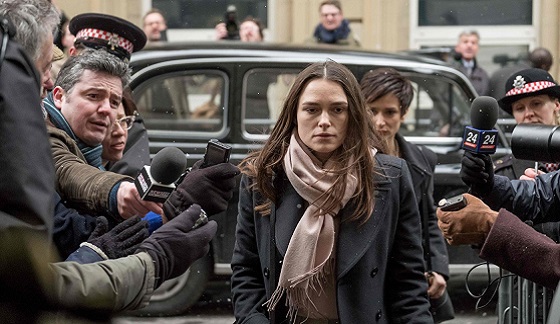
Film Review: “Official Secrets”

Starring: Keira Knightley, Matt Smith, Matthew Goode and Ralph Fiennes
Directed By: Gavin Hood
Rated: R
Running Time: 112 minutes
IFC Films

At just 29 years old, British translator Katharine Gun became the center of UK headlines when she leaked a memo from her job at the Government Communications Headquarters to UK publication, The Observer. The memo detailed a plot between the US and UK to illegally strong arm smaller UN member countries into signing off on the ill-fated war in Iraq. When she admitted to as much, Gun spent nearly a year before being formally charged under the Official Secrets Act of 1989. Meanwhile the US and UK invaded Iraq despite lacking the support of the nations in the memo. The film adaptation of this case as directed by Gavin Hood is a well crafted political thriller driven by a top notch performance from Keira Knightley.

I had concerns going into this film that it would play out like so many Newspaper Movies (as brilliantly parodied by Seth Meyers and Co, in case you missed it) and I wasn’t entirely wrong. The hallmarks of that trope are all still here –Phone Acting, clandestine meetings on benches, the obstinate paper editor–fortunately they’re performed by a charismatic ensemble led by Matt Smith, Matthew Goode and a very shouty Rhys Ifans. As the film goes on it adds additional strong players to the field with the likes of Tamsin Grieg and Ralph Fiennes when the legal drama starts to ramp up.

More importantly though is that all those subplots and their cliches take a back seat to Keira Knightley’s tightly wound performance. As Gun, she is resolute but not without fear. Some of the most thrilling sequences of Hood’s film come as the enormity of Gun’s act bears down on the wide-eyed Knightley and she realizes how much she has at risk by forging ahead. Having an immigrant husband in Gun’s situation as she does, for example, truly raises the stakes when contending with the government. Often Hood makes some smart choices to elevate Gun’s bravery by highlighting that relationship. How easy it would have been for Katherine, as her barista husband suggests repeatedly, to just do her job and leave the consequences to her higher ups.

Gun had so much to lose but recognized an opportunity to avert a disastrous war and chose to act for her people rather than a lying government. Gavin Hood’s film adaptation of her story comes at a time when relations between the press and politics are arguably even more fraught than 2003, making her story well worth hearing. 

Film Review: “Angel of Mine”

Starring: Noomi Rapace, Yvonne Strahovski, Luke Evans, Richard Roxburgh
Directed by: Kim Farrant
Rated: R
Running Time: 98 minutes
Lionsgate

Angel of Mine, based on the French 2008 film, L’Empreinte de L’ange, sees Noomi Rapace as a woman convinced that her neighbor’s daughter is actually her own long-dead child. It’s a thriller that drew me in with its strong cast but passes too far over into melodrama before the credits roll to warrant much interest. 

Rapace stars as Lizzie who drums up a tenuous relationship with the parents of one of her son’s friends (played by Yvonne Strahovski and Richard Roxburgh) for her own ulterior motives. Turns out the friend’s little sister Lola looks so much like her dead baby daughter to Lizzie that she is desperate to spend as much time around the child as possible. Lizzie’s obsession extends so far as her ingratiating herself with Lola’s parents by pretending to be interested in buying their newly listed house. This connection is already awkward but the film does not help itself by withholding the circumstances around Lizzie’s grief for so long in the film. Revelations over the loss of Lizzie’s daughter earlier in the film to the couple may have won some understandable sympathy points for allowing Lizzie around but as it is, it strains credulity as to why these parents would allow this random woman to have so many one-on-one interactions with their young child. Lizzie’s obsession with Lola is intriguing at first due to Rapace’s haunted intensity but without knowing much about her past, I found myself spinning off many different possibilities for where this could go and the ultimate resolution had me bored. Perhaps that’s on me for wanting something more outlandish or exciting while the film so wants to be grounded. It felt as though since director Kim Farrant wanted so much for Lizzie to be our sympathetic protagonist that they could not inject her obsession with a child with any sort of genuine menace. 

Still more irritating is that so much of the film’s run time is spent with husbands choosing to downplay their wives’ legitimate concerns. This goes for both Luke Evan’s Mike as Lizzie’s ex, shunning her where she clearly needs mental help in her grief, and infuriatingly Richard Roxburgh’s Bernard who is for some reason A-OK with a woman wanting to spend time with his seven year old while his own wife sees red flags all over. Why would he take Lizzie’s word over hers? How their story lines end up in relation to Lizzie and Lola after all this drama rings hollow–and also doesn’t seem legally feasible. 

I had been drawn in by the big name cast Farrant had assembled, particularly Yvonne Strahovski fresh off of her fantastic “Handmaid’s Tale” work (is there such a thing as ‘maternity battle’ typecasting?) but they’re working in service of a basic script that doesn’t throw anything more exciting at them than a Lifetime TV movie. 

Angel of Mine opens in limited release on August 30th

Copyright: MediaMikes.com © 2019 · Powered by: nGeneYes, Inc. · Login

All logos and images used on this website are registered trademarks of their respective companies. All Rights Reserved. Some of the content presented on our sites has been provided by contributors, other unofficial websites or online news sources, and is the sole responsibility of the source from which it was obtained. MediaMikes.com is not liable for inaccuracies, errors, or omissions found herein. For removal of copyrighted images, trademarks, or other issues, Contact Us.