Film Review: “Uncle Peckerhead”

Starring: Chet Siegel, Ruby McCollister and Jeff Riddle
Directed by: Matthew John Lawrence
Rated: Not Yet Rated
Running Time: 96 minutes
Epic Pictures

Punk rock and horror just work. Both are angry, fast, short, simple and to the point. From “Surf Nazis Must Die” to “Return of the Living Dead,” there’s a lot of great elements at play anytime you get punk rockers and horror tropes mixed up. Contemporarily speaking, there isn’t much left in the proverbial tank, outside of “Green Room,” a film that I was in the minority on. But “Uncle Peckerhead” could serve as a potential rejuvenation for blast beat punk rock soundtracks laid over a gory mess.

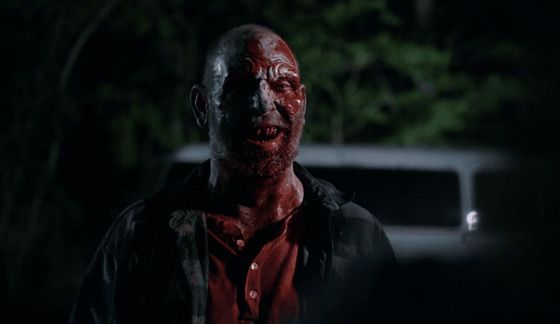
When we meet the band Duh, made up of Judy (Siegel), Mel (McCollister) and Max (Riddle), they’re down on their luck. The trio’s touring van is repossessed, coming immediately after Judy secures several shows on a statewide tour. In a desperation move, the band begins plastering signs everywhere, hoping someone will let them rent a van for their tour. That’s when they meet Peck (David H. Littleton). Peck agrees to the van deal, but he has some stipulations. He gets to drive and be the band’s roadie. Out of options, the band agrees, even though something isn’t quite right with Peck. It’s only after their first gig on tour that they learn Peck is a flesh eating monster, with pale skin and yellow teeth, for about a dozen minutes when the clock strikes midnight.

The monster that Peck becomes isn’t scary, nor is it supposed to be. If the opening moments aren’t a clue, “Uncle Peckerhead” is a comedy-horror. My favorite kind of genre because it’s an excuse for gore and sometimes childish comedy. I mentioned “Surf Nazis Must Die” earlier because the film has a quaint Troma charm to it. If you had told me “Uncle Peckerhead” was a Troma film, I wouldn’t be surprised because it’s in the film’s DNA. Everything is cheap, but the cast dives so far into that content, that their line delivery is admirable, no matter how bad the dialogue is. The comedic timing is hit and miss, but when it hits, it’s nearly pitch perfect. So if uncomfortable situational humor and gore don’t tickle your funny bone, you should probably just avoid horror, and Troma films, altogether.

The main conflict that develops throughout this off-the-beaten path road trip film is between Judy and Peck. While Judy has her eyes set on becoming successful (which in the punk world, isn’t that successful), she has one eye on Peck. While her bandmates seem content with Peck’s blood lust, especially after he devours some metalhead bullies, Judy is understandably concerned that a trashy older man devours human flesh at night. Over time though, she begins to admire Peck because of the way he supports the band and its members. You could call him a hillbilly with a heart of gold.

I probably enjoyed “Uncle Peckerhead” more than most low-budget horror because it recognizes what it is, and doesn’t try to be different. Surprisingly by the film’s end, “Uncle Peckerhead” made me feel nostalgic. Watching a bad punk band play to a couple dozen fans looking to mosh made me miss concerts in new COVID-19 world. Campy films like “Uncle Peckerhead” are best viewed with a crowd. Unfortunately I missed this film at Panic Fest, where it premiered, so it also made me miss the cinematic experience that films offer in a crowded, dark room with strangers. I especially admire these kinds of low-budget horror gore films because the passion at work on screen spills over into the crowd, and suddenly the screening becomes a party. “Uncle Peckerhead” should satisfy the sweet tooth of passionate horror fans and give them something to bob their head to.

Film Review: “Fisherman’s Friends”

FISHERMAN’S FRIENDS
Directed By: Chris Foggin
Starring: Daniel Mays, James Purefoy, David Hayman, Sam Swainsbury, Tuppence Middleton
Runtime: 112 mins.
Samuel Goldwyn Films

A hot shot London music agent named Danny (Mays) becomes entangled with some seaside villagers when he is ditched by his stag party buddies in Chris Foggin’s Fisherman’s Friends. Loosely based on a true story, the Fisherman’s Friends are a group of local musicians that Danny discovers singing sea shanties. Under peer pressure from his pals, Danny decides to ingratiate himself with the band in order to secure a record deal to take home. Along the way, he strikes up a romance with one of the group’s daughters and entrenches himself in local politics. With its picturesque setting, its city folk-country folk clashes and its romcom meet cute, Fisherman’s Friends has all the hallmarks of well, a Hallmark movie! Without the pesky Christmas baggage. Whether you’re on board with this style depends upon whether you’re up to this level of coziness and predictability.

The flimsy setup to get city boy Danny stranded in Cornwall happens after his clique’s bachelor party yachting excursion falls through. Once it becomes clear they won’t be embraced by the locals after their drunken paddle boarding lands them in need of rescuing from the town’s fishermen, the trio of Londoners hightail it out of there leaving Danny stuck as a joke. It’s a pretty drastic prank but seeing as it passes the movie over from a carload of annoying bro caricatures and into the wonderfully capable and more weathered hands of cast like James Purefoy and David Hayman, the brevity is welcome.

There is a real warmth to the Cornwall setting and Foggin loads his soundtrack up with the Fisherman’s Friends sea shanties to keep everything pleasantly humming along. Sam Swainsbury as Rowan, the youngest member of the band, particularly shines in some of his solos as well as in playing the owner of the town’s financially struggling pub. His plot line gives the movie some needed stakes where the Fisherman’s Friends’ musical dealings are concerned. Meanwhile, the less defined village characters all manage to get their quippy jabs in at Danny in ways that are sure to wring a smile or pleasant chuckle from most viewers. It’s also nice to see Daniel Mays take a turn at a contemporary leading role seeing as I’m primarily used to seeing him pop in and out of so many period blockbusters.

When the film veers from the musical talent into Danny’s romantic relationship with Alwyn (Tuppence Middleton), the daughter of Purefoy’s character, you do lose some of that momentum while awaiting the fate of the titular band. Not least of all because one senses this movie will inevitably end happily so the requisite romcom roadblocks feel all the more rote. That said, even if you find yourself drifting somewhat, the kernel of the real life underdog musicians’ tale is compelling enough and the soundtrack is buoyant enough to keep it all afloat.

Film Review: “Yes, God, Yes”

Starring: Natalia Dyer, Timothy Simons and Wolfgang Novogratz
Directed by: Karen Maine
Rated: R
Running Time: 78 minutes
Vertical Entertainment

It’s possible I’ve mentioned this before in my stint at MediaMikes, but it bears repeating that I was a Catholic school student at one point in my life. One of the most memorable things during those four years was the sex education. It was a fairly basic education, where boys and girls were divided into separate classrooms and given the lowdown. While they explained sex in the most basic manner, much of the sex education curriculum was built around sin. Masturbation is a sin. Pre-marital sex is a sin. Pornography is a sin. The curriculum is counter-intuitive to the modern adolescent experience and “Yes, God, Yes” takes a nuanced look at the relationship between puberty and religion.

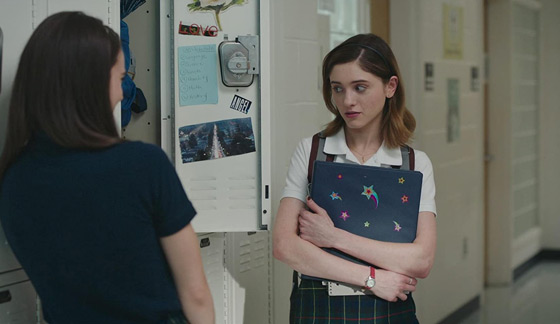
While I’m sure some people will view “Yes, God, Yes” as a 90s coming-of-age film, I’d like to believe it’s a bit more than that. 16-year-old Alice (Dyer) tries to be a good girl in the eyes of her parents, school, priest, and God. But that’s complicated when something happens while at home after school one day. She logs on to AOL (for people younger than me and older than my parents, AOL was the Internet log-in go-to) and is approached by an anonymous user in a chat room. He asks her sexual questions, sends her a nude photo, and wants to cyber (for people younger than me, and my parents age and older, I don’t want to explain that one). Compounding her sexual feelings from this brief AOL chat is a private church retreat where her sexual urges and religious beliefs collide.

Surface level, the movie is a great dramedy, with its intellectual digs at Catholicism. Beneath that surface, it highlights the failures of anti-LGBT practices and abstinence only education. The message buoyed by the emotional tug and pull that Alice faces as she tries to handle her friends, classmates, sexuality and personal beliefs. I feel like the film’s greatest strength is finding a specific grey area where it teaches instead of lectures. I won’t give it away, but the movie does a great job at showing how the hypocrites are consciously aware of their own moral pitfalls. Alice slowly uncovers how her classmates and church leaders are all guilty of the sins they believe they’re combatting. While they are made out to be hypocrites, the movie shows how conflicted they are, just like Alice.

The summer of 2020 may be remembered for all the small gems found on streaming services. “Yes, God, Yes” is one of those indie films that will delight audiences. It tickles the funny bone with crass humor and awkward situations, while buttering us up with a very sweet, sentimental tale about hormones and finding ourselves. While moments of “Yes, God, Yes” are painfully realistic, it reminds the viewer that sex is sometimes uncomfortable, odd, and confusing for everyone. While everyone has different views on sex and the discussion revolving around it, “Yes, God, Yes” shows we’re all stuck in the same boat. Our sexuality is as integral to our life as much as our personal politics and religious affiliation.

Film Review: “Blessed Child”

Directed by: Cara Jones
Rated: NR
Running Time: 74 minutes

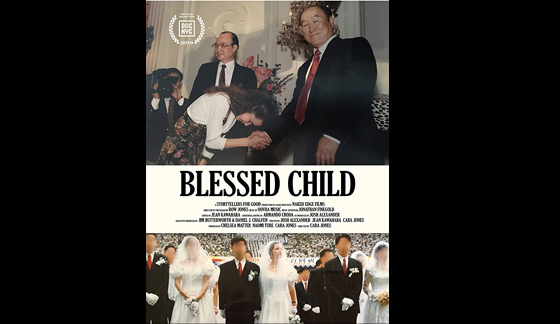
There’s a statement/joke I’ve heard when it comes to talking about cults and religion. It goes something like, “Cults + Time = Religion.” Granted, I could be butchering it. Regardless, the joke is that all religions started out as cults before legitimizing themselves. I say this first and foremost because “Blessed Child” deals with the personal story of Cara Jones and her time in the Unification Church, a new religious movement born in South Korea, which focuses on the teachings of Jesus. The teachings of Jesus range from the mainstream (Presbyterian, Catholic, Lutheran, etc.) to the extreme (Peoples Temple, Branch Davidians, Heaven’s Gate, etc.). My understanding is that the Unification Church toes the line between these two polar opposites. If you’re looking for an in-depth look at the church, “Blessed Child” is not for you. But if you’ve done a little bit of general reading on Unification Church, “Blessed Child” serves as an intimate look at its impact.

“Blessed Child” starts in 1995, where director Jones is getting married, alongside hundreds of other couples at an Olympic sized stadium before the Unification Church. She shouts, along with thousands, her marriage vows on the field, while holding the hand of a man she barely knows. It’s surreal to believe and see something bizarre and forced, especially when it happened in my own lifetime in a first-world country. The marriage, and her time in the Unification Church, didn’t last long. We’re not told exactly how she left (or escaped), but we know that she had to make a difficult choice; leaving her parents and family behind in a potential cult.

While Jones’ story is definitely the crux of the film, there’s a lot of other viewpoints included in this documentary. Jones talks with others who left (or escaped) the Unification Church. We learn that people left the church due to their own sexual orientation, for socioeconomic reasons, or a person’s general feeling of being excluded for whatever reason. The documentary doesn’t necessarily paint the Unification Church in a negative light, but it isn’t about to paint it in a flattering one.

“Blessed Child” has a surprising amount of nuance, especially since outsiders tend to label participants in these kind of religious sects as “nuts” or “brainwashed sheep.” The film establishes some solid reasoning as to why people become attracted to what it preaches. It uses this through archive footage and interviews. Unfortunately for me, it didn’t pull back the curtain enough for me to get a general enough feeling about the inner workings of the Unification Church. Halfway through the movie I opened up Wikipedia and hit up Google to answer some of my more burning questions. If anything, “Blessed Child” may be a form of self-medication and therapy for Jones, who reckons with her emotions.

Not to say that Jones’ story isn’t interesting or compelling, but at times it feels like there’s not enough information to digest, hence it’s incredibly brief running time. “Blessed Child” is a fairly interesting documentary, but not on par with others dealing with this subject matter. The reason it’s watchable though, is because Jones bares so much of herself that it’s fascinating to watch Jones break down and eventually reconcile with her parents and herself. 

Film Review: “Relic”

Starring: Emily Mortimer, Robyn Nevin and Bella Heathcote
Directed by: Natalie Erika James
Rated: R
Running Time: 89 minutes
IFC Midnight

Every once and awhile, I still encounter someone who tells me that the horror genre is trash; that it’s nothing but blood, guts and boobs. It doesn’t take me long to rattle off a list of contemporary horrors that don’t fit that mold, and generally scare, thrill and linger in the psyche of viewers. “Get Out” is always an easy one to point to, as well as “It Follows,” “The Mist,” and others. In the current age of quarantine, I can now point to a streaming option that’ll push any viewer to the edge of their seat and leave them petrified through the end credits.

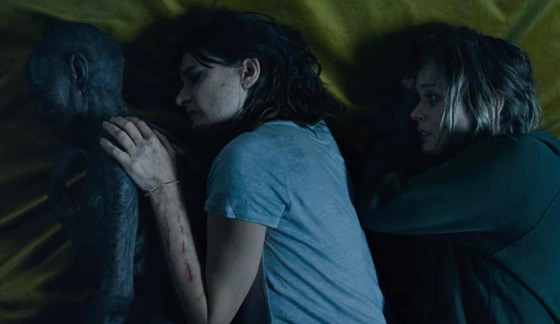
“Relic” opens on Kay (Mortimer) and Sam (Heathcote), the daughter and granddaughter of Edna (Nevin), visiting Edna’s house which sits by itself in dense, foreboding woods. The reason for their trip is that they’ve been told Edna has gone missing. The only thing that greets the mother/daughter duo upon their arrival is strange creaks and groans made by the house, as well as several mysterious notes that range from innocuous (“turn the light off”) to insidious (“DON’T FOLLOW IT”). Just as the authorities are called and a search for Edna begins, she reappears unannounced in the house one morning, making tea, acting as if nothing happened, despite the soles of her feet being covered in dark grime.

“Relic” relies on shadows, haunting imagery, and our general fear of the dark and unknown to keep us off kilter from the get-go. But it’s as the movie progresses, that “Relic” finds other scare tactics within the realm of mental health. The dive into realistic fears is combined with other tricks and treats from the horror genre grab bag. It’s a film that manages to earn some of its cheaper jump scares as opposed to throwing them in randomly mad libs-style like most mainstream horror films or any subpar Blumhouse production.

“Relic” takes it’s time, moving at a creepy pace, slowly sinking its claws in your mind. The directorial debut for Natlie Erika James is nothing short of impressive. The film moves with such confidence, that you suspect a veteran filmmaker is behind the lens. Having only written and directed a handful of shorts in the past, James also reveals the kind of equal parts terrifying and heartbreaking craftsmanship that Stephen King and Rod Sterling spent decades perfecting. James joins others, like Jennifer Kent (“The Babadook”) and Emma Tammi (“The Wind”), when finding the unsettling middle ground between cerebral horror and spook house tropes.

The film’s atmosphere grips you immediately, letting you know upfront that not everything is as it seems and that something is horribly wrong with Edna. Nearly every viewer will recognize that Edna is suffering from a mental illness at her ripe age, most likely dementia.  But just like “Hereditary” a few years ago, the supernatural and family history can collide in frightening ways. The movie effortlessly keeps us on pins and needles, even when we think we’ve figured it all out. There’s this nauseating foreshadowing that we can’t shake as “Relic” reaches its climax. Even when the true horror reveals itself, we’re left with a pit in our stomach because we know what will happen next, even as the film ends.

Film Review: Babyteeth”

BABYTEETH
Starring: Eliza Scanlen, Ben Mendelsohn
Directed by: Shannon Murphy
Rated: Rated MA-17
Running Time: 1 hr 58 mins
IFC Films 

The tragic teen love story about a girl or boy who is terminally ill yet finds true love with minutes left on the clock is the poster child for cliched storylines. At first glance, “Babyteeth” appears to be nothing more than just that. However, with a quartet of interesting, complex characters trying to find their way in the shadow of a young girl’s terminal cancer, “Babyteeth” becomes something quite unexpected – pure cinematic art. The kind of art that provokes a deep, emotional reaction which will stay with you long after the final credits had disappeared off the screen. 

Based upon the stage play by Rita Kalnejais, who also wrote the screenplay for the film version, and directed by Shannon Murphy (“On the Ropes,” “Rake”), “Babyteeth” starts us at a train station where Milla (Eliza Scanlen, “Little Women,” “Sharp Objects”), bedecked in her high school uniform, stands gazing at the tracks in a way that suggests she is pondering death. This is when Moses (Toby Wallace, “Boys in the Trees”), a rat-tailed young man a few years her senior, bumps into her. When her nose starts to bleed, Moses, who may be high on something and possibly homeless, bends over backwards to help her, and from that point on Milla is smitten with him.

 Scanlen draws us in with a profound sense of innocence, despair and longing all rolled into one. There is an air of tragedy about her so thick that it is hard to breathe. Still, a visible spark is ignited within her and Scanlen plays it masterfully as Milla’s passion to live life is reawakened by what will become her first and only love. Wallace, the recipient of the Marcello Mastroianni Award for Best Young Actor or Actress at the 76th Venice International Film Festival for this very role, is damaged goods himself. He longs to have a relationship with his estranged mother, but Moses would rather play the tough, street thug card. On the surface, his character seems stereotypical, yet Wallace manages to subtly infuse several degrees of complexity into his role that is both surprising and rewarding. 

Rounding off the quartet is Milla’s psychiatrist father, Henry (Ben Mendelsohn, “Ready Player One,” “Rogue One”) and her pill-popping, former classical pianist mother, Anna (Essie Davis, “True History of the Kelly Gang,” “Assassin’s Creed”). With his daughter’s terminal diagnosis looming over him, the pressure on Henry to get through each day keeps growing. It eventually pushes him to make a pass at his pregnant, much younger next-door neighbor, who symbolizes a way out to a more normal or at least alternative existence for him. All the while, Anna takes a wide array of pills as her way to escape from a reality that she knows deep down will not include her daughter for much longer. 

Mendelsohn and Davis share a great onscreen chemistry with one another as they face any parents’ worst nightmare. There are times when, especially towards the end of Milla’s life, they press on with a sense of grace that tightens their bond. They are even able to laugh at the craziness of letting Anna date a small time drug dealer in Moses who even breaks into their house at one point to steal Anna’s pills. However, how can they deny her the experience of a first love? Especially one which serves as a means for Moses to transform himself. 

We know how “Babyteeth” is going to end. It is clear as day. The brilliance of Murphy’s direction is that when we do reach the end, we are still emotionally moved to the point of tears.

Television/Streaming Review: ESPN 30 for 30 – “Long Gone Summer’

On September 8, 1998 my son Phillip, his friend Bobby and I drove from Kansas City to St. Louis to take in that evening’s Cardinals/Cubs match-up. We witnessed baseball history when J.D. Drew hit his first career home run. I’ve told this story for over two decades.

Most people know Todd MacFarlane as the creator of the popular SPAWN comics and his amazing toys. He is also a huge baseball fan. We learn that as the film begins with McFarlane bidding almost $3 million to purchase a baseball. But not any baseball. This is the ball hit by Mark McGwire for his 70th home run, at the time a new record. The summer of 1998 was a big one for baseball. After the players strike in 1994 caused the cancellation of the World Series for the first time in history, the game began to draw fans back in 1995 when Baltimore Oriole Cal Ripken, Jr. played in his 2131st consecutive game. But the summer of 1998 is the one that drew fans, old and new, to the game. It was the summer McGwire and Chicago Cub Sammy Sosa swung their way into the history books.

“Long Gone Summer” not only chronicles both players assault on Roger Maris’ then-record of 61 home runs in a season, but the effect the challenge had on America. People that had sworn off baseball after the strike left a bitter taste in their mouth began to pay attention to the game again, while people who had never shown interest began to watch. Having been in Camden Yards when Ripken set his milestone I was already a fan so I followed the exploits of McGwire and Sosa daily, ensuring that ESPN’s SPORTCENTER was a must-see every night.

As the film follows McGwire, Sosa and, for a time, Ken Griffey, Jr, it also talks with some baseball fans who are household names, among them Bob Costas and George Will. Also interviewed are Roger Maris’ sons, as well as Cardinal’s broadcasters Jack Buck (though archival footage) and Mike Shannon. The race had a personal feel to Shannon, who had been a Cardinal teammate of Roger Maris in the mid 1960s.

But the big voices here belong to the two players themselves. McGwire explains his lifelong desire to hit the ball far while Sosa talks about the fun he had. What they don’t talk about are the accusations that both were using performance enhancing drugs. In fact, in a show that runs almost 1 3/4 hours, PED’s are not mentioned until the 45 minute mark, when a container of Androstenedione is spotted in McGwire’s locker. He brushes the questions off, noting that Andro is available over the counter. It’s almost another 45 minutes before the subject comes up again.

Of the two players, McGwire comes off the best. He is insightful in looking back at what he describes as both the best, and worst, time of his life. Sosa, speaking perfect English – when he testified before Congress he had to have his attorney read his statement, as he felt his English wasn’t strong -is more concerned with relaying the fun times he had that summer. Archival interviews with both – again with Sosa speaking English like a native – gives a look into the love and respect Big Mac and Slammin’ Sammy had for each other. As the season ends, McGwire finishes with 70 home runs, Sosa with 66. Sosa would hit 63 the next year and Baroid Bonds would hit 73 in 2001. By then, the PED cat was out of the bag and, in the almost 20 years since Bonds, no one has hit 60 home runs in a season.

Given an opportunity to confirm whether or not he juiced, Sosa will only say that “Everybody was doing them.” After years of denial, in 2010 McGwire admitted to using PED’s. His admission and apology seemed sincere to me. So much so that I can tell you that, on September 8, 1998, my son Phillip, his friend Bobby and I drove from Kansas City to St. Louis to take in that evening’s Cardinals/Cubs match-up. We witnessed baseball history when Mark McGwire hit his 62nd home run of the season over the left field fence, directly below where we were sitting. No disrespect to J.D. Drew, but this story is more exciting.

“Long Gone Summer” airs this Sunday night at 8:00 pm EST on ESPN and will stream directly afterwards on ESPN+.

Film Review: “The King of Staten Island”

THE KING OF STATEN ISLAND
Starring:  Pete Davidson, Marisa Tomei and Steve Buscemi
Directed by: Judd Apatow
Rated:  R
Running time:  2 hrs 16 mins
Universal

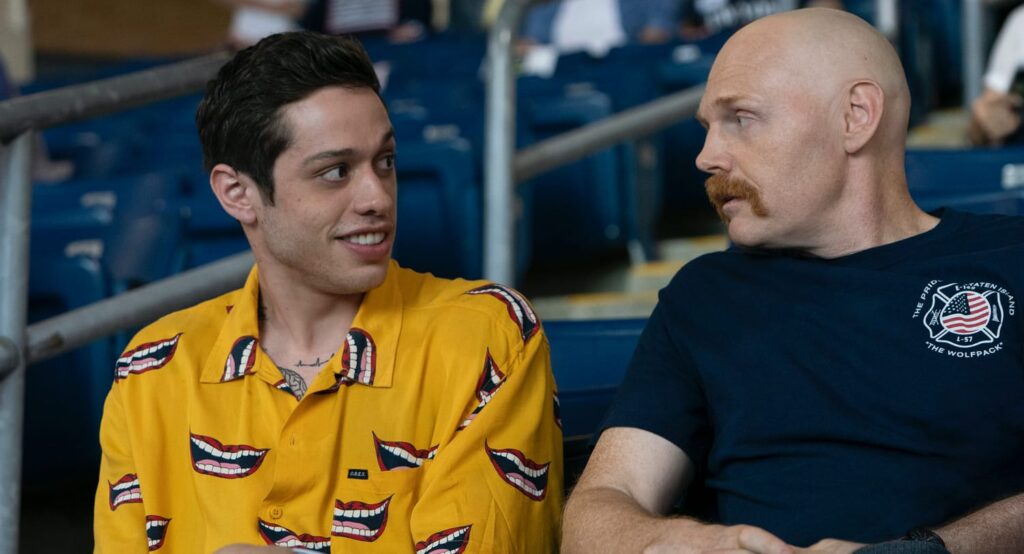
Scott Carlin (Davidson) sits on the couch with some friends, enjoying their company.  One of them notices a tattoo on Scott’s arm and asks him the significance.  His attitude seems to change as he informs the questioner that the ink commemorates the day his father died.  Upset that she made have upset Scott, she begins to apologize, to which Scott and the others burst into laughter as if it’s no big deal.  “Knock, knock,” one of them says.  “Who’s there,” Scott queries.  “Not your dad!”

A dark comedy featuring an unexpectedly powerful performance from Pete Davidson, “The King of Staten Island” takes a look at a young man who is still struggling to understand the eternal question, “why?”  Based in part on Davidson’s own family experience – his father bravely died while attempting to rescue people inside the Marriott World Trade Center Hotel on September 11, 2001 – the film, which Davidson also co-wrote with director Apatow and Dave Sirus, is an often funny, sometimes tragic look at a life forever changed in a single tragic moment.

Scott, age 24, still lives at home with his mother, Margie (an excellent Tomei) and pretty much spends his days hanging out with his friends, smoking weed and trying to get a job as a tattoo artist.  Scott’s own body is covered in tats, some professional and others not-so professional.  Things change when, while partying with his friends in the woods a young boy wanders by.  He’s encouraged to join the group and even agrees for Scott to give him a tattoo.  Of course, as soon as the needle touches his skin he jumps up and runs away.  Soon the young man and his father are on Scott’s doorstep.  Dad is not angry.  Marcie tries to intervene but the man continues yelling.  When he asks to speak to Scott’s father he is informed that he is dead and this softens the man a bit.  When he returns later to apologize he asks Marcie out.  After 17 years Marcie has begun to live for herself again.  Scott is unhappy with the situation and even more so when he learns that Marcie’s new friend is a fireman.

As I noted earlier, “The King of Staten Island” rests squarely on the narrow shoulders of Pete Davidson.  I’ve found him funny on “Saturday Night Live” – though I can’t help but cringe when he tells 9/11 jokes – and expected him to be funny here.  But it’s the emotional journey Davidson takes that impresses.  Scott has a lot of pent up feelings – as I’m sure Davidson does – and when they are released the feeling is both terrifying and a relief.  Tomei, who appears to be aging in reverse like Benjamin Button, is also well cast here.  And I want to mention a great supporting turn by Steve Buscemi who plays a wizened fireman.  Buscemi was a New York City fireman before becoming an actor and, after 9/11, returned to his old firehouse to assist in searching the rubble at Ground Zero.

It’s mid-June and, even though Hollywood has slowed down a bit in light of the current world situation, there are still films that need to be seen.  “The King of Staten Island” is one of them!  “The King of Staten Island” is now available through Video on Demand.  

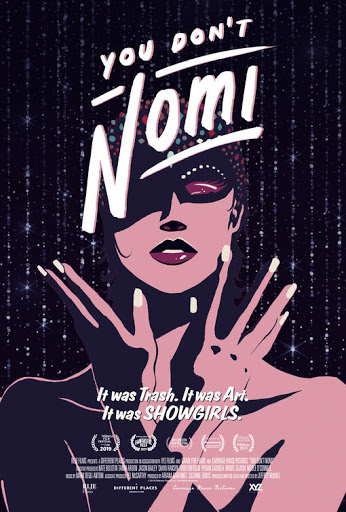
Streaming Review: “You Don’t Nomi”

YOU DON’T NOMI
Directed By: Jeffrey McHale
Starring: Elizabeth Berkley, Paul Verhoeven, Adam Nayman, April Kidwell
Runtime: 92 mins.
RLJE Films

My introduction to Paul Verhoeven’s Showgirls was definitely by accident on some random childhood afternoon on a local network because my memories are of a hazy mishmash of ‘why does Jesse-from-Saved by the Bell looked Like That?’ and laughing at the crude 90s tech that they used to ‘paint’ dodgy cgi bras over very naked chests. So in tackling McHale’s documentary You Don’t Nomi, I knew I’d have to take another look. I don’t regret it as such but I was not converted into the cult that this doc’s trailer alluded to. That doesn’t mean You Don’t Nomi isn’t worth a look for the uninitiated. On its surface, You Don’t Nomi may appear a puff piece on something so-bad-it’s-good but it puts in a surprising amount of work to show not only Showgirls’s second life as a camp crowdpleaser but also how a critically reviled film evolves over time–even in the eyes of its filmmakers.

There is no better way to describe the 1995 critical reception to Showgirls than dog pile. It was brutal in that way that it becomes a sport unto itself to find the snarkiest pull quotes. It tanked Elizabeth Berkley’s transition from sitcom actress to the big screen and took the sexual thriller momentum that Verhoeven had in the US off of 1992’s Basic Instinct and sent him back to the more marketable sci-fi with Starship Troopers (Instinct was preceded by Total Recall and Robocop). The doc delves deep into Verhoeven’s career and finds parallels and themes that connect Showgirls back into his work in Europe before he escaped to Hollywood. Unfortunately the documentary did not manage to include modern interviews with any of the creative forces on the film but again, in diving into archived footage, the documentary exposes how Verhoeven and Berkeley in particular have decided over time to try and sell that they knew all along that their film was camp. As one of the speakers in the doc says, camp is “failed seriousness,” so I don’t really buy their attempt to control that narrative but as a storyline in the documentary, it’s very amusing.

Despite the box office flopping, Showgirls found a second life in midnight screenings, drag shows and an off-broadway musical. For me, Nomi hits its stride by zeroing in on the experience that the actress who played Nomi in the musical parody had and the difference it made in her life. Watching her account, as well as those of the drag hosts of sold out midnight showings I kept thinking about that speech from Pixar’s Ratatouille where critic Anton Ego says “the average piece of junk is probably more meaningful than our criticism designating it so.” -Hey if McHale can take a campy stripper movie seriously, I can defer to the wisdom of the cartoon rat movie. Even though I couldn’t relate to their obsession, I can certainly pinpoint pop culture hills I will die on and on that level I enjoyed hearing from such a well researched niche.

You Don’t Nomi is now streaming On Demand and digital, an additional review by Mike Gencarelli was posted earlier here

TFF 2020 Shorts: Animated

Note: Though the 2020 Festival was officially postponed due to ongoing pandemic precautions, online screeners and the fest’s press library meant we could still offer coverage of this year’s selections. Tribeca is also participating in the We Are One global film festival, whose streams are being uploaded through June 7th.

Every year the Tribeca Film Festival showcases a wealth of short films from across the globe in all different mediums. Where animation is concerned, the fest turns to acting legend Whoopi Goldberg to curate their lineup. Due to the unprecedented postponement of the festival in New York, I screened this collection from the comfort of my home and would like to highlight my favorites of Goldberg’s picks.

Personal Favorite: Beyond Noh

Patrick Smith’s 4 minute foray into every mask you could think of is mesmerizing. The setup is a simple black space with masks from every culture and time around the world rapid-fire shuffling through to a rhythmic drum beat. It’s so simple but so deftly made. This short doesn’t stick to just the fine arts either with detours through American Halloween masks, and the quite topical medical field to boot, it covers all the faces–err, bases.

Award Winner: Friends

Florian Grolig’s deceptively simple Friends took home the prize for Best Animated Short from the Tribeca Film Festival’s jury and it was well-deserved. It’s just two characters–one very small and one so large we only see its massive hand or foot for most of the runtime– interacting despite the challenges of their massive gap in size. For me, it’s the one that most celebrates the medium of animation. With its simplistic line work morphing through a blank white void accompanied by perfectly pitched breathing from its giant, the scope is clearly conveyed.

Most Star-Studded: The Tiger Who Came to Tea

Clocking in at 24 mins, Robin Shaw’s adaptation of Judith Kerr’s story is the longest of the program and starts very slow before evolving into something much more fanciful. We watch the cute morning routine of a British family ending with sending the father (Benedict Cumberbatch) off to work for the day while mother (Tamsin Grieg) and daughter (Clara Ross) are home to receive an unusual visitor. The titular tiger voiced by David Oyelowo politely invites himself to their afternoon tea and proceeds to scarf down the whole pantry. The animation on the tiger is utterly charming.

Historic and Beautiful: Kapaemahu

Directors Hinaleimoana Wong-Kalu, Dean Hame and Joe Wilson delve deep into Hawaiian history to tell the tale of transgender healing spirits that are behind a landmark often passed by in Waikiki Beach. The use of native voices and music bolsters some gorgeous and warm animation as the tale transcends across time.

Additional program titles included “Umbrella” and “Grandad was a Romantic”, which both mine true stories for some lovely animation, and “Bathwell in Clerkentime” which is third in a series whose bouncy black and white animation couples with a soundtrack that may drive you as cuckoo as the birds it follows. (Note: “To Gerard” from Dreamworks artist Taylor Meacham was also selected however was not available to me in the press library at the time of the festival)

Television/Streaming Review: ESPN 30 for 30: BE WATER

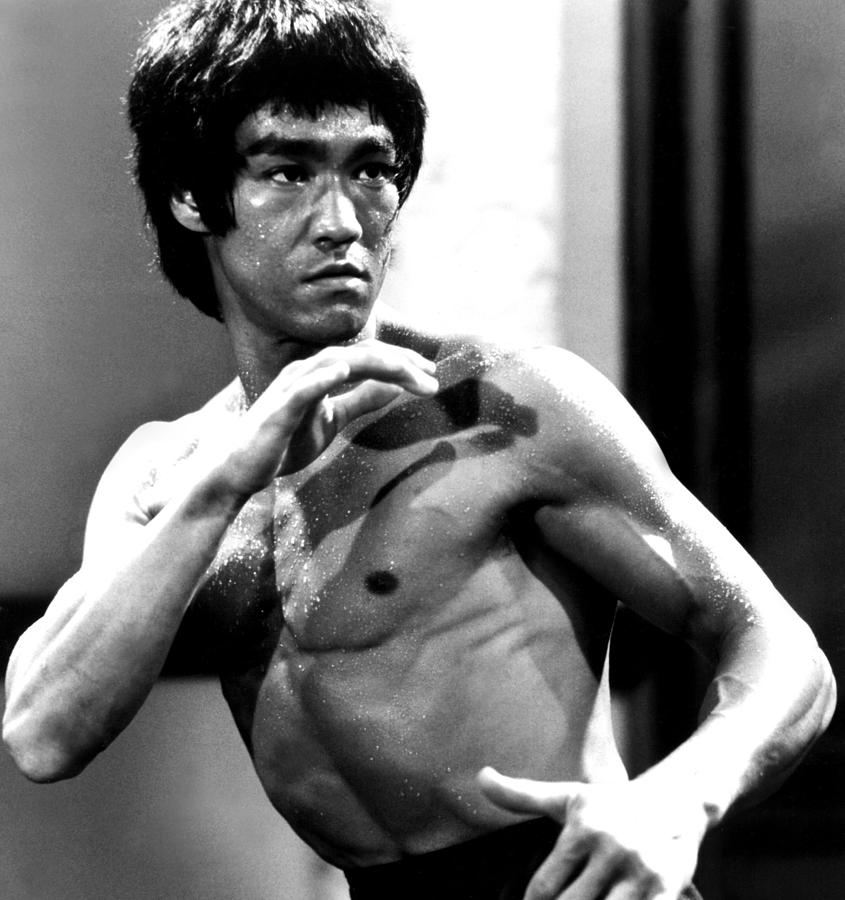
I’m old enough to remember watching Bruce Lee as Kato on television’s “The Green Hornet” when it originally aired on ABC. T o me he was just a cool guy who wore a mask and kicked ass. But there was a lot more to Lee, as both an actor and a person, and those remarkable qualities are revealed in the latest ESPN 30 for 30 documentary, BE WATER.

We first meet Lee as he is completing a screen test in 1964. He is quite and soft spoken but, when he is asked to demonstrate some of his martial arts skills, he is a tornado. Even in these few minutes of film, you can see the legend that lie ahead.

Born in San Francisco (his father was a popular Chinese actor and opera performer), Lee’s family returned to Hong Kong shortly after his birth. Like most children, Lee had a mischievous side and his father allowed him to begin acting in films as a child in hopes of curbing his rambunctious attitudes. Finding his idea unsuccessful, his father sends him to Seattle to attend college. It is there that he begins the journey that most fans know. But there is also a lot they don’t and that is revealed here in Lee’s own words. Using archival interviews and quoting his letters, read by his daughter, Shannon, we learn that Lee was a very philosophical man who yearned to bridge the racial prejudice felt in America. He wanted to be able to share and express his culture and was tired of seeing such actors as Mickey Rooney, Marlon Brando and John Wayne portraying Asian characters on screen, usually in ridiculous make up.

Lee’s short-lived small screen stardom begins to fade and he is hopeful for the lead in an upcoming program to be called “Kung Fu.” When he is passed over for the role in favor of David Carradine – we hear the show’s producer proclaim that he could not find an Asian actor he felt could handle the role, he takes his family to Hong Kong,, where he will soon make film history.

BE WATER gets it’s title from a philosophy that Lee often shared in interviews. Water, he notes, is the softest substance on Earth, yet it is strong enough to penetrate rock. It takes the shape of whatever vessel it finds itself in. The film is full of amazing archival footage and the story is told through conversations with not only Lee’s daughter and widow, Linda, but various friends and former students, including Kareem Abdul Jabbar.

On July 20, 1973, Bruce Lee died. 10 days later, “Enter the Dragon” was released, making him an international superstar, ironically a term Lee disliked. His impact on pop culture and racial acceptance is still being felt today. With the current situation the nation, and the world, finds itself in, we could use a man like him today.

BE WATER airs this Sunday night at 9:00 pm EST on ESPN. It will stream afterwards on ESPN+. Don’t miss it!

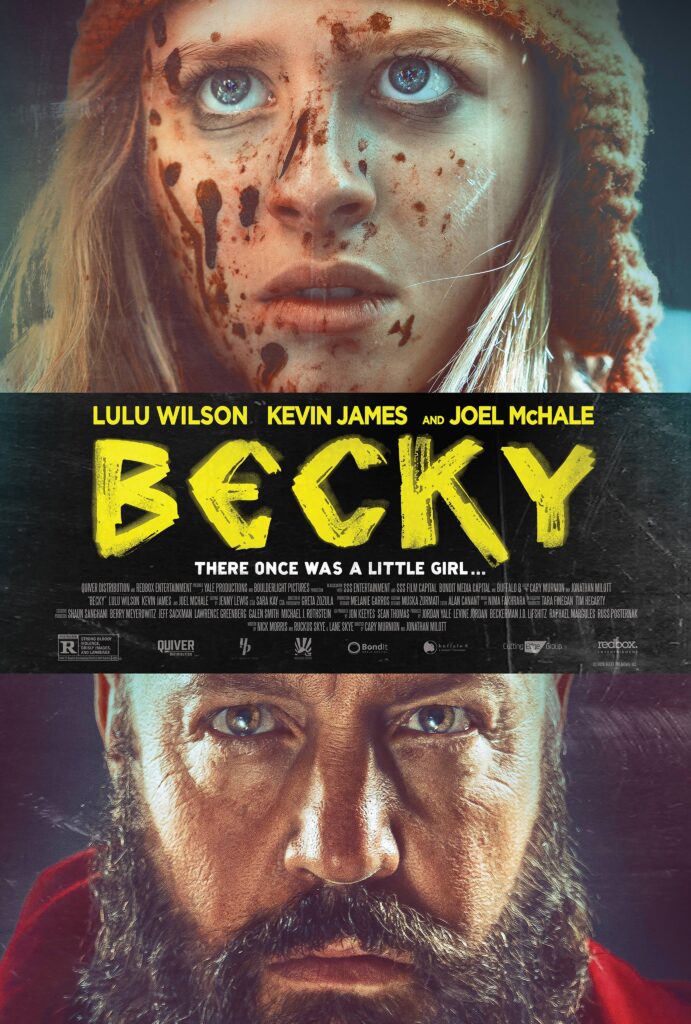
Film Review “Becky”

“Becky” is a film I normally would have never thought to watch but with the stunning cast, I figured it would be worth a try. Lulu Wilson (The Haunting of Hill House) delivers a kick-ass brutal performance. Kevin James plays a Neo-Nazi villain…yes! He plays the villain and really knocks it out the park. James is one nasty son-bitch and his is performance is fantastic. We even have a dramatic take from funnyman Joel McHale. This film is mega gory, fast paced and is a blast to watch.

Official Premise: Spunky and rebellious, Becky (Lulu Wilson) is brought to a weekend getaway at a lake house by her father Jeff (Joel McHale) in an effort to try to reconnect. The trip immediately takes a turn for the worse when a group of convicts on the run, led by the merciless Dominick (Kevin James), suddenly invade the lake house.

You can call this film an ultra-violent take on Home Alone. That is all I kept thinking when watching. Becky is one tough and creative girl in the film. The kills in the film are so creative and wicked gory that you will have to turn and look the other way. Literally, I was blown away by this film. I can’t wait to watch it again. The film will be released in select theater, drive-in, on demand and digital on June 5th. “Becky” is definitely a film to see with an audience, I would love to hear the reactions from others while watching it.

BECKY WILL SCREEN AT THE BELOW THEATERS & DRIVE-INS ON JUNE 5TH:

IOWA: Superior 71 Drive-In, Blue Grass Drive-In
INDIANA: Garrett Drive-In, Tri Way 4 Drive-In
KENTUCKY: Regency 8
MASSACHUSETTS: Mendon Twin Drive-In
MINNESOTA: Long Drive-In
NORTH CAROLINA: Hounds Drive-In, Raleigh Road Drive-In, Badin Road Drive-In, Eden Drive-In
NEW HAMPSHIRE: Milford Drive-In 2
NEW JERSEY: Delsea Drive-In
NEW YORK: Transit Drive-In, Silver Lakes Drive-In, Sunset 3 Drive-In, Vintage Drive-In, Delevan Twin Drive-In
OHIO: Mayfield Road Drive-In, Skyway Drive-In, South Drive-In Twin, Tiffin Drive-In, Starview Drive-In, Springmill Drive-In, Magic City Twin Drive-In, Van-Del Drive-In, Dixie Drive-In, Aut-O-Rama Twin Drive-In, Elm Road Triple Drive-In, Field of Dreams Drive-In
OKLAHOMA: Tower Drive-In
PENNSYLVANIA: Garden Drive-In, Circle Drive-In, Comet Twin Drive-In, Kane Family Drive-In, Riverside Drive-In, Silver Drive-In, Skyview Twin Drive-In
SOUTH CAROLINA: Hi-Way 21 Drive-In
TENNESSEE: Stardust Drive-In
WISCONSIN: Stardust Drive-In

Film Review “You Don’t Nomi”

I remember wanting to see “Showgirls” back in 1995 but since it was rated NC-17, I couldn’t get in. I was only 13 years old at the time. But I do remember renting it at Blockbuster once it was on video and I remember falling in love. Yes, I know how bad the movie is but at the same time it is also so good. That is what this documentary, YOU DON’T NOMI, is about. It focuses on the legacy of “Showgirls” and how it has become a cult classic over the last 25 years. Yes, it’s crazy to think that it is 25 years old already.

Official Premise: In YOU DONT NOMI, a chorus of film critics and fervent devotees explore the complicated afterlife of 1995s biggest film flop, Paul Verhoeven’s SHOWGIRLS, from disastrous release to cult adoration and extraordinary redemption. The films features Adam Nayman (Vice Guide to Film), April Kidwell (I, Nomi) and Peaches Christ (Milk). 

Even though the main topic of “You Don’t Nomi” is “Showgirls”, the film is also a retrospective of Verhoeven’s directing career from “RoboCop”, “Total Recall”, “Basic Instinct”, “Starship Troopers” and “Elle”, among others. It showcases the themes that unite his films. Verhoeven definitely is a unique director as well as a controversial figure all at the same time. All of Verhoeven’s films have pushed the limits with sexuality and violence.

The documentary is extremely interesting to watch whether you are a fan of “Showgirls” and Verhoeven or not. It features great interviews discusses the fandom around “Showgirls” and how people love this film so much. What is cool about this documentary is that you don’t even need to be a fan of this film to enjoy it. It talks about how people actually have hated it but it grew on them over the years. Whether you believe it or no, this film despite being called trash during it’s release is a piece of art.

“You Don’t Nomi” will be available On Demand and Digital on June 9. I highly recommend checking it out to get an in depth look at the film that was a box office bomb but has since become a huge cult classic.

MediaMikes posted an additional review for the streaming release here!

Television/Streaming Review: ESPN 30 for 30 – LANCE

In 2008 I was driving through downtown Kansas City when I was amazed at the sight of a seven-story banner of Lance Armstrong hanging from the building where my wife worked.  I called her and asked about it and she informed me that her company – an investment management firm – had partnered with Armstrong to promote his LIVESTRONG investments.  Hearing this, I asked her “and what happens when it finally comes out that he was a cheater?”  “Hopefully that isn’t true,” she replied.

LANCE, the latest episode in ESPN’s brilliant “30 for 30” documentary series, is a two part look at the rise and the fall of one of the most celebrated athletes in American history.  Episode one begins with Armstrong telling director Marina Zenovich how he knows there are many people that, upon seeing him, just want to scream out “F**k you, Lance,” but seldom do.  He also recounts how, once when a group heading into a restaurant did just that, he called the restaurant, informed the manager that he would pay for their dinner and asked the manager to inform the party that “Lance loves you.”  Unfortunately, Lance also loves himself.

We are introduced to the young man that would go on to “win” seven consecutive Tour de France bicycle races, the most prestigious race in the world.  He played several sports as a kid but didn’t excel in any of them.  He tried swimming and developed a passion.  Entering triathlons introduced him to competitive cycling, which is where he found his calling.  Then, his life was dealt a blow when he was diagnosed with testicular cancer.  Beating major odds, Armstrong not only survived his ordeal but returned to competitive cycling.  He also returned to a dark secret he had been hiding – taking performance enhancing doses of such banned (in competitive sports) substances as EPO and Andrial.  He admits this rather non-chalantly, falling back often on the old “everyone else was doing it” excuse.

However, in Episode two, which airs this Sunday night on ESPN (and will be available afterwards on ESPN+) the true Armstrong comes through.  Like many athletes, Armstrong was set on winning at any cost, allegedly going so far as to inform the anti-doping agency that a rival cyclist was juicing.  Like many people in denial, Armstrong was like a pit bull in his defense of his reputation.  Whether using his cancer as a sympathy ploy or slandering his accusers (while testifying in an inquiry he calls one woman who filed a deposition alleging his cheating a whore) or using his status and power to destroy other riders, he comes off as a man who still feels that he’s done nothing wrong.

Part two also looks at Armstrong’s effect on those close to him.  His son, who played college football, is asked if he would ever use performance drugs.  His reply – that he only wants to succeed through his own hard work – is heartfelt and honest.  That’s what all athletes want to do.  Asked if he still considers himself relevant, Armstrong declares, “I AM relevant.”  He also refers to former U.S. Postal Service team mate Floyd Landis – who was the rider that finally outed Armstrong’s doping – as a “piece of s**t.”  Other team members relate that Lance was fine with them as long as they kept his secret but, at the slightest hint of disloyalty they were gone.

On the positive side, the film also takes a look at the magnificent work that the Lance Armstrong Foundation and LIVESTRONG have done in support of cancer patients everywhere.  Thanks to Armstrong’s popularity hundreds of millions of dollars have been raised for these organizations (I’ll admit that I bought a LIVESTRONG bracelet when they came out).  And this achievement allows Armstrong to ask if the ends justify the means.  Would this money have been raised if not for him?

In the end, you come away with a man who still doesn’t accept responsibility for anything (except his divorce).  He also laments the hardship he endured having to date such celebrities as Cheryl Crow and Kate Hudson.  Wahh!

I’m not sure if I’ll ever run into Lance Armstrong on the street so let me just say here, for the record, “Hey Lance – F**k you!”

TFF 2020 Shorts: LOL

Among the sections I most look forward to each year at the Tribeca Film Festival are the comedy shorts. This year the lineup, titled collectively under “LOL” were presented online in lieu of the postponed festival. Here are my thoughts on this year’s program:

Personal Favorite: I Can Change!

Jim Jenkins’s plays with time travel creatively and with perfect deployment of brief special effects. John Hoogenakker stars as a groom who is gifted the ability to stop time and uses it ostensibly to “better” himself for his bride-to-bride. How? Well he freezes his bride and their friends in time at their wedding chapel while he disappears to the outside world for a blink of an eye and returns a whole new man having spent the time, for example, training to be a doctor. The simplistic way the “time travel” is achieved recalls some of the clever shortcuts something like Bill & Ted used–ie just stating their time travel intent means we immediately get to the consequences, sparing us the time trip. The pacing of the escalation in Hoogenakker’s jumps until the film taps into a big sci-fi finale is really fun.

Second Fave: Query

Jay and Alex spend nine minutes mulling over sexuality–both their own and its larger place in society–as they hang out. It’s nothing Earth shattering, but the natural rapport between the two leads (Justice Smith and Graham Patrick Martin) is really charming and it’s nice to see a pair of young guys just delving into their thoughts on the matter not in some overwrought or homophobic manner, but just chilling, and with enough friendly mocking to keep things funny. And to bolster this strong duo, you also get a brief run in with Call Me By Your Name’s Armie Hammer!

Overlong: John Bronco

Walton Goggins stars as a disgraced cowboy car pitchman John Bronco in a star-studded, but overlong mockumentary. I was excited for this one, generally always glad to see Goggins get to play over the top, but the film gets to the core of what the joke is with John Bronco relatively early and hammers on it over and over instead of advancing the plot. It’s 36 minute runtime could have been halved and achieve the same beats, though I understand why the filmmakers may have been reticent to cut any of the big cameos they got. Kudos for getting the MicroMachines pitchman (John Moschitta Jr) back on screen with his rapid-fire speech patterns though!

Additional program titles included the clever meet cute of One Last Heist–a romcom wrapped in a robbery from Canada, A Piece of Cake starring “Glow’s” Rich Sommer as a desperate dad and Egg which takes viewers from a simple diner and spirals it into a grand adventure.

Note: Though the 2020 Festival was officially postponed due to ongoing pandemic precautions, online screeners and the fest’s press library mean we can still offer coverage of this year’s selections while looking forward to getting back to the fest in the future!
Check out all our TFF 2020 coverage HERE

Copyright: MediaMikes.com © 2020 · Powered by: nGeneYes, Inc. · Login

All logos and images used on this website are registered trademarks of their respective companies. All Rights Reserved. Some of the content presented on our sites has been provided by contributors, other unofficial websites or online news sources, and is the sole responsibility of the source from which it was obtained. MediaMikes.com is not liable for inaccuracies, errors, or omissions found herein. For removal of copyrighted images, trademarks, or other issues, Contact Us.