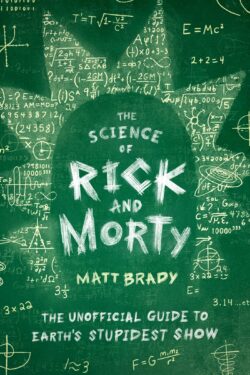

Author Matt Brady talks about his new book “The Science of Rick and Morty”

Matt Brady is a high school science teacher and pop culture writer based in North Carolina. Prior to working in education, Brady co-founded and was editor-in-chief of Newsarama, which received the first Eisner Award for Best Comics-related Journalism. Brady is also the founder of The Science Of…, a website that uses pop culture to help us better understand science. Media Mikes had a chance to chat with Matt about his new book “The Science of Rick and Morty”.

Mike Gencarelli: When did you first encounter Cartoon Network’s Rick and Morty and why did it spark your interest?
Matt Brady: I think I found it like a lot of its audience – through the word of mouth of the internet – memes, clips and jokes. I got into it shortly after season 1 had wrapped so I inhaled that, and was waiting and then watching along with everyone else for season 2 and 3.

I dug it from the start due to the characters. I guess it’s probably not the best thing to say that every now and then, Rick would have a line or a comeback I wish I had – or rather, could – use with someone, and I love it. The dynamic between all the characters was something new, and went in directions that I hadn’t seen before – which made it even better.

The science was honestly, at the start, gravy. I really liked the call outs and the references to larger concepts with scientific footing, but yeah – it was the characters that hooked me, and the science that helped to keep me.

MG: Being a high school science teacher, tell us how and why you use pop culture, like Rick and Morty, in your classroom?
MB: After I left Newsarama.com ten years or so ago, I went straight into teaching at a Title 1 high school. “Title 1” has nothing to do with athletics or honestly, anything that…braggy. It’s just a classification that schools are in when a set percentage of their students qualify for free and reduced lunch. In simpler words, it’s an index of poverty.

So there I was, a middle-aged white dude in a class of minority students who were giving me nothing but the side-eye. I figured out fast that I needed some kind of middle ground where we could all meet, and that was pop culture. I was still steeped in it, so I tried it out with my students…I think my first foray was a Flash problem set about velocity. Looking back on it, it was pretty rough, but hey – there was a sheet with a picture of The Flash on it, and some science stuff that they recognized.

Using pop culture helps to engage my kids with the material, and gives them a sense of “ownership” – they feel that they, in a way, “own” say, the CW’s Flash or Arrow (at that time, they were huge with my kids), so their attraction would pull them along. Moving on, I found The Fast and the Furious, Deadpool, Black Panther, Ant-Man, and loads more references that helped to engage my kids.

I mean, when you think about it – pop culture has no native language…it’s just cool. With some judicious picking of samples that are appropriate for your students and aligned to the science standard you’re teaching, you can have kids eating out of your hand. And on top of that, my kids started seeing me as a person, rather than “that white guy,” or just a “teacher,” something just a little bit better than a robot.

Bringing pop culture in was and has been one of the most rewarding things about teaching in my career to date.

MG: Which of Rick’s experiments were you most shocked about being able to becoming a reality?
MB: Easy – altering memories. Memories are largely structure – the connections between various neurons in the brain that make a pathway. Once that pathway is laid down, you’ve got a memory. Want to remember something? That pathway lights up again, either directly “p comes before t in the alphabet,” or indirectly like when you have to sing the alphabet song to find that piece of information. You’re coming in a side door to that particular memory.

But – the thing is, when those memories are being recalled – remembered – they’re vulnerable. They’re open to re-forming their pathways if you repeat the information that made them, but those pathways can re-form in different ways if new information is added in or swapped out for some of the original information. Do it subtly enough, and you can change people’s memories. I mean – not like to the point you’re remembering Hamurai or Cousin Nick who’ve always been around and part of the family, but in pretty insidious ways.

There’s evidence that some “repressed” memories that have put people in jail were memories that had been altered – innocently – by therapists in this fashion. Also, there was a study that was being conducted where the researchers were testing their ability to change the long-held memories of people, and they did it so well, they had to cancel the study, and assure the subjects that their original memories, which they were now questioning, were in fact, real.

It’s fun stuff when it shows up on Rick and Morty, but in real life…yikes.

MG: What do you think makes this show so popular?
MB: The characters and their relationships. They’re so rich, and have grown over the three seasons, and we still have no idea how much deeper they go.

Don’t get me wrong – the science is great, but if the characters weren’t who they are, no one would even tune in to hear about “concentrated dark matter” or uplifting Snowflake into a hyper-intelligent dog.

This show has such an expansive and complicated universe surrounding it. Did you ever this you would be discussing turning yourself into a pickle in the same sentence as dark matter and energy and intelligence hacking?

Well, honestly there were some things I did skip that were just waaaay too out there to consider – like turning yourself into a pickle. But yeah – dark matter and intelligence hacking are in there.

But all in all, I never thought I would end up covering such a wide swath of science, no. But that’s the show for you – anything’s possible, and whenever they can, Justin Roiland, Dan Harmon and the writers like to tag some real science mention to it that gives fans a hint of the real deal that gave the idea in the show its inspiration.

MG: What was your biggest challenge in writing The Science of Rick and Morty?
MB: Leaving stuff behind was one. You mentioned turning into a pickle. Given enough time, I could’ve probably finished thinking of a way to throw some science at it…maybe he placed just a replica of his brain in there, and then…hmmm…

Also – just getting what I got in there in the first place. A lot of the science in the show that I did pull into the book is at the fringes of what we think we might…someday be able to do with it, but that meant going to those fringes, talking to researchers there and turning what they said and what I read into something I could wrap my head around. There were days, after talking to some folks that literally felt like I was stoned, and maybe started to question reality a little too much.

MG: You are the founder of TheScienceOf.org website. How did your idea for the site come about and what can readers learn from the site?
MB: The site is something that my wife and I started (she’s a science teacher too) when we realized that we could use it to reach other teachers who wanted to use methods similar to what we do, and also as a place where I could just write about pop culture meeting science. In all the articles there, I’m always careful to approach the subject so as not to rain on anyone’s parade. I’m not interested in telling people that Superman can’t fly, or Iron Man’s suit is impossible. That’s just not cool.

I want the science in pop culture to do for others what it did for me – inspire. I’m old enough to have watched Star Trek after school when I was young, and – along with a lot of other folks who went on to NASA, JPL and a lot of other places, dreamed about a world where communicators were real things, and we could visit other planets. I firmly believe that we imagine our collective future, and science fiction and pop culture is one of our most important guides. Why would I ever want to throw the door closed on someone who’s thinking that a world with Iron Man suits would be really cool, and is starting to play with their school’s 3D printer and some cardboard, along with some circuit boards and LEDs? I want that kid to build that suit, not have a dream crushed because someone smacked their hero with science. So yeah – please come on by and check out some of the articles. It’s not updated as frequently as I’d like, but hey…that classroom keeps me pretty busy, too.

MG: What can we expect next from you?
MB: More on the site – I hope…and hopefully, another book. Still working out some details now, but there is something definitely on that back burner that’s moving up to the front. I’ve also written science columns in Tom Peyer and Jamal Igle’s “The Wrong Earth” and have more coming up in the Dragonfly Man miniseries this fall. Bits and pieces of science and pop culture all over.

Matt will be signing copies of “The Science of Rick and Morty” at the Simon & Schuster booth at NYCC on 10/5 at 10:30 AM

And also be sure to follow him on social media:
Twitter: @Scienceof_org
FB: @thesciof


Related Content

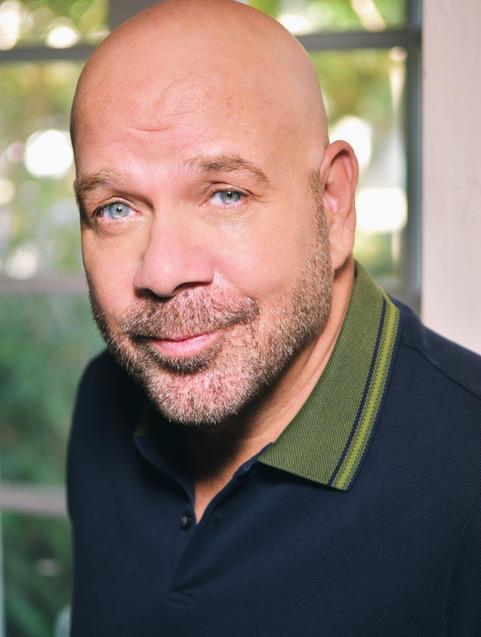
Actor/Comedian Jason Stuart Talks About His New Book and Latest Projects

With almost 150 film and television credits to his name, I’m pretty sure you’ve seen Jason Stuart on screen.  From small screen appearances on shows like “The Drew Carey Show,” “My Wife and Kids” and “Will & Grace” to his acclaimed performance in – in this writer’s humble opinion – the Best Film of 2016, “The Birth of a Nation,” he continues to add to his ever growing resume’.   He recently added a new chapter to his career story – author – with the release of his book “Shut Up, I’m Talking!”  The book details his career as well as the challenges he faced

I recently spoke with Jason about his new book and about how coming out in 1993 effected both his life and his career.

Photo Credit: Kimo Lauder

MIKE SMITH:  What prompted you to write the book?


JASON STUART:  I had a very good friend who worked with me on a comedy radio show I did in the Midwest.    His name was Dan Duffy and he had written a book called “The Half Book,”  He called me and told me I needed to read his book.  I bought the book and read it.  It was about him getting cancer and how he recovered, how he survived with the love of his family.  It was funny and it was touching and I was so moved by it that I told him “I need someone like you to help me write my book.”  And he said he’d love to do it.  So that was it.  I always think when something is put in front of you it’s meant to be.


MS:  Any reactions from your friends who may not have known you story?


JS:  That’s a great question.  Tons of people.  When I decided to write it I thought about it as a way to get my story out, to let people see me in a different way…to help my career and to possibly get some publicity.  Maybe I’ll make a little money.  But then I realized, “OH!  People are also going to be reading this book.  They’re going to hear all of these things I said about my personal life.  And they’re going to have opinions about it.”  I totally forget about that part.  People have been really candid.  People have stopped me on the street or called me…it’s been a lot of really positive energy.  Much more than I ever thought.

Photo credit: Sean Black


MS:  Do you think there is still a stigma in Hollywood that prevents gay actors from getting certain roles?


JS:  It’s certainly not what it was 26 years ago, but I still think that when somebody sees you a certain way it’s very hard for them to see that you would be right for certain roles.  Hollywood doesn’t seem to want actors, they seem to want “be-ers.”  My favorite actor growing up was Dustin Hoffman.  He still is.  He played Lenny Bruce.  He played Benjamin in “The Graduate.”  He played the father in “Kramer vs Kramer,” he was Captain Hook.  He was Willy Loman.  He did all sorts of roles.  You don’t really get to do that as much, but I’ve been able to make a career out of doing that.  When something comes along and they tell me I’m perfect for it, it’s not always clear to me.  We don’t always see ourselves as others see us.  Being a gay man over 50 – there are very few “gay men” parts over 50.  They don’t write them.  That role doesn’t exist very much.  So I wind up playing villains…managers…all these kind of characters.  What I want to do is play dads…because everybody has a dad.

MS:  If I can ask my question more directly, do you ever think because they know that you’re gay that you’re easily dismissed for certain roles?


JS:  I think so.  People are like that somewhat.  I’d have to say it’s natural.  People have to “see it.”  See you do the work.  Which is why I’ve created several demo reels.  They have to see that you can do it.  You have to be able to prove it to them.  You have to be able to get someone to represent you that is open enough to do that for you.


MS; You’ve done both television and film.  Do you have a preference?


JS:  Not any more.  Today there is no difference.  It’s about the quality of work.  I ask you a question back:  what is a television show and what is a film?


MS:  I think, to me, the difference is that in television, or on stage in a successful show, you have the opportunity to keep developing the character as the series or show progresses.  With a film, you’re only dealing with the role for a few months.  Does that make sense?


JS; Yes it does.


MS:  What are you working on now?


JS:  I have a new film called “Hank” which is now out all over the country.  It’s a short film about a guy in a relationship whose partner decides he wants an open relationship and I don’t.  It’s gotten some of the best reviews I’ve received since “The Birth of a Nation.”  And then I’m in a film called “Immortal” which is opening at the Scream Film Festival.  It’s a thriller and it’s opening on the 16th of October.  I’m also doing stand-up at the Icehouse Comedy Club in Pasadena.  I also just completed a web-series I wrote, produced and appeared in called “Smothered” with Mitch Hara.  I’m also being considered for a recurring role in a big series – I can’t say which one – as well as a national commercial.

MS:  It’s good to be busy.


JS:  It is.  I feel very blessed.

IF YOU’RE INTERESTED IN ORDERING MR. STUART’S BOOK, YOU CAN FIND IT ON AMAZON.COM, BARNESandNOBLE.COM OR YOU CAN ORDER IT FROM THE PUBLISHER HERE.

Christian Jacobs of “The Aquabats! Super Show” Discusses The Show’s New Episodes and The Bands New Album

Christian Jacobs is a former child actor and the co-creator of the award winning kid’s television series “Yo Gabba Gabba!”. He also fronts the popular ska-punk band The Aquabats! under the pseudonym of The MC Bat Commander. Media Mikes had the chance to speak with Christian recently about the group’s current tour, the bands successful kickstarter campaign and when fans can expect new episodes of “The Aquabats! Super Show”.

Adam Lawton: Can you tell us about the bands current “Holy Guacamole Tour”?

Christian Jacobs: We did a previous tour in July however this tour sort of marks the first headlining tour we have done in some time that has gone east of the Mississippi. These shows are reuniting us with the “Legion of Righteous Comrades” who this last year helped us raise money to film new episodes of “The Aquabats! Super Show”. We have ten episodes shot and we are going to be shooting one more once we have the guest star lined up. These are fun sized episodes meaning they aren’t as long as the previous episodes from season one and two but, they are still a lot of fun. This tour is kind of recognizing the completion of those episodes and all the merchandise that we designed for that campaign. Getting out and playing is a way for us to meet up with the fans that helped keep the Aquabats! alive and a chance for us to say  thank you for the support. From that Kickstarter campaign we have been able to film the new episodes, record an album, prepare to start another album in December and to do this tour. This band has been around the block a few times and the fact that there is a new generation of fans coming out to the shows and helping us put out new content has been just great.

AL: What was it that appealed to the band about using Kickstarter?

CJ: Us doing a Kickstarter has been talked about for a long time. We hesitated a bit as we are old-school. I was worried that we might look bad asking for money in this type of way and we were very nervous. I think a lot of people have the perception that with our previous things being successful there should be no reason why we can’t put new stuff out on our own. Sadly that’s not always the reality and that’s what happened for the Aquabats! We did try other networks when The Hub folded however, sometimes when things fail a stigma can often get attached to those associated making it difficult to keep going. We knew that people liked the show and wanted to keep it going so after meeting up with a couple guys  who had experience with fan funding they gave us some great  insight that helped us change our minds and see fan funding in a different light. Everyone who donated is a big part of what we accomplished. It’s like they are all producers which I think is very cool.

Ian Lawton: How do you come up with the characters for the show?

CJ: A lot of the things you see on “The Super Show” I think are influenced by stuff we watched as kids growing up. Everything from “Godzilla” movies to really weird Japanese kids shows and some of the shows from Sid and Marty Krofft who put out “Land of the Lost” and “ H R Puff N Stuff”. A lot of the characters we write and come up with are in a way homage’s to those things. Characters like Cobraman! came from Japanese common writer shows, Space Monster M was this weird Gung Ham hybrid robot that we loved. We wanted to create characters that our kids could be introduced to in a fun way while at the same times we as parents could watch and reminisce about the shows we used to watch. We had the same idea when we were putting together episodes for “Yo Gabba Gabba”.

IL: Can you tell us about the cat that shows up throughout the Aquabats! series?

CJ: That is actually a fox and he is hidden in every episode that we have done. Our special effects guys name on the show is Joel Fox. He does all of the weird lead in screen effects like floating pizzas and fingers turning into bananas. That stuff never ends up in the actual episode but it’s there and the beginning of each segment. Joel is sort of an enigma as he never tells us what he is going to do. Being he is our good friend we got him this fox costume and hid him in all the shows. He is somewhere in all the new upcoming episodes as well. It’s going to be harder to find him but he is there.

IL: Do you have a favorite character that you have come up with?

CJ: I really like all the Aquabats! character because they are just really funny. Each character is sort of an extension of the guy who plays it. The Bat Commander and I our definitely not the same guy but maybe some of our personality traits cross over. I can be a little like the commander but not totally as he is kind of a jerk sometimes. It’s all satire for each of us. I do like how we have evolved over time and how we can poke fun at each other through the production. Pilgrim Boy is a favorite as he is one of the original characters we came up with back in 1996. We had written out a bunch of the episodes at that time and the shape shifting pilgrim boy was a part of that. Cobraman! is another great one both on stage and on the show. The guy has snakes for hands which he shoots live snakes out of. (Laughs) Plus he has a very funny voice. Silver Skull is a good character as well. We sort of gave him this Bane type voice as that was a big joke at the time.

AL: Is there a time table for when we will see the new episodes and album?

CJ: We finished recording the album in July however due to everyone having family stuff going on and our producer being away it took awhile to get all the mixing done. We have it all completed know and would like to have it out around Halloween given a lot of the songs have a spooky vibe to them. We aren’t sure if that will give us enough time to promote it so aside from as soon as possible there is not a solid time table for that. We want to make sure we have good promotion in place and a couple videos as well. The new episodes of the show will start airing around September 20th on our YouTube channel.

AL: One of the things you do outside of the band is summer drawing classes for kids. Can you tell us about that program?

CJ: My brother Parker does these drawing classes and he always recruits me to come and help. It’s always a lot of fun. When we were kids we didn’t have distracters like phones and tablets so we had to find ways to entertain ourselves. Technology is wonderful but I think when you have a lack of resources you have more of an opportunity to use your brain and be creative. By having these classes my brother is able to teach kids how to doodle and how to use their imaginations. The classes are designed to be free flowing and not necessarily about how to draw something right but more to challenge your creativity. You won’t be drawing a bowl of fruit to look like a bowl of fruit. Instead you might draw whatever you want and have it fighting something inside comic panels or creating new characters no one has ever seen before. It’s a way for kids to bring their imagination from their heads directly to their hands. In this day and age it’s great to encourage kids that they too can create things “Fortnite” or “The Aquabats!”. Growing up we had punk rock to inspire us but we want to get kids going even younger and that’s a lot of what “Yo Gabba Gabba” was about. It’s extension of doing things yourself with the ideas being geared or aimed at young people. You don’t have to sit and wait for the next thing. You can be the next thing. With YouTube and all these things there is no reason anyone can’t if they really want to.

AL: Are there other projects outside of what you have already mentioned that we can be watching for?

CJ: We have been talking about and pitching new shows ever since the network we were on went out of business. There are just so many places to pitch new ideas that we have been going practically non-stop. We haven’t quite struck gold yet but given our track record with “Yo Gabba Gabba” and “The Aquabats! Super Show” we have a solid formula. The ideas are there we just have to get them out there while juggling families and all that. We do plan to tour again once the new record is out and we are on the hook for one more record after that as well so we have a lot that will be going on. If you had told me twenty five years ago that we would still be doing this in 2019 I would have laughed at you but it’s really great that we still are able to do this and we really enjoy it.


Related Content

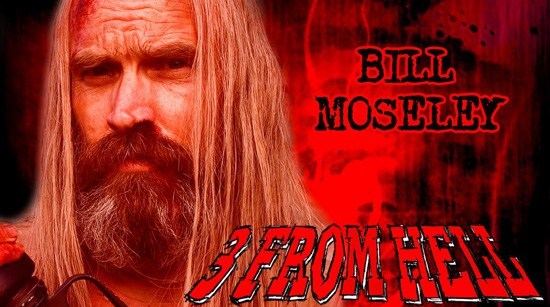
Bill Moseley talks about his role in “3 From Hell”

Bill Moseley is a legend in the horror business. He is known best for playing Chop Top from “The Texas Chainsaw Massacre 2” and also Otis in “House of 1000 Corpses” and “The Devil Rejects”. He is reprising the role of Otis in Rob Zombie’s latest film “3 From Hell”. Media Mikes had a chance to chat with Bill to discuss his new film and stepping back into the character.

**Tickets for the September 16th/17th/18th nationwide release of 3 FROM HELL are available at FathomEvents.com/3FromHell**

Mike Gencarelli: It’s been nearly 15 years since “The Devil’s Rejects”, what was it like picking up this character again after all these years?
Bill Moseley: It seemed liked it was going to be a pretty daunting task to try that but once we got to the set and got costumes and makeup – and with that good script under our wings – everything worked out pretty smoothly.

MG: Gotta respect the beard man, how long that take to grow out?
BM: That beard was at least 16 months. My wife was very excited when I finally got “beard release”. She followed me to the barbershop, here in Los Angeles, and they cut it all off and put it in a plastic bag.

MG: After working with Rob Zombie now on a few films; did you feel you had freedom with this character?
BM: Most of it was in the script. Sometimes with creative freedom to come up with new lines and moves for the character is because the scripts need a little help. But with Rob’s scripts they are so good you really don’t need to do more than follow the printed page.

MG: After the ending of “The Devil’s Rejects”, some would have thought that was the end but, I like things turned out in “3 From Hell”…
BM: With “3 From Hell”, I am glad the way Rob brought us back due to the poor shooting of the Rudgesville Sheriff Department. A lot of fans certainly wanted more after “The Devil’s Rejects”. I remember at different horror conventions fans coming up and giving scenarios. The worst was with someone waking up and saying “Wow, what a dream I had”, that is the lamest device in Hollywood. One that I thought was really cool is that we did actually die, went to hell and the devil rejected us making us truly the devil’s rejects…but of course then if you do that then we are supernatural and that’s a different universe. This way makes sense cause the sheriff’s department looked like a real motley crew even with us driving right at them.

MG: Where was the Mexico scenes shot?
BM: Right outside LA. It was a cool movie ranch. I think it was in the same vicinity as the spawn ranch scenes from “Once Upon a Time…in Hollywood”. I don’t think it was exact location but there are still movie ranches dived around the hills in LA.

MG: What was your biggest challenge working on this film?
BM: The biggest challenge was getting back into Otis’ skin after 14 years. Also to do Otis from “The Devil’s Rejects” justice and to take him to a new level and that is a big challenge. I was a little nervous at first, day 1/day 2 on the set, I had mini monologue to deliver and I remember flubbing the lines, so I took a time out after a couple of takes. I remember a voice in my head saying “Get out of the way Bill, I got this!” It was Otis and after that everything just went very smoothly.

MG: Would you consider this the end for Otis and the gang or could you see yourself stepping into this role again?
BM: I don’t necessarily see an end. I still have a kid in college, so I hope there will be three or four more of them. And BTW they are really fun to do. It is hard work making movies, there are a lot of moving parts and pressure but working with these guys makes it worth it.

Damn Your Eyes Bassist Oddie McLaughlin Discusses the Bands New Album “Kill The Outside”

New York based heavy metal group Damn Your Eyes have just released a brand new 10 track album titled “Kill The Outside”. The band which consists of former We Are The Enemy and Bonesmith members along with current Black Water Rising bassist Oddie McLaughlin have come together to forge a new musical path which draws deeply from the each of the members own personal experiences. Media Mikes had the chance to speak with Oddie recently about the creation of the new album, its deep personal meaning and what it like balancing duties between two bands.

Adam Lawton: Can you tell us about some of the work that went in to the new album “Kill The Outside”?

Oddie McLaughlin: Artie (Alexander) and I have played together off and on since we were first out of high school. We were always writing or learning different material. We recorded I think five songs with this drummer about fifteen years ago and then went our separate ways. Two of those songs from that period we kept. Basically it was just the riffs as there was no melody or vocal lines. That’s really where everything started. I got a call on day asking if I would be interested in starting something new and I said yes so shortly after we started writing songs for this release. When I got together with Artie after talking he already had few songs laid out including the two riffs we originally worked on. He had added some new ideas and things just started rolling. The writing for this album has been amazing and things have come together fairly easy. The songs all fell together nicely. Once we got our singer Kenny (Vincent Jr.) things moved even quicker. It’s just been a great process.

AL: The songs all seem very personal. Were the lyrics pulled from members past experiences?

OM: Oh yeah. Most of it is from Artie and some of it is from the other guys. They pulled from their experiences in the music business to how the world is going today. We expressed our emotions related to some of those events along with a bunch of other things. It’s definitely a record that deals with what is going on around us and personally.

AL: Do you ever find it hard to dig in to some of those emotions?

OM: No. We feel that if we put this stuff out there that it might help someone. Someone might see that they aren’t the only one feeling a certain way. I think it’s a great avenue to get it across to people especially metal fans.

AL: Along with personal lyrics the album also features a variety of musical styles. Was this something the band did consciously or was it something that occurred more naturally?

OM: I think it was something that happened organically. All the guys in the band like different styles of music but at heart we are total metal heads. We like a certain tone which has come from each of us evolving our sounds over the years. We all spent time on our own to craft just the right tone to get to where we are now. That’s what we are in to. The genre of music comes naturally for as we like to chug it out in order for that melody to come with a groove chorus or a main verse riff. We all have been doing this for some time now and we have a solid process which allows for the creation of material to occur fairly easily.

AL: What are the bands plans to tour in support of the album?

OM: We all work regular jobs and a couple of us have kids so planning a tour can be a little tricky. We are always willing and ready to get out there but for now have just a few shows set up to help things get going. I think this is a great band with great songs. I feel that no matter where we play we will go over well and we hope to be able to play as many shows as possible. Playing live is what we absolutely love. Practice, Recording and all that stuff is great but nothing beats performing live on stage.

AL: You also play in Black Water Rising. How do you go about splitting time between the two groups?

OM: It can be tough sometimes balancing two bands and your own personal life. You have to be really careful with scheduling in order not to double book yourself. Just last month this happened where I played with both bands in one night. I played an early show with Damn Your Eyes in Long Island and then had to drive to New Jersey for a show with Black Water Rising. I made it in plenty of time and something like that doesn’t happen often. When you’re booking you have to do things so far in advance that you forget and things get piled up.

For more information on Damn Your Eyes visit their official Facebook page here 

The Filmmakers of YESTERDAY

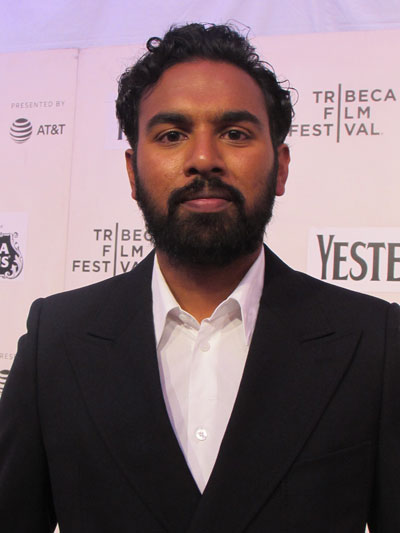
Yesterday…or rather just about a month ago Danny Boyle’s new romantic comedy called Yesterday hit the red carpet as the closing night film of the Tribeca Film Festival. Written by romcom guru Richard Curtis (Love Actually, Four Weddings and a Funeral), the film follows Jack Malik (Himesh Patel) a struggling musician who wakes up one day in a world where the Beatles never existed. In this situation, Jack takes the music world by storm reintroducing classics like “Yesterday”, “Let it Be” and “Hey Jude”.

I got to speak with the talented filmmakers at their premiere about the impact the Beatles had in their own lives and shooting some epic concert scenes.

Lauren Damon: Soundtracks are so integral to your movies, does it pain you to imagine the world without the Beatles?

Screenwriter Richard Curtis: I think it would be worse! I mean certainly my life would have been worse. You just think how often life has been sort of softened and sweetened by them. When I was living here in America, I was terribly aware of how often you heard Frank Sinatra and I was thinking, ‘God, wouldn’t all these shoe shops be worse without Frank Sinatra to make it less painful?

LD: For the concept of this film did you ever consider other bands being gone?

Curtis: No. No and it’s interesting, is there another band? And I don’t know that there is. A lot of this movie came about was because every time I would go to see my kids’ school plays they would always end with a Beatles song. You know, William the Conqueror would hold King Harold’s hand and they would both sing “We Can Work it Out.” Or you do something about the environment and they sing “Here Comes the Sun.” So I do think at the moment that the Beatles are the most comprehensive band of all.

LD: Did you get to speak to Paul or Ringo about this concept?

Curtis: Well they know about it now. I wrote to Paul asking him if it would be okay to call it “Yesterday” And he wrote back and suggested we call it “Scrambled Eggs” which was the original name of “Yesterday” And he said ‘I think that would be the better title, but if you haven’t got the courage to call it “Scrambled Eggs”, then I don’t mind you calling it “Yesterday”

Film Composer, Daniel Pemberton: Paul and Ringo were very aware of the film. But with this we took a step back because the thing is in this world the Beatles don’t exist…And we kept having to say ‘the Beatles do not exist in this film’ so you have to pretend Paul and Ringo don’t exist.

LD: When you’re starting with a film that’s based around The Beatles when you go in to compose for it, do you draw strains for them? Or is it from scratch?

Pemberton: Yeah, the score element of this film has been massively influenced by the Beatles. So that’s everything from–I tried to approach the score in a way where we would use the sort of sonic landscape the Beatles created. So that would be everything from the instruments, like the mellotron…We actually used some of the actual instruments that the Beatles recorded on. So we recorded at Abbey Road all the score. And so we used things like the Mrs. Mills piano–the piano from “Lady Madonna”. And those are the actual pianos they used on the recordings. We’d also use a similar kind of bass guitars that Paul McCartney plays. We used the same mixing desks and the same recording techniques. But then we tried to write a different score that wasn’t just a pastiche of the Beatles but just had the elements of their work. Almost as if the Beatles had scored this movie, what would it sound like?

Lauren Damon: What was your casting process like to go from tv into this big lead in front of thousands of extras?

Himesh Patel (“Jack”): I mean the casting was kind of just like anything else to be honest. I just got a breakdown and then I did the self-tape and then I met Danny [Boyle] and Richard. And then I met Danny again and then waited a long time and then I got a call.

LD: Do you have a singing background?

Patel: Not in any sort of professional way, no. I did a little bit on the stage in a play I did a couple of years ago. And I’d some, you know, for myself, youth theater and that kind of thing but nothing like this.

LD: What was it like recreating songs like this? Such important and monumental songs?

Patel: It was thrilling, you know but also a little bit nerve-wracking. The people I was working with, the people we got on board with were really great and so I never felt the pressure of what we were doing. And we had a little bit of leeway because narratively the songs don’t exist. So we could make them our own.

LD: Do you have a favorite?

Patel: A favorite…I mean, one of the ones I love singing was “Long and Winding Road.” I think it’s a really beautiful song…and where it sits in the movie is so beautiful too.

Yesterday is out this weekend in theaters

Harry and the Potters Paul and Joe DeGeorge Talk About Their New Album “Lumos”

Wizard Rock originators Harry and the Potters have been performing their signature brand of magic infused rock since 2002. Consisting of brothers Joe and Paul DeGeorge the duo have performed over 800 shows at various libraries, rock clubs, art spaces, bookstores, basements, and all ages’ venues all over the world. The band’s latest offering “Lumos” is the first studio album in 13 years to be released by the group and Media Mikes had the chance to speak with the brothers recently about its creation, the staying power of Harry Potter and the bands current tour.

Adam Lawton: Can you tell us a little bit about the new album?

Paul DeGeorge: Despite not having released a new studio album in the last 13 years we have still been pretty active touring. We felt that if we were going to be able to continue to exist in this current political climate that it would be nice to have some songs in the set that reflect the current reality. Having never actually written substantially about the seventh Harry Potter book we felt this was a good opportunity to revisit that. In book seven things really come to the fore with Harry and his friends fighting against fascism and exclusion in the wizard world. It felt really relevant to us on that level and we wanted to bring that to our live shows.

Joe DeGeorge: We have a unique position to take a perspective on this as two Harry Potters commenting on our world which has direct parallels to the world we are living in now.

AL: I assume you wrote a lot of this new music more recently?

JD: We set aside some time specifically to write and record this record. Paul doesn’t live close by so it’s been harder the last few years to casually work together as a lot of our time when we are together is touring or visiting with family.

PD: We had set aside a few weeks to put things together for this as we did have some ideas going in but, it wasn’t until last year actually that we carved things out.

AL: Can you tell us about your tour which kicks off June 20th?

JD: We mostly will be hitting libraries much like we have in the past. I am really looking forward to getting out there as playing libraries is a big part of why we started this band. We could play for kids and have it be their first rock show. On this tour we are going to be hitting a bunch of new places both here in the states and in Canada so that should be fun.

PD: Accessibility has always been important to us. We didn’t just want to play for young people and their parents but we also wanted to reach those kids who felt excluded by an age restricted music scene that was 18 or 21+. Some cities are more inclusive however, by touring libraries we are performing in places which are meant for everybody.

AL: With your music being solely based around Harry Potter do you ever feel the need to step outside of that?

PD: Not for this band. We do have other musical projects that we are involved in so if we want to do something else we just start a different band. We have one band that all we sing about are clams. Specifically hard shell clams regional to the North-Eastern seaboard.

AL: With the last film being released in 2011 what do you feel contributes to the staying power/appeal of Harry Potter?  

JD: I think what is so impressive about these stories is that they have such a far reach. It has become a cultural touch stone for the generation of people who grew up reading the books. They are sharing these stories that affected them and how they were markers of their own coming of age with the next generation.

PD: The continued popularity doesn’t surprise me in the least. Look at Star Wars for instance. If you look at music there are lots of bands who continue to play in 2019 that first started 50 years ago and who are just as popular today as they were then. Despite the absence of actual new material I have seen an uptick in the corporate side Harry Potter such as the merchandise and the creation of the parks (which I think are great). These types of things have certainly helped keeps things going. A lot of our fans aren’t really interested in that side of things as we have our own unique crowd.

AL: You both have other projects that you work on. Can you tell us what you currently have going on with those?

JD: I play in a band called Down Town Boys which is sort of this leftist type punk band. Our last record come out in 2017 called “Cost of Living”. Paul owns and run a shop in Kansas with my wife called Wonder Fair that deals with art, art supplies and stationary.

AL: What do you feel is the most rewarding part of taking you music out on the road for people to experience?

PD: It’s a big opportunity to connect with people. It’s great to be able to be a meaning part in people lives. Playing to young kids is such an honor as for a lot of kids we will be their first concert so that’s really great and something we take very seriously.

For more info on the band visit www.Harryandthepotters.com  

Interview with “Georgie” Producer and Co-writer John Campopiano

When he’s not busy doing his daytime job for the television program “Frontline,” filmmaker John Campopiano allows himself to indulge his love for horror films.  In 2017, Campopiano co-wrote and co-directed the acclaimed documentary “Unearthed and Untold:  The Path to Pet Sematary.”  He just released the short film “Georgie,” which he produced and co-wrote with the film’s director, Ryan /Grulich.  Next up is his next full length documentary, “Pennywise:  The Story of ‘IT’”   While gearing up for his next project, John found some spare time to talk with me about his work, past, present and future.

MIKE SMITH:  Where did you come up with the idea for “Georgie?”

JOHN CAMPOPIANO:  We were in post-production on a documentary about the mini-series “IT.”  We interviewed the cast and crew and one of the cast members, Tony Dakota, who played Georgie Dembrough in the mini-series was one of the last actors to find for an interview.  I found him in the Pacific Northwest.  By this time our production budget was depleted so I was looking for a free-lancer to get this interview with Tony.  I met Ryan Grulich, who is based in Seattle and he shot the interview for us.  One of the questions we had asked Tony was if he would ever want to get back in show business.  He had been a child actor in the late 1980s and early 1990s.  Besides “IT” he had also been in “Who ‘s Harry Crumb?” with John Candy and had also done some episodes of “McGyver.”  (NOTE:  T.V. fans may also remember Dakota for his eight episode arc as Clavo on the very popular “21 Jump Street”),   He had been out of the spotlight for some time and had stopped acting around 1993.  So when he was asked if he wanted to get back into acting he said “yes” but wasn’t sure how to do it.  He had had a rough upbringing and some personal problems which had kept him away from acting.  But when he expressed an interest a light bulb went off.  I said to Ryan, “what if we wrote a short film for Tony?  It could be a win/win.”  We would write a short film that would allow him to reprise his role as Georgie, which would put some money in his pocket.  And we would give him a positive and creative outlet that could hopefully open some doors for him.  And that’s how “Georgie” started.

MS:  I know from doing the “Jaws 2” book that trying to find actors that haven’t acted in 30 years is not very easy.  Did you have the same problems with some of the lesser known members of the cast?

JC:  Oh yes.  Even though Tony is billed a Tony Dakota, Dakota was not his birth name.  Since he stopped acting he has been living his life under his real last name.  He was almost like a ghost who had vanished from the public eye.  Also, he hadn’t acted in almost a quarter of a century.  It made it challenging for sure. 

MS:  Thank God for the internet!!

JC:  (laughs):  I know, right?

MS:  Ironically, last week on our Podcast we kind of previewed “Georgie” and talked some about the “IT” documentary and my co-host informed me that Stephen King will allow student filmmakers to license any of his works that have not been sold to Hollywood for $1.00 for a student film.  Did you contact him about “Georgie” and, if so, has he seen it?

JC:  I think it’s cool that he does that, especially for somebody who has had his level of success.  We did not approach him about “Georgie” ahead of time.  Obviously we’re dealing with intellectual property that belongs to him and Warner Brothers.  But on the same side of that, we are not monetizing this.  It’s a short film, which really don’t have much of an afterlife in terms of monetization.  We’re giving Georgie a fresh story and kind of a new spin on the character.  We will definitely be sending it to him and hoping he watches it.

MS:  Can you talk a little about the ‘IT” documentary?

JS:  I had done a documentary with Justin White about the film “Pet Sematary” that took us about four and a half years to complete.  That got us a little bit of attention from other filmmakers who were doing similar documentary films…retrospectives about other films.  I’ve been a die-hard “IT” fan, both the book and the mini-series, forever.  Justin was not interested in doing another documentary.  Given the scope of the mini-series I knew it wasn’t something I could do alone.  So I started writing articles as I was interviewing the cast and crew.  A producer in the U.K. named Gary Smart, who runs Dead Mouse Productions, saw the articles and had the idea about doing the documentary about “IT.”  He reached out to me and asked if I wanted to come on-board and co-write it or produce it with him.  That was 2017.  We launched a successful Indiegogo campaign, raised the money and spent three weeks in Los Angeles shooting cast and crew interviews.  Now we’re in the final stages of post-production.  We dropped an extended trailer back in February of this year and it’s done very well.  It received almost 500,000 views on YouTube in the first week.  It was also very serendipitous.  We had announced a street date before the theatrical version of “IT” was released.  People had been talking about remaking “Pet Sematary” and “IT” for years but it wasn’t until the past few years that those projects became reality.  We got very lucky in terms of the timing.  The mini-series was beloved by its fans but the new movie really introduced the story to new generations.  It revitalized the franchise, which worked in our favor.  I think in total we’ve interviewed about forty members of the cast and crew.  It’s going to be a pretty robust documentary that I think people are going to be excited about.  The plan is to release it before the end of 2019. 

MS:  Do you have any projects planned after the documentary is completed?

JC:  I’m working with Gary Smart again on a bio-pic about Robert Englund.  That was Gary’s idea.  He approached me and said he wanted to do a film about Robert’s life and career.  He’s such a legendary character actor.  Not just for the “Nightmare on Elm Street” films but all of the other projects that he’s been a part of.    Gary asked if I wanted to come on board as a producer and I said, “sure.”  We launched an Indiegogo campaign last weekend to help raise funds to make it happen.  The plan is to go out to L.A. later this summer to get the interviews and then get working on that one.  I’m not writing that one, which is nice because it’s less work for me but I’ll be doing a lot of archive research for Gary and helping produce the interviews.  I’m also working with “Georgie” director Ryan Grulich again.  We wrote a new short film based on my story, dealing with something I went through as a kid.  We have a finished script for that.  It’s my attempt at an “Are You Afraid of the Dark” episode or something from “Goosebumps.”  I’ve been interested for a long time in horror movies for kids.  In my opinion I think it’s a sub-genre that we are seeing less and less of.  I feel that the 80s and the 90s were a ripe period for content like that.  I want to make a short film that is spooky and scary and has an original monster in it but one that is geared very much towards a teenage audience.  We’re looking right now for talent to attach to the project and then we’ll raise some funds and hopefully start shooting it next year. 

On a personal note, John and I both had an amazing friend named Lou Pisano.  Lou co-wrote the “Jaws 2” book with me and was really looking forward to the release of “Georgie.”  John told me, “It’s kind of bittersweet.  Lou was so excited about this project.  I think he would have loved it.  The only disappointing thing is that he isn’t here with us to see it.”

To view the extended trailer for “Pennywise:  The Story of ‘IT’” click HERE.

To contribute to the Indiegogo campaign for “ICON: The Robert Englund Story” click HERE.  

Stellan Skarsgard and Emily Watson on HBO’s “CHERNOBYL”

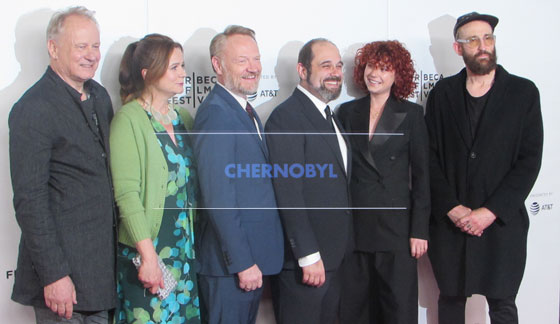
In April 1986 the most catastrophic man-made incident the planet had ever seen occurred when reactor 4 of the Chernobyl nuclear plant exploded during what should have been a safety test. The effects of the accident still wreak havoc over the landscape and containing the fallout has become an industry unto itself. It’s a job which will require centuries of human support. Tonight on HBO, Craig Mazin’s five-part miniseries, CHERNOBYL, dives deep into the the accident as it happened and the human cost and bravery it required to ensure that this tragedy did not engulf still millions more.

This past week at the Tribeca Film Festival, Mazin and his talented cast debuted the first two episodes of the series on the accident’s 33rd anniversary. The premiere episode was nothing short of a nightmare as the series delves into, in brutal detail, the accident and the shocking mishandling of both the initial fire and the surrounding population in those crucial first hours and days of fallout. It was a tense first hour and a brilliant setup into the second which saw the introduction of the scientists and politicians who then had to set about handling what was to come. The second episode in particular sees a stellar performance from Stellan Skarsgard as he plays a man coming to grips with his own mortality and entreating fellow countrymen to show selflessness so that millions can be saved. I spoke with Skarsgard, who also offered brief comments on his upcoming work in DUNE, as well as co-star Emily Watson on the red carpet about their own knowledge of the accident as it happened and the timely message this series has to offer in regards to listening to scientists.

Emily Watson plays Ulana Khomyuk, a character created for the show as an entry-point into the role of a collection of European scientists in the fallout of Chernobyl.

Lauren Damon: Your character isn’t one specific person, but represents a collection of people involved with the accident, did you speak to people who experienced this?

Emily Watson: No. It’s sort of in tribute to many of the scientists who worked on the discovery of what happened. So I kind of had a bit of a blank sheet really to make up what I wanted to do. But Craig had written the character as coming from Belarus, which is a place that suffered terribly in the second world war. And she would have been a young child at that time, so that gave me a sense of just finding someone who was very very tough. It made her the perfect person really to go after the truth and find out what happened.

Do you remember when you were first aware of the Chernobyl accident in your life?

Watson: Yeah, I was a student at university and I remember there were students at my college who were on a year out, away in Kiev, and they all had to come home pretty quickly, it was very scary.

Did you have any misconceptions about the event going into this project that the script changed for you?

Watson: Oh my god, when I started reading the script, I had no idea that sort of within a few days–sort of 48 hours after the first explosion–there could have been one that was ten times worse. That would have taken out half of Europe.

In theory you could have been in range of those effects?

Watson: Definitely in range of radiation fallout…But yeah, it could have been much much worse. It was due to the heroism of the people on the ground who contained it and prevented it from being much worse.

What’s the biggest take away you’d like viewers to get from this series?

Watson: I think it’s a parable for our times. I think you ignore the truth and scientists at your peril.

Stellan Skarsgard plays Boris Shcherbina, the Deputy Head of the Soviet Government at the time.

What did you find surprising from hearing about Chernobyl originally in 1986 and then from working on this project?

Stellan Skarsgard: What I knew from ’86 was what you got from news media, which gave you a sort of superficial idea of what actually happened. What we learned through working with this material is I know now what technically went wrong, how the reactor works and what the mistakes they made were.

You also learn about it [was] more grave, the sort of the political system–the impact that had on the accident. When you have a system that is supposed to be perfect, you cannot allow any dissent in terms of somebody criticizing anything you do or any flaws cannot be accepted. And that then means that the truth was suppressed. It was all over the Soviet Union at the time. I mean truth is suppressed also for other reasons in the west now. I mean when you talk about Fukushima that was money that suppressed truth and created disaster there. In Boeing, you sent planes that are not fit for flying because you want to make money. So another way of suppressing truth and science. I think it’s important, an important film because it–not only because it talks about what we’re doing to this planet, the environment, which is really scary, but it also talks about how important it is that we listen to people who know what they’re talking about.

Facts are facts. They are not just individual ideas. Some facts you have to deal with and you have to accept and we have to listen to scientists. I mean 98% of the scientists in the world say that we are heading for a catastrophe in terms of global warming. We cannot ignore that. Do not ignore that.

Tell us about your character

Skarsgard: My character I’m playing Boris Shcherbina who was a minister in the government and who got the responsibility for cleaning up the mess. And he’s a man who spent his entire life working within the system and defending the system and he ends up realizing that this accident is a result of the system. And he has to question the system and he also has to decide whether he should keep on defending the system that is flawed. Or if he should start defending the truth.

Skarsgard’s next film role is in the highly anticipated adaptation of Frank Herbert’s sci-fi classic, DUNE, where he’ll play the villainous Baron Harkonnen

Lauren Damon: Have you begun work on DUNE as Baron Harkonnen?

Skarsgard:I haven’t started shooting yet, we’re still doing prosthetics work

That’s what I was wondering! Because the Baron is such a grotesque character but when you were cast I remember looking at a shot of you as Bootstrap Bill [Skarsgard’s heavily barnacled Pirates of the Caribbean role] and thinking ‘This man can handle anything they put on him!’

Skarsgard: [Laughs] That’s very nice of you! Thank you. I will probably spend probably six to eight hours a day in makeup and it will look fantastic.

What are you most excited about in doing that project?

Skarsgard: It’s a great story. It’s a fantastic world and Denis Villeneuve is a director that I’ve always wanted to work with. So I’m really happy, he’s a wonderful man and a great director. So I think–except for the eight hours in makeup–I think I’ll have a fun time.

Chernobyl airs tonight at 9pm on HBO

Author Darren Paltrowitz Discusses His NEW Book “Good Advice From Professional Wrestling: Full Contact Life Lessons”.

Darren Paltrowitz is writer/interviewer with 20+ years of entertainment industry experience. He began working around the music business as a teenager and over the years working with artists like OK Go, They Might Be Giants and Tracy Bonham. Darren’s writing has appeared in countless publications including the NEW York Daily News, L.A. Times and Guitar World. Darren’s latest project is titled “Good Advice From Professional Wrestling: Full Contact Life Lessons”.  Media Mikes had the chance to speak with Darren recently about the book and how the idea to draw inspiration from professional wrestling came about.

Adam Lawton: What was your first exposure to Professional Wrestling?

Darren Paltrowitz: I have been trying to really figure that out lately. I think it goes back to watching “WWF Wrestling Challenge” or one of those late 80’s early 90’s weekend shows. The first Wrestle mania that I fully remember was WrestleMania 7. From there I got into WCW. Sadly I wasn’t much in wrestling during the “Monday Night Wars” as music took over at that time. I didn’t love WCW when it was good! (Laughs) Thankfully with the internet I can now go back and watch everything I missed.

AL: How did the idea for the book all come together?

DP: I had gotten a press release about a book from my future co-author D.X. Ferris. It was actually a release about the four books he had coming out. One of those was titled “Good Advice From Good Fellas”. I ended up interviewing him about the book and during that interview he mentioned Diamond Dallas Page. We stayed in touch after the interview and I pitched the idea of a wrestling book. He sent me an email of a paper he wrote back in college which took advice from wrestling and the film “Goodfellas”. This was back in November. Prior to that we had nothing so that is why the book includes a lot of current wrestlers and wrestling information. We wrote this very quickly with the goal of having it ready for WrestleMania in April. D.X. put in a ton of long hours at the end with final touches and we did it!

AL: What was the research process like for the book and, how did you go about selecting which material made it into the book?

DP: That was sort of a mix of factors. One of those factors was D.X. telling me I had to put in some of his hometown Pittsburgh guys like Bruno Sammartino and Kurt Angle. We really had to think about people who along with wrestling talent also showed good business acumen and that were not plagued by scandal. We also thought about who had great quotes. Some of the book’s material came from my own personal interviews with people like Mark Henry. Now that I have been talking about the book for a bit I regret not including people like Al Snow and MJF. This arguably the greatest time in history to be a wrestling fan! There is infinite content out there. In fact there is so much that you cannot watch it all.

AL: Did any of the wrestlers who are featured in the book know beforehand that they were going to be included?

DP: We reached out to a lot of the wrestling promotions asking for material and we received responses from all but one. There were other times where I would have to go through independent reps. We also had a guy in the Ohio area that was able to provide us with some photo material. Initially things were moving slow as people didn’t believe we were doing this thing. One by one we started getting books out to some of the wrestlers and it’s been going great. It continues to be a step by step process.

AL: Did you have any goals for releasing the book?

DP: My first major goal with this project was finishing the book and getting it out. Once that was done it was a major relief. A lot of people say they are going to write a book but never do. Now that the book is out I want it to be the one book that is for people who don’t read “self help” books. I wanted people to realize that a lot of the advice in the book is applicable no matter what your level of exposure to pro wrestling is or was. One other thing I want people to take away from the book is for them to see just how smart and successful the majority of pro wrestlers are. They are no longer failed football players or body builders. These are people who are branding experts who can also act and write their own material. If you want to be successful you have to learn from other successful people. I hope a lot of that comes across in this book.

AL: What other projects are you currently working on?

DP: I have been doing interviews with entertainers and the likes ever since I was in high school. I realized that I should do something with all these interviews. About a year ago I started a pod cast called “The Paltrocast With Darren Paltrowitz”. It’s a bi-weekly cast that includes clips from various interviews I have done. Last week’s episode featured Adam Duritz from Counting Crows talking about his bar mitzvah, Guitarist Susan Tedeschi and Kaley Cuoco from the “Big Bang Theory”. I am into all kinds of things so that’s what I showcase on the cast.

It doesn’t matter if you are fan of wrestling or just someone wanting a fresh approach to the self help genre “Good Advice From Professional Wrestling: Full Contact Life Lessons” has something for everyone. It’s even got some great photos which accent the wit and wisdom of an often overlooked industry. To Order visit: https://www.amazon.com/Darren-Paltrowitz/e/B07Q4QN8B8/ref=dp_byline_cont_ebooks_2

For more info on Darren Paltrowitz you can visit his official website here: http://www.paltrowitz.com/home.html


Related Content

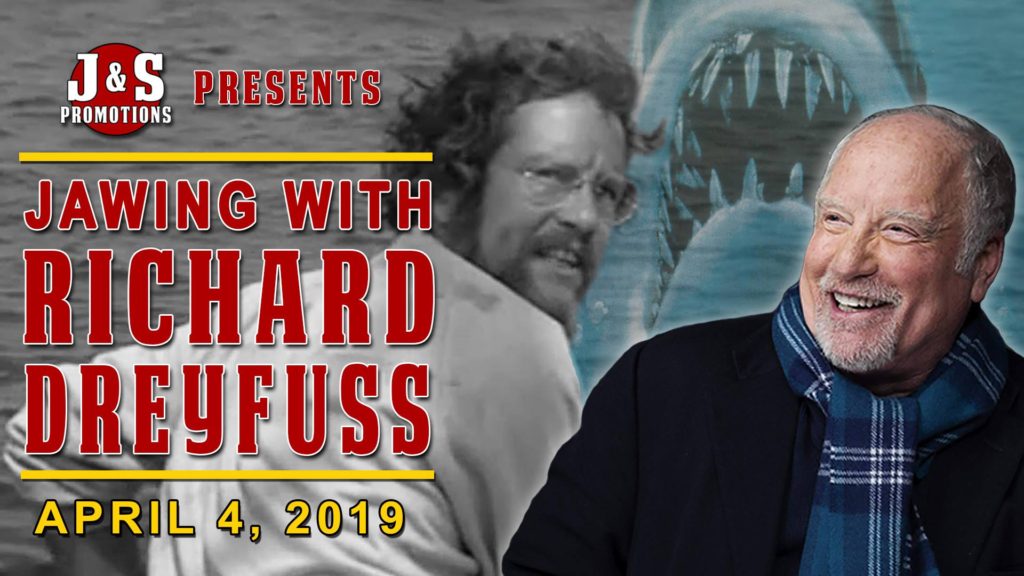
Interview with Oscar Winner Richard Dreyfuss

With my 15th birthday approaching, my father asked me what I wanted to do.  Having been intrigued by the television commercials for a new film, “Dog Day Afternoon,” I told him I wanted to see that movie.  On Sunday, September 21, 1975, my father dropped me off at the University Square Mall Cinema in Tampa to see the movie.  Sadly, I didn’t know it was rated “R” and was told I couldn’t buy a ticket.  As I began to dejectedly walk away, the girl in the ticket booth called out to me “have you seen JAWS yet?”  I hadn’t.  124 minutes later, my life was changed.

I include this because of what I did after the film.  Like a normal kid, I wrote fan letters to the three stars.  I soon received a letter from Richard Dreyfuss’ cousin, Arlene, who informed me that she ran Richard’s fan club.  If I wanted to join, it would cost me $5.00 (a week’s allowance at that time).  I immediately sent her the money, along with a note saying “if you ever need any help.”  Within a few months, I was helping her with the club – basically I handled the fans east of the Mississippi river.  It was a great time for a teenager.  I’d scour the newspapers for articles about Richard and each month would send out a packet to the fans, which usually consisted of Xeroxed newspaper clippings and the occasional photograph.  Not sure how many members were in the club, but when it disbanded in November 1978, shortly after the release of “The Big Fix,” I was dealing with almost 1,000 fans.

I’ve been very fortunate to have met Mr. Dreyfuss twice in my life.  Once, in Baltimore, when he was on the set of the film “Tin Men,” and in July 2017 when we were both guests at a Hollywood Celebrity Show.  At that show I was able to stand near his table and listen to him tell the most amazing stories.  I mention this because Mr. Dreyfuss is currently traveling around the country, offering fans the opportunity to take in AN EVENING WITH RICHARD DREYFUSS.  He will be in Kansas City this week (April 4th) and I have been honored to have been chosen the moderator of the event.  Call it practice, but I had the opportunity to speak with Mr. Dreyfuss and ask him some questions, a few of which may be included when we’re together Thursday night.

Mike Smith:  What led you to pursue a career in acting?

Richard Dreyfuss:  Wow!  I don’t know….what leads someone to follow what they love?  I don’t think I really had a choice. 

MS:  Was there a film or performer that inspired you?  I acted a lot through my 20s but couldn’t make a living at it, but the inspiration came from wanting to do what YOU did.  I know you’re a fan of actors like Charles Laughton, Irene Dunne and Spencer Tracy, among others.  Were they the catalyst?

RD:  They were, of course.  I have no memory of NOT wanting to be an actor.  I think the first time I got on record was when I was nine years old.  We had just moved to California from New York, and I said to my mother, “I want to be an actor.”  And she said, “Don’t just talk about it.”  So I went down to the local Jewish Community Center and auditioned for a play.  And I really never stopped.  I realistically never had more than ten days when I wasn’t acting in a play, or a scene or a class or a job until I was 27. 

MS:  You made your film debut in two very different films in 1967 – “The Graduate” and “The Valley of the Dolls.”  What do you think is the biggest difference between filmmaking then and today?

RD:  There are so many.  The general level of quality for an actor has plummeted.  When I was younger I never hesitated telling young actors to “go for it”…to pursue it.  And now I don’t say that, because the real rewards are so rare…so few and far between  The quality of scrips, from an acting viewpoint, suck.  The sequel syndrome that we’re in, which we can’t seem to get out of, has really lessoned the level of quality of writing.  Of story.  And it seems more arbitrarily decided upon as an element of chicanery and thievery, even for a business that’s famous for it, it goes on.  Film acting is not something I really recommend.  If you want to be an actor in America you can live a very great and satisfied life if you never think about being a star.  You can have a great life in Kansas City.  Or St. Louis.  Or a million other places.  But if you want to go for that kind of brass ring, which I would question – if you do want to go for it, go to therapy first – you’ve got to go to L.A. or New York.  And those towns are pretty sick.

MS:  You famously almost turned down your role in “Jaws.”  Are there any roles you turned down and then later regretted your decision?

RD:  Oh yeah.  I was once watching a movie and I kept thinking, gosh, this seems so familiar.”  I thought “oh, shit,” and then I remembered why.  And I didn’t ALMOST turn down “Jaws,” I did turn it down.  I turned it down twice.  And then I changed my mind and begged for the part.  (NOTE:  The story goes like this.  After turning down “Jaws” – twice – Mr. Dreyfuss saw his upcoming film “The Apprenticeship of Duddy Kravitz” and thought his performance was so terrible that he’d never work again.  He then called director Steven Spielberg and accepted the role.  Of course, when “The Apprenticeship of Duddy Kravitz” was released, Mr. Dreyfuss received rave reviews for his performance, even being named Runner Up as the Best Actor of 1974 (tied with Gene Hackman for “The Conversation”) by the New York Film Critics Circle.)

I will never tell you the ones I turned down that became hits.  Thank God there aren’t that many of them!

MS:  What fuels the passion for your work?

RD:  If you asked me a question about my process – how do you do this…what’s your method? – I would completely be unable to answer that.  And I’ve always known I’d never be able to answer those kind of questions.  But I know that, in a business where if you’re a successful actor you want to direct, I’ve never wanted to direct.  So I didn’t.  I wanted to act!  I had made a decision when I was very young, which probably wasn’t the most strategist thing to do in the world, but it was the way I chose to live.  Which is to day, if I do a drama, then I’ll do a comedy.  Then I’ll do a drama.  Then I’ll do a comedy.  That’s basically what I tried to do.  And the mistake in that is that I don’t think I ever did something enough times to establish a kind of signature recognition of what I do.  I did both.  I did lots.  And I thought that was the best way for me to pursue my life.  And that’s what I did for sixty years. 

MS:  Where do you keep your Oscar? (NOTE:  Mr. Dreyfuss received the Academy Award for Best Actor for his role as Elliot Garfield in “The Goodbye Girl.”  At age 30, he was, at the time, the youngest actor to win that award).

RD:  For the most part, in the refrigerator.  (laughs).  I always want people to know about it, but I don’t want to brag.  But I figure that sooner or later they’re going to open the refrigerator. 

And I’m also very aware that the list of actors who were ever nominated or won an Oscar is as great a list as the ones who never were.  It’s a wonderful evening, but it’s rarely more than that.  It’s a great evening.  You’re aware of the film work because the audience for film is in the millions.  But I make no distinction between film and theater.  And, of course, the audience for the theater work I’ve done will be 1/100th of that of the film audience.  But to me, it was always – if not equal than more important –so that is something that I travel with.  I have a little bucket list of things that I check off every once in a while.  “OK, you did a Broadway show…check.”  From the time I was nine, into my teenage years, I was always in acting classes.  At acting schools.  I was always with actors.  And they would always talk about a “National” theater.  And I would say, “There’s never going to be a National theater in this country.  However, there could be fifty “State” theaters.  And, as someone who lives in Kansas City, I would say to you that, something that people should not ignore, is the fact that we are from so many different places…so many different cultures…that we come together as Americans only when we’re HERE, and we learn to be Americans.  And each of us, whether you live in Seattle or Mississippi, you have different strains of a culture.  And I have always wanted each state to have its own theater.  And, in a state like California, which is huge, you could have two, anchored North and South.  And, instead of trying to get everyone to agree on A National Theater, we could have one in every state.  It’s silly to think we can’t afford a State theater, to be able to see how Missourians and Floridians and North Dakotans approach theater.  I think that would be a great endeavor and a great thing to do.  Only because we teach so few things that we share. We’ve actually given up on the notion of teaching things that are of shared values.  And that’s causing this terrible breach in the country.  And we should try to find things that we can share.  And one of them could just be the artistic endeavor of a State theater. 

MS:  That makes a lot of sense.

RD:  And they’ll never do it (laughs).

MS:  Quick follow-up to the Oscar question, one of your fellow nominees that year was Richard Burton.  When Sylvester Stallone read the name of the winner, and you heard “Richard” did you think Burton had one?

RD:  My competition was Burton, Marcello Mastroianni, John Travolta and Woody Allen.  There was no easy answer.  But I just knew I was going to win it.  (laughs)  That’s all I cared about. 

MS:  Me too, that night.  I always wonder how people sometimes vote.  You were also nominated for “Mr. Holland’s Opus,” but I thought you were most deserving four years earlier for “Once Around.”

RD:  It’s probably the easiest vote to define.  There are two ways people vote in the Academy.  One is, you vote for your friend.  Or, you vote for who you think is best.  In that order.  It’s simple.  You may not be able to predict it, but that’s the way people vote.  And it’s the reason why people do vote.  It’s not a mystery.  The only thing wrong with the Oscars now is that there are too many other awards, and it’s cheapened the whole thing. 

For more information on attending AN EVENING WITH RICHARD DREYFUSS, either in Kansas City or at a later date, click HERE.

NOTE: Mr. Dreyfuss wanted me to stress that, even though his appearance will be followed by a screening of “Jaws,” he will be discussing his entire career. So whether you’re a fan of “American Graffiti,” “Close Encounters of the Third Kind,” “Down and Out in Beverly Hills” or want to know about his fantastic cameo in “Piranha,” come on out and listen to some amazing stories.

Actor Ian Shaw talks about portraying his father in his new “Jaws”-inspired play.

As many of you readers know, both myself and Mike Gencarelli (your favorite “Mikes”) appear in the brilliant “Jaws” documentary entitled “The Shark is Still Working.”  The film tells the story of the making and the impact of the 1975 blockbuster.  But there are stories still to be told.  Ian Shaw, whose father Robert portrayed Quint in “Jaws,” has written a play, based on stories his father told him about the production, entitled “The Shark is Broken.”

Like his parents (his mother was the brilliant actress Mary Ure), Shaw is an accomplished actor with many film and television credits to his name.  In what I call a stroke of irony, Ian portrayed Colonel Paul Tibbets, the pilot who dropped the Atomic Bomb on Hiroshima, Japan in the television film “Hiroshima.”  “Jaws” fans will remember that Quint was a sailor on board the U.S.S. Indianapolis, the ship that carried the bomb to the island of Tinian, where Tibbets began his mission.  

Mr. Shaw took some time out recently to speak with Media Mikes about his latest project.

Mike Smith:  What can you tell us about “The Shark is Broken?”

Ian Shaw:  It’s 1974. Martha’s Vineyard. Three iconic actors are confined together during the tortuous filming of what will one day be regarded as the greatest blockbuster movie of all time  Forced into close proximity by studio politics, endless delays and foul weather, the three must deal with violent outbursts, squabbles, rampant egos, petty rivalries and the fact that the mechanical shark keeps breaking down.  This causes their insecurities to run riot. Is this film going to ruin their careers? Who is going to want to see a film about sharks with hardly any shark in it? And who is the star of the movie anyway? 

MS:  What inspired you to take on this project?

IS:  Like so many people, I’ve always loved the film, except of course I have the personal connection of being Robert Shaw’s son.  The film is a rare combination of elements combining to maximum effect: the performances, the music, the design, the writing, the direction, the cinematography and editing all combine to create a fantastic amount of tension and emotional reaction from the audience.  That’s really hard to do. When I was a little older, I read Carl Gottlieb’s spellbinding account of how they managed to achieve it, The Jaws Log.  What particularly fascinated me were the problems they had with “Bruce”, the nickname for the shark, named after Steven Spielberg’s lawyer.  Then there’s the sheer audaciousness of filming at sea, the relationships with the locals, and the tensions between my father and Richard Dreyfuss.  Both of whom I admire hugely, I might add.

MS:  You started your professional acting career in your mid-20s.  Was there any reticence on your part to pursue the profession, being th son of two very distinguished actors?

IS:  No.  I had a wonderful drama teacher at my school, Michael Walsh.  From the age of eight, I was performing in school plays, and I fell in love with the process.  And I think if your parents are actors, you think it’s a perfectly normal thing to do. Later on I discovered how hard it was for other actors from different backgrounds to make the leap.  I just made a promise to myself one day that I would pursue the path of an actor. I can remember the exact moment, as if it was yesterday. I was standing outside the school gym, where we used to put on plays. Even though I was very confident, probably with the arrogance of youth, I told myself it might take a long time to become successful! So there was never any question about what I would do. You can’t break a promise to an eight year old!  

Your older brother, Colin, portrayed your father’s character as a young boy in “The Deep.”  You bear a striking resemblance to your father.  Would you consider portraying him in a project?

IS:  Well, here we go – I’m playing him in The Shark Is Broken.  Wish me luck…

MS:  What else are you working on?

IS:  I’m also performing with the actors Duncan Henderson and David Mounfield in our adaptation of three Damon Runyon stories – the show is called Broadway Stories, and it will alternate nightly with The Shark Is Broken at the 2019 Edinburgh Festival, Venue – Assembly Festival, George Square.  Damon Runyon is best known for being the source material for the musical “Guys and Dolls.”  His short stories, which centered around the world of New York’s Broadway, took in what might be seen as the seedier side of life; a place of gamblers, molls, hustlers, dames and gangsters. With an utterly distinctive vernacular he described this hard, and often illicit world, but without the usual judgement or dismissal.   The first story is about a woman who murders her husbands for the life insurance.  The second is a study of the relationship between a half blind cat and a mobster holed out in a derelict hideout. The last is a comedy about an eating contest. 

NOTE:  Readers interested in helping get THE SHARK IS BROKEN to the sage can click HERE

Information about the upcoming performances of THE SHARK IS BROKEN and BROADWAY STORIES will soon be available HEREh


Related Content

Brick By Brick Guitarist Mike Valente Talks About the Bands New Album “Hive Mentality”

Mike Valente is the guitarist for the Upstate New York hardcore/metal band Brick By Brick. The band is set to release a new album titled “Hive Mentality” on February 22nd and Media Mikes had the chance to talk with Mike recently about the release, working with “Orange is the New Black “star Jessica Pimentel and the bands upcoming European tour.

Adam Lawton: Can you give us some background on your band Brick By Brick?

Mike Valente: The band has been around since 2004 and at that time we had confined ourselves to be just a local band. We had a couple members that couldn’t do a lot of traveling so it was basically something we did just for fun. As the band progressed and there was a bit of a demand for us we had to look at getting some new members who could commit more time. In 2014 we added Ray Mazzola on vocals and since that time things have been a lot of fun.

AL: What can you tell us about the band’s new album “Hive Mentality”?

MV: The last record we put out really didn’t have the distribution reach that we had wanted. In order to make up for that we went back in and re-worked a bunch of things and finished up some other material that we hadn’t done before. We are now working with Upstate Records and they have been really good to us. At the time we were slated to be part of the Rebellion Tour in Europe and we needed a new record so we went into the studio so this time when we were touring over there people had a better idea of who we were and could get our record. Getting picked up for this tour in March is what really kicked things into motion.

AL: There a few different guests on the record. Can you tell us about those?

MV: Tony Foresta from Municipal Waste/Iron Reagan has been a friend of mine for a long time. When those guys come through we always have a great time. I had been listening to a lot of thrash music at the time of writing the song and Ray and I though Tony would be perfect for the song as it has a real party vibe to it. The experiences we have had together match perfectly so I called Tony up and he didn’t even bat an eye as he was totally down for it. The song we “In The Ruins” which features Vincent Bennett of The Acacia Strain was a song we had originally released on a split with the band Ruckus from California about six or seven years ago. The original version was with our old singer and there was a limited amount pressed. Everyone was down for it so that worked out nicely. We also have Jessica Pimentel from Alekhine’s Gun. A lot of people know her from “Orange is the New Black”. I have known her for quite some time as well and thought she would be perfect for the rant part in “Hive Mentality”. Just like with the others I called her up and she was more than happy to do it.

AL: How did the cover of Motorheads “Iron Fist” end up on the album?

MV: We had been asked to be part of a Motorhead compilation that Upstate Records was putting together called “Damage Cases”. We had intended on doing a more obscure song but when we looked at the track listing a lot of other bands were looking to do the same thing. I couldn’t believe no one had picked “Ace of Spades” or “Iron Fist” being they are such iconic Motorhead songs. We chose “Iron Fist” as it’s such a fun song to play. We did our own spin on it and it’s just a great song to play live.

AL: Can you tell us more about the bands European tour in March and about any other shows you have lined up?

MV: We kick things off with our release party show on February 22nd. We are doing that at Upstate Concert Hall in Clifton Park, NY. Anyone who buys a presale ticket will also get a copy of the album. We are doing a bunch of other cool packages for that show as well. The line includes Dying Fetus, Ramallah, I Am, Assault on the Living, Snap Mare and Close to Nothing. After that we aren’t doing anything until we leave for Europe March 6-18. I think this is the eight year that they have done the Rebellion tour/festival over there. We will be playing with Madball, Iron Reagan and bunch of other great bands. That tour is going to be a lot fun and we are defiantly looking forward to it.

For more info on Brick By Brick you can visit their Facebook page at www.facebook.com/brickbybrickny and on Instagram at @brickbybrickhc

Guitarist Steve Dadaian Discusses His New Album “Follow the Light”

Steve Dadaian is an Armenian-American fusion guitarist based in the Tri-State NY,NJ,PA area. Steve’s latest album “Follow the Light” is a theatrical, symphonic soundscape packed full of razor-sharp guitar work that will leave listeners slack-jawed. Media Mikes had the chance to speak with Steve fresh off his appearance at this year’s Winter NAMM convention where we discussed the albums creation, his work System of a Down’s Serj Tankian and Soilwork’s Bjorn Strid.

Adam Lawton: What was it that first got you started with music?

Steve Dadaian: I grew up in New Jersey and where I went to school they made you take a mandatory guitar class. That was really my first exposure to the instrument. I listened to a lot of classic rock artists like Jimi Hendrix and Randy Rhoads. Listening to music like that you get drawn to the guitar and as I got older I started listening to more progressive stuff like Rush and Dream Theater. Listening to all those bands helped me build my technique and was the foundation for where my playing is today.

AL: Your new album “Follow the Light” is a shift from your previous work. Can you tell us about that progression?

SD: With this record aside from one song there really aren’t any vocals. In order to fill that space I had to think about how I was going to write each piece and what I wanted to use on each track. With symphonic music there are so many different ways you can go. This was a lot of fun because I could use different chord structures and voicing’s that a traditional vocalist might not be able to do. As a guitar player I was really able to open up which I enjoyed.

AL: Where did you start when writing these pieces?

SD: That’s something I struggle with quite a bit. Sometimes I will come up with a melody other times it will be just a riff. For the title track of the album I started with the opening riff and then everything came after that. Generally the symphonic stuff comes last. The guitar is my base line as that is what I do. The chords, leads and riffs are the bulk of the song so once I have those I will go back and fill in the space to help each section sound more epic. Aside from that my process always seems to vary.

AL: Did you provide all the instrumentation on the album or did you work with other musicians?

SD: On three of the tracks I collaborated with other artists. I worked with Claudio Pietronik from Italy who does a lot of stuff for Jam Track Central. He is a great player with a lot of knowledge about cinematic music. We were able to collaborate on two tracks and another we co-wrote. For the most part the instrumentation all comes from me. I do love working with other artists but when you have a technical riff it can be hard to add things in order to make it sound bigger. I have a good sense of where I want things to be so for a majority of the album it’s just me.

AL: The track “Soul Connection” has a great back story behind it. Can you tell us about that?

SD: That was the only song on the album with vocals. I like to hear a track with vocals from time to time so I included “Soul Connection”. This was a song I originally wrote for a writing competition put on by Serj Tankian from System of a Down. This song meant a lot to me and I actually ended up being a finalist in the competition. I wanted to do more with the track and the chance to work with Bjorn Strid from Soilwork presented itself. I had told him the story of the song and it resonated with him the same way it had with me so I sent it to him and about three days later it came back perfect. Bjorn gave a brilliant performance. What’s really cool is the first seven notes of the song are the ones Serj came up with through what I submitted to the contest. I feel this song is a pivotal point in the concept record. One other thing that is really great about this song is that all proceeds from it are being donated to the Creative Armenia Foundation. They are an initiative to help fund artists world-wide who might not have resources available to them. They work with musicians, film makers and of other artistic formats. It’s a great cause that I am glad to help out with.

AL: Are there any plans in place to tour in support of the release?

SD: I just came back from a performance at NAMM which was really great. I currently have some guitar clinics lined up around the Tri-State area for this year and I have also been talking with some New York City venues about putting on a few different things. As the demand increases we will certainly look at expanding things. I just had a request to perform in Miami so there are quite a few things that are being put together

For more info on Steve you can follow him on Instagram @SteveDadaian and on Facebook at Stevedadaianguitar

Exploring the Plotaverse with Sascha Scheider

I recently came across an article detailing a new way to present photographs in such a way that the still image came to life.  As I read the piece I was intrigued by the name of one of the co-founders of Team Plotaverse, Sascha Scheider.  Imagine my surprise, and genuine joy, to discover she is granddaughter of the late actor Roy Scheider.  Impressed with what I read I contacted Ms. Scheider, who at age 26, was recently named to the 2019 Forbes magazine Consumer Technology 30 under 30 list.

I contacted Ms. Scheider and she graciously agreed to this interview.  After a few minutes of both of us sharing stories about her grandfather, we got down to business.

Mike Smith:  What exactly IS the Plotaverse?

Sascha Scheider:  The Plotaverse is a digital sharing platform.  I started it with my partner, Christopher Plota, who is a professional fashion, advertising and celebrity photographer.  He’s been in the industry for 30 years and has always been on the cutting edge of technology.  I have a background in painting, business and the arts.  We got together and started talking about what we could do because in the industry a lot of photography is just going straight to video.  And when you become a photographer and are passionate about that, you don’t want to just shoot video.  You want to shoot photos.  They are really two completely different things.  So when we started talking I told him that I was seeing the same thing in the fine-art world.  Artists are trying to stay relevant but aren’t sure how because everyone is moving towards moving images.  How do we help them?  He has been animating still images since the early 2000’s.  He told me about his process and we started talking about it.  When we met we became inseparable.  He’s my partner, he’s my boyfriend.  (laughs)  We’re partners in every way.  So we started developing and creating things.  We started off with Plotagraph, which is our image animation technology.  We started out on desktop and now it’s on mobile – featured in the app store, it’s number one in photo/video.  We had no idea it was going to take off this big. 

While we were creating Plotagraph we also discussed creating a community.  At the time we were living in Florence, Italy, where I studied art for almost four years.  I had an apartment there so we were in Florence taking about creating a community.  So last year, on Valentine’s Day, we launched Plotaverse, which is our mutual sharing platform where you can post high quality digital art.  Plotaverse is the whole community for the entire motion-art movement.  It’s not just Plotagraph.  It’s Cinemagraph, time-lapses, motion graphics…really anything you can think of.  We’ve added Plotaeffects and Plotamorph.  This is a hub which is one big creative tool.  

MS:  What has been the response from people that have used the site?

SS:  It’s been amazing.  They see what can be done with just one photo and they realize they can do the same thing with all of their photos.  Historic photos.  New photos.  You have your photo and you can “move” any part of the image you want to.  Say you had a photo from Jaws and you want the water to move while the shark stays still.  You can do that!  And it’s almost like being on a loop…it never ends.  And it’s very easy today to take photos.  Cameras are everywhere, even in phones.  And the process is eye-catching.  We are seeing that, when used on social media, topics are getting 10 times more engagement using an app from the Plotaverse.  Paris Hilton started using it last July on Instagram and since then she’s gained  5.7 million followers.  And we see it working well with advertising.  They say a picture tells a thousand words.  It already has a story.  It has a dialogue.  It’s just not moving.  When you add some of our technology you’re still telling the same story but you’re getting your message across a lot easier.  

People today have an attention span of about six seconds.  The days of the 30-second spot are going away.  But how can you make a whole video in six seconds?  How are you going to get that message across?  That’s were the Plotaverse really comes in and saves the day.  You already have the story within the image but now it’s moving and looping those six seconds.  

MS:  Last year you held a very successful contest in conjunction with Nelson Mandela’s 100th birthday.  Are you planning anything for this year?

SS:  Right now we have nothing planned but I’ll definitely keep you posted. 

MS:  What’s next for the Plotaverse?  Do you have more surprises in the works?

SS:  Absolutely.  We recently launched PlotaTV, which will be a series of interviews covering the world of motion arts.  They will be educating and helping the community understand what motion art is and how they can use it to help monetize their work.  The whole idea is giving these artist a way to bring their art to the next level.  We also have plans for more apps down the line.  

TO DISCOVER THE PLOTAVERSE, CLICK HERE

FOR THE COMPLETE LIST OF FORBES 30 UNDER 30, CLICK HERE

Copyright: MediaMikes.com © 2019 · Powered by: nGeneYes, Inc. · Login

All logos and images used on this website are registered trademarks of their respective companies. All Rights Reserved. Some of the content presented on our sites has been provided by contributors, other unofficial websites or online news sources, and is the sole responsibility of the source from which it was obtained. MediaMikes.com is not liable for inaccuracies, errors, or omissions found herein. For removal of copyrighted images, trademarks, or other issues, Contact Us.