
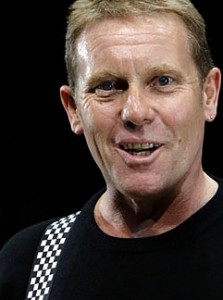
Dave and Dave A Go Talk: An Interview with Dave Wakeling of the English Beat

Ska /skä/ (noun) – A style of fast popular music having a strong offbeat and originating in Jamaica in the 1960s, a forerunner of reggae.

If you’ve ever listened to music by the likes of the Mighty Mighty Bosstones, Madness, Fishbone or The Specials – as well as bands that infuse elements of ska into their music like No Doubt and Reel Big Fish – you know that the genre’s intense energy makes it almost impossible not to get out of your seat and start to move your feet to the rockinest, rock-steady rhythm around. The Beat – known in the US as The English Beat – was one of the bands at the forefront of ska’s second revival (or “wave”) and one of its best.  With hits like “Save it for Later” and “Mirror in the Bathroom”, the English Beat had the ability to propel audience members into a skankin’ dance frenzy.

And they still do.

Dave Wakeling, the lead singer and guitarist of the English Beat, and the entourage of musicians that round out the current iteration of the band extensively tour the United States and feed audiences a steady dose of high-energy music that often manages to weave in politically-astute and cutting lyrics.  The crowd sweats, the band sweats and, by night’s end, both are all the better for it.

I recently had the opportunity to chat with Dave about the driving force that powers the English Beat’s seemingly non-stop touring, a great soundtrack album that never happened, how a cup of kindness can occasionally have a very bitter taste and why he might cause quite a ruckus when visiting the Rock and Roll Hall of Fame in Cleveland.

Dave Picton: The English Beat tours VERY extensively.  How do you maintain such a rigorous schedule given that your shows are intensely energetic?
Dave Wakeling: Well, we’ve got a decent balance.  Every other month we go on tour for about three weeks and we do about 15 or 17 shows in 21 days.  The other five weeks we’re here at home and we just work Fridays and Saturdays in California normally driving up and down the coast depending.  That way, although we’re doing an enormous amount of work, we’re all getting time off in those weeks so it all works out very well.  We never stay on the road more than three weeks because you start scraping the barrel.  It’s always nice to be able to have fresh real emotions to do the songs.  We can do our memory muscle emotion but it’s not the same. It doesn’t connect as well. It’s kind of dissatisfying.  But if I do a show right under the right circumstances, I feel fresher at the end of the show than I did at the start.  So it’s sort of nurturing to me at this point.

DP: I went to one of your shows about a year ago and it was the first time I had seen you guys.  It was certainly the most fun I’ve ever had at a concert.
DW: Thanks! Where was it?

DP: In Fairfield, Connecticut at FTC’s Stage One.
DW: Right, the train spot.

DP: Yep, that’s the one.  Everyone in the crowd danced throughout the entire show and I’d never really seen that happen before to that level of intensity, but I’m guessing that’s something you’re quite accustomed to.
DW: You know, sometimes people are surprised the first time we get to a venue and they’re not expecting it.  Now, at Fairfield, we’ve been a good few times and people come with an anxious anticipation of having a good dance, I think. It’s all the more benefit, Dave, I think because times are times are really tight. Our social lives and our work lives particularly can be quite tense and the world, at least according to the TV news, is a scary place.  So it’s nice to be able to go someplace with a peer group and throw all caution to the wind and feel at one with yourself and your memories and everybody else in the room.  It’s a rare occasion and the people tell us that they’re really grateful of it and that it can see them through until the next Wednesday.

DP: That certainly was the case for me.  In fact, the show spawned probably the most justified concert t-shirt purchase I’ve ever made because, by the end of your first set, I was absolutely drenched with sweat.  So I bought the shirt, went into the bathroom and changed out of my wet towel of a shirt in favor of my newly-bought English Beat shirt.  Sure enough, by the end of the show, that one was drenched too.
DW:  Ah yes!  Bless your heart.  That’s the ticket.  I end up soaking wet at the end of the shows too, but I don’t really notice it, even though you might start to get tired heading into the second hour of the show after about the one-hour mark. After about an hour and fifteen minutes, you’re back up there again with the energy from the audience. So it’s kind of like what the band does in the first half, the audience holds us back up with in the second half.

DP: I’m curious to know about how the band came together in 1978.
DW: What was most remarkable about it that it was the first person we met played a particular instrument ended up playing that instrument in the band. There weren’t any auditions or “what about this guy” or “what about that guy” and so it was very much like what you might see in a movie script about putting a band together.  Everything all came together so wonderfully easy that, right at the beginning, you had a sense that it wasn’t going to last for very long. [laughs] It had a certain magical charm to it that this group of people were put together for a certain purpose.  And it turned out that it was, you know.  We managed to combine dance music with a gentle social commentary or a subtle gentle prodding. So we wanted to combine both types of prodding, the sexual and the social. [laughs] And it worked perfectly.  Even now, I’m getting messages from people at Occupy Wall Street saying that the Beat album is being played, that the songs “Big Shot” and “Stand Down Margaret” are deemed particularly appropriate for the times.  One of the huge benefits is that if you’re lucky enough to get a chance to be in the moment fully, then it never really goes away.  Once you’ve made that connection – even though sometimes the waves of ska take seven years in between high tides – it always flows back and all of a sudden lyrics become pertinent again.

DP: Any chance you’d put together some new material and release a new studio album that might include songs in which the lyrics deal with current issues and socio-political topics?
DW: We’re in the process of doing that now, actually. I’ve got just over 20 songs started and some of them are my favorite songs that I’ve ever done.  I always feel that, though.  But, interestingly, I was just going though them and initially I hadn’t really thought about them in terms of an album.  But then I started trying to figure out what songs would I put on an album this week and it sort of changed a little bit.  It was a bit more romantic of a mood a few months ago but now the streets are filling up with people and some of the other songs are starting to become very timely and appropriate.  The English Beat and the General Public catalog are both being re-licensed and re-released at the beginning of next year and so I’m hoping to take a jolly good slipstream off the back of some of that and introduce my new songs. I’ve been playing them out live.  We played a few of them in Fairfield over the past couple of years.  Just as we get a song ready, we might play it at somewhere that is friendly to us.  They’re going down really great.  I’ve been battling with how to get the songs out sort of algebraically correct as everything’s done with computers nowadays and still manage to retain the live groove and excitement of the live concert and, after much exploration, we finally found a way to do it.  Once we got our technique down, we banged out a lot of the songs with full spirit and they sound tremendous.  I’m really pleased.

DP:  The English Beat is currently a tale of two bands: The English Beat fronted by you here in the States and The Beat that includes two of your original band mates from the early 80’s.  How does that work – especially if you want to perform shows or tour in the UK?
DW: Well, it was fine.  Now it’s causing enormous trouble.  I wish I had never suggested it in the first place. You know, your kindness can come back and bite you in the ass, can’t it? Now it’s difficult for me to find a gig in England because they can’t call me “The Beat” because [Ranking] Roger’s used that name so much and they can’t call me “The English Beat” because they’ll think that everybody will think that’s a cover band covering the Beat’s songs.  I find myself with the irony of trying to arrange a song in my hometown and finding it more difficult than I expected! [laughs]  It’s the troubles of ska, Dave.  I tell you it’s not as easy as it looks, mate! It looks like one knees-up party but – oh no! – the Machiavellian things that go on in the background. [laughs]

DP: So where do you see the future of ska going?
DW: I think it’s got a rosy future. It’s always been a music of happy protest and I think there’s going to be much of a taste for that in the upcoming months and year.  We found during the punk times or during the 90’s that if you protest too much, it starts to sound like whining and you actually wind up distancing yourself more from the people that you want to reach.  Ska – and reggae I suppose – has always had that ability to sound like a party from a distance and then as you dig into the lyrics, you hear that there singing about starving children but it’s acceptable because it’s been put to you in such a delicious way with the beat and it hits your spirit way before it tries to stretch your mind.  I think we’re going to start to see a lot of that especially as there aren’t really a lot of record companies that are telling artists “don’t do this” or “don’t do that” to try to modify them for the charts.  I think you’re going to see a lot more people just singing straight from their heart and straight into the computer.  I dare say there will be a renaissance.  I don’t know what wave of ska we’re on now.  I think maybe the fifth wave is about to come, I’m not sure.  But I imagine that we shall see one and I’ll be there trying to flagrantly take best advantage of it as soon as it happens you can be rest assured of that! [laughs]

DP:  In addition to being a fan of your music, I’ve always been a fan of UB40, a band that started in Birmingham and got together the same year that the Beat did, 1978. Why do you think was there such a massive ska and reggae movement in your hometown?
DW: The guys in UB40 and I grew up within a mile of one another as kids.  It’s remarkable.  There were also the Selector and the Specials in Coventry and Dexy’s Midnight Runners in Birmingham at the same time. I think more than anything else it was a post-punk reaction where punk hadn’t really been a huge deal in Birmingham.  Most of the people who had made any name of it in that genre had gone off to London to do it, as is traditional in Birmingham.  But immediately post-punk, for reasons I’ve never really fully understood, a terrific scene developed that we weren’t even aware of, frankly, because who was to know that UB40 was going to become the biggest-selling reggae band in the world or that Dexy’s Midnight Runners were going to be lauded as poets for decades?  Nobody had that idea of that at the time, really.  We were just three local pub bands trying to be sarcastic about each other behind each other’s backs! [laughs]

DP: Your song “March of the Swivelheads”, an instrumental version that you released of “Rotating Head”, was used extremely effectively in the ending chase sequence in “Ferris Bueller’s Day Off”.
DW: It was, wasn’t it?

DP: Definitely. And it’s probably the song that’s most associated with the movie – with the possible exception of Yello’s “Oh Yeah”.  Yet, despite the degree to which music was at the core of the movie and how successful the film was at the box office, no soundtrack album was ever released.  Do you know why this was the case?
DW:  I never really fully understood why.  I think what was happening at that time was that John Hughes was starting to develop his own company, John Hughes Music, and all of a sudden trying to license tracks three ways rather than two became thoroughly complicated.  I think that was what happened because we were fully anticipating a soundtrack at the time and, of course, it was going to be a fairly great one.

DP: And probably a big seller, too based on the fact that soundtrack albums to his movies usually moved lots of copies because kids dug the music and, in order to relive the movie experience, bought the soundtrack album or cassette given that, at the time, you couldn’t go out and buy a videotape of the film or download it.  I know a lot of soundtracks from John Hughes movies wound up in my record collection for that very reason.
DW:  Right. You know, they’re making a documentary about that film now. I’ve been invited to speak on the DVD of that documentary but I haven’t really decided yet.  I’m not really sure, to be honest.

DP: While we’re on the topic of soundtracks and collections of songs by various artists, if I snagged you iPod, turned it on and pressed “random”, what would I hear?
DW: Well, you’d be very lucky if you managed to snag my iPod, because I don’t have one and I never will.  I don’t think they sound any good.  My son, a few years ago, came running up all disappointed like “Oh, dad! My iPod’s broken!”  And I said “Good!” [laughs]  You know, the instruments in a classical orchestra were effectively designed around human’s emotional points –  chakras is what I call them – and analog recording was designed around those same parameters.  But when you switch the whole thing to digital, one of the things that happens is that the instruments don’t resonate at the same places they used to.  So the old people who say the “album” vinyl version of Led Zeppelin I sounds warmer than when they listen to it on their iPods are absolutely correct.

DP:  I noticed that on the English Beat’s facebook page that you had posted a picture of your hallmark teardrop-shaped guitar that had made it into the Rock and Roll Hall of Fame.  How did that come to happen?
DW: Yes, I just put the photographs of it up yesterday on my facebook as well as that, recently in my hometown local newspaper, the Birmingham Evening Mail, printed out what they thought were their all-time top 10 bands to come out of Birmingham and we came fifth after Black Sabbath, the Moody Blues, Duran Duran and ELO.  So to be able to post both of those things in the same week was stunning to me.  I first met the people associated with the Hall of Fame when we opened for Devo in Cleveland and they started coming to a few shows.  They gave us a tour of the museum and we got to go back behind the scenes. You have to have a coat on and a pair of gloves sort of like a doctor to go back in this spot. You’re not allowed to touch anything.   We saw one of Bob Marley’s dreadlocks in a box covered in paper tissue.  They opened another box and there was a longish envelope that had been slit open and on the inside in John Lennon’s handwriting was an early draft of “Lucy in the Sky With Diamonds” with all of these crossings-out and changes.  You could see where he was playing with the words and the rhymes.  Absolutely stunning.  I had a fantastic time.  I got to meet the guy that runs it and it turned out that in 1980 he’d been a college radio guy in Ann Arbor and, unbeknownst to me, I’d been his first interview ever on the air and I was really kind to him, I guess and helped him through and now he’s the head honcho at the Rock and Roll Hall of Fame! [laughs] So on my way out, they asked me if I enjoyed myself and I said that it was fantastic.  The only placed that had ever moved me more, really, was the Motown Museum I have to visit every time I go to Detroit.  So they said, “OK…well when do we get your guitar?” and I was like “WHAT?!?” [laughs] It was sad though, to be honest, because I played that particular guitar at every gig for 27 years.  So it came the morning to hand it in and I had a little play on it in the hotel room, talked to it a bit and shed a couple of tears.  They fell on the guitar so I polished the guitar with tears, put it in the box and took it in.  I still feel kind of guilty because I know it doesn’t know what’s going on.  It thinks it’s just waiting between the sound check and the gig, you know? “No, no…Dave will be here in a minute. Long break before the show tonight isn’t it?” [laughs]  So I have to talk to it whenever I go back and look at it in the case and try to explain the situation, but then I start gathering crowds of tourists looking at me. “Oh look, daddy!  That old man is talking to a guitar!” I’ll have to stop, let the crowd disburse and then go back and have another chat.

DP:  So if the Hall of Fame gets broken into and that guitar is the only thing missing as a result, I think I’ll be able to tell the authorities who their main suspect should be, right?

DW:Yeah! Either that or it probably walked and came back! [laughs] One day, I may have to use it at a show in Cleveland.  The paperwork is extensive because it’s now not a musical instrument.  It’s insured as an artifact.  In fact, nobody’s allowed to touch it without white gloves – including myself.  A lot of people said it sounded like I played it with gloves on anyway, so it’ll all work out! [laughs]

 For more information about the English Beat and tour dates visit:
Facebook: http://www.facebook.com/EnglishBeatFans
Twitter: http://twitter.com/#!/englishbeatfans
MySpace: http://www.myspace.com/officialbeatspace
Dave’s official web page: http://www.davewakeling.com/home.asp

CD Review: Chimaira “The Age of Hell”

Chimaira
“The Age of Hell”
Entertainment One
Producer: Ben Schigel, Mark Hunter, Rob Arnold
Tracks: 12

Our Score: 4 out of 5 stars

Chimaira’s “The Age of Hell” is the 6th studio album from the Cleveland based groove metal band. It is the bands first release on eOne records and is the follow up album to the bands 2009 release titled “The Infection”

“The Age of Hell” seems to be a step in a new direction for Chimaira. This could be the band growing older and progressing as a musical unit or the result of the ever changing tides in the music industry which currently seems to be calling for more stripped back listener friendly albums. I am going to go out on a limb and say it’s probably more so my first observation. “The Age of Hell” is the bands 6th studio album I would hope by now that after such brutal albums as “The Impossibility of Reason” and the bands 2005 self titled album “Chimaira” the band is about out of things to be mad at. Listeners have to remember that eventually a band will change. This could be due in part to age, different influences or different members. I like to look at change as a good thing especially when it comes to music. If Chimaira or any other band for that matter kept making albums that sounded the same as the last would you or I keep buying them? Probably not!

Chimaira’s “The Age of hell” album is a smoothed out metal record with catchy vocal harmonies and synth infused break downs. “The Age of Hell” is less edgier than the bands previous releases however it still provides listeners with plenty of weight and Chimaira charm.

Track Listing:
1.)    The Age of Hell
2.)    Clock Work
3.)    Losing My Mind
4.)    Time is Running Out
5.)    Year of the Snake
6.)    Beyond the Grave
7.)    Born in Blood
8.)    Stoma
9.)    Powerless
10.)   Trigger Finger
11.)   Scapegoat
12.)   Samsara

Related Content

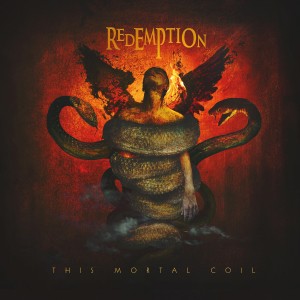
CD Review: Redemption “This Mortal Coil”

Redemption
“This Mortal Coil”
Inside Out Music
Producer: Neil Kernon
Tracks: 11

Our Score: 3 out of 5

“This Mortal Coil” is the 7th release by the progressive metal band Redemption. The band features Nick van Dyk , Bernie Versailles, Sean Andrews, Chris Quirarte and former Fates Warning vocalist Ray Alder. “This Mortal Coil” is being released via Inside Out Music and is the bands follow up release to their 2009 album titled “Snowfall on Judgment Day”. “This Mortal Coil” features 11 new progressive metal tracks produced by legendary producer Neil Kernon.

“This Mortal Coil” at first seemed like just another progressive heavy metal release. However after researching the album further and reading that prior to the recording of the album guitarist/keyboardist Nick van Dyk was diagnosed with blood cancer and given only a few years to live made me dig a little deeper into the songs. Tracks such as “No Tickets to the Funeral” and “Let it Rain” seem to speak volumes about what was going through Nick’s mind during the writing of the album. “This Mortal Coil” contains some really solid playing and appears to be the bands strongest album yet. A personal favorite of mine was the song “Dreams from the Pit”.  Clocking in at just over 9 minutes the track has an immensely dark and eerie feeling combined with blazing guitar passages that just wowed me from start to finish.

Redemptions newest album “This Mortal Coil” is easily the bands best work yet. The album seems to have a little something for everyone. Even if you are not a heavy metal fan or are just looking to test the waters of progressive metal listening pick up Redemptions “This Mortal Coil”!  I can almost guarantee that you will become an instant fan of the band and the progressive metal genre.

Track Listing:
1.)    Path of the Whirlwind
2.)    Blink of an Eye
3.)    No Tickets to the Funeral
4.)    Dreams from the Pit
5.)    Noonday Devil
6.)    Let it Rain
7.)    Focus
8.)    Perfect
9.)    Begin Again
10.)  Stronger Than Death
11.)  Departure of the Pale Horse

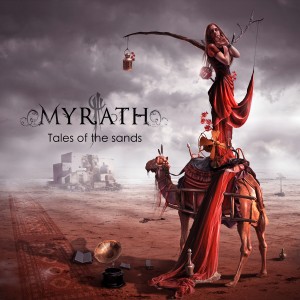
CD Review: Myrath “Tales of the Sands”

Myrath
“Tales of the Sands”
Nightmare Records
Producer: Kevin Kodfert
Tracks: 11

Our Score:  3.5 out of 5 stars

“Tales of the Sands” is the follow up album to Myrath’s 2010 release “Desert Call”. The North American release of “Tales of Sands” features 11 new tracks that were produced by Kevin Kodfert. The album is being released via Nightmare Records and continues to break new ground in what listeners have dubbed “Oriental Metal”.

“Tales of the Sands” features a variety on non traditional instrumentation that makes each of the 11 tracks quite interesting to listen to. Zaher Zorgatti’s vocals reminded me of a young Dave Draimen. With all the layers of instrumentation it was hard at times to decide what parts of the tracks I really wanted to listen to. This however was not a bad thing as producer Kevin Kodfert did a spectacular job as did Frederik Nordstrom who mixed the album. Each song in my opinion was crafted to showcase each instrument. Being of fan of melodic metal music “Tales of the Sands” has definitely made me a fan of Myrath. Songs such as “Dawn Within”, “Apostrophe for a Legend” and the album’s title track “Tales of the Sands” were tremendous pieces of work.

Myrath’s “Tales of the Sands” I felt was a really great album! Though the songs might be a little too involved to garner the attention of fans outside of the genre “Tales of the Sands” is still a great album that is definitely worth checking out.

Track Listing:
1.)    Under Siege
2.)    Breaking the Seas
3.)    Merciless Times
4.)    Tales of the Sands
5.)    Sour Sigh
6.)    Dawn Within
7.)    Wide Shut
8.)    Requiem for a Goodbye
9.)    Beyond the Stars
10.)  Time to Grow
11.)  Apostrophe for a Legend (Bonus Track- North America Only)

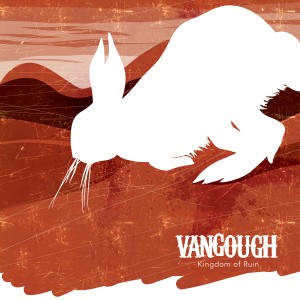
CD Review: Vangough “Kingdom of Ruin”

Vangough
“Kingdom of Ruin”
Nightmare Records
Tracks: 15

Our Score: 2 out of 5 stars

“Kingdom of Ruin” is the newest release from the Oklahoma City based band Vangough. “Kingdom of Ruin” will be the bands 3rd release which features an interesting concept related to a man stepping between two realities and his link to the newly discovered world. The album is a follow up to the bands two previous albums “Manikin Parade” and “Game On!”.

Vangough’s “Kingdom of Ruin” was an odd listen to say the least. The album screams concept album as each track spirals down a different path in an effort to tell the underlying story. For me as a listener there was just too much going on making it hard to decipher what I was listening to. The songs  on “Kingdom of Ruin” all had very solid instrumentation however I do question the structure in some of the songs. I did find a few highlights such as “Requiem for a Fallen King” which was a pretty straight forward rock tune that featuring and very Santana-ish inspired solo. I also really enjoyed the softness of the song “Alice”.

Not being a huge fan of concept albums did sway my opinion of Vangough’s “Kingdom of Ruin”. I will say though that the album is not a bad album by any means. If concept albums are your thing then this album would surely be a great addition to your music collection. However if you are looking for an album that is easily accessible and straight forward then Vangough’s “Kingdom of Ruin” may not be the best choice.

Track Listing:
1.)    Disloyal
2.)    Choke Faint Drown
3.)    Abandon Me
4.)    Drained
5.)    Kingdom of Ruin
6.)    Frailty
7.)    The Transformation
8.)    The Rabbit Kingdom
9.)    Stay
10.)  Sounds of Wonder
11.)  A Father’s Love
12.)  Requiem For a Fallen King
13.)  An Empire Shattered
14.)  Alice
15.)  The Garden Time Forgot

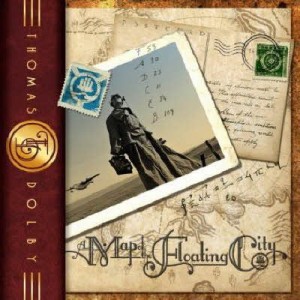
CD Review: Thomas Dolby “A Map of the Floating City”

Thomas Dolby
“A Map of the Floating City” (single-CD edition)
Lost Toy People Records
Producer: Thomas Dolby

Our Score: 4 out of 5 stars

“She Blinded Me With Science”.  It’s a song that is included on so many greatest hits of the 80’s compilations that one could easily view Thomas Dolby as being the definitive MTV one-hit wonder boy in an era known for flash-in-the-pan artists.  But to know Dolby only for “Science” is to ignore a career that includes five albums that consistently explored a broad range of musical styles and thematic content .  And then, after 1992’s “Astronauts and Heretics”, he effectively disappeared.

“A Map of the Floating City” – Dolby’s first album of original material in 20 years – finds him once again refusing to be tied down to any one genre of music.  And, for the most part, it works so well that it’s hard to believe he’s been absent for so long.  On it, he combines two of his innate abilities – instrumental virtuosity in a wide variety of genres and superlative storytelling .  Biographical in nature, the album itself is comprised of three musical novellas: “Urbanoia”, “Amerikana” and “Oceanea” and while the album as a whole is cohesive as a complete work, the mood varies as each of its chapters unfold.

The four songs that comprise “Urbanoia” are easily the most brash.  The opener, “Nothing New Under the Sun”, with its staccato snippet lyrics, anchoring drum line and guitar accentuation, is as close as “Floating City” gets to including a straightforward rocker.  Although not mind-blowing, it’s a solid track that serves to whet the palate.  Similar in its simplicity, “A Jealous Thing Called Love” plays as an upbeat version of “I Scare Myself”, a Dan Hicks crooner classic that Dolby covered on 1984’s “The Flat Earth”.

But not everything that Dolby touches turns into sonic gold.  “Spice Train” is the City’s most synth-laden resident.  It’s fun but by the time the ever-clever Dolby tries to prevent the track from succumbing to being a mere piece of danceteria fart-funk fluff by infusing it with wafting eastern-derived musical strains, it’s been derailed by its own popish simplemindedness.  “Evil Twin Brother” is basically Sting’s “An Englishman in New York” after it’s been seduced by the dark side.  Edgy and occasionally dissonant, it’s the first track where we hear Dolby’s unflappable ability to tell a vivid story through simple imagery but the herky-jerky alternating musical dynamics are so jarring that the song itself winds up being the album’s weakest link.

The mid-section of the album demonstrates Dolby’s ability to roll the dice by working in multiple musical genres and repeatedly coming up a winner – although, lyrically, he always seems to bet on black within “Amerikana” as the stories always have a somber tone either consistently throughout or as a sudden turnaround at the song’s end (in the case of “Love is a Loaded Pistol”, said weapon winds up being an actual firearm).   Even “The Toad Lickers”, a country/bluegrass romp that would make any good ole’ boy jingle and jangle his spurs, can be seen as a biting satire of pugnacious backwoods culture.  The epic “17 Hills”, featuring guest guitarist Mark Knopfler of Dire Straits, finds everything that works well within the boundaries of “Floating City” in perfect harmony.  Playing like an everyman drama in three acts, Dolby’s songwriting talents in tandem with his ability to evoke emotion through music have never been better displayed than within this lover’s tale of a jailbreak gone wrong.  It’s a story so engrossing it would even cause the ever-esteemed master of melancholy, Richard Thompson, to shed a tear.

“A Map of the Floating City”s final destination is the often tranquil “Oceanea”.  In the sub-section’s title track, Dolby creates an atmosphere so lush and soothing that one cannot help wanting to stay there longer than its short three-minute runtime allows even if his lead vocal is drenched in the most overused and annoying vocal effect in recent memory, Auto-Tune – something that was not true of the track when it was included on the “Oceanea” EP that was released earlier this year.  Why the track has been modified in this way for the full-length album is as mysterious as the Bermuda Triangle.  It’s still a great song, though, and the guest vocals by Eddi Reader send it soaring.

The remaining tracks, “To the Lifeboats” and the Brazilian-flared “Simone”, are fine examples of Dolby’s ability to generate great music in a myriad of styles.  The mid-section of “Lifeboats” rocks out so hard with power chords and fuzzbox vocals that it’s easy to visualize Dolby himself clad in heavy metal garb while a small Stonehenge monument slowly descends into his recording studio.  But in its closing third, the song settles into the quieter aural landscape that makes the album such a worthwhile journey.  The roads through Dolby’s “Floating City” aren’t completely devoid of potholes but when it truly sails, it’s poetry in motion.

“A Map of the Floating City” will be released on October 25th, 2011.
For more information about Thomas Dolby, visit
www.thomasdolby.com


Interview with Blake Neely

Blake Neely is currently scoring two great shows on television “The Mentalist” and newcomer “Pan-Am”. Blake has also scored various shows like “Brothers and Sisters” and “No Ordinary Family”. Media Mikes had a chance to chat with Blake to chat about comparing his scores and what we can expect from the score on this Fall’s seasons.

Mike Gencarelli: What was your inspiration for the “Pan-Am” score?
Blake Neely: My first reaction was to ask”why they wanted me?” I didn’t really do that type of work and 60’s themed stuff really wasn’t in my skill set. I told them this and they told me that the show was more of an American story with big rich orchestral sounds. Since I started doing music for television, I always tried to make the music more like what you would hear in a feature length film. When you think about it a television series is like a 22 hr. movie spaced out over an entire season. When I watched “Pan-Am”, I thought it was a perfect show to be more bold and cinematic. The show travels around the world and there are multiple story lines going on. The show was an opportunity to start with a big pilot and see what I could get away with.

MG: Were you able to see episodes prior to scoring?
BN: They send me each episode with temp music in it. The temp music might have been idea as to what they are looking for. From there we have a discussion about our ideas and I go from there. I do get to see the show way before its finished.

MG: Do you find the temp tracks helpful in anyway?
BN: They can be helpful if you have never worked with a director or producer. After you work with the same clients a few times you start to develop a language and understanding. If you have never worked with someone the temps can help you gauge what they are thinking. I find it interesting because composers are like actors but they never hire temps for us. (Laughs) The biggest hindrance for me is when a film may have been tested to an audience already with a different score. If the score tests really high it can cause people to not want to change what was done so you end up mimicking what was previously done.

MG: How do you feel working on “Pan-Am” compares to working on “The Mentalist”?
BN: When I take on multiple projects I try to look for ones that are very different from each other. In this case they couldn’t be more different. On “The Mentalist” we are dealing with more electronic sounds and grooves. “Pan-Am” is orchestral and less dark. I can kind of choose which one I want to work on by the mood I am in. It’s a nice balance. I have worked on similar shows at the same time before and it’s difficult to come up with different ideas out of the same brain.

MG: How do you feel the scores for “The Mentalist” have differed from season to season?
BN: I try to keep the sound pretty much the same. I look at the music as part of a set. You aren’t going to repaint the sets or change the characters costumes. There is a familiarity that the audience wants. I tend to get bored with myself very quickly so I try to change things up. When I do make changes I have to make sure that I’m not going out of what works for the show. I have really concentrated on that with the later seasons. With “Pan-Am” I am still honing in and developing a sound for the show that will last just as long as the other.

MG: What do you find is your biggest challenge when approaching a television show?

BN: Time is the biggest challenge. On a good week I have 6 days from start to finish. On these shows there is anywhere from 20-30 minutes per show. It’s all a matter of time in getting that much music written in 6 days. You develop tricks over time that helps speed things up. When you are working on a film you have a lot more time to think about your ideas.

MG: Do you have a specific genre that you are most comfortable with?
BN: Looking back I think I am most comfortable with Americana type music. I’m also comfortable doing comedies and romantic comedies. There are certain styles you can do quickly and well. In this profession you have to be able to do all types of genres.


Related Content

Interview with Jane Antonia Cornish

Jane Antonia Cornish is a composer who recently re-scored the upcoming film “Fireflies in the Garden”. The score was originally done by the Oscar nominated Javier Navarrete (“Pan’s Labyrinth”). Media Mikes had a chance to chat with Jane about re-scoring the film and what we can expect next.

Mike Gencarelli: What was you approach to re-scoring “Fireflies in the Garden”?
Jane Antonia Cornish: I was just contacted this summer. It has been a good four years since the film came out at the Berlin Film Festival. Since that time the film was re-edited and essentially became a brand new film. It’s very different which is why I was asked to score it. I came on to give it a new sound.

MG: What was your inspiration for re-scoring the sound?
JAC: After seeing the new cut I sat down with the film’s director Dennis Lee. He went through and told me where he wanted the music to come in and go out. He was great because he gave me free reign to write in my style. I was very inspired by what I saw. The film is beautiful and the cast is great. The musical ideas really flowed.

MG: What was your biggest challenge working on the film?
JAC: Everything went really smoothly. I got the film in July and delivered it in August. Working with Dennis was fantastic. We were on the same page from the start. It was a really great project.

MG: Was there a specific style of music that you tried to use in the film?
JAC: Yes. I would say it’s a classical score. I wrote it for piano trio, solo obo and chamber orchestra. It has some minimalist elements. It very much in the style I write in when I create orchestra music.

MG: Do you enjoy having freedom when you are scoring or do you prefer direction?
JAC: I do like to get direction from the director as it is their film. I like to make sure what I compose is in the directors vision. I do however like freedom. I enjoy being able to write in my style. On this latest film I didn’t even hear the previous score. I was presented with an entirely different cut all together.

MG: Can you give us some background on your upcoming film “Highland Park”?
JAC: The film stars Parker Posey and Danny Glover. It’s set in Detroit and centers around a group of people hit hard by the economy. The group bands together and starts buying lottery tickets and you can imagine what happens next. The film has a lot of heart.  I really enjoyed working on the score.

Interview with Richard Band

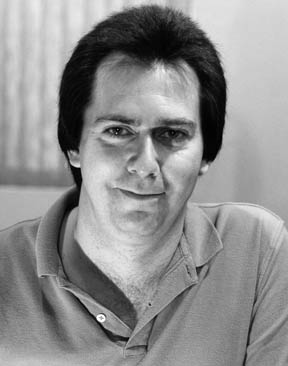
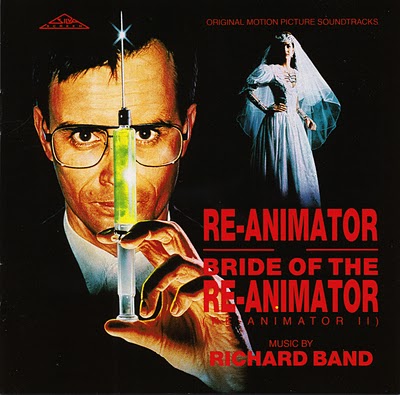
Richard Band is known best for scoring the film “Re-Animator”, which is one of my favorite horror scores. Richard has worked a lot in his career with his brother Charles Band specifically with scoring the “Puppet Master” series. Movie Mikes had a chance to chat with Richard about his scores, his favorites and what he has planning upcoming.

Mike Gencarelli: What is your process like when starting to compose for a film?
Richard Band: What I like to do is look at the film numerous times. In the old days I would sit and watch the film in a screening room around four or five times. Now with the invention of quick time and computerized digitalization I will sit and watch a film as many times as it takes to get an idea for what the movie calls for. It has to kind of speak to me in a way so that it passes from my head down to my heart. A lot of times a film has a deeper context and that’s really what I look to bring out with music. I really like to use music to bring out that underlying momentum or meaning of the film or characters.

MG: Have you ever worked on a score prior to seeing a scene or film?
RB: It happens now and then. When you’re working on a musical you have to have the music completed before they start filming. I haven’t done any musicals per say but I have done some work where a song or music was required for the scene to be shot. In that case you have to get familiar with the scene and talk with the director and producer. I try to use a similar process as when I am able to see the project that way everyone is on the same page.

MG: “Re-Animator” is one of the best scores in horror history and also one of my personal favorites. Can you tell us what your inspiration was for that score?
RB: After watching the film quite a few times the thing that came to me very early on was Herbert West’s mania. This character is clearly a genius but at the same time he is totally nuts. This was a main driving force. This combined with the fact that the film was so out there and crazy for it’s time. If the film was treated on a serious level people would probably walk out in a second as it would be too much to believe on any level. I decided the music had to have a type of humor to it that was quirky and a touch off. I began thinking about different movies that the audience could immediately relate to and at the same time exemplify just how nuts and crazy the main character is. “Psycho” came into my mind and I knew it was a film that everyone would recognize. I used some of the motifs’ and or orchestrations from “Psycho” but I added my own original theme and a quirky drum that would give it my own signature but also give it something people could relate back to.

MG: You worked on all/most the films in the “Puppet Master” series, how do you differentiate when working on each score?
RB: In the case of the “Puppet Master” series when it started out no one knew it was going to become a franchise. I think an important ingredient in any film is there has to be a very identifiable theme that could go across that film and be strong enough for people to identify with. On the sequels there was no question that the main theme had to be a driving force in the subsequent scores. The theme its self has an element of sadness combined with a circus type element that shows that no matter how bad the puppets are in their deeds the puppets are actually the good guys.

MG: You have worked throughout the sci-fi/horror genre; do you have a favorite score that you have worked on?
RB: I have done so many different kinds of scores. Of the genre stuff I don’t think I really have a favorite. I did a score that’s not really genre called “Ghost Warrior”. I recorded that with the Royal Philharmonic and it has a very beautiful score. Of the genre stuff “From Beyond” is in the top five. I did a score for Paramount called “Dragon World” which is a really beautiful score that I like a lot. It’s hard to really pin point one favorite.

MG: Do you a have film score that you have not worked on that you really liked?
RB: I have always been a very big fan of Jerry Goldsmith’s work. He has done so many good scores. The score he won an Academy award for in “The Omen” was really incredible. Even going back earlier than Jerry his teacher Nicholas Rosa did some amazing scores as well like “Spartacus”. There have been a lot of great composers through the years. I wish we had more of those types these days. There seems to be a shortage of very lush scores these days due to cost’s.

MG: How do you feel that composing has changed since your first film, if at all?
RB: Scoring has changed since I started. The first 12-15 years I did mostly large orchestral work. My upbringing and training was much more formal even though I had done some electronic work during those years. I started before computers really came into use so the work was much more meticulous back then. We had a music editor who wrote music notes while watching a piece and at the end they would hand me around 500 pages of musical notation broken down to seconds and milliseconds. Everything was done from memory and notes which was much more intimate. A lot of times in those days it was me sitting at a piano with a lot of good pencils, paper and erasers. Today you have to be both a composer and a friggin engineer to work all the gear they have now. In the older days I could put in a good 10 hr. day of writing. These days if I put 10 hrs. of work in maybe half of it is writing and the rest is screwing around with equipment.

MG: Tell us about your upcoming projects?
RB: Right now I am doing a pretty cool 3-D short that I believe will start airing at the end of the month on one of the 3-D channels. Then In a couple weeks I start on a feature titled “Shiver” which is a suspense thriller starring Danielle Harris, Casper Van Dien and a few others.

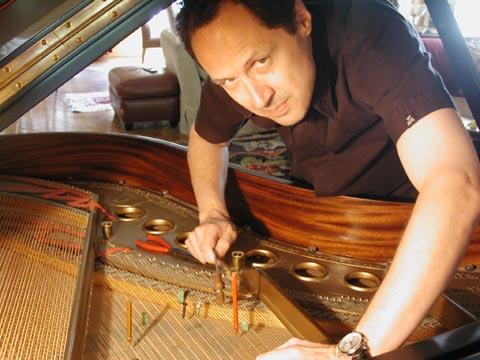
Interview with Mark Isham

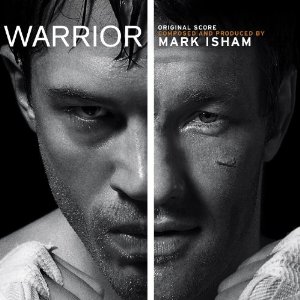
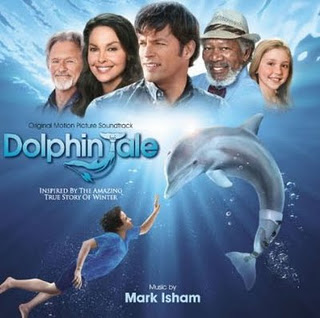
Mark Isham is the composer for two current films this year “Warrior” and “Dolphin Tale”. Media Mikes had a chance to chat with Mark about working on these films and also what he has planned next.

Mike Gencarelli: What was your biggest challenge when it came to creating a score for “Warrior”?
Mark Isham: I would say the biggest challenge right off the bat was to figure out the vocabulary of the score. The film is not just about fighting or MMA. You don’t want to limit yourself to just the sounds of MMA but you don’t want to violate that world either. It became very apparent that this project wasn’t going to work with a traditional score. I spent a few weeks fooling around with the types of music we could put in this film. I worked with a few different music editors who helped experiment to find what the sound was of this picture. It ended up centering around the guitar. The sounds ranged from highly compressed basic electric sounds to huge rock and roll guitar sounds. There is some orchestration in the film which helped with the iconic “Rocky” style ending. You need the size and weight that an orchestra brings when you are building up to the final scene.

MG: Did you get inspiration from any other films?
MI: I can’t say there were any specific inspirations. The “Rocky” film is much more one dimensional than “Warrior” however you can’t deny the film being out there as it has worked so well. We knew we would have to use our own vocabulary in order to create the size and emotion of those final scenes.

MG: What was the process like for you working transitioning from “Warrior” to “Dolphin Tale”?
MI: “Dolphin Tale” was much easier to start. Charles Martin Smith who directed the film had a very clear sense of what he wanted as to where Gavin O’Conner was searching just as much as I was for a sound that fit the film. He wasn’t sure so it was an exploratory start for both of us. Charlie wanted a large traditional orchestral score. There was no trick to it as the story was very warm and open. He wanted me to find the two or three themes that the story really needed. We made sure we stayed very melodic as we didn’t want to fall victim to the current trends. Our catch phrase was “Shamelessly Melodic” [laughs].

MG: Do you prefer input from the directors or do you like to work from your ideas?
MI: I am a big believer in as much communication as possible. It’s a team effort no matter when you start. On “Warrior” I started right as the script was green lit because I had been friends with Gavin for some time. There is still not a chance where I am going to know as much as the director is going to know about what their concepts or philosophy will be about a film. The more time I can spend working with the director the better. A big part of my job is being able to communicate well with the director.

MG: Is there a genre that you prefer working on the most?
MI: No I don’t. I think over the years I have done a big enough variety of films that I feel comfortable working in any of them. I get quite excited when it comes to films no matter what the genre especially if it’s told in a creative way.

MG: From all of your work is there one score that you are most proud of?
MI: I think my two most recent ones “Warrior” and “Dolphin Tale”. I have discovered that one of the reasons I really love my job is that every time I work on a project a new door seems to open when it comes to exploring music. Not only do I try to present the best score I can according to the directors vision but I also want to challenge myself as a composer. I have noticed in the last few years that I have really done that and topped each of my previous works. I think in both of these two scores I learned a tremendous amount and I feel  they are some of my best work.

MG: Do you have any other upcoming projects?
MI: I scored a Scott Hicks picture earlier this year. The film is being held right now for marketing reasons. The film is a Zac Efron love story which I believe the will be being released around Valentine ’s Day so all the girlfriends can take their boyfriends 3 or 4 times [laughs].

Concert Review: “Two of a Perfect Trio” Fairfield, CT

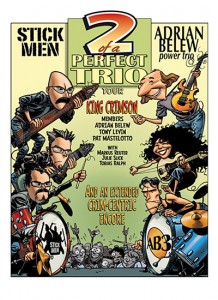
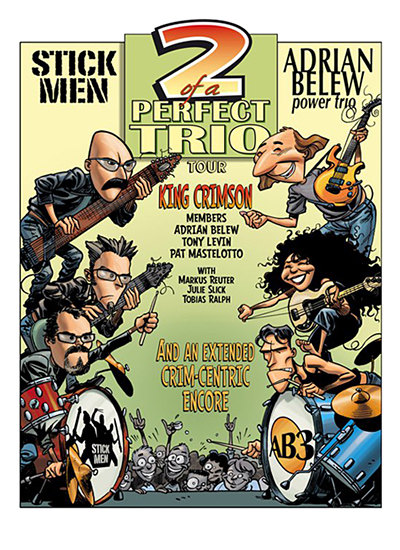
“Two of a Perfect Trio” featuring King Crimson members Adrian Belew, Tony Levin and Pat Mastelotto
Date: Friday, September 30th, 2011
Venue: FTC’s Stage One in Fairfield, CT

Our Score: 5 out of 5 stars

As King Crimson’s Adrian Belew, Tony Levin and Pat Mastelotto took the stage at FTC’s Stage One, a keen observer of detail in the audience decided to point out “Hey!! You’re missing your Fripp!”  However, from the first note played to the final closing bows, the crowd that gathered for this stop of the “Two of a Perfect Trio” tour were enthralled and mesmerized with all-things Crimson (and many things non-Crimson) even if Robert Fripp, the ever-esteemed founder of one of progressive rock’s most heralded bands, wasn’t the master of ceremonies.

The “Two of a Perfect Trio” tour was conceived of during the “Three of a Perfect Pair” Camp, a week-long music camp that took place in mid-August that allowed its campers – musicians and non-musicians alike – to learn from and hang out with Belew, Levin and Mastelotto.  The resulting show allows two trios Tony Levin’s Stick Men and the Adrian Belew Power Trio to each perform a set, and concludes with a third “Crim-centric” set in which various combinations of each trio’s members perform together.

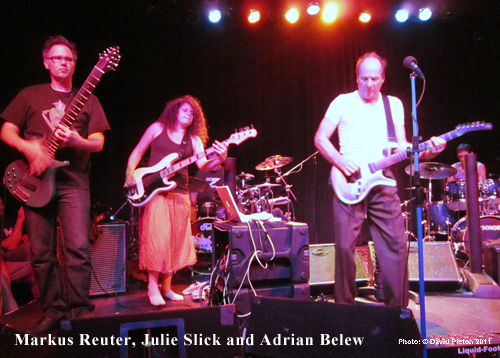
With bass guru Levin on the polyphonic Chapman Stick (as well as his trusty Music Man 5-string electric complete with his patented “Funk Fingers”), Markus Reuter from Innsbruck, Germany on a custom “Touch Guitar” of his own design and drummer extraordinaire Pat Mastelotto delivering a solid funky beat interlaced with a myriad of electronic percussive sounds, the Stick Men set the tone for the three-hour show with a mighty roar in the form of the instrumental “VROOOM” from King Crimson’s 1995 album “Thrak”.  The trio then dove into a number of Stick Men originals and concluded their set with an improvisational rendition of Stravinsky’s “Firebird Suite”.  Despite Reuter’s stoic stance throughout the band’s entire performance and Levin’s sometimes goofy lyric and semi-spoken lead vocals, all three “Sticks” were clearly enjoying themselves and never failed to deliver virtuoso performances and music that, while progressive and complex, was always accessible and – for one particular audience member – reason enough to put on her buh-buh-buh-buh-buh-boogie shoes.

Adrian Belew and the other two members rounding out the “Power Trio”, longtime bassist Julie Slick and newcomer Tobias Ralph on drums, began their part of the show with a sampling of Belew’s solo work (including “Young Lions”, “Beat Box Guitar” and “Of Bow and Drum”) that had much more of a pop music feel than the thickly-layered and sometimes semi-schizoid songs that King Crimson are well know for – although the trio did manage to sneak in the seldom-heard “Neurotica” from King Crimson’s 1982 album, “Beat” which served to remind the audience that they aren’t just a trio – they’re a POWER trio.  As was the case with the Stick Men, Belew and company closed their set with a long-form instrumental piece, a section from Belew’s “e”, a five-part suite that Belew performed in tandem with a full orchestra in Amsterdam earlier this year.

With her long curly hair and bare feet, the Power Trio’s Julie Slick revealed that she can lay down a serious bass groove that perfectly accompanies the extensivearray of bending, swirly and occasionally aggressive sounds that Belew can deliver via his signature series Parker Fly guitar.  Drummer Tobias Ralph delivered all of the goods and then some.  Taking the place of Julie’s brother, Eric, for this tour, Ralph positioned himself behind a fairly simple drum kit (at least in comparison to Mastelotto’s) and pounded out rhythms and beats that would make former King Crimson and Yes uber-drummer, Bill Bruford, envious.

The much-anticipated “Crim-centric” final portion of the show opened with Crims Levin, Belew and Mastelotto doing spot-on renditions of latter-day King Crimson tunes such as “Three of a Perfect Pair” and “Elephant Talk”.  Other players from each trio joined in to accentuate other powerhouse Crimtunes such as “Frame by Frame” “Thela Hun Ginjeet” and the always-blistering “Red”. Even the ballad-esque “One Time”, featuring a subtle yet powerful solo vocal by Belew, managed to work its way onto the set list.

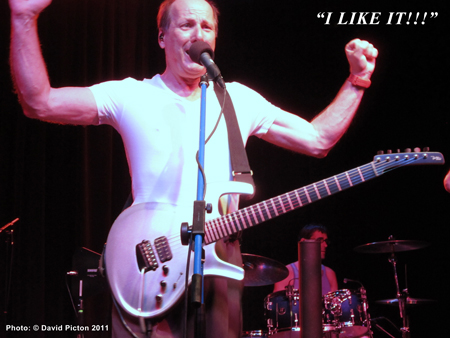
But the defining moment of the show happened in the improvised back and forth drum duel that prefaced Belew’s lyric in “Indiscipline”.  Instead of the serious and somewhat cold super-precision that was at the core of the battle between Pat Mastelotto and Bill Bruford when this song was performed throughout the 1995 “Thrak” tour, Mastelotto and Ralph brought a whimsical and humorous quality to their bombastic exchange of phrases and licks that would rarely (if ever) be seen at an actual King Crimson show.  As Belew exclaimed at the end of the song with arms outstretched in a Rocky Balboa-esque stance, “I LIKE IT!!!”  As did all who had assembled in the Court of the Crimson King.

The “Two of a Perfect Trio” Tour continues through until October 29th.  For a list of dates and venues as well as ticket information, visit http://www.adrianbelew.net/ .

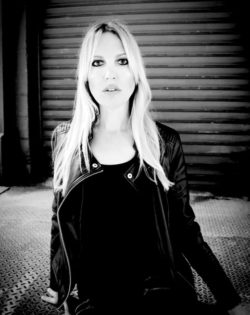
Interview with Fallon Bowman

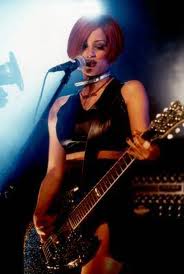
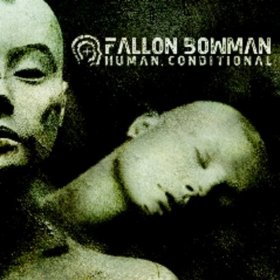
Fallon Bowman shot to stardom in the mid 1990’s with the popular all girl heavy metal group Kittie. Since leaving the group in 2001, Fallon has been a part of several other music projects and most recently she has released her first solo album titled “Human Conditional”. Media Mikes had a chance to speak with Fallon recently about her career in the music business and what it was like for her releasing her first solo album.

Adam Lawton: What was it like leaving Kittie which was a band you helped start when you were still in high school?
Fallon Bowman: It was awful! I actually just wrote an essay about how that departure affected me now and how I have grown since that point. I think I have grown tremendously since that time but it really was a pivotal moment in my life where I couldn’t go on both physically and mentally with the band. It was also difficult because I was losing friends as a result of leaving. When this was all happening we were just kids and relationships were left strained. Today everyone is cool but at the time it was really difficult. I don’t think I left my house for about a year after all of that. I just didn’t know what to do with myself. Luckily I had and still have a very strong friends and family base that were and are there for me.

AL: Was it hard for you being in music business at such a young age?
FB: I think so. Thankfully I had strong families ties and when dealing with things I had my parents behind me a 100 percent. I don’t think I was really ready or prepared to deal with the amount of responsibility that was given to me. People were looking up to me to do all the right things and I was just a kid. It was very difficult to deal with. At the same time I think I sort of went through everything sort of oblivious and I wished I had paid more attention to certain things that were going on around me. Everything happened so fast from the time we toured with Slipknot in 2000, it just went crazy!

AL: How do you think music industry has changed from when you started to now?
FB: Oh my god! Drastically! Back when we started promoting and doing things with Kittie we didn’t really focus on the internet and at the time there was no Facebook or anything like that. We had a Geocities website starting in 1996 until we got signed in 1999 that never really worked out that great. So everything that happened for us came from playing and people talking about the band. At the time we started it was all about street teams made up of fans that would put the word out for each band. That really was the big thing then and when you think about it now how many people actually do things that way anymore? It’s an incredible learning curve now. I am constantly having to learn and be told about new websites and ways to get you material out there. It has been incredible to try and just keep up. I think the music industry is so schizophrenic and all over the place that we can’t get things together as everything is all over the place and moving super fast. It’s just overwhelming at times.

AL: Can you tell us about your label Social Unrest Records?
FB: I started that in conjunction with my previous project/group Amphibious Assault. I really was using it to help build a brand around myself. It was perfectly in line with my very heavy political agenda at the time. Over the years I have done some other things with the label and the political aspect has died down a bit but I am really starting to look into making it something that is viable. I want to make it more than just me on there. The big thing is that the traditional record label that I am thinking of in my head is very hard to maintain. I think I will have to be very innovative and come up with something new. I would like the label to have a very definitive sound and aim.

AL: You mentioned Amphibious Assault. Can you tell us what’s going on with that project?
FB: That was really my break into the hard industrial music world. I love electronic music and Amphibious Assault was sort of my homage to my KMFDM days, when I was obsessed with them. There were a lot of heavy aspects to the project but it also allowed me to develop my singing voice. The group was fairly well received by certain groups. My main reason for moving on from this project was that I always wanted to have different things going on every couple years.

AL: Can you tell us about your latest release “Human Conditional”
FB: After ending Amphibious Assault in 2007, I went and finished university and sort of floated around for a bit. I was still writing music but I wasn’t sure where I wanted to go with it. A friend of mine approached me and asked if had any songs that I would want to do a video for. I had one song that was done and recorded so we ended up working with that. My friend was the one who sort of kick started the project. I really wasn’t thinking of doing anything with it but the song sort of took on a life of its own.

AL: The album is much different that your previous work. Are you more a fan of more melodic music as of late?
FB: Lately yes. I will always love metal and have a strong appreciation for it. People still know me as a metal artist, so it’s been interesting. I really enjoy doing more electronic based music and music I can sing to as opposed to screaming/yelling. I don’t think my voice was ever really meant to do that.

 AL: What other type of things do you have going on or coming up in the future?
FB: I have tons of stuff going on right now! I have teamed up with two local electronic musicians and I am super stoked for this project. The two guys have been looking for someone similar to Portishead to sing over their music. Through mutual contacts we have somehow got together and are working on music as we speak. Hopefully things we be happening within the next month with that project. I am also still developing my record label to incorporate multiple types of entertainment. I have also started to write the follow up to “Human Conditional”. I really should take a break but I just can’t right now.

Thomas Dolby Prepares First New Studio Album in 20 Years

THOMAS DOLBY PREPARES
FIRST NEW STUDIO ALBUM IN 20 YEARS,

A MAP OF THE FLOATING CITY, AVAILABLE OCTOBER 25
Guest artists include Mark Knopfler, Regina Spektor,

 Natalie MacMaster, Bruce Woolley and Imogen Heap

Release follows conclusion of groundbreaking transmedia game

LONDON, U.K. — Thomas Dolby, the iconic ’80s star whose smash hits “She Blinded Me With Science” and “Hyperactive” helped define the MTV generation/revolution, will break his 20-year silence with a new release later this year titled A Map of the Floating City. The album, featuring appearances by special guest artists Mark Knopfler, Regina Spektor, Natalie MacMaster, Bruce Woolley, Imogen Heap and Eddi Reader, will be available on October 25, 2011 on Lost Toy People Records as a regular and hi-res download, as a physical CD, and in a special Deluxe Edition featuring a second disc of instrumentals and bonus tracks.
The five-time Grammy®-nominated British artist quit the music business in the early ’90s and spent many years in Silicon Valley, where his tech company Beatnik Inc. created the ringtone synthesizer embedded in more than three billion mobile phones shipped by Nokia, Motorola, Sony Ericsson and others. Now retired from Beatnik, Dolby has returned to his native U.K. and is busy recording an album of brand new songs in a renewable energy-powered studio he built aboard a 1930s lifeboat in the garden of his beach house on England’s North Sea coast.

Of the album, which is divided into three parts, Dolby says, “The new songs are organic and very personal. A Map of the Floating City is a travelogue across three imaginary continents: In Amerikana I’m reflecting with affection on the years I spent living in the U.S.A., and my fascination with its roots music. Urbanoia is a dark place, a little unsettling . . . I’m not a city person. And in Oceanea I return to my natural home on the windswept coastline.”

“I marvel at the new landscape of the music business — distribution via the Internet and recording technologies I barely dreamed of when I started out,” he continues. “But this album does not sound electronic at all. I have zero desire to add to the myriad of machine-based, synth-driven grooves out there. The Net has made a music career approachable for thousands of bands — but I hear too few single-minded voices among them, so I’m returning to what I do best, which is write songs, tell stories.”

To help tell his stories, Dolby has enlisted an impressive cast of guest musicians. Legendary guitarist Mark Knopfler helps drive the epic “17 Hills,” a song about a pair of hapless lovers and a jailbreak. Natalie MacMaster, the Cape Breton fiddler, adds spice to two songs. Scottish singer Eddi Reader takes a front seat on the ethereal “Oceanea.” Bruce Woolley (Camera Club) plays theremin. And Regina Spektor has a cameo as an East European waitress on “Evil Twin Brother.”

The innovative transmedia game The Floating City <http://www.floatingcity.com>, co-created by Dolby and based on his song catalog all the way back to the 1980s, is currently in full swing and is proving highly addictive for thousands of regular players. The winning “tribe” will be treated to a private concert performance of the new album in its entirety. Thomas Dolby will shortly announce a string of concert dates in the U.S. and U.K. in support of the album.


Related Content

Thomas Dolby Announces U.S. Solo Performance Dates

THOMAS DOLBY TO PERFORM U.S. SOLO PERFORMANCE/LECTURES TO HERALD THE ARRIVAL OF FIRST NEW STUDIO ALBUM IN 20 YEARS

October shows in seven U.S. cities include appearance at L.A.’s

 Grammy Museum and showcase clubs.

LOS ANGELES, Calif. — Thomas Dolby, the Grammy™-nominated British musician and tech entrepreneur, has announced an October seven-city U.S. mini-tour.

These solo performances will take the form of a 60-minute lecture about his new social networking transmedia game, The Floating City, interspersed with live songs from his upcoming album (A Map of the Floating City, due out October 25 on Lost Toy People Records through Redeye Distribution), as well as a few timeless classics.

The trip will take the artist from coast to coast, with live appearances in Washington D.C., New York, Chicago, Seattle, Portland, San Francisco and Los Angeles. Most are club venues, though some live radio and TV shows are included. A list of cities and venues appears below.

At each show, Dolby will tell the story behind the recording of the new album on his solar-powered lifeboat, with an impressive array of guests including Mark Knopfler, Imogen Heap and Regina Spektor. He will also give his personal account of the groundbreaking Floating City game, which he describes as “a Dieselpunk dystopia . . . weary survivors of a global climate catastrophe bartering and trading to stay alive in the face of techno-piracy and mutant squid attacks!”

More than five thousand players played the online game, forming into nine “tribes” and competing for the grand prize — a free private concert by Dolby and his band from his new album.

Along the way they explored a fictional world based on characters and places in Thomas’ lyrics going all the way back to 1980; and discovered downloadable MP3 files of his songs, including sneak previews of works from his upcoming album.

Dolby will retell the player-created stories that unfolded during the 12 weeks of gameplay, highlighting key characters’ profiles, and the “patent applications” they filed to protect themselves against the unpredictable freak events reported by The Floating City Gazette. And he’ll share behind-the-scenes insights into the production process, which took place over the course of an eight-month period using a team of developers in different time zones who never met face to face.

November will see a full live concert tour of the U.K. by Thomas and his band, and a theater/performing arts center tour of the USA will follow in early 2012, along with selected festival dates later in the year.

Prior to The Floating City game and the new album A Map of the Floating City, Dolby is known for his hits “She Blinded Me with Science,” “Hyperactive,” “Europa” and “Airhead.” He also wrote Lene Lovich’s “New Toy” and Whodini’s “Magic Wand.” He is presently musical director of the TED Conference.

THOMAS DOLBY TOUR:

solo lecture/performance

THE FLOATING CITY: A Dieselpunk Dystopia

new album coming Oct 25th


Mon., Oct. 3   WASHINGTON D.C. Sirius XM The Loft

Wed., Oct. 5   NEW YORK, NY 92 Y Tribeca

Fri. Oct. 7   CHICAGO  Martyrs’

Mon., Oct. 10   SEATTLE, WA Triple Door

Wed., Oct. 12  PORTLAND, OR  KINK-FM Concert

Thurs., Oct. 13   SAN FRANCISCO, CA  Bimbo’s 365 Club

Fri,. Oct. 14   LOS ANGELES, CA Masonic Lodge at Hollywood Forever Cemetery

Mon,. Oct. 17   LOS ANGELES, CA  Grammy Museum


Related Content

Chickenfoot III Debuts Top 10 as Band Announces Tour Dates

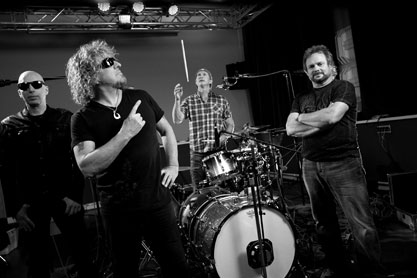
(LOS ANGELES, CA) – “CHICKENFOOT III”, the new album from the supergroup featuring guitarist Joe Satriani, drummer Kenny Aronoff, former Van Halen bassist Michael Anthony and frontman Sammy Hagar – debuted on the Billboard album chart at #9. Tickets will be available Friday, October 7th for the recently announced “2011 Road Test Tour.” The new dates will take the the band through San Francisco, Los Angeles, St. Louis, Chicago and New York in early November. European tour dates will also be announced this month.

The first single, “Big Foot,” debuted at #1 on the Mediabase Classic Rock Chart holding the position for seven weeks and earning over 1.85 million listeners and continues to receive critical acclaim:

“‘Big Foot’ is sinewy, muscular and abundantly familiar – but in a good way. As Hagar sings, ‘that s*** rocks.’” Billboard Magazine.

“Chickenfoot light a fire under rock ‘n’ roll’s collective ass, setting the pace for the genre as a whole. Chickenfoot III melds monstrous grooves and virtuoso playing in one of the year’s best rock records,” writes Rick Florino of ARTISTdirect.com.

Last week on release day, Chickenfoot offered fans a very special free Live Concert Webcast: Chickenfoot Presents “III,” performing tracks from the new album and hosting a 30-minute Q&A session with the fans. “CHICKENFOOT III”, produced by Mike Fraser, features an elaborately designed 3D package with optical illusions and special codes giving fans a fully immersed creative Chickenfoot experience, creating a spectacle with spectacles. With special “3D optical enhancers,” old-skool 3D glasses that come with each package, the cover and numberous inside photos feature artwork that trick the eye by looking through the two different red and blue lenses of the glasses. A look through the red lens even reveals a very special message on the CD itself.

“CHICKENFOOT III” features 10 tracks with so many moments of epiphany that one can barely take them all in on first listen. Colossal, stadium-shaking riffs abound on earth-movers such as “Alright, Alright,” “Last Temptation” and “Lighten Up.” Tradition meets innovation on the Nashville pop-tinged “Different Devil,” the Delta-blues flavored “Something Going Wrong” and the aching rock ballad “Come Closer.” Special video releases and more can be seen at the band’s webpage , as well as their podcast, YouTube, Facebook and Google+ pages. Chickenfoot III follows the band’s 2009 debut album, which debuted at #3 on the Billboard Top 100 and was certified gold for sales of over 500,000 units by the Recording Industry Association of America.

THE 2011 ROAD TEST TOUR DATES:
11/1/11 – San Francisco, CA – Warfield Theatre
11/2/11 – Los Angeles, CA – Avalon Hollywood
11/4/11 – St. Louis, MO – The Pageant
11/5/11 – Chicago, IL – Metro
11/8/11 – New York, NY – Webster Hall

Copyright: MediaMikes.com © 2011 · Powered by: nGeneYes, Inc. · Login

All logos and images used on this website are registered trademarks of their respective companies. All Rights Reserved. Some of the content presented on our sites has been provided by contributors, other unofficial websites or online news sources, and is the sole responsibility of the source from which it was obtained. MediaMikes.com is not liable for inaccuracies, errors, or omissions found herein. For removal of copyrighted images, trademarks, or other issues, Contact Us.