Interview with Tha Original Gata™ Monique Dupree

Monique Dupree has been in over 60 films including “American Gangster”, “Life Support”, “The Replacements”, “Satan Hates You” and “Bikini Bloodbath Christmas”. She also worked as a comicbook model as well for “Gingerstein: Rise of the Undead. Dupree also known as “Tha Original Gata™ and is the lead singer of a band named Negro Childe. Movie Mikes had a chance to chat with Monique about her career and her upcoming films.

Mike Gencarelli: Have you always been a fan of the horror genre?
Monique Dupree: Yes I have. I wasn’t allowed to watch horror growing up. So I would sneak and watch anyway. I think part of the allure of it all started out being that I wasn’t allowed to watch. Then when I able to watch, it just stuck with me. I love everything about the horror genre, from old school horror, to slashers and everything in between.

MG: I read that you have done five films while pregnant, tell us about this?
MD: Well honestly, bills still have to be paid even when you’re with child, lol. I was blessed to have people that still wanted to work with me while I was pregnant. I had one film that I did while pregnant when I was running through the woods in red lingerie. THAT, was interesting.

MG: Do you have favorite role that you have played?
MD: Yes, my favorite role to date is Oria from “Shadowhunters 2: Oria” (which is not out yet). It took a long time for me to prepare for that role and my character was a snake demon, so she had no dialogue. She had to speak through body movements and emotion of the eyes and such.

MG: What has been your most difficult production to work on?
MD: I would have to say the above as well (“Shadowhunters 2: Oria”). One of the things I love about it so much was that the character was so difficult for me. I was also on set for a month which was pretty tough to handle especially being away from my children so long.

MG: Tell us about your work as a comic book model?
MD: Well, I’ve done quite afew things to date, but my most satisfying has been playing Edie Van Horn in “Gingerstein: Rise of the Undead”. I read comics, so to be a comic book model is a dream come true. I also LOVE working with the fabulous Dennis Willman. His artwork is INSANE.

MG: Tell us about some of your upcoming projects?
MD: I’m working on the upcoming film “Girl Scout Cookies”, “Alien Vengeance 3-D”, “Wade” and a TV show called “The Bronx Flavor” are just a few.

Interview with Bruce Spence

Bruce Spence is well known for his various roles including Tion Medon in “Star Wars: Episode III – Revenge of the Sith” and the Trainman in “The Matrix Revolutions”. He also voices the shark Chum in “Finding Nemo”. Media Mikes had a chance to chat with Bruce about his various roles.

Mike Gencarelli: What did you like most about playing the character Tion Medon in “Star Wars: Episode III – Revenge of the Sith”?
Bruce Spence: Apart from the fact that I was delighted to have the opportunity to be part of the “Star Wars” family of characters, Tion Medon was a completely new character from a completely new world that George Lucas had created. In fact it was possibly one of very few new characters in this episode.

MG: Tell us about your experience working on the film and what was your inspiration for the character?
BS: As I spent quite a number of days before the shoot in makeup and wardrobe I had a fair bit of time to absorb Tion Medon. The dialogue was that of a rather ancient leader with considerable authority, obviously of some stature and experience. However his makeup tended to contradict the dialogue with his fierce simian features and rather nasty teeth. He had the visual appearance of a creature who could be construed as someone who might not have good intentions which gave me the opportunity to challenge that in my performance. However any actor will tell you that contrasts and contradictions like that make for a much more interesting character to play.

MG: How long was the make-up process for the character from beginning to end?
BS: Well firstly we began weeks before the shoot day with the prosthetic department taking a plaster cast of my head and hands. This is not a very comfortable experience as the plaster is quite a weight on your head; you are completely encased apart from a couple of straws protruding from your nostrils to allow you to breathe. This process takes at least a half an hour and the relief of having the cast removed is enormous. The prosthetic folk then take a mold of my head and build up the face of Tion Medon upon that. Often George Lucas came in and contributed advice etc. Eventually, when they were satisfied with the image and they made the prosthetic pieces for my head. I came in to the makeup department for a few tests to see just how it would look on me and to experiment on the makeup. Eventually when everyone was happy we tried it all with the costume. So you can see that there was an enormous amount of thought put into just how the whole appearance of Tion Medon would end up. After about the fourth or fifth visit everyone was happy. We had decided not to use the bottom pair of false teeth as I looked too fierce, and that the marks on the face were now just right. So come the first day of the shoot we knew that it was going to take four and a half hours so I was up very, very early. The hours in the makeup chair while I was becoming Tion Medon on the outside gave me time to become Tion Medon on the inside. One must have a lot of patience. The makeup took more than two hours to come off as well, so it was a long day.

MG: You recently played Lord Rhoop in “The Chronicles of Narnia: The Voyage of the Dawn Treader” and then range to comedies like “Ace Ventura: When Nature Calls”, do you enjoy working in comedy?
BS: I enjoy exploring all sorts and ways of experiencing the human condition. Comedy though can be very difficult. It is a big help to have a good script!

MG: “Dark City” is one of my favorites, how was it working on that bizarre film during its production?
BS: I spent three months with my head shaved. It was only then that I realized that your head is probably the one spot on your body that is unexplored until you shave it off. I found old scars and bumps that brought back a lot of forgotten memories.
I loved working with Alex Proyas, the director, he has a wonderful imagination. Even though I had little to do I loved working on that film. The story concept was fantastic.

MG: You lent your voice to the shark Chum in “Finding Nemo”, tell us about working on that film?
BS: That was also a privilege, the Nemo creative team were an absolute delight to work with. I put down my voice in Sydney Australia while they were live in San Francisco like a giant skype set up. It was the first time I had put down a voice for an animated feature film and I loved it. We had a script but once we had the character down we put down a few little improvised lines in case they needed them. Once you find your character it is hard to stop coming up with new stuff.

MG: Your role of “The Mouth of Sauron” ended in the director’s cut of “The Lord of the Rings: The Return of the King”, tell us about how you got that role and working on the film?
BS: It was really a last minute thing I seem to recall. I just got a call right out of the blue. The director knew my work but little did I know I would be hidden under that damned helmet that I found impossible to see out of. So there I was, blind as a bat under this helmet after a four hour long makeup, sitting on a horse that hated the armor it had on which led it to keep trying to shake it off. It was not a very comfortable day.

MG: Your character of Trainman from “The Matrix Revolutions” is so notable, how did you get involved with that project?
BS: The directors Andy and Larry Wachowski, knew of my work and I guess they saw something of the Trainman in me. I loved that role; The Trainman was a rather cheeky sort of guy who stood out in the intensely serious world of the Matrix. Mind you the Wachowski brothers are rather mischievous as well. We seemed to see the character exactly the same way. I found it rather easy to fit into that guy and loved the experience enormously.

MG: Tell us about how you became involved with both “Mad Max 2: The Road Warrior” & “Mad Max Beyond Thunderdome” playing different roles?
BS: I had acted in a few low budget films in Australia before Mad Max and had met George Miller on a few occasions. Once again it was a sort of last minute thing. I had heard they had been auditioning actors for quite a while and was beginning to think I had missed out. Then I got a call, hurried over to pick up a script, went away for about an hour and came back for the audition. As the world of Mad Max was so unique and George wanted something different from the first Mad Max I just acted on instinct. Boy when I heard I had got the role I was delighted but I had no idea at all just how big a part it would play on the future of my career. “Beyond Thunderdome” was also very last minute. The shoot was well underway when I was approached to play Jeremiah the pilot. Apparently they had put off casting the role as they kept thinking of actors to play the role but still seem to lean towards me. The stumbling block was finding a character that was like me but not me, as it was another story. Anyway I got the call and it was described to me as being sort of like the character I played in “The Road warrior” but not like him – if you see what I mean.

MG: What do you have planned next upcoming?
BS: I have just been on tour doing a bit of stage work. Who knows what is around the corner?

Interview with Scott Rosenbaum

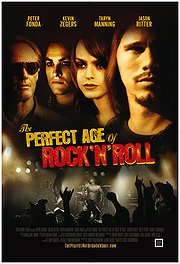
Scott Rosenbaum is the writing and director of the new film “The Perfect Age of Rock ‘n’ Roll”. The music road trip film and stars Kevin Zegers, Jason Ritter and legend Peter Fonda.  Media Mikes had a chance to chat with Scott about working on his first film and also what he has planned next.

Mike Gencarelli: Tell us about when was “The Perfect Age of Rock ‘n’ Roll” was shot and about its road to release?
Scott Rosenbaum: We shot in the summer in 2008 and finished post production in spring of 2009. So it has been a little over two years ago that we finished. It is interesting because people see that and it is not necessarily count as a strike against the film but they become suspect. I find that strange. It is my first feature film and independent film work is so challenging right now because everything has dried up. It was challenging in the first place to get the film made but then once we finished it, it was right around the beginning of the economic crisis and it made everything more difficult to get it released, especially for a first time filmmaker. We persevered and did what we had to do to finally get it out.

MG: What did you like most about working on “The Perfect Age of Rock ‘n’ Roll”?
SR: It was really a labor of love for me. I grew up in Long Island and playing in bands since I was 12 years old. So I have a love of music and the history of music. I have always been involved and around filmmaking but I didn’t go to school for that. I went to school for journalism. I finally committed to complete a screenplay and to just go for it. The whole process is gratifying just being able to shoot the film and get that kind of a cast to come out and work with me on my first feature. Also to be able to put all that music in the film that I grew up loving and wanted to be apart of this film to tell the story. The whole process was really fantastic for me.

MG: Tell us about the working with Kevin Zegers and Jason Ritter and legend Peter Fonda?
SR: Each of them brought some much to their character and to the creative process. The directing background that I have is from New York based theater. One of the consistent themes that I focused on was experimentation. All of these actors were so giving and into their roles. They each elevated the writing to a better place. Fonda, of course, is a Hollywood legend and it is clear that “Easy Rider” is a big influence on the film and probably every road trip film. He was very generous with the “Easy Rider” legacy” and letting us toy with it and utilize it within our film. As far as Kevin and Jason, I cannot say enough about those guys. It is hard enough to act as a musician, that was definitely a challenge from casting. They pulled it off beautifully. Kevin sang all of his own vocals and Jason was a musician already. Most of the songs were done by Steve Conte who is the lead guitarist for the New York Dolls. Jason was able to follow the notes, strumming patterns and makes it look great. Those guys definitely nailed it.

MG: How do you feel that this film relates or differs from other music films?
SR: There has been a lot of criticism and it is a little frustrating for me. Some critics are saying it is a knock off of “Almost Famous” and it is like they didn’t even watch the film. I do not think that is the case at all. Anytime you make a rock and roll film, there is a set path you need to walk. What I think is different about this film is that it is focused on the evolution of them music and the relationships within the music business. I think we struck out on our own and laid some new trials that I do not think have ever been touched on. I wanted to make a really gritty real feeling film for what it feels like to be on the road and in a band. I hope that comes through.

MG: Who are some of your favorite artists and where they influential in the movie?
SR: That is another one of the things I wanted to portray in this film that I do not feel is touched on at all in a narrative feature is the evolution of rock and roll from the blues. There has always been talk about how the rockers stole the blues from the blues men. It is interesting but no one has really picked up on it yet but I tried to make this film very layered with a deep story. Things like putting the blues music behind the flashback Spyder scenes.  All of those blues songs were chosen because they were either done by bands like Led Zepplin, The Allman Brothers and Eric Clapton. All songs that were made famous by rock band that are household names but were from blues artists, who were more or less obscure. I tried to layer the narrative between Eric and Spyder in that way by portraying all the great blues music I grew up loving thinking it was initially The Rolling Stones or Led Zepplin or The Doors when it was actually Muddy Waters or Willie Nixon and other great blues artists. That is definitely one way that this film sets itself apart. I came to the blues the way that many from the white audience came and that is through rock and roll. Blues are really one of the great art forms given to us along with rock and jazz.

MG: Was the concert footage more difficult for you to shoot then the rest of the film?
SR: Yes for sure, it was something I was very conscious of. There was some definite reference that I wanted to go over with my cinematographer before we shot. One thing to note, I was very fortunate to work with Tom Richmond and I believe it was his 40th feature film. He also did everything from Pearl Jam’s “Jeremy” video to many of the 90’s Foo Fighters videos. We went through a lot things I wanted to evoke in those music scenes. The small roadhouse bar has one particular feel to it. The big concert scene was very much influenced from 90’s rock band like Guns ‘n Roses, Nine Inch Nails and Marilyn Manson. I think we did a very good job capturing the essence of what those moments would have looked and felt like.

MG: What do you have planned next?
SR: Good question, well in that blues bar scene, all of those musicians are veteran blues men from Delta and Chicago. They are a dying breed and I look at them as a natural treasure. They are just the most beautiful guys you will ever meet. We set out while we were in post to make a documentary about these blues men and the rock stars I just mentioned. We had a concert in LA and had band members from Jefferson Starship, The Doors and Dave Matthews Band. Our plan is once we get the balance of the financing is to put on another concert and bring out the real heavy hitters of blues rock to highlight the fact that they blues-men represent the legacy of American root music which in turn become rock and roll. My goal is to make a modern day version of “The Last Waltz”. Then I am also writing my follow up script which will be my second feature film as well.


Related Content

Interview with Brian Steele

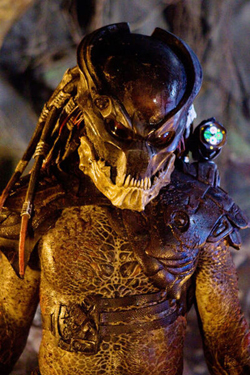
Brian Steele also known as CreatureBoy has played many amazing character in his career.  Some of them range from Mr. Wink & Sammael from the “Hellboy” series, the wolves in “Underworld” franchise and Berserker Predator & Falconer Predator from “Predators”. Media Mikes had a chance to chat with Brian about his various roles and his nickname.

MG: How did you get involved with creature work and given the name CreatureBoy?
BS: The nickname CreatureBoy has been with me since the early 90’s. It originated when a buddy effects artist of mine calling me it on set and the name has stuck since then. At the end of that show the crew gave me a robe with CreatureBoy embroidered on it. I still have and wear that robe! As for getting involved in creature work, well, that started in 1987. I went to an open audition for Frankenstein’s Monster at Universal Studios here in California. I was hired soon after to play the Monster in the theme park. It was a great job! Did that job for close to four years before being hired on to complete the TV show “Harry and the Hendersons”. It was while performing on this show that it became clear to me that I just couldn’t imagine doing anything else. Whatever it took to continue this path I was going to strive towards.

MG: What has been your favorite character you have portrayed?
BS: Unfair question! [laughs] Picking a favorite character would be like picking a favorite child. So, I just like to say whatever character I’m working on now is my favorite. It so much easier that way! I will say each character I have played has it’s own reason for being a favorite. “Predators” and “Terminator” because I grew up with these movies, Mr. Wink from “Hellboy II”, besides being so darn cool, he challenged me in so many new ways. Then you have the wolves in “Underworld” Franchise, Sammael from “Hellboy”, Harry from “Harry and the Hendersons” TV series. All of the characters I have portrayed are so special to me. I could go on and on about each one…the effects artists have given me some wonderful creations to wear!

MG: Tell us about working in “Predators”, how did you prepare for the role? Where you a fan of the series?
BS: I have wanted to portray a Predator ever since I saw the first movie. It’s such an iconic role. I like to say “ A Predator is the Badass of the Galaxy” who wouldn’t want to be one. Huge fan! I have spent a lot of time studying the first two films. I believe the strength of the Predator character is rooted in the performance of Kevin Peter Hall. All things Predator are built and borrowed from his performance. His performance was off the charts!

MG: “Hellboy” is one of my favorite series, how was it working on those films?
BS: There are no “Hellboy” movies without the imagination of Guillermo del Torro. Love working with Guillermo del Torro! His work ethic and attention to detail are amazing. High expectations, high demands and high rewards are the norm working on the “Hellboy” films. It’s refreshing to work with a director that uses monsters to tell and further the storyline instead, as if often the cases, using them just for scares. The characters I portrayed, Sammmael in “Hellboy” and Mr. Wink, Fragglewump, Cronie Troll and Cathedral head in “Hellboy II”, tested my mental and physical strengths. I trained like a mad man for each of these movies knowing it was going to be a grueling but rewarding shoot. It’s a special experience when everyone is completely dedicated to the task at hand, believes in the project and will leave blood to fulfill the vision of their director. That was my experience in a nutshell working on these films.

MG: Was it just a coincidence that you worked on “Predators” and “Harry and the Hendersons: TV Series”, both roles originally played by Kevin Peter Hall?
BS: I would like to think the producers knew of this connection before they asked to meet me but, I don’t think they did. It has been almost 20 years since I played Harry on the TV show, so I can understand how they wouldn’t of known.

MG: What has been your most difficult role to work on?
BS: I don’t like the word difficult ….the most challenging role was portraying Mr. Wink in “Hellboy II”. He was just so big! Bringing a personality to the surface of his emense suit while performing carrying 130 plus pounds of weight was a huge undertaking. I trained for three months with weight vests, dive belts loaded with weights, pool training, hiking, biking and gym training to prepare for the role. I have a training slogan “Make the Pain Familiar”. I continually push myself beyond where my body wants to shut down. This way I’m mentally and physically prepare to endure the demands of the role and continue to stay in character. Love my job!

MG: Tell us about the project you are currently working on?
BS: Recently I’m involved in the prep work on a Bigfoot movie called “Exists”. It’s being produced by the folks that did “The Blair Witch Project”. Its being directed by Eduardo Sanchez who Co-Directed “The Blair Witch Project”. Very excited about this project! Great to be working with my friends over at Spectral Motion on this film. They a creating and fabricating the Bigfoot. All I can say is it going to be fun to make Bigfoot a terror to be reckoned with! I’m also just launched my own clothing line called “CreatureBoy” and “Make the Pain Familiar”. Very excited to take my dedication to this genre and build a clothing line around it. Just branded our first shirts, hats and hoodies! You can check them out at creatureboy.com You can also follow me on Facebook at creatureboy or Brian Streele or on twitter @ madeamonster.


Related Content

Interview with Mike Christopher

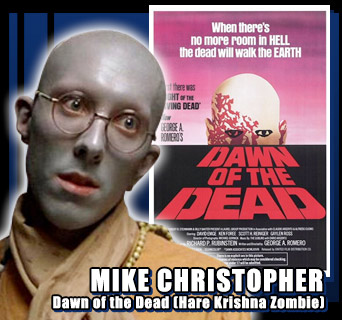
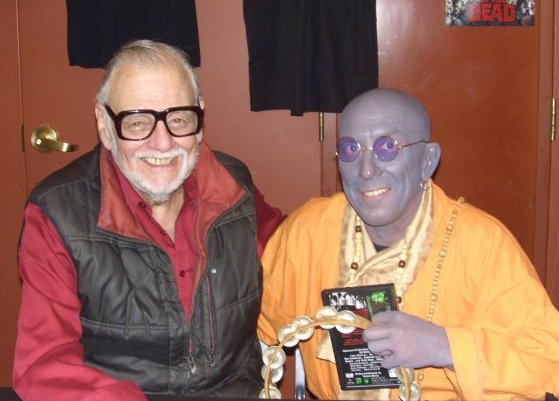
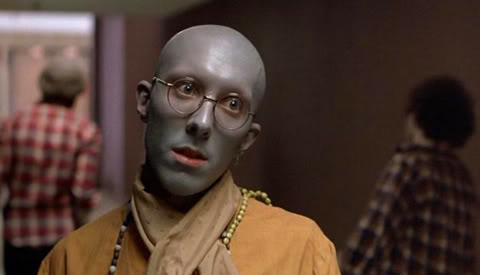
Mike Christopher is known best for his role of the Hare Krishna Zombie in “Dawn of the Dead”.  Mike’s character in that film is one of the most well known zombies ever in films.  Movie Mikes had a chance to chat with Mike about his role and what he is currently working on.

Mike Gencarelli: Tell us about how you became the Hare Krishna Zombie in “Dawn of the Dead”
Mike Christopher: I was playing in a rock band “FLUID” at the time and Mickey Lies (the Machete Zombie’s brother) gave our picture to Romero. The “FLUID” band performed a space themed theatrical show with our music and we all had bald heads. The Sax player, John Paul Musser got the role as the Plaid Shirt/ Airport Zombie. George came up with the idea to have a Hare Krishna for diversity. It was a great role and I just got lucky I guess. Having the bald head was the ticket to play one of those pesky Krishna guyz.

MG: How does it feel to be one of the most recognizable zombies in film history?
MC: It’s actually kind of scary. I think about all these thousands of people who were actually afraid to sleep on the 3rd floor of their parent’s house because of me. I still scare a few people at the conventions. Just last weekend at Saturday Nightmares I noticed a gal laughing hysterically pointing at me. (I was ‘in character’) I got up and started to shamble towards her. She screamed and ran so I began to follow her. She kept running and screaming. I believe she was genuinely terrified.

MG: After “Dawn of the Dead”, you didn’t act again till a few years ago, why was that?
MC: I moved to Los Angeles and performed laser light shows for Laserium and Laser Media. I also made synthesizers and drum machines for Oberheim in Santa Monica, colorized Black and White Movies for Color Systems Technology who was colorizing some of the Turner Library. I also worked in video post for a while before moving to Florida in ’96 and became a Graphic Artist. It wasn’t until after I lost my job in Graphics that I learned of the conventions, then my action figure came out and I started getting roles in indy films when I started networking on mySpace and the Florida film scene.

MG: Any neat behind the scenes stories that you were saving up for this interview?
MC: The best one is when I surprised George Romero at HorrorFind in 2008. I waited in line and he looked up at me, read my badge and said “Mike, you look kinda familliar.” I had a pre signed action figure which I set down on the table in front of him and he looked back up at me saying “You’re the GUY . . . I DON’T FUCKIN’ BELIEVE IT! He stood up and grabbed me in a bear hug and apologized for not recognizing me. “George, it’s been 30 years I said.” I wish I had a movie of THAT!

MG: How can you reflect that with just one role you have such a loyal horror fanbase?
MC: I owe it all to the genius that is George Romero . . . they are actually fans of George’s Hare Krishna character, I just brought the zombie to life or something.

MG: What do you like most about going to horror conventions and meeting fans?
MC: Meeting the fans IS the best part. Musicians don’t get to meet their fans, most other celebs do not get to meet the fans either. I remember a guy telling me he totaled his car on the way to FearFest 2 after hitting a piece of black ice. He was so proud that he still was able to make it. “Dawn Of The Dead” fans are tops. . . I get to hold their children and get my picture in the family album for cryin’ out loud! I remember this guy saying “I can’t believe it’s 3 am and I’m talking to the Hare Krishna Zombie in a hotel hallway.” You can’t put a price on special moments like that.

MG: You recently composed a score for a movie, “Bikini Monsters”, any future plans?
MC: I actually played the role of Captain Nicholson in Bikini Monsters as well as composing music for it. My ghoulfriend Shade Burnett and Richard ‘Spaceape’ Kaltenbock also created music tracks. Spaceape and I played in a band together in the early 70’s which was actually the first incarnation of the bald space band in Pittsburgh.

MG: What other projects do you have planned upcoming?
MC: I’ll be working with Shade on her horror interview show “These Ghoulish Things Remind Me Of You.” and composing more music. No definite new film plans as of yet, just a few possibilities floating around.


Related Content

Interview with Ian Patrick Williams

Ian Patrick Williams started his career working on the film “Re-Animator”. From there he was thrust into the world of sci-fi/horror starring in films like “TerrorVision”, “Dolls”, “Bad Channels”, King of the Ants, and most recently “Growth”.  Movie Mikes had a chance to chat with Ian about his films and what he has planned upcoming.

Mike Gencarelli: How did you start your film career off?
Ian Patrick Williams: While working as a stage actor in Chicago, I did my first film for director Andy Davis called “Stony Island”.  I don’t think it was ever released, but Andy went on to direct a lot of major films including “The Fugitive”.  Then Stuart Gordon directed a play we co-authored called “Bleacher Bums” for PBS-TV for which we (the cast and co-authors) were given the Chicago Emmy award.  After moving to L.A. in 1980, I worked mostly in TV until doing “Re-Animator” with Stuart in ’83.

MG: Tell us about working on the film “Dolls”.  Can you recall your experience?
IPW: The best way to learn about “Dolls” is to listen to the commentary track that Carolyn, Stephen, Carrie and I did a few years ago.  I had been in Rome the year before shooting “Terror Vision” with Ted Nicholau so I already knew my way around the city.  We shot on a small studio built by Dino DiLaurentis just outside of Rome.  What most people don’t realize is that the entire house was actually a set built inside one of the sound stages!

MG: What was your biggest challenge working on the film?
IPW: I suppose the only challenge was that with such a small cast, there was very little time off  – we were all working pretty much every day.  Fortunately, I had spent so many years doing theater with Stuart and Carolyn that we had an automatic shorthand together and didn’t need very much rehearsal.

MG: You have worked a few times with Stuart Gordon on films like “Robot Jox” & “King of the Ants”.  Tell us about how you started that.
IPW: Stuart had started directing theater in Madison Wisconsin when he was in college; he then moved to Chicago and started the Organic Theater Company with Carolyn and then-unknown Chicago actors Joe Mantegna, Dennis Franz and Meshach Taylor.  He first hired me to do a production of “Rashomon” at an open air theater on the University of Chicago campus; a few months later he invited me to go on a European tour with the company.  We’ve worked together on and off ever since.

MG: You worked on an episode “Freddy‘s Nightmares”.  Tell us about that show.
IPW: It was a treat to work with both Tobe Hooper and Bob Englund.  Because it was the pilot episode, there was a fair amount of chaos as the network and producers were haggling over exactly how the show should look.  As a result, we frequently worked 14 hour days.  Because of union turn-around rules, we couldn’t start up again for another 12 hours.  So on day 1, we’d have a 6:00 AM call and get home after dark.  By the time the work week was over, we were getting home at dawn and called at 6:00 PM to work all night!  But it was worth it to be known as the guy who ‘killed’ Freddy Kruger.

MG: Tell us about playing the ‘evil villain’ in the recent film “Growth”.
IPW: I had done a table read for the director and producers playing a different character.  But by the time production began, they had done a re-write and that character was omitted.  The role of Mason was cast with an older actor; but for some reason, he had to drop out two days before his scenes were to be shot.  They made a frantic call to my agent asking if I could fly to Martha’s Vineyard and take over the role on a moment’s notice.  It took about an hour in the makeup chair every day making me look like I was 70 or 80 years old, depending on the scene.  I think the special effects are quite good for a low budget film, which should give confidence to all first time directors without a lot of money.

MG: Do you enjoy working more in television or in film?
IPW: The process is pretty much the same.  TV is usually a little faster because they have to shoot an hour long episodic in seven working days.  A bigger budgeted film can take months to shoot, which can actually become pretty boring.  I shot a small role in a “Spider-Man” parody called “Superhero: The Movie”, produced by the Weinstein brothers in 2008.  There were several days when I sat in my trailer for 10 hours, only to be told they weren’t going to get to me that day.  I’d much rather be on a lower budgeted film if it means I’m working all the time.

MG: Tell us about what you are working on upcoming.
IPW: I’ve acted in a few more low budget films: “Dire Wolf”, “Action Hero” and “Simon Says”, but I have no idea when they’ll be distributed.  I’ve recently gone back to my first love: theater.  In recent months, I’ve performed in the plays “Lucia Mad”, “Puzzlers” and “Judgement at Nuremburg”, all in the L.A. area.  As far as future film or TV roles, like all actors I’ll just have to wait and see.


Related Content

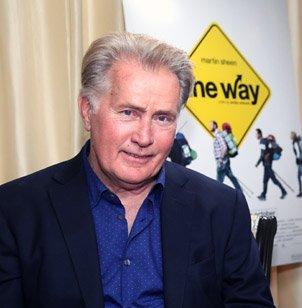
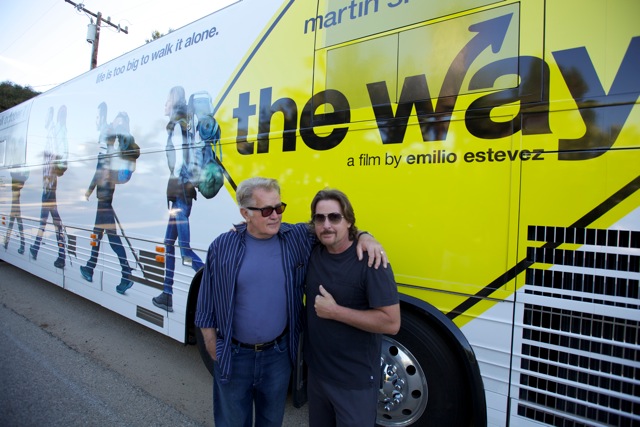
Interview with Martin Sheen

Years from now, should an alien species find a time capsule of America, they may think that Martin Sheen was one of our greatest presidents.  He’s played practically every member of the Kennedy family except Jackie, narrated the film “JFK” and earned numerous Emmy and Golden Globe award nominations (he won the Golden Globe in 2001) for his role as President Jed Bartlet in “The West Wing.”

Born Ramon Antonio Gerard Estevez (he changed his name to Martin Sheen to avoid being typecast as a Hispanic actor), Sheen began his acting career with appearances on such 1960s television programs as “Route 66,” “The Naked City” and “The Outer Limits.”  In 1968 he earned a Golden Globe nomination for his supporting role in the film “The Subject Was Roses.”  He continued to work steadily for the next decade, scoring acclaim for his work in such films as Terrence Malick’s “Badlands” and the television film “The Execution of Private Slovick.”  In 1979 he starred as Captain Willard in Francis Ford Coppola’s epic “Apocalypse Now.”  The shoot was so intense that Sheen suffered a heart attack during production.  The heart attack was serious and almost threatened to shut down the film.  In the documentary “Hearts of Darkness” director Coppola is overheard on the phone speaking to a studio executive – If Marty dies, I wanna hear that everything’s okay, until I say, “Marty is dead.”

In the three decades since “Apocalypse Now” Sheen has starred in such projects as “Gandhi,” “The Dead Zone,” “Wall Street,” “Cadence” (which he also directed), “Catch Me If You Can,” “The Departed”  and, of course, “The West Wing.”  He is also an award winning director, winning an Emmy for his work on the CBS Schoolbreak Special entitled “Babies Having Babies.”

Before I begin my questioning I offer Mr. Sheen my thanks for a kind gesture he made several years ago.  While helping with a charity event I contacted several celebrities asking for an autographed photo to be used as silent auction items.  Mr. Sheen not only provided a photo for the auction, he also included one personalized to me, which now sits on my desk.  As Mr. Sheen began answering my first question I noticed that my recorder was on “pause.”  Embarrassed,  I had to interrupt him and ask him if he would please start over.  He reached out and jokingly “choked” me with a hearty laugh.

Mike Smith:  What drew you to this project?
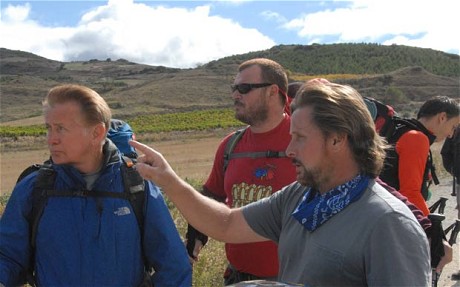
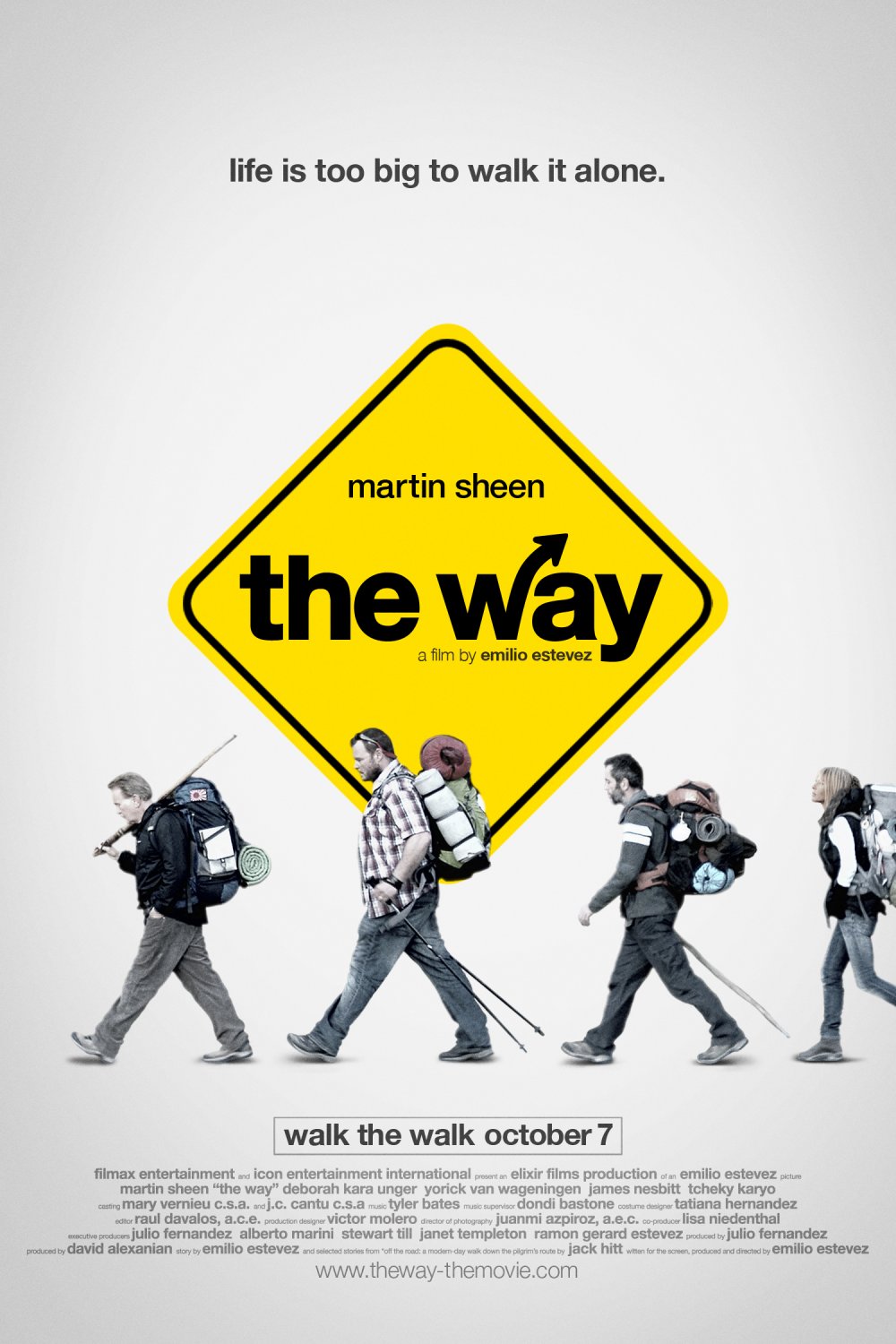
Martin Sheen:  My grandson, Taylor, and I were in Spain in 2003.  He was my assistant on “The West Wing” and we were between seasons.  We had tried to figure out how he and I could do the Camino in two weeks and realized it just wasn’t possible.  Not only did we not have the equipment, we didn’t have the time and we didn’t have the experience.  So I rented a car and we drove it.  And we got to Burgos.  We stayed there and at dinner the family that was serving us had a young daughter.  She and Taylor looked at each other and they’ve been together ever since.  They’re married now and they live in Burgos.  So that was the first “miracle” on the Camino.  And it sealed it in our family forever.  So I came home and I tried to encourage Emilio to think about doing something on the Camino.  It was such a fascinating place and no one had ever done a movie about it.  There had been documentaries and such but no one had ever done a feature.  He had started going over to Spain to see his son because that was the only way he could see him.  And he became enamored of it.  He started talking to pilgrims and started walking the way.  He began investigating and writing scenarios.  And finally he came upon a father/son story.  But he needed a hook to get the father to the Camino and that would be the death of the son on the Camino.  And that was the scenario.

MS:  Actors are always looking for motivation.  And I actually had this thought back when you and Charlie were in “Wall Street.”  With Emilio, your son, playing your on screen son, is that an extra motivation…do you use that emotion as an actor?
Martin Sheen:  Inside each actor is a store of emotional wealth.  Of spiritual wealth.  We all carry a lot of emotional and spiritual stuff in our being.  And we go to that well when that motivation is necessary to play a certain character.  That’s called sense memory.  Every actor does that.  The audience may never know what it is.  But I go there and the audience thinks this character is going through this pain, but that is just one of the things that we are given to do.  It’s like you’re given a license.  “You can go there, mister, but you must do it in a proper way.”  In a film, a television show, a play.  But you can’t do it in a bar or on the street or you’ll end up in jail.  You’ll end up in the home!  It’s something very specific but all artists have it.  Writers have it.  Musician’s have it.  All people in the arts have it.  It’s personal.  It’s your well of spirituality – suffering, pain, loss- all things that belong to you.  You have your store of your history and I have mine.  So we go there on these occasions when necessary.

MS:  In reading interviews with you in the past I know you’ve been asked this same question but I want to ask it another way (note:  that question is “how does it feel to be directed by your son).  You’ve worked with some great directors.  You’re an award winning director yourself.  My question is: were there ever times on the set where Emilio may have suggested a shot and you said, “well, maybe I’d do it this way?”
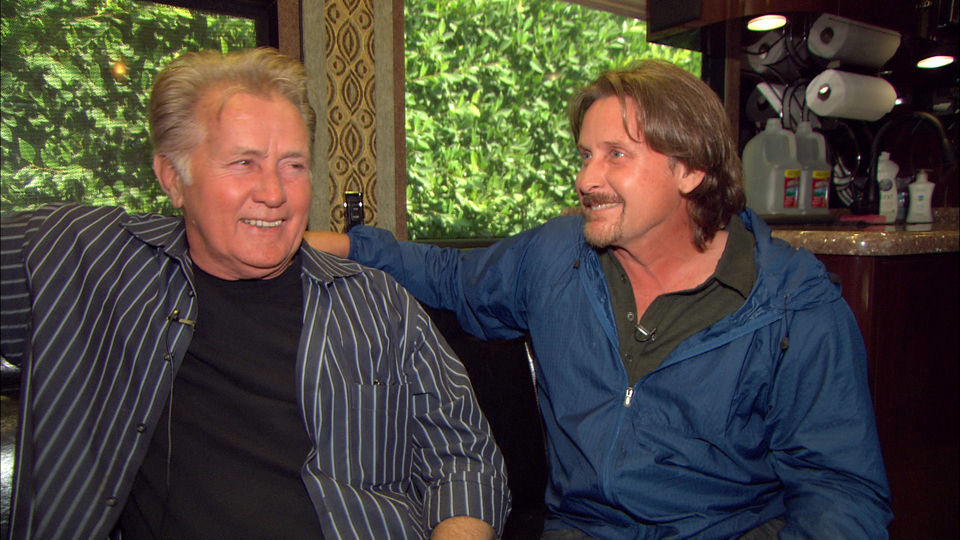
Martin Sheen:  Sure.  Yeah.  He was very open and receptive to any possibility.  Some of the suggestions I made he used and some of them he didn’t.  And he would let me know why.  I was ruled by him and graciously so.  He’s the best director I know.  He wrote the part for me.  I wasn’t going to strain very far from his reign.  He knew where he was directing me.  I didn’t always see the end.  I was only seeing the moment.  But he saw the arc of the character…the distance he had to go.  And so I trusted him.  I’m very gregarious and outgoing and he told me, no, your character is shut down.  You have to earn your way through that growth.  And in the end you become yourself.  But we’re not there yet.  He was very, very specifically focused on how the character was developed.  We shot it in sequence so he knew where I was going.  More power to him.  I owe it to him.  This is the best film I’ve done…the best performance I’ve done…in a very long time.  Not many people are offering me lead roles in movies these days.  In fact, I can’t remember when the last one was (laughs).  But if this were my last film I couldn’t be happier that I’d go out with this one!


Related Content

Interview with David Alexanian

“The Way” producer David Alexanian is best known for two popular documentary mini-series he produced, wrote and directed.  The first, “Long Way Round,” released in 2004,  followed actors Ewan McGregor and Charley Boorman on a motorcycle trip around the world, with visits to Siberia, Kazakhstan, Mongolia and Alaska, before finally ending their journey in New York.   Boosted by the popularity of “Long Way Round,”  in 2007 he teamed up with McGregor and Boorman again on “Long Way Down.”  This time the lads traveled from the North of Scotland, down through Europe, into Africa, finally winding up in Cape Town, South Africa.  Having been a fan of both productions, Emelio Estevez contacted Alexanian to see if he would be interested in producing “The Way.”  He was.  As I write this Mr. Alexanian is putting the finishing touches on his next documentary, “Marley Africa Roadtrip.”  The mini-series follows musician Ziggy Marley and his brothers as they criss-cross South Africa during the World Cup.   Mr. Alexanian took time out from his production schedule to sit down with MediaMikes:

Mike Smith:  Most of your projects deal with exploring various parts of the world.  Is that something you yourself like doing?  And if so, what inspired that passion?
David Alexanian:  Some people are just born to be road trippers.  Road Dogs.  I just love road trips.  I ride a motorcycle.  I met Ewan McGregor years ago and he turned me on to doing this trip around the world.  That was the thing that really got me started.  And after that first trip, people began to think of me doing things like that.  And that’s a good thing, because it means I’ve had some success.  And because of that success you end up doing much more of it.  Which is why I ended up doing the second trip to Africa with Ewan and Charlie.  That was a crazy trip.  Going through Sudan and Ethiopia and Rwawanda was a real eye opener.  After that I had the bug and I had to continue to do this.  Emilio had seen that second project and he called me.  He told me he had just written a screenplay.  He knew I had directed in the past but he asked me to produce.  I read the screenplay and I was immediately taken by it.  I love road movies.  And I love making them.  (he gestures to the “The Way” promotional motor coach)  We’re still taking road trips today.  A lot of people fly to get places these days and when you fly you really lose the sense of travel.  But when you’re on the road you can watch the landscape change.  You get to know the people a little bit better.

MS:  As someone who is truly an adventurer at heart, have you ever made the Camino pilgrimage?
DA:  No I haven’t.  I’d love to.  We’ve talked about going back and doing it.  I do think I will do it one day.  But we really didn’t have a chance to walk it.  We filmed for four months and, between walking from one town to another we probably walked almost 400 kilometers.  But it’s not the same as saying you’re going to simplify your life and keep everything you need in a little bag.  That’s all you’re going to take and you’re going to do it.  I want to do it, for sure.  I will do it.

MS:  In all of your travels, what is the best place you’ve ever visited?  What place has just knocked you out?
DA:  I’d have to say Mongolia.  Mongolia still seems very much like it was at the beginning of time.  The people are still very nomadic.  They still wear what they wear, they still live the way they live.  The more you spend time in places…I live in Los Angeles…you really realize that if you could only simplify your life you could get rid of a lot of problems.  And some of these places that I’ve had the chance to travel to…they really seem to have focus on family…focus on simplifying your life and what’s important.  You’ll probably be happier.  Regardless of how much stuff you have.


Related Content

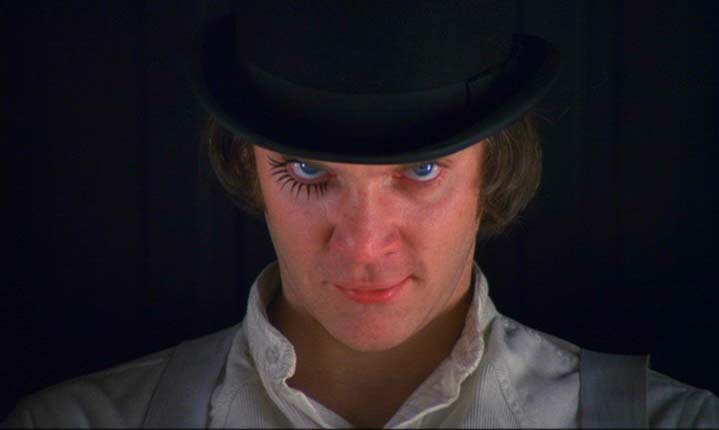
Interview with Malcolm McDowell

Malcolm McDowell is a legend in the film business and has starred in everything from movies like “A Clockwork Orange” and “Rob Zombie’s Halloween” to TV series’ like Adult Swim’s “Metalocalypse” and TNT’s “Franklin & Bash”. Malcolm currently has a new film premiering on Showtime on October 8th, 2011 called “Pound of Flesh”. Media Mikes had a chance to chat with Malcolm about his new movie and also what else he currently has planned next.

Mike Gencarelli: How did you become involved with the film “Pound of Flesh”?
Malcolm McDowell: I was drawn to it because it was written and directed by a friend of mine. The part was sort of written for me and it’s a very fascinating subject. I thought it would be really fun to do.  It was shot on a rather modest budget and very fast, as I think I only worked two weeks on the entire film. It was a very nice charismatic role for me to do. I play a family man that is extremely naive in what he is doing. The film is actually based on a true story. As an actor I don’t set myself up on moral judgment of my characters. If I did I would never work as I have played some pretty nasty people. This man I think was undone by his innate naivety. It’s sad that the teaching profession lost a good man. I wanted to make him the kind of teacher you would never forget. We all have had one or two of those in our lives. I really wanted to make him one of those. The fact that he was teaching English literature and practicing Shakespeare also made the role really fun to do.

MG: What do you think was the most challenging aspect of working on the film?
MM: I enjoyed the whole process. Everyone was very nice and I enjoyed working with them. I think the film is very well worth the while. Sadly it’s the type of film I don’t think a studio would touch with a barge pole. You have to make adult films for and older crowd that makes them go “Wow!” I have been very lucky in my career to find a few of those and this is one of those films. I like sort of nailing hypocrisy of our standards which is what I think this film does.

MG: How did you know the director/writer of the film?
MM: This was our second film together. The first one was titled “Red Roses and Petrol”. I love how Tammy just gets up there and does things any way she can. In this day and age to get a film made like “Pound of Flesh” is worth applauding. It’s difficult enough getting any independent movie made.

MG: What do you look for when you approach a role?
MM: I generally will read a script and decide either to do it or not. I don’t really know what it is? It’s probably just intuitive. Whether it’s going to be shot in a nice place or if it’s close to home. Do you like the cast and the director? It’s all those things really.

MG: Being the 40th anniversary of “A Clockwork Orange” can you reflect on the films cult status over the years?
MM: I am delighted of course! If you are lucky you only ever get one of these types of films. It’s an amazing movie and it’s a testament to Stanley Kubrick, Anthony Burgess and I. Anthony’s novel was brilliant…Kubrick is a brilliant visionary and I managed to nail it! The film still looks good. I don’t think it’s really dated much however that’s not really for me to say.

MG: How did you get involved with “Metalocalypse” and any more episodes planned?
MM: The guys asked me to be in it and I said “Absolutely!” The show is a lot of fun and the guys are great. I actually just completed voicing another 5 episodes.

MG: When do you start work on season two of TNT’s “Franklin and Bash”?
MM: I start next month on the second season. I am very excited as I love the character and script. The chemistry is really great. Everyone on the team works great together. I hear they are going to be bringing me into the court room more this year. I actually just finished reading a script at its fabulous.

MG: What can you tell us about your upcoming film “Death Method”?
MM: That film takes the corporate structure and pushes it to its total limits. I play the recruiter that gets these 4 or 5 people to come in and basically end up being brain washed. I enjoyed that part quite a bit. He is an evil son of a bitch!

MG:  Can you tell us about your role in “Silent Hill: Revelation 3D”
MM: It’s a wonderful scene! I have been trapped in a dungeon for quite a long time and as a result my character has gone blind. The scene is scary as hell. I hear the film is going to be in 3D. I don’t have that much to do in the film but the part I did is going to be great.

MG: Any other upcoming projects you would like to talk about?
MM: Next spring I am going to Scotland to shoot a film titled “Monster Butler”. The film is based on a true story about one of the world’s greatest con-men that in his mid 50’s turns into a serial killer. It’s a fantastic script that I am very excited about. It’s terrifying yet funny!

Interview with Tyler Mane

Tyler Mane is best known for his role of Michael Myers in Rob Zombie’s reboot of “Halloween”.  Tyler is currently producing films through his company Mane Entertainment.  Movie Mikes got a chance to chat with Tyler about his work and also what he has planned upcoming.

Mike Gencarelli: How do you prepare for a role when you come on board a film?
Tyler Mane: Well it all depends on what you are doing.  With something like the iconic Michael Myers role.  I watched the other films to see what the other Michael Myers did and I wanted to bring something extra to the role.  You start my breaking down the script, reading it and seeing what you can bring the role.

MG: You got a chance to play one of horrors greatest villains, Michael Myers, how can you reflect on that experience?
TM: It just crazy how it came about.  I was up in Canada, getting ready to talk with producers about another project.  The phone rings and it is Rob Zombie.  He says “Hey, I want you to play Michael Myers for me for my “Halloween” film”  You could tell I did not know a lot about horror because I said “Why would I want to wear a hockey mask” [laughs] and Rob goes “You dumbass, it is not Jason it is the William Shatner/Michael Myers mask”.  He then explained his vision for it and I was on board.  It was such a fantastic experience to bring that character to live just by body movement.

MG: Tell us about the differences between working on “Halloween” and “Halloween II”?
TM: It was like working with family, after everyone caught up on what everyone had been doing it was down to business. For me it was how was I going to top the first “Halloween”. I spoke with Rob and we both agreed that we needed to amp up the kills and I think right out of the gate with the nurse we did that!

MG: With “Halloween 3D” announced for 2012, are you going to be taking over the role again?
TM: We will see… I do know that they finally have a date locked in now.  I have talked with them the first time about it back after “Halloween II”.  They put it on the shelf for a while and now they are starting up again.  So we are going to see what happens.

MG: What would you say is your most difficult role to date?
TM: The one thing I was concerned about most was Michael Myers because you do have no dialogue.  I wanted to get it right because the fan following for “Halloween” is just insane.  I wanted to also make sure I brought what I need to to the role.  But I also wanted to give Michael Myers the depth and humanity that I think he deserves.  He is not just a one dimensional character.

MG: What is your favorite genre to work in?
TM: I started with action.  When I was young kid watching pro wrestling and action movies, I thought I wanted to be an action star.  So I got to do some of that and I am doing some horror.  Through Mane Entertainment, we are doing “247ºF”, which is a thriller, then we are doing a supernatural thriller and then we have a horror thriller coming after that.  So we are staying along the genre and hoping the fans will like them.

MG: What can you tell us about your new film “247ºF”, which you star and produce?
TM: I came on board that project and we shot it in Tbilisi, Georgia.  The cast is Scout Taylor-Compton, Travis Van Winkle, Michael Copon, Christina Ulloa and myself.  It is the first time that Scout and I are reuniting since the “Halloween” films.  We are looking at that coming out sometime this Fall.

MG: You are working on your production company, Mane Entertainment, is that currently your primary focus?
TM: It is the best way to do the projects you want is to create them yourselves and do them through your own company.  That is what we are doing with Mane Entertainment.  With producing you get to step on to the other side of the fence so to speak.  It has been an interesting eye-opening experience.  For the female roles in “247ºF”, we had over 1,000 submissions.  It is crazy to see the other side of it.  You really understand the other side of the business.

MG: What else do you currently have planned?
TM: We are going back to there to Georgia for a project called “Compound Fracture”, which will be coming out in 2012.  Then we starting a web series called “Chopper” that I am also co-producing, which we are releasing this Fall.


Related Content

Interview with Eddie Lee Sausage & Mitch H.

Eddie Lee Sausage & Mitch H. are the guys behind the audio vérité recordings of Peter J. Haskett and Raymond Huffman, which turned into cult comedy tape series “Shut Up Little Man!”. The tapes were released commercially in 1992 and since has blown up in this phenomenon which latest spawned a documentary about the guys “Shut Up, Little Man! An Audio Misadventure”. Media Mikes had a chance to chat with Eddie Lee Sausage & Mitch H. about the film and also this cult phenomenon.

Mike Gencarelli: Where did your involvement begin in terms of the documentary?
Eddie Lee Sausage: I received an email from Matthew Bates, who was the director of the film. I started off by telling that we had been approached several times before about doing a documentary. What I had done with those who had asked in the past was to have them send me some of their previous work. The stuff I received prior to this was so wretched that I didn’t think the project would work. Matt sent me some of his previous films, which I thought were exceptionally well done. I thought Matt’s style was something that could really work and had a lot of potential.

MG: What was it like revisiting all the tapes and photos for the documentary?
Mitch H: The first place we shot was in Wisconsin. We had a lot of fun shooting there. I have a pretty extensive collection of photos all cataloged, so I gave those to the guys to use. They ended up scanning quite a few of the photos from that era.
ELS: The “Shut up Little Man!” phenomenon seems to come in waves. A lot will happen for two years then nothing seems to happen for three years. I had taken about a year and a half starting in 2008 putting together a detailed website www.shutuplittleman.com. I put up all of the stories, videos, artwork and photos I had gotten from Mitch on that site. Within about six weeks of the site going live Matt called about the documentary. It was a great time to do it because everything was still fresh in my mind from working on the website.

MG: What has been your response towards the recognition the film is receiving?
MH: I am still in awe. I never expected the film to do so well. It’s been a lot of fun and a wild ride. Everything is just very surreal.

MG: Have you guys attended any of the screenings?
ELS: We attended the screening at Sundance as well as the one in San Francisco and a number of others. We have got to meet a lot of great people and be a part of some fun Q and A’s. It’s really been a lot of fun.

MG: Going back in time how do you feel the things in the film would relate to pop culture if they were done today?
MH: It’s hard to say what the end result would have been if we were recording this material today. It might just be here and gone. In the mid 90’s, you had to have something tangible. You had to have a cassette tape in your hand that you could give to someone. It’s wasn’t like today where you have something in a PDF format and you just email it. I think things would have been immensely different.
ELS: Ray and Peter are extremely unique. It’s not just another neighbor or any other drunk. There is something hilarious about the two’s personal dynamic. These two are beyond any standard loud next door neighbor.

MG: Do you guys still listen to the tapes today?
ELS: I go through waves of listening to them. When we released to full tapes in 2008 I didn’t ever really want to listen to the things again! I had been personally doing a lot of the engineering at that point. Mitch and I live half way across the continent from each other and probably every other day or so we end up texting a line or two from “Shut Up Little Man!” It lives on that way.

MG: What do you think is next for “Shut Up Little Man!”
ELS: Were hoping to do commemorative statuettes of liquor for Peter and Ray (Laughs). I’m joking. Maybe bobble heads or a clothing line with dried vomit on it. There are a lot of marketing ideas [laughs].


Related Content

Interview with Ashlynn Yennie

Ashlynn Yennie is known for her role in the film “The Human Centipede”.  She is currently reprising her role this month in the follow-up “The Human Centipede II”.  Media Mikes had a chance to chat with Ashlynn about working on the sequel and what we can expect.

Mike Gencarelli: Can you tell us about your involvement in “The Human Centipede II”
Ashlynn Yennie: We shot the first film in 2008 and in January of 2010, I moved to Los Angeles. IFC had picked up the film and was going to release it in April. Everyone who has seen the first movie knows my character Jenny dies in the first film. I never thought I would be back for the second. I got an email from Tom Six and the film’s writer telling me that he would like to talk with me. When we talked Tom laid out the entire second film for me and I totally wanted to do the film. I wasn’t allowed to talk about my involvement in the film whatsoever. I couldn’t even tell my agent at the time as to why I was going to London. I flew over to London at the end of the summer and worked on my part for a few weeks. Everything has been super secret and I still can’t tell anyone what my part in the film is.

MG: How was it working with Tom Six for the second time now?
AY: Working with Tom wasn’t much different from the first time he and I worked together. When you are working with Tom he is always right there with you. Even when I was in the centipede he was right there giving me notes and encouragement. He is very hands on. I think Tom knows that as actors and actresses we are devoting ourselves to making his film come true and he is going to make sure we give our best performance. Working on part 2 though was completely different. The first film was very clean and had a lot medical type things going on. The second film is completely the opposite as the warehouse we were shooting in was very wet and dirty. It looked like a swamp in there. The film looks really amazing though.

MG: What are your feelings on the film already being banned in the UK due to its content?
AY: I can’t say I wasn’t shocked. Tom has a plan for everything he does and after the first film came out people were saying it wasn’t gory enough and that you didn’t see enough. I tell people they asked for what they will see in the second film. I don’t know if people realized what they asked for.

MG: After working on the first film did you have any doubts about the film?
AY: That film was a great European film to shoot. We had no idea what was going to happen with it. I remember when they told us what the name of the film was going to be we were all a little taken back. We sort of teased Tom about the title for quite sometime while we were shooting. I don’t generally watch a lot of horror films as I am a bit of a scaredy cat. When “The Human Centipede” came out and it was embraced by the horror fans and it became just so big mainly because of the internet. The trailer for the film just went everywhere. I think “Human Centipede” is the most not watched film as most people I meet tell me they have watched just the trailer. They seem to have these preconceived notions as to what the film is about. The first film really held back a lot. The second one is in your face.

MG: How has working on the second film compared to working on the first film?
AY: I became very close with Ashley and Akihiro during shooting and for Ashley and me that was my first film. We all became recognizable from this film and to move up the chain link with people you are friends is great. The second film I got a whole new batch of actresses to fall in love with. The girls in this movie are incredible women and very beautiful. Both sets were completely opposite but both had a real family feel.

MG: Do you any other upcoming projects?
AY: Right now I am pretty busy promoting “The Human Centipede II”. I do go on auditions like crazy though as I am still an actress trying to make it in Los Angeles.

Interview with Daron Ker

Daron Ker is the producer/director/cinematographer of the documentary “I Ride”.  Daron’s most recent documentary titled “Rice Field of Dreams” follows the trials and tribulations of Cambodia’s first baseball team as they prepare to compete nationally for the first time ever . Media Mikes had a chance to talk with Daron about his new film as well as his experiences from the filming of “I Ride”

Adam Lawton: Can you tell us about your newest film “Rice Field of Dreams”?
Daron Ker: That film came really as an accidental thing. One of my friends found an article in a San Francisco newspaper about baseball in Cambodia. I had wanted to find a way to help my country so I started to think of ways that I might be able to help.  The only way that I could really think of was to make a film about the baseball team there. For about five years I was connecting with the team’s manager Joe Cook and just getting to know him until the team was actually formed and ready to compete.

AL: From what I saw in the documentary Joe seemed like an interesting guy. What was it like working with him?
DK: It was hard because I have never seen a guy so dedicated but at the same time doing everything the wrong way. I don’t think Joe is arrogant as I believe he is more compassionate but he does flirt between those lines. Joe’s not really a player or coach…he is a cook. However he just loves the game so much and he is so into it that he cannot get away from it.

AL: What was the hardest part about making the film?
DK: Going back home to Cambodia for the first time was probably the hardest part for me. I had no idea the country was so devastated by the war as I came to the states when I was young. When you are living somewhere you don’t really think about where you came from. By making this film it gave me the opportunity to go back home and see your country. It was very heart breaking just to see these beautiful kids with nothing. I think this film helped me reconnect with my roots and when I came back to the states I was really saddened because I wished that I could help more. I am actually going to be going back to Cambodia soon to show the movie at a theater their which is going to be really great.

AL: Are we going to see sequel to the film?
DK: I don’t know about a sequel but what I want to do is to just share the film with as many people as possible. I want to take a projector over there and show it in as many providence’s as I can. I have been screening it here in the states to Cambodian communities as the response has been great especially from the Cambodian/American youth.

AL: How do you feel “Rice Field of Dreams” compares to your previous documentary “I Ride”?
DK: Both challenging films. To get into that motorcycle culture was the hardest thing I felt. They are just so raw and underground. I was location scouting one day for a feature film and while there I was invited to attend the Sturgis bike rally. There were almost a million bikers there and I was very intrigued.

AL: Once they allowed you into their sub-culture what were your initial thoughts when they allowed you to follow them around?
DK:  I thought that I better make a good film or am going to have to move to Cambodia! They are hardcore. I knew I had a solid story and the guys were great. It took them about two years to finally let me in. We would be trying to shoot them and then they would just ditch us and we couldn’t get any shots. One time I mounted a camera to one of the guy’s bikes while we were in Arizona and he just up and left us for like half a day. They thought it was fun and game. After two years I sat them down and told them I was tired of clowning around and if they wanted to make the movie we could but if they kept ditching us we were moving on.  At that point we were surrounded by bikers and my crew was pretty scared. Luckily they decided to do the film.

AL: What is it that drew you into making documentary films?
DK: I felt like for me to be a better filmmaker making a documentary was a good platform to start on. It teaches you to think out of the box and make something out of nothing. I had done a bunch of shorts and had also studied some great film makers but I wanted to start with something else before shooting a narrative structure.

AL: Do you have any other upcoming projects we can be watching for?
DK: I feel like am still incomplete after shooting these to pictures. I want my next project to be a narrative. I have a script titled “Holiday in Cambodia” which has been a ten year labor of love project. I really want to get this thing moving. It’s a different platform for me but I feel documentaries are way harder than narratives because when I was shooting the documentaries I never knew where or what I was going to be shooting. It will be interesting walking into a narrative and knowing everyday where I am going to be. My dream date to start that project is February 2012. I have a great group from Lucas Ranch that are going to be working with me so I am really excited. The story is about a kid from the states being deported back home to Cambodia and his struggles with that.

Interview with TRON’s Dan Shor

Dan Shor is known best for his role of Ram in 1982’s “Tron”.  He reprises his user role of Roy Kleinberg  in “TRON: The Next Day”.  Media Mikes had a chance to chat with Dan about his role in the film and also what he has been up to since.

Mike Gencarelli: What did you originally think about “TRON” when you signed on to play Ram?
Dan Shor: When I first signed on to play RAM I was thrilled. It was a comic book fans fantasy come true. I finally had the opportunity to put on a Halloween super hero costume and live out that pretend reality.

MG: Tell us about what you recall about the costume?
DS: The costume itself was like wearing skin tight pajamas to work everyday. I can remember walking down Mickey Mouse street across from Donald Duck lane on the Disney lot, in my skintight body suit thinking ‘nothing could be better than this’….

MG: Any fun stories from the set and/or working with Jeff Bridges?
DS: Jeff Bridges is exactly as you would think him to be. He was funny, friendly, intensely obsessed with video game play, and like all of us on the set, completely committed to the act of creativity. The acting process often creates quick and intense relationships that parallel the relationships that exist within the film. Though I haven’t seen Jeff in 15 years? We have spoken on the phone and our relationship is exactly as it was while we were making the film. As a side note: when Bruce and I worked on Legacy last year, it was as if not one day had passed, and (except for the expanded waistlines) we saw each other exactly as the best friends we were in the film.

MG: How did you get involved to play Roy Kleinberg in the “TRON: The Next Day”?
DS: I got to do Roy Kleinberg in Tron The Next Day when the creators of the Blue Ray edition (42 Entertainment) contacted my ShodaVision website. Though I still have an actors agent, and never officially left the business, I had been living outside of the country for many years and perception was that I had disappeared through some sort of time space wormhole.Having been one of the original members of the TRON world, and being quite aware of the reality that programs can easily be recreated after being de-rezzed, I was pretty pissed off that the creators of Legacy seemed to have no interest in my existence. That made me even happier when the 42 Entertainment people took the time and effort to find me. They, with the people charged to create a possible Tron 3, decided to follow the original fan’s desires and bring RAM back into the fold.

MG: Any word about if they are going to be going forward with another “TRON” film?
DS: I still don’t know if Tron 3 is going forward. And I do not even know that I will be involved if they do. Of course I would like it if it were so….but I am, sadly, all to knowledgeable about how Hollywood works, and am fully aware that I simply may or may not be involved based on any number of criteria.

MG: Tell us about working on “Bill and Ted’s Excellent Adventure” as Billy the Kid?
DS: Bill and Teds Excellent Adventure is going ahead with another sequel and , once again, without me. I only have fond memories of the experience of making the film and wish all involved all best luck and love…..wish William the Man were involved, but whatthefuck?

MG: What are you currently working on?
DS: I am currently working with my production company; ShodaVision, producing and directing internet corporate web streams for North Eastern Electricity Company’s energy savings programs. ShodaVision has created short and long form documentaries, music videos, both narrative and reality television series, and television commercials for International markets.

Bonnie MacBird talks about co-writing 1982’s “TRON”

Bonnie MacBird is the co-writer to the 1982’s “TRON”.  Media Mikes had a chance to about working on the film and her feelings on the continuation of the series.

Mike Gencarelli: Some of the ideas and technology in “TRON” is way ahead of its time, tell us about working on the script?
Bonnie MacBird: Originally, pre-Tron, Steven and I worked together on a spec script for Universal called Lightning for Jennings Lang. Steven had an animation company in Boston and had developed a cool special effect for lightning. We had a fun time working on this, and felt that our strengths were complementary. He had done a TV ad for a radio station featuring a backlit, neon character who looked a bit like the Michelin Man and whom he called “Tron” and approached me to write a movie in which Tron was a video game warrior. That was the extent of the idea when he moved his company to Los Angeles, and I left my story exec job at Universal to come over to the new Venice digs of Lisberger Studios and write and co-produce a film called “Tron” with Steven. I was tasked with creating a script that would showcase these elements. But there was no story, and no characters, except I would have to create one named Tron who looked like this radio ad character. In addition to developing a personality and character needs for this figure, my first contribution was to create Flynn, as I felt you needed a real life character to interact with Tron inside of the computer. The parallels with both Wizard of Oz and Alice in Wonderland were immediately apparent. I had recently seen Robin Williams in a small comedy club while covering theatre for Universal and had tried to get him a deal at Uni. I wasn’t successful but he hit big shortly after with Mork and Mindy. Robin was in my mind as Flynn when I created this character. But we also needed a new and wonderful world, one that had not been seen. Steven and his key animators including the super talented Bill Kroyer and Roger Allers (both of whom– went on to direct) studied video games and the arcade culture, developing the look/feel of the movie, early on coming up with light cycles and “the grid”. They would feed these drawings and pencil tests to me, asking me to integrate the visuals into the script. It was a lot of fun at that time. I enjoyed working with the animators very much and set up a weekly improv session led by a talented actor/improviser, which both built community and fostered ideas between us. In addition to character work, which is I think my strongest asset as a writer, I knew that when you create a “world” in science fiction or fantasy, this world must be consistent in order to suspend disbelief, things must work in a way that is recognizable and orderly, so that story logic is preserved. In all the great franchises, Lord of the Ring, Harry Potter, and all the great science fiction of the Golden Age (Heinlein, etc.) this is clearly true. I wanted the computer world to be based on what is really inside a computer and to have its own inner logic. I should mention that I was already a bit of a computer geek going into this project. As a kid I was tantalized by an introduction to basic logic and programming from an innovative experiment that Patrick Suppes had put into a few grade schools in the Bay Area. And at Stanford, I studied computer programming with the legendary Donald Knuth… and my master’s thesis in film was a documentary called “Teaching Children to Read Using a Talking Computer”. At Universal, I had tried to get the Story Department to put all their coverage on the computer (there was no “online” then, except at Universities) and computers had not yet taken hold. This was considered a very novel and somewhat threatening idea and was rejected at the time with the comment “soon they will be making the choices for us.” Ha. So, I was already steeped in the tech culture of the time. Meanwhile, back to Tron research. At the time, there was exactly ONE computer store in all of Los Angeles, a tacky little storefront on a side street in Santa Monica. I found it and Steven and went there. It was mostly homebrew kits but they had a few books and I picked up one called COMPUTER LIB by Ted Nelson (a visionary himself!) and read about Alan Kay. I set up a research trip to Northern California in and around my alma mater. The Stanford AI project was partly the model for some of physical detail in the first TRON. Steven and I met with several scientists, and the last interview of the day was Alan Kay, then still at Xerox Parc. Some readers may recognize this name. It was Alan’s group that inspired Steve Jobs to envision what was to become the Mac. Alan’s group is credited for developing object-oriented programming and the first implementation of the graphical user interface that is the face of personal computing today. Alan even coined the term “personal computer”. So this visit was really to the mother lode. And way ahead of the curve. People had not even heard of this stuff yet. It was a big deal for all of us. Alan talked for close to four hours about computers, education, music, early childhood, theatre, storytelling, science, psychology, learning, artificial intelligence, programming, science fiction, biology, humanism, evolution, Bach, Buckminster Fuller, philosophy, neurology, aesthetics, and the future, the future, and the future. Steven and I had our minds blown. On the plane on the way back, I knew that we had to have a character based on Alan Kay and I set out to write him….and to hire Alan as the technical consultant on our film. Alan said yes and he and I began weekly meetings about the script, as I integrated what he taught me about how computers really work and the future of the internet and personal computing…. Into the world in which video games were a part. So conceptually, from very early on, I thought of the computer world as a vast arena, divided into different lands, or quadrants, of which the video game arena was one. The video game warriors generally stayed put “in their games” while other stuff went on elsewhere. But Tron… would not. I always felt it was important to intercut with the real world, and to have someone in the real world with whom to identify, and the character based on Alan Kay became the creator of Tron. The notion of “agents” or mini AI programs which learn your preferences and methods and work for you inside the computer, was gaining traction, though known only to a few techies then. Tron was originally a very smartly programmed video game character, whom Alan was gradually training or teaching to have far more complex functioning. But there were wrinkles in the process. As Tron became more and more of an AI (artificial intelligence) program, he became more and more human and began to develop free will. This was both a blessing and a curse, it would make Tron an eventual hero, but it would also get him into trouble. A classic sidekick character, the Bit, was similarly ambitious – he wanted to be more than a mere yes/no binary bit, he wanted to be a program. So all this factored into the original story and created a secondary theme of the dangers of hubris. Flynn was the fish out of water, the reluctant hero, who fell in accidentally and was sucked into the battle of good and evil almost by chance… later becoming the kind of hero he never thought he’d be in the process. There’s more to the story, but to sum it up, I did eight drafts of the script and something like fourteen outlines. One of my later drafts is the one Disney bought, but there were eight sets of writers after me. The credits went to arbitration and the WGA awarded me credit. I’m thankful to them for their fair and detailed process, and later served on several arbitration committees for them myself. As a side note, the real life Alan Kay and I enjoyed working together and became good friends during Tron. A few years later we married, and are still married today!

MG: After selling the script to Disney, did you have any involvement during the production of “TRON”?
BMB: I did not. I was offered to be associate producer but instead opted to carry on with other projects.

MG: What did you do following the sale of your script to Disney?
BMB: The sale of my script bought me some time to spec write my next script, and also to produce and direct a stage musical comedy – HOT ROLES – which had a successful Los Angeles run and great reviews. I had a good agent, and all of my spec scripts and treatments were sold and optioned, sometimes repeatedly (especially one called “SECRET MASTER OF THE UNIVERSE” about a science fiction writer who is believed to have special powers by his fans.) I wrote an afterschool special for Disney that was a casualty of a regime change. And many more scripts. And so I made an excellent living as a screenwriter for many years following. However whether a movie is made or not is out of the hands of the writer. It’s quite possible to be successful as a screenwriter without being produced. Not as satisfying, of course! On the other hand, I consider myself a writer in the larger sense, and I also wrote many other kinds of things (have had seven plays produced, wrote and directed two musicals on stage) and ran a production company for ten years which won three Emmys and eleven Cine Golden Eagles for documentary and scripted work. I am a songwriter as well. Prior to Tron I was Ned Tanen’s story development executive for four years at Universal.

MG: What would you say your biggest challenge was co-writing “TRON”?
BMBIt was not an easy collaboration. In my view Steven always worked as a producer with me as writer, giving me verbal and occasionally lists of notes or props/sets he wanted “in the script”. It’s been my experience in four years in development that these are story notes, and making things work is the actual writing. The contribution to me was initially in set design, character design, and action sequences that Steven and the animators would like included. For close to two years I worked on the script, creating the story and character of Flynn, who falls into the machine, and his journey to stop the MCP’s plan, and to escape the computer. Alan was another creation of mine based on Alan Kay, as described above. However the original tone of the film was a bit different, for Flynn I had Robin Williams in mind (see above). So Flynn in my versions was a bit more of a wild man, originally a pizza delivery boy with probably a touch of ADD and a slightly wackier quality. For the record, I loved Jeff Bridges in the role, and because I later read every draft of the film, I noticed that he adlibbed back in some of the humor I was going for originally but was excised in later drafts by other writers. I think he is an actor with astonishing talent and instincts and he sensed that if a guy falls into a computer, a sense of the absurd is needed. Guessing of course on this, but his work was superb. Also, our purpose in working with Alan Kay was to lay in real science underneath and humor on top. Steven gradually drew the movie into a more serious tone with quasi religious overtones while the actual science stuff which I spent a lot of time embedding and which I still think would have delightfully resonated with then and today’s tech audience, was pretty much completely omitted. There were larger themes in the early drafts including the folly of hubris, and the dangers of mindless bit streaming or going along with the status quo. But Steven (who was originally on board with this concept) and I eventually had creative differences. His input in the form of notes was at the beginning both helpful and inspiring, but later became “now add a pirate ship and make this work” and we found it increasingly difficult to communicate. He’s always been enormously visually talented and has a sense of great moment but it was never a co-writing situation. Repeatedly I found myself insisting on motivating and supporting the terrific action sequences with strong character and story logic. But the effects took precedence and Steven began to steer the tone into a different place. He was on a different path at that point and our differences grew. The few fans who are aware of this early form of the script are divided on what “would have been better”. But to them I would say hindsight is easy, creating is hard.

MG: How do you feel that “TRON: Legacy” continued the story you co-created?
BMB: The characters of Flynn, Alan and Clu were all in my original script. Light cycles of course, although those were Steven’s invention. Perhaps more importantly, in Legacy, Flynn still had a rebellious streak and Alan was still trying to take the high road with computers, and was thwarted by corporate interests.

MG: Do you have any involvement writing the upcoming TV series, “TRON: Uprising”?
BMB: I am waiting by the phone.

MG: Tell us what you are doing now?
BMB: Funny that you found me at my computer minutes after writing me. I have to own up. Computer geeks are my peeps and I kind of am one. I’m writing a thriller TV pilot set in the high tech world. Additionally I write songs with a partner, teach screenwriting at UCLA Extension, serve on the board of Stanford Alumni in Entertainment and run private writing workshops. And I never tire of hearing that TRON inspired young scientists, programmers, and writers.

Copyright: MediaMikes.com © 2011 · Powered by: nGeneYes, Inc. · Login

All logos and images used on this website are registered trademarks of their respective companies. All Rights Reserved. Some of the content presented on our sites has been provided by contributors, other unofficial websites or online news sources, and is the sole responsibility of the source from which it was obtained. MediaMikes.com is not liable for inaccuracies, errors, or omissions found herein. For removal of copyrighted images, trademarks, or other issues, Contact Us.