
Tony Zierra talks about directing “My Big Break”

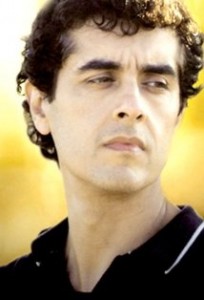
Tony Zierra is the director of the recent documentary “My Big Break”, which follows the early careers of Wes Bentley, Chad Lindberg, Brad Rowe and Gregory Fawcett.  Tony took out some time to chat with Media Mikes about its 10 year journey to the public.

Mike Gencarelli: How do you feel that “My Big Break” has finally be released to the public?
Tony Zierra: Relieved. One of the great gratifications a filmmaker has is to see their work done and to know that it has a chance to find its audience I’m always deeply touched when I hear someone has seen “My Big Break ” and was affected by it and understood what it’s about.

MG: Was it worth it for the 10 years it took to make and release?
TZ: Was it worth it? Yes. Did I want it to take 10 years? No. Absolutely not. The one thing that I can say is that the length of time it took to take the movie gave me a deeper understanding of the business, the life of the celebrity, the reality of filmmaking and allowed me to convey that in the film. It would be impossible to grasp that in two or three years. As annoying as it is to take that long to do something, when it’s done you really do appreciate all the hard work. That kind of lengthy process creates layers that you can only accomplish with time. Also, time allowed me to follow what would happen to each individual, including myself, before during and after “their break” and created a natural arc for the characters and the film.

MG: What do you think was the most difficult aspect in this road?
TZ: Resources and people’s commitment or lack thereof to the project, and the industry’s fear of exposure.

MG: Do you still keep in contact with Wes Bentley, Chad Lindberg, Brad Rowe and Gregory Fawcett?
TZ: Yes, but in varying degrees.

MG: Ever consider doing another documentary in another 10 years to follow-up on their careers?
TZ: I might, but if I wouldn’t do it if I were them. it’s very difficult for actors or any celebrity to put themselves in that position.This type of “real” reality, not the constructed reality we see on television, is too intense and revealing for them to willingly take part in. Probably the only reason they agreed to do it originally was because they were unknown.

MG: How does “My Big Break” compare to the tossed documentary “Carving Out Our Name”?
TZ: “My Big Break” is more revealing, layered and truthful. “My Big Break” is storytelling and “Carving” was filmmaking. “Carving” was honest to a certain degree, very visual, with a sense of “show-off” because I was hoping that it would be my ticket to working as a filmmaker in Hollywood. I was playing the game to get into the system. When you’re making a film in the business you’re already thinking about your next film so there’s a self-conscious aspect to it. True storytelling, though, is not affected by any of that. You’re only focused on the truth of the subjects as characters in the story. Also, “Carving” had a lot in it aboutrelationships each guy had with their then girlfriends and their friendship with each other but ‘My Big Break” is purely about the each one of us in relationship to the business. There was no narration in “Carving”, I never appeared in it at all. I put my story into “My Big Break” because I felt it was only fair to the actors to expose my own pain, vulnerability and disappointments if I was going to do that to them

MG: What are you currently working on? Ever plan on directing again?
TZ: I’ll always be interested in storytelling and there are different ways to do that outside of the system. For example, I’m working on a documentary about Stanley Kubrick but I don’t really see it as “making movies” in a standard way – I’m telling a story. I’m currently writing a book about my experiences that include, but are definitely not confined to, my time in Hollywood. And there are always other projects in the works.

Britt Ekland talks about “The Wicker Man” and playing Bond Girl in “The Man with the Golden Gun”

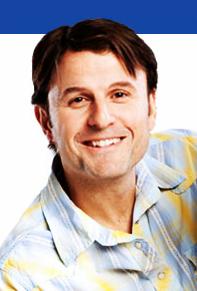
Britt Ekland is known best for her roles in 1973’s “The Wicker Man” and playing Bond girl in “The Man with the Golden Gun”.  Media Mikes had a chance to chat with Britt about her film work and her experiences working with Christopher Lee and Roger Moore.

Mike Gencarelli: How was the experience working on the film “The Wicker Man”?
Britt Ekland: It was very difficult as I discovered during shooting that I was pregnant. I couldn’t understand why my dress suddenly felt so tight. So, took the night train to London on my day off and went to the doctor for a test. He confirmed that I was pregnant. We had a lot of exterior shooting and, of course, it always had to look sunny and warm, but we worked in October and November so it was quite cold and windy in Scotland. There were a lot of exterior shooting and a lot of walking!

MG: Can you reflect on the cult status the film has developed over the years?
BE: I don’t think any of us, at the time, thought about it, for me it was just another movie and one I hadn’t been very happy doing. But I guess it was the first time, on screen, someonewasn’t saved in the end and I think that had a big impact on the audience.

MG: What did you like most about playing a Bond girl in “The Man with the Golden Gun”?


BE: I so wanted to be a Bond Girl after seeing Ursula Andress in Dr. No and those beautiful locations, that I read the book “The Man with The Golden Gun” and called Cubby Broccoli’s office to see him. I was already an established actressthen. I had dressed as a secretary (this was early 70’s) in a plain skirt, a white blouse and my hair in twist. Cubby said that the script wasn’t finished yet and they based the story more on the title. As I was leaving, Roger More came in and said hello. Very handsome. I had to go to the States to do a movie for 6 weeks and on the plane back to Britain, I read that another Swedish girl had been cast in the new Bond film. I was devastated! As soon as I got home my agent called and said Cubby Broccoli wanted to see me, I naively thought he was going to apologize for me not getting the part. As I waited in his office he suddenly walked in and said you are “Mary Goodnight!” I asked about that other Swedish girl and he said that is Christopher Lee’s girlfriend. I couldn’t have beenhappier meeting and working with Maud Adams, we have been the closest of friends ever since.

MG: How was it working with Roger Moore and Christopher Lee (again)?
BE: When I did the “Wicker Man”, I always found Christopher Lee very quiet and distant, but when we did the Bond Film, I met his Danish wife and we all got on very well together. But he is a very serious man. Roger on the other hand was very friendly and open and great fun to be with, always looking for ways to make us laugh. Roger had his wife and children with him on location. I also had my 2 children, Victoria and Nicholai, with me.

MG: How did you feel being dubbed in the role?
BE: Yes I was dubbed in the “Wicker Man”n even though I did my own dubbing in a Scottish accent, obviously they didn’t like it. As an actress I think that is probably the worst thing that can happen to you and I was very unhappy about it.

MG: Can you reflect on your experience in the show “I’m a Celebrity…Get Me Out of Here!”?
BE: I was asked 2 years earlier to do the show but I wasn’t mentally ready to do it. It takes a lot of strength to “just be yourself” and not act. I also have a one-woman show and I wanted the exposure that a show like Get Me Out… gives. Even young boys on their bikes knew who I was, when I came out, amazing! To actually be in the show was quite boring as there is nothing to do all day, unless you have a task, and the rainforest set is quite small and you weren’t allowed to go outside it!

MG: You’ve done quite a bit of theatre, how can you feel it differs? Do you prefer?
BE: I went to drama school as a young woman and my first engagement was touring Sweden with a Variety show for many month, but then i was discovered by 20th Century Fox and my stage career ended. I went back to stage work in the early 90’s and had to learn all over again what it’s like being on stage. I had horrid stage fright in the beginning but slowly over the years, it doesn’t seem so frightening anymore. I very much enjoy being on stage and I love the interaction with the audience. I think you come to a certain age where your choices are limited and I now feel comfortable on stage.


Related Content

Kevin Cooper talks about directing “I Heart Shakey”

Kevin Cooper has worked various jobs in Hollywood and has lent his talents to such films as “Armageddon” and “Secondhand Lions.” A Midwest boy at heart, after graduating from NYU Cooper made his way west, working his way through the ranks of both independent film making and the studio system. Cooper recently got behind the camera, writing and directing the new family film, “I Heart Shakey.” The film is currently available via Video on Demand and will open in theatres nationwide later this month. Kevin took a few moments out of his schedule to talk about his new film with Media Mikes:

Michael Smith: You’ve worked on many films in many various roles yet this is the first time you’ve added writer and director to your resume’. What made you decide to take on this film at this time?
Kevin Cooper: I’ve been in this business for a long time and I’m always looking for something “new” to attempt. My wife, who ended up producing the film, and I were talking one night and we said to ourselves, “we know how to make movies…we have relationships with distributors and talent…what’s stopping US?” And we decided that if we were going to go into the battle we should focus on a subject that means something to us. And this film is ultimately about loyalty…about family. So we chose to pursue this project. It had been sitting around for a long time. In a way it’s loosely based on my life. I graduated from NYU film school, which is where I met Steve Lemme. I moved to L.A. When I got there I rented an apartment. And only after I had been there for a week did I learn that I would be able to keep my dog. So the film brought up a real challenge. What do you do when you have to get rid of your dog…to in a way tear your family apart? Of course I had just got to Hollywood so I thought, “Shit, I’ll just give away the dog!” But every time I gave the dog away to a prospective owner….basically the next day they were calling me and saying “come get your dog…he’s way too rambunctious for me!” He was such a fun and crazy dog. And ultimately, after about three or four months, I realized that the dog wants to stay with ME. And it was really one of those life lessons about loyalty. So that inspired a really early first draft. But the project just sat there. I wasn’t really a development guy, I was a studio guy. I was constantly working on other peoples projects. So when I got back to the Midwest I decided to find a project that’s personal…one we could dive into. My directing work had been in comedy. When I lived in New York I directed and produced all of Broken Lizards early sketches. They had a live show in New York City and between sketches, when they had to set up different props or change wardrobe, my video sketches would play while they did their changes. And the film is also a great way to come back together with friends. With dear friends, actually. I mean they came up with “Super Troopers” on the way to my wedding! We go way back, those guys and I.

MS: Why did you decide to add the extra burden of shooting in 3D to your first feature?
KC: (laughs) That’s a great question. One of the things we knew early on was that, for the film to succeed, we had to give ourselves every advantage. It was less about how the audience would receive it and more about our perception of where 3D was headed. I ran James Cameron’s company for six years and some of my best friends are technologists and industry leaders. Now for 100 years the industry has really kept people like you and me out. You really had to be a wealthy guy or come from money…you had to have some kind of connection generally speaking. Nepotism ran rampant in this industry for many, many years. But our production budget was $235,000. And we asked how much it would cost to use 3D. We found a camera house here in Chicago that was willing to foot the bill for it so it didn’t really cost us a ton more…at least not in production. In post it did end up costing us a little bit more money. I explored what it meant, artistically, to make a film in 3D. And it really opens up new worlds and frontiers. Hollywood is such a competitive place. We thought why just do a regular film…why not give yourself every advantage you can? It was important for us to know that we were out front like that. Some of our best friends are indie filmmakers. And I would say that seven or eight out of ten of them don’t get their feature films distributed. So our idea was to do everything we could to make this film appealing. That was our thinking. And once you’ve committed to that you really have no choice. When you grasp onto technology there is really no backing out. Our distributor is very committed to the film. They’d put it out in 2D. But they’re very committed to putting it out in 3D. And you ask about the difficulty of working with 3D…you can say the same thing about working with dogs…working with kids. I teach film at Columbia and I was sort of breaking all of the rules (laughs).

MS: Ironically my next question was: was it difficult to work with the animals?
KC: It was hard! (laughs) There’s a great supplemental bit on the DVD for “Beverly Hills Chihuahua” where they talk about how they rescued all the dogs. It seemed very logical and possible that we could do the same thing here in Chicago with one dog. So we found a rescue dog and trained with him for months. And it just didn’t work. We ended up having to call all over the United States. And eventually we ended up with a dog that was pretty good. Most films use a purebreed dog because it’s easier to find a double. But I wanted to use a mutt. We found a double but he was hard to work with. I would say that animals in general take a lot more time. In some cases we didn’t get all the things we wanted the dog to do. One thing I’m proud of is we came up with ways to further some of the sequences in the film with animation…almost like a representation of the girl’s imagination. Originally it was just a crutch but when we tested the film we found that our target audience loved the animation! It’s interesting how what appeared to be one of our problems turned into one of our strengths.

MS: You have a very solid cast, including Steve Lemme, Steve Guttenberg and Beverly D’Angelo. How did you get them interested in the project?
KC: Hollywood is a funny business. My first job out of college was working at CAA (the Creative Artist Agency). One of my best friends is now running the Motion Picture Talent Department at CAA. Not that he helped me get the cast…it’s just that Hollywood is a very small place. You know everybody one person removed if you’ve been there a few years. And it’s important to understand the mentality behind the talent agent. So a guy like Guttenberg…he wants to get paid. He wasn’t paid a lot but he got paid. Three days of work for several thousand bucks. You make him an offer. “Hey, do you want to come out here for three days?” And he’s also a big fan of Steve Lemme and Broken Lizard, so that helped. And having Steve involved…he doesn’t have a huge fan base but the fan base he does have is very loyal to him. In certain circles he’s a major rock star! If you’re a 45 year old lady you’ve probably never heard of him. But if you’re a 22 year old guy, you’ve probably memorized all of his lines from his films. So having Steve on board was definitely an asset to the project. And then we got Alfonso Arau. Now maybe he doesn’t have a lot of fans but he lent a certain level of legitimacy to the project. He directed films like “Like Water for Chocolate.” And his comic role in “The Three Amigos”…El Guapo…you won’t find a comedian who doesn’t consider that performance one of the top five or top ten…everybody loves that role. We didn’t get a “Prometheus” size push with the talent involved but, like a said, for under a half-million bucks…it was enough to get the investors to support the film. So it certainly helps to know the psychology behind a Hollywood talent agent.

MS: So, in a sense, making this film was your own El Guapo?”
KC: (laughing) Exactly! You know it, man. It was a plethora of fun and problems all at the same time.

MS: Finally, once the film is released and behind you, what are you working on next?
KC: I’m working on a project with Steve Lemme called “My Sky.” It’s a script written by Alex Torres and it’s about a guy with Tourette Syndrome. It’s a very different tone…in the vein of “Awakenings.” It’s something that we can really control the tone of…we can dig in deep and roll up our sleeves. I don’t know if you were suggesting this earlier or not but, if you were, you were right on the money. Making a film with all these attributes…3D and kids and dogs…are definitely harder for sure. Unless I have a lot more money I’m not going to be doing that kind of film for a long time. Not so much that I needed money…it’s just that you need more shooting days…you can acquire more takes. “My Sky” is such a gem of a script that we want to do it justice. A lot of people have said to Steve, “you’re sort of this generation’s ‘Cheech and Chong, what with his films with “Broken Lizard.” But it will give us a chance to make a film that’s really cool.

MS: Thank you for your time.
KC: It was a pleasure to talk with you. I should also add you have a very neat site. I think it’s awesome. You guys do a really great job of working in and outside of the systems. Keep up the good work!


Related Content

Steve Lemme talks Broken Lizard, new film “I Heart Shakey” and comedy tour with Kevin Heffernan

Steve Lemme is known best for being a member of the comedy troupe Broken Lizard.  He has co-star in “Super Troopers”, “Beerfest” and “Club Dread”.  He is taking the lead role in the upcoming 3D family film “I Heart Shakey”.  Steve is also currently touring comedy clubs with Broken Lizard co-member Kevin Heffernan.  Media Mikes had a chance to chat with Steve about his new film and also his current comedy tour.

Mike Gencarelli: “I Heart Shakey” looks like sweet family film and a sharp right turn from your work with Broken Lizard, what did you enjoy most about it?
Steve Lemme: Actually, I can honestly say it was the best acting experience I have had. When we made the Broken Lizard films, it’s been an ensemble. Right off the bat, we got to the set and I got to rehearsals and realized I had 90 pages of disalogue to learn. Suddenly I had a much greater responsible because I was “the guy”. It then became aware to me that I would be acting with only a 9-year old girl and a dog. The conversation I had with the director was that I was going to have to be pillar of strength and experience here. In someway, I think I grew up a little bit. With the Broken Lizard movies, you always have to be improving and acting on your toes. I think you have to be more so with this film. You find yourself right in the middle of your lines and all of the sudden the dog pulls you off in a different direction. You have to put a greater amount of focus into this. It is also harder not to do comedy certain times. Overall it was just a great experience.

MG: As a new parent yourself, did that contribute to your playing J.T. O’Neil?
SL: The truth is we did the movie before my baby was born or my wife was pregnant. So some people have said that this experience gave me the desire to be a dad…and I wouldn’t deny it. The girl that play my daughter in the film, Riley, after a week or two I became very naturally protective of her. We were spending 14 hours a day together and we bonded. So the running joke is she made me want to be a dad.

MG: You’ve known director Kevin Cooper since college and collaborated with Broken Lizard, how was it reuniting?
SL: We met when he was in NYU film school and Broken Lizard has just started. I acted in his first two student films. He went to Hollywood then and worked for Michael Bay and Jim Cameron. He then moved back to Chicago and became a professor of film production at Columbia College. When we were kids we always talked about making our careers about working together and makings tons of movies together. We just bonded in that way. He called me up a few years ago and sent me the script for “Shakey” and asked me to play the lead. It is a kids movie and so far from the stuff I have done. Overall it was a great experience for me and also a challenge. It was a low-budget feature being shot in 3D and with a dog.

MG: How was it shooting your first film in 3D?
SL: I had mixed feeling about it honestly. In terms of the distribution of the film, since 3Dmovies are so popular right now. But what we are finding it is actually hindering our distribution. Then people are thinking to themselves it was going to cost much more to market and cost the audience more as well. You are then going to be competing with the Pixar movies for 3D screens and be bumped in a heartbeat. On a shoestring budget, shooting 3D is such a time constraint. You are really at the mercy of the 3D cameras.

MG: Was it exciting to work 80’s legends Steven Guttenberg and Beverly D’Angelo?
SL: Well I only got to work with Beverly for one day. In the film her character and my character don’t get along, she doesn’t like me. So I think she was a method actor…so in between takes she would just sort of glare at me [laughs]. So I didn’t enjoy my day with Beverly very much. But Guttenberg and I, we had a great time shooting together. We are both very immature guys. He was in “Police Academy” movies and I was in “Super Troopers”. We really had a blast working together.

MG: You also reunite in this film with Philippe Brenninkmeyer from “Super Troopers”; planned or not?
SL: They were looking for local German actor, who has a good sense of humor. I told them I knew a guy but they were going to have to bring him down from Los Angeles. He showed up on set and just nailed it. He is one of the best characters in the movie. Of course awesome to work with again.

MG: Tell us about your currently comedy tour with Kevin Heffernan?
SL: Broken Lizard started off as a stand-up comedy group. We wanted to do more of that with sketches and that culminated a few years ago with a Comedy Central special. Kevin and I decided afterwards that we liked it so much that we wanted to do more. The problem with the Broken Lizard tour is that we each only got like ten minutes of time. I felt I had a lot more to say and Kevin felt the same. Jay wanted to get back to directing TV. Paul was going off to direct a script he did. Eric was focusing on doing motivation speaking. Kevin and I decided to put together this show and have been touring for the last year and a half. We are going to shooting this show as well for a special during our stop in San Francisco. We are having a blast.

MG: What do you have planned next either solo or with Broken Lizard?
SL: Kevin and I have been writing a lot together. We just sold a show to NBC for us to act/write in. On the side, when the group is not together, Kevin and I have taken it up to write a new Broken Lizard script. Our agent is telling us we are going to hit every comedy club in the country. So after a year and a half, we still haven’t been to the same place twice. So we are just building our stand up reputation and really enjoying it.

Alexander Newton talks about film “Justice/Vengeance”

Alexander Newton stars in the upcoming independent film “Justice/Vengeance”. Media Mikes had a chance to speak with Alexander recently about the film and what it’s like working with his father, Joshua Newton.

Adam Lawton: What can you tell us about the film “Justice/Vengeance”?
Alexander Newton: The film is a revenge/thriller set in two different time periods. One of those periods is today and the other is in the 1940’s. My scenes are during the flashback portions of the film as I play the younger version of the lead character. I think the film is quite important as it speaks out against racism. It is sort of a morally questioning movie. It’s one of those what if? stories. When my dad wrote the story he asked himself what if his dad found the man that killed his family during the holocaust and what would he do. There is a lighter side of the story as it has some romance set in the 1940’s. The movie definitely will appeal to a wide variety of people.

AL: Can you tell us a little more about your character?
AN: My character escapes the execution of his village and becomes sort of a freedom fighter. He spends the rest of his time in Europe fighting the Nazi’s. He eventually moves to New York where he becomes a police officer. This is where you see the older version of my character Joseph played by Roy Scheider.

AL: What was it that drew you to this role?
AN: It’s such a powerful story. It is heartbreaking as well. I felt like this was a role that was really important to do. It was great working with my dad on the film as well. I really trust him and I think he did a great job directing the movie.

AL: Do you ever find it difficult working with a family member?
AN: I don’t really think so. I find it very rewarding. We are both very comfortable with each other. I don’t think we are ever afraid to say anything to each other. (Laughs) It’s fun and we work very easily together. We haven’t ever had any problems on set. We get along really well. He is a cool Dad.

AL: Can you tell us about your song that is featured in the film?
AN: The song is called “Lost in Forever”. It is played over the end credits of the film. We also did a music video for the song. The song has not been released yet as we are still waiting for the right time to release it. Everything is all ready to go we just have to find the right time to put it out there.

AL: Did you write this song specifically for the film or was it written beforehand?
AN: We set out to make a song for the film. This song is separate from the others that I am doing as it is about the story in the film.

AL: Can you tell us about some of your other music?
AN: I dabble. (Laughs) I am working hard at the moment on a couple interesting projects. Separate from when I am acting and auditioning several times a week I am making music. I am writing with other artists and producing other artists. I also am writing for my own material as well. I am pretty busy and it’s all been cool. You will definitely be hearing my stuff this year.

AL: Do you find one of the arts to be more difficult than the other?
AN: Not really. Like anything that you put enough work into it’s worth it. I love both of them so I don’t really see either as difficult. I just see them as things I do.

AL: Do you have any other projects going on?
AN: I have a small load of projects that I am working on. I have a movie that we are going to make this year that is a comedy. That will actually be the second film I am doing with my Dad. I also will be doing a film in Texas that will be a lot of fun.

Jonathan Sadowski talks about “Chernobyl Diaries”

© Winston Burris / PR Photos

Jonathan Sadowski is the star of the recent Oren Peli produced “Chernobyl Diaries”. Jonathan also star last year in TV’s short-lived “Bleep My Dad Says”. Media Mikes had a chance to chat with Jonathan about his new film and what we can expect.

Mike Gencarelli: What drew you to the “Chernobyl Diaries”?
Jonathan Sadowski: Starting from the audition process the project had a mystique about it. I didn’t really know anything about it as everyone was being very secretive. I did however figure Oren Peli was behind everything. The script was very improv based and we just let our characters run during the audition process.  Bit by bit we told more about the project and by the time screen testing started I knew what the film was about. Brad Parker is an actor’s director. He is very open to working with you. I had no idea the movie was going to be what it turned into.

MG: What did you like most about your character in the film?
JS: My character is the black sheep of the family. Everything that happens in this film is because my character decides to take these people on a tour of this abandoned city.

MG: Were the shooting locations challenging at all?
JS: We shot in a few different locations.  We were in Serbia as well as a few different cities outside of Budapest. There was a big language barrier there so communicating was extremely difficult. Trying to eat in restaurants there was really tuff.

MG: What was it like working with Oren Peli and first time director Brad Parker?
JS: For Brad being a first time director he is a pro. I can’t say enough about what he did with the film. He gave us tremendous liberties. Oren was on set every day and was also there during the audition process. The script really came out during rehearsals as it was very improv based. They actually taped the rehearsals and turned it into a script format. Oren was the first person to speak up if something wasn’t perfect. He was really amazing.

MG: Do you enjoy working in a more open environment?
JS: I love it! There are really no rules so you can push the envelope. They can always pull it back but at least you have the liberties to go further with your character.

MG: How does your experiences on this film compare to yours from previous works?
JS: The thing that was interesting about shooting this film was the whole secrecy aspect of things. Even when we were shooting we didn’t know what was going to happen or what things were going to look like until we were ready to do them. They were constantly pulling pranks on us to get real reactions.

MG: Can you tell us about any of your other projects?
JS: There is one film that I am in talks to do but the script is still being finished. They are also trying to get me to direct the project as well.


Related Content

Dr. Paul Frommer talks about developing the languages for “John Carter” and “Avatar”

When writer/director James Cameron needed someone to create the native language of his Na’vi characters for the film “Avatar,” he turned to renowned linguist Paul Frommer. Impressed by his work the filmmakers behind the recent film “John Carter” asked Dr. Frommer to develop the Barsoomian language for that film as well. Dr. Frommer is Professor Emeritus of Clinical Management Communication at the University of Southern California’s Marshall School of Business. Prior to joining Marshall, he lived and taught in Malaysia and Iran and completed a doctorate in linguistics at USC. He followed that with a ten-year sojourn in the business world as vice president and strategic planner for a Los Angeles corporation. Returning to USC, he joined the faculty of Marshall’s Center for Management Communication, serving as Director of the Center from 2005 to 2008. His teaching at USC included courses in Advanced Writing for Business and Cross-cultural Business Communication for Non-native Speakers. Dr. Frommer is co-author, with Edward Finegan, of Looking at Languages: A Workbook in Elementary Linguistics, currently in its fifth edition. To celebrate the release of “John Carter” on DVD, Dr. Frommer took the time to speak with Media Mikes:

Mike Smith: For “John Carter” was it important to incorporate a lot of the Barsoomian words that Edgar Rice Burroughs had created for his series of novels?
Paul Frommer: Yes, it was extremely important. And that’s what made this assignment unique. In the series of eleven books he came up with around 420 words. There is a large fan base out there that regards those texts as sacred and I wanted to respect that. I wanted to incorporate everything that Edgar Rice Burroughs had done so that therewould be no inconsistencies. That being said there was still a lot of guess work that had to be done. Just because you see the written form of a word doesn’t mean you know the exact pronunciation. For example, he had used “ch” in a lot of the words. But what does it mean? It could be “cha” like “chair.” It could also be “ka” like in “chorus.” It could be “sha” like in “machine. Those were some of the decisions I had to make. When you have “th” is it “thh” as in “thin” or “thuh” as in “then?” They both have different sounds. And even though the words were there, there were still a lot of decisions to be made. In terms of grammar we used virtually nothing from the book…it’s just isolating words.

MS: When you’re creating a language for a film do the screenwriters and director contribute their ideas as to how the language should sound or how it should flow?
PF: Yes. In fact, Andrew Stanton (director of “John Carter”) had come up with a few words of his own and when I could I would incorporate those. I had come up with some possibilities as to how the language would sound when spoken and I past those on to Andrew for his approval. In the initial go ‘round there were certain things he liked and certain things he didn’t. So we played around with things until he was happy with how the language sounded.

MS: Using Klingon as an example, since Klingon’s are outwardly very rough…their language is very guttural. When you create a language do you base how it will soundon the character’s perceived on-screen appearance?
PF: For the Na’vi language in “Avatar” Jim Cameron wanted the language to sound appealing and beautiful but also to sound somewhat complicated. In terms of the Barsoomians, they’re kind of a rougher people and so maybe the language reflects that.

MS: Since you brought up “Avatar” are there any new species you’ll be creating languages for in “Avatar 2?”
PF: Well, I wish I could tell you but I’m as curious as anyone. All I can tell you is that the film has been announced and that it’s slated to come out in 2016.

MS: To close on a humorous note, have you ever had a bad experience at a restaurant where you’ve just lambasted the waiter in Barsoomian?
PF: I haven’t done that yet (laughs) but there are times when I’ve said some things to myself in Barsoomian or Na’vi but I haven’t pulled that on any people yet. I’m sure there are fans in the audience for both languages that have done it and I think that’s great!

Danny Trejo talks about “Machete Kills” & “Ranchero”

Danny Trejo has appeared in over 200 acting roles. Most recently Danny appears in the film “Ranchero” which was directed by Richard Kaponas. Media Mikes had the chance to talk with Danny about the film as well as his involvement in the upcoming Robert Rodriguez sequel “Machete Kills”.

Adam Lawton: Can you tell us about your latest film “Ranchero”?
Danny Trejo: That was kind of a labor of love for me. A good friend of mine Rick Gutierrez and I were in prison together. His brother Roger is in this film and he asked if I could do him a favor and read the script. I told him sure but I couldn’t really promise anything. I read the script and thought it was good and they asked if I had any time I could give them. I had about 3 days and told them if they could make it work I would do it. They made everything work and I am really glad I was able to do the film. Acts of love always come out really well.

AL: Can you describe your role in the film?
DT: I am a badass! The director was pretty sharp because he put me in a wheel chair. He showed that you can be a badass sitting down. The character comes across really well. The whole story is about struggle.

AL: With the film being released straight to DVD will it include any bonus material?
DT: Oh yeah. I think there is going to be a few additional scenes included on the disc. I didn’t take part in that portion of things so I can’t be too sure of what all will be on there.

AL: You just wrapped on a film titled “Dead in Tombstone”. Can you tell us anything about that?
DT: The film is a western and it came along awesome. It was directed by Roel Reine who also directed me in “Death Race 2” and “Death Race: Inferno”. I love his mode of direction as it is very similar to Robert Rodriguez. Those guys shoot everything and I love working like that. There isn’t a lot of down time and things are action packed.

AL: You have quite a few projects in the works right now but when you first started in the film business did you ever envision a career like you have now?
DT: No. I am still scared that someone is going to come along and wake me up for chow as I am still in the joint. (Laughs) It’s just unbelievable.

AL: What do you think has been the biggest change in the movie industry since you started?
DT: I think one of the biggest changes in the industry has been Robert Rodriguez. I think he has hit it and really made an impact. He has done both independent and low budget films. He showed that you can come out of high school, put a little bit of money together and make a film. He made it possible for my kid to make a movie if he wanted to.

AL: You have done quite a few films with Robert Rodriguez. How did you first meet?

DT: I had walked into his office to do “Desperado”. He looked at me and told me I reminded him of the bad kids in his high school. I told him I am the bad kids in his high school. From there we just hit it off.

AL: What can we be expecting from the much anticipated Machete sequel “Machete Kills”?
DT: June 14th we start shooting. The film is going to be over the top and bigger than the first film! “Machete Kills” is going to put a new coat of paint on action.

AL: Having played the role of Machete a number of times now; have you been allowed to give any input towards the role?
DT: Robert has always let me give input. In fact the line “Machete don’t text” came about because I was trying to get a hold of Robert before Comic-Con and he wouldn’t answer his phone. When I finally got a hold of him I asked why he would answer my calls. He told me that every time I tried calling him he was either in a meeting or shooting something. He said the best way to get a hold of him was to text him. I told him “Machete don’t text” and he just laughed. When I saw it was in the script I couldn’t believe he remembered it from when there was 20 thousand people around us at Comic-Con. The guy is a genius and remembers everything.

President of Edgar Rice Burroughs Inc, James J. Sullos Jr. & Archivist Cathy Wilbanks talk about the film “John Carter”

James J. Sullos Jr. is the President of Edgar Rice Burroughs, Inc. and Cathy Wilbanks is the Archivist of Edgar Rice Burroughs, Inc. They took out some time to chat with Media Mikes to discuss Edgar Rice Burroughs’ classic novel “A Princess of Mars” – the first novel in Burroughs’ Barsoom series and Disney’s film “John Carter”. Both James & Cathy also helped create the bonus feature on the “John Carter” Blu-ray called “100 Years In The Making.”

Mike Gencarelli: What`s the best part of working on Mr. Burroughs’s Legacy?
Jim Sullos: Mr. Burroughs wrote over 70 novels and 40 short stories. There is no end to the literary content that he created. I continually read material that has not been published for quite a few years and yet the storyline are still exciting. That why his legacy is never ending.
Cathy Wilbanks: I really enjoy working with the archives because every day is an opportunity to find treasures. The archives are filled with amazing artifacts from the past and I have the pleasure of discovering each and every one.

MG: What do you think Burroughs would have thought of this adaptation of “John Carter”?
JS: Burroughs would have been pleased that the movie accurately portrayed much of what was in his first novel “A Princess of Mars”. And he would have been amazed that current technology could finally do justice to his vivid imagination which was not possible until CGI was developed.

MG: What scene did you most enjoy in “John Carter”?
JS: It is very difficult to select just one scene that I most enjoyed because the whole movie was an incredible joy to see. Andrew Stanton was a genius in bringing visualization to the entire storyline that had never been seen before. As I watched the movie I could feel the passion he devoted to each segment of the film. Picking one scene would not be fair to so many successful portrayals of this timeless story.
CW: My favorite scene in the movie would have to be when John Carter saves Dejah during the marriage ceremony. My favorite character would have to be John Carter, but Woola is a close second!

MG: This big adaption of “John Carter” was 100 Years In The Making, what was the biggest challenge to get it right?
CW: The biggest challenge was finding an actor to portray Edgar Rice Burroughs. We were able to talk John Burroughs, ERB’s grandson, into taking on the part. When I saw the film for the first time, I was amazed to watch John interact in the background because he resembles ERB so much. It was like ERB was back with us again.

MG: How do you feel that the film “John Carter” interpreted the novel “A Princess of Mars?
JS: I think Andrew Stanton, the fabulous Director, who read all of the 11 Mars books as a youngster gave Dejah Thoris an added dimension as both a scientist and an accomplished fighter, greatly expanding her role with positive effects.

MG: What do you think makes the book “A Princess of Mars” so unique?
JS: At the time this book was written in 1911-1912, the scientific knowledge of planet Mars was limited and scientists had to guess as to the makeup of the surface of the planet. Mr. Burroughs novel gave a vivid description in detail of Mars that persisted for decades as the imaginary life that might exist on any planet in the universe.

MG: What were Burroughs’ sentiments toward filming his works in general?
CW: Edgar Rice Burroughs moved from Chicago to the San Fernando Valley in 1919 so he could be closer to the Hollywood scene. He was very excited and realized that he wanted to move in that direction. However, once filming started, he realized that he had to give up some of the control of how his characters were portrayed. Burroughs was mostly frustrated with the portrayal of Tarzan. He wanted his TARZAN to be portrayed as an intelligent, insightful heroand did not like the line “Me Tarzan, You Jane.”

MG: Can you give us some examples of the artifacts you worked with in the treasure trove of ERB material?
CW: The archives at Edgar Rice Burroughs, Inc. are filled with historical treasures. I have had the pleasure of holding in my hands many first edition books, a huge variety of comic books, toys, merchandise from around the world, movie props like a pterodactyl, and of course, original art. But some of the most meaningful artifacts include the handwritten TARZAN Of THE APES manuscript as well as the A PRINCESS OF MARS manuscript and personal letters signed by Edgar Rice Burroughs himself.

MG: Despite being a hundred years old, the characters of ‘John Carter’ and the Barsoom series are still relevant and don’t feel the least bit dated. Why do you think that is?
CW: Edgar Rice Burroughs wrote the story focusing on human conditions such as love and conflict. He understood that to have a successful story, he must include factors that would have a wide appeal. The ‘John Carter’ character was developed with characteristics like humor, intelligence, emotion and strength. John Carter (Taylor Kitch) is very ‘relate-able’ which makes the story current in today’s world.

MG: We wouldn’t have Star Wars if it wasn’t for Princess of Mars, do you think pop culture gives Burroughs the credit he deserves for being such an influence?
CW: No, I don’t believe pop culture gives Edgar Rice Burroughs enough credit. He was a gifted, prolific writer and unfortunately has not been recognized for his contributions.

MG: Do you think there should be a sequel to John Carter movie? If you had to choose another adaption of Burroughs to be made into a feature, which would it be?
JS: I definitely think a sequel should follow. First, I would hope that the planned sequels will be produced because they will show the path that John Carter took to become the “Warlord of Mars”. There are 11 ‘Mars’ books that can be drawn on to create several more exciting movies. But in addition Mr. Burroughs wrote many other science fiction novels and particularly intriguing is the Venus series which portrays the hero Carson Napier who planned to fly his spaceship to Mars but miscalibrated and ended up on Venus to discover an unknown world.

MG: Will there other movies on the books of Edgar Rice Burroughs?
JS: At the present time Warner Bros. has in development a Tarzan live-action. And Constantin films will release its first Tarzan 3D animated film in 2013. We are currently in discussion with several producers who are looking at other Burroughs novels for potential new films.

Brandon Routh talks about new film “Crooked Arrows”

Born in Iowa, Brandon Routh is probably best known for his portrayal of the Man of Steel in “Superman Returns.” Though the film made over $400 million it was deemed a “disappointment,” which to me was a slap in the face to the fans that loved the film and Routh. In my review of “Superman Returns” I noted that “Routh certainly has large red boots to fill…and he fills them admirably.”

Since then he has worked steadily, appearing in such films as “Scott Pilgrim vs the World” and “Fling,” which he also co-produced. This week Routh returns to theatres as Native American lacrosse coach Joe Logan in the film “Crooked Arrows.” Routh recently sat down with Media Mikes to talk about “Crooked Arrows,” going behind the camera and how “Superman Returns” still has its benefits:

Mike Smith: What attracted you to “Crooked Arrows”?
Brandon Routh: A couple of things. The fact that it’s about lacrosse, which is a sport I’ve been interested in learning more about. And the story. The script had a lot of passion…a lot of heart…in telling the true heritage of the sport of lacrosse, the Native American people and the sport’s origins.

MS: You’re obviously an athletic guy. Did you play lacrosse growing up?
BR: I didn’t. Growing up in Iowa there wasn’t any lacrosse. (NOTE: I grew up in Florida and we didn’t play lacrosse either. It wasn’t until I moved to Baltimore in the early 1980s did I see the game being played. It’s regionally popular in the mid-Atlantic states and is slowly growing a nationwide following) I grew up playing soccer. I would have loved to have played lacrosse but there wasn’t any to be had. That’s what made this role cool….I got to learn how to play.

MS: As you’re playing a Native American, did you do any special research to bring an authenticity to your character?
BR: I didn’t have to do a lot of research because I had access to Neal Powless, who was the cultural adviser. He’s from the Onondaga Nation as well as a producer on the film. He also was my lacrosse coach! (NOTE: Powless is a former professional lacrosse player and was a three time All-American in college). I was so fortunate to haveaccess to him for any questions I may have had.

MS: You were a co-producer on “Fling,” which was filmed here in Kansas City. Do you have any desire to go back behind the scenes? Either back into producing or even behind the camera as a director?
BR: I used to think I wanted to be a director. I’m not sure if that will happen or not. It would certainly have to be something that I wasn’t acting in. The job of a director is so challenging. You have so many people that you have to please. I think I’m a few years from that. But it is a thought. A thought for down the road.

MS: I want to preface this question by saying that I was 17 when “Superman the Movie” came out. I loved Chris Reeve as an actor. I thought you did a brilliant job in “Superman Returns.” You truly did the character, and Christopher Reeve’s memory, proud.
BR: Thank you.

MS: I preface that because, even though the film made $400 million, it was looked at in some parts of Hollywood as a failure. Do you think that kind of thinking…where a film is first judged by how much money it makes in its opening weekend rather than whether it’s a good film or not…will eventually hurt the chances of smaller films like “Crooked Arrows” even being made?
BR: No. I mean me being in “Crooked Arrows” is only because of “Superman.” And this is a much different kind of film…an independent film. It follows a completely different release schedule…we’re able to do so much more with promoting it. So I don’t see that kind of thinking effecting smaller filmmaking in any way.

MS: What are you working on next?
BR: A pilot I shot just got picked up by CBS. It’s a sitcom called “Partners.” So hopefully I’ll be seeing you on Monday nights in the foreseeable future starting in the fall.

Chelsea Ricketts talks about her role in the film “Crooked Arrows”

If you’ve been a fan of some of television’s most popular shows the past few years then you’ve certainly seen Chelsea Ricketts. From “CSI: Miami” to “Grey’s Anatomy.” “Hot in Cleveland” to the current cult hit “The Killing,” she has built a solid body of work in a short time. This week Chelsea stars in the drama “Crooked Arrows,” the story of a Native American lacrosse team and the challenges they face as they try to win a prep school tournament. Chelsea recently sat down with Media Mikes to talk about the film:

Mike Smith: What drew you to the project?
Chelsea Ricketts: It was really something different to me. One thing I look for is something that is new and adventives. Something I haven’t already seen or heard or read about. “A,” I had never seen a lacrosse film before, so that was interesting to me. And “B,” to have the Native American aspect…to show how Native Americans invented the sport, was really intriguing.

MS: Tell us a little bit about Nadie Logan, the character you play in the film.
CR: She is Joe Logan’s (Brandon Routh) sister. He’s the coach and I’m the assistant coach. I’m actually a player on the team but I later become a coach. She’s a really cool, passionate girl. “Passionate” is definitely the right word to describe her. She absolutely lives and breathes the sport of lacrosse. She loves what she does. But she’s also a really cool, tough girl who can hang with all the guys. But they all still like her and have crushes on her…so she’s kind of awesome! (laughs)

MS: Were you athletic growing up? Did you have to learn to play the game?
CR: I knew what lacrosse was but I didn’t grow up with it. I grew up in Houston, Texas and when I was in school it just wasn’t as big there. Now it’s pretty widely spread all over Texas. I was athletic. I played other sports. But lacrosse was new to me.

MS: You appeared in several episodes of “The Killing” this season. The show has a very
loyal fan base. Were you a fan of the show before you joined it?
CR: I was a huge fan of the show. That wasprobably my favorite thing I’ve ever done. To be such a big fan of the show and then get to create a character on it was like a dream come true. I was so nervous on that set…walking on I was like, “Oh my gosh!” It was just so surreal. It was awesome. Awesome.

MS: What are you working on next?
CR: I have a film coming out in the fall (“Chasing Shakespeare”) with me, Danny Glover and Graham Greene. And I’ve just started working on the ABC-Family show “The Secret Life of the American Teenager.”

Hector Jimenez and Kevin Farley talk about co-starring in “Cellmates”

Hector Jimenez and Kevin Farley star in the upcoming film “Cellmates”, which was written and directed by Jesse Baget. Media Mikes had the chance to talk with both Kevin and Hector about the film and what it was like working with Tom Sizemore and Stacey Keach.

Adam Lawton: Can you tell us a little bit about the film?
Kevin Farley: It is a film about Leroy Lowe which is a character played by Tom Sizemore. Leroy grew up in the south during the 70’s and is a member of the Klu Klux Clan. Leroy ends up in prison with my character Bubba who also is a member of the clan. Over the course of the movie as Leroy becomes involved with Hector’s character Emilio he starts to have a change of heart.

AL: Can you each describe your characters in the film?
Hector Jimenez: I play the chatty Emilio Ortiz who ends up in jail after trying to start a migrant work riot.
KF: I play Bubba who is a lifelong member of the Klu Klux Clan. I first meet Tom in our prison cell and we are like brothers. Our characters get along really well.My character really likes potatoes and doesn’t mind being in jail. I am kind of a lethargic,simple guy.

AL: How did you both become attached to the project?
KF: I knew the script was going around and Jesse had me read for the role of Bubba. I guess he ended up liking what he saw.
HJ: The role of Emilio was one that was written specifically for me.

AL: What was it like working with Tom Sizemore and Stacy Keach?
HJ: It was a great experience working with such good actors. It was really great to just be able to watch them work. They are legends.
KF: I totally agree with that. For me it was such an honor just to be on set.

AL: Do you guys have any funny behind the scenes stories?
KF: (Laughs) everyone pretty much behaved. The scene where I choke on the potato, I have to say really hurt. Tom has a lot of great Hollywood stories. He would spend most of his down time telling all these different stories. I think he is actually coming out with a book which will have a bunch of things in there.

AL: Can you tell us what the release plans are for the film?
KF: The film is premiering in New York and Los Angeles on June 1st. Things are still being working out for further release plans.

AL: What other projects are you guys currently working on?

HJ: I am set to start shooting a film in Porte Vallarta.
KF: I am going to be starting work on a film starring Hayley Duff titled “A Love/Like Ours”. I also am going to be working on another film with Jesse Baget.

Paranormal Activity’s Oren Peli talks about his new film “Chernobyl Diaries”

Oren Peli is known best for his working on the “Paranormal Activity” series. Oren also produced last year’s amazing horror film “Insidious” and recent TV series “The River”. His latest project is being released on May 25th called “Chernobyl Diaries”, directed by Brad Parker (click here for our interview with Brad). Media Mikes had a chance to chat with Oren about not only producing this film but also co-writing.

Mike Gencarelli: Can you give us some of the films origin?
Oren Peli: I was killing time one day by browsing on the internet. While I was looking around I came across a link posted by someone who had gone to the city of Prypiat which is near the Chernobyl site. I guess in the last few years the town has been opened up as a tourist site. People can go there with a tour guide and walk around and take pictures. I had always known about the Chernobyl disaster but it never occurred to me that there was an abandoned town right next to it. The town was evacuated over night and left empty for 25 years. I thought it was sad but also fascinating. It was a great setting for a scary movie.

MG: How did this films writing differ from your previous work?
OP: In some aspects it was fairly similar. You start with a grain of an idea which you develop. You have to come up with the characters and the setting. Because it’s a horror movie you also have to think about what would be scary and how to put those scares into the movie. For me it was the whole idea that you are in an abandoned town where there is not supposed to be anyone or thing around. You become stranded in the middle of the night and you hear what you think could be a human scream from a distance. You now know that you are not alone. That is the core scare factor of the film.

MG: How did Brad Parker become attached to the project?
OP: After meeting with my producing partner we decided we were going to make the movie. We then joined forces will Phil Mason who financed the movie. I knew I wasn’t going to be able to direct the movie because my schedule would just not allow it. We met with a lot of directors that were very talented but some of them were not available and some we didn’t think were right for the genre. When we met Brad we were very impressed with his visual sense. We got along great and luckily he was the right guy for the job.

MG: What is your biggest challenge when working with a smaller budget?
OP: Low budget generally means you don’t have two months to shoot. You have to work in a smaller time frame. In this particular film one of the most important characters is the city. We had to make sure that we portrayed it accurately. We didn’t have an infinite budget for visuals and set building. We had to be very creative and smart in order to maximize our budget. It’s a challenge all around.

MG: Are you concerned at all about the film opening up against “Men in Black III”?
OP: I am sure “Men in Black III” will do very well but it’s a different audience. That film is more of a family film where ours is an R-rated hardcore horror film. The tradition of opening films on Memorial Day weekend has been very strong so I think all the films will do very well.

MG: What do you like most about producing films over directing?
OP: I think the main thing is directing islike a full time job. You are working on a film for a year at a time. When you are producing you are able to juggle several things at once. If I was directing “Chernobyl Diaries” I wouldn’t be able to do it because of all the other things I have going on. As a producer you are able to over think projects.

MG: What other projects are you working on next?
OP: I actually have a policy of not discussing any projects that I have in development. Sorry.

Brad Parker talks about directing “Chernobyl Diaries”

Brad Parker is making his directorial debut with the new film “Chernobyl Diaries”. The film is co-wrote and produced by Oren Peli, known for the “Paranormal Activity” series. Media Mikes had a chance to chat with Bradley about working on the film and what we can expect.

Mike Gencarelli: Can you tell us why you chose “Chernobyl Diaries” for your directorial debut?
Brad Parker: There were two things really. The idea of working with Oren Peli who is a great guy and sort of a master of suspense was very exciting. The other thing was the city itself. It was a place I had been aware of and had collected photos of the location thinking that someday I would shoot a film there. When we first met we hit it off and were instantly able to start talking about the city as a character. We got right into the nuts and bolts of production. The place and the man were the two main elements.

MG: So you had knowledge of the area prior to starting?
BP: Yes I did. I had sort of learned from my friend Mark Romanic that as I came across fascinating photos I should save them on my computer. I created an archive for when I needed a specific look for something. I was able to pull from the knowledge of the place through a photographic sense.

MG: What do you think was this projects biggest challenge?
BP: The biggest challenge I think was the amount of time we had to do the film. I met theproducers of the film about a year ago. I had a rough treatment of the film at that time and we were set to start shooting not too long after that meeting. We really got into production very quickly. We shot the film in about 20 days so that was probably the biggest challenge. It was a lot of fun but very hard at the same time. Some of the locations were challenging and there were a number of things going on in a few of the scenes.

MG: Your background is in visual effects. Did you get involved with any of that for this film?
BP: I did. I got involved by deciding where not to use visual effects. I have being doing visual effects work for so long that I have become aware of where effects work and where they do not. I had a limited budget so I had to figure out how to use that appropriately. I worked with my friend and former co-worker Mark Forker on the visual stuff. It was great to be out there with a friend and an ally. We are very like minded and I trust him. He and I see eye to eye when it comes to visual aesthetics.

MG: What do you think you were able to take from this shoot that you will be able to use in future projects?
BP: The experience of working with this group of actors. It’s kind of semi-improvisational which I really liked. I found it very liberating and it was a great way to work. Working on long takes was another thing I loved. That was a great way to shoot and get natural performances. I think I will be taking that with me for future shoots.

MG: Are you at all nervous about the film opening up against “Men in Black III”?
BP: It’s hard to say. I don’t know what to expect being this is my first film. I am a big fan of the “Men in Black” series. I hope people respond well to the film. I don’t know how we will do but I hope people like it.

MG: Do you know what your next project will be?
BP: I am in development right now with Bad Robot. My friend Matt Reeves is producing the film and it is being released by Paramount. I can’t really say too much about it just yet.

Emma Fuhrmann talks about working with Morgan Freeman & Rob Reiner in “The Magic of Belle Island”

Emma Fuhrmann stars opposite Morgan Freeman in the upcoming Rob Reiner film “The Magic of Belle Island”. Media Mikes had the chance to talk with Emma recently about her role in the film.

Adam Lawton: Can you tell us about the film “The Magic of Belle Island”?
Emma Fuhrmann: The film is about Morgan Freeman’s character Monty who moves in next door to where my family lives. My character becomes very intrigued by Monty and seeks his help with a few things. In the end our lives are changed by happens over the course of the summer. It’s about our journey together.

AL: Can you tell us a little more about your role?
EF: My character’s name is Finnegan O’Neil. She is the middle daughter in a family with three girls. She is sort of the tom boy type and likes to be outside.

AL: What was it that interested you in the role?
EF: My agent had sent me the script and after reading it I thought the character would be cool to play. I live in Texas so I ended up doing a video audition. Around 2 or 3 weeks later I got a call from my agent saying that Rob wanted to see me. I flew to New York and a couple hours after the audition while waiting in the airport I found out I was offered the role.

AL: What was your first response when you found out you had gotten the role?
EF: I wanted to scream but I couldn’t scream because I was in the airport. I just started crying.

AL: What was it like working with Morgan and Rob?
EF: It was such an amazing experience. Everyone was so nice. I remember one day Rob and Morgan were singing all these songs together and it was really funny. They were actually really good singers.

AL: Was there anything difficult about the role?
EF: I had to yell at Morgan in one of the scene and it seemed kind of weird that I was yelling at Morgan Freeman. The rest of the scenes were pretty easy as I am a little like my character.

AL: What do you think you learned from working on this film?
EF: I learned a lot from watching Morgan. He would stay in character all of the time even when we weren’t shooting. He played his character so well. I learned that it’s important to always stay in character. It’s help a lot. It was really fun watching those guys work.

Copyright: MediaMikes.com © 2012 · Powered by: nGeneYes, Inc. · Login

All logos and images used on this website are registered trademarks of their respective companies. All Rights Reserved. Some of the content presented on our sites has been provided by contributors, other unofficial websites or online news sources, and is the sole responsibility of the source from which it was obtained. MediaMikes.com is not liable for inaccuracies, errors, or omissions found herein. For removal of copyrighted images, trademarks, or other issues, Contact Us.