
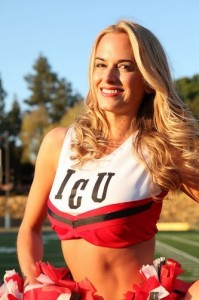
Jena Sims talking about working with Roger Corman in the film “Attack of the 50ft Cheerleader”

Jena Sims plays Cassi Stratford in the upcoming Roger Corman film “Attack of the 50ft Cheerleader”. Media Mikes had the chance to talk with Jena about the role and what it was like working with Roger.

Adam Lawton: How did you first get connected with Roger Corman?
Jena Sims: I auditioned for the film just like any other audition.  I really had no idea and was just treating this like another audition. The call was held in Roger’s office however he was not there at the time. I met with the director and casting associate and almost immediately booked the job.  They asked me if I had any cheerleading experience which I had as I did cheerleading throughout school. I didn’t get to meet Roger until about half way through filming. He has a brief cameo in one of the scenes. Roger was very sweet and quiet. He was just so nice. I was and still am very glad to be a part of one of his movies.

AL: Can you give us some background on the film?
JS: The film is a younger version of the classic film “Attack of the 50ft Woman”.  The story starts out with my character Cassi being the “ugly duckling”. She desperately wants to be a cheerleader and part of a sorority but because of her looks she can’t. One day while messing around in the science lab with her friend Cassi is injected with a serum that makes her beautiful but at the same time makes her grow.

AL: What drew you to the project?
JS: I grew up watching the “Bring It On” films. Those movies actually made me want to be a cheerleader. I loved that this film had a cheerleading element to it but also that it was a Roger Corman film. Roger has worked with so many great people and I wanted to be a part of that roster.

AL: How did working on this film compare to some of your previous work?
JS: It was like night and day. Being an independent film with a lower budget I think allowed everyone working on the film more creative freedom. Things were so much more relaxed and we all could contribute ideas for lines and or scenes. We all had a tremendous amount of input. I picked out and wore a number of my own clothes in the film. A lot of films the procedure is very tight and things are done in a certain way. Working on this Corman film was like going to summer camp. It really was just so much fun.

AL: Can you tell us about your involvement with HBBQ?
JS: HBBQ is a non-profit organization that I started. The letters actually stand for “Has Been Beauty Queen”. I started the organization in 2006 as a pageant for kids with terminal cancer called “Pageant of Hope”. I competed in pageants as a kid and was Miss Georgia Teen 2008. I lost my Grandfather when I was younger to cancer so I was always very interested in fund raising for places like the American Cancer Society. When kids come in to be a part of the pageant we teach the pageant walk and do their hair and makeup. We really try to get to know the kids and help bring them out of their shells. At the end of the day we have the pageant and everyone is a winner. With these pageants we try and help take the kids minds of being sick and in the hospital. I have been able to travel all around the world putting on these pageants and it’s been great.

AL: What other projects do you have coming up?
JS: I just shot a found footage film the other day which has still yet to be titled. It was a really fun and cute roll. I have auditioning quite a bit as all the fall shows are beginning production. I also will be doing a pageant for my organization in my home town in September so I am really looking forward to that. It’s been a long time since I have held one of these in my home town.
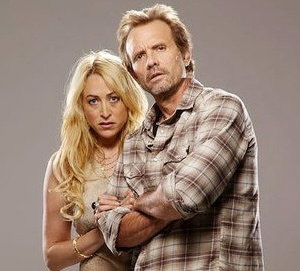
Michael Biehn & Jennifer Blanc-Biehn talk about working together on “The Victim”

Michael Biehn & Jennifer Blanc-Biehn are husband/wife team who made the horror/thriller “The Victim”.  The duo took on numerous role with Jennifer acting and producing, while Michael acted as well as written and directed the film.  The film is set to be released in theaters August 24th then will head to Blu-ray and DVD shortly after.  I highly recommend this film.  It is a real labor of love from the two of them and it really shows.  Media Mikes had a chance to chat with Michael and Jennifer about their experience from making the film to getting it released.

Mike Gencarelli: Michael, since this is your directoral debut with “The Victim”; what is the main thing you have taken away from this experience?
Michael Biehn: It was a lot more work then I expected it to be and was also a lot more time consuming. After I directed it then went into post-production, but my job didn’t end there. I thought my job was over, maybe I would have be right if I was working for a studio. But at that point then I had to get out and get people to see this movie. I spent just about a year then traveling with it.  We went to Los Angeles, Kansas City, San Francisco, Texas, Louisville and all over Canada. As we were showing the movie, it started getting some good reviews and some buzz among the distributors. Finally Anchor Bay picked it up and I have been happy with working with them.

MG: How was it working together as a team on this project?
Jennifer Blanc-Biehn: Well we worked together before over the years but we never worked together in this capacity before where I was producing and starring opposite him and he was directing and writing. Then we added our production company into the mix, so it is a whole new world. We are both intense, passionate and volatile people anyway. This project was intense and volatile but at the same time really fun and collaborative. As passionate as we get, I always trust Michael and I have his back. Overall, it was a really great experience.
MB: Jennifer is really a born producer. It never would have gotten made without her. She found the money and the source material. The movie was original based on another screenplay, but it was a page one rewrite. Jennifer handled everything from the beginning. She pushed everything through and worked very hard for this film.

MG: The film itself is quite intense, what was each of yours biggest challenge?
JBB: I think for me trying to stay calm was a big challenge. My character didn’t need to stay calm, so it was probably ok.
MB: Well, the biggest challenge for me was obviously time. I shot the movie in 12 days. I had never worked on a project before that time in any less than 24 days. I always feel like if you have $100,000 dollars and 6 weeks to build a house, you can probably build a pretty nice house. If you got $10,000 dollars and a week to build a house, its going to be a different kind of house. We were doing like 45 setups a day. Also when I found out we were going to make this movie, we had to actually start filming right away. I had to finish the script and do pre-production at the same time. Any filmmakers will tell you is not the ideal way to do it. Basically our pre-production was crewing up, casting, location scouting and dealing with the Screen Actors Guild. When you have that little time, I told the people that brought the money to the table that I would do this but I would have to have all the creative control, production control and all the decision making. It was a lot of responsibility but also fun and exsilerating at the same time to finally be the boss. It’s like I had the Jim Cameron contract on a Roger Corman movie.

MG: Jennifer, what do you enjoy most about producing aspect of the film?
JBB: I think what I enjoy the most is not the logistics of producing, which is dealing with the crews etc. That is more of a line producer. I am better at championing a film, sifting out material that excites me, getting other people excited and finding investors. I like the more social aspect of producing. I am also good at nagging people with emails [laughs]. I can find a role for myself instead of having other people dictate what I do. I started off as an actress and only an actress. So it has been fun to be able to find a role I like and possibly find a way to make it work. Lastly, I like the idea of bringing stuff to Michael and getting him excited about it.

MG: So how/when can people get a chance to see “The Victim”?
JBB: We open a theater in NY on August 24th at the Quad Cinema. On that same day we also premiere at FrightFest UK at the Empire Cinema. We play a week in NY, then we play for a week in Los Angeles at Quentin Taratino’s theater, the New Beverly Cinema on September 7th. Then on September 18th, we go to Blu-ray, DVD, VOD, Amazon streaming, Netflix, iTunes, Redbox…the whole deal.

MG: What do you guys have planned next together?
JBB: We are going to start a remake at the beginning of next year it is called “Hidden in the Woods”. We found this movie at Fantastia International Film Festival and both of us just fell in love with this filmmaker. It is directed by a guy named Patricio Valladares and he is just unbelievable and up-and-coming.
MB: He is just a great young filmmaker and only like 22 years old. I happen to be on the jury at the festival and got to see his film early. I have never been a fan of the “Saw” and “Hostel” series, but this one even though it has a lot of violence it doesn’t feel gratuitous. So we are looking forward to this project quite a bit.

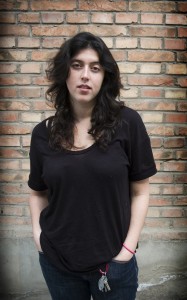
Alison Klayman talks about directing “Ai Weiwei: Never Sorry”

A 2006 graduate from Brown University, Alison Klayman is a documentary filmmaker and a freelance journalist. After graduating college she went to China where she spent four years producing radio and television stories for NPR’s “All Things Considered,” Associated Press Television, Voice of America, Current TV, and CBC. She reported the story “Who’s Afraid of Ai Weiwei?” for PBS’ “Frontline” and currently completed her first feature documentary film, “Ai Weiwei: Never Sorry.” Her documentary short, entitled “Ai Weiwei: New York Photographs 1983-1993,” was shown as part of the artist’s exhibition at the Three Shadows Photography Art Centre in Beijing from January through April of 2009. She also adapted a shorter version for the Tate Modern’s online channel. Ms. Klayman recent sat down with Media Mikes to talk about her film and the inspiration she draws from it’s subject.

Mike Smith: What was your inspiration to make this film?
Alison Klayman: I had been in China for a couple of years. And the reason I went… after I graduated from college, my goal was to make a documentary film. And in meeting Ai Weiwei I knew I had found a character who was not only very charismatic and complicated but, after our initial meeting together, I felt he could expand my ideas about China. I thought that an audience would enjoy watching him.

MS: You worked in China for several years. What brought you there?
AK: What brought me to China was a desire to go abroad…have adventures…become a journalist and do foreign correspondence work. The reason I went to China was very random. I had a friend who had family there. I went on a trip with her and ended up staying. I just wanted to go abroad…to anywhere in the world. I ended up in China. But I really threw myself into it. I worked in a lot of different industries. My dream was to one day feel like I deserved to make a documentary film. And in Ai Weiwei I found a great subject.

MS: How did you come to meet Ai Weiwei?
AK: Another story that’s more random than anything else. My roommate at the time in Beijing was working for a local art gallery and she was curating an exhibition of Ai Weiwei’s photographs from the decade that he lived in New York. How I actually initially heard of Ai Weiwei was though these photographs. And in 2008 she said to me that she thought it would be nice to have a video to accompany the gallery show. Something to show in the lobby that offered a deeper story to some of the photos. She asked if I wanted to make it and I said “yes.” In December 2008 I was brought over to Weiwei’s studio along with the gallery team. And on the first day we met I already had my camera in hand. And I started filming right away. I was so lucky that I had this introduction and was given this great opportunity.

MS: This is kind of a two part question. Until he’s detained by the Chinese government you seem to have almost total access to him. Were you able to communicate with him once he had been detained? Also, because of your association with this project, did you have any fear for your safety while in China?
AK: Nobody was really able to be in touch with him during his detention. His wife was brought to visit him once. She was the only person to see him during those 81 days, apart from those who were guarding him. She wasn’t told the location where she met with him and she was only allowed to be with him for 20 minutes. And during his detention I was in very close touch with people at the studio. I was very active on social media…giving interviews on what was happening. I was able to meet with him about two months after his release in Beijing. That was very important because we showed him the film before we headed out to Sundance. As to my safety…it was a good thing that I was already used to living in China and doing work as a journalist. I know there are certain ways to behave so that you won’t necessarily run into trouble. So on the whole, I did not fear for my safety. I did fear for the safety of Ai Weiwei and the other citizens who were engaged in his work. There were the ones that were really taking the serious risks. For me there were a few scary moments during filming, particularly when Weiwei was heading towards the police stations and the court houses. I was along for the ride, one of many cameras. I think when you watch you can see those moments and see that we didn’t know how they played out. Those were the only experiences where I experienced any interference from the authorities….trying to take the camera…trying to take the tapes.

MS: Due to the rather unflattering light that you shine on the Chinese government would you ever return to China?
AK: Definitely. I really hope to do more work there. I’m hoping that life will take me there again.

MS: Do you still communicate with Weiwei?
AK: The best way we talk is very open through Twitter. And what’s great is that he often re-tweets my posts, like, “just saw the film in Europe at a film festival.” He re-tweets that and I know he was able to see where the film had been shown. That’s the main way we stay in touch. We do also text and occasionally will talk on the phone, though it’s not necessarily safe to talk on the phone. I last talked to him about two weeks ago and he was blown away by the reach and the impact the film was having.

MS: Have you decided on your next project yet?
AK: I wish! I’m just developing ideas…not sure if they’re ideas for short films or a series of films. I’m coming off a really exciting project. I had a healthy respect for documentaries in college and I’m constantly curious and fascinated by their stories. I want to find another story that makes me feel the same way.

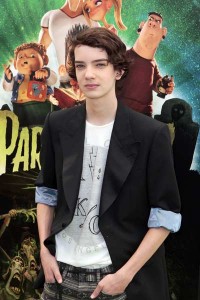
Kodi Smit-McPhee talks about voicing Norman in “ParaNorman”

Kodi Smit-McPhee is best known for his role in the dark horror film “Let Me In”. Kodi also voices the role of Norman in the stop-motion animated film “ParaNorman”. Media Mikes had a chance to chat with Kodi about this role in the film, the process of doing voice work and what he has planned upcoming.

Mike Gencarelli: Tell us about your experience voicing Norman in “ParaNorman”?
Kodi Smit-McPhee: It was really cool. I have done voice over work before but it was computer generated, a lot quicker and overall very different. I knew about stop-motion before this but when I worked on it, it was completely not what I expected. When I when to Oregon to see Laika studios, I was just blown away at how much passion they have and seeing how much work and patience goes into creating the town and these characters. It really motivated me to do the best that I can really do.

MG: Tell us about the process of recorded your role?
KSM: We knew that there were ten sessions that I had to record and there were a few months in between. I would go in and record the whole script and then send it off to Laika. They would work around my around my voice and then I would go back in and touch up anything we had to do over.

MG: How long did the whole process take?
KSM: It was about two years. I started when I was fourteen and now I am sixteen.

MG: When you recorded the voice were you with any of the other cast?
KSM: Yeah. It was really cool when I got to record my material with someone. Usually since I was typically in this black room when recording solo. When someone came in it helped fill in your imagination a bit and makes those scenes very natural. You can actually interact with someone and react off their energy. It was an awesome experience.

MG: What was your biggest challenge doing voice work?
KSM: I think the biggest challenge was keeping the voice up in that area, since I was getting older at the time. In the Town Hall scene, where he climbs up the side of the building and was yelling at the Witch, it was such an emotional scene. It was very hard to do. To get all of that emotion out through my voice was a challenge but we did get it in the end.

MG: After starring in “Let Me In”, what do you enjoy most about the horror genre?
KSM: I think the cool thing of horror is that as it gets older, people are bringing so much more into it. I think with “ParaNorman” and “Let Me In”, there is the horror aspect and it is fun but there are also these underlining deep stories within them. So you are able to take two things away from it.

MG: What do you have planned next?
KSM: Right after “ParaNorman”, I did “Romeo and Juliet”, which is something totally different. It is with Hailee Steinfeld, Douglas Booth and Paul Giamatti. Then I did a sci-fi film called “The Congress” which is also with Paul Giamatti and Jon Hamm. Right now, I am in New York working on a new film called “A Birder’s Guide to Everything” with Ben Kingsley.

Chris Butler & Sam Fell talk about directing “ParaNorman” and working with stop-motion animation

Chris Butler & Sam Fell are the co-directors of Laika Animation’s latest stop-motion animation film “ParaNorman”.  The film is the first stop-motion film to utilize a 3D color printer to create replacement faces for its puppets and breaks all the boundaries which past stop-motion films have faced.  Media Mikes had a chance to chat with the directors about working in the horror genre and blending it with stop-motion animation.

Mike Gencarelli: I am a big stop-motion fan but I see a trend with “The Nightmare Before Christmas”, Coraline” and “ParaNorman” all tend to have creepy aspects, why and do you you feel this aspect relates to stop motion?
Chris Butler: I think is the tradition of the medium. If you trace it back to its early days, in the 1890’s the very first efforts in stop-motion were creepy. “The Dancing Skeleton” was one of the first back in 1897. I think what it comes down to is they feature inanimate objects moving on their own accord, which in itself is something like black magic going on there. If you look at the pioneers of this medium, there was a certain creepiness to them. There has always been that slightly unsettling side of it. I believe it is entirely to do with it being real objects moving. When Tim Burton comes along and re-invents with with “The Nightmare Before Christmas”, he is playing on that and having fun with that slightly dark sense of humor. I don’t think it should be the limitation of the medium by any means. “ParaNorman” is kind of spooky but I think there shouldn’t be any real limits to the kind of stories you can tell with stop-motion.

MG: This is the first stop-motion film to utilize a 3D color printer to create replacement faces for its puppets, tell us about about that decision?
Sam Fell: Obviously these things aren’t designed for stop-motion animation. You are always taking a chance. We wanted to do something different on this film. They got a color printer in the studio and we did some experiments with it initially with the character Neil, who is covered in  freckles. When we saw it on the tested it big screen it just looked so promising. It was one of those spine-tingling moments, when you see something you’ve never seen before. We didn’t know if it was going to work on all the characters or if it would literally last over a two year production. We took a risk and went for it but it really turned out so well. When you see how the light fall on those faces or comes through them. I think the characters look less like dolls and are even more tangible and believable.

MG: I read that Norman alone has about 8,000 faces, how does that compare from other stop-motion films?
SF: I think with the numbers of faces, it has increased exponentially. I think Norman had a possible 1.5 million expressions at hand. We would never even use all of them since I don’t even think the human face can use that many expression. But that was at our finger tips. So pretty much whatever we wanted to do with this character we were able to do. It was really freeing because in the past stop-motion has had it limitations. There was replacement heads as far back as “The Nightmare Before Christmas” but they had to be hand-sculpted, so they were limited. Pretty much every limitation has been blown up on this movie. The boundaries in place of previous stop-motion movies, we broke them all. That was how we felt going into this. We thought let’s push this as far as we can and see what we can achieve. Everything we tried to do…it worked.

MG: The film is animated for a younger audience but is quite scary for some kids, how can you reflect?
SF: I think we wanted to make a family movie more than a kids movie. Something aimed at the teens or actually “tweens”. It is about an 11 year old boy and reflects their lives on screen. We wanted laughs, as well as scares and in a way it is like designing a roller coaster ride. We actually think that kids like scares. It is firstly entertaining and it also adds in a dramatic story. The hero, in this case a kid, has real challenges. You take them through it and show the darkness can be defeated. I think it makes for a great ride. We didn’t want to wimp out on the scares. We may loose the toddlers or the preschoolers but that is the risk you take. It is very hard to make a film for everybody…without being bland.
CB: We were specifically referencing an era of movie making that I think was a little braver. The movie that I grew up watching like “The Goonies” and “Ghostbusters”. They weren’t afraid to have scares and show an imperfect world. But they did it with humor and style. I miss those movies and I feel that they are also sorely missed by many people. So it was nice to play in that era again. Even though it was a contemporary movie, it was very much referenced by the films of the 80’s.

MG: I loved the Easter eggs for horror fans like the hockey mask and ringtone, any other hidden gems?
CB: The movie is so dripped with references that I don’t even known where to start. It is not just stuff that was in the script. I wrote in the bar in touch is called the Bargento, in reference to the old Italian movies. The name of Neil’s dead dog is Bub, which is the name of the tamed zombie in “Day of the Dead”. Most of the characters surnames are either horror movie directors or writers, even if they do not appear in the movie. On top of that we have a whole crew of movie fanatics, who were responsible for making the props and locations. They stick all kinds of stuff in there as well. It is difficult to even pin-point how much there is actually in there. Sam’s name even ended up on the old tramps underpants [laughs].
SF: I didn’t ask for that by the way [laughs].


Related Content

Alamo Draft House’s Greg MacLennan talks “Van Dammage!”

A graduate of the University of Texas, Greg MacLennan has the job most movie fans would kill for.  As the Director of Interactive Programming for the Alamo Draft House theatres, he has the opportunity to schedule great events combining movies of the past with current features.  This week, the Alamo Draft House Mainstreet Theatre in Kansas City is offering fans the chance to experience “Van Dammage!” – a trio of action films featuring Jean Claude Van Damme leading into an exclusive first look at the new film “The Expendables 2.”  While planning his next event, MacLennan took some time out to speak with Media Mikes.

Mike Smith:  You obviously have a love of films.  What inspired that?
Greg MacLennan:  I had the generic “film student” job of working in a video store, which gave me a chance to devour more movies then I ever had in my entire life.  And when I was younger my brother would go to the video store and bring home these awesome action movies.  Jean Claude Van Damme….Steven Segal….Arnold Schwarzenegger.  All of these amazing 80’s action movies.  I would just devour them no matter what they were.  And when I got older I found myself in a position at Alamo Draft House to put those movies back on the big screen.

MS:  How did the concept for “Van Dammage” come about?
GM:  I wanted to show movies where guys get punched in the face really hard!  That level of awesomeness isn’t happening on the big screen any more.  You don’t see the sweat running off of a bicep that has a vein breaking out of it.  You don’t get a real performance.  You don’t feel like those guys today could actually beat the **** out of each other.  I wanted to do a celebration of that.  And when I heard “The Expendables 2” was coming out I knew this was a perfect time to do it.  We checked with Lionsgate and they were like “let’s do this!”  Seriously, this is the greatest dream of my life.

MS:  Is Jean Claude Van Damme aware of what you’re doing?
GM:  Jean Claude is very aware of it.  He is very flattered.

MS:  What goes into the planning of an event like this?
GM:  First we have to get the idea approved.  Then we have to decide what movies we want to feature.  We have to lock down the titles and then make sure we can get them from the studios.  We have to come up with the various promotion items and the ridiculous menu items.  We always have a lot of surprises when it comes to Alamo Draft House’s Interactive Programming.  Just because you may know the titles of the films or the menu items doesn’t mean you’re going to know everything.  It’s a lot of people working and coordinating all of the aspects of the event.

Here is the lineup and menu for “Van Dammage!”

5:00 PM:  Van Damme stars as real life martial arts champ Frank Dux (and does an incredible display of the splits) in “Bloodsport.”

6:45 PM:  Directed by John Woo, “Hard Target” finds Van Damme helping a woman search for her missing father.

8:45 PM:  Dolph Lundgren co-stars with the Muscles from Brussels in “Universal Soldier.”

11:00 PM:  Van Damme joins Sylvester Stallone, Bruce Willis, Chuck Norris and a who’s who of action movie greats in “The Expendables 2.”

The menu created for VAN DAMMAGE is action packed as well. Moviegoers can enjoy three special dishes that will put a stranglehold on even the largest appetite – KUMITE CHOP SUEY, a dish packed with meat, eggs, veggies and noodles. ANDREW SCOTT’S EAR NECKLACE, freshly fried pork rinds fit to be strung together and worn, or dipped in a spicy soldier dipping sauce. Finally, finish off your hunger with HARD TARGET BEIGNETS, a sweet and delicious New Orleans treat of fried dough finished with powdered sugar and served with chicory syrup.

This special event is also being held on Wednesday, August 15, at the Austin, Texas Alamo Draft House.  VAN DAMMAGE tickets are $20 and available now! Tickets for the Kansas City screening are on sale now here.

Check out the event trailer here:

Katherine LaNasa chats about working with Will Ferrell in “The Campaign”

Katherine LaNasa is playing the role of Rose Brady across from Will Ferrell in new political comedy “The Campaign”.  She is also co-starring the new Fall NBC drama “Infamous”.  Katherine took out some time to chat about her upcoming work and how it was working with Will Ferrell.

Mike Gencarelli: What was your inspiration for Rose Brady in “The Campaign”?
Katherine LaNasa: Well Rose is very bossy and ambitious. I call her a hick in a dress [laughs]. She is a combination for me of Sarah Palin, Sidney McCain, Ann Romney and a little bit of Rick Perry’s wife Anita all rolled into one [laughs].

MG: You have a hard time keeping it serious on set with Will Ferrell?
KL: Yes, that was kind of the main problem. I was glad to see the final cut and saw that I came off ok. I was pretty worried. The first couple of weeks, I kept thinking I was going to be terrible. All I was doing was trying not to laugh. I would look at Will and I had to focus between his eyes and think about like dead people or something in order not to get through the takes and not laugh. It was pretty bad [laughs].

MG: What would you say was the highlight of working on the film?
KL:
 There was an interview with Piers Morgan, that you saw a little in the trailer but didn’t end up in the movie. Cam (Will Ferrell) puts cigarettes out during an interview and they asked him “are you pushing cigarettes?” He says “Nooooo, I just enjoy the cool refreshing taste”. He is basically pushing Kool’s [laughing]. Or he would be like “Oh I am sorry what are we talking about…Coke Zero?”. It was so ridiculous. I was in the other room and was suppose to come into the interview as a surprise guest and sell him out. When we were shooting it, I was watching Will on a monitor in another room. The first couple of takes every time they got to me I would be crying from laughing so hard. Finally I had to have them cover the monitor and take my earpiece out. I couldn’t handle it. So that was one highlight. There also this big rally with pyrotechnics and flying around on wires. It was just fun and it was one of the things you get to do in a big-budget movie.

MG: Tell us about your two upcoming films this fall “Jayne Mansfield’s Car” and “The Frozen Ground”?
KL: “The Frozen Ground” should be coming out next. I did it right before “The Campaign”. It is a very dark drama, true story about this serial killer in the 80’s. I played his wife in the film. It also has Nicolas Cage and Vanessa Hudgens in it. Before that I shot “Jayne Mansfield’s Car”, it is a 1969 familydrama. I play the daughter of Robert Duvall and sister to Kevin Bacon and Robert Patrick. I really enjoy both of those experiences.

MG: Switching to the TV world, tell us about your character Sophia Bowers and we can expect from your new NBC drama “Infamous”
KL: I start working on this later in the month in New York. It is this brooding dark murder mystery. It is being shot at the house where they shot “The Great Gatsby”. I play a cross between Kathleen Turner in “Body Heat” and Glenn Close in “Damages”. Very dark and sexual. Should be a lot of fun.

Jack Perez talks about “Mega Shark vs. Giant Octopus” and “Some Guy Who Kills People”

Jack Perez is known best as the director of the cult hit “Mega Shark vs. Giant Octopus”. Jack also recently directed the new horror/comedy “Some Guy Who Kills People”. Media Mikes had a chance to chat with Jack about his new film and the cult success of “Mega Shark vs. Giant Octopus”.

Mike Gencarelli: How did the title, “Some Guy Who Kills People”, come about?
Jack Perez: I came to the project after the script was already written. Ryan Levin had come up with the title and I loved it. Some people had wanted to change it as they thought it was too strange. I really fought for it as I thought it summed up the theme of the movie.

MG: What was your biggest challenge working on this production?
JP: I think getting the film done in the time we were given. We only had 16 days to do the film and its one of those films where performance counted. I wanted to make sure I could get all of those. Time was really the biggest thing. Fortunately we had a great crew and the cast was great as well.

MG: How was it working with such a great cast?
JP: It was great! I am a big fan of Karen Black and Barry Bostwick. These were all people Iadmired. I also admired Kevin Corrigan’s work and knew him socially however we had never made a film together. This film was a chance to work with people I loved. Thankfully they were all available as that generally never happens.

MG: Were the comedic parts of the film planned or were they something that just naturally occurred?
JP: Everything was deliberate. The script was designed to have equal parts of comedy, horror and drama. That was something that made me like the script so much. Mixing these things is always appealing but difficult to find.

MG: How did John Landis become involved?
JP: I think he had gotten script early on as Ryan was looking for a director. Landis was approached and it appealed to him however around that same time he was approached to make “Burke and Hare”. That was a project he has been looking to make for a long time and it then became about finding someone to replace him which is where I came in.

MG: Did you think “Mega Shark vs. Giant Octopus” would ever reach the cult status that it has? And why did you choose to go by Ace Hannah?
JP: I never did. The reason I didn’t put my name on it was because I like to have control over the edit of my work. I think it is an essential part of directing. The Asylum doesn’t work that way. I knew they would sort of make a mess of my work. I wish people could see my cut of the film as it is a much faster, funnier movie. There was a bunch of stuff added to pad the length of the movie.

MG: What do you have planned next?
JP: I just did a movie for the Syfy channel called “Blowing Vegas of the Map”. It’s kind of a goofy, super natural disaster type movie. It was really a chance to work with Barry Bostwick again. Ryan and I also want to work together again.

Universal’s Peter Schade talks about restoring “JAWS” for Blu-ray

“Jaws” fans can now breathe a sigh of relief because after years of begging and pleading Universal Studios is about to release Steven Spielberg’s 1975 blockbuster in an all new Blu-ray DVD package. But how do you take a film almost four decades old and make it look like better then brand new? That job fell to Peter Schade, Vice President of Content Management and Technical Services for Universal.

After earning a bachelor’s degree in Telecommunication and Film from California State University, Schade began his career as a scheduler for Turner Entertainment in 1989. He later worked in the technical services departments of both Turner and Worldvision. In 1999 he joined Universal as Director of Worldwide Home Video and Television Servicing, playing a key role in the relocation of International Home Video Servicing. He was promoted to his current position in August 2002. While finalizing his work on “Jaws” Mr. Schade found the time to sit down with Media Mikes.

Mike Smith: You have a Bachelor’s Degree in Telecommunication and Film. What were your goals when you left college? Did you intend on working in the technical side as you are now or were you looking to be more hands on as a filmmaker?
Peter Schade: When I was in school I always gravitated more towards being an editor. On student projects I was always the guy putting them together. But when I got my first “real” job after school I did intend to grativate more towards the technical side but circumstances pulled me more towards a management role. But I am managing a technical department so I’m very happy where I am.

MS: Can you describe a normal work day?
PS: Wow. My job has many facets so there are really no two days that are alike. My department sits right between production and distribution, so upstream of me you’ve got production both in the feature and television side creating content and delivering it to the studio. Then my team creates all of the archived assets that are made in support of distribution and then downstream of me are divisions like Home Video and Television…International…Domestic…Non-theatrical. So we’re delivering content every day to any number of those groups. The rest of the library has us dealing with contents that are decades old to contents that are brand new so there are lots of challenges. There’s never a dull moment!

MS: Were there any special processes that you needed to employ to transfer “Jaws?”
PS: The special processes begin in the way we care for the elements, from the original negative on down through any of the distribution masters that we make. We have our own vaults – buildings that are specifically designed to store material – that are kept at the proper temperature and humidity. In terms of taking the original negative and transferring it…digitizing it…we specifically used a film scanner that employed wet gate technology. This means the film is passed through a chamber before the gate which is filled with a liquid that is the same as the film base. Therefore any surface damage on the film is filled in and we don’t see the things that have gotten on the film as a result of its age. It’s scanned at 6K resolution, which is probably eight to ten times more then you’d see on High Def. Once that image information is digitized off the filmwe use any number of tools to work on color correction and dirt fixes and stabilization. There are manyparallel processes that go on at the same time that take weeks and sometimes months until we have a product that we think is of the quality needed to put out on Blu-ray.

MS: In the featurette describing the processes currently on line, it looks like you’re actually inspecting , cleaning and digitalizing the film frame by frame. Is that correct?
PS: There is an inspection that goes on. Before you put the film on a mechanical device you want to make sure there’s no broken sprocket holes or loose splices. You have to make sure the film is in good shape before you even begin to scan it. That is what they are referring to in the documentary as far as studying the film frame by frame. It’s literally a negative expert who is used to handling film. They go through every reel and hand inspect every foot…every frame…of that film.

MS: Do you also spend any extra time working on the supplemental aspects of the disc? I know the fan documentary “The Shark is Still Working” is included. Did your team work on that film as well?
PS: My team only focuses on the actual feature itself. There are other groups that focus on the supplemental material.

MS: I think I can speak, not only for “Jaws” fans, but for film fans when I say that the release of “Jaws” on Blu-ray is probably one of the most anticipated releases in the history of the format.
PS: It’s a great film. It’s one of my favorites as well. It stands the test of time. And coming out on Blu-ray, we’re very proud and honored to get it out there and have fans see it better than it’s ever been


Related Content

H. Perry Horton talks about writing “Shark Week” & “2-Headed Shark Attack” with The Asylum

Perry Horton is the writer of two recent films from The Asylum, “Shark Week” & “2-Headed Shark Attack”.  Media Mikes had a chance with Perry about how he got started working with The Asylum and about his upcoming films.

Mike Gencarelli: Tell us about how you got involved working with The Asylum?
H. Perry Horton: In August 2010 I started my blog, Committed, dedicated entirely to Asylum films – news and reviews, interviews and profiles et cetera, as well as my own personal pitches. Basically, it was a shameless ploy to get their attention, and somehow it worked; in January 2011 they added me to their pool of writers. Three months after that, I was working on A Haunting in Salem.

MG: What was your biggest challenge working on “2-Headed Shark Attack”?
HPH: The sheer number of characters. I inherited the concept and basic set-up from the very talented Edward DeRuiter (3 Musketeers), and in my head, a semester-at-sea couldn’t just be 8 or 10 characters, there had to be enough people to justify the program, so I added a bunch more. Too many, perhaps, for development across the board, but on the bright side, it does yield possibly the highest death count in all of shark cinema history, at 26, I think.

MG: You work with sharks again with “Shark Week” also from The Asylum, tell us about working on this project?
HPH: The Asylum came to me with the concept, a sort of Hunger Games for the shark set. I thought it was a brilliant idea, and instantly wanted to get my hands on it. As far as the process went, it was quick – very, veryquick – and as such sort of a blur in my memory. I just remember throwing myself into it, wanting to satisfy what I think of as the two sides of being a shark fan – wanting to marvel at the sheer evolutionary superiority of the creatures, the genetic adaptations and instincts that make them such exceptional predators, and wanting to see them rip shit up. There are a lot of different species in the film, and I wanted to highlight each’s nefarious advantages, give each a different perilous personality.

MG: You are quite the shark expert, what do you enjoy most about working within that genre?
HPH: I don’t know that I’d consider myself a shark expert – maybe a shark-movie aficionado – I’ve just always been simultaneously fascinated and terrified by them. When I was a kid, eight or nine, I was surf fishing with an older friend in North Carolina, back where I’m from, and he got a bite on his line, big one, and started trying to reel it in but it was giving him trouble. When he tugged hard on the line, a hammerhead breached the surface not ten feet off shore. My buddy dropped the pole right there and it disappeared into the waves. Since then, I’ve been hooked (pardon the awful pun). Sharks are the pinnacle of evolution, the absolute fulfillment of biology’s potential, they’re consumption machines, it’s all they do, and they are well-equipped for the task. I can’t think of a more primal creature on the planet. And then there’s the sea: I could be making this up, but we know more about our solar system than we do the sea. It covers 3/4th of the planet and contains such a wide variety of hazards they’re practically innumerable. You put those elements together – a singled-minded killing machine with zero natural predators and the most unexplored and hostile environment on Earth – you’re gonna come up a winner every time.

MG: Tell us about why you created Committed, a fanblog about The Asylum?
HPH: I’m a fan, first and foremost, I just love whatthey do. I’ve always been a B-movie guy, and for my money, they’re making the best ones out there. I started the blog because I couldn’t believe there wasn’t one already, and because I wanted people to share in my enthusiasm for Asylum films. For all the general crap people may sling just because of the type of films they make, how inexpensively or quickly they make them or who’s in them or whatever, there’s at least twice as much to love about every single one of their films, and I wanted to share those things. And also I really, really wanted to write for them.

MG: What is your all-time favorite film from The Asylum and why?
HPH: Anything that reads “Screenplay by H. Perry Horton.” Other than that, Mega Shark vs Giant Octopus is the film that really ignited my love for The Asylum. But I come at the question from a couple different angles. As a fan, I dig the Mega Shark movies, the found-footage stuff like Alien Origin, certainly the sex comedies like Bikini Spring Break; while as a writer I’m drawn to stuff like Paul Bales’ Nazis at the Center of the Earth and Sherlock Holmes, Geoff Meed’s I Am Omega and 6 Guns, Jose Prendes’ Haunting of Whaley House and Jared Cohn’s Born Bad – I could go on for paragraphs – but basically stuff that I’ve been not only impressed by, but humbled. So I guess the short answer is, all of them?

MG: What do you have planned next?
HPH: “Shark Week” premieres on SyFy Saturday, August 4th at 9 p.m. then bows on DVD a few weeks later on the 28th. I have a disaster film that’s in production at the moment, water-based, and an iron or two in the fire beyond that. I’m a superstitious sort of writer in that I don’t like to discuss projects before they’re in production. I’m a big believer in jinxes.

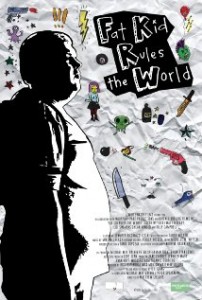
Matthew Lillard talks about his directorial debut with “Fat Kid Rules the World”

Matthew Lillard has appeared in over 70 films and is probably best known for his roles in Wes Cravens “Scream” and the live action “Scooby-Doo” films. Media Mikes had the chance to talk with Matthew about making his debut as a director with the film “Fat Kid Rules the World” which is an adaptation of the K.L. Going novel of the same name.

Adam Lawton: Can you give us a brief overview of the film?
Matthew Lillard: In the first few frames of the film the main character Troy Billings who is an obese teenager tries to jump in front of a bus. He ends up being saved by a punk rock guitar savant and the two start a band. The film is really about their journey as friends and them finding themselves.

AL: What drew you to the project?
ML: I was the kid who was lost in high school. I feel like 95% of the world feels like they don’t belong in whatever high school situation they are in. I felt like the story of Troy’sjourney depicted my experience in school. I think there are kids out there that need a movie like
this. The film is very honest and we just wanted to deliver that to those who need it.

AL: What was the hardest part of both directing and acting in the film?
ML: I actually cut my part out of the final frames of the film as it just didn’t work. Thestory is very fast and tidy and I felt my stuff really kind of lagged.

AL: How did Pearl Jam’s Matt McCready become involved with the scoring of the film?
ML: I had told my agents that I was directing a film and they asked me if I had anyone in mind to do the music. I told them no but the film was based in Seattle. They brought up Matt’s name and that he was looking for a film to score. He came on board and changed the quality of our film. He made a huge impact on our movie.

AL: What are the film’s release plans?
ML: The idea is that any one in America right now can go to www.tuggthefatkid.com and request a screening of our movie in their local theater. Once there are enough people to pre-buy tickets the screening will happen. It’s kind of a new way distributing independent films.

AL: You used Kickstarter.com to fundthe film. How did you become aware of that?
ML: I have had tons of friends that have used it in the past. It was a pretty amazing experience as we raised $158,000.00 in 31 days. It just helped propel the film as there is always the chance that an independent film can drift off in to oblivion. The support we have gotten from the community has really allowed us to find a new avenue to distribute this movie.

AL: What other projects are you working on right now?
ML: I just finished a film with Clint Eastwood titled “Trouble with the Curve” that comes out this fall. I also will be leaving soon for Australia to start work on “Nims Island 2”. I am always looking for films to do and hope to be doing another one in the next 6 months.

Kevin Heffernan talks about Broken Lizard, “Super Troopers 2” and “The Babymakers”

Kevin Heffernan is a member of the comedy group Broken Lizard.  He co-stars in the new film  “The Babymakers” along with fellow Broken Lizard member Jay Chandrasekhar, who also directed.  Kevin is currently touring the stand-up comedy circuit with fellow Broken Lizard member Steve Lemme.  Media Mikes had a chance to chat with Kevin about Broken Lizard, “Super Troopers 2″ and “The Babymakers”.

Mike Gencarelli: How was it working with Jay Chandrasekhar solo compared to a Broken Lizard production?
Kevin Heffernan: He is a total dick…no he’s good. It was great. It was a project we put together a while back. It was closed and then fell apart and then closed then fell apart. So it was great to finally do it. It wasn’t that different from shooting a Broken Lizard film. We used a lot of the same crew and it is sort of like family. I’ve worked with Jay a lot so it was really smooth. Smooth sailing.

MG: Tell us what you enjoyed most about playing Wade?
KH: It is kind of funny since that with some of the early reviews, it has been said that it is a bit of a departure from our Broken Lizard work and features more mature material. But the fact of the matter is that I got to play the “Broken Lizard” asshole character. So it was fun for me. I got to be a jerk and a dumb guy. It ended up not being too far away for us. We dealt with issues with having kids and stuff but I was still running around with my pants down.

MG: What was your favorite experience from “The Babymakers”?
KH: Jay and I haven’t worked on something together since “The Slamming Salmon”. So it was fun to get back into that. You kind of realize the more movies you do the more comfort you have. There is a lot of improv on this. We got to come up with a lot of funny stuff. The other nice thing was working with a guy like Paul Schneider. I didn’t know Paul before but he has a lot of indie film cred. He is a real actor [laughs]. Unlike us, you know. To spend time on a set with a guy who is that talented was different than hanging out with my college buddies.

MG: What do you like most about working in comedy genre?
KH: I think it is just the sensibility of it. Being on set is fun, the atmosphere is just very fun. It is the base instinct of trying to make people laugh. I guess I could do drama but I really don’t seek any of that stuff out. I just love doing comedy.

MG: After “The Slamming Salmon”, you plan to direct again?
KH: Yeah, I would love to do more directing. We got a lot of irons in the fire currently. We had a couple of movies that have come close in the last year and one of those I was going to direct for Broken Lizard. So I still want to do that. You just gotta ride the wave a little bit. We made this movie. Then Steve Lemme and I got the stand-up tour also, which we actually just shot for a special last month. So we are editing that together right now. I like doing multiple things, that way you don’t get bored but I hope to direct again soon.

MG: Tell us about your stand-up tour with Steve Lemme?
Steve told me you and him are working on a new Broken Lizard script, any details?
KH: We got a couple of things we were working on right now. One we really like where we (Broken Lizard) all play minor league umpires. So it is funny kind of “Bull Durham” movie…but with umpires [laughs]. That is kind of secondary though. The big push is really for “Super Troopers 2”. The hold up is just a negotiation with Fox right now. They own the first one and the rights to the second one. So its moving along just slowly.

MG: You guys also have a TV pilot in the works, any update?
KH: Steve and I actually just pitched a new idea to a few places including NBC. They seem to really be into a few of the new ideas we have, so I think we should have something moving forward soon hopefully.

Jay Chandrasekhar talks about Broken Lizard, “Super Troopers 2″ and “The Babymakers”

Jay Chandrasekhar is a member of the comedy group Broken Lizard.  He directs and co-stars in the new film  “The Babymakers”, which co-stars fellow Broken Lizard member Kevin Heffernan.  Jay also has directed a lot of television including “Arrested Development” and “Community”.  Media Mikes had a chance to chat with Jay about Broken Lizard, “Super Troopers 2″ and “The Babymakers”.

Mike Gencarelli: What was your biggest challenge working on “The Babymakers”?
Jay Chandrasekhar: I think I wanted to try something a little more real. So I wanted to see if I could make the tone with the real life relationship stuff work with some of the stuff that Kevin and I tend to do in the comedy world. I wanted to see if both of those tones could fit into a movie. So that was my biggest challenge for sure. I feel like I am very happy with how it ended up.

MG: How did it come about working with Kevin Heffernan solo on this project?
JC: He worked on a film called “Strange Wilderness”. The writer of that film, Peter Gaulke, had written this script with Gerry Swallow. He gave it to Kevin and asked if we could get it made at Warner Brothers, when we were there. Kevin gave it to me and asked if I would be willing to direct it. I read it and loved it and said “Let’s go for it”. So that is how it ended up being just the two of us. It is a movie about a couple really. It wasn’t able to be adapted to be a five man Broken Lizard movie. The thing about Broken Lizard movies is that it needs to have the right vibe and, of course, be able to star five guys. This was not one of those.

MG: What was your inspiration for the character Ron Jon?
JC: I based it somewhat on a couple of my Uncles. I’ll tell you this, I feel like Indians in Hollywood are always computer guys, cab drives, or nerds that never get chicks. I thought it might be fun to make the bad guy/criminal an Indian. I’ll be honest with you, I’ve been imitating my Uncles since I was like 4 or 5, so I really had a fucking blast with this character.

MG: Do you find it difficult both acting and directing on a film?
JC: I have done it now like 6 or 7 times now. I always say acting and directing ruins two perfectly good jobs. But look, it is a great way to get good parts [laughs]. Frankly, I know how to do it. One thing I do is make sure that Kevin is watching my performance and I watch his of course when he directs. I just give a range of sizes for the performance starting at super subtle and get bigger and bigger. And I hope that one of those will make the cut.

MG: Besides film, you’ve been directing a bunch of TV, how do the do compare? What do you enjoy most?
JC: I have been lucky to work on a lot of great television shows like “Arrested Development” and “Community”. I am working with high-end top level comics and actors. I am getting to see how they work and also making new friendships/relationships. Due to this, now I am developing my own television show as well. The business is very different. You have to work faster and generate material a lot quicker. Yet it also has to be on a high level of entertainment. I am having a lot of fun shooting television though. My job there is to make a very good episode. It’s not to make my show. It is to shoot their show.

MG: With “Super Troopers 2” script completed, what are you most concerned about with making this film?
JC: I am concerned about fucking it up for the fans, obviously. There is nothing worse than watching a sequel and being like “What the fuck is that”? We have written what I think is a really great story. I think ultimately we have done 10 drafts of it and we need to do another 10 to ensure it is as funny or close. That is going to require, you know, smoking a lot of joints and sitting around a room and coming up with the right details. There is no guarantee, of course. Firstly, we still need to get Fox to allow us to make the film. Assuming that they do, there is a lot riding on it creatively.

MG: What do you have planned next with Broken Lizard? Solo?
JC: I got the pilot but I really can’t talk about it yet since it is not setup anywhere yet. There is a film called “Shotgun Wedding” that Olivia Munn and I are doing a re-write of currently. Unless the “Super Troopers” issue resolves itself, I imagine I would be making “Shotgun Wedding” next.

Maggie Wagner talks about play “Right on Target” and “Return of the Killer Shrews”

Maggie Wagner is playing the role of Karen Harrison in the play “Right on Target”, which premieres at this year’s New York International Fringe Festival. She is also co-starring with John Schneider in “Return of the Killer Shrews”. Media Mikes had a chance to chat about these projects and what else she has planned next.

Mike Gencarelli: What drew you to audition for the play “Right on Target”
Maggie Wagner: I got a phone call from one of the producers who’s a friend of mine. He was working on a play for the Fringe Festival and he had a part in it that he thought I would be good for. He wanted me to meet Gary Morgenstein who was also going to be working on the play. Gary thought I was the right person for the role also. I then auditioned over Skype for director Noemi De Lapunte. She liked me and everything went from there.

MG: Tell us about your character, Karen Harrison, in the play?
MW: I play a character by the name of Karen Harrison. She is a very liberal, hippy, jewelry maker who is married to a very conservative, right wing African American. We are complete opposites.

MG: The play is premiering at the New York International Fringe Festival, what can we expect next?
MW: I have never been to the festival. I do know that two plays or more have gone on to Broadway. One of those was “Urine Town”. This festival is a starting ground for shows and it’s a mixed bag so you never know what you are going to get.

MG: How would you compare working in theater to working in film or television?
MW: It’s all about truth and reality for me. I try to do everything the same. They are different mediums but I try to be as real as possible. You try to bring in your own reality. There is a lot more projecting when it comes to stage work but I love being on stage and hearing the laughter from the crowds.

MG: Is there a specific genre where you feel most comfortable?
MW: I love everything. I like anything that involves me getting paid and being able to show my strongest points. (Laughs)

MG: How did you get involved with “Return of the Killer Shrews”?
MW: The writer of the sequel Steven Latshaw happens to be a friend of mine. The original actress who was cast became pregnant and they needed someone for the role of Stella. They were looking for someone with a biting wit similar to Fran Drescher. I guess I am the low budget equivalent to what they were looking for. (Laughs) They called and asked me if I wanted to be in the film and I just went and did it. There was really no audition process.

MG: Did you have any problems working with the digital effects in the film?
MW: Not really. They kind of give you the idea of where things are and you just sort of go from there. It was great working with John Schneider. We are sort of like the odd couple.

MG: What other projects do you have coming up?
MW: I just finished a film titled “Hate Crime”. The film was directed by James Cullen Bressack and the film is an experimental horror film. It is a found footage film where a family is attacked by some intruders. There is a lot of special effects things going on. I hear it is pretty gruesome to watch.

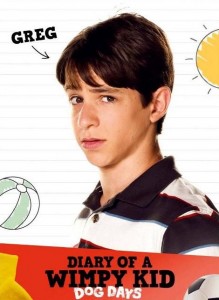
Zachary Gordon talks about playing Greg in series “Diary of a Wimpy Kid”

Zachary Gordon is known best for playing Greg Heffley in series “Diary of a Wimpy Kid”. He is returning this summer in the third film in the series “Diary of a Wimpy Kid: Dog Days”. Media Mikes had a chance to chat with Zachary about the series and what we can expect from this film.

Mike Gencarelli:  What do you enjoy most about playing the Greg Heffley character?
Zachary Gordon: It’s somewhat of a challenge to go back to Vancouver every year but at the same time it almost gets easier as we are just a big wimpy family. I kind of fell right in to character from the start. Playing Greg is so much fun. I get to become this whole new character. When we are shooting in Vancouver we all get to hang out and do things together.

MG: How does the latest film compare to the previous two?
ZG: The first two films were based during the school year. What’s unique about “Diary of a Wimpy Kid: Dog Days” is that it takes place during summer vacation. Greg’s idea of a perfect summer vacation is sleeping in and playing videos games. His Mom’s idea is quite different. Greg is kind of forced to spend time with his Dad and things just backfire. Greg’s tries a number of different ways to impress everyone but nothing seems to work out.

MG: Was there any difficulty trying to blend the two books, “The Last Straw” and “Dog Days”, that make up this film into one?
ZG: Playing Greg is always somewhat the same. A lot really depends on the mood of the scene. What I find so interesting about the two books being combined is you get some of the school year and some of the summer. I thinkthat is really great. I especially like that they involved summer vacation as this hasn’t been shown before. I am really happy with the way the film is turning out.

MG: Do you have any fun stories from during filming?
ZG: I have a lot! There was one where we were filming in a pool with a bunch of people. I was a little nervous about what people could be doing in the pool because they had been in there for awhile. Everyone started joking about it and my Mom and Peyton List’s Mom decided to mold a bunch of tootsie rolls together and put it in the pool. Peyton planted the evidence in the bottom of the pool and then went over and told one of the producers. They told Peyton not to tell me as they thought I would freak out. They had to get some people to try and get it out. We were all laughing and then Peyton jumped in the pool and picked up the fake poop. Eventually people found out that it was fake. That was a great prank.

MG: Do you have a favorite book in the series?
ZG: The first one to me is personally the best. I love all the books but the first one really starts everything off. That’s where the rollercoaster begins.

MG: What do you like most about working in the voice over field?
ZG: I am actually working on a voice over project right now titled “The Boxcar Children”. What I love about animation is that it is so different from live action. You can roll out of bed and go to work. You have to voice over acharacter without anyone seeing your emotions. I like that challenge. When working on voiceovers you are watching something through a glass window. Both voiceover and live action are so unique.

MG: Are you going to be reprising your role in the new “Santa Paws”?
ZG: In the first film I play Puppy Paws which is Santa Paws’ son. In the new film I voice the younger Santa Paws. The dogs are adorable and I am glad I got to voice over them.

MG: What are you currently working on?
ZG: I am working on “The Boxcar Children” which is based off the book series. It’s a great family film that everyone can relate to. Also before I broke my leg I finished work on a film called “The Incredible Burt Wonderstone”. This character is much different than my role in the Wimpy Kid films  as I play sort of a bully. It was fun working on a totally different character.

Copyright: MediaMikes.com © 2012 · Powered by: nGeneYes, Inc. · Login

All logos and images used on this website are registered trademarks of their respective companies. All Rights Reserved. Some of the content presented on our sites has been provided by contributors, other unofficial websites or online news sources, and is the sole responsibility of the source from which it was obtained. MediaMikes.com is not liable for inaccuracies, errors, or omissions found herein. For removal of copyrighted images, trademarks, or other issues, Contact Us.