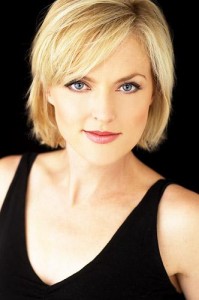
Elaine Hendrix talks about new web series “Fetching”

Elaine Hendrix plays the role of Sheila in the new web series “Fetching”. Media Mikes had a chance to talk with Elaine recently about working on the series and what other projects have been keeping her busy.

Adam Lawton: What can you tell us about your new show “Fetching”?
Elaine Hendrix: I love this role so much. It is a web series put out by Michael Eisner’s company. They teamed up with AOL and writer Amy Harris who wrote “Sex and the City”. The series is fun and really cute. There are animals in it and you can never go wrong there. I like to describe my character on the show as being fabulously, fabulous. She is the top client at Fetching and spoils her dog rotten. I had a ball doing this. It was very much like shooting for a television series other than we jammed the whole season in to a month’s worth of shooting. There have been talks already of doing a second run.

AL: What drew you to the project?
EH: First and for most it was set in a dog boutique. There was going to be a lot having to do with dogs. Being the animal activist that I am it was perfect. Also getting the chance to work with Amy Harris was something that I really wanted to do as I am a big fan of her work.

AL: What do you think was the biggest challenge working on a series like this?
EH: Surprisingly nothing. The only difference was that we had to move a little faster. In this day and age unless you are a 100 million dollar franchise everyone is trying to do things on a shoe string budget. Moving faster has sort of become the norm. I think the show looks beautiful and the writing and cast are top rate. I would do it again in a heartbeat.

AL: What did you enjoy most about your role?
EH: Sheila is kind of like the “Samantha” of the show minus the gratuitous sex. Sorry to disappoint all the readers. (Laughs) She lives in her own world and plays by her own rules. Sheila knows who she is and has no qualms being that.

AL: Can you tell us about a few of your other projects?
EH: I just finished work on “A Street Car Named Desire” and it’s looking like the production is going to be reprised in Los Angeles which would be great. I love Blanche Dubois. For women’s roles it doesn’t get much better than that. I did a Christmas film for the Ion Network that will be released around the holidays. I also did a film titled “General Education” which was just released. Then there are a few other projects that are in development as well.

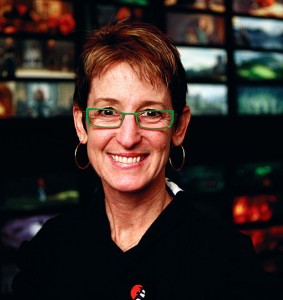
Pixar’s Tia Kratter talks about working on “Brave”

Tia Kratter joined Pixar Animation Studios in April 1993 as a digital painter during production of the studio’s first feature film, “Toy Story.” She has subsequently held the shading art director role on “A Bug’s Life,” “Monsters, Inc.” and “Cars,” where she was responsible for specifying the color and texture of every object modeled for a film. Kratter most recently completed work as the shading art director for Disney•Pixar’s feature film “Brave,” which opened in theaters in summer of 2012 and is set to release in North America on Blu-ray™ and DVD on November 13, 2012. Prior to Pixar, Kratter was a background painter at Disney Feature Animation from 1980 to 1985, where she worked on a variety of acclaimed animated films including “The Little Mermaid,” “Aladdin,” and “Beauty and the Beast.” Media Mikes had a chance to ask Tia a few questions about working with Pixar and on the film “Brave”.

Q: You’ve been at Pixar since the first Toy Story, working in the art department. How has your work evolved over the past few years?
A: You’ve done your homework! Back in 1993, when I began to work on “Toy Story,” the internet as we now know it didn’t exist. So all of our reference on that film was personally-found. In other words, when we had to figure out Sid’s hair, I went directly to my oldest son’s flattop haircut and used that as reference. Nowadays we back up real reference with information we find online. It helps streamline things. Still, and you’ll hear this a lot this morning, there’s nothing like touching and seeing the real thing. Also, on “Toy Story,” we really didn’t know what the heck we were doing. Now we’ve got all sorts of hoops to jump through. Making a computer animated film is not a quick process, and just because we’re using a computer it doesn’t really go any faster than classic hand-drawn animation.

Q: What is the coolest thing about working at Pixar?
A: 1. The cereal bar. We get a choice of about 18 different cereals in our brown bag kitchen to choose from every morning. Once a week I go for the Captain Crunch, which my mom never let me eat when I was a kid. 2. The people (actually that should be my number 1). You can’t believe how many thoughtful, kind and creative people work here. I’m in awe of the talent around me every single day. 3. The commitment to making great films. We try hard, really hard, to make our films something that we love. And, by feeling solid about them ourselves, we hope the audience does too.

Q: Which were the most difficult elements to translate to the movie?
A: Initially, Merida’s hair of course was a challenge. But we knew it was going to be from the very beginning. And when we can anticipate our challenges, we tend to do really well. It’s those little surprises that come up along the way that can really throw us for a loop. We had never done a horse, except for Bullseye in “Toy Story 2” and “Toy Story 3.” In “Brave,” we wanted to create a fairly realistic horse, one that didn’t talk or make funny faces. Although Angus was a challenge, he remains one of my favorite characters in the film because he is elegant, strong and visually beautiful.

Q: In Brave the landscapes, Merida’s hair and, in general, the care for details is really impressive. Can you tell us about the process/es required to bring these details to life?
A: Thanks for your nice note! What we discovered in both the landscapes and Merida’s hair was the beauty of chaos. The landscapes were a combination of grasses, mosses, ferns, rocks – different textures across any environment. Similarly, Merida’s hair was lots of different oranges and yellows, and every ringlet had its own personality. A lot of times you think characters and landscapes are quite different, but in this case they took on the same types of challenges. So, in order to make them look believable, we gathered a lot of research for both the hair and the landscapes and took that all the way through the process, even getting some help from the lighting team to bring it all together.

Q: How would you describe the ultimate goal of the shading art director?
A: My ultimate goal is to support the visual inspiration of the director and the production designer. I’m responsible for specifying the colors and textures for things that are modeled in the film. It’s one small part of a greater group of people who come together to make the visuals work as a whole. There’s really no part of the film that I can point to and say, “I did that.” Making a CG animation film is so collaborative, that if you’re looking for individual accolades, this probably isn’t the right medium for it.

Q: Did 3D ever come up as part of the design process?
A: That’s a great question. We never make creative decisions for our films based on the 3D, but we find that it’s another good mechanism for conveying our stories. I loved seeing “Finding Nemo” in 3D. That deep, atmospheric world lent itself so well to another dimension of viewing. As far as the art and design of “Brave,” we never stopped and rejiggered things specifically for 3D. We do our best to make a visually gratifying film for whatever medium it’s shown in.

Q: In special feature “Brave Old World”, we see how you were taking photos of landscapes and how you were drawing details with brush and watercolors. Was it difficult to move all those textures, spongy grass and hardness of the rocks, to the film?
A: From an artistic point of view, it’s not difficult at all. We take our drawings, photographs and real reference from our trip, show them to our technical team and describe how they inspired us. Now, if you ask the same question to our technical team, they would probably have a different answer. It’s one thing to be inspired by something; it’s another to actually bring it to the screen. We worked together, sometimes for months, to get the look and texture of something right. We’ll go back and forth between art and, in my case, shading or texturing, to come up with a solution that’s visually pleasing technically feasible.

Q: How long did it take you and your team to complete the movie?
A: I worked on “Brave” for 6 years, which is a little longer than normal. The typical production time on a Pixar film is 4-6 years, so we were on the longer end for “Brave.”

Q: Do you have any fun stats or numbers concerning the art design and renditions?
A: Here’s a number: A113 is seen in every one of our films. It’s the animation classroom at Cal Arts, one of the schools where quite a few of our artists studied. You can find that over the entry door in the Witches cottage. (but look carefully…it’s not easy to find). Merida has a total of 22 different costumes. Merida has more than 1500 individually sculpted “keyhairs” that once rendered in the computer generate about 111,700 hairs. Yikes!

Q: Are you already working on another project?
A: I’m not. Pixar is really thoughtful about giving us a break after we’ve worked for 6 years on a film. So for the past few months I’ve been working for Pixar University, the internal, educational branch of Pixar. It’s a great chance to recharge before moving on to another film.

Rick Alverson talks about directing Tim Heidecker in “The Comedy”

Rick Alverson is the director of the film “The Comedy”.  The film stars Tim Heidecker, known best for “Tim and Eric’s Awesome Show, Great Job!” & “Tom Goes to Mayor”, taking on his first dramatic role. Rick took out some time to chat with Media Mikes about the film and its serious underlying themes.

Mike Gencarelli: Your new film is called “The Comedy” but tell us about the serious themes underlying in the film?
Rick Alverson: The initial plan was to make a film about desensitization. It was a movie about the desire for an idiosyncratic and creative interaction with language and people. An idea of flirtation with the world, antagonism, desire to both connect and potentially irate or change or alter the world or be altered by it. There is a lot of underlying interest in inertness and mortality. Yeah, it is all there [laughs].

MG: How did you end up working with Tim Heidecker with his first dramatic role?
RA: Tim has a very unique set of skills. He has this capacity for a very particular kind of social engagement that I knew would, and did, work very well for the role. He was kind enough to come in, since we did not know each other prior. He saw my previous film “New Jerusalem” and him and Eric were interested in my work after that. We managed to portray Swanson in a way that is very volatile and most importantly ambiguous. It lightly straddles the line between the passive and the antagonistic and between humor and pathos, I suppose.

MG: The film still has some unsettling moments, were you concerned about offending?
RA: Well, that was impulse of the project. It is about the desire of an individual to push envelopes and to activate, whether it is disgust, it is pity or anything. There is a perfect parallel between the way the movie should act on an audience and the way the character acts on the other characters in the film. There is a symbiotic nature between the form and the content that way. It is strange to me how some individuals have been repelled by the movie, which actually isn’t a bad response. I would think to be repulsed by something would mean that it is serving a kind of larger purpose. I think, as American mainstream film-goers  we are used to being playcated and self-affirmed by our entertainment. We would our entertainment to do a very specific thing. We have been conditioned for that. Literally when that entertainment fucks with us, we get angry. This is a very gulf between what some people describe as the institutions of fine art and the mass-marketable, consumable enterprise of commodity entertainment. People go into museums to be perplexed. People go to theaters to be massaged. I think that needs to be shaken up a bit.

MG: This film kind of sticks with you after viewing; was that your intention?
RA: That is what I got to see movies for. If I am going to spend my time and money in something it should change me. It is worth you money that way. It is funny how people go into movies that advertise recreational escape and expect to have a good time.

MG: Tell us about the production; what was your most challenging aspect?
RA: Well, working against New York City. I mean with trying to work with a landscape that is so emblazed and cauterized in our mind as this particular place. I had to figure out how to literally film in that place and do it justice and respect, while at the same time not to be redundant. That was quite a challenge. I think the other challenge – probably the biggest challenge was finding those particular notes and walking that tight rope between the engagement of the thing and the dystopian kind of awfulness of the things, like the antagonism, cruelty, disrespect and obscenity. How do you do two or three things at once while making it palatable to the characters and also palatable to the audiences if the film was couched as a comedy entirely. Also how to also show some real distance where we recognize that as uncomfortable facts. I don’t know but it is a real tight rope to walk. People love to go to movies and to hate the bad guys and love the good guys. I think that it doesn’t help anyone outside the theater and we should likely be the other way around sometimes.

MG: Tell us about what you have planned next after “The Comedy”?
RA: I am making a movie called “Clement” that takes place in 1868. It deals with the early clan and freedmen communities in rural Virginia. It is kind of an anti-epic cruelty tale. It is something that looks at the literal root causes of the dystopian world that we see in “The Comedy”.


Related Content

Travis Van Winkle talks about new film 247°F

Travis Van Winkle is the co-star in the new horror/thriller “247°F” with Tyler Mane and Scout Taylor-Compton. Travis is also known for his work in “Transformers” and “Friday the 13th” remake. Media Mikes had a chance to chat with Travis about his new movie and also got a tip on his new pilot with Michael Bay called “The Last Ship”.

Mike Gencarelli: Can you tell us how you got involved with “247°F”?
Travis Van Winkle: I got a call one day from the casting director to see if I wanted to fly to Georgia. I think one of their guys had fallen out and my friend Michael Copon who is also in the film mentioned my name. They looked at my stuff and I got a call the next day

MG: What was it about the role that made you want to get involved?
TVW: As soon as I found out what it was about I figured I could handle sitting in a sauna for 3 weeks with pretty women in their underwear.

MG: How was it working with Tyler Mane and Scout Taylor-Compton?
TVW: It was great! They are great people. It’s really nice to work on a project with great actors. Those guys are wonderful human beings.

MG: Do you have any stories from shooting?
TVW: I remember sitting in a room that was not hot. It was just a stale cold room. Before each take they would spray us with baby oil and cold water. That didn’t really help us with the scene where we were supposed to appear hot. The physicality that happened in there was pretty intense. There was glass that would not break, I slammed my finger at one point and then I had to lift that furnace. Those scenes are fun as an actor. I told the director I was going big and if he had to bring me down he could.

MG: What do you enjoy most about working in the horror genre?
TVW: We all feel pain however in real life you don’t get the chance to go to extremes where your thrown on a hay bale spike or pick up a hot furnace. We don’t get a chance to do a lot of these intense things. To be able to create and do these types of things is fun. It’s almost like an accentuated version of life most people don’t get to experience. It is quite a ride!  You don’t know how the hell you are going to do these things because it has never happened! As an actor it’s fun to think and explore how you would react in certain situations.

MG: What’s your preference between shooting TV and movies?
TVW: I love working since that’s where it’s at. Films have your for however many days where you just hammer things out. You get a chance to explore with a film as you are asked to improv more. The directors I have worked with in film have wanted me to just play and play. When it comes to TV there is more of a structure. A lot of writers are producers and they want their lines said. I understand and respect that. There are just different formats for each one. They are equally rewarding and satisfying. As an actor they are both playgrounds.

MG: Can you tell us about your upcoming television pilot?
TVW: Michael Bay has TV series on TNT titled “The Last Ship”. We just finished shooting the pilot but I am not sure how much I call really say anything more than that right now. 

Related Content

Steven Seagal chats about his new film “Maximum Conviction” and rumors of “The Expendables 3”

Steven Seagal is an action movie superstar, martial artist, musician and even deputy police officer. He is teaming with with Steven Austin in his new film “Maximum Conviction”.   Media Mikes had a chance to ask Steven a few quick questions about the new film, as well as law enforcement, his music and the rumors of “The Expendables 3”.

Mike Gencarelli: How did you end up teaming with Steve Austin for “Maximum Conviction”?
Steven Seagal: My team offered it to me and I liked the story. So I decided to try it. I loved working with Steve and it would be my pleasure to do it again if the opportunity arose. He is a gentleman and a great guy.

MG: What do you think it takes to make an effective action film today and how it has changed since films like “Above the Law”?
SS: Nowadays they have millions of dollars, special effects and wires. The old style you don’t see very much anymore. It is all special photography, special effects and stuff like that.

MG: You’ve taken on the role of producer and writing on most of your projects, tell about how you ended up producing this film?
SS: I produce almost everything that I do. On this project, Steve got in on it with executive producing and that was cool with me.

MG: Loved your role in “Machete”;  tell us about your reuniting with Danny Trejo in “Forces of Execution”?
SS: Danny has been a friend of mine for 25 years. I love the guy. He is my brother and I love to work with him on whatever we can.

MG: Now that season two has completed for Reelz Channel’s “True Justice”, is there a third planned?
SS: There is no word yet but we are just waiting to see what is going to happen. So, I am waiting just like you.

MG: What ever happened to season three of “Steven Seagal: Lawman”?
SS: Well what happened is that A&E got paranoid since the Obama administration was suing a party close to the show. So in their great courage, they put everything on hold.

MG: What is the most important skill do you think that all law enforcement officers need?
SS: That is like asking what is the best gun for all purposes. You need a different gun for different situations. In terms of a police officer in general, one of the most important things is to have great people skills and understand who you are talking to. Trying to make the community understand that we are their brothers and we are there to protect them. Conversely  there are other elements for super consciousness when it comes to going into any situation that can be potentially dangerous. Also how you can have a panoramic awareness that is also extremely important.

MG: Been listening to your CD “Mojo Priest” since 2007, can we expect a new album soon?
SS: It is half finished right now. I am embarrassed to say it is not done yet. But I am hoping to get to it soon. I am just crazy right now trying to get out there and start swinging. The economy is crazy right now and everything is crazy right now. So it has taken the back burner unfortunately.

MG: Can you address any rumors of you joining the planned “The Expendables 3”?
SS: I will not be involved with that project.


Related Content

Britany Nola talks about being Playboy’s Miss November 2012

Britany Nola is a music blogger and actress. She is also Playboy’s Miss November 2012 and recently co-starred in the film “American Ecstasy”. Media Mikes had a chance to chat with Britany about her photo shoot for Playboy and also her love of music.

Mike Gencarelli: What made you want to pursue modeling?
Britany Nola: When I was in high school I started taking some college level classes on the weekends. I met and became friends with a girl who was a model and she suggested I give it a try. I went to a modeling agency and after meeting with them they signed me. Modeling wasn’t something that I had a desire to do. It was just something I tried and ended up liking so I stuck with it.

MG: What has been the highlight of being crowned Playboy’s Miss November 2012
BN: It was quite different because you get a bit more recognition. In the fashion world you’re mostly known by people within the industry. With this you’re seen by a variety of people.

MG: What was it like meeting Hugh Hefner for the first time?
BN: He is very sweet and intelligence. Hugh has great taste in movies. When I first met him he came down with two of his girlfriends and he was just really kind. You don’t really know what to expect but it was great.

MG: Can you tell us about the idea behind the theme of your photo shoot?
BN: The set was made up of all vintage pieces from the 60’s/70’s. We shot the centerfold first and they had placed records all around me. Jane Berkin is one of my greatest idols so I asked if they had one of her records to put in the shoot and they did. That made me feel better and I was ready to shoot. Having that record and the look of the set with all the white was just really cool.

MG: Can you tell us anything about your role in the film “American Ecstasy”?
BN: That film was directed by Jonathan Leder and is a black and white art piece. I play an exotic dancer who falls in love and then her lover disappears. The film tracks the downfall of losing that person. We shot the film in Tampa, FL.

BN: Can you tell us about your work as a music blogger?
MG: The person I blog for contacted me last year to see if I would do an interview for his blog. After talking back and forth for awhile he said he liked the way I wrote and asked if I would be interested in writing something for him. We have never met in person as he lives in Australia but we have a great Skype relationship. Whenever I have a problem or am not feeling too good I call him. He is my cheerleader. It’s a cool and modern relationship.

MG: What do you have planned next?
BN: I am going to start taking some acting classes to sharpen up my skills some. I am going to keep modeling and see where that takes me but I really would like to start going on acting auditions.


Related Content

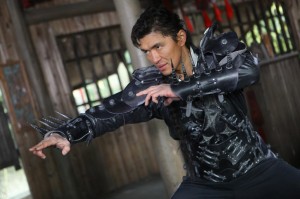
Rick Yune talks about new film “The Man With the Iron Fists”

Rick Yune is known best for his roles in films like “Die Another Day” and “The Fast and The Furious”. He is starring in the new film “The Man With the Iron Fists” directed by RZA. Rick took out some time to chat about the film and what we can expect next.

Mike Gencarelli: What can we expect from the film “The Man With the Iron Fists”?
Rick Yune: It’s a great movie that is a martial arts themed film but it is also an epic adventure that brings characters together from all around the world to focus on a common cause.

MG: Can you tell us about your character Zen Yi and the inspiration for the character
RY: Zen Yi is the son of a warlord who has turned his back on that life. Instead he has fallen in love and lives in the mountains with the woman of his dreams. He finds out that his father has been killed and leaves the mountains to avenge his father’s death. It’s interesting because here is a guy who wants to do the right things but gets pulled back in to a life he doesn’t agree with. It’s just a kick ass film!

MG: What was it like working with such an amazing cast?
RY: I have known Rza for about 8 years. He has an uncanny ability to draw the best out of people. He can get people to raise themselves to a level they have never been to before. I saw him do this with people who couldn’t even speak English. He did things that I am surprised any director let alone a first time director could do. Because of him I was able to do stuff I didn’t think I could. Russell Crowe is one of the nicest, gentlest people you will ever meet. He spent so much time giving advice and support to others. Lucy was great on set kicking ass and was really fun and professional.

MG: What do you think was the most challenging part of the project for you?
RY: I lost 30 pounds for this role. I am a food addict so losing that weight and keeping it off was hard. All I could eat was yams and egg whites.

MG: You have played a number of villains in films like “Die Another Day” and “The Fast and The Furious” but in this film you play a hero. What did you like most about taking on that role?
RY: I don’t generally look at a role as being a hero or a villain or it being in a certain genre. I look at the character and the story. When I do play a villain I try and make him human. When you play a hero you have to understand the dark side because that is something that everyone has. No one is born Luke Skywalker. Most people are more like Han Solo.

MG: What other projects do you have in the works?
RY: I just finished “Olympus Has Fallen” with Gerard Butler and Antoine Fuqua who is just great. Working with guys like Antoine who know what it likes to be in a less than bad situation can convey that very easily on film. These guys grew up in tough neighborhoods so risk is not unknown to them. You will see that in the movie

Jody Thompson talks about working with Barry Levinson on “The Bay”

Jody Thompson is the star in Barry Levinson’s new found-footage horror/thriller “The Bay”, which is being released on November 2nd.  Jody also co-stars this Fall with Bette Midler and Billy Crystal in Parental Guidance”. Jody took out sometime to chat with Media Mikes about his roles and what we can expect from the films.

Mike Gencarelli: Tell us about your character in the film “The Bay”?
Jody Thompson: I play Officer Paul. I liken him to the Barney Fife of the town. It takes place in this really small town and which experiences an ecological outbreak, with these creatures all isopods. These are actually real creatures. These creatures get inside the townspeople and start eating them from the inside out. So if you can imagine Barney Fife with bodies flying through the street, then you have my character.

MG: How was it working with such a critically acclaimed director like Barry Levinson?
JT: It was really the drawing force for me to work on this picture. A chance like that doesn’t come by pretty often, so I was really pumped. Honestly, I put the audition on tape, forgot about it but when I got the call back I was psyched since he is such a well-respected director. It was a great project to be involved with.

MG: Tell us about your story line in the film?
JT: There are about four/five different story line and mine is one of the story lines they follow. It was challenging but the way the film is it works. My story has a bit of an arc but let’s just say it doesn’t end well for my partner and I. Just to be able to grab on to something like that I feel like I was able to work with this role a bit. So I thought it was really great.

MG: How was it working with Kristen Connolly, whom I loved in “Cabin in the Woods”?
JT: I did not. It sucks. I worked with Christopher Denham though and he recently had a really big part in “Argo”. So it was cool to work with him on this.

MG: The found footage genre is very hot right now, how does this film stand out from the rest?
JT: I always thought it was a little hokey in the found footage films, when someone is in the house but they keep the camera running. I would be outta there. The cool thing about this is that it is about an outbreak that happens in one day and it takes footage from all different sources. There is Skype cameras, (in my case) there is police cameras, iPhone and many others. They weave all these media forces together to tell a pretty convincing story. If you didn’t know this was a film, there is some believablility to this.

MG: How worked in both film and TV, what do you enjoy most and what do you look for in a role?
JT: My forte is comedy and I consider myself a character actor. Any chance I get to make people laugh is what I love the most. It doesn’t hurt when certain actors, directors or locations come into play. This is the stuff that I look for when I am choosing a role.

MG: How was it getting to work with Bette Midler and Billy Crystal on “Parental Guidance”?
JT: I only got to see Bette during the table read. But working with Billy Crystal was really crazy. I started talking with him one day about hosting the Academy Awards and telling him that he has been the best of all-time. He then started doing all the bits. It was awesome. It was like a free show. At the time I was shooting, Eddie Murphy was slated to host the Academy Awards. I finished shooting and like a week later Eddie dropped out and Billy Crystal got invited back. I thought that was really cool and I was saying that I was responsible for this [laughs]. But he was really awesome and I consider him a comedy legend.

Anders Hove talks about working on the “Subspecies” franchise

Anders Hove is known best for playing the evil vampire Radu in the “Subspecies” series.  Anders is also known for his role in the soap opera “General Hospital”.  Media Mikes had a chance to chat with Anders about his work on “Subspecies” and comparing it to “General Hopsital”.

Mike Gencarelli: Tell us how you original got the role of Radu in “Subspecies”?
Anders Hove: Well, it was so many years ago now. Way back then I worked on “General Hospital” and my good college back then, Michael Watson, he went to an audition and told me this little movie called “Subspecies”. He told me they needed a bad guy and he suggest I should do audition for it. I did my audition and I got the part. So that is the true story about that.

MG: Any interesting behind-the-scenes stories from any of the film’s productions?
AH: It is such a weird story, when we went to Romania it was right after Dictator Ceausescu was just killed and ousted. We were suppose to be there for 4 or 5 weeks and we ended up being there for 14 weeks. Everything there was any sort of political questions came up, people went on strike. We were living inthis fantastic hotel that held 600 people but it was only our crew which was 20 people at most. The only past time we had was drinking [laughs]. Ted and I went out to the set one afternoon and all of the sudden and asked me “How does this character actually speak?”. I came up with this horrible voice on the spot and that is how it started. When we were doing part 3 and 4, I asked him if we could change the voice but he said “no way you are stuck my friend” and that is how that came about.

MG: Radu has many memorable lines, do you have a favorite?
AH: I am a fan of a few of the punchlines. One of my favorites part of shooting these films is that they were actually shot on location. That was a beautiful experience and we got to see a lot of Romania. We actually got to go and shoot in those castles. In one of them I am standing with my mother and we are suppose to do a scene where I have some sort of a manta and we would disappear in the smoke. Ted told me to just come with something to say as the manta. So I just came up with a greenlandish saying meaning “My daddy is dead and my mother is out of her mind”. So it funny how that came about.

MG: Tell us about the process for your makeup?
AH: The makeup was mad. It took approximately 3-4 hours to do. After shooting all day it took another 2 hours to take it off. I made them take it off while I had my bottle of red wine, so that is how I got through it. The best part of making these films was we got to know these people since it was all the same crew. We became a family. We didn’t do the biggest art piece in the world. But we had fun and it is a beautiful story in that sense.

MG: Can you compare going from horror films to soap operas?
AH: I think it is very different. I had a great time on “General Hospital” and met a lot of great people. You don’t really make friends in Hollywood. But I have made a few great friends from this. I learned a lot from doing soaps, it gives you a lot of experience. Doing soaps, the plots are developing so slowly and it is very different from doing films.

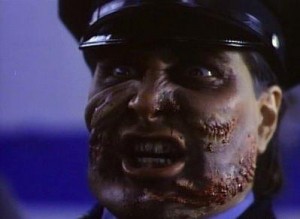
Robert Z’Dar reflects on the cult status of the “Maniac Cop” series

Robert Z’Dar is known best for playing the role of Matt Cordell in the cult series “Maniac Cop”. Robert took out some time to chat with Media Mikes about his films and also what he is currently working on.

Mike Gencarelli: Can you reflect on the cult status of the “Maniac Cop” series?
Robert Z’Dar: It’s been amazing. When the first 2 films were released here in the states theatrically it was great. Going to places like the airport people would know who I was but they didn’t know my name. It was kind of funny. They would say “there’s that guy”. I still sign a lot of autographs these days. We got introduced to a whole generation recently that loves the films. Over the last 3 years this whole new cult following has been established.

MG: Can you tell us any stories from the production of the films?
RZ: While we were working on “Maniac Cop 2” I was on set the first day of shooting and we were in thiswarehouse. I was reading while the other cast was eating because I couldn’t really talk or anything as a slit hadn’t been cut into the mouth of my makeup. Robert Davi goes over and says that he doesn’t think there’s a hole in mouth and that they should probably feed the maniac because he looked like he was going to kill somebody. I go over mumbling asking if they are going to cut a hole in my mouth or was I going to have to kill them. Everyone started laughing and the makeup crew came over and gave me a slit so I could eat and talk.

MG: Were you approached to do a 4th film?
RZ: Yes, they wanted me to do a 4th one however I can’t do all the same stunts I used to be able to do. I did all my own stuff except for the burn scenes in the first films. I had been with the American Stunt Association for about 15 years. That’s probably why I am so banged up now. I have two metal hips and now they want to give me a metal shoulder. As I was about to do the film I was diagnosed with neck cancer. I was given about a 35% chance to live. I did a lot of praying prior to my treatments and everything went really well. The doctor couldn’t believe how well I have healed. As of right now I am cancer free. I am getting back in to shape and I have a bunch of movies that I am ready to start work on.

MG: What are your thoughts on the proposed “Maniac Cop” remake?
RZ: Everybody wants so much money for the rights. Greed has gotten the best of a lot of people and that’s the reason why there haven’t been more films in the series.

MG: What do you like most about working in the horror genre?
RZ: I have done 4 or 5 horror films. I seem to play a lot of bad guys. Over the past 5 years or so I have gotten some really great roles in some independent films. There is one called “Precious Mettle” which is in the process of securing financing. The film is a great dramatic, who done it? type film. I play a firefighter whose buddy is killed. It has a number of twists and turns. The cast is made up of quite a few well known old school actors.

MG: What do you think has been your most challenging role to
date?
RZ: Every movie I do I try to pull something that will showcase my craft while at the same time entertaining people. However my biggest challenge was beating cancer.

MG: What other things do you have going on?
RZ: I did a film called “Drummer for the Mob” which was produced by Bruce Koehler. The film has some great locations that are old mob type places. William Forsythe is in the film and he is just such a great actor. That film should be coming out sometime in the fall of this year. I also have one called “Ring of Fire” that is in the works as well. There is just a bunch of stuff going on right now. I really love my work.

Brad Loree talks about playing Michael Myers and doing stunt work

Brad Loree is known best for playing Michael Myers in “Halloween: Resurrection”.  He is also has performed stunt work on numerous TV and film projects including  “TRON: Legacy” and “Watchmen”.  He is the star of the recently released “Mr. Hush” directed by Dave Madison.  Media Mikes had a chance to chat with Brad about his film and stunt work.

Mike Gencarelli: How did you get involved playing the role of Holland Price in “Mr. Hush”?
Brad Loree: Well Mike, I meet writer/directors at the con’s all the time who claim they want to work with me, but Dave Madison actually sent me a script and then kept his word by using me as Holland!

MG: Can you reflect on playing such an iconic character such as Michael Myers in “Halloween: Resurrection”?
BL: When i got offered the part of Michael Myers, I was already on another show. But when they explained that I wasn’t going to be just the stunt-double, but actually play The Shape, I quickly left my previous gig and jumped into the role! It was a great honor!

MG: What do you like most about working in the horror genre?
BL: My favorite thing about the horror genre is doing conventions and meeting the fans. Great people!

MG: You’ve worked stunts in two of my favorite films, “TRON: Legacy” and “Watchmen”, can you tell us about those experiences?
BL: Well, on “Tron” I got to meet ‘The Dude’, Jeff Bridges. Awesome guy! Did a little gag where he gets kicked by his younger self and slides several feet backwards on this platform. “Watchmen” was fun because I got to be a motorcycle cop, an arresting officer and also the lead character’s fist punching thru a wall! And Zach (Synder), the director, is my fav of any I’ve worked with!

MG: What has been your most challenging role stunt performing?
BL: My most challenging stunt was on a TV show called “Mantis”. I had to jump thru an 8ft by 8ft window from the 3rd story and, across a 14ft abutment below! If i’d fallen short, well….

MG: Tell us about your upcoming projects?
BL: My next project is to be determined. I’ve been laid up for a few years now due to a motorcycle wreck. But i am hoping to do more acting in the future and may try my hand at writing/producing. Wish me luck!

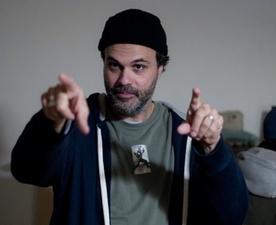
Eduardo Sánchez talks about new film “Lovely Molly”

Eduardo Sánchez is the co-director of “The Blair Witch Project”. He also directed genre films like “Altered” and “Seventh Moon”. His latest film “Lovely Molly” is a unique approach to the genre and leaves you chatting about the film days after it is over. Media Mikes had a chance to chat about the new film and what else he is currently working on.

Mike Gencarelli: How would you say that “Lovely Molly” differs from your past work?
Eduardo Sánchez: It’s more of a drama than my other films. I wanted it to be that kind of film, the kind of horror films that I love, that have strong characters and isn’t just about the creature.

MG: The film is very intense, how did you get Gretchen Lodge to sign on as her first film?
ES: I asked her nicely! We both knew how difficult it was going to be so we discussed the intense nature of the material and it just seemed that we trusted each other. She trusted that I wasn’t going to exploit her and I truster her in going to the places that I needed her to go. It worked out very well.

MG: Besides the film itself, tell us about the “Is it Real?” aspects posted online?
ES: They are story extensions that we like to have on most of our projects. When making a film, you end up with a lot of great material that never makes it into the movie, so this is our way of exploiting some of that stuff and adding more to the story. It was a lot of fun for me because I had very little to do with this on LOVELY MOLLY, so I experienced most of this material like an audience member would, which was pretty exciting.

MG: On “Lovely Molly”, you not only directed but also wrote and edited, what was your most challenging aspect?
ES: The editing really through me for a loop. I hadn’t edited a feature by myself since film school, so I completely underestimated how emotionally taxing it was going to be. It was tough and I felt very isolated in my basement for all those months. Couldn’t have done it with my co-editor Andrew Vona, who was a great help to me, not only as an editor but as a motivator. He always believed in the film.

MG: I enjoyed the film “Midnight Son”, how did you get involved as an Executive Producer
ES: One of the sound mixers on SEVENTH MOON hooked me up with Scott Leberecht, the writer/director. He had shot it but had no money for post, so I got a few people involved and we went to work on it. It took a long time but we finally got it out in 2012. Really proud of Scott and Matt Compton, who produced the shit out of this film.

MG: What do you have planned next?
ES: I am posting a Bigfoot movie called EXISTS that should be out next year. I’ve been wanting to make a Bigfoot movie since I was a kid so it as a dream come true. And it’s looking pretty damn good so I can’t wait to set this sucker loose on the world! Check it out at http://www.facebook.com/existsmovie

Phillip Friedman talks about transforming into the Old Woman in “Insidious”

Phillip Friedman is best for his wonderful transformation as the Old Woman in the terrifying horror film “Insidious”.  Media Mikes had a chance to chat with Phillip about his role in the film and how he feels about spreading fear into 30 year old men!

Mike Gencarelli: How did you get the role of Old Woman in “Insidious”?
Phillip Friedman: I had never thought I would be playing an old woman. (Laughs) having said that it was one of the most fun roles I have ever done. I generally like playing characters that are far away from my own personality and it makes things more interesting. I auditioned for the role and also met with James Wan. He wanted to know how comfortable I would be dressed as a woman. He really wanted to know how comfortable I would be on the set and if I could do the job.

MG: Can you tell us about the transformation process of the character?
PF: Make-up took somewhere between 2-3 hours to put it all on. It wasn’t to challenging as the make-up people were great. It wasn’t the most fun part of the shoot but it really wasn’t too bad. Taking it off was a little bit more challenging than putting it on. It took a little over an hour to get the makeup off. It was a process.

MG: Are there any moments from shooting that stick out for you?
PF: Just working with Patrick Wilson and Lin Shaye for the last scene was great. I enjoy playing and for me working is playing. It is very enjoyable and satisfying. Even more so when you are working with people who you respect and you are making something that people want to see.

MG: How does it feel to promote fearish nightmare into a 30 year old man? Umm, I mean a friend of mine of course!
PF: [laughs] I have been attending some fan conventions lately and have had so many people come over to me and tell me they are glad to meet me and that they don’t have to have nightmares anymore. That has been a fun part of things. It’s great to see that regular folks like to get scared. I am glad that I can help them.

MG: With “Insidious 2” on the way, any word if the Old Woman will be returning?
PF: I probably only know as much as everyone else. I believe there was an interview with Lee and James where they stated that a screen play was in fact done. I have heard that it may start shooting this year and be released next year but you never know. There is never a way of knowing until it actually happens.

MG: What other plans do you have for this year?
PF: My representation is currently working on getting me some roles while I myself am also always looking for roles. You never know what is just around the corner. Sometimes things that you would never expect come right out of the blue. It’s definitely not like having a regular day job where you know what’s coming.

Troll 2’s Michael Paul Stephenson talks about his follow-up to “Best Worst Movie” called “The American Scream”

Michael Paul Stephenson is known best for his role in the cult classic horror film “Troll 2”. Since then, Michael has written and directed the documentary about the film called “Best Worst Movie”, which takes a look at the fandom and his experiences with the film. His newest documentary is called “The American Scream”, which premieres on the Chiller Network on October 28th. Media Mikes had a chance to chat with Michael about his passion behind his films and comparing “Best Worst Movie” to “The American Scream”.

Mike Gencarelli: I am a big fan of your documentary “Best Worst Movie”. Tell us about how “The American Scream” was born?
Michael Paul Stephenson: The short answer is that we got really lucky. The long answer is long so bare with me but it is meaningful in terms of how this happened. Not this summer but the summer before we were working on a narrative feature called “Destroy”, which we are planning to shoot next year. So we were in the middle of that, when Chiller Network contacted one of my producers and told him that they were big fans of “Best Worst Movie” and asked “What is Michael doing next?”. My producer kind of scratched his head and said “Let me get back to you!” He called me and told me about this idea for a documentary on people that create home haunts for Halloween aka homemade haunted houses. Right off the bat connected with the idea. When I had originally planned to do “Best Worst Movie”, there was never a question of if it would be good or bad. It was something of a feeling that I had to do it. That is the way I felt about this project. It felt as a director that it would be a very playful place to work. I wasn’t interested in the commercial haunts or the haunting industry but the home haunter is an artist of sorts. True, these people decorate for Halloween but all of that is rooted in creativity and passion for the holiday. I also connected emotional to this, since I grew up in a small town and my neighborhood was very into Halloween. So I had some great memories as a kid.  And so this project just grew from that.

MG: So this project was more of a labor of love for you. Do you find that aspect makes it easier when doing a documentary?
MPS: I think you have to have that aspect, especially with a documentary. I think you have to really love the subject matter and connect with it emotionally. That is one of the fears I had coming off “Best Worst Movie”, there is no way that I am going to find another documentary project that feels as personal or meaningful in the same way. In my opinion, you can’t set out to make an effective documentary if you are not personally invested into it. I feel very lucky that this subject spoke to me in such a personal way. It just seemed like this project was meant for me. The Halloween before this was project was born, my wife and kids live in Los Angeles and we were complaining about our neighborhood. We didn’t know our neighbors and complained that our kids are not going to have the same Halloween that we had growing up. We figured that was the price for living in the city. We ended up though finding three streets in Los Angeles that celebrate Halloween and trick or treating in a very big way. Everyone goes to these streets during the holiday. We actually then moved into that neighborhood! So the timing is just weird but seemed to really work out.

MG: What do you think is it about horror fans that they are so devoted?
MPS: It is passion man. And heart. With horror fans, these are people that love movies. They love the experience that the movie gives them. It is the same thing with hauntings. And it is same thing with anyone that is doing something with heart and passion. You can really get behind these people. It can be boring subject matter but if you find someone that is passionate about it, it is infectious and that is something that everyone thrives for. For “The American Scream”, it just so happens to be about things like home made Halloween decorations and with “Best Worst Movie” it was about a bad movie. At the heart of it all, it is that passion ultimately.

MG: How do you feel that “Best Worst Movie” compares to “The American Scream”?
MPS: That is a good question. There are obviously parallels between both worlds. Ultimately with “Best Worst Movie” it is about passion and also artistry. The same thing for “The American Scream”, there is an artist, there is creativity and also passion. My editor and I joke and say that we have to make one more film in order to complete, the trilogy of artistry in unexpected places. It is true, they are very similar in many respects. The challenging aspect in comparison to “Best Worst Movie” was that it was filmed over the course of four years. It was a hard push, then a break. It was challenging but it was just me and there was not rush. With “The American Scream” I had one month, a ticking clock, from the time we started until Halloween finished. There was no luxury like “Let’s come back next Halloween”. It was a shrinking window every day. My favorite documentaries always have strong arcs. Sometimes with characters a good arc takes time. I wanted to see certain character’s arcs but we had this ticking clock. Also with “Best Worst Movie”, there was no expectations or very low expectations. With “The American Scream” I had to follow up something that really worked. So there were heightened expectations and a lot of pressure with that.

MG: Can you tell us about your other upcoming projects?

MPS: Yeah! We have two projects in the works right now. There is the narrative that is a mix of dark comedy and horror, though more dark comedy. It is called “Destroy”. We announced it now about a year and a half ago. The script actually came to me from Zack Carlson, who is one of the programmers for the Alamo Drafthouse. I got the privilege to know Zack when I was filming “Best Worst Movie”. He was the first person to show “Troll 2” on a big screen. We read the script and just fell in love with it. We start filming looks like around May next year. It is terrifying and definitely a big step. But it is material that I have connected with. It doesn’t hurt that it comes from a writer that I also connected with as well. Then we also recently helped executive produce a low-budget comedy called “Zero Charisma”. It was filmed in Austin and was directed and written by our dear friends and collaborators Katie Graham and Andrew Matthews. Andrew was the editor of “Best Worst Movie” and “The American Scream”, so he is like family. Katie has been a DP on both movies as well. After “Best Worst Movie” premiered, they wrote this film and brought it to us. It is their baby but we have helped them make it. And it should start being submitted to festivals shortly.

Paranormal Activity Interview with expert Christopher Chacon

Christopher Chacon is a world-renowned Anomalist and regarded as one of the world’s foremost authorities on the scientific exploration of paranormal, supernatural and anomalous phenomena, as well as the occult/metaphysics and mysticism. For nearly thirty years, Christopher has traveled the world extensively investigating and researching thousands of cases dealing with every type of phenomena imaginable, including; possessions/exorcisms, all manner of psychic phenomena, haunts/poltergeists, UFO/alien close encounters and encounters with unknown life-forms, just to name a few. He has additionally participated on countless international expeditions involving ancient mysticism, the occult and archaeological discoveries relating to the supernatural.

Christophers past experience includes decades of Parapsychological research, as well as a background of being a professional illusionist/magician. Christopher is also a former veteran investigator/researcher with the Anomalistics Division of The Office of Scientific Investigation and Research, a private scientific think-tank that was in operation until 2000.

He continues to internationally consult for private organizations, religious and academic institutions, government agencies and corporations in dealing with phenomena and situations that often defy the known laws of nature and physics. Because of Christopher’s vast knowledge and extraordinary first-hand experiences, he is frequently sought after by those in the entertainment industry who are in need of a credible expert in these subjects to lend authenticity and a one-of-a-kind creative perspective to Movies and TV series. His incomparable reputation in this field has resulted in being featured on countless international TV and radio shows, popular documentaries and numerous publications. With “Paranormal Activity 4” now in theatres, and a fifth chapter recently announced, Media Mikes sought out Mr. Chacon to talk about the things we can’t easily explain.

Mike Smith: What sparked your interest in investigating the world of the paranormal?
Christopher Chacon: Wow! That’s going way back. I would have to say, initially, it was originally in college. My background is in magic and illusion. I’m a performer. People would approach me and tell me they were having a haunting or some other type of unusual circumstance. From an illusionist standpoint you can easily see how people can often misunderstand certain circumstances and how they can be tricked. So in a lot of these situations I would observe and then tell them “this is what’s really happening.” They were just misperceived. It wasn’t a ghost…it wasn’t a close encounter. And then at some point I began working with a para-psychologist and we started doing research on a larger bulk of cases. It was at about that time that I was exposed to a poltergeist case where the phenomenon could not be dismissed. It kind of defied the laws of nature and physics. It was the case that told me that I had to embrace the fact that there’s more out there then you could learn at any college, university or in academia. That continued for a good 12 years and then I began working for a scientific organization…a think tank…that basically adopted the method of approaching phenomena as anomalies, using a very unbiased and objective point of view. We investigated thousands of cases all over the world. After I left I still kept being contacted by people who had unexplained phenomena…whether it was a priest who was doing an exorcism and phenomena was happening in the atmosphere that he couldn’t explain or someone who’s experiencing extreme poltergeist activity in their building when there is no environmental explanation for it. I would go and consult and assess these situations.

MS: Does the fact that you have a theatrical background…performing…help you when you’re investigating? Do you look at something and think, “well, if I was going to do THIS I would start by doing THAT?”
CC: Not in respect to trying to reach a conclusion skepticism wise. When I was with the scientific group they actually tried to re-train us…they wanted us to approach each phenomena objectively. There is something called the “Observer Effect,” which means that when you walk into an environment you actually bring your pre-dispositions with you. So your observations may be tainted. Somebody who believes in ghosts and goes to investigate a phenomena may not be objective while the person who is extremely skeptical is on the other side of the spectrum. So when I go to investigate I try not to walk in with any preconceived bias. I’m open to the possibility of what the phenomenon is…how things can be misinterpreted. People have had what they thought was a poltergeist case only to have it turn out to be an alien abduction case or something like that effect. It’s not always a good thing to try to come to a conclusion too quickly. My background in magic and illusion, of course, assists the fact that when I get a phone call from somebody who says they’re experiencing something and they want me to come out there I insist before I head out there that they have to rule out rationale explanations first. They do so and in 70 – 80% of the cases they find another explanation. I explain to them that, in a psychological arena, things can be misperceived. Whether it be due to their own psychosis over what’s going on or just circumstantial events. So 70 – 80% have rational explanations in that category. But keep in mind there’s another 20 – 30% that, even after you’ve gone through all of the categories, you’re still left with something that truly defies the laws of nature and physics. It’s an anomaly.

MS: Have you ever truly feared for your safety while observing a phenomenon?
CC: I’ve never feared for my life, so to speak, but I’ve definitely been startled. When things pop out at you when you don’t expect them, especially when you’re focused on a phenomenon or an environment. When something jumps out at you or moves, especially when it’s volatile…it does startle you. There’s no question about that. In the thousands of cases I’ve been on…and I’m talking the most volatile ones…I’ve had my nose broken twice. I’ve had my hair burned off three times. I’ve been asphyxiated several times and had my ribs broken. I’m not saying this was done by a creature or a poltergeist or a possession. There are just some kinds of severe phenomenon that are unexplainable.

MS: There are quite a few “reality” shows on television now dealing with the paranormal. Do you watch any of them? And have you ever questioned their findings?
CC: Well, I do understand how the process works for entertainment, especially for television. And the need to ramp something up to something more sensational than came before…with so many television stations they have to keep trying to outdo each other. 20-30 years ago you had a handful of shows. Things like “Unexplained Mysteries.” Things then were more scientific. The integrity level was very high. To answer the first part of the question, no. I really don’t watch. Mostly it’s becase I don’t have the time.

MS: Finally, do you have a favorite experience from all of your years of working?
CC: A favorite experience? (laughs) Wow. There have beem literally thousands of cases of unexplained phenomenon. The most disturbing, obviously, is one where someone is traumatized. I’ve worked hundreds of cases where the victims suffer from PTSD, usually as a result of the experience. Post traumatic stress disorder takes over. This usually happens with possession-type cases. Those are the worse one to get involved with. As for poltergeists, again the cases that come to me are the most volatile in nature so it’s difficult to say which is the most fascinating. I will say that there are cases where you actually observe the phenomenon. You understand the basic laws, like gravity, and when they’re being defied they’re pretty fascinating. It’s extraordinary to see it happening. In the case I’m currently working on…in the center of the house…there’s a phenomenon where all light seems to be absorbed. When you’re in the area you can hear whispers in it…dogs stay away from it. If you put light into it spectrophotometers show that the light is being abnormally observed in this one area then in any other part of the house. To encounter those kind of things is really quite extraordinary!


Related Content

Copyright: MediaMikes.com © 2012 · Powered by: nGeneYes, Inc. · Login

All logos and images used on this website are registered trademarks of their respective companies. All Rights Reserved. Some of the content presented on our sites has been provided by contributors, other unofficial websites or online news sources, and is the sole responsibility of the source from which it was obtained. MediaMikes.com is not liable for inaccuracies, errors, or omissions found herein. For removal of copyrighted images, trademarks, or other issues, Contact Us.