
Oliver Robins talks “Poltergeist” and working with Steven Spielberg

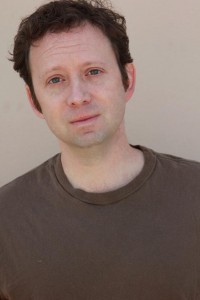
Oliver Robins is known best for his work in the classic horror film “Poltergeist”.  He has also worked on films like “Airplane II: The Sequel”. Currently Oliver is focusing on writing and directing with his latest film, “29,000 Wishes, 1 Regret”.  Oliver took out some time to chat about his experience on “Poltergeist” and working with Steven Spielberg.

Mike Gencarelli: Were you aware of how physical the role in “Poltergeist” was going to be?
Oliver Robins: For the most part I did because in the script it really explained what was going to happen. In terms of how they were going to execute those scenes I had no idea. It was presented to me like I was going to camp. And that’s exactly how it was. I had a great time. Every time I went to the set I had a new adventure. Because when you’re a kid you pretty much accept everything. They’d say, “OK, Oliver, today you’re going to be bolted to this wall and hung up by wires. We’re going to turn the room around and you’re going to scream into the camera because at the angle you’re hanging at it’s going to look like you’re flying.” And as a kid you’re thinking, “OK, that sounds fun.” Then the next day they tell you you’re going to be back in the room and giant tree arms are going to come at you. They want you to jump on the tree arms while screaming at it. Then they throw sugar glass at your face but they do remind you to cover your face when they’re doing it. And as a kid you’re having a great time. It’s like “what’s next?” As an adult you might step back and think it’s kind of crazy. But I used to love climbing trees so it was a blast to me.

MG: So it was really more like fun then work?
OR: Oh yeah, I had a great time. And it was a great bunch of people. Steven Spielberg. Kathleen Kennedy. Frank Marshall…they were a great group of people to work with. I didn’t want to leave the set when we were done every day. I had to because of the labor laws. “Sorry Oliver, you have to go home.”

MG: There has always been a lot of speculation as to whether Spielberg or Tobe Hooper was the director in charge. Can you lend any insight into this?
OR: I’ve learned that people seem to like controversy in pretty much everything in life. And this is one that will never go away no matter what people say. You can say that Steven Spielberg did NOT direct the film, bottom line, but people don’t want to believe it. They want to be conspiracy theorists because the falsehood is more exciting in many ways then the truth. As for Spielberg, he wrote the script (NOTE: the Original story for “Poltergeist” came from Steven Spielberg, who shared screenplay credit with Michael Grais and Mark Victor)…he was the producer. And he had a vision that he shared with Tobe. But Tobe directed me. I mean, it was investigated by the DGA (Director’s Guild of America) at the time. But when it comes to the nitty gritty, Tobe told me where to stand. He told the camera operator where to put the camera. All of the rules that I learned in film school about what a director does Tobe did. As far as what happened behind the scenes, I’m sure Steven explained what he was going for. I mean, when you’re the writer and the producer, you do what any writer would want to do. Explain your vision and your intent. Hope that they are executed as a team. And I think they worked as a great team. So in terms of what I saw on set, Tobe was the director. At least that’s my perspective on it. (NOTE: When “Poltergeist” opened in June 1982 these rumors were already circulating. Tobe Hooper has maintained that these rumors cost him an Oscar nomination for Best Director. Ironically, a week later “E.T.” opened. That film earned Spielberg a Best Director nod).

MG: How was the change going from scary “Poltergiest” to the zany “Airplane 2?”
OR: I had seen the original “Airplane,” so I knew the tone of the piece. I loved “Airplane” so I knew what kind of performance they were going for. It was a dream job for me when they gave it to me. Ken Finkleman, the director, was very patient. He told me what he wanted…the very broad and over the top reactions. I had a lot of fun doing it. And the adult actors were basically doing the exact same thing so I just followed their lead.

MG: What is it like for you now to watch films you made back when you were a kid?
OR: I just recently looked at “Poltergeist” again. Obviously I’m a bit prejudiced but I think it’s a fantastic movie. As good as the films being made today without any of the great technology that exists now. I think that with the advent of all of the new CGI technology we’re almost losing some of our filmmaking capabilities and techniques. It’s as if CGI is now almost a crutch. I mean in “Alien” you hardly see the “Alien” whereas now they show everything when maybe you don’t need to show everything. Not to mention that with a lot of CGI effects today it’s almost hard to suspend disbelief. Getting back to “Poltergeist,” that film is so scary because of the stuff you never even saw. It’s in your head because you really don’t know what you’re looking at. It’s all in your mind. And I think that’s brilliant filmmaking. And it’s not just a horror film. A professor told me that compassion will always win over camera. Which means you make a film with story and character and relationships and the special effects are secondary. And that’s true about “Poltergeist.” Sure it’s scary but it’s the family and their relationships that you care about during the movie.

MG: Now you’re focusing on writing and directing. Talk about taking that path in your career.
OR: It was on “Poltergeist” that I decided I wanted to be a filmmaker. Steven Spielberg loaned me a Super 8 camera and at 10 years old I started making films. And it became a passion that I fell in love with. I fell in love with telling stories. I made a 15 minute film called “The Crystal” that won first prize at a French Film Festival. I realized I wanted to do this as a career. So on the advice of Mr. Spielberg I went to the USC Film School (NOTE: Besides Steven Spielberg, note USC Film School Alumni include George Lucas, Robert Zemeckis and Ron Howard), graduated and I’ve been pursuing filmmaking pretty much ever since. I love all genre’s of film. From comedies to romantic comedies to dramas and family dramas. Hopefully I’ll be able to tell many stories.

MG: You wear pretty much every hat possible on your new film “29,000 Wishes, 1 Regret.” What was the inspiration behind the film?
OR: My inspiration was that I wanted to do a film about our times right now. And I learned it was going to be difficult to raise funding for a film about a young couple who loses everything because of the recession and realize they’re never going to live the life they hoped for. So they decide to charge what’s left on their credit cards and then kill themselves. That story line proved next to impossible to raise money through the traditional means. And I didn’t want to wait ten years to make this movie. I thought it was timely and that it had to be done right now. We had the technology to do it. We had the cameras. So we went out and did it. I’ve been to film school and I said to myself, “Let’s go out and let me see if I can fill every behind the scene role on the movie.” I brought in a couple of friends to assist, one to be DP and one to run sound. But sometimes they weren’t available so I’d have to do everything myself. But what I loved about it is that it allowed me to work very close with the actors and allowed me to really just focus on their performances. I didn’t have to worry about funding or paying back money. It was really just our time that we were spending. And we could really just tell the story that we wanted to tell. Of course the downside is that we didn’t have an infrastructure. We were kind of scattered trying to assemble everything while shooting this film basically by the seat of our pants. So there was an upside and also a darker side to this level of filmmaking. But I think it really tested my ability. To be able to make a film with pretty much nothing…just me and my camera. For all intensive purposes the only thing I really had going was my knowledge of cinema from film school. It’s the same equipment. Now a high school kid can get the equipment as a holiday gift and go out and do the same thing without a lot of money.

MG: Where can people see the film?
OR: They can buy it right now on Amazon, (https://www.createspace.com/334235) or they can download it as well on Amazon. Just type “29000 Wishes, 1 Regret” on Amazon and they can watch it at a moment’s notice. The film has a distributor and it should be available on network television later this year.

MG: Tell us why you started your own clothing line, Cursed Clothes?
OR: I had been going to different horror conventions and thought that it would be great to give fans a little bit more of the movie I was in. So I got with a designer to create “Poltergeist” – inspired T-shirts to hand out. And we had so much fun creating these T-shirts that I thought it would be fantastic to do with other films…all of my favorite films from the 70s, 80s and 90s. Even movies from now. So we created an entire line of horror inspired clothing. And that’s how we came up with Cursed Clothes, (www.cursedclothes.com). We’re creating designs for all of the films that I love. “
“The Puppet Monster Massacre” Director Dustin Mills talks about new film “Zombie A-Hole”

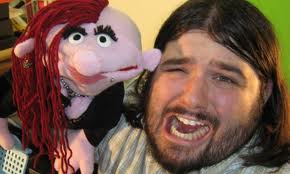
Dustin Mills is the director of the wild and crazy film “The Puppet Monster Massacre”. Dustin took out some time with Media Mikes to chat about that film as well as his new film “Zombie A-Hole”.

Mike Gencarelli: Tell us about what the inspiration was behind “The Puppet Monster Massacre”?
Dustin Mills: It’s the same with every film idea I come up with. I am just trying to make films that I would want to watch. I look for holes in the B-Movie universe and try to fill them.

MG: Are you surprised with the response this film has gotten?
DM: The response has been rather mixed, and honestly the only places it sells well are Horror Conventions. I think my surprise came from seeing it featured in magazines and websites that I had read for years. We were in HorrorHound, Fangoria, and there was a review on AintItCoolNews. That was wild. That’s the stuff that makes my heart race.

MG: When can we expect the sequel to this film?
DM: I really want to make one, but so for we haven’t had a ton of luck with raising the funds. I have the outline, I have started the screenplay, but now it just boils down to hard numbers. I’m not going to make the film until I can give it everything it needs. My plan right now is to produce some low budget exploitative short films to sell with the sole purpose of raising money for PMM2. It will happen… its just a matter of time.

MG: Tell us how it was going to puppets to “Zombie A-Hole”?
DM: It was much much easier. Production was smoother because I wasn’t playing every single part (we had no puppeteers for PMM) and post was easier because we had real locations instead of a greenscreen that required keying and or matte paintings and 3d backgrounds. The only thing that is more difficult about a live action film vs something like PMM is that you have to be willing to relinquish control and improvise and let your actors help build your world. Making a virtual backlot puppet film allows you to have a much narrower mind, but working with people and weird conditions forces you to be a resourceful soldier.

MG: What was your biggest challenge besides the budget of $1K?
DM: The budget was never actually a hindrance. I like working with nothing. A low budget like that forces you to be a renegade and I like that. there is something really exhilarating about shaking your camera while your actor’s wife blows fog over your car with a $20 fog machine and a fan that barely works and a couple of your buddies bounce the trunk up and down so it will kinda sorta look like the zombie hunting cowboy is driving at night. I live for that shit. The biggest challenge I guess was just time. Its hard to line up schedules, and we had a medical emergency with one of our actors that set us back for a month or so (not an onset injury mind you). That’s really it. Once we got folks together there was never really anything that held us back too much.

MG: Sticking with the horror genre, who are your idols?
DM: Thats a hard question because I have two sets of idols. I got my mainstreamers like Robert Rodriguez, Guillermo Del Toro, Sam Raimi, Dario Argento, and Fred Dekker. But then I also have my indie heroes. People like Eric Stanze, Bill Zebub, Fred Vogel, Jason Eisener, Kevin Strange, The Kuchar Brothers, and a few others. These are guys with true vision who know how to make their budgets and indie status work for them. I may not even like every movie they put out, but I respect the shit out of them. My grandaddy idol at least for right now is Jim Wynorski. I’m not sure the world will ever truly appreciate his genius.

MG: Favorite horror film?
DM: My favorite horror film and probably favorite film of all time is “The Monster Squad”. It embodies just about everything I love about horror and the magic of the movies.

MG: Tell us about your upcoming “Theatre of the Deranged II”?
DM: Well James Bressack is spearheading this wacky anthology and on it I have an animated short that is sort of inspired by anime and the sushi typhoon films called Girl Girl: Mutant Lesbo Vengeance. Its going to be quite strange and extremely bloody. I am pretty excited about it, and I am in good company on that collection. James really gathered a good group of filmmakers and I am pretty honored to be rubbing shoulders with them.

MG: What else do you have set on the horizon?
DM: I am putting the finishing touches on Night of the Tentacles. It will be out early next year probably. I am shooting a film called Kill That Bitch which will be out early next year as well. I am shooting a puppet porno music video for a Las Vegas band called The Fat Dukes of Fuck that is perhaps the strangest thing I have ever done. I recently did a video for one of their member’s other band called Demon Lung, check it out here. I have two other projects; one of which is already filmed and the other I am filming currently. I’m honestly not sure how much I can say about them so that might be a tale for another time.

Traci Lords talks about new film “Excision” and album “M2F2”

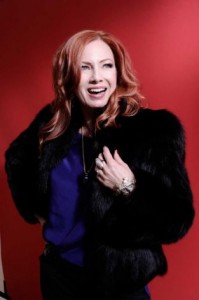
Traci Lords is an actor/singer/producer/director.  She has appeared in films like “Cry-Baby” and “Blade”, as well as the recent “Excision”.  She also released a new compilation album called “Traci Lords Presents: M2F2”. Media Mikes had a chance to chat with Traci about her new film “Excision” and also her new album.

Mike Gencarelli: How did you get involved with a film like “Excision”?
Traci Lords: It happened like “I Hope They Serve Beer in Hell Happened, “Blade” and “Cry-Baby” all happened, through my agent, Stephen LaManna. I saw the short that Ricky Bates Jr. had done years before for his final school project. I thought it was very interesting. We had several meeting and I ended up doing some screen testing for the role. I thought that I had played the role of Pauline, played by AnnaLynne McCord, before in my career. I have also played the role that Ariel Winter plays in the film as well. But I have never played a woman like Phyllis, that was as controlling and uptight. When I read it one of my concerns what how do you make somebody that is this tough in ways – how do you make her likable  – how do you give her humor? That was one of the challenges with this role. I had to figure out how to not make her one note and make her a real person.

MG: Phyllis is one great character, how did you prepare for the role?
TL: I just kept trying to put myself in the frame of mind of a parent that has one of their children dying. The closest experience I had to that, and thank God, is having two cats. The cat didn’t like ended up dying and the one I like survived. It is a terrible analogy but it is the only one I had going into the movie. What does that feel like? Trying to figure out what the other way would feel like? To be a parent and not like one of your children, probably has to be the worst feeling in the world. The torment about that is something that I just chewed on and focused on. There were wonderful actors all around me and that made it easier to come about. AnnaLynne McCord created a very unlikable strange, wonderful, bizarre character in this movie. She would come to the set as that character and it was not hard to be annoyed by her in that sense. So it helps my portrayal of Phyllis, since I just had to look in front of me.

MG:What was it in the script that jumped out of you that made you want to be apart of this project?
TL: I think the aspect that compelled me most had to be the director, Ricky Bates Jr. I think he is a really interesting person. He wrote something, whether you like it or not, it is bizarre enough to make you think. The fact that he as confident as he is as such a young filmmaker, I thought that was very intriguing. I am curious to see what he will do with more experience.

MG: John Waters is this film, you worked with him on “Cry-Baby” & “Serial Mom”, did you get a chance to reunite?
TL: That was really my doing. Ricky was a fan of John Waters and John is very dear friend of mine. I put the two of them together and John said he would do the movie, much to Ricky’s delight. John flew in for a day and we had a fun time on the set. Seeing the film for the first time at Sundance this past January, when John comes on the screen, the whole audience just lost it. You don’t expect him in that role of a priest. Ricky really cast against type in this film. It was just delightful.

MG: What do you enjoy most about working in the horror genre?
TL: I have done a lot of work in the horror genre. It is nice to return here. I liked to bounce around much with different genres like “Blade” and “Cry-Baby”. I haven’t done a real juicy dark drama in quite a while. I think I do something funny next.

MG: Last year your single “Last Drag” was hot on the charts, any plans for new music?
TL: As a matter of fact, I released “M2F2” last week on iTunes. There are ten tracks on the album, eight of which are already charting here and there. That is really great. I have three tracks on it, since it is “Traci Lords Presents”, So it is a compilation of tracks from Sea to Sun Records. It is definitely a love record, meaning that you can put it on in the beginning of a date and play it straight through no matter what happens. That was the idea behind “M2F2” aka “Music 2 Funk 2” [laughs]. I see myself doing more and more compilations like that. Really I want to continue to act and sing but also focus more on writing, producing and directing of my own stuff. I think there are so few wonderful roles for women, especially of my age. So I guess I going to have to write my own now.

MG: What else do you have plans in the cards?
TL: I am also currently adapting my book “Underneath it All”, my life story that came out in 2003 from Harper Collins into a bio pic.

Bruce Davison talks about ABC’s “Last Resort” and “Rob Zombie’s The Lords of Salem”

Bruce Davison is one of Hollywood’s best character actors in the business. He earned an Academy Award nomination for his work on “Longtime Companion”. He is also known for his his role as Senator Robert Kelly in the “X-Men”. movie franchise. He recently directed Barry Williams & Danny Bonaduce in the Syfy creature feature “Bigfoot” and also recently worked with Rob Zombie’s on “The Lords of Salem”. Bruce can also be seen weekly on ABC’s new hit series “Last Resort”. Media Mikes had a chance to chat with Bruce about his busy year and also what else he has planned.

Mike Gencarelli: How did you get involved directing the creature feature “Bigfoot”?
Bruce Davison: Well, I had done some directing before for Showtime and few others. But I had done a few projects with David Latt at Asylum, like “Mega Fault”. I told him if he had any directing gigs come up to throw me a bone and that I would love to direct. I missed my chance with (Roger) Corman, back in the days. He calls me up one day and says “I am not giving you a gift, I am giving you a nightmare”. I went to Washington to shoot and I think we had a 14 day shoot that ended up being only 9 days. It was sort of like being the General at Dunkirk, I was trying to run two armies at the same time, shooting whatever footage we could and trying to juggle jello, basically.

MG: Tell us working with the duo of Barry Williams & Danny Bonaduce?
BD: I had the best time working with the two of them. I would just let them riff lots of time. I tried to get Florence Henderson and Shirley Jones to make an appearance at the end but it didn’t work out. They were wonderful and the best. The hours were impossible. The shooting schedule was insane. Danny was doing a radio show every day, getting up at 4am and then coming to shoot. But he was still so professional every moment. I feel that they pulled a lot of stuff together [laughs] out of their butts. We really had to. There was a lot of improvisation. And also at the same time, we were trying to create a Bigfoot. We had one difficulty after another; we had to shoot a raft scene in an afternoon, when we weren’t allowed to shoot in the water [laughs]. It was one thing after another. It was so difficult, it was laughable. If we didn’t have a scene of humor about it we would have probably killed each other. But we ended up having fun.

MG: It is funny how you directed “Bigfoot” and your first job directing was on the “Harry and the Hendersons” TV series.
BD: [laughs] I didn’t think twice. I figured that “Bigfoot” would be like “Mighty Joe Young” and “King Kong”, just another big behemoth monster that goes around biting the heads off pretty girls. We had all that going for us and it was completely different from “Harry”. People have said to be over the years “Wasn’t doing “Long Time Companion” difficult and emotional draining?” I have said “No, “Harry and the Hendersons” was”. Trying to get the Bigfoot on the van was much more difficult than playing something that was so close to the heart.

MG: You are co-starring in the new TV series “Last Resort”; tell us about your role?
BD: Pretty much, what you can expect you will have to wait and see. Admiral Arthur Shepard is the character I play. He is the father to Lieutenant Grace Shepard, the third-in-command on main submarine. He is a character that you don’t quite figure out where he is coming from for a while but things will evolve. He is an intriguing and interesting character and he has been a pleasure to play so far.

MG: How was it working with Rob Zombie on his film, “The Lords of Salem”?
BD: I am so looking forward to that film. I had the best time of my life working with Rob. I just adore him. I think the three girls playing the witches just go through the roof. I think he has a new franchise with them, since they are just outrageous. Dee Wallace, Patricia Quinn and Judy Geeson are great. I have a scene with them and I just chuckle every time I think about it. His wife Sheri Moon Zombie is just a dear. I am hearing that it is quite controversial and going to stir up the pot. I look forward to it. He is just brilliantly talented.

MG: Can you tell us about your role in film?
BD: I play an author named, Francis Matthias. I work at historical tourist traps in Salem, MA. I am like the investigator and trying to solve the mystery of what is going on. It is sort of like Martin Balsam in “Psycho”. It is a wonderful character. Maria Conchita Alonso plays my wife. I try and track down what is going on and well…get more than I bargain for [laughs].

MG: Lastly, tell us about your work the unofficial sequel To Martin Scorsese’s Film “Raging Bull”, “The Bronx Bull”?
BD: It is a whole other cup of tea and is told from a completely different angle. William Forsythe is going to really surprise a lot of people with this. He is a wonderful actor and is so close to Jake LaMotta in character in his later years. It is not so much connected to Martin Scorsese but it is a chapter two in the life of Jack LaMotta.

Vincent D’Onofrio talks about new films “Chained” and “Sinister”

Vincent D’Onofrio  is known best for his roles in projects like “Men in Black”, “Full Metal Jacket” and TV’s “Law and Order: Criminal Intent”. Vincent recently directed an amazing horror film called “Don’t Go in the Woods”, starred in Jennifer Lynch’s “Chained”. Media Mikes had a chance to chat with Vincent about that role in “Chained” and if we can expect him to direct again soon.

Mike Gencarelli: How did you get involved with Jennifer Lynch’s disturbing “Chained”?
Vincent D’Onofrio: We had a mutual friend and she wanted me to read the script. I have known Jennifer for a longtime, even before she did “Boxing Helena”. So she sent it to me and I thought it would be a really good idea to do. I got in touch with her immediately and then we were off.

MG: How did you transform yourself into Bob for “Chained”?
VDO: It is all about telling the story correctly. You have to figure out a way to get away with the character that you are not going to overshadow the story but at the same time do it right. I brought this speech impediment into it to give notice that something is wrong with this guy and he has a past. His posture and that sort of stuff is in the story and is scripted well and a lot of that helps the character along. Mainly my job was to bring in this guy that can get away doing these horrific things.

MG:You have taken on so many unique character roles from “Men in Black” to “The Cell” to “Full Metal Jacket”; do you always aim for the most challenging roles or does it just end up working out for you?
VDO: I think it is a little bit of both. I worked on TV for almost ten years and it is nice to get back into playing different types of characters. I think that when you are a character actor you some great opportunities like the antagonist. I really enjoy it. If you pick the right ones, you can get lucky. I always look for a challenge and always try to pick different roles. I think sometimes I get asked and then sometimes I go after parts like that because I find them interesting.

MG:What do you enjoy most about working in the horror genre?
VDO: I love it. I just really do. It is a really fun genre to work in. I directed the horror film “Don’t Go in the Woods” and that was fun in one way and “Chained” was fun in another way. “Chained” is a very character driven piece and “Don’t Go in the Woods” is basically a horror/slasher musical. The idea of living in that world of horror, there is a lot that can be done creatively to make it different than something you have seen before. That is best thing about good horror films and why I watch them. The bad ones – the ones that are not as entertaining are the ones you’ve seen over and over. The ones that are the coolest are brand new and finds a way to re-tell the horror. Those are fun to watch.

MG:You are also working again with Jennifer Lynch on “A Fall From Grace” & “The Monster Next Door”; how those come about?
VDO: “A Fall From Grace” is definitely happening. I am will be working on that with her soon, once she gets the financing ready. So yeah, once she is ready…I am good to go.

MG:Tell us about your role in “Sinister”?
VDO: That is basically Ethan Hawke’s film. He is a good friend of mine. They asked me to cover over a help out with a character. I only worked on it for a couple of hours. I am only in the film a little bit as a favor but it is suppose to be really intense. The testing is amazing. I am looking forward to seeing it.

MG:I am a big fan of “Don’t Go in the Woods”, you plan on directing again soon?
VDO: Yeah I am doing to do it again. It is going to be completely different from that film. It is going to have to be something that I am committed to give a couple of years to. The next one will hopefully be a little bit bigger of a budget. We did “Woods” for only 100K and shot it in 12 days. So not too much bigger but I am working on this other thing currently. So keep an eye out.

Sean Stone talks about his new film “Greystone Park”

Sean Stone is the son of well-known director Oliver Stone. Sean is not only directing but also writing and starring in his film “Greystone Park”, read our review here. Media Mikes had a chance to find out what it was like working on the film, with his father and what we can expect next?

Mike Gencarelli: How did the concept for “Greystone Park” come about?
Sean Stone: Well, it was about the same way that you see in the movie. I met Alex Wraith in October 2009 with my father, since he worked on “Wall Street 2”. We all had dinner one night and found that that Alex had been breaking into Greystone for like three years prior to meeting me. He would bring a camera to record his experiences; otherwise he said no one would believe him. He had an idea for a movie based on these experiences. The whole idea was based around that location itself, which was just so perfect. When he told me about it, I thought it sounded cool and had always wanted to have a ghost hunting experience, so I checked it out. When we went the first time, wee did get end up getting lost for real like in the movie but luckily we got out after an hour or so, once we found a door that wasn’t locked. But we said what would happen if we got lost inside and couldn’t get out. Then we kept writing the rest of the story based on that. That became the basis for about 80% of the film.

MG: How was it not only directing but also writing and starring?
SS: Challenging [laughs]. It is a big challenge to really immerse yourself into that world. In one sense it is easier if you are doing a documentary. But if you are operating the camera, giving lines and acting at the same time, it starts getting complicated. The hardest part was that there were certain things that we had to have staged. We had to make sure the camera was in certain places to hit right at a specific moment. That was really the tricky part from the directing point-of-view. Luckily, I was able to trust my actors to use the camera as their eye, for example. Then I would be able to be in a scene acting and still be able to cue, let’s say, a footstep or a door closing. I would have to be able to be conscious in and out of the scene. It is like a magician, having a  hand out and trying to setup a distraction for the reveal.

MG:What do you feel that the film brings new to the found footage genre?
SS: Well, ours is based on a true story. We actually broke in, went to these places and had these experiences. I have never been a big fan of the found footage genre. It is one thing to tell a story based on real events. It is another thing to just concoct a story and pretend it is real. I feel that “The Blair Witch Project” was the worst offender is that regard. Even the “Blair Witch” itself, I thought there was a real witch myself [laughs]. That was the age before internet, you didn’t know that stuff. But with “Greystone”, I don’t think we belong bunched in with films like those. We broke in, actually had these experiences and this is our story.

MG: How did you get your father, Oliver Stone, involved in this project as well?
SS: That grew organically out of the fact that I was going to play myself. Originally when we wrote it, I was going to have my friend play my character and just focusing on directing. But then the producers, Alex and a few other people I trust pushed me to play myself in the film. They said it would be more interesting. What happened next was that I called my father, their already was a character written for the father, and just asked him. At first he was hesitant, since he was thinking that people would say its nepotism or be extra critical about it due to that. But we decided just to do it anyway and he went with it. I think that there is a reality TV quality to that and I find it very interesting.

MG: Having worked with your father directing on numerous projects, tell us about your director style?
SS: What is interesting that before we even started shooting and just had the script, one of the investors said he told this project felt like “Natural Born Killers” meets “One Flew Over the Cuckoo’s Nest”. At first I didn’t understand that until we shot it and cut it. It does look like “Natural Born Killers”.  It is uses a lot of cuts, a lot of edits and even some stock footage. We used a couple different cameras on the shoot also to get a different feel. The overall effect has this hallucinogenic quality. It was not intended that way. The one thing that I learned from my father would be to shift styles depending on what kind of movie you are trying to tell. He has always been able to do that by telling one story in a classical shooting fashion and then tell another with a different avant-garde post-modern way.

MG: What do you have planned next?
SS: I am working on a martial arts comedy. It will be an homage to 70/80’s action hero cinema. It is called “Enter The Fist”. We have a website (http://www.fistthemovie.com/) up currently, you can check it out.

Veronika London talks about modeling and being an actress

Veronika London is a model and an actress. She has been called “The Megan Fox of Canada”. She recently co-stared in the film “Searching for Angels” with Vivica A. Fox. Media Mikes had a chance to chat with Veronika about her work and what we can expect next.

Mike Gencarelli: You have been called “The Megan Fox of Canada”, what do you enjoy most being known as a sex symbol?
Veronika London: I have to admit the attention is fun and I find it rather interesting how marketing and sex can rule the world if played right. If anything I’m just happy that I’m comfortable and confident enough to play by my rules and exploit my desires. If the bi product is being a sex symbol- then so be it- lol

MG: Going from modeling in magazines like FHM and Maxim to TV/film, how do you compare?
VL: Longer hours and more of a mental, physical and emotional challenge. The best scenes are those when you open a personal can of worms that was locked in the vault and leak the raw emotion of the specific moment on camera for the first few times through a script (someone else words but ur truth) . Now that’s magic-

MG: Tell us about your role in film “Searching for Angels” with Vivica A. Fox?
VL: I played Angel who was an amnesiac heroin addict. My performance was tabbed as being similar to Angelina Jolie’s in Gia which was a great compliment. I am a fan of her. SFA became a form of therapy- I love dark intense roles.

MG: How did you prepare for this very intense role?
VL: I watched alot of intervention and associated with people with addiction, memory loss and those that worked the red light district before production to really pick up the mannerisms.

MG: What do you have planned next?
VL: I have recently finished working on the feature film called “No One Will Notice.” I’m starring in it with Joseph Cannata and Erik Fellows from Days of Our Lives. It’s very Dexter but with a bigger twist. My character lives in a dark world. She’s very detached, empty and damaged. (The usual heavy dramatic role). Also a clothing like called VKN is in the early pipeline stages for which the tagline is “Desire Inspired Elegance.” In addition a collaboration with Visalus has come about. I was first introduced to the product when I broke my ankle as a way to stay in shape and did it ever work. I did simple movements, did the 69/31 eating lifestyle and was able to keep shooting during the months that I was in a cast.

Vicious Brothers talks about their sequel to “Grave Encounters”

Colin Minihan and Stuart Ortiz make up the Vicious Brothers.  They are the Writers/Directors of “Grave Encounters” and Writers of “Grave Encounters 2”. The first film has already become a cult classic after a very short time.  “Grave Encounters” is an awesome found-footage horror film and the sequel is twice as good as he first one. Keep an eye out for these guys because they are going to be huge. The guys took out some time to chat with Media Mikes about their sequel and what we can expect next.

Mike Gencarelli: Where you guys get the name the Vicious Brothers from?
Stuart Ortiz: When we were close to being done with “Grave Encounters”, we figured we should come up with a directing handle. Since if you have just two dudes names it is too much information for the audience to take in.
Colin Minihan: Dude, just tell him the honest answer. He was coming out of a huge bender…
SO: [laughs]
CM: …and he woke up one morning had the name in his mind and just wouldn’t shut up about it. I just went along with it. [laughs]

MG: Are you surprised with the quick cult status the the first film has achieved?
CM: Yeah it has been really cool to see all the different countries take to it. We are very excited for them to see the sequel?

MG: Why did you step aside on this film and let John Poliquin take over directing?
SO: The main reason was that right when “Grave Encounters 2” became a reality and we were going to move forward. We are also at the same time finishing up another project that is a sort of proof-of-concept trailer that we made for a film we are trying to get off the ground right now. It would have been too much having to go into production on “Grave Encounters 2” and then finishing up the other project. We just didn’t want to be able to commit 100% to it. We have known JP along time. He is a great director and we were friends with him anyway. After one conversation with us, he totally got the material. It really seemed to make sense.

MG: Tell us about the production on “Grave Encounters 2” and how it compares to the first film?
CM: The production definitely differed a fair bit [laughs]. On the first one, Stu and I just were just constantly writing and make “Grave Encounters” almost out of necessity almost with no money. It was literally Stu and I running around a mental institution with the actors. It became a success and allowed us to do the things we wanted to do on the first film but didn’t have the manpower or visual effects budget. I think as a result we really crammed this movie with as much stuff as we could. We stretched this budget way further than we thought we could, while still staying sane and pulling it off. I am definitely glad we didn’t pussy out and make something safe. We really pushed the limit and made JP’s life challenging for sure.

MG: Shooting at the mental institution, any things creepy happen during production?
CM: I definitely below in ghosts and have had a few weird occurrences in my life for sure. I am one of these people that can walk into a house and if I am not paying attention I can pick up a vibe.
SO: Colin has a radar for that shit. Down to the point if we go something I would ask “Yo, you getting a haunted vibe?” He will look around, squint his eyes and say yes or no”. We were just in London a few weeks ago and he was just freaking out the whole time saying “This whole city is haunted man!” [laughs].
CM: As far as the building goes, when there is so much energy and people on set, in order to experience something you really need to be alone and in a quiet place. Otherwise, there is too much distraction.

MG: Tell us about the decision to bring back Lance Preston?
SO: We kept a tight relationship with the actor, Sean Rogerson. We would hang out all the time. Even from the very beginning, after we finished “Grave Encounters”, we knew from the get-go that no matter what we did, Sean was going to be in it.

MG: The ghosts in the film are super creepy, tell us about how they were conceived?
CM: I think when you are writing it you just try and do to a dark place and find out what is going to scare ourselves. We tried to visualize it with some sketches and then just put on the makeup and hoped that when you turn the lights off and hit the night vision that it is as effective as it is in your head.

MG: “Grave Encounters 2” takes a real clever approach to found-footage genre, what were you concerned about most that you wanted to accomplish when writing the sequel?
SO: There was a couple of different things. We didn’t want to retrace our foot steps and it was important for us to do something different. There was so many possibilities especially if you are talking about a found-footage or mockumentary approach. You can go even farther than a convention film. It seemed like a waste just to do the same thing again. First and foremost was just to do something fresh. They Colin came up with this idea to be set in the “real world”, where people know about the movie and there is this conspiracy. That was the #1 priority. The #2 was that one we were in the building was to actually how that the building is a character and has an agenda and purpose of its own.

MG:What do you two have planned next?
SO: We are keeping very tight lipped on it now. But we are waiting on financing to close by the end of the year. We have a sci-fi horror movie called “The Visitors” that Colin and I wrote and will co-direct again. It is a lot different than “Grave Encounters”, it is not found footage in full but does have a little bit of found footage for the most part it is a classically cinematic film. We are hoping to get that started next year.

Ron Perlman talks about “3,2,1…Frankie Goes Boom”, “Sons of Anarchy” and Guillermo del Toro

Ron Perlman is known for his many unique roles like Hellboy or Vincent in “Beauty and the Beast”. He also plays bad-ass biker, Clay Morrow, in “Sons of Anarchy”, which just started it’s fifth season on FX. Ron tackles a completely different role in the new comedy “3,2,1…Frankie Goes Boom”.  He is playing the role of the transsexual ex-con, Phyllis. This film is a absolute riot and Perlman really steals the show. Media Mikes had the honor to chat with Ron about this new role, his recently “reset” character on “Sons of Anarchy” and his continuously growing resume working with  Guillermo del Toro.

Mike Gencarelli: What drew you to the role of Phyllis, the transsexual ex-con in “3,2,1…Frankie Goes Boom”?
Ron Perlman: It was not a childhood aspiration let me tell you [laughs]. However life its strange way of taking twists and turns that you never see coming. It turns out that Charlie Hunnam, my co-star on “Sons of Anarchy”, was going to to this film as his summer school pet-project. I get a call from him that the filmmaker would consider reading this script and play the role of Jack (this ended up being played by Chris Noth). I started reading it and I got to page 2 or 3 and I just said “Holy shit, this is really funny and I need to be in this movie. I started reading Jack’s part and I really loved Jack…but then I got to Phyllis. I get this mental image

of Jax Teller from “SOA” coming in and seeing Clay Morrow in a house dress, red nail polish, lipstick and being asked to kiss his hand. I said “Well, if that doesn’t get these fuckers nothing will” [laughs]. The more I read of Phyllis, the most I realized that this will be a really fun character to explore and unlike anything I have ever done before. I really admired the comedy in the writing. I called up and told them what I wanted to do and they said “It just so happens that you are the only person with the balls enough to ask to play Phyllis and by default you got the part”.

MG: Where did you get inspiration for the character?
RP: There was really no real inspiration from her that came from my life personally. Everything I used as a jumping off point as with what Jordon (Roberts) wrote. I just love the notion that Phyllis starts off as Phil, a guy who is an outlaw and is this computer hacker. He has this amazing ability to rip off Bank of America for $2 million bucks and that is how he ends up being Bruce’s (Chris O’Dowd) cellmate. He always had this notion of being a woman born in a man’s body and feels compelled to fix that. I said to myself “Jesus, if I can’t figure some interesting idiosyncrasies for the planning of this guy, then I should really turn in my Screen Actor’s Guild card.” [laughs]

MG: How was it going from working with Charlie Hunnam on “Sons of Anarchy” to this film?
RP: Some of the scenes that could have been very uncomfortable, and if fact where very uncomfortable, it helps that I had a bro on the set. I could say “Dude, it behooves us both to never get into the press as to how the filming of this actually looked and smelled like”. That fact that it was my bro that I was doing this with really helped a lot.

MG: Do you find that comedy comes natural for you?
Comedy was what started me off as an actor. I did some stand-up when I was really young, growing up in New York. Then I joined a troupe with a group of friends doing sketch comedy. So that was my first love. Hollywood does afford me to do a lot of comedy. So in order to find these opportunities, I have to go underground and find projects like “Frankie Goes Boom”. But when I am able to do it, it is a real pleasure.

MG: After five seasons, do you feel that that Clay Morrow has changed within your portrayal?
RP: In the first four years, he has this station in life and this stability and marriage with Gemme (played by Katey Sagal). Now in season five he has lost everything. He is on a reset now. No one knows where he ends up at the end of season five, including yours truly. But he is definitely on a journey where the sand is shifting under his feet and he is re-adapting himself. What an amazing opportunity that is

for me as an actor. You sign on to do a TV show, the conditions of which are highly well articulated and then all of the sudden five seasons in you are almost playing a new character. It is the same character but under completely new circumstances. Yeah, it is awesome and you don’t get to do that often on television. We all feel very blessed that this show is such an un-obvious exercise in storytelling. It sets a completely unpredictable set of circumstances and also while continuing to be very dynamic and violital. It is flood with very explosive violence and it is like a bad car accident…you can’t take your eyes off it.

MG: Are you and Charlie planning to work together on every project, after this you have “Pacific Rim” coming out?
RP: Yeah, for life man. This is it. Charlie Hunnam and I. We are the new Laurel and Hardy or Martin and Lewis or Abbott and Costello or probably Charlie McCarthy and Edgar Bergen. But I am not sure which one is the dummy.

MG: How was it working with Guillermo del Toro yet again on this film?
RP: Oh my God, this is number five for me and GDT! We felt like family members from the very first project, “Cronos” and on. We became really good friends. So to get to go through life together celebrating this friendship and doing it in such a way that we add-in these wonderful creative opportunities into the mix is great. I am watching him evolve as a filmmaker and he is watching me grow old as an actor. We are getting to do it in each other’s presence. That is in a category that I can only label as “Undescribable”. There are no words to describe how phenomenal that reality is. Now that we hit the number five [laughs], it is pretty clear to me that it is not a fluke. It is probably something we will continue to do until one of us drops, and I got a really good feeling I am going first.

MG: You got to get him to do another “Hellboy” film man!
RP: I am working on it. Trust me I am working on it.

MG: You’ve been successful in both film and television, do you have a preference?
RP: I really love working for the camera. I really love working on interesting material. I would have to say the opportunity I have on this particular television show is probably 500 percent better than any other television exercise that one could hope to be on. There are some really great TV shows out there now like “Newsroom”, “Breaking Bad” and “Boardwalk Empire”. There is a lot of great stuff now being done on television. But for the most part those are the exceptions to the rule. And I am on one of the most exciting shows to be a part of. It is almost like doing a movie since it is such a charged and intelligent setting. So yeah, I don’t have a preference as long as it answers to those edicts.

Famke Janssen talks about directorial debut “Bringing Up Bobby” and “Taken 2”

Famke Janssen is known best for her role of Jean Grey in the “X-Men” series. She also has co-starred alongside Liam Neeson in the “Taken” and its recently successful sequel “Taken 2”. She is making her writing, producing and directing debut in the film “Bringing Up Bobby”, which stars Milla Jovovich in the lead. Media Mikes had a chance to chat with Famke about her first go at directing and also working with Liam Neeson.

Mike Gencarelli: You really went all in with “Bringing Up Bobby” writing, producing and directing; how did this come about?
Famke Janssen: Well it was inspired by my first visit to Oklahoma, where my boyfriend’s parent live. All of the sudden, I was taken back by how much of a foreigner I was, even after living in the United States for 20 years. I was living in New York for all those years. It reminded me, in the beginning, what it was like coming to the United States. I remembered coming to New York, looking around and just imagining that I was in a movie. Everything reminded me of the films that I had watched. As a European, we have a very specific idea of how the United States is like. Our perception is largely formed by film and media in general. So that visit to Oklahoma, I had this renewed feeling of being a complete outsider and that coupled with the fact that to me it was so reminiscent of “Bonnie and Cyde” movies, landscape-wise. I thought it would be a good idea for a movie and that is how the idea for “Bringing Up Bobby” came up initially. Then I turned it into a story and it took its own life overtime. I watch so many movies from the 1930’s, that is like my hobby and I started wondering why am I so obsessed with the 30’s but it was because the Golden Age for women in film. I coupled that obsession with my love for films from the 70’s. Hal Ashby is a major influence. Between these two time frames, the character of Olive is really somebody in essence imagining herself to be living in a movie. Her ideas about the United States were formed by films.

MG: Tell us about how Milla Jovovich was cast as Olive?
FJ: An interesting thing that I learned from being on the other side of the camera is that you really learn about the business aspect of it all that you don’t as an actor. In the business aspect, the list of people that were able to be cast for Olive was a short list of maybe five actors who were right for the part. Milla was on the top of that list, in my opinion. I had to have specific things that were really important to me. She has to be a foreigner. She had to really stand out in Oklahoma. She had to be a great actress. With an independent film, unless you are offering somebody a different type of role than they are used to playing, they are usual going to say no. They can get money for doing the same part in a bigger movie elsewhere. Then the challenge came of getting the script to her and having her read it. She ended up liking the script very much and after having a few meetings, she was on board. Then we still had to fit it into her extremely busy schedule. So there were many steps along the way.

MG: How long did this project take from beginning to release?
FJ: It took about five years from beginning to end. Three of which, I stopped acting all together, since I thought at various times we would be able to start production but it fell through many times. But I just kept writing screenplays and tried to get it started again. It was quite an interesting process.

MG: What was your biggest challenge on overall on the film?
FJ: I think the greatest challenge was believing in myself when no one did anymore. Except my boyfriend, he stood by me the whole time. when you are pushing a project like that up the hill for that long, a lot of people stop believing you along the way. The millionth time you mention that you are making that movie, and it is now year three and you still haven’t done it, most people will think to themselves that is not going to happen. I just kept trying and believing in myself and prove that I could do it.

MG: You got a busy month with “Taken 2” also coming out; how was it returning to that role?
FJ: It was really great. After a three-year break of not acting, it was fantastic. I absolutely adore Liam (Neeson). I think he is one of the nicest people in the world. And to get a chance to work with him again for a film that was so successful the first time around is just fantastic opportunity.

MG: You are no stranger to action after “X-Men” series, how do you prepare for a physical role like this?
FJ: [laughs] Well, the role wasn’t that physical. Someone was put upside down (and it wasn’t me) [laughs]. I get dragged around a little bit. Thankfully there were some great dramatic scenes that made it worth my wild. Then the action stuff was there but not too much physical for me, I was the one taken in this movie. Liam has all of the action.

MG: You have plans to write and direct again in the future?
FJ: Yes. To keep my sanity while trying to get “Bringing Up Bobby” off the ground, I keep writing. Most of those scripts, I have put on the back burner though. Since then, I have written a script called “Río Rojo”, which means red river and is what the Colorado River used to be called. I am working at the moment in Toronto till Christmas, so in my free time, I am  trying to setup get meetings in order to get things started. I will be directing it for sure and I definitely not giving up after the last experience. It was the most challenging and yet satisfying experience of my life. Can’t wait to do it again.

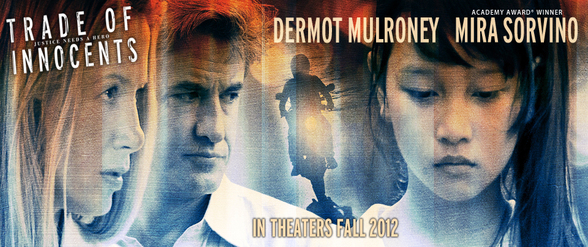
“Trade of Innocents” Interview Series with Dermot Mulroney and Mira Sorvino

In the back streets of a tourist town in present-day Southeast Asia, we find a filthy cinder block room; a bed with soiled sheets; a little girl waits for the next man. Alex (Dermot Mulroney), a human trafficking investigator, plays the role of her next customer as he negotiates with the pimp for the use of the child. Claire (Mira Sorvino), Alex’s wife, is caught up in the flow of her new life in Southeast Asia and her role as a volunteer in an aftercare shelter for rescued girls where lives of local neighborhood girl’s freedoms and dignity are threatened. Parallel story lines intertwine and unfold twists against the backdrop of the dangerous human trafficking world, in a story of struggle, life, hope and redemption in the “Trade of Innocents”.

Click here to read our review of “Trade of Innocents”

The topic in this film is very important and we had a chance to chat with various members of the cast including Dermot Mulroney, John Billingsley and Mira Sorvino and the film’s director Christopher Bessette. Hope you enjoy these and be sure to check out this great movie.


Christopher Bessette

Dermot Mulroney

John Billingsley

Mira Sorvino

Mira Sorvino talks about new film “Trade of Innocents” and Human Trafficking

Mira Sorvino is well known for her Academy Award winning performance in “Mighty Aphrodite”, as well as her role as Romy White in “Romy and Michele’s High School Reunion”. In her new film “Trade of Innocents”, it takes a more serious look into the epidemic of human trafficking. She co-stars in the film with Dermot Mulroney and John Billinsgley. She is also working again with Dermot Mulroney next year for “Space Warriors”. Mira really took out some time to chat about her role and her stand on the topic in the film and what people can do in order to get involved.

Mike Gencarelli: “Trade of Innocents” is such an intense film; especially your role. How did you prepare for Claire Becker?
Mira Sorvino: I have met many survivors of human trafficking through my volunteer work. I am UNODC Goodwill Ambassador to combat human trafficking. So I meet victims all the time, so I took those experiences since I am always deeply moved. You get confronted it with the horror of what people are put through from others for the love of a buck and just realize the first time I you were exposed to that. The character really understands human trafficking, or slavery as Obama rightly put recently, for the first time. There is nothing like meeting a survivor of human trafficking and hearing their stories. There is just nothing like it. You are moved by their incredible strength and ability to not only come back to live and thrive but to help others. They are very optimistic people. So there is that. Then there is the fact that I am also a mother myself. In the story, our characters are bereaved parents and that were not a stretch to imagine but obviously I would never want to go there. I love my own children so much.

MG: How did this role come about for you? Was it due to your work against human trafficking?
MS: I was offered the role. I am not sure if they were aware how involved I was with this. I remember having a conversation with the director, Christopher Bessette, and he told me about modern day slavery and I told him what I do. Then I think we realized that we had far more in common than we thought and then worked together to make the story even deeper. What I loved about the film is that it highlights a solution both on the law enforcement side, with the International Justice Mission and then there are volunteer facilities. These are such an important part about fighting slavery, since you can’t just arrest people.

MG: Do you feel that film will create awareness against this?
MS: That is our hope. We are showing it to a lot of political people. It is really helping to drive to the message and outreach at child sexual exploitation. The sad this is that it is such a huge problem in our own country. The film is about a foreign situation but honestly we have a big, if not, bigger issue of child trafficking here in the US as in anywhere else. John Billingsley plays a pedophile in the film and goes to Cambodia to by children. If he is caught there, our US Federal laws will get him and he might get 25 years and put on permanent sex offender registry. If someone like him is caught in America, in most cases he will be let go at the scene and not even brought into the police station. The child will be brought in and charged with the crime of prostitution. That is really true. Nothing will happen to the “John” in the US as long as he has paid for it. If your neighborhood pedophile has sex with a kid in his basement and doesn’t pay he is going to get the full ride of punishment. That is the outrage in our country.

MG: Let’s talks about John’s role in the film, it was very well done and extremely disturbing.
MS: It was incredibly disturbing. He played it in a very self-justified way. That is what great actors have to do; they have to justify the behavior of the character. He wasn’t apologetic for it in any means.

MG: Tell us filming on location in Bangkok, Thailand?
MS: That was an eye-opener for us as well. While I was there I worked with the local UNODC office for Southeast Asia. They gave me a true education on the situation there in terms of human trafficking. I also worked with some local NGA’s one of which was called Nightlight. One of the women there took me into the Bangkok red light district late at night. She goes on this nightly walk-about with her volunteer staff. They try and find under-age girls working in the sex bars. It was very crazy and not something that an ordinary American female will ever experience. It is not something you would see. It is such much about of their culture there and a lot of their economy is based on sex tourism.

MG: What can people do if they want to get involved?
MS: I have three recommendations for you. First is EPAT (End Child Prostitution and Trafficking). This is global network organizations that span the entire world. You can go to the website for your country and find out how to get involved. Then, there is a group called Polaris Project. This project is absolutely amazing. They run the National Human Trafficking Resource Center, which is a 24/7 hotline that has led to thousands identification and rescues of trafficked people in the US than law enforcement has. Also on their website, you can see how you state rates in terms of human trafficking. Some states are good but some have no responses. You can see how to put pressure on your legislators to pass these new laws. Lastly if you just have money and don’t have time you can donated to the UN Voluntary Trust Fund for Victim of Human-Trafficking, it is one of the only fund that grants money to NGO’s and people around the world to help people. That is a very big deal and even with a small amount of money. It all adds up and is very important.

Dermot Mulroney talks about new film “Trade of Innocents”

Dermot Mulroney is known best for his role in “My Best Friend’s Wedding”.  He also tore up TV in Fox’s “New Girl”.  Dermot is taking on a very serious role in “Trade of Innocents”, which deals with child sex trading.  Media Mikes had the chance to chat with Dermot on this amazing role and how he prepared for the role.

Mike Gencarelli: What drew you to work on “Trade of Innocents”?
Dermot Mulroney: It is interesting, I got with an offer on the role. I read the script and it was really the first time I ever encountered the issue of human trafficking or child sex slavery. Just reading the script was real eye-opener for me and that is what really intrigued me the most initially.

MG: Tell us about working with Mira Sorvino and John Billingsley?
What are the chances that you can work with an actress like Mira Sorvino, who already made such a huge different in her own life working through the United Nations and other organizations. So it was just great. John’s performances will really rattle you. That performances was really incredible in every way. Boy, what a challenge it would be to be asked to play a role like that. I really respect what he was able to do.

MG: The film’s content is quite intense dealing with sex slave trades of young children, how did you prepare for a role like this?
Well, I did a couple of things. After reading the script, I went online and started researching the issue. The first thing I learned how many people are affected by this. I mean on both sides of the issue as well. Since I am looking at it from the people that are trying to stop this problem. You learn numbers and fact but also learn how about many people are trying to help. I was impressed with the amount of resources that are out there. The group and associations are so admirable and plenty of them, as it turns out.

MG: Due to the content due to find that this is harder to portray?
The heart of the movie is really the relationship between this family. The couple had done through losing their own child. That part I have done before and I could really hook into that. So for me the unique part was the setting and the issue around that this simple family story drama works around.

MG: Tell us about filming on location for this project?
Yes, it was shot in Bangkok. I had never been to Asia, which was an eye-opener as well. Not shocking in any way just never been in a city quite like that. The people and the crew were incredible to work with. We worked through some really grueling conditions, as you see in the movie. Then you have to throw in another hundred people going through that heat and those conditions with me. A lot of people really put their heart and soul into making this movie. Bill Bolthouse, executive producer, and his family really this is a passing for them that comes to fruition this way. You don’t see it often that individuals can make such a visible difference.

MG: Where/when can people get a chance to see this film?
It is being released in New York on October 5, 2012 and then expanding each week after that in additional theaters. People are really coming from all different angles for the film like government, religious organizations, NGO’s (non-governmental organizations) like charities from all over the world. I think people will really take notice. It will also be available on Digital, DVD and VOD
on December 11, 2012.

MG: You go from an intense role like this to a hysterical role in TV’s “New Girl”; how do you compare?
[laughs] That is so interesting, I never thought about those roles being so different. I have always jumped around and done whatever I have been asked to do. Or at least tried, I am still trying to do it right out here…working hard. I had not idea what was coming with that role. It was literally coming out of their mouths while they were shooting the episodes. Then sent me a few episodes and said you “are you in or out”? They hadn’t cooked up yet where my character was going. So they just rolled with it and revealed the character to me on that fun level. Not to mention working with that wonderful cast…that was a funny room of people man!

John Billingsley talks about role in “Trade of Innocents” and reflects on “Star Trek: Enterprise”

John Billingsley is known best for his role of Doctor Phlox on “Star Trek: Enterprise”. He also co-stars in the recent “Trade of Innocents”, playing the sleazy Malcolm Eddery. Media Mikes had a chance to chat with John about his various roles and what has been his most rewarding role.

Mike Gencarelli: Tell us how you got involved with the film “Trade of Innocents”
John Billingsley: It was a pretty standard audition process. The scene I did was one that ended up not making it into the final cut of the film. When we were working on it I had a strange suspicion that the scene might not make it in to the film. After meeting with the directed I heard back about a month later that I had gotten the part.

MG: How did you prepare to play such a sleazy guy, Malcolm Eddery?
JB: I have played more than my share of creeps, child molesters and psychotics through the years. I hate to say it wasn’t an extraordinary stretch for me to play this role. Ultimately anytime you are playing a character that is bent you really aren’t doing anything much other than saying what their particular obsession or interest is. Everyone has an obsessive nature so all you have to do is stretch the envelope a little bit.

MG: The film was shot on location, tell us about your experience?
JB: That was great! I had never been to Bangkok before. It was a fascinating city that has this strange blend of first worldism and third worldism. There were high rise buildings mixed in with small run downhouses. My role gave me quite a bit of down time. I would generally shoot a day then have some time off. I had a chance to explore the entire city. I am a big fan of cities and getting to see how they work. They have a really interesting transportation system there that is also pretty cheap.

MG: How can you reflect looking back on your experience playing Doctor Phlox on “Star Trek: Enterprise” and how it compares to your following work?
JB: My role in “Star Trek” is probably the closest role I have had to myself. He was an even keeled person with a fair amount of philosophical attachment. Except for the rubber head in many respect that role was probably the most comfortable I have ever been. After playing that role for 4 years I wasn’t too bereft when it went off the air.

MG: How was it returning to “True Blood” this season as the Coroner?
JB: Surprising! The role was never particularly dimensional in any way but I did like the paycheck. They were nice people to work for. My character disappeared sometime in the 3rd season so I was pleasantly surprised when they contacted me. I was a little puzzled in a way as they brought me back but didn’t necessarily use me. I have a feeling that there may have been a back story there. I kind of thought my character was going to be the guy behind the Obama killings. When I went in for the first wardrobe fitting they wanted to fit me for camouflage gear. I asked them what it was about and they told me I was going to be involved with a terrorist group later in the year. Somewhere along the line they must have changed their mind. I was a little disappointed. I did get a death scene though.

MG: Looking at your career to date, what would you say has been your most rewarding role?
JB: The most fun/challenging role was probably one that no one ever saw. I did a play called “The Seagull” in Seattle which was great. Movie wise I did a film with Denzel Washington called “Out of Time” which was also great. I liked being on “The Nine” as well. The lady who played my wife on that show is actually my wife. Each thing you do offers its own particular reward. In the end I have to pick “Star Trek” as it lasted the longest. That role changed my life.


Related Content

Robert Englund chats about new film “Lake Placid: The Final Chapter” and reflects on playing Freddy Krueger

Robert Englund is known best for his iconic role of Freddy Krueger in the “Nightmare on Elm Street” series.  Robert is such a legend in the horror genre.  He is co-starring in Syfy’s “Lake Placid: The Final Chapter”, which airs on September 29th.  Robert took out some time to chat about the film and reflect on his career and his alter ego Freddy Krueger.

Mike Gencarelli: How did you get involved with “Lake Placid: The Final Chapter”?
Robert Englund: Well, I’ve been involved with the SyFy channel several times over the years. I’ve pitched projects to them and recently I just pitched a reality show to them, and I’ve done TV movies for them. Every boy has to fight his giant snake, his killer bees, and when they called me to fight giant alligators, I signed up. I was at a premiere for a film in Barcelona with my wife and all I had was a tuxedo, and a dress suit, and a couple of shirts, and a couple of pairs of underwear when I got the call for Lake Placid. So I went directly from Barcelona, with hardly any luggage, to Sofia, Bulgaria. And there is a lake just outside the capital of Bulgaria, that’s exactly like, it’s the exact same kind of geological features as Maine. It’s got that rocky shoreline and the exact same kind of pine trees. It’s amazing, I thought I was – I was looking around for lobster rolls it looked so much like Maine. I showed up and there was the lovely Elisabeth Rohm, who I had a crush on since the first time I saw her, you know, in court on Law and Order. And Yancy Butler, who I’ve known – not known, but I’ve run into over the years at Comic-Con and things because she had such a huge fan boy following with Witchblade, and we just all got to work. We worked real hard, real long days, because we were losing Indian Summer. We had a little bit of Indian Summer in the beginning, and it started getting pretty cold. We were all on the water all the time. Because that’s where the gators are, but yeah, it was really fun, you know, and the coincidence was when I got there and got picked up at the airport. It was guys I’d worked for years ago, you know, in a giant snake movie. So now they have a big huge studio, over there in Eastern Europe, and they’re doing real well. In fact they shooting, Expendables right when we were wrapping, Expendables 2 came in and used a lot of our crew towards the end. So things are hopping in Romania.

MG: Tell us about shooting this film, was it difficult on a low budget?
RE: Well, yes and no. What you have to understand is, if you’re shooting in Detroit or you’re shooting in Louisiana. Or you’re shooting in New Mexico, you know, you get these great tax rebates. And the same thing happens in Europe. Sometimes it’s just because it’s so beautiful there and you get this enhanced production value. And even though we had to pay to fly everybody over there, there’s already a huge studio and production company in Sofia, Bulgaria. They’d been shooting a couple of Lake Placids there. So you get a big bang for your buck, which is nice. So you work hard and there is that problem of language with the foreign crew that you’re dealing with. And also just explaining yourself, or your taste, or trying to describe what you might require in terms of wardrobe or something. Because sometimes idioms can get convoluted. And so you’re always dealing with that, but I’ve done a lot of movies in Europe now. So I’m kind of an old hand at that. I did a giant snake movie with these guys years ago. And even they had realized that Anaconda had a huge fan base, you know, the J-Lo film. And they already, a low budget version that we’re doing, they had a better snake effect than the movie Anaconda. Because that’s how fast and how quickly the technology grows in CGI and animation right now. If you watch a movie like Starship Troopers now, with my friend Casper Van Diem, you know, it looks old fashioned now. You can actually see the same bug getting shot, that they’ve used over and over again. Because CGI was so expensive back then. It’s kind of like the old cowboy movies where you see the same Indian getting shot off a horse as he circles the wagon train. And they show it like maybe 2 minutes later in the sequence as if we haven’t seen that before. Because they only had that stunt twice, and they use it again later in the movie. And it’s like, “Wait a minute, I saw that Indian get shot. I saw that fall, I saw him get his ankle caught in the stirrup and get dragged. I remember that.” And it’s the same thing with old CGI now, you see the repetition shots where they used them. Or you can kind of see where the mat just flips and continues the same foreground action in the background, slightly out of focus. Because they didn’t have enough soldiers in Troy that day. And so when I do these new movies, if I’m doing a SyFy channel movie with killer bees or giant alligators. It looks better than the last giant alligator in a feature film, you know, because that’s one of the reasons they do it. Because they figured out a better way to do it. And even though the movie may be less expensive, and a little exploitative, many times you’re actually getting a better effect.

MG: If Jim Bickerman crossed paths with Freddy, what would his first words be to him? And if Freddy crossed paths with Jim, what would he think of him?
RE: Well, Jim Bickerman is a pretty ornery guy. And he obviously would have to meet Freddy in his dreams, and I think Jim Bickerman’s dreams are probably pretty strange. He’s a dirty old man that Jim Bickerman, as you saw in the film. So there’s probably some point where Jim Bickerman like of, they both like them teenage girls. They’re bad boys. So I’m sure that Jim Bickerman, before Freddy killed him would want to join forces with Freddy. Maybe Freddy could turn Jim Bickerman and the two of them could work together. I don’t know if it would be Bickerman versus Krueger. Freddy is always going to win, and once you fall asleep Freddy gets the drop on you.

MG: Throughout your career has there been anything that has given you nightmares or maybe something that you are scared of?
RE: Nothing really scares me. When I did the first Nightmare film, I mean there’s films that scare me, I just even got a jolt the other night watching Cabin in the Woods. And I remember the original Alien got me several times, and I was a grown up when I saw that, and I dragged my poor father to see it. But now, when I was in the makeup for the original Freddy, I fell asleep, we were shooting nights. And I fell asleep trying to get a nap and the AD banged on the door and said, “Mr. Englund hurry up we’re going to try and get this shot before the sun comes up.” And I sat up, and I forgot, this was during the first film, forgetting I was in this make-up. I sat up with, you know, that kind of bad breath you have after a little nap, and I rolled off of my cot in my little tiny, you know, honey wagon dressing room. And there in the recesses, in the forced perspective of my make-up mirror, opposite my bunk, surrounded by dim light bulbs – make-up light bulbs, that had been cranked down on the dimmer. I saw this old bald man with scars and burns all over him looking back at me. I kind of went, “Oh geez.” And I put my hand on my head and so did he. So it became this sort of nightmarish Marx brothers routine. And it literally took me about the count of 5 or 6 to kind of come out of that semi-conscious state you’re in when you wake up real fast. And, you know, when you’re fighting for the alarm clock. That kind of moment of time. I was very disoriented. The point of this story is that moment, looking into the mirror, which I recovered from in 5 to 6 seconds, but that moment, I can remember it like it was yesterday. And occasionally, and I don’t want to like guilt the lily here, but occasionally that does enter into my subconscious and it does get into a dream, or it comes in as a random image that’s still stored in my brain somewhere. Because it was so disorienting. There’s that funny distancing of where I was sitting, and then the mirror 2 or 3 feet from me. And then in an equally far back and deep in the mirror Freddy, looking back at Robert. Because I was Robert obviously. But that really was a strange moment, and it was so early in the film experience for me, of horror films. I had been doing a lot of very normal fair up until then, except for science fiction. That really did disorient me, and it did stay with me, and do a little kind of a – I think there’s a definite crease in my gray matter that makes a home for that image.

MG: With you being a horror icon and legend; Do you ever kind of feel pressured to hold up that title? How would you feel that the genre has changed over the years for you?
RE: Well I get a lot of scripts, in fact, as I’m talking to you right now I’m behind one script at least. And there is one that I have to download and print out. But, I don’t like feel a pressure. The back of my mind, I’m always looking. I’m trying to help out right now with a project, I did a cult film a couple of years ago called Behind the Mask: The Rise of Leslie Vernon. That’s really a great, smart film. And so I – the sequel script to that is just phenomenal. It’s the second best sequel script of something I’ve done I’ve seen in a long, long time. There was a great one years ago for a great contemporary spinoff of Phantom of the Opera. I had done a Phantom of the Opera over in Europe and the follow-up script – the reason I did the original was because the follow-up script was so strong and interesting and really great contemporary version of an extension of the Phantom of the Opera legend and myth. But this one, you know, so I’m always kind of looking Mike. I’ve always got one eye peeking or one ear open for something that I want to do in horror. That’s different, or that I just think – even if it’s derivative is really strong. And also because I get – to be honest with you, when I do a genre piece I get a bigger pay day. Than if I’m just guest starring on, you know, Criminal Minds or Hawaii Five-0, or Bones or something. Then I’m just Robert Englund, character actor again. And when I do my little horror movies like Inkubus, that I brought out last Halloween on DVD, when I do my little down and dirty horror movies I’m getting more money. Or when I got over to Europe to play a Prince in some strange cult film in Spain or something, it’s a nice payday for me. So I do make an effort to do one or two a year, just on an economic level let alone. But I’m always looking, I’m always looking for that new one. I spent a year and a half in Italy scouting locations, and casting, and talking to Christopher Lee, and Donald Sutherland, for a project back in 2006/2007 that did not come to fruition. And that was very disappointing for me, you know, that takes a lot out of you when you get to be my age, spending a year of your life. I’m obviously turning down other projects if I’m trying to develop something. So, you kind of have to be careful. So I just now see the stuff that’s sent to me. I’m not really developing it on my own. But I am always checking the stuff that’s sent to me and trying to keep current on that.

MG: Looking back at your iconic role of Freddy Krueger, have you ever regretting taking this role?
RE: No, I’ve never regretted taking the role or my association with the great Wes Craven, and the success it brought me. You know, both economic and career success. Now, am I somewhat funneled into genre films, yes I am. I’ve done, I’ve done, I think I’m about to do, I’m about to start my 77th movie. Feature length film. And I think literally if you added up all my horror movies I think it’s less than 20. So horror movies less than 20, there’s another 55 films that I’ve done. Now, a couple of those are sci-fi, some of them are thrillers, you know, some of them are a little bit fantasy. But most of them are just other movies that I’ve done. And, or TV movies. I’ve done a lot of quality TV movies as well. So they’re not really out and out horror. So, but the thing that I’ve been telling people that this happy accident for me is the fact that after I got out of the make-up and I got enough baggage and enough reputation that I’ve sort of become like a surrogate Vincent Price, a surrogate Klaus Kinski. A go to guy for those roles, and somebody has to do that and you know, we don’t really have a Cary Grant, or a Steve McQueen anymore. But if I can kind of fit into Vincent Price’s loafers, or Klaus Kinski’s boots a little bit. Even if it’s a low budget genre film, which both of those gentlemen did a lot of. I can remember seeing Dr. Phibes, you know, (unintelligible) the day it came out. I’m happy to be that guy. I do a lot of other things. Tomorrow I go to work on a little send-up spoof on workaholics for comedy central. And I’ve been guest starring on all of the top 10 shows in the last year. You know, I’ve been on Criminal Minds, and Bones, and Hawaii Five-0 doing just guest starring on those, doing normal roles. So, it’s fun for me to do these. And I’ll be honest with you guys, I get paid better. If I do a horror movie or a science fiction movie, I get paid more because I fill the seats. Especially in certain countries, I can still open a movie, for instance, in Spain and Italy, and even in Germany to a degree. So that, there’s enough genre fans there, and they’ve been fans long enough. And as long as our sort of early Comic-Con fans, that that’s just another benefit that I bring to the table.

MG: With people being so desensitized in films and horror. What would you say it takes to make a good scary movie these days?
RE: Well scary is subjective. I think there is room now for all different splits. Just like there is in music. You know, Lake Placid has some real jumps in it. Lake Placid 4, we’ve got some real jumps in it. And there’s something really primal. That’s about a part of the brain that goes back to when we were reptiles. It’s an instinct that we have. And there’s also a little something in us that makes us afraid of snakes, and afraid of spiders, and afraid of alligators, and crocodiles. And so those thrills come easy in ours. But there’s also room for the fun. There’s a certain amount of fun, I think, a little bit of undercurrent fun in a Lake Placid movie. I mean, we kill our teenagers, but there’s a little bit of fun in it too. I think there has to be room for all of these. I just saw a very clever movie last week on demand, with a cocktail in one hand and a cold pizza slice in the other, and my wife with her head in my lap. We watched The Cabin in the Woods and I really thought it was clever, and smart, and well-acted, and sexy. And it scared me, at least three or four times. It really got me, and I’m hard to get. Some things can be creepy though, there’s creepy scary. The great director Lucky McKee, very underrated. A film called May, he did a film called May that really is a creepy, creepy great film. So I like that too, you know, and sometimes I’m a little more distanced from films and I just love them for the actual film-making in them. And they may not scare me as much, but they may have a creepy factor too. The Brian DePalma film Sisters. That movie really kind of works on me. There’s something hypnotic about that film. Plus the split screen and the use of microfiche flashbacks in a dream sequence that was induced by drugs. There’s a really great, primal, primitive, early, kind of hallucinogenic hypnotizing quality to that. You know, you see that in old George Steven’s movies, and you see it even in classic films like Black Narcissus. Sometimes those movies become hypnotic. There’s something kind of hypnotic even in the recent Kirsten Dunst film Melancholia. But I like that, when that starts to happen to me in horror and science fiction, you know, I think Cameron can get into that. I’ve seen Cameron get into that before. I think especially in the Alien movies, there’s a point where there’s no dialogue for so long and time is suspended. And we hear the breathing. And I love that, that really, I love that disorienting, hypnotic quality of films. And that’s just as effective to me as horror or the cheap thrills scare. The William Castle lunge into frame, you know?

MG: I’m actually a huge fan of “Behind the Mask”. I’m actually a backer on the sequel. So I can’t wait for that to come out…
RE: Well I’m telling you, the script is phenomenal. Because it plays with the great pun that fans love of doppelgangers. So there’s actually actors playing us, the actors who played the parts in the original. Making a movie, about the story of the original. About Leslie Vernon and his tale. And we’ve been hired as technical advisors. And the whole project is being filmed by a Making of crew of a cable channel. So it’s a movie, within a movie, within a movie. And it’s all during the making of a movie, on the location of the movie. In the motel with all of the cast and the crew. And they start going down like ten little Indians. It’s really layered, and rich, and fun. And there’s a great gimmick with the actor they’re going to get to play, the actor, the Hollywood actor who will be playing Leslie Vernon. He gets to finally have a showdown with the real Leslie Vernon, which I think is fun. And you won’t know who he is, because he’s a method actor. He wears the mask for the whole movie, it’s really fun.

MG: What else do you have planned next?
RE: Tell people to look for me in Sanitarium with Malcolm McDowell, and John Glover, and Lou Diamond Phillips, and I’m off to shoot this, which is very kind of M. Night Shyamalan-ian. I’m going to be doing that next month, and yeah, and everybody tune in and check out. It’s really fun. Lake Placid 4, yeah. Freddy versus Yancy Butler. Thanks a lot.

Copyright: MediaMikes.com © 2012 · Powered by: nGeneYes, Inc. · Login

All logos and images used on this website are registered trademarks of their respective companies. All Rights Reserved. Some of the content presented on our sites has been provided by contributors, other unofficial websites or online news sources, and is the sole responsibility of the source from which it was obtained. MediaMikes.com is not liable for inaccuracies, errors, or omissions found herein. For removal of copyrighted images, trademarks, or other issues, Contact Us.