
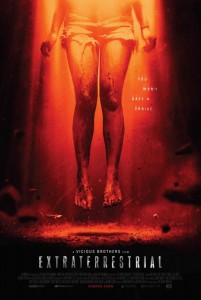
The Vicious Brothers and Brittany Allen discuss their new film “Extraterrestrial”

Colin Minihan and Stuart Ortiz make up the duo known as the The Vicious Brothers. They are the dudes behind the found footage cult film “Grave Encounters” and its sequel “Grave Encounters 2”. In there latest film, “Extraterrestrial”, they are taking on aliens this time instead of ghosts. The film stars Daytime Emmy winning actress, Brittany Allen as well as Michael Ironside (“Scanners”, “Starship Troopers”). Media Mikes had a chance to chat again with The Vicious Brothers and the film’s star Brittany Allen to discuss the film and what we can expect.

Mike Gencarelli: You guys tackled ghosts with the “Grave Encounters” films, why aliens next?
Colin Minihan: “Extraterrestrial” was actually the first thing that we have ever written even before “Grave Encounters”. We have always loved anything to do with UFO, aliens and abductions We have thought that no film recently has done justice to the sort of alien abduction concept, so we wanted to take it on.
Stuart Ortiz: I think there has been a lot of B-movies in the last early 2000’s with alien scenarios and they are always really low production value. Why hasn’t anyone ever tried to make a “Cabin in the Woods” movie with younger 20’s and instead of it being a slasher make the slasher an alien. When Stu and I write, we usually lock ourselves up on the remote northern tip of Vancouver Island, which is surrounded by woods. You kind of always wonder when you are in the place like that what else is there. You can feel the fear of what is out there in the sky when you are looking up at the stars. I can’t imagine that aliens don’t exist, so I think since we think it could be real it makes it as scary as ghosts, which I also think exist.

MG: Brittany, how did you come on board this project?
Brittany Allen: I got the script through my agent. As soon as I finished the script, I contacted my reps and said that “This is something different and special”. I felt that they took the genre and did something new with it. It was very refreshing to read a strong female character that had very human emotions that she was working through in the contexts of a horror/sci-fi film. I related instantly to everything about her from her pessimism on love and the journey that she takes throughout the film. I had a really strong feeling about it, so I pushed for it and ended up meeting with the guys over Skype and then I got the part.

MG: You guys have much more visual effects here than your previous films; tell us about how you accomplished such amazing effects in the film?
CM: The visual effects undertaking on the film was massive for the budget we had. Stu and I wanted to make a blockbuster and we only had a million dollars to do it with. So we pushed our visual effects company to the point that every artists probably lost some hair to make the film look as good as it does. It is one of those things that when you work on a low-budget film that doesn’t have a major studio behind it, I think people feel more involved with it since there isn’t a thousand person team working on it. It is more responsibility for less people and having them step up into those roles. There is a ton of CGI in the film. The UFO is completely computer generated. The alien in the film is also completely computer generated. I feel like the level of detail in the alien is really quite something because people are thinking that it is a model or even a practical effect. When Stu and I were making the film, we were torn in wanted to do it practical or not. We are fans of the genre dating back to “John Carpenter’s The Thing” where practical effects were at their height. To do that now, it just wasn’t realistic within our shooting schedule. But I believe it was a great choice and I am very happy with it.

MG: Brittany, you’ve done some sci-fi including “Defiance”; what do you enjoy most about this genre?
BA: I like putting myself in another world. I have a pretty wild imagination and being able to use that to get into these characters. There is a freedom that comes with this and it is a real playfulness in it. It was just a rush too. I remember one night we had like an hour left to shoot and it was like 3am in the morning and we would do this crazy scene running in the woods. We would finish and would be screaming with our adrenaline pumping. So it was a lot of fun.
SO: I want to be in the front of the camera, that sounds like fun [laughs]

MG: Your role was quite demanding, especially in the third act; was it a big challenge for you?
BA: I would say the biggest challenge in those scenes was using this stuff called Ultra Slime. It was lathered all over my body. That was probably the biggest challenge. It is exactly like you would imagine it to be, it was the slimiest, grossest feeling ever. It was a challenge that I really embraced though.
SO: You were covering in that slime for like a whole day
BA: Yeah, there was one day that I was covered in the slime all day and I started to feel cold and uncomfortable.
CM: I remember I got a piece of it on my finger and I was like “Eww, get this off me [laughs].
BA: Afterwards, it felt like it was all over me when it wasn’t anymore. Overall, emotionally those scenes were some of the most fun to shoot.

MG: How was it working with Michael Ironside? And I love the aspect of the aliens being able to controls your minds… Were you tempted to blow up his head like in “Scanners” [laughs]?
SO: Yeah, I think we had that discussion every single day.
CM: Or we could have torn his arms off (ala “Total Recall”) or his legs bitten off (ala “Starship Troopers”). Is there a scene montage of Ironside getting limbs ripped off in his film? I just want to shoot a movie so that we can add just one part to that if so [laughs].
SO: Working with Michael was just great. He is super intense and even though he has been making films for 30 years and been in a ton of movies, he is still super passionate and excited about the work. You never know what to expect when you bring an actor in for a few days of work. We are huge fan boys of Ironside and it was great getting to work with him.
CM: He also had a lot of great ideas for his character that he brought to the table right away. In the film, he is wearing these ridiculous shirts and that was all his idea. So he was just so cool.

MG: This is your third film together; how do you feel that you have matured as directors?
SO: It is funny because “Grave Encounters” is such a completely different film from “Extraterrestrial” in every way. “Grave Encounters” is obviously a found footage movie and meant to focus around amateur footage versus “Extraterrestrial” in which we are trying to achieve a huge epic sci-fi extravaganza influenced by Steven Spielberg. I don’t know if we could have made this film first…maybe. I think that we learned a lot on “Grave Encounters”.
CM: We are both self taught filmmakers. Stu and I have been shooting films since he was was 5 and I was 8, so we have grown up with it. So with “Grave Encounters”, it is a found footage movie, you have to abandon the language of cinema that we potentially thought ourselves and throw the concept of elaborately staging a scene out the window because it would feel fake within the context of a found footage film. So I think with “Extraterrestrial”, it shows more of that classic influence like Stu said Spielberg…Zemeckis, these guys that put the focus on the staging of talent and telling the story with a camera. I am grateful that we got the opportunity to showcase our ability to direct outside of the found footage world. I prefer this type of filmmaking much more.
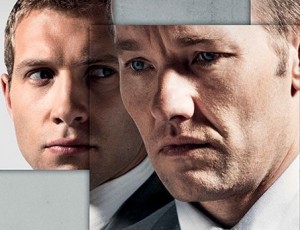
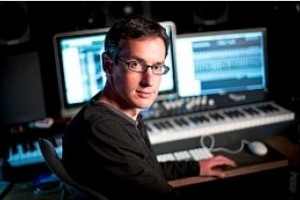
Jai Courtney and Joel Edgerton talk about their new film “Felony”

Jai Courtney and Joel Edgerton are the stars of the new film “Felony”, which also co-stars Tom Wilkinson. Edgerton also wrote and produced the film. Jai is growing to be quite the superstar with films under his belt like “The Divergent Series” and the upcoming reboot “Terminator: Genisys”. Joel has been in great films like “The Hurt Locker” and can be seen next in “Exodus: Gods and Kings” alongside Christian Bale. Media Mikes had a chance to chat with Jai and Joel about their new film “Felony” and their experience on it.

Mike Gencarelli: Joel, you not only star but also wrote and produced “Felony”; tell us about how you became involved with this film?
Joel Edgerton: I started writing this film back in 2007 or 2008. It was based on a short story that I did about this character knocks this kid off his bike while driving drunk and then lies about it. Very quickly I became fascinated with not just him as a character but the characters that Jai (Courtney) and Tom (Wilkinson) ended up playing in the movie. It became about this event and how it would end up effecting a various people’s lives and also how everybody involved in the story has very different opinions about the cleanup, aftermath and punishment needed for the crime. The movie is a thriller that also look into ethics at the same time, so hopefully it is very entertaining. I have written a lot of stuff and when I write something that I really know in my bones is good I become very passionate about it and I will try everything to try and make it work. Next was gathering a really great team. We got Matthew Saville, who is a really great director, his movie “Noise” is one that I really love. Then together him and I found the right producing partner Rose (Blight), who then became the real engine that pushed us into getting this made. Then it became it about finding the right leads to be in the movie and we were blessed in the fact that we got Jai, who is perfect for the character and really blessed that Tom came to play with us as well.

MG: Jai, how did you come on board and what drew you to the project?
Jai Courtney: Really it was just the script. I have been an admirer of Joel’s for some time. We didn’t know each out prior to this film. When I read the script, I did notice his name on the front page and it did definitely intrigue me but I think if that script was written by anyone else, I would have been equally as hungry to do it. It is very well done. Joel reaches out and engages the audience and asks them what they would do in terms of what is going on in the film. My character sees things very clear, defined and very black and white. He believes in that if you mess up then you should suffer the consequences. I am a lot more unsure in person and I thought it was really new territory for me. You couple that with getting the ability to go home (to Australia) to make a movie there. But it is really a universally themed narrative, so it was just a bonus for me and just felt like such a good fit. So I went ahead and auditioned for it and before we knew it we were crackalacking [laughs].

MG: What was it like to work side by side with the great Tom Wilkinson?
JC: I had the pleasure of playing his partner. He is a funny old guy and has been doing this forever. I have an enormous amount of respect for what he is capable of as an actor. Look, it was just a buzz for me. It was great to be able to work with someone that experienced yet he was still so hard working. I would ask Tom what he would be up to on the weekend and he would look at me confused and he would say “Well, I will be working on my lines. I’ve got all these lines to say”. I was just like “Wow”, it has never changed for him. He still works so hard and does an amazing job.
JE: I was amazed firstly that he just jumped on board. To have the person you wanted to play the character say “Yes” was great. I wrote him literally these speeches that would go on for pages. I had this long scene with him on the dock and he turned up fully prepared to shoot the scene. He could have even probably shot during the rehearsal. He doesn’t play the card of learning the lines on the set, like a lot of actors do. Even I was terrified writing it, to be honest, but he just came super prepared and super thoughtful of what his character what doing and it made the film so much more interesting. His character is spewing some of the most difficult points of view on justice and he has such conviction as an actor that you kind of fall into his point of view. You want to believe him.

MG: Joel, how did you prepare for such an emotional role being a family man at home, take a bullet and yet living with this lie?
JE: The tricky thing was that I realized very early on that my character is one of the most inactive characters in the film. We did work hard that he wasn’t just a series of long faces but to show that there is a lot of turmoil going on. Jai’s character is working towards something and trying to fix this problem and Tom’s character is working to fix it in terms of covering it up. I think the biggest challenge for me is that I am not only speaking lines that I have been writing for years and trying to sell them like I would in any other movie but I wanted to make sure that there enough complexity to the guilt. You are asking an audience to empathize with someone that has done a terrible thing and still go on that journey with him. Matthew, the director, and I were having a moment by moment discussion of how we can keep the audience with my character yet still allow them to also not be on his side.

MG: Jai, how did you perfect that “I know you did it” stare that you gave to Joel throughout the film?
JC: I worked on that stare for months [laughs]. I used to joke with Matthew because it did feel like that was all I did just starring at Joel with that “I know you did it” face.

MG: Jai, going from films like “Divergent” to this; was a good chance of pace?
JC: Definitely man. It was wonderful being able to shake things up with a film like this. He is a quiet character but internalizes more than some of the other roles that I have had the fortune of playing. It is fun to get to do the big blockbuster films as well but as an audience member, I respond to this kind of cinema a little more. It is more in line with the kind of film that intrigues me and gets me putting my feet up. It was very refreshing. I was just very lucky to be a part of it. To be honest, it was probably one of the most fulfilling personal experiences that I have had. No frills but no bullshit either. It shows you don’t always need a big budget to have a lot of fun.

MG: Joel, next up you got “Exodus: Gods and Kings”; which is quite a different type film than this one.
JE: A little bit [laughs]. Yeah, that was an incredible experience. That is the beauty of the jobs that I get, one minute you are back doing telly in Australia and writing and then next I was in some building in Spain wearing a gold skirt. So you get to have like 3-4 month excursions into different worlds with a bunch of great professional people. It is a real blessing. I wouldn’t want to do just the one thing. It is nice to be able to jump around in the different worlds. The big budget films are exciting but there is really something that gets your adrenaline going with these smaller movies as well.

MG: Jai, what can you spill for us about “Terminator: Genisys”?
JC: They are very tight lipped about it, so I can reveal much but I am really excited about it. I am really happy that I got to have the experience. I am a fan of the franchise also, so it was really cool to get to play that role. I am really excited with the direction that we are taking the franchise as well.

Oscar Winning Composer, Steven Price talks about his new score for “Fury”

Steven Price is the very talented composer behind the film “Gravity”, which ended up winning him last year’s Oscar for Best Score (along with numerous other awards). Steven has also worked on film like “The World’s End” with Edgar Wright and TV series like “Believe” with “Gravity” director Alfonso Cuarón. Media Mikes had a chance to follow-up with Steven to discuss his new score for “Fury” and what we can expect.

Mike Gencarelli: You worked on the score for “Gravity” for about two years; at what point in the production did you come on board “Fury”?
Steven Price: I started on “Fury” about a year ago. I got the scripts and read through them. Usually, I am pretty useless at judging scripts. I tend to do better off waiting until I can see a little bit of what they have shot. But with this film, the script was really gripping. (Director) David Ayer has this ridiculous ability when writing characters that you feel like you totally know them in only a couple of pages, you care about them and you want to know what is going to happen to them. I loved the script. So I made a couple of calls and it turns out they were shooting it about 40 minutes from where I live. So I asked if I could visit and I actually ended up going a couple of times while they were shooting. I got to watch it being shot but also I got to spend a bit of time talking with David discussing what he was doing and what he hoped the music would be. It was an amazing opportunity to get to work with another director that really values what music can do for a film. It was important for him to have the music to carry emotion and be a part of the experience. So I was very keen to be involved.

MG: “Gravity” was set in the vast unknowns of space; tell us about how you approached “Fury”, which is set in the hell of World War II?
SP: I think “hell” was the key to it actually. We talked about what the characters had already been through by the time that we meet up with them in the first reel of the film. They have been in the war for 3-4 years by that point and have seen and done unimaginable things. They are exhausted and terrified but they have to keep going forward. So it was a matter of capturing that sense of exhaustion and of being in hell with this constant motion and this grinding forward. I wanted to capture that quality in the music whilst putting you there with the men and their emotions throughout the film. So that’s the conversation we had at the start and then had to work out how that would actually sound.

MG: I was going to ask if you looked for influence from other World War II films but this has such a unique sound for the genre and even sort of crosses over the line of horror with the use of the overlying chanting throughout.
SP: With where they are within the timeline of WW2, the film being set just 3 weeks before the Nazi surrender, I think it is easy to imagine that things were less intense at that point, but in actual fact the crews were in the middle of Nazi Germany… they were surrounded, and things were unimaginably bleak and threatening. I did a lot of work with a choir that is constantly chanting and whispering around you. It is an eerie sound in lots of ways. You never feel, like they never felt, safe for a moment. There is something that could happen that would be life ending, you never know. It was a real turning point for me, while writing, when I got the idea to use the choir in that way. I recorded them in all sorts of different ways. Sometimes it was as a choir but often times I would give them all their own individual microphones and get them saying different things. We could make it sound like individuals at times or make them sound like this group marching forward. They are only really used as a traditional choir in terms of singing at the very end of the film. So until then, they are this voice of constant persistent danger.

MG: Were you able to able anything you learned from “Gravity” on this project?
SP: I think the great thing I learned from “Gravity” experience was to just keep trying and keep experimenting with new things. That was a process for me that was really useful on this. The film was evolving as I was working on it and there was always a chance to look at something from a different angle.

MG: What were some of your biggest challenges that you faced here?
SP: The biggest challenge on this film was just getting the journeys right. Take the character, Norman (played by Logan Lerman), when we first meet him in the film and he goes from being terrified to suddenly plunged into a tank battle. So trying to figure out musically, how was his journey through the film and his growing and understanding of what it means to be in this was a challenge. Also Brad Pitt’s character, Wardaddy, was challenging since his enigma itself almost could be played musically and how much we should learn about him and his team through the music. So a lot of it were character challenges and trying to support them and their stories. That was the stuff that got me scratching my head at night and trying different things.

MG: I love that the score is so epic and yet you still have some beautiful piano work in tracks like “I’m Scared Too”.
SP: I did an early demo with piano and David sort of immediately attached to it. It is very simple piano work and all quite blunt actually in terms of the musical construction of it. They characters aren’t verbose sort of characters. They speak clearly and what they say is clear. Musically, I wanted it to be like that too. I wanted it to be very concise. The piano writing was very simple and also it needed to be played with great emotion. One of my oldest friends, who is not a full time professional musician but is a great player, ended up playing it for me. He came in and just completely understood what I wanted to do with it. His touch on the piano really made the whole thing work. We spend a long time getting the right sound for it as well. We ended up going about it in a peculiar way using two very old 1940’s microphones underneath the piano. It is not the sound that you would ordinarily do for a big posh film piano sound but it just felt right. You hear the mechanics of the piano, the pedal sounds, the contacts between the hammers and the strings and that seemed like it was suitable for this film.

MG: Since you are no longer working on “Ant-Man”; what is your next project?
SP: There is stuff knocking around a bit but not allowed to say much about anything at the moment though. But at the moment, I am in the bit where I should have been doing “Ant-Man”. Having spent a lot of time with Edgar Wright and considering him a good friend, it was never going to be an option for me to do that film. We spent so long talking about musical ideas for the film and it would have been so wrong taking it with someone else’s vision really. Hopefully I will have the opportunity to work with him again soon. But we will see what is around the corner next, yeah!

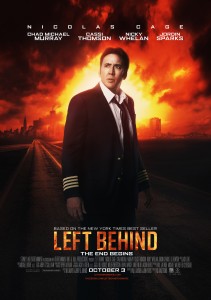
Academy Award-winner, Nicolas Cage talks about his role in “Left Behind”

Academy Award-winner Nicolas Cage is a man that does not need any introduction. He is well-known worldwide for being one of the most versatile actors of all time, equally known for his poignant portrayals in both drama and comedy. Some of his more notable films include “The Rock,” “Con Air,” “Gone in 60 Seconds” and “National Treasure”. Coming up next, Cage stars in “Left Behind,” a Christian-themed apocalyptic action film based on the best-selling book series by Tim LaHaye and Jerry B. Jenkins. Additionally, Cage recently completed filming Paul Schrader’s “The Dying of the Light” with Anton Yelchin and is currently in production on “The Runner,” which also stars Sarah Paulson, Peter Fonda and Connie Nielsen. Media Mikes had a chance to attend a teleconference with the actor to chat about his role in “Left Behind” and what we can expect the film.

Can you give us a little background on your character Rayford Steele and his importance in the film?
Nicolas Cage: Well I mean Ray Steele is a captain of a jumbo jet, a transatlantic jumbo jet going to London, England. And he’s an important guy on that airplane and he has a flirtation and there’s a chemistry that’s happening with the flight attendant, so marvelously played by Nicky Whelan. He loses track of what’s really valuable to him in terms of his treasures within which is his love for his family. He’s kind of, not that he’s a bad guy but he’s making a mistake that many people make that are in powerful positions lose track of the importance of family. They’re drawn away, or they’re seduced from their true inner-values by something attractive, or something flirtatious, or something that has the call of the wild. Ray Steele gets back to his true need for family through this experience and through this extraordinary experience and understands the value of family and just wants to get back to that no matter what happens. Just to be able to get back on the phone with his daughter and say I’m sorry and “I love you”. And I think that’s as simple as that. I think that is heart-wrenching. And if you have a heart I don’t think it’s possible to see the movie and not get a little verklempt. I mean it, there’s some very poignant, emotional moments.

What was it about this script or what regarding the movie in general that drew you in?
NC: I really said “Yes” on the merits of the screenplay. And also to work with, to work with Vic again, the director. I think all artists, if you’re tapped in, if you’re tuned in, to the zeitgeist and they’re open to that then they’re going to pick up on that. I felt that the script was a challenge and it gave me a chance to really try to make the extraordinary, believable and to do something authentic within performance so that everything around me was going into chaos. People were just appearing on the airplane and how did I make that organic? And again, all the actors, Chad Michael Murray, Cassi Thomson, Nicky Whelan, they were all on-point. And I find that exciting. To me, it was, it was an exercise and I’m very happy with the results.

How familiar were you with the “Left Behind” series before getting on board?
NC: I was not familiar with the “Left Behind” series. I’m familiar with the rapture of course. My brother, Mark, is a Christian pastor, and he was very excited about this. And he said, “Nicky, you’ve really got to to do this”. I’d already wanted to make the movie because I thought it was such a great script and an opportunity again to do something challenging. But when I saw how passionate he was, I thought, “Well, yeah I want to make this movie for my brother too”.

What was it like working with director Vic Armstrong?
NC: Well actually I’m very comfortable working with Vic. I got to spend quite a bit of time with him on another movie that we made, called “Season of the Witch”. And it was a good experience and I thought that he directed me to a good performance and something that I was very proud of and wanted to work with him again. I knew that I would be able to relax with him and that I would be able to go within and just sort of exhale and be in the moment and be in the scene. That he would allow his actors to breathe and to be relaxed and to find the truth of their performances. And it really shows in the movie. I mean, across the board, of Chad Michael Murray, and Nicky and Cassi again just powerfully real performances. And I knew that that would happen working again with Vic.

Snap Creative’s Bill Howard chats about “Transformers: Age of Extinction”

Bill Howard, CEO of Snap Creative, whose company has been creating “talk of the town” products for over 20 years, discusses how Snap has created innovative packaging concepts for all of the Transformers films, including the $1 billion global smash Transformers: Age of Extinction, which arrives on Blu-ray and DVD September 30, 2014.

Media Mikes: You have been creating collectible Transformers home entertainment packaging since the release of the first DVD. How did you get involved with the Transformers business
Bill Howard: Paramount challenged our team at Snap Creative to create a DVD package for the first Transformers film that could turn into OPTIMUS PRIME, but it had to be the height and width of a standard DVD to fit on a store shelf and it had to be no more than double the depth. Our solution required a design that had hidden parts that could reveal for conversion, and we used bas relief sculpture on the front so that we could have layered parts but stay within the depth. All the sculpt detail and deco was on the front side which let us maximize it. That DVD was a huge hit and we’ve continued designing for the Transformers releases ever since.

MM: How do you keep the designs fresh for each release?
BH: On each subsequent movie we have upped the ante creating 2.0, 3.0 and now 4.0 for the new Transformers: Age of Extinction Blu-ray and DVD slated for release in September 2014. They have all been awesome, but I am confident that this OPTIMUS PRIME is our best one yet. It has new features that make it cooler for sure, and we worked with Hasbro and digital assets directly from the movie that provided great sculptural marrow. I am already thinking about how we take it further for 5.0, and am glad the film is a few years off to give us enough time to really get creative.

MM: What makes your packaging designs so desirable to collectors?
BH: Our Transformers designs historically have been hugely successful because the fans appreciate our level of extreme detail and authenticity. We often design multiple packages that are available at different retailers, and real fans go out of their way to get them all because they each have something unique and collectible about them.

MM: You also did theater promotions for Transformers: Age of Extinction this year to coincide with the theatrical release. Tell us more about those.
BH: Our movie theater popcorn collectible packs are really brilliant— they have one piece of board cut once and glued in one place which provides a package that holds cup, popcorn and candy. It can be carried with one hand and the operations folks at cinemas love it because it goes from flat to built in just a few seconds.

Each year we run about 15 promotions in theater with these packs. We have partnered with many of the top Hollywood studios to do licensed versions for some of the biggest movies including Transformers: Age of Extinction. These packs (some geared towards kids, some toward adults), are usually paired with a small collectible toy which is a fun way for property owners to extend their brands to families in theaters and at home. The Transformers: Age of Extinction pack featured a transforming keychain and collectible cup. Exhibitors love it because they generally see about a 20% lift in sales with these branded collectible packs and we’ve grown the program from around 2 million pieces to 6 million pieces just in the last two years. We are also continuing to grow internationally with programs in Thailand, China, Vietnam, Turkey, Russia, Canada and more.

MM: You seem to have quite the collector following for your products. Many times it seems like your products double in value or more on the after-market. Why?
BH: One word: authentic. We work on every detail to get it right not just for Transformers, but for everything we do. Enthusiasts appreciate that we “get” them because we ourselves are collectors, so we understand just what they are looking for in a product. For powerhouse franchises like Transformers, we make a point of honoring the legacy of the franchise while also moving it forward in new and different ways.


Related Content

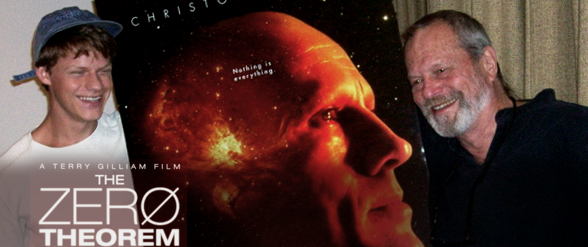
Terry Gilliam and Lucas Hedges Work Out “The Zero Theorem”

Now available on VOD and in limited  theatrical release, Terry Gilliam returns to his Brazil-dystopic roots with Zero Theorem. The highly energetic director and member of Monty Python gleefully joined young actor Lucas Hedges to discuss the film at length in New York.

Zero Theorem finds Qohen Leth (Christoph Waltz) in a neon-lit Orwellian nightmare. He is a cog in a massive corporate machine, Mancom, who is desperately awaiting a phone call that will reveal the meaning of his life. Counterproductively his menacing boss, referred to simply as Management (Matt Damon) charges Qohen with proving the Zero Theorem which states that the entire universe will eventually collapse in on itself rendering all existence meaningless.

While Zero Theorem arguably completes a trio of dystopian films after Gilliam’s own Brazil and 12 Monkeys, it now joins a host of modern future-set films that are increasingly Orwellian or apocalyptic rather than hopeful, I asked Gilliam what he thought of this trend of humanity not exactly looking towards The Future as idealized. The director cheerfully threw his arms open and “defended” Zero Theorem’s busy, candy-colored vision of the future:

Terry Gilliam: “This is not a dystopia! It’s Utopia. It’s a wonderful world! C’mon! Everybody’s out there, they’re dressed smartly, they got a lotta color. They’re bouncing around the place, cars are zipping back and forth–Shopping is 24 hours a day, 7 days a week–what more do you want?! I mean, the workplace, Mancom is FUN. Roller blades, scooters, zippy clothes, lots of primary colors. It’s a fantastic place. There’s only ONE guy who’s the dystopic element [laughs], miserable guy, called Qohen. And he needs a kick in the ass. And [Lucas] is one of the kicks!”

Lucas Hedges: “Yes.”

Gilliam: “It’s really that. I mean everyone keeps referring to it as dystopia. If you think the world we’re living in now is a dystopia, then you may be right! But we’ve been looking forward to this time for so many years! We got all the goodies.”

Hedges: It’s a matter of what perspective we see it from. And we see it from Qohen’s perspective and he has a–I guess his perspective is very much nihilistic and dystopic and sad.

Gilliam: “That’s really it. He’s the odd man out.”

Hedges: “I’m sure there’s a way of looking at the world we’re living in now from a certain perspective that makes our world look dystopic. I mean, maybe it is or maybe it isn’t but it depends on whose eyes you see it from.”

Gilliam: “I mean my tendency in films is to see the less good things in society. And the world we’re living in. Because at least those are the things you can criticize and possibly comment on and possibly it might change something in some small ways. Not likely [laughs] but we can pretend we have some potency in our ability to help change the world. [Lucas has] got to believe things like this . He’s got a whole life ahead of him, I’m old, I know the truth! [Laughs]”

Gilliam later elaborated on the world as it is today, where the amount of clutter is not exactly far off from his designs in Theorem.

Gilliam: “My complaint, it seems we’re becoming more and more infantile in the fact that ‘Oh! there’s something interesting! I’ve got to put that in my mouth!’ We don’t, but it’s effectively that ‘I WANT IT NOW’ not, I’m not going to work towards it, I’m not gonna wait. I need it now. And that’s in fact infantile. But that’s what we’ve become. I mean a lot of the film is a resistance to that, to escape it. I mean for me, coming to New York, it’s like Qohen going out his front door. I mean it’s just like WHAT?! In London we’re overwhelmed with stuff but it’s provincial and pissy-small compared to walking into Times Square.

And you think, ‘what is this about?’ and where do we fit in to it. I mean are we just these little dots that connect around the way? Are we just becoming social insects like worker bees? You  know our job is to keep tweeting and connecting, spreading those pheromones, they sort of go through the ether as opposed to antenna going [wiggles fingers at Lucas]…So nobody really has to have an individual opinion, people are sort of constantly communicating ‘Should I say that? Is that right? Have I gone too far? Have I offended? Am I rude?’ All these words keep coming up and mine are just FUCK THIS! People have got to start being individual and offensive.

I’m obsessed about offending people [laughs] Because it’s when you get a discussion going now, maybe. You might start talking about things rather than ducking and diving. I’ve watched my daughter say ‘oh that was very rude’ AND? [laughs] What do you think about that thought? You wanna talk about it?”

Hedges plays Bob, Management’s teenage son who is there to speed along Quohen’s progress. From this press conference, it was obvious that teenage Hedges and Gilliam were so pleased to be working with each other, and they elaborated on how he was cast in the film:

Lucas Hedges:  “I sent in a tape to Terry as an audition and then a week later I got cast. Which is very strange. Especially for a role of this proportion…that doesn’t happen. And we arranged to talk on the phone and [Terry] called me up…we spoke and it was–his energy was absolutely incredible. It was absolutely incredible! And he was insane! Absolutely insane and he was going on about what was going on in [Bucharest, Romania, where the film was shot] and about Vlad Tempish and about Dracula and it was lovely. And it was clear right off the bat that this is a man who doesn’t exist anywhere else in the world. Really. And he’s an individual artist and I guess that’s my origin with Terry…Meeting Terry–I mean hearing [him] for the first time was something I’ll never forget.”

Terry Gilliam: “When I saw him in Moonrise Kingdom, there was one guy that kinda popped off the screen for me. And it turned out to be this one. I’d never seen him before or anything and then [he] sent that tape in. I had only taped one kid in London. There was one kid who was kind of interesting, he was the only person I started putting on tape. And Lucas’s tape came in and I said that’s it! Done. Magic. It was simple as that. I didn’t have a single doubt. He just cracked it, boom. That’s the character. Then I called him and I tried to frighten him off and I failed. [Laughs] And it was wonderful I mean [he] was really thrown in the deep end with someone like Christoph.”

Hedges: “Yeah and it was a scary transition both from Brooklyn to Romania to working with Christoph and in a world that was very foreign. Both from a filmmaking standpoint and a social standpoint. But it really became a home and it really worked out.”

Up next for Hedges is playing Jeremy Renner’s son in Kill the Messenger.
Meanwhile, the internet has recently stirred up a renewed interest in Gilliam’s long-gestating Don Quixote project which was last addressed in the 2002 doc, Lost in La Mancha. Unfortunately, this conference took place just a couple days too late for hopeful news:

Gilliam: “Today, I don’t know. I knew two days ago. Today I don’t know anymore. I got an e-mail the other night. So I’m not gonna say anything. Things are [Gilliam wavers his hands in the air]…gone liquid again. We shall see. It’s something for me to think about when I don’t have a job. That’s the important thing. A man’s gotta keep the mind occupied. And pretending is the best way there is to go through life.”

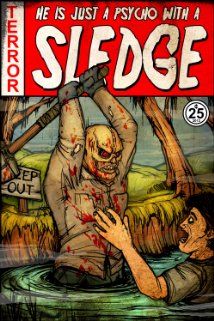
Kristian Hanson talks about his new film “Sledge”

In Sledge, Kristian Hanson plays a maniacal serial killer named Adam Lynch who, aside from believing he only exists in a movie or video game, truly believes he’s doing a good thing by slicing and dicing through teenagers. Hanson, who also wrote and directed the film, talked to MediaMikes.com about this fun horror-comedy.

Media Mikes: The film is only a couple of weeks away from release now, are you nervous? Excited? How much is riding on this for you?
Kristian Hanson: There is a part of me that is nervous because I have been promoting and talking about this film for two years now. The thing we said from day one with “Sledge” is that people will either love it or hate it due to the comedy aspect. Our little $800 film is finally going to be available to buy on DVD and rent on Netflix via DVD. As for how much is riding on “Sledge,” to be honest not that much. We say “Sledge” was our “film school” since John and I never went to school for this. “Sledge” was just a fun ride where we learned more then we could ever discuss.

MM: The film is getting good reviews online. Do you take much notice of reviews?
KH: I like to read every review when it pops up to be honest. I like to see what people like and don’t like about the movie. Some people love Adam Lynch (the slasher) and some say they wish he’d just shut up. Some love Alex (Dustin Bowman) and others cannot stand him. I am a movie fan first and everyone has their own opinion and I love to see what people loved or hated about the movie.

MM: How long did it take you to write the script – and when was that?

KH: It took me less than two days to write “Sledge” and it was back in June of 2012. We ended up filming “Sledge” at the end of August 2012 so it was a quick turnaround.

MM: Did you finance the film independently?
KH: Yes John (co-producer John B. Sovie II) and I financed it. Again it cost $800 so it wasn’t anything luxurious when it came to the filming process of trailers or anything. It was just a lot of fun with a whole lot of fake red sticky blood.

MM: The film is part horror, part comedy – did Wes Craven’s work inspire that tonal choice?
KH: Mr. Wes Craven will always be an inspiration with everything I do even if I don’t think about it consciously due to “Nightmare on Elm Street,” “Shocker” and so many other films. However, there are many influences in this regard and the biggest one influencing my sense of humor would actually be Kevin Smith from “Clerks” and now “Tusk” fame. I grew up watching his movies and he definitely helped shape what I find funny.

MM: The film is getting a lot of coverage online. Is the internet an important tool when marketing a smaller horror film like this?
KH: The internet is probably the best thing to have for a small film like this. After our first day of filming we made our first trailer and got it out online and people seemed to really enjoy it. The other side though is, everyone is marketing things constantly so people won’t necessarily look at your trailer or project anymore due to over saturation. That is why you have to be unique and that is what we tried to do with the talking wise ass slasher Adam Lynch.

MM: Sequel idea: “Sledge” goes to the swamp. You can call it “Sludge”!
KH: The sequel is already written and we intend to film it next August at the same time as we filmed the first movie and same location. Your title is funny but it will be called “SledgeD.” It is just another way to make fun of horror films who don’t come up with creative sequel names. We joke that if we made a third one it’ll be called “SledgeD-D!”

Kevin Kline and Israel Horovitz discuss new film “My Old Lady”

Israel Horovitz is a veteran playwright and stage director who at seventy-five years old is bringing one of his plays to screen for the first time with the film adaptation of My Old Lady.

My Old Lady stars Kevin Kline as Mathias a down on his luck author who is brought to France when his father dies leaving him a Parisian flat in his will. Mathias dreams of profiting off the sale of said-flat however are crushed when he finds the flat comes with a tenant (Dame Maggie Smith) to whom Mathias owes money to under a peculiar French real estate arrangement called a “viager.”

Horovitz and Kline were in great spirits when they sat down recently in New York to discuss adapting the play to film after its successful stage life.


How familiar were you with Israel’s play before you got involved with the film?         

Kevin Kline: I read it in French.

Israel Horovitz: Oh that’s right, I gave it to you in French or somebody–

Kline: Some crazy French producer who thought I could actually speak French well enough to play it when it was done in Paris.

Horovitz: You didn’t see it in New York though?

Kline: No.


In that version, was Mathias French?

Kline: No, he was American. That’s what was so–they wanted me to play this American but who spoke French. In the film version, the idea that he couldn’t speak French, this was something new.

Horovitz: The play was done in, I don’t know, fifteen or twenty languages around the world but it was most popular, or very popular in France. It was done in a 1200 seat theatre and played for a couple of years.


Mathias is a very sort of world-weary character, was it difficult to get into that mindset?

Kline: [In hilariously World-Weary tones…] I can’t believe you’re asking me this, same old, tired old question! World-weary? I do world-weary very readily. In fact I’m sick of that question! I’m weary of all this nonsense. [Losing the weariness]… World weary? Well he’s just a mess!…I never quite understood him. Nor did I wish to. I think it’s a good thing for an actor not to–I’m always wary of actors and directors who say ‘I’ve got an idea about Hamlet, here’s the deal, here’s what his problem is’ or ‘Here’s an idea I’ve got for Lear’ Or if an actor’s saying ‘You know what I’m playing? What my subtext is?’ I don’t wanna know! No. There’s a certain point to, a degree of ignorance which I’ve maintained precisely.


Horovitz also spoke at length about bringing together his main cast:

Horovitz: Kevin was the first–I didn’t want to do a movie that had, I don’t want to say unknown actors, but less-than-great-actors. Because some years ago the pope came to Paris and there was a big to-do with French writers saying you must know the division between church and state. They went out to the airport with signs protesting and the pope was this little old man about to die and the first thing he said, got off the plane and there were microphones, he said, “It’s a pleasure to arrive somewhere in this life as an unambitious guest.” And I directed this movie as an unambitious guest. Because I wasn’t trying to build a big film career…I just wanted to make a beautiful movie and I settled on that story because I thought the story could be funny and it could be serious at the same time. It could be possibly the kind of movie that I would love to see if I didn’t do the movie. And we’d shoot in Paris and like, what’s wrong with that? And my daughter would be the producer and what’s wrong with that?

…And I asked Kevin who was famously “Kevin Decline” and he said YES and then I roped him in. And he did the reading and we’re both theatre rats, so we did readings at my house and really, he really knew who he was playing and helped me you know, refine it. And then Maggie said yes and I flew to London and had a lunch with her and she said “I had twenty-five scripts offered to me and I’ve chosen yours, do you want to know why?” And I thought ‘Oh my god, do I really want to know? Okay, why?’ and she said “Because I don’t have to die at the end of your movie.”


What was it like to work with Maggie Smith?

Horovitz: Oh, she’s lovely. She’s Maggie Smith


Had you worked with her before?

Kline: No, no no no no. She’s probably the first dame. No I worked with Dame Joan– actually Lady, The Lady Olivier, Jane Plowright, who’s may be one of her best friends.

Horovitz: Judi Dench is Maggie Smith’s best friend. They’re both 79 turning 80 and they’re both terrified to turn 80. They talk to each other on the phone every day of their lives.

Kline: She was great she’s ..when I stopped finally boring her, pleading with her for more theater stories, you know I wanted to hear about all of her experiences in the theater. But, oh, consummate professional. Remember the day where she had to–she faints in the movie. Even if a thirty-year old faints, they say ‘okay, there’s a mat here and you’ll fall out of frame onto a nice, soft mattress.’ This was like the first take, um, she just fell on the floor!

Horovitz: She scared the hell out of–

Kline: All of us! Could have broken a hip, but no, was fine.

Horovitz: I did three takes and she would have gone on and I thought, ‘I can’t be the man who killed Maggie Smith.’ And I said “I’m very impressed, that you could do that Maggie” and she looked at me with this kind of sexy voice and said “You’d be amazed at what I can still do.”


When did you first encounter the concept of a “Viager”? And what was your reaction to it?

Horovitz: Well I had fifty something of my plays translated and performed in France. I spent tons and tons of my life there and I couldn’t believe it when I first heard about it. And then I started to research it and I saw these real estate agents that specialize only in viager apartments. It’s much more complicated than I made it in the movie. Because you can buy a viager apartment that has, they say “deux tete”, two heads. And you’re buying the husband and wife and you have to outlive both of them. So at first I thought, ‘man this is the most barbaric thing I’ve ever found!’ and then I realized, you know, it’s not so bad. If somebody’s old and they have no money–

Kline: Gives them a new annuity.
Horovitz: And they don’t have kids to leave their apartment to…If somebody gives them a bunch of money and pays them to stay in the apartment, pays them a little something and then they know they’ve got a roof over their heads for the rest of their lives, it’s fine. It’s not so much a gamble for that person, it’s a real security.


Related Content

Bill Smitrovich talks about “The November Man” & “Ted 2”

Bill Smitrovich is best known for his role as Drew Thacher opposite Patti Lapone, Kellie Martin and Chris Burke in the acclaimed television series “Life Goes On.” He also has one of the most recognizable faces on television or the big screen. Roles in “Miami Vice” and “Crime Story” led to work in such films as “Independence Day,” “Air Force One” and “13 Days.” Recently he’s appeared on “The Event,” “CSI: New York” and has just begun a recurring role on “The Last Ship.” He also co-starred in “Ted” and will begin shooting the sequel shortly.

His most recent film is “The November Man,” opposite Pierce Brosnan. We spoke on the phone in conjunction with the film and I found him to be a kind, soft-spoken subject. When we said our goodbyes he asked me to be sure I included his fellow co-stars when I mentioned “Life Goes On.” A true gentleman.

Mike Smith: Can you give us an introduction to your character in “The November Man?”
Bill Smitrovich: He’s a high-level CIA agent who once worked with Peter Devereaux (Brosnan). Devereaux is now in seclusion…in retirement, and I go in and pull him out to help us with an operation that his ex-wife is involved with. And the fun ensues (laughs). He needs to get a name from his ex-wife to complete his investigation but he runs into a lot of things in-between that cause problems.

MS: The film has a great cast and a first class director (Roger Donaldson). Was that what drew you to the project or was there something else?
BS: Absolutely! A lot of things drew me to the project. The role. The script. And particularly Roger, who I had done “13 Days” with. I was delighted to be able to work with him again. He’s such a great director. And the script, which kept getting better, especially afterRoger took a pass through it. And, of course, working with the great Pierce Brosnan. I loved it! We found out that we had so much in common and we’ve remained good friends. We even have our birthday in common (May 16th). Which was also the day I started filming, which is kind of strange. It’s almost divine because this particular filming experience was one of the best I’ve ever been involved with.

MS: Working with Brosnan, did you ever feel like you were double-oh eight (008)? I mean, you were trading shots with James Bond.
BS: I was shaken, but not stirred (laughs). You know, wherever you go with Pierce…all over the world…it’s the same reaction. People just love him. He’s a terrific guy to hang out with, and he’s a terrific actor. Besides Bond he’s done some terrific work on screen. And he’s also a wonderful painter, which I’ll bet you didn’t know.

MS: I was not aware of that! It’s been 20 years since “Life Goes On” left the air. Do you still hear from fans of the show?
BS: Oh yes, from time to time. Thanks to Facebook and social media, you really can’t get away from that. Not that I want to. I run into fans all of the time. Recently I was at Frank Lloyd Wright’s “Falling Water” in Pennsylvania. When we got done with the tour this really nice man came up to me. He was probably in his 50s and he was with his wife. He said, “I didn’t want to bother you during the tour but I just wanted to say that we’ve been fans of yours since “Life Goes On.” It really meant a lot to our family and I hope I’m not bothering you.” I always tell “Life Goes On” fans that they are among the very best fans. They are usually very humble. Very polite. Super compassionate and sincere people. I tell them that they are very nice people. And that they have very good taste! (laughs). “Life Goes On” was a very, very satisfying experience for me in many ways. I would get fan mail from siblings of children with Downs Syndrome. It was very special. The show was groundbreaking and I’m so proud to be a part of that. It’s something I’ll always cherish in my career.

MS: Since it’s been 20 years, do you know of any plans for a reunion film or special?
BS: I don’t think so. I don’t think that’s going to happen, unfortunately. It would have been nice. But with everything, there are often too many obstacles to put it all together. I would have loved to have done it. At one point I thought it would be fun to have a little movie with just Chris and I playing private detectives? We’re both out of work so we come upon the idea of becoming investigators undercover. It would have been funny. Because we would just hire people with handicaps. People that are blind have increased hearing. People in wheelchairs. They would blend in and no one would suspect them of being detectives.

“The November Man,” What else do you have coming up?
BS: I start filming “Ted 2” in September. I’m really excited about that. And “The Last Ship” on TNT. My character just appeared last Sunday and I hope to be on it next season when it gets picked up. The finale’ is coming up. It’s a great one. I’m liking it and people are liking it. I’m glad it’s finding an audience. We have things to do. We’re going to save the world.

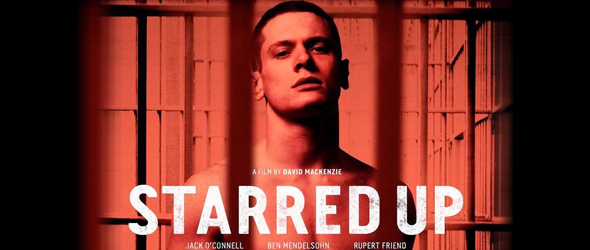
David Mackenzie, Jack O’Connell and Rupert Friend talk about “Starred Up”

David Mackenzie’s transfixing new UK prison drama, Starred Up, is now available on demand as well as in theatrical release in New York. The film made its initial NYC  premiere this past spring at the Tribeca Film Festival where I got a chance to speak with Mackenzie as well as the stars Jack O’Connell and Rupert Friend.

O’Connell stars as Eric Love, a 19 year-old inmate who has been deemed too dangerous to serve in a juvenile facility and has been “starred up” to the adult penitentiary. Friend plays a prison counselor who seeks to rehabilitate the inmates through non violent group therapy. The shooting of the film itself took place over four weeks in an actual prison which the filmmakers credited with helping to develop the film:

“You feel it,” said director David Mackenzie, “You feel the strength of those walls and the strength of the metal bars and the doors. It kind of pens you in a bit. It’s perfect for recreating the atmosphere you need for the movie. But you can definitely feel how oppressive that architecture is.”

Consequently, the actor’s substituted trailers for jail cells. “There was nothing else to be in” Rupert Friend described the setting, “and it’s freezing and the walls hadn’t been cleaned or painted since the last occupants so there’s kind of bodily secretions…don’t touch the walls. And the feeling of isolation and frankly, terror, was pretty powerful for everyone. And it does, it plays into the psychology of the thing. It really does.”

Jack O’Connell had a similar feeling “because we spent our downtime in cells too it meant I had the opportunity at any point to just imagine it. So our trailers were effectively cells. So if at any point I wanted to research or just be as Eric for a bit, I was in his setting.” Although he also went on to say the prison itself he didn’t find scary, “not when it’s not functioning. From what I can gather from the graffiti and the history of [the jail] itself, it’s had scarier days. Much scarier days than when we were there.”

The cast also had the fairly unique experience of shooting the film sequentially over the course of four weeks which encouraged an improvisational take on the story. O’Connell described this as “a total luxury. I mean I could turn up on set without knowing my lines and kind of just blag it, you know? Sort of story unfolding as we told it and if I ever get to repeat that same sort luxury I consider myself very privileged and I’m sure David Mackenzie, our director, shares those sentiments.” In fact Mackenzie shared on the red carpet that he hoped to repeat the experience on an AMC pilot he was readying to shoot at the time, “I’m asking them at the moment whether they’re prepared to let me do it in this method…we’ll see what happens. But actually because the pilot is set in a very limited number of locations so you don’t have to kind of do all the moving that would normally make it problematic. So if I’m lucky maybe I’ll get away with it.”

The improvisational atmosphere was most evident in the group therapy sessions overseen by Friend’s character Oliver, whom the writer Jonathan Asser based on his own experience with inmates. If there’s levity to be found in the film, it’s here and unsurprisingly Mackenzie described those shooting days as  “a joy” saying “because we shot the film sequentially–So you know, we’d have like four or five days and then we’d get a group scene and…there’s quite a big page count. So the schedule gave me like three hours rather than two hours, so it was like ‘Wow! A luxury here!’ and the way we shot it with those scenes was we had the text but we improvised at the head of the scene and we improvised at the tail of the scene. And we allowed the guys to kind of play with it. So we really felt like it wasn’t written. It had to feel like it was alive. And it was great what they did was you know a real joy.”

For Friend it got especially real in a fight scene, “We just kind of went for it. You know one of the scenes these guys, you know there’s a lot of fighting and we didn’t choreograph any of that…and I won’t say who it was, but I got punched so hard in the eye I wound up in the eye doctor.” Although for Friend, “the most interesting part” was remaining a nonviolent character amongst all the tension. “How is it that this one mild mannered, middle class guy was able to diffuse that tension and make it constructive? That’s what was fascinating” he said on the red carpet,  “Not just theoretically, but actually in the room when this lot are all going crazy.”

Director Mackenzie reinforced this sentiment on maintaining control in the violent group. “It was fascinating to watch how…you often see the escalation of things but the deescalation of things is never like a straight deflation. It’s like you know it’s jagged, jagged deescalation and that was really interesting. But it’s fun and also he’s building connections with these guys and I think that’s where the socialization I guess of Jack’s character is really at the fore.”

When specifically asked what O’Connell brought to the role of Eric, the director had nothing but praise for the up-and-coming actor. “What he really brought to it was a fearlessness and the kind of cojones to really go as far as he could with that character. Without holding anything back and that was what a director dreams of. And because we shot the film sequentially he only needed to worry about the scene he was in. He didn’t have to worry about where it fits in in the jigsaw puzzle…so he didn’t. He tried to kind of forget about the rest of the film apart from the scene he was in. And it was just about the immersion into that moment. And I think it’s great. I’m very happy with what he did.”

Jack himself credited his background for aiding him in bringing rougher characters like Eric to the screen, “I don’t want to offend people here, but I do find that you know your typical actor doesn’t necessarily have you know that sort of life experience, you know in scrapes and you know, I haven’t been in a drama school for a significant amount of my adult life. I was out and about trying to be an actor and also trying to survive I guess and have fun at the same time. So that kind of gave me a bit of a wealth of life experience and I think directors like David distinguish the difference between someone with experience in that field and an actor who’s trying to pretend. And so it certainly was to my advantage that the majority of actors you know aren’t working class individuals from Darby. I mean that meant approaching a role like this, I kind of know the difference between acting hard and perhaps being hard. You know, being intimidating. It’s a fine line but very decisive one way or the other.”

Despite it’s grim setting, when Mackenzie was asked what message he hoped the film conveyed, he responded “Somebody said something about a film that kind of suggests that everybody has a chance, a shot at redemption and the idea that you know, this character has obviously done very bad things but you know, he’s obviously come from circumstances…I think it’s about shining a little bit of humanity into the situation. There isn’t much.”

Starred Up is available on VOD and in limited NYC release. Jack O’Connell can next be seen starring in Angelina Jolie’s directorial debut “Unbroken”.

Kevin Riepl talks about scoring the film “Cabin Fever: Patient Zero”

Kevin Riepl is the composer of horror films like “Silent Night”, “Contracted” and a segment from “The ABC’s of Death”. His latest film is the horror/thriller “Cabin Fever: Patient Zero” directed by Kaare Andrews (Altitude and The ABCs of Death) and staring Sean Astin (The Lord of the Rings Trilogy), Currie Graham (Pompeii, “NYPD Blue”), Ryan Donowho (Soldiers of Fortune), Mitch Ryan (“One Tree Hill”) and Jillian Murray (Bad Ass). Media Mikes had a chance to chat with Kevin about the score and working in the horror genre.

Mike Gencarelli: How did you get involved to score the film “Cabin Fever: Patient Zero”?
Kevin Riepl: I met the director, Kaare Andrews, when we worked together on his contribution to THE ABCs OF DEATH, “V for Vagitus”. When I heard he was selected to helm CABIN FEVER: PATIENT ZERO I was eager to have a chance to work with him again. Likewise for Kaare, so we submitted my reel to the producers and once they were on board, we were all set to go.

MG: Did you look back at the previous two films for any ideas?
KR: I refreshed myself a little bit with the first film’s score. As much as we wanted to create something new, we also wanted to carry over some of the ‘rawness’ of Nathan Barr’s score and incorporate a lot of scratching and dissonance in the string instruments.

MG: What was your biggest challenge you faced with this film and was this score unique in any way from your previous scores?
KR: I think the main challenge on the film (even though it wasn’t really a big challenge) was coming up with and deciding on the palette for the score and what style would best support the story and its setting. I do believe this score is unique from any of my previous scores and that is because this film is different from previous films I’ve scored. Yes I’ve scored a decent amount of horror and thriller, but each of those has been artistically different from each other as well. A film’s story dictates the sound and style of the score. If you look back through my previous films many of the scores are quite different and unique to the film. That’s the ultimate goal – to give each film its own sound. Of course it is a collaborative effort with the director since it’s their vision, but I try to bring ideas to the table that will help their vision stand out and be that much more unique.

MG: You have worked in the horror genre before with projects like “The ABCs of Death” and “Silent Night”; what do you love about the genre itself?
KR: It’s usually dark, gritty and fantastical. Ever since I started music at a young age I’ve always wanted to explore the darker side of music, melody and sounds. As much as I love writing all styles of music, it seems that the horror genre lets me experiment a little more when writing scores. Being a creative person, how can I pass that up?

MG: “Contracted” was a sick film BTW; tell us about your process for this film?
KR: CONTRACTED, indeed, was sick and A LOT of fun to work on. Eric England is a young director and has so much to offer the film world. It was great to work with him on this film. At the very start, Eric knew he didn’t want traditional ‘horror’ music. So we approached the score with a synthetic, almost ethereal sound to help support the main character’s innocence and naiveté, until of course things start to go south. At that point I start to include more grit and experimental sounds and rhythms to help throw the viewer off balance so they can feel as much angst as the main character does as she goes through her changes.

MG: How is it going from scoring video games to TV or film? Which is more challenging?
KR: I don’t find it to be challenging. It’s all music. Yes, there are specifics and deadlines you need to be concerned about during the process of creating for each medium, but in the end it’s still about coming up with ideas and you’re still supporting story and visuals. The most important thing and it is sometimes a challenge, is scheduling…especially when you have a video game, a TV show AND a film on your plate.

MG: What else do you have in the cards coming up next?
KR: I just recently completed the action thriller THE NIGHT CREW directed by Christian Sesma. Hopefully I will have more news concerning the release of the film and an official soundtrack. Other than that, I am currently working on Ubisoft’s and Signal Studios’ TOY SOLDIERS: WAR CHEST video game as well as a small independent feature.

Virginia Madsen talks about her new film “Jake Squared”

Virginia Madsen is known for her Academy Award nominated role in the film “Sideways”. Sci-Fi/Horror fans will know her from her roles in “Candyman”, “The Prophecy” and “Dune”. Her latest film is called “Jake Squared” and co-stars Elias Koteas and Mike Vogel.  The film will be released on August 15th in theaters in the U.S. and will also be available on VOD (iTunes, Hulu, Amazon, etc.) Media Mikes had a chance to chat with Virginia about the film and what she has planned next.

Mike Gencarelli: How did it come about for you to get a role in “Jake Squared”?
Virginia Madsen: The director Howard and I have known each other since the 80’s. Our kids went to school together and they are in college [laughs]. So it was irresistible since we were finally able to all work together and it was great.

MG: What did you enjoy most about working on the film?
VM: I loved the story of our longtime friendship. Elias is one of the greatest actors in the world. We’ve worked together before – this was a chance for us to move our real life on screen. More difficult than doing it where your screaming and crying. We were longtime friends who always had a little vibe but we’ve never kissed before [laughs]. Elias is like my brother but he’s also really sexy and a great guy. So we asked Howard if we could not rehearse and we wanted the camera we had to catch that kiss, which would actually be our first kiss in all these years. I have to tell you it was really good [laughs]. I was very silly and giggly, it was very silly right before we went. We were going in for the kiss and it was really hard not to laugh. It was really weird “you’re my friend – but you’re also very hot” so you know and it was like I was kind of like we kissed for a lot longer than we needed to.

MG: I really enjoyed this film and I agree Elias was amazing.
VM: So glad you got to experience it. I think it can appeal to a wide audience but it is a wonderful indie film that has something for everyone. I also love that it’s going to be available everywhere. There was a time that if u did a indie film and you didn’t get that big release, your movie would disappear. It might show up in an old Blockbuster. Now it’s a whole different world for independent movies. Our film can now be seen worldwide in online.

MG: I also liked how the film switch from narrative to documentary style.
VM: Yes, I really liked that because we’re just telling a story. That’s what we do we are story tellers, it was interesting to be able to speak directly to the audience and fill them in on whats going on. Really interesting device that he used, worked really well in the film.

MG: You have worked in many genres including drama, horror, sci-fi; which do you enjoy the most out of all those?
VM: Depends on the material, I like working on good films. But I do love the fantasy/horror/sci-fi genre because that’s like make believe – like when you dress up for Halloween. You feel like a little kid when your making a horror film and it’s really fun. It’s my passion, I’m so blessed to be able to have employment when most actors are out of work. Internet has been very big for me recently as well. Hats off to Kevin Spacey and Dana Brunetti on “House of Cards” since that changed everything and has opened the door for so much work. I am always very grateful for them.

MG: Going forward, anything to talk about?
VM: Well I have a film called “The Wilderness of Jane” and another film called “Walter”. They are both wonderful indie film that have both been sold. Where, when…I don’t know yet. These independent movies explore relationships more than mainstream movies do and are highly creative. Not that I wouldn’t want to be in the studio rom-com machine, I mean I love to make that kind of money, I love to be in a position where if u put me in a film you can get financing. All those guys have stacks and stacks of scripts and there’s just a handful of them. Amazing when someone like Howard writes like this film and can go out and get the money and due to that we get to all play in the sandbox. I am trying to finance things and it’s really hard because of where the films can go.

Briana Evigan talks about returning to the “Step Up” series with “Step Up: All In”

Briana Evigan got her big break in film with “Step Up 2: The Streets”. Since then she has appeared in films like “S. Darko”, “Sorority Row” and “The Devil’s Carnival”. She is returning to the “Step Up” series in the fifth film “Step Up: All In”. Media Mikes had a chance to chat with Briana about coming back and what we can expect from the film.

Mike Gencarelli: How did it come about for you to come back in “Step Up: All In”?
Briana Evigan: I got a call from Jennifer Gibgot and Adam Shankman and asked me if I wanted to come back for the fifth “Step Up”. They said they were bringing everyone back. The fans made it apparent who they wanted to see come back and I was one of them. They were still looking for a director at the time but we all had dinner, talked and I came on board. It was a pretty easy “Yes” for me being that “Step Up” started my career. I wanted to go back and get to be with everyone one more time.

MG: Did you ever think you would be coming back to this series?
BE: No, never. It is so funny. I never thought I would do it again.

MG: How has Andie West changed in this film?
BE: Andie is definitely sexier, my wardrobe alone. She is more in control. She knows what she wants and is much more focused. She is still this sweet and loving girl though that cares more about her friends and family that anything in the world. In this one, Shawn and I are butting heads but at the end of the day we really want the same thing throughout the movie. We teach each other a little bit about life and then we come together and there is love.

MG: How was it getting back same cast including Alyson Stoner, Adam Sevani, Mari Koda and Luis Rosado?
BE: Getting back with the gang was just great. I love Mari Koda. She and I have gotten so close in the last few years. We spent every day together pretty much on or off set, which was awesome. I seriously think she is one of my favorite people in the world and you can quote me on that [laughs]. I love her. We are all like a awesome. It was just awesome.

MG: What was it like bringing the setting to Las Vegas?
BE: Oh that was fun. I have grown up in LA, so Vegas is a place that I have gone often for partying but now I was there filming actually on the Strip, so it was pretty cool. How many times have I been there? Yet there I was filming in a truck driving down the strip with all my friends, so that was just amazing.

MG: How does this film compare to “Step Up 2: The Streets” in terms of challenging dances?
BE: The cool thing about the dances in this one but we tried to come up with organic ways to do things. Instead of doing things in post-production and going overboard, we figured out ways for us to use things that weren’t too big and distracting but makes the dancing bigger than ever. I am dancing with fire. We have dancers coming out of the ground when we are dancing on sand. Guys are zip-lining. We have these huge fan machines, which you can’t see obviously, but they are blowing us. So we have all of the elements. The finale is very epic. Everyone dances their faces off and the choreography is just phenomenal.

MG: How does this film live up to the title of “All In”?
BE: Oh, it is totally all in [laughs]. That’s it!

MG: What else do you have in the cards upcoming?
BE: I just did a movie and in a role that was quite a leap for me. It was actually a role that I have been looking for for years and it landed right in front of me. I am playing an artist/photographer that is confused about her sexuality and trying to find love. The character has Huntington’s disease, which is very rare. It was quite the challenge and I prepped for the role for about 3 1/2 weeks. It is called “ToY” and Patrick Chapman directed it. Plus I also have “The Devil’s Carnival 2”, which I am working on right now actually. We will be in heaven this time and it is going to be awesome. Ms. Merrywood will be back!

Mari Koda talks about her role in the “Step Up” series and the new film “Step Up: All In”

Mari Koda is known for her role as Jenny Kido in the “Step Up” film series. She has been in every “Step Up” film since “Step Up 2: The Streets”. She is returning this week in the the fifth film in the series “Step Up: All In”. Media Mikes had a chance to chat with Mari about the film and her challenges during filming.

Mike Gencarelli: How did you get started with your background in dancing?
Mari Koda: I started listening to music before dancing. I just thought to myself, “Wow, I would love to do something with the music that I love”. So I started dancing and I just started moving. I do not think that I was even any good [laughs]. I never went to school or anything. I just went out there and starting dancing and that’s how I got I into it. You just catch the energy and go with it. I love it. After I started dancing, I wanted to know what the songs were actually about and after that I decided to learn English and move to New York. I love New York because it is so diverse and there are so many different kinds of people. I knew this is where I belong. In Japan, there are too many Japanese people [laughs].

MG: “Step Up All In” takes us to Las Vegas, what was that like going from the streets to the Sin City?
MK: It was just amazing. Just Wow! We came this far! We are in Las Vegas. There is a lot of surprise in this new film. Even working on the film, we were all impressed with what happens. I am just lucky to be in the film.

MG: How has Jenny Kido changed at all over the course of these four films?
MK: I have played Jenny in four films now. She has never had a love interest in the films. Does this girl never fall in love? Can I at least hold somebody’s hand? [laughs] In the movie, I quit my job and come to Vegas to support my friends but she never has a boyfriend. I told the producers about this and they asked me if they do a “Step Up 6”, who would I choose for a boyfriend? I told them “JT” and they asked “Who” and I said “JT…Justin Timberlake”. So I figured it can’t hurt to ask [laughs].

MG: This film brings back Briana Evigan and Ryan Guzman to lead roles along with others like Alyson Stoner; what do you enjoy most about the continuity of the cast in these films?
MK: We have grown up so much together. It is just so much fun to work together. We are laughing all the time. Rehearsals are just a blast and getting to catch up with everyone. With a normal movie series, there is usually a different cast but not with these films. Like with me and Moose, he and I are always coming back. So it is really great.

MG: When co-starring in “Step Up 2: The Streets”, did you ever think you would have been in three follow-up sequels for this franchise?
MK: No, not at all. I was surprised that there was even a “Step Up 2”. I had no idea what I was going to do in the movie. I knew I would be in it as either “Dancer 1” or “Dancer 2”. But I had no idea about my character and I was really excited. Everything I did in “Step Up 2” was all improv and I was just excited that I ended up staying in the movie. Jenny Kido stood out. I didn’t even know what would happen after that. I even went to the audition for “Step Up 3” and Jon Chu, the director, was like “What are you doing here? You are already in the film”. So that was so awesome!

MG: What was the most challenging aspect of this film compared to the others?
MK: Well I actually got hit by a car in this film for real. I was in the hospital for a while. It was very challenging for me. The doctors told me that I needed to stay in the hospital for at least two or three weeks and that I couldn’t do anything. I told them if they told the producers I’d punch them! [laughs]. So I carried around an ice pack with me wherever I went. Everyone was so supportive of me and I got a lot of positive energy. In the finale scene, I have this little solo and I struggled through it but I was able to nail it, which was great.


Related Content

Ashleigh Ball talks about film “A Brony Tale” and her role in “My Little Pony: Friendship Is Magic”

Ashleigh Ball is known best for voicing both Applejack and Rainbow Dash in the TV series “My Little Pony: Friendship Is Magic”. She is also narrating and starring in the similar themed documentary “A Brony Tale”, which focuses on the male fan-base surrounding the TV series “My Little Pony: Friendship Is Magic”. Media Mikes had a chance to chat with Ashleigh about the documentary and the new season of “My Little Pony: Friendship Is Magic”

Mike Gencarelli: Being the voice of both voice Applejack and Rainbow Dash; give us your reaction on this enormous fandom surrounding “My Little Pony: Friendship Is Magic”?
Ashleigh Ball: It is something that I would have never anticipated. There is no way to prepare yourself for something like this. It is very cool to get recognition for doing voice work. It is also very cool that it is a totally unexpected group of people. So it is all weird and wonderful and I love it.

MG: How did you meet up with Brent Hodge to narrate and star in “A Brony Tale”?
AB: Brent and I have known each other for a while now going back to 2008/2009. We met through music. He used to work at CBC Radio 3 and did some interviews with my band Hey Ocean! and we got to know each other that way. We became close and he was always willing to help out with the band. So we were out to dinner one day and we had this discussion about Bronies. I told him he should come to BronyCon with me and start filming this because it would make a really cool documentary. So he agreed and followed me around and got a taste of the Brony life.

MG: Was BronyCon your first interactions with Bronies?
AB: My first interaction was actually caught on film. You can find it on YouTube. Brent also put the clip of me in the film as well. It was at a concert that I played in Vancouver. I was playing a show with my band and afterwards a group of guys came to the merchandise booth and asked me to sign their ponies. They were Bronies and they came all the way from Seattle. So that was the first time I met a Brony in person…and definitely not the last time!

MG: Do you think that this film will have an impact for these fans?
AB: Yeah. I think it is a great introduction into the world of Bronies. It explains who they are and what they stand for. It is way more of a community than the actual series. It is a good for someone who is not familiar with Bronies and think it is weird or perverted. It definitely clears up the whole Brony mystique.

MG: How did the film get support from Morgan Spurlock?
AB: Yeah, it was pretty crazy. Brent worked for a company in San Francisco and was at a Super Bowl party and Morgan was there. They told them about he was doing a documentary about Bronies. Morgan loved the idea, watched the film and called the next day and wanted to be involved. He is really excited about the film and the subject matter. I got to meet him in NY and he is a very cool guy.

MG: Season four of “My Little Pony: Friendship Is Magic” just ended but I am sure that fans are looking forward to season five already; any news from that?
AB: Yeah, we are in the process right now of recording season five. It is great. I can’t tell much about the episodes, but it is going to be very great. Lots of cool music and plot twist. Yeah, it is going to be great. It has such great writing and it is a wonderful show to be a part of.

Copyright: MediaMikes.com © 2014 · Powered by: nGeneYes, Inc. · Login

All logos and images used on this website are registered trademarks of their respective companies. All Rights Reserved. Some of the content presented on our sites has been provided by contributors, other unofficial websites or online news sources, and is the sole responsibility of the source from which it was obtained. MediaMikes.com is not liable for inaccuracies, errors, or omissions found herein. For removal of copyrighted images, trademarks, or other issues, Contact Us.