
Film Review “Zootopia”

Starring the Voices of: Ginnifer Goodwin, Jason Bateman and Idris Elba
Directed By: Bryan Howard, Rich Moore and Jared Bush
Rated: PG
Running Time: 108 minutes
Walt Disney Studios Motion Pictures

Our Score: 4.5 out of 5 Stars

I doubt that Disney had plans to release “Zootopia” in the thick of the 2016 election season. I’m sure they also couldn’t predict the uneasy distrust and fear of culturally different people that’s currently permeating throughout our society. “Zootopia”, obviously by coincidence, has a beautiful message about not judging books by a cover, petty bullying to get one’s way, and stereotyping. It also discusses that no matter how far we think we’ve come and all the things we claim to know, a lot of us, including the best of us, are sometimes still primitive with our feelings and attitudes.

The anthropomorphic animals in “Zootopia” seemingly live in harmony. Every animal is broken down into prey or predator, but cheetahs and other carnivores live peacefully alongside giraffes and other herbivores (which makes you wonder what’s on the dinner plates of all these meat-eaters). It seems like the world’s focal point is a massive city known as Zootopia, which itself is divided in different climates to suit the creatures living there.

The movie itself starts out in the vast lands and countryside surrounding Zootopia. In Bunnyburrow, we meet Judy Hopps (Goodwin), a hopeful bunny that hammers in another theme of the movie, never give up on your dreams. Despite her size, and the stigmas surrounding her breed, she wants to become a cop in Zootopia. Despite her childhood trauma involving a boy fox who claws her, and everyone telling her to give up on her aspirations (even her parents), she does join the law enforcement after enduring a tense trial and error process.

Once she arrives to Zootopia, she doesn’t get any respect from her superiors or co-workers and is relegated to meter maid duty. The insults by angry motorists clutching their tickets and being relegated to menial tasks don’t ever kill her chipper demeanor. But a mocking career con-man fox, Nick Wilde (Bateman), who enters the picture, certainly changes her optimistic outlook into a much sourer one. So when 14 animals go missing from Zootopia and she’s tasked with finding one of the animals, an otter, she tries to make the most of it, and even finds out that Nick may know where the otter went.

In a world where studios continue to franchise building, Disney may have crafted one of the most deep, rich, and visually thrilling worlds. “Zootopia” could easily have a couple of sequels, its own TV show, and spin-offs because of how well planned out and distinct everything is. Everything, from the mice scurrying about in their own community, to sloths operating the DMV, and polar bears as mafia boss underlings, feels so well thought out, organized, and fluid. Lesser writers, directors, and studios, would have fumbled everything or not even tried something this enterprising.

“Zootopia” is populated with more rich visual sight gags than it does animals. Some of the jokes require you to keep your eyes on the screen, your ears fixed on dialogue, and a decent understanding of American pop-culture (think contemporary top 40 music, AMC award-winning TV shows and AFI’s third greatest movie of all time). There are an even proportion of jokes for kids and adults and for kids with a mature side and adults who never grew up. Even those who don’t warm up to Judy’s vivacious personality and Goodwin’s bubbly line delivery will still admit this is the cutest movie of the year.

There’s a lot to unpack with “Zootopia”, because it fires on all cylinders. The voice acting is spot-on, the visuals are crisp and engaging, and the three directors, two scriptwriters, and seven story writers never lost sight of what they wanted to do. They came together and layered every little bit instead of crowding our senses with it. A week after the 88th Academy Awards, we’re already looking at next year’s contender for Best Animated Feature.


Related Content

Film Review “Gods of Egypt”

Starring: Nikolaj Coster-Waldau, Brenton Thwaites and Chadwick Boseman
Directed By: Alex Proyas
Rated: PG-13
Running Time: 127 minutes
Lionsgate
Our Score: 2.5 out of 5 Stars

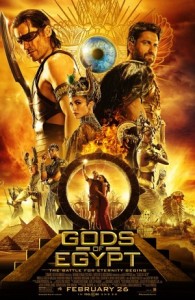
The short voice over and quick crash course lesson in Gods, mortals, and other random nonsense populating “Gods of Egypt” in the first five minutes were definite signs for concerns. My worries about choosing the wrong movie to screen for the week began to come to fruition as I furrowed my brow at Set (Gerard Butler) spouting outrage over soap opera drama at Osiris (Bryan Brown) and being denied his inherent birthright by Ra (Geoffrey Rush) while Osiris’ son, Horus (Coster-Waldau) watches in shocking horror. Despite the visual theatrics, I immediately thought, “What the hell is happening?”

“Gods of Egypt” takes a while to settle into its own mythos, which is rubbish. There is a cause for concern about CGI heavy films in an ancient setting ever since the 2010 remake of “Clash of the Titans”. While “Clash of the Titans” used computer animation as a crutch for a lack of plot and acting, “Gods of Egypt” manages to blend the sword-and-sandal concept with child-like wonder through the CGI. It also helps that it never takes itself too seriously, allowing for small moments of seriousness to squeeze into the visual thrills and action set pieces.

I don’t mean to leave you hanging on what the hell this movie is about, because I assure you that it does pick-up after its bumbling beginning. Horus has his powers, which are his eyes, removed by his uncle, Set. Egypt goes from a civilization of peace to one dominated by war and slavery. The human, Bek (Thwaites), through the persuasion of his love in life, Zaya (Courtney Eaton), manages to steal one of Horus’ eyeballs and return it to the drunk and exiled God.

From that point on, Bek and Horus team up to get vengeance and restore some level of sanity (which seems like a useless word in a movie like this) to Egypt. There are more characters that show up and join Bek and Horus, but their introductions seem more natural because we’re not being bombarded with dozens of other characters all at once. Once “Gods of Egypt” has established the rules of its world, we’re able to follow along, relax, and enjoy the movie for what it is, dumb, shameful fun.

I feel a little guilty for liking this movie. Maybe that’s because it feels like such contemptible cash-in on the part of Lionsgate, even though they’re more than likely burning their earnings from “The Hunger Games” franchise on this one. Part of me doesn’t feel guilty though. The movies in the past that are very much like this, “Prince of Persia” and “Clash of the Titans” were actually attempting to cash-in on a different platform’s success or degrading it’s source material. “Gods of Egypt” is an original work and such ambition, even when it’s not necessarily very good, should be viewed in a different light as opposed to audacious remakes and reboots.

There is some Hollywood whitewashing and it does come at an inappropriate time, with the Oscars happening in the same weekend. Although, having Gerard Butler with a tan play an Egyptian God doesn’t feel as visually gross as Joel Edgerton plays Ramses II. That doesn’t excuse “Gods of Egypt” from lack of ethics, but like I said earlier, it’s shameful fun. The highest praise I can give “Gods of Egypt” is that it’s a decent waste of two hours, but I wouldn’t recommend you drop a single buck on this one.

Film Review “Risen”

Starring: Joseph Fiennes, Peter Firth and Tom Felton
Directed By: Kevin Reynolds
Rated: PG-13
Running Time: 107 minutes
Sony Pictures Releasing

Our Score: 3.5 out of 5 stars

Usually when talking about faith-based movies, I have to walk on eggshells. I can’t insert my own personal doctrine into my review, because generally I’m not going to agree with the personally held beliefs of the movie’s message. So I generally try and judge the movie based on its acting, production, and story merits. I’m well enough versed in Christianity (attending Catholic school for
four years helps) to understand the message of any historical Christian movie. Generally, I assume I’m not going to see anything new, but miraculously, “Risen” tells an original, entertaining story about the Son of God.

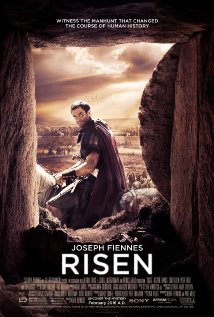
The crucifixion of Christ is very well known throughout American culture and its decent fodde, but “Risen” aims for a loftier and lesser told tale, the aftermath. Clavius (Fiennes) is a seasoned Roman tribune that has led many a men into battle. He’s back in Jerusalem, weary from death and destruction, and given a task to overlook a controversial crucifixion. You know which one. Clavius begrudgingly goes along, not yet understanding the magnitude of watching Christ on the cross.

Clavius then overlooks Christ’s burial, rolling a giant boulder over the tomb, and sealing it with rope, wax, and the Roman seal of approval. He puts two guards at the foot of the sepulcher and figures that his job is done. By the third morning, Clavius hears that the body is gone, and that something unbelievable has happened. Clavius then investigates, questioning his own archaic faith along the way.

The production company, Affirm Films, is behind this one. Their past movies have included lengthy naps such as “Heaven is for Real” and “War Room”, but “Risen” is a step above their normal fare. A lot of the credit can go to writer and director Kevin Reynolds who keeps the story flowing and makes “Risen” a double dose performance. It’s part action-mystery and part faith discovery. The sleuthing act of part one blends well into the second part which is all about seeing faith through fresh virgin eyes.

Most religious movies feel phony and cheesy when preaching the Gospel, but “Risen” presents it for what it is, what it means, and the good natured spirit of it all. It feels more like an engaging lesson than an obnoxious sermon. The historical figures of this movie begin and end with Jesus, his disciples, Mary Magdalene, and Pontius Pilate. Everyone else, I presume, is fiction. Clavius and his interactions represent an agnostic or atheist person discovering the word of God for the first time.

As for the settings, the Roman culture and everything else, it’s fairly faithful to the history books. The production values are some of the best I’ve seen for an Affirm Films flick. Instead of splurging on a big name stars that people can recognize, “Risen” has focused more on detailed sets, make-up, clothing, and a talent agent that picked some great actors. Fiennes deserves all the credit in the world for going from a for-sure Roman, to a skeptic, to a perplexed Roman, to a follower of Christ. Fiennes makes Clavius’ transition highly believable. It also helps when you cast Peter Firth as Pilate.

“Risen” does suffer from having too much downtime, a long and drawn out ending, and a poor framing device. The movie is told by Clavius as he relays his tale to a random peasant that he crosses paths with 33 years after the fact, without having aged a single day. As for the more light hearted moments and jokes, all I could do was roll my eyes. But in terms of a movie going experience, it may be a profound, moving experience for the faithful, and a decent popcorn flick for the average moviegoer. Who knows, it may even stir spirituality in the staunchest of doubters.

Film Review “Hail, Caesar!”

Starring: Josh Brolin, George Clooney and Alden Ehrenreich
Directed By: Joel and Ethan Coen
Rated: PG-13
Running Time: 106 minutes
Universal Pictures

Our Score: 4 out of 5 Stars

The Coen brothers seemingly find a way, movie after movie, to blend genres and create something completely unique, pushing the envelope about what theater goers expect in terms of storytelling, plot, and character development. “Hail, Caesar!” is no different. There’s no denying the Coen brothers talent when it comes to their dramatic works, but when they focus solely on their comedic efforts, it yields a unique array of ideas. They’ve crafted cult classics, toe tapping musicals, and dull remakes. “Hail, Caesar!” falls on the high end of that their comedic works.

There’s a pretentious nature to what the Coen brothers do. There’s an inside joke to a lot of their movies, and if you don’t get, they won’t tell you. The inside joke to “Hail, Caesar!” is the film industry, celebrities, the 1950’s, and I’m sure something else. Someone my age may not understand the mocking nature of the inner workings of the movie studios, the nuances of an era before my time, or the parody nature of the movies shown during the fabulous fifties, but I still enjoyed the oddball nature of “Hail, Caesar!”. It’s a blown kiss and slap in the face to the Hollywood industry.

Eddie Mannix (Brolin) is a “fixer” for Capitol Pictures. His job is to run around all day, making sure the press doesn’t get wind of the latest shocking scandal (a starlet having a child out of wedlock), making sure productions are up to snuff, and that the men financing everything are happy. Of course for “Hail, Caesar!”, he’s also trying to find out where studio star, Baird Whitlock (Clooney) has run off to. Well, he hasn’t gone on one of his alcoholic benders or, as his wife puts it, at some floozies place. But Baird has been kidnapped.

Most other movies would make this plotline essential to the storytelling aspect of this movie, but the Coen brothers find entertainment in the array of movie products, random actors and actresses, and Eddie’s personal home life. There are so many cameos in this movie, it’s impossible to talk about every single one, as well as their subtleties that they add to the plot, the various themes, or their potential jab at real-life events and celebrities. Of course, as I stated earlier, the character may be a part of an inside joke that you may or may not get.

So in essence, it’s a Coen brother’s movie. “Hail, Caesar!” is rich with witty dialogue involving thick-headed actors and sophisticated directors. Channing Tatum, Scarlett Johansson, Tilda Swinton, Jonah Hill, Wayne Knight, Frances McDormand, and others are scattered about, adding their own flavor to the movie. At times it can be overwhelming, but equally underwhelming at times, especially when we find out who has kidnapped Baird and why.

Just take a step back and accept that this is a screwball, ensemble comedy. With that in mind, you should be able to enjoy it’s, at times, confusing narrative. like a fine wine, I expect “Hail, Caesar!” to age gracefully and be a delight to watch occasionally, much like “Raising Arizona” or “The Big Lebowski”. It’s not a masterpiece by “Fargo” and “No Country for Old Men” standards, but it’s certainly a fine addition to the Coen’s collection.

Film Review “Anomalisa”

Starring the Voices of: David Thewlis, Jennifer Jason Leigh and Tom Noonan
Directed By: Charlie Kaufman
Rated: R
Running Time: 90 minutes
Paramount Pictures

Our Score: 3.5 out of 5 stars

Charlie Kaufman is known for writing incredibly deep, poetic films, packed with well-thought out themes highlighting the human condition. It’s hard to whittle down all the ideas that are generally presented in his movies, like “Being John Malkovich”, “Eternal Sunshine of the Spotless Mind” and “Adaptation”. His writing is crisp, refreshing, and sometimes highlights unknown mental problems and the emotional disconnection we sometimes face in this little thing called life. “Anomalisa” is another entry in Kaufman’s peculiar catalogue. It’s his most audacious movie, but it’s also his most overrated.

Visually, “Anomalisa” draws you in with its 3D puppets populating the world. The attention to detail is marvelous, but it allows the viewer to quickly recognize that the people (puppets) are all eerily similar. The men and women, that aren’t Michael Stone (Thewlis), blur together because of their lack of uniqueness. It doesn’t help that everyone in this movie is voiced by Tom Noonan, adding to one of the first ideas of the movie. Michael is alone and that sense of loneliness is more profound that he’s leading on.

Michael talks with a cabbie, a bellhop, his wife, and even his son, but all of them sound the same. Even though he can’t see some of them, they all share the same bright lifeless eyes. His seems to be the only ones with any kind of glimmer. The hopelessness would envelop Michael if it wasn’t for Lisa (Leigh). Unlike everyone else Michael comes across, is shy, slightly disfigured, and most importantly, not voiced by Noonan. Michael’s sadness temporarily fades as he seems to contemplate leaving his wife, his son, and everything else behind for this one person who has broken through his monotone life.

Michael’s experience is slightly more interesting than anyone else because he’s a self-help guru that people adore. It breaks the mold by showing that the ones who are supposed to have all the knowledge and should feel the most love, still act withdrawn and feel isolated from the rest of the happy people surrounding them. It raises an interesting question about how we sometimes wonder if the smiling faces we see around us are facades. At the same time, it asks an equally stranger question, as to whether or not the people we see are actually as deep and emotional as we are. Which is an inherently selfish thought, but Michael’s not perfect. He is selfish.

One of the first real problems with “Anomalisa” is that Michael is not a likeable enough person for us to feel too much sympathy for. But are we supposed to? That seems like the biggest question that goes unanswered in “Anomalisa”. He’s self-absorbed and neurotic, and a quick glance of his life may imply he’s suffering from a mid-life crisis, but this is a Charlie Kaufman film and nothing can be as simple as that. The multiple layers that we have to peel a way to find the answer, only reveals a truth that’s even deeper than we’ve already dug.

As much as I want to love “Anomalisa” for its unique style, its fearless manner in which it tackles its subject and his feelings, I can’t help but feel cheated. I can’t help but feel like Kaufman chose the wrong person to center all these existential feelings and questions around. By the end, Michael is not someone that we should root for or like, and if anything, his unlikeability cheapens the luxuriant message. A lot of dialogue in the beginning feels hackneyed, and as it progresses, it begins to feel threadbare. When your purpose is to show how repetitious life becomes, you run the risk of letting your dialogue become tedious.

I feel like “Anomalisa” would have been a fantastic short, but even within 90 minutes; I may have spent too much time being down in the dumps with Michael. If its goal is to make me feel less optimistic and unsure about our place in the world, it’s succeeded. I can’t recommend “Anomalisa” to the average viewer, but I can recommend it to the thousands of cinephiles and film art students that aspire to be intrepid, brave, and original with their content.

Film Review “Ride Along 2”

Starring: Kevin Hart, Ice Cube, and Olivia Munn
Directed By: Tim Story
Rated: PG-13
Running Time: 101 minutes
Universal Pictures

Our Score: 1 out of 5 stars

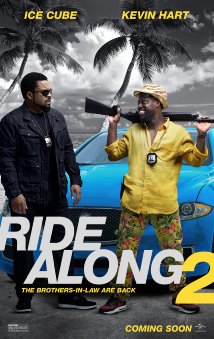
It was destined to happen. The first “Ride Along” made over $150 million on a meager 25 million dollar budget. So “Ride Along 2” seemed like a financial inevitability, especially with the recent star power behind Ice Cube’s name and the popularity of Kevin Hart at the box office. 2015 was the year of Hart and Cube helped put together the Oscar-nominated “Straight Outta Compton”. That’s enough praise, because now I’m going to talk about “Ride Along 2”, the laziest follow-up the duo could have done.

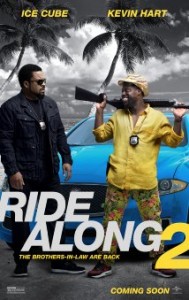
Ice Cube and Kevin Hart just can’t work well for a second straight time. Maybe they can’t find the right balance of chemistry or maybe everyone else involved was too busy seeing dollar signs. If you’re going to see “Ride Along 2”, you know the shtick and the comic routine, and by now it’s getting old. Hart plays Ben, a goofy, loveable guy that squeals a lot, is the butt of short jokes, and is about as useful as a Keystone cop. Then there’s Cube, who plays James, a rough edged, no games cop that merely reacts to Ben’s ineffectiveness. We’ve seen this before. It only gets worse.

Ben is no longer trying to be a cop, he is a cop; kind of. He’s in training, but still manages to bungle a sting operation and still applies random useless video game knowledge to real life scenarios. James still gets frustrated and still doesn’t believe Ben is a real cop. James hopes to bring down a drug Lord that’s supplying dealers in Atlanta with supplies; while once again, Ben hopes to tag along. James gets the idea of scaring Ben straight, or at the very least getting him to give up on his dream, by bringing him along to Miami to chase down a mysterious kingpin. I contemplated copying and pasting my review from two years ago since this is the regurgitated plotline of the first.

Overall, “Ride Along 2” isn’t insultingly bad, but it’s biggest problem is that it’s indolent. It never fixes the problems that were seen in the previous installment, nor does it try to do anything new. Not even the smallest of endeavors is seen in the 101 minute runtime. The appearance of Olivia Munn and Ken Jeong are much appreciated, especially Jeong who appears to be the only one who’s willing to have a fun with his bits. Munn simply appears as eye candy, another person who can physically hurt Ben and a love interest for James.

I hate to say it, but I now reflect back on the first movie in a more gentle tone. If you haven’t seen the original, just ignore everything I just said and go about your merry life, not knowing about the trivial attempt at a sequel this movie was. But if you did see the original two years ago and enjoyed it to some extent, steer clear if this cash grab. Nearly everything in this movie is a rehash, except the salary for our leading stars.

Film Review “Point Break (2015)”

Starring: Edgar Ramirez, Luke Bracey and Ray Winstone
Directed By: Ericson Core
Rated: PG-13
Running Time: 113 minutes
Warner Bros. Pictures

Our Score: 1 out of 5 stars

Kathryn Bigelow’s 1991 movie “Point Break” is far from being the “Die Hard” of the 90’s, but it certainly understood how to have fun with it’s silly premise of the FBI infiltrating some bank robbing surfer bros. Stylish, dumb edge of your seat action and entertaining are just a handful of the words I would use to describe Bigelow’s surprise hit. Dumb is the only word I would use to describe 2015’s “Point Break”.

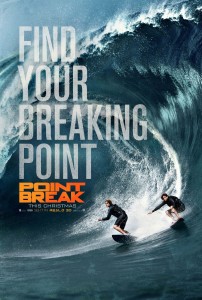
Edgar Ramirez and Luke Bracey hope to conjure up the same absurd bromance that Keanu Reeves and Patrick Swayze displayed 14 years ago. Bracey plays Utah, who in this reimagining isn’t an all-star college quarterback, but is instead a dare devil motocross junkie who decides upon a career in the FBI after his best friend dies attempting one of his dangerous stunts. It’s there in the FBI that Utah, through a truly random hunch, figures out that some globetrotting crooks are actually attempting to complete eight death-defying stunts to achieve enlightenment.

Leading the group of criminal, extreme sport enthusiasts is Bodhi (Ramirez). He’s quite possibly the most infuriating character in recent movie history. He speaks about the destruction of Mother Earth while partying on a gas guzzling yacht in the middle of the ocean and using an abundance of other oil produced equipment to cheat death under the guise of achieving his own personal Nirvana. It’s both equally offensive to eco-warriors and anyone who follows the teachings of Buddha.

Bigelow seemingly understood that a dumb action movie is inherently farcical, so she filled up her movie with enough action to push out those nagging logical thoughts, but this new reboot does the opposite. Director Ericson Core feels that an abundance of exposition is more interesting than the possible heists and fight choreography that our characters could subject themselves to. There’s way too much droll downtime between breathtaking shots of characters escaping death.

Kurt Wimmer, who also used “Total Recall” like toilet paper when remaking it, manages to do the same with “Point Break”. Maybe adaptations and remakes aren’t for Wimmer, who’s done a much better job penning original movies like “Law Abiding Citizen” and “Salt”. Wimmer writes his characters into too many corners, spinning them off into far too many loose ends. Wimmer sloppy adds a lot red herrings, such as the businessman who sponsors the crooks.

There’s certainly a level of dignity that Hollywood must hold itself to when remaking a movie that people consider a classic. “Point Break” is far from being an untouchable Holy Grail in cinema, but there’s no reason it should have been rebooted drug through the mud. Core and Wimmer are clearly more comfortable in their own playing field with their own characters. They seem nervous having to update a character by having him text emojis or being recognizable on Youtube. What made the original duo of Swayze and Reeves cool was action sequences they found themselves in, not their misguided philosophies on saving the planet.

This “Point Break” remake is a disaster that astonishingly arrives on the heels of nearly a dozen better Christmas day releases. “Point Break” lacks enough action to forget its most glaring flaws, and it lacks enough relatable characters to feel anything when conflict happens between an undercover FBI agent and a misguided thief. It’s a failure at nearly every level except its cinematography. It’s certainly pretty to look at, but it’s like unwrapping a neatly wrapped Christmas present only to find a lump of coal.

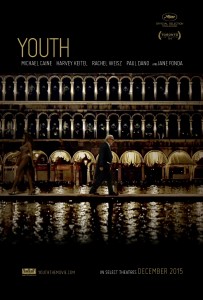
Film Review “Youth”

Starring: Michael Caine, Harvey Keitel and Rachel Weisz
Directed By: Paolo Sorrentino
Rated: R
Running Time: 124 minutes
Fox Searchlight Pictures

Our Score: 3 out of 5 Stars

We’re deep into Oscar season and we’re now being lured by plenty of potential prospects that have “pick me” written all over them. “Youth” has a highly regarded Italian director who has already won an Academy Award. It also features an aged, but at the top of their game, Michael Caine and Harvey Keitel. “Youth” also tackles the cumbersome talks about life, love, and some of the quirky things in between. On one hand, “Youth” is an audio, visual, and acting triumph, but on the other hand, “Youth” is a curious dud.

From the very opening, director Paolo Sorrentino establishes that “Youth” is a bizarre daydream that seemingly takes place in the real world. Fred Ballinger (Caine) and Mick Boyd (Keitel) are two rich, creative pals on an excursion to a Swiss spa. Boyd hopes to find the right amount of inspiration to polish off his latest movie script and withdrawn music composer Ballinger is looking to escape the suffocating demands of people who want him to come out of retirement and perform. There are very real discussions and very real people that intersect these two characters throughout their lavish vacation.

The main plot is diced up and evened out through visually surreal scenes. Some scenes are breathtaking while others haunt our mind, making us wonder what we’re supposed to feel and think. That’s a great thing though. I want to watch a movie that triggers emotions and makes me think about the topics it wants to discuss. But that flip that switched on in my head began to focus in on a lot of what makes “Youth” insufferable.

Ballinger and Boyd spend half their conversations reflecting on mistakes that have come and gone. It’s a universally tragic feeling to realize that as time slowly slips away, the past becomes blurry, but our future, death, becomes all too clear. It’s a difficult subject, that’s been tackled before and “Youth” does a good job reflecting on it, but at a resort filled with other elderly people, it seems slightly misogynistic to only view this wide ranging topic through such a narrow male lens.

The female characters in “Youth” are reduced to simplified stereotypes. Rachel Weisz plays Ballinger’s daughter who comes off as tearfully helpless because she doesn’t know how to handle her divorce. Jane Fonda, who actually adds to the dramatic heft on display, arrives for a brief cameo only to come off as bullheaded, childish, and finally, tearfully helpless. “Youth” then subjects us to a scene where a Miss Universe with heaving breasts walks into the steamy spa waters as Ballinger and Boyd longingly stare on.

Around the halfway point of “Youth”, I began to scrutinize Ballinger and Boyd’s topics of conversations. It seemed that their genuine expressions of remorse from the two came with a bitter price tag, talks of a swollen prostate gland and the disregard of other’s emotions. As much as I wanted to focus on the elegant conversations at hand, I began to feel that the emotions of these two were ultimately empty.

The existential questions of “Youth” are fascinating to ponder, but Sorrentino’s dour outlook seems to tell us that we shouldn’t bother. The lengthy nature of “Youth” seems to tell us that growing old is long, tedious, and filled with better memories than our current predicament. “Youth” left me thinking that all we have to look forward to later in life is what we’ve done with our existence, and the lives we’ve negatively impacted. While visually dazzling, “Youth” will not be a fond memory when I’ve entered my golden years.

Film Review “Joy”

Starring: Jennifer Lawrence, Robert DeNiro and Bradley Cooper
Directed By: David O. Russell
Rated: PG-13
Running Time: 124 minutes
20th Century Fox

Our Score: 4 out of 5 Stars

For many, including myself, Christmas represents that rare time of year that you visit family members on a much deserved day off of work. For some, the holidays are absolutely dreadful and for some the holidays are absolutely delightful. Since some of my relatives read my online movie reviews, I’ll bite my tongue on which category I fall in. But when you get together with your dysfunctional family, try and keep one thing in mind: It could be worse, but it can always be better. Take Joy Mangano’s (Lawrence) family for example.

Living in Joy’s tiny New York home is her loving, caring, and always encouraging grandmother, Mimi (Dianne Ladd). Mimi has always been in Joy’s life, inspiring her to do better and keep that flame of creativity going. Then there are Joy’s two children, a girl and a boy, that she sees that same flame in. Joy holds that trio near and dear to her heart, and couldn’t see life without them. That living situation would be ideal, but her home is filled out with others.

Despite a bitter divorce, her parents are under the same roof. Her mom, Terry (Virginia Madsen) sits in the bed like a vegetable, watching soap operas all day. Her father, Rudy (DeNiro) recently got dumped and is living in the basement with Joy’s ex-husband, Tony (Edgar Ramirez). Those three she could easily live without, considering all three find something new to argue about every day. No matter how strong Joy’s mental and emotional fortitude is the living conditions are obscenely stressful.

What makes Joy strong-willed in her home of horror is her mind. She has a knack for crafting and creating things that come to her mind on the fly. Even at an early age she displayed a creative curiosity, but it was quickly ignored by her parent’s divorced and then buried when her loser husband entered the pictured. Despite being a charming gentleman, he makes for a lazy father and an even more slothful participant in the American workforce. Because of that, Joy attempts to hold up her home on her meager salary at an airline company. Through sheer chance, she comes up with an idea for the Miracle Mop.

In the most unlikely of stories, David O. Russell has found a mix of holiday sentimentality and his own brand of awkward humor in the true life story of Mangano, a multi-millionaire entrepreneur. How much of “Joy” is true? Probably about as much as Russell’s last movie, “American Hustle”. Liberties with facts have to be taken and you have to craft something around Lawrence’s Oscar winning abilities. How else could you sell the story of the inventor behind a QVC goldmine to a major motion picture company?

The highlight of “Joy” is watching Lawrence at work. At this point in her career, it’s safe to say that anything she does (besides her cameo in “Dumb and Dumber To”) is going to be thespianism pay dirt. It’s a little tiresome to see Bradley Cooper and Robert DeNiro once again having to ham it up in a Russell movie, but their sight is welcome and their performances match the eccentric and quirky characters they play. The real gem of the movie Isabella Rossellini, who plays a woman that helps finance and guide Mangano.

By the time “Joy” wraps up, it loses a lot of its emotion because it slowly becomes a commercial for QVC; as long as you’re willing to believe that QVC and other home shopping networks are the good guys in corporate America who support and nurture entrepreneurship. Lawrence doesn’t quite sell that idea, but she helps sell “Joy” as a thoughtful holiday flick. So if you’re looking for an escape or even a way to spend time with your family on Christmas, bring a little “Joy” into your life.


Related Content

Film Review “In the Heart of the Sea”

Starring: Chris Hemsworth, Benjamin Walker and Cillian Murphy
Directed By: Ron Howard
Rated: PG-13
Running Time: 121 minutes
Warner Bros. Pictures

Our Score: 3.5 out of 5 Stars

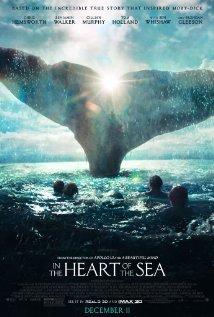
I’m sure like most American children who enter the public education system, there came a point in your schooling that you had to read or were told you need to read “Moby Dick”. It’s a tale of revenge, obsession, and camaraderie, but one I barely remember. I’m actually not certain if I’ve read it or if I’ve ever watched the myriad of movies that have been created in its wake. I guess you could say that’s a same since it’s considered an American literary classic. After watching Ron Howard’s “In the Heart of the Sea” I can easily say it’s a shame it’s not going to be a classic.

What immediately separates “In the Heart of the Sea” from other “Moby Dick” tales is that Howard’s film is about the events that inspired Herman Melville’s novel. So say goodbye to the insane Captain Ahab, the curious Ishmael and the stoic Queequeg, and welcome your new narrator, Thomas Nickerson. The story is framed by the aged and rustic Nickerson, played by Brendan Gleeson (and Tom Holland in the past). Nickerson recounts the tale of the whaling ship, Essex, to the aspiring author, Melville (Ben Whishaw).

Despite being from the viewpoint of the young cabin boy, we recount much of the past through the life of Owen Chase (Hemsworth). He’s a young, but experienced whaler who’s attempting to establish the Chase name and put the failed farming past of his father behind him. He’s the first officer of the Essex, but may as well be the leader. Chase scowls behind Captain George Pollard Jr. (Walker), but Pollard scowls back, fearing that Chase’s presence is a threat to his young career as Captain.

The crew of the Essex sails off to warmer seas to find whale oil riches, but come up dry. While recharging and metaphorically refueling in a small South American village on the west coast of the continent, they hear rumors of a treasure trove of whales. There are two problems with this hearsay. The aquatic gold mine is thousands of miles away from land, in the middle of the Pacific Ocean. The other problem is a disturbing tale about a massive whale with a thirst for man’s blood and an axe to grind.

“In the Heart of the Sea” is one part historical events, one part embellished action sequences, and one part that can only be described as the Donner Party meets the Uruguayan Rugby team. Each part, in its own regard, is very interesting pieces to the cinematic puzzle, but Howard can seem to put them together. It’s a three act tale that handles different themes and tones, but the transitions between them feel unnatural and glaringly bad.

“In the Heart of the Sea” finds entertainment when it relies on the strength of its actors and captures the feeling of isolation amongst the crisp, calm sea. Our character’s plight is diminished by Nickerson’s interjections and Meville’s follow-up questions to the story at hand. As for the monstrous whale that always becomes the focal point of these movies, it’s well handled. It’s a classic man vs. nature, without nature running amok and becoming too unbelievable. In a sea of movies hoping to become Oscar contenders, Howard’s latest movie can only compete at the JV level.

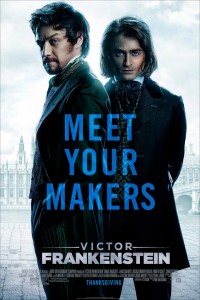
Film Review “Victor Frankenstein”

Starring: Daniel Radcliffe, James McAvoy and Jessica Brown Findlay
Directed By: Paul McGuigan
Rated: PG-13
Running Time: 109 minutes
20th Century Fox

Our Score: 1.5 out of 5 Stars

As I type this, we are 24 hours away from a marathon of Thanksgiving food, watching the Detroit Tigers lose, and tolerating relatives we rarely see. The last thing that feels remotely like the holidays is a movie about Frankenstein and his monster. But “Victor Frankenstein”, seemingly scared off by the month prior and all the competition, is out before the holidays to bore audiences instead of terrifying them.

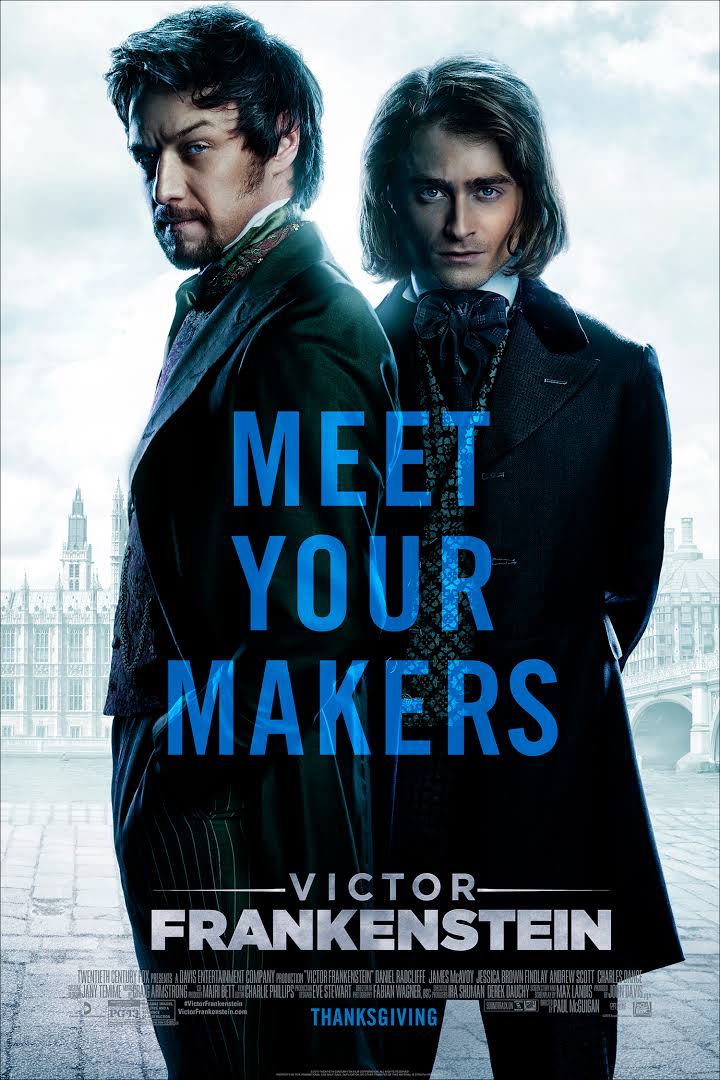
It’s disheartening to see good actors in subpar movies and “Victor Frankenstein” has roped in Daniel Radcliffe and James McAvoy. Radcliffe plays Igor, who in this retelling is a hunchback because of a enlarged cyst and works in the circus because of his deformity. He has a bizarre and natural knack for medicine and human anatomy. How the picked on “creature” at a circus learns to pop a broken collarbone back into place is beyond me.

This unnatural habit is viewed by Frankenstein, played by a scene chewing James McAvoy. This version of Frankenstein is more like a young kid who had way too much fun making disfigured monsters in his little sister’s Easy-Bake Oven than a mad scientist. While Frankenstein attends school and plots out bringing the dead back to life, Igor, who does not attend school or intends to raise the dead, consistently corrects biological and neurological mistakes that the alleged science student makes.

Stumbling into the picture and further complicating matters is an overzealous, literally and metaphorically, detective and an old crush that Igor has. The eye candy of “Victor Frankenstein” is supposed to spark some humanity in Igor’s character, but it bogs down the pace of the movie instead. As for the detective, he constantly twirls a necklace cross in between his fingers, delivering Sunday sermons when he condemns Frankenstein. It’s the movie’s attempt at stating morals on science, life, religion, and the lines in the sand drawn between them.

But what the writers and director of “Victor Frankenstein” don’t understand is that every theme and bit of morality is in Frankenstein and the inevitable monster he creates. The monster in this doesn’t appear until the end and the big twist on the monster is lame, no matter how much scenery McAvoy chews up and spits at the audience. The values and ethics of the movie are too jumbled for anyone to feel any sympathy.

Much like Mary Shelley’s monster that was created in 1818, this possible reboot is just as cold and lifeless. The reimagining, the retelling, and re-anything needs to stop in Hollywood. “Victor Frankenstein” feels like “Sherlock Holmes” met “Dracula Untold” and couldn’t decide on how to balance the stupid and action in the movie. If you’re looking for a way to punish your relatives for their company this holiday, look no further than “Victor Frankenstein”.

Film Review “The Hunger Games: Mockingjay – Part 2”

Starring: Jennifer Lawrence, Josh Hutcherson and Liam Hemsworth
Directed By: Francis Lawrence
Rated: PG-13
Running Time: 137 minutes
Lionsgate

Our Score: 3 out of 5 Stars

It’s a sad day for diehard fans of the “Hunger Games” series, while people like me will remember it for its long drawn-out speeches about war and the long clarifying conversations about the plot after heroine wakes up after getting knocked out. The conclusion to the much beloved series doesn’t go out with a whimper, but it doesn’t go out on a high note either. The “Hunger Games” movies will end as they started, just alright; nothing spectacular.

“Mockingjay – Part 2” picks up right after the ending events of “Mockingjay – Part 1”. Peeta (Hutcherson) has been brainwashed by the Capitol and Katniss (Lawrence) is in shock that man she once began to develop feelings for expresses hate and displeasure to the mere sight of her. Meanwhile the resistance, made of all the Districts, is planning their final assault on the Capitol. They’re led by the suspicious President Alma Coin (Julianne Moore).

Coin plans to keep Katniss safe and out of harm’s way, mainly wielding Katniss as a propaganda piece, much like Katniss was in the first “Mockingjay” movie. That doesn’t sit well with Katniss who stows away, joining soldiers on the front line as they prepare for an invasion. Her ultimate goal for this final chapter is to kill President Snow (Donald Sutherland) with her own bow and arrow.

The real fun, a block by block journey through the heart of the Capitol while alluding deadly booby traps and fighting creatures, doesn’t come until we trudge through long bits of tediously familiar dialogue. The middle of “Mockingjay” should have come sooner, or at least began the movie. Teasing the inevitable action for half an hour is disingenuous for fans and viewers of the movies, adding to the complaint that the “Mockingjay” sequel is too long. While parts of “Mockingjay” work on a superbly entertaining level, too much of it feels like unnecessary filler.

The excessive length takes away from the main theme of the movie, which is fairly basic: war is hell. For being a somewhat anti-war movie, it seems to solve a lot of its problems through violent conflict and murder. The hell aspect of that statement gives viewers some of the series best emotional scenes. The mature content of how painful and heartbreaking war can be, isn’t explored enough. Its message about how difficult the civilian toll during war can be, on either side of the battle, is sandwiched between expositions, taking away from the gut punch it should be. For a series that prides itself off its adult themes, it seems to misjudge how to present its most interesting topic in its final movie.

Overall, I’m not disappointed that I watched these movies. At times I quite enjoyed them, and I think that the series has multiple, bold adult messages directed at an audience with a young, developing mind. Like the others, I have to praise the acting throughout. It’s the best of any young adult franchise, save for the “Harry Potter” series. At the end of the day though, “Harry Potter” handled the split of its final book into two movies, incredibly well, while “Hunger Games” overcompensated for how much content they had to stretch into four hours. “Hunger Games” is another instance where the story would have been much better off as one impactful final movie than two alright flicks.

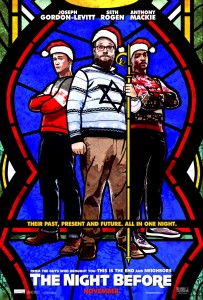
Film Review “The Night Before”

Starring: Joseph Gordon-Levitt, Seth Rogen and Anthony Mackie
Directed By: Jonathan Levine
Rated: R
Running Time: 101 minutes
Columbia Pictures

Our Score: 3.5 out of 5 Stars

Not since “Bad Santa” has a vulgar comedy elicited this much holiday joy. If you’re looking for something besides the network television claymation specials and the obligatory “A Christmas Story” and “It’s a Wonderful Life” showings on TV, “The Night Before” is a much welcome sight at the box office.

While Christmas is sweet like milk and cookies for most, the holidays are a spoiled milk time of year for Ethan (Gordon-Levitt). That’s because when he was younger, his parents passed away on Christmas Eve. There to help pick Ethan up that day were Isaac (Rogen) and Chris (Mackie). Like any good (or bad depending on how you view it) friend, they helped Ethan get over the tremendous loss with drugs and alcohol, and thus a tradition was born.

Every Christmas Eve, the three young wise men head out into New York City, do drugs, check out Christmas lights while high, get drunk, sing karaoke, and consume massive amounts of Chinese food. But something has evaded them, the Nutcracker Ball. It’s a mysterious event that takes place in a secret location one day a year, barely known amongst the general populous. Flash forward 14 years later, Isaac is preparing for his first child, Chris is dealing with football fame, and Ethan is dealing with another holiday tragedy. It’s time for one more drunken hurrah for the three, including some stolen tickets to the coveted Nutcracker Ball.

“The Night Before” spikes the eggnog and laces the mistletoe with hallucinogens, but it accomplishes that rare Christmas miracle, of making my Grinch heart grow three sizes. Most holiday movies feel unnecessarily cheesy with their forced warmth, but “The Night Before” has a genuine heart. A lot of that credit can go to Jonathan Levine, who struck pay dirt with Gordon-Levitt and Rogen before in “50/50”, another film that plucked the right heart strings.

What Levine’s movie tragically suffers from is an ADD direction. It feels a bit long as the script hurriedly goes from idea to another. Some of those ideas are a wonderfully constructed laugh riot and at other times those ideas seem like everyone was comfortable settling for a predictable chuckle. Rogen handles the bulk of comedy, while Gordon-Levitt handles the emotion, and Mackie completes the trio by being the bridge and glue between the two extremes.

The three are complemented by a slew of others. There are some shameless appearances by real life stars that feel more forced than natural. But the real gem of the movie is Michael Shannon. Shannon plays a prophetic drug dealer that crosses paths with the three and serves as a spiritual leader for the three, with pot of course. Jillian Bell does a great fill-in as Rogen’s pregnant wife and helps set-up some of the best jokes for Rogen to spike to the audience.

“The Night Before” is a familiar movie, but that’s because it enriches itself with an understanding of what makes a Christmas movie. It takes the plot devices from holiday stories like “A Christmas Carol” and others, but it adds its own flavor to them. Some are more obvious than others while some are clearly used to make that one person in the audience smile. “The Night Before” is a complimentary movie to the upcoming holidays, whether it be to laugh with friends and family or to alleviate the mounting stress we face.

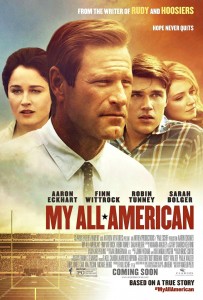
Film Review “My All American”

Starring: Aaron Eckhart, Finn Wittrock and Robin Tunney
Directed By: Angelo Pizzo
Rated: PG
Running Time: 118 minutes
Clarius Entertainment

Our Score: 2 out of 5 Stars

Sometimes after a come from behind win or a miraculous season in sports, you’ll hear the announcer utter the phrase, “You couldn’t have written a better ending.” Usually the coach or player saying this is describing the improbable odds they faced, but still overcame. Generally I don’t like the line because of how inherently silly it is since some of the best movies are about the impossible. This phrase could have been said during the events of “My All American”, but someone should have written a better script for it.

“My All American” follows Freddie Steinmark (Wittrock). His journey starts in Boulder, Colorado during the 60’s. Steinmark is a good natured Christian boy with aspirations about playing college football for Notre Dame and being drafted by an NFL team. His dreams are consistently hampered by everyone else around him who sees him as too short or too thin to stack up with other players on the gridiron, regardless of how dominant he is under the Friday night lights.

Darrell Royal (Eckhart), the coach for the University of Texas, is given some game tape of Steinmark and quickly recognizes the teen’s massive heart. He sees what we see, a boy who puts his heart and soul into everything and sometimes leaves it on the field. He offers him a scholarship and we slowly watch as Steinmark goes from a wide-eyed college freshman to a legitimate force on the Longhorn football team.

The main problem with “My All American” is the length and the pace at which it moves. The film seems transfixed with reminding us that we’re in the late 60’s and that the Vietnam War, hippies, and landing on the moon, were a thing. It also crams in a Wikipedia entry worth of unnecessary information about Steinmark like his high school sweetheart, his dad’s dreams and aspirations, his partner in crime throughout the whole movie, and a myriad of other things that don’t help the overall message.

“My All American” has the heart and soul we’ve seen in other sports movie, but it doesn’t deliver it in an entertaining or touching fashion. Angelo Pizzo, who wrote “Hoosiers” and “Rudy”, may have written a script that would be best suited as a televised re-enactment of real life events for PBS. It’s so unnecessarily dry at time, its sucks the juices out of the crisp sports sequences and the beauty that was Steinmark’s life. “My All American” feels more like a two hour long advertisement to enroll at the University of Texas.

A little bit of digging reveals that Steinmark was a real person and a genuine human being. The University of Texas still remembers that young man’s time with the football program and the impact he left behind. His story is one worth remembering if every giblet of human endearment and compassion is 100% true. I just wish it was condensed into a “30 for 30” on ESPN so that someone could have trimmed the unnecessary fat and hokey TV movie moments out.

Film Review “Scouts Guide to the Apocalypse”

Film review by Jeremy Werner
Starring:
Tye Sheridan, Logan Miller and Joey Miller
Directed By: Christopher B. Landon
Rated: R
Running Time: 93 minutes
Paramount Pictures

Our Score: 2 out of 5 Stars

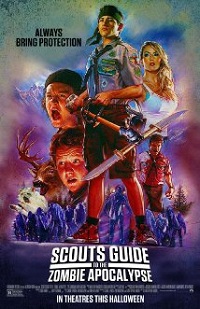
Among the four credited writers for “Scouts Guide to the Zombie Apocalypse”, one must have known what they were doing. One of those writers must have grown up watching movies like “Dead Alive” and “Return of the Living Dead” on late Saturday nights. For every hilarious scene “Scouts Guide to the Zombie Apocalypse” conjures up, there’s at least two or three that don’t even nip at the funny bone.

Ben (Sheridan), Carter (L. Miller), Augie (J. Miller) are the last of a dying bunch, the scouts. Ben and Carter realize that the scouts are the lowest part of the social totem pole at high school. They can’t even get an AV geek to join their ranks. Augie however, lives and dies by the scout code. Ben and Carter are only in it because they’re still friends with Augie and they know it means a lot to him. So Ben and Carter decide to humor Augie for one more overnight in the woods.

Ben and Carter, hoping to salvage their adolescence, plan to sneak out during the overnight and head to a party across town. Meanwhile, an unexplained virus breaks out of a lab, and slowly seeps into town. Within that time frame of our three heroes going out for the night and Ben and Carter sneaking off, the townsfolk are turned into zombies. The build up is expected, but it still takes it sweet time before the carnage starts.

Once the carnage does start though, it seems a bit tame. There are some decent zombie kills, but nothing that hasn’t been done before. As for the jokes, they’re small hits or wide misses. A lot of jokes come too quickly to be enjoyed and those that linger are clearly taken out of someone’s better written script. While “Scouts Guide to the Zombie Apocalypse” is rowdy, it’s not rowdy enough for the full 93 minutes.

For every inspired moment of comedy or gore, there’s a really long waiting time for something to happen. It doesn’t have a strong enough character presence like “Zombieland” to carry the story. It’s hard to relate with teenagers who individually represent horny, courageous, and heartfelt. It’d work better if all three he had these qualities. There’s also a couple of weird loose ends that never go anywhere, like the fact that zombies will sing if they hear their favorite song.

“Scouts Guide to the Zombie Apocalypse” may suffer from peak zombie in pop culture. We’ve nearly seen it all and while the title is cool, there’s not much else that we haven’t seen in other movies. For those looking from the bleak pessimism of “The Walking Dead” this weekend, “Scouts Guide to the Zombie Apocalypse” may come as a pleasant surprise. For seasoned horror and zombie fans, it’s disappointing this couldn’t have been more.