
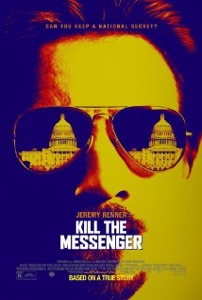
Film Review “Kill the Messenger”

Starring: Jeremy Renner, Rosemarie DeWitt
Directed By: Michael Cuesta
Running Time: 112 Minutes
Focus Features

Our Score: 3.5 out of 5 stars

“Kill the Messenger” follows the fallout experienced by reporter Gary Webb of the San Jose Mercury News of his 1996 article “Dark Alliance.” The article linked the US’s own CIA with rampant dealing of crack cocaine in California for the eventual funding of Nicaraguan contras. Director Michael Cuesta’s version of it, thoroughly from Webb’s point of view, skillfully balances the political thriller with the family life of the reporter.

The first half of the film plays a bit like a television procedural episode with Webb going from source to source in chasing his story. If it’s a little by the numbers in that respect, it does give us the opportunity to enjoy scenes with Andy Garcia in a south American prison and Michael Sheen as DC insider who warns Webb of the dangers of chasing this particular story.

It’s just before Webb publishes his story however, where the film really picks up steam. In an ominous meeting with government suits, it’s hinted that Webb’s family could be ‘affected’ by his work, enraging Webb and spurring him on to complete his article. It’s a thrill to see Renner take the lead here as Webb after the last few years of supporting work in franchises and last year’s American Hustle. He plays him as a passionate family man with a slight sense of humor that he attempts to employ as defense to the very serious people he’s up against. Though he is not without his breaking points. At home he’s given strong support by Rosemarie DeWitt as his wife and Lucas Hedges as his 16 year old son who Webb strives to be as truthful with at home as he is when reporting. Even if his wife would rather he didn’t.

Much of the film after the published story focuses on the ripple effect of exposing the truth whereby the closer Webb gets to it, the more threatening his world becomes and the more viciously personal the media gets with Webb himself. Nathan Johnson’s score subtly increases the tension throughout while Cuesta powerfully weaves in actual archival media to show just how far reaching Dark Alliance’s impact was.

If the film seems a bit one-sided with Webb as the straight up hero, it’s devastating closing title cards will likely send you to seek out more about the story for yourself.

Film Review “The Judge”

Starring: Robert Downey, Jr., Robert Duvall
Directed by: David Dobkin
Rated: R
Running time: 2 hours 21 mins
Warner Brothers

Our Score: 5 out of 5 stars

“The Godfather: Part II,” “Network,” “The Natural,” “Falling Down.” What do these films have in common? They all feature performances by Robert Duvall that amazingly were NOT nominated for an Academy Award. I decided some time ago that, in my opinion, Robert Duvall is the greatest film actor of all time. Don’t believe me? Watch “The Great Santini.” Or “The Apostle,” which Duvall also wrote and directed. Then tell me I’m wrong. Those two films earned him two of his six Oscar nominations and he won the Best Actor Oscar for 1983’s “Tender Mercies.” He should earn his seventh nod shortly thanks to his performance in “The Judge.”

Hank Palmer (Downey, Jr) is the stereotypical “fat cat” lawyer. Big house in the suburbs. Drives a Ferrari. And has no problem defending clients who…well, let’s just say that not always guilt free. When an opposing attorney asks him why he never defends an innocent client, Hank replies that “an innocent man can’t afford me.” When his mother passes away, Hank leaves his high-style Chicago lifestyle for a trip back home to small town Indiana. Back to his family. Back to the Judge.

Flawlessly directed and skillfully acted, “The Judge” joins last week’s “Gone Girl” on this year’s short list of worthy Oscar contenders. With no love lost between them, Judge Joseph Palmer (Duvall) and his middle son are like oil and water. When Judge Palmer is involved in a hit and run accident – it doesn’t help that the man killed had once appeared before the judge and held a grudge – Hank must go to the mat to keep his father out of prison. Whether he’s innocent or not!

Duvall and Downey, Jr. are outstanding. Both men would certainly be recognized come Oscar time if I was in charge. Constantly finding just the right thing to say to twist the imaginary knife just a little more, the two bicker more than an old married couple. But, like that couple, there is also a mutual respect and love that they keep hidden in their emotions. As oldest son, Glen, Vincent D’Onofrio tries to be strong, though he still nurses a distrust of Hank and his efforts. Jeremy Strong plays youngest brother Dale, a young man who never goes anywhere without his Super 8 camera, with a gentle sweetness. Vera Farmiga is strong as a woman from Hank’s past while Billy Bob Thornton oozes with oil as the special prosecutor sent to bring Judge Palmer to trial. There isn’t a false note in the bunch. What is most surprising is the way the film is crafted by director Dobkin. A veteran of such comedies as “Shanghai Knights,” “Wedding Crashers” and “Fred Claus,” this is not a film I would expect from him. Though a tad too long, Dobkin manages to keep the film moving, only revealing something new when the time is right. The pace never drags and Dobkin has delivered a first rate dramatic debut!


Related Content

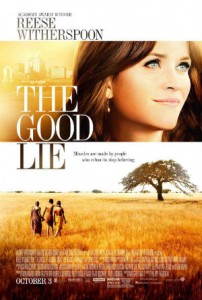
Film Review “The Good Lie”

Starring: Arnold Oceng, Ger Duany, Emmanuel Jal and Reese Witherspoon
Directed By: Philippe Falardeau
Rated: PG-13
Running Time: 110 minutes
Warner Bros.

Our Score: 3 out of 5 stars

In a movie like this, the number one question to ask yourself is, “How much does this movie care about the people it’s portraying?” It’s a very legitimate question that has plenty of factors. The director of “The Good Lie” has a soft visual touch to the difficult issue of the second Sudanese civil war. Writer Margaret Nagle has handled the lives of others in her works, near and dear to her heart, so she doesn’t harm their image. And most importantly, some of the actors and actresses have lived through this kind of experience. So why can’t this movie outgrow its ABC Family TV movie feeling?

Mamere (Oceng), Jeremiah (Duany), Paul (Jal) and Abital (Kuoth Wiel) are happily headed to America after spending years in a Kenyan refugee camp. 13 years prior to that, they had to flee their Sudanese village after it was torched to the ground and their parents were slaughtered in front of them. In their nearly 500 mile trek to safety, they lose friends to starvation, watch other refugees get gunned down and Mamere watches soldiers take his older brother Theo. Mamere has to persevere and become the leader of hope for the group.

The first half hour is a bit harrowing since it pulls no punches through unnerving scenes of lifeless bodies floating in the river and our group having to bury one of their friends in the unforgiving wasteland. Even after all those hardships and helping one another through it, they can’t live together in America. The three men learn that their sister Abital can’t go with them to Kansas City. She has to go to Boston because rules require separating the men and women. Then the tone of the movie does a complete 180 when the trio arrives in cowtown.

While it’s a necessity that we need some humorous culture shocks to add relief to the horrors we just watched, they really seem to heap it on in a slightly dehumanizing fashion that borders on making fun of our group. It’s a bit light hearted to see them react suspiciously to jello, but I would hope it’s not the filmmaker’s intention for us to laugh at them being uncomfortable in their living situations and moving their mattresses into the living room so they can spend their first night in a new country together. Then if that wasn’t enough, the product placement is very blatant and repugnant. Consider the context of one scene where one of them becomes carsick because they’ve never been in a vehicle and have airplane food swishing back and forth in their bowels. What’s the cure? McDonalds. I’ll just leave it at that.

Miraculously it stops itself short of being completely off putting by introducing Carrie (Witherspoon) who instead of giggling at their misfortunes, is there to help them find jobs and seems genuinely concerned about their predicament. She doesn’t get a lot of on-screen time even though the poster for this movie would tell you otherwise. The real emotional draw for this movie is the refugees, but it doesn’t know where to go with them. Mamere wants to be a doctor and is probably the most driven of all of them. Jeremiah even quits a job because he morally doesn’t agree with what his boss has him do. Paul for some reason takes the advice of people he doesn’t know or has any real connection to, and starts smoking pot. It’s almost as if someone didn’t feel confident enough with the men trying to find normalcy after escaping a war torn area theme powerful enough and began shoehorning in another angles and characters.

I commend the actors for portraying something that’s very near and dear to their heart with such honest passion. When they’re on screen spilling their heart out, “The Good Lie” succeeds and nearly redeems its poorer qualities. Despite my complaints, I find it somewhat miraculous that the final moments are still a powerful message about good will. “The Good Lie” is a crowd pleaser, albeit one that is far from knocking it’s touching story out of the park.

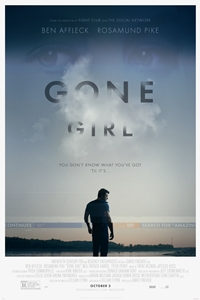
Film Review “Gone Girl”

Starring: Ben Affleck, Rosamund Pike, Neil Patrick Harris, Tyler Perry, Carrie Coon, Kim Dickens
Directed By: David Fincher
MPAA Rating: R
Running Time: 149 minutes
20th Century Fox

Our Score: 5 out of 5 stars

It’s the most wonderful time of the year here in New York. Everything’s pumpkin flavored, the tourist crowd is momentarily lighter and last Friday David Fincher’s diabolical new thriller, Gone Girl, kicked off the 2014 New York Film Fest starting the ‘Oscar Season’ in earnest. Fincher’s adaptation of Gillian Flynn’s novel of the same name is a genuine roller coaster of a film in the best sense of the word. With it’s time-bending structure, strong cast, yellow tinged scenes and another powerful Trent Reznor score, Gone Girl has everything we’ve come to expect from the director of The Social Network and Girl with the Dragon Tattoo, while offering its own set of shocks.

Gone Girl begins as Nick Dunne (Ben Affleck) contemplates violently opening the back of his wife Amy’s head. What’s going on in there? Turns out it’s a valid question, albeit phrased threateningly by Nick, as Amy (Rosamund Pike) vanishes on the morning of their fifth wedding anniversary. Amidst signs of a struggle. Unsurprisingly a gorgeous blond, on whom it turns out a beloved children’s book series is based no less, the disappearance of “Amazing Amy” kicks into gear the type of journalistic circus we’ve seen play out countless times in American media. The prayer vigils and self-righteous angry moms come out in full force and Amy’s parents crop up with a website uncomfortably quickly for such a sudden loss don’t you think?

Amidst the chaos is Nick who, like many husbands I would guess in this situation, isn’t PR savvy. As such any fleeting smile of Nick’s is immortalized in a selfie and plastered on every TV screen in the country as proof that he is surely a sociopath. But whether or not he is is something much of the film hinges on and watching Nick being trained how to appear not guilty while we’re also not quite sure of his innocence is a fascinating line that Affleck and Fincher tread together.

By all accounts Fincher and writer Gillian Flynn had a monster of a book to adapt in Flynn’s popular novel and what’s stunning is not just how well the adaptation works but on how many levels it successfully operates on. We begin with a compelling love story that evolves into a dissection of marriage in all its facets, a thrilling possible-murder mystery, a scathing indictment of American national media and…well to go much further I’d wade into spoiler territory and honestly, this film is best experienced without them. People usually say the book is better, or read the book first, but if you’ve made it to the film’s release as I had, save the visit to the library till afterwards when you’ll be dying to find out more anyway.

What I will say is that the massive supporting cast is uniformly incredible from Casey Wilson as the Dunne’s busybody neighbor to Missi Pyle’s vicious TV ditz Ellen Abbott. Poor Pyle, how much Nancy Grace did she have to subject herself to? I shudder to think. Carrie Coon too as Nick’s sister Margo deserves praise for having the difficult task of balancing her love of her brother with a seemingly endless parade of damning information. Her Margo along with lead investigator Detective Boney (played by Kim Dickens) give the audience some desperately needed level-heads to rely on on the constantly shifting field Fincher constructs.

But the main attractions here are Affleck and Pike. The evolution these two must go through from well-integrated flashbacks of their romance to the harsher recent times is as believable as it is chilling. I would say this isn’t the best ‘date movie’ for couples, but then hopefully that’s not what one looks for in the director of Se7en. Pike in particular has the difficult task of selling much of Amy’s story in voice-overs from her journal but she completely owns it. Amy’s actual fate too allows Pike to turn in a jaw dropping performance that even those familiar with her career so far, will find themselves seeing her in a whole new light.

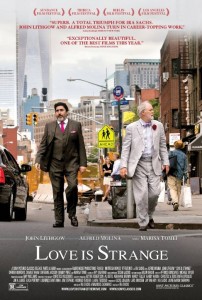
Film Review “Love is Strange”

Starring: John Lithgow, Alfred Molina, Marisa Tomei and Charlie Tahan
Directed By: Ira Sachs
Rated: R
Running Time: 94 minutes
Sony Pictures Classic

Our Score: 4.5 out of 5 stars

Today’s a big day for Ben (Lithgow) and George (Molina). After spending the past 39 years together, they’re finally getting married. It’s a joyous occasion, accompanied by friends and family, who’ve watched the couple stick it out through thick and thin for nearly four decades. The honeymoon, the real and metaphorical one, is now over and an unexpected snag begins to take hold.

George, a respected teacher and member of the Catholic school he works for, has been fired because of his marriage. With his meager salary and Ben’s pension, they can’t quite make the bills anymore. They now can’t afford their apartment and need to seek a new residence. Because of George’s work, they’ll have to split for the time being. Ben goes to live with his nephew Elliot (Darren Burrows) and his wife Kate (Tomei). George has to move in with a pair of gay policemen who party on the weekends and play Dungeons and Dragons on the weeknights; Far from ideal for both men.

While their current predicament may not seem like the worst thing in the world, their calls and conversation hint at much tougher hurdles in the past that have been overcome. “Love is Strange” teaches that love can become stronger through adversity, but it’s not their love that’s in for a bumpy ride. The real struggle lies within Elliot, Kate and their son Joey (Tahan). They’re a decaying family. Elliot is constantly busy, but one may suspect he’s having an affair. Kate is usually at home attempting to write her latest book, but finding that most of her daily stresses are hampering that. Then there’s Joey, a real enigma. He can tell his parents aren’t on the best of terms and it doesn’t help he’s not on the best of terms with both of them.

There’s so much conflict told visually that many of the problems are never solved or fully developed verbally. It leaves the audience wondering what, if anything, is actually happening. While that’s off putting to some, that’s perfectly fine with me. Speculation is the most fun one can have during a movie and after leaving the theater. Joey seems to resent Ben at first, but…that’s the biggest mystery in the movie. While Kate may believe Ben is the reason things are imploding, the family dynamic appears to have been festering for years. Elliot seems to believe nothing is wrong at all or is too busy to care.

The most telling moment is when Joey has trouble answering a question from Ben. “Have you ever been in love?” Joey immediately takes offense wondering if Ben is implying he’s gay. That can easily be chalked up to a typical teenage homophobic concern that’s rooted in one’s own sexual confusion. But instead it tells me that he hasn’t grown up in the most loving of households. That watching his mom and dad slowly drift apart is taking a personal toll on him and he’s slowly losing grip on everything else.

The ending comes after a traumatic event that has clearly impacted Joey. Tahan is given the arduous task of portraying the only real tearful, emotional moment of all the characters and he’s spot on. It’s not an ensemble cast, but it’s definitely one that has the swagger. Lithgow leads the way perfecting every little word he speaks and every little facial movement. He lives and breathes inside Ben and has never done a more believable job in a role. If he doesn’t get a nomination at this year’s Oscars for his performance, it would be a damn shame.

“Love is Strange” is short and thoughtful. Outside of being a touching film, it’s shot in a very beautiful way. Most times people love to focus on the cold concrete structures of New York, but director Ira Sachs finds the grandeur of nature breaking through the cracks. It’s a bittersweet symphony that displays a different message to different people. It may tell you that life, in essence, is short and that we need to cherish it. Or maybe it’ll tell you that even in the most desolate of circumstances, you can come out in the end a happier person.

Film Review “The Equalizer”

Starring: Denzel Washington, Chloe Grace Moretz
Directed by: Antoine Fuqua
Rated: R
Running time: 2 hrs 11 mins
Columbia

Our score: 4 out of 5 stars

Robert McCall is a man set in his ways. Dealing with an obvious case of OCD, McCall (Washington, never better) spends his days working at the local home improvement store. The rest of his time is spent either in his apartment, where he constantly times himself while washing dishes or getting dressed or at a local diner, where he arranges the silverware “just right” and brings his own tea. A quiet man, McCall offers advice and help to those that ask. “Progress, not perfection” is his motto. Just your regular, ordinary guy, right?

Sharply directed, and bloody as hell, “The Equalizer” returns Washington to “Training Day” territory, which makes sense since both films share the same director. Robert is a man with a past, one that he’s tried to keep hidden. But when one of his few friends (Moretz, a high class prostitute with dreams of becoming a singer) is hurt he becomes a one man wrecking crew, taking down pretty much every bad guy in Boston in the most violent ways. But the violence is not gratuitous. It’s there to show the man that McCall once was, not the man he is now. His demeanor never changes as he confronts his enemies and dispatches them. “What do you see when you look at me,” McCall is asked by the enforcer of the Russian gangster he has infuriated. “I don’t know,” he replies cooly. “What do you see when you look at ME.”

Washington is surrounded by a cast that compliments his performance. Moretz is vulnerable as the young girl who can only dream of a better life while, on the other side of the spectrum, Marton Csokas (who could easily pass as Kevin Spacey’s taller, older brother) is cool and calculated as the mob’s enforcer. When he and McCall face off verbally it’s like a prizefight that ultimately ends in a draw. Neither man will throw in the towel and their final confrontation is the equivalent of the last round, with each man needing a knockout to win!

There’s not a lot I can say about Denzel Washington that hasn’t been said before. I’ve been a fan of his ever since the film “Carbon Copy” and one of the highlights of my life was getting to speak with him for about 10 minutes in New York City shortly after he received his first Oscar nomination (for “Cry Freedom”). And even though he spelled my name wrong on the autograph he gave me (it’s A-E-L) he has always remained one of my favorite actors. His work here only adds to his already distinguished resume’.


Related Content

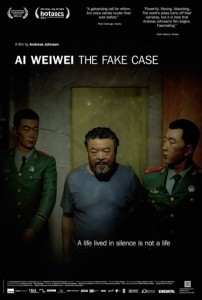
Film Review “Ai Weiwei: The Fake Case”

Starring: Ai Weiwei
Directed by: Andreas Johnson
Not Rated
Running time: 1 hour 26 mins
International Film Circuit

Our Score: 5 out of 5 stars

A couple of years ago the film “Ai Weiwei: Never Sorry” gave many their first look at the man often referred to as the most influential artist in the world. Known as much for his politics as his talent, the film followed the career and life of the man before and after his rise to fame. A new documentary, which deals with the after-effects of Ai Weiwei’s “disappearance” courtesy of the Chinese government, has recently been released and it’s just as insightful and powerful as the artist himself.

The film begins as Ai Weiwei returns home after he has been held in confinement charged by the government with tax evasion. After almost 3 months away he is surrounded by journalists who hurl questions at him about his time away. Resignedly, the artist informs them that he “can’t say anything.” Now home, he spends his days quietly, spending time with his son. Whether meeting the neighborhood dog or picking vegetables from the garden, the two are inseparable. It is obvious that being away from his family has taken its toll.

We later sit in on a conversation between Ai Weiwei and his mother. Her husband had also been persecuted by the government and she sees many similarities in the way her husband and son have been treated, with one major difference. “It’s like living on the top of a wave,” she says, noting that if it was 1957 the Chinese government would have “already killed you.” While working on various art projects he quietly talks about his situation. He relates that when you are arrested by the government you are not allowed a lawyer…you cannot contact your family. It is like being kidnapped.

Because of his status, he is often besieged by foreign journalists, looking to get an interview. Not about his art, but about his ideas. They fawn over him, hoping to be the one to get the exclusive. But Ai Weiwei has learned that to say anything too negative could once again cost him his freedom. He is content to work in his studio or relax in his apartment. The view from his high rise windows include the United States Embassy right next door, a reminder of the freedom he longs for in his native country. A freedom he knows can be taken away in the blink of an eye.

Film Review “Tusk”

Starring: Justin Long, Michael Parks, Haley Joel Osment
Directed By: Kevin Smith
Rated: R
Running Time: 102 minutes
A24 Studios

Our Score: 2.5 out of 5 stars

Ah yes, that uncertain feeling of love or hate when walking out of the movie theater. It seems A24 has this knack for finding these bizarre titles that leaving me feeling a bit clueless on my personal opinions and emotions. On one hand, during “Tusk”, I couldn’t stand it and wondered if it would be ethical for me to just get up and walk out of the theater, and still talk be able to with you about it. But on the other hand, some part of me, that watches and giggles during Troma movies, enjoyed this perverse hodgepodge of midnight horror and black comedy.

“Tusk” was an idea born on a podcast (I’m sorry, smodcast) that for some reason became Smith’s return to movies. If you remember, he stated that he was retiring from filmmaking…then said he was going to come back and do “Clerk III” and that would be his last movie…then somewhere along the line “Tusk” happened. Seems like this may have been some kind of last minute idea that was quickly rushed, and at times during “Tusk”, it definitely shows.

Wallace (Long) has the job that’s only possible in movies; he makes his living as a podcast host. He’s the mean spirited man behind the “The Not-See Party” show which provides a string of predictable jokes throughout the movie (Nazi! Get it? OK then…). He plans on going to Canada where he will interview a viral media star and most likely embarrass him for his adoring fans. Much to his selfish dismay, the kid has killed himself, and he doesn’t want to waste his $500 plane ticket, so he takes an ad found in a bathroom that promises a fantastic story/adventure.

He drives to the middle of nowhere to an eerie mansion owned by Howard Howe (Parks). He’s a salty old man that glides from spot to spot in his wheelchair and seems suspiciously excited to tell the inconsiderate Wallace about his lifelong adventures. Among his tales, he spins a story about his encounter with a walrus…the only creature that ever loved him. During his story, Wallace fails to realize that his tea has been drugged. He passes out and awakes to a horrifying scenario. Wallace, through the visually grotesque art of surgery, will turn him into a walrus. Now comes the part of the movie where people might start walking out.

For those who remain seated, Parks never runs out of scenery to chew and it’s a surprise he never gets full off it. Every scene he is in is a joy to watch as he talks like a well-learned aristocrat, but flips on a dime to a walrus obsessed sociopath that would give the creepiest of animal lovers the heebie jeebies. I’m not sure who turned Smith on to this wonderful actor, but he’s definitely been the saving grace now in Smith’s past two movies.

As a comedy, I didn’t chuckle; although the prospect of a disfigured human-walrus hybrid version of Long does make me smile. I almost laughed at the surprise cameo in the third act of the film, but even before the big reveal I had some sneaking suspicion about who it was. He definitely adds a certain flavor to his scenes, but one in particular feels long, dry and unfunny.

There’s no doubt in my mind that Kevin Smith fans will gobble this up like most of his releases and that’s not to say I’m not a fan of his work. One of my biggest concerns is that this is a man that still needs an editor’s input. There’s a couple long winded moments where Smith plays show and tell where just showing or telling would have been perfectly sufficient to explain the scenario. He has progressed as a filmmaker since his incredibly low-budget cult classic “Clerks”, but he seems to playing to his audience more than he’s trying to find something new to do.

As for the final verdict on “Tusk”, it’s still an internal debate as I finish this up. It’s definitely one of Smith’s weaker entries into his catalogue. Its purpose feels misguided, if there is a purpose, and feels lazy in some regards. I think it’s a movie I enjoyed, but it’s definitely not something I can recommend unless you’re a fan of Smith’s work or someone who grew up on Joe Bob Brigg’s Monster Vision and have a “refined” taste for hokey monster suits and over-the-top villain theatrics.


Related Content

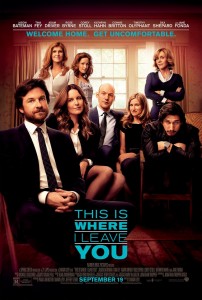
Film Review “This Is Where I Leave You”

Starring: Jason Bateman, Tina Fey and Jane Fonda
Directed by: Shawn Levy
Rated: R
Running time: 1 hour 43 mins
Warner Brothers

Our Score: 4.5 out of 5 stars

Meet the Altman family. Judd (Bateman) just came home early to find his wife (Abigail Spencer) in bed with his boss (Dax Shepard). Oldest brother Paul (Corey Stoll) is doing everything and more to get his wife pregnant. Sister Wendy (Fey) is the family sounding board. And youngest brother Phillip (Adam Driver) is still the kid who has never grown up. When their father dies they are summoned by their mother Hilary (Fonda) to “sit Shiva” for seven days in the family home. It may turn out to be the longest week of all their lives.

An incredibly emotional ensemble piece, perfectly matching laughter and tears, “This Is Where I Leave You” is the first official Oscar contender of the fall. As the siblings spend time in the house they grew up in, their memories of their lives, both with and without their father, overtake them. A vulnerable Judd rekindles a friendship with an old flame (a perfectly cast Rose Byrne) while Phillip shows up driving a Porsche carrying his much older girlfriend – and psychiatrist – (Connie Britton). Paul, who helped his dad run the family’s sporting goods business, is appalled that he must now share it with his siblings while Wendy must deal with an old romance with the boy (Timothy Olyphant) across the street, a former shell of himself mentally due to a car accident. “Is it the whole world or just our family,” Judd asks at one point. Overseeing the brood, Mama Hilary (and her newly augmented breasts) does her best to have the answers to all of her children’s questions even though she has no one to help answer hers.

The cast is spot on perfect. Bateman and Stoll deliver as the two voices of reason while Fey shows a very little seen dramatic side. Fonda shows why she has been a star for almost 50 years (“Cat Ballou” came out in 1965). But the scene stealer here is Driver, who I was only familiar with thanks to small roles in “Lincoln” and “Inside Llewelyn Davis” and has a recurring role in the HBO comedy “Girls.” Every time he is on screen you can’t help but be drawn to his energy. Driver has a top-secret role in the upcoming “Star Wars: Episode VII” and my fingers are crossed that he’s playing Han Solo’s son. He has that roguish quality about him (like Harrison Ford did in the first film) that makes it almost impossible to dislike him.

As fall approaches the weather is changing and so are the films. I hope you take the opportunity to spend some time with the Altman family.

Film Review “A Walk Among the Tombstones”

Starring: Liam Neeson, Dan Stevens, Brian ‘Astro’ Bradley
Directed By: Scott Frank
Rated: R
Running Time: 113 minutes
Universal Pictures

Our Score: 4 out of 5 stars

Liam Neeson has traded in his concussion inducing fists, action film one liners and torture tactics — at least for the time being — for his latest role in “A Walk Among the Tombstones”. Many will be expecting another hit-man seeking revenge action flick, but Neeson shows some quiet restraint as Matthew, a former NYPD cop turned gumshoe. Instead of making grand leaps throughout Europe, Neeson strolls through the grim landscape of Brooklyn, that’s seemingly trapped in a perpetual state of rain. It definitely atches Matthew’s weathered face and grim outlook on life. These are the kind of roles I like Liam Neeson in.

Matthew lives a very minimalist life. It’s shows because he doesn’t have a computer or cell phone. But that’s OK, it’s 1999 in this movie, and there’s still pay phones littered all around the area and people are freaking out over Y2K. He’s recently been hired by Kenny (Stevens), a well to do drug dealer. He’s kind of like the upper middle class in the drug dealing ring. He loves clean modern furniture and doesn’t abuse his product. Kenny hopes Matthew can track down a duo of beasts, that kidnapped his wife, demanded a ransom, and then after receiving their pay day, delivered his wife back in multiple, small, neatly wrapped cocaine bags in the trunk of a car that you would suspect a drug dealer would drive.

These pair of monsters that Matthew is tracking down would make Hannibal Lecter drool with delight, but unlike Lecter, they lack charisma and charm. One appears to derive pleasure from sexual violence and watching his victims squirm while the other assailant simply appears to be in it for the money; sampling the pieces of his partner’s blood lust. They’re a real disgusting pair to watch at work. We come to find out they’re hitting up drug dealers to satisfy both of their appetites and have a decent sized portfolio of potential victims. As the movie goes, so does their descent into darker wants and needs.

“Tombstones” is one of the best made thrillers in recent memory, leaving the motivations and deepest levels of depravity of the villains up in the air, creating a nauseating sense of suspense in the viewer’s gut. The film takes a couple of moments to breathe with the introduction of TJ (Bradley), a homeless African-American child that looks up to Matthew. TJ feels like a speed bump in the pace when he’s first introduced, but it becomes clear towards the latter half that his introduction was to provide Matthew with an outlet to voice his inner demons and find that sliver of hope in his personal pit of despair.

It’s interesting watching the supposed good guy of the film quickly shrug off the protagonist role. While Matthew might not be personally invested in the crime, he’s attached his own path of soulful enlightenment by how he reacts to each step towards solving the mystery and its eventual outcome. Neeson has no problem handling the weighty emotions of Matthew and if these are the kind of roles we can expect from Neeson in the future, count me in.


Related Content

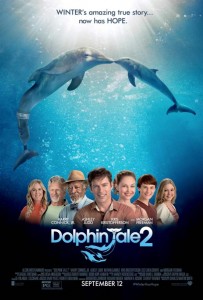
Film Review “Dolphin Tale 2”

Starring: Harry Connick, Jr., Ashley Judd and Morgan Freeman
Directed by: Charles Martin Smith
Rated: PG
Running time: 1 hour 47 mins
Warner Brothers

Our Score: 3 out of 5 stars

When we last left Winter the dolphin, she was swimming happily (thanks to her prosthetic tail) and had become an inspiration to handicapped people the world over. But that wasn’t the end of her story.

It’s been three years since Sawyer Nelson (Nathan Gamble) and Winter became national celebrities. The pair spend their days entertaining the many visitors to the Clearwater Marine Hospital (which has now become a mini-aquarium). As the film begins Winter is visited by Bethany Hamilton, the young surfer who lost her arm to a shark a few years ago (and has her own film, “Soul Surfer”). Things seem to be going well. But they’re not. Winter is getting moody. When her tank mate, a much older dolphin named Panama, passes away, the gang at the aquarium face a predicament. Find a new pal to keep Winter company or lose her to a Texas theme park.

The first “Dolphin Tale” film seemingly came out of nowhere and swam its way into the hearts of filmgoers, earning in excess of $70 million during its run. It was a well written story with an important message that families took to heart. And while the new film has its moments, it has some plot holes that keep it from really reaching the same heights as its predecessor, most of them centered on the film’s young cast. But before I go into them, let me clear up a few things. Like the first film, “Dolphin Tale 2” is based on some true events, most of them dealing with the dolphins featured. For fans of the first film, I should point out that there really IS no Sawyer Nelson. Winter was not rescued by a lonely 11-year old boy after washing up on a beach. She was saved after being caught in a fisherman’s net. And while it’s nice to have Sawyer (and Hazel, the 14 year old daughter of the hospital director) hanging out with the dolphins, they are just TOO smart and given way too much responsibility to be believable. If I was a trained marine biologist and my day had to begin by being lectured by a 14 year old on how to do my job I’d find another one in a minute! Just because we see a giant microscope and two thesauruses on Sawyer’s bookcase doesn’t make him Matt Hooper (inside “Jaws” reference). In one scene Hazel picks up Winter’s medical charts and begins diagnosing her blood work. And I’m sorry, but for two kids that work outside IN FLORIDA year round, neither of them can seem to get a tan. Casper the ghost isn’t as white as Hazel.

On the positive side, the film features some fun scenes featuring a nosy pelican and a giant sea turtle, as well as introducing us to a cute baby dolphin named Hope. Director Smith, who also wrote the script, does a good job in moving the film along. Younger children will enjoy the antics of the various animals involved and, like the first film, the end credits, showing handicapped children visiting and interacting with Winter, will bring a tear to your eye and a lump to your throat.

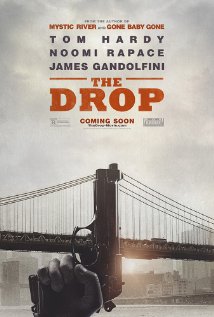
Film Review “The Drop”

Starring: Tom Hardy, James Gandolfini and Noomi Rapace
Directed By: Michael R. Roskam
Rated: R
Running Time: 106 minutes
Fox Searchlight Pictures

Our Score: 4.5 out of 5 stars

Rarely do organized crime movies have heart warming or touching moments. In fact, most of the times you’re trying to find that soft spot or likeable quality about the sociopath on screen and a lot of times…you don’t. “The Drop” is a by the books crime drama that you’ve seen before, but the character driven story, along with the elegant performances by the key players, makes it a superb movie.

The first key player is the late, great James Gandolfini. It’s ironic that his final on-screen role will be one that symbolizes what people will remember him as, a thug. Instead of being a criminal ring leader like he has been in past roles, this time he’s an aging, depressed bar owner known simply as Cousin Marv. He also runs a bar…simply known as Cousin Marv’s. He bitterly reflects on the glory days of being respected instead of his current predicament, the money launderer for a Chechnyan gang that casually threatens him through cocky smiles.

His hardest worker is the low key, shy bartender, Bob (Hardy). He has a gentle soul and his dialogue borders on unintelligible mumbling, but the British born actor creates an understandable Brooklyn accent for the endearing character. Every little thing about Bob is stupendously crafted by Hardy, who gives subtle visual cues that add to Bob’s good intentioned exterior, but his quick darting of the eyes towards the floor or to something else reflect the mind of a person that constantly is reminded of something more alarming.

The story sprinkles dread filled bread crumbs around the intriguing history behind these two. What complicates things and really adds the warmth to the plot is when Bob heads home after work one night and comes across a young, abused pit bull in the trash outside of the home of Nadia (Rapace). He instinctively doesn’t suspect that she’s the one who harmed the dog and connects with her over the torn and tattered puppy as they dress it’s wounds. Just like society’s stereotypes, Bob and the pit bull are misunderstood creatures.

Bob eventually becomes the center of this character study as tensions escalate when someone robs the Cousin Marv’s bar. One wonders how Bob will react when there’s so many contradictory character opinions about who the real Bob is. The parallels between the general misconceptions about the violence in pit bulls and people constantly warning that there’s more to Bob than meets the eye are uncanny. By the time the end comes, the reveal is a bit anticipated, but still satisfying because of Bob’s reasoning and how well Hardy makes it believable.

The script sharply keeps us in the dark while most of the other people surrounding Bob seem to know something we don’t, but dare don’t utter it. Hardy is a real joy to watch as he weaves from scene to scene, perfectly balancing mystery and charm. Despite his increasing infection for Nadia, it never feels covetous or sexual, but more of an appreciation for someone that could be attracted to someone like him; which adds more intrigue into his murky past.

While “The Drop” will most likely be overlooked come awards season, it’s important to point out that Gandolfini, being one of the main instigators for problems, comes off as sympathetic despite his hardened demeanor.“The Drop” is a reminder of the great talent that no longer graces our presence. It also provides us the reminder that sometimes the darkest of actions have the most compassionate reasons.

Film Review “My Old Lady”

Starring: Maggie Smith, Kevin Kline and Kristen Scott Thomas
Directed By: Israel Horovitz
Running Time: 104 minutes
Cohen Media

Our Score: 2.5 out of 5 stars

By all accounts My Old Lady has had successful runs in its various stage iterations, so how does it hold up as a film? Unfortunately it’s something of a mixed bag. Director Horovitz, adapting his own play to this film, seeks to open up his three person play by adding some supporting characters, not to mention the actual gorgeous Parisian background, but the film itself never seems to rise above it’s central contrivance and weighty melodrama.

Kevin Kline plays Mathias Gold, a failed novelist from America coming to France to claim and sell a gorgeous Paris apartment that he’s inherited from his dead father. The catch on this particular flat is it comes pre-packed with the elderly Mathilde (Maggie Smith) under a French real estate arrangement known as a “viager”. Under this arrangement, the elderly tenant collects an annuity from the buyer so long as they live. Basically the buyer pays less on the place should the seller of the property pass away sooner rather than later. Naturally this makes Mathias’s introduction to Mathilde quite awkward. Complicating matters is Mathilde’s live-in grown daughter, Chloe (Kristen Scott Thomas in her third outing as Smith’s daughter) who naturally dislikes a disgruntled American with a vested interest in her mother’s death.

The film is stronger in its earlier acts with Mathias and Mathilde engaging in their subtle battle of wills–“to long life” she quips when toasting at dinner. Meanwhile Mathias schemes behind her back by investigating her medical records and whisking away furniture to pawn as an alternate way to turn a profit. He also engages in some minor blackmail against Chloe who, as it turns out, is also a woman damaged by her parents’ indiscretions. Kline is infinitely more charming when playing at being a scoundrel rather than when he’s saddled with lengthy monologues later in the film likely lifted directly from the play.

And here is where the film begins to wade into melodrama. Of course Mathilde’s lengthy stay in the flat of Mathias’s absentee father can only give way to a past affair whose shock waves were felt by both Mathias and Chloe on either side of the Atlantic. And as the film’s cast is essentially this trio, you can probably already guess who Mathias and Chloe will turn to when the revelations come pouring in.

I do give credit to Horovitz’s script which, if anything is unusual for using Paris as the backdrop of what is by all accounts the fallout of a long past love affair rather than the setting for the impassioned blooming of a youthful one. Additionally it is not often in film when we get to see older skilled actors such as Scott Thomas and Kline forge a romance however one wishes it didn’t come with quite so much baggage.

Film Review “The Discoverers”

Starring: Griffin Dunne, Madeleine Martin, Devon Graye, and Stuart Margolin
Directed By: Justin Schwarz
Rated: Not Rated
Running Time: 104 minutes

Our Score: 1.5 out of 5 stars

“The Discoverers” might be a bit too smug with its theme. It’s the tale of a family journey that’s derailed by another family journey that finds it reenacting another journey. Through these strung-along journeys, a father discovers true insight into his children. Through emotional healing, they discover their true emotions. They eventually discover something new about themselves and all this while they portray America’s original discoverer’s Lewis and Clark. To imply there’s any more to this movie than journeying and discovering would be a vast overstatement.

Lewis Birch (Dunne) is a failing history professor who decides to road trip to Oregon for a literary conference with his artsy liberal daughter, Zoe (Martin), and incurious stoner son, Jack (Graye). This short-lived plot point is derailed by the passing of Lewis’ mother. After making funeral arrangements and a quick cameo by John C. McGinley, Lewis’ father, Stanley (Margolin), immediately heads to the woods for a Lewis and Clark re-enactment (because tradition?). The family has to follow because Stanley’s mental health is quickly waning and they must keep notes on the feeble gun-toting old man with his coonskin cap.

“The Discoverers” is a dime store movie that I assume indie admirers will gobble up, but I found myself counting down the minutes until it expired. While the movie tries to pass itself off as heartfelt, it felt a lot more insensitive and unnecessarily boorish. I guess the cockles of our hearts are supposed to melt when Lewis and Zoe have a heart-to-heart while she’s on her period in the great outdoors without a tampon for miles.

Dunne and Martin’s performances are fantastic and really create some of the more adhesive moments of the film. Martin plays the snarky daughter perfectly while Dunne’s creates a believe man on the verge of a breakdown. There is one moment in the movie that shows signs of creative bliss when Lewis and Zoe find solace in each other. I guess Jack isn’t gloomy enough to join in on the emotional conversation during the third act of this movie.

Writer/Director Justin Schwarz has the right quirks in mind, but he never fills out the emotional depth of all the side characters to compliment Dunne and Martin’s performances. Everyone feels like pieces of furniture being shifted to different locations hoping to add a flare to the scenery. Schwarz obviously wants to create a loveable, yet chaotic family, but he forgot the impassioned depth that makes us want to see the silver lining in this bleak existence.

The tale of family dysfunction has become the road most traveled when it comes to indie stories and “Discoverers” catalogues itself as one of the more forgettable ones. I personally look forward to the more sharply written movies that place a microscope over the fading nuclear family highlighting a contemporary slice of Americana. Schwarz needs some work before he crafts an indie gems that spring up in a sea of conventional blockbusters.


Related Content

Film Review “Life After Beth”

Starring: Aubrey Plaza, John C. Reilly and Dane DeHaan
Directed by: Jeff Baena
Rated: R
Running time: 1 hour 29 mins
A24

Our Score: 4 out of 5 stars

Zac Orfman is in mourning. His girlfriend, Beth Slocum, has died. Bitten by a snake while she went hiking alone, all Zac has now are his memories. And a scarf of hers, given to him by her parents (Reilly and Molly Shannon). His family, especially his older brother, Kyle (Matthew Gray Gubler), are insensitive to his feelings, mocking him for wearing the scarf around his neck. Upset he picks up a tray of Jello and heads over to the Slocum house, hoping to share his grief with those that will understand it. When Mr. Slocum is leery about letting him in he does a little investigating. And in the attic he discovers…Beth?

Not sure if this term has ever been used before so I’m going to call “Life After Beth” a very original “Rom-Zom-Com,” which translates to Romantic Zombie Comedy. Though the Slocums won’t like the word “zombie.” They prefer resurrected. Either way, Beth is back. As played by Plaza, she is unaware of her circumstances, conscious only of the things she knew before she died. Like she has to study for a test. This is how her parents keep her out of sight. When Zac discovers the situation he is sworn to silence, promising to never let Beth know of her circumstances. However, that’s a lot easier to promise than to actually do.

The cast is given some great situations thanks to a sharply written script by director Baena. This could have easily been a parody film or, if you felt for one minute that the cast wasn’t buying in, a disaster. But the actors maintain their characters and the various situations that they find themselves in only become funnier because of their commitment to the subject. DeHaan, who has always played brooding young men shows like “True Blood” and films like “Kill Your Darlings” is quite adept at physical comedy (as is Plaza) and does a fine job here. Reilly and Shannon do their best work together, arguing about what Beth can and cannot do and denying to themselves that something odd has happened. Plaza shines as Beth and her dedication to the role is what makes the film work so well. When Zac meets an old female friend Beth goes into a jealous rage, much worse than usual seeing as that she’s a zombie. As things (and Beth) begin to deteriorate the laughs continue. Yet, while you’re laughing you can’t help but feel sorry for all involved.

That being said, take a chance and go see what is now my favorite ROM-ZOM-COM!

Copyright: MediaMikes.com © 2014 · Powered by: nGeneYes, Inc. · Login

All logos and images used on this website are registered trademarks of their respective companies. All Rights Reserved. Some of the content presented on our sites has been provided by contributors, other unofficial websites or online news sources, and is the sole responsibility of the source from which it was obtained. MediaMikes.com is not liable for inaccuracies, errors, or omissions found herein. For removal of copyrighted images, trademarks, or other issues, Contact Us.