
Film Review: “Lizzie”

Starring: Chloë Sevigny, Kristen Stewart, Jamey Sheridan, Fiona Shaw, Denis O’Hare
Directed By: Craig William Macneill
Rated: R
Running Time: 1hr. 45mins.
Roadside Attractions

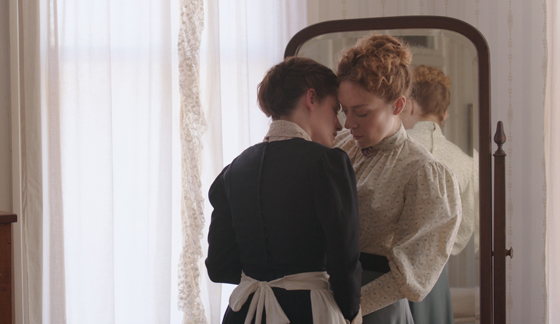
In many ways, this is the perfect time of year to release Lizzie. As we enter the fall, the movie theaters turn to smaller dramas while basic cable crams its schedules with true crime and hauntings in the run up to Halloween. The axe murders of Abby and Andrew Borden have always figured heavily into the latter. So much so, it occurred to me while watching Craig William Macneill’s carefully crafted depiction of Lizzie Borden that I had never seen a version of this story that wasn’t hyper campy. A quick search on Youtube turns up ample “dramatic re-enactments” and even a Dance Moms routine. Perhaps anticipating that audience, director Macneill serves up Abby’s body mere moments into his film before rewinding back at the investigator’s prompt to Lizzie, “Did your father have any enemies?” Did he ever. What follows is a drama that simmers with tension between its small cast led commandingly by Chloë Sevigny and Kristen Stewart.

In 1892, Lizzie shares a modest Massachusetts house with her father Andrew (Jamey Sheridan), stepmother Abby (Fiona Shaw) and sister Emma (Kim Dickens). Lizzie is old for being unmarried and her community—but her father most of all—isn’t shy about treating her as a pariah. Lizzie having a seizure (or “spell” if you’re old timey) in public only adds fuel to the case for sheltering her. Into their home comes an Irish maid, Bridget Sullivan (Stewart), who Lizzie forms a connection with. Before you can say steamy pizza rolls, they are passing notes and rendezvousing in the family shed.

As far as I can tell, the theory for Lizzie’s sexuality being a part of this case, aside from her never marrying, comes from a later in life “crush” on an actress of the time. Whether or not you buy into this particular take really isn’t the concern of this film which draws strength from the bond between Sevigny and Stewart. When Andrew turns predatory towards Bridget, Lizzie’s anger towards him is stoked as is her motivation to sabotage his affairs. Affairs which include compromising Lizzie’s inheritance. Likewise when Lizzie’s uncle (a snarling Denis O’hare, always a welcome addition) tries to intimidate her, Bridget makes her presence known and he sees himself out. Though their society is rigidly patriarchal, under this roof the men are outnumbered and Macneill makes great use of the confined space to reinforce that. The soundtrack remains sparse, giving dominance instead to the ambient sounds of the household. The creaking wood of the stairs and bedrooms might as well be a character unto itself, and gives the whole piece an extra level of claustrophobia. It works really well for this story which is essentially a slowly escalating war between father and daughter.

As we march on through the final acts, the story does slow down with some time jumps between the murders and the aftermath. It’s as though to let us see how an obviously guilty (in this telling of it anyway) Lizzie might sell her innocence to investigators when really that could have wrapped up more strongly with their credible—if still sensational— take on this infamous case.
Film Review: “The Predator”

Starring: Boyd Holbrook, Trevante Rhodes and Jacob Tremblay
Directed By: Shane Black
Rated: R
Running Time: 107 minutes
20th Century Fox

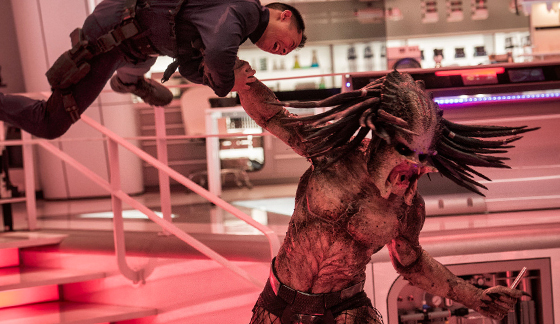
Not too long into “The Predator,” former Army Ranger, Quinn (Holbrook) is assessing an unthinkable predicament. He’s shackled in a military bus that’s carting around other former soldiers. These unmentionables of the U.S. military range from a veteran who’s PTSD has somehow manifested into ill-timed Tourette’s to a former Marine who grins through his suicidal tendencies. But Quinn, after listening to every sad story, might be the king of crazy or the only sane one on-board. He tells them that he’s handcuffed alongside them because he saw an alien. Unfortunately for his future comrades, and the audience, he’s not the Predator killing hero we need. And “The Predator” may not be the Predator movie we need either.

It’s not that Holbrook doesn’t have the muscles to go toe-to-toe with the big boys; it’s just that he’s not charismatic and his one-liners usually fall flat. I think that’s because most of his career has been spent being an antagonist, and he doesn’t have the pedigree that an Arnold Schwarzenegger or Bruce Campbell might have when spouting cheese at CGI monsters and creature effects. At least the cast around Holbrook makes up for it. Some of the highlights are a delightfully funny Keegan-Michael Key, an energetic scientist turned mercenary played by Olivia Munn, and Sterling K. Brown, who plays a bad guy so witty, you tend to forget or question why he’s pulling the trigger so quickly.

If I was to ever summarize the previous “Predator” films for someone who had never seen them, I’d have no problem. I’d actually have no problem hyping them up despite their flaws. I couldn’t do that with “The Predator” and I’d have a harder time summarizing what exactly the film is about. That’s mainly due to the script, that’s not only all over the place, but has a jumbled tone that squeezes in serious sci-fi stakes, family drama, juvenile humor, macho man action and stylized gore. Since it jams in so much with little finesse, the film never rises above being forgettably amusing. Even if you enjoy this movie, you’re never likely to watch it again or enjoy it as much on a second viewing.

I’ve generally liked the work of director and writer, Shane Black. He has this infectious energy about his films and he creates these subtle nods to iconic bits of pop-culture from his own childhood. Surely you’ve seen some of his best pieces, like “Lethal Weapon” or “Last Action Hero.” Tiny traces of DNA from those films are in “The Predator,” like when we first meet the Predator hunting crew in that military bus or when the Predator itself gets in on the black humor after slaughtering countless unnamed soldiers. During those moments, and several others, I tended to slide into a comfort zone where I could care less about the film’s glaring mistakes.

I have one moral quandary about the film’s use of a child with autism and how he fits into the film’s overall narrative. Not only does it feel lazy to use Jacob Tremblay in that fashion, but it feels insulting to people with autism. I won’t dive too much deeper into my major gripe because my frustrations could easily be misplaced. It’s possible that Tremblay’s character wasn’t eloquently relayed, but the antiquated nature of his usage in the film’s plot seems misguided on Black’s end.

I had a real fun time while watching “The Predator,” but as I think about it in hindsight, I’m finding it troublingly easy to nitpick it to death. I think that’s because Black has done better and the “Predator” is still an underrated franchise deserving of praise. The original “Predator” was actually panned upon its initial release in 1987 by several outlets like the New York Times and Variety. They called it dull and average, but it’s now viewed as a quintessential action movie, spawning thousands of fanboys who’ve taken it upon themselves to write their own fan fiction involving the iconic alien. Time may tell if Black’s sequel is worthwhile, but I can’t help but think there’s a fanboy whose script could put Shane’s script to shame.

Film Review: “The Little Stranger”

THE LITTLE STRANGER
Starring Domhnall Gleeson, Ruth Wilson, Charlotte Rampling and Will Poulter
Directed By Lenny Abrahamson
Rated R
Runtime: 1hr. 51mins.
Focus Features
The pitfall of turning a gothic tale into a feature film seems to be Hollywood’s tendency to sell it as a horror film. As most trailers do, they cram the most exciting visuals or scares into two minute bites hoping to draw that genre’s audience while never considering the ill will they’re potentially engendering with such a mischaracterization. It fascinates me as far as choices go in this age of Cinescore post-screening chatter although I can’t begrudge the trailer makers for their need to get butts in seats. I say this all up front because that is the case with Lenny Abrahamson’s The Little Stranger, an adaptation of the 2009 novel by Sarah Waters. What they really have is a carefully crafted and, critically, a glacially slow paced period drama where the “big” bloody moments are few and far between. To be clear, I actually am more of an ideal audience member for English period drama than horror but even my limits were tested. The talented cast languishes in beautiful atmosphere and effective sound design that amounts to a pile of supernatural McGuffins.
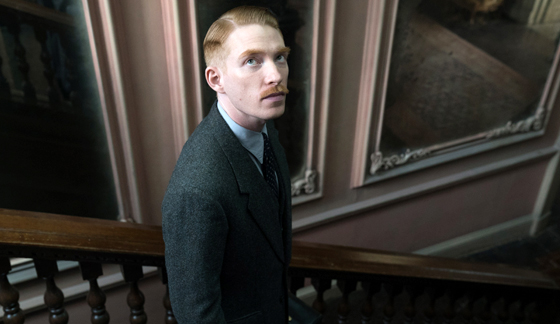
The year is 1949 and Dr. Faraday (Domhnall Gleeson) is summoned to Hundreds Hall to check in on the Ayres family’s young maid, Betty (Liv Hill). Betty isn’t sick so much as she’d like a doctor’s excuse to send her back home. The drafty house’s halls don’t sit well with Betty. This uneasiness is chalked up to youth and inexperience but as the doctor learns, her line of thinking isn’t isolated among the inhabitants. Roderick (Will Poulter), the man of the house and brutally scarred up WW2 vet, also swears by a malevolent presence that’s out for his family. Again, dismissed by the rational doctor as well as Roderick’s caretaker sister Caroline (Ruth Wilson). To complicate things, Faraday has a kind of reverence for the place having been enchanted by being brought there as a child in 1919 with his mother, then a member of the house’s full staff. Over all of this lies the spectre of Caroline and Roderick’s dead sister whom the young Faraday had a brief encounter with during that long ago visit. Faraday’s love for the estate drives him to grow closer to the Ayreses, Caroline in particular.

I was excited to check out The Little Stranger, being a fan of Abrahamson’s previous three films (all also adaptations) as well as Domhnall Gleeson who is consistently reliable. The trouble is The Little Stranger can’t quite decide what it wants to be. The awkward romance between Faraday and Caroline occupies far too much screentime for where it ultimately goes while the horror and supernatural aspects of the story pretty much plateau rather than ramping up to a satisfying conclusion. I couldn’t tell if said conclusion was actually meant to be a twist or not because I had connected the dots so so long before the story wended its way to meeting me there and when it arrived, did not add anything exciting. I suspect Waters’s novel made much of the turmoil the Ayres family finds themselves in in Hundreds Hall but the film leans too heavily on its production design to fill in the gaps of its stilted characters.

Film Review – “Puzzle”

PUZZLE
Starring: Kelly Macdonald, Irrfan Khan, David Denman
Directed by: Marc Turtletaub
Rated: R
Running Time: 1 hr 43 mins
Sony Classics
 
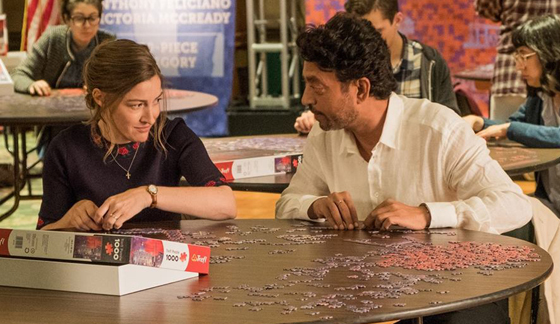
It’s sounds cheesy I know, but there’s nothing puzzling about “Puzzle,” a wonderful new drama based upon a 2010 Argentinian film of the same name. Directed by Marc Turtletaub (“Gods Behaving Badly”), who is perhaps better known as a producer of such silver screen works as “Loving” and “Little Miss Sunshine,” “Puzzle” is an engaging tale about a woman’s empowerment after being taken for granted for at least all her adult life. The spark which fans the flames comes from nothing less than a 1,000-piece puzzle set.
 
Anges (Kelly Macdonald, “Brave,” “No Country for Old Men”) is a suburban, soft-spoken, anti-technology housewife stuck in the same routine every day – getting her husband, Louie (David Denman, “The Office,” “13 Hours”) up for work, cleaning, shopping, cooking for three men, and volunteering at church. That’s pretty much her entire life. She does know she is stuck in this monotonous cycle, but she is unwilling or unable to break free.
 
We get a taste of this right at the beginning when a birthday party turns out to be one she has thrown for herself, complete with a house full of guests and a cake. However, Agnes, for whom we instantly feel a great deal of frustration for, is more intent on fixing a broken plate than being around other people. Afterwards, she discovers a gift from a friend – an orange and brown-hued map of a world she has only dreamed of seeing. With the simple placement of one piece the art of puzzling suddenly becomes an obsession for her.
 
The thrill she gets gives her the confidence to text Robert (Irrfan Khan, “Jurassic World,” “The Lunchbox”), a champion puzzle player who is seeking a doubles partner. A wealthy inventor who spends most of his days watching catastrophes on the news, Robert is surprised by how fast Agnes is. It turns out, though, that they are both lonely souls. Robert is recently divorced while Agnes suffers from being constantly belittled and taken for granted by Louie. When sparks fly it sets Agnes’s world on fire and while it scares her to death it also gives her a newfound confidence.
 
Turtletaub has crafted an evenly-paced work of cinema with subdued colors throughout. The exceptions are often the puzzles themselves when color is emphasized. He also draws out an excellent performance from Macdonald, which could be the best she has delivered. Macdonald effortlessly fleshes out her character’s extreme timidity while infusing her with enough likability that you can’t help but root for her as she transforms into a ferocious butterfly. The physical chemistry between her and Khan comes off as awkward, but the dialogue they share is beautifully written and delivered. Throughout his career, Khan has often had a soulful, philosophical way of conveying lines and he doesn’t disappoint here.
 
“Puzzle” is certainly not a ground-breaking work of cinematic art nor will it probably rank among the pantheon of the best movies of the year. Still, it remains a sweet, delightful work that is as pleasing as finishing a puzzle on the porch while a gentle spring rain pitter-patters on the roof above.

Film Review: “The Happytime Murders”

THE HAPPYTIME MURDERS
Starring:  Melissa McCarthy, Elizabeth Banks and Joel McHale
Directed by:  Brian Henson
Rated:  R
Running time:  1 hr 31 mins
STX Entertainment

It’s been almost exactly 35 years since I met Jim Henson.

In September 1983 I was at the World Science Fiction Convention in Baltimore, where one of the films being promoted that year was “The Muppets Take Manhattan.”  Knowing Mr. Henson was going to be in attendance I took a couple photos with me.  One of him and Kermit the Frog taken behind the scenes of “The Muppet Movie” and one from “The Dark Crystal.”  I tracked him down and he very graciously signed both.  I got lucky because he happened to be walking around with Gary Kurtz, who produced “The Dark Crystal,” so I got his autograph also.  He was very friendly and, in speaking with him, I could tell he had a great sense of humor.  Which tells me he would love his son’s latest film, “The Happytime Murders.”

(Ominous voice) “In a world where humans and puppets live together….”

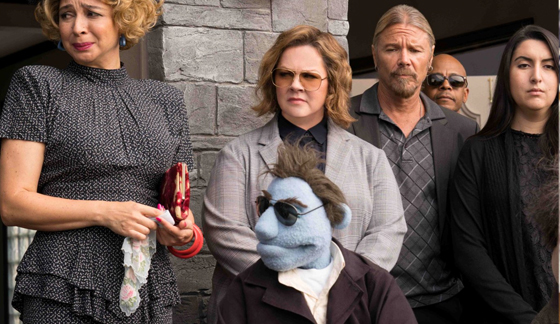
Meet Phil Phillips (voiced by Bill Barretta).  He’s a former puppets cop turned private detective.  Actually, he’s been the ONLY puppet cop.  Due to a mishap that led to the killing of an innocent bystander, Phil was fired and a law was put into place forbidding puppets to be police officers.  One day Phil is hired by a mysterious lady-puppet.  His leads take him to an adult bookstore, where he runs into Bumblypants, one of the puppet characters of the popular 80’s kids show “The Happytime Gang.”  As Phil investigates another part of the shop, Bumblypants is murdered.  Soon, other members of the cast are also brutally murdered and the finger points at Phil.  Can he clear his name?  Maybe.

A fun combination of live-action and puppets, “The Happytime Murders” is an outrageously raunchy look at what life may have been like on a certain “Street” if that show had taken place in the worse part of the worse town ever.  In the world of “Happytime” humans and puppets co-exist, though the puppets are often horribly treated.  Call it “Apuppethied.”  Phil’s former police partner, Detective Connie Edwards (McCarthy) is called in to investigate the case and must reluctantly team up with Phil before the entire cast of the show is murdered.  Along the way they must deal with a world full of sex, drugs and violence.  This isn’t your parent’s “Street.”

Let me say this up front (or in the middle):  THIS IS NOT A KIDS MOVIE.  Don’t be fooled by the puppets and the bright lights.  Taking a child to this film will traumatize them for life.  So, again, unless you want to see a puppet re-enactment of Sharon Stone’s famous reveal from “Basic Instinct,” or want to explain to your little one what an eight-armed reach-around is, leave them home.  That being sad, THIS IS AN ADULTS MOVIE.  The jokes are funny, the visuals outrageous and the overall mood of the film will put a smile on your face.  The combination of human and puppet characters is well portrayed, and as the film goes on, you forget your watching puppets.  They become believable characters, which is what you need to make a film work, especially a comedy.  Like “Who Framed Roger Rabbit?,” the melding of human and non-human characters is seamless.  Well, except for the seams on the puppets.  J

Film Review: “Crazy Rich Asians”

CRAZY RICH ASIANS

Starring: Constance Wu, Henry Golding, Michelle Yoeh
Directed by: Jon M. Chu
Rated: PG-13
Running Time: 2 hrs
Warner Bros.
 
Romantic comedies can often be a dime a dozen with about as much substance contained in the atmosphere of Mars. Of course, there are brilliant, diamond-like exceptions such as 2017’s “The Big Sick” or 2012’s “Silver Linings Playbook.” While the new “Crazy Rich Asians” may not be nearly as creative or fulfilling as those movies, it’s still at least as good as an unpolished sapphire.
 
Directed by Jon M. Chu, best known for such “legendary” works as “G.I. Joe: Retaliation” and “Now You See Me 2,” “Crazy Rich Asians” is based upon the 2013 novel of the same name by Singaporean/American novelist Kevin Kwan. It begins in a flashback when Eleanor Young (Michelle Yoeh, “Crouching Tiger, Hidden Dragon”) is denied entrance into a posh New York City hotel when the white manager sees that she is of Chinese descent. What the racist manager doesn’t know is that Eleanor and her husband, whom we strangely never meet during the movie despite being very much alive, are the hotel’s new owners. It’s a scene that sets up her fierceness, which we later see in an unfavorable light.
 
Flash forward to present day when brilliant American economics professor Rachel Chu (played sweetly by Constance Wu, “Fresh Off the Boat”) is invited by her longtime boyfriend Nick Young (British/Malaysian actor/model/TV host Henry Golding) to his best friend’s wedding in Singapore. However, charming Nick has not been completely forthright with Rachel when he reveals on the plane that he comes from a wealthy Singapore family, the scope of which she is too naïve to fathom yet.
 
Upon their arrival in Singapore, Rachel is swept away by a night out in Nick’s vibrant hometown with his best friend and his fiancé. Despite descriptions he gives of his family and their business empire, it’s not until Rachel visits her outlandish college friend Peik Lin Goh (Awkwafina, “Ocean’s 8”) that she learns just how influential the Young family is. The real problem, though, is not necessarily the vast gulf between Nick’s upbringing and hers. Instead, it’s the fact that she is an American of Chinese descent and not directly from China, which is something Eleanor is less than fond of.
 
So, between Eleanor and a myriad of jealous, petty Singapore girls who do everything they can to drive her off, Rachel has her work cut out for her if she wishes to see her relationship with Nick continue.
 
“Crazy Rich Asians” has nothing all that new to offer to the romantic comedy genre. It has all the prerequisite boxes you can check off like clockwork – resistant parents of one or both members of the couple; crazy, jealous exes; a goofy best friend that can always be depended upon; a goofy friend that no should ever count on; an impending marriage of some sort; etc. In that sense, “Crazy Rich Asians” is about as crazy as a block of wood.
 
Despite its stereotypical characters and plot we have seen a plethora of times in various forms, “Crazy Rich Asians’ still manages to be an entertaining flick. There are plenty of genuine laughs to be had, especially in scenes involving the hilarious Awkwafina and/or her character’s equally goofy father played by “Hangover” alum Ken Jeong. The romance itself will undoubtedly pull at some heartstrings plus there is a fantastic side story of eventual female empowerment that will make anyone feel good.
 
All in all, “Crazy Rich Asians” is a great date flick for any couple of any age, but don’t expect go into expecting to see something that truly separates itself from general, romantic comedy fair.

Film Review: Alpha

Starring: Kodi Smit-McPhee, Johannes Haukur Johanneson and Leonor Varela
Directed By: Albert Hughes
Rated: PG-13
Running Time: 96 minutes
Sony Pictures Releasing

Back in elementary school, my school would take classes on field trips to the Kansas City Zoo at least twice a year. On one of the occasions, instead of checking out the various animals dotting the grounds, we’d instead seek air conditioned or heated shelter to watch movies at the Sprint IMAX Theater. The film fare would usually be a nature documentary or some good-intentioned PG movie. If the Sprint IMAX Theater was still around, I could see “Alpha” being used as an excuse for a field trip.

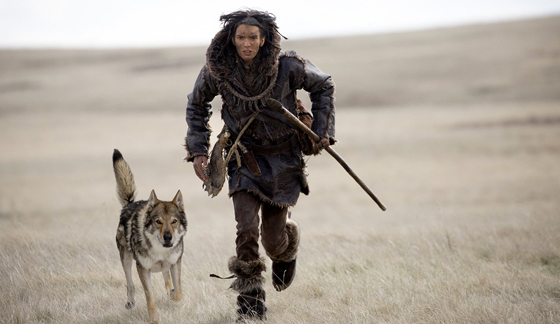
Set 20,000 years ago in Europe, “Alpha” follows Keda (Smit-McPhee), who’s been left for dead by his tribesmen and father, after a bison hunting expedition. Accompany Keda on his journey back home is an unlikely ally, an injured wolf-dog that he nurses back to health. Pitched as the origins of man’s best friend, this movie is only mildly entertaining because of the elements the human and his four-legged friend encounter. Otherwise it’s a humdrum trip back in time.

According to various news outlets, “Alpha” has apparently been sitting on Sony’s film shelf for about a year, with the release date constantly being pushed back or up for various and unknown reasons. I suspect it has something to do with the film aiming for a vibe like that acclaimed “Quest for Fire” vibe, but instead coming off more like Roland Emmerich’s lazy “10,000 B.C.”

It makes noble attempts at visual storytelling, by having very little dialogue, and when primitive man does open its mouth, it’s gibberish that’s translated through on-screen captioning. It may have actually played better without, forcing audiences to immerse themselves further into the Ice Age experience. Instead the movie dumbs itself down a lot, and even throws in some coming-of-age storytelling tropes in for good measure.

“Alpha” could serve as a starting point for young ones interested in human history, but their parents may find themselves rolling their eyes or checking their phones. Director and writer Albert Hughes has a spotty history, but with “Alpha” has shown a little growth visually and narratively. I can’t help but think that ALPHA may have been a much better and nuanced film in someone else’s hands. There’s a lot of potential, but the finished product, while being polished and dazzling, feels like a mix of unnecessary studio meddling and dog-lover peddling.

Film Review – “The Cakemaker”

THE CAKEMAKER
Starring: Tim Kalkhof and Sarah Adler
Directed by: Ofir Raul Graizer
Rated: Unrated
Running Time: 1 hr 53 mins
Strand
 
Sometimes it takes just a little patience for a cinematic experience to blossom into a piece of work that can be appreciated for its artistic endeavor. While the Israeli drama “The Cakemaker” may be littered with delicious looking pastries, it takes about half of its nearly two-hour running time before it offers something you can sink your teeth in to. Directed and written by Israeli filmmaker Ofir Raul Graizer (“Dor”), “The Cakemaker” is slow to develop during that first half and it leaves us wondering if it is going somewhere. Thankfully, it saves itself from blandness and leaves us wondering something entirely at the end.
 
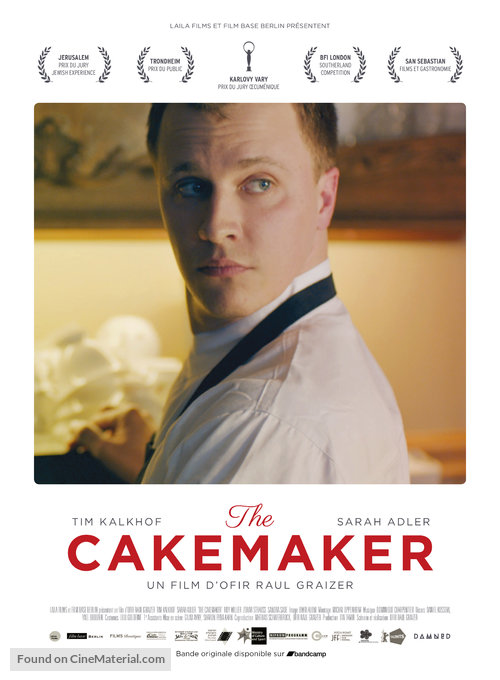
Premiering at this year’s 52nd annual Karlovy Vary International Film Festival in the Czech Republic, “The Cakemaker” introduces us to Israeli Oren Nachmias (Roy Miller, “When Heroes Fly”) when he steps into a Berlin bakery where a young, talented German baker named Thomas (Tim Kalkhof, “Homeland”) is working. In quick order it is revealed that Oren is living a secret life as a gay man while maintaining the life of a happily married family man in Jerusalem. Their affair continues for a quite some time as Oren routinely travels to Berlin on business. However, it all comes to an end when Oren is killed in a car accident after returning home on one of his trips.
 
It takes a while for him to find out, but when Thomas does he is left in a daze. Armed with information he gleaned from Oren during their relationship, Thomas travels to Jerusalem to find Oren’s widow, Anat (Sarah Adler, “Foxtrot”). While keeping his knowledge of Oren a secret to himself, Thomas eventually garners a job at Anat’s struggling kosher café. His pastries, however, turn her business around, much to the chagrin of some in Anat’s Jewish neighborhood.
 
It’s all quite dry and laborious, but there is a tangible creepiness to Thomas’s actions as he inserts himself deeper and deeper into his former lover’s life. He even goes so far as to wear a pair of Oren’s swimwear and run in his jogging shorts. What Thomas doesn’t count on is the attraction that the still grieving Anat begins to develop for the troubled German. It puts him in awkward position, but it also appeals to his yearning to experience Oren’s life.
 
Graizer’s story is nothing extraordinarily original, yet he inserts enough small twists in it to make it passably interesting. The relationship between the two men is poorly developed in the beginning, which makes it difficult to become invested in the story. Important elements are brought to light much later, which helps the second half of the film but still leaves the first half high and dry. Graizer’s pacing is also sluggish with too many moments of utter silence with nothing of interest transpiring. Yawn.
 
Miller’s performance is just a blip on the radar and Adler’s is merely satisfactory without enough depth of emotion. Contrary, Kalkhof wears a terrific mask on his face as Thomas is a perplexing character to figure out. What exactly is his end game? Does he want to live a lie, or does he want to do harm to everyone in the middle of the night? His blue eyes speak of someone who is moving along with clear thoughts, but there is a churning, pent-up ocean of emotion rolling around inside him.
 
“The Cakemaker” is a solid endeavor of average cinema with an ending that at least everyone can sit around and debate for a while.

Film Review – “BLACKkKLANSMAN”

BLACKkKLANSMAN
Starring:  John David Washington, Adam Driver and Topher Grace
Directed by:  Spike Lee
Rated:  R
Running time:  2 hrs 15 mins
Focus Features

Spike Lee and I go way back.

The movie theatre I managed in Baltimore was in an urban area.  I proudly showed “She’s Gotta Have It” and “School Daze.”  I was (and still am) angry that “Do the Right Thing” wasn’t nominated for a Best Picture Academy Award and I was thrilled to meet him and speak for a few minutes in Washington D.C. while he very graciously signed my “Malcolm X” script.  I should also mention that I silently cursed him when he shot a reel of his film “Crooklyn” in the widescreen format but intentionally didn’t adjust it, giving the film a look that caused many customer complaints and passes given out.  He’s made more good movies than bad and this week he’s here with one of his best.

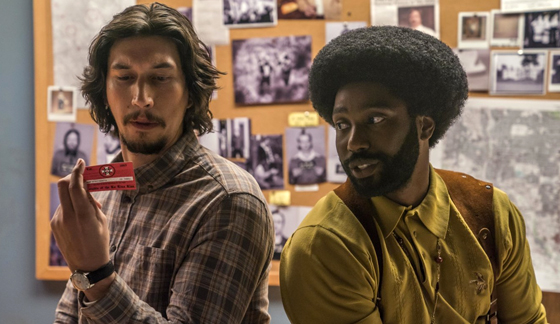
It’s the 1970s.  Ron Stallworth (Washington) is a black police officer in a time where, if you’re the first one on the scene of a crime, your fellow officers may think YOU are the perp.    One day, while reading the newspaper, Ron comes across an ad for the local chapter of the KKK.  As a joke, he sends in for his membership card and is delighted to get it.  When Ron is invited to meet the membership, he agrees, sending fellow officer Flip Zimmerman (Driver) in his place.  Zimmerman is Jewish and has to learn to keep his emotions to himself when surrounded by the idiot gang he finds himself a part of.  As Ron/Flip get deeper into the group, they soon find themselves chatting up David Duke, then the first Grand Wizard of the KKK, today pretty much a punchline.  When Duke is scheduled to come to Ron’s town, things go from comical to serious as the groups true goals are announced.

Powerful and pertinent, “Blackkklansman” is a film that deals with both the past and the present.  Director Lee and co-writers Kevin Willmott, Charlie Wachtel and David Rabinowitz have created a world that anyone over 21 will recognize.  There is humor but then there is horror.  Not violent horror, but the horror at the spoken word.  Can people truly be this vile?  Sadly, yes.

As with many of Lee’s films, a great cast has been assembled.  I was surprised to learn that leading man Washington is the son of Denzel.  If this performance is any indication, Pop better keep an eye on the rear view mirror.  He plays Stallworth with the dignity required, something that wasn’t easy to display in the early 1970s.  Driver is equally good here.  This is the first thing I’ve seen him in since the last two “Star Wars” films and – SPOILER ALERT – though as a filmgoer I will never forgive him for killing Han Solo, I will continue to recognize him as an actor to watch.  As David Duke, Grace is pitch perfect.  He doesn’t scream out his hatred, like his dimwit followers.  He oozes it, like the politician he would later become.

“Blackkklansman” took home the Grand Jury Prize at this year’s Cannes Film Festival and I look for it to be a front runner when the Oscar nominations roll around.  Do you hear that, Academy?  I don’t won’t to get angry again!

Film Review: “The Meg”

THE MEG
Starring:  Jason Statham, BingBing Lee and Rainn Wilson
Directed by:  John Turtletaub
Rated:  PG 13
Running time:  1 hr 53 mins
Warner Bros.

If you’ve learned anything about me over the years, you know that “Jaws” is my favorite film.  That being said, every time a new shark themed film shows up (“Deep Blue Sea,” “Open Water,” “The Shallows,” etc) I have to put my blinders on and do my best not to compare the film to “Jaws.”  However, when the film in question steals whole sequences from the film, I may bet a little testy.

We meet Jonas Taylor (Statham) as he and his rescue team are trying to save the crew of a submerged vessel.  However, just as you think they’re all going to survive, they are attacked by “something,” causing Taylor to leave behind a couple teammates, who inevitably die.  Fade to black and jump ahead a few years.

Welcome to the bottom of the ocean, inside the Mariana Trench.  A bizarre philanthropist (Wilson) has financed an expedition to the trench with the purpose of trying to go deeper.  The idea is that it’s so cold at the bottom of the ocean that maybe you’re not on the ocean’s floor.  Maybe you’re just blocked.  Crazy guy arrives at his sea platform, which is full of scientists and a cute Chinese family (older father, daughter and granddaughter).  The mission is a success, but while down below their sub is attacked by “something.”  Only one person can help them…someone whose life was changed by “something.”  But what?

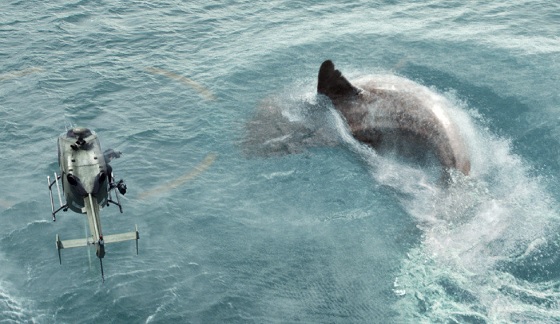
With a few good special effects shots and a cast that’s trying way too hard, “The Meg” is passable entertainment.  A giant shark that can actually eat people whole is kind of cool, though the filmmakers can’t seem to decide on how big it is.  When it’s out to sea it’s HUGE, knocking over boats and gobbling up people like cocktail peanuts.  But when it comes close to shore, where hundreds of people are bathing, it easily swims by, not one person noticing the 60 foot monster that just passed by.

Director Turtletaub has directed four films since 2004, three of them starring Nicolas Cage, the master of over-emoting.  He would have made a fine substitute to Statham, who has proven himself in other films.  The slow parts between shark appearances start to add up, and the film feels every bit of its almost 2-hour run time.

To steal (and paraphrase) from Woody Allen in “Annie Hall,” a film is like a shark.  It has to keep on moving or it will die.  And what we’re dealing with here…is a dead shark.

Film Review: “Three Identical Strangers”

THREE IDENTICAL STRANGERS
Starring: Robert Shafran and David Kellman
Directed by: Tim Wardle
Rated: PG-13
Running Time: 114 minutes
Neon
 
“Three Identical Strangers” is the best documentary thus far in 2018 and one of the best overall films of the year. The well-deserved recipient of a U.S. Documentary Special Jury Prize for storytelling at the 2018 Sundance Film Festival, “Strangers” is a compelling work that is thoughtful, compelling, moving and leaves a lasting impression for many moons after the credits have faded to black. Even though it’s been 38 years since long lost triplets miraculously reunited, it remains a story with ripple effects being felt to this very day.
 
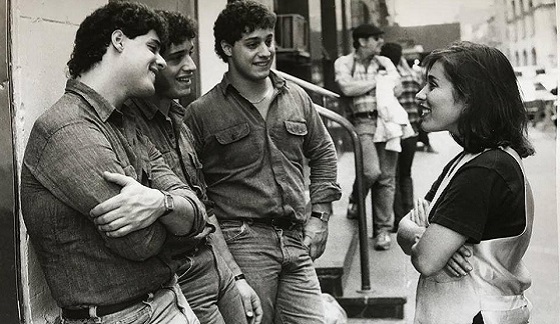
Initially, “Strangers” reels us in with an infectious enthusiasm we feel radiating from Robert “Bobby” Shafran who describes with a gregarious smile how he stumbled upon his identical twin brother, Edward “Eddy” Galland. Their reunion made headlines across the country, but it became even crazier when a third brother, David Kellman saw doubles of himself in a newspaper. The triplets became overnight sensations and appeared on a multitude of media outlets at a blistering pace, which was only matched by their wild partying. Both David and Bobby recount those days, as well as how they started families, with great fondness. However, things start to take dark turn as “Strangers” begins to develop a grittier, tragic tone with its probe into how they were separated in the first place.
 
As it turns out, the triplets improbable, 1980 reunion in New York set a series of disturbing events in motion that began with a negative meeting between the brothers’ angry parents, who were upset their sons had been intentionally split apart, and an adoption agency with some shadowy backers. It’s paired with an author/journalist in Texas who uncovers a secret study that, as David describes, turned the brothers into lab rats.
 
The sinister background to it all begins with late child psychiatrist and psychoanalyst Dr. Peter Neubauer (1913-2008). Neubauer was an Austrian Jew who was able to escape his Nazi-controlled country by fleeing into neutral Switzerland where he completed his training before moving in 1941 to New York City. It sounds heroic enough until we learn that like the Nazis he fled from, Neubauer initiated an inhuman, concentration camp-like experiment by orchestrating a program in which several sets of twins and one set of triplets, the brothers in “Strangers,” were deliberately separated during infancy as part of a clandestine “nature vs. nurture” experiment. Even more shocking is that it was the Jewish Board of Family and Children’s Services who helped Neubauer with a program that led to a variety of mental health issues among its unwitting participants as they entered adulthood.
 
Naturally, Bobby and David, among others, continually try to demand answers, but he ended the program in 1980, Neubauer, realizing his work would be controversial, had his study sealed upon his death at Yale University until the year 2066, thus insuring its participants would be dead by the time its findings would be released to the public.
 
“Strangers” is a superb example of documentary filmmaking as it entertains, educates and causes thought provoking discussion of the subject matter. All of director Tim Wardle’s interview subjects are engrossing to listen to and his overall storytelling flows naturally like winding stream. His work shines a light on a dark tragedy that almost disappeared into the shadows. This is a film that should not be missed.


Film Review: “The Darkest Minds”

Starring: Amandla Stenberg, Mandy Moore and Gwendoline Christie
Directed By: Jennifer Yuh Nelson
Rated: PG-13
Running Time: 105 minutes
20th Century Fox

I shouldn’t be surprised that there’s another attempt by Hollywood to build another young adult dystopian franchise. Just seven months ago in January, “Maze Runner” was wrapping up a successful franchise that nearly hit the $1 billion mark worldwide. Enter “The Darkest Minds.”

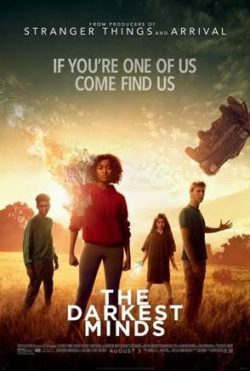
Based on Alexandra Bracken’s books, “The Darkest Minds” is about a pandemic, called IAAN, which has wiped out 98% of people under 20-years-old, leaving behind a mutated 2%. This 2% is divided up by a color system, designating their mutated powers, with green being the safest and red being the most dangerous. Green means they’re highly intelligent, blue means they’re telekinetic, yellow means they can control electricity, orange means they can control the minds of those around them and red means they control fire. Someone should really flip orange and red in terms of danger.

Red and orange children are immediately murdered by the government once the scientists figure out their color code. Ruby (Stenberg) is an orange, but before they can off her, she uses her powers to convince the lab coat scientists she’s a green. So she’s shuffled in with the rest of what’s left of America’s youth to work camps, while our country figures out the cause and origins of IAAN. I haven’t even touched on Ruby’s parents, the time jumps, or President’s son who is also an orange. By the way, this all is thrown at the audience in the first few minutes so fast that you’d suffer whiplash trying to digest it all.

“The Darkest Minds” is a mix of “X-Men” and “Divergent.” I begrudgingly mention “X-Men” and this film in the same sentence. It’s a very by-the-books film that is only mildly amusing because of its main young actor. Stenberg, who’s actually better than her IMDB suggests, provides an emotional weight to Ruby, even when we’re trying to figure out what the hell is going on with the plot. I give points for the movie making Ruby sympathetic, brave and an endearing female lead, but also subtract points for the cliché beats her character goes through.

There are moments where I thought the film would distinguish itself amongst the pack by tying its dystopian themes to contemporary problems, something most studios seem to be afraid of doing because of today’s political climate. I can easily think of several things that could have been said when scared adults are attempting to control kids because of the power they’re about to wield. Or even the decaying world that older generations are leaving behind for future generations. But instead the writers rely on the tired tropes of being yourself and the generalization of “fight the good fight.”

I don’t want to pile on anymore to a movie that has somewhat good intentions and I’m sure is based on a decent book (I say decent because it has warranted five sequels). “The Darkest Minds” may have been better with love and care, or maybe if it came out during the “Harry Potter” films. It might please a younger audience that’s new to the genre, but for those of us who’ve seen these films come out every year since “The Hunger Games,” the air around these young adult films continues to stagnate.

Film Review: “Eighth Grade”

Starring: Elsie Fisher, Josh Hamilton and Emily Robinson
Directed By: Bo Burnham
Rated: R
Running Time: 93 minutes
A24

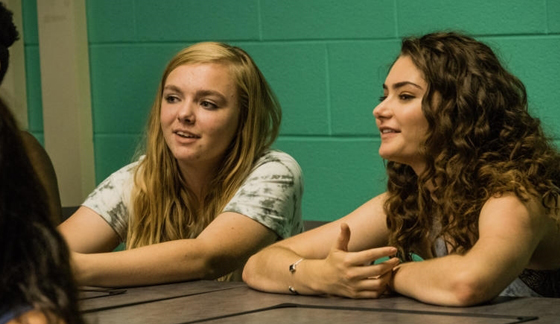
Cringy. Heartfelt. Anxiety inducing. Unflinching. Heartbreaking. Hopeful. “Eighth Grade,” Bo Burnham’s debut film, seemingly has it all, and it does. You can’t call “Eighth Grade” a coming-of-age movie because the character in this film is 14-years-old and about to head into high school. Kayla (Fisher) still has a lot of growing to do and the point ‘A’ to point ‘B’ journey in this film at least reassures viewers that there’s a bright future for Kayla despite a lot of nerve-wracking speed bumps along the way.

Kayla paints a social media portrait that she’s happy, an advice guru, and seemingly has this near-perfect life. She uploads videos onto Youtube detailing her own life, the lessons she learns and how to radiate confidence. She’s also constantly updating her Instagram and Snapchat (sorry for those of you wondering about her Facebook, Generation Z doesn’t use it and it’s not cool anymore). But behind this online facade, Kayla actually doesn’t have friends, no viewers on her Youtube channel, and was just awarded the quietest kid in school (what school official thought that was a good award for the student body to vote on?).

“Eighth Grade” is all about Kayla’s final week in middle school and her preparations for high school. Most people will relate to Kayla’s urge to hit the reset button after a less than stellar outing in middle school. That relatability is what will allow the movie to eventually make your stomach do summersaults and potentially tear your heart in two. But luckily for the audience, Burnham shows restraint and puts away the dagger that he could have easily plunged deep into your heart.

My experience with this film was like the first time I watched Burnham’s stand-up. It was something I had seen before, but it felt new because of how personal and forward it was. Just like his stand-up, “Eighth Grade” pulls no punches in delivering some biting, brutally honest commentary. The apprehension is temporarily relieved multiple times throughout by well-scripted jokes, usually playing off teenage cluelessness and growing pains. Burnham is kind enough to keep everyone, characters and audience, in on the joke instead of making either the butt of one.

So much of Burnham’s soul is laid out in “Eighth Grade,” and not just through Kayla. Her father, played by the great Josh Hamilton, embodies much of what Burnham most likely experienced with his parents or he’s simply conveying his own parental ambitions of nurturing and care for when he becomes a father. But just because Kayla is a girl and she’s being raised by a single parent, doesn’t mean both characters speak volumes for everyone, regardless of gender, color, creed, family dynamic, etc.

“Eighth Grade” is a harrowing, sincere trip through one of the most emotionally vulnerable times in people’s life. I’m sure that some people didn’t have the kind of middle school experience Kayla had, but it’s a refresher for us to remember we’re all human and all feel the same kinds of raw emotions. There are even some solid teaching moments for the tweens who do eventually pile into the theater or watch this film at home. Burnham proved he’s a formidable force in comedy over the past several years, and now with “Eighth Grade,” he’s proven that he’s a formidable force in the film industry.
 

Related Content

Film Review: “Christopher Robin”

CHRISTOPHER ROBIN
Starring:  Ewan McGregor, Hayley Atwell and Jim Cummings
Directed by:  Marc Foster
Rated:  PG
Running time:  1 hr 44 mins
Walt Disney Pictures

Why do we have to grow up?

I’m 57 (58 next month) and as my childhood gets further and further away, I miss more and more the things of that time.  I think most of us do.  To forget out childhood, and our childhood friends, seems like an impossibility.  But not to Christopher Robin.

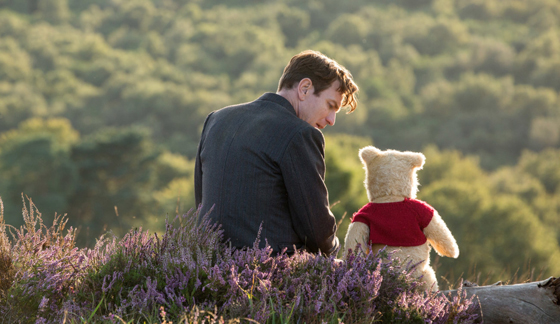
When we meet young Christopher (Orton O’Brien), he is being honored at a going away party by his best friends in the Hundred Acre Wood.  As stories are told and gifts exchanged, it is his stuffed bear, Winnie the Pooh (voiced by Cummings) that says what everyone is thinking:  “I wish this could go on forever.”

A film that melts your heart in its first five minutes, “Christopher Robin” follows the title character (McGregor) into young adulthood, where he goes off to school, falls in love, goes to war and then settles down to raise a family.  Now a working-class family man, Robin’s daily duties include cutting costs at the luggage manufacturing company he works for and ducking his Gin Rummy-crazed next door neighbor.  He has long ago put away his drawings from childhood, where he and his friends would have adventures.  His latest adventure – breaking his promise to his daughter and sending she and her mother off on holiday alone.  Another weekend working.  Oh, bother.

A perfect blend of live action and CGI, “Christopher Robin” brings back to life such cherished characters as Tigger (also voiced by Cummings), Eyore (Brad Garrett), Piglet (Nick Mohammed), Rabbit (Peter Capaldi) and Owl (Toby Jones).  Along with Pooh, they do their best to convince a dubious Christopher that you can’t lose the past if you don’t want to.  “Did you let me go,” Pooh asks softly.  Christopher can only ponder the question.

McGregor is perfectly cast as a young husband and father, trying to provide for his family and not realizing that, the more he tries, the further they are drifting apart.  Atwell is just as strong as Christopher’s wife, Evelyn, and young Bronte Carmichael is sadly sweet as their daughter, Madeline.  The special effects are flawless and, if you’re not too careful, you too might find yourself talking to stuffed bears and planning age-old adventures.

Film Review: “Don’t Worry, He Won’t Get Far On Foot”

DON’T WORRY, HE WON’T GET FAR ON FOOT

Starring: Joaquin Phoenix, Jonah Hill and Rooney Mara
Directed by: Gus Van Sant
Rated: R
Running Time: 1 hr 54 mins
Amazon Studios
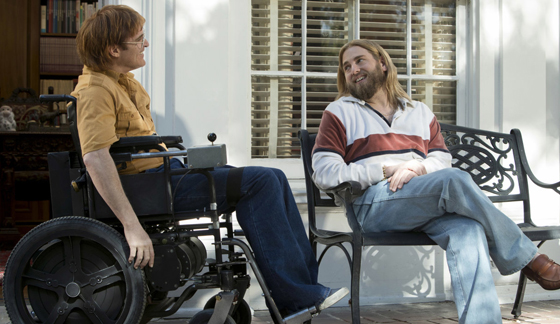
There is little doubt that the late cartoonist John Callahan (1951-2010) was as politically incorrect as they come. However, to paraphrase Jim Morrison, he had enough of a good life, or at least enough of an interesting one to base a movie on. After several years in limbo, Callahan’s biopic “Don’t Worry, He Won’t Get Far on Foot” has finally hit the silver screen. Directed by Gus Van Sant (“Milk,” “Drugstore Cowboy”), this emotionally charged drama is one of the best films of 2018 thus far. This is due in large part to epic performances by three-time Oscar nominee Joaquin Phoenix (“The Master,” “Walk the Line,” and “Gladiator”) as the lead and Jonah Hill (“The Wolf of Wall Street,” “Moneyball”) in a supporting role.
Based upon Callahan’s memoir “Will the Real John Callahan Please Stand Up?”, “Don’t Worry” is not a step-by-step biopic flick as it subtly dances back and forth among time frames during his life. An extra curve ball is thrown into the mix when some of his more notable drawings interject themselves across the screen to punctuate what his critics labeled as off-color humor. What we do learn about Callahan is that he was abandoned at a Catholic orphanage soon after birth and grew up in an area of Oregon called The Dalles near Portland. An alcoholic starting at the age of 12, Callahan became a quadriplegic at age 21 when on one evening in 1972 the equally inebriated driver (played by Jack Black) of his Volkswagen crashed into a utility pole at 90 miles per hour.
After months of rehabilitation, Callahan is eventually released back into the wild, but he continues to drink, something that is not played as darkly as it could have been. A day eventually comes when he hits rock bottom and he joins an Alcoholics Anonymous group sponsored by the guru-like son of rich parents, Donne Green (Hill). Green speaks continually of being honest and of recognizing a higher power to Callahan as he slowly makes his way through a 12-step program. Through it all he develops a relationship with a pixie-like flight attendant (Rooney Mara) from Sweden whom he first meets shortly after his spinal surgery. It’s an unlikely relationship and one that seems out of place within the film. It impedes the overall pacing of the story as it also eliminates other aspects of the real Callahan’s life that could have been examined – his earning a degree at Portland State University, his troubled childhood, or the six-year bender he went on after his accident, for example.
Don’t worry, this film is not all gut-wrenching sadness and pain as there is joy to be found in watching Callahan discover his true gift in life, a gift that led him to becoming a successful newspaper cartoonist despite his physical limitations. Phoenix delivers a raw, emotional performance as dives into his character with abandon. It ranks as one of his best roles and deserves to be remembered when Oscar season comes around. The same can be said for Hill who shines in a career defining role as an AA sponsor with his own set of demons. It is a genuine pleasure to watch them both as “Don’t Worry” won’t leave you any time soon after you leave the theater.

Copyright: MediaMikes.com © 2018 · Powered by: nGeneYes, Inc. · Login

All logos and images used on this website are registered trademarks of their respective companies. All Rights Reserved. Some of the content presented on our sites has been provided by contributors, other unofficial websites or online news sources, and is the sole responsibility of the source from which it was obtained. MediaMikes.com is not liable for inaccuracies, errors, or omissions found herein. For removal of copyrighted images, trademarks, or other issues, Contact Us.