

Film Review: “American Honey”

Starring: Sasha Lane, Shia LaBeouf and Riley Keough
Directed By: Andrea Arnold
Rated: R
Running Time: 163 minutes
A24

Our Score: 3.5 out of 5 Stars

The thought of a nearly three hour movie starring Shia LaBeouf is likely to scare a lot of people off from watching “American Honey” and I’m not going to sway you back. “American Honey” is a road trip movie without an end or direction, but during its entire runtime, it feels like it should. It’s a unique movie with an honest portrayal of Middle America, but also a frustrating long movie without a rebuke for some of its more sour themes.

Having been filmed in parts of the Kansas City metropolitan area, I admit I felt a unique connection to the movie, seeing all the familiar sights. That familiarity helped me attach characters to people that populated my own Kansas City high school and neighborhood. But the movie doesn’t begin in my hometown; it begins in lower class suburban Florida with Star (Lane). When we meet her, she’s scouring dumpsters for tossed out food that’s still in the bag. It’s so she can feed her younger brother and sister because no one else will. Her father seems more focused on drinking beer and groping Star to slow-dance music, while her mom, having moved on with her life, seems more obsessed about line dancing at a country bar.

So it makes sense that Star is lured away by Jake (LaBeouf) and a crew of ruffians that sing along to gangster rap and Rihanna’s #1 hits. Jake’s innocent flirting and the promise of a life without restraint convinces Star to abandon her siblings, leaving them in her divorced parents “care”. This new life though, with Jake and the others, is actually a “magazine crew” (those annoying kids who find a different lie every time to sell overpriced magazine subscriptions) that goes from town to town across the country. Leading these youthful Nomads is a druggie vagabond that’s never sober.

The journey takes the “magazine crew” from Kansas City to Oklahoma to Grand Island, Nebraska and to Williston, North Dakota. Each city offers an interesting slice of Americana, from the rich people that dot the Midwest farmland to the blue class workers stuck in underpaying jobs. “American Honey” seems to offer more spice and intrigue with the people that Star encounters, which is unfortunate considering how interesting Star’s character is.

She’s good-hearted and naturally trusts the strangers she encounters, even hopping in a vehicle with three adult men in Nebraska who take her back to their place for expensive tequila and steaks. She loves Jake even though he’s clearly a loser with deep emotional issues. She befriends everyone in the “magazine crew” and appears to enjoy the work even though the “job” is exploiting her. She finds different ways to cheer up people around her or help those that she doesn’t know. Yet we never get a distinct feeling about how the sights and interactions are impacting her psyche or if she’s intelligent enough to understand the deteriorating situations around her.

Her aimless path possibly signifies the wanderlust that has infected much of America’s youth today. It never vilifies or champions the magazine crew beyond portraying them as the fun-loving potheads that they are. None of them seem like bad individuals or rotten apples, just young adults without ambition outside of money, getting inebriated and fornication. “American Honey” may simply be stating that youthful lethargy is a consistent no matter the generation. But there’s no denying that during the course of the movie, the pop-culture they consume is feeding into their apathy and idleness.

“American Honey” never blames Star and the others for what the audience may be faulting them with, but it never really points any blame at anyone. Without ever coming to a conclusion, it’s very frustrating that the movie never points a finger of blame or indirectly implies that the actions of someone, something, or society has led Star to this fun, yet troubling point in life. “American Honey” may simply be asserting that bad things happen and may always happen to a certain demographic of this country and that their joy is just as fleeting as their youth.

“American Honey” will certainly have meaning to various people and that might actually be one of its strongest points. It paints such a vivid and beautiful picture of youth in the U.S., that it could say a lot of honest things to a lot of different people. It’s a movie that grew on me, much like a melancholy memory from my youth. I may not have enjoyed the experience, but looking back on it I slowly begin to understand its importance and significance. But I go back to the first sentence of this review and say, do you really want to watch a directionless movie that pushes towards three hours with Shia LaBeouf? If you want an idiosyncratic art film, this is it. But you also run the risk of finding yourself bored and exasperated.

Film Review: “The Girl on the Train”

Starring: Emily Blunt, Rebecca Ferguson and Haley Bennett
Directed By: Tate Taylor
Rated: R
Running Time: 112 minutes
Universal Pictures

Our Score: 3 out of 5 Stars

Something’s in the water in Westchester County, New York. Megan Hipwell (Bennett) refers to herself as the county whore to her psychologist (Edgar Ramirez), while flirting with him in over-the-top fashion. She’s cheating on her emotionally abusive husband, Scott Hipwell (Luke Evans), presumably with more men than just her psychologist. Her carefree and apathetic nature is used to mask her emotionally fragility. The Hipwell’s next door neighbors are dealing with turmoil of their own, but not within their own marriage. Anna Watson (Ferguson) and Tom Watson (Justin Theroux) are dealing with Tom’s ex-wife, Rachel (Blunt).

Rachel may just as be emotionally damaged as Megan. She takes the train to her non-existent job every day so she can glance at her ex-husband’s home for a brief second. Unknowingly, she also is glancing into the home life of Megan and Scott’s life. In her head, Rachel imagines a happier home than the one that actually exists. Everyone collides and connects in a disgruntled mess when Megan goes missing the same night Rachel goes on an epic bender involving a full fifth of vodka and hotel-sized bottles of other assorted liquors. Rachel begins to include herself in everyone’s lives even more while also being a prime suspect in the criminal investigation behind Megan’s disappearance.

“The Girl on the Train” will most likely be compared to 2014’s “Gone Girl” which is really unfair. “The Girl on the Train” isn’t as smart, witty, or amusingly dark as “Gone Girl”. “The Girl on the Train” is more like a contemporary reimagining of the late 80’s and early 90’s steamy murder skin flicks like “Fatal Attraction” or “Disclosure”. The comparison to “Gone Girl” may be because of the narrative for “The Girl on the Train,” which is very confusing at times. It jumps back and forth between the past and present so much that you begin to mistake who’s telling the story and which story has already happened and which one is still unfolding.

The time jumps are a method by the film to confuse the viewer about who’s responsible for Megan’s disappearance and, as anybody could easily guess, her death. The movie leaves a lot of red herrings, but the movie makes a fatal mistake by establishing from the get-go that when we see things through Rachel’s eyes, she’s an unreliable narrator, ultimately nixing any theories or ideas that come falling out of her brain or her blurred drunken visions.

“The Girl on the Train” is a two-hour version of “48 Hours” that intentionally jumbles up the “who-dun-it” portion of the story. But if you’re a keen observer, you’re going to ultimately guess what’s going on during Rachel’s alcohol fueled hallucinations, Megan’s flashbacks during her psychologist visits, Scott’s recollections and the unsettling calmness of Anna and Tom’s love life. By the time the big twist arrives, the movie isn’t quite sure how to proceed. It ends up over explaining how it all went down and tries to find some resemblance of meaning to end on.

“The Girl on the Train” is carried mainly behind some terrific performances, including Blunt who portrays a struggling alcoholic coping with horrific memories and a failed marriage. If the movie was more memorable, Blunt would surely be an early runner for a best actress Oscar. Bennett’s character, despite not being too relatable or sympathetic, is given meaning and passion through Bennett who once again, may have been in an early running for an Oscar if this movie was better. “The Girl on the Train” isn’t this year’s “Gone Girl” and won’t be a movie you’ll be talking about long after you leave the theater, but is interesting enough to sustain its near two-hour runtime. Folks who regularly watch Investigation Discovery will find plenty to enjoy here and others, like me, may find it’s brooding steaminess oddly charming, but ultimately flawed.


Related Content

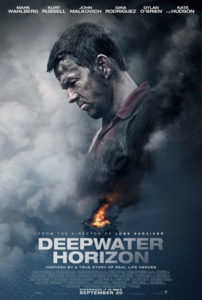
Film Review: “Deepwater Horizon”

Starring: Mark Wahlberg, Kurt Russell and John Malkovich
Directed By: Peter Berg
Rated: R
Running Time: 107 minutes
Summit Entertainment

Our Score: 4.5 out of 5 Stars

Over six years ago, the Deepwater Horizon explosion triggered the worst environmental disaster in U.S. history. Since then, BP has agreed to the largest corporate settlement in history, to the tune of nearly $19 billion in fines. The economic impact to the Gulf Coast was even higher, with estimates around nearly $25 billion, but it could easily be higher than that. Outside of the financial realm, thousands upon thousands of different animals and even hundreds of people on land suffered adverse health effects. As daunting as those numbers are, nothing cut’s as deep as the loss of a brother, father, or son, that 11 different families experienced on April 20th, 2010.

“Deepwater Horizon” covers the complicated 24 hours that led up to the explosion on the floating football field sized oil rig quite well. The movie mainly follows Mike Williams (Wahlberg), the Chief Engineer for Transocean. Transocean is a foreign property that actually owns the rig. The oil castle is on lease to BP, despite BP’s best attempts to run it like it’s their own. The petroleum palace is over one of the most difficult oil and gas prospects in the Gulf, the Macondo Prospect. Upon Williams’ arrival, the well is about to be filled up with a cement plug. But there’s a problem.

BP, constantly reminding them and the audience that the rig is behind schedule, isn’t concerned about doing the best job of creating or testing the cement plug that’s about to be put in place. They’re ready to clean up and move on to the next vast oil prospect. “Deepwater Horizon” paints the BP officials on-board the rig as nefarious penny pinchers, but in this case the pennies are hundreds of thousands of dollars. After a couple rounds of testing, the cement plug appears to be good enough for BP. , And against the beter judgement of Deepwater Horizon Manager Jimmy Harrell (Russell) and his crew, they go along with it. Sadly I think you know the rest.

While Berg spends every chance he gets making the audience loathe the slimy BP execs, he manages to humanize the people we encounter on the rig. While BP acts like they’re individual cogs to the massive machine that is the Deepwater Horizon, Berg shows them act more like a family unit. Like most co-workers in tight confines, they surely get on each other’s nerves, but the ebb and flow of the environment’s safety keeps them tight. Safety is the biggest component of survival and outside of the jokes, jabs and scowls, this crew ensures everyone stays safe and out of harm’s way.

The absolute panic and mayhem that takes over when the rig finally explodes into a massive fireball is intense to watch. This isn’t like most disaster movies where people complete inhuman feats of heroism to escape, this is blue collar men and women finding a way to survive in a scenario none of them were trained or prepared for. There are plenty of moments where characters express their deep despair at the situation, exclaiming through tears that they’re going to die. The media coverage of this event over half a decade ago was focused more on ecological disaster that it was and is still is today. We never got that human aspect as much and this movie is a tragic window into what happened in the span of a couple of hours.

Berg’s last movie, “Lone Survivor,” was a bone crunching look at how survival isn’t brave or courageous, it’s absolutely terrifying. “Deepwater Horizon” is the exact same, but instead of a warzone populated with soldiers, ordinary folks are dodging flaming debris, shrapnel from exploding metallic piping, and pushing broken bones back into place. Despite what the advertising says, “Deepwater Horizon” isn’t a movie with a hero that comes in and saves the day. These people saved themselves and they don’t feel like heroes, they feel survivor’s remorse. They wonder what they could have done differently to save their friends or stop the explosion.

Berg displays the heartbreaking range of emotions and his cast is able to reflect that without skipping a beat. Because many of us aren’t familiar with the names of those that were lost that day, there’s a decent amount of uneasiness about when someone could die or if they will die. For those who want to know what horror happened the night the Deepwater Horizon rig exploded, this movie captures it to near-perfection.

Film Review: “The Magnificent Seven”

Starring: Denzel Washington, Chris Pratt and Ethan Hawke
Directed By: Antoine Fuqua
Rated: PG-13
Running Time: 132 minutes
Columbia Pictures

Our Score: 2.5 out of 5 Stars

“The Magnificent Seven” feels like it comes about two months too late. I may have enjoyed this remake more if my phones weather app read triple digits outside and the theater was still pumping out Arctic air. “The Magnificent Seven” feels like a good fit for the summer line-up, especially with the cast at hand, stunning visuals and exciting action-packed finale. Maybe it’s because I’m gearing up for awards season or my mind is ready to overanalyze, but I was in total critic mode while watching this movie.

This remake of the original (which was also remake) follows familiar beats. Sam Chisolm (Washington) is a bounty hunter that is contracted by a pair of residents from Rose Creek. The town is under the thumb of a ruthless businessman. He’s milking valuable materials from nearby mines, utilizing the populace as slave labor and poisoning the town’s water source. The capitalist, played by Peter Sarsgaard, establishes his cold-heartedness early by killing residents and burning down the Rose Creek church. But not before giving a very ham-fisted speech about how evil he is and how capitalism and our society justify it.

Feeling like it’s his civic duty, Chisolm rounds up some degenerates to save the town. Pratt plays Josh Farrady, a charming alcoholic that gambles and kills those who double cross him. Hawke plays a Civil War sharpshooter, Goodnight Robicheaux, who clearly suffers from PTSD after the War of Northern Aggression. He’s accompanied by a Chinese assassin, Billy Rocks (Byung-hun Lee). Then there’s Red Harvest (Martin Sensmeier), a Comanche warrior, whose appearance is the most random. There’s also Vasquez (Manuel Garcia-Rulfo), a Mexican fugitive and Jack Horne (Vincent D’Onofrio) a murderous man-sized teddy bear that you can’t understand half the time.

The “origin” story takes forever to get moving. The movie is more fascinated about establishing and having fun with its star power, Washington and Pratt, than it is explaining why half the group would join a suicide mission to help protect a town that none of them have heard of. The throwaway montage scenes of training Rose Creek citizens to fight and the predictable action-movie beats could have been trimmed for a much more lean and fluid flick.

The overall charm of the cast is nearly enough to forgive the movie for its storytelling mistakes and unimaginative narrative. When there aren’t guns blasting, explosions going off, or one-liners, the movie is a real drag. I wasn’t emotionally invested enough in the townspeople to care about them being in the path of a murderous tycoon. I also wasn’t emotionally invested enough to feel anything when the body count started to pile up towards the end.

That being said, there’s actually a lot this movie does right. The visuals and action are infectious. A lot of what makes the fighting sequences exciting can be chalked up to the use of real horses, set pieces, and stunts. So much of it appears natural and real that when the use of CGI is required, the computer animation sticks out like a sore thumb. On that level, it’s a successful summer movie that came out towards the end of September.

It’s odd that the movie never appears to pay homage to old Westerns or attempts a style change that may help it carve a new path in a familiar trail. It’s brainless entertainment that has awkwardly shown up at the beginning of Oscar season. “Magnificent Seven” is a stick of dynamite blast half the time, but the other half of the time it’s like watching a tumbleweed blow unenthusiastically in the wind.


CD Review: Ghost “Popestar”

“Popestar’
Ghost
Loma Vista Recordings
Tom Dalgety

Our Score: 4 out of 5 Stars

Ghost continues to thumb its nose at metal purists with their latest EP. If you’re hoping for a return to the heavy doom metal that was “Opus Eponymous” you’re going to continue to be severely disappointed in Ghost’s current direction. “Popestar” drops the same day as they begin their new North American tour. The EP may come as a reaction to the newfound attention the gimmicky Satanic band from Sweden got after nabbing a Grammy earlier this year for the single “Cirice”. An appearance on the Late Show with Stephen Colbert before Halloween doesn’t hurt either.

Unlike their last EP, “If You Have Ghost,” “Popestar” comes with a fresh song that’s a suitable follow-up to the mellow progressive rock/metal album “Meliora”. The new song, “Square Hammer,” blasts out of the gate with a cheesy horror organ tune with rock drumming underneath. Once the guitars kick in, there’s an infectious catchiness to all the instruments firing off seamlessly. At no point does “Square Hammer” feel like a chart topping metal song, but a catchy rock tune that could easily sneak into the Top 40 of any pop station. That is if it wasn’t for the allusions to Satan.

The chorus of “Square Hammer” is something that’ll have fans singing and chanting along like they’re at an arena rock concert. The hokeyness of the song, Blue Oyster Cult-like guitar solos, almost mask that this song is about fully submitting to the Dark Lord instead of passively giving the thumbs up to Satan. The band has even dropped a music video to accompany the song, featuring an homage to 1920’s Dracula and the inherent cheesiness that the band has been from day one. Asking listeners to give in to Satan has never been so poppy or catchy.

The EP then gives us a breather by sliding into the simplistic, but head bobbing “Nocturnal Me,” originally by Echo & the Bunnymen. The post punk guitars for this song are tuned heavier and make it a moodier. The post-punk music is an easy mold for Ghost to fit into. It’s a song that allows for atmospheric evil to permeate and eat up five minutes very quickly. I can see Trent Reznor hearing this song and kicking himself in the head for never covering it.

The oddest choice for this EP comes next on “I Believe,” originally by Simian Mobile Disco, which is like a contemporary Pet Shop Boys, but without the 80’s charm. “I Believe” may grow on me, but it only features heavy synthesizers, R&B guitar plucking and light drumming. It may serve as a brief segue between the two halves of this EP. The four minutes doesn’t go by fast enough, but on a solid play through of this EP, it feels more like an unnecessary break between the two halves of this EP.

The heaviest the band gets on this EP is covering a Eurythmics song on the next song. They take British pop band’s soul single, “Missionary Man” and crank the guitars and drums to 11. Vocalist Papa Emeritus III keeps the soul vocals intact and the band does their best to turn the blues riffs into breakdowns that melt in between the rhythmic metal chugs. Hearing Papa Emeritus III with a southern twang to his voice is enough to check out this song.

The EP ends on an oddly inspirational sounding track, “Bible” originally by Imperiet, a short-lived Swedish post-punk band that I’ve never heard of and you probably haven’t either. The gospel chorus, sweeping drums, toned down guitars, soft acoustic guitar, and heavenly organs are incredibly misleading. Once you get down to the lyrics of this sucker, you’ll realize how critical it is religion, power, government and humanity’s hypocrisy. It’s a beautiful song that’s haunting and deserves repeated listens with your volume knob all the way to the right on your speakers.

“Popestar” is another solid outing for the band. Ghost is known for “replacing” their lead singer with a new persona for every new album. This EP is certainly a farewell to Papa Emeritus III, which feels fitting with how much this EP feels like a crisp summarization of what made Ghost a hit on the American scene in the past year with the personification of Papa Emeritus III at the helm. Their fearless tackle of pop music with their traditional doom metal sound is highlighted on “Popestar” It’s a wonderful counterbalance between the stingy headbanger crowd and the passive metalhead who dabbles in other genres. The EP title is a reference to the criticisms by some that they musically “sold out” by going for a more mainstream sound, but also a statement that they’re going to continue to push metal into new boundaries with their newfound fame.

Track Listing
1.) Square Hammer
2.) Nocturnal Me (Echo & the Bunnymen cover)
3.) I Believe (Simian Mobile Disco cover)
4.) Missionary Man (Eurythmics cover)
5.) Bible (Imperiet cover)


Related Content

Film Review: “Blair Witch”

Starring: James Allen McCune, Callie Hernandez and Brandon Scott
Directed By: Adam Wingard
Rated: R
Running Time: 89 minutes
Lionsgate

Our Score: 2.5 out of 5 Stars

It’s been nearly two decades since a pair of aspiring filmmakers put together a cinematic game changer. “The Blair Witch Project,” a found footage film based on a made-up urban legend involving a supernatural witch in small town America, spurred late 90’s fandom and early Internet hysteria. Now the Blair Witch has entered the digital age. It’s no longer trapped in the Circuit City video camera age with a $22,000 budget. It now has drones, Bluetooth headset cameras, and $5 million to play with. And maybe that’s why it has inherently lost a lot of its horror charm and bite.

James (McCune) is the younger brother of Heather, who went missing back in “The Blair Witch Project” 20 years ago. James believes that a Youtube video of newly found footage may be the key to finding his long lost sister. So with the help of some friends, mainly documentarian and film school student Lisa (Hernandez), he travels to the Black Hills. Despite early eerie vibes, “Blair Witch” has is already having to retread familiar paths to establish its atmosphere.

Upon arrival in sleepy Burkittsville, James and his group meet Talia (Valorie Curry) and Lane (Wes Robinson). The two Burkittsville residents, whom straddle the line between white trash and goth metalheads (or are those the same thing?), are the ones who found and uploaded the Youtube footage. Their infatuation with the Blair Witch legend is a mixture of respectful fear and fanboy excitement. With Talia and Lane forcibly in tow, the group heads into the woods in the hopes of finding whatever bizarre phenomenon inhabits the creepy Maryland woods.

It’s difficult to sum up “Blair Witch” into a few simple words or a pithy comment. It flips on a dime midway through, going from the familiar slow burner that made the first one so memorable, to a nonstop jump scare haunted house. The first 30 minutes pays homage to the style of the original, leaving supernatural breadcrumbs for the cast to find. The tone pivot comes when the group has to stay a second night in the woods after predictably getting lost and divided.

Adam Wingard and crew, who’ve done previous other horror movies together (and very well I might add), show signs of adoration for the original. But in an attempt to make their own distinct vision, they may have trampled all over what made the original unique. The “found footage” has been edited from about a dozen different camera sources with some scenes clearly not being from any of the recording equipment on hand. They also expand upon the mythology, giving God-like powers to the witch. The over saturation of the witches new powers, gore, and predictable jump scares certainly cheapen the mood.

As for the jump scares, nearly every other one is unnecessary and come nearly every 30 seconds in the movie’s climax creating a blunt force experience that will either nauseate or thrill. While certainly stimulating to watch in theaters, the jump scare bombardment grows tiresome. At times I felt like I was watching a full screen version of “Five Nights at Freddy’s” on amphetamines. Outside of the repetitive first-person terror, “Blair Witch” finds inspirational moments. There are scenes that are cleverly claustrophobic and discomforting.

“Blair Witch” is a bold endeavor that may have been more respected if it wasn’t in the shadow of a 1999 movie that did so much with so little. “Blair Witch” is an expensive fanboy movie made by a genuine fan of the original. I have tip my hat to Wingard and crew for being ambitious with this sequel/reboot, and not being afraid of trying something new with old material. But I can’t help and think that “Blair Witch” should remain a cinematic relic.


Related Content

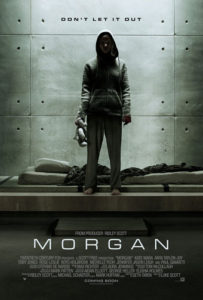
Film Review: “Morgan”

Starring: Kate Mara, Anya Taylor-Joy and Toby Jones
Directed By: Luke Scott
Rated: R
Running Time: 92 minutes
20th Century Fox

Our Score 1.5 out of 5 Stars

Sometimes when I watch something so promising, and filled with so much talent, I wonder if I genuinely missed something when I walk out not liking it. “Morgan” features veteran talents like Paul Giamatti, Ridley Scott as producer, Jennifer Jason Leigh, and a script that made 2014’s Blacklist (a list of the best unproduced scripts currently floating around Hollywood). So here I am a week removed from watching “Morgan” and I think to myself, I didn’t miss anything. It’s a bad movie.

Anya Taylor-Joy (someone who’s bound to get an Oscar nominating performance one of these days) is stuck as the science experiment gone wrong, Morgan. The five-year-old, by human years, is actually around 18-by-whatever-made-up-logic-this-movie-makes-years-old. She’s the end result of a human embryo breeding project. She’s birthed with some of the best genes out there as well as a couple of super human capabilities that are never really explained. After a month, Morgan is able to walk and talk. After a couple of years, she’s a self-sufficient preteen with a childlike wonder about the world. After five years, she’s capable of inflicting bodily harm on her creators and show signs of deep hatred. And after Morgan stabs a scientist in the eye for no apparent reason, it’s time to bring in the corporate business suits.

“Morgan” has the capability to deliver a message about cloning, the inability to understand raw human emotions, and eugenics, but instead focuses more on visual technique. “Morgan” ends up being all style with no substance. The groundwork is there as we watch sterile and emotionless scientists suddenly become parents, growing up and watching Morgan’s guileless nature. Then we watch as the parental instinct kicks in when the scientists try to understand and defend Morgan’s growing sociopathy. She may be a monster, but she’s their monster. Another missed theme is how corporate culture looks at the numbers more than the human impact, but I digress because this movie failed on all thematic levels.

But even as the movie slowly falls apart, “Morgan” still has one final chance to deliver upon any resemblance of meaning behind its script. The writers, producers, and director, fail to give anything outside slick visuals, bruising action sequences, and a disquieting environment for its characters. The third act of the movie turns out to be more of an experiment in forbearance as the twist of the movie slowly gets unraveled. Although I figured out the twist about 30 minutes in while another critic I spoke to after the movie figured it out five minutes in. I guess even M. Night Shyamalan could recognize “Morgan” has a bad twist.

It’s really unfortunate watching Taylor-Joy get generously applied with Dave Chappelle white face make-up and play in one of the more frustrating creature features in recent memory. Taylor-Joy popped up on the scene earlier this year in “The Witch” and has a lot of talent waiting to be displayed. She does a fine job relaying Morgan’s genuine wonder and empathy, while balancing Morgan’s uncharacteristic murder streak. Taylor-Joy does all this well, but it’s hard to piece together the mind of her character when the movie continuously jumps back and forth between Morgan’s personalities.

It doesn’t help that the movie states she’s only five, despite having the mind and body of a full blown teenager. Is she a test tube bred deadly assassin battling teenage hormones with the id of a child progressing too quickly into an adult world that she has no comprehension of? If so, why is this experiment worth anything to anyone, especially a company? Those are questions no one making this film ever thought to ask and inherently asking that question gives away the movie’s twist.

Just like its character, “Morgan” lacks any growth, meaning, or excitement. Whenever the movie gets close to developing a theme or message, it reverts back to finding meaning behind violence like a Kindergartener throwing a temper tantrum, frustrated that it couldn’t find a way to expel upon its interesting premise. If this is the final movie of the summer, the summer certainly goes out on an uncreative whimper.

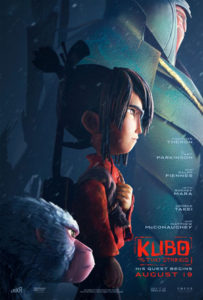
Film Review: “Kubo and the Two Strings”

Starring the Voices of: Charlize Theron, Art Parkinson and Ralph Fiennes
Directed By: Travis Knight
Rated: PG
Running Time: 101 minutes
Focus Features

Our Score: 4 out of 5 Stars

Anymore, I’m shocked when I walk out of a movie after seeing something original. I was almost certain that “Kubo and the Two Strings” was based on a book or short story. I was sure that a movie utilizing origami, ancient traditions, and the mysticism of the Eastern world, was someone else’s idea come to life. Nope. The ambitious nature of the film is all its own and it’s amazing to see the animation studio, Laika, put so much faith behind it.

To say that “Kubo” is a kid’s movie or fun for the whole family would be a disservice. It seems more interested in a mature audience that fancies itself as fans of anime, late 70’s kung fu, or people who watch “Adventure Time”. So if anything, you could say it’s a very mature kid’s movie. It doesn’t have predictable silliness, but seems to find itself bordering on family friendly entertainment early on when we meet our hero, Kubo (Parkinson). He’s forbidden from staying out past dark by his near comatose mother.

Kubo spends his days going into town to make money by plucking the two strings on his shamisen (or guitar). Through his musical talents, he’s able to wield magic that puppets different origami creatures, while spinning tales that are inspired by his father, whom he’s never met. He fascinated with the journey of great samurai warrior, and the beasts and monsters they fight. Inevitably after one of his shows, he stays out past dark, invoking his evil twin aunts (voiced by Rooney Mara), sending him on his own perilous journey.

Kubo joins forces with a talking monkey voiced by Charlize Theron and a beetle warrior voiced by Matthew McConaughey. It took me a while to get on the same page as “Kubo” and a lot of that may be because I wasn’t sure what to expect. The movie’s marketing campaign made it feel like I was in for a Japanese rehash of “James and the Giant Peach”, but there’s a lot more depth and heart to “Kubo” than any Roald Dahl classic.

Without revealing too much, the heart and soul of this movie is about the family unit, forgiveness, memory and the damage jealousy can bring upon the human soul. It has some great lessons for kids, but its more heart felt for older audiences who have aging patriarchs and matriarchs at home. “Kubo” is a clash of youth and age, and how families handle the generational divide within their own families. “Kubo” does suffer from an identity crisis, having to balance audience expectations and preventing its mature script from tripping into low-brow kid’s movie pitfalls. I’m sure “Kubo” will get better with age.

The digital stop-motion animation in “Kubo” is next level. A good chunk of scenes are on the same level as most stop-motion movies, but other scenes are breathtaking and groundbreaking. I’m no animator, but I’m sure most out there will have to give pause and wonder how “Kubo” accomplishes many of it’s visual feats. There’s so much for your eyes to feast on, at times the story becomes second nature to everything happening on screen, like a scene where a sailboat made up of Autumn leaves crashes through the waves of a lake during a robust lightning storm.

“Kubo” is clearly a passion project, with a dedicated team behind the camera. It hits deep within the heart for those looking for meaning, but lacks the right amount of force to really do some emotional damage once it’s driven into your soul. There’s a lot of themes, some blatant, some yet undiscovered on my first viewing. “Kubo” will surely be keeping Disney and Pixar on the edge of their seat come award season. Laika Studios is proving to be a worthy adversary and showing that stop-motion can be just as colorfully lively, emotionally heartbreaking and creatively inspiring, than a lost fish in the sea or what your pets do while you’re at work.

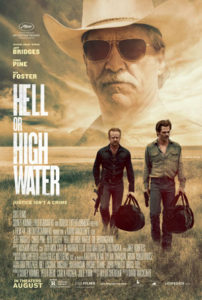
Film Review: “Hell or High Water”

Starring: Chris Pine, Ben Foster and Jeff Bridges
Directed By: David Mackenzie
Rated: R
Running Time: 102 minutes
CBS Films

Our Score: 4.5 out of 5 Stars

Out of curiosity I researched the phrase, “Come hell or high water” since the movie title clearly borrows from that popular saying. My research yielded the fact that it’s an early 20th century saying that relates to the difficulties of cattle ranching. And here I had always assumed it was more of a Biblical saying or something cool Americans would say when facing adversity. That’s not to say that the originators of the saying weren’t God-fearing ranchers.

Brothers Tanner (Foster) and Toby (Pine) aren’t ranchers and certainly don’t appear to be fearful of any afterlife repercussions of their sins. Although the would-be cowboys are working on their future beer guts and sport rough stubble that could certainly mislead one to believe they’ve had to wrangle livestock. They live in western Texas where there’s clearly a hangover from the 2007 market crash. Residents dotting the drought ridden landscape seem more focused on staying true to the beliefs they grew up on, rather than adapt or evolve.

Toby isn’t old fashioned, but he definitely seems lost on what to do in this brave new world. He’s desperately trying to save the family farm and is looking for a life preserver as he swims in debt. His ex-con brother, Tanner, helps him with the first of many bad ideas, robbing banks. They’re not stupid about it at least. They commit robberies at banks in small towns with smaller police officers nearby, they’re only asking for unmarked bills smaller than $100 so the money can’t be traced, and they’re literally burying their getaway vehicles.

On their trail are, outside of the normal law enforcement, are two Texas Rangers, Marcus (Bridges) and Alberto (Gil Birmingham). Their comradery stems from a passion for what they do and years of working together. Marcus is near retirement and has a shoot from the hip viewpoint of everything, even making racist remarks about Alberto’s racial mix. But Marcus isn’t just some out-of-touch old timer; his racist jokes and jabs come from a deep appreciation and bond with Alberto. Alberto gets that too, making sure to quip back at Marcus. Alberto understands that under Marcus’ rough Texas exterior is an elderly man appreciating the friends he has as he dreads the purposelessness that’ll come with his retirement.

The movie follows these two groups journey and most of the time it’s exciting, funny, and heart felt. But behind the upbeat veil is one of hopelessness and deadly uncertainty. Any story about a two bank robbers, armed to teeth, being chased by the Texas Rangers won’t have a happy ending. For every laugh, our characters seem to wonder and ponder the consequences of their actions and the sins that will haunt us to our death day.

“Hell or High Water” captures the rustic West, the deep-seeded “Don’t Mess with Texas” attitude of its characters and the unflinching misery of living in impoverished small town America. It flips between jovial Western and teeth gritting thriller flawlessly. It’s a smart script with rich meaning that offers its characters realistic dialogue. They’re simple folk delivering simple lines, and anything near Shakespeare writing would feel horrendously out of place. Instead we get plain Midwestern men delivering speeches worthy of a Johnny Cash song.

The dialogue is further bolstered by the cast. We get to see a side of Pine we’ve never seen before, and one we’ll hopefully see more of, as well as a side of Bridges that we’ve come to love. Foster also gets the chance to make up for summer misstep, “Warcraft”, giving one of his best performances as the conflicted Tanner. If the summer movie season is truly over and it’s now time to turn the page to award season, “Hell or High Water” is a wonderful primer and a sign of good things to come.

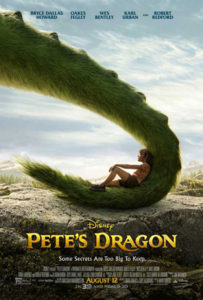
Film Review: “Pete’s Dragon”

Starring: Bryce Dallas Howard, Oakes Fegley and Wes Bentley
Directed By: David Lowery
Rated: PG
Running Time: 102 minutes
Walt Disney Studios Motion Pictures

Our Score: 3.5 out of 5 Stars

Disney’s latest live-action rejuvenation goes way back into the dusty part of their movie vault. The 1977 “Pete’s Dragon” probably isn’t really the pinnacle of Disney’s catalogue and my last viewing of it came when I was five years old when I would generally watch any movie that had animation, especially dragons. So I had no memorable nostalgia, expectations or preconceived notions heading into the “Pete’s Dragon” reboot and I feel it’s a sufficient reimaging for today’s generation.

The 2016 version wisely takes us back to the 80’s, at a time where if there was a dragon, everyone involved wouldn’t automatically be whipping out their smartphones to record. Our trip back in time brings us to Pete (Fegley), a four-year-old about to go camping with his parents. A car wreck kills his parents, leaving Pete to wander into the woods where he’ll surely be consumed by the wildlife of the Pacific Northwest. Instead though, he’s greeted by a friendly, protective dragon.

Instead of a goofy potbellied beast, the computer generated winged creature has a emerald shag carpet fur coating his entire body. The giant reptile’s playfulness is reminiscent of the dragons in “How to Train Your Dragon”. Because of this, the dragon is more dog-like and cute when interacting with Pete. Unwisely though, Disney gives this dragon a growl and deadly fire breathing capabilities, putting the wrong people in peril in multiple instances.

“Pete’s Dragon” establishes a sweet bond as we watch the boy and dragon, which he names Elliot, over a six-year time span. They gallivant through the thick woods and play in the streams like childhood pals. Pete, clearly not remembering the traumatic events that placed him in the woods, reads a book his parents gave him to the dragon every night. It’s odd that the movie never touches upon Pete’s parental loss. A park ranger, played by Bryce Dallas Howard, spots Pete and drags him back to the real world.

With Pete taken from his forest home, Elliot is left alone, but he’s soon hunted by a bunch of Stone Age thinking loggers. It sets up some flimsy intrigue for the final act, but disappoints on a climactic and emotional level. While I do believe that Pete and Elliot have a fondness for each other and care deeply about one another, I never feel the love and adoration they have. “Pete’s Dragon” delivers a warm hug for audiences, but it left me wondering if the affection was genuine.

Kids, who are obviously the target audience, won’t see any of its problems and will enjoy the magic of it. They may understand the vague environmental and importance of family messages, but overall they’ll be wowed and thrilled by the dragon’s escapades. “Pete’s Dragon” is a sure bet for families needing a Summer escape and a positive message, but just like the original, this remake may inevitably end up in the Disney discount bin.

Concert Review: “Weird Al Yankovic’s “Return of Mandatory Fun Tour”

Weird Al Yankovic
Date: August 8th, 2016
Venue: Starlight Theater

Our Score: 5 out of 5 Stars

If there was ever music icon that demanded your undivided attention at a concert, it is Weird Al Yankovic. His performance is a full-sensory experience. Obviously it’s a visual and audible treat for those who show up in tin foil hats, polka pants, Amish attire, or whatever reference they can make to the musician’s 40-year career. But Weird Al incorporates more theatrics into one show than most bands do throughout an entire tour.

The concert begins via jumbotron, displaying crusty black and white propaganda video repeating the phrase, “Mandatory Fun”, the title of Weird Al’s last album. We then cut to Weird Al’s his tour bus where he appears singing “Tacky”. Shoving show extras out of his way and teasing the audience with what’s to come as he enters the Starlight seating area, he comically drifts to the stage through elaborate cheesy dance moves. It doesn’t take the comedy king of polka to bust out the accordion or the new songs that helped him land at #1 on the Billboard Top 40 last year.

Because each song parodies a song or specific style of a band, this is a concert requiring a costume change in between nearly every song during the two-hour show. In between songs like “Fat”, “White and Nerdy” and “Foil” are pieced together video clips highlighting the pop-culture relevance of Weird Al. Everything from his appearance in the “Naked Gun” movies to his vocal talents being utilized on contemporary cartoon favorites like “My Little Pony”. For fans old and new, the clips are a relentless sampling of his lengthy relevance and influence in society.

The seemingly one man show is joined on stage by his bandmates, who match his intensity, comedic timing and quirks. The madcap nature of Weird Al is matched by everyone, even the stage hands who have to awkwardly stand and hold a harmonica during “Ode to a Superhero” or the intentionally unenthusiastic cheerleaders during “Smells Like Nirvana”. The dedication to the surreal nature of it all reaches its peak during the encore. During “Yoda” the band stops playing their instruments and becomes a choir of cartoon sound effects and madcap a capella.

Every song played that night was a unique and unforgettable memory for fans, even the moments of parody medley. Weird Al spends a solid 15 minutes cramming in 10 shorted songs to better cram in his lengthy catalogue of memorable parodies to please every concertgoer. There are even a handful of songs that can be viewed as interactive, on the audiences end and Weird Al’s end. My review could have easily been a recap of every wonderfully joyous moment experienced in each song.

Having seen him live 15 years ago, it’s impressive to see the same energy, if not more. There are signs of age in that jester smile and silly grimace that he flashes, possibly worrying fans that he may be nearing the end of his rich career. I highly doubt the man who truly loves entertaining the nerdy masses is going to retire anytime soon. But on the off-chance he’s getting closer to hanging up the accordion, do yourself a favor and see him now, and often.

Set List:
Tacky
2.) Lame Claim to Fame
3.) Now That’s What I Call Polka!
4.) Perform This Way
5.) Dare to Be Stupid
6.) Fat
7.) First World Problems
8.) Foil
9.) Smells Like Nirvana
10.) Party in the CIA/ It’s All About the Pentiums/ Handy/ Bedrock Anthem/ Another One Rides the Bus/ Ode to a Superhero/ Gump/ Inactive/ eBay
11.) Canadian Idiot
12.) Wanna B Ur Lovr
13.) Eat It/ I Lost on Jeopardy/ I Love Rocky Road/ Like a Surgeon (Acoustic)
14.) White and Nerdy
15.) Word Crimes
16.) Amish Paradise
ENCORE
17.) We All Have Cellphones
18.) The Saga Begins
19.) Yoda

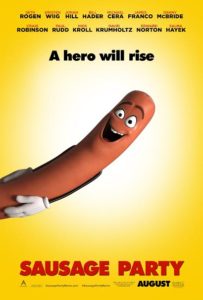
Win Tickets to the Kansas City Premiere of “Sausage Party”

Media Mikes has teamed up with Sony Pictures to give (10) lucky readers, and their guest, a chance to attend the Kansas City premiere of the new animated comedy “Sausage Party.”

The screening will be held on Monday, August 8, at the AMC Studio 28 Theatre in Olathe, Kansas. The screening will begin at 8:00 p.m., preceded by a cocktail party before hand. Pass winners will also be allowed to attend the cocktail party and they and their guest will each receive one free drink.

To win, all you have to do is head here and get your tickets. This is a first-come, first-serve promotion and, once all of the passes have been given away, the contest is over. Good luck!

Film Review: “Suicide Squad”

Starring: Will Smith, Jared Leto and Margot Robbie
Directed By: David Ayer
Rated: PG-13
Running Time: 130 minutes
Warner Bros.

Our Score: 3.5 out of 5 Stars

The Suicide Squad is a generally unheard force in the DC Universe. They’re a group of underdog villains attempting to do good, drawing comparisons from some that this is Warner Bros. attempt at their own version of “Guardians of the Galaxy”. While the comparison is fair, “Suicide Squad” is a far more sinister beast. While Marvel’s Peter Quill and Rocket Raccoon are likable thieves and thugs, the members of the Suicide Squad are a terrifying ragtag bunch of assassins, murderers and sociopaths.

The Suicide Squad is made up of the smooth talking Deadshot (Smith), Joker’s squeeze Harley Quinn (Robbie), the beer drinking Boomerang (Jai Courtney), the gang banger El Diablo (Jay Hernandez) and the hulking monster Killer Croc (Adewale Akinnuoye-Agbaje). They’re all led by the self-righteous Rick Flag (Joel Kinnaman). The founder of this group is Amanda Waller (Viola Davis), who may as well be the villain of the movie. She’s an unsympathetic, calculating, and murderous government official who abides by her own rules.

Her basis for creating the Suicide Squad is so that the U.S. military has an controllable force that can stop the next Superman (spoilers if you didn’t see the disappointing “Batman V. Superman: Dawn of Justice”). Waller has a working knowledge of nearly every villain on the planet, and seemingly every superhero, which gives pause as to why she thinks this would ever be a good idea. Despite the rather large nature of the cast working under Waller’s character, director and writer David Ayer wisely chose to focus the movie’s attention on the best actors, Davis, Smith and Robbie.

While the media lead-up to “Suicide Squad” has been about Leto’s disturbing antics off-screen, his on-screen Joker portrayal is underwhelming. It’s not because it comes on the heels of Ledger’s performance back in 2008, but because I still can’t imagine the Joker having the patience to get a tattoo or ever concerning himself with fashionable bling-bling. Despite the disappointment of Leto’s Joker, Robbie wows as the stunning lover of Mr. J, Harley Quinn. While we’ve never had a theatrical version of the Clown Prince of Crime’s murderous hunny, Robbie has set the bar, and it’s pretty damn high.

Robbie displays a natural ability to blend Quinn’s flirtatious, deadly, and juvenile nature seamlessly. She manages to convey her as a trashy, demented high school cheerleader most of the time, while displaying a softer, human side to the villain in brief glances. Matching her scene-by-scene is Smith, who’s back to his action movie roots as the assassin that never misses, Deadshot. Both of them provide most of the back story and emotional depth amongst the Suicide Squad, and rightfully so.

El Diablo has a heart breaking backstory, but Hernandez isn’t a strong enough actor or given enough dialogue to feed into his tragic past. Killer Croc is simply a grunting brute covered in scales and Boomerang is the wisecracking comic relief, minus the comic relief. The movie also finds time to wedge in Ben Affleck’s Batman, Ezra Miller’s Flash, and a brief nod to the future “Justice League” movie. Sometimes it’s a visual buffet that finds the right balance without making you too nauseous, as long as you know what the hell the movie’s talking about.

The characters are what make “Suicide Squad”, not the story, which clearly came second. When David Ayer needs to introduce the characters, he establishes a pecking order and focuses on the most relatable. As for the plot, it’s a mess involving the mysterious Enchantress (Cara Delevingne), who’s never explained, possibly angering those unfamiliar with comic books, and maybe even those familiar with them. The exact reasoning behind the Suicide Squad’s pact is a little iffy and the movie doesn’t find a satisfying conclusion after the bombastic finale.

“Suicide Squad” is a wham-bam action punch with enough exuberant and unique performances to help overshadow the lacking plot structure. You’ll be talking about Robbie’s Harley Quinn more than you will about Leto’s Joker. And that’s not a bad thing when DC is trying to establish some girl power. If DC wants to start working on a solo Deadshot or Harley Quinn movie, go ahead and buy my tickets right now.

Win Passes to the Upcoming Kansas City Comic Con

Media Mikes has teamed with the promoters of the Kansas City Comic Con to give (5) readers and their guests passes to attend the convention, which runs from August 12-14, 2016.

Kansas City Comic Con features celebrity guests like Billy Dee Williams, Nichelle Nichols and “the Hammer” himself, former Kansas City Chief defensive back and action film star Fred Williamson.

All you have to do is let us know below what celebrity guest you would like to see at a future convention. On Monday, August 8th, (5) random entries will be selected and the winners will receive (2) passes to attend the convention. Those chosen will be notified by email.

For more information and a complete list of guests head here.

Good Luck!

Film Review: “Nerve”

Starring: Emma Roberts, Dave Franco and Emily Meade
Directed By: Henry Joost and Ariel Schulman
Rated: PG-13
Running Time: 96 minutes
Lionsgate

Our Score: 3.5 out of 5 Stars

Did kids ever really play “Truth or Dare?” at sleepovers? I certainly didn’t. I grew up in the era where one-on-one conversations and group chat in a circle was replaced by shouting at each over the N64 and trying to decipher the nudity on scrambled HBO channels. So whenever I see the movie trope, especially in horror movies, of a game of “Truth or Dare?” going horribly wrong, I roll my eyes. Who knew a revamp was in order.

Most of the time, “Nerve” is a solid edge of your seat thriller. But at other times “Nerve” seems like a senior citizen’s overreaction and lecture about smartphones, social media and stupid teenage antics. Venus (Roberts) is a timid teenager, who’s known throughout her school as the artistic shutterbug. Her friends are an insipid teenage hacker, Tommy (Miles Heizer) and the school floozy, Sydney (Meade). Most likely one of those groups of friends that met in Kindergarten, grew up together, and hasn’t yet realized they’re bad for each other.

The latest high school craze is the “app”, Nerve. I only say “app” because it’s never fully explained how Nerve actually works. It looks and works like a smartphone app, but also possesses the powers of most Malware, infecting, spreading, and storing all your personal information. In Nerve you can be a watcher or player. The player completes dares and gains followers. The goal is to be the final one to complete the craziest dare. In Nerve, you’re eliminated if you choose not to a dare, snitch, or simply fail at completing your dare.

The clear thing keeping these inept teenagers in Nerve’s snare is the money. Sydney’s dare, which is suitable for the high school tart, is to flash her bare butt at a football game. Easy dare. Easy money. But the dares grow increasingly dangerous and risqué. Venus gets involved after the constant peer pressure and hurtful words of her friends that she never takes risks. While most of the times, I’d call this poor plot structuring, “Nerve” goes to a short, but adequate length to show that Venus is in need of money and in need of a major confidence boost.

“Nerve” follows Venus on her night of dares across New York City. She ends up teaming up with another Nerve player, Ian (Franco) and the two complete dares together. At first it’s light-hearted summer fun at the theater as the two are forced to run out of a high-end Manhattan clothing store in their underwear, but slowly turns into a pulse pounding action sequence the duo navigating a motorcycle at 60 mph blindfolded.

“Nerve” is a sleek techno thriller utilizing America’s current craving for online infamy, naive adolescent sensibilities, and the mob mentality that the Internet has created. If it flops at the box office, “Nerve” is sure to become a cult classic. If it succeeds at the box office, its problems will surely be highlighted. If you begin to get technical about everything, you realize that “Nerve” is in need of some IT support.

In an era where techno babble is becoming common speak and the focus piece of news media, “Nerve” struggles to keep up with some of its more technologically advanced viewers. The movie attempts to name drop things like “dark web” and “Google” in the hopes of glazing over the scriptural plot holes. But it’s fast paced story, neon visuals, Franco and Roberts likability, and thrilling third act keeps you from questioning the structural problems for too long.