

The Biggest Snubs from this Year’s Oscar Nominations

One of the fun things to discuss, debate, argue, or silently complain about on social media is Oscar snubs. Luckily this year, the ship has been righted and I think we can put the #Oscarssowhite controversy to rest because of how diverse the nominees were this year. Although to be fair, the Academy set the bar pretty low the past two years in terms of cultural variety. But there’s one thing the Academy can never escape and that’s snubs. While I certainly don’t believe some of my snubs ever had a chance, they are deserving of some gold.

Best Picture Snub
Swiss Army Man

I knew this was a longshot. I know the Academy isn’t about to publicly acknowledge a farting boner corpse movie. But a little part of me had hoped that its indie cred, combined with its existential storytelling, would have made it a respectable dark horse in a field of 10. It’s unique, fascinating, moving, well-acted and wonderfully shot. Its only flaw is that it’s too off putting for general audiences and slightly juvenile for the snobby voters in Hollywood. I swear this is the last time you’ll hear or see me cheerleading for this movie.

Honorably Snubbed as Well: 20th Century Women

Best Director Snub
Robert Eggers, The Witch

Eggers immersed himself in 1630’s New England to deliver a historically accurate portrayal of terror in the unknown wilderness of early America. Everything from the film’s dialogue to the farmstead were meticulously groomed and crafted by the director. He managed to wrangle four (including one teenager) child actors, keeping them from being annoying, as they traditionally are in horror movies. This production designer turned director crafted an atmospheric horror masterpiece. Eggers is one to watch out for.

Honorably Snubbed as Well: Daniel Scheinert and Daniel Kwan, Swiss Army Man

Best Actor Snub
Tom Hanks, Sully

Let’s clear up this presumed notion I’ve seen on social media. Tom Hanks doesn’t get nominated every year. He hasn’t been nominated for an Oscar since 2001 and hasn’t won a golden statute since 1995. I’m not asking the Academy to throw him a bone, he doesn’t need one. But don’t overlook the fact that “Sully” is a sub par movie-going experience without Hanks’ hefty talents in the pilot seat. Hanks’ navigates Clint Eastwood’s so-so work into a memorable tale of average Joe heroism and the bureaucratic blame game.

Honorably Snubbed as Well: Jake Gyllenhaal, Nocturnal Animals

Best Actress Snub
Sasha Lane, American Honey

I wouldn’t blame you for not watching “American Honey.” Three hours of wanderlust is too much for the average audience. But first time actress, Sasha Lane, is a treasure to watch. She was up for every challenge of portraying an impoverished young adult. Lane portrays an innocent, if not naive, teenager looking for her purpose and a slice of the American dream. Her character, without speaking usually, represents youthful aspirations and good intentions, despite the thieving people around her. Lane keeps the flame of hope in her character lit throughout the movie, making her character one to root for her and admire.

Honorably Snubbed as Well: Amy Adams, Arrival

Best Supporting Actor Snub
Aaron Taylor-Johnson, Nocturnal Animals

The story within a story is the strongest part about “Nocturnal Animals,” mainly due to its wonderful performances. Leading the way is Jake Gyllenhaal, but his emotionally distressed character would be nothing without the terrifying Texas psychopath played by Aaron Taylor-Johnson. While visually disgusting, Taylor-Johnson’s grimy character radiates off the screen. He’s calculating, but relaxed. He’s vicious, but calm. The dynamic extremes of his character are balanced by Taylor-Johnson who’s “ablicious” and repugnant.

Honorably Snubbed as Well: Ben Foster, Hell or High Water

Best Supporting Actress Snub
Haley Bennett, Girl on the Train

I know. I know. This is a bad movie. But the Academy has not been above nominating a bad movie or rewarding the components of a bad movie. Let’s not forget that “50 Shades of Grey” is an Oscar nominated movie with five Razzie wins under its belt. While Emily Blunt should certainly be commended for her performance, it’s Haley Bennett’s performance as the tragically flawed suburban floozy that becomes the center of the movie’s suffering. Her character lives life emotionally empty, only to be killed when finding new life. In the rear view mirror of 2016, Bennett’s performance is brave and engaging, but trapped in a lifeless cliché movie.

Honorably Snubbed as Well: Greta Gerwig, 20th Century Women

Best Animated Feature
Finding Dory

Is “Finding Dory” that average? I thoroughly enjoyed the Pixar movie and was surprised it didn’t, at the very least, get a nod. It’s not the best of the year, but it can certainly be mentioned in the same breath as the other candidates. I haven’t seen “The Red Turtle” or “My Life as a Zucchini” so I can’t comment on their quality since they certainly secured the final two spots. I’m sure they’re good. Maybe this is a sign that Pixar should just avoid sequels for a while. At least “Sausage Party” didn’t steal one of the nomination seats or else there’d be hell to pay.

Honorably Snubbed as Well: None. This was a year that saw Angry Birds, so we need to do better in 2017.

Best Original Screenplay
Zootopia

It’s been mentioned before, and not just by me, that “Zootopia” benefited from coming out at the right time. The script, while being generously relatable to kids and adults alike, has a wonderful message about acceptance. A city populated with cute, furry animals taught everyone that sexism, racism, classism and xenophobia are still very real and can divide us in a heartbeat. Disney could have easily settled for a buddy cop movies with animals, but instead allowed the script to naturally evolve and survive the rewriting process. Despite nine credited writers, “Zootopia” never became diluted or a jumbled mess. Instead it ran smoothly with a clear message of tolerance.

Honorably Snubbed as Well: The Invitation

Best Adapted Screenplay
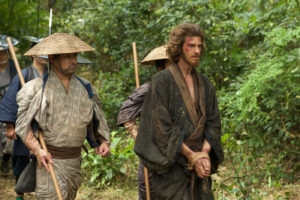
Silence

Martin Scorsese’s decades long passion project is based on a work of historical fiction. While having never read the novel myself, the folks who have read the book have left nothing, but glowing reviews of it online. If the purpose of the 20th century novel is to make us reflect and question spirituality and our religious beliefs as a whole, Scorsese captured that wonderfully in a movie that, while drawn out, is beautifully retold on the silver screen. Scorsese painted a beautiful picture just like the book certainly transported readers back to post-Feudal Japan.

Honorably Snubbed as Well: High-Rise

Best Music
Cliff Martinez, Neon Demon

While I’m not completely sold on “Neon Demon” being a good movie, I found myself listening to the soundtrack of “Neon Demon” multiple times. While adding another layer to the movie, the soundtrack on its own accord is a wonderful synth album inducing feelings of hope and despair. “Neon Demon” is a visual experience, complimented by a wonderful score that spurs dread and bouncy optimism, sometimes within a single song. “Neon Demon” is the only movie this year where the music feels like an unseen narrator for how we’re supposed to feel.

Honorably Snubbed as Well: Johann Johannson, Arrival

Best Music, Original Song
Drive it Like You Stole It, Sing Street

The coming-of-age love letter to the 80’s, “Sing Street,” should have been more popular. Not only did the Clash, A-Ha, and the Cure get some much deserved love on the screen, but the movie featured some dynamic original music. Most of the original content, like “Riddle of the Model,” was short nods to music by Duran Duran or other iconic bands. However, the movie reaches its crescendo with its most poppy rock hit, “Drive It Like You Stole It.” The song is a big metaphor for the final act and growing up in general. Just listen to it and tell me that’s not the best original song of the year.

Honorably Snubbed as Well: Montage, Swiss Army Man

Best Foreign Language
Elle

I’m finding it difficult, once again, to put into words why I like this movie so much. Just read my review.

Honorably Snubbed as Well: I’m not sure. I should be more cultured.
 

Related Content

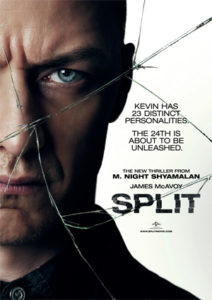
Film Review: “Split”

Starring: James McAvoy, Anya Taylor-Joy and Betty Buckley
Directed By: M. Night Shyamalan
Rated: PG-13
Running Time: 117 minutes
Universal Pictures

Our Score: 4 out of 5 Stars

Dissociative identity disorder (DID) is more commonly known as split personality disorder (SPD) or multiple personality disorder (MPD). The 90’s was full of daytime talk shows, like Oprah, talking to people who allegedly suffered from the disorder. The TV appearances didn’t add much credence to the ongoing debate over the diagnosis and legitimacy of the mental illness in the scientific and psychological communities. Instead it provided housewives with fodder and a free-pass for Hollywood to rejuvenate one of their favorite horror/thriller tropes. Now in 2017, the disease is back in “Split,” but not without a ferociously unique bite.

It’d be unfair to say that Kevin (McAvoy) kidnapped three women from a suburban Philadelphia mall. There are nearly two dozen other distinct personalities in his brain that could have done it or plotted to do it. However, just like his victims, we’ll soon find out that Dennis did it, but not without a little help. The trio of girls will also meet Patricia, Hedwig, Barry, and a handful of Kevin’s other internal personalities. The one victim that “Split” will tend to focus on is Casey (Taylor-Joy). Unlike her fellow captives, she isn’t crying or screaming for help. Casey seems to not only have a grasp on the situation, but an understanding of Kevin.

Another person with a deep understanding of Kevin is Dr. Karen Fletcher (Buckley). She’s talked with Kevin and nearly all of his personalities, but she’s unaware of his latest emotional developments and actions. She doesn’t view Kevin as a freak of nature, but as someone/something more. She believes Kevin’s DID makes him superhuman in nature, with personalities that not only control his mind, but his body, enhancing or crippling some of his physical attributes. That’s why it worries her that there are rumblings of a 24th personality, nicknamed ‘The Beast’. But is it just rumors between Kevin’s personalities or is there truly another personality, which can climb walls and feast on human flesh, lurking inside Kevin’s brain?

There’s more psychological and emotionally scarring at work in “Split” other than the harmful effects of DID. The mental traumas that Kevin and Casey endured previously before the current abduction predicament are revealed and make them more human. The level of empathy for the inherent villain of the movie, Kevin, is nurtured through light-hearted humor, the innocence of some of his personalities, and the one honest moment where the audience finally meets the real Kevin. McAvoy and Taylor-Joy find wordless ways to make their characters sympathetic, simply by letting tears well up in their eyes or flashing various facial tics at the right moment.

“Split” isn’t quite a return to form for Shyamalan, but more of an evolutionary step in his directing and writing. For years he’s been the twist guy that throws in some jump scares for good measure, but he’s dropped a lot of that in “Split,” relying more on atmosphere and the ability of his actors and actresses. But there’s a light joy to his movie, almost understanding that a movie about a man with DID should surely have a few jokes. Although anyone suffering from the disease and anyone without a funny bone in their body from the medical community would say otherwise. That’s not to say “Split” isn’t without its faults.

It runs a little bit too long and sometimes pushes the envelope without any purpose other than to visually or emotionally upset the audience. That may be Shyamalan tinkering with the formula since he is in new territory. “Split” is a restricted thriller, relying more on drawn out suspense and claustrophobic anxiety. “Split” is a slow boiler with enough tension to make you jump at the slightest movement. It also has Shyamalan working with a tragic villain for the first time since “Unbreakable.” If “Split” is Shyamalan’s apology for everything in between “Signs” and “The Visit,” then apology accepted.

Film Review: “Elle”

Starring: Isabelle Huppert, Laurent Lafitte and Anne Consigny
Directed By: Paul Verhoeven
Rated: R
Running Time: 131 minutes
Sony Pictures Classic

Our Score: 4 out 5 stars

“Elle” has put me in an uncomfortable situation as a male reviewer because I’m going to have talk about rape. The act has been used before, so in that sense, it’s nothing new. Moviegoers have seen it in “Straw Dogs,” “A Clockwork Orange,” “Boys Don’t Cry,” and other films. Sometimes it’s the focal point or a moment that punctuates a grisly reality or message. But in “Elle,” there’s something disturbingly different about rape. It seems like an afterthought in the busy life of Michele (Huppert) and slowly becomes a tool of empowerment.

The movie begins with an intruder, breaking into Michele’s home, quickly and savagely raping her, as her gray cat casually looks on. He finishes and flees without much thought, leaving her unconscious and bleeding. It’s a difficult scene, no doubt. But what happens next is bizarre. She picks herself, goes to work, and even tells her son that she won’t entertain the thought of calling the local authorities. But that doesn’t stop her from daydreaming about murdering the rapist with her own bare hands.

It almost seems like she’s too busy to worry about the rape. She’s got a company to run with a video game that’s nearly half a year behind schedule. She seems unfazed by the video game graphics of a demonic creature molesting and raping an innocent woman, or the excessive amount of sexual and graphic violence that her all-male staff seems to be worried about inserting into the game itself. Then there’s all the family drama at home.

Her son can’t stand-up and assert himself in his own marriage, her ex-husband lingers trying to suckle at her own success, her mom lives with an escort, and her dad is one of the most infamous serial killers France has ever seen. “Elle” seems to be saying that the rape is almost the least of her worries, and certainly one of the least most screwed up things to happen in her life. That’s not to take away from the ferociousness of the movie’s opening moments.

“Elle” is an unpredictable journey that explores the psyche of a woman; Not a victim. It’s impossible to foresee how the movie unfolds because most of the time, Michele is shattering stereotypes and clichés of how society feels a rape victim should react. That’s not to say that this movie could be viewed as grossly insensitive to actual rape victims. But to put it bluntly, it is liberating to see someone who realizes the horrors and stigmas attached to rape, only to relish in it and use it as fuel for a much deeper and darker fire.

You don’t have to wait long for the rapist in “Elle” to reveal himself, unleashing a myriad of moral and ethical questions, both for Michele’s character and the man behind the ski mask. The surrealism of the movie is perfected by Huppert’s performance, which feels tragic at first, but unflinching when she breaks through the shackles of the viewer’s expectations. Huppert gives Michele a realistic range, which seems even more daunting when you begin to realize that Michele’s purpose may be to subvert a lot of society’s views of violence, sexuality and innocence.

Director Paul Verhoeven took a bold step directing “Elle” because it’s hard to imagine a mainstream audience stomaching it past five minutes or seeing Michele as a relatable character. It’s crazy to think that this is the same man who brought American audiences, “Hollow Man,” “Starship Troopers,” and “Showgirls.” With that in mind, this could be a middle finger to American taste and sensibilities after Hollywood flushed him down the toilet.

Film Review: “Silence”

Starring: Andrew Garfield, Adam Driver and Liam Neeson
Directed By: Martin Scorsese
Rated: R
Running Time: 161 minutes
Paramount Pictures

Our Score: 4 out of 5 Stars

Very rarely do you have a religious piece of filmmaking that doesn’t question religion or support the existence of a greater entity. Martin Scorsese is no stranger to the topic; raising hell with “The Last Temptation of Christ,” but his latest film is a deep meditation and self-reflection on the topic. The myriad of ideas behind “Silence” are a little too insurmountable to summarize without glossing over one or two powerful and important themes. Nothing about this feels like your stereotypical Scorsese movie, which means it’s all substance and no style.

The movie follows Jesuit priests, Sebastia Rodrigues (Garfield) and Francisco Garupe (Driver). They receive a distressing letter about their mentor, Father Cristovao Ferreira (Neeson). He’s apparently committed apostasy and disappeared in post-Feudal Japan. Despite warnings about the inherent dangers of being a Christian during the Kakure Kirishitan era, a time when Christians were deep in hiding in Japan and feared being publicly executed for their beliefs, the duo head off with nothing but their faith and an alcoholic guide looking to be forgiven for his past sins.

While the first act establishes 17th century Japan, the rest of the movie follows Sebastia. There’s nothing unique about him, I guess that’s just how the cards fell in terms of storytelling and/or history. Both Sebastia and Francisco are devout men, struggling to deal with the harsh reality of potentially being murdered for their religion in a foreign land, as they watch as others are brutally slain in their God’s name, and in inherently, their names as well.

“Silence” is a struggle of morality, faith, and life. There are moments where Sebastia’s beliefs are selfish, wholesome, absurd, and compassionate. The clash of religious ideals stems from the Japanese power structure believing in Buddhism and viewing Christianity, not only as a threat, but as a toxic influence that can’t sprout in their land, which they constantly refer to as a swamp. And more frankly, the Japanese government sees Christianity as a sly form of Western intrusion and corruption. The philosophical struggles between the two beliefs don’t develop until halfway through “Silence” and that’s when they things get more profound.

We get to see the rotten and enlightened side of religion’s impact. It’s difficult to pinpoint an encompassing message in “Silence” because it plays out like a scholarly debate on faith. The three biggies in “Silence” are its reflection about how important and damning symbolism can be, it’s criticism about how humans can fetishize their own beliefs, the idols they keep close, and the images that they deem holy, and it’s praise for how religion can teach us compassion and give us silent strength when dealing with the impossible.

On a more personal level, Sebastia’s voice-over narration and internal monologue provide insight into his selfishness of wanting to be martyred much like Christ. Outside of Sebastia’s unintentional egocentric spiritual journey, it’s a humanistic learning exercise as he internalizes concerns that his prayers are said and uttered to an empty void with no one on the other end. Anyone who’s ever prayed can surely relate to that plight.

“Silence” isn’t entertaining in the traditional sense. You may find yourself bored if you aren’t willing to put your beliefs and other beliefs up for scrutiny or if you view religion as an intangible topic. “Silence” is not just an intense examination of religion, but it’s a study of societal ethics and personal morality as it relates to history, culture and your community. It’s not until the end that Sebastia aligns his priorities with what’s best for his. “Silence” may very well be Scorsese’s deeply religious message for those wanting to live life and find peace.

Film Review: “A Monster Calls”

Starring: Lewis MacDougall, Felicity Jones and Liam Neeson
Directed By: J.A. Bayona
Rated: PG
Running Time: 108 minutes
Focus Features

Our Score: 4.5 out of 5 Stars

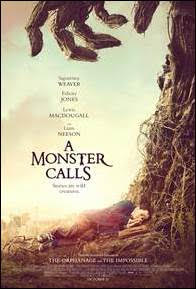
“A Monster Calls” is not a kid’s movie, although the trailer says otherwise and the studio probably wanted you to think differently when they greenlit it. There are moments that are too childish to entrance a teenage audience, but too dark and meaningful for a young one to fully grasp. I think the only people who would enjoy “A Monster Calls” are an adult crowd. Because when all is said and done, it takes a mature mind to recognize how beautiful and tragic it is.

The family members whispering amongst themselves is enough to give Conor O’Malley (MacDougall) a nightmare. Conor is viewed as a creative, but fragile adolescent, which makes those around him hesitate to state the obvious. His mom, Lizzie (Jones), has a terminal illness. The chemo isn’t working and the prognosis is bleak for the young mother. O’Malley’s father is out of the picture and his grandmother, played by Sigourney Weaver, is unable to handle the thought of having to bury her daughter. She’s more focused on getting custody of Conor and quickly settling other family affairs.

But Conor is suffering from a different kind of nightmare. Nightly in his dreams, he watches as the nearby cemetery, decrepit church and a twisted dead tree, collapse into the Earth. He screams as he sees his mother being swallowed along with the horrific mess. He clings to her as she’s about to fall into the unknown abyss that’s eating everything up. But before his nightmare reaches its crescendo, he awakes, sweaty and trembling. That’s when he’s greeted by a “monster”.

What conjures the deep throated tree monster, voiced by Liam Neeson, isn’t immediately clear and doesn’t become clear until the end. But what “A Monster Calls” does is provide something unique to the stereotypical coming-of-age movie. The voice of reason lies within the monster that spins fanciful ideas, speaks in vague riddles, and dishes out tales that seemingly relate to Conor’s growing predicaments.

The monster tells Conor that he will tell three stories and that by the end, he wants to hear one from Conor. Each tale doesn’t directly relate to a person or instance in Conor’s life, but each story weaved by the tree can be interpreted on multiple levels, possibly revealing its own secrets and truths to different viewers. The monster isn’t real, although there are plenty of moments to make you question that thesis.

It’s easy to see how a movie like this could have become a nightmare on its own accord. MacDougall, a somewhat fresh face to the movie scene, is given a lot of heavy lifting. While veterans and newcomers like Weaver and Jones are tasked with the adult response, MacDougall has a tougher task. He has to balance the conflict of teenage hormones clashing with a bitter reality. MacDougall handles the emotional cataclysm like a pro. This is a performance that could push him to stardom.

The script never becomes too sappy or attempts to emotionally manipulate the viewer, at least without a satisfying payoff. The visual style matches the fantasy book it’s based on, relying on real-life, CGI, and animation. The animation is a true standout with vibrant water colors that spill from scene to scene. Outside of its wonderfully distinct style, it’s a deep observation about the power of loss and the capacity of absolute truth. “A Monster Calls” is a soulful metaphor for anyone who’s old enough and open enough to feel, think and grow.

The Best TV Shows of 2016

I’m not going to claim to have watched as many TV shows as I have movies. But I watch enough TV, good and bad, to develop an understanding of some of the best content out there. And I’ll admit I haven’t seen some of the programs other people are raving about, such as “Westworld,” “Atlanta,” or “Black Mirror.” But that shouldn’t take away from these TV shows that have graced us in 2016.

Honorable Mentions: “Ash vs. Evil Dead,” “Venture Brothers,” “It’s Always Sunny in Philadelphia,” “Better Call Saul” and “Silicon Valley”

5. “Last Week Tonight with John Oliver”

30 30-minute episodes just doesn’t seem like enough for comedian John Oliver to completely digest the absolute heartache and misery that this previous year was. But while Oliver and his team generally avoided contemporary topics and the early goings of the American political primary season, it found more to talk about with untouched topics and investigative journalism. Everything from the FBI-Apple encryption dispute and car financing to school segregation and the debt buying industry provided “Last Week Tonight” with enough content to inform the proactive political citizen and enlighten the casual observer. Here’s to hoping Oliver and gang continues to dig and shine a light on the weasels and rats that populate this world in 2017.

4. “Crazy Ex-Girlfriend”

Despite a delightful first season (and so far successful second season), a lot of people still have not watched this show or won’t give it a chance because it’s a musical. It doesn’t help that the CW has shuffled it to a less than desirable time slot, while continuing to advertise the hell out of their superhero TV shows. “Crazy Ex-Girlfriend” is a wonderfully bizarre comedy-drama that feels like a more toned down, but wittier, version of other TV shows. Despite the network restraints, “Crazy Ex-Girlfriend” has found a lot of unique and realistic ways to be daring and heartwarming. Led by the bubbly Rachel Bloom, the characters are all grounded in reality and offer their own genial practicality. It’d be a damn shame if the CW canned this show.

3. “Stranger Things”
https://www.youtube.com/watch?v=XWxyRG_tckY
The children of the 80’s are here and they’ve brought their childhood with them. The Duffer Brothers (Matt and Ross) are clearly fans of playing Dungeons and Dragons in their parent’s basement, Stephen King novels, and late night sci-fi and gore-filled horror movies. Outside of being a heavy slice of synth-laced nostalgia, it’s a competent tale about forgiveness and growing pains. Underneath the jump scares, shadow government and the mysterious psychokinetic girl named Eleven (or El) is a wonderful homage, not only to the 80’s, but to what made our childhood unforgettable and how we can become stronger people for it. To say that I’m excited for season two is an understatement.

2. “The Eric Andre Show”

This isn’t everyone’s cup of tea. Each low-budget, 10-minute episode, begins with the host, Eric Andre, tearing apart his set only for a new set to be brought in before his awkward opening monologue. The surreal show is filmed like a late night talk show with guests who are put through more pain and suffering than prisoners at Guantanamo Bay. This previous season saw rapper T.I., the iconic Flavor Flav, and actor Howie Mandel look on in disgust and contemplate what previous sins they’ve committed to wind up in Andre’s nightmare set. In between the intentionally uncomfortable interviews are real-life pranks and sketches that surely make New York City an ordeal to traverse through every day. You’ll either think it’s the dumbest thing you’ve ever watched or the most comically sublime thing you’ve watched in years.

1. “BoJack Horseman”
https://www.youtube.com/watch?v=VESKjoxAmZg
For a lot of fans, BoJack Horseman speaks to them. That’s a good thing or a terrifying thing. For three seasons now, we’ve watched the titular character slowly unwind and delve farther into his own narcissism, and harmful self-destruction. This latest season is no different, but it feels more personal and heart wrenching. While the laughs, puns, and sight gags are all still here, the TV show itself finds new ways to mirror its viewer’s discontent and potentially growing sense of self-doubt. The reason I say it’s good or bad that it speaks to people is because it’s therapeutic to know you’re not alone or it’s an eye-opening shock that leads you to a nervous breakdown and an existential crisis. The writers clearly have found their footing as the show gets better with every passing year, peeling back BoJack’s depression, drug abuse and addiction to harming himself and others.

Film Review: “Passengers”

Starring: Jennifer Lawrence, Chris Pratt and Michael Sheen
Directed By: Morten Tyldum
Rated: PG-13
Running Time: 116 minutes
Columbia Pictures

Our Score: 1 out of 5 Stars

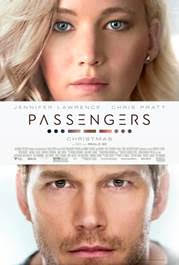
At casual glance, “Passengers” is “Cast Away” in space. 30 years into a 120 year journey, Jim (Pratt) is awoken from suspended animation due to a technical glitch with the spaceship, Avalon. But out of the thousands aboard the ship, including the crew, he is the only one to be disturbed from his slumber. Alone, he spends the next year trying to entertain himself, only finding companionship with an android bartender named Arthur (Sheen). But there’s only so much chit chat with a machine, along with digital dance gaming, basketball, and other recreational activities, one can do before developing cabin fever and crippling loneliness.

But on one particularly lonely day, after contemplating suicide, Jim comes across a pod containing Aurora (Lawrence). It’s love at first sight, but suddenly he develops a moral quandary in his brain. Being an engineer, he has the capability of waking up Aurora. Aurora’s natural beauty is alluring enough for him to do some electronic snooping. So, much like a 21st century stalker, he goes through her digital footprint and learns everything about her. This should creep out any sane audience. Right?

Now comes the worst part. Instead of asking a moral question about the lengths humanity would and should go to combat isolation, “Passengers” takes a disturbingly sexist route. Jim awakens Aurora and keeps his bastardly deed to himself, thinking he’ll wait for the right moment to tell her he’s ruined her life and condemned her to a lonely death. Of course, any good audience should know it’s only a matter of time until Aurora finds out. But once she does, “Passengers” attempts to paint Jim as the.

I’m really not ruining anything for you. I’d like to believe I’m saving you. Aurora’s revelation happens around the midpoint of the film. The only reason it happens so early is so that “Passengers” can spend the rest of its runtime, justifying Jim’s actions, directly and indirectly. But the movie makes the mistake of allowing Aurora to say the one thing we should all be thinking, “He’s committed murder.”

He has. “Passengers” never finesses the simple, but complex ethical questions behind Jim’s actions. Instead we’re just supposed to believe the ends justify the means. It doesn’t help when we watch as Aurora attacks Jim in his sleep, along with moments where Aurora is by herself. Instead of watching her sulk or seeing her realize the horrifying predicament she’s in, we watch her play video messages of her friends back on Earth, basic calling her narcissistic and selfish. It also doesn’t help that when Jim and Aurora are separate, Aurora is helpless and constantly at risk of peril, while Jim seems like a self-sufficient machine.

Regardless of its visual style and modest attempt at interesting concepts of intergalactic space travel, the most glaring flaw in “Passengers” is one that can’t be ignored. It should be condemned and abhorred. While Jim’s plight could certainly be relatable and sympathetic, “Passengers” almost seems to casually fall back on the concept of victim blaming. “Passengers” is a movie about a relationship built on selfish lies, stalking and entitlement. Its attempt at romance and a cutesy happy ending are stomach-turning.

Film Review: “Sing”

Starring the Voices of: Matthew McConaughey, Reese Witherspoon and Seth MacFarlane
Directed By: Garth Jennings
Rated: PG
Running Time: 108 minutes
Universal Pictures

Our Score: 3 out of 5 Stars

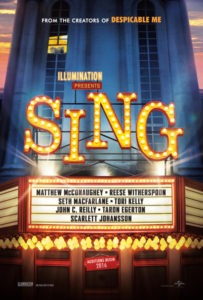
An Illumination Entertainment movie without any Minions or Gru seems like a risky venture, given their track record when they release a movie that strays away from the “Despicable Me” franchise. But if the masterminds at Illumination are willing to roll the dice more on endeavors like “Sing,” they’re bound to find a diamond in the rough. “Sing” isn’t about to blow the roof off, but its decent escapism.

Buster Moon (McConaughey) is a confident Koala that’s stuck operating a failing musical theater. He’s a visionary looking to make a profit and bring live entertainment to the surrounding city. Moon is also looking to make his deceased father proud because his father worked his tail off washing cars to buy Moon the theater for him (I don’t know how with that profession). But in a world where musical theater is apparently no longer popular, Buster gets the idea to hold a singing competition to bring the masses back to his sinking business.

The competition brings creatures from all walks of life including Rosita (Witherspoon), a pig, is a stay-at-home mom who’s overworked and overloaded with over two dozen children. Then there’s the wise-cracking, street singing mouse, Mike (MacFarlane), who’s a clear pun on Frank Sinatra during his times in the Rat Pack. Ashley (Scarlett Johansson) is a punk rock porcupine who’s trying to find her own voice in her boyfriend’s crappy band. There’s also Meena (Tori Kelly), a teenage elephant, Johnny (Taron Edgerton), a gorilla, and some other throwaway animals that you shouldn’t worry yourself about because the movie doesn’t either.

Luckily “Sing” avoids becoming an animated version of “American Idol,” but it also follows a lot of familiar beats and story tempos. Because the movie seems completely content and forthright with being an unoriginal idea from the get-go, it can be forgiven because of its good-natured spirit and endearing characters. “Sing” really treats these characters as individuals with hopes, dreams and ambitions, instead of caricatures that can carry a tune. It helps make their songs more meaningful and power…but…

…most of the time (if not all) they’re singing contemporary pop-culture hits, or recognizable oldies and classics, which is only irksome if you feel that Nicki Minaj or Crazy Town isn’t appropriate for a kid’s movie. If writer and director Garth Jennings really wanted to tell us that musical theater is deserving of a reboot or our attention again, he should have considered hiring a crew to write some original music. Having animals sing Taylor Swift or Leonard Cohen feels lazy in a year where Disney hired Broadway’s latest darling, Lin-Manuel Miranda, to write lyrics for “Moana.”

Despite its lack of storytelling imagination and original songs, “Sing” is still an adorable movie with an IPod stuck on shuffle soundtrack. It’s made better by the voice actors, who I presume actually sing, which is pretty much an all-star cast of karaoke finalists (except for MacFarlane who really is as good as he sounds). But don’t expect McConaughey to hang his voice acting hat on this one. He’s more likely to gloat about his voice work in “Kubo and the Two Strings.”

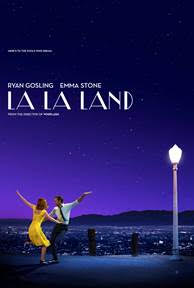
Film Review: “La La Land”


Starring: Ryan Gosling, Emma Stone and John Legend
Directed By: Damien Chazelle
Rated: PG-13
Running Time: 128 minutes
Summit Entertainment

Our Score: 4.5 out of 5 Stars

Earlier this year I found myself listening to 80’s music thanks to “Sing Street,” a semi-original musical about growing up and finding your own unique voice in the chorus. I was enamored with the movie’s somewhat original music. I found myself reflecting on what makes original content, that pays homages or mirrors the past, refreshing for the soul. Something fresh and new makes you feel young, but if it’s also acting as a salute to previous generation, conjuring up fond memories.

I’m not going to claim that I’m old. If anything, I’m always jokingly belittled by my co-workers for being the young pup. So, I can’t claim that “La La Land” is evocative, but I understand what it’s reminiscing about. From the get go it establishes itself as a neo-classical musical that generously throws back to the tap dancing or over-the-top ensemble singing of “Going Hollywood,” “On the Town” or “Singin’ in the Rain.” The style clashes with the 21st century in unique ways, allowing the viewer to take a step back in time and refocus their senses in the current era.

Sebastian (Gosling) is a jazz pianist, struggling to make it as a musician for hire. So much so that when he’s handed a setlist, he finds himself playing off into his own groove or rhythm. Then there’s the aspiring actress Mia (Stone), who’s paying the bills by being a barista and making it to as many auditions as she can. The two awkwardly, and too consistently, bump into each other indirectly or directly. The sparks fly however when the two realize their encounters may not be coincidence.

“La La Land” is a love letter to a bygone era of cinema and antiquated model of love. It may be intentionally subversive that the two leads bump into each other so much before eventually exchanging flirtatious jabs or a callback to how gimmicky people on the silver screen used to fall for one another. Regardless of Damien Chazelle’s intentions, he has a lot of fun playing with the clichés of the movies, while sadly using them to help move the story along.

What Chazelle does do wonderfully however, is show off his expertise as the writer and director as if he’s become a scholar of the musical genre. The script isn’t as airtight when the theatrics, dancing, and music aren’t all working together, but this kind of endeavor could easily suffer more if it was too heavy on the music. The length is the right amount of time and the ending is a wonderfully melancholy exclamation point on a movie that will inspire some, and cause others to give pause and reflect.

Despite not being natural singers, Goslins and Stone on their own carry a tune, moreso Stone. The big numbers, including the opening, blend together whimsical dancing and music infused with jazz, swing and big band. Chazelle, a musician himself, knows when to have the music take over a scene and simply allow the lyrics take over. Just from listening to the soundtrack, I can determine that Chazelle spent more time on the production than the lyrics.

“La La Land” may become the winter darling of those who manage to catch it, I know it’s caused me to spin the soundtrack a few times and tap my foot to its catchy, heartwarming tunes. 2016 has been a dour year, and even worse for the cineplexes that have been populated with big budget sequels that lack creativity to DC superhero movies that lack originality. I’d like to believe that “La La Land” is the light at the end of the tunnel and that anyone who catches it can at least end this miserable year with a smile on their face.

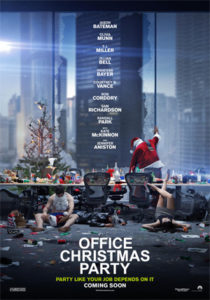
Film Review: “Office Christmas Party”

Starring: Jason Bateman, Olivia Munn and T.J. Miller
Directed By: Will Speck and Josh Gordon
Rated: R
Running Time: 105 minutes
Paramount Pictures

Our Score: 2.5 out of 5 Stars

Anymore when I watch a new Christmas movie, I tell myself that it could have been a lot worse. “Love the Coopers,” “Fred Claus” and “Surviving Christmas” are just a few of the awful Christmas movies in the past decade that come to mind. But luckily moviegoers have been treated to a handful of yuletide delights at the theaters over the past couple of years. Lately the raunchy comedies have dominated, going light on the holiday cheer, and heavy on the eggnog and drugs. “Office Christmas Party” follows this current pattern, delivering an entertaining enough comedy, but an ultimately forgettable raunchfest.

Clay (Miller) heads up the Chicago branch of Zenotek, a lowly computer technology company that tries to compete with the likes of Dell, Apple and others. His sister, Carol (Jennifer Aniston), who is also Zenotek’s CEO, has just given him the bad news. Bump up your growth to 12% or cut 40% of your staff by the time Christmas rolls around. Being a worker’s boss, he can’t fathom laying off dozens of his closest friends. So in the hopes of landing one of the biggest clients in the Windy City, he sets out to throw the ultimate company Christmas party.

There’s also some other side plots, including office romance and sex, Jason Bateman’s character is dealing with a divorce, and there’s a worker who’s trying to pass off a prostitute as his supermodel girlfriend. None of this really amounts to anything or comes off as remotely heartwarming. It only serves as cohesive glue in between jokes, physical humor, and pop-culture sight gags like the throne from “Game of Thrones.”

But the set-up for the jokes is tired and predictable. It’s almost like the duel directors and multiple scriptwriters were a lot more hesitant to go with ad-libbing and natural comedic abilities of its cast. It makes “Office Christmas Party” a more by-the-books comedy with scripted and foreseeable. When being allowed more natural, the likes of Miller, Bateman, Kate McKinnon, Rob Corddry and others are genuinely funny.

Not every moment is unfunny chatter. Once the party kicks off, there’s enough visual comedy to keep it going to its inevitable conclusion. I also can’t help, but be a fanboy of Bateman’s deadpan delivery and Miller’s goofy sensibilities. “Office Christmas Party” isn’t going to become a holiday staple like “Christmas Vacation” or “Bad Santa.” It’s a handful of laughs and short escapism for those who don’t want to watch one of the Oscar hopefuls.

Film Review: “Nocturnal Animals”

Starring: Amy Adams, Jake Gyllenhaal and Michael Shannon
Directed By: Tom Ford
Rated: R
Running Time: 116 minutes
Focus Features

Our Score: 4 out of 5 Stars

“Nocturnal Animals” requires two viewings, if you can stomach it that is. Tom Ford’s vision is a messy movie, with a fuzzy meaning. But despite the juggling act, the disorderliness feels intentional. “Nocturnal Animals” is two movies for the price of one, with each tale telling and revealing more about the other. “Nocturnal Animals” delivers a slow reveal that will surely dissatisfy many, while simply turning off others in the first few minutes, but please those who hang with it and scratch beneath the surface.

Despite owning a successful LA art gallery, Susan (Adams) seems indifferent to life. She’s married to an unfaithful man, her child has left the coop and she inhabits an artificial home full of artificial art pieces. Something stirs her from her humdrum existence, her ex-husband’s novel. Edward (Gyllenhaal) has sent her a copy of his book and inquired through email about possibly meeting for dinner to catch up. The novel, “Nocturnal Animals,” is not only dedicated to her, but she tells everyone that Edward had always referred to her as a nocturnal animal.

When she flips to page one, the movie then dives into the context of the book. It begins with a family being driven off the road in rural Texas by dangerous men and turns into a husband/father trying to make sense of a horrifying night that has turned into a lifelong nightmare. The raw viciousness and violence of Edward’s book seems to startle and upset Susan. But it’s not the visceral nature of the book; it’s how much of it mirrors their old relationship.

You could almost call “Nocturnal Animals” a wonderful ensemble, featuring actors and actresses who have won or been nominated for an award, or those who certainly should. Gyllenhaal does double duty as Edward in Susan’s life and as the heartbroken, vengeful father in the book. Accompanying him and Adams are Michael Shannon, Aaron Taylor-Johnson, Armie Hammer, Ilsa Fisher, and others. The visual storying telling between the fictional book and the reality are clear, but it’s when the two begin to reflect each other metaphorically and physically, that it becomes blurry.

The neo-western style of the book story never really meshes well with the simmering thriller happening in the real world, but the dramatic and tonal shifts help break up any monotony that might creep in because on their own accord, each story isn’t stellar. It’s only interesting when both are slapped together, with similar symbols bleeding through the lines of reality. Director Tom Ford deserves all the credit in the world for keeping the wild swings in storytelling and writing in check, without derailing the movie entirely.

However, the commentary on Susan and Edward’s formal love life is suspiciously misogynistic. Understandably, Edward is the one commenting on it and Susan is the one merely reacting to his comparisons. But it offers a one-sided narrative of what once was, painting Susan in a broad and negative light. Although that could be its inherent intention, depending on how you want to view the ending to the movie, and the book within the movie, I can help but wonder about it’s reception of the roles were changed.

“Nocturnal Animals” will certainly draw comparisons to some of David Lynch’s more bizarre offerings, but Ford’s style isn’t charmingly oddball enough. It’s intentionally dark content and bizarre imagery is more likely to turn-off a regular audience than dazzle. But it’s a compelling movie to watch and delight to discuss with those who have managed to stomach it. Ford, the fashion designer turned director, is a unique talent worth keeping an eye on.

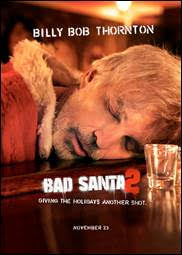
Film Review: “Bad Santa 2”

Starring: Billy Bob Thornton, Kathy Bates and Tony Cox
Directed By: Mark Waters
Rated: R
Running Time: 92 minutes
Broad Green Pictures

Our Score: 1.5 out of 5

We need a laugh. Right? I don’t need to point out or remind anyone that this year has been miserable. We as Americans deserve a hearty laugh at the theaters as we begin to wind down 2016 and put it behind us. You might get one with “Bad Santa 2,” but you won’t feel good about it and it certainly won’t cheer you up.

Willie (Thornton), the titular star of the first, is back and is just as miserable as ever. His crude happy ending in the first movie is a distant memory as he’s broke and lonely. Compounding his frustrations is the fact that he can’t commit suicide because his oven is electric. Hanging around still is Thurman Merman (Brett Kelly), the young boy from the first. He’s now a grown-up, one note joke and the first sign that the “Bad Santa 2” filmmakers had no grasp of what made the characters in the first movie so likable.

Marcus (Cox), after a stint in jail, is hoping to knock off a massive Chicago charity with the help of Willie. But unbeknownst to Willie, they’re recruiting a third for the job, Willie’s mom. Sunny (Bates) is just as foul-mouthed, belligerent and disgusting as the son she raised. When the trio of actors is left to their own devices, when they’re most likely ad-libbing scenes, they provide some of the movies only laughs. Everything else is scripted garbage.

The original director, writers, and a handful of cast members must have known better when being presented with this project over the past 13 years. “Bad Santa 2” isn’t a genuine sequel. It’s a greedy studio cash grab in the season of giving. The new writers and director are unable to capture the misanthropic nature of the original, opting more for unfunny and mean-spirited one liners, and cheap sex gags. The script feels more like a fanboy sequel rather than a realistic continuation of Willie’s story, which really didn’t need a continuation.

There are a lot of things that made the original entertaining and a classic for 21st century Grinches. The original was always hesitant to have Willie become a good person. Instead it opted for him to realize he can still be a scumbag, but a good person to those he cares about. The sequel misunderstands his one minute lapse of kindness in the first. “Bad Santa 2” utilizes his sour affection every chance it gets to convey the idea that he’s always been a lovable conman. This leads to nauseating predictability and false holiday charm that Willie will stop Marcus and his mom from stealing millions from a charity for the homeless and children.

Overall, “Bad Santa 2” is a 92 minute callback that fails to understand what made the original such a guilty delight. If you’re looking for a laugh and some form of escapism from the family this holiday season, you should stay far away from this movie. You should stay home this holiday season, grab a bottle of liquor, watch “Bad Santa” and add “Bad Santa 2” to the list of things you’ll want to forget about 2016.

Rob Kleiner and Kevin Gibson discuss Tub Ring’s Kickstarter and upcoming EP

Since the early 90’s, Tub Ring has been a true passion project. It’s survived multiple incantations, a revolving door of band members, and different record labels. Despite their longevity, they stayed under the radar as they toured constantly across the country year in and year out. With each music release, tour, and band member, the band found a way to create something new and spin their own unique take on their favorite genre. After going on hiatus for half a decade, the two long lasting members, Rob Kleiner and Kevin Gibson, have come back with a kickstarter for fans who’ve stuck around since the band’s early high school days and those who discovered them along the way as they toured the country with the likes of Foxy Shazam, The Birthday Massacre, Dog Fashion Disco, Mindless Self Indulgence, and others. Media Mikes got a chance to talk with them as they get ready to head back into the studio.

Jeremy Werner: After Tub Ring’s 2010 release, “Secret Handshake,” everything seemed to go silent and the touring stopped. A lot of fans seemed kind of in the dark for years, kind of just assuming that the band had called it quits. But here you are with a Kickstarter, a successful one at that, and some are wondering what’s happened over the past six years?

Rob Kleiner: After non-stop touring and making albums for a solid 10 years we were due for a break. Kevin and I had been the two constant members during that period of time. All the upkeep, finances, songwriting, planning, etc., fell on us and us alone. We were a bit tired and also broke. On top of all this I had started finding the biggest success I’d ever had in my music career writing and producing for bigger artists, which led me to move to Los Angeles to focus on that. Since arriving in LA all my creative attention has been aimed that direction.

Kevin Gibson: I got married, and enjoyed living a nice normal life. My love of music remained, but I became more of a music fan than a music creator. My wife and I follow Skrillex all over the country cause we’re nerdy superfans like that.

JW: What was it that got the ball rolling in terms of deciding to come back together, make a best of LP, make some new music, and start a crowdfunding page?

KG: Nothing in particular. I think we both had a little necessary time off, but then started seeing each other more often. Kinda seemed like the right time to do it. It was pretty organic. We had always said Tub Ring wasn’t dead, just on hiatus, so we wouldn’t want to be dirty liars now, would we?

RK: Our guitarist Patrick put the idea out there for making a best of vinyl. Kevin and I liked the idea, and decided it’d be fun to make a few new songs to accompany that.

JW: You reached your Kickstarter goal literally days after launching. What is it like seeing yourselves reach that goal so quickly?

RK: It’s beautiful. I remember a long time ago someone asking me, “What would make you happy in life?” My answer was, “to create someone’s ‘favorite’ music.” Maybe I achieved that. Maybe not. But it sure seems like this is a good indicator that I’ve made music that’s meant something to some people.

KG: It was pretty wonderful, actually. Tub Ring was always a labor of love for us, but I wondered if anyone would still care. Seems like they do, so I’m gonna try to live up to the love.

JW: The stretch goal is $30,000 to do a live show in Chicago. If you reach that…what would a possible second stretch goal be?

KG: Shit, I don’t know. Working on new stuff has been immediately enjoyable. To be honest, we’re playing it by ear. I suppose if not just the kickstarter, but everything else worked out we could always keep recording more music.

RK: We’ve definitely discussed that possibility. If there’s demand then yes. Perhaps we spin the new EP into a new album, or we do a small tour. We’ll have to cross that bridge when we come to it. Whatever people want could become possible.

JW: Because it’s been so long in between new releases of music, is there anything that’s been released by artists you like or any new music over the past six years that you’ve gravitated towards and look to incorporate in your new music?

RK: Absolutely. I write directly from my inspirations. My songs always end up sounding like what I’m listening to. My taste is always evolving. Hopefully my newer influences will work with the new TR material.

KG: Well, I love music and my music preferences are constantly changing. It’s pretty much the same as when Tub Ring was heavily active. Obviously I’m influenced by different music at different times, and it’s fun to incorporate new sounds and styles, but I don’t think we ever sit down and say, “I want this album to sound like this.” We just kinda write what we write and what comes out is Tub Ring.

JW: Is the Kickstarter for the fans or are you looking at trying to make some splashes with the new music?

RK: For the fans and for ourselves. If it brings in any new interest that’s great, but that’s certainly not the goal here.

KG: This Kickstarter is definitely for the fans, as well as us. I sure have fun making music. That being said, it’s not like I’d be upset if we made some more fans.

JW: With both of you on different ends of the country almost, what kind of strain does that put on the music making process?

KG: I don’t think it’s going to any strain at all really. We can bounce stuff back and forth immediately through the wonder of technology. I remember when Tub Ring started out I would write lyrics using a terrible room recording made from a boombox and a cassette. Basically it’s just adapting to the current situation.

RK: It does makes getting together a bit more expensive. That’s what the kickstarter is for to help with. Altogether though, it’s really not too bad of a strain.

JW: I’m sure that you have fans that you talk to all the time about your music, but is there anything you’ve worked on in the past or anything you’re working on now that you’re really proud of and you want people to go check out now?

KG: My Apartment looks nice.

RK: I can’t pimp out one of my artists without pimping out all of them – so instead of writing a novel, fans should just go to my website.

You can check out Tub Ring’s Kickstarter here.
You can get up to date information from Tub Ring on their Facebook.

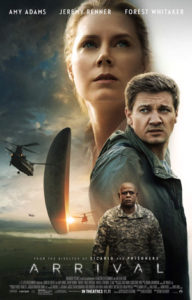
Film Review: “Arrival”

Starring: Amy Adams, Jeremy Renner and Forest Whitaker
Directed By: Denis Villeneuve
Rated: PG-13
Running Time: 116 minutes
Paramount Pictures

Our Score: 4.5 out of 5 Stars

If you’re hoping for an alien movie filled with mindless city destroying explosions, slow-motion gunplay, and jingoistic speeches by presidential figures, you’re going to be severely disappointed with “Arrival”. But if you’re looking for a profoundly tragic and beautiful sci-fi movie that transcends its interstellar subject material with an introspective look at what it means to be human, then you’re going to love “Arrival”.

When a dozen circular, monolithic structures appear over the surface of the planet in 12 seemingly random spots, the Earth quickly comes to a screeching halt. Classes are called off, planes are grounded, the economy goes into a literal freefall, and the world sits and watches as nothing happens. No sounds, no communications and no clue as to what these odd ships are here for. There’s an impending fear because dozens of governments attempt communication, but aren’t quite sure if the beings that they’re talking to are friendly or not. The U.S. government acquires the best of the best for the job, Dr. Louise Banks (Adams).

While senior U.S. military officials like Weber (Whitaker) expect immediate results, Banks has a deep understanding of language as well as the patience it takes to understand what an intergalactic species is saying. The master linguist is aided by Ian (Renner), a mathematician that comes in handy to device a program in place to decipher the visual language the aliens are using. But alas they face an uphill battle.

Fear of the unknown, the inability for governments to work together, conspiracy theorists having a social media outlet and an impatient generation are at full work outside the space ships and military quarantine zones surrounding the structures. “Arrival” doesn’t necessarily focus on that too much though because we all know that the human race couldn’t handle the possibility of extraterrestrial life. As “Men in Black” so eloquently put it, “People are dumb, panicky dangerous animals.”

“Arrival” finds more usefulness out of Banks’ psyche. It’s tough to describe the internal and mental conflict broiling in Banks’ head without revealing too much of what gives meaning to the slow burn reveal towards the end of “Arrival”. Director Denis Villenueve, whose other movies have ambiguous endings and hidden meanings (“Prisoners”, “Enemy” and “Sicario), is the right choice for a movie that has more than meets the eye.

Adams helps convey the deep emotional turmoil inside Banks and is complimented by the various forces pulling her apart. Throughout the run time of “Arrival”, we watch Banks struggle with the insignificance that humanity feels when knowing we’re not the only special entity floating around in the universe. That struggle turns into one of confusion and understanding that something greater is at work than the petty distress that mankind feels when losing it’s individuality.

The release of “Arrival” feels poignant considering the current election in the U.S., but for those who look beyond that simplistic snapshot reaction, there’s a deeper meaning at play. If “Arrival” has anything to offer, it’s therapeutic reassurance that despite the struggles we face because of our differences, every living human being on this planet still feels love, regret, sorrow, and joy. And understanding that idea every day could ultimately lead to unity and healing.

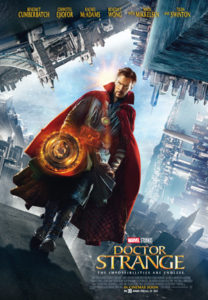
Film Review: “Doctor Strange”

Starring: Benedict Cumberbatch, Chiwetel Ejiofor and Tilda Swinton
Directed By: Scott Derrickson
Rated: PG-13
Running Time: 115 minutes
Walt Disney Studios Motion Pictures

Our Score: 4 out of 5 Stars

How many trick or treaters did you get that were dressed as Doctor Strange? I’m going to guess that you got none. You probably saw more kiddos dressed like Thor, Spiderman, Batman, Harley Quinn or Iron Man. Well next year you might see a few more kids wearing fake or drawn on goatees and donning red velvet colored capes.

The latest addition to the Marvel cinematic universe is the egocentric neurosurgeon, Stephen Strange. The world renowned doctor showboats while patients’ lives are on the line. He loves demonstrating his calm demeanor and unflinching hands under immense pressure during operations that require precise movements. He values his hands much like a model covets their hourglass shape. But that all goes out the window after he suffers a horrific accident (don’t text and drive), that requires pins, needles and plates to reconstruct his hands. All that’s left after multiple surgeries are trembling scarred fingers resembling flesh pudding.

Refusing to accept that he’s lost the use of his hands, Strange goes on an experimental medical journey that ends in impoverished Tibet. Whispers and rumors have led him to the mystic Ancient One (Swinton). Despite reservations about Strange’s narcissism, she takes him in. She hopes to upend his self-centered Western mind and open it to the powers of Eastern religion and ancient mysticism; all while spouting lines of dialogue reminiscent of Taoism or Gautama Buddha.

Outside of being the most mentally and spiritually stimulating entry into the Marvel movie catalog, “Doctor Strange” features a superhero that prefers brains over brawn. But when fighting is required, it’s a visually stunning treat. The visuals are a mix of “Inception,” M.C. Esher, “Avatar: the Last Airbender,” “The Matrix,” and a Pink Floyd acid trip. When the world begins to bend and fold, the grand music score, with morsels of Eastern stringed musical instruments and psychedelic synthesizers, props up the optical mind trickery.

As for the story, it lacks the right amount of emotional magic and it seems to suffer what most Marvel movies lack, an interesting and relevant villain (just sit through the credits for more proof that Marvel is out of villains). Mads Mikklesen, who’s been an iconic villain in everything from
“Casino Royale” to his eerily role as a middle-aged Hannibal Lecter in NBC’s TV show, seems wasted in this movie as Kaecillius. Kaecillius’ motivation is a blend of rebellion against the Ancient One and his immoral infatuation with immortality.

Despite my frustrations with a lack of Mikklesen, Cumberbatch and Swinton are a delight to watch with their “Karate Kid” teacher/student moments. The duo has the most to offer their characters while everyone else is left to play second fiddle to them. Rachel McAdams plays Strange’s toss-away love interest and Chiwetel Ejiofor spends most of his time standing in proximity to main characters so he can provide key plot points.

Despite some of its storytelling flaws, Doctor Strange is the most thought provoking of Marvel’s movies, while keeping intact the thing we’ve come to know and love from Marvel studios. “Doctor Strange” was definitely a risky gamble for Marvel, but it’s paid off. And not just because of Cumberbatch’s acting and a crew dedicated to dissecting and dismantling everything we thought about the world, but because it puts aside the city destruction and violence for some thoughtful superhero development.