

Interview with Bruce Spence

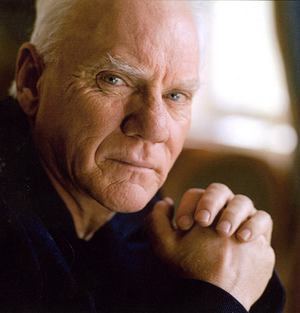
Bruce Spence is well known for his various roles including Tion Medon in “Star Wars: Episode III – Revenge of the Sith” and the Trainman in “The Matrix Revolutions”. He also voices the shark Chum in “Finding Nemo”. Media Mikes had a chance to chat with Bruce about his various roles.

Mike Gencarelli: What did you like most about playing the character Tion Medon in “Star Wars: Episode III – Revenge of the Sith”?
Bruce Spence: Apart from the fact that I was delighted to have the opportunity to be part of the “Star Wars” family of characters, Tion Medon was a completely new character from a completely new world that George Lucas had created. In fact it was possibly one of very few new characters in this episode.

MG: Tell us about your experience working on the film and what was your inspiration for the character?
BS: As I spent quite a number of days before the shoot in makeup and wardrobe I had a fair bit of time to absorb Tion Medon. The dialogue was that of a rather ancient leader with considerable authority, obviously of some stature and experience. However his makeup tended to contradict the dialogue with his fierce simian features and rather nasty teeth. He had the visual appearance of a creature who could be construed as someone who might not have good intentions which gave me the opportunity to challenge that in my performance. However any actor will tell you that contrasts and contradictions like that make for a much more interesting character to play.

MG: How long was the make-up process for the character from beginning to end?
BS: Well firstly we began weeks before the shoot day with the prosthetic department taking a plaster cast of my head and hands. This is not a very comfortable experience as the plaster is quite a weight on your head; you are completely encased apart from a couple of straws protruding from your nostrils to allow you to breathe. This process takes at least a half an hour and the relief of having the cast removed is enormous. The prosthetic folk then take a mold of my head and build up the face of Tion Medon upon that. Often George Lucas came in and contributed advice etc. Eventually, when they were satisfied with the image and they made the prosthetic pieces for my head. I came in to the makeup department for a few tests to see just how it would look on me and to experiment on the makeup. Eventually when everyone was happy we tried it all with the costume. So you can see that there was an enormous amount of thought put into just how the whole appearance of Tion Medon would end up. After about the fourth or fifth visit everyone was happy. We had decided not to use the bottom pair of false teeth as I looked too fierce, and that the marks on the face were now just right. So come the first day of the shoot we knew that it was going to take four and a half hours so I was up very, very early. The hours in the makeup chair while I was becoming Tion Medon on the outside gave me time to become Tion Medon on the inside. One must have a lot of patience. The makeup took more than two hours to come off as well, so it was a long day.

MG: You recently played Lord Rhoop in “The Chronicles of Narnia: The Voyage of the Dawn Treader” and then range to comedies like “Ace Ventura: When Nature Calls”, do you enjoy working in comedy?
BS: I enjoy exploring all sorts and ways of experiencing the human condition. Comedy though can be very difficult. It is a big help to have a good script!

MG: “Dark City” is one of my favorites, how was it working on that bizarre film during its production?
BS: I spent three months with my head shaved. It was only then that I realized that your head is probably the one spot on your body that is unexplored until you shave it off. I found old scars and bumps that brought back a lot of forgotten memories.
I loved working with Alex Proyas, the director, he has a wonderful imagination. Even though I had little to do I loved working on that film. The story concept was fantastic.

MG: You lent your voice to the shark Chum in “Finding Nemo”, tell us about working on that film?
BS: That was also a privilege, the Nemo creative team were an absolute delight to work with. I put down my voice in Sydney Australia while they were live in San Francisco like a giant skype set up. It was the first time I had put down a voice for an animated feature film and I loved it. We had a script but once we had the character down we put down a few little improvised lines in case they needed them. Once you find your character it is hard to stop coming up with new stuff.

MG: Your role of “The Mouth of Sauron” ended in the director’s cut of “The Lord of the Rings: The Return of the King”, tell us about how you got that role and working on the film?
BS: It was really a last minute thing I seem to recall. I just got a call right out of the blue. The director knew my work but little did I know I would be hidden under that damned helmet that I found impossible to see out of. So there I was, blind as a bat under this helmet after a four hour long makeup, sitting on a horse that hated the armor it had on which led it to keep trying to shake it off. It was not a very comfortable day.

MG: Your character of Trainman from “The Matrix Revolutions” is so notable, how did you get involved with that project?
BS: The directors Andy and Larry Wachowski, knew of my work and I guess they saw something of the Trainman in me. I loved that role; The Trainman was a rather cheeky sort of guy who stood out in the intensely serious world of the Matrix. Mind you the Wachowski brothers are rather mischievous as well. We seemed to see the character exactly the same way. I found it rather easy to fit into that guy and loved the experience enormously.

MG: Tell us about how you became involved with both “Mad Max 2: The Road Warrior” & “Mad Max Beyond Thunderdome” playing different roles?
BS: I had acted in a few low budget films in Australia before Mad Max and had met George Miller on a few occasions. Once again it was a sort of last minute thing. I had heard they had been auditioning actors for quite a while and was beginning to think I had missed out. Then I got a call, hurried over to pick up a script, went away for about an hour and came back for the audition. As the world of Mad Max was so unique and George wanted something different from the first Mad Max I just acted on instinct. Boy when I heard I had got the role I was delighted but I had no idea at all just how big a part it would play on the future of my career. “Beyond Thunderdome” was also very last minute. The shoot was well underway when I was approached to play Jeremiah the pilot. Apparently they had put off casting the role as they kept thinking of actors to play the role but still seem to lean towards me. The stumbling block was finding a character that was like me but not me, as it was another story. Anyway I got the call and it was described to me as being sort of like the character I played in “The Road warrior” but not like him – if you see what I mean.

MG: What do you have planned next upcoming?
BS: I have just been on tour doing a bit of stage work. Who knows what is around the corner?
Interview with Scott Rosenbaum

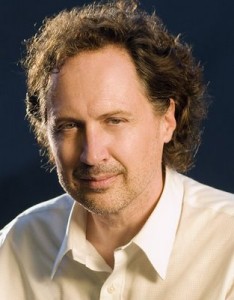
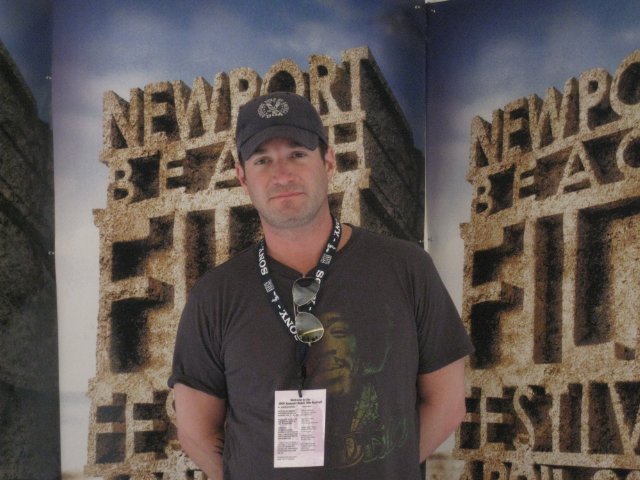
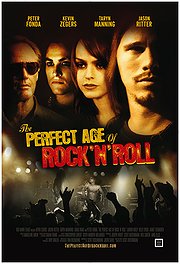
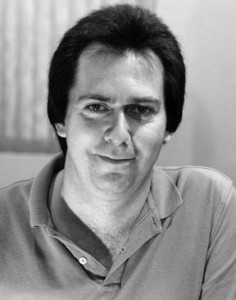
Scott Rosenbaum is the writing and director of the new film “The Perfect Age of Rock ‘n’ Roll”. The music road trip film and stars Kevin Zegers, Jason Ritter and legend Peter Fonda.  Media Mikes had a chance to chat with Scott about working on his first film and also what he has planned next.

Mike Gencarelli: Tell us about when was “The Perfect Age of Rock ‘n’ Roll” was shot and about its road to release?
Scott Rosenbaum: We shot in the summer in 2008 and finished post production in spring of 2009. So it has been a little over two years ago that we finished. It is interesting because people see that and it is not necessarily count as a strike against the film but they become suspect. I find that strange. It is my first feature film and independent film work is so challenging right now because everything has dried up. It was challenging in the first place to get the film made but then once we finished it, it was right around the beginning of the economic crisis and it made everything more difficult to get it released, especially for a first time filmmaker. We persevered and did what we had to do to finally get it out.

MG: What did you like most about working on “The Perfect Age of Rock ‘n’ Roll”?
SR: It was really a labor of love for me. I grew up in Long Island and playing in bands since I was 12 years old. So I have a love of music and the history of music. I have always been involved and around filmmaking but I didn’t go to school for that. I went to school for journalism. I finally committed to complete a screenplay and to just go for it. The whole process is gratifying just being able to shoot the film and get that kind of a cast to come out and work with me on my first feature. Also to be able to put all that music in the film that I grew up loving and wanted to be apart of this film to tell the story. The whole process was really fantastic for me.

MG: Tell us about the working with Kevin Zegers and Jason Ritter and legend Peter Fonda?
SR: Each of them brought some much to their character and to the creative process. The directing background that I have is from New York based theater. One of the consistent themes that I focused on was experimentation. All of these actors were so giving and into their roles. They each elevated the writing to a better place. Fonda, of course, is a Hollywood legend and it is clear that “Easy Rider” is a big influence on the film and probably every road trip film. He was very generous with the “Easy Rider” legacy” and letting us toy with it and utilize it within our film. As far as Kevin and Jason, I cannot say enough about those guys. It is hard enough to act as a musician, that was definitely a challenge from casting. They pulled it off beautifully. Kevin sang all of his own vocals and Jason was a musician already. Most of the songs were done by Steve Conte who is the lead guitarist for the New York Dolls. Jason was able to follow the notes, strumming patterns and makes it look great. Those guys definitely nailed it.

MG: How do you feel that this film relates or differs from other music films?
SR: There has been a lot of criticism and it is a little frustrating for me. Some critics are saying it is a knock off of “Almost Famous” and it is like they didn’t even watch the film. I do not think that is the case at all. Anytime you make a rock and roll film, there is a set path you need to walk. What I think is different about this film is that it is focused on the evolution of them music and the relationships within the music business. I think we struck out on our own and laid some new trials that I do not think have ever been touched on. I wanted to make a really gritty real feeling film for what it feels like to be on the road and in a band. I hope that comes through.

MG: Who are some of your favorite artists and where they influential in the movie?
SR: That is another one of the things I wanted to portray in this film that I do not feel is touched on at all in a narrative feature is the evolution of rock and roll from the blues. There has always been talk about how the rockers stole the blues from the blues men. It is interesting but no one has really picked up on it yet but I tried to make this film very layered with a deep story. Things like putting the blues music behind the flashback Spyder scenes.  All of those blues songs were chosen because they were either done by bands like Led Zepplin, The Allman Brothers and Eric Clapton. All songs that were made famous by rock band that are household names but were from blues artists, who were more or less obscure. I tried to layer the narrative between Eric and Spyder in that way by portraying all the great blues music I grew up loving thinking it was initially The Rolling Stones or Led Zepplin or The Doors when it was actually Muddy Waters or Willie Nixon and other great blues artists. That is definitely one way that this film sets itself apart. I came to the blues the way that many from the white audience came and that is through rock and roll. Blues are really one of the great art forms given to us along with rock and jazz.

MG: Was the concert footage more difficult for you to shoot then the rest of the film?
SR: Yes for sure, it was something I was very conscious of. There was some definite reference that I wanted to go over with my cinematographer before we shot. One thing to note, I was very fortunate to work with Tom Richmond and I believe it was his 40th feature film. He also did everything from Pearl Jam’s “Jeremy” video to many of the 90’s Foo Fighters videos. We went through a lot things I wanted to evoke in those music scenes. The small roadhouse bar has one particular feel to it. The big concert scene was very much influenced from 90’s rock band like Guns ‘n Roses, Nine Inch Nails and Marilyn Manson. I think we did a very good job capturing the essence of what those moments would have looked and felt like.

MG: What do you have planned next?
SR: Good question, well in that blues bar scene, all of those musicians are veteran blues men from Delta and Chicago. They are a dying breed and I look at them as a natural treasure. They are just the most beautiful guys you will ever meet. We set out while we were in post to make a documentary about these blues men and the rock stars I just mentioned. We had a concert in LA and had band members from Jefferson Starship, The Doors and Dave Matthews Band. Our plan is once we get the balance of the financing is to put on another concert and bring out the real heavy hitters of blues rock to highlight the fact that they blues-men represent the legacy of American root music which in turn become rock and roll. My goal is to make a modern day version of “The Last Waltz”. Then I am also writing my follow up script which will be my second feature film as well.


Related Content

Interview with Tristan Wilds

Tristan Wilds is known best for his role of Dixon in “90210”. With the show entering it’s fourth season, Media Mikes had a chance to chat with Tristan about his role and what to expect from this season.

Mike Gencarelli: Leading into season 4 what has been your biggest challenge playing the role of Dixon?
Tristan Wilds: I think the biggest challenge now would probably be showing the growth. I think people get used to seeing a certain thing every year and, sometimes they forget that as human beings we are supposed to change and grow. For me showing how Dixon has grown from the likeable high school kid to a young adult who has made some problems has been definitely the biggest challenge.

MG: How do you feel that this season in general stands out from the past 4?
TW: From a character stand point I really like it. You get to see a different dynamic of the Dixon character. In the previous seasons, Dixon was always the clean cut kid but this season you get to see him in an element we are not used to.

MG: What will be the main issue with Dixon this season?
TW: I think there is going to be a couple pinnacle points for Dixon this season. Probably the biggest one will be the pressure that has been put on him to make his music work. Dixon is going to try and prove to everyone why he chose not to go to college. With that will come many different issues.

MG: Will there be any love interests that we can be watching for?
TW: So far I think there is going to be one. It’s going to get a little steamy so everyone will have to be watching.

MG: After working on a season of “90210” do you find yourself watching the episodes each week?
TW: Yes. I always do. I am a very tough critic about myself. I am always looking at how I can better my performance and my craft. I am constantly taking notes on how I might be able to do something in an upcoming episode. I’m a work in progress and by watching the stuff I am in help me get better.

MG: What are your interests outside of the show?
TW: I am doing music as well which is pretty funny since they chose to make Dixon get into that also.

MG: Can you tell us about any of your projects?
TW: I am working on an EP which I hope to release before the end of the year. I plan to have a full album release sometime next year.

MG: Can you give us some background on your role in “Red Tails”?
TW: My characters name is Junior. He is the youngest guy in the group and he is really trying to be looked at as a man. It’s going to be a really great film!

MG: How does working on “Red Tails” compare to your work on “90210”?
TW: It’s definitely different. “90210” is kind of like school. We are all friends and a very tight knit group. For me it’s all about the dynamics and the relationship aspect. “Red Tails” was like a fraternity. No one could mess with someone in that group without the rest of us being right there.

MG: Being involved in music, television and movies is there one you like the most?
TW: For a long time I thought it would be music. However a couple years back I found myself being just as excited about watch the Emmy’s and the Academy Awards as I was to watch the Grammys. It just hit me that nothing could come between me and acting. Both are a huge part of my life.


Related Content

Interview with Brian Steele

Brian Steele also known as CreatureBoy has played many amazing character in his career.  Some of them range from Mr. Wink & Sammael from the “Hellboy” series, the wolves in “Underworld” franchise and Berserker Predator & Falconer Predator from “Predators”. Media Mikes had a chance to chat with Brian about his various roles and his nickname.

MG: How did you get involved with creature work and given the name CreatureBoy?
BS: The nickname CreatureBoy has been with me since the early 90’s. It originated when a buddy effects artist of mine calling me it on set and the name has stuck since then. At the end of that show the crew gave me a robe with CreatureBoy embroidered on it. I still have and wear that robe! As for getting involved in creature work, well, that started in 1987. I went to an open audition for Frankenstein’s Monster at Universal Studios here in California. I was hired soon after to play the Monster in the theme park. It was a great job! Did that job for close to four years before being hired on to complete the TV show “Harry and the Hendersons”. It was while performing on this show that it became clear to me that I just couldn’t imagine doing anything else. Whatever it took to continue this path I was going to strive towards.

MG: What has been your favorite character you have portrayed?
BS: Unfair question! [laughs] Picking a favorite character would be like picking a favorite child. So, I just like to say whatever character I’m working on now is my favorite. It so much easier that way! I will say each character I have played has it’s own reason for being a favorite. “Predators” and “Terminator” because I grew up with these movies, Mr. Wink from “Hellboy II”, besides being so darn cool, he challenged me in so many new ways. Then you have the wolves in “Underworld” Franchise, Sammael from “Hellboy”, Harry from “Harry and the Hendersons” TV series. All of the characters I have portrayed are so special to me. I could go on and on about each one…the effects artists have given me some wonderful creations to wear!

MG: Tell us about working in “Predators”, how did you prepare for the role? Where you a fan of the series?
BS: I have wanted to portray a Predator ever since I saw the first movie. It’s such an iconic role. I like to say “ A Predator is the Badass of the Galaxy” who wouldn’t want to be one. Huge fan! I have spent a lot of time studying the first two films. I believe the strength of the Predator character is rooted in the performance of Kevin Peter Hall. All things Predator are built and borrowed from his performance. His performance was off the charts!

MG: “Hellboy” is one of my favorite series, how was it working on those films?
BS: There are no “Hellboy” movies without the imagination of Guillermo del Torro. Love working with Guillermo del Torro! His work ethic and attention to detail are amazing. High expectations, high demands and high rewards are the norm working on the “Hellboy” films. It’s refreshing to work with a director that uses monsters to tell and further the storyline instead, as if often the cases, using them just for scares. The characters I portrayed, Sammmael in “Hellboy” and Mr. Wink, Fragglewump, Cronie Troll and Cathedral head in “Hellboy II”, tested my mental and physical strengths. I trained like a mad man for each of these movies knowing it was going to be a grueling but rewarding shoot. It’s a special experience when everyone is completely dedicated to the task at hand, believes in the project and will leave blood to fulfill the vision of their director. That was my experience in a nutshell working on these films.

MG: Was it just a coincidence that you worked on “Predators” and “Harry and the Hendersons: TV Series”, both roles originally played by Kevin Peter Hall?
BS: I would like to think the producers knew of this connection before they asked to meet me but, I don’t think they did. It has been almost 20 years since I played Harry on the TV show, so I can understand how they wouldn’t of known.

MG: What has been your most difficult role to work on?
BS: I don’t like the word difficult ….the most challenging role was portraying Mr. Wink in “Hellboy II”. He was just so big! Bringing a personality to the surface of his emense suit while performing carrying 130 plus pounds of weight was a huge undertaking. I trained for three months with weight vests, dive belts loaded with weights, pool training, hiking, biking and gym training to prepare for the role. I have a training slogan “Make the Pain Familiar”. I continually push myself beyond where my body wants to shut down. This way I’m mentally and physically prepare to endure the demands of the role and continue to stay in character. Love my job!

MG: Tell us about the project you are currently working on?
BS: Recently I’m involved in the prep work on a Bigfoot movie called “Exists”. It’s being produced by the folks that did “The Blair Witch Project”. Its being directed by Eduardo Sanchez who Co-Directed “The Blair Witch Project”. Very excited about this project! Great to be working with my friends over at Spectral Motion on this film. They a creating and fabricating the Bigfoot. All I can say is it going to be fun to make Bigfoot a terror to be reckoned with! I’m also just launched my own clothing line called “CreatureBoy” and “Make the Pain Familiar”. Very excited to take my dedication to this genre and build a clothing line around it. Just branded our first shirts, hats and hoodies! You can check them out at creatureboy.com You can also follow me on Facebook at creatureboy or Brian Streele or on twitter @ madeamonster.


Related Content

Interview with Richard Band

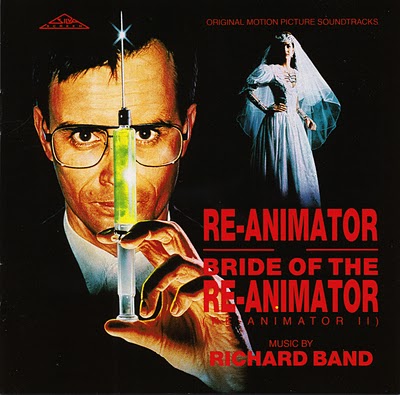
Richard Band is known best for scoring the film “Re-Animator”, which is one of my favorite horror scores. Richard has worked a lot in his career with his brother Charles Band specifically with scoring the “Puppet Master” series. Movie Mikes had a chance to chat with Richard about his scores, his favorites and what he has planning upcoming.

Mike Gencarelli: What is your process like when starting to compose for a film?
Richard Band: What I like to do is look at the film numerous times. In the old days I would sit and watch the film in a screening room around four or five times. Now with the invention of quick time and computerized digitalization I will sit and watch a film as many times as it takes to get an idea for what the movie calls for. It has to kind of speak to me in a way so that it passes from my head down to my heart. A lot of times a film has a deeper context and that’s really what I look to bring out with music. I really like to use music to bring out that underlying momentum or meaning of the film or characters.

MG: Have you ever worked on a score prior to seeing a scene or film?
RB: It happens now and then. When you’re working on a musical you have to have the music completed before they start filming. I haven’t done any musicals per say but I have done some work where a song or music was required for the scene to be shot. In that case you have to get familiar with the scene and talk with the director and producer. I try to use a similar process as when I am able to see the project that way everyone is on the same page.

MG: “Re-Animator” is one of the best scores in horror history and also one of my personal favorites. Can you tell us what your inspiration was for that score?
RB: After watching the film quite a few times the thing that came to me very early on was Herbert West’s mania. This character is clearly a genius but at the same time he is totally nuts. This was a main driving force. This combined with the fact that the film was so out there and crazy for it’s time. If the film was treated on a serious level people would probably walk out in a second as it would be too much to believe on any level. I decided the music had to have a type of humor to it that was quirky and a touch off. I began thinking about different movies that the audience could immediately relate to and at the same time exemplify just how nuts and crazy the main character is. “Psycho” came into my mind and I knew it was a film that everyone would recognize. I used some of the motifs’ and or orchestrations from “Psycho” but I added my own original theme and a quirky drum that would give it my own signature but also give it something people could relate back to.

MG: You worked on all/most the films in the “Puppet Master” series, how do you differentiate when working on each score?
RB: In the case of the “Puppet Master” series when it started out no one knew it was going to become a franchise. I think an important ingredient in any film is there has to be a very identifiable theme that could go across that film and be strong enough for people to identify with. On the sequels there was no question that the main theme had to be a driving force in the subsequent scores. The theme its self has an element of sadness combined with a circus type element that shows that no matter how bad the puppets are in their deeds the puppets are actually the good guys.

MG: You have worked throughout the sci-fi/horror genre; do you have a favorite score that you have worked on?
RB: I have done so many different kinds of scores. Of the genre stuff I don’t think I really have a favorite. I did a score that’s not really genre called “Ghost Warrior”. I recorded that with the Royal Philharmonic and it has a very beautiful score. Of the genre stuff “From Beyond” is in the top five. I did a score for Paramount called “Dragon World” which is a really beautiful score that I like a lot. It’s hard to really pin point one favorite.

MG: Do you a have film score that you have not worked on that you really liked?
RB: I have always been a very big fan of Jerry Goldsmith’s work. He has done so many good scores. The score he won an Academy award for in “The Omen” was really incredible. Even going back earlier than Jerry his teacher Nicholas Rosa did some amazing scores as well like “Spartacus”. There have been a lot of great composers through the years. I wish we had more of those types these days. There seems to be a shortage of very lush scores these days due to cost’s.

MG: How do you feel that composing has changed since your first film, if at all?
RB: Scoring has changed since I started. The first 12-15 years I did mostly large orchestral work. My upbringing and training was much more formal even though I had done some electronic work during those years. I started before computers really came into use so the work was much more meticulous back then. We had a music editor who wrote music notes while watching a piece and at the end they would hand me around 500 pages of musical notation broken down to seconds and milliseconds. Everything was done from memory and notes which was much more intimate. A lot of times in those days it was me sitting at a piano with a lot of good pencils, paper and erasers. Today you have to be both a composer and a friggin engineer to work all the gear they have now. In the older days I could put in a good 10 hr. day of writing. These days if I put 10 hrs. of work in maybe half of it is writing and the rest is screwing around with equipment.

MG: Tell us about your upcoming projects?
RB: Right now I am doing a pretty cool 3-D short that I believe will start airing at the end of the month on one of the 3-D channels. Then In a couple weeks I start on a feature titled “Shiver” which is a suspense thriller starring Danielle Harris, Casper Van Dien and a few others.

Interview with Mike Christopher

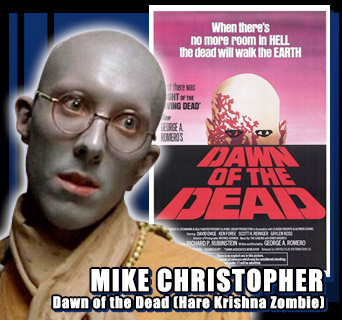
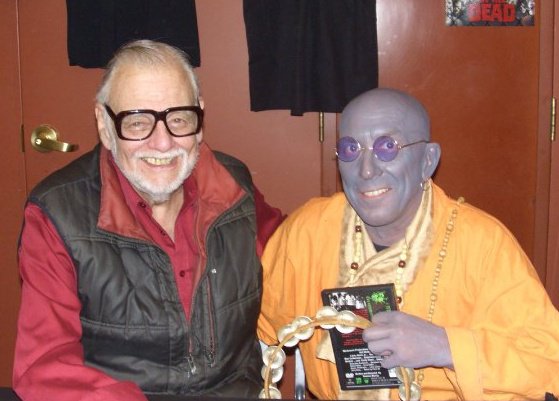
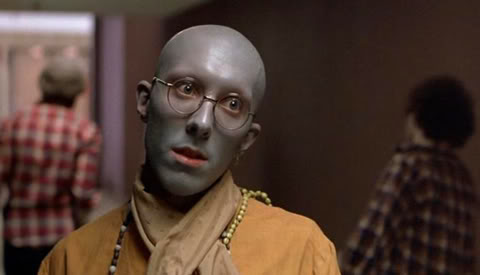
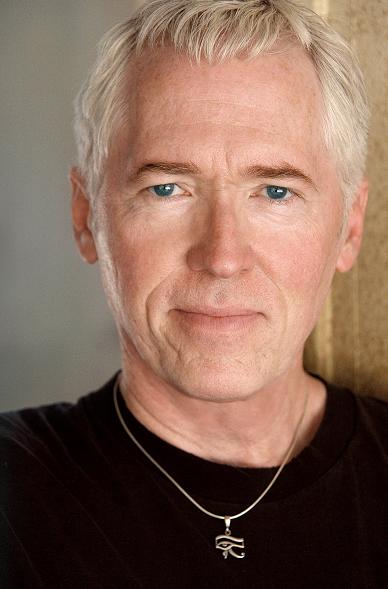
Mike Christopher is known best for his role of the Hare Krishna Zombie in “Dawn of the Dead”.  Mike’s character in that film is one of the most well known zombies ever in films.  Movie Mikes had a chance to chat with Mike about his role and what he is currently working on.

Mike Gencarelli: Tell us about how you became the Hare Krishna Zombie in “Dawn of the Dead”
Mike Christopher: I was playing in a rock band “FLUID” at the time and Mickey Lies (the Machete Zombie’s brother) gave our picture to Romero. The “FLUID” band performed a space themed theatrical show with our music and we all had bald heads. The Sax player, John Paul Musser got the role as the Plaid Shirt/ Airport Zombie. George came up with the idea to have a Hare Krishna for diversity. It was a great role and I just got lucky I guess. Having the bald head was the ticket to play one of those pesky Krishna guyz.

MG: How does it feel to be one of the most recognizable zombies in film history?
MC: It’s actually kind of scary. I think about all these thousands of people who were actually afraid to sleep on the 3rd floor of their parent’s house because of me. I still scare a few people at the conventions. Just last weekend at Saturday Nightmares I noticed a gal laughing hysterically pointing at me. (I was ‘in character’) I got up and started to shamble towards her. She screamed and ran so I began to follow her. She kept running and screaming. I believe she was genuinely terrified.

MG: After “Dawn of the Dead”, you didn’t act again till a few years ago, why was that?
MC: I moved to Los Angeles and performed laser light shows for Laserium and Laser Media. I also made synthesizers and drum machines for Oberheim in Santa Monica, colorized Black and White Movies for Color Systems Technology who was colorizing some of the Turner Library. I also worked in video post for a while before moving to Florida in ’96 and became a Graphic Artist. It wasn’t until after I lost my job in Graphics that I learned of the conventions, then my action figure came out and I started getting roles in indy films when I started networking on mySpace and the Florida film scene.

MG: Any neat behind the scenes stories that you were saving up for this interview?
MC: The best one is when I surprised George Romero at HorrorFind in 2008. I waited in line and he looked up at me, read my badge and said “Mike, you look kinda familliar.” I had a pre signed action figure which I set down on the table in front of him and he looked back up at me saying “You’re the GUY . . . I DON’T FUCKIN’ BELIEVE IT! He stood up and grabbed me in a bear hug and apologized for not recognizing me. “George, it’s been 30 years I said.” I wish I had a movie of THAT!

MG: How can you reflect that with just one role you have such a loyal horror fanbase?
MC: I owe it all to the genius that is George Romero . . . they are actually fans of George’s Hare Krishna character, I just brought the zombie to life or something.

MG: What do you like most about going to horror conventions and meeting fans?
MC: Meeting the fans IS the best part. Musicians don’t get to meet their fans, most other celebs do not get to meet the fans either. I remember a guy telling me he totaled his car on the way to FearFest 2 after hitting a piece of black ice. He was so proud that he still was able to make it. “Dawn Of The Dead” fans are tops. . . I get to hold their children and get my picture in the family album for cryin’ out loud! I remember this guy saying “I can’t believe it’s 3 am and I’m talking to the Hare Krishna Zombie in a hotel hallway.” You can’t put a price on special moments like that.

MG: You recently composed a score for a movie, “Bikini Monsters”, any future plans?
MC: I actually played the role of Captain Nicholson in Bikini Monsters as well as composing music for it. My ghoulfriend Shade Burnett and Richard ‘Spaceape’ Kaltenbock also created music tracks. Spaceape and I played in a band together in the early 70’s which was actually the first incarnation of the bald space band in Pittsburgh.

MG: What other projects do you have planned upcoming?
MC: I’ll be working with Shade on her horror interview show “These Ghoulish Things Remind Me Of You.” and composing more music. No definite new film plans as of yet, just a few possibilities floating around.


Related Content

Interview with Ian Patrick Williams

Ian Patrick Williams started his career working on the film “Re-Animator”. From there he was thrust into the world of sci-fi/horror starring in films like “TerrorVision”, “Dolls”, “Bad Channels”, King of the Ants, and most recently “Growth”.  Movie Mikes had a chance to chat with Ian about his films and what he has planned upcoming.

Mike Gencarelli: How did you start your film career off?
Ian Patrick Williams: While working as a stage actor in Chicago, I did my first film for director Andy Davis called “Stony Island”.  I don’t think it was ever released, but Andy went on to direct a lot of major films including “The Fugitive”.  Then Stuart Gordon directed a play we co-authored called “Bleacher Bums” for PBS-TV for which we (the cast and co-authors) were given the Chicago Emmy award.  After moving to L.A. in 1980, I worked mostly in TV until doing “Re-Animator” with Stuart in ’83.

MG: Tell us about working on the film “Dolls”.  Can you recall your experience?
IPW: The best way to learn about “Dolls” is to listen to the commentary track that Carolyn, Stephen, Carrie and I did a few years ago.  I had been in Rome the year before shooting “Terror Vision” with Ted Nicholau so I already knew my way around the city.  We shot on a small studio built by Dino DiLaurentis just outside of Rome.  What most people don’t realize is that the entire house was actually a set built inside one of the sound stages!

MG: What was your biggest challenge working on the film?
IPW: I suppose the only challenge was that with such a small cast, there was very little time off  – we were all working pretty much every day.  Fortunately, I had spent so many years doing theater with Stuart and Carolyn that we had an automatic shorthand together and didn’t need very much rehearsal.

MG: You have worked a few times with Stuart Gordon on films like “Robot Jox” & “King of the Ants”.  Tell us about how you started that.
IPW: Stuart had started directing theater in Madison Wisconsin when he was in college; he then moved to Chicago and started the Organic Theater Company with Carolyn and then-unknown Chicago actors Joe Mantegna, Dennis Franz and Meshach Taylor.  He first hired me to do a production of “Rashomon” at an open air theater on the University of Chicago campus; a few months later he invited me to go on a European tour with the company.  We’ve worked together on and off ever since.

MG: You worked on an episode “Freddy‘s Nightmares”.  Tell us about that show.
IPW: It was a treat to work with both Tobe Hooper and Bob Englund.  Because it was the pilot episode, there was a fair amount of chaos as the network and producers were haggling over exactly how the show should look.  As a result, we frequently worked 14 hour days.  Because of union turn-around rules, we couldn’t start up again for another 12 hours.  So on day 1, we’d have a 6:00 AM call and get home after dark.  By the time the work week was over, we were getting home at dawn and called at 6:00 PM to work all night!  But it was worth it to be known as the guy who ‘killed’ Freddy Kruger.

MG: Tell us about playing the ‘evil villain’ in the recent film “Growth”.
IPW: I had done a table read for the director and producers playing a different character.  But by the time production began, they had done a re-write and that character was omitted.  The role of Mason was cast with an older actor; but for some reason, he had to drop out two days before his scenes were to be shot.  They made a frantic call to my agent asking if I could fly to Martha’s Vineyard and take over the role on a moment’s notice.  It took about an hour in the makeup chair every day making me look like I was 70 or 80 years old, depending on the scene.  I think the special effects are quite good for a low budget film, which should give confidence to all first time directors without a lot of money.

MG: Do you enjoy working more in television or in film?
IPW: The process is pretty much the same.  TV is usually a little faster because they have to shoot an hour long episodic in seven working days.  A bigger budgeted film can take months to shoot, which can actually become pretty boring.  I shot a small role in a “Spider-Man” parody called “Superhero: The Movie”, produced by the Weinstein brothers in 2008.  There were several days when I sat in my trailer for 10 hours, only to be told they weren’t going to get to me that day.  I’d much rather be on a lower budgeted film if it means I’m working all the time.

MG: Tell us about what you are working on upcoming.
IPW: I’ve acted in a few more low budget films: “Dire Wolf”, “Action Hero” and “Simon Says”, but I have no idea when they’ll be distributed.  I’ve recently gone back to my first love: theater.  In recent months, I’ve performed in the plays “Lucia Mad”, “Puzzlers” and “Judgement at Nuremburg”, all in the L.A. area.  As far as future film or TV roles, like all actors I’ll just have to wait and see.


Related Content

Interview with Martin Sheen

Years from now, should an alien species find a time capsule of America, they may think that Martin Sheen was one of our greatest presidents.  He’s played practically every member of the Kennedy family except Jackie, narrated the film “JFK” and earned numerous Emmy and Golden Globe award nominations (he won the Golden Globe in 2001) for his role as President Jed Bartlet in “The West Wing.”

Born Ramon Antonio Gerard Estevez (he changed his name to Martin Sheen to avoid being typecast as a Hispanic actor), Sheen began his acting career with appearances on such 1960s television programs as “Route 66,” “The Naked City” and “The Outer Limits.”  In 1968 he earned a Golden Globe nomination for his supporting role in the film “The Subject Was Roses.”  He continued to work steadily for the next decade, scoring acclaim for his work in such films as Terrence Malick’s “Badlands” and the television film “The Execution of Private Slovick.”  In 1979 he starred as Captain Willard in Francis Ford Coppola’s epic “Apocalypse Now.”  The shoot was so intense that Sheen suffered a heart attack during production.  The heart attack was serious and almost threatened to shut down the film.  In the documentary “Hearts of Darkness” director Coppola is overheard on the phone speaking to a studio executive – If Marty dies, I wanna hear that everything’s okay, until I say, “Marty is dead.”

In the three decades since “Apocalypse Now” Sheen has starred in such projects as “Gandhi,” “The Dead Zone,” “Wall Street,” “Cadence” (which he also directed), “Catch Me If You Can,” “The Departed”  and, of course, “The West Wing.”  He is also an award winning director, winning an Emmy for his work on the CBS Schoolbreak Special entitled “Babies Having Babies.”

Before I begin my questioning I offer Mr. Sheen my thanks for a kind gesture he made several years ago.  While helping with a charity event I contacted several celebrities asking for an autographed photo to be used as silent auction items.  Mr. Sheen not only provided a photo for the auction, he also included one personalized to me, which now sits on my desk.  As Mr. Sheen began answering my first question I noticed that my recorder was on “pause.”  Embarrassed,  I had to interrupt him and ask him if he would please start over.  He reached out and jokingly “choked” me with a hearty laugh.

Mike Smith:  What drew you to this project?
Martin Sheen:  My grandson, Taylor, and I were in Spain in 2003.  He was my assistant on “The West Wing” and we were between seasons.  We had tried to figure out how he and I could do the Camino in two weeks and realized it just wasn’t possible.  Not only did we not have the equipment, we didn’t have the time and we didn’t have the experience.  So I rented a car and we drove it.  And we got to Burgos.  We stayed there and at dinner the family that was serving us had a young daughter.  She and Taylor looked at each other and they’ve been together ever since.  They’re married now and they live in Burgos.  So that was the first “miracle” on the Camino.  And it sealed it in our family forever.  So I came home and I tried to encourage Emilio to think about doing something on the Camino.  It was such a fascinating place and no one had ever done a movie about it.  There had been documentaries and such but no one had ever done a feature.  He had started going over to Spain to see his son because that was the only way he could see him.  And he became enamored of it.  He started talking to pilgrims and started walking the way.  He began investigating and writing scenarios.  And finally he came upon a father/son story.  But he needed a hook to get the father to the Camino and that would be the death of the son on the Camino.  And that was the scenario.

MS:  Actors are always looking for motivation.  And I actually had this thought back when you and Charlie were in “Wall Street.”  With Emilio, your son, playing your on screen son, is that an extra motivation…do you use that emotion as an actor?
Martin Sheen:  Inside each actor is a store of emotional wealth.  Of spiritual wealth.  We all carry a lot of emotional and spiritual stuff in our being.  And we go to that well when that motivation is necessary to play a certain character.  That’s called sense memory.  Every actor does that.  The audience may never know what it is.  But I go there and the audience thinks this character is going through this pain, but that is just one of the things that we are given to do.  It’s like you’re given a license.  “You can go there, mister, but you must do it in a proper way.”  In a film, a television show, a play.  But you can’t do it in a bar or on the street or you’ll end up in jail.  You’ll end up in the home!  It’s something very specific but all artists have it.  Writers have it.  Musician’s have it.  All people in the arts have it.  It’s personal.  It’s your well of spirituality – suffering, pain, loss- all things that belong to you.  You have your store of your history and I have mine.  So we go there on these occasions when necessary.

MS:  In reading interviews with you in the past I know you’ve been asked this same question but I want to ask it another way (note:  that question is “how does it feel to be directed by your son).  You’ve worked with some great directors.  You’re an award winning director yourself.  My question is: were there ever times on the set where Emilio may have suggested a shot and you said, “well, maybe I’d do it this way?”
Martin Sheen:  Sure.  Yeah.  He was very open and receptive to any possibility.  Some of the suggestions I made he used and some of them he didn’t.  And he would let me know why.  I was ruled by him and graciously so.  He’s the best director I know.  He wrote the part for me.  I wasn’t going to strain very far from his reign.  He knew where he was directing me.  I didn’t always see the end.  I was only seeing the moment.  But he saw the arc of the character…the distance he had to go.  And so I trusted him.  I’m very gregarious and outgoing and he told me, no, your character is shut down.  You have to earn your way through that growth.  And in the end you become yourself.  But we’re not there yet.  He was very, very specifically focused on how the character was developed.  We shot it in sequence so he knew where I was going.  More power to him.  I owe it to him.  This is the best film I’ve done…the best performance I’ve done…in a very long time.  Not many people are offering me lead roles in movies these days.  In fact, I can’t remember when the last one was (laughs).  But if this were my last film I couldn’t be happier that I’d go out with this one!


Related Content

Interview with Emilio Estevez

Emilio Estevez has never been one to sit back and let things come to him.  After a small role, cut from the finished film, in “Apocalypse Now,” he cut his teeth in television projects until his first big role opposite Matt Dillon in “Tex.”  The next time he worked with Francis Ford Coppola he made the cut, appearing as Two Bit Matthews in “The Outsiders,” which was based on the novel by S.E. Hinton.  Estevez took another Hinton novel, “That Was Then, This Is Now,” and adapted it for the screen, starring in the film version in 1985.  That same year also introduced film fans to what was referred to as “The Brat Pack”…a group of highly talented young actors that took Hollywood by storm.  Films like “The Breakfast Club” and “St. Elmo’s Fire” established Estevez as a bonafide star.  In 1987 he wrote, directed and starred in “Wisdom,” a film best described as the tale of a modern day Robin Hood.

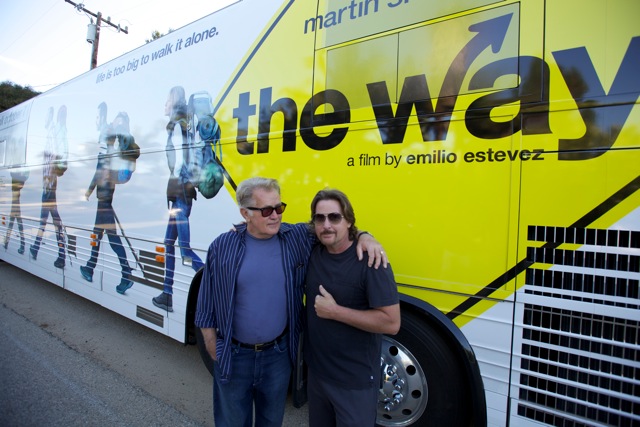
He went on to star in films like “Stakeout,” “Young Guns” and “The Mighty Ducks,” films so popular that they spawned sequels.  He co-starred with his brother, Charlie Sheen, in another film he wrote and directed, “Men at Work.”  He also directed himself and Charlie in the acclaimed film about the porno industry, “Rated X.”  In 2006, he wrote, directed and appeared in the award winning ensemble film “Bobby,” a film that dealt with the assassination of Robert F. Kennedy.  “Bobby” made many film critics Top 10 lists (including mine) and confirmed Estevez as a talent to watch.  He makes good on the promise of “Bobby” with his newest film, “The Way.”  While traveling the country in a motor coach promoting the film, Mr. Estevez took the time to sit down with MediaMikes:

Mike Smith:  What drew you to this project?
Emilio Estevez:  The young man standing behind me (he gestures to his son, Taylor, who is videoing the promotional event).  He went to Spain in 2003 with my father.  They went over there to check out the Camino (a pilgrimage that figures prominently in “The Way”).  Taylor had been working as my dad’s assistant on “The West Wing.”  He went to Spain.  And in a little town on the Camino my son fell in love.  He met a girl, fell in love and decided to move there.  So that was sort of the beginning of it.  I figured if I wanted to spend time with my son I needed to figure out how to work in Spain.  I kept saying, “hey, why don’t we go over there and make a film?”  That started a dialogue.  It started us talking about it.  And then little by little I developed a story.  I came up with this idea of this man who loses his son in Spain…which is kind of what I experienced…but I knew it needed to be bigger than that.  It needs to be more like “The Wizard of Oz.”  Because the Camino is marked in yellow.  The Camino de Santiago could be the Emerald City.  And the audience is Dorothy…along with the Cowardly Lion, the Tin Man and the Scarecrow…off to see the Wizard they go.

MS:  Wow!  I never even thought of it like that but it makes so much sense.
EE:  Remember where we meet Jack (a character in the film)…he’s in a haystack.  He’s the scarecrow because he has writer’s block…

MS:  He can’t use his brain.
EE:…he can’t use his brain.

MS:  Wow.  Have you ever made the pilgrimage yourself?
EE:  Just by car.  I spent a lot of time getting to know it.  We moved along the Camino with this small crew.  There were about 50 of us.  We covered about 350 kilometers of it.  We were there for quite a long time.

MS:  With the exception of your own films and a couple of “family” cameos (Estevez has appeared on “The West Wing,” starring his father and on “Two and a Half Men,” which starred his brother), you’re not on screen much anymore.  Do you plan to focus more on working behind the camera as opposed to in front of it?
EE:  Danny DeVito once described directing as “death by a thousand questions.”  And that’s very accurate.  You’re on a movie for two years plus.  When you’re acting you can do two or three films a year , but it doesn’t knock your socks off.  You get to stay intact.  I want to get back in front of the camera a little bit more.  That’s the overall plan…to do a little bit of each.  I’d like to be able to do what Clint Eastwood does.  He’s in a movie when he wants to be, he’s not when he doesn’t want to be.

MS:  I’ve asked other actors who direct, like Keith Gordon and Charles Martin Smith, this question:  is there a role out there that would bring you back?
EE:  There is a role out there.  I wrote it.  It’s kind of a family franchise type of film along the lines of “The Mighty Ducks.”  I wrote it.  I’ll direct it.  And I’ll star in it.

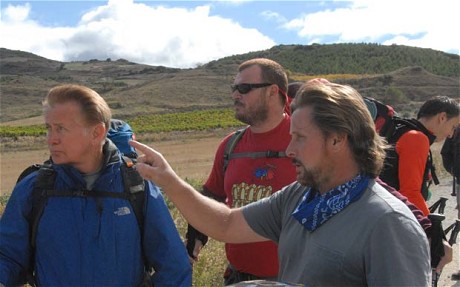
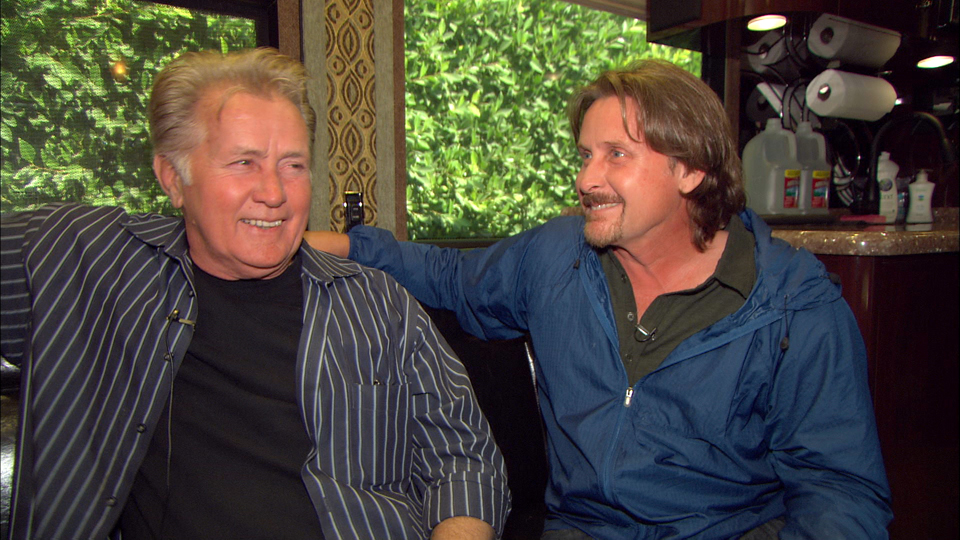
Emilio Estevez & Martin Sheen Interview for “The Way”

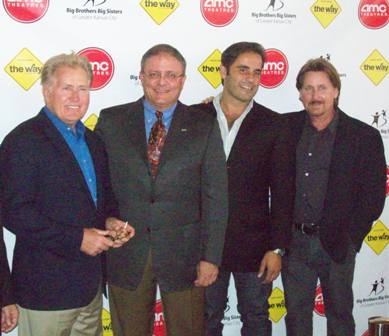
MediaMikes’ Mike Smith had the chance to interview director Emilio Estevez, star Martin Sheen and producer David Alexanian in person to discuss their new film “The Way”.

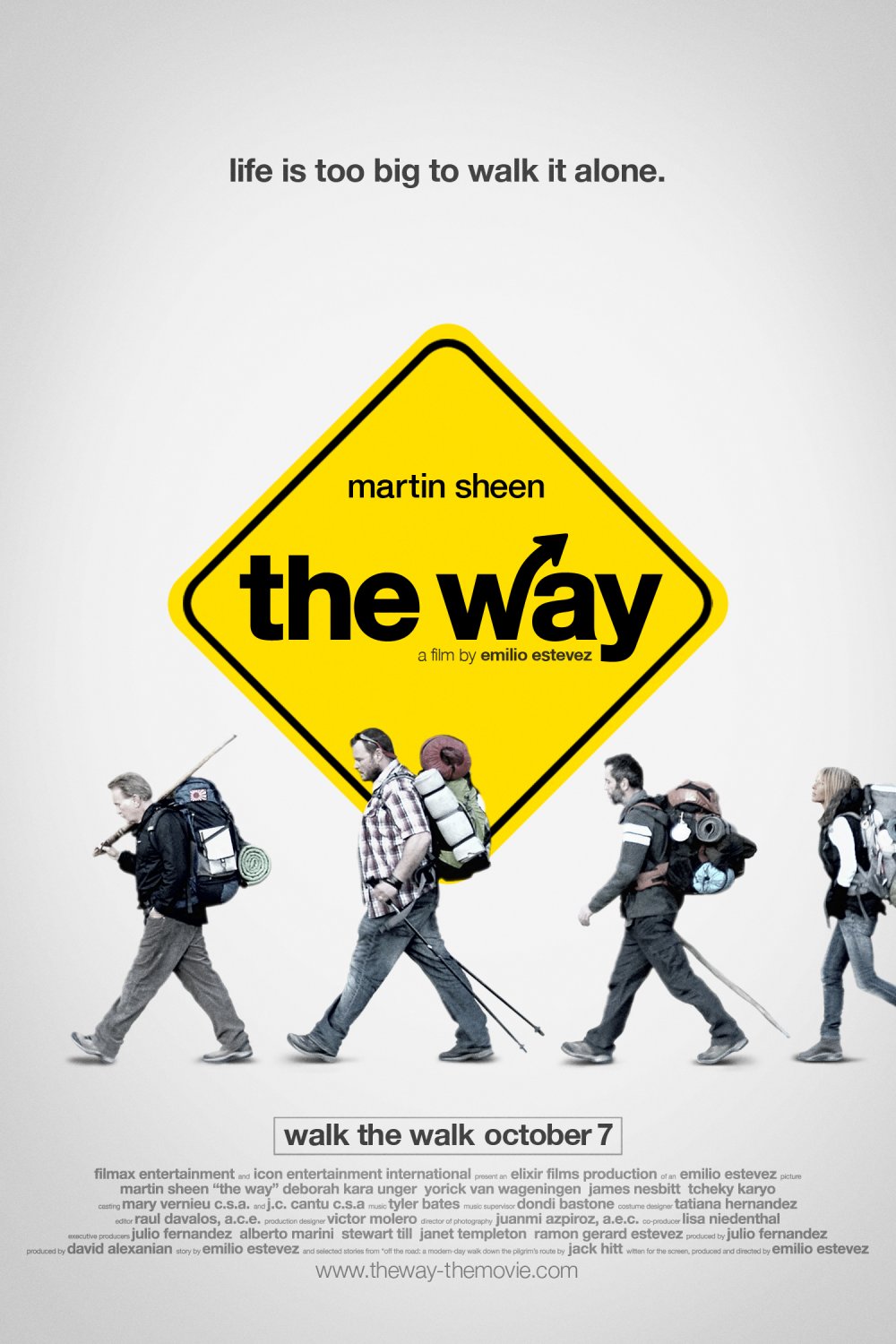
“The Way” is a powerful and inspirational story about family, friends, and the challenges we face while navigating this ever-changing and complicated world. Martin Sheen plays Tom, an American doctor who comes to St. Jean Pied de Port, France to collect the remains of his adult son (played by Emilio Estevez), killed in the Pyrenees in a storm while walking the Camino de Santiago, also known as The Way of Saint James. Rather than return home, Tom decides to embark on the historical pilgrimage to honor his son’s desire to finish the journey. What Tom doesn’t plan on is the profound impact the journey will have on him and his “California Bubble Life.”

Inexperienced as a trekker, Tom soon discovers that he will not be alone on this journey. On “The Way,” Tom meets other pilgrims from around the world, each with their own issues and looking for greater meaning in their lives: a Dutchman (Yorick van Wageningen), a Canadian (Deborah Kara Unger) and an Irish writer (James Nesbitt), who is suffering from a bout of writer’s block.

From the unexpected and, oftentimes, amusing experiences along “The Way,” this unlikely quartet of misfits creates an everlasting bond and Tom begins to learn what it means to be a citizen of the world again. Through Tom’s unresolved relationship with his son, he discovers the difference between “the life we live and the life we choose.”

THE WAY, written and directed by Emilio Estevez, was filmed entirely in Spain and France along the actual Camino de Santiago.

Click here for our raving review calling the film “one of the year’s best films”


David Alexanian

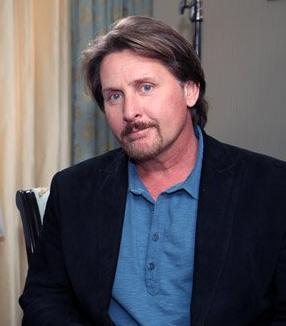
Emilo Estevez

Martin Sheen


Related Content

Interview with David Alexanian

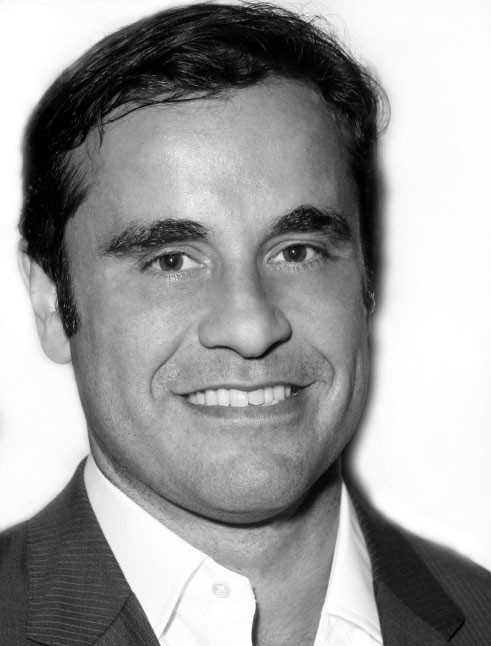
“The Way” producer David Alexanian is best known for two popular documentary mini-series he produced, wrote and directed.  The first, “Long Way Round,” released in 2004,  followed actors Ewan McGregor and Charley Boorman on a motorcycle trip around the world, with visits to Siberia, Kazakhstan, Mongolia and Alaska, before finally ending their journey in New York.   Boosted by the popularity of “Long Way Round,”  in 2007 he teamed up with McGregor and Boorman again on “Long Way Down.”  This time the lads traveled from the North of Scotland, down through Europe, into Africa, finally winding up in Cape Town, South Africa.  Having been a fan of both productions, Emelio Estevez contacted Alexanian to see if he would be interested in producing “The Way.”  He was.  As I write this Mr. Alexanian is putting the finishing touches on his next documentary, “Marley Africa Roadtrip.”  The mini-series follows musician Ziggy Marley and his brothers as they criss-cross South Africa during the World Cup.   Mr. Alexanian took time out from his production schedule to sit down with MediaMikes:

Mike Smith:  Most of your projects deal with exploring various parts of the world.  Is that something you yourself like doing?  And if so, what inspired that passion?
David Alexanian:  Some people are just born to be road trippers.  Road Dogs.  I just love road trips.  I ride a motorcycle.  I met Ewan McGregor years ago and he turned me on to doing this trip around the world.  That was the thing that really got me started.  And after that first trip, people began to think of me doing things like that.  And that’s a good thing, because it means I’ve had some success.  And because of that success you end up doing much more of it.  Which is why I ended up doing the second trip to Africa with Ewan and Charlie.  That was a crazy trip.  Going through Sudan and Ethiopia and Rwawanda was a real eye opener.  After that I had the bug and I had to continue to do this.  Emilio had seen that second project and he called me.  He told me he had just written a screenplay.  He knew I had directed in the past but he asked me to produce.  I read the screenplay and I was immediately taken by it.  I love road movies.  And I love making them.  (he gestures to the “The Way” promotional motor coach)  We’re still taking road trips today.  A lot of people fly to get places these days and when you fly you really lose the sense of travel.  But when you’re on the road you can watch the landscape change.  You get to know the people a little bit better.

MS:  As someone who is truly an adventurer at heart, have you ever made the Camino pilgrimage?
DA:  No I haven’t.  I’d love to.  We’ve talked about going back and doing it.  I do think I will do it one day.  But we really didn’t have a chance to walk it.  We filmed for four months and, between walking from one town to another we probably walked almost 400 kilometers.  But it’s not the same as saying you’re going to simplify your life and keep everything you need in a little bag.  That’s all you’re going to take and you’re going to do it.  I want to do it, for sure.  I will do it.

MS:  In all of your travels, what is the best place you’ve ever visited?  What place has just knocked you out?
DA:  I’d have to say Mongolia.  Mongolia still seems very much like it was at the beginning of time.  The people are still very nomadic.  They still wear what they wear, they still live the way they live.  The more you spend time in places…I live in Los Angeles…you really realize that if you could only simplify your life you could get rid of a lot of problems.  And some of these places that I’ve had the chance to travel to…they really seem to have focus on family…focus on simplifying your life and what’s important.  You’ll probably be happier.  Regardless of how much stuff you have.


Related Content

Interview with Malcolm McDowell

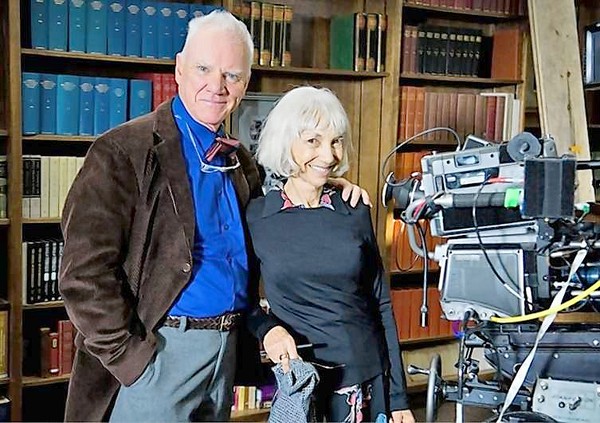
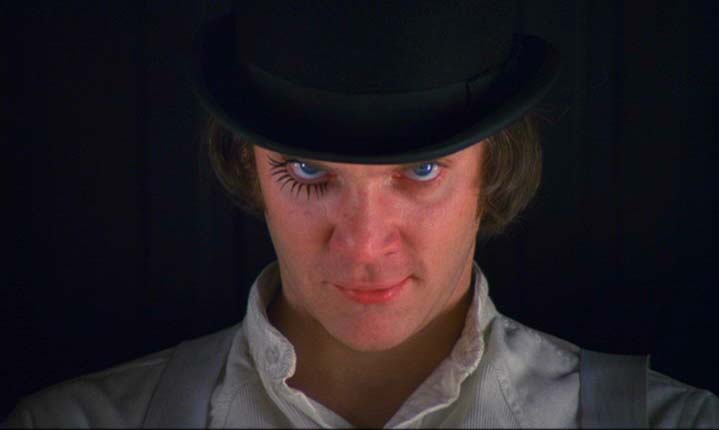
Malcolm McDowell is a legend in the film business and has starred in everything from movies like “A Clockwork Orange” and “Rob Zombie’s Halloween” to TV series’ like Adult Swim’s “Metalocalypse” and TNT’s “Franklin & Bash”. Malcolm currently has a new film premiering on Showtime on October 8th, 2011 called “Pound of Flesh”. Media Mikes had a chance to chat with Malcolm about his new movie and also what else he currently has planned next.

Mike Gencarelli: How did you become involved with the film “Pound of Flesh”?
Malcolm McDowell: I was drawn to it because it was written and directed by a friend of mine. The part was sort of written for me and it’s a very fascinating subject. I thought it would be really fun to do.  It was shot on a rather modest budget and very fast, as I think I only worked two weeks on the entire film. It was a very nice charismatic role for me to do. I play a family man that is extremely naive in what he is doing. The film is actually based on a true story. As an actor I don’t set myself up on moral judgment of my characters. If I did I would never work as I have played some pretty nasty people. This man I think was undone by his innate naivety. It’s sad that the teaching profession lost a good man. I wanted to make him the kind of teacher you would never forget. We all have had one or two of those in our lives. I really wanted to make him one of those. The fact that he was teaching English literature and practicing Shakespeare also made the role really fun to do.

MG: What do you think was the most challenging aspect of working on the film?
MM: I enjoyed the whole process. Everyone was very nice and I enjoyed working with them. I think the film is very well worth the while. Sadly it’s the type of film I don’t think a studio would touch with a barge pole. You have to make adult films for and older crowd that makes them go “Wow!” I have been very lucky in my career to find a few of those and this is one of those films. I like sort of nailing hypocrisy of our standards which is what I think this film does.

MG: How did you know the director/writer of the film?
MM: This was our second film together. The first one was titled “Red Roses and Petrol”. I love how Tammy just gets up there and does things any way she can. In this day and age to get a film made like “Pound of Flesh” is worth applauding. It’s difficult enough getting any independent movie made.

MG: What do you look for when you approach a role?
MM: I generally will read a script and decide either to do it or not. I don’t really know what it is? It’s probably just intuitive. Whether it’s going to be shot in a nice place or if it’s close to home. Do you like the cast and the director? It’s all those things really.

MG: Being the 40th anniversary of “A Clockwork Orange” can you reflect on the films cult status over the years?
MM: I am delighted of course! If you are lucky you only ever get one of these types of films. It’s an amazing movie and it’s a testament to Stanley Kubrick, Anthony Burgess and I. Anthony’s novel was brilliant…Kubrick is a brilliant visionary and I managed to nail it! The film still looks good. I don’t think it’s really dated much however that’s not really for me to say.

MG: How did you get involved with “Metalocalypse” and any more episodes planned?
MM: The guys asked me to be in it and I said “Absolutely!” The show is a lot of fun and the guys are great. I actually just completed voicing another 5 episodes.

MG: When do you start work on season two of TNT’s “Franklin and Bash”?
MM: I start next month on the second season. I am very excited as I love the character and script. The chemistry is really great. Everyone on the team works great together. I hear they are going to be bringing me into the court room more this year. I actually just finished reading a script at its fabulous.

MG: What can you tell us about your upcoming film “Death Method”?
MM: That film takes the corporate structure and pushes it to its total limits. I play the recruiter that gets these 4 or 5 people to come in and basically end up being brain washed. I enjoyed that part quite a bit. He is an evil son of a bitch!

MG:  Can you tell us about your role in “Silent Hill: Revelation 3D”
MM: It’s a wonderful scene! I have been trapped in a dungeon for quite a long time and as a result my character has gone blind. The scene is scary as hell. I hear the film is going to be in 3D. I don’t have that much to do in the film but the part I did is going to be great.

MG: Any other upcoming projects you would like to talk about?
MM: Next spring I am going to Scotland to shoot a film titled “Monster Butler”. The film is based on a true story about one of the world’s greatest con-men that in his mid 50’s turns into a serial killer. It’s a fantastic script that I am very excited about. It’s terrifying yet funny!

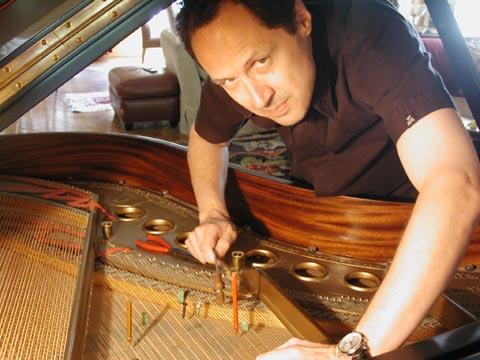
Interview with Mark Isham

Mark Isham is the composer for two current films this year “Warrior” and “Dolphin Tale”. Media Mikes had a chance to chat with Mark about working on these films and also what he has planned next.

Mike Gencarelli: What was your biggest challenge when it came to creating a score for “Warrior”?
Mark Isham: I would say the biggest challenge right off the bat was to figure out the vocabulary of the score. The film is not just about fighting or MMA. You don’t want to limit yourself to just the sounds of MMA but you don’t want to violate that world either. It became very apparent that this project wasn’t going to work with a traditional score. I spent a few weeks fooling around with the types of music we could put in this film. I worked with a few different music editors who helped experiment to find what the sound was of this picture. It ended up centering around the guitar. The sounds ranged from highly compressed basic electric sounds to huge rock and roll guitar sounds. There is some orchestration in the film which helped with the iconic “Rocky” style ending. You need the size and weight that an orchestra brings when you are building up to the final scene.

MG: Did you get inspiration from any other films?
MI: I can’t say there were any specific inspirations. The “Rocky” film is much more one dimensional than “Warrior” however you can’t deny the film being out there as it has worked so well. We knew we would have to use our own vocabulary in order to create the size and emotion of those final scenes.

MG: What was the process like for you working transitioning from “Warrior” to “Dolphin Tale”?
MI: “Dolphin Tale” was much easier to start. Charles Martin Smith who directed the film had a very clear sense of what he wanted as to where Gavin O’Conner was searching just as much as I was for a sound that fit the film. He wasn’t sure so it was an exploratory start for both of us. Charlie wanted a large traditional orchestral score. There was no trick to it as the story was very warm and open. He wanted me to find the two or three themes that the story really needed. We made sure we stayed very melodic as we didn’t want to fall victim to the current trends. Our catch phrase was “Shamelessly Melodic” [laughs].

MG: Do you prefer input from the directors or do you like to work from your ideas?
MI: I am a big believer in as much communication as possible. It’s a team effort no matter when you start. On “Warrior” I started right as the script was green lit because I had been friends with Gavin for some time. There is still not a chance where I am going to know as much as the director is going to know about what their concepts or philosophy will be about a film. The more time I can spend working with the director the better. A big part of my job is being able to communicate well with the director.

MG: Is there a genre that you prefer working on the most?
MI: No I don’t. I think over the years I have done a big enough variety of films that I feel comfortable working in any of them. I get quite excited when it comes to films no matter what the genre especially if it’s told in a creative way.

MG: From all of your work is there one score that you are most proud of?
MI: I think my two most recent ones “Warrior” and “Dolphin Tale”. I have discovered that one of the reasons I really love my job is that every time I work on a project a new door seems to open when it comes to exploring music. Not only do I try to present the best score I can according to the directors vision but I also want to challenge myself as a composer. I have noticed in the last few years that I have really done that and topped each of my previous works. I think in both of these two scores I learned a tremendous amount and I feel  they are some of my best work.

MG: Do you have any other upcoming projects?
MI: I scored a Scott Hicks picture earlier this year. The film is being held right now for marketing reasons. The film is a Zac Efron love story which I believe the will be being released around Valentine ’s Day so all the girlfriends can take their boyfriends 3 or 4 times [laughs].

Interview with Ashley Madekwe

Ashley Madekwe is co-starring in ABC”s new hit show “Revenge”.  Media Mikes had a chance to chat with Ashley about her new show, what to expect and also her upcoming film “Victim”.

Mike Gencarelli: Tell us about your new TV series “Revenge”?
Ashley Madekwe: “Revenge” is a juicy drama set in the Hamptons. It follows the story of Emily Thorne who returns to get revenge on the people who wronged her father. It really reminds of the big soaps from the 80’s. Lots of drama!

MG: What do you like most about playing Ashley Davenport?
AM: Ashley acts as almost a narrator for the audience. Especially in the early episodes. She knows everyone and all their secrets.

MG: The show is loosely based on “The Count of Monte Cristo”, how do you feel it stands out from other shows?
AM: “Revenge” is a true prime time soap and it makes no apologies for that. We relish in the drama and it gets juicier with each episode!

MG: Tell us about the production so far for the show? How episode have you shot? Where is shooting happening?
AM: We’re just about to start shooting episode eight and so far we’ve had a big party or social event in each episode. I love these scenes because it’s a chance for a lot of the cast to be together at once. Those scenes start to feel like real parties.

MG: Did you enjoy working in the horror genre for “Bedlam”?
AM: I loved working on “Bedlam”. It’s fun to create the suspense of horror for the audience. I loved all the stunts. I don’t want to spoil the story for you but I have a great fire stunt towards the end of the season.

MG: How was it working with Billie Piper on “The Secret Diary of a Call Girl”?
AM: Billie is a fantastic actress so it was always a joy to go to work and film with her.

MG: Tell us about your upcoming film “Victim”?
AM: “Victim” was written by two friends of mine. The second I finished reading the script I knew I wanted to be involved. Its a really touching story about people escaping their circumstances, love and betrayal. We shot the entire thing on location in London which is my home town so it was a real treat for me.


Related Content

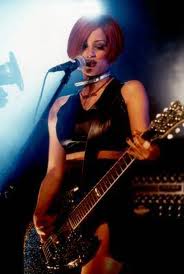
Interview with Fallon Bowman

Fallon Bowman shot to stardom in the mid 1990’s with the popular all girl heavy metal group Kittie. Since leaving the group in 2001, Fallon has been a part of several other music projects and most recently she has released her first solo album titled “Human Conditional”. Media Mikes had a chance to speak with Fallon recently about her career in the music business and what it was like for her releasing her first solo album.

Adam Lawton: What was it like leaving Kittie which was a band you helped start when you were still in high school?
Fallon Bowman: It was awful! I actually just wrote an essay about how that departure affected me now and how I have grown since that point. I think I have grown tremendously since that time but it really was a pivotal moment in my life where I couldn’t go on both physically and mentally with the band. It was also difficult because I was losing friends as a result of leaving. When this was all happening we were just kids and relationships were left strained. Today everyone is cool but at the time it was really difficult. I don’t think I left my house for about a year after all of that. I just didn’t know what to do with myself. Luckily I had and still have a very strong friends and family base that were and are there for me.

AL: Was it hard for you being in music business at such a young age?
FB: I think so. Thankfully I had strong families ties and when dealing with things I had my parents behind me a 100 percent. I don’t think I was really ready or prepared to deal with the amount of responsibility that was given to me. People were looking up to me to do all the right things and I was just a kid. It was very difficult to deal with. At the same time I think I sort of went through everything sort of oblivious and I wished I had paid more attention to certain things that were going on around me. Everything happened so fast from the time we toured with Slipknot in 2000, it just went crazy!

AL: How do you think music industry has changed from when you started to now?
FB: Oh my god! Drastically! Back when we started promoting and doing things with Kittie we didn’t really focus on the internet and at the time there was no Facebook or anything like that. We had a Geocities website starting in 1996 until we got signed in 1999 that never really worked out that great. So everything that happened for us came from playing and people talking about the band. At the time we started it was all about street teams made up of fans that would put the word out for each band. That really was the big thing then and when you think about it now how many people actually do things that way anymore? It’s an incredible learning curve now. I am constantly having to learn and be told about new websites and ways to get you material out there. It has been incredible to try and just keep up. I think the music industry is so schizophrenic and all over the place that we can’t get things together as everything is all over the place and moving super fast. It’s just overwhelming at times.

AL: Can you tell us about your label Social Unrest Records?
FB: I started that in conjunction with my previous project/group Amphibious Assault. I really was using it to help build a brand around myself. It was perfectly in line with my very heavy political agenda at the time. Over the years I have done some other things with the label and the political aspect has died down a bit but I am really starting to look into making it something that is viable. I want to make it more than just me on there. The big thing is that the traditional record label that I am thinking of in my head is very hard to maintain. I think I will have to be very innovative and come up with something new. I would like the label to have a very definitive sound and aim.

AL: You mentioned Amphibious Assault. Can you tell us what’s going on with that project?
FB: That was really my break into the hard industrial music world. I love electronic music and Amphibious Assault was sort of my homage to my KMFDM days, when I was obsessed with them. There were a lot of heavy aspects to the project but it also allowed me to develop my singing voice. The group was fairly well received by certain groups. My main reason for moving on from this project was that I always wanted to have different things going on every couple years.

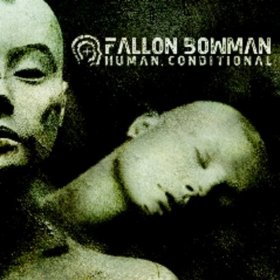
AL: Can you tell us about your latest release “Human Conditional”
FB: After ending Amphibious Assault in 2007, I went and finished university and sort of floated around for a bit. I was still writing music but I wasn’t sure where I wanted to go with it. A friend of mine approached me and asked if had any songs that I would want to do a video for. I had one song that was done and recorded so we ended up working with that. My friend was the one who sort of kick started the project. I really wasn’t thinking of doing anything with it but the song sort of took on a life of its own.

AL: The album is much different that your previous work. Are you more a fan of more melodic music as of late?
FB: Lately yes. I will always love metal and have a strong appreciation for it. People still know me as a metal artist, so it’s been interesting. I really enjoy doing more electronic based music and music I can sing to as opposed to screaming/yelling. I don’t think my voice was ever really meant to do that.

 AL: What other type of things do you have going on or coming up in the future?
FB: I have tons of stuff going on right now! I have teamed up with two local electronic musicians and I am super stoked for this project. The two guys have been looking for someone similar to Portishead to sing over their music. Through mutual contacts we have somehow got together and are working on music as we speak. Hopefully things we be happening within the next month with that project. I am also still developing my record label to incorporate multiple types of entertainment. I have also started to write the follow up to “Human Conditional”. I really should take a break but I just can’t right now.