
Film Review: “Infinite Storm”

Starring: Naomi Watts, Billy Howle and Denis O’Hare
Directed by: Małgorzata Szumowska
Rated: R
Running Time: 104 minutes
Bleecker Street

I’m not very vocal about my side gig as a film and pop-culture critic. I’ve found that once people find out, they expect me to have watched every movie they’ve watched or for me to have fallen in line with critical consensus or mainstream opinions about said film. That’s a different topic altogether, but I also encounter the problem of having to divulge more information than most people on whether or not I like a film. And sometimes I just like something or don’t like something. It’s nice not having to think too hard about why I feel a certain way and instead just letting those emotions be. But in film criticism, I have to dig into why I felt the way I feel after a movie. So why did a well-shot, breathtaking film like “Infinite Storm” not resonate with me?

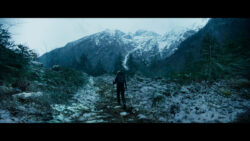
The film begins with Pam Bales (Watts) scaling Mount Washington in New Hampshire in mid-October. Visually, we see that she’s experienced and smart. She leaves notes about her whereabouts on her car windshield as she sets out alone into the wilderness, with extra clothes, food and supplies to keep her warm, safe and well-fed if something awful arises. It’s gray and chilly looking when she sets out, but by the time she starts to get towards the peak, the conditions have turned into a white out blizzard. While she isn’t concerned, the concerns begin to arise when she finds footprints in the snow that lead to a non-verbal man half dead in the snow.

“John” (Howle) isn’t his name, but Pam refers to him by that in the hopes of eliciting some kind of response or reaction. None follow. So in the midst of the blinding snow, Pam now finds herself having to lug along the equivalent of a corpse back down the treacherous mountain she just scaled. This all sounds fascinating and at times was, but none of it clicked when all was said and done. So I go back to the problem I have as a film critic, trying to pinpoint what it was that this movie failed to do for me. I wish I could just move on and say that it didn’t work for me, but alas I’m the one having to convince you on what you should be spending your time and money on.

In an attempt to figure it out, I read the article that this movie is based on. The descriptions of the unforgiving Mount Washington in the article are reflected well in “Infinite Storm,” but I never get a feeling for who Pam is, from the movie and article. I do get way more out of who “John” is from the article, whereas the film merely hints at it. Interestingly enough, the film focuses on the emotions of Pam while the article is more of a gut punch reveal about “John”. So who is “Infinite Storm” about? The film is about Pam, which isn’t a knock, she’s an individual who was in an extreme situation and acted with bravery. The article, while written from Pam’s experiences, feels like it’s more about life and emotions in general, depicted through “John.” In fact, the ending is drastically different between real-life and the film. I don’t want to say I have some kind of psychic level of intuition, but maybe the film shouldn’t have tinkered with what actually happened. I understand the need to make Pam the focus of the film, but I also understand the morals in this story and the moral necessity is about “John,” not about Pam. Unfortunately, there is no context unless you read the article and watch the film. So if you just watch the film, you miss a lot of context and what context you do get is a brief 10 minutes at the end of the film that feels more like an incomplete epilogue.

“Infinite Storm,” while visually engaging, never makes us care about the characters. Not even the based on a true story attachment at the beginning of the film ever makes us feel like elements of the story aren’t contrived. The elements appear to be manufactured as opposed to the actual harrowing journey. For instance, “John” disappears after falling into a stream, yet miraculously appears later seemingly unharmed. The article tells no such tall tale like this. The basis of “Infinite Storm” may be true, but its emotional core appears to be built on false pretenses.

Film Review: “The Lost City”


  • THE LOST CITY
  • Starring:  Sandra Bullock, Channing Tatum and Daniel Radcliffe
  • Directed by:  Aaron Nee and Adam Nee
  • Rated:  PG 13
  • Running time:  1 hr 52 mins
  • Paramount


Fun.  That’s the first thing I thought of as the credits rolled on “The Lost City.”  This movie was Fun!


Following the death of her husband, romance/adventure author Loretta (Bullock) is struggling to finish her next book.  She has the action.  She has the romance.  But she just can’t find an ending.  However, when Loretta finds HERSELF in peril, the story almost writes itself.


I have to admit that when I sat down I was expecting a watered-down retelling of “Romancing the Stone.”  Nope.  “The Lost City” is a film with great characters, rich locations and, darn it, here’s that word again…fun.  I had no idea that Sandra Bullock was such an amazing physical comedienne.  Whether traipsing through the jungle in a spangled jumpsuit or caught in the middle of a high-speed chase while tied to a chair, she effortlessly uses the situation to the audience’s benefit.  She is joined by Tatum, who longs to be thought of as more than Ash, the cover model of Loretta’s novels.  Radcliffe is also well cast as the villain of the piece, who is searching for a long-lost treasure.  You may even spot a very familiar face who is enlisted to help track down the missing Loretta.

The is witty and adds a few surprises to the normal tropes found in a film like this.  The pace is fast, but never hurried and the locations are lush and exotic.  The musical score, by Pinar Toprak, helps set the mood and keep the story moving.


To sum it all up, “The Lost City” is a fun way to usher in the spring movie season.


Film Review: “The Batman”


  • THE BATMAN
  • Starring:  Robert Pattinson, Zoe Kravitz and Jeffrey Wright
  • Directed by:  Matt Reeves
  • Rated:  PG 13
  • Running time:  2 hrs 55 mind
  • Warner Bros.


Hey everyone, guess what?  Batman is back!  Only now he’s THE Batman.  He’s a lot meaner this time around, but you’ll be happy to know that he’s still the brooding loner we’ve come to love.


It’s Halloween night in Gotham City, a few days before the city elects it’s next Mayor.  A raspy voice tells us that it’s only been two years since he began donning the cowl and dealing with the scum of the city.  He is referred to in the media as “the Vigilante,” but we know him as Batman.  Or, rather, THE Batman.  Whatever you call him, his presence is embraced by Detective James Gordon (Wright), who angers his superiors by giving the Caped Crusader access to crime scenes.  After all, he IS the World’s Greatest Detective!


A local politician has been brutally murdered and a calling card has been left on the body in the form of a riddle addressed to the Batman.  This sets up the next chapter in the revolving Batman saga.


Dark, both in theme and presentation, “The Batman” is the latest attempt to bring the character into the 21st Century.  Director Reeves thankfully spares us his vision of the murder of Bruce Wayne’s parents, apparently assuming that everyone knows that Thomas and Martha Wayne were murdered in front of their young son, thereby creating the impetus that makes him a crime fighter.  Of course, with a running time of almost three hours, perhaps Reeves shot the scene but cut it for time.  Thank you. 

In this Gotham City the sun rarely shines, it constantly rains and the best way to see ANYTHING is with a flashlight.  If I lived there I would be the very wealthy proprietor of a chain of FLASHLIGHT WORLD stores.  The darkness spills over into the tone of the film.  This Batman reminds me of the character from the 1940s comic books, someone not afraid to brutally punch a criminal in the face until his arm gets tired, or kick one off a roof for being naughty.  “I’m Vengeance,” the Batman remarks early in the film.  He isn’t kidding. 

The film is full of familiar characters with slightly different spins, including Selina Kyle (Kravitz), Alfred (Andy Serkis) and Oswald Copperpot, played by a brilliant and unrecognizable Collin Farrell.  It also has some much needed humor, something that was sorely missed in the recent Zack Snyder/Ben Affleck incarnation.  The humor helps offset some of the more darker moments.  The action scenes are intense and well choreographed, but the film eventually falls victim to its own running tine.  Sometimes too much is…well…TOO MUCH. 


The cast is fine, with Pattinson adding his own touch to a role now undertaken by six different actors in the past 30 years, seven if you go back to Adam West and the original television show of the 1960s.  If you only think of Pattinson as Edward from the “Twilight” series you are selling a very talented actor short.  The supporting cast is equally engaging and the new character arcs are a nice change. However, I think the film could have dropped 45 minutes and created a much tighter story, which is why I’m not as high on the film as I’d like to be.     

Film Review: “Cyrano”

Starring: Peter Dinklage, Haley Bennett and Kelvin Harrison Jr.
Directed by: Joe Dante
Rated: PG-13
Running Time: 124 minutes
United Artists Releasing

I tell people that sometimes I’m grateful I’ve been ignorant of certain elements in pop-culture. 2022’s “Cyrano,” based on “Cyrano de Bergerac,” a play written in 1897, has been adapted dozens of times. So what does the new one have that the others don’t? I don’t know, but I can tell you that this “Cyrano” features a dazzling performance, some solid ensemble songs and some touching moments.

In the original story, the title character has a big nose that prevents him from proclaiming his love. In this updated story, Cyrano (Dinklage) has a size problem that prevents him from professing his adoration for Roxanne (Bennett). Instead of singing his love to her he lends a helpful ear when she needs one. That leads to him watching as she begins to fall for a Christian (Harrison Jr.), a young soldier that isn’t as witty, clever or skillful with a sword as Cyrano. Despite this, a love triangle forms as Christian recruits Cyrano to win over Roxanne, but is that what’s right for everyone?

It took me a while to warm up to “Cyrano” because I wasn’t quite sure if this movie had anything to say other than “looks aren’t everything” and I’m glad it did, but it took a while. That’s because the film is littered with several music scores (some great, some mediocre) that break up the pacing of the plot, especially when the song calls for something completely unrelated to the storyline. The thing that kept me hanging on during those down moments was Dinklage’s performance, one that I can say is one of the best of the year.

Despite his stature, Dinklage commands the screen and the actors around him. Dinklage doesn’t chew the scenery, he serenades it, enchants it and morphs into it raising everyone and everything up to his level. Bennett, Harrison Jr., as well as Ben Mendelsohn in the role of villain, only appear to be acting their proverbial butts off when Dinklage is in the vicinity. Otherwise the film seems a little lost without Dinklage’s magnetic presence.

Dinklage is such a massive part of this film, I was shocked that he wasn’t the director, writer (although his wife did pen the script), editor and distributor as well. While Dinklage is more well known for his time on HBO’s “Game of Thrones,” fans of his role as Tyrion Lannister may find themselves hypnotized by his quick wit and quick tongue in “Cyrano.” At the very least, “Cyrano” is a testament to Dinklage’s abilities as an actor and as a leading man in any role he’s given.

Film Review: “Pursuit”

Starring: Emile Hirsch, Jake Manley and Elizabeth Ludlow
Directed by: Brian Skiba
Rated: R
Running Time: 92 minutes

It’s always easy to say there’s too many cooks in the kitchen when the end product fails. But for a film that has four writers, you would think someone would have eventually read the script and axed some of the characters, trimmed the dialogue and cleaned up the jumbling, bumbling plot. But since that didn’t happen, we’re left with “Pursuit,” a film that’s almost too difficult to explain and even more difficult to care about.

So if I understand the 92 minutes I watched correctly, Rick (Hirsch), a hacker that is the epitome of hacker film clichés, is searching for his wife who has been kidnapped by a mysterious drug cartel, off screen. But while Rick is searching, he is being hunted by Mike (Manley), a New York City detective. Mike actually arrests Rick about a third of the way into the film, setting up the rest of the film which is about Rick potentially offering up worse individuals, including Rick’s father, played by John Cusack, who may have something to do with the kidnapping of Rick’s wife.

It’s sometimes difficult to tell where this movie is supposed to take place, who is working for whom, what characters are actually important to the story and which ones have been created to simply provide an exposition dump, which is funny since the exposition dump’s don’t clear anything up, and instead complicate the plot even further. Even with all the forced twists and turns, there is no payoff at the end for the ridiculousness on screen. It’s almost as if all four writers for “Pursuit” were told four different things about what the story was about.

Compounding the messy story issues in “Pursuit,” is the insane tonal shifts. In the opening sequence alone, the film tries to tell us it’s a techno thriller, but becomes so comically inept, it makes you wonder if one writer was writing a comedy, one writer was taking it too seriously, one writer was trying to figure how many ancillary characters is too many and one writer simply believed there wasn’t enough gun play. So when the film attempts humor, and it does frequently, it comes off jarring. We’re supposed to laugh at a bystander getting shot as some kind of physical comedy, but then in a few minutes we’ll see innocent women and children leaking life force after being shot? Those two things don’t jive well in an entire film, much less in a few minutes of each other.

Almost as if he saw the writing on the wall while reading the writing in the script, John Cusack, who’s predominantly featured in this film’s marketing, seems to be on autopilot as he casually drifts from mundane scene to mundane scene, at least the ones he’s in. I also wonder how much he was actually in it and how many times they just recorded him talking and then had an extra with their back turned for the scene. When we actually know Cusack is the one on-screen, he spends most of his time reacting or talking solemnly on the phone, which tells me his contract most likely stipulated that he would only do the film if they would film it at his house in one day.

Somehow “Pursuit” is equally grotesque and boring with it’s action. As far as low-budget action movies go, “Pursuit” isn’t even worthy of being in a discount bin in Wal-Mart or ran during off-hours on one of Pluto TV’s channels. You’re better off pursuing a different movie, or even a different hobby if “Pursuit” is the only movie you have at your disposal.

Film Review: “Strawberry Mansion”

Starring: Kentucker Audley, Penny Fuller and Grace Glowicki
Directed by: Kentucker Audley and Albert Birney
Rated: NR
Running Time: 91 minutes
Music Box Films

The year is 2035 (although you’d never know it’s even in the 21st century based on the technology you see in the film) and the only thing that appears to have changed are dreams and taxes. Government auditors, like James (Audley), check in on people’s dreams, assessing the costs associated with the various items that pop-up in the person’s brain. We’re not told much about this structure, which I’ll admit I’m disappointed in since the conceit is fascinating, because the real story involves one dream audit in particular. The audit of Bella (Fuller), an eccentric woman that lives by herself, involves James going through Bella’s dreams one-by-one from her youthful era, which have been recorded on VHS tapes to circumvent the establishment and it’s tax system. Nonetheless, she opens up her mind to James who’s about to open up his mind and heart to the surreal visions he’s about to experience.

“Strawberry Mansion” is like a small town carnival funhouse, most people will see it as a cheap excuse for entertainment while those with an open mind will look past the duct taped together bits and fully immerse themselves in the non-sequitur dreamscape. Part of what made me really enjoy this movie is the obvious budget issues. “Strawberry Mansion” isn’t getting a check from Disney or Miramax, but I’m sure the directors had to max out a few credit cards to cobble some scenes together. The story also gives credence to the somewhat patchwork filming because we are in a dream and dreams aren’t necessarily flawless visual feasts, but more or less flawed droplets of our own introspection and self-actualization. So when James communicates with a subconscious advertisement in an entirely pink kitchen or is the captain of a pirate ship staffed by sentient mice, we accept the insanity of the premise and the cheapness of the effects, knowing that James is in a dream state.

Even though James is viewing old dreams, he’s able to interact with the elements, including Bella, who approaches James much like you approach others in dreams, believing they are the real deal. But as the movie progresses it seems like Bella understands who James is, almost as if her dream memories know they’re dream memories. The overall messaging of the film is a little frustrating, but I feel like it’s intentionally set-up for people to take away different concepts and run with them, whether it’s a commentary on obtuse filmmaking or the dreams we attempt to analyze despite their fleeting nature. “Strawberry Mansion” could also be a meditation on humans allowing the noise and clutter of unnecessary things inhabit our lives, like advertising and government influence. I saw a lot of themes and ideas, but none of them were strong enough to sway me one way or another. I wasn’t sure if it was intentional or not by the creators to be like this, but in a film like “Strawberry Mansion,” there may not be a wrong answer, and therein lies the cleverness of the film at moments.

“Strawberry Mansion” is far from being a head trip action-adventure film like “Inception” or “Total Recall,” but feels more like an Adult Swim acid trip because it’s bizarre, crass at times, silly, confusing and oddly heartfelt. If you’ve ever watched the fake “Infomercials” on Adult Swim, “Strawberry Mansion” is for you. Thankfully, “Strawberry Mansion” isn’t be weird to simply be weird, so even people who aren’t the film’s target demographic may be able to take something positive away from it, even if they don’t like the film. 

Film Review: “Those Who Walk Away”

Starring: Booboo Stewart, Nils Allen Steweart and Scarlett Sperduto
Directed by: Robert Rippberger
Rated: NR
Running Time: 94 minutes
VMI Releasing

Every year I try to make it to the annual horror movie festival in my neck of the woods (Kansas City, Mo.) called Panic Fest. Over the years I’ve talked with people about this event and a lot of times I get asked the same thing, “How can you enjoy low budget horror? It’s bad.” Well, here’s the thing. I don’t need a horror film to be from Blumhouse to appreciate low budget craft and I can ignore average acting if other elements are above par. Everyone’s gotta get their start somewhere. I’ve always been more likely to judge a big budget film more critically than I am a film put together with a shoestring budget and first time director. So when I say “Those Who Walk Away” is decent, I’m potentially only telling that to people who feel the same way about low budget horrors. Everyone else will watch it and go, “How can you enjoy low budget horror? It’s bad.”

Max (Stewart) is on a tinder date with Avery (Sperduto) and the nerves are palpable as they meet in-person for the first time in a park. Avery, a theater manager who’s also in school for literature, isn’t upfront with every little detail, apologizing profusely while also cushioning the blow of lying by saying that she’s genuinely interested in Max, and that’s why she’s being honest. This is one of many red flags as the two stroll through their town making idle chit chat and revealing their own personal demons. Avery’s personal demon is clearly lying, while Max’s personal demon is his emotional inability to take care of his ailing mother. This elongated conversation and revelations are setting up the film’s monster, which doesn’t arrive until the date begins taking bizarre turns.

I don’t want to reveal too much more about “Those Who Walk Away” because my attempt at the synopsis above does more than cover basic exposition, it covers the first half of the film. That’s right, the first 40ish minutes of the film (I didn’t pause to check) is a conversation/date between Max and Avery. While this kind of set-up helps establish our characters for the second half of the film, it also prevents this movie from ever developing its aesthetic. I say that because the second half of the film is like a found footage nightmare in a still livable home that more closely resembles a condemned shack. Max finds himself in a maze of horror, even though the audience feels no fear moving forward because we’ve already spent a good chunk of time watching a bad first date.

“Those Who Walk Away” employs a lot of single takes, attempting to pull a “Birdman” by tricking the audience into believing it’s all one single take even though the director and cinematographer aren’t as adept as Inarritu at fooling people. Even though they aren’t very good at tricking us, or much less scaring us, the visuals that are created are sometimes fascinating to pick apart and sometimes do offer a mirror to Max’s psyche. Actor Booboo Stewart really gets to shine through in the latter half of the film whereas I wasn’t sure in the first half if he was still stretching his acting legs or simply channeling an introverted man on a first date.

I had to think for a bit after watching “Those Who Walk Away” because I felt that there was an important message being delivered. However, I couldn’t quite pick through the noise to see the message as the credits began to roll. It’s a good ending, but it feels like such a misfire in terms of conveying what it wants to say. “Those Who Walk Away” offers up plenty of peculiar, surreal horror moments in it’s finale, but without a cohesive message the overall look and idea feels lost. It’s difficult for me to recommend “Those Who Walk Away” because the film’s title feels like such a self-fulfilling prophecy about the audience members who will get tired of waiting for the haunted house spooks to begin, and even those who do tough it out, will most likely find themselves walking away empty-handed.


Blu-ray Review “Legend: 2-Disc Standard Special Edition”

Film: 5 out of 5 stars
Blu-ray: 4 out of 5 stars
Extras: 5 out of 5 stars

“Legend” has always been one of my favorite films growing up. Tim Curry plays the role of Darkness is probably one of the best performance (and make-up jobs ever). This new Blu-ray from Arrow Video is packed with two different versions of the film: the U.S. Theatrical Cut originally released in North America in 1986, and the Director’s Cut first released on DVD in 2002. Both cuts are included with their original 2.35:1 aspect ratio with 5.1 surround sound tracks.

It is cool to know that Arrow Films exclusively restored the U.S. Theatrical Cut has been for this release. The original 35mm camera negative were scanned in 4K resolution and restored in 2K. The Director’s Cut is presented in the 2011 HD master approved by director Ridley Scott. It is hard for me to choose which cut is my favorite. Obviously, I grew up with the theatrical cut and only within last 20 years has the director’s cut surfaced.

Official Premise: In an idyllic, sun-dappled forest, the pure-hearted Jack (Tom Cruise) takes his true love Princess Lili (Mia Sara) to see a pair of unicorns frolicking at the forest’s edge. Little do they know, however, that the Lord of Darkness (Tim Curry, in a remarkable make-up designed by The Thing’s Rob Bottin) has dispatched his minions to capture the unicorns and sever their horns so that he may plunge the world into everlasting night. After Lili and the unicorns are taken prisoner, Jack must team with a group of forest creatures and descend into Darkness’ subterranean lair to face off against the devilish creature before it is too late.

Arrow Video like always packs this release with amazing special features that make hardcore fans drool. This release also includes an illustrated book, a large fold-out double sided poster, six double sided postcard sized lobby card reproductions, and limited edition packaging with reversible sleeve. There is commentary tracks on both cuts and there is also isolated music tracks on the theatrical cut. There are a bunch of in depth featurettes with archive footage from the production. As well as storyboards, trailers and so much more. If you are a fan of this film or have never seen it and looking to explore this release is definitely the one to start with!

“Power of the Dog” leads the 94th Academy Awards Pack


“Power of the Dog” lead the pack when the nominations for the 94th Annual Academy Awards were announced this morning.


Among the films nods:  Best Picture, Director and Adapted Screenplay – both for Jane Campion, and acting nominations for Benedict  Cumberbatch (Actor) and supporting performances for Kirsten Dunst, Jesse Plemons and Kodi Smit-McPhee.

Other films earning multi-nominations include “Dune” with 10 and “Belfast” and “West Side Story”, which each received 7 nominations, including Best Picture.  Other Best Picture nominees:  “CODA,:” “Don’t Look Up,’ “Drive My Car,” “Licorice Pizza” and “Nightmare Alley.” 

Though it received 10 nominations, “Dune” failed to earn a nomination for director Denis Villeneuve.  First time nominee Ryûsuke Hamaguchi (Drive My Car) joins previous directing nominees Kenneth Branagh (Belfast), Paul Thomas Anderson (Licorice Pizza) Jane Campion (Power of the Dog), and Steven Spielberg (West Side Story) in that category.  Of the nominees, only Spielberg has won the award – twice – for “Schindler’s List” and “saving Private Ryan.”


Unlike last year, many of this year’s nominees were from more mainstream, studio pictures, including “West Side Story” that, while it didn’t do the box office predicted, was a return to the glory days of the big Hollywood musical.


Here is a complete list of this year’s nominees:


Best Picture


  • “Belfast,” Laura Berwick, Kenneth Branagh, Becca Kovacik and Tamar Thomas, producers 
  • “CODA,” Philippe Rousselet, Fabrice Gianfermi and Patrick Wachsberger, producers
  • “Don’t Look Up,” Adam McKay and Kevin Messick, producers 
  • “Drive My Car,” Teruhisa Yamamoto, producer 
  • “Dune,” Mary Parent, Denis Villeneuve and Cale Boyter, producers
  • “King Richard,” Tim White, Trevor White and Will Smith, producers 
  • “Licorice Pizza,” Sara Murphy, Adam Somner and Paul Thomas Anderson, producers 
  • “Nightmare Alley,” Guillermo del Toro, J. Miles Dale and Bradley Cooper, producers 
  • “The Power of the Dog,” Jane Campion, Tanya Seghatchian, Emile Sherman, Iain Canning and Roger Frappier, producers
  • “West Side Story,” Steven Spielberg and Kristie Macosko Krieger, producers.


Best Director


  • Kenneth Branagh (“Belfast”)
  • Ryûsuke Hamaguchi (“Drive My Car”) 
  • Paul Thomas Anderson (“Licorice Pizza”) 
  • Jane Campion (“The Power of the Dog”)
  • Steven Spielberg (“West Side Story”)


Best Lead Actor


  • Javier Bardem (“Being the Ricardos”) 
  • Benedict Cumberbatch (“The Power of the Dog”) 
  • Andrew Garfield (“Tick, Tick … Boom!”) 
  • Will Smith (“King Richard”)
  • Denzel Washington (“The Tragedy of Macbeth”)


Best Lead Actress


  • Jessica Chastain (“The Eyes of Tammy Faye”) 
  • Olivia Colman (“The Lost Daughter”)
  • Penélope Cruz (“Parallel Mothers”)
  • Nicole Kidman (“Being the Ricardos”) 
  • Kristen Stewart (“Spencer”)


Best Supporting Actor


  • Ciarán Hinds (“Belfast”) 
  • Troy Kotsur (“CODA”) 
  • Jesse Plemons (“The Power of the Dog”) 
  • J.K. Simmons (“Being the Ricardos”)
  • Kodi Smit-McPhee (“The Power of the Dog”)


 Best Supporting Actress


  • Jessie Buckley (“The Lost Daughter”) 
  • Ariana DeBose (“West Side Story”) 
  • Judi Dench (“Belfast” 
  • Kirsten Dunst (“The Power of the Dog”) 
  • Aunjanue Ellis (“King Richard”)


Best Adapted Screenplay


  • “CODA,” screenplay by Siân Heder 
  • “Drive My Car,” screenplay by Ryusuke Hamaguchi, Takamasa Oe 
  • “Dune,” screenplay by Jon Spaihts and Denis Villeneuve and Eric Roth 
  • “The Lost Daughter,” written by Maggie Gyllenhaal 
  • “The Power of the Dog,” written by Jane Campion


Best Original Screenplay


  • “Belfast,” written by Kenneth Branagh 
  • “Don’t Look Up,” screenplay by Adam McKay; story by Adam McKay and David Sirota“King Richard,” written by Zach Baylin 
  • “Licorice Pizza,” written by Paul Thomas Anderson 
  • “The Worst Person in the World,” written by Eskil Vogt, Joachim Trier


Best Cinematography


  • “Dune,” Greig Fraser 
  • “Nightmare Alley,” Dan Laustsen 
  • “The Power of the Dog,” Ari Wegner 
  • “The Tragedy of Macbeth,” Bruno Delbonnel 
  • “West Side Story,” Janusz Kaminski


Best Animated Feature Film


  • “Encanto,” Jared Bush, Byron Howard, Yvett Merino and Clark Spencer 
  • “Flee,” Jonas Poher Rasmussen, Monica Hellström, Signe Byrge Sørensen and Charlotte De La Gournerie 
  • “Luca,” Enrico Casarosa and Andrea Warren
  • “The Mitchells vs. the Machines,” Mike Rianda, Phil Lord, Christopher Miller and Kurt Albrecht 
  • “Raya and the Last Dragon,” Don Hall, Carlos López Estrada, Osnat Shurer and Peter Del Vecho


Best Animated Short Film


  • “Affairs of the Art,” Joanna Quinn and Les Mills 
  • “Bestia,” Hugo Covarrubias and Tevo Díaz 
  • “Boxballet,” Anton Dyakov 
  • “Robin Robin,” Dan Ojari and Mikey Please 
  • “The Windshield Wiper,” Alberto Mielgo and Leo Sanchez

Best Costume Design


  • “Cruella,” Jenny Beavan 
  • “Cyrano,” Massimo Cantini Parrini and Jacqueline Durran 
  • “Dune,” Jacqueline West and Robert Morgan 
  • “Nightmare Alley,” Luis Sequeira 
  • “West Side Story,” Paul Tazewell


Best Original Score


  • “Don’t Look Up,” Nicholas Britell 
  • “Dune,” Hans Zimmer 
  • “Encanto,” Germaine Franco 
  • “Parallel Mothers,” Alberto Iglesias 
  • “The Power of the Dog,” Jonny Greenwood


Best Sound


  • “Belfast,” Denise Yarde, Simon Chase, James Mather and Niv Adiri 
  • “Dune,” Mac Ruth, Mark Mangini, Theo Green, Doug Hemphill and Ron Bartlett 
  • “No Time to Die,” Simon Hayes, Oliver Tarney, James Harrison, Paul Massey and Mark Taylor 
  • “The Power of the Dog,” Richard Flynn, Robert Mackenzie and Tara Webb 
  • “West Side Story,” Tod A. Maitland, Gary Rydstrom, Brian Chumney, Andy Nelson and Shawn Murphy


Best Original Song


  • “Be Alive” from “King Richard,” music and lyric by Dixson and Beyoncé Knowles-Carter 
  • “Dos Oruguitas” from “Encanto,” music and lyric by Lin-Manuel Miranda 
  • “Down To Joy” from “Belfast,” music and lyric by Van Morrison 
  • “No Time To Die” from “No Time to Die,” music and lyric by Billie Eilish and Finneas O’Connell 
  • “Somehow You Do” from “Four Good Days,” music and lyric by Diane Warren


Best Documentary Feature


  • “Ascension,” Jessica Kingdon, Kira Simon-Kennedy and Nathan Truesdell 
  • “Attica,” Stanley Nelson and Traci A. Curry 
  • “Flee,” Jonas Poher Rasmussen, Monica Hellström, Signe Byrge Sørensen and Charlotte De La Gournerie 
  • “Summer of Soul (…Or, When the Revolution Could Not Be Televised),” Ahmir “Questlove” Thompson, Joseph Patel, Robert Fyvolent and David Dinerstein 
  • “Writing With Fire,” Rintu Thomas and Sushmit Ghosh


Best Documentary Short Subject


  • “Audible,” Matt Ogens and Geoff McLean 
  • “Lead Me Home,” Pedro Kos and Jon Shenk 
  • “The Queen of Basketball,” Ben Proudfoot 
  • “Three Songs for Benazir,” Elizabeth Mirzaei and Gulistan Mirzaei 
  • “When We Were Bullies,” Jay Rosenblatt

Best Film Editing


  • “Don’t Look Up,” Hank Corwin 
  • “Dune,” Joe Walker 
  • “King Richard”, Pamela Martin 
  • “The Power of the Dog,” Peter Sciberras 
  • “Tick, Tick…Boom!” Myron Kerstein and Andrew Weisblum


Best International Feature Film


  • “Drive My Car” (Japan) 
  • “Flee” (Denmark) 
  • “The Hand of God” (Italy) 
  • “Lunana: A Yak in the Classroom” (Bhutan) 
  • “The Worst Person in the World” (Norway)


Best Makeup and Hairstyling


  • “Coming 2 America,” Mike Marino, Stacey Morris and Carla Farmer 
  • “Cruella,” Nadia Stacey, Naomi Donne and Julia Vernon 
  • “Dune,” Donald Mowat, Love Larson and Eva von Bahr 
  • “The Eyes of Tammy Faye,” Linda Dowds, Stephanie Ingram and Justin Raleigh 
  • “House of Gucci,” Göran Lundström, Anna Carin Lock and Frederic Aspiras


Best Production Design


  • “Dune,” production design: Patrice Vermette; set decoration: Zsuzsanna Sipos 
  • “Nightmare Alley,” production design: Tamara Deverell; set decoration: Shane Vieau 
  • “The Power of the Dog,” production design: Grant Major; set decoration: Amber Richards
  • “The Tragedy of Macbeth,” production design: Stefan Dechant; set decoration: Nancy Haigh
  • “West Side Story,” production design: Adam Stockhausen; set decoration: Rena DeAngelo

Best Visual Effects


  • “Dune,” Paul Lambert, Tristan Myles, Brian Connor and Gerd Nefzer
  • “Free Guy,” Swen Gillberg, Bryan Grill, Nikos Kalaitzidis and Dan Sudick 
  • “No Time to Die,” Charlie Noble, Joel Green, Jonathan Fawkner and Chris Corbould 
  • “Shang-Chi and the Legend of the Ten Rings,” Christopher Townsend, JoeFarrell, Sean Noel Walker and Dan Oliver 
  • “Spider-Man: No Way Home,” Kelly Port, Chris Waegner, Scott Edelstein and Dan Sudick


Best Live Action Short Film


  • “Ala Kachuu – Take and Run,” Maria Brendle and Nadine Lüchinger 
  • “The Dress,” Tadeusz Łysiak and Maciej Ślesicki 
  • “The Long Goodbye,” Aneil Karia and Riz Ahmed 
  • “On My Mind,” Martin Strange-Hansen and Kim Magnusson 
  • “Please Hold,” K.D. Dávila and Levin Menekse


The 94th Academy Awards will be presented on March 27th.

Film Review: “Jackass Forever”

  • JACKASS FOREVER
  • Starring:  Johnny Knoxville, SteveO,, and Chris Pontius
  • Directed by:  Jeff Tremaine
  • Rated:  R
  • Running time:  1 hr 36 mins
  • Paramount


HOLD ON TO YOUR HATS?


OK, since we have younger readers, the word HATS is code for something else.  A place on the body that many men, this one included, consider very special.  Thankfully the group that make up the JACKASS gang have different feelings, and their pain is our laughter.


It’s been almost 20 years since Johnny Knoxville and his band of idiots amused viewers with such harmless pranks as sneaking up on someone and shaving part of their heads, or blowing an air horn at a fancy golf course during people’s backswings.  My how the times have changed.

“Jackass Forever” is exactly what you think it is.  A group of friends hanging out and doing all kinds of things to each others, and some times their own, private parts.  And as unusual as that may sound, it’s truly mesmerizing.  It’s like when people slow down to look at a car accident but in this case you’re stopping to  to watch someone wearing only a protective cup take a direct hit from a soft ball, an NHL player’s slap shot or even a pogo stick.


With some of the Jackass gang getting up there in age, a majority of the pranks are done by a new generation of pranksters, including one who answers to the name “Poopies.”  There is also a father/son team who seem to put their fears aside (anyone want a giant spider crawling on their heads?) in order to spend some quality time together.


Is it fine art?  No.  But it’s hilarious.  This is probably the hardest my wife and I have laughed since “BORAT.”  As the credits rolled my wife said to me, “everybody needs to laugh like this…especially now.”  My thoughts exactly.

Film Review: “Lotawana”

Starring: Todd Blubaugh and Nicola Collie
Directed by: Trevor Hawkins
Rated: N/R 
Running Time: 97 minutes

Forrest (Blubaugh) is a wanderer. He spends his days tending to his sailboat, which doubles as his house, on a Missouri lake. He goes to land for essentials and to zip around town on his motorcycle. One day he finds another wanderer named Everly (Collie). The two fall for each other immediately and discuss a future that may never happen.

“Lotawana” reminds me a lot of 2016’s “American Honey,” and not just because both had scenes filmed in and around Kansas City, my hometown. Both films show aimless young adults coming into their own as adults even though they don’t want to become adults and do everything in their power to avoid that inevitability. Forrest, who we literally know almost next to nothing about, enjoys a simple life on a Missouri lake daydreaming about journeys around the globe he will never take. Everly, who we know barely a little bit more about, listens to these daydreams and adds to them. Neither of them is following through with those daydreams, but I won’t spoil why.

As “Lotawana” goes through the motions, we learn very little about our characters, picking up hints from the nature surrounding them as well as interactions they have with people who also live on or around the lake. Because of its vague nature, it wouldn’t surprise me if viewers had different theories as to what is happening and why. Personally, I feel like Forrest and Everly represent two ideologies when it comes to youth.

Forrest appears to be a symbol for privilege. We never really learn what he does or how he has money, but it’s clear he has no problem financially maintaining a boat with food. He also seems to be in no hurry to find a career unless that career is an unpaid internship he gives himself on his boat. Everly, who has a rocky relationship with her family, appears to be fleeing trauma she’s not willing to confront yet, if at all. Both find solace in their wanderlust, but both are following it for wrong reasons, meaning that the happiness we see on screen will eventually turn into conflict unless one of them makes the first move by making an adult decision.

Very rarely do I find myself enjoying a film that features no exposition, much less dialogue that reveals the inner workings or backstory of our characters. Most of the time I’d probably find this frustrating, but thanks to some outstanding cinematography and vignettes involving Forrest and Everly’s relationship, “Lotawana” is gorgeous and serendipitous at times. If “Lotawana” is any indication, first-time film director Trevor Hawkins has a bright future ahead.

Film Review: “Sundown”

Starring: Tim Roth, Charlotte Gainsbourg and Iazua Larios
Directed by: Michel Franco
Rated: R
Running Time: 83 minutes
Beecker Street Media

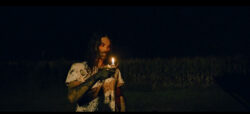
Neil (Roth) and Allison (Gainsbourg) appear to be a happy couple on vacation in Mexico. Two kids are with them as they go to and from the beach, enjoying the sun and warmth. Then, Allison receives a call about trouble back home. The family packs, dashes to the airport, and then all of a sudden Neil says, “I forgot my passport.” No problem as he says he’ll take the next flight home and gets into a cab. But he doesn’t go back to their hotel nor has he seemingly lost his passport. What happens and why is what “Sundown” is about.

To really become engaged with this film, you need to know as little as possible. In fact, the less you know, the more my opening paragraph reveals that not everything is as it seems. Neil seems apathetic about the family tragedy and we aren’t sure why. He checks into a cheap motel, he lounges around on the beach sipping on drink after drink, and then finds a cute young woman to bring back to his cheap motel. Well, wait, what about Allison and the kids? What about that family tragedy? What’s going on?

So even if you begin to understand what is happening, because Neil doesn’t appear to be the most trustworthy and definitely least likable person in the film, are we really seeing reality? Is reality Allison and the family tragedy or is the reality the one Neil is telling this young woman? There are certain truths that are revealed as the movie goes on, but the crux of the film centers around this event. This family death back home leads to the death of whatever was happening between Neil and Allison, or it’s possibly on a more personal level with Neil. Is Neil frustrated or relieved?

“The Abandon” withholds a lot of information, expecting audiences to do some mental digging on their own. For some audiences, that could easily backfire since there are a lot of times in this film where nothing happens. I’m not saying that Roth isn’t using that nothingness to command the screen, but there really is nothing happening. That’s going to frustrate some to the point where they will no longer care about the conclusion and by the time the film ends, I’m curious if Franco even knew how to say what he wanted to say. I also realize this review is probably frustrating because much like the director, I’m not telling you much.

What I am trying to say, without spoiling the film, is that this is a tough film to enjoy, much less a tough film to fully comprehend. That’s not me saying this film is on another intellectual level, I just feel the messaging is crafted in such a way that you’re most likely going to be mad that you watched the film. While I wasn’t mad about the ending, I certainly felt let down that such a meticulously crafted and well-acted movie seemed to ultimately say nothing when it felt like it wanted to tell me everything.

Film Review: “The Abandon”

Starring: Jonathan Rosenthal and Tamara Perry
Directed by: Jason Satterlund
Rated: N/A
Running Time: 96 minutes

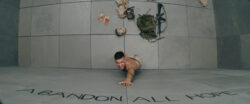
Back in the summer of 2002 I went to my local Blockbuster to rent “Cube” after going down an internet rabbit hole. “Cube” is about multiple people waking up in different colored cubed shaped rooms with tiny doors on all sides leading into another similar cube in a different color. The movie kept building and building, making you wonder what was going on and if they’d get out. I only mention this film because I kept getting that vibe from “The Abandon,” a film about an American soldier in Iraq who’s wounded during a firefight, only to be mysteriously transported to a cubed, bland room with no doors.

Miles (Rosenthal), the soldier, spends probably the first 20 minutes by himself in this cubed room, examining his surroundings at first before tending to his injuries he suffered in the gun battle. Before too long, his satellite phone rings. On the other line is Damsey (Perry), a woman who sometimes seems to know more about Miles than she leads on, but nonetheless she isn’t a soldier or in any way shape or form connected to the powers that have imprisoned Miles. She’s an elementary school math teacher who is also imprisoned in a cubed, bland room with no doors.

Despite the slow, and I mean really slow, start to the film, “The Abandon” begins to pick up as Miles’ and Damsey’s conversation gets more and more personal. It’s during these moments where some of the theories people might have begun to take shape. At the beginning, it’s easy to believe that aliens may be behind the whole plot, but before the final frame, I had several theories in my head, including that this may in fact be a secret sequel to “Cube.” That being said, these kinds of films hinge on two things, whether or not the person on screen can carry the somewhat solo adventure and if the ending reveal is worth it. Let’s call it a draw.

“The Abandon” is rarely boring past the first 20ish minutes of Miles frantically pacing around the cube and testing the walls. Not only are little bread crumbs scattered about for us to pick and piece together, but the film manages to create tension between Miles and Damsey, making us question Damsey’s motives and sometimes Miles’ motives. There’s a fascinating cat and mouse game for most of the film, that is until the climax and finale. So, this brings me to the payoff.

It’s not very good. The ambiguous nature of the ending is a bit too ambiguous. While I feel like there can be a straightforward answer, the messaging of the film is mixed. I won’t ruin the ending, but I really want to because it’s difficult to discuss films like these without spoiling everything. These films demand you watch through until the end because the end is what’s supposed to bring it all together, but “The Abandoned” seems to have abandoned any attempts at a cohesive conclusion. That’s not to say the rest of the film isn’t interesting or good, but it feels dampened by its finale.

Film Review: VAL


  • VAL
  • Starring:  Val Kilmer
  • Directed by:  Ting Poo and Leo Scott
  • Rated:  R
  • Running time:  1 hr 49 mins
  • Amazon Studios


Let me say here at the beginning that I have been a Val Kilmer fan since“Top Secret.”  Couple that performance with his role of Chris Knight in“Real Genius” and he was, by far, one of my favorite actors of the 1980s.Over the years he has been a part of some wonderful films, and has created

Such iconic performances as Jim Morrison in “The Doors” – hey Academy, I’m still waiting for you to explain why Val wasn’t nominated for his work – and, of course, “Doc” Holiday in “Tombstone.”  But there is a lot more to Val Kilmer than you or I think we know and the documentary “VAL” gives us a true look at the artist and his processes. 


The film begins with a quick montage of Mr. Kilmer’s work, then a voiceover begins the story.  I was taken aback when I heard that Mr. Kilmer had dealt with throat cancer which had ruined his speaking voice.  We then learn that, though the words were penned by Val, the narration is coming from his son, Jack, who sounds amazingly like his father.  Val does talk some during the film, but his voice is so raspy that subtitles are often required to fully understand his comments.

Will the real Lizard King please stand up? (Jim Morrison is on the left)

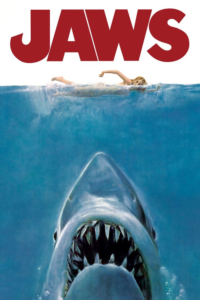
Mr. Kilmer informs the viewer that he was one of the first people he knew to own a video camera.  As a youngster, he and his brothers used to make their own takes on popular films, among them “Jaws.”  (how could I not love this guy?)  Outgoing and popular, he becomes the youngest person ever accepted into the acting program at Julliard and heads to New York.  There he strives to learn everything an actor needs to know for a successful career.  We see early footage of he and his classmates working on shows.  We also learn that an actor’s job is humbling.  Signed for the lead in his first New York theater production, young Val is soon asked to play a lesser role because Kevin Bacon is available.  Things get even worse when, a week later, he’s asked to take an even lesser role to accommodate Sean Penn. 


As his career takes off we are taken behind the scenes of several of his Films, including “Top Gun,” “The Doors” and, most interestingly, “The Island of Dr. Moreau.”  The last film is legendary for all of the mishaps that beset it during production.  From replacing the director to script changes, there is plenty of blame to go around.  Most of the stories I’ve heard centered around Mr. Kilmer’s alleged indifference to the project and his temperament.  Maybe.  But from the footage shared it look’s like Mr. Kilmer’s dream of working with Marlon Brando became a nightmare for all involved.  In one funny clip, Mr. Kilmer and co-star David Thewliss are talking about Brando when the actor comes on the set in full costume.  Only after studying the man do the two actors realize that isn’t really Brando   Further investigation reveals, it is a guy named Norm, who is filling in for Brando. 


One thing I enjoyed learning is that, when submitting audition tapes for roles he’d like to play, instead of just reading lines Mr. Kilmer would make short films, His takes on prospective roles in “Full Metal Jackeet”  and “Goodfellas” are quite inventive.  He shares a lot of thoughts on how he got the role of Jim Morrison in “The Doors” as well as how he took over for Michael Keaton in “Batman Forever.”  His words ring true when he says that every boy wants to be Batman.  Amen, brother. 

Something else I found fascinating is that Mr. Kilmer toured in a one-man show where he portrayed Mark Twain.  There are a few clips included and he’s marvelous.  Move over, Hal Holbrook. 


Of course, with a career like Mr. Kilmer’s, some films get glossed over.  I would love to know his thoughts on “Real Genius,” “Willow,” “Kiss Kiss Bang Bang, “ Wonderland” and others.  But, to paraphrase Spencer Tracy, “what there is is cherse.”


Mr. Kilmer is slated to be in the upcoming “Top Gun: Maverick,” which was originally slated to be released in 2020.  Can’t wait to see the Iceman again.  He can be my wingman anytime! 

Film Review: “Imperfect”

Directed by: Regan Linton and Brian Malone
Rated: NR
Running Time: 77 minutes

“Imperfect” opens with Regan Linton’s morning routine of showering, putting makeup on and getting clothed, but it’s different from most. That’s because in college she was in a car accident that paralyzed her, forcing her to use a wheelchair to get around. Despite her disability, she continues to live and follow her dreams. According to her, her lifelong dream has always been acting and being on the silver screen, but her new focus in “Imperfect” is an entirely different beast, directing.

“Imperfect” follows Linton’s journey as she directs the musical “Chicago” in Denver with a cast made up entirely of people with disabilities. We see people from all walks of life come to audition, some with Parkinson’s, some with autism, and nearly every disability. However, instead of focusing on those disabilities, the documentary cleverly shows us the artistic process. That’s because we watch as art elevates everyone in the production regardless of challenges they face. We watch as Linton and her crew make accommodations or changes with production schematics so that some of the actors are able to come to life on stage.

As pointed out in the film and by Linton, audiences won’t see the disabilities, but instead will see the characters and stories they tell as long as they act as well as they promised they could at their auditions. While it is impossible to see past some of the actor’s disabilities, it makes the final product of the performance that much more impressive and heartwarming when everyone comes together and puts on a real banger of a show.

Outside of taking a behind-the-scenes look at this wholly unique production, we learn about some of the actors. Some have spent years working a basic job and have merely dreamed of being on a stage to get their big break while others actually have had a big break in Hollywood, but are still relegated to stereotypical roles suited for their disability, which in a lot of cases (as the film points out) is a damn shame. Some of these people have incredible talent, not only as actors, but as singers and dancers.

Not everything is inspiring and hopeful. At times we see the pain and frustration that comes with this overwhelming process, as well as how difficult the disabilities can be. Despite the film’s brief runtime, the film never wastes a second perfectly showing who these people are, what their talents, dreams and hopes are. It’s the kind of documentary that makes you upset you didn’t experience this production yourself. Despite its title, “Imperfect” is a near flawless look at a once-in-a-lifetime production.

Copyright: MediaMikes.com © 2022 · Powered by: nGeneYes, Inc. · Login

All logos and images used on this website are registered trademarks of their respective companies. All Rights Reserved. Some of the content presented on our sites has been provided by contributors, other unofficial websites or online news sources, and is the sole responsibility of the source from which it was obtained. MediaMikes.com is not liable for inaccuracies, errors, or omissions found herein. For removal of copyrighted images, trademarks, or other issues, Contact Us.