

Bootleg tour tees and knockoff vinyl flood every album cycle. Learn the six tells of a fake band merch store and pay in a way that protects you.
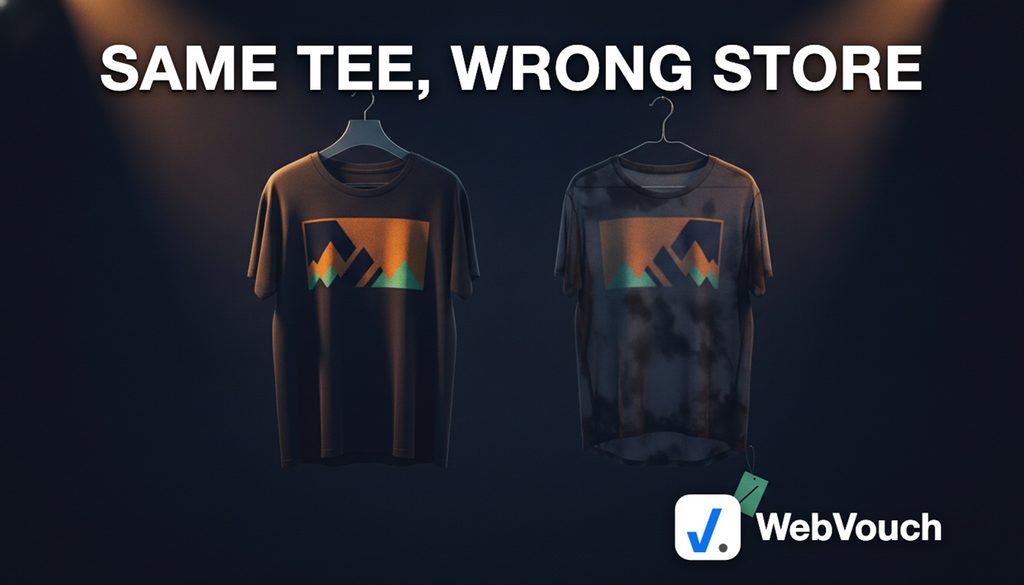
A licensed band tee next to its washed-out counterfeit copy under stage light
Five minutes of checking a merch store before checkout beats any refund fight after it.
The tour announcement drops, the official store sells out of your size by lunch, and that same evening a shop you have never heard of is advertising the exact tee in your feed. Same design, half the price, free shipping worldwide. That timing is a business model built on sold-out stock and fans who want the shirt more than they want to read an About page.
Why knockoff merch stores bloom around every tour
A merch drop concentrates demand into a few days. When official stock runs dry, the search traffic does not stop, and dropshipping operations step into the gap with stolen designs printed on whatever blanks they can source.
These stores are disposable by design. They spin up before a tour leg, run ads where fans already gather, collect orders for a few weeks, then vanish or rebrand before the complaints catch up. The shirt, if it arrives at all, rarely matches the picture. The picture was never theirs to begin with.
Six tells of a counterfeit merch store

Six warning-sign pictograms that expose a counterfeit merch store
1. The licensing language is missing or inflated. Honest tribute sellers say plainly that an item is fan-made and not officially licensed. Counterfeiters either claim “official” or stay carefully vague about it. 2. The price ignores reality. Licensed tour merch has a going rate. A store selling the same “official” tee for a fraction of the stall price is selling something else. 3. The photos belong to the artist. Real shops photograph their own stock. Knockoff stores lift publicity shots and paste the product in. 4. There is no one behind it. A real shop has an About page, an address and a story. A contact form with no company details is a dead end by choice. 5. The details are off. Wrong font, squashed logo, missing tour dates on the back print. Counterfeiters copy fast and sloppy. 6. One store, fifty artists. A shop offering “official” merch for every act on the festival poster holds a license for none of them.
Check the seller before checkout
Start from the artist, not the store. Official sites and verified socials link out to their licensed shops, and a store that appears nowhere in that trail has to earn your trust on its own.
That is where reviews come in, if you read them properly. A platform like WebVouch checks each review before it goes live and scores a business on how its feedback accumulates over time rather than on the star average alone, and once a review is verified, the shop it describes cannot make it disappear. A storefront with a two-week history and a sudden burst of five-star praise reads very differently from one with steady feedback across months. The scoring method itself is laid out on about WebVouch.
Pay like a dispute is possible

A shielded virtual card protecting an online merch checkout
Assume the worst case at checkout and pick the payment method you can argue with. Cards and PayPal give you a dispute path. Wire transfers and gift cards give you a story.
For a store you cannot fully verify, keep your main card out of it entirely. There are ways of how to buy online without a credit card that limit the damage a sketchy checkout can do, from single-use virtual cards to prepaid balances that never expose your real account.
Already bought a fake?
Keep every piece of evidence: the order confirmation, screenshots of the listing, photos of what arrived. Then work the problem from three sides. Start a chargeback through your card issuer or payment service, flag the ad that led you to the store, and describe what happened in a review where the next fan will actually find it. Bootleg operations budget for refunds. What they cannot afford is a paper trail that follows the brand name to its next storefront.
FAQ
Is fan-made merch the same as counterfeit? No, and the difference sits in the labeling. An honest tribute seller states clearly that the design is unofficial and unaffiliated with the artist. A counterfeit store claims a license it does not hold, or avoids the subject entirely while charging official prices.
Are merch stalls at the venue safe? The stall inside the venue is run by the tour itself, staffed by crew, stocked with licensed product. The folding table by the exit answers to nobody. If you skipped the line inside, the artist’s online store is the safer second chance.
What if the artist links no official store? Check the record label’s site and the artist’s verified social profiles for a store link. When no trail exists at all, treat every store as unverified: read its reviews, check its history, and pay with a method you can dispute.