

Interview with David Deluise

David Deluise is the son of legendary comedian Dom Deluise. He is currently starring in Disney Channel’s “Wizards of Waverly Place”. The show is currently finishing its third season and already has a TV movie in the bag. Movie Mikes had the chance to talk to David about growing up in the business, how he likes working on “Wizards” and what’s coming up next for this talented actor.

Click here to purchase David’s movies

Mike Gencarelli: How was it growing up surrounded by family members in the movie business, did you always want to go into that career?
David Deluise: I was around the business a lot. We would go to the sets and visit my dad on “The Cannonball Run”. There was a lot of watching what my parents did and what my dad did was fun and great. I did do a TV movie with my dad when I was in sixth grade. What my dad always said to me and my brothers was you can always be in this business but you can only have a childhood once. He encouraged us to be kids before we entered the business. Evenings around my house, my dad would always have people over like Mel Brooks, Carl Reiner and Anne Bancroft. They were always hanging out and I always made it a point to make these people laugh. When you make Mel Brooks laugh you are doing something good. There was one time [laughs] when Mel came over and my dad said “I will give you a dollar if you can fart on cue”. He counted…1…2…and I farted and Mel laughed so hard. I was in training at a young age if I knew it or not.

Mike Gencarelli: What has it been like working with your family on many projects, such as the film “Happy” and the “CSI” franchise?
David Deluise: We all did “Seaquest” together. We all did a movie that my brother Michael produced and directed and my brother Peter starred in and wrote called “Between the Sheets”. We also did an episode of “3rd Rock from the Sun”. It is always great and fun [laughs]. It is funny because you say “My brother got a job, maybe I will get a job”. Michael was on “Gilmore Girls” and I played his brother on that for two episodes. My brother Peter writes, produces and directs “Stargate” TV series and I was able to do four or five episodes of that. You are never guaranteed a job if your brother gets a job, but it doesn’t hurt.

Mike Gencarelli: You currently play the dad, Jerry Russo, in “Wizards of Waverly Place”, do you enjoying working on the show?
David Deluise: I love it. It is a dream job. Everyone is really fun to work with and great. I actually directed three episodes, so I had to make friends with all the technicians and technical aspects of the show. There are not a lot of vehicle places rather than Disney that you are given that kind of opportunity. Prior to this, I have never directed before, but thanks to the show I was able to. That was great. Bottom-line is, I have never said this to anybody I was debating whether I was doing the show or not. I was unsure. I called my brother Peter and he said “Ok all of that aside do you like the part” and I said “Yeah, it was written for me, a crazy kooky dad that teaches his kids how to properly use magic, it’s perfect”. He said “I think you just answered your question”. It was the beginning of the pilot season and I didn’t know if I wanted to do a Disney Channel show but I am very very glad that I ended up doing the show!

MG: You mentioned you directed three episodes of “Wizards”, how did you enjoy acting and directing?
DD: I found it fun and challenging. What was hard is to be the actor. You have three or four scenes while you are rehearsing other scenes. I would go and watch while they were rehearsing other stuff. As the director you are in charge, you make decisions and sometimes it is a little overwhelming but you are in every aspect of what is going on. What color do you want this? What size do you want that? When should people come in? You can add some jokes and try and make it better. It’s fun. I really had a good time and I hope I can do more.

MG: What is it like working with such a great cast?
DD: Everyone is so fun. The kids are very professional. Selena (Gomez) I have no idea how, at 14 when we started, she had such impeccable timing as a comedian. That just happens you can’t teach that. She did admit to me that she has watched every episode of “Friends”. She has a lot of lines and she learns her lines quickly. She is always on her game. We do a thing at the end of every episode with the audience. They come down and we all take pictures with everyone and sign autographs. In the beginning I was like [laughs] there is no way this is going to last but every single episode with the exception of two we have done that.

MG: How was it working on the “Wizards” movie versus the TV series?
DD: There were new people that we were working with. We have been doing our characters for sometime now and we kind of know how we are going to act. We want to keep it through-line. There was a lot of “Yeah David, that’s the TV show and this is the movie” and I was like “How is it different”? I think there was a little bit of us fighting for the integrity of the characters. I really think the movie ended up being great. In the movie, Selena makes a wish that comes true, “I wish my parents had never met” and then I never had given up my powers. I was a single man and I had magic. So I got to do magic in the movie which was great.

MG: Do you have a favorite episode?
DD: There are so many that I like. If I would have to pick out one it would be the quinceañera episode. Selena and I have this moment where it is the father/daughter dance. It was just really sweet. A lot of times on sitcoms you don’t get those sweet moments.

MG: What is in store for the future of the show? Is there a Season 4 planned?
DD: I think we are going to do a fourth season and we are going to do another TV movie. It is being discussed, there is nothing set in stone but I think that would wrap it up. Selena is in Europe doing a movie right now. David Henrie and everyone else is ready to go on and do their other projects. The fourth season and the movie would mean I have a job for the next year so I am happy about that.

MG: What do you have planned in the future besides “Wizards”?
DD: Well I am toying with and working with a friend of mine on writing a book. We did a signing in NY and all these kids came up to me and said “I wish you were my dad”. I was like maybe I kind of talk to the kids and the tweens and in a fun anecdotal way, I can explain to them where their parents are coming from. I am working on that. I just did a spoof movie but I can not talk about it at all so I can’t give anymore details. I might also be doing another movie before we start shooting “Wizards” again. Got a lot of great things coming up.

Click here to purchase David’s movies


Related Content

Interview with Val Kilmer

Val Kilmer is starring in this summer’s “MacGruber” starring Will Forte, Kristen Wig and Ryan Phillippe. The film is directed by first-timer Jorma Taccone. Val recently sat down and answered a few questions about his role in the movie and how funny it is.

Q: How much fun did you have working with this group of people?
A: Well, when you read a script like this it is actually a little nerve wrecking because you never know. You hope the elements come together. You have a great producer, screenwriter and cast, but you never know. With this movie it is so dumb and so particularly dumb but you see stuff that is clearly great writing, great comedy. So when read it and appreciate it. It wasn’t until we got to the read-through and Will (Forte) started unleashing his MacGruber fury, did I really know that I was in for. I was a big fan of Will’s and Jorma’s (Taccone) stuff with his gang and The Lonely Island band. I think that this movie exceeded all of there expectations. There are a lot of big jokes in the movie that get lost because people are laughing from a minute ago and miss it.

Q: Was it fun to be able to see them really push the envelope from TV into film?
A: Yeah, I read the script and the only thing I had to offer was what if you weren’t familiar with the show and what we were riffing on and the writers said it wasn’t an issue and they were right. It is so extreme. MacGruber is just a buffoon from the second you see him and he just rocks from there.

Q: Tell us about who you play in the movie?
A: It is weird to be proud of something this dumb. I am the bad guy, that is all you need to know. I got the dumb hair. I have the black sort of cape-like overcoat and I have a grudge. That is all you need. I do get a good slow-motion laugh though.

Q: When you saw it with the audience in Austin, where you laughing?
A: I did laugh quite a bit, I am embarrassed to say. I felt that I haven’t laughed at something that gross since I was twelve, but there I was.

Q: Can you talk about working with Jorma (Taccone) and this being his directorial debut?
A: I wouldn’t call it working…slogging, struggling, limping maybe [laughs]. You are always concerned with a first time director but I left my head inside of the first hour. He has worked a lot with his group and he dad is a director so it is in the blood. He is really wonderful. I would like to see him to serious movies, but I am not sure he ever will. They all have enormous energy. I just love them all.


Related Content

Interview with Chris Showerman

Chris Showerman is know for his role in “George of the Jungle 2”. He is featured in the upcoming “Complacent” co-starring Cerina Vincent. Chris is also a writer and director and co-partner of a production company with Clint Morris called Shorris Film. Movie Mikes had the chance to ask Chris a few questions about his career and his very busy future.

Click here to purchase “George of the Jungle 2”

Mike Gencarelli: How was it working on “George of the Jungle 2”?
Chris Showerman: Incredible. The cast was fun, the crew was amazing, and the apes had gas for most of the shoot.

Mike Gencarelli: Did you feel any pressure taking over the role first played by Brendan Fraser?
Chris Showerman: Of course! He left a big loin cloth to fill. Everyone on the project was so supportive of me being the new guy. And the line they put in the script about me being the new George was a big bonus – helped everyone get past the fact that I wasn’t Brendan. Incidentally, I met Brendan about a year after we shot the movie. Great guy! He was real supportive of me as well – though I don’t know if he ever watched my movie – he never said.

Mike Gencarelli: In addition to acting you’re also now writing and directing your own films. Is it easy wearing so many hats?
Chris Showerman: Writing is really cerebral. It’s a pretty lonely art form. It’s great for me because I can go into hermit mode pretty easily so it’s a nice energetic change from my acting side. It’s more of an introverted exercise where you’re going within for the answers. Directing is a natural outcropping of writing for me. It’s just following through on the ideas I had already formulated when I was writing. They always say that a good writer doesn’t direct from the typewriter. That is true, but I can’t help but “Watch” the movie in my mind as I’m writing it so I can go into the directing part with a good preview of roughly how I want the scene to look. Now producing, on the other hand, is a heart attack waiting to happen. My blood pressure goes up about 200 points when I have to juggle all of the details that concern the producer. I have such a renewed respect for producers of low budget projects that take on such a load. It might be different with bigger projects where everybody gets an assistant. And the assistants get assistants. And their assistants go get coffee for everyone.

Mike Gencarelli: We recently just interviewed Cerina Vincent last month, tell us about your recent role in the film “Complacent”?
Chris Showerman: Complacent is a beautifully told movie written and directed by Steven Monroe. It’s a pretty heavy drama about what happens under the surface of our psyches when we allow ourselves to get too comfortable – thus “Complacent”.

MG: When and why did you and Clint Morris decide to form Shorris Film?
CS: Clint and I had been pals for a while and he was the one who had the great idea to team up our strengths. I think we made it official on January 1st – I just don’t remember the year. Perhaps 2006? Our first project was a werewolf film – that’s currently on pause due to the passing of one of it’s attached cast members – with Clint’s good friends Eric Stoltz and Stephen Tobolowsky. Then a western. We’re currently filming a top-secret project in L.A.

MG: Your most recent film is “Big Game”. Can you tell us about it and your working relationship with C. Thomas Howell?
CS: This is one of my favorite projects I have had the pleasure of acting in. I got to play completely against type and play a red neck murderer rapist…with a heart. It was a great challenge and I always looked forward to every day on set. I laughed so hard working with Tommy and John Deignan I thought I’d have a hernia right there on set. I also worked with Tommy on a remake of “The Land That Time Forgot” for SyFy and the upcoming comedy “Commander and Chief”.

MG: Tell me about some of your future projects, for example “Vauxhall Crossed” and “Death Keeps Coming”, if you can?
CS: Well those projects are developing as we speak, so I’ll know more once I’m officially brought into them, but “Vauxhall Crossed” is a British spy thriller about an MI6 agent. I believe Tanit Phoenix, from the upcoming “Death Race 2”, is the star. The other is a western that my good friend Dee Wallace is also involved in.

MG: According to the IMDB, You’re playing a character named Dr Hamilton Manning in two films, “Parfection” and “Beach Bar: The Movie”. What are they?
CS: “Parfection” is a goofy frat mentality comedy about a golfer who loses a bet and get’s breast implants put in. I had a great time working with Dean Cameron on that one. I think the next one, which is somewhat of a spin-off, is starting to get rolling soon.
Thanks to Clint Morris to setting up the interview and providing the images.

Click here to purchase “George of the Jungle 2”

Interview with Darren Gordon Smith

Darren Gordon Smith is a composer who is most known for his “Repo! The Genetic Opera”. The film started as a Ten-Minute Opera that Darren created with Terrance Zdunich and since then it has become a cult phenomenon spawning a huge fan base and weekly midnight screenings. MovieMikes has the opportunity to talk to Darren about the process of bringing “Repo” from the beginning to its present cult form.

Click here to purchase “Repo! The Genetic Opera”

Mike Gencarelli: Darren, You Co-Created “Repo! The Genetic Opera”, how did you come up with the story? What inspired it?
Darren Smith: The idea was based on a friend of mine, who had a dental practice and he was getting all of his equipment repossessed. I started thinking it was sort of absurd, like people were going to sitting in the dentist office in the middle of a procedure and they just come and take their equipment. I started then thinking about what if you had bought body organs on credit. The health care system got so bad that you couldn’t even buy a heart unless you made payments on it. That was the genesis of the idea. At the time Terrance Zdunich, my partner, and I were doing Ten-Minute Opera performing all over LA. He had an idea about a grave robber and his idea was taking back into the 19th century. I said we should combine this with my idea and make it set in 2056. We made a Ten-Minute Opera called “Necromerchant’s Debt”. We would do this mini rock opera performed by the both of us and it turned out that it was the one that people loved the best. We decided to make it into a full scale show. From that “Repo” was born.

Mike Gencarelli: What was your process for coming up the music for the film?
Darren Smith: That is a great question, I do have a background in classical music and compositions and a music degree from NYU. Having said that I definitely play a lot of different kinds of music. The Ten-Minute Operas we did ranged from 18th century harpsichord music to Nine Inch Nails to Led Zepplin. We did whatever. When it came to “Repo”, we loved the idea of the obscurity of the main guys and the over the top nature of the Italian opera. So when we were writing “Repo” that is when I started doing more research in opera. I focused on trying to use the right light composition and how to structure an opera both musically and story-wise.

Mike Gencarelli: How was it like working which such an amazing cast?
Darren Smith: We had THE best cast ever for the movie. That really helped us to expand our music. When you are you are writing for someone like Sarah Brightman, you can expand the music because since she can sing almost anything. Darren Bousman deserves a lot of credit as the director. Darren, Terrance and myself had a hand in every aspect of the production, from the visual, costuming, props, and music. It was a really great experience.

MG: “Repo” was the first feature film you wrote, how did you find the process of bringing the music to the big screen?
DS:
We did the Ten-Minute Opera first, then in 2002 we did a full scale opera on stage. We had experience doing the whole process on stage. Then we did it off-broadway at the Wings Theatre in NYC in 2005. When we got the go ahead green light from Lionsgate for the film, on the one hand it wasn’t a huge leap and the other hand it was. When I say that it is because Terrance and I have always envision “Repo” would be a film. We wanted to have total control over the visual element and things you just can’t do when you are doing stage with 99 seats. Unlike a lot of films, we work-shopped the music and the story over the course of almost ten years. We had a good feeling of what was going to work with the audience and what was not.

MG: How do you affected by the responses the film has got so far, some are comparing it to Rocky Horror Picture Show?
DS: Yeah, certainly. We are humbled by that since “Rocky Horror” is brilliant. We are on the shoulders of giants. It is gratifying, honestly over the years we have developed a cult following. I knew that “Repo” was going to find its audience and will be kind of “Rocky Horror” phenomena. I didn’t think it would happen as quickly as it has. We had this $8.5 million dollar budget but Lionsgate only gave us $200,000 dollars for publicity, which is almost nothing. The film was almost buried from the start. I thought it would be like “Rocky Horror” where it would be years before we even make profit. We beat that already plus more. It is amazing that we have these 45 or more groups in the world who Shadowcast and act out the whole film. These groups know every nuance to the music and the story. Here we are less than a year and a half since the film was released. On a daily basis, I get emails and at least ten new people on Facebook every day asking me questions about the film.

MG: Would you ever consider bringing back it to the stage with all its new popularity?
DS: Yeah great question, absolutely! We would like to do it on a large scale and kind of leaving the options open. I actually want to do this as a permanent stage show in Las Vegas. It will be like Cirque De Solei meets Blue Man Group meets Deep Throat [laughs]. Just really push the envelope for what you can see in Vegas. I would also want to be able to tour with some live musicians from the soundtrack and have me perform with them along with some cast members and do a road tour.

MG: What other projects do you have in the works?
DS: First, we are working on sequel idea for “Repo” and we think we are definitely planning another movie. I am already working on the story and music with Terrance. The other things is I do have another rock opera that I have been writing. Without going into too much detail it is like the film “It’s a Wonderful Life” but in reverse. Rather than the protagonist realizing if they weren’t born things would be worse off. It is reverse and due to a series of bad decisions, it tells how the world would have been a better place without them being born. That is what I am working on right now.

Click here to purchase “Repo! The Genetic Opera”


Related Content

Interview with Kanin Howell

Kanin Howell has been in the business since the age of 5, following in the footsteps of his father who has over 30 years in it. Kanin has previously appeared in the TV series “True Blood” and is currently featured in “The Young and the Restless”. Kanin has appeared in movies like “Dances with Wolves” and “Pearl Harbor” and has worked with actors like Robert Duvall in “Secondhand Lions” and Ernest Borgnine in “Aces ‘N’ Eights”. MovieMikes had the chance to talk to Kanin and he discuss his passion for movies and how he is planning on taking over Hollywood.

Click here to purchase “True Blood” merchandise

Mike Gencarelli: Your father has been working in stunts for over 30 years and you have worked as many films doing stunts. When did you know that you wanted to follow in his path?
Kanin Howell: When I was younger, my dad doubled Murdock on “The A-Team”. I was running around on the set hanging out with Mr. T. All I knew was movie sets. When I turned 5, my dad got me in a little movie called, “Vice Versa”. That is when I got my SAG card. From then I doubled a few movies and did stunts. I doubled for an Indian in “Dances with Wolves” and I fell off the back of the horse during the movie. It was kind of more following in my dad’s footsteps. I wanted to do everything that he was doing. When I got to be a little older in high school, I got too big to double the kids. I started thinking about other avenues of the business. I really wanted to direct. I got into an acting class to learn how to direct people. I worked with Dee Wallace Stone and I ended up falling in love with the craft. I said this is what I want to do.

Mike Gencarelli: You mentioned directing, do you have any plans?
Kanin Howell: No, I completely did a 180. I used to watch movies from a director’s point of view and now it doesn’t even cross my mind. All I’ve been thinking about is acting. I am immersed completely in the acting world.

Mike Gencarelli: Which do you enjoy more being behind the screen doing stunts or in front of the screen acting?
Kanin Howell: I prefer the acting. I have kind of fell away from the stunts, it is how I started and it is my background. It helped me open a lot of doors and I embrace it and I am proud of it. I am kind of moving on to the next part of my life.

MG: How was it working on “True Blood” as the character Chuck?
KH: Yeah Chuck! [laughs]. It was fun. I got to go to Louisiana. Alan Ball actually directed one of the episodes. It was freaking great. Everyone in the cast was so great and welcoming. We went out and partied and it was like a big family. I wish I was back on it, I really miss everyone there. It was also fun in the episode where we burned down the vampire’s house. It was the episode that Alan Ball actually directed. They found this old house it was there for 150 years and was actually an old whore house. The city of New Orleans could not get rid of this house so the company bought this house for like a $100 dollars or something like that and they burned the thing to the ground and the city couldn’t be happier.

MG: You are recently starring in “The Young and the Restless”? Tell us about that and your character Frank?
KH: I am actually shooting another episode this week. It’s good. I can not say too much but in my first three episodes, I am in jail messing around with Nick Newman. I honestly do not know where the story is going but I am excited. Anything I do know I really can’t say. Frank is a character who is looking out for himself and who will manipulate whoever he needs to. We shoot one episode a day. It is like a machine. The process is great for my technique from Dee Wallace Stone. I get to practice a lot, it works out good. It is fun everyone is really nice and asking me when I am coming back.

MG: What has been some of your favorite projects that you have worked with so far?
KH: I mean I have worked with so many great people. “Secondhand Lions” was a blast with Robert Duvall, just to have him kick my ass was great. Seeing Robert work was great even when he wasn’t on screen he had things prepared. Just to be around someone like that it was amazing. Working with Ernest Borgnine in “Aces ‘N’ Eights”, I play his killer and its is oh my God amazing. I am like the guy that killed John Wayne in “The Cowboys”. I get to work with a lot of great people and directors.

MG: What else do you have planned for the future?
KH: Got a lot of stuff cooking. I read for a feature last week. I also read “Sons of Anarchy” for a guest starring role yesterday. I am attached to a feature called “The Willow and the Bee”, that is coming up. That is my next big project but I am definitely reading for stuff in between then.

Click here to purchase “True Blood” merchandise

Interview with J. LaRose

J. LaRose made his Hollywood film debut as a victim of Jigsaw, known as Troy in “Saw III”. Including “Saw III”, J. LaRose has worked with Darren Lynn Bousman on three feature films, TV and a few shorts: “Repo! The Genetic Opera”, “Fear Itself” episode “New Year’s Day”, the upcoming “Mother’s Day”. Movie Mikes has the chance to ask J. LaRose a few questions about his career and how quickly is skyrocketing.

Click here to purchase J’s movies

Mike Gencarelli: Tell me about your role as “Troy” in “Saw III”, did you find it hard to play such a role?
J. LaRose: Troy was quite the gift for me…To be the opening kill in a SAW franchise film brought a lot of (wanted) attention. The SAW fans are a dedicated bunch and have since followed me to other projects, for which I’m very grateful. The role was a challenge in that there’s a fine line between something looking (and feeling) authentic or just looking like an act. My goal was to make the viewing audience feel the pain.

Mike Gencarelli: You co-starred in “Repo! The Genetic Opera”, how was it working on that film?
J. LaRose: It was amazing. We recorded everything in a studio and then had to lip-sync during the actual filming, both of which I’ve had limited experience. I also got to hang out and watch while the other actors and musicians recorded their parts, which was a great learning experience and also very entertaining. The film is filled with a very talented group of individuals. It also allowed me to work and hang with director Darren (Lynn Bousman) again. He and I have a friendship that goes way back, and it’s always a treat to work with him. (I say work, but it’s really play…;)

Mike Gencarelli: You also starred with a short of “Repo” back in 2006? Can you tell us about that?
J. LaRose: Darren directed a stage play version of “Repo” many years ago. He had always wanted to bring it to the big screen, so he shot a short with the intent to show the studios his vision for the film. Soon after “Saw III” was wrapped, they assembled a cast and crew and shot a few scenes/songs from the story. It’s very cool.

MG: You star in the upcoming film, “The Tenant”, can you tell us about that role and movie?
JL: I play the role of Jeff who is an ex-con, who feels it’s him against the world. As part of his “paying back his debt to society” he’s forced to drive a busload of deaf teens and counselors. Unforeseen circumstances result in them being forced to deal with an unknown monster of sorts. I had a blast working on it, and it turned out great. We shot “The Tenant” in Florida, with just about everybody involved being local to Florida and the southeast. One of the producers (Melissa Gruver) is a good friend of mine and it was great to get to work on her project. I also got a chance to work with my daughter Christine, who was cast in a role, which was very cool.

MG: Tell us about you involvement with the upcoming remake of “Mother’s Day”?
JL: “Mother’s Day” gave me the opportunity to work with Rebecca De Mornay, whom I’m sure a majority of every guy from my generation has had a crush on at some point. She is AMAZING. I got to screen the movie just after post-production and I was blown away. I expected it to be a good film, but it far exceeded my expectations. While the original film was more campy, this version is much more dramatic and tense. I love it !

MG: How was it working with Darren Lynn Bousman again?
JL: Working with Darren again was great…We get to hang out, and do what we LOVE to do. He never ceases to amaze me with how well he can handle all that goes with directing a film…I could never do it.

MG: What else do you have planned for the future?
JL: I worked on a few other films last year that will be released sometime this year. “The Tortured”, in which I got to work with Erika Christensen and Jesse Metcalfe, “Unearthed” where I worked with Max Martini and Betsy Russell and “The Arcadian’, where I got to work with Lance Hendrickson. I just recently worked with Patrick Wilson and Rose Byrne on a project called “Insidious”, that is being directed by James Wan. (original “Saw”). Otherwise, I have a few projects lined up that don’t have specific start dates just yet, and until they do, I usually don’t like to talk about them. I mention all the “names” I worked with because I’m a HUGE fan of this business and I get giddy just thinking that I able to work with all these amazing actors that I look up too…I’m very lucky.

“If anyone has any interest, they can check out my webpage, or friend me on  Facebook, and Twitter. (Note: I’m not up to speed on twitter just yet, but eventually I’ll join in on the fun…;)

Click here to purchase J’s movies

Interview with Jackie Earle Haley

Jackie Earle Haley is the new face of Freddy Kreuger in the remake of “A Nightmare on Elm Street”. He recently sat down and answered a few questions about his role and what was it like to play the iconic role of Freddy.

Q: What is your worst nightmare?
A: I am sure I have had a worse nightmares than this, but I did have this weird reoccurring dream when I was a kid. I remember dreaming that I am sleeping in the same bed but it seems like I am really awake and I am in the room. All of the sudden this tall sort of six foot tarantula man busts through the door and scares the bejesus out of me. I somehow get around him. I am racing down the hall of the house that I grew up in as a kid. Right as he gets on top of me, I wake up. This happened time and time again. I am not scared of spiders. I do not know what this dream meant.

Q: You originally tried out for the role that Johnny Depp got in the first “Nightmare on Elm Street”, are you a fan of the series?
A: Well, that is actually a rumor for the first “Nightmare on Elm Street”. I might have auditioned for “Nightmare on Elm Street” and don’t remember. It is also possible, I could have been sitting next to Johnny in the waiting room. It is the only thing I could figure where that started from. I am really not a big horror genre fan. When I saw “Nightmare on Elm Street” trailer in the mid-80’s, I went to see it in the movie theater and I dug it, it was different. At that time, it was part of a group of films. I mean out of the “Friday the 13th” and “Halloween” series, this was my favorite. It always held more interest to me. I felt it was developed better and was more multi-dimensional, not only the monster but the rest of the characters as well. I thought it was an interesting horror film. Over the years I have probably seen bits and pieces of the other ones. I wasn’t a big “Nightmare on Elm Street” fan who sat and watched every one of them.

Q: Where there any things you tried to do in your performance to amplify the terror?
A: I do not think I was really approaching it from that angle. I was hoping that the terror and horror was present. It was more to me about embracing this character and what was going on with him and meaning it. Hopefully at the end of the day it was scary. At this point, when you’re saying “Hey wow it was scary”, I am going “Cool”. I don’t know yet. I sure hope he is scary. I saw the movie and I really liked it a lot but I am close to it. So from the Freddy aspect of it, I am sure we will hear all sorts of opinions on that.

Q: How was it being underneath all that makeup with Freddy?
A: Wow, what it is like in the makeup is the most cumbersome arduous stuff I have ever dealt with. Sitting in that chair for three and a half hours while they are pain-stakingly gluing this thing down. It is a slow process. It goes all the way to my eye balls and even on my eye lids. I mean poking and prodding. I remember sitting there and thinking it has to be better going to the dentist. Since then I have been to the dentist and I was right! It was just uncomfortable. It took me a while to acclimate to it as well. I think I was really agitated for a while. They also put fake finger tips on left hand and the knife on the other hand. I really couldn’t get anything out of my pocket. Surprisingly, the straw that broke the camel’s back was the contact lenses. I couldn’t see. One eye was blurry and the other was bloody. That would make me recede even more. I felt apart from the group and everything. The best thing to do was sit and wait till they were ready. I would take all of those odd and other-worldly feelings and give it to Freddy during action and cut.

Q: Did you have any hesitation about the role when you saw what Freddy’s background was?
A: There was a big pause concerning that for me. After playing Ronnie in “Little Children”, I was fairly certain I was done with that. But at the same time, this was Freddy Krueger! When I was considering this, a voice in my head said “How can you not play Freddy Krueger!” I think the reason why I am able to embrace this was that I embraced the fact that I was the bogeyman. I felt I was able to do it. I am not even sure how much cross-over there will be from those audiences.

Q: Would you be willing to step into the role of Freddy Krueger again?
A: Obviously we need to see how the movie does but I am signed on for doing a couple of more. I hope when it comes out people aren’t scared of me as being this monster guy outside the film.


Related Content

Interview with Broken Lizard

Broken Lizard consists of Jay Chandrasekhar, Kevin Heffernan, Steve Lemme, Paul Soter and Erik Stolhanske. They have made the films “Super Troopers”, “Club Dread”, “Beerfest” and the recent “The Slammin’ Salmon”. With many projects planned for the future Broken Lizard is just getting started. Movie Mikes had the chance to talk to the group and discuss their movies and their plans for the future.

Click here to purchase Broken Lizard’s movies

Mike Gencarelli: You guys recently toured the country with a comedy show, was that fun?
Jay Chandrasekhar: It was incredibly fun. We started out performing on stage in New York. Back then we used to hand out fliers in the street to try and get people to come. It was exciting to show up in these 1200 seat theaters and see big crowds and their excitement. It was fun and we had a blast. Plus we got to hang out every night after the shows so it was great.

Mike Gencarelli: In case anyone missed the show was it taped for TV or DVD? Are you planning future tours?
Steve Lemme: We actually filmed something for Comedy Central. It airs this September and we are definitely planning future tours, now that we got a taste for it. We are ready to hit the road a lot.

Mike Gencarelli: Kevin, “The Slammin’ Salmon” was your directorial debut, how was it stepping behind the camera, as well as starring?
Kevin Heffernan: It was great. We kind of work as a family, we use the same crew a lot and same actors. It was a very comfortable situation. There were no curve balls or anything. It was a fun way to direct your first movie. With “Salmon” we filmed it independently without a distributor. Then you kind of scramble and get people to put it out there. Since it is on DVD now, I think now people will be able to see it, discover it and it will be great.

MG: After doing the studio film “Beerfest”, how was it returning back to indie roots with “Salmon”?
Kevin: It was great. It was fun going back to the way we did “Super Troopers”. We did that independently. It was a really fun experience. You took away layers of people giving you notes and stuff. We were able to do a lot of what we wanted to do.

MG: Paul, I know you directed 2007’s “Watching the Detectives”, how did you land that gig and any plans for you to direct more?
Paul Soter: Probably right after “Club Dread” came out, I started writing a script. It was a little indie script, to see if I could do one by myself. I thought from watching these guys it seemed like a fun thing. I wanted to see if I would be able to direct. I wrote it and sent it around. It took about a year of going around to production companies until we found a producer for it. We shot it right after we wrapped “Beerfest”. Yeah it was a great experience and it was a fun little indie. I am just going out with the next script I am going to direct. I am talking to producers in the next couple of weeks, so we will see what happens.

MG: Steve and Erik, how about you guys planning to direct anytime soon?
Steve: I am directing Erik in the “The Erik Stolhanske Story”
Kevin: I can play that part!
Erik Stolhanske: I am directing Steve in “The Erik Stolhanske Story” project, it will be a two part series.
Kevin: I play Steve.

MG: Here is the most important question though…Will it be in 3D?
Steve/Erik: (Simultaneously)…. 4-D

MG: Jay, you directed “The Dukes of Hazzard”, that was a high profile studio film, how did it differ from let’s say “Super Troopers”? Did you have creative control?
Jay: The film was PG-13, so we had to sort of keep within that box. We did do an R-Rated version for the DVD though. The good thing about “Dukes of Hazzard” was we had a garage running 24 hours. We would crash the cars during the day and then take them in and fix them in the night. The next day we take them out and crash them again. We had fifty cop cars from Batman and twenty five General Lee’s. We had an entire stunt crew shooting. We shot 50 days, they shot 25 days. It was substantially more action going on in the background. “Super Troopers” was a blast too. They have all been really fun to make. We really worked hard on the scripts and get them to a certain point when it is fun to go and execute those jokes.

MG: I got to ask, how much beer was actually filmed during the making of “Beerfest”?
Jay: A lot. There was a lot of real beer and then we couldn’t get enough work done. We switched to fake. We drank more real beer during the afternoons and more fake in the morning.

MG: Out of all the films you have made so far, what has been your favorite?
Jay: “Super Troopers”
Paul: “Club Dread”
Steve: “Beerfest”
Erik: “Puddle Cruiser”
Kevin: “The Slammin’ Salmon”

MG: Has there been one film that has been the most challenging out of all of those?
Kevin: I think different ones for different reasons. “Puddle Cruiser”, since we didn’t know what the hell we were doing. “Super Troopers”, since we made the movie on a small budget that had a bigger scope. “Beerfest” has been the largest scope, I think so far. They all have their own elements.

MG: How much improv is actually used on the set?
Steve: We like to start off with a strong script. We will do a few takes as scripted and now that the budgets have gotten a little bit bigger, we have more time to improvise. In the beginning we didn’t have the money to just burn film and free form it. I think we really started during “Beerfest”.

MG: You currently have numerous movies listed in development, what is actually getting made and what is just rumored?
Jay: We are writing “Super Troopers 2”. We are also writing a film called “Rogue Scholars”, which is at Universal. We are under contract to write a movie called “Pot Quest”, which is also at Universal.
Kevin: “Rogue Scholars” is kind of a twist on “Animal House”. It is a college comedy in which we play professors that are in a war with the students. It is a funny different twist.
Steve: We already mentioned our comedy tour on Comedy Central that airs in September but it will be on DVD also after it airs.

Click here to purchase Broken Lizard’s movies

Interview with Jim Sharman

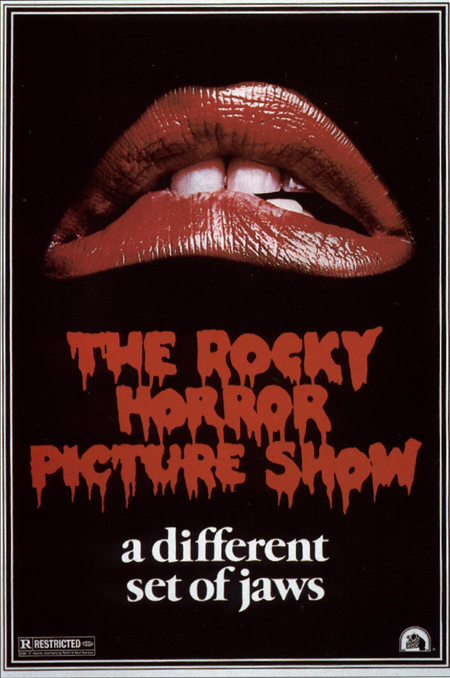
Jim Sharman is best known for directing the cult classic “The Rocky Horror Picture Show”. The film became a midnight screening sensation. 2010 marks the 35th anniversary of “RHPS”. Movie Mikes (and some help from “RHPS” uber-fan Dave Picton) was able to ask Jim a few questions about “RHPS” and reflecting on its success over the years.

Click here to purchase “The Rocky Horror Picture Show” merchandise

Mike Gencarelli: The endings of the US and UK cuts of “RHPS” differ in that the UK cut includes the “Super Heroes” sequence and end credits roll over the “Science Fiction Double Feature” reprise. US cut omits “Super Heroes” and credits roll over “The Time Warp.” How did these two versions come to be and what are your feelings about each of them?
Jim Sharman: The version with Super Heroes is the original ending and the best one. Somewhere – way back when – I guess it was in between the original release and the initial late night screenings – there was some studio tinkering and Super Heroes was deleted, probably through a desire to give it a more conventional movie ending – which is frankly impossible with a film like “RHPS”. The fans eventually complained and the original ending was restored, for which I’m very grateful. I guess there are a few of these older prints still floating around, but the current DVD version is the full original version. The film begins and ends quietly, reflectively, and in darkness – and that’s how it should be.

Mike Gencarelli: How did you first become aware of the audience participation phenomenon that evolved around “Rocky Horror Picture Show”? Have you ever attended a screening of “Rocky Horror Picture Show” in which the audience participation occurred? If so, what did you think of it?
Jim Sharman: After the initial release, I’d returned to Australia – which is where I mostly live and work – and I heard about it on the “Rocky Horror” grapevine. Soon after, I was visiting New York and just dropped by the Waverly Cinema to check it out. It was in the early days of dress-ups and audience-participation and there was great enthusiasm and a sense of anarchic fun in the air – so I really enjoyed it. My strongest memory was that a film which had begun as a celebration of late-night movies had somehow fulfilled its own destiny and entered it’s own mythology. It had become a late-night movie that was being celebrated late-night and I thought that was pretty cool. We had played the original stage show in derelict cinemas and turned them into theatres, and now the film was turning cinemas into theatres – complete with costumes, make-up and audience participation. The fact that the film had become wallpaper for a non-stop party didn’t bother me at all – I thought it was great that the movie was generating so much energy and pleasure. As with most things related to Rocky Horror, there was no sense of what was ahead – for instance, that we’d still be talking about today. Rocky Horror has a life of it’s own – it set out to confound and subvert convention and it’s amazing to think that it’s still doing that, 35 years on.

Mike Gencarelli: What’s your best memory from making “Rocky Horror Picture Show”? Worst memory?
Jim Sharman: It was long ago and far away, so the best and worst tend to blur a little. When Lou Adler and Michael White, the original producers, first invited me to direct the film, they gave me two options. One was a regular movie musical budget and schedule, with the proviso that I cast some established stars – current rock stars, movie stars, whatever; and the other was an essentially B picture budget and a short 6 week schedule, if I stayed with key members of the original cast and creative team. Rocky Horror had flouted conventional wisdom from the get-go and the B picture route seemed truer to its spirit. That spirit was something I wanted to keep alive in the film – more spirit than polish was both the aim and the outcome. There was also a strong sense of camaraderie and like-mindedness amongst the original creative team, so I chose option B and that pretty much governed everything that followed – it created the best and the worst. I’m still grateful that Lou and Michael understood this, and went with it. Maybe that was the best moment? If I’d gone the other path, I don’t think we’d still be talking about Rocky Horror today. You only have to think of all those long vanished films featuring rock stars of the era. The Rocky Horror team had one thing in common, we’d all grown up on late night movies and this had the potential to be the ultimate thank-you note to that tradition. This genuine affection for late-night movies informed every aspect of the filming. The schedule was so tight that the film was mostly edited in the camera and our decision to film it at the old Hammer Horror Studios – which was affordable, but semi-derelict at the time – gave us dire working conditions. I remember everyone freezing in mid-winter and, as we mostly shot in sequence, when we finally got to the underwater filming for “Don’t dream it, be it”, I resorted to encouraging excess by pointing out that the wilder it was, the sooner it would be over! It may look dreamy onscreen, but my only recollection is of chattering teeth and everyone stamping their feet to keep warm while shivering in their underwear. For me, the best was the consistent camaraderie and the fact that everyone understood the spirit of the piece and entered into it fully, which meant a minimum of re-takes. The original cast and creatives brought this with them and it was contagious, so those new to the craziness quickly got on-board. I remember a studio visit from Fox studio execs, who were very pleasant but completely baffled by what was going on. They had no frame of reference for this film and the result was they decided to leave us alone and there was no interference. That was probably the best thing that happened, because the finished film is exactly the one we intended to make – spirit intact.

MG: To what extent do you credit the extended “Rocky Horror Picture Show” scene in the 1980 film “Fame” with “Rocky Horror Picture Show’s” success?
JS: Just as “RHPS” specifically references umpteen late-night classics, there have now been heaps of references to “RHPS” in other movies. I guess, by now, it’s a classic in its own right. The sequence in Alan Parker’s film was, I think, the first. It was very affectionate and suggested that even during the early tentative days of its resurrected life as a late-night movie, there were some film-makers who understood the phenomena and, as it were – got it. From memory, the sequence in Fame features an otherworldly Richard O’Brien and I remember Richard being touched by the context – it emerges from the dream-life of a lonely isolated teenager, if I remember right – which was pretty much on the money. I’m sure it helped, but as to how much? It’s hard for me to quantify, but it was certainly appreciated at the time.

MG: How do you feel that “Rocky Horror Picture Show” is celebrating its 35th anniversary and shows no signs of slowing down in popularity?
JS: As I said before, it has a life of it’s own. I’m sure it will continue, though the party might shift from the cinema to the living room, via DVD, or to somewhere in cyberspace. There are various theories as to why, but best to leave it to its own mythology and simply enjoy it. For what it’s worth, Rocky Horror does play with myth and I was always conscious of directing a dark fairy tale – Hansel and Gretel with sex and rock n’ roll, as it were. Fairy tales are the means by which kids first come to terms with the difficult things in life – fear, sex, death, transience, etc. Fairy tales deal with heavy issues in a light engaging way. Given that the audience for the film tend to be young people stepping into adulthood and confronting some of these complexities, maybe it serves as a useful rite of passage. Far be it for me to suggest that Rocky Horror could have some redeeming and magical transformative value – let’s face it, for most people it’s just a good excuse for a party – but there could be something more at play here.

MG: Can you reflect for me about “Shock Treatment”, why do you think it didn’t take off like “Rocky Horror Picture Show?
JS: As ever, there are many reasons. “Rocky Horror” grew from a tiny stage show into a film with a simpatico cast and creative team and the chance to refine it in front of a live audience. Movie musicals are a notoriously hard genre to crack and “Shock Treatment” was not only served up cold, but it was created in circumstances that took it from something conceived in a realistic context – we were originally going to shoot it on location in Austin, Texas – to an artificial studio film. As such, it was one of the first films to predict a world where we’d all end up as fame-whores and serfs to an out-of-control totalitarian media. There have been others since, and better ones – “To Die For” and “The Truman Show” are two good examples. Both “Rocky Horror” and “Shock Treatment”, which are otherwise unrelated, have an anarchic cartoon surface, but – whereas “Rocky Horror” is hot, “Shock Treatment” is cold. The martini without the olive, so to speak. As you might gather from my other responses, there’s always something subversive going on under the surface in these seemingly slight films. For me, strange as it may seem, what underscored “Shock Treatment” was a kind of cartoon response to the Jonestown Massacre – a famous incident where an out-of-control religious sect mass-suicided on poisoned kool-aid. Shock Treatment wasn’t well received on release and, unlike “Rocky Horror”, has never bounced back. I’ve only read one review that was onto it, from an English critic, Raymond Durgnat, who compared it to the Bertolt Brecht and Kurt Weill opera – “The Rise and Fall of the City of Mahagonny” – a work that has also eluded general popularity, having been overshadowed by their more popular “The Threepenny Opera”. I don’t think “Shock Treatment” is in the same league as “Mahagonny”, but the late Mr Durgnat was onto something.

MG: Do you think “Rocky Horror Picture Show” will ever be remade and what are your feelings about it?
JS: I’m sure it will happen and is maybe awaiting the right time and chemistry of people and, maybe, a little courage. I think that to replicate the original is impossible, because it was the product of a special moment in time and an extraordinary combination of personalities. However, using the same template, maybe even the same screenplay, it would be possible to approach Rocky Horror from a completely fresh and different angle. That’s where courage comes into it. I keep seeing stage versions of Rocky Horror announced as the NEW Rocky Horror Show but, when I finally saw one, it looked pretty familiar to me. A successful movie remake would require someone, or a highly creative team, with the courage and imagination to say goodbye to the familiar Rocky Horror frippery and completely re-invent it for a new era. I hope it one day happens and, if and when, I look forward to seeing it.

Click here to visit Jim’s website

Click here to purchase “The Rocky Horror Picture Show” merchandise

Interview with Mark Patton

Mark Patton career hit it big with “Nightmare on Elm Street Part 2: Freddy’s Revenge” and then suddendly ended, but That was only chapter one of Mark’s career. He recently resurfaced in the upcoming documentary “Never Sleep Again: The Elm Street Legacy” and is looking forward to acting again if the role is right. Movie Mikes had a chance to talk to Mark and ask him some questions about his career and his anticipated return to the spotlight.

Click here to purchase Mark’s movies

Mike Gencarelli: Tell me about your journey to starring in “Nightmare on Elm Street Part 2”?
Mark Patton: I actually auditioned for the first “Nightmare on Elm Street” for the part that Johnny Depp played. Heather (Langenkamp) and I tested for that, but I didn’t get the part. When they came back around for the second one, it was the same casting director. They called me in really at the last minute and I auditioned and got the part. Prior to auditioning I had just finished a movie with Robert Altman and they were happy to get me.

Mike Gencarelli: What was the hardest part of your role as Jesse Walsh?
Mark Patton: Making a movie like “Nightmare on Elm Street”, they are very physically demanding on your body. I did all my own stunts. The work load was very strong for me. I was in practically every scene in the movie. The transformation scene, when Freddy comes out of my body was very difficult to do. Also the scene when Freddy burns up in the end and I come out of that fire, was also difficult. Those types of scenes took five or six days to shoot them. You are in that make-up for a long time. Other than that though it was a breeze. We had a great cast and I was treated very well.

Mike Gencarelli: You have expressed differences with director Jack Sholder, can you explain them?
Mark Patton: This month “Never Sleep Again” comes out and it is a documentary on the making of “Nightmare on Elm Street” series. I haven’t really given interview on “Nightmare on Elm Street” in 25 years. Over the course of the years a lot of controversy built up, especially about the gay subtext about “Nightmare on Elm Street Part 2″. Quite frankly, I dealt with a lot of negative issues for the first few years. Later in life, it changed dramatically though for the better. When you watch the movie, you can see that there is sort-of secondary storyline going on. When Jack Sholder and David Chaskin were asked about it back then, they said they had no knowledge that it was going on. In “Never Sleep Again”, David Chaskin, the writer, changes his answer to that question and finally admits; yes he was writing a subliminal message into the movie. I was very straight forward about the whole thing and I just did a Q & A that you can find on YouTube at Monster Mania Convention this March about it. Recently during the interviews and conventions I’ve done, people been really fantastic. It is amazing how many people were obviously touched by that movie but in a different way than they were meant to be.

MG: Where you ever offered to come back for another “Nightmare” sequel as Jesse?
MP: Heather, Kim (Myers) and I the only people still alive from the “Nightmare” franchise. I was never offered.

MG: You were recently featured in “Never Sleep Again: The Elm Street Legacy”, how was it revisiting “Nightmare on Elm Street Part 2”?
MpG: It was amazing, it took them two years to find me. They hired a web detective and everything. I like in Mexico now. They literally found me at the last minute, flew us down and shot the documentary three days later. It was a blast. The most fun about it was that they setup a Facebook account for me, which is how we obviously got in contact. The response has been amazing, I probably get one hundred friend requests a day. Literally I am going to have to have to hire someone to take care of this soon, it getting to be so much. The people have been so amazing that have contacted me.

MG: So after you star in “Nightmare 2”, you disappeared from the spotlight and haven’t acted since, what happened?
MP: I actually quit acting shortly after “Nightmare on Elm Street Part 2”. It was due to part to the controversy surrounding the film. Many people offered me film roles after but I just turned them all down. It took the people from the documentary two years to find me, because nobody from show business was able to get find reach me.

MG: What was it like working with Cher and Robert Altman in “Come Back to the Five and Dime, Jimmy Dean, Jimmy Dean”?
MP: That was such an amazing experience. That story is like a book in itself. When I was hired to do that film, my first day of rehearsals there was a thousand reporters around the set because of Cher and Robert Altman. It was a mind blowing experience. I met everyone in the world, literally everyone. I met David Bowie and Robin Williams. They all treated me as a peer so it was great. That movie has a huge cult following and it is getting ready to be released on DVD for the first time ever. I am getting ready to be a part of that DVD.

MG: Now that you are back, what is next?
MP: I have been offered quite a few movies since the documentary. I am sort of hoping they ask me to be in the next “Nightmare on Elm Street” if there is a sequel. I think it would be funny and great. I currently own a gallery in Mexico and I am very involved with a lot of artists here. I am making a documentary about a club and its history here in Mexico. I do have bookers and agents now, so if something interesting comes along. Don’t be surprised. It is funny how life turns around, you never know what is going to happen.

Click here to purchase Mark’s movies


Related Content

Interview with Howard Berger

Howard Berger is one of the founder of the well known K.N.B. Effects. Howard started the company with Greg Nicotero in 1988. After the past 20 years, Howard has worked with almost every director in Hollywood and on hundred of films. K.N.B won many awards, including an Academy Award for “The Chronicles of Narnia: The Lion, The Witch and the Wardrobe”. The have also worked on films like “Army of Darkness”, “Kill Bill” series, “Sin City” and “Dances with Wolves”. Movie Mikes was able to talk with Howard and get him to reflect on phenomenal career.

Click here to purchase “Narnia” and other K.N.B. films

Mike Gencarelli: You’ve done special effects on over 150 movies and TV shows, name some of your favorite productions and why?
Howard Berger: I would say one of my favorites is “Army of Darkness”. I just love it. It was during a period of time that was like the good old days. Working on the film you just kind of jumped in and did it. Everyone worked as hard and as long as you had to and did whatever the director needed. It was really fun. The end result ended up being really great. It is something that we are really proud of and that movie is really dear to me. It was just so much fun. “From Dusk till Dawn” is definitely also one of my most favorite films. What was fun about it was that Greg (Nicotero) and I were both there, he ran the set and I ran the shots, unfortunately that doesn’t happen anymore. We had a facility on the set, where we did all the makeup and built all the stuff as fast as we could. Greg would stay on set with Robert Rodriquez. We would be on radio and Greg would yell, “Hey Howard, next shot”, and we would throw it together. Robert would add stuff as he went along and Greg would go “Do we have a body we can put in a vampire outfit and light it on fire?” I would give it to Greg and then he would orchestrate it on set. That was like six weeks just for the vampire sequence alone and was very exhausting. We were getting very little sleep and there was little turnaround. But still that one is one of my all-time favorites. The first “Narnia”, I am really super proud of. It was the biggest show we’ve done and biggest crew I have ever run on set. It was super hard but it taught me a lot of being the boss and being a leader. When we were doing that film, we were also doing a bunch of other stuff at same time. Greg was in Toronto doing “Land of the Dead” and we were on opposite time schedules. He was shooting nights in Toronto and I was shooting days in New Zealand. We would pick a time on Sundays, which was both our only day off to talk and check in, so that way we can be involved with what we were both working with on different ends of the world. It was really great and obviously paid off because we ended up winning an Oscar for it. Out of all the movies we’ve done those are my favorites. I calculate my favorites by if I can sit down and watch them now. I can always watch “Army of Darkness”. I can always watch “From Dusk Till Dawn” and of course “Narnia”. I am sure that there is a handful more but it is really only a handful.

Mike Gencarelli: What was the most challenging production that you have ever worked on?
Howard Berger: I would have to say for me it was really the “Narnia” films. It really kicked my ass. They were tough but I really love them. I am lucky we were able to get a chance to work on them.

Mike Gencarelli: You’ve been working special makeup effects and visual effects your whole career, how do you feel about CGI and how it seems to be taking over?
Howard Berger: It depends because we use it as a tool. We have become friends with CGI over the years. I believe that is why when we do movies the effects are successful, since we really interface with the visual effects department and that is the trick. If you fight against them, that is an issue and if you throw your hands up, that is an issue too. I think it has application obviously. Every single movie has some form of visual effects in it. Romantic comedies even have CGI effects in them. As long as it is used properly, I don’t mind it.

MG: How do you feel about the recent 3D craze?
HB: I think 3D is cool. It worked magnificently with “Avatar” because James Cameron is a genius. People say “Avatar” did well because it was in 3D and that is untrue. It did well because it was a good story and had new visuals. James Cameron created a new world we have never been to. When you have movies that are made in 2D and they convert them in 3D, like “Clash of the Titans”. It ends up biting them in the ass, because people say “This is the worst 3D, we’ve ever seen”. “Clash of the Titans” did not need to be 3D; they were just jumping on the bandwagon. It you are going to do 3D, you should do it properly.

MG: You’ve worked in virtually every movie genres, do you have a favorite?
HB: I tell you the truth, my favorite genre is fantasy. I am sounding like a broken record but I really love the world we created in “Narnia”. As I have gotten older, I really do not do the whole “gore” world anymore. I do not enjoy those films at all. I do not find torture being a horror film, it is obscene. As a guy on set, I also hate being covered in blood, so the less blood on me the better.

MG: Which directors/actors has been the most fun to work with during your movies?
HB: Oh gosh, there are a lot of them. For directors, I love Quentin Tarantino. He is great and the opportunities I have had to be on set with him were really amazing, especially “Kill Bill”. I really learned a lot watching him and he is just wonderful. I love Andrew Adamson, who did the first two “Narnia” films. He really makes you work hard and think outside the box. Actor-wise, James McAvoy was a dream come true to work with. Robert Englund was by far one of my most favorite people to do makeup on. I got to do Freddy’s makeup when I was working for Kevin Yagher on “Nightmare on Elm Street 4”. Robert Englund is one of the nicest guys in the universe and a complete pleasure to do his makeup. Peter Dinklage and Warwick Davis were also both great. We got to do “The Book of Eli” last year and worked with Gary Oldman. Greg was on set not me but I got to interface with Gary during the testing periods. Any actor that appreciates your craft, shows interest and makes positive comments, bring them on! We do 50% and they have to do 50% to perform in it, since it is their face on camera.

MG: What happens to all these amazing creatures and effects that you create after the movies are finished?
HB: They all live here at K.N.B. We have a big storage facility in the back of the shop and everything is maintained by us. The studio and production office take ownership on the image on film. We retain ownership of the physical piece. Way back when we started out, we ended up handing over a lot of our stuff and it caused us to lose some jobs. People would call us up and say “Can we get some bodies…You know what never mind we have these already”. Greg and I came up with an adjusted contract so that we own rights to the physical piece.

MG: Besides special makeup effects and visual effects, you actually puppeteered in a few of your movies, does this stray far from your normal job description?
HB: I think it all fits in. Monster makers make the best monsters. Whether it is in a suit or puppeteering, it is what we are good at. When we were kids we ran around pretending we were the famous monsters and you just have a sense for it. I really do enjoy puppeteering. I have haven’t had an opportunity to do it for a while since it rarely come up often anymore. It’s part of being a monster maker to have a flow about the creature you are building and being able to execute it and create the performance on set.

MG: You have won both an Academy Award and BAFTA Award for your work on “The Chronicles of Narnia: The Lion, The Witch and the Wardrobe”, do you consider this the highlight of your career?
HB: I do. I do. I think it doesn’t really get better than that. After that I was sort of like what am I going to do now? It has been a childhood dream to win those awards and when it happened it was really truly a dream come true.

MG: I was told to ask you by someone with the initials G.N., if you have custom covers made for your “Narnia” display heads?
HB: Yes, I do have custom covered for the “Narnia” display heads. I actually care about making sure that they are protected compared to everything else in the shop. I am going to have to have a talk with that person after this [laughs].

MG: Have you ever considered directing any of your films?
HB: I did for a while but I am really not interested now. Greg is the director of the group and I think he has a great attitude for it. He has the patience and also the vision. He just did this short that we co-produced together, where he wrote and directed. He did a really fantastic job; I can’t say enough great things. I love what I do, but I also love my private time and doing my own personal things. For me being with my children is a huge thing now and to be honest, I am too selfish to direct. I have given spent decades of my life to the film industry, and I am in my mid-40’s now and I like the way my life is.

MG: What can you tell me about what the future holds for you?
HB: My plan is to keep K.N.B. going and keep doing really fun and inventive projects. Hopefully we can bring new things to the industry and also the audience. I just enjoy doing this and I want to keep having fun doing this. It is difficult now because it is a different world and also a different film industry. The studios and producers seem to care only about finances and the questions come up. Does anyone care of the movie being actually good? What about it being fun for the audience? Do they care about the quality? I would love somehow to be able to help guide film making back to where it should be. I am going to try and do my best and reinstate the art in the art of it. There seems to be little art left because it has been sucked dry by the bean counter. It is all about profit margin and trying to do something for as inexpensive as possible. The movies we all grew up on weren’t made that way. People cared about making the movie something special. I am just going to continue and hope to keep having fun doing what I am doing.

Click here to purchase “Narnia” and other K.N.B. films

Watch K.N.B Effects’ Demo Reel here:

All rights to photos used are reserved for the owners, Movie Mikes does not assume ownership of any of the photos used.

Interview with Tyler Bates

Tyler Bates is one of the most well known composers. Some of the projects he has worked on has been 2004’s “Dawn of the Dead”, “The Devil’s Rejects”, “Rob Zombie’s Halloween”, “Halloween II”, Zack Snyder’s “300” and “Watchmen”. Movie Mikes had the chance to ask Tyler about his career and how he got started in the music business.

Click here to purchase Tyler’s scores

Mike Gencarelli: How did you get into the music industry?
Tyler Bates: I have played music my entire life. I began on saxophone, and once my cousins turned me on to KISS and Led Zeppelin I dropped concert band for a Les Paul copy. I spent much of my life in rock bands, and when I moved back to Los Angeles many years ago, my band, Pet, was signed to Atlantic Records. I have always had an appreciation for a broad scope of music – studying arrangements and production of music from every genre imaginable. I was offered the opportunity to work on a very low-budget film in 1992, and began picking up small scoring jobs to pay my rent while my band developed. One day I realized that I was actually in the film business, and I shifted my focus to scoring movies more than pursuing life as a touring musician.

Mike Gencarelli: Do you have any other passions?
Tyler Bates: NFL, NBA, and of course my family. I do like to experiment with instruments and musical gadgets not directly related to my work.

Mike Gencarelli: What is the process for you when you develop a score? How do you start?
Tyler Bates: After watching the film, I begin by discussing it with the director. I find it important to develop an understanding of the director’s taste and sensibilities – generally via conversation not directly related to the film at hand. If the time line permits, I will let the feeling of the movie build inside of me until I can’t stave off writing any longer. I am not procrastinating per se, it is just a way of approaching a project with a sense of intensity or urgency towards the creative process, regardless of the overall timbre and style of the film.

MG: After doing over 60 scores, have you ever thought that they sound alike?
TB: Of course! Some of this is intentional, some is by request of director’s I work with but mostly, it is the stark reminder that I need to consistently challenge myself to grow and add new techniques and dimension to my approach to film music. I think a distinctive style is essential as an artist, but overall you’re touching on the artists “love/hate” relationship with his or her work. It can be painful! Lol.

MG: You worked on all of Rob Zombie’s films, how did you come to get that arrangement?
TB: I did not work on “House of a Thousand Corpses,” but I have worked on all of Rob’s subsequent films. Rob and I were introduced through a close mutual friend many years ago. I heard Rob liked my score for “Dawn of the Dead,” so I offered to help out with the score for “The Devil’s Rejects.” I didn’t know that Rob wasn’t terribly interested in scoring his own films until he asked me to do “Rejects.” It was a rewarding experience despite the brutal nature of the film. We bonded through that movie, and have become good friends over the years. I really respect Rob as an artist, so it for me, it is a great collaboration.

MG: Do you always interact with the filmmakers or do you have creative control over your projects?
TB: The concept of “creative control” in its purest conceptual form does not exist in film scoring, especially the higher the budget. That said; once you earn the trust of your director and the producers, you then have much more support to approach the score from your sensibilities, and in your distinct style. This process requires a bit of “show and tell.” They key is to get it right the first time as much as possible, which means beyond the idea of creating a good piece of music, you have to show that you are thinking about the film as a whole, and the specific function of the score throughout.

MG: Do you have a favorite score that you have created?
TB: Hmm. There are things I like about some of them. The great personal experiences I have had along the way are typically what make me fond of any work I have done in particular. Maybe “The Devil’s Rejects,” and “300?” I don’t know. I just completed the score for Emilio Estevez’s new film called “The Way.” It’s very personal, acoustic, organic music. It was definitely a welcome departure from much of the violent material I have done over the last several years.

MG: Which other composers do you get your inspiration from?
TB: I love Bernard Herrmann and Penderecki. Henry Mancini. I also like Don Ellis’ work on “The French Connection” movies. Great stuff!

MG: In the last six you’ve scored basically sci-fi/horror films? Is that your favorite genre?
TB: I appreciate the opportunity to work with good people and to grow as a composer/artist. The genre doesn’t quite matter, but there is no doubt that Sci-Fi/horror offer the greatest opportunities to implement odd ideas…

MG: Any exciting projects you have planned for the future?
TB: “The Way.” The “Transformers Origins” video game is released soon. Season four of “Californication” begins soon. And of course, Zack Snyder’s new film.

Click here to purchase Tyler’s scores

Interview with Crispin Glover

Crispin Hellion Glover is all of the above, an actor, director and screenwriter, musician and author. Glover is most known for playing the role of George McFly in “Back to the Future”, and the “Creepy Thin Man” in the “Charlie’s Angels” series. Crispin is currently on tour with his most personal and favorite films “What Is It?” and “It is Fine. Everything is Fine!”. He recently starred in Tim Burton’s “Alice in Wonderland” and “Hot Tub Time Machine”. Movie Mikes was able to talk to Crispin and he spoke to us about his amazing career and shows his real passion for film and making movies.

Click here to purchase Crispin’s film and books

Mike Gencarelli: How did you get the role of George McFly playing Michael J. Fox’s father in “Back to the Future”?
Crispin Glover: When I first got the role, Michael J. Fox was not cast in the movie yet. I was one of the first people cast in the film. I auditioned for a movie, which had nothing to do with “Back to the Future” and the director had liked me. I didn’t end up being in the film but he introduced me to Steven Spielberg. After I had a meeting with Steven Spielberg, Steven setup a meeting for me with Robert Zemeckis. Then I ended up auditioning for “Back to the Future” and got the part. When I auditioned I did not know that there was the older role. I was told after I got the part that it would include the older character. It was a good opportunity.

Mike Gencarelli: Did you enjoy being part of the film “Back to the Future”?
Crispin Glover: It was a long time ago. Michael J. Fox wasn’t the original person cast for the role. Eric Stolz was originally cast to play the character. I shot most of my scenes with Eric Stolz and then he was replaced with Michael J. Fox. I understand how well the film is liked and people have very fond feelings of the film. For me I was more concerned about being replaced since an actor was fired already, but it was a really good role to be playing for me.

Mike Gencarelli: In “Charlie’s Angels” series, whose choice was it to make the Creepy Thin Man not speak?
Crispin Glover: The character originally had lines but the lines were very expositional. They really wanted to hear my thoughts, so I told them I thought it would be a better silent antagonist. They enthusiastically stood up and said “Exactly, that’s great! That is exactly how we are going to do this”.

MG: You remade horror classics, “Willard” and “The Wizard of Gore”, were you a fan of these films?
CG: No, I had actually seen neither of the films previous to being a part of the productions. First I read the screenplays and looked at the characters. I watched each of the films and I looked to see if there was anything I could gleam from the actor that would be pertinent to the screenplays. In both cases I thought that the screenplays and characters were significantly different from one another.

MG: Was the motion capture difficult to perform while playing Grendel in “Beowulf”?
CG: No. The particular type of motion capture that Robert Zemeckis uses is in a certain way less distracting than shooting a normal film. Every actor is in 100% close up and in a wide shot both at the same time. Every actor is giving 100% in every take which makes for a very good for performance. The way the film is done is you’re in a sound stage with each of the actors you are acting with. People do not realize that you are physically there performing the character. Everything the character does is actually what you do. I was there with Ray Winstone, Angelina Jolie and Anthony Hopkins.

MG: Tell us about your films “What Is It?” and “It’s Fine! Everything is Fine”?
CG: The first is called “What Is It”. Most of the actors in the film have down-syndrome. The film is not about down-syndrome at all. It is my psychological reaction to the constraints that have happened within the last three years or so within corporately funded and distributed film making. Anything that can truly make audience members uncomfortable has been exorcised or the film will not be corporately funded and distributed. I think that is very damaging because it is when the audience members sit back in their chairs and look up at the screen and say “Is this right what I am watching?” “Is this wrong what I am watching?”, “Should I be here?”, “Should the filmmaker have done this?”, “What is it” and that is the title of the film. This is when education happens when people are asking questions. The second film is called “It’s Fine! Everything is Fine.” It was written by an actor who is in the film. His name is Steven C. Stewart. He was born with a severe case of cerebral palsy. He was very difficult to understand and when his mother died in his early twenties he was put into a nursing home. The people that were taking care of him would called him an MR or mental retard. He was of normal intelligence, and the emotional turmoil he went through during that decade, I can’t even begin to imagine. When he got out of the nursing home, he wrote this screenplay. I read it around 1987 and as soon as I read it, I knew that this was something I would have to produce. I put Steve into part one in order to make his film a second part of the trilogy. He wrote his screenplay of course not to be a part of a trilogy but I realized that there were certain thematic elements that were explored that it would make sense as a trilogy. “What Is It” originally started out as a short film and ended up as a feature film. When I was expanding it I realized I could put Steve into the film and then make his film into the sequel. I shot his scenes in ‘96 or ’97. I then went on to other projects and then in 2000 one of his lungs collapsed and he got pneumonia. Then it became apparent that if we didn’t do something soon, we may never get the chance at all. This was around the time that I got the first “Charlie’s Angels” film and the money I made from that film I could put straight into making Steven C. Stewart’s film and that is exactly what happened. Within a month after we finished shooting, Steve died. I was very glad we were able to get the film made. There is something in the film itself, there is an intangible quality. Once you’ve seen the film it is very clear what is being expressed, but it is a little bit difficult to put in words. Steve had a difficult time being understood through words but he communicated something very strongly through this film. It is extremely important to me. It is the thing I am most proud of out of anything I have done in my whole career.

MG: Where can we see these films?
CG: I tour with my films when it works organically with my film schedule. In the beginning of June, I am going to have a series of shows at the IFC Center in NYC. Go on to crispinglover.com and sign up for the newsletter and it will email them and let them know where I will be traveling with the film. Before the show, I perform a one hour dramatic narration of eight different books. When I first started publishing the books in the 80’s, they are very heavily illustrated and I was always told that I should have a book reading. It didn’t really make sense because they are so heavily illustrated that if you do not see the illustrations it wouldn’t work. I knew I would have to have a slide show of the books, which is exactly what I did for the show.

MG: Do you plan on releasing them on DVD?
CG: I do not have plans for it right now.

MG: Any idea when you are going to make the final film in the trilogy “It is Mine”?
CG: It is not the next film I am going to make. “What Is It?” and “It’s Fine! Everything is Fine” were relatively complex productions. I need to make a similar production first before I start “It is Mine” which will be a complicated production.

MG: Tell us about your role as The Knave of Hearts in this years “Alice in Wonderland”? What was the best part about working on that film?
CG: It was a very different technology than “Beowulf” even though there is a motion capture element that is used for my body. There are moments in Alice in Wonderland where the motions continued in far shots and it is more animated. The technique is very similar to “Beowulf” where motions are my motions even though I was up on very high stilts. It makes the motion I had as a real actor different than what I would be if I was wearing stilts. People forget that it wasn’t all CGI, I was there on stilts. I had a great time working on this film though. I have known Johnny Depp and Tim Burton for many years now and it is just great working with them.

MG: Your character’s running joke steals the film “Hot Tub Time Machine”, did you enjoy playing the role of Phil?
CG: Yeah, I had a very good time on this film as well. The cast was very nice and a funny group of people. The director, Steve Pink was up for a very organic approach to working with the scenes. The way that it was approached was a very good thing. I had fun making this film.

MG: 2010 has been a busy year for you and it’s only April, tell us what projects you have lined for the future?
CG: There is an online short project out now called “Drunk History”, about someone that gets very intoxicated and then tells a portion of history. John C. Reilly and I play the actors in the portion of the history. John plays Nikola Tesla and I play Thomas Edison. It is very well done. I am in another feature called “Mr. Nice” which will come out later this year. The next film I am planning to make is a film with my father. He and I have never acted together before. I am still working on the screenplay but I am heading out to the Czech Republic hoping to start building sets soon.

Click here to visit Crispin’s website
Click here to purchase Crispin’s film and books

Check out below to get a sample of Crispin’s tour and also watch Crispin’s short “Drunk History”

Interview with Herschell Gordon Lewis

“Texas Chainsaw Massacre”, “Friday The 13th”, and “A Nightmare on Elm Street”, owe much of their existence to the undisputed Godfather of Gore – Herschell Gordon Lewis. In 1963 Lewis, with his monumental splatter movie “Blood Feast”, single handedly changed the face of horror cinema forever. As well as virtually inventing the gore generation, Lewis also produced a number of “exploitation” movies, as well as sampling the full gamut of exploitation subjects ranging from wife-swapping and ESP to rock ‘n’ roll and LSD. H.G. Lewis created the gore classics such as “Two Thousand Maniacs!”, “The Gore Gore Girls”, “Color Me Blood Red” and “The Wizard of Gore”.  Movie Mikes had the opportunity to talks with H.G. and ask him a few questions about his phenomenal career and what is in store for the future.

Click here to purchase Herschell’s movies

Mike Gencarelli: How do you feel about being called the “Godfather of Gore” and having created the “splatter film”?
H.G. Lewis: While I don’t want it on my tombstone, I certainly cannot object to being named the Godfather of Gore. It gives me a position few independent and under financed film-makers can ever enjoy.

Mike Gencarelli: How did you come up with the idea for the film “Blood Feast”?
H.G. Lewis: Watching a typical major company crime-film on television, I realized that the studio was afraid of depicting nasty reality. This, to me, was a logical opening, especially since in a movie emphasizing gory effects the need for heavy production and “star” value didn’t exist.

Mike Gencarelli: Out of “The Blood Trilogy”, consisting of “Blood Feast”, “Two Thousand Maniacs!” and “Color Me Blood Red” Which is your favorite and why?
H.G. Lewis: “Two Thousand Maniacs!” is to this day my personal favorite. It’s as close to a hand-made personal film as I’ve ever made … including the title music and my own voice on the title music. All these years later, “Two Thousand Maniacs!” still plays well.

MG: How was it returning to directing with the sequel to your classic film “Blood Feast” after 30 years?
HGL: Exhilarating. I worked far less than I had worked when I was both director and cinematographer, and I had no decisions in the casting or crew selection. On the negative side, exclusion from major decision-making is what ultimately led to “The Uh-Oh Show.”

MG: What was the hardest production that you have been involved with?
HGL: From a creative point of view, the hardest was “Color Me Blood Red.” From a production point of view, I’d choose the children’s film “Jimmy, the Boy Wonder.”

MG: “Two Thousand Maniacs!” was remade into the successful “2001 Maniacs” in 2005 and its sequel “2001 Maniacs: Field of Screams” out this summer, how do you feel that your films are living on and being re-imagined?
HGL: Each director puts his personal stamp on a film. I’m in no position to comment positively or negatively on either of those films other than to recognize that Tim Sullivan is a clever director.

MG: How do you feel about the 2007 remake to “The Wizard of Gore”?
HGL: My comments about “2001 Maniacs” also apply to Jeremy Kasden, director of the “Wizard of Gore” remake. I’d have been more slavish to the original in both cases … but so what? The remakes are their films.

MG: Your film “Monster a-Go-Go” has been infamous since its release, it was featured in “Mystery Science Theater 3000. You do you feel about its continued interest?
HGL: Let’s clarify: I didn’t make “Monster-a-Go-Go.” I bought the unfinished negative and built a sardonic campaign around the footage that existed, augmented by just enough “stuff” to finish it. The continued interest confounds me.

MG: Tell me about “7 Deadly Sins: Inside the Ecomm Cult”, what was it the film about?
HGL: This is a strange one. The folks producing this project – whom I hadn’t known before – negotiated a deal with me to appear on-camera, reading pre-written lines. We shot my sequence in about half an hour, in a field next to the building in which I live. I was the only actor for that scene and had no notion that a campaign would be built around my strange appearance. I have to salute the ingenuity of the filmmakers.

MG: Any upcoming projects? Any plans to return to directing?
HGL: I assume you know we’re just completing the editing and background music for “The Uh-Oh Show,” which I’m counting on to be a hit. And if I can put together a production group, I may make “Mr. Bruce and the Gore Machine.”

Click here to purchase Herschell’s movies


Related Content

Interview with Bruce Campbell

Bruce Campbell is know for his role of Ash from the Evil Dead films. He is currently starring in USA Network’s Burn Notice and directing his latest film “Bruce vs. Frankenstein”, a follow-up to “My Name is Bruce”. Movie Mikes recently had the opportunity to catch up with Bruce Campbell briefly for some quick questions:

Mike Gencarelli: Let’s start out with a hard one, What has been your favorite moment in your career to date?
Bruce Campbell: I don’t have a fave because I’m not done yet! Top 5: Evil Dead trilogy, Bubba Ho-Tep, Running Time, Brisco, Burn Notice.

Mike Gencarelli:You’ve been starring in “Burn Notice” since 2007, the show was renewed for a fourth season starting in summer 2010, Anything you can spill about what Sam Axe will be up to?
Bruce Campbell: I never know until the season starts. TV shows are like old slippers – you want that same comfortable feeling every time you put them on, so there won’t be any huge changes.

Mike Gencarelli:You have an developed such outstanding following over the year, fans admire you more than any A-list celebrity in the business. How do you feel about your success? Anything you want to say to your fans?
Bruce Campbell: I talk to fans all the time, so they hear from me plenty. As always, I’m grateful for 30 years of support.

MG:You’ve done a lot of voice work for various video games and movies > with the most recent being last year “Cloudy with a Chance of Meatballs”. Do you enjoy doing voice work?
BC:I love voice work. You don’t get your hands dirty.

MG:You voiced a character in “Aqua Teen Hunger Force Colon Movie Film for Theaters”, are you involved with the planned sequel “Death Fighter” set for release summer 2012?
BC:Sorry, but I don’t know anything about it.

MG:I know you made a documentary back in 2004, titled “A Community Speaks” about modern-day, land stewardship issues. Any idea if that will ever see the light of day?
BC:Not sure. When I have the time, I have no money. When I have the money, I have no time. It was still a great learning experience for us.

MG:Ted Raimi has a new web series called, “Playing Dead”, Any involved with that? What is it like always working with your friend?
BC:Not involved, but it looks funny. Ted and I will be working together on my next flick, “Bruce Vs. Frankenstein”.

MG:Since Sam Raimi is not doing the next Spider-Man film. do you think you will be involved with the reboot? What are feeling about Raimi’s exit?
BC:I’m fine with it. He’s done 3 of those flicks – that’s plenty for anyone. We had a great time working together on that series.

MG:Your work has an author with “If Chins Could Kill” & “Make Love the Bruce
Campbell Way” are classic literature, please tell me you have plans for another book in the near future?
BC:I’m gonna put out another book in a few years, called Vagabond: An Actor’s Gypsy Life.

MG:Can you tell me about you recent trip to Iraq?
BC:The trip was everything you might expect: weird, sad, cool, outrageous, etc.

MG:Do you find it hard to juggle both directing and acting?
BC:I’ve done that for years, starting with the Hercules and Xena TV shows. It’s a lot more homework, but it’s manageable.

Click here to purchase Bruce Campbell’s Books & Movies