Film Review “Chasing Mavericks”

Starring: Gerard Butler, Jonny Weston and Elisabeth Shue
Directed by: Michael Apted and Curtis Hanson
Rated: PG
Running time: 1 hour 55 mins
20th Century Fox

Our Score: 2 out of 5 stars

What do you get when you pair two of Hollywood’s best directors, a talented leading man and a tale that assures audiences it’s based on a true story? If you guessed a mediocre film called “Chasing Mavericks” then pat yourself on the back.

Eight year old Jay Moriarty (Cooper Timberline) and his friend Kim (Harley Graham) are playing on the rocks along the Pacific Ocean. As Kim’s puppy gets closer and closer to the water Jay jumps into action. However in saving the dog Jay is washed off the rocks and pulled under water by the powerful waves and current. Suddenly Jay finds himself fished out of the water and safe in the grasp of one Frosty Hesson (Butler). “Small world,” Frosty tells him. Later Frosty gives the children a ride home. Jay is surprised to see Frosty is one of his neighbors. “Like I said,“ Frosty tells him, “small world.”

Years later, we meet fifteen year old Jay (Weston), who, because of his experience, has learned to embrace the ocean and is one of the best surfers around. One morning he sneaks a ride on Frosty’s van and soon finds himself awestruck as Frosty and friends conquer the Mavericks, mythical tide swells that can reach as high as 25 feet. He convinces Frosty to train him to ride the big waves. Frosty gives Jay twelve weeks to master the event. Twelve l-o-n-g weeks.

Don’t get me wrong. It’s not that I didn’t like “Chasing Mavericks.” It’s just that I liked it better the first time I saw it, when it was called “The Karate Kid.” Here Frosty/Mr. Miyagi teaches the lessons he needs to through hard work and training, sometimes so subtly that Jay/Daniel-son doesn’t even know he’s being taught. And if Jay is Daniel then the ocean is Johnny Lawrence – the bad guy who only knows how to bully you. It is the scenes on the water that give the film any kind of interesting plot. Thanks to the “based on a true story” clue you know that eventually Jay will meet his goals…they certainly wouldn’t make a movie about someone who failed! Another boring plot point concerns the fact that Jay’s dad has left the family (coincidentally around the time Jay learns to enjoy surfing) and Frosty’s dad died young. This gives both men “daddy” issues to deal with along with the waves.

Curtis Hanson, who directed one of the greatest films of the 1990s (“L.A. Confidential”), directed the bulk of this film. It was only after taking ill with a few weeks of filming left that Michael Apted, himself an accomplished filmmaker (“Coal Miner’s Daughter,” England’s “UP” documentary series) stepped up. Together they make the surfing action jump right off the screen, but neither can save the flat padding that fills the rest of the film…padding which turns the movie into a cinematic wipe-out.


Related Content

Film Review “The Master”

Starring: Joaquin Phoenix, Philip Seymour Hoffman and Amy Adams
Directed by: Paul Thomas Anderson
Rated: R
Running time: 2 hours 17 mins
The Weinstein Company

Our Score: 5 out of 5 stars

April Fool! A couple of years ago the world thought Joaquin Phoenix had slowly gone crazy. He grew a wild beard and declared himself through with acting, aiming to start a career as a rapper. Thankfully the whole episode was a stunt…an experiment for a documentary film featuring Phoenix called “I’m Still Here.” Now, with the release of “The Master,” Phoenix is not only still here but truly, and hopefully, here to stay!

Freddie Quell (Phoenix) is a sailor, serving his country during World War II. To say Freddie has problems is an understatement. Freddie loves women. So much so that one day, to relieve some pressure while on the beach, he builds and then sexually mounts a female shaped sand sculpture he helped build. Upon his discharge he drifts aimlessly between jobs, the only solace he seems to find is inside of any bottle that will have him. One night while wandering the docks he stows away on a yacht which is being used as a wedding chapel for the daughter of Mr. Lancaster Dodd. Dodd is an author and the founder of The Cause – kind of a thinking man’s belief system. His many years at sea taught Freddie how to take ordinary household chemicals and turn them into some first-grade hooch! Dodd (Hoffman in the film’s second great performance) takes a liking to Freddie, and his homemade liquor, and takes him under his wing. Soon each man will learn a lot not only about themselves but about each other.

A masterpiece of acting, “The Master” is sure to be in the front of the line when Academy Award nominations come out. Visually the film is a delight, with cinematographer Mihai Malaimair, Jr.and production designers Jack Fisk and David Crank vividly recreating the past of this country. As always, Anderson’s words and direction are both bold and memorable. But the reason to see this film is the leads. Hoffman and Phoenix put on a virtual clinic and are ably supported by Amy Adams, who plays Hoffman’s wife – the very strong woman behind the man.


Related Content

Paranormal Activity Interview with expert Christopher Chacon

Christopher Chacon is a world-renowned Anomalist and regarded as one of the world’s foremost authorities on the scientific exploration of paranormal, supernatural and anomalous phenomena, as well as the occult/metaphysics and mysticism. For nearly thirty years, Christopher has traveled the world extensively investigating and researching thousands of cases dealing with every type of phenomena imaginable, including; possessions/exorcisms, all manner of psychic phenomena, haunts/poltergeists, UFO/alien close encounters and encounters with unknown life-forms, just to name a few. He has additionally participated on countless international expeditions involving ancient mysticism, the occult and archaeological discoveries relating to the supernatural.

Christophers past experience includes decades of Parapsychological research, as well as a background of being a professional illusionist/magician. Christopher is also a former veteran investigator/researcher with the Anomalistics Division of The Office of Scientific Investigation and Research, a private scientific think-tank that was in operation until 2000.

He continues to internationally consult for private organizations, religious and academic institutions, government agencies and corporations in dealing with phenomena and situations that often defy the known laws of nature and physics. Because of Christopher’s vast knowledge and extraordinary first-hand experiences, he is frequently sought after by those in the entertainment industry who are in need of a credible expert in these subjects to lend authenticity and a one-of-a-kind creative perspective to Movies and TV series. His incomparable reputation in this field has resulted in being featured on countless international TV and radio shows, popular documentaries and numerous publications. With “Paranormal Activity 4” now in theatres, and a fifth chapter recently announced, Media Mikes sought out Mr. Chacon to talk about the things we can’t easily explain.

Mike Smith: What sparked your interest in investigating the world of the paranormal?
Christopher Chacon: Wow! That’s going way back. I would have to say, initially, it was originally in college. My background is in magic and illusion. I’m a performer. People would approach me and tell me they were having a haunting or some other type of unusual circumstance. From an illusionist standpoint you can easily see how people can often misunderstand certain circumstances and how they can be tricked. So in a lot of these situations I would observe and then tell them “this is what’s really happening.” They were just misperceived. It wasn’t a ghost…it wasn’t a close encounter. And then at some point I began working with a para-psychologist and we started doing research on a larger bulk of cases. It was at about that time that I was exposed to a poltergeist case where the phenomenon could not be dismissed. It kind of defied the laws of nature and physics. It was the case that told me that I had to embrace the fact that there’s more out there then you could learn at any college, university or in academia. That continued for a good 12 years and then I began working for a scientific organization…a think tank…that basically adopted the method of approaching phenomena as anomalies, using a very unbiased and objective point of view. We investigated thousands of cases all over the world. After I left I still kept being contacted by people who had unexplained phenomena…whether it was a priest who was doing an exorcism and phenomena was happening in the atmosphere that he couldn’t explain or someone who’s experiencing extreme poltergeist activity in their building when there is no environmental explanation for it. I would go and consult and assess these situations.

MS: Does the fact that you have a theatrical background…performing…help you when you’re investigating? Do you look at something and think, “well, if I was going to do THIS I would start by doing THAT?”
CC: Not in respect to trying to reach a conclusion skepticism wise. When I was with the scientific group they actually tried to re-train us…they wanted us to approach each phenomena objectively. There is something called the “Observer Effect,” which means that when you walk into an environment you actually bring your pre-dispositions with you. So your observations may be tainted. Somebody who believes in ghosts and goes to investigate a phenomena may not be objective while the person who is extremely skeptical is on the other side of the spectrum. So when I go to investigate I try not to walk in with any preconceived bias. I’m open to the possibility of what the phenomenon is…how things can be misinterpreted. People have had what they thought was a poltergeist case only to have it turn out to be an alien abduction case or something like that effect. It’s not always a good thing to try to come to a conclusion too quickly. My background in magic and illusion, of course, assists the fact that when I get a phone call from somebody who says they’re experiencing something and they want me to come out there I insist before I head out there that they have to rule out rationale explanations first. They do so and in 70 – 80% of the cases they find another explanation. I explain to them that, in a psychological arena, things can be misperceived. Whether it be due to their own psychosis over what’s going on or just circumstantial events. So 70 – 80% have rational explanations in that category. But keep in mind there’s another 20 – 30% that, even after you’ve gone through all of the categories, you’re still left with something that truly defies the laws of nature and physics. It’s an anomaly.

MS: Have you ever truly feared for your safety while observing a phenomenon?
CC: I’ve never feared for my life, so to speak, but I’ve definitely been startled. When things pop out at you when you don’t expect them, especially when you’re focused on a phenomenon or an environment. When something jumps out at you or moves, especially when it’s volatile…it does startle you. There’s no question about that. In the thousands of cases I’ve been on…and I’m talking the most volatile ones…I’ve had my nose broken twice. I’ve had my hair burned off three times. I’ve been asphyxiated several times and had my ribs broken. I’m not saying this was done by a creature or a poltergeist or a possession. There are just some kinds of severe phenomenon that are unexplainable.

MS: There are quite a few “reality” shows on television now dealing with the paranormal. Do you watch any of them? And have you ever questioned their findings?
CC: Well, I do understand how the process works for entertainment, especially for television. And the need to ramp something up to something more sensational than came before…with so many television stations they have to keep trying to outdo each other. 20-30 years ago you had a handful of shows. Things like “Unexplained Mysteries.” Things then were more scientific. The integrity level was very high. To answer the first part of the question, no. I really don’t watch. Mostly it’s becase I don’t have the time.

MS: Finally, do you have a favorite experience from all of your years of working?
CC: A favorite experience? (laughs) Wow. There have beem literally thousands of cases of unexplained phenomenon. The most disturbing, obviously, is one where someone is traumatized. I’ve worked hundreds of cases where the victims suffer from PTSD, usually as a result of the experience. Post traumatic stress disorder takes over. This usually happens with possession-type cases. Those are the worse one to get involved with. As for poltergeists, again the cases that come to me are the most volatile in nature so it’s difficult to say which is the most fascinating. I will say that there are cases where you actually observe the phenomenon. You understand the basic laws, like gravity, and when they’re being defied they’re pretty fascinating. It’s extraordinary to see it happening. In the case I’m currently working on…in the center of the house…there’s a phenomenon where all light seems to be absorbed. When you’re in the area you can hear whispers in it…dogs stay away from it. If you put light into it spectrophotometers show that the light is being abnormally observed in this one area then in any other part of the house. To encounter those kind of things is really quite extraordinary!


Related Content

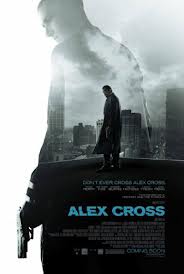
Film Review “Alex Cross”

Starring: Tyler Perry, Matthew Fox and Rachel Nichols
Directed by: Rob Cohen
Rated: PG 13
Running time: 1 hour 41 mins
Summit Entertainment

Our Score: 3.5 out of 5 stars

When you’re best known for playing a sassy black grandmother it takes a lot of guts to step into shoes formerly worn by Morgan Freeman. So right off the bat I have to give Tyler Perry a tip of the hat. And he more than earns it as he steps into the title role of “Alex Cross.”

Detective (and Dr.) Alex Cross and his team (Tommy (Edward Burns) and Monica (Nichols) have been called in to solve the torture/murder of a mysterious woman. Clues left behind point to a future victim, who is saved by the group but not before inflicting some whip-ass on the law. As a way of reassuring himself, and the team, Cross informs the others that, based on his information, there will be no retribution for their attempts at foiling the bad guy! Wrong, Alex. Shall we say…dead wrong?

Based on the character and popular novels created by James Patterson, “Alex Cross” is a familiar story for those who have read them. Here, instead of Washington D.C. the trio work for the Detroit police department. All have things going on in their lives. Tommy and Monica have been quietly dating for the past couple months, something that is obviously frowned on upon in the department. Alex has been offered a job with the FBI, but it means uprooting his family. So with all of this happening they are assigned the duty of protecting Leon Mercier (Jean Reno), a French businessman who may or may not be a target. Let the game of cat and mouse begin.

Before I go any further let me answer the big question – …Yes. Though he hasn’t yet attained the quiet gravitas that Morgan Freeman brings to almost every role, Perry is fine as Cross. Part Batman, part John McClane – Perry’s Cross does not have toned abs or a chiseled face, which makes him even more believable. On the other side, “Lost” star Matthew Fox is downright terrifying as a killer who believes in giving his clients their money worth. His eyes sunken and dark, Fox appears to have lost almost all of his body fat, making his frame long and sinewy. A role that could have been played so broadly is nailed perfectly. Director Cohen, who has helmed movies ranging from “Dragon: The Bruce Lee Story” to the original “Fast and the Furious,” keeps the action moving and earns extra points for featuring a climactic scene inside an old and crumbling movie theatre. The story is pretty much by the book, with the good guy and bad guy matching wits as if playing a deadly chess game. Some of the plot points do tend to go astray but for the most part the story stays on point and makes you look forward to a second chapter.

Eric Kripke talks about creating new hit series NBC’s “Revolution”

Eric Kripke talks about creating new hit series NBC’s “Revolution”, which airs Mondays 10pm EST. Kripke also created and executive produced “Supernatural,” now in its eighth season. Media Mikes had a chance to chat with Eric about the show and what we can expect from the first season.

Mike Smith: Can you talk just a bit about how you came up with the whole concept for the show?
Eric Kripke: Yeah, sure. Really for me it was about, I’m a huge fan of Star Wars, I’m a huge fan of Lord of the Rings, I’m a huge fan of really that kind of Joseph Campbell classic, mythic, heroes journey storytelling, you know those big grand adventures. And those are the kind of stories that are more often serviced in movies than they are on television. But, I think TV is actually a perfect format for that kind of storytelling because if so many – you know those are such big sprawling stories and you have so many more hours in TV to really explore all the different facets of a world and the characters that live in that world. And that you could give it, you know really epic scope, but very intimate character focus. So for me, it was always – I was always really interested in kind of taking that sort of big sprawling adventure format, that big quest format and putting it in television when you can really explore it episodically, and so that’s really kind of where the idea started. And, you know I’m a huge fan of Star Wars. I’m also a huge fan of Stephen King’s The Stand, and I really like the idea of rather than setting it in some fantasy kingdom to set the story line in some kind of transformed America, which is very – you know in a very strange way relatable and familiar to your audience, because it’s things that they’ve seen before, but just transformed overgrown with vines and all that. It kind of started from the idea of just where can we create this mythic quest, and then from there it was working, you know J.J. and his whole team at Bad Robot and we were sort of talking about like, “Okay, what would transform America, and would it be nuclear war, would it be disease?” We all sort of felt like we’ve seen that a million times before. And they had been kicking around an idea of, “Like what would happen if there was a global blackout?” I jumped right on that idea. I’m like, “That’s perfect. That’s the way to kickoff the show.” That’s really interesting and provocative and I think a really relatable concept, because I think everybody feels how over-reliant we are on technology, and so it becomes sort of interesting commentary to explore what would happen if we removed all technology overnight.

MS: Just going back to the pilot when the blackout happened, it looks like it was very gradual over the whole Earth, should we be reading into that, looking for clues as to the origin of the blackout, or did that just look cool to have that sweep of darkness over the Earth?
EK: You should look for clues everywhere…is the short answer. The longer answer is, you know there was a phenomenon that, you know we have up our sleeve as to what caused the blackout, and that that it – what you saw in that globe shot is an accurate representation of what we are working on. And – but, you know right now we’re currently in the writers room. We’re talking dangerously about revealing that secret before the end of the first season. So again, it’s sort of my philosophy of not being too precious with anything. So, we may reveal the secret sooner than later.

MS: Can you talk a little bit about the decision to downgrade Maggie from series regular, and then eventually write her out.
EK: Yeah, sure. You know what it really came down to more than any other decision, Anna Lise is a wonderful actress and I love that character. I’m sort of have a bad habit in the shows that I run of killing off the people that I love, and I think Maggie was one of those. I think we decided internally that very early on that it was really important to show that this world had very real stakes, and that it was truly dangerous. And because, you know you’re not close to hospitals, you’re not close to paramedics, you’re not close to help, and we very quickly realized that the scariest thing we could do was to kill the doctor among them. So it was purely a creative decision about really putting a sharp – giving the world the real charge of danger, so that as we move forward in the series we want the audience to really understand that nobody is safe, including the main characters, and just bring that suspense as the series continues because we think that’s honest to the world we’re trying to create here.

MS: Can you talk a little bit about what we’re going to see, in terms of Neville’s backstory and who he was?
EK: Yeah. You know, Neville – what’s interesting about the blackout in the show and – which – you know where we like to explore and we want to explore more and more as the show goes on is what a transformative experience it was for so many people. And who they were in the old world has nothing to do with who they are now. And – I mean, there’s like a bit of that in the pilot, which you know we were always amused by the idea that he’s this kind of violent strong man post-blackout, but pre-blackout he was an insurance adjuster. So we were really interested in exploring that backstory more and seeing how his character, who before the blackout was pretty mild mannered and maybe a little submissive, and how did he transform into the violent psychopath that he is today? And then – you know, and then meeting his wife. And right now, basically, we’re planting Kim now, and then, you know we’re going to meet here in the present day and really explore her character a couple episodes down the line. And we’re going to see how, you know a very normal suburban wife before the blackout, post-blackout, transformed into a Lady Macbeth.

MS: Tell us about how you chose Giancarlo Esposito for the role of Captain Tom Neville?
EK: Giancarlo is just a world-class actor, and frankly we were shocked that he was willing to partner up with us because, you know we were sort of like – we felt like we were like kind of, “Like, why is such a classy actor want to hang out with such shady people?” And – but, you know obviously I was a – I’m a – I was a huge fan of his performance in Breaking Bad, but I’ve been a fan of his from long before that, and we’re just honored to have him be a part of the show. He brings so much heft and depth and emotion and – to Neville, who is not obviously the same character as that character, because you know Neville’s got, you know moments of vulnerability and moments of humanity. And he’s just a really interesting complicated character that Giancarlo makes so much better than what is on the page. But yeah, and it’s true because I mean he’s the – he’s exactly the type of actor you want to work with because you can write any dialogue and he makes it about five times better than it actually is. And I’m just – like I said, I’m just honored to be working with him. And then on top of that, he’s like the nice – it’s like the government actually has designated him the nicest man in America. He couldn’t be a sweeter, more gracious, more open-hearted collaborative guy, and someone who is that talented and that kind-hearted is just is really one in a million, and I just love working with him.

MS: Could talk a little about Rachel’s motivations and the direction her character’s going in?
EK: Yeah, sure. I mean, certain ones are a little mysterious, so I have to be a little cagey, because we reveal some things. But basically, what – you know Rachel is – you know she has – she’s obviously holding on to certain secrets about why the power went out, and we’ll reveal in the next episode on Monday exactly – we’ll reveal a little more about what she in fact knows about the blackout. Monroe’s been keeping her, in a gilded cage, kind of prisoner; although, with occasional torture, so it’s not so fun. But she’s strong and, we’re so smitten with what Elizabeth is doing with the character that we’re just writing more and more and more for her, because she’s just – she’s so good. And so, she’s a very strong character, but everything changes when Danny finally arrives in Philadelphia. So, now General Monroe has Rachel where he wants her, because she doesn’t really care about he own well-being, but of course she cares about the well-being of her son. And so, he’s really able to twist her arm and forced her to reveal things that she hasn’t revealed to him yet. But she, of course, is you know smart and heroic and is, you know desperately searching for a way out of the predicament that she’s in.

MS: Are we going to see Nate and Charlie’s relationship develop more?
EK: The short answer, yes, but over the sweep of the season. He’s going to be spending some time in Philadelphia, we’re going to start to understand what his world is like within the world of the militia, but he’s certainly going to interact with Charlie again and he has a bumpy road ahead for him.

MS: Since the full season pickup mean that you were able to go ahead with some story ideas and arcs that you’d maybe put on the backburner in case NBC did cut the series short?
EK: Well, you know television showrunners are a foolishly optimistic bunch. I think we were designing our story lines in the hopes that there would be a full season pickup. And then, in my back – it was more that. It was more like I was, you know designing the story line for 22, and then in my back pocket I had a – I had like a nuclear failsafe that it really looked everything was going off the cliff I had an emergency contingency plan to wrap everything up very quickly. But obviously, I’m very thankful to the network that they gave us the opportunity to, you know be able to tell the story.

MS: You are also the creator of “Supernatural”. How much time are you being able to spend at that since “Revolution” is now also in production?
EK: Yeah, I don’t spend as much time over there as I would like, but – because this one’s got my hands full at the moment. But, I will say that, Bog Singer and Jeremy Carver, who are running that show are doing an absolutely incredible job and it’s like watching Supernatural go is like – is sort of like watching my child go off to college. I don’t necessarily have control over it, but I’m so proud of what they’re doing.

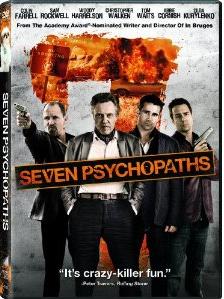
Film Review “Seven Psychopaths”

Starring: Colin Farrell, Sam Rockwell and Christopher Walken
Directed by: Martin McDonagh
Rated: R
Running time: 1 hour 49 mins
CBS Films

Our Score: 5 out of 5 stars

In 2008, Martin McDonagh earned an Oscar nomination for his first full-length screenplay, the quirky mob film “In Bruges.” Expect to see him earn nomination number two for “Seven Psychopaths.”

While waiting to pull off a “hit,” two men are suddenly shot dead. Placed on their bodies is a single playing card – the Jack of Diamonds. This opening sequence begins the tale of what is surely the best quirky crime drama since “The Usual Suspects.”

A thriller interspliced with an uncanny insider look at Hollywood, “Seven Psychopaths” is the story of a story, one being written by Marty (Farrell), an Irish screenwriter whose dependence on the bottle has just cost him his girlfriend. Marty is constantly asking his friend Billy (Rockwell), about his career as a dog thief or, as Marty calls himself, a “dog borrower.” Marty tails wealthy dog owners out with their dogs, kidnaps them and, when the eventual WANTED poster offering a cash reward turns up, his partner Hans (Walken, still at the top of his game at age 69) returns the dog, having just recently “found” it. Billy shares some stories with Marty, who has only gotten as far as the title of his new script: “Seven Psychopaths.” Along the way we meet some of the best written characters in recent years: the man who used to travel the country with his girlfriend, tracking down and murdering murderers (“we were serial killer killers”), the vengeful father (Harry Dean Stanton) of a murdered daughter and a crazy crime boss (Woody Harrelson), whose Shih Tzu, Bonny, Billy has made the mistake of stealing. As these stories, and others, intertwine, you are taken on a rollercoaster ride of emotions.

The film is full of great performances but I must make the following clear:

IF SAM ROCKWELL IS NOT NOMINATED FOR AN OSCAR I WILL SEND WOODY HARRELSON TO VISIT THE ACADEMY!

Rockwell gives a bravura performance here, creating a character who lives and breathes on many levels. In what could have been an over-the-top, one note performance Rockwell gives Billy a heart and, more importantly, a soul. You shouldn’t care about him but you can’t help yourself. And a special nod to Bonny, the shih tzu, who I predict will shortly become this year’s Uggie, the canine star of “The Artist.”

The script is packed with inside Hollywood references, with the comments often reflecting the film itself. The action is fast paced and the over-the-top violence is brought to life courtesy of KNB EFX Group partners Greg Nicotero and Howard Berger. McDonagh’s direction is sharp and the outdoor visuals are brought to life by cinematographer Ben Davis.

Film Review “Argo”

Starring: Ben Affleck, Bryan Cranston and John Goodman
Directed by: Ben Affleck
Rated: R
Running time: 2 hrs
Warner Brothers

Our Score: 5 out of 5 stars

I’ll say this for Ben Affleck – if this actor thing doesn’t work out he’s got a perfect job waiting for him behind the camera. With two Boston-set films (“Gone Baby Gone” and “The Town”) under his belt, Affleck moves his camera to 1979 Iran, where six members of the U.S. Embassy contingent are in hiding after the building was overrun by “students” protesting the United States giving asylum to the former Shah. How the six survived their ordeal is now featured in the new film, “Argo.”

Tony Mendez (Affleck) is among the best of the best in the C.I.A. He has made himself a “master of disguise” thanks to the help of another “master” – Academy Award winning make up man John Chambers (Goodman). In order to rescue the six citizens, who have found refuge in the home of the Canadian ambassador, the agency suggests several ways to get them out of Iran. None make sense. Until Mendez suggests a phony film crew help sweep them away. However, in Hollywood, even the phony needs press!

Based on a true story, “Argo” is the first great film of the soon to be approaching Oscar season. Affleck and his “crew” manage to get the six hostages outside and, hopefully, wheels up back to America. To do this the C.I.A. hires film producer Lester Siegel (a very funny Alan Arkin) to help get the word out about the “film.” And Siegel goes all out. “If I’m going to have a fake movie,” he tells Mendez, “it better be a fake hit!” But while the jokes fly in Hollywood, on the other side of the world the smallest mistake could be the escapee’s last. Director Affleck has perfectly recreated the feel of 1979, pulling no punches in depicting the “students” and others who wish to kill us only because we have different beliefs. He has also filled the film with actors whose work takes us back three-plus decades, among them Goodman, Victor Garber as the Canadian ambassador and Cranston as Mendez’ immediate boss. “The whole world is watching you,” Cranston intones. “They just don’t know it yet.”

The film flows smoothly in an almost documentary style. During the end credits there are a selection of shots and scenes from the world in 1979 shown side-by-side with the same scenes in the film. The resemblance is uncanny. It’s obvious that Affleck has studied this subject. No, seriously. He majored in Middle Eastern Studies in college.
He has also studied well at film college. “Argo” helps cement his new reputation as a fine film maker, one who should hear his name called when Oscar nominations are announced.


Related Content

“American Graffiti” heading to Omaha!


Can it actually be almost 40 years since George Lucas took us all back to 1962 with “American Graffiti?” Well it is, and to celebrate this milestone Bruce Crawford is presenting as his 31st Classic Film Event a special screening of “American Graffiti” on Friday, November 2, 2012. The screening will be held at the Joslyn Art Museum’s Witherspoon Hall, which is located at 2200 Dodge Street and will start at 7:00 p.m.

As with all of Crawford’s events, there will be a special guest in attendance. This event will feature actress Cindy Williams, a co-star of the film as well as of the popular television series “Laverne and Shirley. Also in attendance will be actor Eddie Mekka, best known as Carmine “the Big Ragu” Ragussa on “Laverne and Shirley.” Ms. Williams will address the audience prior to the screening and will talk about working with George Lucas as well as some of the other stars (Richard Dreyfuss, Harrison Ford, Ron Howard) of the film.

Tickets for the screening are $20.00 with all proceeds benefiting the Nebraska Kidney Association. Tickets can be obtained at the customer service counters at all Omaha-area Hy Vee stores. For more information call 402-932-7200 or visit www.omahafilmevent.com

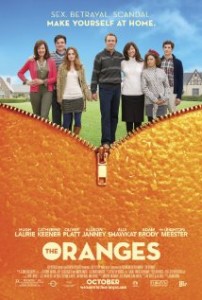
Film Review “The Oranges”

Starring: Hugh Laurie, Allison Janney and Leighton Meester
Directed by: Julian Farino
Rated: R
Running time: 1 hr 30 mins
ATO Pictures

Our Score: 4 out of 5 stars

Neighbors are great things. If you’re fortunate enough to live next to the right people you can make life-long friends. Your kids can grow up together, fostering their own long time friendships. Or not.

Meet the Wallings. David (Laurie) and Paige (Catherine Keener) are the proud parents of son, Toby (Adam Brody) and daughter Vanessa (Alia Shawkat). David does advertising for liquor companies and is an enthusiastic jogger. Next door you’ll find the Ostroffs. Terry (Oliver Platt) and Carol (Janney) and their 24 year old daughter Nina (Meester). Terry is big on purchasing anything highly recommended by Consumer Reports and, though he jogs with David, does it with a lot less enthusiasm. Of course, this is the suburbs, where things aren’t always what they seem and ANYTHING, even the improbable, is possible.

Set in West Orange, New Jersey (hence the title), “The Oranges” is a small film that benefits from a sharp script and a strong cast. Though the major plot twist is easy to see coming (Nina and David become a couple) the circumstances leading up to, and following, the revelation isn’t hammered over your head. Nor does the situation feel forced, as if to shock the viewer. Things happen, sometimes when you’re not expecting them to. Laurie, in his “House” voice, makes David extremely likable. So much so that you don’t really fault him for his decision. It helps that Keener makes Paige very unsympathetic. On the Ostroff side, Janney is perfect as the mother hen who wants her daughter to find Mr. Right, not Mr. Right Next Door. Meester, so good in last year’s “Country Strong” and a star of television’s “Gossip Girls,” plays Nina as a free spirited woman who isn’t concerned by what others think.

The screenplay, by first-time feature writers Jay Reiss and Ian Helfer, has plenty of small moments that fit easily together to form a full story. Though the film is being sold more as a comedy (it has its funny moments), like the recent “Hope Springs” there is a lot going on beneath the laughter.

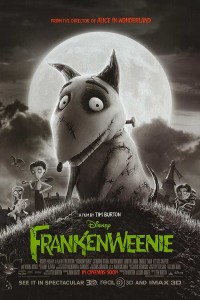
Film Review “Frankenweenie”

Starring the voices of: Catherine O’Hara, Martin Short and Charlie Tahan
Directed by: Tim Burton
Rated: PG
Running time: 1 hr 27 mins
Walt Disney Pictures

Our Score: 5 out of 5 stars

In 1984 a young filmmaker working at the Walt Disney Company made a short film that featured a young boy recreating the “Frankenstein” story by resurrecting his recently deceased dog from the dead. Horrified at the completed film, Disney fired the filmmaker, declaring the film too scary for its young audiences. The film was called “Frankenweenie” and the filmmaker was a 26 year old named Tim Burton. Almost three decades later, and the past being in the past, Disney gave Burton a boatload of money to create a feature length version of the film, with all of the style and quirks that make it a Tim Burton film. And the studio certainly got their money’s worth!

Victor Frankenstein (Tahan) is a quiet kid who makes his own home movies and enjoys science. But the thing that makes him happiest is his dog, Sparky. The two are inseparable. As Victor prepares for the upcoming science fair his father (Short) convinces him to give baseball a try. Against all odds Victor knocks the ball into the street where, sadly, Sparky tries to retrieve it. Sparky is struck by a car and killed. After the funeral Victor lies in bed missing his friend. “I’m sorry about Sparky,” his mother (O’Hara) tells him. “If we could bring him back we would.” Victor quickly begins to think. Then, to quote Gru in “Despicable Me” – “LIGHT BULB!”

Presented in black and white and accented by a great Danny Elfman score, “Frankenweenie” is a heart-tugging classic featuring Burton at the top of his game. The inclusion of some fine 3D imagery makes it THE film to see during the Halloween season. The animation is classic Burton – none of his characters look alike. There are tall people, short people – fat and skinny people. There are also pets that take on the characteristics of their humans. The story is familiar to anyone that knows the history of the Frankenstein family and the vocal cast brings it to life brilliantly. Besides the three leads, stellar work is turned in by Atticus Shaffer, Frank Welker and old Burton company members Martin Landau and Winona Ryder.

I should mention that the film may get a little scary for younger viewers due to the subject matter so parents be prepared to explain some things to your little ones.

Film Review “Taken 2”

Starring: Liam Neeson, Maggie Grace and Famke Janssen
Directed by: Olivier Megaton
Rated: PG 13
Running time: 1 hr 31 mins
20th Century Fox

Our Score: 2.5 out of 5 stars

What do you do after you’ve rescued your daughter from sex traffickers in Paris, killing pretty much everyone in your sight to do it? If you’re Brian Mills (Neeson), you give that same daughter driving lessons and worry about her new boyfriend. You also head to Istanbul for a few days work. But when the friends and family of the people you killed decide to exact a little revenge it might be hard to find a place to hide…even in Turkey!

Liam is back! And he’s bringing the family with him. Somehow inexplicably, four years ago Liam Neeson became an action hero. And he’s a great one because not only can he kick ass he can really act! Now back together in “Taken,” Neeson and his family find themselves wanted by the last Albanians still hanging out in the fertile crescent. And believe me, they’re pissed!

What was so enjoyable about the original “Taken” was that it was nothing but action, with only the slightest bit of dialogue to alert the audience about what was going to happen next. Here the plot drags immediately from the beginning because not only is Brian the subject of the Albanian gang’s rage, he’s also managed to conveniently take his daughter (Grace) and his ex-wife (Janssen – she and the new husband are now separated) across the world with him, making them as intriguing a victim as Brian himself. Besides this slight twist, the film plays out almost exactly as the first. Someone gets grabbed, Brian gets a phone call, Brian threatens caller. Seriously. The plot is so similar they should have called this one “Took,” because you’ve seen it all before. First the daughter needs driving lessons. Next time you see her, she’s Gene Hackman in “The French Connection,” maneuvering through the cobblestone streets like a pro. And why is it always the Albanians that cause trouble? In this film, Brian seems to have pissed off every Albanian on the planet except for Jim Belushi!


Related Content

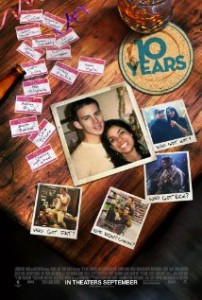
Film Review “10 Years”

Starring: Channing Tatum, Justin Long and Rosario Dawson
Directed by: Jamie Linden
Rated: PG 13
Running time: 1 hr 40 mins
Anchor Bay

Our Score: 4 out of 5 stars

In what is sure to be remembered as “the year of Channing Tatum,” a smaller budgeted film he did last year (it played the 2011 Toronto International Film Festival) is finally seeing the light of day. That film is “10 Years” and it is, surprisingly, an intimate look at a group of young adults who return to their home town for their 10th Anniversary high school reunion.

The plot is fairly simple, if not occasionally clichéd. There is the big man on campus (Tatum) with his new girl (Jenna Dewan-Tatum, Channing’s real life wife) in tow. One of the gang has become a famous singer while another boasts of his cool life in New York City. And then there’s the former bully who is determined to make amends to all he picked on in the past Of course the BMOC is just there to see if his old flame, the former Big Girl on Campus, has shown up. The singer is encouraged to sing his hit song, which alerts the girl he wrote it for of his true feelings for her…apparently she’d never heard the song when it was a hit. And the bully (Chris Pratt)… no matter how hard he tries to make amends the old adage is true – once an ass always an ass. This tale and other similar stories are quickly brought to the forefront. Thank goodness for young and talented actors.

Most of the cast are unknowns making a small independent film. But the talented ones in “10 Years” are the names and faces you know. This is another in a string of bravura performances from Channing Tatum. Coupled with “the one that got away,” he says a quick hello to the others while worrying himself sick if he’s made the right choice with his latest lady friend. Solid work also by Long, Pratt and, most notably, Lynn Collins, whose Anna is the most deeply explored character in the film.

Film Review “Looper”

Starring: Joseph Gordon-Levitt, Emily Blunt and Bruce Willis
Directed by: Rian Johnson
Rated: R
Running time: 1 hr 58 mins
Tri Star Pictures

2 out of 5 stars

Have you ever had one of those “what the hell was that” moments? I had one tonight as I tried to figure out what happened to the two hours I spent watching the new film “Looper.”

Kansas in the year 2044. As someone who lives there in the present day I’m kind of upset to see that it doesn’t really change much three decades from now. We come across Joe (Gordon-Levitt) standing in a field. A few yards away is a plastic tarp spread out on the ground. He checks his watch. Suddenly, a bound and kneeling figure appears. BOOM! A quick blast with his shotgun and Joe has made his money. Joe is a Looper.

Kind of a reverse-“Terminator” without any of James Cameron’s wit (or wisdom), “Looper” informs us that, 30 years into the future, time travel will have been invented. Of course, it will also be outlawed. And, like the bumper stickers say, when you outlaw time travel only outlaws WILL time travel. The guy who just popped by in the field had been sent back from the future by the underworld kingpin that controls the future. This way the body is disposed in the past with no one in the future any more the wiser. Confused? Good, I thought it was just me. Anyway, the Looper kills his mark, and then receives his pay in silver bars, which he cashes in. Occasionally the Looper will discover the dead guy comes with gold bars. Sadly, this means the Looper has just killed his future self. It also means he’s free to go live his life how he wants for the next 30 years until…well, you know. When Joe realizes that he has to kill his future self (Willis, who will from here on in be known as Old Joe) he balks, allowing Old Joe to escape. Now it’s a battle of Joe vs Joe, and may the best Joe win!

A clever premise that somehow got lost in translation from page to screen, “Looper” tries to be a little bit of everything. Time Travel picture…lost love story…Tarantino-esque dark comedy. The problem is that it tries to be all of those at the same time. Gordon-Levitt does a fine job here as the smooth killer facing a tough decision. Through the magic of CGI, Joe resembles what Hollywood thinks Bruce Willis look like, which is a cross between Sean Connery (1964) and Marlon Brando from “On the Waterfront.” Willis is fine, basically playing himself, and Blunt has some good scenes as a young mother with a secret. However, all of the hard work is lost in the plot and stilted in the direction, both of which were contributed by Rian Johnson.


Related Content

James Tolkan reflects work in “Top Gun” and the “Back to the Future” trilogy

In a career spanning six decades, James Tolkan has conquered every medium he’s ever attempted. While pursuing a career in music at college he auditioned for a school play on the advice of a friend who suggested performing in front of an audience would help him with his stage fright. Tolkan was cast in the lead and he hasn’t looked back. Though best known for his work in “Top Gun” and the “Back to the Future” trilogy, I knew him best for his theatre work. In 1984 Mr. Tolkan originated the role of quick-tempered real estate salesman Dave Moss in the Pulitzer Prize winning drama “Glengarry Glen Ross,” a role I myself played many years later. While preparing for his appearance at this weekend’s Con X Kansas City Convention Mr. Tolkan spoke to Media Mikes about Broadway, “Back to the Future” and his memories of directors Tony Scott and Sidney Lumet.

Mike Smith: I guess I’ll start with the standard first question: what led you to become an actor?
James Tolkan: Oh my gosh! It’s a really complicated answer. When I got out of the Navy I was totally lost. I went back to college where I majored in art and minored in music. I was studying singing. I was very nervous getting up in front of an audience so a friend of mine suggested I try out for a play so I could get used to being in front of an audience. So I tried out for a play and was cast in the lead. I was like, “hey, this is interesting.” So I did another play at the community theater and suddenly I became very interested in acting. I then went to the University of Iowa, which had a large theater department and it was there that I was “encouraged” to go to New York and study the Method with some of the great teachers. So in 1956 I got on a Greyhound bus in Iowa City with $75 in my pocket and I went to New York to become an actor. I didn’t know what I was getting into…I was a total hick. I got off the bus and I was scared to death. I went through all kinds of various jobs while I studied with Stella Adler. After the first year she gave me a full scholarship to study with her. And then I started working. The first play I auditioned for off-Broadway I was cast. A lot of casting people saw me and I started going from one play to another. I also wanted to study with Lee Strasberg, which I did for three years. Both teachers were very valuable…but very different. It’s been a great experience. I’m really just a New York actor. I’m a stage actor. And I said I was never going to Hollywood until Hollywood sends for me. And in 1984, while doing the David Mamet play, “Glengarry Glen Ross,” on Broadway, Robert Zemeckis called me and asked me to be in “Back to the Future.” Of course nob ody knew who Robert Zemeckis was back then but I said “ok” because this was my chance to go to Hollywood. So after a year on Broadway I went to Hollywood and did the movie. I stayed in California and did some television series. Then I did “Top Gun” and all of a sudden I’m a Hollywood actor! It’s been a wonderful odyssey and I’ve survived it all!

MS: You started your career in what is now referred to as the “golden age” of television. In your opinion, what’s the biggest difference in the way television shows are produced today versus then?
JT: Well, at that time, a lot of television was done live. It was live television. You go on and you do it and that’s it! Today everything is much more safe. The three camera comedies. You have a live audience and a controlled condition. And the writing is very different. The writers today are very bright and very…demanding. They don’t always know how to use actors.

MS: You understudied Robert Duvall in a couple of Broadway shows, including “Wait Until Dark.” Did you ever get to play “Wait Until Dark” villain Harry Roat on stage?
JT: I took over the role of the Longshoreman in Arthur Miller’s “A View From the Bridge” from Robert Duvall on Broadway and played that part for many months. Then “Wait Until Dark” opened with Lee Remick. Two weeks into the run I get to the theater and there’s no Robert Duvall. The director tells me Duvall broke his hip riding horseback and I was on. I was ready and I went on and I played that part for two years. I played it for a year on Broadway with Lee Remick then I played it with Shirley Jones on a tour and then later with Barbara Bel Geddes. And the character was so dark. Believe me it was hard on one’s psyche to do that.

MS: I’m so glad you mentioned “Glengarry Glen Ross.” You originated the role of Moss on Broadway and I’ve actually played Moss in a production here in Kansas City.
JT: Really? Good for you. Isn’t that just a fantastic play? It was a great experience in my life. To work with David Mamet. We previewed in Chicago and it was a big hit there. Then we took it to New York where it was a huge hit. It was one of those shows where you know you held the audience the whole night in the palm of your hands. It’s getting ready to go back to Broadway this year with Al Pacino playing Shelly “The Machine” Levine.

MS: Really? Pacino was a great Ricky Roma in the movie. Of course he’s older now.
JT: Before the movie was made Sidney Lumet had the rights to the show and he called all of us to come in and have a reading up at his office. At the time Sidney wanted Pacino to play Shelly but Al insisted on playing Roma. The project fell through and the production ended up in someone else’s hands and Al got to play Roma.

MS: Which leads me to my next question. You were obviously a favorite of Sidney Lumet, having worked with him several times. As a director yourself did you pick up any tips from watching him work?
JT: If you want to learn about how to approach actors and acting on a film, work with Sidney Lumet! Of course it’s a little late now but he was so special…so wonderful. He made you feel like THIS is why you want to be an actor. He was just amazing. With most movies in Hollywood you get together just before you start shooting and sometimes it’s 20 takes…50 takes…whatever until everyone is comfortable with the scene. With Sidney it was three weeks of rehearsal. The first week you just sat around the table. He’d say, “OK, no acting…just talk.” It’s very simple. We’re just trying to relate and connect with each other. The second week we’d start getting up on our seats and playing the various scenes. The third week we’d run through the script in sequence like it’s a play and he’d would go off with the cinematographer setting up all of the shots. So when we got on the set everybody knew their job. You’d start shooting and he’d get everything in one or two takes. You were going home every day at four o’clock. It was like working with a master. He was just a wonderful, warm and brilliant person.

MS: Tony Scott, who directed you in “Top Gun,” recently passed away. Do you have any memories of him to share?
JT: He was such a regular guy…rough and ready. He was always smoking a cigar. He was a mountain climber and he rode motorcycles. He was quite different from Sidney Lumet but a very good man to work with. Sometimes he’d want to do a scene that wasn’t scheduled and I’d tell him I wasn’t ready and he’d just smile and say, “you can do it, James” and we’d get it done. He was very off the cuff and non-chalant. But at the same time intense, if that makes sense. I’m still stunned about how he passed. Why he would make that kind of choice is totally a mystery.

MS: Originally “Back to the Future” ended with the words THE END. Only when it was released on home video did the words TO BE CONTINUED appear. Were you aware while you were filming that there were three films planned?
JT: Oh no. The first film was a very small movie. Steven Spielberg at the time was more interested in another movie he was producing called “Goonies.” This was something that was really on the back burner. Nobody knew who Robert Zemeckis was. We were working for not a lot of money and had really tiny dressing rooms. Then that movie opened and it was an amazing success! Like they say, all of the planets had to have been aligned for that movie to be so successful. And right after that they said they were going to do a part two and part three. But when we finished filming part one there was no talk whatsoever of the sequels.

MS: Were you able to do any scenes with Eric Stoltz?
JT: I did. When I got to the set Eric was playing Marty. But after seven weeks of shooting they shut down the production. During the dailies the filmmakers discovered they were more interested in the characters AROUND Marty rather than Marty himself. And that’s when they decided they would wait for Michael J. Fox to wind up his television series and then start up production again. And believe me that was a very brave decision. If that didn’t work out you would never have heard of Robert Zemeckis or Bob Gale. I was told that when they shut down the production after seven weeks Eric Stoltz was in his dressing room and he commented, “well, they can’t fire me now.” And that very day he was fired. But that’s how it goes. It’s a crazy business. (NOTE: Michael J. Fox was the producer’s original choice to play Marty McFly but, due to his commitment to the television series “Family Ties” the studio went with Eric Stoltz. Due to many reasons, including those Mr. Tolkan mentioned, Stoltz was let go and Fox brought on, often fulfilling his television duties during the day and filming “BTTF” at night.)

MS: Are you working on anything now?
JT: No, I’m pretty much retired. I did do an HBO movie over the summer with Al Pacino and Helen Mirren about the trial of record producer Phil Spector. I play the judge. Again, it’s a David Mamet script which he also directed. He called me up and cast me. If someone calls me, I’ll do it. But right now I’m enjoying my life.

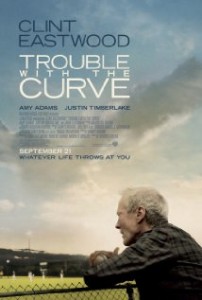
Film Review “Trouble with the Curve”

Starring: Clint Eastwood, Amy Adams and Justin Timberlake
Directed by: Robert Lorenz
Rated: PG 13
Running time: 1 hr 51 mins
Warner Brothers

Our Score: 4 out of 5 stars

If you don’t count his spot-on impression of Grandpa Simpson at this past months’ Republican National Convention, it’s been four years since Clint Eastwood has appeared on screen. It’s also been almost twenty years since he worked for another director besides himself. What could have brought Clint back for this amazing twin surprise? Loyalty. Director Lorenz has worked for Eastwood for almost two decades, serving as everything from assistant director to producer. Now, with “Trouble with the Curve,” he gets to show Eastwood everything he’s learned.

Gus Lobel (Eastwood) is a baseball scout. Though we’re told he’s signed every great Atlanta Brave from Rico Carty to Dale Murphy to Chipper Jones, we’re also aware that he’s much older than the other scouts he sits with as he travels North Carolina watching high school baseball and looking for the next great player. Gus is baseball through and though. He continues to speak with his late wife during visits to the cemetery (her head stone reads: “May the Lord Grant You Extra Innings.” His daughter (Adams) is a lawyer with the first name of Mickey. As in Mantle. Gus realizes that his eyesight is getting worse and, upon the request of the Braves, finds himself watching THE NEXT BIG THING with Mickey at his side and a rival agent and former pitcher (Timberlake) with eyes for both the ball player and Mickey.

A great companion piece to last year’s “Moneyball,” “Trouble with the Curve” is an earnest film whose major drawback is that it’s ending is telegraphed to the audience less than 30 minutes after the film starts. That being said, if you don’t spend a lot of time analyzing things it’s an enjoyable debut project for director Lorenz, thanks in great part to a committed cast. Eastwood’s Gus could be a cousin to “Gran Torino” senior citizen Walt. Gruff on the outside but with a soft, syrupy middle, Gus is content with his life on the road. Adams shines as Mickey, who slowly resumes the love for the game her father never knew existed while at the same time juggling an important legal presentation she must present in order to make partner at her firm. Timberlake continues to do solid work as a supporting character, continually learning what makes both Gus and Mickey tick. Also notable are John Goodman as Gus’ closest front office friend, Matthew Lillard and Robert Patrick as Braves execs and George Wyner and Bob Gunton as the leaders of Mickey’s firm.

Director Lorenz obviously studied Eastwood well on previous sets. His direction is simple and fluid, concentrating more on character than action. He also manages to catch brilliant glimpses of the North Carolina countryside as well as the sounds of baseball being played for fun.