Interview with Will Sasso

Will Sasso is currently starring in TV hit show “$#*! My Dad Says”.  “$#*! My Dad Says” is one of my favorite new shows from this past year.  Will co-stars with the very funny William Shatner, Nicole Sullivan and Jonathan Sadowski.  Will is one funny guy and alumni from the TV series “Madtv”.  Movie Mikes had a chance to chat with Will about his role on the show and what it was like working with William Shatner.

Click here to purchase “Shit My Dad Says”

Mike Gencarelli: How did you become involved with “$#*! My Dad Says”?
Will Sasso: It was just one of the pilots that came around during pilot season. It is kind of a unromantic story. You get a bunch of scripts and then just go out for different auditions. At the end of it you hope you end up with the role. Like anything with television there are a lot of steps, they want to be sure who they got and what they are doing.

MG: Tell us about your character Vince on the show and have you been enjoying playing him?
WS: It is a blast. I love the character and I love what they let me do with it. I feel like since the beginning the writers and producers have had a clear idea of what they want to do with Vince. That actually helps me have a clear idea of what I want to do with him. It is actually different that what it was suppose to be in the original script. They have taken the show in a really great direction and it has been fun to finding out who this guy is together.

MG: How is it having William Shatner for a dad in the show?
WS: It is pretty cool. I am originally from Canada, so it is a real trip. You were always conscious of William Shatner when you are growing up in Canada. Because he is Canadian, he is like the de facto prime minister over there. He is what you expect him to be. He is a man that has been in the business over 50 years. He is conscious of almost every single move that he makes as an actor. I have been saying this over and over, but Bill is about every scene, every line and every word. He is quite constant and I feel that this point in his career that is what keeps him going.

MG: How has it been reunited with “Madtv” alumni Nicole Sullivan on the show?
WS: That just happened Nicole was the last gal standing for her role and I was the last guy standing for my role. It was a real coincidence. It is great because as far as “Madtv” goes, we are kind of scattered around. They never really have like a movie thing going on at “Madtv”. It is not like a bunch of people stay together and do project after project. You just kind of get shot out of there and that is it. Anytime you can work with one of your old pals, it is great. It has been an absolute blessing working with Nicole on this.

MG: Any funny moments that you can share from the show?
WS: Just about anything that Bill says to me at any point throughout the day makes me laugh. We just have a great time all day. There is nothing specific that I can think of as a highlight. I believe that is because it is all a highlight. I am really fortunate to be doing something that I really love. I do not take that for granted. Because of that I kind of walk around blessed out all of the time. I am very lucky. I am sure if I didn’t enjoy it, two things…one I would be an asshole and two that one time that something really funny happened I would remember it. But as it stands, it is just one joyful experience.

MG: It must have been fun in the episode when you and Jonathan Sadowski have the mustache contest?
WS: That was fun. Actually it is the other way around. I really can’t grow a mustache and when I do it kind of comes in a little blond and red…it’s kind of weird. But that Jonathan, he is like the Mexican werewolf boy [laughs]. He probably has to nair his face in the morning [laughs].

MG: Any buzzing about the show coming back for a second season?
WS: The show has been consistent in the ratings. It is always interesting when a show goes up against “American Idol”. It makes the other networks understand what that monster it is. We have been hearing good things, but there are also some things the show needs to do. I do not want to get too technical with it but it is show business. Hopefully we have enough of a fan base to come back. I think the most important thing honestly is that we are having a lot of fun. If we are having a lot of fun then hopefully it translates through the screen. I have always felt that way about anything I work on…that it has to be a lot of fun.

MG: What else do you have planned upcoming?
WS: I got “Mongo Wrestling Alliance” that is airing on [adult swim], Sundays at midnight. My good buddy Tommy Blanca created that. I am doing some voices for that. Past that nothing really else nailed down.

Click here to purchase “Shit My Dad Says”

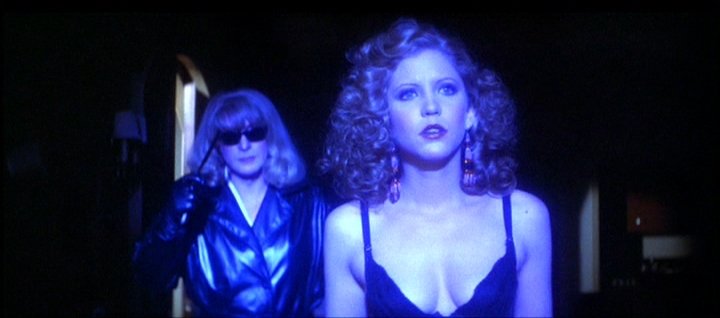
Interview with Nancy Allen

Though Jamie Lee Curtis often is referred to as the “scream queen” of the late 1970s and 80s, there was an actress who earned that throne by not only starring in some of the greatest horror films of that time, but in some of the best films period! That actress is Nancy Allen.

Click here to purchase Nancy’s movies

Ms. Allen first came to my (and most of my 16 year old friends’) attention with her performance as bad girl Chris Hargensen in Brian De Palma’s adaptation of Stephen King’s novel “Carrie.” This was her first of four films with De Palma, who she later married (they have since divorced). She did a complete turn around in her next role, a crazy Beatles fan, in “I Want to Hold Your Hand.” It was on this film that she met fellow actress Wendie Jo Sperber. The two began a friendship that would grow and last until Ms. Sperber’s tragic death from breast cancer at the all too young age of 47. After appearing in Steven Spielberg’s “1941” and De Palma’s “Dressed to Kill” (which earned her a Golden Globe nomination for “New Star of the Year” in a Motion Picture) Ms. Allen reunited with her “Carrie” co-star John Travolta for the film “Blow Out.” Dumped into theatres in the summer of 1981, the film was poorly marketed, with the studio practically ignoring the audience it was meant for. Despite rave reviews by such film critics as Roger Ebert, Vincent Canby and Pauline Kael the film came and went in a matter of weeks. However, thanks to home video, 30 years later the film is recognized as one of the greatest political thrillers ever made.

In 1987 she starred as police officer Anne Lewis in the futuristic “RoboCop” and has also starred in films like “The Buddy System,” “The Philadelphia Experiment” and “Out of Sight,” as well as the two “RoboCop” sequels and numerous television programs (“JAG,” “Judging Amy”). Today she devotes the majority of her time and energy to weSPARK, the cancer support center founded by Wendie Jo Sperber. Over the holidays Ms. Allen graciously took time out from her busy schedule to talk with MovieMikes about her career and her determination to carry on her friend’s work:

Mike Smith: You attended the New York High School of the Performing Arts, which was featured in the film “FAME.” High school is hard enough. Was it tough to compete with your classmates both academically and talent wise?
Nancy Allen: It was tough on a lot of levels. Through the ninth grade I had attended an all girls private school with the same group of girls. A very small group. And all of a sudden I’m in a co-ed school. It was wild… there was a lot of pressure. But I think more than anything…I had danced my whole life because I loved it. And it suddenly became something that I was graded on. It really took the joy out it for me. And more importantly it revealed to me that dancing wasn’t my path. I didn’t know what my path was at that point but you have to be so disciplined and so dedicated and such a hard worker…I danced because I loved it. I didn’t have the obsession with it you had to have. So even though it was a one year foray it was fun.

MS: You made four films with Brian De Palma, who you later married. Did you find it easier or harder to work on a project with someone you’re basically spending 24 hours a day with?
NA: We met working on “Carrie,” so my initial relationship with him was a professional one. And quite honestly we didn’t spend a lot of time together on the set because he and I had different responsibilities. So you’re not really together 24 hours a day. Maybe you find time to grab a bite to eat afterwards but you’re so tired that it’s almost like you’re not there. And that, I think, is the challenging part… to find the moments. Because whether you’re working together or not working together, you have to find those moments. On a professional level, there’s a kind of short hand you develop because you really do know each other so well. The communication is much simpler. He knew me and he knew how to get the performance he needed from me and I trusted his direction. Of course, the toughest part is everybody else’s conversations about it! (laughs)

MS: You had the rare opportunity of working with John Travolta just as his career was beginning to take off and then immediately after he exploded onto the scene. Did you notice any difference in the way he approached his work?
NA: No. John is very particular and meticulous about his work. His career actually started exploding at the end of filming “Carrie.” His show (television’s “Welcome Back, Kotter”) had just started airing. I hadn’t seen it but I could sense things on the set. The week we shot the car crash scene the police had to put up barricades. He and I drove to the set together and I was like, “Oh my gosh, who are all of these people waiting for?” On “Blow Out” I had a little trepidation because it had been a few years and a lot had happened. He had already had some high highs but also a few low lows so I really didn’t know what to expect. But the minute he came in we sat down, had something to eat and talked about the movie…started doing some improv. We always had great chemistry and John was John. He was still fun. He was still adorable. I loved working with him. He’s really one of the favorite people that I worked with in my career.

MS: You were both brilliant in “Blow Out.” It kills me that the film was virtually ignored when it came out and is so under appreciated.
NA: It’s actually become a phenomenon in France. People there are crazy for that movie. And I think over the years that people have caught on to it. But it had so many problems. How it was released was a problem and when it was released was a problem. Back then you had summer movies and fall movies. Films were really released a specific way then. Brian tried to convince them that the film wasn’t a big summer block buster. But because the studio had John Travolta they wanted to try and make it a summer blockbuster. And it didn’t work. But it’s got a great cast, an amazing script…it’s a piece I’m really proud of.

MS: You followed “Carrie” with two very strong comedy performances in “I Want To Hold Your Hand” and “1941.” Do you have a preference between drama and comedy?
NA: I love them both. Comedy seems easier because you’re getting the chance to be funny and have fun. When you’re doing a dramatic piece, a lot of times you have to go to those dark places so when you’re doing the work it’s a lot more taxing on your spirit. And a lot of it is the tone…the tone of the set is certainly affected by the piece. Though I have to say that on “Blow Out” we laughed an awful lot. You have to. It’s exhausting to bring up those tears and all of that. So sometimes you have to just be silly.

MS: Like “Blow Out,” I personally think “1941” is underrated. Steven Spielberg was coming off the one/two punch of “Jaws” and “Close Encounters” when it was released. Was there any sense on the set that Spielberg felt uncomfortable doing such a broad comedy?
NA: I think one of the problems was that even though there were “producers” on the set there were no producers on the set. Steven had been so successful that nobody would say no to him. I think the script we started with (written by Bob Gale and Robert Zemeckis) was darn near perfect. But people kept saying to Steven “I want to be in it” and they kept re-writing it and creating new parts and story lines. And from a cast perspective we would ask each other “this is funny, right? I mean it’s Steven Spielberg…he knows what he’s doing, right?” I know a lot of us sensed that things were a little bit off the track. I mean, we started with a fourteen week shooting schedule. Everyone was booked for fourteen weeks. We shot for six months! So that will give you a little idea of things having gone a little bit off the beam. I think there are some really good things in the movie…things that had been in the original script. I’m happy that you enjoy the movie. I have a hard time watching it myself (laughs).

MS: You co-starred in both of those films with the late Wendie Jo Sperber, who sadly passed away five years ago this month (Ms. Sperber died on November 29, 2005). What are your memories of working with her? Are you still active in promoting her weSPARK Cancer Support Center?
NA: That is what I do. That is what my life is dedicated to. I’m there, I run it. I’ve created the whole program format… I fund raise. It is my life’s work. When I first met Wendie we were immediately kindred spirits. I loved working with her. I didn’t get to work with her enough. We just had the best time working together. Especially on “I Want To Hold Your Hand.” In “1941” even though we’re in the same movie we really didn’t work together. She was the kind of friend…everybody has one of them…that even if you don’t see each other for months when you finally talk to them you pick up…it’s almost like you never skipped a beat. Knowing her changed my life. Her asking me to participate and help launch her weSPARK Cancer Support Center came at a time in my life where I was not really happy with the work that I was doing. I didn’t like the projects that were coming my way. I was very unfulfilled. And I had a lot of changes in my family life, my perspectives had shifted. And lo and behold! If someone had told me ten years ago that this is what I would be dedicating my life to now I would have said, “are you kidding? I don’t know anything about this stuff. I don’t know how to do that!” (pauses) I miss her dearly.

MS: Going back to the comedy or drama question, do you think that because you may have been perceived as a certain type of actress – lots of screaming, lots of suspense – that you may have been typecast in some filmmakers’ opinions?
NA: I think it’s something that just happened. “I Want to Hold Your Hand” is a fantastic movie. It just wasn’t a big hit. I think that when you’re successful in a certain genre – more so even then than now – and if you’re a woman, they think “that’s what she’s successful at…let’s get her to do more of that.” You have no idea how many of those kinds of scripts I was sent after I did “Carrie.” I mean I waited a year and a half before I did “I Want to Hold Your Hand.” I think it’s a case where some people don’t even think of you along those lines. Even on “1941.” Steven had cast almost the whole movie and pretty much everybody I knew was in it. And they’d tell me “there’s a perfect part for you in it.” And I’d tell them, “well, Steven knows me. I’m sure he’d be calling me if he thought that.” He finally did call and when I went in to meet with him he said, “I don’t know if it’s because I know you from your work or because I know you personally but I didn’t think of you and you’re perfect for this. I don’t even have to read you.” So there’s a case of someone who knew my work and knew me personally and professionally and didn’t think of me. So I think we remember people for what they’re successful in and we want them to repeat it. Then we beat them up for it…“why do you always do this…it’s not as good as the last one!” (laughs)

MS: Kind of like Jim Carrey. He’s done some fantastic dramatic work and, unless he’s talking out of his butt, he gets panned for it
NA: If you are great at comedy you can do anything. Comedy is THE hardest…really the hardest. It’s unfortunate because he’s really good.

MS: You appeared in all three of the “RoboCop” films? Any talk of making an appearance in the proposed reboot?
NA: I’ve heard about it through fans but no one has approached me. I hate that they’re re-doing the first one. The second and third one I don’t care about but the first film is such a perfect movie, why re-do it? Find something else that didn’t work and fix it.

MS: You recently appeared as a guest at the Chiller Theatre convention? Do you enjoy having the opportunity to meet your fans?
NA: Yes! A group of us (who appeared at the convention) were heading to the airport afterwards and talking about that. There is something so sweet…people have collected things…it’s their memories. They would talk to me about films and certain scenes or certain movies and it’s really a sweet experience. I have to say that I thoroughly enjoyed it. I really did. I love when the share their memories.

MS: I was 16 years old and a theatre usher when “Carrie” came out and I can remember a woman fainting and falling out of her seat at the end of the first show. We were sold out the entire weekend and I can still remember the applause and cheers from the audience when the car explodes and Chris and Billy meet their end. You certainly convinced everyone that Chris was not a good person.
NA: (laughing) She actually was. She was just misunderstood! (laughs)

MS: Are you currently working on anything?
NA: Right now I’m doing a lot of fundraising for weSPARK. I get sent things and I read them but it will have to be really something absolutely fabulous. And I don’t mean it has to be for a ton of money. It has to be something really, really good to take me away for a period of time.

Check out the weSPARK website: http://www.wespark.org/

Click here to purchase Nancy’s movies

Interview with Roddy Pipper

Roddy Piper aka “Hot Rod” started a pro wrestling career at the age of 15.  He would go on to become one of the biggest wrestling figures of the eighties and early nineties. During this time Roddy also began appearing in movies. Roddy’s role in John Carpenter’s “They Live” ushered in a new era of bubble gum chewing and ass kicking. Movie Mikes had a chance to talk with Roddy about his film and wrestling career as well as his up and coming one man stand up show.

Click here to purchase “They Live” DVD

Adam Lawton: What made you decide to bridge into acting from wrestling?
Roddy Piper: John Carpenter had expressed an interest in working with me as he was a big wrestling fan. John actually used to write for wrestling magazines. John had asked if he could have dinner with me prior to Wrestle Mania 3. I had no idea who he was and I was kind of busy with the 93,000 people who were waiting to see me fight, so I really wasn’t interested. We did however end up having dinner and even though the conversation was more “can you pass the butter” John asked me to star in his next film and I said sure. Can you pass some more roll’s (Laughs). Acting came the same way wrestling had. I didn’t know what wrestling was until I was in my first match. Once I got into the creative process of acting I really loved it.

AL: How was it working with John Carpenter on set?
RP: The shoot its self was extremely difficult. At that time, I was the first professional wrestler to star in a major motion picture. I seemed to get a lot of jealously from the movie industry and I think John got torn in the middle of all that. I still don’t really understand it to this day. I think they thought I was just another jock trying to make a movie. I was very sincere about what I was doing. I had taken some acting classes and I took my work very serious and with a lot of respect. I think in the long run that paid off. The one thing that sticks out is that John had wanted the longest fight scene in cinema history. He matches me up with Keith David who is a wonderful man but he’s like a 220lbs. dancer who hits like Larry Holmes and doesn’t even know it. We worked for about three weeks prior to that scene being shot and we didn’t use any stuntmen, so it was much more demanding. That scene which, I think is still the longest in cinema history.  It was voted one of the top film fights in history. The fight is between two friends and it really revolutionized the idea of the fight.  In order to fit the film, there were a couple points in the fight which showed that it was actually a fight between two friends making it different.

AL: How did you get involved with “Always Sunny in Philadelphia”?
RP: (Laughs) They are great people. I received a call by one of the people involved with the show.   They wanted to know if I would be interested in being on the show and playing a wrestling character. I think they had said that Kevin Nash had also been contacted about the role, so I went down and met with the casting people. I saw the script and ended up taking the role. It was really fun and they allowed me to improvise a couple of my lines which was great. They are really great people!

AL: How was it working with Danny De Vito?
RP: I actually had met Danny at Wrestle Mania 1 and you can see this meeting on YouTube. (Laughs) I didn’t even remember this at first but I went back and looked at me bursting into this interview Danny was having. This was the first thing he reminded me of when I met him on set. He did it though in the most kind way. He is a wonderful guy.

AL: If you had to pick one of your film roles as a favorite what would it be?
RP: I haven’t done it yet. I really don’t think that I have done a role in the movie industry that I have liked yet. I am very tough to please. I would love to remake something along the lines of “Boy’s Town” or “Of Mice and Men.” I always am cast in the “meat head” type of role or action hero. That’s ok and I am very grateful but it doesn’t allow me to show the depth of what I can do. When I was doing “Always Sunny in Philadelphia” during one of the scenes I asked to add a line.  I threw in something about my characters family that was very simple but after they yelled cut everyone got real quiet and they noticed a real dark moment for my character. There are a lot of things that haven’t been tapped for the artist Roddy Piper. I want to be able to do the art. Recently I have been doing stand-up at a few clubs in Los Angeles. It’s actually more story telling that comedy however it’s a different form of art for me as is wrestling and acting. I just really want to do something opposite of the tough guy.

AL: How did the idea for “Piper’s Pit” come about?
RP: I was in a bar in St. Louis with Vince McMahon and during that time the wrestling talent was so great.  There was so much of it that everyone was competing against each other to show off. They did this by usually wrestling some guy named Pete the Flower Guy or something like that (Laughs) who was a part time wrestler and they would just destroy the guy. We were watching this on TV at this bar and I told Vince to give me a bow tie, a microphone and five weeks and if at the end of the five weeks the idea didn’t work I would leave. I didn’t even have a concept or anything just the bow tie and a microphone. So the next TV event, I showed up for they had the “Piper’s Pit” set all ready to go. No one told me it was going to be there. I didn’t even know what guests were going to be on until the last minute. My first guest was a guy by the name of Frankie Williams. Frankie was one of the guys that was always getting beat and also was the only Puerto Rican guy I knew who had freckles (Laughs). I still at this point had no idea what to do but I knew I had to do something. I decided to ask Frankie where he was from. He says in the thickest Puerto Rican accent that he’s from Columbus, Ohio. We were off and running after that. That is also when the phrase “Just when you think you have got all the answers…I change the questions” started also.  Everything was completely unscripted and we just went with it.

AL: Any great story from when you were on the road with wrestling?
RP: (Laughs) Good Lord! I used to hang around a lot with Rick Flair to my detriment (Laughs). I love that guy but he always seemed to have a tough time keeping his clothes on. I don’t know why but every time we got on an airplane we would no sooner take off and Rick would go to the bathroom and come out wearing only his nature boy robe! The next thing you know he is serving drinks to the other passengers and dancing while certain things were showing! One time the plane made an emergency landing because of this and I was the one who ended up getting arrested! He did this on every plane and always asked me what I thought. I said “I don’t care Rick! I am just trying to stay out of jail.”

AL: Do you have any upcoming projects we can be watching for?
RP: I was approached recently to do a reality show. I am not sure right now if I want to do television or cinema. I have also been working the past six months or so on doing a Broadway show. It’s going to be a one man show. There has been a lot of interest in it. I would also like to take it on the road and tour around the world.

Click here to purchase “They Live” DVD

For up to date info on Roddy you can go to www.rowdyroddypiper.com

Interview with Tamala Jones

Tamala Jones has appeared in numerous movies and television series but is known best for her role of Lanie Parish on ABC’s hit show “Castle”. Tamala is one of the sweetest people I have ever interviewed and even gave me some killer cold tips.  Movie Mikes was lucky enough to chat with her during busy shooting schedule about her character and how much she loves working on “Castle”.

Click here to purchase “Castle” DVD’s & Blu-Ray’s

Mike Gencarelli: Tell us about how you got the role of Lanie Parish on “Castle”?
Tamala Jones: I was definitely looking for a change in the type of roles I was taking and my manager and agent agreed with me. We decided I should start stepping outside of the box and start auditioning for characters that maybe aren’t necessarily African American written. We met with the casting director of “Castle” and they agreed for me to come and audition for Lanie. I was literally was the only African American actress there. It was one line to delivers [laughs] and I got it. The role was only for a guest star with a possible recurring part. when the show got picked up, it was right in the middle of pilot season.  I was auditioning and testing for a different pilot at the time. My team called ABC and asked them if they wanted to bringing me back on the show. They called back and offered me a role as a series regular.

MG: Tell us about your experience playing that character?
TJ: I have a great time playing Lanie. It is very challenging to learn all the medical terminology, which I love though. I have a really great time learning them as well as learning her. I also am lucky to be able to hang out with everyone on the set. I love the people I work with.

MG: Tell us about your new relationship on the show with co-star Jon Huertas?
TJ: Jon is the one that made this thing happen.  The whole Lanie and Esposito thing is his idea. He has been campaigning this since last season and it finally happened. We were just shooting the ‘morning after’ scene and Jon was just so nervous. He wanted to know if I was covered up properly and if I was comfortable. He was the one with the skimpier outfit than I was. I had underwear on and pasties covering. Jon’s butt cheeks where out [laughs]. He was a little nervous but we had a good time… a lot of laughs. They are going to play with the relationship a little bit here and there. They are not going to make it so strong, which is what I like about the writers and producers on “Castle”. They will give you something and then they’ll take it back a little bit. Then give you little bits at a time to keep you intrigued and wanting more. I think that is really smart. You will see little things here and there…a little slip up at work, just little stuff.

MG: What is it like working with such a great cast?
TJ: Oh my God. I have the best gift from God working on this show. I wasn’t supposed to be a season regular and now I am. I am surrounded by not just great actors but the crew, producers and the writers. We are all a really big family and we all love each other. You walk on that set and it just not work for us. We really are a unit. We do special things for each other all the time, not because we have to but because we want to. We worry about each other. I make cookies for them. It is such a great atmosphere to be apart of. I am humbly happy and totally blessed to be involved with these people.

MG: What has been your favorite episode to work on to date?
TJ: I love the Halloween episode. That is my favorite. I loved how there was so many things going on in that episode. We all ended up at Castle’s lot partying and the one person we didn’t think was going to dress up, she threw you for a loop. It was brilliant. The episode touched on the addiction on vampires and werewolves that people are having. It goes along with the whole “True Blood” and “Twilight” scene. It was fun to be a part of that for a quick second.

MG: How does working on “Castle” compare for you than working on other TV series for you?
TJ: I had fun working on my other shows but they were half hour comedies. I grew up doing that,like working on “The Fresh Prince of Bel-Air” as a guest star. Most of the series regular shows I have had were mostly half hour comedies. This show was really a challenge for me to come in and work these long hours like we are shooting a movie year round. Trying to get this medical stuff down and really be married to the work. But…I really liked it a lot. I felt like I could do it in my sleep. I was working but I was actually learning things. I felt like I was in medical school with the all information I am gaining. It is great to always learn new things. I am really having a great time with “Castle”. That is the different between the other shows and “Castle”, I wasn’t learning anything. I was just going to work and having fun it was a party. Still here I am having fun but there is a serious time for our show as well as the laughter. It really helps us achieve greatness and it is a great feeling. I hope this show last a very long time.

MG: “Castle” just got renewed for season 4, are you shocked that the show is still going so strong season after season?
TJ: That was the best news ever. Usually you have to wait till March, April, May or even June to find out if you are coming back. We went in that day [screaming] “Ahhhh we’re coming back”. I just love it. I am not shocked at all. I am just happy I am stuck right in the middle of it. They love us on ABC and it is just a great feeling. When you hear me get excited it is real because I never take anything for granted.

Click here to purchase “Castle” DVD’s & Blu-Ray’s

Interview with Janelle Ortiz

Janelle Ortiz is featured in Disney’s upcoming film “Prom”, playing the character Alejandra.  This is Janelle first feature role and she is really excited to be working with Disney.  Movie Mikes had a chance to chat with Janelle about working on first film role in “Prom”.

Mike Gencarelli: Tell us about what made you want to get into acting?
Janelle Ortiz: Originally, I was an athlete and I had no intentions of being an actress whatsoever. What happened was that I was in my junior year of high school, I played softball and I was a catcher, and when I needed me to perform I was injured and I couldn’t play ever again. I was even been looked at by college recruiters. So I was freaking now because I was playing since I was eight years old. It was like your identity was kind of taken away from you. I started taken acting classes since I liked the idea of playing different characters each day. I ended up falling in love with it and I have kind of been doing it ever since.

MG: How did you get involved with the film “Prom”?
JO: I trained for about a year and half prior because I didn’t want to go and meet casting directors, not be ready and burn bridges. Once I felt comfortable, I went out for the audition for “Prom”, it was actually my second audition, and out of 1,500 I got the role.

MG: Tell us about your role in film “Prom”?
JO: My characters name is Alejandra but they call me Ally. I am 18 years old. I am the best friend of Aimee Teegarden’s character. I am the gossip girl of the school. I know everything about everybody [laughs].

MG: What was the best part for you working about the film?
JO: The best part since this was my first film was that I got to work with Disney. They were so accommodating and helpful. It was cool working with Joe Nussbaum, our director. He was great. I didn’t know a lot of the lingo and techniques. Everyone, the cast and the director, really helped me understand everything.

MG: Besides acting, what are your other interests?
JO: I am very into music. I still try to play a little sports. I play tennis sometimes. I give softball lessons to little girls.  Mainly though, music is my obsession. I listen to it 24/7. I even write a few songs myself, so it’s great.

MG: Who is the actor and director you would like work with most?
JO: I think the actresses I would love to work with most would be Sandra Bullock. Everyone says I look somewhat like her. I think the way she has taken her career and the characters she has played are fabulous. I have always been a fan of the mobster movies so for director, I would have to say Martin Scorsese.

MG: What is the next project you are working on?
JO: I do not have anything lined up right now. We are still working with a few things with “Prom” right now. I have two younger siblings and I am just helping out and spending time with them before all the publicity starts for “Prom”. But hopefully there will be something soon.

Interview with Michael-Leon Wooley

Michael-Leon Wooley is know best for his role as Louis the Alligator from Disney’s “The Princess and The Frog”.  Michael-Leon is also known for his various commercial voice-overs ranging from Radio Shack to Subway and Broadway roles and other stage productions.  Movie Mikes had a chance to chat with Michael-Leon on what it was like playing Louis and found out what else he is up to.

Click here to purchase Michael-Leon’s movies

Mike Gencarelli: Your character Louis steals the show in “The Princess and the Frog”, tell us about playing him?
Michael-Leon Wooley: It took a long time to find out who Louis was going to be. At first he was like a germaphobe, but he lived in the swamp. He was also really Cajun like the firefly, Ray. But they axed that idea, probably because my Cajun accent isn’t as good as Jim Cummings. Essentially, he is crazy, fun and just a big kid. He is the most fun I have ever had in a recording studio ever! I loved playing Louis the Alligator.

MG: Do you actually play the trumpet?
MLW: I am not playing it in the movie. It is a guy named Terence Blanchard. He is a great trumpet player from New Orleans. I am doing all the singing though.

MG: How did you get involved with the movie?
MLW: Well it started really crazy. I got a phone call like a few years ago from Jen Rudin, who was casting for Disney. She used to cast for theatre on Broadway. She called me and asked me to record myself saying a few lines and singing a song. I got a couple of friends and we setup a camera, one of them played the piano and I sang a song. I’ll never forget the song, it was “Frim Fram Sauce” a very funny Nat King Cole song. I also had about four or five pages of dialogue they sent me to read. So I recorded it and sent it off.  I didn’t hear anything for months. Shortly after rumors were spreading online that John Goodman was voicing Louis the Alligator. So I said “I guess that’s over” but obviously the rumors were wrong. John Goodman was playing ‘Big Daddy’ La Bouff. In September that year, I got the call from Disney saying they wanted to fly me out for some tests. After a couple of tests, I got the call saying that I am Louis the Alligator. That was a pretty good day…I must say. As a voice over guy, I do voice overs for a living. But to be a Disney character, that is like the brass ring. It doesn’t get better.

MG: How was it working with Disney?
MLW: I have been at recording studios a lot. But I feel that after doing Louis at Disney’s original sound stage and working with Doc (Kane), Ron and John and the rest of the creative team, it was kind of like graduate school for voice over. I walked away from there with a lot of tools I did not have before. Not a bad thing to say. It was great, such a great experience.

MG: Did you get to work with the other cast in the recording studio?
MLW: It was all done separately. Usually we have people standing in though reading the lines. Expect for the songs, Anika (Noni Rose), Bruno (Campos) and myself were all together in the studio for that. It was a lot of fun.

MG: Any cool stories from the recording studio?
MLW: There was a scene that was cut where Louis gets caught in the wheel of a riverboat. I had to make the sounds of him going up and down and through the water, the whole time while screaming. I had like two huge bottles of water and I was like pouring them all over myself, while screaming. There was water all over the studio and the microphone but it was the best working day of my life.

MG: Did you have any footage to refer to during your sessions?
MLW: There was some footage. But a few months before the film came out I had to do some ADR in which I had to match some changes to the already finished product. It was me in a big studio watching Louis and matching the lines. The first time they put me up for testing it was so exciting! I get there and they have like a wall of like twenty images of alligators and showing me the process through to the final design for Louis. By far the best moment was my second session in the studio though. Before we started, Ron and Jon asked me if I wanted to see some footage of me doing Louis to some pencil sketches. I was like [screaming] “YES!!”. It was only about seven seconds. Eric Golberg, Louis’ animator, he had drawn this using pencils during my session. For me it was life changing. At that moment there, I realized I was the voice of a Disney character.

MG: You also lend your voice to the popular TV series “Ugly Americans”, do you enjoy working on that show?
MLW: Yeah, that is a lot of fun. Right now we are in the middle of recording our second season. I just recorded a draft of a script over the weekend. When I get sent scripts for this show, I never know what to expect. It is usually completing out there. If you have ever seen the ‘man-birds’ episode, even though I recorded it, when I watched it I was slack-jawed and laughing hysterically. It is cutting edge and exciting.

MG: How did you become involved with “Ugly Americans”?
MLW: I was working on a project with Matt (Stone) and Trey (Parker) from “South Park”. I did a reading for their Broadway show, “The Book of Mormon”. During that somebody from Comedy Central saw me at the reading and that was that. So I actually have to thank Matt and Trey for that.

MG: Do you prefer working on the stage or on film?
MLW: Like everyone else I am trying to work less and make more money [laughs]. I think that is the goal in life. I think I would like to focus on film right now. I love Broadway and I have done like five or six shows. But Broadway is really hard. It is six shows a week and the roles are usually very demanding. It takes a toll on the body to be screaming and dancing eight times a week for up to a year or how ever long it goes for. But it is great and exciting much more than TV or film. As it looks now, I will probably be back on Broadway come this Fall. So you never know.

MG: What is next for you? Any upcoming features or stage productions?
MLW: I just finished on a movie called “Premium Rush”, with Joseph Gordon-Levitt and it comes out January 2012. It is an adventure movie. Besides that I got “Ugly Americans”. I am also being called in to do some writing for the show “Jump for Joy” which will be opening in the City Center this November. I am constantly on call for various advertising agencies, ranging from Radio Shack to Subway. So it is all good.

Click here to purchase Michael-Leon’s movies

Interview with John Garvin

John Garvin has been acting on stage in the UK for over 10 years. He is currently co-starring in the upcoming James Cameron film “Sanctum” a film in which he also helped write the script for. Movie Mikes had the chance to talk with John about his first onscreen film experience and getting to work with James Cameron.

Click here to purchase “Sanctum” merchandise

Adam Lawton: How did you become involved with “Sanctum?”
John Garvin: I first became involved with “Sanctum” around 2005. I was invited to Los Angeles by James Cameron and Andrew White. They had an idea for and underwater survival drama and were looking for a screen writer. They had read one of my previous screenplays and they were looking for a writer with a diving sensibility and also someone who could write action sequences. I was lucky enough to have a sample script that covered all of those points. After what should have been only a twenty minute meeting with Andrew and Jim turned into an eight hour meeting.  We talked about diving and other things I was offered to come on board.

AL: Can you tell us a little bit about the story line of “Sanctum”
JG: “Sanctum” is predominately a father and son story. The father character is one of the world’s leading cave explorers and in hopes of instilling a sense of discipline into his son he invites him along on this expedition. A freak storm comes and floods the cave basically trapping the crew inside. It’s really a rite of passage story based around the son character.

AL: Besides being a writer on the film you also have a role in it as well?
JG: Yes that is correct.  The only way to get acting work in Australia is to write your own part! (Laughs) I had been acting in the UK for about 10 years in various stage productions however I had never done a film role. During the early stages of developing the script James and Andrew told me to be sure I wrote myself a part. I created the Jim Sergeant character who is a bossy British dive instructor that basically barks orders at everyone. It was fantastic to be involved in that process and to get to act again.

AL: Can you tell us what it was like working with James Cameron?
JG: James was extremely supportive throughout the entire writing process. I really learned a lot from him. It was a little nerve racking upon our first meeting but after a little bit I realized that James is first and for most a very enthusiastic diver who makes these huge movies to fund his diving passion. I found that when we were talking it was more like two divers talking rather than a screenwriter talking to a director. James was always supportive and it was an incredible opportunity to get to work with him on this project.

AL: Did James and Andrews diving back grounds make it easier or harder when coordinating the dives in the film?
JG: They both have a huge amount of experience working with water and films with underwater themes. This I think helped tremendously in preparing the crew. When water is added to any type of film project you can almost guarantee that things are going to take longer and that safety is going to be crucial. What we found with “Sanctum” was that we were breaking a whole new realm of diving. We were doing stuff that had never been done. A lot of the diving equipment we used is real pieces of equipment that only experienced divers would get to use. We didn’t use a lot of props or anything. We then combined lights, cameras, and other various gear in this dark overhead environment. A lot of the very difficult scenes were shot with the actual actors. We put the actors through some extremely hardcore underwater stunts, they should all be very proud of themselves.

AL: Can you tell us what it was like behind the scenes?
JG: Everything went really smoothly. The set was run similar to a dive expedition. Each scene was very well thought out and would be rehearsed in depth prior to shooting. On the last day of shooting Richard Roxburgh who plays the Frank character had a very bad cold. This makes diving very tough even for an experienced diver. We had just that one day left to get everything filmed so Richard even though he was in pain stuck with it and we were able to get the shots.

AL: What type of work are you looking to do next? Acting or Writing?
JG: Hopefully a bit of both. A have a number of screenplays that I have been working on that I hope will move into the next stage of development. Getting to see “Sanctum” completed was really great after being involved with it for so long.

Click here to purchase “Sanctum” merchandise

Interview with Charlie McDermott

Charlie McDermott plays Axl Heck on ABC’s new hit series “The Middle.” He has also been in movies such as “Hot Tub Time Machine” and “”Sex Drive” Adam Lawton had a chance recently to speak with Charlie his role on the hit show and some of his film projects.

Click here to purchase Charlie’s movies

Adam Lawton: What made you want to get into acting?
Charlie McDermott: My neighbor had showed me “Star Wars” when I was about 5 years old. Ever since then I knew it was something I wanted to do. I wanted to be involved in not only acting but movies in general. Even though I was so young I knew it was something that I wanted to do.

AL: How did your role on “The Middle” come about?
CM: I had moved to Los Angeles about four years ago from Philadelphia. When I first got out there I auditioned for the original pilot. After a few auditions I didn’t end up getting the part. The original pilot went on to be shot however it was never picked up. Two years later I auditioned for the same role and show. It was a little weird. I went in and auditioned knowing that Patricia Heaton was attached to the project, so I really wanted the role. I did about five or six auditions before I got the part and was very fortunate that everything worked out and that the show got picked up.

AL: How is it working with such a great cast which includes actors like Chris Katan?
CM: Awesome! It’s really cool.  Chris was always one of my favorite SNL guys growing up so getting to work with him was really great. Patricia Heaton and Neil Flynn are such great people.  They have both been in the business so long that working on the show is really a fun time.

AL: How well do you get along with your brother and sister on the show played by Atticus Shaffer and Eden Sher?
CM: Great! Eden is actually my neighbor as we live in the same apartment complex. We share a wall (Laughs).  Atticus is like having a little brother. For seven months out of the year we spend twelve hours a day with each other shooting. We have gotten pretty close and have some of the same interests.

AL: Do you have a favorite episode so far?
CM: I really liked the Christmas episode. However we did just finish filming an episode where my character Axl starts a band. It’s a good possibility that I may like that one the most!

AL: Are we going to get to see another season?
CM: Hopefully. We haven’t heard anything yet but the show has been doing progressively better in the ratings, so I really hope so.

AL: You have some classics lines in the film “Sex Drive” were those all scripted or did you get to improvise
CM: It was actually a little bit of both. They had given us some scripted lines but then we were allowed to go from there. Each take would just start with the scripted section and then add our own lines in. Usually they would just keep rolling until we ran out of material (Laughs).  That has been one of the most fun times I have had on set. Playing that character was really great.

AL: Any funny behind the scene stories from that shoot?
CM: I was there for about two weeks in this really weird section of Florida which is a story to itself but the whole cast was just really funny to be around. There’s a bunch of really great stuff on the bonus section of the DVD.

AL: Do you have any upcoming projects?
CM: Right now I am booked through March doing “The Middle.”  I have been attached to a few projects that are awaiting a green light. I really hope everything comes together as both I think are going to be really good.

Click here to purchase Charlie’s movies

Interview with Keith Gordon

Director Keith Gordon is more recognizable then most filmmakers. That’s because before he went behind the camera he starred in some of the most popular films of the 1970s and 80s. His first film was 1978s “Jaws 2,” in which he and his fellow teens are terrorized by a great white shark until police chief Roy Scheider once again saves the day. He shared the credits with Scheider in his next film, playing the young Joe Gideon in Bob Fosse’s Oscar winning “All That Jazz.” Roles in films like “Dressed to Kill,” “Christine,” “The Legend of Billie Jean” and “Back to School” kept him busy until, in 1988, he went behind the camera to direct “The Chocolate War.” He followed that film up with his adaptation of William Wharton’s “A Midnight Clear.” The film was a critical success, earning comments like “Gordon shows the kind of filmmaking talent that creates genuine excitement” from the Washington Post and “Gordon is uncanny in the way he suggests the eerie forest mysteries that permeate all of the action” from Roger Ebert. His other films include “Mother Night,” starring Nick Nolte, “Waking the Dead” and “The Singing Detective,” which stars his “Back to School” co-star Robert Downey, Jr. as well as Robin Wright, Mel Gibson and Adrien Brody.

Currently you can catch his work on television, where he has directed episodes of “House,” “Rubicon” and “Dexter,” even scratching the actor’s itch by appearing in one of his “Dexter” episodes. While planning his next project, and anticipating his 50th birthday on February 3rd, Mr. Gordon graciously took time out of his schedule to sit down with MovieMikes:

Click here to purchase Keith’s movies

Michael Smith: Let me start by wishing you an early happy 50th birthday!
Keith Gordon: Well thank you! It’s a strange one coming up. I usually don’t think much about birthdays but I will say that 50 gives one pause. I does make you reflect on your life and what you’re doing and what you have done…where you want to go. It’s really my first birthday ever where I’ve thought, “wow, this is kind of wild!” It’s really a big number. Half a century. You realize you’ve lived more of your life then you have left to live. I find it very perspective changing. And again, I still haven’t fully digested it. But it’s the first one where I’ve thought, “Wow!” I’m going to be 50 and I realize I only have so many vibrant years left. Hopefully 30 or 40 of them. Hopefully there will be many. My father died this year and that also reminded me of my own mortality. So there’s a lot of thought about what do I want to do with my days? What’s important to me? What’s valuable to me…what do I want to focus on? How much money do I want to make versus what do I want to do to satisfy myself artistically? It really makes you wonder where you want to be.

MS: Both of your parents (Mark and Barbara Gordon) were successful stage actors. Did they influence your decision to make acting your profession?
KG: Obviously when you grow up in a theatrical household you’re going to be influenced by it one way or another. You’ll probably end up running and screaming from it and become an investment banker! I went into it. It’s an interesting irony with my parents because they were always very verbally discouraging of my going into this field because they felt, and it is, a cruel and harsh business. So few people make a living at it. So they would always give me the speeches… “you don’t want this life”…and yet I saw in my father the artistic joy that he had, even when he was struggling, and how much it meant to him to be part of that creative process. And I learned a lot from him. My mother was not really a working actress when I was growing up. She quit when I was born and really only did bits and pieces much later after I left home. Most of her career was before and after my childhood. But my dad…that was his thing. If you grow up with a father who’s a preacher you’re going to learn a lot about the Bible. I grew up with a father who was not only an actor but an acting teacher and a director. So that was the subject of conversation around the dinner table a lot. I absorbed a lot through osmosis and found that I was truly drawn to it instead of being bored by it. If my folks were alive today they’d tell you, “No! We never told him to do it,” but I think being around it and seeing the good sides, as well as the bad, certainly drew me to it. And of course it was my own interests as well. I’ve always primarily focused on film while my father was mostly a man of the theater. He did T.V. commercials and films and episodes of T.V. shows to make money but his passion was really the theater. I was the other way around. I worked in theater as a training ground but I’ve always really been in love with films from a very young age. Even before I thought about it as a career I was a movie geek!

MS: You co-starred as Doug Fetterman in “Jaws 2.” What are your memories of the production? Were you part of the original group of kids cast for the film?
KG: I was one of the few people to make it through the incredible carnage of that film…not so much on screen as off screen. As often happens with Hollywood blockbusters, when things aren’t working people get fired left and right. I think it was because my part was originally so small that no one thought to fire me! I had friends on the set that got fired without shooting a foot of film. They hadn’t had time to do anything wrong. It was really a panic. They had already put so much money into the movie…the shark wasn’t working right…John Hancock wasn’t working out. So they had to let him go and throw out the footage he had done. (NOTE: John Hancock was the original director of “Jaws 2.” Unhappy with his work, the producers replaced him with Jeannot Szwarc. As Hancock’s wife, Dorothy Tristan, had written the script, there was a great delay in the filming schedule. For more on the making of “Jaws 2” please see my interviews with Joe Alves and Carl Gottlieb). So the studio went into a panic state, which will happen when you’re suddenly spending millions and millions of dollars that you hadn’t planned on. I mean, as it turned out, “Jaws 2” made a ton of money and was very successful but I don’t think they were convinced it was going to be. Sequels were not as common at that point…certainly not blockbuster sequels. I think that as our budget doubled and more from what they had planned on there was a lot of fear. And the funny thing about making movies is that fearful thinking about wasting money always leads to wasting more money. You jump on one solution then you jump off of that one to another solution. They brought in new writers to re-do the script but they kept all of us on location during that time, which was something I never really understood. There were all kinds of strange decisions being made, mostly I think because they were in scramble mode.

Click here to view our ‘Jaws” interview with Carl Gottlieb
Click here to view our ‘Jaws” interview with Joe Alves

MS: Your next movie also put you back on screen with Roy Scheider when you portrayed his character, Joe Gideon, as a young man in “All That Jazz.” What are your memories of working for Bob Fosse?
KG: That was a film I begged to be a part of. A friend of mine was working in the art department and I read the script long before production started. I read the part of the young Joe Gideon and called my agent and said, “look, can you get me in?” They were looking for a dancer, which I’m certainly not. I almost fall down walking (laughs). But somehow they convinced Bob to let me read. He liked my reading enough that he said, “we’ll make the dancing part work.” And that’s his genius because when you watch the movie it actually looks like I’m dancing and that I know what I’m doing. And that’s a combination of brilliant cinematography, brilliant direction and brilliant use of a double for a couple of wide shots of the harder stuff. It was interesting to work with him because he was a huge hero of mine. Yet he worked in a way that as an actor…and I think this was because I wasn’t there long and I was young…that was very challenging. If somebody who wasn’t such a genius and directed me the way Bob directed me I think I probably would have bristled at it. But I think that when you work for a Bob Fosse…or a Martin Scorsese or a Stanley Kubrick…and they say “stand on your head and quack” you do it. You don’t question. Bob directed me very much like a choreographer. He was really obsessed with my body language. It was always, “ok, after this line count to three and then move your left hand from this bottle to that bottle and let it sit there for five beats…” My physicality was super choreographed. We didn’t talk a lot about the emotions of the scene, which I thought was an odd technique. But it worked and the scenes came out really well. Obviously the guy knew what he was doing. Another thing he did, which I later learned was a classic “Bob” thing to do…there’s the moment with the strippers where they have me in a corner and they’re sort of molesting me…it’s sort of erotic and terrifying at the same time. For me as an actor…I was seventeen years old when I shot that scene and either a virgin or close to it! The women in the scene were overwhelming…they were real strippers…one was a transsexual…they were a little creepy for somebody that young. Bob came over to me just before we shot and said, “it would really be good if you could actually get hard for this scene.” Then he walked away. And I was terrified. All I could think was that I was now a failure on every level because there was no way I was going to. And I realized later that what he was doing was getting the fear in me…he did it with that manipulation. And I heard lots of stories later about him from people…he would kind of play mind games to get actors into states that way. But he did it magnificently and got brilliant results out of it. So many actors give their best performances in his films. And part of that was because he found ways to push buttons, even if they weren’t conventional and a little disturbing at times.

MS: You had a great horror film double feature with roles in “Dressed to Kill” and “Christine.” Are you a fan of the genre?
KG: Yeah I am! Or I should say I’m a fan of really good horror films. There’s a massive amount of schlock out there…I’m not one of those people that like horror films just because they’re horror films. I think a well made horror film is a great movie. But then I like every great movie. I don’t think there’s a genre that I prefer. I just like great movies.
MS: What was the best part about working with Rodney Dangerfield in “Back to School?”
KG: Obviously he was hysterically funny. There was nobody quite like him. He was arguably the best stand up comedian of his era. There was a new kind of comedy coming out with people like Richard Pryor which was genius in its own way. But Rodney was really the last of the classic stand up comics. In terms of working with him it was challenging because Rodney wasn’t the most comfortable at making movies. I don’t think the process of acting was something that he enjoyed that much. I think the person who really deserves a lot of credit on that movie and doesn’t get it is Alan Metter (the director of “Back to School”). He got a great performance out of Rodney and really got a performance out of Rodney that was not only funny but very human. You really liked him. And that was hard because Rodney was not comfortable revealing anything. He was most comfortable hiding behind a wall of jokes. And if you asked him to show anything that was more “human”…that was scary for him. It was difficult for him and I think Alan really did a beautiful job of getting him confident enough to let him have a handful of moments in the film that were more human…that balanced out all of the wackiness. I think that’s why the film works so well. It’s extremely funny but you also care about Rodney as a character. And I think Alan did a remarkable job working with him to allow that.

MS: You made your feature film directing debut with “The Chocolate War?” Having worked for some great filmmakers in the past (Fosse, Brian De Palma, John Carpenter), did you use anything you may have learned by studying them on set in your approach to directing?
KG: Sure! I could give you a two hour answer to that question. Everything I did was influenced by the directors I worked with. They were my teachers…I never went to film school. I learned a lot about directing actors from my dad…he did a lot of that. I was a nooge on the set. I followed De Palma and Carpenter around on the set. I did it with Fosse but he was a little more stand-offish and busy. I went to all of them and told them “I want to do what you do. Can I come into the editing room? Can I watch dailies? Can I ask you questions? Can I be annoying?” (laughs) And they were all incredibly gracious. Brian especially because he was a teacher…he taught filmmaking at college. In fact the first film we did together, “Home Movies,” was a college project. He directed and the students did everything else. I acted in it and it was an amazing learning experience. It was set up to be a learning experience. I was hired as a professional actor but I ended up acting like one of the students…like I was part of his class. He would literally be directing the film and at the same time explain the choices he was making. Even on “Dressed to Kill” he was endlessly patient in explaining to me why he was doing a certain thing with the lights or a camera movement or a filter. He’s such a brilliant technician in how he uses visuals. I really think I learned a lot from him. So by the time I got to my first set I was ready. I learned from all of them. I loved the way John Carpenter ran the set of “Christine.” It wasn’t like the crew was here and the actors were over there. He constantly works with the same people so the set has a very familial feeling to it. People were laughing and having a good time. You got the feeling that people wanted to be there. And I remember thinking when we were shooting the movie, “God, if I ever do get the chance to direct I want my set to feel like this!” Making movies is hard. Sometimes you’re working fourteen or fifteen hours a day. It’s draining. And my feeling is, if you can’t make it fun people are just going to burn out on you. Before the movie is over you’re going to start losing the focus and loyalty and enthusiasm of your crew and cast. And I think that John did a magnificent job on a film full of stunts and effects and long hours. That was a huge lesson and I try as a director to set that kind of tone with my crew and my cast when we’re on set.

MS: You earned high praise for your WWII film “A Midnight Clear,” which I once declared in a poll as my fourth favorite Christmas movie of all time (behind “A Christmas Story,” “Die Hard” and “Love Actually”). What drew you to that project?
KG: That was actually a project that somebody approached me on. I had made “The Chocolate War.” It wasn’t like people were throwing offers at me. It was an odd little indie movie that had gotten some good reviews. It didn’t make a lot of money or anything. So mostly I was approached with things that were kind of schlocky and didn’t interest me at all…bad horror movies…whatever. I had been approached by one producer with a very Hollywood movie, but it was not me. It was an action/teen movie…not something that I was drawn to. It wasn’t horrible and would have been a very “smart” career move. I was kind of heading towards doing that but not really excited about it. Of course, like what happens with so many studio movies, that movie never even got made. But somewhere along the line A&M, the studio that had made “Birdy,” bought the rights to several other of William Wharton’s books , “A Midnight Clear” among them. (NOTE: like “A Midnight Clear,” the film “Birdy,” which starred Nicolas Cage and Matthew Modine, was based on a novel by William Wharton) But it was hard to set up as a studio film. I believe that Tom Cruise was attached for a time. He wasn’t at the top of his fame yet but he was climbing. He had already done “Risky Business.” I forget who the director attached was but he was somebody who had already made a real splash. But none of the studios wanted to make it because it was too subtle…too sad. Meanwhile, A&M is saying that they don’t want to keep spending expensive option money on this book if we’re not going to get it made…we need to do something with it or let it go. And they had the idea of doing it like it was an independent film. At the time independent films were just starting to get a lot of attention…it was a fairly new concept. After “Sex, Lies and Videotape” it started to catch on but it wasn’t as much a part of the lingo as it is now. They had liked “The Chocolate War” and asked me to come in and share my approach to the material. I liked the book a lot and one of the things I said was that I didn’t think I would change much about it. It works very well…it’s a very cinematic book. And in a funny way I think that’s what got me the job. A lot of times in Hollywood when you come in as a writer or a writer/director they want to hear all of the ways you’re going to make the story different. That makes it seem like you’ve got a lot to say. But because I thought of myself as a director first and a writer second I didn’t feel like I had to try to out-write William Wharton. He was a brilliant writer. I told them “this is a great story.” Yes, I would try to do things with images to mirror what he did with words but I would keep the basic story the way it is and use a lot of his dialogue, which is really well written. I would function more as an editor rather than a writer because they had a really good book on their hands. I think the liked somebody coming in an saying THAT instead of saying, “well, let’s change the setting to Vietnam…let’s do this…let’s do that.” That’s sort of the Hollywood thing. You get the job by showing that you’re going to make it better. But I think when you’re working with great writers…and I’ve worked with some great ones…Kurt Vonnegut and William Wharton and Scott Spencer…you don’t necessarily have to try and out think those guys! They’re pretty smart. All you want to do is help it work in a new medium. So A&M took me on. I wrote a script and they seemed really happy with it. And then there was the very slow process of putting the money together. It came together and fell apart a whole bunch of times. We thought it was happening…it didn’t happen. We thought it was happening…it didn’t happen. And it really came down to where the teen motorcycle movie I was supposed to do for the studio was getting closer to happening. They needed an answer from me and they gave me 48 hours. I told A&M that they better close something fast because I couldn’t afford to turn the other movie down. And in that 48 hours they found the rest of the finances needed to do the film. It was really cobbled together. There were probably eight or nine different sources of money. But they were able to meet the deadline and I was able to do the film I wanted to do.

MS: You returned to the great war, and its aftermath, with “Mother Night.” Do you see this as almost a bookend to “A Midnight Clear?”
KG: I didn’t think of it that way going in because they’re just different kinds of stories. I was aware that I was back in WWII again but it was such a different universe. I wasn’t on the battle field. It was really a different kind of character study. So to me it was an interesting irony that I was in the same universe but it wasn’t something I intended or set up for. I think the reality of most filmmakers lives, certainly mine, is that I think people see patterns. They see you did “this” movie and connect it to “that” movie but they don’t realize that at any given time you probably have five or six movies that you really want to make and it’s just the luck of the draw when one of them actually gets going. And if a different film had gotten going people would be drawing very different conclusions about what you were interested in or what your body of work was trying to say. Because at the same time I was trying to make “Mother Night” I was also trying to make a broad, black comedy about the U.S. justice system. And if I had made that movie people would have said, “ah, he’s interested in ‘X’ instead of ‘Y’.” It’s a funny thing. People look at somebody’s work and they don’t realize that, there but for a role of the dice, you could have had a very different career at any given moment.

MS: Any truth to the rumor that you got a job on the film “I Love Trouble” just so you could give the “Mother Night” script to Nick Nolte?
KG: That is absolutely true. That was basically a lesson in what you have to do to get independent films made. It was such a character piece that we needed a big actor to carry the lead role. Fine Line, which was New Line Cinema’s now defunct art film arm, loved the script and wanted to make it. But they basically said that there were only three actors that they’d do it with: Nick Nolte, Robert DeNiro or Daniel Day Lewis. So we went to Nick first and his agent told us that he was absolutely not interested. “Nick makes $8 million a movie and he has no desire to make a small film. Thank you very much but no thank you.” So then we went to DeNiro and we waited FOREVER for an answer. Finally we heard from his company that he was interested in directing it but not acting in it, which didn’t do me any favors! Daniel Day Lewis we could never reach…he was literally hitchhiking around Europe. He’s known for that…he doesn’t want to live an actor’s life. He was hitchhiking around Europe and his agent couldn’t reach him. Months went by. And then, as sometimes happens, luck becomes part of your career. I wasn’t really acting much anymore but a casting director who knew me was casting “I Love Trouble.” She told me they were trying to get some cool, interesting people in cameo roles in the movie and asked if I’d do it. I asked her to tell me more about it and she told me that Nick Nolte and Julia Roberts were in it. And I immediately said “if you can get me in a scene with Nick Nolte I’ll absolutely do it!” She asked me why and I told her I was a big fan. And I embarrassingly showed up for my couple of line part with a copy of the script under my arm. And Nick…he could have been a top of the line jerk but he turned out to be a real sweetheart. He could have screamed at me or thrown me off the set but he was really nice and extremely gracious. Another big piece of luck is that his then assistant had seen “The Chocolate War” and “A Midnight Clear” and knew my work and said to Nick that this was somebody he should take seriously and look at it. It took months. Nick is famous for losing things. Months went by and we didn’t hear anything so we figured he’d passed. Then his assistant called and asked if we could send another copy of the script because it had “just disappeared.” So we did. And a few days after that I got a message on my answering machine: “It’s Nick…I love the script. It’s great. Come on up to the house and we’ll talk about it.” Now Nick on the phone sounds like me doing a bad imitation of Nick. I figured it was Bob Weide, one of my oldest friends, who had written the script and was producing the film with me. And it took me a while to realize that it really was Nick. I went up and we met. We had a great time. We hit it off immediately and we talked about how we liked to work. We were really in sync with the character and the script and he was in. Much to his agent’s consternation. He wasn’t happy that Nick, who was making $8 million a movie, was going to take a tiny fraction of that to come do this film. But Nick was at the point where he just wanted to do work that he was excited about. And really, if you look at his career since then, that’s really what he’s focused on. He kind of burned out on the Hollywood thing. He went on to do “Affliction” and a lot of amazing movies. He didn’t really care about making a lot of money anymore. He was someone who wanted to do challenging work. I feel glad that we helped him get back to that part of himself. I think he had a really great time doing the film. I think he enjoyed having the freedom to work on a role that was that complicated and dark and full of taking chances. I think he really had fun doing it.

MS: You pretty much gave up acting to concentrate on directing, though you did appear in an episode of “Dexter”. Is there a role out there that would get you back in front of the camera?
KG: I haven’t put a sign up saying “Will Not Act.” I still enjoy acting. But there just wasn’t time to pursue a career as a director and as an actor. I like acting. Acting is a lot of fun. But the life of an actor…the audition process…going back three or four or five or six times for a part…having to be available at a moment’s notice. That didn’t fit with me trying to be a filmmaker. I was putting my time and effort into trying to put movies together. Would I have loved to have had Sean Penn’s career? Would I love to be in the position where people say, “not only will we pay you to be the lead in our movie but we’ll wait until you’re free and work around your schedule?” That would’ve been amazing. But I just didn’t have the time to take on two careers. But if I had to pick, the writing/directing side is more rewarding then the acting side. Now if somebody called me tomorrow and said “here’s a wonderful role…come do it,” I would have a blast. I just don’t feel like doing what it takes to get that. Which is a major time commitment. I don’t think people realize how hard the life of a non-superstar actor is. You’re constantly chasing roles. Doing audition after audition. Getting one out of the thirty or forty things you go up for. It’s a grind unless you’re a big star who’s always getting offered stuff. But if somebody called me and said, “hey, we’re doing a film of “Hamlet,” do you want to be in it,” I’d say “yeah, sure… of course!”

MS: What are you working on now?
KG: As any indie director does, I have a number of projects that are in the “close but not there” situation. I teach a lot too and one of the things I always teach is that the hardest thing about independent filmmaking…what makes it very seductive…is that getting from nowhere to close is really not that hard. Getting from close to “here’s a check, go make the movie” is what’s impossible. I have a lot of things that are one phone call away from happening. But that one phone call may never happen. Or it may be two years from now. You never know.

Click here to purchase Keith’s movies

Interview with Lew Temple

Lew Temple is often described as a chameleon by those in the entertainment industry due to his ability to play a variety of roles. Lew has appeared everything from commercials, television shows and large screen films. Movie Mikes had a chance recently to speak with Lew about his leap from professional baseball to acting, as well as his upcoming movie with Johnny Depp in “Rango.”

Click here to buy Lew’s movies

Adam Lawton: How did you go from a pro baseball career to a career in acting?
Lew Temple: That’s a great story. I had been playing baseball in the minor leagues and a lot of the guys I was playing on teams with were from the west coast. A few of my team mate’s fathers were in the entertainment industry. They would come to the games and got to know everybody and they started to say to me that I should really be in the entertainment industry. I took that as I wasn’t a really good baseball player. (Laughs) I always kept that thought in the back of my mind. After I had finished playing I was working for the Houston Astros in a bunch of different capacities. I was developing into an executive type. I still had that little thought of trying acting in the back of my mind. One day I followed a girl into an acting class in hopes of getting a date. I didn’t get the girl but I did get a career! (Laughs) I started to do Community Theater and after awhile I moved up to regional theater plays which were great. I wasn’t your typical mid west commercial guy that was popular at that time.  I was always taking theater roles. This proved really helpful and I learned a lot from those early theater roles. Eventually I got cast in a commercial, which then led to me auditioning for “Walker Texas Ranger.” The producers liked me and gave me a recurring role on the show. After my role ended on that show, I would take parts here and there in films based in the Austin, Texas area. A few producers saw me in those films and they said I should make the move to Los Angeles and pursue acting full time.

AL: How was it working with Tony Scott and Denzel Washington on “Unstoppable”?
LT: “Unstoppable” was my third film with Tony Scott and I really hope there are more opportunities for me to work with him in the future. I like to compare working with Tony to what it would be like working for Willy Wonka. Tony is a very infectious person and that tends to rub off on you when you’re working with him. It’s really a lot of fun. You do have to be ready though when you’re working with him because it’s going to be a full on 12 cameras rolling with all sorts of stuff going on type of situation. Tony really knows what he wants. Working with Denzel was really great. I think this movie has brought him back. Denzel has the ability to convey so much by doing so little. He just has this uncanny ability to know when and where to really turn it on or to lay back. I have learned a lot in the two times I have worked with him. Denzel is a real class act.

AL: Can you tell us about your upcoming film “Rango”?
LT: This movie is going to be great! I had a lot of fun doing that film. I got to make some really great sounds! (Laughs) They brought me and I tried out for bunch of different roles and I ultimately ended up with the role of a sage hen named Mr. Fergus who acts as the voice of reason. Johnny Depp is going to be really great in this film as well. The film has lots of humor for both adults and children.  It’s has a great cast and it’s visually amazing as well! Another great thing about this film is its message to follow your destiny and also to have the courage to show up in life. I think it’s going to be a big hit!

AL: How was working with Rob Zombie on “Devil’s Rejects” and “Halloween”
LT: Working with Rob is very similar to working with Tony Scott. He has great ideas and knows what he wants. There were some tense moments at times but we had a lot of great moments. From the very first table read I thought to myself wow I better be really good! (Laughs) Rob has a really great ensemble group. He knows that each person in that group is going to bring something to the party. When I first got the role in “Devil’s Rejects” I wasn’t sure what to think. I knew White Zombie but I didn’t know Rob. I called a friend of mine that worked on Rob’s previous film and he told me to do myself a favor and take the role. It turned out great and I gained a friend for life.

AL: Has there been any talk of you appearing in Rob’s next movie “The Lords of Salem”
LT: I am hopeful. He and I had dinner recently when he was in town on tour with Alice Copper. We talked about it some and it sounds really cool! Rob hasn’t wrote the script yet due to being out on tour.  I think around February or March things will start to get rolling. I really hope to be attached. I enjoy working with Rob and if he was to call tomorrow and needed me…I would be there.

AL: Do you have a film that sticks out for you as a favorite?
LT: For me every film has been great in its own way. I think you always get something good out of each movie. There have been of course a few that maybe I didn’t get as much out off but I always try to take something away no matter what. “Waitress” is a film that has a special place in my heart. It was a really small production but that allowed everyone to become very close. I also think “Devil’s Rejects” was a really great experience and I feel that film is a genre all by itself. I think that movie is an immediate classic in the horror genre.

AL: Can you tell us about any of your other upcoming projects?
LT: I have a film that I have been attached to called “Stingy Jack” that I think is going to be great. The film is going to feature a really high caliber cast. I am actually slated to play Kane Hodder’s brother! I have a film called “Montana Amazon” set for release in the coming months as well as one called “Curve of Earth” which also stars William Forsythe and another called “We Are Family” which is a Tyler Perry film. Lastly, I have a film that will start shooting in March called “Zombex”.  The film is written by Jesse Dayton, who funny enough I wrote the Banjo and Sullivan songs with on “Devil’s Rejects.” Jesse was also in “Halloween II” as Captain Clegg.

Click here to buy Lew’s movies

Interview with John Kawie

John Kawie is a Comedic Performer and Writer who has worked with Bill Maher, Dennis Miller and Howie Mandell to name just a few. After recovering from a recent stroke John has emerged with a new DVD titled “Brain Freeze.” John recently took the time to speak with Movie Mikes about his upcoming DVD release and also what it was like working with Robert DeNiro.

Click here to purchase your copy of “John Kawie: Brain Freeze”

Adam Lawton: What made you decide to get into comedy?
John Kawie: I was in the Aerospace industry for almost 20 yrs. At age 40 I decided that it wasn’t for me anymore and I had to get out. It was at the point where if I didn’t go out on my own the industry was going to make me go. I really hated it. It had been a family business that I got into after college and after my father passed away suddenly I took the company over. I just never wanted to be there and one day left and moved to New York City to pursue stand-up, which I was something I had always loved. Things started to move fairly quickly and I was making my way around to all the popular clubs. I then got a Comedy Central special and shortly after that I had a stroke. This put me on hold for awhile.

AL: How was it working with Bill Maher and Dennis Miller?
JK: It was really great! Bill Maher and I didn’t get to work with personally.  I would send material to him to use. However, I worked with Dennis personally in concert. He was great, just a really nice guy.

AL: Did getting to work with such big names early on in your career help ease your mind as to whether or not getting into comedy was a good idea?
JK: It did. It was validation. I was doing a lot of writing which was very important for me. I wanted what I was doing to be very sharp and smart similar to Dennis but with my own take. I had always looked up to Dennis so it was very helpful getting to work with him.

AL: Can you tell us about your DVD “Brain Freeze”?
JK: I was doing stand up prior to my stroke and then the stroke happened and it was devastating. I did not think that I would ever be doing stand up again. I was going through rehab at the Rusk Institute in New York and had some really great therapist. I wanted to still do stand up somehow. When you have a stroke it’s not just physical but cognitive as well. So during the whole recovery process no one ever said no to me about what I wanted to do which was really helpful. The people at the institute just kept telling me to keep pursuing it. They actually allowed me to tell a joke at the beginning of each session which was really cool. This allowed me a safe place to perform as I worked on a new joke each week. It was really amazing. When I would get the laugh from the others in therapy it gave me that jolt that I always loved. I started writing the show and being funny again which was amazing because I wasn’t funny for so long as a stroke isn’t very funny. I used a lot of my daily experiences and if something happened to me that was a negative I was able to write about it and make it positive. This was really great therapy for me! So I wrote the show as a one man type of Bogosian show. It’s a real roller coaster ride. I do all the characters in the show.

AL: What made you decide to do this type of project?
JK: It mostly all stems from my stroke however I had always wanted to do a one man solo show. Stand up is made up of shorter pieces with set up punch lines. I was getting into people like Spalding Grey prior to my stroke and I really admired their solo shows which took you on ride but still had that humor. I wanted to get away from the club scene and be able to do something more theater based.

AL: During your recovery you had a chance to work with Robert DeNiro can you tell us about that experience?
JK: It was fantastic. Robert is a very nice guy. The film is called “Flawless” and also stars Phil Seymour Hoffman. Robert filmed me during my recovery doing various things such as walking. He was really trying to learn everything he could about a stroke. Robert is amazing in the movie. He did a really good job.

AL: How did that opportunity come about?
JK: I think Joel Schumacher had gone to the Rusk Institute knowing that they had a rehabilitation center in New York.  I think Rusk knew kind of my back ground and suggested me to Joel. They came to me and asked if I wanted to work with Robert and I said of course!

AL: Was it difficult to get back on stage and perform?
JK: It was. I started doing sets again at The Improv after my rehab was done. The owner had me go up on Saturday nights and at first I would go up there and I would forget my material! I would just stand there and people in the audience would just stare at me. It was terrible. I was having just a real tough time getting jokes to land and to make people laugh. I had met with one of my therapists at Rusk and told them about wanting to do the show. She suggested that I contact my acting coach. I called her and she invited me to a workshop. I would write monologues but I couldn’t memorize them. One day after class I called my coach and asked if she had wanted me to drop out. She said of course not you’re just going to have to work differently to memorize your material. She said if you really want to do this show then you’re going to have to find a different way that works for you. I started recording the monologues and playing them over and over until eventually I learned them.

AL: What do you have planned next?
JK: I am working on the book version of “Brain Freeze” right now. I also have had thoughts of making this a movie. As for right now my focus is on the book which is turning out to be very visual. I think this could help with a screen play in the future.

Click here to purchase your copy of “John Kawie: Brain Freeze”

GWAR Band Interview Series

GWAR has always been one of my favorite bands. But it wasn’t always about the music, it was about their costumes and makeup. Something about them separated them from most other bands. This is dating back to 1988, when it was not as common to dress up ala Slipknot or Mushroomhead. GWAR’s sound has always been unique and their concert experiences are one of a kind. Movie Mikes was lucky enough to get a chance to chat with each of the band members from GWAR. You can read each interview below.

GWAR BAND INTERVIEWS:

Interview with GWAR’s Cory Smoot & Michael Derks

Michael Derks and Cory Smoot are their given names however most GWAR fans know them as the guitar wielding duo made up of Balsac the Jaws of Death and Flattus Maximus. Movie Mikes had a chance to interview Michael (Balzac) and Cory (Flattus) about the bands recent Australian tour and the band’s new album “Bloody Pit of Horror”.

Click here to purchase GWAR’s music and new CD “Bloody Pit of Horror”

Adam Lawton: How is everything going today guys?
Michael Derks: Ugh I am jet lagged as hell from Australia! (Laughs)
Cory Smoot: Pretty good man.

AL: How did each of you come to join the band?
MD: I was going to VCU and I had been playing guitar with Mike Bishop,who played Beefcake on the GWAR album “Hell-O.” Just as I started jamming with him, Steve Douglas who played Balsac was kicked out of the band. From there they asked me to join the band.
CS: Back in 2002, GWAR had lost their previous guitar player Zack Blair.  I had always been a local guy in Richmond. I was playing in a band called Misguided which had opened for Rawg a few times and I was friends with Dave Brockie. One day they called me up and asked me to join the group. I think I am now the longest lasting person to play the Flattus character.

AL: Michael, what did you think initially about having to where the Balsac costume?
MD: (Laughs) it was fun. I wasn’t really excited about having to wear it but it wasn’t horrible. The costume has actually gotten bigger and bigger over the years.  So back when I was asked to join it really wasn’t too big of a deal. At first there was really just a mask and some boots. Now I have huge legs and shoulders pads.

AL: How was it touring Australia for the first time?
MD: It was a lot of fun. The Aussies went crazy!
CS: It was really beautiful and awesome. It was summer time there which beats the weather we are having here right now.

AL: Were you guys surprised by how great the reception was?
MD: Everyone goes crazy for us we are fucking GWAR! (Laughs).   If we had gotten anything less they would not have survived!
CS: The crowds were really great and the promoters really want us to come back again soon!

AL: What’s your favorite track off the new album?
MD: The opening track “Bloody Pit of Horror” which is actually just about the entire first half of the album. That song or songs really encompasses a lot of different styles. It covers a lot.
CS: I like “KZ Necromancer” as well as “Bloody Pit of Horror” which we get to change it up a bit and play eight string guitars.

AL: What was it like using an eight string guitar on that track?
MD: It was fun! At first I hated it. When I picked it up I thought it was ridiculous. It was a really weird feeling but after using it this whole tour it’s actually still ridiculous. (Laughs) I have gotten used to it and its kind of fun to hit that low F string.
CS: It was different but it wasn’t too hard to get used to. I had some experience on the last album using one so I knew what I was in for.

AL: You both worked as producers on GWAR’s latest DVD release “Lust in Space: Live at the National” correct?
MD: I actually did more of the engineering work of the audio mixes than the visual production side of things. Cory was more of the producer. As a band, we produce the songs collectively.
CS: Besides producing the DVD I also have produced the last two GWAR records “Lust in Space” and “Bloody Pit of Horror”. I also co-produced “Beyond Hell” and “War Party.” So I kind of have a dual role as artist and producer.

AL: What are your plans for when the tour wraps up?
MD: As soon as I get home I have to go back to work as a bartender because it costs a lot to be a big rubber monster (Laughs).
CS: I have a recording studio at home called Karma Productions that I plan to start spending a lot more time on.  The wife and I have started to look for land which we can build a house and studio on.

AL: Any funny stories from this year’s tour?
CS: Oh there were some fun and crazy moments. Nothing was however too crazy other than the fact that we are GWAR and a certain amount of that stuff comes with the territory. The customs officers had a good time going through are stage gear (Laughs).

Click here to purchase GWAR’s music and new CD “Bloody Pit of Horror”

Interview with GWAR’s Brad Roberts & Casey Orr

One of the more under rated rhythm sections in Heavy Metal is that of Jizmak Da Gusha and Beefcake the Mighty also know as Brad Roberts & Casey Orr from the legendary Gore-Rock band GWAR.  Movie Mikes recently had a chance to speak with the duo in character about their recent tour of Australia and GWAR’s new album “Bloody Pit of Horror.”

Click here to purchase GWAR’s music and new CD “Bloody Pit of Horror”

Adam Lawton: How did you each join the band?
Jizmak: Well the first drummer Nippleus Erectus over dosed on a huge Red Bull type energy drink. He actually created the very first energy drink which was made entirely of liquid crack. Nippleus drank one of those and went completely crazy and eventually over dosed. They called me because I am Balzac, the Jaws of Death’s cousin. I got the gig based on the whole family principle. I have now been with the band for around 22 million years.
Beefcake: I joined the band by being fucking Bad Ass!  I also walked in with a quarter pound of weed and knew the songs. That was it. I was in. Siding with the Scum Dogs after an immense intergalactic battle didn’t hurt either! They needed muscle! I have been with the group on a few different occasions and I am Beefcake 2, 4, 6 and 8.

AL: What did you think about having to wear the costumes?
Beefcake: I thought it was pretty kick ass! The reason I started playing bass was because I loved Gene Simmons costume. I get to do the next best thing. I had been a fan before I joined so I knew what to expect.

AL: How was it touring Australia for the first time?
Jizmak: I really expected a whole lot of Kangaroo fucking and I was totally disappointed. I did however really enjoy the cuisine. They have these fried koala assholes that are excellent! (Laughs)
Beefcake: It was very expensive! We fucked a wallaby as a bonding experience.

AL: Any crazy moments from this tour?
Jizmak: There was one. We were in Ft. Lauderdale one night and after getting drunk and hanging out with the natives. We started walking along the beach and all of a sudden a dead guy washed up in the surf! So we pulled him out and started beating on him because we figured he was already dead and we shouldn’t save him. Somehow the guy lived! I thought he was dead if I had known he was alive I would have stuck him with something and killed him. The next day I wanted to do a press release stating that GWAR finds a washed up body. Man lives but GWAR feels horrible about it!
Beefcake: We wrestled a shark that turned out to be really cool so we went drinking with him afterwards. It was really cool getting to go to new places and play with a whole bunch of rock stars like NOFX and Megadeth.

AL: What is each of yours favorite track off the new album?
Jizmak: I think it’s the opening track “Bloody Pit of Horror” all four parts.
Beefcake: “Beat You to Death” of course! It’s the best song on there. I also like Tick-Tits which I wrote the music to. The whole record is great.

AL: What was it like being on the Jimmy Fallon show?
Jizmak: Jimmy Fallon was a scared little pussy! He didn’t even come out to visit us.

AL: Any plans for more TV appearances?
Jizmak: I think that’s probably our first and last national TV appearance (Laughs).  Somebody must have gotten fired for putting us on the air. It’s like us getting nominated for a Grammy. Somebody lost their job.

AL: Any plans once the tour is over?
Jizmak: I want to conquer the little people of Japan! I think they are deathly afraid of us. I can’t wait for GWAR to go there and spew bile onto their entire germ-o-phobic nation! Gor-Gor will eat them all alive.
Beefcake: I am going to record a new Hellions record. I also am going to for the first time in 20 years record some new Rigor Mortis songs and start shopping those around. I am going to try and stay real busy.

Click here to purchase GWAR’s music and new CD “Bloody Pit of Horror”

Interview with Colin Michael Day

Colin Michael Day stars in the upcoming Independent film “The Loneliest Road in America”.  Movie Mikes recently had a chance to talk with Colin about his first feature film.

Adam Lawton: How did you get into acting?
Colin Michael Day: I had originally gone to school to play tennis and major in business.  I was playing Division 1 tennis and that really was my life at the time. I had been in plays growing up and I enjoyed it but I was always more of an athlete. In college, I took an acting improvisation class and I loved it! So over the summer, I took some acting classes. The teacher of one of the classes asked me one day if I had wanted to really do acting. He invited me to another acting class that he offered and I started doing scene work and from there one thing led to another. I really loved it and it filled a spot for me that seemed kind of empty at the time. The following year I had some troubles with the tennis coach and I was very frustrated. So I made the decision to stop being an athlete and change my major to theater.

AL: What was it like getting to work on your first full length feature?
CMD: It was amazing and stressful all at the same time. There were a lot of lessons learned along the way that will stick with me for the rest of my career. There really is so much work that goes into a film that people never see. It’s very tiring but the end result is worth it.

AL: Can you tell us about the movie?
CMD: The movie is called “The Loneliest Road in America”.  I play the character Jamie, who is a guy who has just graduated from college and is struggling with what he wants to do with his life. He decides that he wants to go on a road trip with his friend to get away in an effort to cleanse himself. Along the way the characters make stops a several small mining towns to talk with the locals in an attempt to understand others people’s lives. Along the way, a girl is introduced as a way of raising the guy’s game. (Laughs) If we were going to do a road trip we needed a girl (Laughs).  Once the characters make it to L.A., they meet up with a friend who is a story unto himself. This is where my character really starts to make decisions related to what he’s going to do with his life.

AL: How did your role in the film come about?
CMD: When I came out to L.A., I came with my roommate who was Mardana Mayginnes the writer/director of the film. We had become friends while attending the University of Denver. We both knew that we wanted to move out to L.A. and pursue careers in the movie industry. We also both had the same goal of wanting to make our own projects. I came to Mardana one day wanting to do a feature film. Mardana started writing with the idea of writing about something that he and I both loved. In college, we were always going on road trips. So that’s where the idea kind of started and it was an area we knew well. After about nine months or so, we started creating some contacts within the industry and gaining interest in the project and things have just really gone from there.

AL: So this movie is based on your road trip experiences from college?
CMD: Very loosely. Mardana did add his input from trips he had taken as a child. The characters are very loosely based on us as well as people we know.

AL: The ending of the film is kind of left open for interpretation. Is there going to be a sequel?
CMD: Everyone asks that (Laughs).  We would love to do a sequel, but I don’t think it going to happen.

AL: When is “The Loneliest Road in America” going to be released?
CMD: The film still has a few film festivals to be shown at.  We are currently in talks with distributors but we don’t have an exact release date yet. In March, we are going to be having a large screening in Denver, which is where we are originally from.

AL: Do you have any other upcoming projects?
CMD: I am currently in a play which opens January 14th. I can’t really say what it is right now but its being put on by the Elephant Theater Company here in L.A. There are also plans to start shooting another feature film in February called “Passenger” which was written and is also going to be directed by Tony McGrath who was the cinematographer on “The Loneliest Road in America.”