
- TAR
- Starring: Cate Blanchett, Noémie Merlant
- Directed by: Todd Field
- Rating: R
- Running Time: 2 hrs 38 mins
- Focus Features
Starring: Alicia von Rittberg, Herman Tommeraas and Stig R. Amdam
Directed by: Alex Herron
Rated: NR
Running Time: 106 minutes
Shudder
Our Score: 2 out of 5 stars
Did being cooped up during the pandemic make us hate or miss our family, or both? I ask this question in light of Shudder’s latest release, “Leave,” a film about a woman attempting to track down her parents. Hunter White (Rittberg) was found abandoned in a cemetery as an infant. That’s not the strangest part though. The blanket she’s wrapped in are covered in Satanic symbols and she’s also wearing a Satanic looking necklace. Those are all the clues White has to go on as she does an at-home DNA test where she finds out she’s of Scandinavian descent. So White is off to Norway to track down her roots and it’s about as exciting as my explanation.
I think the biggest issue I had throughout “Leave” is that the film tells you from the get-go that what White will be dealing with is religious, or at the very least, Satanic in nature. So with that element of mystery undone in the first minute, the movie has to rely on White’s personality and story to carry the rest of the film, which also doesn’t work. White is immediately a sympathetic character because she’s an orphan with absolutely nothing to go on when it comes to her own parents and lineage. The issue with White as a character is that she lets that fact control her personality, mood and persona. I can’t pinpoint anything about White that isn’t somehow related to the fact that she’s an orphan. We never get a sense of who she is, which is unfortunate since Rittberg does a good job in the role.
White’s personality, which is as vanilla as her last name, is made weaker by stronger secondary characters that she encounters in Norway. The other thing that happens during the film are spooky instances of spirits that appear to be warning or scaring White away from her goal. I would have mentioned that earlier, but the spirit things really aren’t scary and White doesn’t even act scared sometimes because…she’s an orphan?
Technically speaking, “Leave” should be a good film. The cinematography is astounding; you can feel the Scandinavian winter nip at you through the screen. Other than that, the movie is meandering, bloated and pawing at nothing as it reaches a surprisingly climactic ending. The ending is actually another bright spot, but since it takes almost an hour-and-a-half to get to those juicy 15 minutes, I felt like the payoff should have been grander and sooner. Also, because we don’t connect with White, the ending doesn’t feel as impactful as the film and director thinks it does. Ultimately, Shudder has enough content that you’re better off leaving “Leave” off your list.
Starring: Morgan Saylor, Kat Foster and Myko Olivier
Directed by: Mercedes Bryce Morgan
Rated: NR
Running Time: 94 minutes
Shudder
Our Score: 3.5 out of 5 stars
Rebecca (Foster) is looking for a babysitter to help out with her non-speaking son, Johnny (Danilo Crovetti), who suffers from about every allergy on the planet. Rebecca is enamored with Millicent (Saylor), a 21-year-old college student who’s taking a break from school to work on a thesis about children with allergies. This sounds like a match made in Heaven for Rebecca, who’s busy as an author and whose husband, Jacob (Olivier), is ill-equipped to deal with the couple’s son, probably because Jacob spends all his time doing carpentry, yard work and household chores without a shirt on. That shirtlessness triggers Millicent and what seems like a great scenario for all slow burns into a lucid nightmare.
Not everything is at it appears in “Spoonful of Sugar.” Millicent finds out that Johnny may not have the allergies Rebecca claims he has. Rebecca, despite opening her home to Millicent, is a territorial lionness, forgiving everything little bizarre thing that Johnny does while snarling at Millicent who seems to connect with Johnny. But Rebecca has a right to be suspicious of Millicent, she’s developing an attraction to Jacob and is also microdosing LSD to an extent that she’s experiencing hallucinations. The movie appears to be developing a toxic throuple, but the longer “Spoonful of Sugar ” goes on, the harder it is to decipher who, if anyone, is the good person in this scenario.
“Spoonful of Sugar” begins on uneven footing, mainly because so much information is jammed down our throat that we barely have time to settle in. The movie begins with the idea that Millicent is the fox in the hen house, but as we relax into the narrative, it becomes very obvious that something else is going on, regardless of Millicent’s emotional instability, Jacob’s loose morals, Rebecca’s knee jerk reactions and Johnny’s general weirdness and odd psychotic tendencies that come out in quick stabs, quite literally.
“Spoonful of Sugar” condensed seasons worth of soap opera drama into a 94-minute psychological horror that will make you question what exactly is going on and what exactly is going to happen in the final frame. The film also slams in several themes like womanhood, motherhood, sexuality, coming-of-age, mental illness, drugs, and probably a bunch more I didn’t take notice of or that I’m currently forgetting as I write this. Some of those themes do work in outstanding fashion, but the overarching problem is that there’s too much going on without any dose of logic to help ground the story and its themes in reality. “Spoonful of Sugar” has too many moments that force the viewer to suspend reality. It could be explained away by LSD or general horror film cliches, but the pace is sometimes so fast, you either take something away from a scene or leave and enter the next scene in a state of confusion.
There’s a lot of intentional shocking moments, whether an injection of violence or a visual attempt to make you feel uncomfortable. For instance, Millicent says she’s 21, but she may actually be a teenager. She also might be older. That confusion conflicts with the visuals on-screen, when Millicent looks like a college student, looks well past her prime, or simply looks like a teenager with her pigtails. The film is good at unsettling the viewer and when it does shock, it’s not without meaning or a rightful attempt to make viewers queasy over the implication. I found “Spoonful of Sugar” to be very rewarding and I’m mulling over a second watch just to see if some of the themes introduced were simply red herrings to distract viewers away from several twists and ideas presented.
As the film entered its final act, I thought about what the strongest theme of the film could be since, as I stated before, the film is dripping with theme after theme. Children. Johnny may be a representation of all the ails that afflict parents when raising children. Johnny is unpredictable, vindictive, loving, curious, mean and bizarre. If you and your partner are thinking about bringing another life into this world or adopting, give “Spoonful of Sugar ” a watch. You’ll probably end up deciding on a vasectomy or tubal ligation before the credits roll.
“Children of the Corn” has a long history, original written as a short story by iconic horror author Stephen King back in 1977. The story was first adapted to the big-screen in 1984 since then it has inspired nine sequels and one remake. While the 2023 film doesn’t break the mold, it takes the story in a new direction by serving as a prequel while expanding upon the mythology.
Official Synopsis: Possessed by a spirit in a dying cornfield, a twelve-year-old girl in Nebraska recruits the other children in her small town to go on a bloody rampage and kill all the adults and anyone else who opposes her. A bright high schooler who won’t go along with the plan is the town’s only hope of survival.
This film lines up “Equilibrium” director Kurt Wimmer taking the helm. I am a fan of his work and I like where he takes this story and dives deeper into the mythos of He Who Walks Behind the Rows. This film hasn’t had an easy road as it was shot right at the start of the pandemic in March of 2020 and has its world premiere right here in Florida back in October 2020 and until now there hasn’t been any peep.
The cast is impressive including Elena Kampouris, who does a solid job in the lead role. Kate Moyer nails the creepy role of Eden. There are a few known faces that pop up, Callan Mulvey, who has appeared in the Marvel Universe with “Captain America: The Winter Soldier” and “Avengers: Endgame” and Bruce Spence from “Mad Max 2”, “Finding Nemo”, “Star Wars Episode III” round out the cast.
“Children of the Corn” hits theaters on March 3rd from RLJE Films. While it doesn’t pack the scares of the first film and features some cheap CGI, it is worth a watch still. After 11 films, I am still craving for more, so I am sure we haven’t seen the end of this franchise just yet.
Ah, to be a cat. I mean, sure, we can all lap up milk and, if we so desire, play with a ball of yarn. But we only live once. Cats have nine lives, which gives them the unique opportunity to be a little more reckless than you and I. That is, of course, unless they only have one life left.
An off-shoot of the very popular SHREK series, “Puss in Boots: the Last Wish” brings us the swashbuckling cat (the always smooth Banderas) at his most vulnerable. He is now overwhelmed with the one feeling he’s never had. Fear. Genuine fear. With a long standing bounty on his head, he is now running from a very large wolf and a “family” gang made up of Goldilocks and the Three Bers. Deciding to play it safe, he strips himself of his boots, lets his fur grow out and goes to live with a woman who LOVES cats. There he is befriended by Perro (Guillen), a dog who has disguised himself as a cat in order to eat. And, despite Puss’ protests, a true friendship is developed.
Well animated, and ever more well voiced, “Puss in Boots: the Last Wish” is a nice return to the screen for the boastful feline. The script is full of some great lines, most of them aimed at Puss who now really is more of a pussy cat then a lion. The story is a little dark, with one villain chuckling while his minions – no, not those guys – are sent to their death. One in joke is that this baddy is known as Big Jack Horner, having grown from Little Jack Horner due to his love of pie.
Things begin to get exciting when Kitty Soft Paws (Hayek) arrives on the scene. It seems everyone concerned is searching for a magical map that will take them to a place where they can have a wish granted. The enjoyment in this adventure comes from the fact that the map reacts to the person holding it. Bears and other baddies are sent through fire pits and thorn infested forests. Those good at heart get to romp through fields of posies!
As with most of the films in the SHREK universe, the performances are first-rate and the animation is beaufiul. Here’s hoping this cat has more lives in him.
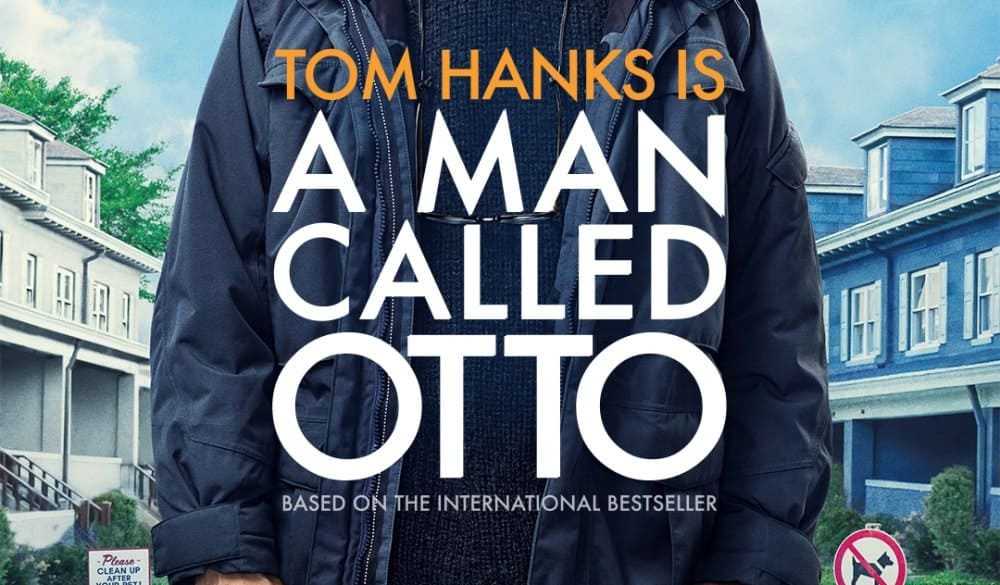
Otto (Hanks) is a man set in his ways. Every day he arises and make his rounds through his small neighborhood, doing his best to keep his neighbors united in not selling to a large property management firm. When he’s not picking up trash or yelling at people to slow down as they drive past, Otto mourns for his late wife, the only person he feels understood him. When a new family moves in across the street, Otto learns that maybe his way isn’t always the right way.
Based on “A Man Called Ove,” a 2015 Swedish film, “A Man Called Otto” is well intntioned but a little too heavy handed at times. Hanks plays Otto as if he is the mellower brother of Clint Eastwood’s Walt from “Grand Torino.” His way is the way it should be and all others be damned. The new family across the street, headed by Mom Marisol (Trevino) begin to wear Otto down until he’s actually giving driving lessons and trying to make amends with friends he has wronged. Otto is keepoing a secret from everyone, one that we slowly begin to learn. He’s not a bad man. He’s just lonely and wishes to be in what he thinks is a better place.
As the seasons go by, from the warmth of spring to the fresh snow of winter, the characters become more familiar to the audience and each other. Otto may not be a saint, but he is a good man at heart, and heart is what this film is all about.
For years I lived under the illusion that Tom Brady was a cheater. Then he went to my Tampa Bay Buccaneers and brought them a Super Bowl victory so now I see he was just misunderstood. Brady has since retired (again) but his legend lives on in “80 for Brady.”
Every Sunday a group of friends gathers in the home of Lou (Tomlin) to get their game on. Football that is. It’s been a tradition for these women for years, and started when Lou was battling cancer. The other women also have some issues. Trish (Fonda) cannot accept the fact that she is getting old, Maura (Moreno) is recently widowed and Betty (Field) is tired of doing everything for others and nothing for herself. When the Patriots once again advance to the Super Bowl in 2017, Lou gets them all tickets to the game so that they can celebrate in person.
A an almost too-sweet story held together by a group of actres with (5) Oscars and (12) nominations between them, “80 for Brady” is, in reality, a story about following your drams and never giving up. Football fans may recall that Super Bowl LI featured a game where, at one time, the Patriots were down 28-3 only to score (31) unanswered points to emerge victorious.
Along the way the ladies learn more about themselves then they expected, as they conspire to get as close to the action as posible. Brady, also a producer, shows up a few times on screen and has a natural screen presence, also featured in “Ted 2.” Nice to see he has a sense of humor.
For football fans, the film is a must see thanks to the incredible game footage shown on screen. Angles and highlights not seen on television are amazing to follow when they’re 40 feet high. Besides, now that the NFL season is over, “80 for Brady” is a way to get in a little more football before baseball season rolls along.
Normally when a film is advertised as “based/inspired by a true story,” you think to yourself, cool. However, when I first heard this comment used about “Cocaine Bear” I had to chuckle. Really? A beat that goes on a cocaine bender? Yeah, right. Then I spoke with a friend of mine who lives in Knoxville, Tennessee. She knew all about the story BECAUSE IT’S TRUE!
It’s sometime in the 1980s. America is in the middle of a huge drug epidemic. “Just say no,” is the message related by everyone from Nancy Reagan to Pee Wee Herman. Sadly there are no television in the woods.
A plane flies overhead in the darkness. Aboard is a man packaging up bundles of cocaine to drop into the woods below for his associates to recover and put on the street. An onboard mishap causes the plane to crash, with the wreckage (and durgs) strewn all over. Anyone could come along and find the illicit cargo. Hikers. Kids. A bear.
A film that mixes dark humor and horror perfectily is indeed a rarity, but “Cocaine Bear” pulls this mixture off almost seamlessly. Director Banks and screenwriter Jimmy Warden have woven together a film that is both funny and terrifying.
The cast is full of colollrful characters, ranging from Russell’s frantic mom searching for her daughter to Jackson’s almost too responsible drug runner to Margo Maartindale as a park ranger with romance on her mind. Throw in recent Tony award winner Jesse Tyler Ferguson as a local wildlife expert and the late Ray Liotta in one of his final performances and you have a group of actors who, instead of going for camp, play the situations straight. And don’t forget the bear, who shows an amazing range of emotions. Add a soundtrack consisting of some of the era’s greatest hits and you have the formula for an entertaining night at the movies.
Starring: Eva Green, Mark Strong and Chai Fonacier
Directed by: Lorcan Finnegan
Rated: NR
Running Time: 96 minutes
Shudder
Our Score: 2.5 out of 5 stars
The first 15 minutes of “Nocebo” could serve as a summary for the film. When we meet Christine (Green), she is a successful English fashion designer for children’s clothes. At work one day, she receives a troubling phone call. Even though we can’t hear what she’s being told, the contortions of fright on her face tell us she’s receiving horrific news. Compounding the scenario, is a tick infested dog that wanders into the office building, staring at her with blind milky eyes. The film cuts to months later, where Christine is sick at home, suffering from an unknown illness and struggling to find work. That’s when Diana (Fonacier), a Filipino woman, knocks on the door.
“Nocebo” effectively draws you in, making you wonder why a tick infested dog is in an office building, haunting Christine after she receives presumably terrible news over the phone. Diana’s entrance serves as an even stranger rabbit hole to stumble down because she says Christine has summoned her, even though Christine doesn’t remember this and her husband Felix (Strong) is equally suspicious. Unfortunately I’ve watched enough horror films to deduce what’s going on and the rest of the movie just serves as an exercise in style over substance.
I’m not saying it’s a bad thing when your movies are predictable because inherently a lot of films can be figured out through a very analytical lens. The problem with “Nocebo” is it doesn’t do anything new with it’s folk horror cliches and instead kind of drifts towards the predicted ending without any kind of red herrings or diversions that make you second guess the nature of the film. That being said, “Nocebo” does work in some surprising ways, mainly atmosphere and acting.
While there are no jump scares, “Nocebo” creeps around Christine’s house as Christine works with Diana and Felix watches suspiciously in the background. In these instances, it’s fascinating watching the perception of Christine’s reality change, and it helps that Green ravenously gnaws on scenery with wild hunger. Green is like a female Nicolas Cage, the movie she’s in is immediately elevated simply by her presence and willingness to immerse herself in even the most absurd stories, plotlines or scenarios. “Nocebo” would effectively be weaker without Green penetrating every scene with her acting chops.
Ultimately the film feels more telegraphed rather than a natural flow. “Nocebo” has the right ingredients, but director Lorcan Finnegan can’t combine them all into a cohesive treat. At times I found myself unable to look away from “Nocebo” while at other times the itch to look at my phone creeped into the back of my mind.
Starring: Sofie Grabol, Josephine Park and Ellie Kendrick
Directed by: Gabriel Bier Gislason
Rated: NR
Running Time: 105 minutes
Shudder
Our Score: 3 out of 5 stars
On paper, “Attachment” reads like a meet-cute sitcom episode. Maya (Park) is a washed up Danish actress making ends meet as a children’s entertainer at a library when she bumps into Leah (Kendrick), a youthful Jewish student who is exploring the world in her studies. The two immediately connect as they go back to Maya’s place for some cute glances and steamy sex. Things are off to an incredibly fast and amazing start when Leah suffers a bizarre seizure at night which results in a leg injury. So Maya goes with Leah back to her home in London where Maya meets Leah’s overbearing mother, Chana (Grabol). Definitely a meet-cute formula that’s about to get gobsmacked by something evil.
Without spoiling anything, “Attachment” is a movie we’ve seen before, utilizing several clichés to move the plot along, but what elevates the story is the unique qualities it brings to the table. Very rarely do we see these kinds of films with LGBTQ+ characters and Judaism as the subtext. That’s not to say the film intentionally includes these elements to be unique. Matter of fact, the film interweaves the nuances of these elements with clichés so that the clichés don’t feel nearly as prevalent. They’re still there, and at times give away what’s happening in Chana’s home.
The biggest thing I enjoyed about “Attachment” is how deep, even with how brief it sometimes is, we go in-depth with these characters. We learn more about Maya to where we understand why she feels the way she does about Leah. We also begin to recognize the toxic codependency between Leah and her mother. It’s difficult at first to tell which one is the most toxic and which one is potentially responsible for the increasingly paranormal things happening in the house. But like I stated before, if you’re a horror aficionado, you might be able to figure out what’ll happen in the final act because of the clichés.
Thankfully the film focuses more on mood than jump scares for its horror so that the film never feels cheap. Even when the runtime begins to feel a bit too long, the story continues to chug thanks to an effective atmosphere and believable performances. For me, it was difficult at times to figure out if this film works better as a horror with romance elements or a romance with horror elements because at times the film does both effectively and sometimes poorly. For the sake of the genre argument, I’ll say that this is a fine addition to the growing LGBTQ+ and Judaism horror collection. Maybe it’s because we haven’t seen these kinds of people in these stories, but “Attachment” feels fresh, even when it’s doing a juggling act we’ve seen dozens of times before.
Starring: Anthony Molinari, Sala Baker and Gigi Gustin
Directed by: Jonathan Salemi
Rated: R
Running Time: 91 minutes
Scatena & Rosner Films
Our score: 1.5 out of 5 Stars
Very rarely do I start a film and begin to wonder how long it’s been sitting on a shelf, whether it’s the finished project or just the mere concept of the film “The Last Deal” is about Vincent (Molinari), a black market marijuana dealer who goes from being the king of the street to just another cog in the machine when marijuana is legalized in California. Doesn’t this seem like the kind of film you’d hear about or see pre-pandemic?
“The Last Deal” opens with Vincent narrating the first 10-15 minutes so that we can understand his life and business. As to why we need Vincent to narrate what we’re already seeing or having it take that long is a telltale sign that the film is going to have a lot of head scratching narrative and storytelling choices. The issues that arrive in Vincent’s life is when he realizes that he can’t play the marijuana game legitimately. So before being squeezed out of the market he decides to make one final score with rotten money from a rotten person. That’s where things begin to take a nosedive for Vincent.
How do we know Vincent borrowed money from the wrong person? That person, in the credits, is named “The Boss” (Baker). He’s such a bad guy, supposedly, he has a henchman for when he plays poker, for when he enjoys a beverage on his patio outside and even a henchman that watches TV while “The Boss” messes around in another room. He also threatens to kill Vincent and everyone he knows when the money and drugs are suddenly stolen from Vincent. It’s not that the story or even the idea of the whole story is bad, it’s just executed poorly.
For one, we never really care about Vincent. At times he seems to lack a personality. I say that because the only time we get an inside view into his mind and life, he’s complaining about how difficult it is and how it lacks certain joys. He has a girlfriend and a place to live, but he doesn’t like living in an apartment and the relationship with his girlfriend is on the rocks; so much so that at multiple points in the film, Vincent seems to view her as an afterthought. I’m sure there is an intention to make it seem like his life is nothing but drug dealing or that he’s unable to see its beauty, but even in casual interactions, Vincent seems devoid of basic human emotion. The only time we see him emote is when one of his colleagues is murdered, but even that rare instance of emotion is brief. I would generally say it’s the acting, but when I think about Vincent as a character, he really is a one-dimensional creation.
When the film’s third act finally rolls up, you should know what’s going to happen because the story is very painted by numbers. There are several surprises, however, they feel more like plot convenience than anything. I really wanted to sit back and enjoy this film because the plot allows for that, but the film has too many noticeable issues for me to ignore and mindlessly enjoy. “The Last Deal” should be your last option when picking what to watch.
Starring: Sandra Drzymalska, Lorenzo Zurzolo and Isabelle Huppert
Directed by: Jerzy Skolimowski
Rated: NR
Running Time: 88 minutes
Janus Films
Our Score: 4 out of 5 stars
You hang around animals long enough, you begin to notice things like expressions in their face and how much personality they have. Despite the obvious language/species barrier, it’s fascinating that animals and humans alike are able to understand certain aspects of each other whether that’s happiness or fear. We’re also able to recognize each other’s body language when we’re angry, depressed or joyful. You’d think we’d get along better, but a film like “Eo” shows how that bond is at times oceans apart or beautifully close.
“Eo” is pretty straightforward. It’s about a donkey named Eo, who is a circus donkey when we first meet him. He has a loving owner and doesn’t seem to mind the outdated spectacle, but some animal rights activists are about to “free” him. There’s something comical about watching Eo quietly roaming around amongst angry humans yelling for it to be free, even though the concept of freedom is probably alien to Eo. After being “freed,” we see the folly of the animal rights activists who believe their job is done and let Eo roam freely to potentially be harmed or maimed. The rest of the film serves as a journey that’s heartwarming, tear-jerking, thoughtful, sad and ultimate meditation about life.
Despite being a donkey, Eo should have probably earned an Oscar nomination for delivering a world of emotion through his eyes. At times the camera hovers just inches from Eo’s eyes and we see thousands of words etched into them as he encounters friends, foes and the utterly bizarre, like a soccer match where Eo becomes the focal point through no actions of his own. The film is brief which helps with a lot of the moments where the camera simply follows Eo on his voiceless journey in Europe.
I found myself entranced by Eo’s journey even though there wasn’t anything specifically thrilling about it. It is just a donkey, after all, but Eo is more than that. He represents that soft spot that all humans have for animals. Even when we don’t like a specific creature, we still don’t necessarily wish them harm or want to see harm come their way. I think that’s what makes Eo so fascinating to watch and that’s because his encounters would tell you no person is safe, but all humans you encounter could be potentially safe. Eo sometimes feels like a representation of humanity, going through the motions, encountering adventures that may or may not be the best thing for our soul. We blindly go through life hoping everyone and everything we encounter is good-natured, but unfortunately that’s not always the case.
“Eo” is a film I thought about for days after watching. Personally I know it’s because I attempt to view humanity through these kinds of films. I feel like there’s poor ways of conveying the importance of creatures and the bond we share with them, like “A Dog’s Purpose,” but films like “Babe” help ground us in the reality of coexisting with creatures on this blue marble. “Eo” goes way deeper than I thought. What does coexistence mean when one side mistreats the other? What does life mean when sometimes a singular purpose for one’s existence is ultimately the consumption of the other? What does coexistence mean when we attach ourselves to them in toxic ways? Sure, some animals that aren’t donkeys have a poor temperament and just aren’t cuddly or loveable, but neither are all humans. “Eo” will make you smile, cry and ponder what exactly is going on in this crazy world and you’ll be a better person after all of it. Good donkey.