Interview with Derek Mears

Derek Mears is most known for his role of Jason Voorhees in the reboot of “Friday the 13th”. He is also starring in this years reboot of “Predators” produced by Robert Rodriguez. Movie Mikes has a chance to talk to Derek about his amazing career so far and found out that he is really “a fan representing the fans” and he is only getting started and going to have a long career ahead of him.

Click here to purchase Derek’s movies

Mike Gencarelli: Did you feel any pressure remaking “Friday the 13th”, one of horror’s most beloved series?
Derek Mears: I felt pressure from myself because Jason is my favorite horror character. You really want to do the character justice. When I originally went for the part I said, If I am right for the part, that’s awesome and if I am not right for the part that is awesome too because first and foremost I am a fan. I just want to see more films.

Mike Gencarelli: How did you prepare for the role of Jason Voorhees?
Derek Mears: I did a lot of character research. I grew up loving all of the films. I researched childhood psychology, wilderness survival and different things like that. Childhood psychology because Jason sees his
mother getting murdered in front of him when he was ten years old. Just tried to find that mental space to see where he is coming from. Basically even though you have no dialogue, you still do a full character research work.

Mike Gencarelli: So you put a lot more into it then just reading the script?
Derek Mears: You use the script as the blueprint. Being a fan of the guys that played Jason before me, you have to put that aside. You have to build off of what you have in the script and act like you have never seen it before.
Later on in the movie, since I am fan, I did little homages to the Jason’s before me.

MG: The sequel to “Friday the 13th” was just announced dead earlier this month, any word on that?
DM: I know the producers wanted me to return, which is super cool of them. They wanted to do a sequel but we waiting to see what happens. I really don’t what is going to happen now.

MG: Tell me about your upcoming role in “Predators”?
DM: I can talk a little bit about it, but I have to be kinda vague. I do not want people showing up at my door with baseball bats. Career-wise, I feel like I am going through my toy chest as a child and picking out different action figures that I love and saying I want to play this character, but for real though. This is amazing. The shoot was an absolute blast to do. I can say that K.N.B Effects knocked the designs for the Predator masks out of the ballpark. I try to have the fan boy eye first before the professional eye. I say “What do I think as the fan?” I am hesitant to see new designs of some popular characters but once I saw some of the designs that K.N.B did, I was so happy. I can’t wait for the fans to see it to see what they think. I am behind it 100%. It looks awesome.

MG: What was it like working with Robert Rodriguez?
DM: I didn’t talk to Robert too much but from being a fan of Robert, it was really cool to see him work. He let the director Nimród (Antal) run and do his thing. He was there overseeing things. It was interesting the see the teamwork between the two of them. Robert assembled this amazing crew in Austin and it was an amazing group of talented people. Everyone had a love for movies and just wanted it to be good, it wasn’t just another job. It was more of a family environment than a work environment.

MG: Have you always wanted to be an actor?
DM: Yeah. The reason I got into acting was because when i was a kid, I played a lot of Dungeons and Dragons and role playing games and I said “Man, this is what I want to do the rest of my life”. I am kind of doing that now, I am still playing Dungeons and Dragons and getting paid for it. Can’t complain. I am thankful everyday. I feel like I am a fan representing the fans. I am so lucky.

MG: You’ve worked stunts on “Pirates of the Caribbean 1 & 2”, what was it like working on such a big production?
DM: It was an incredible growing experience. I got to travel around the world. We were shooting in the Bahamas, the Caribbean and going to third world countries and experiencing some really amazing things. So first I was able to create with an amazingly talented group of people and second I learned so much about life. It was impressive and humbling at the same time.

MG: You’ve done stand improv, tell us a little about that?
DM: Yes I do, it is called the Make-’em-ups, it is like a “Who’s Line is it Anyway” for people that don’t know. I started a long time ago. I grew up in Bakersville, CA and I joined a group called Comedy Sportz at the age of 17. Comedy Sportz is competitive improv comedy. There are two teams and you complete for laughs and points from the audience. When I went to a show back then, I saw there is no script. You had to come up with scene and be funny just from what the audience gives you. I was impressed with these on-stage daredevils. I wanted to take classes just for the fun of it. I started playing in Bakersville, then when I moved to L.A., I joined their team there since Comedy Sportz is a big national franchise. I took like an eight year hiatus to focus on my TV and movie career. I recently just came back and I have been playing again for the last three years in Los Angeles. It has been a blast. It is like my creative doodle pad. You can go there and just let your brain run.

MG: You’ve appeared on over two dozen TV shows, how do they differ from movies?
DM: TV is just much faster. They have a week to do an episode. A film is fast paced but it you have a little more time to work.

MG: You play characters usually heavily makeup-ed or behind a mask? Do you enjoy that?
DM: It is usually 50/50 career-wise. I wear makeup half the time and the other half is my pretty smiling mug. It is funny because a lot of the stuff that has brought me attention to my career has been iconic characters that have been under masks or under prosthetics. It is all the same to me if you are wearing a mask or not wearing a mask you are still have to do character research. You commit 100% and the energy you create transfers through on screen. If I wasn’t wearing a mask in a scene, it is the same expression is going on and will be captured on the film.

Click here to purchase Derek’s movies

Interview with Sean Clark

Sean Clark is best known for his “Horror’s Hallowed Grounds” but he also has a T-Shirt company (HorrorShirts.com) and a mask company (Silver Shampain Novelties). He recently represents dozens of celebrity talents under his company, Convention All-Stars. If you think that is enough, think again. He is also a writer/producer on the recently released horror movie “The Black Waters on Echo’s Pond”.

Mike Gencarelli: You’re probably best known for “Horror’s Hallowed Grounds.” What gave you the idea to guide fans through classic horror locations?

Sean Clark: Basically I was a nerd myself. I’m just a big fanboy. It all started when I was reading an article in “Fangoria Magazine” written by Anthony Ferrante, who went on to direct the horror film “Boo.” He did a retrospective on “Halloween” around 1995 and in the article he interviewed (“Halloween” director John) Carpenter. In the interview Carpenter mentioned the street “Orange Grove” and also mentioned South Pasadena. When he mentioned Orange Grove he was talking about the street the house stood on in Hollywood but I thought he meant South Pasadena. I looked and found a street called Orange Grove in South Pasadena. So I went there, got off at the Orange Grove exit and just completely coincidentally I made a left off the exit and the Meyers house is right there. It was just dumb luck that I found it. And once I stumbled upon that location, it was such a surreal feeling ….like going back to your childhood home or childhood elementary school. Even though I’d never been there….I was like, yes, look there, that’s where so and so was walking…even though I’d never been there. From that point on it just clicked…wow, I could visit the locations of my favorite films. I really got into it. Me and a group of friends went to Bodega Bay and saw “The Fog” lighthouse and that town. We hit some “Scream” locations along the way. We went to the “Phantasm” mausoleum that weekend, which is in Oakland. I was just hooked. The way it started with me sharing it with fans is that I started filming the locations and I put together this really horribly thrown together-edited in a hand held video camera thing with film clips I called “Halloween: The Retrospective.” I used to sell it on line for twenty bucks for a VHS copy. I probably only sold 20 or 30 copies but that thing got bootlegged and passed around and today, sixteen years later, I still have people come up to me and say “Dude, I just got a copy of “Halloween: The Retrospective!” And from that I started working for Creature Corner.com as a journalist and I pitched to them, just as we were transitioning to work with the Horror Channel, which never really happened, it was just a web site, but I pitched to them “you know, I do this locations thing that I think would make a neat article” and they loved the idea. It started as an on line article and then I did the “Halloween: 25 Years of Terror” documentary that I worked on..we did it as a t.v. episode. I can’t remember if it was before or after that but I bumped into Nathan Haniman from Horror Hound at the San Diego Comicon and…I think it was after because he recognized me from the episode…he said to me, “Dude, I really love those articles you do. Would you be willing to do them in our magazine as a feature article in every issue?” And I said, “are you kidding me? Hell yeah!” So from issue # 4 to, I think we’re up to issue 22 or 23 right now, I’ve done one every issue and the fan following on line…on the website…it’s crazy how many people come up to me and talk about “Horror’s Hallowed Grounds.”

MG: Tell me about “The Black Waters of Echos Pond.”

SC: What would you like to know? (laughs)

MG: Was it hard to bring it to the big screen?

SC: It was a hard process just to get it out period. This thing has been done for two years.

MG: I remember meeting you in 2007 and watching the trailer at Rock and Shock.

SC: We had just wrapped production then. But to tell the truth, once it got edited the movie had tons of problems. The opening didn’t work whatsoever and we begged for more money to re-shoot the opening. I rewrote a completely different opening and we re-shot it in July of 2008 and in September of that year we did a day of pick up shots…little insert shots of things we missed. Then we went back into editing and edited the film. When we got into post production, which is sound and visual effects, we ran out of money. And for whatever reason it took eight months for the investors to give us the money…we were about 30 grand short…to finish the film. Once we got the money we finished it. And it wasn’t that long after we finished it that we did a rough cut screening at Monster Mania in August 2009. Then we did another rough cut screening that month in Toronto at the Festival of Fear. We ended up screening the finished cut at Screamfest in Orlando in October and again the finished cut at HorrorHound Cincy in November. So it wasn’t that long after that we got into theaters. We just had to get the film finished. And as far as being in theaters…everyone is coming up to me saying, “way to go…huge accomplishment…blah, blah, blah” and I’m extremely proud that I’ve got a movie on 404 screens across the nation but the reality is we bought our way into the theaters. We self distributed. The investors paid the money to get it into the theaters and promote it themselves. It wasn’t like we got picked up by Lionsgate or 20th Century Fox. But in our defense we never shopped it to any distributor. No distributor saw our movie, which in my opinion was a mistake.

MG: I’m curious…why wasn’t that done?

SC: I don’t want to point fingers but…the reality is that people behind the scenes go really gung ho on the whole self distribution thing. They saw dollar signs, thinking “this is our chance to clean up…let’s take all the profits.” But based on the box office results, it’s not going to go in their favor. (at the time of this interview, the film had taken in under $250,000 at the box office against an estimated budget of $5 million)

MG: Where was the movie filmed:

SC: It was shot in L.A. The interiors were shot in a warehouse on the corner of Santa Monica Boulevard and Highland in Hollywood. The exterior shots of the two houses and the woods were all shot in Topanga Canyon. And the lake stuff…with the stone walkways and the areas where the friends all first meet…that was all in Lake Malibu.

MG: How did you come up with the idea for the film?

SC: Well, it wasn’t my idea. It was a rewrite. Basically I was given the script to read to give my opinion on and I gave a pretty harsh one. I thought the script was awful, except I liked the idea at the core…the Greek mythology, the “evil game” thing. And, through part of a long story, I got brought in to rewrite it. I completely changed it…probably 70%…I mean it’s a night and day difference if you read both scripts. And it was my version that got the film financed.

MG: Despite the poor box office, do you have any interest in doing a follow up project?

SC: The fan response has been extremely positive. We got torn to s**t by the reviews but some of the reviewer’s got it (MovieMikes.com gave the film a favorable three out of four stars rating). They understood it was a homage to “B” movies of the 1970s and 80s. It wasn’t supposed to be the most terrifying film in the world and that was a mistake…they marketed the film wrong. They marketed the commercials…the theatrical poster they came out with…not the one I did. The theatrical poster I did represented what the movie was. But the trailers that they did…they all were like (in eerie voice) “come and watch the most terrifying film you will ever see”…and it’s not “Seven.” It’s not “Silence of the Lambs.” It’s not a serious horror film. It’s not meant to be scary and terrifying. I mean, sure, it would be to somebody who’s not a real horror fan…a fourteen year old girl might go see it and be freaked out by it. But a real horror fan would not be scared by this. It’s meant to be fun. It’s supposed to be a fun, good time horror film where you can laugh at the kills and have a blast.

MG: When I saw it there were two senior citizens in the theater and I’m sitting there thinking, “why are they seeing this film?” And about the time the guy gets chainsawed they got up and left. Like three-fourths of the way through the movie they threw their hands up and left.

SC: They actually threw their hands up? (laughs) Well, it’s not for everybody. Wow…what was the original question? I kind of went off topic.

MG: About a sequel.

SC: Like I was saying, the fans got it. There are these two guys…I can’t remember their names…they do an internet review show. And I actually saw them today. They do like a fifteen minute review. They show themselves going to the theater, they film the poster. And they LOVED it. They raved about it. How there should be more movies like this one. They totally got it. And when I saw them I told them, “Dudes, I’m sending you guys shirts and posters…give me your address.” They were cool. And they got it. The fans totally get it. And I have a feeling this film is going to find an audience on DVD. I don’t want to knock the film, because I’m proud of it, but it shouldn’t have been in the theaters. It’s a straight to DVD movie in my opinion. But I’m proud of it. I’m glad it got there. And if there is a sequel I’ve got an awesome idea. I’m working on my own things right now but if they want to do a sequel I’ve got a really, really cool idea.

MG: Which takes us to my next question. Are you going to do any more writing or directing?

SC: The next thing I’m writing, called “Sugar,” I’m finishing that right now. We supposedly already have financing in place for it and I’m going to direct it. It’s a real throwback…not a homage kind of thing…this is more…it’s not as campy as “Black Waters.” This is a serious 80’s style slasher film. I say it’s a cross between “Halloween” meets “Terror Train” meets “Scream” meets “Footloose.” (laughs) If you read the script you’d get all of those references. I think it’s the kind of movie that could actually become a franchise. It could be an iconic Michael Myers/Jason kind of thing. I want to do something that’s fun…that’s back to the basics. I have another script they’re also talking about making that I would just be a writer/producer on…they’d find someone else to direct it…it’s a really complicated haunted house type story with all kinds of crazy special effects. It’s the kind of thing I wouldn’t want to tackle for my first film as a director. I’m like “you know somebody else can do that one…I’ll do the slasher movie.”

MG: Last question…how did you originally start the convention tour stops?

SC: That was an accident. It was a happy accident because it’s turned into a very good business for me. Basically what happened was…I was doing all the other things I do within the genre’…I have a t-shirt company (did not catch the name)…a mask company (Silver Shampain Novelties) and I don’t know how much longer I’m going to do either because I really don’t have time any more. It’s not like their paying my bills…it’s nice to have a little extra money here and there…but I’m really working on the convention things. And I have the movie stuff. So I want to concentrate on those. And I have some reality show things that are brewing. I’ve had a camera following me all weekend. I’ve been really involved in the convention scene as a vendor…as a journalist…and through that I became on a first name basis with all these celebrities…all these horror icons. I think Tony Moran (the original “Halloween”) was technically my first client. When I found him he was a loan officer. And basically, I’m a fan. I found him because I wanted to meet him. He was a signature I was missing on my “Halloween” poster. I needed it so I found him. And I told him I wanted to do an interview with him. Nobody had ever interviewed him before. He was down and I told him, “dude, you should do conventions.” When he signed my poster he said “you know, this is the first autograph I’ve ever signed on anything having to do with “Halloween.”

MG: Really? Now when I go to the conventions he seems to be everywhere.

SC: I told him, dude, you have no idea. And he said “nah, nobody cares.” I told him to trust me and give it a shot. I told him I had a friend that was putting together a really crappy…it turned out to be really crappy…convention in Ventura. I told him to come by and give it a shot. So he comes by and about half way through the first day he comes up to me and says “dude, this is awesome! This is so cool, I want to do more of these. How do I do more of these?” And I hooked him up with an agent who’s well known in the horror biz…I said “hey, I know this guy…let me hook you up with his people.” So I go over to the guy and say, “Look, Tony Moran, the face of Michael Myers” and the agent goes, “hmmmm….wasn’t that guy only in the movie for like 10 seconds?” I said, “Yeah, but he’s the face of Michael Myers.” And the agent goes, “hmmmm…I’ll pass.” Really? Yeah. OK. So I go back to Tony and he asks me if I talked to him. I told him what the agent said and he said “F*** that f***ing a**hole…why don’t you rep me?” And while I’m thinking about it he says “dude, I’ll give you the percentage…what does he make?” So I told him ok. And by the end of the weekend, Tony had this big line and the agent saw the line and saw he was making cash and he comes back up to me and says “you know what, on second thought, give him my card.” And I said “dude, I told him what you said and he told me to tell you to pretty much go f**k yourself. He wants me to rep him.” And from that point on, me and that other person…suddenly I was competition and it got weird. We’re cool now but for a while it was weird for a long time. Anyway, I knew all the promoters so I called around and asked if they were interested in booking Tony and they said yeah. Word got out and, it was Richard Brooker, Jason Voorhees from “Friday the 13th Part 3”, who called me and said “I heard you got Tony in a show, can you get me in a show?” And it hit me…I know all of these dudes. I should start calling them all. Because I had done the “Halloween” documentary so I had every “Halloween” persons phone number. So I started calling them up and building a roster. Unfortunately I took on a partner for a short time and that ended badly and still continues to haunt me but now that I’ve watched that stink off of me things have gone swimmingly. Bigger names and bigger shows. It’s been really awesome.

Interview with Kenneth J. Hall

Kenneth J. Hall was inspired the likes of Roger Corman, Ed Wood, Herschell Gordon Lewis. He has worked with Charles Band over various companies, His breakthrough film was
“Puppet Master”. His best known creatures are the title character of Roger Corman’s “Carnosaur” and the famous octopus prop used in “Ed Wood”. Movie Mikes has the opportunity to ask Kenneth a few questions about his career and the future of movies.

Click here to purchase Kenneth’s movies

Mike Gencarelli: Tell me about your involvement with Charles Band and Full Moon Pictures?
Kenneth J. Hall: I had been working on Charlie’s movies long before Full Moon. The first one was “Metalstorm: The Destruction of Jared-Syn in 3D”. I built the energy monster for that over at Makeup & Effects Labs. In the mid-80s, he started Empire Pictures.  I began as a PA, then got hired to play a werewolf in”Dungeonmaster”. From there, I did effects for him at John Buechler’s shop on “Ghoulies I & II”, “Spellcaster”, “Arena”, etc.  It was through my friend, Dave DeCoteau, that I finally got hired at Empire to write “I Was a Teenage Sex Mutant”, which was released as “Dr. Alien”. My script was so well-liked there that I was slated to write and direct a number of their upcoming projects. Alas, the company went under before any of them happened.  About a year later, I got a call that they wanted me to write “Puppet Master”. Despite the huge success of that film, the only other thing I did for them was the script for “Test Tube Teens from the Year 2000” and a rewrite on something called “Morgana”. I did go back and do some effects work at Mike Deak’s shop for some of their films in the 90s .

Mike Gencarelli: Did you enjoy playing the villain in “Gingerdead Man 2”?
Kenneth J. Hall: That role was a lot of fun. The writer/director is really Billy Butler, an old friend of mine from the Empire days. The whole thing was a send-up of what it was like working on those low-budget movies. It was great that he got Buechler, Deak, DeCoteau, and even Michelle Bauer to do appearances in it. I was allowed to do pretty much what I wanted with the wardrobe, makeup, and even the character’s voice. The only hitch was the huge amount of mumbo-jumbo dialogue I had to do. In the end, I had to use cue cards to get through the long speeches.

Mike Gencarelli: How does it feel to have created such known creatures like the title character from “Carnosaur” and the octopus from “Ed Wood”?
Kenneth J. Hall: After the decline of home video market in the early 90s, I found myself back as a freelance artist in the effects industry. John Buechler called me in to create a full-sized T-Rex for “Carnosaur”. I had never fabricated anything that large before but I managed to pull it off. That creature became the centerpiece of my portfolio, getting me hired to do more large beasties, including the octopus for “Ed Wood”. I used the reputation I had built from those to start my own company, Total Fabrication, which has been in business now for 15 years!

MG: Tell me about your work on my favorite movie: “Fear and Loathing in Las Vegas”?
KH: That was an unusual situation. Rob Bottin and I had a mutual friend who introduced us on that project. Rob had gotten on board for the opportunity to work with Terry Gilliam, even though the film’s budget was much lower than he was used to. He had to come up with a fast and economical way to make the bodies of the “lounge lizards” he had created. That’s where we came in. In barely over a week, we fabricated something like a dozen suits. Here we were working with all these big-name talents but the money and schedule made it feel like a Power Rangers episode, which we were also working on at that time.

MG: What was the hardest production that you have ever worked on?
KH: That’s a tough one to answer. Lately, every show we do at Total Fabrication seems hard. That’s because every aspect of the industry has been affected by the terrible economy so we are forced to do what we do in less time for lower pay.

MG: What is your favorite job while making a movie if you had to choose one? Special Effects, Directing?
KH: When I made “The Halfway House”, it was the first and only time I ever felt like a total filmmaker. I was the writer, director, executive producer, and even the creature designer, so I had full control over the final result. Love it or hate it, that’s my movie. I have written and directed other films, but they weren’t quite as satisfying. Still, I would definitely rather be directing than doing effects.

MG: If you were able to make your dream project what would it be?
KH: I don’t have any real pet projects though there are many subjects I would like to tackle. My favorite genre is still creature features. I hope people will still want to see practical monsters employed as opposed to it all being done with CGI.

MG: Do you think the film “Preggers” will ever see the light of day?
KH: I would love for that to get made someday. I came up with the title and poster art first. It got such a positive reaction that I was never able to come up with a script that did it justice. The difficulty lately is audiences seem to want their horror movies deadly serious. “Preggers”, by its very nature, cries out for a more humorous tone like many 80’s films had. I hope we’ll see a return to that eventually.

MG: What else do you have planned for the future?
KH: I have many projects I’ve been developing since my last feature. Some are finished scripts; others are one-line ideas. Right now, independent features are in limbo because of the decline of DVD sales and the uncertain future of ancillary distribution. Eventually, everything will be streaming or downloaded from the internet to our home entertainment systems. The majors will have no trouble adapting to this. But who will all the little films go to who can make sure they reach an audience… and make money? No one has an answer to this right now. So, I’m currently out here keeping Total Fabrication going until the independent market improves, along with the economy. Let’s all hope both happen soon.

Click here to purchase Kenneth’s movies

Interview with Carl Gottlieb

As a fan of the movie “Jaws” I was overjoyed to have the opportunity to interview Carl Gottlieb. Not only had Mr. Gottlieb co-written my favorite film but he had also written a great book that told the story of the making of that film. First released in 1975 “The Jaws Log” is regarded by both film fans and Hollywood insiders as one of the best books ever written that document the making of a major motion picture. The book went through 17 printings and sold over two million copies (I know that I own at least three of them). The book was introduced to a new generation of “Jaws” fans when it was reissued, with updated notes by the author, in 2005. A brief introduction to Mr. Gottlieb will tell you that he had plans to be a playwright and critic. While attending Syracuse University he studied drama, working alongside fellow students Frank Langella and Larry Hankin. Making his way West to San Francisco Mr. Gottlieb soon joined the popular improvisational comedy troupe known as The Committee. Among the group’s more esteemed members: Alan and Jessica Meyerson, Richard Stahl, Howard Hesseman (who performed under the name Don Sturdy), Peter Bonerz, Barbara Bosson, Rob Reiner and David Ogden Stiers. Fans of the film “Billy Jack” will notice several members of “The Committee,” including the Meyersons and Hesseman. In 1968 Mr. Gottlieb became a member of the Writer’s Guild of America and began writing for “The Smother’s Brothers Comedy Hour,” sharing an Emmy award for his work with several other young writers on the cusp of fame including Bob Einstein (now better known as Super Dave Osborne), Steve Martin, Lorenzo Music and Mason Williams, who would later become better known for composing and performing the classic guitar instrumental “Classical Gas.”

Gottlieb also kept himself busy with the acting side of his career, appearing on such television shows as “I Spy,” “Chico & The Man,” “Laverne & Shirley, and “Mork and Mindy”. He also appeared in the Academy Award winning film “M*A*S*H.” But his career really rocketed skyward after he was hired to play local newspaper editor Harry Meadows in “Jaws.” A friend of director Steven Spielberg, Gottlieb was asked to redraft author Peter Benchley’s script, giving the film more well developed characters and, more importantly, humor. Ironically, the more Gottlieb tightened up the script the fewer scenes he found necessary for Meadows to appear in. Not to worry. When “Jaws” was released it was met with almost unanimous acclaim, with Benchley and Gottlieb earning BAFTA, Golden Globe and Writer’s Guild nominations for Best Screenplay. And, as noted above, Mr. Gottlieb shared his experiences on the film in the best selling “Jaws Log.” His next writing gig found him adapting Lina Wurtmuller’s film “The Seduction of Mimi” into a comedy set to star Richard Pryor. That film, “Which Way Is Up?,” was recently named the funniest Black comedy of all time by ILoveBlackMovies.com, a web site devoted to preserving and presenting the history of African American filmmaking, both past and present. Following the release of “Which Way Is Up?,” Gottlieb found himself contacted by the producers of “Jaws 2,” whose production was in dire straits, having just fired the director one week into filming. Gottlieb was brought in to once again enliven the screenplay. He then teamed up with old pal Steve Martin for two projects. The first put Gottlieb behind the camera for the first time as director. The result, “The Absent Minded Waiter,” earned an Academy Award nomination for Best Live Action Short Film. Project number two was Martin’s big screen debut as “The Jerk.” (Note to readers: please do not write me to point out that Martin had actually been on screen the previous year in “Sgt Pepper.” Though he was the best thing about that movie, 10 minutes on screen does not a movie star make. Thank you). Gottlieb not only helped co-write the film but had a memorable moment as Iron Balls McGinty.

In 1981 Gottlieb co-wrote (with the very funny Rudy DeLuca) and directed the well-received comedy “Caveman,” starring Ringo Starr, Barbara Bach and two newcomers about to hit the big time: Dennis Quaid and Shelly Long. Later in the decade he contributed to the screenplays of “Doctor Detroit” and “Jaws 3-D.” He later made his way into television directing, crafting episodes of shows like “Hooperman.” He has also returned to book writing, most notably releasing two books co-written with musician David Crosby: “Since Then: How I Survived Everything and Lived to Tell About It” and “Long Time Gone.” Mr. Gottlieb has been active in the politics of the Writer’s Guild for over three decades, serving on both the Board of Directors and as the Guild’s Vice President. Still writing at age 72, Mr. Gottlieb graciously took time out to talk to MovieMikes:

Click here to view our ‘Jaws” interview with Joe Alves
Click here to view our ‘Jaws” interview with Keith Gordon

Click here to purchase “Jaws” merchandise

Mike Smith: You attended Syracuse University and studied acting with Frank Langella and Larry Hankin. Did you make a conscience decision to make writing your main vocation or was that just something that occurred naturally?
Carl Gottlieb: It occurred naturally. Even though I went to school with Frank and Larry, I was a dual major, in drama and journalism. I thought I was going to be a playwright or critic. I acted because it was convenient. I don’t know if you remember school plays 50 years ago but there was always a shortage of guys…so there was always a part for me to play. I drifted into acting. My first love was always writing, and when I was at the City College of New York, I was editor at The Mercury, which was CCNY’s humor magazine, back in the mid-50s. So I was always a writer.

MS: You won an Emmy award for your work on “The Smother’s Brothers Comedy Hour.” Your fellow writers included Steve Martin and Lorenzo Music. The film “My Favorite Year” really gives a great behind the scenes look at television writers, especially comedy writers. With all of the talent in the room, how were the shows written. Was it a group effort or did each writer submit material that the others would later help fine tune?
CG: Very much so a group effort. We had a writer’s common area with individual cubicles opening off it where writers could go off and work on their own or as partners. Lorenzo and I would go off and write Tom and Dick’s monologues and we wound up writing a piece for Bob Newhart when he was a guest on the show. Newhart liked the piece so much he made it part of his act. And later Lorenzo went with another partner (David Davis) and created “The Bob Newhart Show.” (Readers, if the name Lorenzo Music sounds familiar it could be because you know his voice. He has played everyone from Carlton the Doorman on “Rhoda” to the voice of the animated cat Garfield). The atmosphere in the room was always collaborative…a bunch of writers pitching ideas and jokes. That part of comedy writing hasn’t changed since radio.

MS: You appeared in the feature film “M*A*S*H.” Gary Burghoff was the only member of the film cast to reprise his role in the television series. Were you approached to do the series?
CG: No. None of us were. We never understood that. I don’t know what kind of magical power Gary Burghoff’s agent held but he was the only one who was asked to be in the series. I think Roger Bowen (he played Lt. Colonel Henry Blake in the film), who went on to do other series, was a perfect Henry Blake. To me the guy who created the role in the film should clearly have gone on to do the TV series. John Schuck should have been asked. A lot of the people ended up on television anyway, but I never understood that casting.

MS: Ironically, both Roger Bowen and Maclean Stevenson (TV’s Henry Blake) passed away within a day of each other.
CG: Yes. I spoke at Roger’s memorial service because I had known him from “The Committee” days. And I said at the service, “When Maclean Stevenson showed up at the pearly gates God took one look at him and said, ‘no, no, no….the guy from the MOVIE.”

MS: Here is a question I’ve been dying to ask for 30 years. Your most famous scene in “Jaws” was left on the cutting room floor when, during an earlier version of the discovery of Ben Gardner’s boat you accidentally fell out of the boat. I meant to ask you this at JAWSFest but my mind went blank the moment I met you. You note in “The Jaws Log” that the scene of the dead fisherman’s head popping out was added much later in the film process, with director Steven Spielberg hoping to get an extra scare out of the audience. In the film, when questioned about the discovered shark tooth by Murray Hamilton, Richard Dreyfuss explains that he “dropped it.” Can you recall what initially happened to the tooth?
CG: It was the appearance of the head. The original shot was effective but it wasn’t as effective as it could be. Steven had an intuitive grasp of what really worked and decided he needed that underwater angle. If you notice in the film…I don’t watch it frame by frame but I know a lot of people do…he pries the tooth out of the hull of the boat…the head appears…he recoils in horror and at that moment the tooth drops. It was actually written as the scene happened. We needed a reason for him not to have it. When we shot the scene on the Vineyard (Martha’s Vineyard) where he says “I dropped it” we hadn’t shot the scene. The Ben Gardner’s head scene hadn’t been shot yet. The whole point being he didn’t have the tooth with him to argue with the mayor. Chronologically they cut the shark apart, find the tooth and then go to the mayor. In June 1974 he didn’t have the shark tooth to show the mayor and then in 1975, when we shot the replacement scene, it was shot so he didn’t have the tooth in his hand when he popped back to the surface.

MS: Thank you. That was worth 35 years of wondering.
CG: : (laughs)

MS: You became responsible for one of Hollywood’s most successful marriages when you cast Ringo Starr and Barbara Bach in your film “Cave Man.” I’ve always found Ringo to be a natural on film. Was he easy to work with?
CG: Very easy, but a little erratic. I knew Richard Lester (director of the Beatles films “A Hard Day’s Night” and “Help”) because I had appeared in his film “Petulia,” which had been shot in San Francisco. He was a fan of “The Committee” and we knew each other through the world of comedy. So when I considered casting Ringo in “Cave Man” I called Richard Lester in London and asked him “what can you tell me about working with Ringo?” And he said, “I always give him his own camera because he’s not that good at repeating things…so make sure you’ve always got him.” And I followed that advice. And Ringo, of course, was inventive and relaxed and funny on camera and we got everything we needed.

MS: You co-wrote and appear in “The Jerk” with Steve Martin. But earlier you directed him in the Oscar nominated short “The Absent Minded Waiter.” Were you two friendly before working on “The Smother’s Brothers” show?
CG: I’ve stayed friends with almost all of the writers on the “Smother’s Brothers” show. The Class of ‘68/’69. It was me and Steve Martin and Rob Reiner and Bob Einstein and Lorenzo Music and Mason Williams. We were all roughly the same age…had the same interests in girls and pop music. We all stayed friends. I was working on a script and I house sat Steve’s house in Aspen. I watched his house and fed his cat while he was on the road. We all just stayed friends since the summer of ‘68. We all met on “The Summer Brothers Smother Show“, which was the Glen Campbell replacement summer show. That’s where we met and we just stayed professional and social friends. And since I was already going to be writing “The Jerk” with Steve the short made sense for me to direct since I might direct the movie.

MS: There is a Kansas City based web site called ILoveBlackMovies.com which does a great job honoring the various genre’s in African American cinema. Recently “Which Way is Up?” was chosen as the funniest Black comedy of all time. Was it hard, for want of a better word, to write for what I’m sure was perceived as a predominantly black audience?
CG: Richard Pryor was just breaking out at that moment. He had done a film called “Greased Lightning” about the first black NASCAR driver, directed by Michael Schultz. And that pairing of Michael and Richard seemed potent as “Greased Lightning” turned out well in the studios’ eyes. So a producer who had bought the rights to Lina Wurtmuller’s film “The Seduction of Mimi” hired a black novelist named Cecil Brown to write the first draft. I had known Richard from the world of comedy, from his stand up. And I had worked on the Flip Wilson television specials that Richard had appeared on as a guest. Between the time “Jaws” was written and “Jaws” was released I did four Flip Wilson specials, two which featured Richard as a guest. I knew him and I was comfortable working with him. I wrote some comedy for him that played very, very well. I had an ear for the vernacular. The producer suggested we work together and I listened to what Richard wanted to do. He and I went to Barbados. I went with my wife and Richard went with Pam Grier, who he was dating at the time. He rented a villa for two weeks and we spent the time there writing…talking about the characters. He thought he could have fun playing several different characters instead of just the lead role. So when we came back and the film went into pre-production Richard said, “I can do Mudbone…I can do the preacher” and Michael Schultz thought that was a great idea. So I re-wrote the script to accommodate those characters. And ultimately, at the first table read, I was introduced as the writer and people kept looking past me for the African-American and I kept saying, “no no, it’s me.” Everybody was kind of taken aback because the cast and crew were predominantly black and Hispanic. I got a lot of street cred for being able to – quote – “write black.” Though it’s not really “writing black.” It’s more to having an ear for dialogue and sympathy for the characters. The color of the writer is almost immaterial.

MS: I was actually thinking when I re-read that question, I was a movie theatre usher and we played the film forever. It’s one of my favorite films and I can probably quote the movie line for line. And I guess it’s safe to say that comedy really has no color. If it’s funny, it’s funny.
CG: That’s true…that’s true. “Which Way is Up?” is a very socially conscious movie. It’s about farm labor and agribusiness and the exploitation of workers, which came directly out of Lina Wurtmuller’s particular brand of Italian socialism. The original title of Lina’s film was “Mimì metallurgico ferito nell’onore” (“Mimi the Metalworker”) then it was released here as “The Seduction of Mimi.” I was happy to write it because I came from political theater. I was very happy to get as much politics as I could into the movie, especially with a spokesman like Richard, who really spoke across class lines but whose experience was with the underclass…black or white, it didn’t matter. Real blue collar. Still, he was very funny. All I had to do was listen to the cadences of his speech and reproduce it as a screenwriter. The same with the other actors. I knew several of the Hispanic actors from the LA comedy scene…it all worked out fine.

MS: Several years ago I had the chance to interview Daniel and Luis Valdez (actors in “Which Way Is Up?” and talented writers in their own rite. Luis Valdez wrote and directed “La Bamba”) and they spoke very highly about their experience on the film. When I interviewed Joe Alves (production designer on both “Jaws” and “Jaws 2” – director of “Jaws 3-D”) I learned that the original concept of “Jaws 2” was that the town of Amity was pretty much a wasteland and decimated because of the original shark. After the director (John Hancock) and writer (Dorothy Tristan, Hancock’s wife) were fired and you came aboard how much of the story did you have to change to fit the vision the producers and new director wanted?
CG: A pretty large amount. As always, when you come on a picture late and they’re already shooting, you have to accommodate yourself to the sets. They’re not going to build a new lighthouse…a new dead orca…a new power station in the middle of Nantucket Sound. So you have to write to the existing sets but you’re free to move the characters around. I added this whole thing about the kids cruising in sailboats the way they used to cruise in hot rods, which gave us a device to get all of the kids together and put them in jeopardy as a group. It was a pretty substantial rewrite. The original “Jaws 2” script had some great writers, including Howard Sackler, which was probably his reward for being uncredited for the work he did on “Jaws.” But, the director and his wife started tampering with the script. The director was not particularly competent. The first week of principal photography was just so problematic that he was taken off the picture and they junked his wife’s script.

MS: Earlier this year you received the Morgan Cox award from the Writer’s Guild of America in recognition of your vital ideas, continuing efforts and personal sacrifices in ensuring the success of the Guild. How did it feel to be recognized by your peers? Not only those you may have worked with but those whose careers you may have inspired?
CG: It was a wonderful evening and a great honor. Guild service – or any kind of service work where you give your time and energy as a volunteer to a cause – that’s usually its own reward. It’s nice to be honored. It’s nice to have a dinner. That particular evening was special because it was also the night of the annual Writer’s Guild Awards, so there were the winners of Best Screenplay, Best Series, Best Comedy….all of those awards were given out the same night as mine so I was in the company of people whose work I admired and respected and people who I had known for years and who also worked on behalf of the Guild and on behalf of writers. It was touching and very satisfying. Needless to say I would have done the work even with no reward– you never start anything with the notion you’re going to get a trophy 25 years later. You just show up and do the work.

MS: I know you’ve concentrated recently on books, including two with David Crosby. Anything else on the horizon?
CG: I’m finishing what will be called “The Little Blue Book for Directors.” It’s essentially a handbook for young directors, whether they’re a film student or someone making their first YouTube video. It’s basically everything you need to know to direct a movie (laughs) (readers, it should be pointed out that “X-men” director Bryan Singer refers to “The Jaws Log” as being ‘”like a little movie director bible.”) I’ve also just finished a screenplay about the early Tin Pan Alley vaudeville songwriters during the first world war, called “The Stowaways.” And a year or two ago I wrote a screenplay that I thought would be totally original and new, that nobody had ever seen anything about this area…I researched it and was so proud of myself because I was the only one who knew about it…Pirates off Somalia. (laughs) The script still exists but now all the time and pages that I took to explain why there were pirates in Somalia…I don’t have to do that anymore. So I’m rewriting the script to accommodate current realities. It’s called “Privateers.”

Click here to purchase “Jaws” merchandise

Interview with Jim Sharman

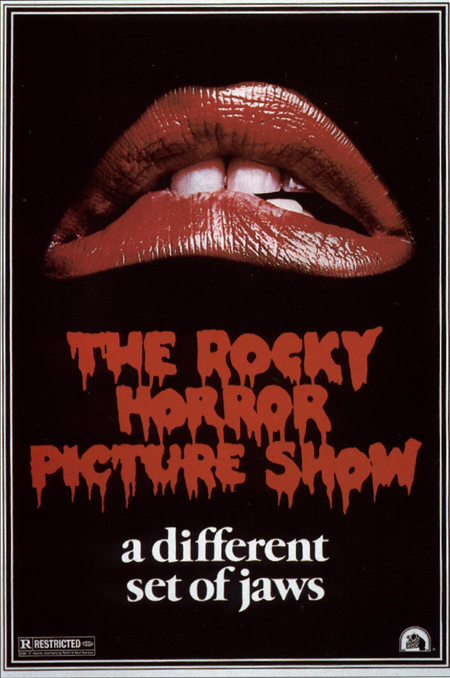
Jim Sharman is best known for directing the cult classic “The Rocky Horror Picture Show”. The film became a midnight screening sensation. 2010 marks the 35th anniversary of “RHPS”. Movie Mikes (and some help from “RHPS” uber-fan Dave Picton) was able to ask Jim a few questions about “RHPS” and reflecting on its success over the years.

Click here to purchase “The Rocky Horror Picture Show” merchandise

Mike Gencarelli: The endings of the US and UK cuts of “RHPS” differ in that the UK cut includes the “Super Heroes” sequence and end credits roll over the “Science Fiction Double Feature” reprise. US cut omits “Super Heroes” and credits roll over “The Time Warp.” How did these two versions come to be and what are your feelings about each of them?
Jim Sharman: The version with Super Heroes is the original ending and the best one. Somewhere – way back when – I guess it was in between the original release and the initial late night screenings – there was some studio tinkering and Super Heroes was deleted, probably through a desire to give it a more conventional movie ending – which is frankly impossible with a film like “RHPS”. The fans eventually complained and the original ending was restored, for which I’m very grateful. I guess there are a few of these older prints still floating around, but the current DVD version is the full original version. The film begins and ends quietly, reflectively, and in darkness – and that’s how it should be.

Mike Gencarelli: How did you first become aware of the audience participation phenomenon that evolved around “Rocky Horror Picture Show”? Have you ever attended a screening of “Rocky Horror Picture Show” in which the audience participation occurred? If so, what did you think of it?
Jim Sharman: After the initial release, I’d returned to Australia – which is where I mostly live and work – and I heard about it on the “Rocky Horror” grapevine. Soon after, I was visiting New York and just dropped by the Waverly Cinema to check it out. It was in the early days of dress-ups and audience-participation and there was great enthusiasm and a sense of anarchic fun in the air – so I really enjoyed it. My strongest memory was that a film which had begun as a celebration of late-night movies had somehow fulfilled its own destiny and entered it’s own mythology. It had become a late-night movie that was being celebrated late-night and I thought that was pretty cool. We had played the original stage show in derelict cinemas and turned them into theatres, and now the film was turning cinemas into theatres – complete with costumes, make-up and audience participation. The fact that the film had become wallpaper for a non-stop party didn’t bother me at all – I thought it was great that the movie was generating so much energy and pleasure. As with most things related to Rocky Horror, there was no sense of what was ahead – for instance, that we’d still be talking about today. Rocky Horror has a life of it’s own – it set out to confound and subvert convention and it’s amazing to think that it’s still doing that, 35 years on.

Mike Gencarelli: What’s your best memory from making “Rocky Horror Picture Show”? Worst memory?
Jim Sharman: It was long ago and far away, so the best and worst tend to blur a little. When Lou Adler and Michael White, the original producers, first invited me to direct the film, they gave me two options. One was a regular movie musical budget and schedule, with the proviso that I cast some established stars – current rock stars, movie stars, whatever; and the other was an essentially B picture budget and a short 6 week schedule, if I stayed with key members of the original cast and creative team. Rocky Horror had flouted conventional wisdom from the get-go and the B picture route seemed truer to its spirit. That spirit was something I wanted to keep alive in the film – more spirit than polish was both the aim and the outcome. There was also a strong sense of camaraderie and like-mindedness amongst the original creative team, so I chose option B and that pretty much governed everything that followed – it created the best and the worst. I’m still grateful that Lou and Michael understood this, and went with it. Maybe that was the best moment? If I’d gone the other path, I don’t think we’d still be talking about Rocky Horror today. You only have to think of all those long vanished films featuring rock stars of the era. The Rocky Horror team had one thing in common, we’d all grown up on late night movies and this had the potential to be the ultimate thank-you note to that tradition. This genuine affection for late-night movies informed every aspect of the filming. The schedule was so tight that the film was mostly edited in the camera and our decision to film it at the old Hammer Horror Studios – which was affordable, but semi-derelict at the time – gave us dire working conditions. I remember everyone freezing in mid-winter and, as we mostly shot in sequence, when we finally got to the underwater filming for “Don’t dream it, be it”, I resorted to encouraging excess by pointing out that the wilder it was, the sooner it would be over! It may look dreamy onscreen, but my only recollection is of chattering teeth and everyone stamping their feet to keep warm while shivering in their underwear. For me, the best was the consistent camaraderie and the fact that everyone understood the spirit of the piece and entered into it fully, which meant a minimum of re-takes. The original cast and creatives brought this with them and it was contagious, so those new to the craziness quickly got on-board. I remember a studio visit from Fox studio execs, who were very pleasant but completely baffled by what was going on. They had no frame of reference for this film and the result was they decided to leave us alone and there was no interference. That was probably the best thing that happened, because the finished film is exactly the one we intended to make – spirit intact.

MG: To what extent do you credit the extended “Rocky Horror Picture Show” scene in the 1980 film “Fame” with “Rocky Horror Picture Show’s” success?
JS: Just as “RHPS” specifically references umpteen late-night classics, there have now been heaps of references to “RHPS” in other movies. I guess, by now, it’s a classic in its own right. The sequence in Alan Parker’s film was, I think, the first. It was very affectionate and suggested that even during the early tentative days of its resurrected life as a late-night movie, there were some film-makers who understood the phenomena and, as it were – got it. From memory, the sequence in Fame features an otherworldly Richard O’Brien and I remember Richard being touched by the context – it emerges from the dream-life of a lonely isolated teenager, if I remember right – which was pretty much on the money. I’m sure it helped, but as to how much? It’s hard for me to quantify, but it was certainly appreciated at the time.

MG: How do you feel that “Rocky Horror Picture Show” is celebrating its 35th anniversary and shows no signs of slowing down in popularity?
JS: As I said before, it has a life of it’s own. I’m sure it will continue, though the party might shift from the cinema to the living room, via DVD, or to somewhere in cyberspace. There are various theories as to why, but best to leave it to its own mythology and simply enjoy it. For what it’s worth, Rocky Horror does play with myth and I was always conscious of directing a dark fairy tale – Hansel and Gretel with sex and rock n’ roll, as it were. Fairy tales are the means by which kids first come to terms with the difficult things in life – fear, sex, death, transience, etc. Fairy tales deal with heavy issues in a light engaging way. Given that the audience for the film tend to be young people stepping into adulthood and confronting some of these complexities, maybe it serves as a useful rite of passage. Far be it for me to suggest that Rocky Horror could have some redeeming and magical transformative value – let’s face it, for most people it’s just a good excuse for a party – but there could be something more at play here.

MG: Can you reflect for me about “Shock Treatment”, why do you think it didn’t take off like “Rocky Horror Picture Show?
JS: As ever, there are many reasons. “Rocky Horror” grew from a tiny stage show into a film with a simpatico cast and creative team and the chance to refine it in front of a live audience. Movie musicals are a notoriously hard genre to crack and “Shock Treatment” was not only served up cold, but it was created in circumstances that took it from something conceived in a realistic context – we were originally going to shoot it on location in Austin, Texas – to an artificial studio film. As such, it was one of the first films to predict a world where we’d all end up as fame-whores and serfs to an out-of-control totalitarian media. There have been others since, and better ones – “To Die For” and “The Truman Show” are two good examples. Both “Rocky Horror” and “Shock Treatment”, which are otherwise unrelated, have an anarchic cartoon surface, but – whereas “Rocky Horror” is hot, “Shock Treatment” is cold. The martini without the olive, so to speak. As you might gather from my other responses, there’s always something subversive going on under the surface in these seemingly slight films. For me, strange as it may seem, what underscored “Shock Treatment” was a kind of cartoon response to the Jonestown Massacre – a famous incident where an out-of-control religious sect mass-suicided on poisoned kool-aid. Shock Treatment wasn’t well received on release and, unlike “Rocky Horror”, has never bounced back. I’ve only read one review that was onto it, from an English critic, Raymond Durgnat, who compared it to the Bertolt Brecht and Kurt Weill opera – “The Rise and Fall of the City of Mahagonny” – a work that has also eluded general popularity, having been overshadowed by their more popular “The Threepenny Opera”. I don’t think “Shock Treatment” is in the same league as “Mahagonny”, but the late Mr Durgnat was onto something.

MG: Do you think “Rocky Horror Picture Show” will ever be remade and what are your feelings about it?
JS: I’m sure it will happen and is maybe awaiting the right time and chemistry of people and, maybe, a little courage. I think that to replicate the original is impossible, because it was the product of a special moment in time and an extraordinary combination of personalities. However, using the same template, maybe even the same screenplay, it would be possible to approach Rocky Horror from a completely fresh and different angle. That’s where courage comes into it. I keep seeing stage versions of Rocky Horror announced as the NEW Rocky Horror Show but, when I finally saw one, it looked pretty familiar to me. A successful movie remake would require someone, or a highly creative team, with the courage and imagination to say goodbye to the familiar Rocky Horror frippery and completely re-invent it for a new era. I hope it one day happens and, if and when, I look forward to seeing it.

Click here to visit Jim’s website

Click here to purchase “The Rocky Horror Picture Show” merchandise

Interview with Mark Patton

Mark Patton career hit it big with “Nightmare on Elm Street Part 2: Freddy’s Revenge” and then suddendly ended, but That was only chapter one of Mark’s career. He recently resurfaced in the upcoming documentary “Never Sleep Again: The Elm Street Legacy” and is looking forward to acting again if the role is right. Movie Mikes had a chance to talk to Mark and ask him some questions about his career and his anticipated return to the spotlight.

Click here to purchase Mark’s movies

Mike Gencarelli: Tell me about your journey to starring in “Nightmare on Elm Street Part 2”?
Mark Patton: I actually auditioned for the first “Nightmare on Elm Street” for the part that Johnny Depp played. Heather (Langenkamp) and I tested for that, but I didn’t get the part. When they came back around for the second one, it was the same casting director. They called me in really at the last minute and I auditioned and got the part. Prior to auditioning I had just finished a movie with Robert Altman and they were happy to get me.

Mike Gencarelli: What was the hardest part of your role as Jesse Walsh?
Mark Patton: Making a movie like “Nightmare on Elm Street”, they are very physically demanding on your body. I did all my own stunts. The work load was very strong for me. I was in practically every scene in the movie. The transformation scene, when Freddy comes out of my body was very difficult to do. Also the scene when Freddy burns up in the end and I come out of that fire, was also difficult. Those types of scenes took five or six days to shoot them. You are in that make-up for a long time. Other than that though it was a breeze. We had a great cast and I was treated very well.

Mike Gencarelli: You have expressed differences with director Jack Sholder, can you explain them?
Mark Patton: This month “Never Sleep Again” comes out and it is a documentary on the making of “Nightmare on Elm Street” series. I haven’t really given interview on “Nightmare on Elm Street” in 25 years. Over the course of the years a lot of controversy built up, especially about the gay subtext about “Nightmare on Elm Street Part 2″. Quite frankly, I dealt with a lot of negative issues for the first few years. Later in life, it changed dramatically though for the better. When you watch the movie, you can see that there is sort-of secondary storyline going on. When Jack Sholder and David Chaskin were asked about it back then, they said they had no knowledge that it was going on. In “Never Sleep Again”, David Chaskin, the writer, changes his answer to that question and finally admits; yes he was writing a subliminal message into the movie. I was very straight forward about the whole thing and I just did a Q & A that you can find on YouTube at Monster Mania Convention this March about it. Recently during the interviews and conventions I’ve done, people been really fantastic. It is amazing how many people were obviously touched by that movie but in a different way than they were meant to be.

MG: Where you ever offered to come back for another “Nightmare” sequel as Jesse?
MP: Heather, Kim (Myers) and I the only people still alive from the “Nightmare” franchise. I was never offered.

MG: You were recently featured in “Never Sleep Again: The Elm Street Legacy”, how was it revisiting “Nightmare on Elm Street Part 2”?
MpG: It was amazing, it took them two years to find me. They hired a web detective and everything. I like in Mexico now. They literally found me at the last minute, flew us down and shot the documentary three days later. It was a blast. The most fun about it was that they setup a Facebook account for me, which is how we obviously got in contact. The response has been amazing, I probably get one hundred friend requests a day. Literally I am going to have to have to hire someone to take care of this soon, it getting to be so much. The people have been so amazing that have contacted me.

MG: So after you star in “Nightmare 2”, you disappeared from the spotlight and haven’t acted since, what happened?
MP: I actually quit acting shortly after “Nightmare on Elm Street Part 2”. It was due to part to the controversy surrounding the film. Many people offered me film roles after but I just turned them all down. It took the people from the documentary two years to find me, because nobody from show business was able to get find reach me.

MG: What was it like working with Cher and Robert Altman in “Come Back to the Five and Dime, Jimmy Dean, Jimmy Dean”?
MP: That was such an amazing experience. That story is like a book in itself. When I was hired to do that film, my first day of rehearsals there was a thousand reporters around the set because of Cher and Robert Altman. It was a mind blowing experience. I met everyone in the world, literally everyone. I met David Bowie and Robin Williams. They all treated me as a peer so it was great. That movie has a huge cult following and it is getting ready to be released on DVD for the first time ever. I am getting ready to be a part of that DVD.

MG: Now that you are back, what is next?
MP: I have been offered quite a few movies since the documentary. I am sort of hoping they ask me to be in the next “Nightmare on Elm Street” if there is a sequel. I think it would be funny and great. I currently own a gallery in Mexico and I am very involved with a lot of artists here. I am making a documentary about a club and its history here in Mexico. I do have bookers and agents now, so if something interesting comes along. Don’t be surprised. It is funny how life turns around, you never know what is going to happen.

Click here to purchase Mark’s movies


Related Content

Interview with Howard Berger

Howard Berger is one of the founder of the well known K.N.B. Effects. Howard started the company with Greg Nicotero in 1988. After the past 20 years, Howard has worked with almost every director in Hollywood and on hundred of films. K.N.B won many awards, including an Academy Award for “The Chronicles of Narnia: The Lion, The Witch and the Wardrobe”. The have also worked on films like “Army of Darkness”, “Kill Bill” series, “Sin City” and “Dances with Wolves”. Movie Mikes was able to talk with Howard and get him to reflect on phenomenal career.

Click here to purchase “Narnia” and other K.N.B. films

Mike Gencarelli: You’ve done special effects on over 150 movies and TV shows, name some of your favorite productions and why?
Howard Berger: I would say one of my favorites is “Army of Darkness”. I just love it. It was during a period of time that was like the good old days. Working on the film you just kind of jumped in and did it. Everyone worked as hard and as long as you had to and did whatever the director needed. It was really fun. The end result ended up being really great. It is something that we are really proud of and that movie is really dear to me. It was just so much fun. “From Dusk till Dawn” is definitely also one of my most favorite films. What was fun about it was that Greg (Nicotero) and I were both there, he ran the set and I ran the shots, unfortunately that doesn’t happen anymore. We had a facility on the set, where we did all the makeup and built all the stuff as fast as we could. Greg would stay on set with Robert Rodriquez. We would be on radio and Greg would yell, “Hey Howard, next shot”, and we would throw it together. Robert would add stuff as he went along and Greg would go “Do we have a body we can put in a vampire outfit and light it on fire?” I would give it to Greg and then he would orchestrate it on set. That was like six weeks just for the vampire sequence alone and was very exhausting. We were getting very little sleep and there was little turnaround. But still that one is one of my all-time favorites. The first “Narnia”, I am really super proud of. It was the biggest show we’ve done and biggest crew I have ever run on set. It was super hard but it taught me a lot of being the boss and being a leader. When we were doing that film, we were also doing a bunch of other stuff at same time. Greg was in Toronto doing “Land of the Dead” and we were on opposite time schedules. He was shooting nights in Toronto and I was shooting days in New Zealand. We would pick a time on Sundays, which was both our only day off to talk and check in, so that way we can be involved with what we were both working with on different ends of the world. It was really great and obviously paid off because we ended up winning an Oscar for it. Out of all the movies we’ve done those are my favorites. I calculate my favorites by if I can sit down and watch them now. I can always watch “Army of Darkness”. I can always watch “From Dusk Till Dawn” and of course “Narnia”. I am sure that there is a handful more but it is really only a handful.

Mike Gencarelli: What was the most challenging production that you have ever worked on?
Howard Berger: I would have to say for me it was really the “Narnia” films. It really kicked my ass. They were tough but I really love them. I am lucky we were able to get a chance to work on them.

Mike Gencarelli: You’ve been working special makeup effects and visual effects your whole career, how do you feel about CGI and how it seems to be taking over?
Howard Berger: It depends because we use it as a tool. We have become friends with CGI over the years. I believe that is why when we do movies the effects are successful, since we really interface with the visual effects department and that is the trick. If you fight against them, that is an issue and if you throw your hands up, that is an issue too. I think it has application obviously. Every single movie has some form of visual effects in it. Romantic comedies even have CGI effects in them. As long as it is used properly, I don’t mind it.

MG: How do you feel about the recent 3D craze?
HB: I think 3D is cool. It worked magnificently with “Avatar” because James Cameron is a genius. People say “Avatar” did well because it was in 3D and that is untrue. It did well because it was a good story and had new visuals. James Cameron created a new world we have never been to. When you have movies that are made in 2D and they convert them in 3D, like “Clash of the Titans”. It ends up biting them in the ass, because people say “This is the worst 3D, we’ve ever seen”. “Clash of the Titans” did not need to be 3D; they were just jumping on the bandwagon. It you are going to do 3D, you should do it properly.

MG: You’ve worked in virtually every movie genres, do you have a favorite?
HB: I tell you the truth, my favorite genre is fantasy. I am sounding like a broken record but I really love the world we created in “Narnia”. As I have gotten older, I really do not do the whole “gore” world anymore. I do not enjoy those films at all. I do not find torture being a horror film, it is obscene. As a guy on set, I also hate being covered in blood, so the less blood on me the better.

MG: Which directors/actors has been the most fun to work with during your movies?
HB: Oh gosh, there are a lot of them. For directors, I love Quentin Tarantino. He is great and the opportunities I have had to be on set with him were really amazing, especially “Kill Bill”. I really learned a lot watching him and he is just wonderful. I love Andrew Adamson, who did the first two “Narnia” films. He really makes you work hard and think outside the box. Actor-wise, James McAvoy was a dream come true to work with. Robert Englund was by far one of my most favorite people to do makeup on. I got to do Freddy’s makeup when I was working for Kevin Yagher on “Nightmare on Elm Street 4”. Robert Englund is one of the nicest guys in the universe and a complete pleasure to do his makeup. Peter Dinklage and Warwick Davis were also both great. We got to do “The Book of Eli” last year and worked with Gary Oldman. Greg was on set not me but I got to interface with Gary during the testing periods. Any actor that appreciates your craft, shows interest and makes positive comments, bring them on! We do 50% and they have to do 50% to perform in it, since it is their face on camera.

MG: What happens to all these amazing creatures and effects that you create after the movies are finished?
HB: They all live here at K.N.B. We have a big storage facility in the back of the shop and everything is maintained by us. The studio and production office take ownership on the image on film. We retain ownership of the physical piece. Way back when we started out, we ended up handing over a lot of our stuff and it caused us to lose some jobs. People would call us up and say “Can we get some bodies…You know what never mind we have these already”. Greg and I came up with an adjusted contract so that we own rights to the physical piece.

MG: Besides special makeup effects and visual effects, you actually puppeteered in a few of your movies, does this stray far from your normal job description?
HB: I think it all fits in. Monster makers make the best monsters. Whether it is in a suit or puppeteering, it is what we are good at. When we were kids we ran around pretending we were the famous monsters and you just have a sense for it. I really do enjoy puppeteering. I have haven’t had an opportunity to do it for a while since it rarely come up often anymore. It’s part of being a monster maker to have a flow about the creature you are building and being able to execute it and create the performance on set.

MG: You have won both an Academy Award and BAFTA Award for your work on “The Chronicles of Narnia: The Lion, The Witch and the Wardrobe”, do you consider this the highlight of your career?
HB: I do. I do. I think it doesn’t really get better than that. After that I was sort of like what am I going to do now? It has been a childhood dream to win those awards and when it happened it was really truly a dream come true.

MG: I was told to ask you by someone with the initials G.N., if you have custom covers made for your “Narnia” display heads?
HB: Yes, I do have custom covered for the “Narnia” display heads. I actually care about making sure that they are protected compared to everything else in the shop. I am going to have to have a talk with that person after this [laughs].

MG: Have you ever considered directing any of your films?
HB: I did for a while but I am really not interested now. Greg is the director of the group and I think he has a great attitude for it. He has the patience and also the vision. He just did this short that we co-produced together, where he wrote and directed. He did a really fantastic job; I can’t say enough great things. I love what I do, but I also love my private time and doing my own personal things. For me being with my children is a huge thing now and to be honest, I am too selfish to direct. I have given spent decades of my life to the film industry, and I am in my mid-40’s now and I like the way my life is.

MG: What can you tell me about what the future holds for you?
HB: My plan is to keep K.N.B. going and keep doing really fun and inventive projects. Hopefully we can bring new things to the industry and also the audience. I just enjoy doing this and I want to keep having fun doing this. It is difficult now because it is a different world and also a different film industry. The studios and producers seem to care only about finances and the questions come up. Does anyone care of the movie being actually good? What about it being fun for the audience? Do they care about the quality? I would love somehow to be able to help guide film making back to where it should be. I am going to try and do my best and reinstate the art in the art of it. There seems to be little art left because it has been sucked dry by the bean counter. It is all about profit margin and trying to do something for as inexpensive as possible. The movies we all grew up on weren’t made that way. People cared about making the movie something special. I am just going to continue and hope to keep having fun doing what I am doing.

Click here to purchase “Narnia” and other K.N.B. films

Watch K.N.B Effects’ Demo Reel here:

All rights to photos used are reserved for the owners, Movie Mikes does not assume ownership of any of the photos used.

Interview with Tyler Bates

Tyler Bates is one of the most well known composers. Some of the projects he has worked on has been 2004’s “Dawn of the Dead”, “The Devil’s Rejects”, “Rob Zombie’s Halloween”, “Halloween II”, Zack Snyder’s “300” and “Watchmen”. Movie Mikes had the chance to ask Tyler about his career and how he got started in the music business.

Click here to purchase Tyler’s scores

Mike Gencarelli: How did you get into the music industry?
Tyler Bates: I have played music my entire life. I began on saxophone, and once my cousins turned me on to KISS and Led Zeppelin I dropped concert band for a Les Paul copy. I spent much of my life in rock bands, and when I moved back to Los Angeles many years ago, my band, Pet, was signed to Atlantic Records. I have always had an appreciation for a broad scope of music – studying arrangements and production of music from every genre imaginable. I was offered the opportunity to work on a very low-budget film in 1992, and began picking up small scoring jobs to pay my rent while my band developed. One day I realized that I was actually in the film business, and I shifted my focus to scoring movies more than pursuing life as a touring musician.

Mike Gencarelli: Do you have any other passions?
Tyler Bates: NFL, NBA, and of course my family. I do like to experiment with instruments and musical gadgets not directly related to my work.

Mike Gencarelli: What is the process for you when you develop a score? How do you start?
Tyler Bates: After watching the film, I begin by discussing it with the director. I find it important to develop an understanding of the director’s taste and sensibilities – generally via conversation not directly related to the film at hand. If the time line permits, I will let the feeling of the movie build inside of me until I can’t stave off writing any longer. I am not procrastinating per se, it is just a way of approaching a project with a sense of intensity or urgency towards the creative process, regardless of the overall timbre and style of the film.

MG: After doing over 60 scores, have you ever thought that they sound alike?
TB: Of course! Some of this is intentional, some is by request of director’s I work with but mostly, it is the stark reminder that I need to consistently challenge myself to grow and add new techniques and dimension to my approach to film music. I think a distinctive style is essential as an artist, but overall you’re touching on the artists “love/hate” relationship with his or her work. It can be painful! Lol.

MG: You worked on all of Rob Zombie’s films, how did you come to get that arrangement?
TB: I did not work on “House of a Thousand Corpses,” but I have worked on all of Rob’s subsequent films. Rob and I were introduced through a close mutual friend many years ago. I heard Rob liked my score for “Dawn of the Dead,” so I offered to help out with the score for “The Devil’s Rejects.” I didn’t know that Rob wasn’t terribly interested in scoring his own films until he asked me to do “Rejects.” It was a rewarding experience despite the brutal nature of the film. We bonded through that movie, and have become good friends over the years. I really respect Rob as an artist, so it for me, it is a great collaboration.

MG: Do you always interact with the filmmakers or do you have creative control over your projects?
TB: The concept of “creative control” in its purest conceptual form does not exist in film scoring, especially the higher the budget. That said; once you earn the trust of your director and the producers, you then have much more support to approach the score from your sensibilities, and in your distinct style. This process requires a bit of “show and tell.” They key is to get it right the first time as much as possible, which means beyond the idea of creating a good piece of music, you have to show that you are thinking about the film as a whole, and the specific function of the score throughout.

MG: Do you have a favorite score that you have created?
TB: Hmm. There are things I like about some of them. The great personal experiences I have had along the way are typically what make me fond of any work I have done in particular. Maybe “The Devil’s Rejects,” and “300?” I don’t know. I just completed the score for Emilio Estevez’s new film called “The Way.” It’s very personal, acoustic, organic music. It was definitely a welcome departure from much of the violent material I have done over the last several years.

MG: Which other composers do you get your inspiration from?
TB: I love Bernard Herrmann and Penderecki. Henry Mancini. I also like Don Ellis’ work on “The French Connection” movies. Great stuff!

MG: In the last six you’ve scored basically sci-fi/horror films? Is that your favorite genre?
TB: I appreciate the opportunity to work with good people and to grow as a composer/artist. The genre doesn’t quite matter, but there is no doubt that Sci-Fi/horror offer the greatest opportunities to implement odd ideas…

MG: Any exciting projects you have planned for the future?
TB: “The Way.” The “Transformers Origins” video game is released soon. Season four of “Californication” begins soon. And of course, Zack Snyder’s new film.

Click here to purchase Tyler’s scores

Interview with Crispin Glover

Crispin Hellion Glover is all of the above, an actor, director and screenwriter, musician and author. Glover is most known for playing the role of George McFly in “Back to the Future”, and the “Creepy Thin Man” in the “Charlie’s Angels” series. Crispin is currently on tour with his most personal and favorite films “What Is It?” and “It is Fine. Everything is Fine!”. He recently starred in Tim Burton’s “Alice in Wonderland” and “Hot Tub Time Machine”. Movie Mikes was able to talk to Crispin and he spoke to us about his amazing career and shows his real passion for film and making movies.

Click here to purchase Crispin’s film and books

Mike Gencarelli: How did you get the role of George McFly playing Michael J. Fox’s father in “Back to the Future”?
Crispin Glover: When I first got the role, Michael J. Fox was not cast in the movie yet. I was one of the first people cast in the film. I auditioned for a movie, which had nothing to do with “Back to the Future” and the director had liked me. I didn’t end up being in the film but he introduced me to Steven Spielberg. After I had a meeting with Steven Spielberg, Steven setup a meeting for me with Robert Zemeckis. Then I ended up auditioning for “Back to the Future” and got the part. When I auditioned I did not know that there was the older role. I was told after I got the part that it would include the older character. It was a good opportunity.

Mike Gencarelli: Did you enjoy being part of the film “Back to the Future”?
Crispin Glover: It was a long time ago. Michael J. Fox wasn’t the original person cast for the role. Eric Stolz was originally cast to play the character. I shot most of my scenes with Eric Stolz and then he was replaced with Michael J. Fox. I understand how well the film is liked and people have very fond feelings of the film. For me I was more concerned about being replaced since an actor was fired already, but it was a really good role to be playing for me.

Mike Gencarelli: In “Charlie’s Angels” series, whose choice was it to make the Creepy Thin Man not speak?
Crispin Glover: The character originally had lines but the lines were very expositional. They really wanted to hear my thoughts, so I told them I thought it would be a better silent antagonist. They enthusiastically stood up and said “Exactly, that’s great! That is exactly how we are going to do this”.

MG: You remade horror classics, “Willard” and “The Wizard of Gore”, were you a fan of these films?
CG: No, I had actually seen neither of the films previous to being a part of the productions. First I read the screenplays and looked at the characters. I watched each of the films and I looked to see if there was anything I could gleam from the actor that would be pertinent to the screenplays. In both cases I thought that the screenplays and characters were significantly different from one another.

MG: Was the motion capture difficult to perform while playing Grendel in “Beowulf”?
CG: No. The particular type of motion capture that Robert Zemeckis uses is in a certain way less distracting than shooting a normal film. Every actor is in 100% close up and in a wide shot both at the same time. Every actor is giving 100% in every take which makes for a very good for performance. The way the film is done is you’re in a sound stage with each of the actors you are acting with. People do not realize that you are physically there performing the character. Everything the character does is actually what you do. I was there with Ray Winstone, Angelina Jolie and Anthony Hopkins.

MG: Tell us about your films “What Is It?” and “It’s Fine! Everything is Fine”?
CG: The first is called “What Is It”. Most of the actors in the film have down-syndrome. The film is not about down-syndrome at all. It is my psychological reaction to the constraints that have happened within the last three years or so within corporately funded and distributed film making. Anything that can truly make audience members uncomfortable has been exorcised or the film will not be corporately funded and distributed. I think that is very damaging because it is when the audience members sit back in their chairs and look up at the screen and say “Is this right what I am watching?” “Is this wrong what I am watching?”, “Should I be here?”, “Should the filmmaker have done this?”, “What is it” and that is the title of the film. This is when education happens when people are asking questions. The second film is called “It’s Fine! Everything is Fine.” It was written by an actor who is in the film. His name is Steven C. Stewart. He was born with a severe case of cerebral palsy. He was very difficult to understand and when his mother died in his early twenties he was put into a nursing home. The people that were taking care of him would called him an MR or mental retard. He was of normal intelligence, and the emotional turmoil he went through during that decade, I can’t even begin to imagine. When he got out of the nursing home, he wrote this screenplay. I read it around 1987 and as soon as I read it, I knew that this was something I would have to produce. I put Steve into part one in order to make his film a second part of the trilogy. He wrote his screenplay of course not to be a part of a trilogy but I realized that there were certain thematic elements that were explored that it would make sense as a trilogy. “What Is It” originally started out as a short film and ended up as a feature film. When I was expanding it I realized I could put Steve into the film and then make his film into the sequel. I shot his scenes in ‘96 or ’97. I then went on to other projects and then in 2000 one of his lungs collapsed and he got pneumonia. Then it became apparent that if we didn’t do something soon, we may never get the chance at all. This was around the time that I got the first “Charlie’s Angels” film and the money I made from that film I could put straight into making Steven C. Stewart’s film and that is exactly what happened. Within a month after we finished shooting, Steve died. I was very glad we were able to get the film made. There is something in the film itself, there is an intangible quality. Once you’ve seen the film it is very clear what is being expressed, but it is a little bit difficult to put in words. Steve had a difficult time being understood through words but he communicated something very strongly through this film. It is extremely important to me. It is the thing I am most proud of out of anything I have done in my whole career.

MG: Where can we see these films?
CG: I tour with my films when it works organically with my film schedule. In the beginning of June, I am going to have a series of shows at the IFC Center in NYC. Go on to crispinglover.com and sign up for the newsletter and it will email them and let them know where I will be traveling with the film. Before the show, I perform a one hour dramatic narration of eight different books. When I first started publishing the books in the 80’s, they are very heavily illustrated and I was always told that I should have a book reading. It didn’t really make sense because they are so heavily illustrated that if you do not see the illustrations it wouldn’t work. I knew I would have to have a slide show of the books, which is exactly what I did for the show.

MG: Do you plan on releasing them on DVD?
CG: I do not have plans for it right now.

MG: Any idea when you are going to make the final film in the trilogy “It is Mine”?
CG: It is not the next film I am going to make. “What Is It?” and “It’s Fine! Everything is Fine” were relatively complex productions. I need to make a similar production first before I start “It is Mine” which will be a complicated production.

MG: Tell us about your role as The Knave of Hearts in this years “Alice in Wonderland”? What was the best part about working on that film?
CG: It was a very different technology than “Beowulf” even though there is a motion capture element that is used for my body. There are moments in Alice in Wonderland where the motions continued in far shots and it is more animated. The technique is very similar to “Beowulf” where motions are my motions even though I was up on very high stilts. It makes the motion I had as a real actor different than what I would be if I was wearing stilts. People forget that it wasn’t all CGI, I was there on stilts. I had a great time working on this film though. I have known Johnny Depp and Tim Burton for many years now and it is just great working with them.

MG: Your character’s running joke steals the film “Hot Tub Time Machine”, did you enjoy playing the role of Phil?
CG: Yeah, I had a very good time on this film as well. The cast was very nice and a funny group of people. The director, Steve Pink was up for a very organic approach to working with the scenes. The way that it was approached was a very good thing. I had fun making this film.

MG: 2010 has been a busy year for you and it’s only April, tell us what projects you have lined for the future?
CG: There is an online short project out now called “Drunk History”, about someone that gets very intoxicated and then tells a portion of history. John C. Reilly and I play the actors in the portion of the history. John plays Nikola Tesla and I play Thomas Edison. It is very well done. I am in another feature called “Mr. Nice” which will come out later this year. The next film I am planning to make is a film with my father. He and I have never acted together before. I am still working on the screenplay but I am heading out to the Czech Republic hoping to start building sets soon.

Click here to visit Crispin’s website
Click here to purchase Crispin’s film and books

Check out below to get a sample of Crispin’s tour and also watch Crispin’s short “Drunk History”

Interview with Cerina Vincent

Cerina Vincent started her career in TV with “Power Rangers: Lost Galaxy” and got her big screen debut with “Not Another Teen Movie” and “Cabin Fever”. Besides acting Cerina has written screenplays. She is also the co-author of “How To Eat Like a Hot Chick” & “How To Love Like a Hot Chick”. Movie Mikes was able to sit down and talk with Cerina about her career and what’s next for this talented actress and author.

Click here to purchase Cerina’s movies and books

Mike Gencarelli: You started your career with “Power Rangers: Lost Galaxy”, do you find that you still have a following from this show?
Cerina Vincent: Well, I actually did a few things before the “Power Ranger” series, but it was that kids show that definitely started my fan base. But yes! “Power Ranger” fans are just as loyal and awesome as the horror fans, and I still get quite a few people asking about the show. The kids that grew up with “Power Rangers” seem to always have a special place in their heart for the show and its neat to see that they are still watching it, even though it was over ten years ago! A lot of moms and dads recognize me from the show—as they are forced to watch it with their kids. It’s pretty funny… I’ll be in the grocery store and a mother will walk up to me and say, “I know I know you from somewhere,” and then they say, “Oh yes! I hear your voice every morning…you run around as that little jungle chick and then turn into the yellow ranger!” It was fun to be a part of such a successful kids show when I still was sort of a kid myself.

Mike Gencarelli: Your new film “Complacent” is coming out this year, can you tell us a bit about the movie?
Cerina Vincent: Well, it’s still in festivals right now, in fact on May 5th its screening again at the The Los Angeles United Film Festival. I will be speaking after the screening with writer/director Steven R. Monroe who I just dearly adore. I love this film. It’s a very cool, edgy drama/dark comedy. And the cast is just superb. With the gorgeous Elisa Donovan who’s a dear friend, my bud Joey Kern who was my man in Cabin Fever, Keri Green who I wanted to be from “Goonies” plays my sis, and Kier O’Donnell and Michael Worth are just fantastic in this. Adrienne Barbeau plays my mom and is just soooo good…I could go on and on. Everyone was fabulous and the film really makes you think. Again, I am grateful to Monroe for taking a chance on me. I’ve been dying to play a role like this, and I thank him for letting me bring his words to life.

Mike Gencarelli: Tell me about your experience on the set of “Cabin Fever”? Any memorable moments?
Cerina Vincent: There are too many memorable moments to even count! “Cabin Fever” was a dream to be a part of. And the film changed my life. It was Eli Roth’s first film, and he’s just a fantastic filmmaker, and I am honored to be in such a horror hit. Lauren Moews, our producer, was incredible, and saved the day when the union shut us down, and really brought the film to success with a bidding war at Toronto Film festival. (All of which were crazy days in movie-making and very memorable moments)  Everyone on the set made the experience unforgettable. The whole cast got along famously. We had fun dinners every evening, hot tub nights in the freezing North Carolina Mountains… Eli dressed up as a giant gorilla and scared the S@#! out of me in the middle of the night, deep in the forest on a very cold night shoot. Every day was an adventure on that movie. Shooting the campfire scene sticks out as an incredible memory… the drama with the dog, and of course my leg shaving scene which was a bit complicated to shoot, but so much fun to watch. The editing is perfect, KNB EFX made my bloody legs look creepy, and Eli always knows how to pull out the best performances. The whole shoot was amazing….

MG: You’ve guest starred on various TV shows, most recently “Gary Unmarried”, “Two and a Half Men”, how do you feel that TV differs from movies?
CV: Well, for starters, TV moves really fast. And half-hour comedies (which I love) are shot in front of a live audience. So that changes the dynamic of a set dramatically. You get one (maybe two?) takes and that’s it. Whereas on movies, there are tons of camera set ups and you do scenes over and over. As an actress, I love working in both television and film. TV is great because usually there isn’t much travel involved. It’s nice to be able to get up and go to work from 9 to 5 , (or 8 to 8), like the rest of the world. Whereas movies, you can be on location thousands of miles away from home, for months and months, working fourteen-hour night shoots, which makes for interesting memories and great movies, but they’re all very different experiences. I have a big horror following, but I actually love comedy, and think its one of my strengths as an actress. “Two and a Half Men” and “Gary Unmarried” were some of my most recent guest star roles and sooo much fun. I’ve also done a few half hour pilots that never quite made it to air, but I’d love to do more half hour shows! My first romantic comedy “Everybody Wants to Be Italian” was really cute, “Not Another Teen Movie” was my first studio comedy and it still guest laughs… my books are really funny… I think I do more comedy than most people realize… but it doesn’t really matter, TV or Film, I love it all.

MG: You co-authored “How To Eat Like a Hot Chick” & “How To Love Like a Hot Chick” from Harper Collins with Jodi Lipper, any plans for future books?
CV: Yes! “LIVE Like a Hot Chick” comes out this September! It’s all about how to feel sexy, find confidence and create balance at work and play. Life is hard and stressful for all of us, and we think we all need to have balance, sanity and a bit more fun in life, and this book gives you all the info and inspiration to find that. Plus, we have all sorts of interesting tips, tricks and info on food and body image, exercise, money, how to handle work scenarios, how to have a memorable heyday, and so much more! It really does have it all. We are excited about this 3rd book and our plan is to keep expanding the Hot Chick book series with a book on friendship, a cookbook, a wedding book, the list goes on and on… Plus, we have strong interest in turning this brand into a reality show that’s just as inspiring, sassy, sexy and funny as our books—so that’s been great to explore and develop.

MG: Tell me about your monthly column on The Huffington Post with Jodi Lipper?
CV: We started our column with the release of our first book, “How to Eat Like a Hot Chick”, and we’re still doing it. It’s really great to write about timely things and give our opinions on what’s going on out there in this crazy world on a weekly or monthly basis, or whenever we want. The Huffington Post is fantastic and it’s an honor to be living contributors. We are also guest blogging on popsugar.com for tre`sugar, and we are having a blast with that too! We mostly stick to writing about girlfriend-to-girlfriend advice things… Food, body image, the tabloid world, sex, dating, love, relationships… all the things that drive women (and men) mad…? And we have some fun interviews on there too!

MG: Besides acting and authoring, I hear you also write screenplays, can you tell us about anything you have done?
CV: I’ve written all kinds of things—horror, thriller, comedy, pilots, etc… And I love it! The easiest part is the writing—the toughest part is getting them from screenplays to the screen. One horror I co-wrote with Ben Waller called “ADRENALINE” has been optioned a few times by independent producers, and we keep thinking we’re making it, and then something holds it up. But we own it back again and it looks like that’s the film we’ll make first… It’s a really cool, kick-ass horror that the genre fans will really dig. Fingers crossed…

MG: You won Miss Nevada Teen USA, how did that happen?
CV: Ha! Yep! I did! In 1996 I was Miss Nevada Teen USA, and I finished top 12 at Miss Teen USA. I was born and raised in Las Vegas. And when I was little I used to watch my many beautiful cousins, and my mom’s many dance students in the pageant. It was this huge production in a gorgeous Vegas showroom, it was televised, and I loved the idea of wearing pretty dresses and being a spokesperson for the state. At sixteen, I entered the contest against my parents will (they were pissed) got sponsored, raised money (we didn’t have much), bought myself a pretty gown and to my shock I won the damn thing! It was an eye-opening experience for me. I got to travel around the state and speak to youth about self-esteem and saying no to drugs, I hosted many cool events in Las Vegas, met some fabulous people, and I represented my state at nationals. Although I was from then on hooked and amazed by television production (Miss Teen USA is nothing more than like a giant American Idol episode, but you take a month to shoot it) I realized that pageant life is NOT for me. I am not a beauty queen. I really had nothing in common with most of the other girls, I just wanted to perform, be on stage, have a voice…and wear a pretty dress.

MG: Have you always wanted to be an actor?
CV: My parents have a home video of me at two begging them to plug the camera into the television. I looked up into camera to my mother crying over and over, “I wanna watch myself on TV, I wanna watch myself on TV, put me on the TV…” in a whiny little two-year-old voice. So, that, coupled with the fact that my mom was a ballet teacher and half hour house was a dance studio where I grew up making up skits and plays with my cousins, brother and sister, I’d say, yes! I have always wanted to be an actor. I just didn’t quite believe it was possible. At ten I realized I had a voice and started singing, which lead to me doing musical theatre where I fell in love with acting. Then I started doing local commercials and a bit of modeling. I did a ton of local plays and musicals growing up in Las Vegas with this really cool theater ensemble called Rainbow Company, and another theatre program that puts on giant outdoor productions at a place called Spring Mountain Ranch, out past Red Rock in the serene desert of Vegas. I also did a bunch of plays in high school… and as soon as I got that diploma I packed up my beat up little Geo, headed south on the I 15 to LA, started college, found and agent, and here we are today.

MG: What has been your most challenging production that you have worked on?
CV: Hmmmm…. Wow. Well, all great roles are challenging in a way because you really always want to nail the characters perfectly and genuinely. I did a really cool short with David Lynch called “Darkened Room”. That was challenging because it was so different and edgy and Lynch is such a legend—I was nervous! But I think I have to add that my most challenging roles are films that that I’ve done where the productions were just disasters. It wasn’t the roles that made them challenging, but I’ve been on a couple low-budget indie films with inexperienced producers and directors, and actors with such behavioral problems that made the film shoots utter nightmares. That’s the most challenging part of show biz… but I won’t name names.

MG: You recently were involved with a top-secret short movie? Anything you can spill?
CV: Well, lets see… I can say that someone who I admire greatly in this business directed it. He’s also a dear friend, and someone who has had a hand in making hundreds of the most incredible films look incredible. There are many recognizable faces in this project, all of whom I admire as well, some who I have worked with before. I play a character from a 1950’s horror classic. Horror fans, sci-fi fans, and all fans will enjoy and appreciate it. It’s clever and charming and was a blast to work on…and I think that’s all I can say for now since I didn’t ask for permission form the director.  It was an honor and a pleasure to be a part of and I cant wait for people to see it!

Click here to view Cerina & Jodi’s column on The Huffington Post
Click here to check out the Hot Chicks Twitter
Click here to purchase Cerina’s movies and books

Interview with Ada-Nicole Sanger

Photo Credit: John McClurg

Ada-Nicole began dancing and singing at age three. She is playing Kevin James’ daughter in “Grown Ups”. Movie Mikes has the chance to talk to Ada-Nicole and she told us about what it was like work on “Grown Ups” and her love for movies.

Click here to purchase “Grown-Ups” on DVD or Blu-Ray

Mike Gencarelli: Have you always wanted to pursue the career of acting?
Ada-Nicole Sanger: I would have to say yes. When I was six I started old classics with Gene Kelly, Julie Garland, Fred Astaire and I loved them. I was singing and dancing ever since I could walk and talk. I just got into it and held on for the ride.

Mike Gencarelli: What was been your inspiration?
Ada-Nicole Sanger: Definitely Drew Barrymore, Julie Andrews, Amy Adams, Will Farrell and Adam Sandler, they are my favorites. I love how comedian are like chameleons they can change into anything.

Mike Gencarelli: What was it like working on “Grown-Ups”? How was working with the whole cast?
Ada-Nicole Sanger: It was SO amazing! They were all such sweethearts and down to earth. They would always be giving little tips and encouraging you, fist pumps, little smiles, it was such an experience

MG: What was your favorite moment on the set of “Grown-Ups?
AS: There are actually two; one was on the first day of filming. We were getting out of the car and I had twins that played my brother and it was the first time we were meeting Adam (Sandler). We had gift baskets in our trailer the first day. So we got out of the car and saw Adam and he said “Oh thank you Mr. Sandler for the present”. It was funny but we didn’t use that scene. The other was during the big basketball scene on 4th of July, my grandparents were able to be extras in the movie. It was fun because my whole family is from New England and we were filming in Massachusetts. They got to come and visit and enjoy the set.

MG: Who would you love to work with?
AS: Well I already have worked with half my idols on the set of “Grown-Ups”. I love them all. I would probably say one of my female idols like Julie Andrews or Drew Barrymore. I love them.

MG: Do you have any other passions besides acting?
AS: Oh my gosh, I have so many things going on at one time. I love to sing, dance, archery, swimming. I also design my own clothes. I like sketching, art, and writing. Pretty much all the creative things, I love to do.

MG: Do you have any other projects coming up?
AS: Well, I was on an episode of Nickelodeon’s “BrainSurge” last month. It doesn’t air till the summer. It was so much fun and Jeff (Sutphen) was really nice. I watch it at home and get all the questions right and my mom said “You should be on that”. I auditioned and they called me in.

Click here to purchase “Grown-Ups” on DVD or Blu-Ray


Related Content

Interview with Felissa Rose

Felissa Rose Esposito Miller is know most for her role as Angela Baker in the 1983 cult classic, Sleepaway Camp.  Movie Mikes has the chance to track down Felissa and get her to answer a few questions about her passions, her career and the future.

Click here to purchase “Sleepaway Camp” series

Mike Gencarelli: At the age of 13, you played Angela in “Sleepaway Camp”, how did you get this role and did you know what you were getting yourself into?
Felissa Rose: I had a local manager and they got me an audition with Robert Hiltzik. He said he had a little horror movie he was making and needed a flat chested, 13 year old girl and there I was! I had no idea what this film was all about!!
Mike Gencarelli: What was your most memorable moment work on the film?
Felissa Rose: My most memorable moment on the film was probably meeting Katherine Kamhi because I was a huge fan of hers from All My Children.

Mike Gencarelli: You did not reprise the role of Angela in “Sleepaway Camp 2 & 3”, what was the reason you didn’t return?
Felissa Rose: I didn’t return for 2 and 3 because I decided to go to NYU and get an education. I really wanted to study acting and live with friends in NYC.

MG: You have worked extensively in the horror genre, is that your favorite genre?
FR: I think horror is my favorite genre but I love drama, thrillers and comedies a lot too.

MG: How was it to reprise the role of Angela 25 years after the original in “Return to Sleepaway Camp”, was it like stepping into old shoes?
FR: It was very surreal and exciting. I had so much fun being back at camp and being able to party with everyone.

MG: Are there any plans for another sequel and would you be involved?
FR: There are some exciting plans for a future “SC” but I can’t talk about it until Robert (Hiltzik) is ready to give the go ahead.

MG: You are not a stranger to the stage, how do you feel it differs from movies?
FR:Film and stage are completely different. With film you have all day to do one line and with stage you’re having to deliver everything on the spot. Stage gives you immediate satisfaction with an audience. Both are wonderful.

MG: If you could work with one person who would it be? and why?
FR: Wow, good question. Probably Meryl Streep because I’ve admired her for so long and I’d love to learn from her.

MG: What are your passions besides making movies?
FR: My family is my biggest passion. I love music, travel, anything on the history channel, and hanging with good friends. Suddenly I sound like I’m on e harmony. I’m really passionate about life. Anything that presents itself to me is exciting and inspiring. I live in the moment.

MG: Do you want to tell us about any upcoming films you have planned?
FR: I have “Breath of Hate” coming out from Sean Cain. Just filmed, “Poe” from Francis Xavier and I’m cast in a new remake this summer. I will also work on “The Perfect House” in June so things are busy. Very fun times right now!!

Click here to purchase “Sleepaway Camp” series

Interview with Grant Cramer

Grant Cramer is most known from his iconic role in “Killer Klowns From Outer Space”. The film has been such a cult classic over the years and only continues to grow. Since “Killer Klowns”, Grant has been acting, producing, directing and working hard on getting “Killer Klowns 2” made. Movie Mikes had the opportunity to sit down with Grant and he told us about his career starting with “Killer Klowns” and since and also how to not trust his IMDB account for an accurate filmography since he is merged with another “Grant Kramer”.

Click here to purchase “Killer Klowns” merchandise

Mike Gencarelli: What did you think when you got the role in “Killer Klowns From Outer Space”?
Grant Cramer: I always thought it has potential to be neat, cool, wacky movie. I do not think anyone had any idea that it would going to creep up and become this cult weird sensation that it became. The movie is ten times more popular now then when we made it 20-something years ago

Mike Gencarelli: Can you believe the film has latest over 20 years and become such a cult classic.
Grant Cramer: What’s weird is that as more times goes by the more popular it gets. More people has seem to come up to me and say “Dude man, ‘Killer Klowns’ is my favorite movie”, while reciting lines. This happens more to me now then it did when the film came out. As a matter of fact, some people liked it but most people considered it just to be a silly movie. Now people fanatically love that movie.

Mike Gencarelli: How was it working with the Chiodo Brothers?
Grant Cramer: It was great. Those guys are still really good buddies of mine.

MG: Are there any talks over a “Killer Klowns” sequel? Would you be interested if it ever happens?
GC: As a matter of fact, we have been working very hard the last few years on the sequel for “Killer Klowns”. We are hoping to make it pretty soon. It took a long time to get the rights, then it took a long time to come up with the story we were all happy with. Everything takes a freaking long time. Then it took a little while to get a script done, budget ready, and artwork done. We now feel like we have all of our ducks in a row. Now is the most important thing, we have to get money to make the movie. We are suppose to start our first meetings, basically right away. Our one partner, who in charge of the meetings is in the process of doing that right now. Knock on wood, some executives will bite on. It has a massive fan base but it is a weird industry. We have to find someone that not only has the money actually gets what it is. We are confident about it. You search “Killer Klowns” on Google it comes up with 100,000’s of hits that come up. When it was released on DVD it sold like 700,000 units in the first few weeks, without any publicity. We are armed with some decent numbers and we have a decent script. All the original filmmakers are attached to it, though I am the only original cast member.  We have a brand new story and we really want to keep it in the spirit of the original movie. We don’t want it to become the CGI sequel of “Killer Klowns”. Keep it with the costumes, Keep it with the old school effects. It needs to be an homage with the 1950”s aliens from outer space, blob-esque monster movies.

MG: You starred in soap “The Young and The Restless” for ten years, how does it compare to movies?
GC: When you start out ion acting everything is different for while, but everything becomes the same. In another words, you are just applying techniques that become unconscious. Hitting marks used to be really hard for me, now I really do not think about hitting marks. Acting becomes easier after a while, you are not putting the same focus that you were when you started out.  You also aren’t worrying about all the technical aspects like, How do I find my light? How do I hit the mark? You also have to deliver a performance at the same time. It is so nice when these things become pretty unconscious. I guess the biggest difference with soaps is if your story line is pretty big you got a lot of lines to learn every day. If you are doing the soap all the time, they seem to repeat themselves a lot. The lines are a lot easier to learn then the movies. Half of your lines are “You know, when Bobby killed Judy” and “Right before Stella’s wedding,  I really didn’t like it when you had dinner with Sissy’s brother”. You are basically repeating for the people that missed yesterday’s episode. With a movie you are saying everything for the first time. It’s all just acting.

MG: What is your favorite genre to work in? You’ve done a bit in the horror genre.
GC: No, I like good parts. I like parts that I look at and go “That is going to be fun to play”. I don’t care if it is a drama or a zombie movie. There are certain genres I would like to work.  I would love to be in a western, which is something I’ve always wanted to do. I would like to ride around on a horse and shoot things as a cowboy. I would love to do a real space sci-fi movie. It depends I am like a little kid when it comes to movies and acting. I would want to do things that are fun and that I haven’t done before.

MG: In recent years you’ve switched gears to writing, directing and producing. Can you tell us about anything upcoming? How about “The Fallen”?
GC: There is different stuff. I just finished and editing right now a six episodes of a really cool
cooking show. It is something I produced and directed, called “Cooking is For Play”. A buddy of mine came up to me and told me he wanted to do a cooking show for guys. He said because “All guys love to cook and they pretend it is not a cool thing, but they are all sneaking and looking how to cook from the cooking channel”. The best way to get laid is to be able to cool an amazing meal for a girl.  It has been really fun. I have also got the “Killer Klowns” sequel that I just finished writing and getting ready to do. I’ve got a book, like a drama/romance that I want to direct, called “Chasing Windmills”. It is by the same writer who wrote, “Pay it Forward”. I have also got a movie that I am producing that will probably end up on Sci-Fi Channel movie called “The Fallen”, it stars Dean Cain, Peter Stormare, Mark Dacascos and Tito Ortiz. It has some really good actors and we just had a really cool creature made for it. Lots of different stuff, what ever interests me at the moment is what I get into to.

Click here to purchase “Killer Klowns” merchandise

Interview with Robert Kurtzman

Robert Kurtzman began his career when he formed K.N.B. EFX Group, with Gregory Nicotero and Howard Berger. The special effects studio has worked on over 400 film and television projects. After working with special effects for years, Kurtzman turned to directing and producing. His first project was “From Dusk till Dawn”, for which he wrote the original story, served as co-producer, and created the special effects. “The Demolitionist” marked Kurtzman’s directorial debut. He went on to direct Wishmaster. In 2002, Kurtzman left K.N.B. EFX. Kurtzman started his own production company, Precinct 13 Entertainment. “The Rage” was their first in-house, fully-financed, independent feature film. Kurtzman most recently directed the action/thriller film “Deadly Impact”, which is out on DVD April 20th, 2010. Movie Mikes has the chance to talk to Robert about his movies, his move from Hollywood to Ohio, and his very busy future.

Click here to purchase Robert’s movies

Mike Gencarelli: Out of all the films you worked on with K.N.B. EFX, pick one films that stands out as your favorite?
Robert Kurtzman: It would have to be “From Dusk Till Dawn” and then “Dances with Wolves” as far as the movie itself and the experience. “Dances with Wolves” was such a big movie, won Oscars. It was our first kind of crossover film out of sequel B-horror films and gore films, to something that had more realistic effect in it.

Mike Gencarelli: Do you have a least favorite?
Robert Kurtzman: It would have to be “Doctor Hackenstein”. Which you cannot even find anymore, I doubt it is even available. It was this real small movie we did, kind of really bad and cheesy.

Mike Gencarelli: What was the hardest production you’ve worked ever worked on?
Robert Kurtzman: There has been several but “Army of Darkness” was grueling. We had so much stuff to build in a set period of time. The set was in the desert. We were running puppets every night, with a 15-20 man crew on set. We were digging trenches and having puppeteers in them for the Deadite skeleton army. It was a rough shoot, we have to get in the groove of going to the hotel sleeping, getting right up and going to work. We tried to squeeze in some drinking time after we got off set which was usually six o clock in the morning.

MG: What made you want to start your own production company, Precinct 13 Entertainment?
RK: Once I started breaking more directing, I wanted to explore the digital world as well as the creature effects. As a filmmaker I wanted to explore how to integrate those things together. I didn’t want to live in L.A. anymore after twenty something years there, I was burned out. I wanted to get back and really do some grassroots productions, which was “The Rage”. Trying to figure out how to make it on a shoe-string budget and how to pull a team together, kind of like what we did with Evil Dead. I put the financing together and figured out everything about doing a movie just not directing them. I’ve produced and directed but it was in the Hollywood system. They have a lot of people that do things so you aren’t exposed to certain thing, like the nuts and bolts of putting a movie together from the ground up. I wanted to experience that. I couldn’t afford to do what I wanted to do in L.A., I couldn’t have my studio and put a sound stage together. It was too cost prohibitive, it came down to I am going to honker down and leave and setup my studio here in Ohio and that’s what I did.

MG: During the production of “The Rage”, you took on every role possible, Was it hard to juggle all those roles?
RK: Yes and no, we sold the movie to Screen Media and they distributed. We did promote the movie for a good six to eight months prior to selling it to get the genre fans backing it and get it out there. We had a low budget movie and had to make the best out of it. The reason I did everything else on it was out of necessity. I looked at some DP’s and talked to some guys but it just came down to it is going to cost too much and plus I wanted to experience it myself. The whole thing was kind of liberating in some ways to just grab the camera and figure out my shots as I was going. We story boarded very little of the film, just a few sequences with John Bisson. A lot of the movie was prepped by my crew and Gary Jones took over, he was basically the line producer. He had to get the crew all setup and got everything rolling because I was shooting “Buried Alive” in New Mexico. While we were cutting the rough cut of “Buried Alive”, I fell back in OH and two weeks later finished directing the rest of “The Rage”. We shot a week initially and then winter came, so we went into effects prep on part of the film. We planned it again for a summer shoot, and then I got “Buried Alive”, so we pushed it to the end of the summer. The crew got all the effects under way and built all the sets. I just dropped in and started shooting. We didn’t have to follow any normal script development. If we came up with any ideas we just put it in. It was a very organic process.

MG: You worked with Andrew Divoff on “The Rage”, how was it working with him again after “Wishmaster”?
RK: I love working with Andy. He is just one of those guys that I would hopefully be able to work with over and over. I don’t always get my choice depending on the studio and the politics involved as far as casting. Anytime I can work with him, it is a total joy. We kind of have this thing together, we don’t have to talk very hard. We can talk in a short hand and skip some steps. I can take him aside and throw him a few things and he goes “Yeah, Yeah, I got it!” We worked really well together. He has a lot of really great ideas and brings a lot to the table.

MG: Tell me about your upcoming film, “Deadly Impact”?
RK: It comes out April 20th on Fox Home Video, produced by MGM. David Greathouse, who is a producer I worked with on “Buried Alive”, he thought after seeing “The Rage” that I would make a great action director. He said “Hey man, who don’t you take a crack at doing an action/thriller picture”. I was really excited because I am a big action fan and was a good opportunity for me to show something else and do something different. I am known as a horror guy and would be nice to be known for doing any kind of movie. Basically he brought me on and I found out a short time later that the writer, Alex Vesha was from Columbus, OH and he lives like an hour from me. That was cool. It was good to get some guys from Ohio on the project. I got an editor and writer from Ohio, so that was cool.

MG: What challenges did you face in making “Deadly Impact”?
RK: We shot the movie in Albuquerque, New Mexico. We shot it in 24 days and it was pretty fast shoot. Basically, I shot a big studio picture in the same amount of time we shot “The Rage” in. We obviously had more money but still the same challenges, like how do we fit all of this in this movie and shoot it. We were doing a lot of 40 to 60 setups a day and we shot HD with the Viper. So it was no tape right to drives which was how we shot the “The Rage” and it is a very liberating way of shooting HD. Robert Rodriguez shoots that way. You can let the camera roll, let the actors do their things and not break the moment, drop them back to their number 1 positions. You do not have to worry about how much film you are burning, because film is money. On “Wishmaster” on my first day, I had huge setups for the dock sequence. I had like five or six cameras shooting stuff at once and the next day the footage count came in and the bond company was down on day two, saying I burned through too much footage. On HD, I do not have to work about that cost, its hard drive space only. Stopping and doing a take again and again drags down their momentum. It really worked great.

MG: How did you feel to switch gears to an action/thriller?
RK: The process for me is always the same, it doesn’t change. What changes was I didn’t have to concentrate so much on the create effects or makeup effects. That burden of concentrating on that was taken off my shoulders. I was able to concentrate on the action, the characters and the pacing. The process is still the same; I approach it the same way. I still break down the script and figure out my shot list, my overheads, lighting and my basic ideas to convey to the DP and everybody. Especially when you are shooting a movie in 24 days, you do not have time to mess around. You have to know what you want and drive your troops forward. There is no time for indecision; you have to focus on just getting the shots.

MG: How was it working with such an amazing cast on “Deadly Impact”?
RK: The two leads Joey (Pantoliano) and Sean (Patrick Flanery) came out of L.A and New York. They were the only out of state crew, the rest of the actors were from New Mexico and that had to do with the tax incentive package. Working with Joe and Sean was an experience, sometime pleasurable and sometimes not just like any movie. It was great Sean is awesome, he is one of those guys comes it and nails it every time. Joey has this strange method but it works really well to bring out the whacked out evil villain he plays. He is kind of funny in the movie, but at the same time he is so sinister it’s funny. I thought that he brought a lot to this picture. It was rough because it was such a short period of time. Everyone really came to play and it was one of those once in a lifetime experiences for me.

MG: How did you get involved with Midnight Syndicate to compose the music for “The Rage”?
RK: When I came to Ohio, I wanted to get “The Rage” going. I wanted to make it in Ohio with as many Ohioans as I could. I wanted to basically see what type of film community that was here. I didn’t even know it at the time but I had some of their CD’s, that I picked up at conventions. Someone told me that Ed (Douglas) and his partner lived in Cleveland. I called them up and asked them if they wanted to be involved with our independent movie. That is really how the relationship started.

MG: You are actually producing Midnight Syndicate’s first feature film, “The Dead Matter”, what can you tell me about it?
RK: After working on “The Rage” with us, they brought us on to produce their movie. It comes out July 30th, 2010. You can check out their website http://www.midnightsyndicate.com, they have a whole thing about the press. They are doing contests on there as well. It is an independent film we shot in Ohio. Ed directed and wrote it. We put Gary Jones who is my line producer; he basically did the same thing as “The Rage”. He went down put the crews together, and got the whole ball rolling. Even on a low budget, when we do movies here, it is kind of a real production. We had Reggie Bannister on “The Rage” and he thought we he got here that it was going to be working out of a garage and we would all be splitting one trailer, because he is used to that. When we got here we had real trailers and he was like “How did you guys do this?” and I was like “Man, we are in Ohio, that’s the difference”. We outfitted the whole set out of a surplus store that our buddy owns. I got off subject a bit, but it is a different vibe when you get out of a film community like L.A. that is so used to making movies. As you get into a place where they do not make as many movies like in Ohio, it is a new thing for people. They get into it and are really helpful.

MG: Tell me about your upcoming film with Fangoria of their comic adaptation “Bump”? You are working working about with Sean Patrick Flanery?
RK: Fangoria isn’t really involved with that anymore. The comic is at back at Scream Factory. So everything has been reverted back to the artist and the creators. Over the last two year, the whole independent film scene has changed with financing and the banks not loaning money out. We are still in the process of setting that movie up. We are working real hard and I would love to work with the cast again especially Sean (Patrick Flanery) and Tobin Bell, who I worked with on “Buried Alive”. We are out there hustling it, trying to set it up and make it happen.

MG: What else do you have planned for the future?
RK: We are working right now on a movie called “Jinn”, a horror film we are shooting up in Michigan. I am also doing a picture called “Sucker”. We are getting ready to start up another project in Cleveland, that will be announced shortly, a sequel to a very popular film. We just did a movie called RA-One staring India Superstar Shahrukh Khan, which is a big Indian superhero movie. We built all these superhero suits for it, while we were doing that we launched our Creature Corps costume line for the haunted attraction industry. It is all on the new website we just launched which is http://www.creaturecorps.net. We are just trying to keep busy in between movies.

Click here to purchase Robert’s movies

Exclusive Interview with Jenny Wright

Jenny Wright made her film debut playing Cushie in “The World According to Garp” in 1982. That same year she appeared in “Pink Floyd The Wall”, playing one of the American groupies. Jenny also appeared in “St. Elmo’s Fire”. In 1987, she starred in the cult horror classic “Near Dark”, which became her most known role. She also was featured in “Young Guns II”, with Emilio Estevez again and also “The Lawnmover Man”. Jenny’s last movie to date was “Enchanted” in 1998. She is recently returning the convention scene after stepping out of the spotlight. Jenny took time to do her FIRST interview, since returning, with Movie Mikes to discuss her work on her well known films.

Click here to purchase Jenny’s movies

Mike Gencarelli: How was working on the film “Pink Floyd: The Wall”?
Jenny Wright: It was great, it was only my second film. I had done “The World According to Garp” after I got my SAG card. I was working on a soap opera called “The Doctor”. “Pink Floyd: The Wall” was really first big movie. Alan Parker met me and hired me right away and sent me to England.

Mike Gencarelli: Did you get to meet the band? Any cool stories?
Jenny Wright: I met the whole band. They were all great, really great. They come to the set and they were very encouraging and enthusiast. Bob Geldof was great. I had so much fun in London. I met a lot of people and went to The Alternative Miss World Contest. It was just so much fun, London is such a great town. “The Wall” might come around again since Roger Waters should be touring with it again this year.

MG: “Near Dark” was overlooked in it’s original release but has since become a classic, how do you feel about the film’s success over the years?
JW: I think the movie was made with the idea of making a good movie, than making a box office hit. Everyone’s part was in the right place and there was really creative element on the set. With Kathryn getting the Oscar, the film might be revisited again, who knows? It is like a lot of good movies they find there audience. The people that know “Near Dark” love it and appreciate it for what it is.

MG: Did you enjoy playing Mae in “Near Dark”?
JW: I loved playing that character. I identified with it a lot. I just got into it and got comfortable with it and kind of let it come alive for itself.

MG: Kathryn Bigelow, just won an Oscar for “The Hurt Locker”. How was she on the set of “Near Dark”?
JW: She was very confident. She co-wrote the script with Eric Red for “Near Dark”. Sometimes there’s conflict between what the writer wants and what the director is going to give them. I think they were in agreement on what the film should be like and she created a very safe, creative environment for her actors. We worked in sort of an ensemble way with each other. Of course Bill Paxton, Lance Hendrickson and Jenette Goldstein have all worked together on “Aliens” again. We were like a little family.

Click here to purchase Jenny’s movies