

- HYPNOTIC
- Starring: Ben Affleck, Alice Braga
- Directed by Robert Rodriguez
- Rating: R
- Running time: 1 hr 33 mins
- Ketchup Entertainment
A young man, enthralled by the rmagic of the movies, begins to make his own films with his family and friends. If this sounds like Steven Spielberg’s film, “The Fablemans,” you would be right. However, “5-25-77” has been around, in various forms, since 2007.
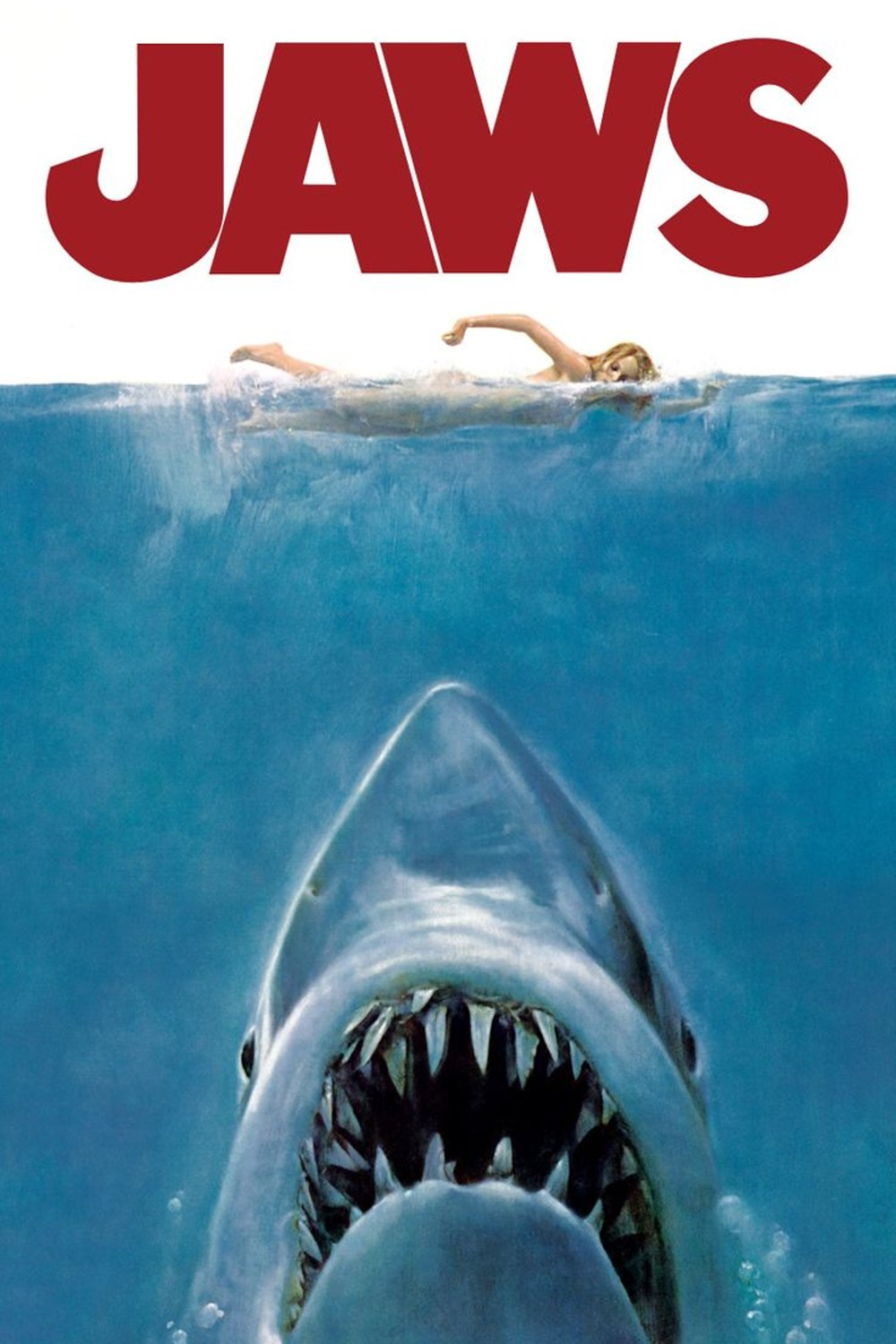
Film fans will recognize May 25, 1977 as the day “Star Wars” opened in the United States. Like “Jaws” before it, the effect the film had on Hollywood would change it forever. Thanks to the success of “Star Wars,” films like “Star Trek the Motion Picture” and “The Black Hole” were greenlighted by studios, bringing science fiction, once a stalple of 1950s Hollywood, back to the cinema.
Pat Johnson (Daley) takes in a showing of “2001: A Spsce Odysey” and is mesmerized by what he has seen. He begins to make home movies in the neighborhood and finally saves the money to travel to Hollywood with one mission: to meet Douglas Trumball, the man behind the special effects of “2001.” His trip doesn’t go exactly as planned, but what does happen changes Pat’s life forever.
The film follows Pat on his journey west – he lives in Illinolis – where, while waiting to meet Trumball he runs ito a young Steven Spielberg, who is currently finishing up the special effects on “Close Encounters of the Third Kind,” a film Trumball also did the special effects for. He also stumbles into a room containing models for another upcoming film called “Star Wars.” Impressed by the young man’s interest, one of the crew invite him to a screening room where he is given a peek at a very rough cut of “Star Wars.” Overwhelmed by what he’s seen, Pat returns home where he does his best to make his friends and family as “Star Wars” crazy as he is.
The first act of the film is well done. Daley captures the same enthusiasm that my 16-year old pals and I had in wating for the film to open. It’s clear to the viewer that “Star Wars” really had an effect on Pat’s life, much the same way that “Jaws” had on mine. So excited is Pat that he invites his entire class to be his guest at the theatre on opening day.
It’s the second act of the film where things begin to fumble. Even though the film runs a healthy 132 minutes (11 minutes longer then “Star Wars”), Mr. Johnson has tried to cram too much into the final 45-minutes of the film. It’s almost as if, after 15 years of working on the film, Mr. Johnson decided to use everything he had. As someone who focuses on the minute trivia of films, I was disappointed to find a Cubs game on television late at night. I lived in the Chicago area until 1974 and I don’t recall Cub games being re-broadcast. Also, if my ears are working correctly, there is a batter in the game that has 98 RBIs – in mid-May. I have other issues with the film but to list them would require a SPOILER ALERT notice.
I first became aware of this film when Mr. Johnon was interviewed for the “Jaws” documentary “The Shark is Still Working,” a film in which I also appear. I was intrigued by the 5-25-77 poster behind Mr. Johnson and have eagerly been waiting for this film since then. While I did have some quibbles with the film, it is definitely one that should be seen, not only for movie lovers who will find a kindred soul in young Pat Johnson but as a validation of Patrick Read Johnson’s perseverance.
I give “5-25-77” 3.5 stars out of 5.
Starring: Marin Ireland, Judy Reyes and Breeda Wool
Directed by: Laura Moss
Rated: NR
Running Time: 98 minutes
IFC Films
Our Score: 4 out of 5 Stars
You know you’re in for a good movie when a director is able to summarize their film without giving away too much. Before “Birth/Rebirth” began, Director Laura Moss discussed how the film was her own unique take on “Frankenstein” and how the idea has been simmering in her mind since she was a teenager. Even with that kind of spoiler in mind, one where I could expect the reanimation of a dead person, I couldn’t foresee what kind of horrors could be and would be mined in “Birth/Rebirth.”
Celie (Judy Reyes) is a natural as a prenatal nurse at the hospital she works at. She brings her motherly warmth to work to help patients and others, but that warmth will disappear in a flash. Celie’s daughter, Lila (A.J. Lister) abruptly dies, leaving Celie with so much to ponder. On the flip side, we meet a morgue tech by the name of Rose (Marin Ireland) who goes about her work with about as much warmth as the corpses she digs around in. Celie and Rose are strangers, but Lila’s death is going to bring them together in horrific ways.
The mantle of Dr. Frankenstein could be divided up between Celie and Rose, who work together after Rose reanimates Lila. Celie, despite being unable to communicate with the daughter she used to know, tries in earnest to recover what she had by focusing on nearly every aspect of Lila’s life. Rose on the other hand takes a more rudimentary, yet scientific approach to Lia as she makes notes, runs experiments and monitors the overall situation. Sometimes the roles flip as time goes on where one character assumes the role of scientist and the other as parental figure. Because the reanimated Lila remains mostly quiet throughout the duration of the film, it’s difficult to tell what’s actually going on in her head as opposed to the emotional projections by Rose and Celie.
I can’t think of a “Frankenstein” reimaging or story that heavily shifts the narrative to a female centric one. The original story could be viewed as man’s attempt to control what humanity cannot control, life and death. In some ways you could argue the original doctor was also driven by a need to create. The ability to create a human life is not possible for someone born as a man, so Dr. Frankenstein had to create human life in another form. “Birth/Rebirth” seems to explain the passion and need to control life and death as that of a woman/parent. We see how Celie and Rose work with Lila to ensure she survives, the sacrifices both of them make, but is it more about science or more about basic maternal instincts? Rose is the calculating, numbers driven and scientific to all her approaches, but the longer she spends with Celie and Lila, the more something else is taking shape beneath her expressionless face. On the flip side, Celie also realizes the lengths she’ll go to obtain what she used to have, but must also reckon with what it takes to reach that goal.
The film’s ending, which will certainly be annoying to some, leaves more questions than answers. The audience is supposed to reflect on the idea of motherhood and what parenthood in general does to us. The morals of the film are constantly being debated by the characters and by their inevitable actions. Just like the Mary Shelley classic, “Birth/Rebirth” asks us to examine creation, life and death, through our own selfishness, our own sacrifices and ultimately what we are willing to do to secure and fulfill what we see as our obligations to our creations. “Birth/Rebirth” is a monster that you’ll be thinking about long after the credits and lights go up.