ReedPop, the world’s leading producer of pop culture events, today revealed a first look at New York Comic Con’s (NYCC) jam-packed programming lineup for this year’s convention.
New York Comic Con Unveils 2026 Programming Schedule
Thousands of Pop Culture Fans Will Descend Upon the Javits Center in NYC on October 8-11 for NYCC’s 20th Anniversary
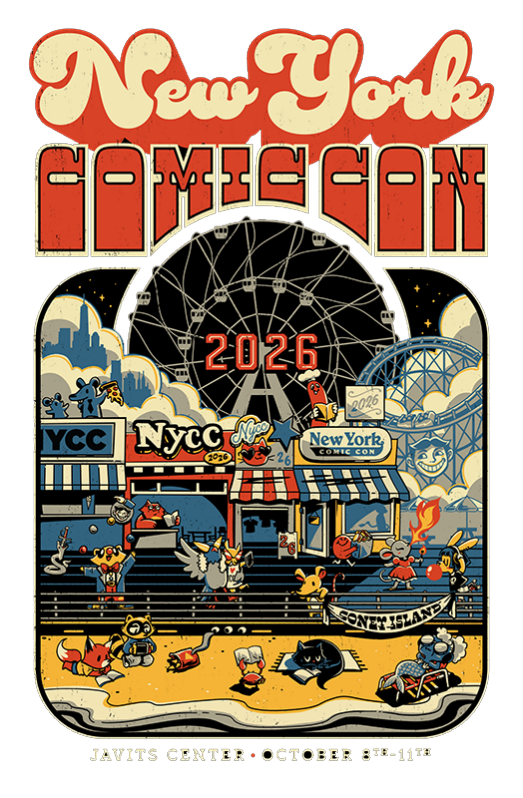
Celebrating its 20th anniversary this year, NYCC returns to the Javits Center in New York City on October 8-11, 2026.
A home for heroes, villains, and nerds to come together in New York City for the last 20 years, NYCC is bringing fans four jam-packed days of pop culture, film and TV studios, studio and brand activations, comics, celebs, authors, voice actors, panels, and more. Programming highlights for this year’s event include:
FINAL FANTASY VII REVELATION – Meet the English Voice Cast
For the first time ever, see the full main English voice cast of FINAL FANTASY VII REVELATION, the climactic finale to the FINAL FANTASY VII Remake Series, on stage together! Accompanied by the game’s director, Naoki Hamaguchi, the voice cast will share stories from their time recording for the game, discuss their characters in the third game, and more. Exclusive BTS footage from their recording sessions will also be shared.
Thursday, October 8th, 11:00 AM, Main Stage
Alice Cooper in Conversation with Stevie Van Zandt (Book-with-Ticket)
Iconic rock royalty Alice Cooper will discuss his brand new memoir, Devil on My Shoulder, with fellow rock legend, Stevie Van Zandt. The ticket price includes a signed copy of Devil on My Shoulder. (This is a book-with-ticket event. Tickets will be the cost of the book and will go on sale later this month. There will be a standby line for those wishing to attend without purchasing the book.)
Thursday, October 8th, 11:00 AM, Room 406.3
Sesame Street Numeric Con Table Read/Panel
Watch a hilarious live table read from a fan-favorite classic Sesame Street episode, “Numeric Con” (season 45, 2014). A Sesame Street twist on Comic Con, “Numeric Con” is the biggest number convention where everyone on Sesame Street dresses up to celebrate their favorite number characters. Elmo, posing as The Dark Nine, has a grand plan for his day at the convention, with the ultimate goal of counting to ten with the Green LanTen. Hilarity, confusion, and fun ensue, and Elmo ultimately learns to be flexible (the word of the day). The reenactment will feature special appearances from other fan-favorite characters and celebrity guests dressed in the original “Numeric Con” costumes.
Thursday, October 8th, 11:30 AM, Room 406.2
Dexter: Resurrection S2 Panel
Two decades ago, audiences were introduced to the world’s most compelling serial killer. Now, the Dexter legacy continues. Join the cast and creative team behind Paramount+’s Dexter: Resurrection to celebrate the franchise’s landmark 20th anniversary and get an exclusive look at what’s in store for the upcoming second season – with plenty of killer surprises to look forward to.
Thursday, October 8th, 12:30 PM, Main Stage
NBC 100 PRESENTS: Brooklyn Nine-Nine Retrospective
The Nine-Nine is back! Join Brooklyn Nine-Nine Co-Creator Dan Goor and cast members for an exclusive retrospective celebrating the beloved NBC comedy. From unforgettable characters and legendary cold opens to iconic moments fans still can’t stop talking about, relive behind-the-scenes stories and fan-favorite memories. As NBC celebrates its 100th birthday, this special reunion honors Brooklyn Nine-Nine’s lasting legacy and its place among the network’s most beloved comedies.
Thursday, October 8th, 12:30 PM, Room 405
ABC The Rookie
Cast and executive producers will gather to discuss the upcoming ninth season premiere, its streaming growth, becoming a viral hit with young viewers and much more.
Sunday, October 11th, 2:15 PM, Main Stage
Dark Horse Manga and Manhwa: Unleash Your Collection
Dark Horse brings the Manga! Join the editorial, licensing, and marketing teams behind the library of titles Dark Horse has brought to English audiences from Japan and Korea over the years to discuss the importance of Manga (and Manhwa) to the comics industry in the United States and get some insight into the care and passion that goes into designing a Deluxe Edition of beloved series. Get ready for announcements of what’s coming next from Dark Horse!
Thursday, October 8th, 2:15 PM, Room 406.1
DC’s Vertigo + Black Label
Step beyond the boundaries of the core DC Universe and into the worlds of DC Vertigo and DC Black Label. Join award-winning comic book creators for a look at the stories redefining horror, crime, fantasy, sci-fi, and genres that refuse to fit the mold. Expect exclusive announcements, first looks, and surprises as DC showcases its boldest graphic storytelling.
Thursday, October 8th, 2:30 PM, Room 409
MARRIAGETOXIN Road to the Best Marriage! at NYCC
Come hear the stories of the production of the MARRIAGETOXIN series featuring the Director, Motonobu Hori and the Chief Animation Director/Character Designer, Kohei Tokuoka! Get the inside scoop on the behind the scenes of the making of Season 1 and hear firsthand on what the team has planned for Season 2. Don’t miss out on this exciting opportunity to learn more about the series and don’t miss a chance to see Kohei Tokuoka’s live drawing session and see the character creation process from a pro!
Thursday, October 8th, 3:15 PM, Room 409
GUNDAM Showcase 2026 @ NYC – Feat. SEED FREEDOM ZERO
Be among the first fans in the world to learn more about MOBILE SUIT GUNDAM SEED FREEDOM ZERO with special guests. This Panel also features, latest Gundam news, upcoming initiatives, and fan experiences, providing a unique perspective from the team bringing Gundam to audiences worldwide. Don’t miss this special opportunity to experience the future of Gundam at NYCC 2026, last but not least, there are amazing giveaways too!
Thursday, October 8th, 3:30 PM, Main Stage
Up Next From Marvel Television and Marvel Animation
Join special guests for an inside look at Marvel Television and Marvel Animation’s most anticipated upcoming series on Disney+.
Thursday, October 8th, 4:15 PM, Empire Stage
Last Podcast on the Left: From True Crime Podcasters to Comic Book Authors
Marcus Parks, Ed Larsen, and Henry Zebrowski are the hosts of the wildly popular podcast, Last Podcast on The Left. They’re also authors of the Z2 Comics “Last Comic Book on The Left” books, DC’s “Soul Plumber,” and Dark Horse’s “Operation Sunshine.” Join these three as they discuss stories about how their work on a show covering true crime, cult leaders, and the occult prepared them for the jump from podcasting to the world of comic books.
Thursday, October 8th, 5:00 PM, Room 405
Peacock’s Crystal Lake: Exclusive First-Look Screening
Join Peacock and A24 for an exclusive first-look screening of the premiere episode of Crystal Lake – the chilling prequel to the iconic Friday the 13th franchise – followed by a conversation with series creator Brad Caleb Kane and stars Linda Cardellini, William Catlett, Devin Kessler, Cameron Scoggins, Gwendolyn Sundstrom and Callum Vinson.
Thursday, October 8th, 6:30 PM, Empire Stage
DC’s Absolute Universe
Celebrate the phenomenon of DC’s Absolute Universe with the writers and artists shaping comics’ most talked-about titles. Get the latest news, exclusive reveals, announcements, and behind-the-scenes insight into the stories and characters captivating readers across the Absolute line. Whether you’re already a devoted reader or curious about what comes next, this is a can’t-miss panel for Absolute fans.
Friday, October 9th, 11:00 AM, Room 405
Avatar: Seven Havens
Four Nations fans: unite for the ultimate celebration of Avatar: Seven Havens on its premiere day! Join the creative team behind the all-new Paramount+ series for an exclusive glimpse into how they brought Seven Havens to life, and what lies ahead for Pavi – the new Avatar – as her journey begins. Plus, hear more about what’s in store for the Avatar Legends universe. Yip yip!
Friday, October 9th, 11:15 AM, Main Stage
Spotlight on Matt Dinniman
New York Comic Con is excited to welcome #1 New York Times bestselling author Matt Dinniman (Dungeon Crawler Carl) to our literary program. Matt will discuss the journey that led him to write apocalyptic fiction, including the megahit Dungeon Crawler Carl series.
Friday, October 9th, 12:30 PM, Room 405
ONE PIECE Panel: Presented by Toei Animation and Crunchyroll
Join us for a special ONE PIECE English dub panel featuring Colleen Clinkenbeard (English voice of Luffy), Ian Sinclair (English voice of Brook and Scopper Gaban), and surprise guests. Fans can look forward to exciting conversations, exclusive content, and more as we lead up to the English dub premiere of the ONE PIECE Elbaph Arc, coming Fall 2026 and streaming on Crunchyroll.
Friday, October 9th, 12:45 PM, Empire Stage
Todd McFarlane Spotlight
The Toddfather is back @ NYCC! Come hear Todd talk about everything from comics to movies to toys in this can’t miss panel.
Friday, October 9th, 1:30 PM, Room 406.3
GHOSTS & ETERNALLY YOURS Panel
Join the cast and executive producers of CBS’ fan-favorite series GHOSTS for a ‘spirited’ conversation with behind-the-scenes stories, exclusive reveals, and teases as they unpack the Season 5 cliffhanger and discuss what’s next for your favorite residents of Woodstone Manor ahead of this October’s supersized hour-long Halloween special.
Then sink your teeth into CBS’ new comedy series ETERNALLY YOURS – an eternal love story about two vampires who have been married for five hundred years, and their struggles to accept the human who is dating their daughter. Join cast and executive producers as they take a bite out of New York Comic Con with an exclusive sneak peek and panel conversation.
Friday, October 9th, 1:45 PM, Main Stage
Tamashii Nations Showcase NEW YORK COMIC CON SPECIAL PANEL “Ignite Your Soul“
Get an exclusive first look at what’s next from Bandai Namco’s TAMASHII NATIONS. Featuring world premiere reveals, new product announcements, upcoming product releases from Japan, and never-before-shared information for the first time anywhere in the world. Attendees will hear directly from representatives of the TAMASHII NATIONS team and get a glimpse at future products and initiatives, while also getting a chance to receive a special giveaway item.
Friday, October 9th, 2:45 PM, Room 409
20th Century Studios and Imagine Entertainment present “Whalefall”
Director/co-screenwriter/producer Brian Duffield and author/co-screenwriter Daniel Kraus join Austin Abrams for a deep dive on the epic and emotional survival thriller about a young man’s encounter with a massive sperm whale. Based on the acclaimed novel, the visceral, immersive, cinematic event of The Fall opens exclusively in theaters October 16.
Friday, October 9th, 3:30 PM, Empire Stage
AMC+ Spotlight: Kill Jackie, YAGA, Anne Rice’s Mayfair Witches, The Walking Dead: Daryl Dixon
Join us for highlights of some of the year’s most anticipated series. Join the stars and creators of Kill Jackie, YAGA, Anne Rice’s Mayfair Witches, and The Walking Dead: Daryl Dixon for exclusive reveals, behind-the-scenes stories, and first looks you won’t see anywhere else. A must-attend event for fans.
Friday, October 9th, 3:30 PM, Main Stage
Marvel Comics: Bullpen Bulletins! with Stephen Wacker
Stop right there, conventioneers! You found the big one! The Bullpen is back in action as all-new Editor-in-Chief Stephen Wacker charts the thrilling future of the Marvel Universe for the first time…and probably gets in trouble for saying too much!! From bold publishing moves to groundbreaking storytelling, Marvel’s Bullpen crew is ready to burst into tomorrow, and this is where you’ll hear the first rumblings of what’s being built inside the House of Ideas!
Friday, October 9th, 3:30 PM, Room 405
Marvel Comics: The Midnight Hour
Welcome to the Midnight Universe. Celebrate the launch of this terrifying new line with the twisted minds behind its creation as they lift the cloak of darkness surrounding Midnight Spider-Man, Midnight Fantastic Four, and Midnight X-Men with first looks, secret lore, and a glimpse into the world’s shadowy future.
Friday, October 9th, 5:00 PM, Room 405
VIOLENT NIGHT 2 and BLUMFEST 2026
Join us at the Empire Stage for an evening of conversation and footage with the filmmakers and cast behind the hottest films coming to theaters later this year.
Get an exclusive look at Universal Pictures’ Violent Night 2, the propulsive new chapter in yuletide mayhem from 87North and returning action director Tommy Wirkola, with David Harbour reprising his role as Santa Claus. The panel will feature a conversation about the film and special never-before-seen footage.
BlumFest 2026 comes to New York Comic Con as Blumhouse Atomic Monster pulls back the curtain on its upcoming slate of films, TV shows and games. Expect never-before-seen footage, candid filmmaker conversations and the last-minute surprises that BlumFest is known for.
This panel will feature both Violent Night 2 and Blumfest together, and the room will not clear, so buckle into your seat for the most thrilling night of the year for film fans.
Friday, October 9th, 5:30 PM, Empire Stage
Junk Ito: Strange — “Face Thief” U.S. Premiere & Director Q&A
Join us for the U.S. premiere of “Face Thief,” of *Strange: Junji Ito’s Tales for Sleepless Nights*, a live-action anthology series based on selected stories by horror manga legend Junji Ito. The event will feature an exclusive screening, a special video message from Junji Ito, and a live Q&A with director Yuta Shimotsu, an internationally recognized emerging voice in J-horror, moderated by US-based horror manga artist Gigi Murakami. Junji Ito will appear by video message only and will not attend in person. An announcement about official merchandise on Amazon will also be included.
Friday, October 9th, 5:45 PM, Room 409
SLAYYY! DRESSING TO KILL: The Iconic Costumes of FX’s “American Horror Story”
FX’s “American Horror Story: 13” is coming to haunt the hallowed halls of NYCC after dark! Join stars Sarah Paulson, Billie Lourd, Gabourey Sidibe and Leslie Grossman, along with acclaimed costume designers Lou Eyrich and Catherine Crabtree, for a spellbinding conversation celebrating the iconic costumes that defined “AHS,” the chilling legacy of one of television’s most groundbreaking horror franchises and hear what horrors await in the highly anticipated 13th installment. FX’s “American Horror Story: 13” returns on Thursday, September 24 at 9pm ET / 6pm PT on FX and Hulu.
Friday, October 9th, 8:00 PM, Room 405
Bob’s Burgers and Futurama Animation Panel
The Belchers are back at New York Comic Con! Join executive producer Loren Bouchard alongside the cast as they dish on all things Bob’s Burgers, sharing behind-the-scenes stories, fan-favorite moments and plenty of laughs, plus a special first look at what’s ahead for the beloved Belcher family.
Futurama is back on Hulu, and back at New York Comic Con! Join creator Matt Groening, executive producer and head writer David X. Cohen and executive producer Claudia Katz, along with stars Billy West, Katey Sagal and Maurice LaMarche, and moderator/producer Lee Supercinski, for an infinitely intimate discussion of the beloved sci-fi comedy and what’s ahead for the Planet Express crew.
This panel will feature both Bob’s Burgers and Futurama back-to-back, and the room will not clear, so buckle into your seat for the best panel of NYCC for animation fans.
Saturday, October 10th, 11:00 AM, Main Stage
DC’s Next Level
Go deeper into DC’s Next Level publishing initiative with the storytellers bringing it to life. Join acclaimed and award-winning creators for news, announcements, and exclusive reveals from the newest titles expanding the DC Universe. From breakthrough new series to the next chapter of fan-favorite characters, get a first look at what’s ahead for DC’s growing Next Level line.
Saturday, October 10, 11:00 AM, Room 409
Embracing the Horror: Modern Masters of the Genre
Join Saga Press as they bring you an elite roster of horror writers to celebrate the genre and discuss their books: NYT bestselling author Stephen Graham Jones, critical darling Eric LaRocca, and rising stars Alex T. Singer, Kristopher Triana, and Nick Martell.
Saturday, October 10th, 12:15 PM, Room 1B02-04
ONE‑PUNCH MAN Special Panel: The Voice of Garou
For the first time ever, Garou’s Japanese voice actor, Hikaru Midorikawa, comes to New York for an exclusive ONE-PUNCH MAN panel! Plus, don’t miss the worldwide reveal of brand-new ONE-PUNCH MAN information! This is a must-see panel that you won’t want to miss!
Saturday, October 10th, 1:30 PM, Room 409
DC’s Jim Lee & Friends
At this year’s New York Comic Con, DC President, Publisher and Chief Creative Officer Jim Lee will treat fans to a lineup of surprise announcements, reveals and special guests, along with great conversations with top comic creators, during DC’s annual NYCC “Jim Lee & Friends” panel. Moderated by Jim Lee.
Saturday, October 10, 2:00 PM, Room 405
THE BOULET BROTHERS’ DRAGULA: 10 YEARS OF TERROR (Shudder/AMC+)
The Boulet Brothers descend on New York Comic Con to celebrate a decade of horror, filth and glamour, and open the crypt on the show’s upcoming seventh season. Join modern-day horror icons The Boulet Brothers for an inside look at the making of their biggest season yet, stories from a decade of Dragula, and an exclusive first look at never-before-seen Season 7 footage only for the NYCC audience.
Saturday, October 10th, 2:00 PM, Room 408
Your Ship is Canon: Queer Love in Comics
While most of us never let a thing like canon get in the way of a good ship, it’s also a joy to see queer love stories & characters (in all their multitudes) fully realized and celebrated on the page. Join comic creators Tate Brombal, Erica Henderson, Steve Orlando, Stephanie Williams, and Alyssa Wong, as they talk craft, their favorite ships, and what it means to them and the format as a whole to craft queer characters and romance for the panels & pages of some of your favorite comics. Moderated by: Harley Salbacka, Tiny Onion Events & Library Manager
Saturday, October 10th, 2:45 PM, Room 406.3
STAR TREK UNIVERSE Panel
The Star Trek universe returns to New York Comic Con, featuring the Paramount+ Original series STAR TREK: STARFLEET ACADEMY for an exclusive sneak peek and conversation about the upcoming sophomore season. Plus, celebrate 60 years of Star Trek with surprise guests from the iconic franchise.
Saturday, October 10th, 3:15 PM, Empire Stage
Marvel Comics: The Spider-Web
It’s never been a better time to be a Web-head! Fresh off Amazing Spider-Man #1000, the biggest issue in Spider-Man history, discover what’s on the horizon for Peter Parker, Miles Morales, Gwen Stacy, and more with a look into the future of Marvel’s web-slinging heroes, including a major announcement that will turn their world upside down!
Saturday, October 10th, 3:30 PM, Room 405
IMAGE COMICS PRESENTS: BRIAN K. VAUGHAN & CLIFF CHIANG IN CONVERSATION
Join us for an in-depth conversation with master storyteller Brian K. Vaughan & Cliff Chiang, the team behind the smash-hit Paper Girls, as the two share details about working in comics together. There may be a surprise or two for those in attendance. Moderated by Jim Viscardi, VP of Business Development at Image Comics.
Saturday, October 10th, 4:00 PM, Room 1B02-04
Marvel Comics: House of Ideas
The House of Ideas is ready to blow the roof off NYCC! From world-defining events to breathtaking new series, something big is always under construction in the Marvel Universe. It’s a New Day for the House of Ideas and tomorrow is on full display in this all-new, all-different panel with wall-to-wall announcements, major reveals and more surprises you’ll never see coming! If you want to know what’s next for Marvel, you won’t want to miss this (…but remember: “next” is only the beginning!)
Saturday, October 10th, 5:00 PM, Room 405
NARUTO: What’s Next?
Join us for an exclusive look at what’s next for NARUTO with our guests, voice actors Junko Takeuchi (Naruto Uzumaki) and Noriaki Sugiyama (Sasuke Uchiha)! Get the latest updates on the anime, the NARUTO CARD GAME, and other exciting new projects. Plus, be among the first to see the new roadmap for the future of the NARUTO universe! Don’t miss your chance to receive a special door giveaway, while supplies last.
Saturday, October 10th, 5:00 PM, Empire Stage
AETHON: VAULT – LITRPG TAKES OVER THE WORLD
LitRPG has quickly taken the world (and the NYT Bestseller lists) by storm. From Dungeon Crawler Carl to He Who Fights With Monsters and beyond, LITRPG has proven itself to be the hottest literary genre being published today. Join Dungeon Crawler Carl author Matt Dinniman, Aethon’s Steve Beaulieu, Vault’s Damian Wassel and Adrian Wassel, and moderator Andy Peloquin as they dive into the past, present, and future of your new favorite genre.
Saturday, October 10th, 5:15 PM, Room 409
Inside “Percy Jackson and the Olympians” Season 3: A Conversation with Walker Scobell
A deep dive with Walker Scobell into Season 3 of “Percy Jackson and the Olympians,” exploring the next chapter of Percy’s journey and what it means to bring The Titan’s Curse to the screen for the first time. In conversation with TV Guide’s Damian Holbrook, the discussion will take fans behind the scenes of the new season while giving audiences a closer look at Walker’s experience growing with the series and stepping further into the role of Percy Jackson.
Saturday, October 10th, 6:00 PM, Main Stage
Shudder Is Here to Scare the S— Out of You! Celebrating the Season of Screams
Shudder special guests join for a discussion on the current state of horror, what scares us the most, and the future of the genre, including a look back at the year, exclusive first looks and and what’s to come to the streamer.
Saturday, October 10th, 6:30 PM, Room 405
NCIS: NEW YORK Panel
From the streets of New York City to the Comic Con stage, experience an exclusive panel discussion for CBS’ new series, NCIS: NEW YORK, the newest chapter in the #1 global NCIS franchise. Join series stars LL COOL J (NCIS Special Agent Sam Hanna) and Scott Caan (NCIS Special Agent Nick Schaeffer), alongside executive producer and showrunner Byron Balasco, for an in-depth conversation about bringing the franchise to NYC, building this new world and what’s ahead for the characters and high-stakes cases that will define the series’ first season.
Sunday, October 11th, 11:00 AM, Main Stage
American Girl at 40: Samantha’s Story Continues (Book-with-Ticket)
Join author Fiona Davis, American Girl historian Katherine Cartwright, and editor Janelle Asselin for a special conversation with moderator Chloe Williams celebrating 40 years of American Girl and a new chapter for one of its most beloved characters. In Samantha: The Next Chapter, Samantha’s story continues for a new generation—honoring the past while exploring what comes next. This panel will explore the responsibility and excitement of continuing an iconic character’s journey, the role of historical fiction in shaping young readers, and how Samantha’s voice resonates today—both on the page and through audio storytelling. The ticket includes a signed copy of Samantha: The Next Chapter. (This is a book-with-ticket event. Tickets will be the cost of the book and will go on sale later this month. There will be a standby line for those wishing to attend without purchasing the book.)
Sunday, October 11th, 11:15 AM, Room 406.2
R.L. Stine on Tubi
Tubi is officially a year-round destination for all things horror. To celebrate the launch of Tubi’s “Terror on Tubi Hub,” a permanent destination for fans to discover their favorite horror titles ranging from Originals, fan favorite classics, and creator-led series, there is no one better to lead the charge than the iconic R.L. Stine. Last October, the streaming platform kicked-off an iconic partnership by premiering the widely successful Tubi Original family-friendly horror film, R.L. STINE’S PUMPKINHEAD.
Join the “R.L. Stine on Tubi” panel to hear from the worldwide bestselling author himself alongside writer-director Jem Garrard (R.L. STINE’S PUMPKINHEAD 2), designer, drag queen, and actor Jimbo (“RuPaul’s Drag Race All Stars”), and Tubi Chief Content Officer and Variety “Horror Impact Report” honoree Adam Lewinson as they dive into the impact R.L. Stine has had within the horror community, discuss their respective films coming to the platform including the new Tubi Original R.L. STINE’S PUMPKINHEAD 2, and share breaking news on what’s up next for “R.L. Stine on Tubi.”
Sunday, October 11th, 12:15 PM, Room 409
EINSTEIN Screening & Panel
Be among the first to see CBS’s new crime-solving drama, Einstein! Starring Matthew Gray Gubler, the series follows Lewis Einstein, the brilliant and directionless great-grandson of Albert Einstein, an eccentric professor who forms an unlikely partnership with a sharp detective to tackle the most perplexing cases. Join us for a special screening and exclusive conversation with series stars Matthew Gray Gubler and Melissa Fumero as they discuss bringing this unique blend of mystery, humor, and heart to life.
Sunday, October 11th, 1:45 PM, Room 409
Tokyo Revengers Special Panel with Mariya Ise
Watch Episode 1 of Tokyo Revengers: War of the Three Titans Arc, the highly anticipated new arc streaming this October! Join Mariya Ise, the voice of Senju Kawaragi, as she shares highlights and insights into the new season. Attendees can receive exclusive giveaways and special prizes during the panel. This is one panel you absolutely won’t want to miss!
Sunday, October 11th, 3:30 PM, Empire Stage
The 2026 schedule is available here, with more panels to be announced in the coming weeks.
In addition to the above programming, NYCC 2026 previously announced a star-studded lineup of celebrities joining this year’s celebration of pop culture for Photo Ops and Autographing, including Star Wars’ stars Hayden Christensen and Ian McDiarmid; Lena Headey (Game of Thrones, 300); Matt Smith (House of the Dragon, Doctor Who); Jamie Campbell Bower(Stranger Things, Camelot); puppeteers Matt Vogel (Kermit the Frog), Dave Goelz (Gonzo the Great) and Bill Barretta (Pepe the King Prawn, The Swedish Chef); cast members from fan-favorite films and TV series including Jurassic Park, Smallville, Scream, Brooklyn Nine-Nine, Superman & Lois, and Robocop; plus voice talent from popular video games and animated series including Pokemon, Naruto, HALO, Clair Obscur: Expedition 33, Uncharted, and more. Comic legends like Frank Miller, Jim Lee, James Tynion IV, Stephanie Phillips, Nick Dragotta, and Scott Snyder, along with literary guests such as Becky Chambers, Fiona Davis, J.R. Ward, Kyle MacLachlan, MrBallen, and Rick Riordan, are also making their way to this year’s convention.
The full lists for Artist Alley, Writers Block, and Exhibitors will be released on Tuesday, August 25.
To commemorate this incredible anniversary milestone for NYCC, ReedPop is partnering with another NYC icon, Coney Island, as the official theme for 2026. The collaboration brings together two legendary NYC destinations that have long invited fans to play, explore, and fully embrace what they love. For generations, Coney Island has been a symbol of joy, spectacle, and imagination—much like NYCC, where fans from around the world gather each year to celebrate the stories, characters, and communities that inspire them. Together, they represent the heart of New York at its most vibrant: creative, inclusive, and unapologetically fun.
Single-day tickets for New York Comic Con 2026 are available now for Thursday, Friday, and Sunday. All other badge types are sold out. Fans can also sign up to become Popverse Superfans for exclusive benefits, including first access to Artist Alley, fast-pass lanes for Photo Ops and Autographing, a discount on official NYCC merch, access to digital programming, and more at thepopverse.com.
Stay up to date on the latest New York Comic Con news at NewYorkComicCon.com and on Facebook, X, and Instagram.