Film Review: “Whiteout”

Starring: James McDougall, Douglas Nyback and Joel Labelle
Directed by: Derek Barnes
Rated: R
Running Time: 91 minutes
Saban Films

Our Score: 2.5 out of 5 Stars

Movies don’t always have to have plots. In fact, there’s the saying that too much plot gets in the way of the story, which basically means the film’s vibe. Some people’s favorite films are all about the vibe, more than it is the actual story. A lot of coming-of-age films are about relating to the character or movies like “The Big Lebowski” thrive on it’s characters, as opposed to the rug and kidnapping mystery. So, when a film like “Whiteout” comes along, you have to wonder, “What does it thrives on??

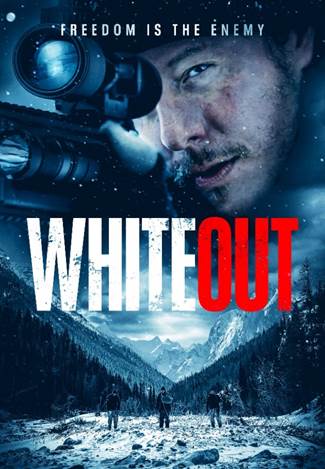
The film hooks you immediately by opening with Russian men kidnapping several individuals from an office complex. The men from the office are sent to labor camps while the few women we see in the background at the office…are probably sent to something worse. “Whiteout” follows Henry (James McDougall), who quickly, after the opening, ends up being involved with the escape plans of two other different prisoners, Kurt (Douglas Nyback) and Anthony (Joel Labelle). While the trio survive a labor camp gun battle, they quickly find out they might not be able to survive the snowy, rocky elements of Mother Russia.

So, why were Russian men raiding the office complex? I don’t know. Why was Henry captured and sent to a miserable labor camp? I don’t know. Who are these two who’ve picked Henry for their escape? I don’t know. Why does everyone we encounter seem to be a sharpshooter? I don’t know. “Whiteout” is a vibe. That vibe is non-stop action, although it does reveal a little as the film progresses, but not enough to add stakes to the overarching plot. Which is unfortunate because it’d be nice to care about Henry’s plight, more than feeling bad for the out of shape tubby guy who has to deal with the worst from Old Man Winter and the lack of trust from those he’s escaped with. That being said, the movie isn’t as predictable as you might think as the third act delivers a few decent shocks.

While I wouldn’t necessarily recommend “Whiteout,” if you were to tell me you were going to watch it, I wouldn’t stop you from watching it. That being said, you really have to enjoy some mindless thrills and actions because you’re not going to get much in the way of thought provoking content. There’s a lot to enjoy from Derek Barnes in his debut feature. He really does capture the vast emptiness of the wilderness and some of the more unforgiving aspects of it. And even with a low budget, the action is incredibly choreographed and the suspense keeps you engaged even if Barnes didn’t know how to write anything beyond a basic plot.

Film Review: “Wicked – Part One”


  • WICKED – PART ONE
  • Starring:  Cynthia Erivo, Ariana Grande and Jeff Goldblum
  • Directed by:  Jon M. Chu
  • Rated:  PG
  • Running time: 2 hrs 41 mins
  • Universal

 Our Score: 5 out ot 5

Sometimes when you get your hopes up, they get dashed, especially when it comes to movie musicals.  For every “West Side Story,” you get a “Cats.”  For every “Les Miserables,” you get a “Cats.”  For every “La La Land” you get, well… “Cats.”  So you can imagine my trepidation as I sat down to see “Wicked.”  Thankfully, there was nothing to worry about.


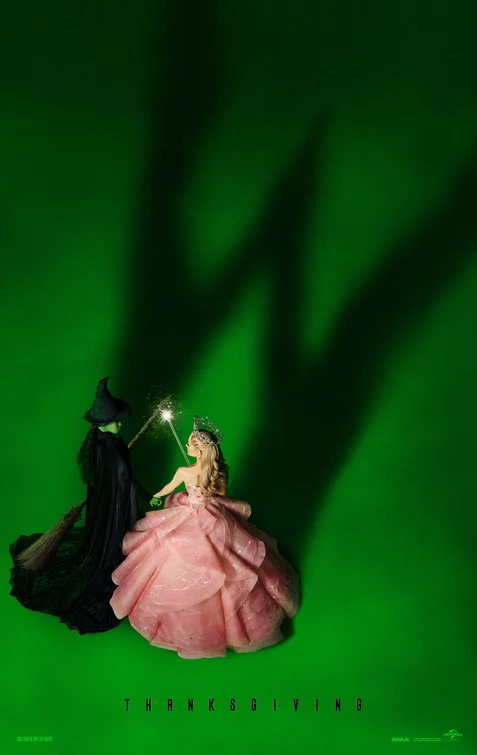
Based on the still-running 2003 Broadway show of the same name, “Wicked” tells the story of two very different people whose lives are inevitably linked in Pop Culture.  The film begins with what could almost be a coda to “The Wizard of Oz.”  The wicked witch of the West has been killed and the residents of Oz are celebrating.  They are visited by Glinda (Grande), a beautiful witch who floats along in a bubble.  She confirms the witch’s death and begins to leave.  Before she can make her escape she is asked, “is it true that you and the wicked witch were once friends?”  And the story begins.

Where to start?  Among my fears was that devoting over two and half hours to the first act of the show, which only runs for ninety minutes on Broadway, would fill the screen with unnecessary clutter and nonsense.  But director Chu fills the screen with wonderful scenery, none of it wasted space.  He keeps the film moving at such a pace that you don’t realize you’ve spent nearly three hours sitting in the dark.


The cast is top notch.  As an “old guy” I am not familiar with any of Ariana Grande’s music.  That being said, I was blown away by her voice.  She also gives Glinda a likability that other actresses may not have been able to exude.  As Elphaba, the future wicked witch, Erivo excels at keeping the character grounded.  She has a sense of humor, which you most certainly need when you are green.  Her performance gives Elphaba a humanity that the audience can relate to.  It’s not her that’s bad, it’s those that bully her.


The film also has an inner message about accepting those around you and treating them as you would like to be treated, a message that is often forgotten in today’s world.  Fans of “The Wizard of Oz” will find many Easter Eggs and homages to the 1939 film.  And fans of the original Broadway show may even see some familiar faces.


But it’s the music that makes “Wicked” what it is, and each and every song are presented magnificently.  Both Glinda and Elphaba are iconic roles and it would have been easy for the cast, especially Ms. Grande and Ms. Erivo, to play it safe and sing the songs in the style familiar with audiences.  But both of them bring a new spin to the songs.  Even if you’re a fan of the show you feel like you are hearing these songs for the first time.


If you can’t tell by the title, “Wicked” is being presented in two parts, with part two hitting theatres next November.  Take it from me and get in line now!


On a scale of zero to five, I give “Wicked – Part One” ★★★

Film Review: “Red One”


  • RED ONE
  • Starring:  Dwayne Johnson, Chris Evans and J.K. Simmons
  • Directed by:  Jake Kasdan
  • Rated:  PG 13
  • Running time:  2 hrs 3 mins
  • Amazon/MGM Studios

 Our score 3.5 out of 5


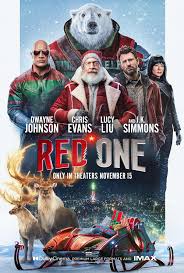
With the holiday’s approaching, many of us are already preparing for the upcoming festivities.  That includes a certain gentleman named Nicholas who lives at the North Pole.  But he can’t do it alone.  Meet Cal Drift (Johnson), Santa’s head of security.  He’s about to retire after several centuries on the job but he’s staying around for one more sleigh ride, one he will never forget.


There aren’t a lot of Christmas-themed action films.  There’s “Die Hard” and there’s, well, “Die Hard.”  “Red One” – Santa’s code name – is no “Die Hard,” but it is an entertaining two hours of fun.  The film begins in the mid 199os, where a family gathering introduces us to young Jack O’Malley (Wyatt Hunt), a boy who doesn’t believe in Santa Claus, quite possibly because he is sure to have been on the infamous “naughty” list.  Jump ahead to today and we learn that the adult Jack (Evans) is still a rotten person who actually DOES take candy from a baby.  Jack is known in certain unsavory crowds as the “Wolf,” a con man who can get you almost anything you want.  His current client is looking for Santa (Simmons) and his secrets.  When the big man is kidnapped Jack and Cal form an unlikely team to save him.

The film’s believability rests solely on the shoulders of the cast, who all give fine performances.  Johnson has continued to grow as an actor and he has an uncanny ability to appear both tough and tender at the same time.  Evans, as a father who has kept himself out of his young son’s life, is also well cast.  Simmons, one of the greatest character actors ever, is also solid, giving what could have been a very routine role some emotional depth.  Bonnie Hunt as Mrs. Claus and Lucy Liu as the Director of the security agency.  Special mention to Kristofer Hivju, who steals scenes as the fun-loving, not evil, Krampus.


The effects are well done and the action set pieces well crafted.  Not sure how many little ones will enjoy this – some of the humor is a little over their heads – but kids love Christmas.  Except for young Jack O’Malley that is.


Overall, I recommend you get in your sleigh and head out over the river and through the woods to see “Red One.”


On a scale of zero to five I give “Red One” ★1/2


Film Review: “Dream Team”

Starring: Esther Garel, Alex Zhang Huntai and Isabelle Barbier
Directed by: Lev Kalman and Whitney Horn
Rated: NR
Running Time: 91 minutes
Yellow Veil Pictures

Our Score: 1.5 out of 5 Stars

As a product of the 90s (technically born in the 80s, but predominantly remember the 90s), I feel like I know what “Dream Team” is going for. The movie bills itself as an “absurdist homage to 90s basic cable TV thrillers.” That triggers memories of “La Femme Nikita,” “The Pretender,” and “The X-Files.” The 90s is also considered the golden age of erotic thrillers with films like “Body of Evidence,” “Basic Instinct” and “Wild Things.” I’m sure I’m name dropping a lot of content that conjures fond memories, but “Dream Team” isn’t able to.

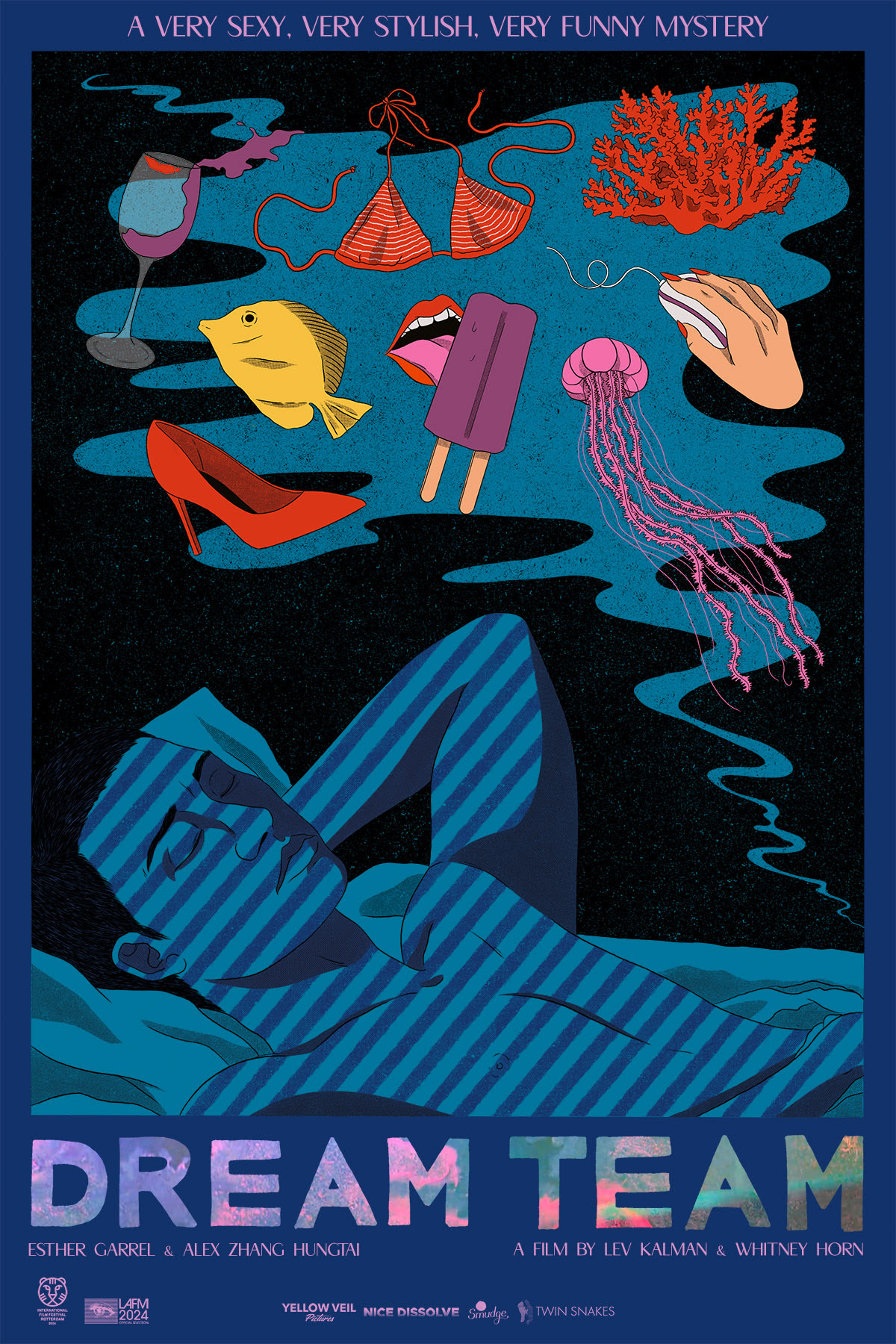
“Dream Team” is about two INTERPOL agents, played by Esther Garel and Alex Zhang Hungtai, investigating mysterious deaths which may or may not be linked to gaseous coral. That’s the plot in a nutshell, but because this is a mysterious 90s thriller, the film is filled with non sequitur character introductions, soap opera subplots, bad practical effects, cringey dialogue, and a lot of unspoken hornyness. This isn’t really a movie though. The film is presented like a VHS of recorded episodes, with the film broken up with episode title cards. It looks and feels like an homage, but it never comes full circle.

The biggest problem in “Dream Team” is that the movie doesn’t seem to know what to do in between some of the more clever moments of the film, like the antiquated technology jokes, incompetent investigation skills and the intentionally shoehorned unsexy sexual moments. The problem is, there’s not an interesting bare bones story to follow along with. There are also long moments of B-roll like waves crashing on the shore, sea creatures just derping about, or shots of the beach. Some of these scenes last for several minutes, almost as if it was begging me to check my latest phone notification.

The movie is tackling 90s erotic thrillers in a way that’s reminiscent of “NTSF:SD:SUV” or “Children’s Hospital,” a bonkers reality where everyone is Leslie Nielsen in “Airplane!” But the problem is that there isn’t a cast and crew stocked with comedic chops. There were moments where I wondered if the cast was interpreting the script correctly because of the different approaches. At other times I felt like the film was telling an inside joke that I wasn’t privy to. It’s also quite possible I’m not a connoisseur of bad 90s like directors/writers Lev Kalman and Whitney Horn. While I’m sure there’s a niche audience for this,  “Dream Team” is, like most of my dreams, forgettable.

Film Review: “Here”


  • HERE
  • Starring:  Tom Hanks and Robin Wright
  • Directed by:  Robert Zemeckis
  • Rated: PG 13
  • Running time:  1 hr 44 mins
  • Miramax


In 1994, “Forrest Gump” became a phenomenon, winning 6 Academy Awards, including Best Picture, and grossing over $670 million worldwide.  Thirty years later, most of the creative team behind the film return for a new family drama, “Here.”


I think we all have our favorite memories about our childhood homes.  My father worked for the newspapers and by the time I was 15 we had lived in six different cities in various states.  My favorite memories were created in a house in Cleveland.  I used to visit the house whenever I was in town.  Even after 40 years I could tell you the layout, where my room was, etc.  It broke my heart in 2020 when I last visited to find that it had been torn down. “Here” not only takes place in a home, but actually in the living room of a home, spanning the length of time.  From the dinosaurs that roamed the land where the house would eventually be built to where it stands today.


Though told in a non-linear fashion, the film focuses mostly on the family that purchases the home shortly after World War II, remaining in it for several decades.  As the film progresses, we get intimate glimpses, framed like snapshots, of the various lives lived within those four walls.  Good times and bad, dramatic moments and times of sheer joy,  the audience is privy every secret.

One can’t help watch this film and be reminded of the creative team’s previous film, “Forrest Gump.”  As history goes by, we run into a few well known p;eople.  It’s not as hit-on-the-head obvious as in “Gump,” but what are the odds that Ben Franklin used to live across the street?  The musical score, by Alan Silvestri, echoes the Oscar nominated score he wrote for “Gump.”  Finally, a hummingbird, whose appearances bookend the film, is reminiscent of the famous “Gump” feather.


The film is well cast and it’s great to see Hanks and Wright back together on screen.  The film follows them from their teenage years until late adulthood, and the de-aging process used here is spot on.  The younger versions of the actors are quite believable, and fare much better than the process used in “The Irishman.”


Overall, the film is an interesting piece of cinema and definitely worth taking a trip to the theatre for.


On a scale of zero to five, “Here” receives ★★★1/2.

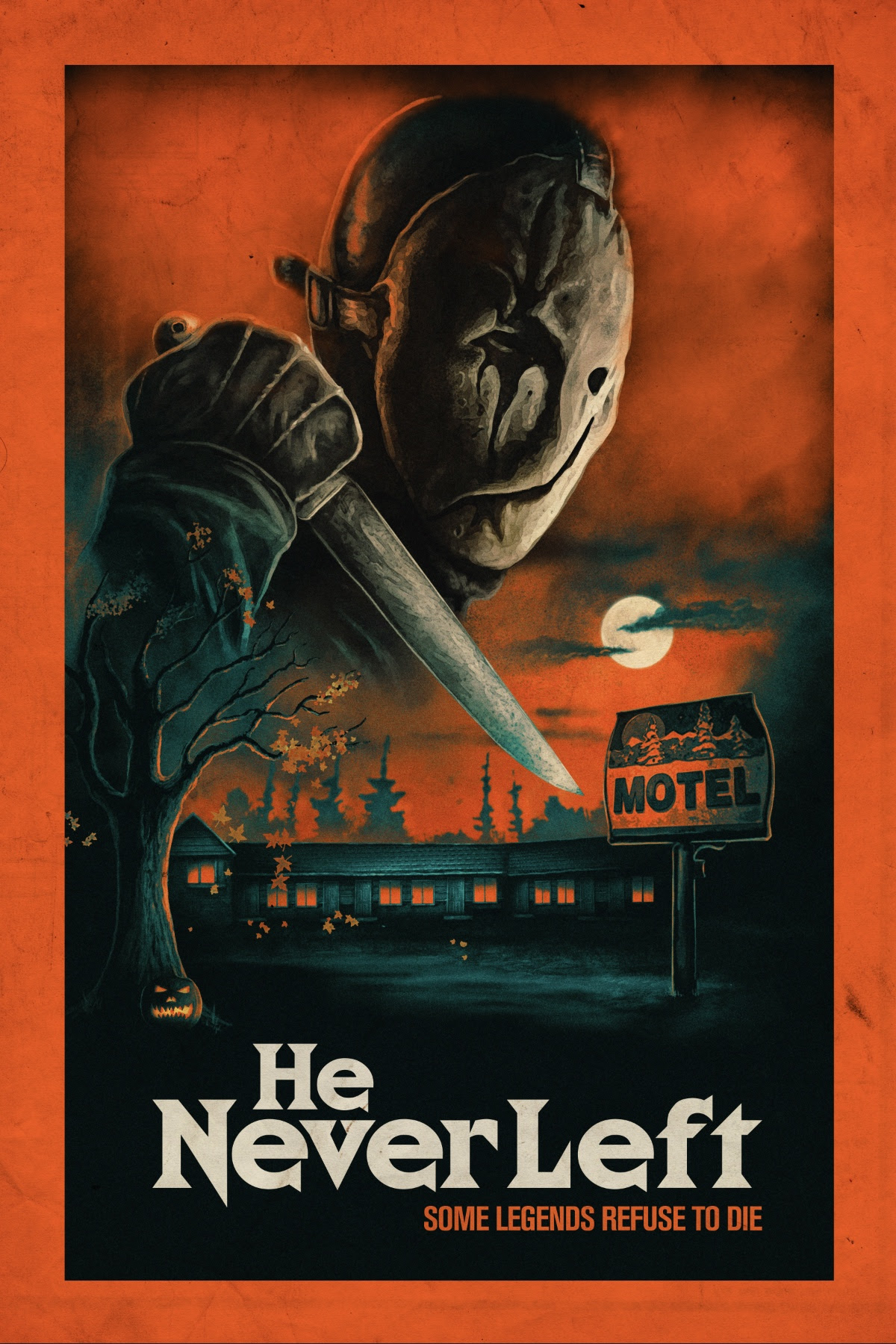
Film Review: “He Never Left”

Starring: Colin Cunningham, Jessica Staples and James Morris
Directed by: James Morris
Rated: NR
Running Time: 89 minutes
Dread

Our Score: 2 out of 5 Stars

Gabe (Colin Cunningham) is on the run. The escaped federal convict is hiding in a motel, waiting for some of his old criminal pals to help him further escape. Passing the time in the motel, Gabe leaves the TV on but never watches, talks with his ex-girlfriend over the phone but has no immediate interest to reconnect, and listens to strange noises from the room next door but no explanation as to what they could potentially be. With no one to trust, little to understand, and nowhere to go, Gabe may have found himself in the crosshairs of the town serial killer, Pale Face.

There’s a lot of interesting moving parts in “He Never Left.” Well, moving parts in that there’s a lot of interesting exposition for a film trapped inside the confines of a motel. Probably not this much since “Identity.” The film opens with on-screen text about Pale Face, a slasher whose kills have haunted the town for decades, coming, killing, and leaving without any rhyme or reason. Without revealing more, Gabe hogs the screen time with his criminal uncertainty. How these two plots are connected isn’t immediately clear. That should be a great way to keep a movie flowing, but after the film’s opening act, it becomes less and less interesting.

While a slasher doesn’t necessarily need a lot of exposition, or even a killer’s motive, it’s odd that “He Never Left” sets up all these dangling threads, only for Pale Face and Gabe’s plots to pay off lazily. As for Gabe, he turns out to be the most interesting piece of this film’s puzzle. The other issue, still, is that Pale Face’s story kind of derails what’s working for the film. In a lot of ways, “He Never Left” feels like two ideas struggling to take charge of the film.

While the film maintains steady suspense, it undermines its own enjoyment with overwrought explanations that feel repetitive. For instance, the film mainly takes place at this motel, which allows for some creativity in revealing more about Gabe and Pale Face, but it’s when the film jumps narratively through time and location that the film feels like it’s simply overexplaining what it’s clearly explained prior at the motel.

I really wanted to enjoy “He Never Left” because there is a good movie, somewhere in the narrative mess. It leans heavily on its influences while attempting to tell a fresh slasher story, but it never seems confident enough to stop leaning on those cliches. The acting is good, the direction creates a tense atmosphere, but the script prevents everything from excelling.

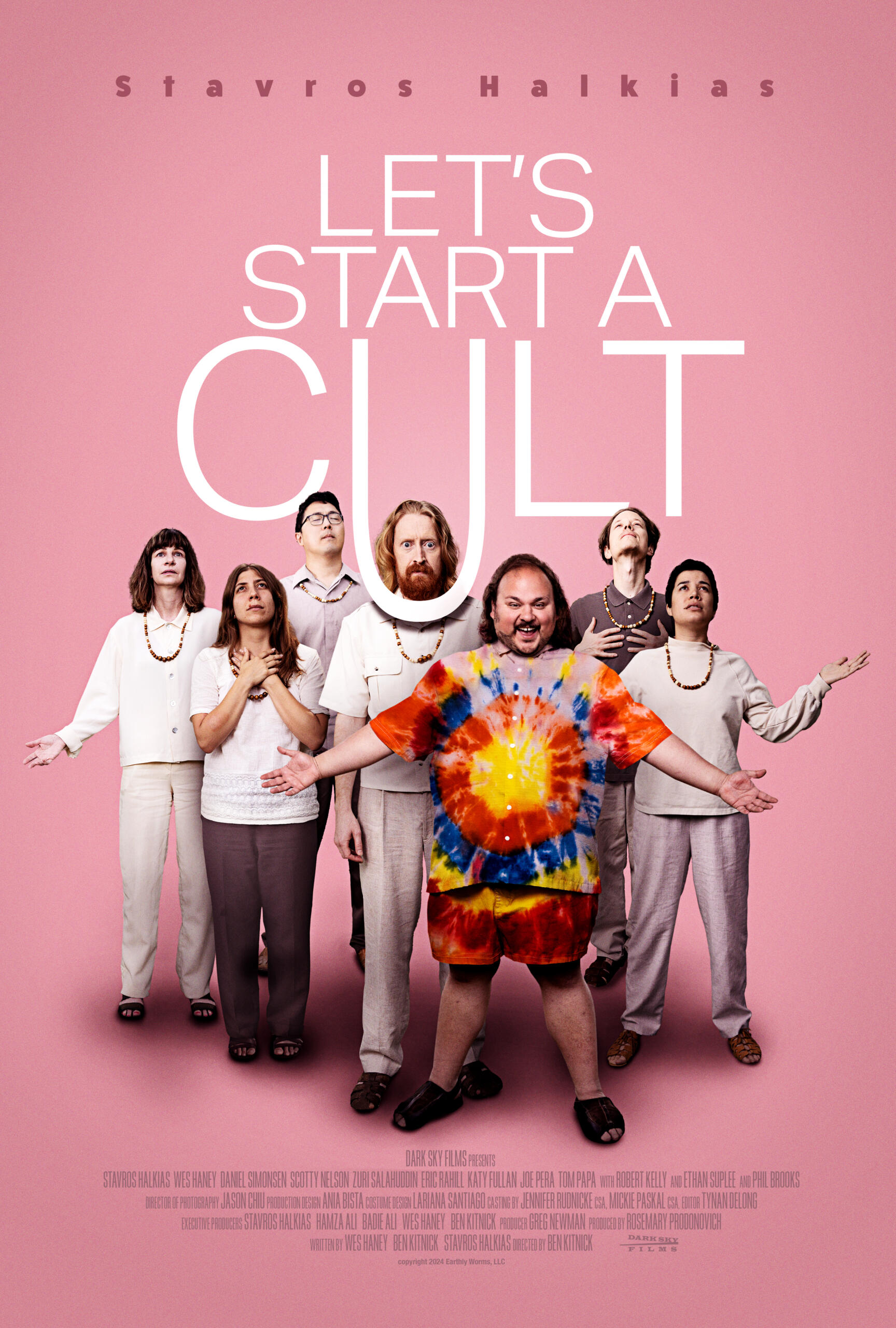
Film Review: “Let’s Start a Cult”

Starring: Stavros Halkias, Wes Haney and CM Punk
Directed by: Ben Kitnick
Rated: NR
Running Time: 90 minutes
Dark Sky Films

Our Score: 3 out of 5 Stars

You ever had an annoying person in a friend group, but you can’t get rid of them? Chip (Stavros Halkias) is kind of like that friend, but instead of being in a friend group, he’s in a cult. In fact, he’s so annoying, the cult commits their mass suicide without him. He’s about to resign back to a life at home, where his own family doesn’t want to be around him, when he finds out that the ex-cult leader, William (Wes Haney) is actually still alive. In frustration, Chip tracks down William, and forces William to reboot the cult so they can commit ritualistic suicide the right way.

Wacky comedies used to be a dime a dozen, but now they feel more like a lost art, if you consider mid-2000s films like “Strange Wilderness” or “Grandma’s Boy” a lost art. “Let’s Start a Cult” doubles down on absurdism at every turn, starting with the film’s lead, Chip. He would actually be an obnoxious individual to be around, but as the film progresses, it peels back layers to reveal this relatable softness which undercuts his chaotic spirit. It’s a lot like a 90s Adam Sandler character, without access to endless pools of money or having some kind of insanely unique talent.

We learn, fairly early on in the film through dialogue and interactions, that Chip joined the cult in search of a family. He really doesn’t seem to have any friends and his family seems to view him as some kind of unwanted adoption. Even around strangers, he’s frequently vulgar for no reason, which is off-putting the every day individual. Eventually this plays into Chip’s charm, especially when sandwiched with William, who may be the most cowardly cult leader in cinema history. Of course, the cast of characters they meet and recruit to their cult, are also broken down souls that have been rejected by friends, family and society.

The film has a subtle, let your freak flag fly, morality to it, which plays into Chip’s odd nature. As for the laughs, they don’t come a mile a minute and they sometimes mistake simple crassness for humor, but the film finds itself tickling the funny bone in several inspiring moments; thanks to Halkias performance. It’s hard to imagine anyone else taking this self-deprecating material like Halkias and elevating it to such dizzying heights. The film is mercifully short, meaning that it does run out of steam with minutes left to spare on its somewhat inspired sketch comedy premise.

It seems like the only comedies I’ve watched this year have been blends or attached to other genres, like “Deadpool & Wolverine,” “Didi,” “Lisa Frankenstein” and so forth. Because of that lack thereof, I think I enjoyed “Let’s Start a Cult” more than I normally would. Very few studios or artists are willing to take a leap on a pure comedy, so props to Director Ben Kitnick, as well as Halkias and Haney, for pulling the trigger on something that isn’t as bankable as it used to be. You told a story worthy of comedies from 21st century heydays.

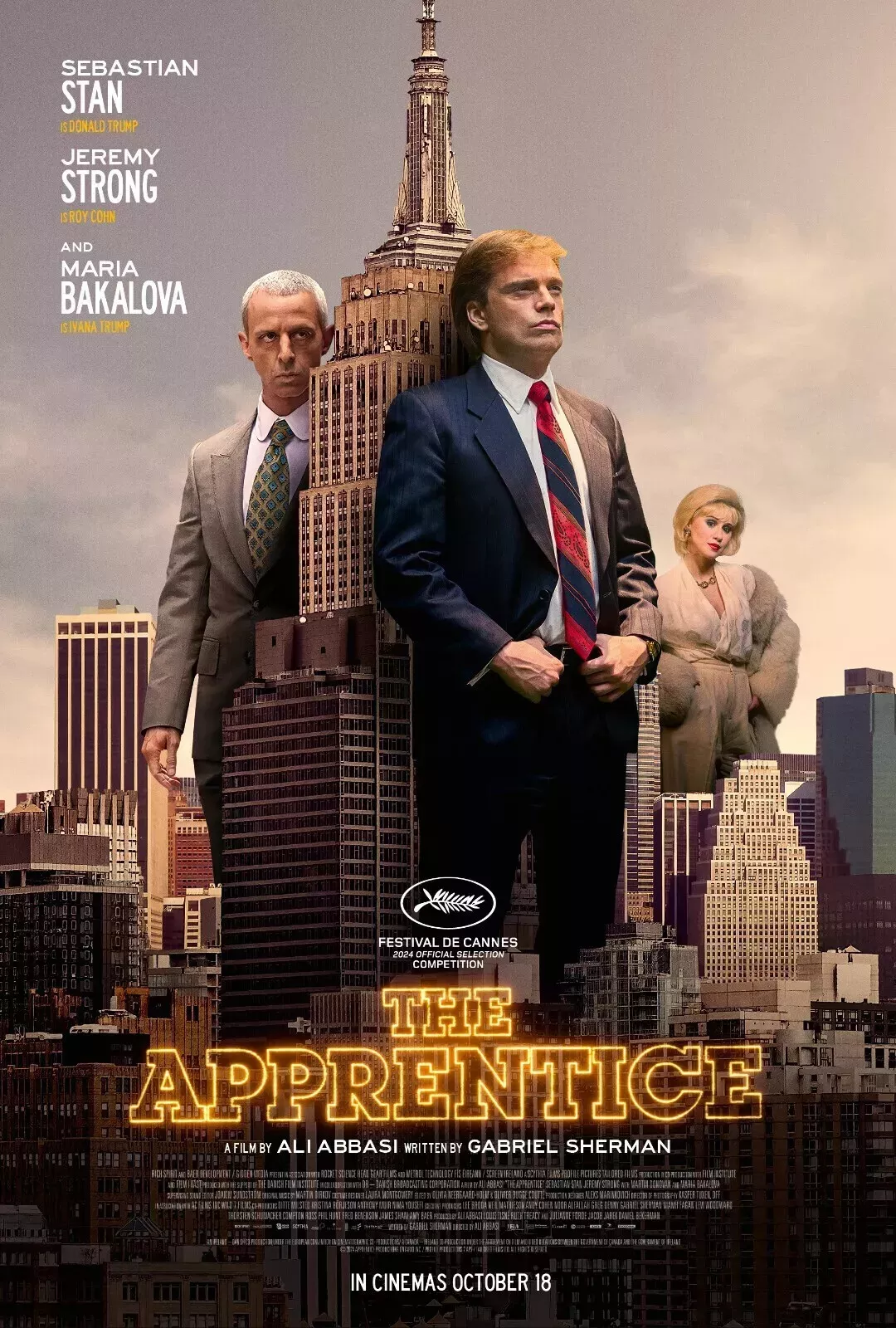
Film Review: “The Apprentice”


  • THE APPRENTICE
  • Starring:  Sebastian Stan, Jeremy Strong and Maria Bakalova
  • Directed by:  Ali Abbasi
  • Rated: R
  • Running time:  2 hrs 2 mins
  • Golden Media


Fifty years ago, Richard Nixon address the citizens of the United States, trying to assure them that “their president is not a crook.  To drive home the message, Nixon added “Everything I’ve got, I’ve earned.”  He then tried to sell people oceanfront property in Arizona (thank you, George Strait).


The mid-1970s were a tough time for many cities in the USA, most notably New York City.  In 1975 the city literally ran out of money.  The city could not pay its bills nor could it borrow money.  President Ford – it turns out Nixon WAS a crook and had to resign -famously told Mayor Abe Beame to “drop dead.”  New Yorkers were furious.  Except for one wide-eyed man with a dream.


Released just in time for this years Presidential Election, “The Apprentice” delves into the rise of real estate magnate Trump (Stan) and his friendship with ruthless attorney Roy Cohn (Strong, in an amazingly uncanny performance). If you’re a student of history, as I am, you may know Cohn as one of the Justice Department prosecutors  who successfully lobbied for the Death Penalty in the espionage trial of Ethel and Julius Rosenberg in 1953, as well as Senator Joseph McCarthy’s chief counsel during the Army-McCarthy Hearings investigation suspected communists in 1954.

Our story begins with Trump, whose father, Fred, is currently being sued by the Justice Department for discrimination, meets Cohn in a restaurant and explains his situation.  Taking a liking to Trump, Cohn offers his assistance, and mentorship.  Not the most ethical person in the room, Cohn gets the case dropped and soon finds himself assisting Trump as he begins building his real estate empire.  Trump does his best to follow Cohn’s 3 Rules of Success, most notably to never admit defeat.


As the film progresses we get a journey through Trump’s achievements, both positive and negative.  Building Trump Tower, revitalizing, if only temporarily, Atlantic City, meeting his future wife Ivana (Bakalova).  We also get a glimpse at his family.  His doting mother, Mary Anne (Catherine McNally), his disapproving father, Fred (Martin Donovan) and his brother Freddy (Charlie Carrick) an airline pilot with his own demons.  Along the way Trump also crosses paths with everyone from Andy Warhol (Bruce Beaton) to Rona Barrett (Valerie O’Connor).  Each actor brings their characters to life, doing more then just impersonations.  They all give fine performances but I would be remiss if I didn’t (as I did above) give high praise to Mr. Strong.  I’ve seen enough archival footage to be able to say that Strong nails everything about Cohn, from his tone to his body language.  A performance that I hope is remembered during awards season.  As Trump, Mr. Stan gives an admirable performance, which couldn’t have been easy knowing that the character you are playing did not approve of this film being made.


Let me say right here, in conclusion – I am not a political person.  Yes, I vote and yes, I’m passionate about the certain issues, but I never have, and never will, let my leanings effect how I review a film.  Like him or not, Donald Trump is a force to be reckoned with, though I think I can say with a great deal of certainty that he will not be a fan of “The Apprentice.”


On a scale of zero to five, I give “The Apprentice” ★★1/2

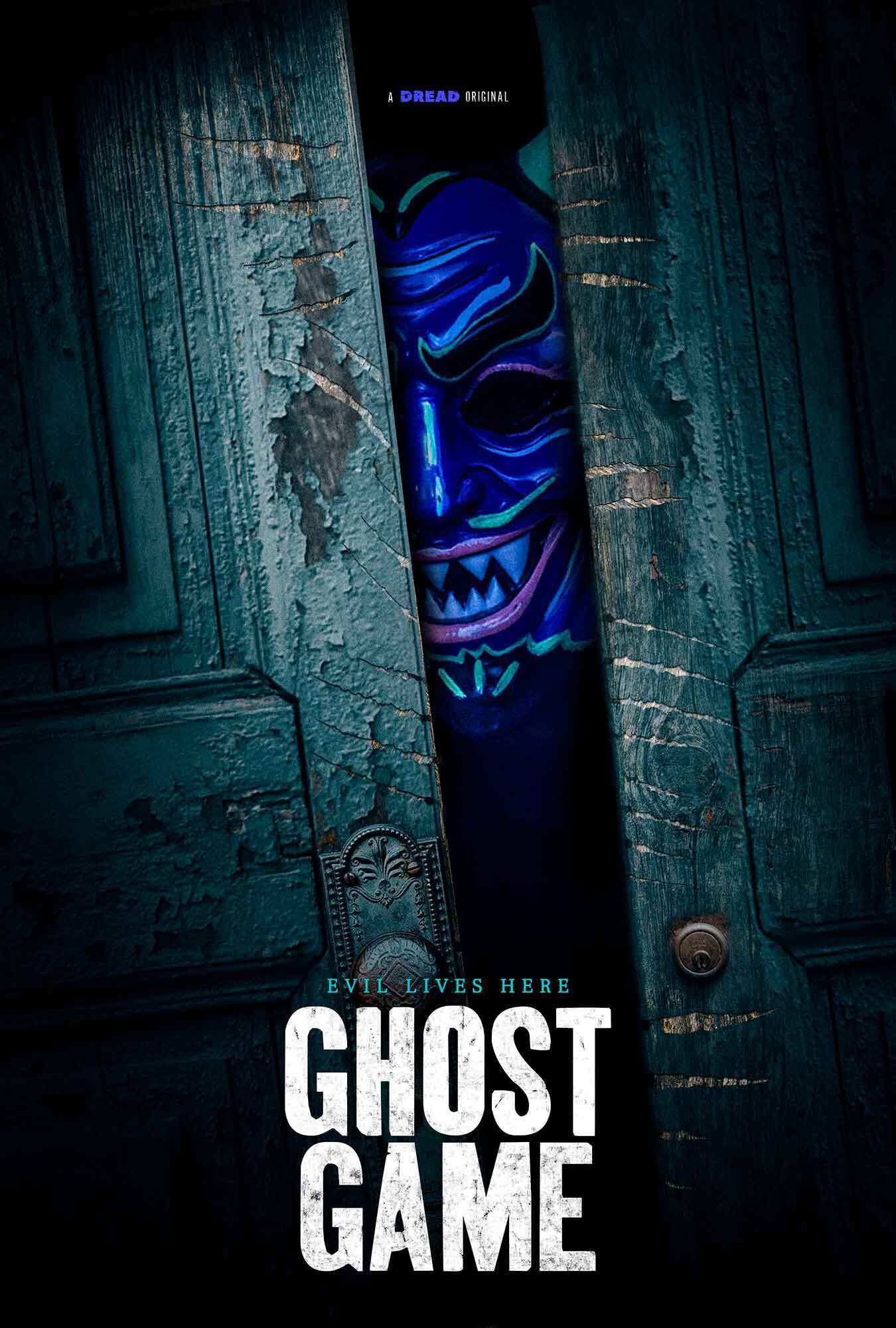
Film Review: “Ghost Game”

Starring: Kia Dorsey, Zaen Haidar and Sam Lukowski
Directed by: Jill Gevargizian
Rated: NR
Running Time: 86 minutes
Dread

Our Score: 3 out of 5 Stars

Go on Youtube, TikTok, Instagram or whatever and you’ll find people doing a variety of bizarre challenges. Some are popular and mainstream like the ice bucket or cinnamon challenges, while others like the fire challenge cause harm and death. Then there’s the one in “Ghost Game,” staying overnight in occupied homes, harassing the residents as if you were a ghost.

Laura (Kia Dorsey) is one of its participants, generally completing these challenges with her bestie and partner-in-crime, Adrian (Sam Lukowski). The duo are underground internet celebrities of sorts, but that all comes apart when Laura’s boyfriend, Vin (Zaen Haidar) finds out about her extra curricular hobby and takes wedges his way into Adrian’s spot. That won’t stop Adrian from crashing Laura and Vin’s first challenge, a supposedly haunted house with a new family moving in, nor will it stop the chaos that unfolds.

Even though “Ghost Game” utilizes some GoPro POV and hidden house camera techniques, it benefits from traditional filmmaking to tell its story. In a lot of ways, the film throws out various horror film cliches, such as the haunted house with a deadly backstory, mysterious occurrences that Laura, Adrian and Vin can’t explain, or jump scares, in an effort to misdirect you constantly. The misdirect entertains while distracting from some of the film’s weaker constructs.

It’s not actually scary and the plot sometimes struggles to make sense. Outside of the misdirects, “Ghost Game” is elevated by relatable characters trapped in a tense, growing situation. And even though we like these characters, we do feel a bit of sick joy at their comeuppance. We already enjoy watching social media stars and others getting what’s due when performing dangerous and dumb stunts or challenges.

We wait for that retribution while watching the characters grow suspicious, which is really the meat of “Ghost Game.” Laura is competing in these challenges because life just isn’t fun unless you’re doing something dangerous and illegal, which speaks volumes about her relationship with Vin and Adrian. Without diving too much into the dynamic, Vin and Adrian represent two sides of Laura and she tries to reconcile that throughout the film. It’s the kind of emotional resonance we saw in Director Jill Gevargizian’s previous film “The Stylist.”

“Ghost Game” just doesn’t click as well as “The Stylist,” probably because Gevargizian didn’t write this one. Writer Adam Cesare seems to love genre mashing, but needs a nudge towards blending it into a more cohesive thriller. Despite its flaws, “Ghost Game” is an enjoyable haunted house romp with characters you could watch bicker for hours. If it’s premiere at 2024’s Panic Fest was any indication, it’s a crowd pleasing romp.

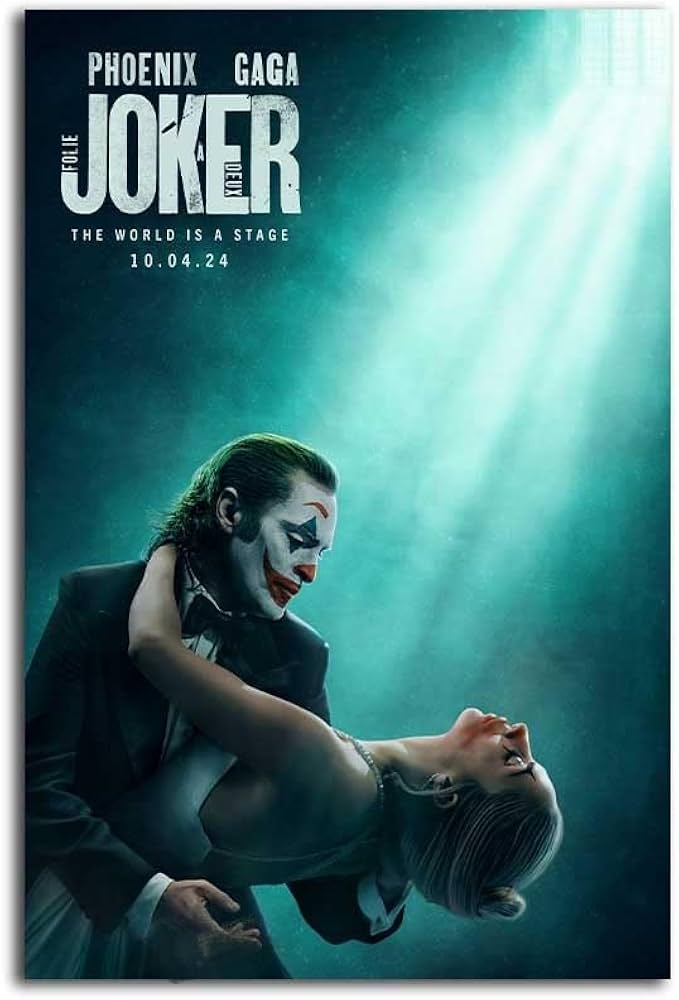
Film Review: “Joker: Folie a Deux”


REVIEW BY BENJAMIN GREGORY


  • JOKER: FOLIE a DEUX
  • Starring:  Joaquin Phoenix and Lady Gaga
  • Directed by:  Todd Phillips
  • Rated:  R
  • Running time:  2 hrs 18 mins
  • Warner Bros


“Joker: Folie à Deux” arrives as the eagerly anticipated follow-up to the groundbreaking “Joker” released in 2019, which captivated audiences and critics alike with its daring portrayal of the iconic villain’s origin story. Directed once again by Todd Phillips, the sequel sought to delve deeper into the psychological chaos and complex dynamics that surround the infamous character of Arthur Fleck. Given the original film’s success (second highest grossing R rated film) and Joaquin Phoenix’s Oscar-winning performance, expectations were sky-high for this installment. However, “Joker: Folie à Deux” struggles to capture the same raw intensity and emotional depth, leaving audiences with an experience that feels disconnected and underwhelming.


In “Joker: Folie à Deux,” we return to the fractured psyche of Arthur Fleck, who now finds himself navigating the complex aftermath of his descent into madness and infamy in Gotham City. The film attempts to explore Arthur’s ongoing struggle with identity and reality as he confronts both internal and external adversities. Central to the plot is the introduction of a new character who serves as both a confidant and a catalyst for chaos, potentially altering the course of Arthur’s tumultuous journey. Despite its intriguing premise, the narrative often meanders, lacking the cohesion and sharp focus that defined its predecessor. This disjointed storytelling is unable to fully capitalize on its ambitious themes, leaving viewers with a sense of unfulfilled potential and ambiguity.


Joaquin Phoenix returns to his role as Arthur Fleck with a committed performance that captures the character’s descent into further depths of madness. Despite the film’s shortcomings, Phoenix remains a compelling presence on screen, embodying the Joker’s erratic nature and emotional volatility with remarkable intensity. Though his performance is consistent with his previous portrayal, the lack of new character development limits his ability to elevate the sequel beyond its narrative constraints.


Accompanying Phoenix is Stefani Joanne Angelina Germanotta (Lady Gaga), who introduces a new character that adds complexity to Arthur’s world. While Lady GaGa delivers a solid performance, the character’s potential feels undermined by underdeveloped writing, preventing them from leaving a significant mark. The supporting cast, including familiar and new faces, deliver competent performances, but the script does not provide them sufficient depth to stand out or contribute meaningfully to the film’s impact. Overall, the ensemble does its best with the material provided, but even their collective talent struggles to overcome the film’s narrative hurdles.


Todd Phillips returns to the directorial helm, aiming to expand upon the gritty psychological landscape established in the first film. While his direction still captures the dark, unsettling tone of Gotham City, the sequel lacks the tight, focused narrative that made the original so compelling. Phillips’ attempt to weave multiple storylines and character arcs leads to a fragmented experience that struggles to maintain a clear trajectory or cohesive theme.


The writing, once a standout feature of “Joker,” falters in “Folie à Deux.” The screenplay attempts to explore deep psychological and societal themes, but often does so in a manner that feels forced and disconnected. Dialogue that should reveal character depth and move the plot forward instead comes across as repetitive and occasionally contrived. This dilutes the emotional impact and suspense that were so successfully achieved in the original.


“Joker: Folie à Deux” ultimately suffers from an identity crisis, caught between the expectation to expand on its precursor’s success and the desire to forge a new path. The film’s pacing is notably uneven, with scenes that either drag on unnecessarily or progress abruptly without the needed emotional buildup. This inconsistency detracts from the tension and engagement that are crucial for a psychological drama of this nature.


Character development is another area where the film falls short. While there are glimpses of interesting dynamics, especially between Arthur and the new characters, these relationships remain largely superficial, leaving audiences craving deeper exploration. The film also struggles with balancing its ambition and execution; while it attempts to address complex themes, it often resorts to surface-level engagement without deeply probing the implications.


“Joker: Folie à Deux” attempts to replicate the success of its predecessor but loses focus in its execution. While anchored by Joaquin Phoenix’s steadfast performance, the film lacks the cohesive narrative and emotional depth needed to leave a lasting impact. Fans of the original may appreciate the return to Gotham’s dark and chaotic world, but many may find that the film’s ambitions outstrip its execution. Ultimately, it offers a glimpse of potential brilliance but remains overshadowed by the standard set by its acclaimed forerunner.


Overall, the direction and writing in “Joker: Folie à Deux” strive to recapture the boldness of its predecessor but falter in delivering a narrative that resonates with the same potency, giving the overall impression of “Too many cooks”.


On a scale of zero to five, Joker: Folie a Deux receives ½-Star. 


You can follow Ben’s  NERDANOMICON Facebook Page HERE

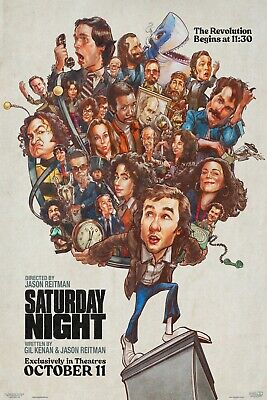
Film Review: “Saturday Night”


  • SATURDAY NIGHT
  • Starring:  Gabriele LaBelle, Racel Sennott and J.K. Simmons
  • Directed by:  Jason Reitman
  • Rated:  R
  • Running time:  1 hr 49 mins
  • SONY Pictures


October 11, 1975.  I was a 15-year old boy living in Tampa and for the past two weeks I had been talking to my friends about the movie “Jaws,” which I had just seen (20) days earlier.  On that night I sat down in front of the television to tune in a new show that, fifty years later, and despite many highs and a few lows, continues to air weekly.  Live from New York…it’s SATURDAY NIGHT.


Late night programming on NBC was pretty much non-existent in the 1970s.  Johnny Carson, and “The Tonight Show,” ruled 11:30 pm on weeknights and was so popular that Saturday nights the network would run repeats of previous shows.  This changed when Lorne Michaels (LaBelle) pitched a show about the youth of the day featuring the youth of the day.  And despite deranged writers, a cast of nobodies and the network censor, the show went on.  Barely!


Brilliantly written by Gil Kenan and director Reitman, the film captures the true chaos of the ninety minutes prior to the airing of the first show.  We are introduced to familiar characters, including head writer Michael O’Donoghue (Tommy Dewey), Jim Henson (Nicholas Braun, who also portrays comedian Andy Kaufman) and, of course, the original Not Ready for Prime Time Players.

The casting is spot on, with each actor not only resembling but channeling their character.  We meet Dan Aykroyd (Dylan O’Brien), John Belushi (Matt Wood), Chevy Chase (Cory Michael Smith), Jane Curtin (Kim Matula), Garrett Morris (Lamorne Morris,) Larraine Newman (Emily Fairn) and Gilda Radner (Ella Hunt).  Each of these actors do justice to the characters, capturing their personalities perfectly.  It’s obvious that Reitman, whose father worked with many of the original cast members in film, wanted to make sure that each character was brought to life with love and respect.  Two veteran actors take on two very iconic characters with Brad Garrett portraying Rodney Dangerfield and J.K. Simmons as an insufferable Milton Berle.  And kudos to the film for highlighting Berle’s legendary “talent.”  As Max Bialistock says in “The Producers,” if you’ve got it, flaunt it!


The script is a love story to a show that has influenced multiple generations with it’s brand of humor.  Even in its worse times – I’m looking at you 1985-86 cast – the show continues to entertain.  The film is well paced and the jokes hit hard and often. It took me back to a time when there were only three television channels and you could get a burger, fries and drink at McDonalds for a dollar.  Really.


On a scale of zero to five, “Saturday Night” receives ★★★

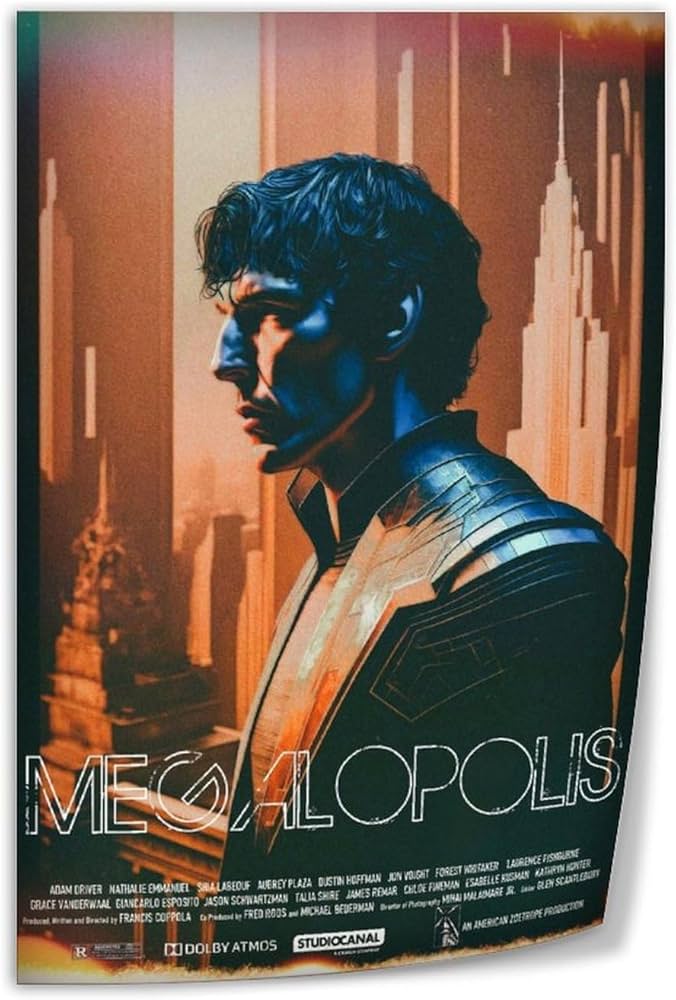
Film Review: “Megalopolis” (Review #2)


  • MEGALOPOLIS
  • Starring:  Adam Driver, Giancarlo Esposito and Aubrey Plaza
  • Directed by:  Francis Ford Coppola
  • Rated:  R
  • Running time:  2 hrs 18 mins
  • Lionsgate


I’ve had time to think a lot about what I wanted to write because there are parts of “Megalopolis” that show the touch of a master filmmaker. That being said, a muddled story, and most unsympathetic characters, take a lot of the shine off of the project.


New Rome in the not too distant future is a city in shambles, with supporters of two very different men in a constant battle with each other.  On one side you have Cesar Catalina (Driver), an encentric visionary whose ideas are both embraced and ridiculed.  On the other side you have newly elected Mayor Cicero (Esposito), who considers himself a man of the people.  Both try to get their message to the people by the way of personality Wow Platinum (Plaza, in an amazing dramatic performance).  As each side tries to one up the other, the state of the City continues to deteriorate.  Who will save New Rome?


Packed with a cast that has sixteen Academy Award nominations (and three Oscars) among them, “Megalopolis” is an acting showcase for the audience.  Driver and Esposito, two of the best actors of their generation, give powerhouse performances, doing their best to sell a weakly constructed, and confusingly written, story.  Plaza, who I only knew from “Parks and Recreation,” is a revelation as the scheming and manipulative social media diva dealing with declining ratings.  Veteran actors like Laurence Fishburne, Talia Shire and Dustin Hoffman shine in smaller roles while Jon Voight proves why he has been one of the best actors of the past six decades with a featured role as Hamilton Crassius III, a man whose money helps things run.


The drawback for me is the script, also written by director Coppola.  My thought is that he was trying  to make a film similar in style to Baz Luhrmann’s “Romeo + Juliet,” mixing snippets of Shakesperean language with a modern vision but sadly some of the dialogue is clunky and falls flat.


Visually the film is breathtaking, and it is here that Coppola shines.  The man has fourteen Academy Award nominations and five Oscars and his place in the history of cinema is assured.  While not his best effort, there are still enough flashes of the master at work that make me give the film a favorable review.


On a scale of zero to five, “Megalopolis” receives

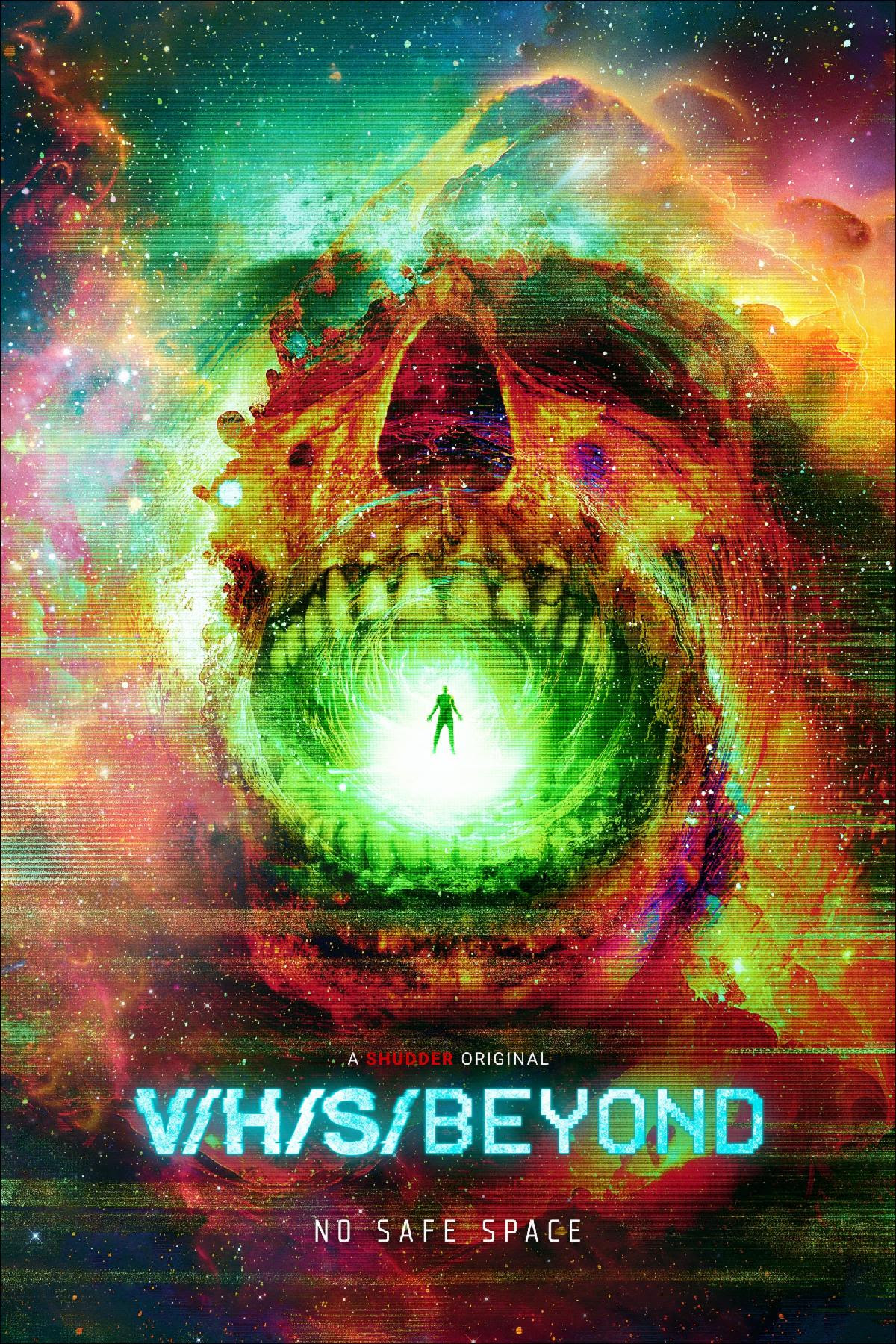
Film Review: “V/H/S Beyond”

Directed by: Jordan Downey, Christian and Justin Long, Justin Martinez, Virtal Pal, and Kate Siegel
Rated: NR
Running Time: 110 Minutes
Shudder

Our Score: 3.5 out of 5 Stars

Here at MediaMikes, we love the V/H/S franchise. While we haven’t reviewed every single entry, the ones we have have averaged 4 out of 5 Stars. Unfortunately I’m here to break that trend, but that shouldn’t distract from “V/H/S Beyond,” the latest entry. It appears to be the first foray into a solely sci-fi realm for the franchise. While not every short within the anthology has a sci-fi beat, it maintains the exaggerated style the films have held recently.

Continuing a recent trend in the franchise, “V/H/S Beyond” has a framing narrative that really doesn’t matter or fit into the overall structure at all. Thankfully “Abduction/Adduction” is as short as it is forgettable, moving straight into “Stork,” a short that feels like a first-person shooter. “Stork” is very much like a horror video game playthrough as a SWAT team storms a dilapidated building looking for the culprit behind missing babies. The short manages to squeeze in every ounce of creepiness, jump scares and unrelenting gore from its disturbing premise.

“Dream Girl” lets off the accelerator a tad as we watch two paparazzi members find out a somewhat predictable secret behind the latest Bollywood sensation. The superstar bloodbath that ensues doesn’t necessarily save the weak story in this one. Luckily, “Live and Let Dive” goes back to slamming the film’s foot on the accelerator. A group of friends are going skydiving for a pal’s birthday celebration, but a UFO and the American military have a different idea as chaos unfolds mid-air and on the ground. Outside of some wicked kills, “Live and Let Dive” has a great creature design and a concept that never lets go of you. Also ,it might actually be the only short in the whole movie that actually follows found footage rules.

If “Live and Let Dive,” didn’t rattle you, then surely “Fur Babies” will. You can kind of surmise what’s going to happen when a group of animal rights activists decide to sneak into the home of a pet and taxidermy enthusiast home to check out her doggy daycare. Even if you can predict what’s going to happen, it can’t prepare you for the horrific body horror comedy that follows. This, and “Stork,” are the highlights of “V/H/S Beyond.” These two shorts make the latest addition a worthy watch.

Before “Abduction/Adduction” wraps up, “Stowaway” provides an artistic reprieve from the chaos beforehand. A mother documents her journey into the desert to uncover what the mysterious lights she sees every night are. Unlike the other shorts, “Stowaway” has an emotional core as grainy cam footage appears to have overwritten a tragedy this woman is attempting to forget in the name of alien exploration. In that regard, I enjoyed it for bringing us back down to Earth (or out of Earth) after the insanity of “Fur Babies.”

Overall, I enjoyed “V/H/S Beyond,” but my head wasn’t joyously spinning as hard as the past few entries in the franchise. Just like before, found footage rules be damned as several shots were clearly just filmmaking and not footage from a body cam, handheld, cellphone, or something else. At this point it’s hard to tell if these newer films in the franchise actually go for an aesthetic. “V/H/S Beyond” feels like it should be sci-fi up and down, but “Stork” and “Fur Babies” prove that’s not entirely the case. If you were to remove those films, the entire anthology will feel a little hampered by a narrow sci-fi horror preference. Regardless, “V/H/S Beyond” offers a little bit of something for all horror fans, whether it be gallons of blood, gruesome dismemberments and shattered bones, creature designs burned into your retina or good ol’ fashioned jump scares. The “V/H/S” franchise is becoming a yearly treat for those who enjoy what makes horror great.

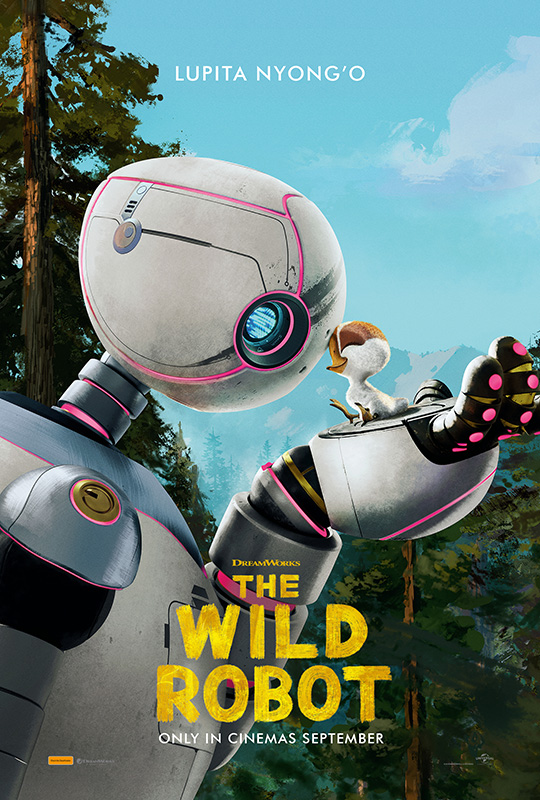
Film Review: “The Wild Robot”


  • THE WILD ROBOT
  • Starring the voices of: Lupita Nyongo, Pedro Pascal and Mark Hamill
  • Directed by:  Chris Sanders
  • Rated:  PG
  • Running time:  1 hr 41 mins
  • Universal Pictures


Writer/director Chris Sanders has been involved, in one way or another, with some of the greatest animated feature films of all time.  “Beauty and the Beast,”  “The Lion King,”  “Lilo and Stitch,” “How to Train Your Dragon,” and “The Croods” are only a few of the classic films he had a part of.  This week he adds another title to his list of classics with the release of “The Wild Robot.”


Meet ROSSLUM unit 7134, the latest AI robot invented to help mankind and all of its tasks who finds itself stranded on a lonely island full of pretty much every species of animal you can think of.  Attempting to speak to the creatures, the robot – “Roz” for short – soon learns that nothing on the island, with the exception of herself, speaks English.  Built to learn she shuts down as she slowly learns to communicate with all the animals, learning each of their “languages.”  Enter Brightbill (Kit Connor), a gosling who thinks Roz is his mother.  And the adventure begins.


The story is a cross between “The Iron Giant” and “E.T.,” with love for others over oneself the message that is being delivered.  And it is one that should resonate with everyone.


Not sure if animated films are eligible for the Best Cinematography Academy Award or not, but if they are “The Wild Robot” would be a worthy contender.  The film is beautifully rendered, presenting images that could surely pass as post cards, and the accompanying music score, composed by Oscar winner Kris Bowers, is a perfect partner to the beautiful images on screen.


The vocal cast is at the top of their game, with Oscar winner Nyongo giving Roz not only a voice but a heart. She is joined by Pascal as Fink, a mischievous fox, Bill Nighy as Longneck, the leader of the geese and Hamill as Thorn the Bear.


As noted above, the animation is spectacular, though I’d expect nothing less from Mr. Sanders and company.


On a scale of zero to five I give “The Wild Robot” ★★★

Film Review: “Megalopolis”

Starring: Adam Driver, Giancarlo Esposito and Nathalie Emmanuel
Directed by: Francis Ford Coppola
Rated: R
Running Time: 138 minutes
Lionsgate Films

Our Score: 2.5 out of 5 Stars

“Megalopolis” is a difficult film to summarize. It’s Writer/Director Francis Ford Coppola’s 40-years in the making magnum opus that’s equal parts Shakespearian, dystopian, utopian, unintentional comedy, self serious, overacted, haphazard, silly, and about a dozen other adjectives. If at one point you’re disgusted, bored, or chuckling to yourself, give it a few minutes and it’ll elicit another emotion. This is the kind of film that will draw, and has drawn, criticism for being over bloated, confusing and ultimately a flop. Others will find it to be a prophetic stroke of genius that will take years, if not decades to be appreciated. For me, it was an enjoyable, sometimes overwrought, experience that finds unique ways to entertain while finding baffling ways to tell a story.

“Megalopolis” takes place in New York City, I’m sorry, New Rome. The city represents the U.S., er, I’m sorry, ancient Rome. Basically New York City/the U.S. is ancient Rome. That is a nauseating metaphor that the movie uses constantly, and you can use it if you’re ever wondering what the hell is going on. As for what exactly is going on, Cesar Catilina (Adam Driver) is an architect and nephew to Hamilton Crassus III (Jon Voight), the billionaire, if not trillionaire, representation of capitalism in New Rome. Everything revolves around Crasuss’ money. Not only does Catilina rely on it, but so does Clodio Pulcher (Shia LaBeouf), Crassus’ anarchist nephew with political aspirations, TV news reporter Wow Platinum (Aubrey Plaza) whose face appears in the dictionary next to the term “gold digger,” and Mayor Franklyn Cicero (Giancarlo Esposito). Mayor Cicero recognizes the power the dollar has in New Rome, but believes that cash, through Catilina, Pulcher, Platinum and others, is corrupting the city. But the city is already corrupt and falling apart under Mayor Cicero’s abusive police force. Making sense so far? Good, because I haven’t even bothered explaining the magic metal element or Catilina’s ability to stop time.

There’s way too much plot getting in the way of…well…the plot. I haven’t even mentioned Jason Schwartzman’s useless character that seems to be contractually obligated to pop-up randomly in the background or foreground every 10 minutes, Nathalie Emmanuel simply being a “Romeo and Juliet” love interest, a virgin teen pop star controversy magnet played by Grace VanderWaal and Dustin Hoffman who’s character only seems to exist to pad the film’s star power. Which is another big reason the film, at times, feels dizzying. There’s characters that go nowhere, character actions that are never explained, much less hinted at, and Laurence Fishburne who plays the dual role of limo driver and narrator. Even the narration peters out towards the end and title cards, which were previously read by the narrator, flash on screen as if someone forgot to dub in Fishburne’s voice.

It’s obvious to see why this film has been called a mess, because it really is. Even if I found myself enjoying this thoroughly, I’d be struggling to find the words to even express the joy. Speaking of joy, the only thing stopping me from rating it lower than a 2.5 is that it’s an entertaining mess. Moments of exposition, which felt serious, had me smiling at the absurdity as if someone was handed the script to “Airplane!” but didn’t know they were making a comedy. You can actually never really predict where the film is going, even when it’s using obvious parallels between the U.S. in 2024. It sometimes avoids the low hanging fruit while ripping up that vary tree to gnaw at every single low hanging fruit. The movie restrains itself during some scenes while egregiously indulging Coppola’s ego in others.

This is truly a mess that seems like the writer/director has decided to unload every essence of his own humanity and perception of humanity into it. While the world seems bleak, dominated by narcissistic losers who’s only abilities are to manipulate those around them, Coppola’s film is ultimately an optimistic one. “Megalopolis” seems to believe that even when the pillars of a righteous civilization crack and break under the pressure of corruption, there is the ability to make amends and create something more beautiful in its wake. We see that through Catilina’s eyes, who may as well be Coppola himself; a flawed individual with talent. However, Coppola’s own ego gets in the way, several times, when we see characters seek Catalina’s admiration and love. Maybe that own Coppola ego is why some shots are visually impressive and hypnotic, while others feel right in line with a Sci-Fi original.

I’m sure many papers, videos and blog posts will be written about “Megalopolis,” negative and positive. For me, it was difficult to find the balance because I’m still at odds over the film. Did it need another four decades or maybe it should have been pushed out when the idea was fresh and hot. I honestly don’t think “Megalopolis” is a film I can fully recommend because it is so convoluted to explain, yet I can’t fully write off the film. It has some unspoken magnetism, a combination of art, politics, and history that has everything to say, yet sometimes says nothing. I can also see myself watching it again and again, either because it is truly awful or because it requires a thorough digestion.

Copyright: MediaMikes.com © 2024 · Powered by: nGeneYes, Inc. · Login

All logos and images used on this website are registered trademarks of their respective companies. All Rights Reserved. Some of the content presented on our sites has been provided by contributors, other unofficial websites or online news sources, and is the sole responsibility of the source from which it was obtained. MediaMikes.com is not liable for inaccuracies, errors, or omissions found herein. For removal of copyrighted images, trademarks, or other issues, Contact Us.