
 Starring: Matt Damon, Anne Hathaway and Tom Holland
Directed by: Christopher Nolan
Rated: R
Running Time: 173 minutes
Universal Pictures
Our Score: 4.5 out of 5 Stars
For nearly 3,000 years, humanity has been telling “The Odyssey.” Around campfires. Through song and poetry. On stages. In paintings. In classrooms. Every generation has found its own way to tell Homer’s story. Christopher Nolan may have finally found ours.
Adapting “The Odyssey” isn’t simply a matter of condensing one of civilization’s greatest stories. It’s the cinematic equivalent of squeezing two seasons of “Game of Thrones” into three hours while somehow preserving the politics, mythology, family drama, warfare, philosophy, and humanity that made the original endure in the first place. Against all odds, Nolan largely succeeds.
Beginning with the Trojan Horse and stretching across Odysseus’ decade-plus journey home, Nolan’s adaptation isn’t interested in treating Greek mythology like a collection of disconnected adventures. Every island, every monster, every god, and every temptation becomes another examination of leadership, faith, governance, family, and the unavoidable consequences of human choice. This isn’t merely a story about getting home. It’s about what war costs the people fighting it, as well as the people waiting for them.
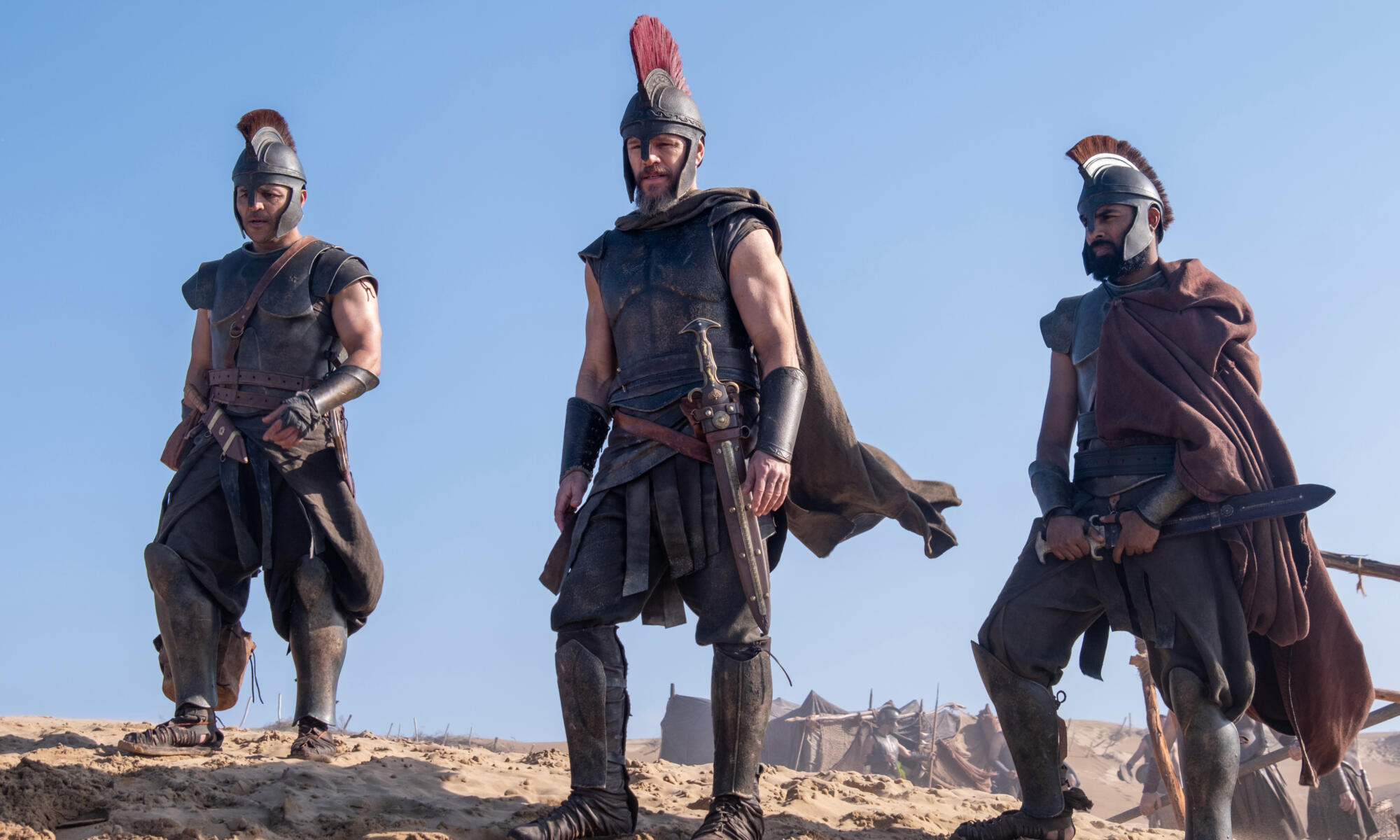
Matt Damon delivers one of the finest performances of his career. His Odysseus possesses the physical presence mythology demands, effortlessly commanding armies one moment and confronting impossible odds the next. Yet Damon wisely avoids playing him as an untouchable superhero. His Odysseus grows increasingly weathered by grief, regret, responsibility, and the weight of decisions that ripple far beyond the battlefield. Nolan doesn’t ask us to admire perfection. He asks us to consider whether greatness can exist alongside profound imperfection.
That burden isn’t Odysseus’ alone. Anne Hathaway’s Penelope quietly becomes the film’s emotional equal, fighting her own battle while trapped in Ithaca. Tom Holland’s Telemachus provides the coming-of-age perspective as a son forced to grow up beneath the shadow of a father who has become more legend than man. Even Zendaya’s Athena feels less like a mythical guide than a reminder that every generation searches for wisdom somewhere outside itself. Rather than existing solely to support Odysseus, each character reflects a different consequence of his absence.
Visually, “The Odyssey” is exactly the kind of spectacle audiences hoped Nolan would deliver. IMAX transforms vast oceans, towering landscapes, and ancient cities into something appropriately mythic while never losing sight of the intimacy between characters. The practical effects blend seamlessly with CGI, creating a world that feels tangible despite its gods and monsters. Nolan also slips in moments of unsettling body horror and genuine suspense that rival some of modern cinema’s most memorable sequences, though wisely never allowing spectacle to overshadow the story’s emotional core.
Perhaps Nolan’s greatest achievement is resisting the temptation to modernize Homer’s ideas while still making them feel modern. His narrative still plays with shifting perspectives and fractured chronology in familiar Nolan fashion, but those techniques serve the material instead of calling attention to themselves. You don’t need an encyclopedic knowledge of Greek mythology to follow the film because Nolan understands that mythology has always been less about monsters than people. The gods may shape events, but it is human pride, love, grief, loyalty, and ambition that determine their outcome.
If “Oppenheimer” examined the consequences of changing the world, “The Odyssey” explores the consequences of simply surviving it. Every victory leaves a scar. Every decision carries a cost. Every homecoming demands reconciliation with the person who left. That’s ultimately why this adaptation works. Christopher Nolan hasn’t simply made the biggest version of “The Odyssey.” He’s made one that understands why we’ve been telling it for nearly 3,000 years.